Best AI SDR Tools 2026: We Tested 15, Here's the Truth
Best AI SDR Tools for 2026: Compare Top SDR Platforms for Faster Qualification and Booked Meetings
TL;DR
AI SDR tools are agentic systems that automate prospecting, enrichment, personalization, qualification, routing, meeting booking, and follow-ups across channels such as email, LinkedIn, Slack, WhatsApp, and website chat. They reduce response time, increase pipeline velocity, and support sales teams with first-touch engagement.
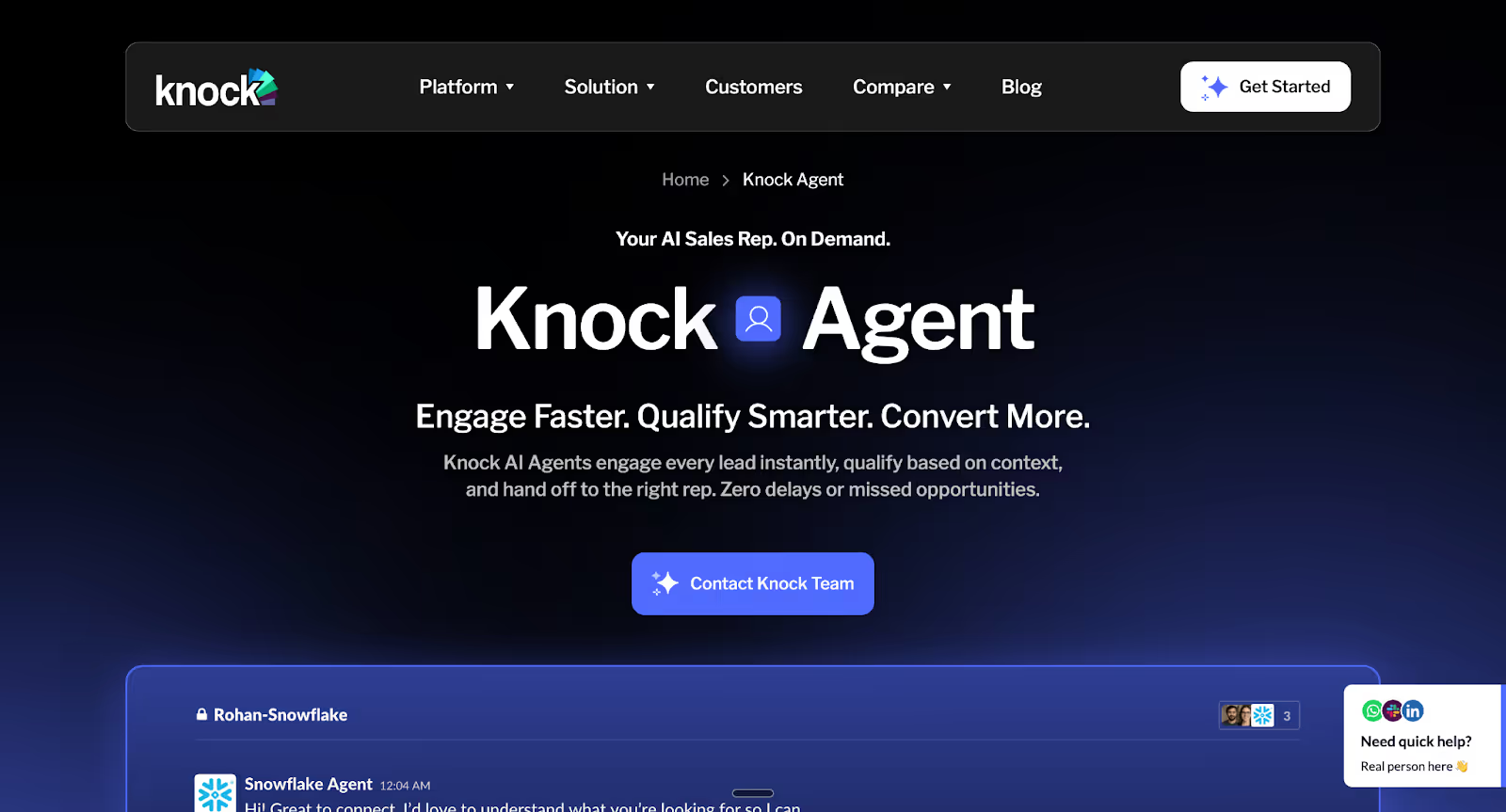
Knock AI: Messaging-first inbound SDR that engages buyers instantly in Slack, LinkedIn, and WhatsApp; detects intent, enriches context, qualifies, routes, and books demos with agent-per-intent workflows. Setup takes ~1 hour with live monitoring and response improvement loops.
11x: Autonomous digital SDR “workers” that research prospects, generate personalized outreach, run outbound cadences, and update CRM records automatically. Strong fit for scaling outbound motions without adding headcount.
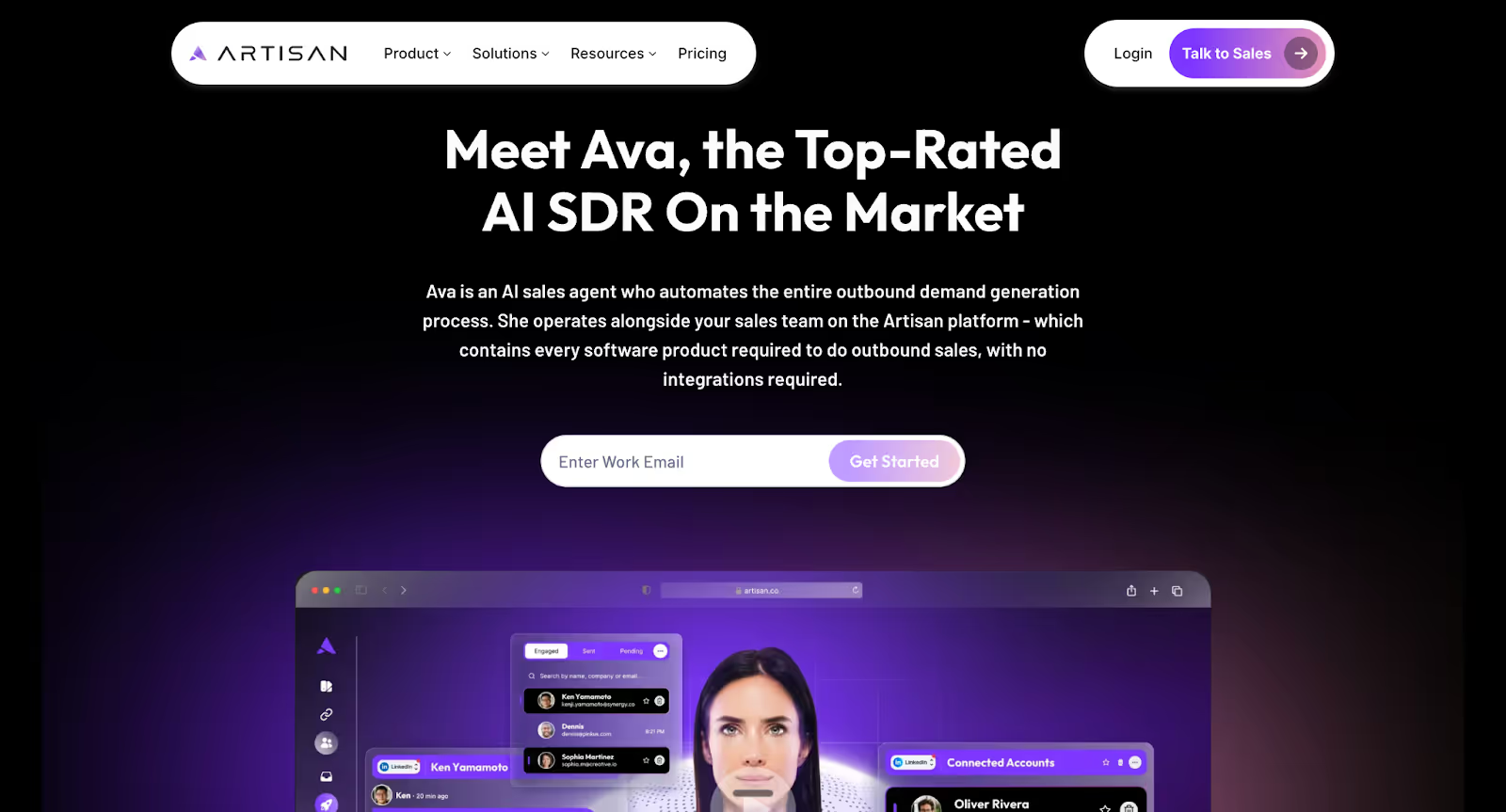
Artisan (Ava): AI BDR focused on outbound prospecting and multi-step follow-ups with persona-aware messaging. Targets pipeline creation by automating repetitive SDR tasks across sequences and research surfaces.
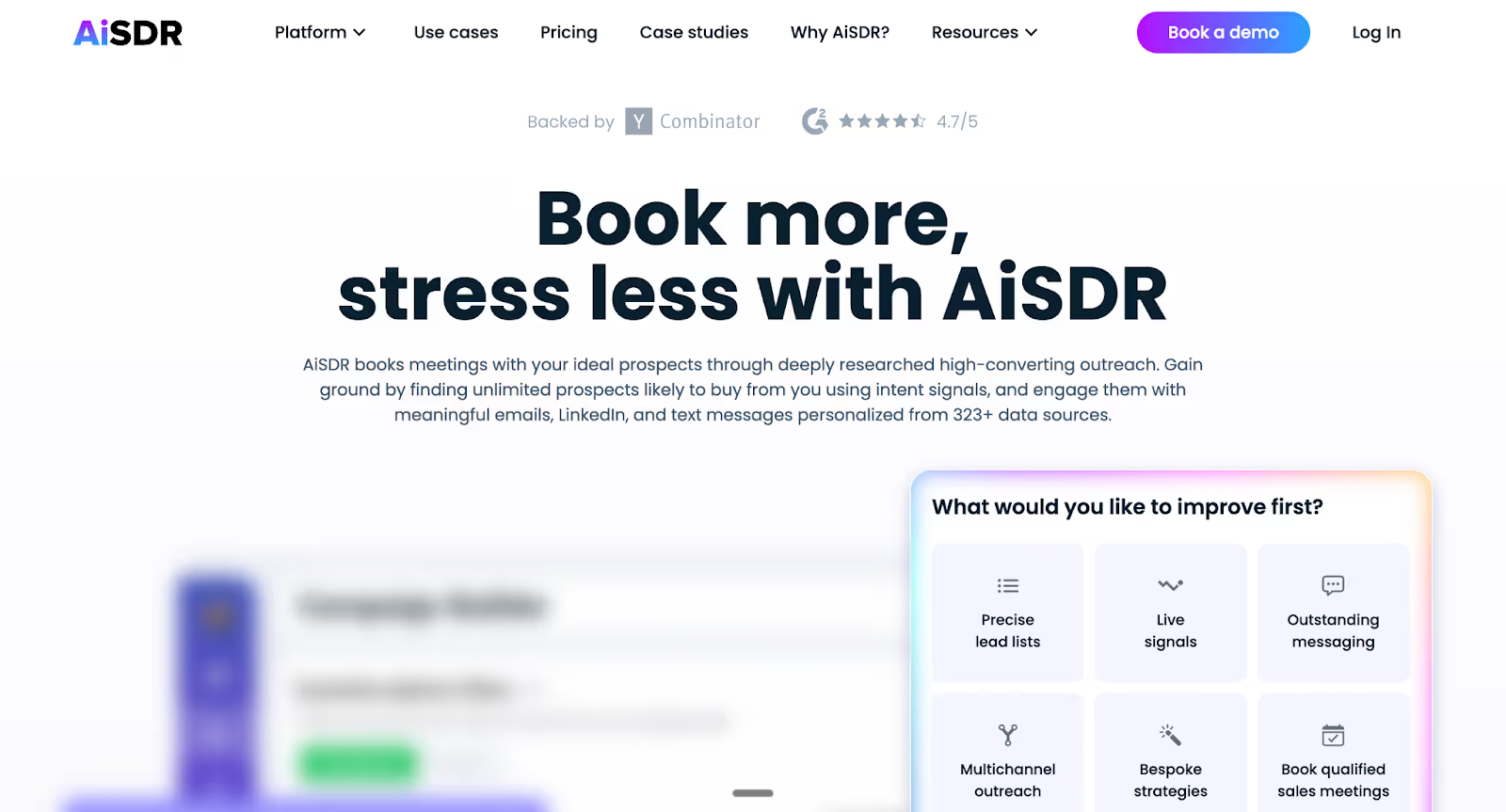
AiSDR: AI outreach platform that finds in-market prospects, personalizes messaging, and runs omnichannel conversations (email, multimedia snippets) to qualify and book meetings. Positioned for fast outbound lift.
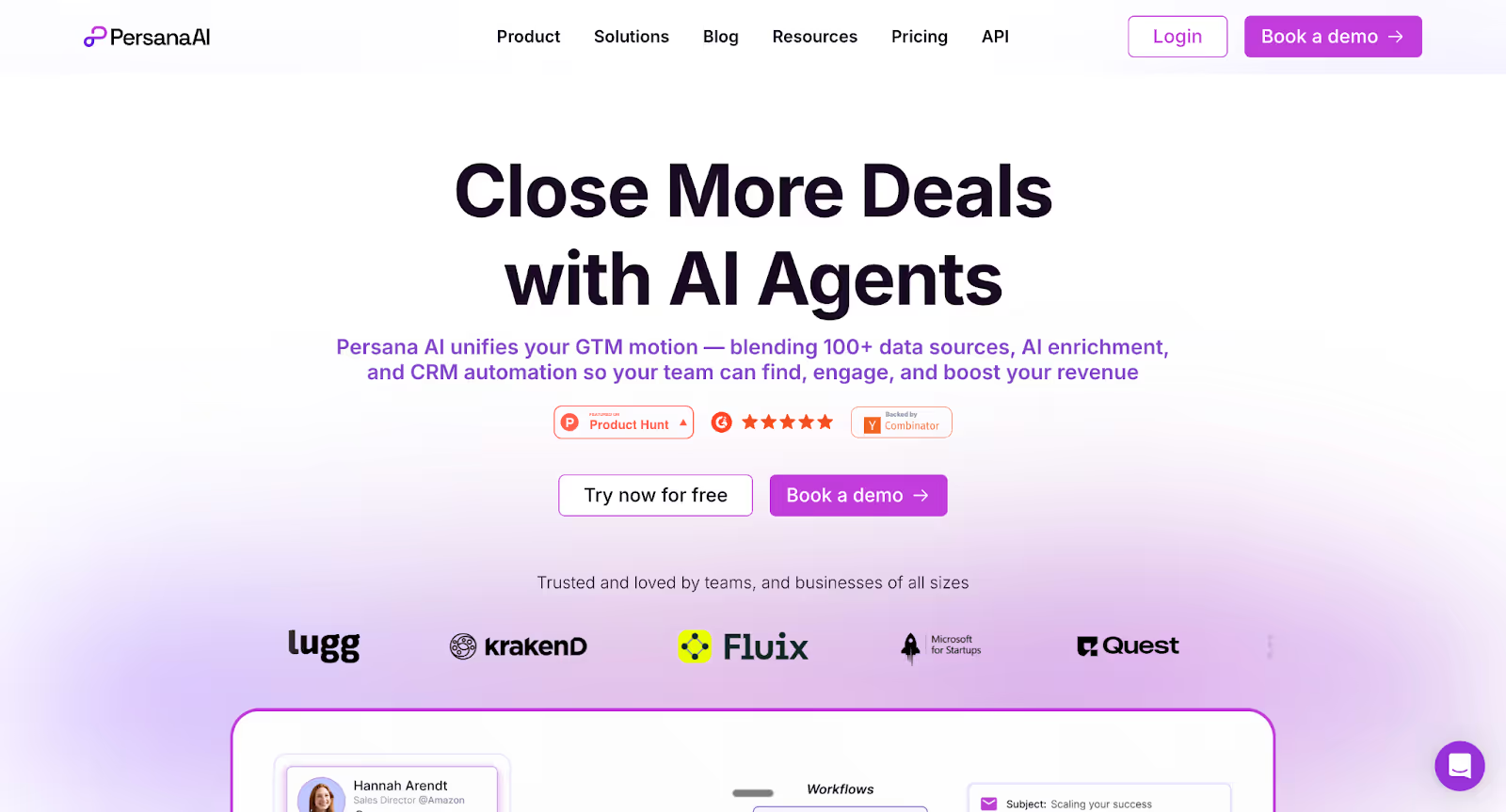
Persana AI: Outbound personalization engine that leverages multi-source enrichment to generate context-aware messaging at scale. Popular in stack roundups where personalization quality matters.
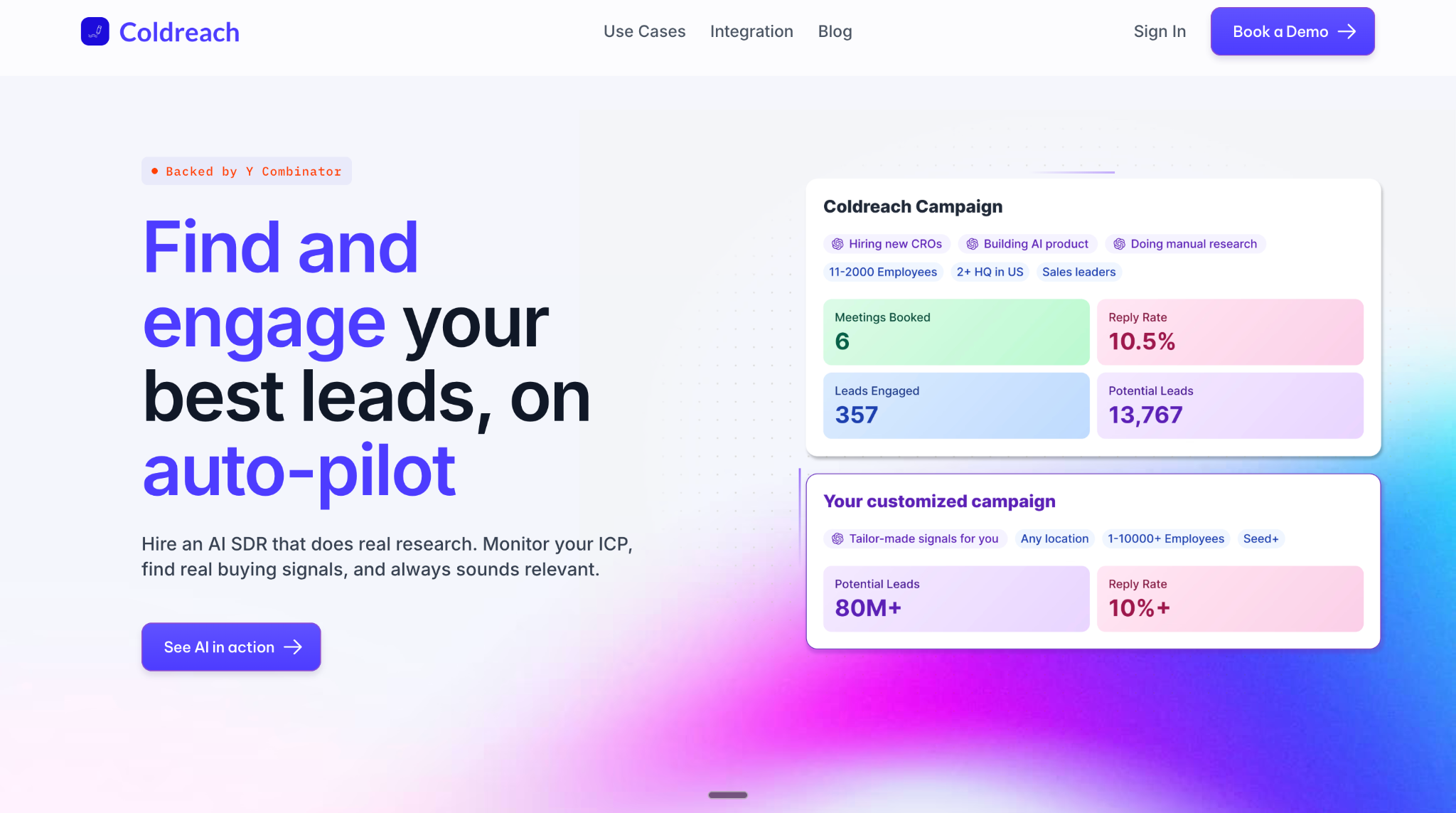
Coldreach: Research-driven outbound AI SDR that identifies high-intent accounts using buying signals (hiring, news, LinkedIn changes), enriches lead context, and generates personalized outreach across email and LinkedIn. Focused on high-quality replies over volume, with ~3.8% average reply rate.
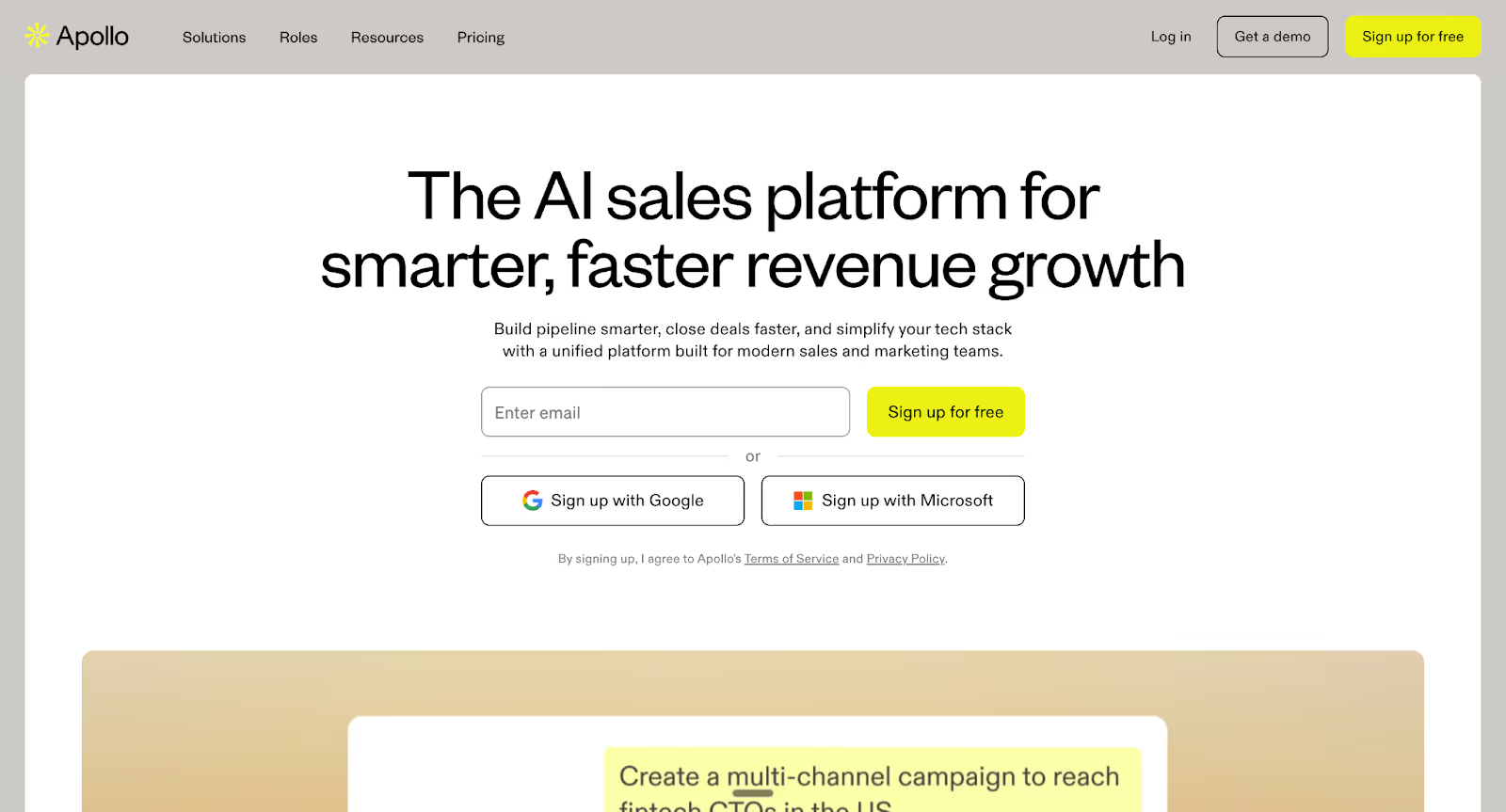
Apollo: Large B2B database with sequencing, enrichment, and outreach capabilities used as a baseline in many SDR stacks. Strong data coverage and integrations make it a common pairing with AI SDR agents.
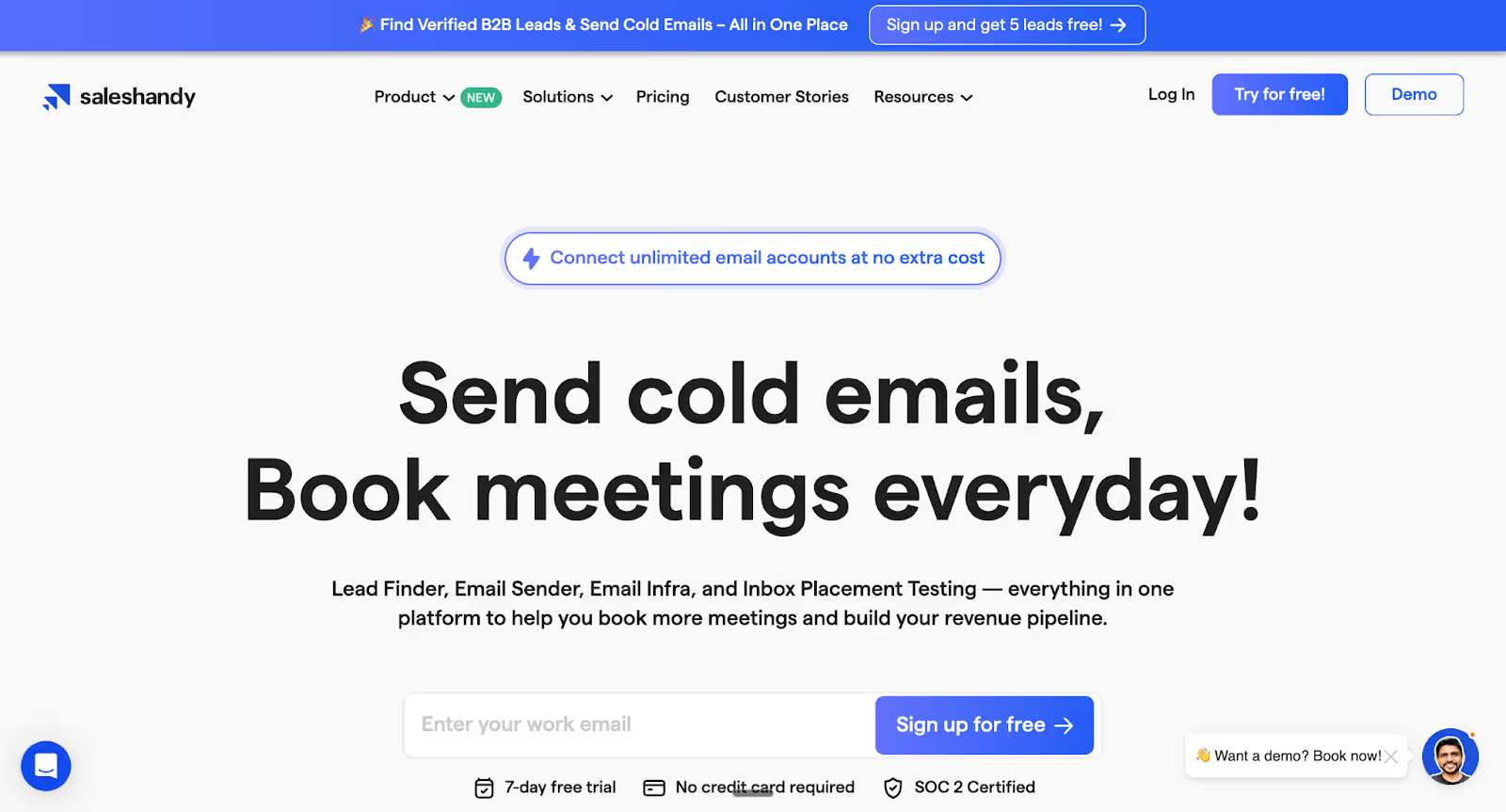
Saleshandy: AI-assisted email outreach platform with deliverability controls, sequencing logic, and campaign personalization. Frequently included in outbound tool lists for SDR efficiency.
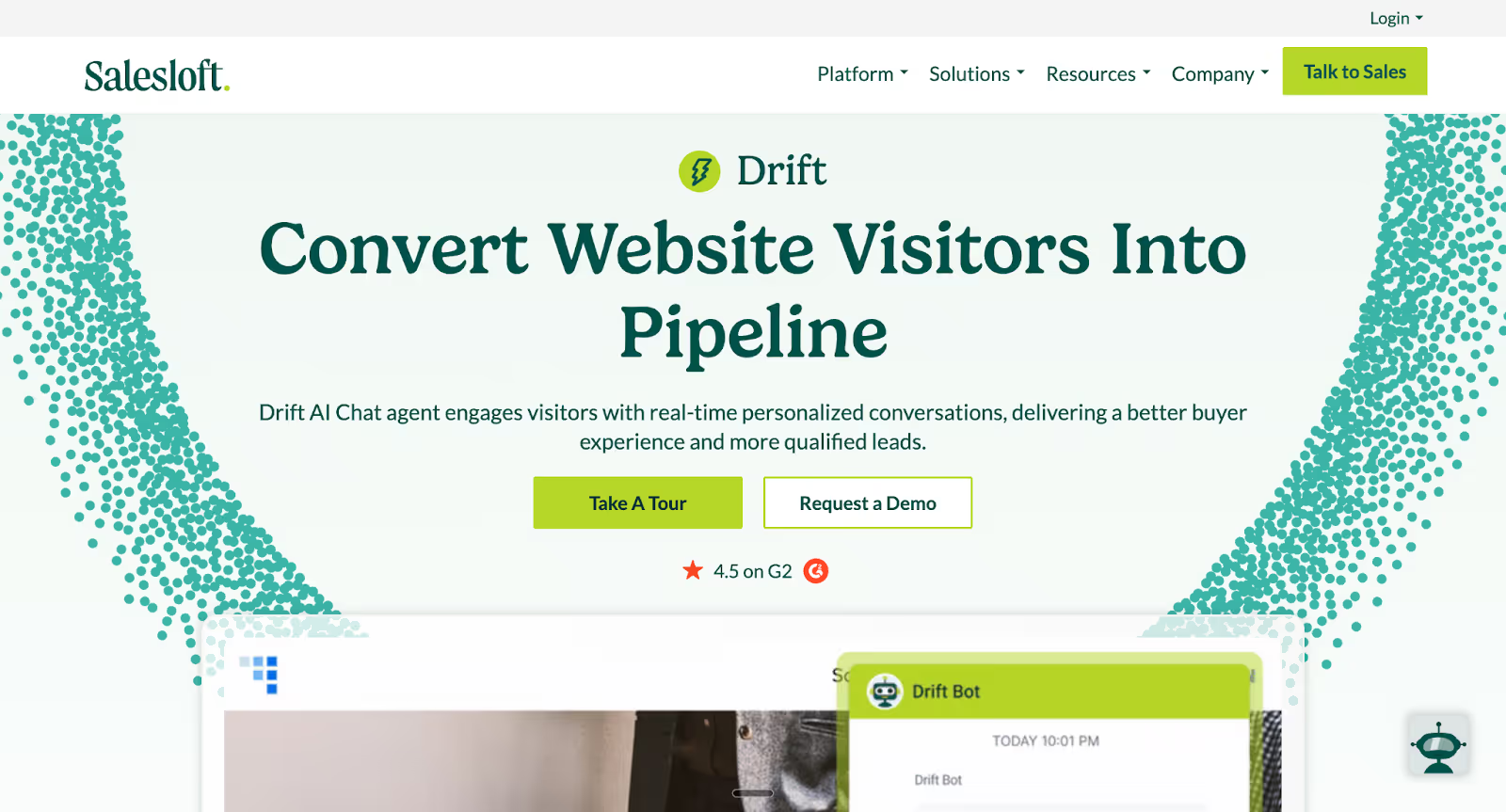
Drift: A Conversational marketing and chat routing platform that engages website visitors in real time and books meetings into sales calendars. Focuses on accelerating the pipeline via live chat workflows.
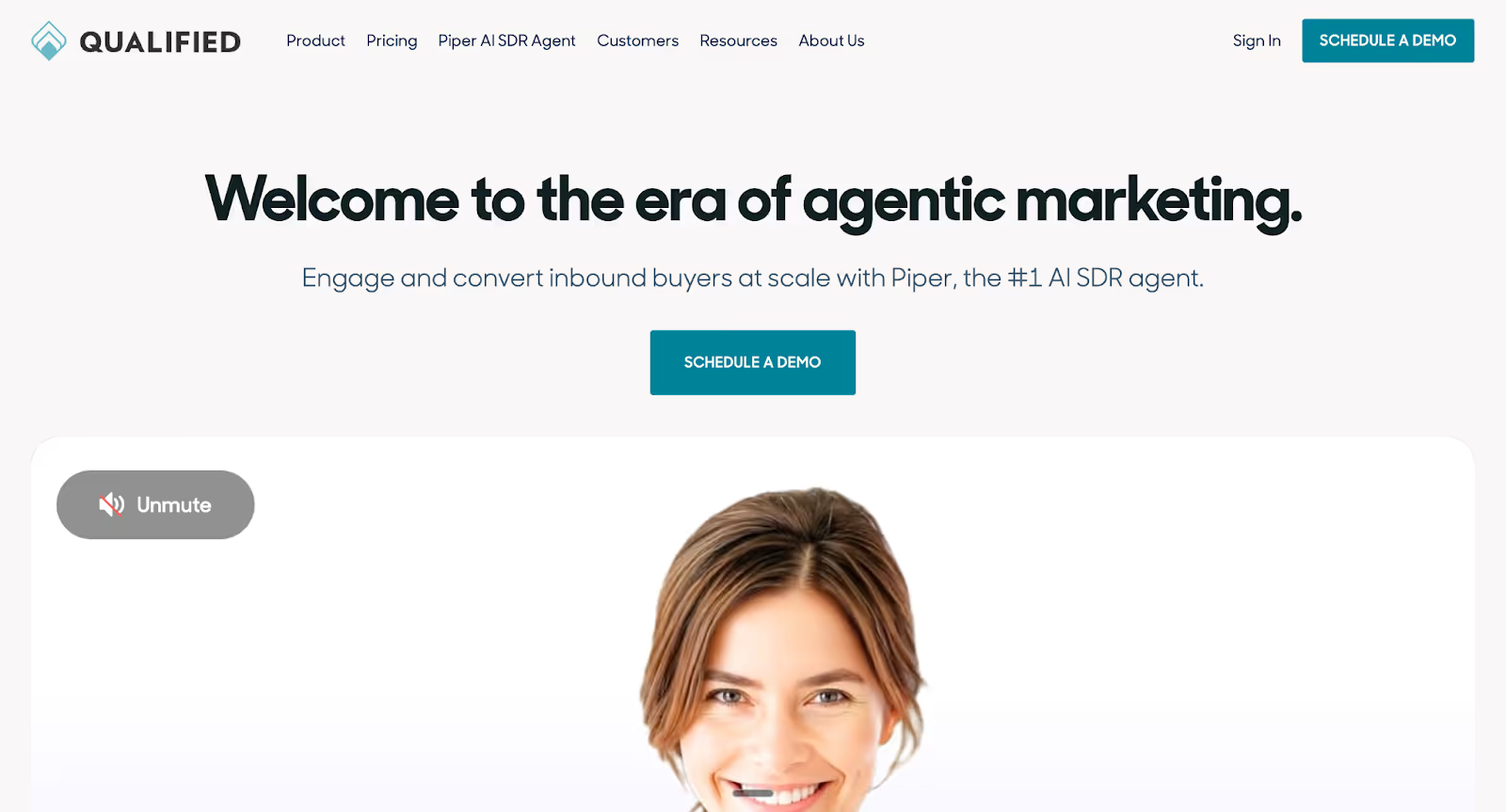
Qualified: AI-assisted website conversion and pipeline qualification platform for Salesforce-first ecosystems. Analyzes visitor intent, routes to reps, and accelerates enterprise PLG funnels.
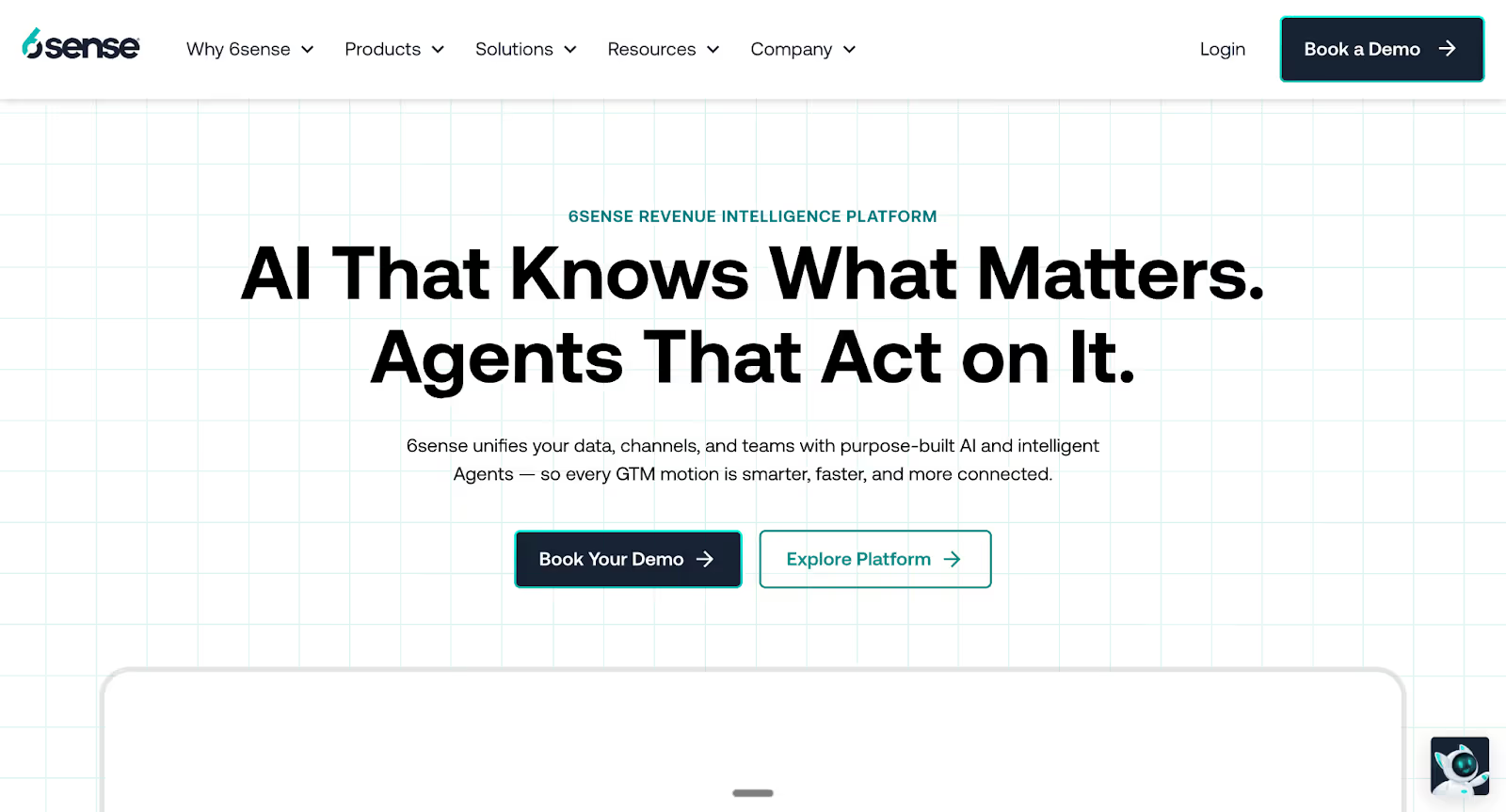
6sense: Account intelligence platform that surfaces buying intent, signals, and timing to prioritize outreach. Powers AI-driven account selection and reduces waste in outbound targeting.
Luru: Emerging outreach agent that combines LinkedIn and email personalization with automated research inputs. Gaining traction in community threads for SDR productivity.
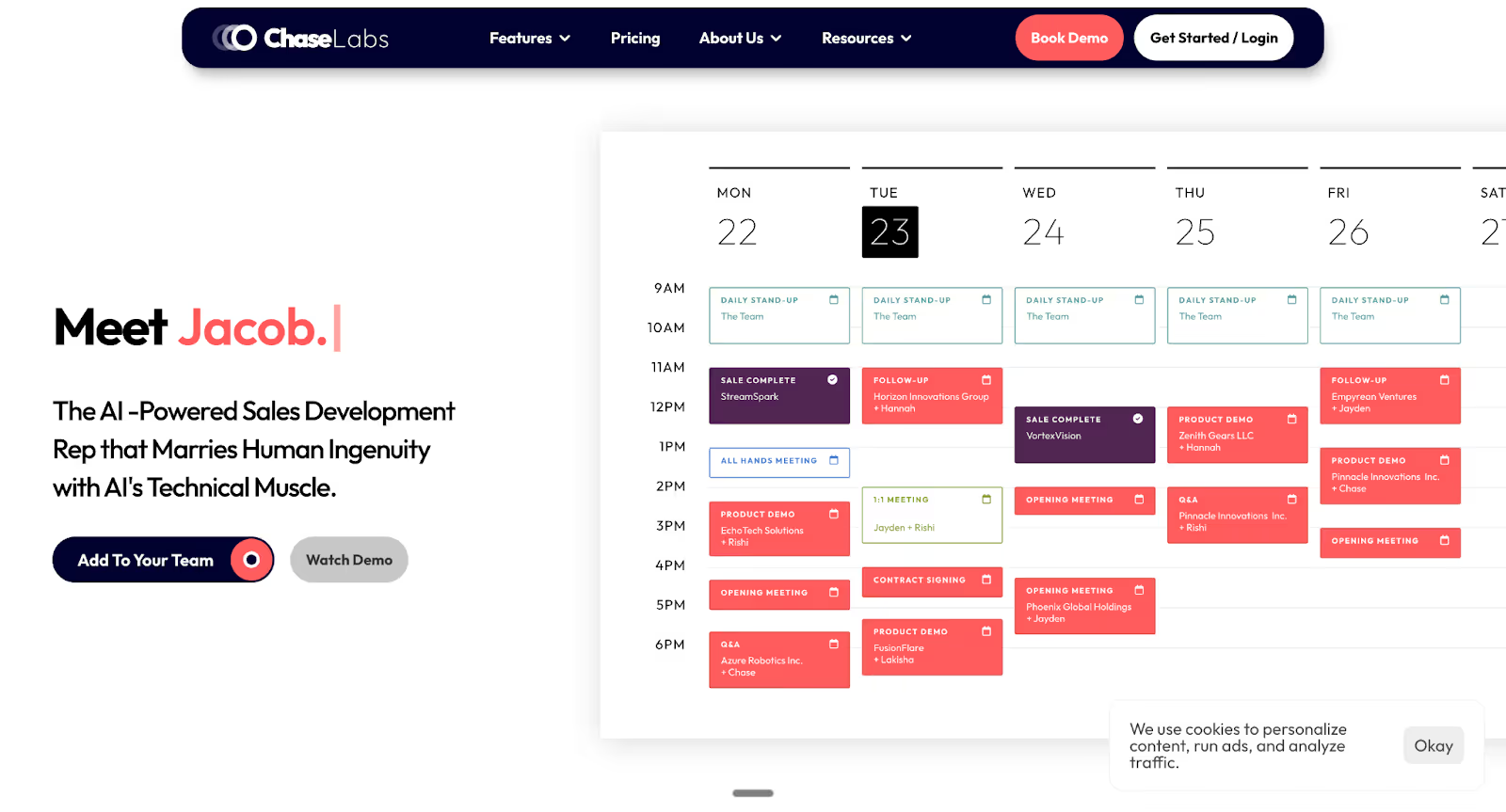
Chase (ChaseLabs): AI SDR platform referenced in multichannel agent discussions, supporting email outreach and qualification workflows. Often evaluated in landscape comparisons for outbound motions.
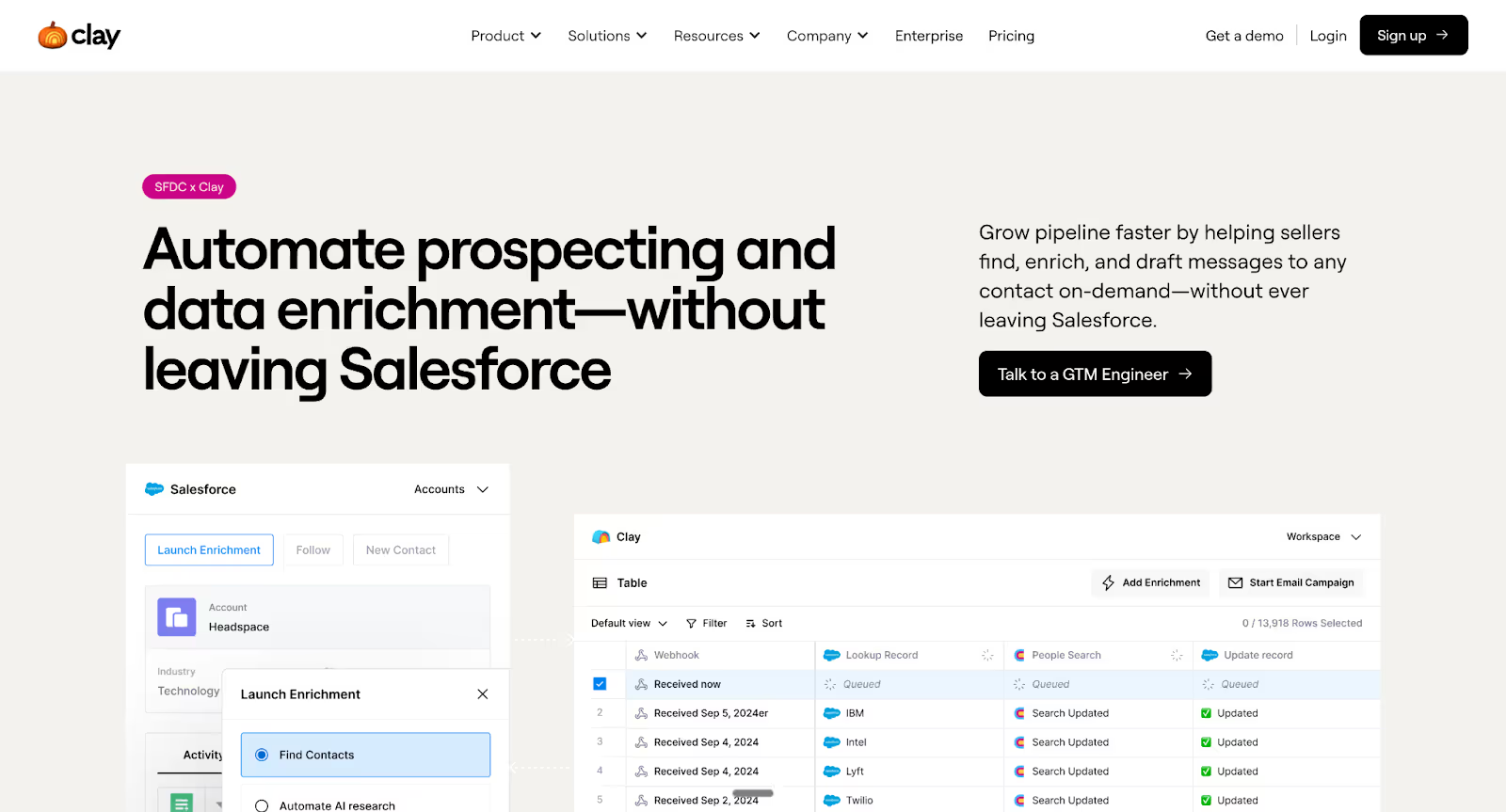
Clay: Enrichment and personalization logic engine that blends multiple data sources to generate highly tailored outreach. Frequently described as the “AI data layer” inside outbound SDR stacks.
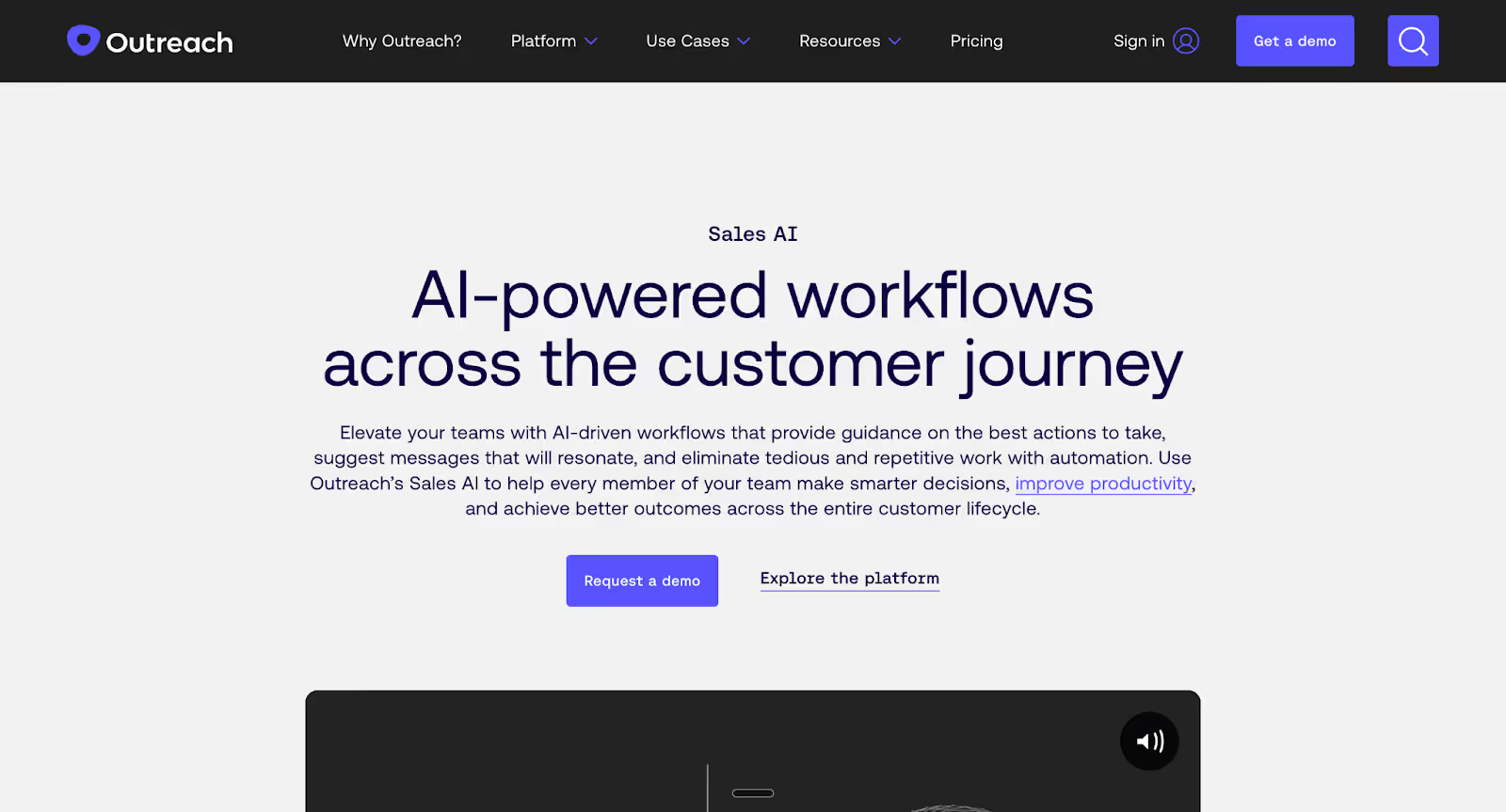
Outreach: Enterprise sales engagement platform that orchestrates sequences, task management, and seller workflows. Serves as the backbone that many AI SDR agents plug into for execution and reporting.
What Is an AI SDR?
AI SDR meaning / what is an AI SDR / what is AI SDR
An AI SDR (AI Sales Development Representative) is a software-based, agentic system that automates early-stage sales development tasks, including researching prospects, enriching contact context, engaging across multiple channels, qualifying inbound or outbound interest, booking meetings, and updating CRM records. These platforms use machine learning, intent detection, and conversational automation to respond instantly, gather missing information, and route opportunities to the correct sales representative.
Core capabilities include:
Prospect research and data enrichment
Multichannel engagement across web chat, email, LinkedIn, and messaging apps
Buyer intent detection and routing rules
Qualification against ICP and use-case criteria
Automated meeting scheduling and calendar handoffs
CRM updates, such as notes, tags, statuses, and ownership
Follow-up sequences and next-step reminders
Contextual responses trained on product knowledge and historical conversations
Why AI SDRs Matter in 2026
From copilots to agents
Large enterprise vendors are shifting from simple AI assistants (“copilots”) to fully role-based AI agents that embed directly into sales workflows. For instance, Oracle launched AI agents in early 2026 designed to update company records, generate reports, and manage complex tasks that typically required sales rep intervention. These developments signal that sales teams can offload more admin and data-wrangling work, freeing human reps to engage where they add the most value. (Source)(Source)
Real-world seller workflows
On the front lines, sales reps are using AI tools not to replace human interaction but to augment it. For example, at Salesforce, sellers use the “Agentforce” AI tool and associated features to research clients, prep calls, simulate objections, and update statuses. As noted by BI: “The human side is having the conversation… then AI is there to complement, to help you make sure you captured all the needed feedback,” (Source)
These tools help with tasks like gathering background, summarising previous interactions, and flagging next steps, tasks that are unstructured, time-consuming, and often overlooked.
Use-Case Map: Where AI SDR Tools Fit
AI SDR platforms contribute value across different parts of the revenue funnel. Most modern revenue teams blend multiple categories to improve pipeline velocity, enhance qualification accuracy, and reduce the manual workload placed on human SDRs.
Prospecting and Lead Intelligence (6sense, Clay, Apollo, Knock AI in a supporting role)
This category surfaces in-market buyers, intent signals, and enrichment data that inform SDR prioritization. 6sense identifies accounts researching relevant topics and highlights timing signals. Clay blends multiple enrichment sources to generate tailored personalization attributes. Apollo provides a large B2B contact dataset that SDRs can use for top-of-funnel targeting. Knock AI enriches inbound conversations with first-party intent signals from on-site and off-site activity, allowing teams to prioritize outreach, route high-intent buyers instantly, and feed structured context into CRM for more accurate qualification.
Best for: discovering when accounts are actively researching solutions Outcome: higher engagement rates due to better timing and segmentation
Email Personalization and Writing Support (Artisan, AiSDR, Saleshandy)
These platforms generate persona-aware outbound messaging, reduce manual writing and create variant templates for testing. Artisan generates conversational outbound outreach informed by role context. AiSDR produces short-form messages with optional multimedia personalization. Saleshandy adds automated personalization rules and deliverability controls.
Best for: improving outbound message relevance without extra effort Outcome: more replies and higher meeting acceptance
Sales Engagement and Outreach Automation (Outreach, Apollo, Saleshandy, Knock AI as a complementary intake layer)
Sales engagement platforms orchestrate multi-step cadences, reminders, and task queues across large prospect lists. Outreach standardizes follow-ups for enterprise sales teams. Apollo and Saleshandy enable scalable outbound volume with consistent delivery. Knock AI complements this category by capturing inbound intent on chat and messaging surfaces the moment it appears, qualifying leads in real time and routing them to the correct representative, which means sequences begin from cleaner, intent-verified opportunities.
Best for: keeping large outbound motions consistent and actionable Outcome: fewer dropped leads and stronger sequence performance
Conversation Intelligence and Call Coaching (SalesEcho, Otter sales agents)
This category analyzes live or recorded calls to surface patterns, objections, and coaching signals. SalesEcho provides real-time objection handling guidance, talk-ratio coaching, artifact-grounded prompts, and post-call analytics that show coaching opportunities. Otter produces structured summaries and action items that can be passed into a CRM.
Best for: supporting reps during live conversations and improving coaching outcomes Outcome: better discovery calls and more confident objection handling
AI Agents and Autonomous SDR Assistants (11x digital workers, Oracle agents, Salesforce agents, Knock AI for inbound autonomy)
Agentic systems perform SDR tasks with limited human involvement. 11x deploys digital workers that research, personalize, send outreach, and update CRM objects. Oracle and Salesforce continue to ship role-based sales agents that draft follow-ups, summarize calls, and manage data hygiene. Knock AI applies autonomy to inbound motions by detecting intent, enriching context, answering questions from learned knowledge, qualifying prospects, and booking meetings directly inside messaging channels.
Best for: scaling SDR capacity without adding headcount Outcome: increased output and reduced administrative labor
Website Conversion and Inbound Chat SDRs (Knock AI, Drift, Qualified)
These systems engage prospects at the moment of highest buying intent. Knock AI engages and captures leads on messaging apps like Slack, LinkedIn, and WhatsApp, enriching data, detecting intent categories, and routing to the correct calendar while improving responses over time. Drift and Qualified focus on real-time website chat routing and handoffs on website surfaces.
Traditional website chat flows move inbound interest into outbound email follow-ups, which creates a high risk of losing the lead once they abandon the page. Messaging-first AI SDRs continue the conversation in Slack, WhatsApp, and LinkedIn, preventing drop-off.
Best for: replacing slow form funnels and reducing abandonment Outcome: faster qualification and more booked meetings from inbound traffic
Scheduling, Routing, and CRM Automation (Knock AI intent-based agents, Otter API to CRM)
This category automates handoffs across sales reps, territories, and departments. Knock AI uses intent-based logic to route prospects to the correct representative, update CRM records, book meetings, and send Linkedin follow ups. Otter can send structured summaries into CRMs to maintain data quality after live calls.
Best for: multi-team organizations with complex routing rules Outcome: higher qualified pipeline and more accurate CRM activity
Quick Contextual Table
Tool Type
Best For
Example Outcomes
Prospecting and Intent
Timing outreach
Higher engagement rates
Personalization Engines
Better outbound copy
More replies booked
Sales Engagement
Multi-step sequences
SDR workload consistency
Conversation Intelligence
Coaching insights
Better objection handling
Autonomous Agents
Capacity scaling
Reduced manual admin
Website Chat SDRs
On-page conversion
Lower form abandonment
Routing and Scheduling
Calendar accuracy
Higher qualified pipeline
See Knock AI in Action — Book Your Live Demo Today
Knock AI is a messaging-first inbound SDR that engages leads instantly inside the channels they already use, including Slack, LinkedIn, and WhatsApp. Instead of relying on forms or delayed manual follow-ups, Knock AI detects buyer intent, enriches information in real time, answers from continuously learned knowledge, qualifies prospects, routes conversations to the correct human representative, and books demos automatically. Teams can monitor conversations live, improve responses, and deploy multiple agents for different inbound intents.
Key Features
Messaging-first engagement inside Slack, LinkedIn, and WhatsApp for the best experience per channel (no forms, no email lag)
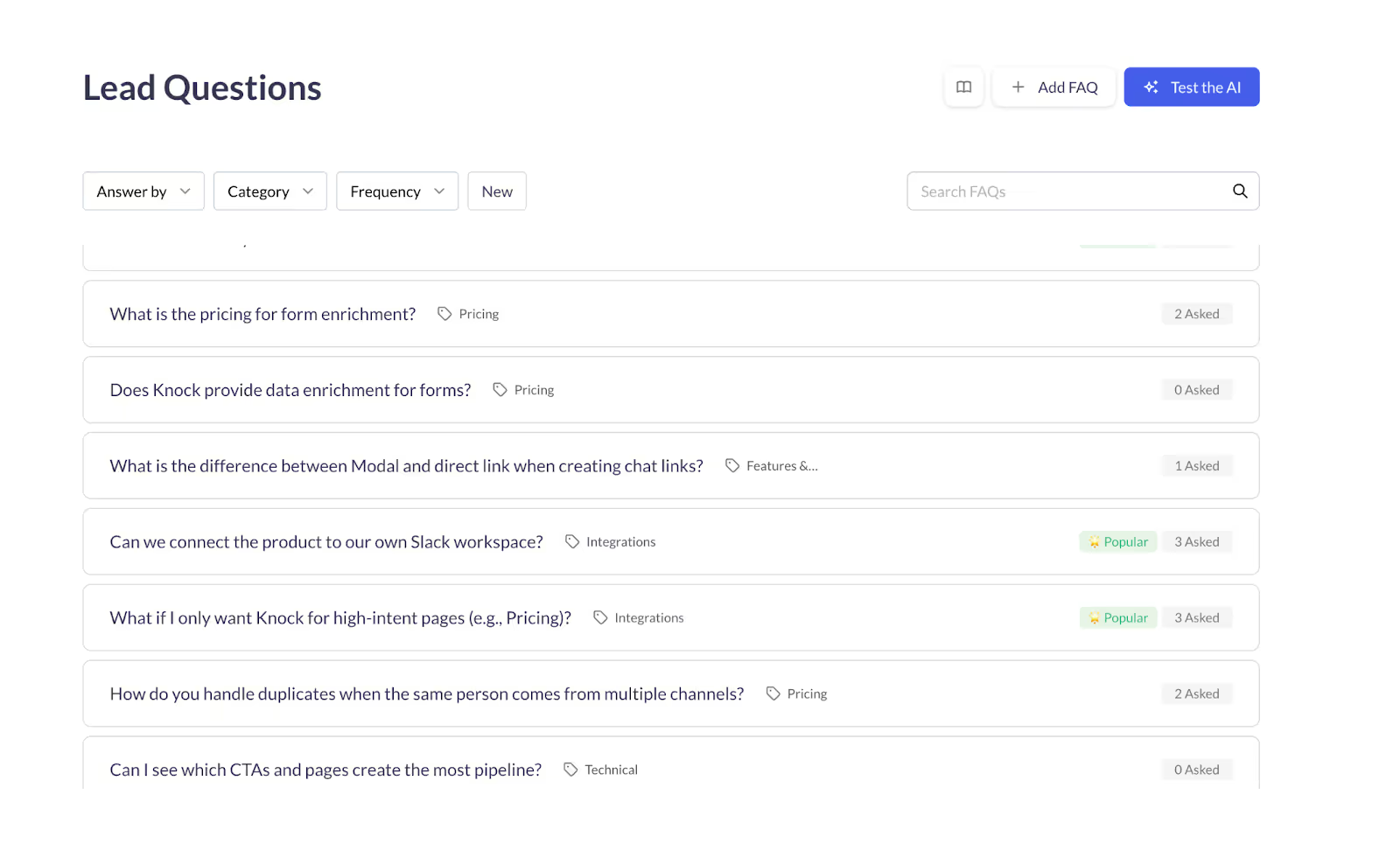
Continuous learning to improve answer quality as new questions appear
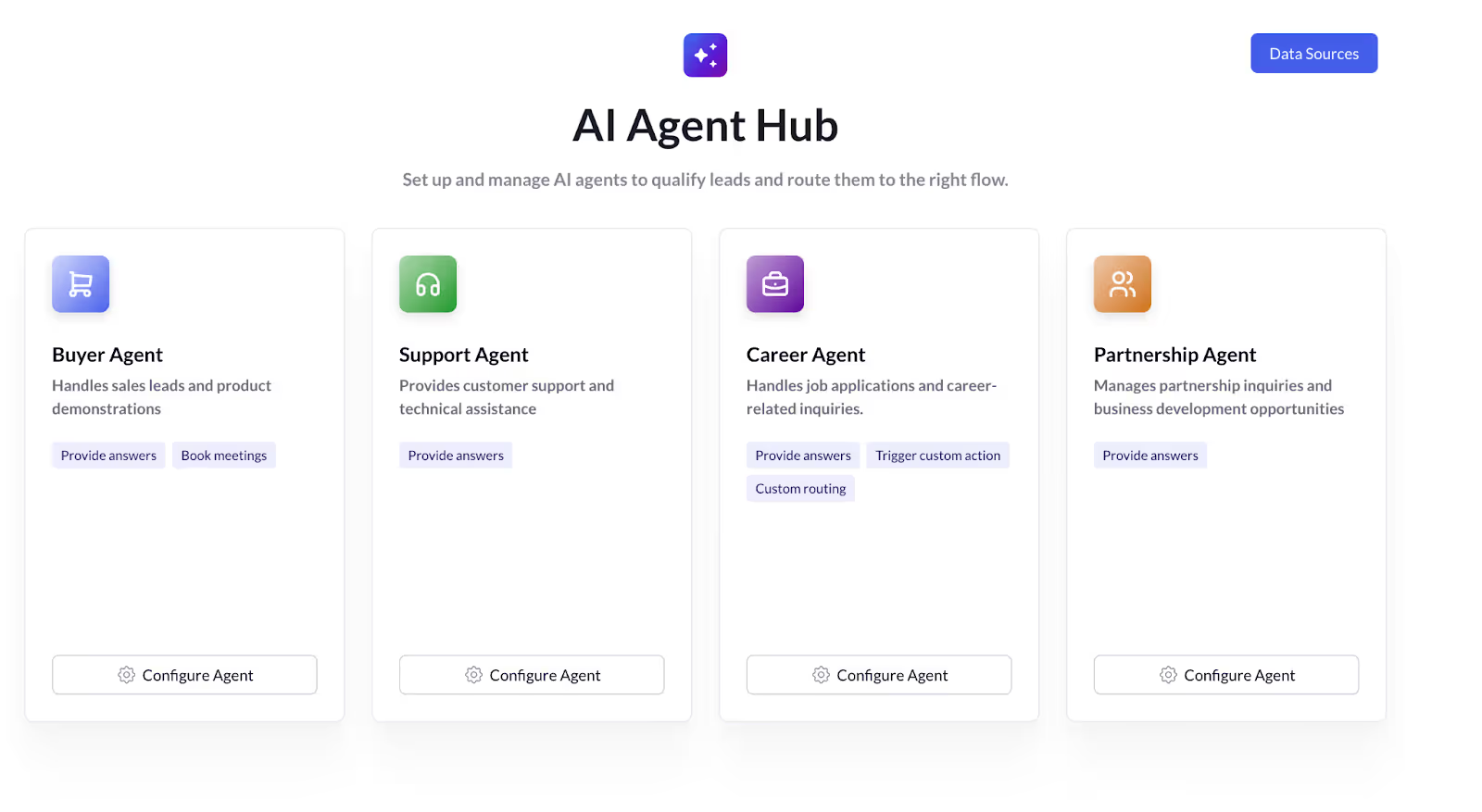
Intent detection across sales, support, partnerships, customer questions, and more
Real-time enrichment for cleaner CRM records and faster qualification
Qualification workflows configured by ICP, territory, segment, or use case
Automatic routing to the correct human rep based on rules you set
Instant demo scheduling connected to rep calendars
Live monitoring so humans can supervise and take over conversations instantly
Improve agent responses by editing approved knowledge and workflows.
Personal links for reps (drive prospects straight into a high-intent chat)
Agent per intent to avoid collisions between sales, support, partner, and success conversations
Agent-per-intent keeps cross-department traffic separate and organized.
Setup typically takes around one hour from connect → configure → go live.
Cons
Does not run outbound email sequencing or cadences
Conversation intelligence for recorded calls must be paired with another tool.
Complex routing rules may require upfront planning for optimal performance.
Teams with high outbound volume also need traditional engagement platforms.
Pricing
Knock AI publishes transparent pricing starting from $2,000/month. All tiers include AI agents at no extra per-agent cost. Plans range from Pipeline Foundation ($2,000/mo) through Pipeline Acceleration ($3,500/mo) to custom Enterprise.
Pricing typically varies based on:
Monthly inbound volume
Unlimited seats
Teams should request a quote via demo to match capacity, intent volume, and CRM architecture.
RevOps teams who want cleaner CRM records and fewer manual handoffs
Sales teams who need faster access to buyer context
Companies with multiple inbound use-cases (sales, partnerships, support)
Primary outcomes:
More qualified meetings booked faster
Reduced no-shows for booked meetings(calendar friction removed by messaging-first reminders and confirmation logic)
X5 pipeline generated from inbound traffic (when intent is captured instantly and enriched in real-time)
Lower abandonment on marketing pages
AI agent qualifies and rejects non-relevant leads with no human touch, reducing SDR workload per lead
Higher routing accuracy
Improve CRM enrichment with accurate high coverage data
Shorten the sales cycle time by an average of 30 percent
Bottom Line
Knock AI turns inbound traffic into high-intent, qualified conversations across the messaging apps prospects already use. By combining intent detection, enrichment, qualification, routing, and scheduling into one workflow, it eliminates handoff friction and pipeline leaks without increasing headcount.
#2. 11X
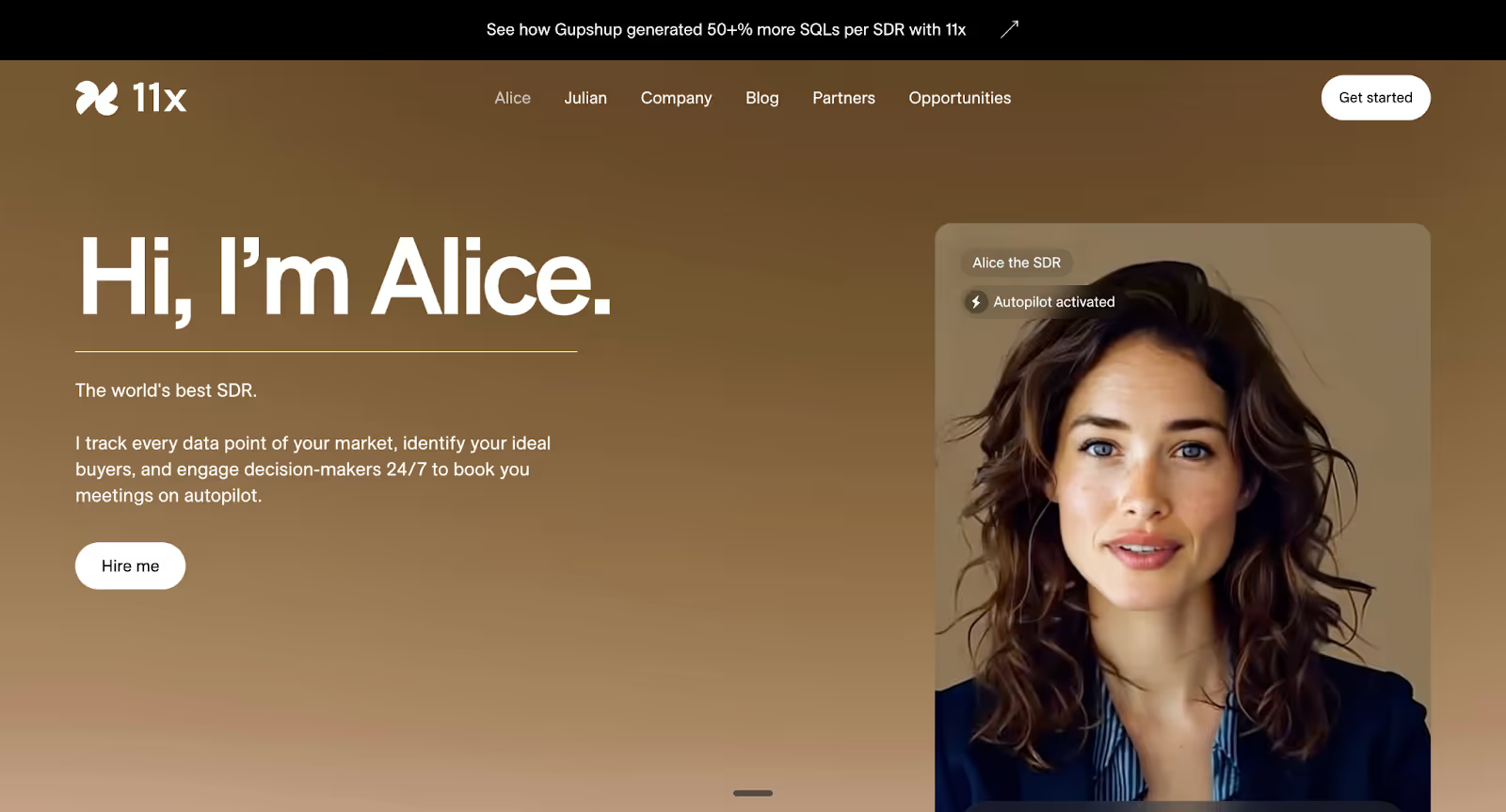
11x is an AI-driven sales development platform that deploys “digital workers” (AI SDR agents) to automate and scale outbound and inbound prospecting, outreach, and meeting booking workflows. Its flagship agent (often called “Alice”) handles lead research, outbound sequencing via email/LinkedIn, reply handling, and meeting setting around the clock.
Key Features
Fully autonomous AI SDR agents that prospect, personalize outreach, and book meetings.
Multi-channel outreach including email and LinkedIn with personalization based on role, company, and data.
Continuous learning and optimization of messaging and targeting as interactions accumulate.
Prospect identification and lead enrichment: the tool supports mapping ICPs, gathering contacts, verifying data, and building lists.
Reply handling and scheduling: once outreach opens up, 11x moves toward scheduling meetings and qualifying replies.
CRM and calendar integration for seamless hand-off of booked meetings and captured data.
Pros & Cons
Pros:
Automates large parts of the SDR workflow, reducing manual effort.
Scales outreach volume across time zones (24/7 capability) for higher pipeline throughput.
Combines lead generation + outreach + booking in one tool (for teams able to define ICPs and flows).
Strong from a volume-outbound lens, especially for teams aiming to increase top-of-funnel activity.
Cons:
Less strong when deep personalization, bespoke accounts, or highly regulated verticals are required (some reviews say messages feel basic).
Pricing and contract terms are not simple and may require significant budget (some review estimates ~$5,000/month or more) for high-volume use.
Requires a well-defined ICP, a clean list, and internal infrastructure to manage booked meetings and a follow-up, automation alone won’t solve poor process.
Because the focus is on volume/outbound, teams with inbound-heavy or account-complex motion may find the fit less ideal.
Pricing
11x does not publish a fully transparent, fixed pricing table. Based on multiple review reports and public commentary, estimates suggest entry-level programs start around $5,000/month, with higher tiers running $5,000-$10,000/month or more, depending on outreach volume, number of digital agents, channels used, and contract duration. Teams should contact 11x for a tailored quote based on their ICP, outreach scale, and automation goals.
#3. Artisan
Artisan is an outbound-focused AI SDR/BDR platform powered by the AI agent “Ava”. It automates the entire outbound demand generation workflow: finding leads, researching, crafting personalized outreach (email + LinkedIn), executing sequences, and handing off qualified replies. The platform combines a large built-in B2B database, data enrichment, deliverability tools, and automation, all designed to scale outbound workflows with fewer human SDRs.
Key Features
AI agent “Ava” that researches leads from a database of 300 M+ verified B2B contacts and dozens of data sources.
Outbound sequence builder across email and LinkedIn with a personalization waterfall that picks the best messaging variant per prospect.
Automation of up to ~80% of outbound SDR tasks (research, initial messaging, follow-ups) as the vendor claims.
Email deliverability suite: warm-up, send limits, and domain health monitoring built into the platform.
Data enrichment, intent signals, and technographic/firmographic filters are embedded into the platform.
All-in-one subscription to replace multiple point tools: lead data, outreach, warm-up, and analytics.
Pros & Cons
Pros:
Automates large portions of outbound workflow, reducing manual steps and cost per meeting.
Able to scale outreach volume quickly and supports multiple channels (email + LinkedIn).
Reviewers say the interface and support are strong for mid-market teams.
Cons:
Pricing is opaque; custom quotes only, which makes benchmarking difficult.
Some users report that messaging feels generic or requires supervision for optimal results.
Less suited for highly complex, account-based selling motions where deep personalization is essential.
Still best for standard outbound flow, not primarily inbound messaging or qualification via chat.
Pricing
Artisan does not publicly list fixed pricing tiers. The website states that pricing is based on outreach volume, number of leads, and seats. External reviews estimate starting pricing around $2,000/month for basic tiers and higher for advanced features and volume.Prospective buyers should contact Artisan for a custom quote that matches their lead volume and campaign requirements.
#4. AiSDR
AiSDR is an AI-powered outbound engagement platform designed to find in-market buyers, generate personalized outreach, run omnichannel conversations, and book meetings automatically. It focuses on speed-to-ramp and minimal setup, allowing teams to launch campaigns in just a few clicks. AiSDR handles reply management, follow-ups, and lead qualification while syncing outcomes back into your CRM.
Key Features
3-click campaign creation for rapid launch of outbound workflows
Omnichannel outreach, including email and multimedia messaging
Automatic reply handling that moves conversations toward meetings
Strong for teams that want automation across follow-ups and reply handling
Simplifies the outbound SDR workflow into a single platform
Reduces manual inbox inspection and message juggling
Cons
Primarily outbound: less effective for inbound messaging qualification
Personalization depth varies depending on data quality.
Companies with complex account-based motions may require human oversight.
Some users report best results when paired with strong ICP filters.
Pricing
AiSDR does not publish fixed pricing tiers publicly. Pricing is quote-based and typically varies depending on outreach volume, channel usage, intent detection, and meeting booking capacity. Prospective buyers should request a custom plan aligned to their SDR workflow, target accounts, and CRM environment.
#5. Persana AI
Persana AI is an outbound personalization and intelligence platform built for SDRs who want highly tailored messaging at scale. It combines multiple enrichment sources, intent signals, and personalization frameworks to power outbound and follow-up campaigns geared toward higher engagement rather than pure volume.
Key Features
Enrichment from multiple data sources, including intent, technographics, and firmographics
Personalization logic that adapts messages based on profile attributes and past behavior
Stacked outbound cadences that integrate with CRM and outreach platforms
Insights dashboards showing which messages and segments drive replies
Campaign templates optimized for SDR workflows and playbooks
Integration with popular outreach tools to layer personalization on top
Pros
Improves the relevance of outbound messaging and increases reply quality
Helps mid-market SDR teams differentiate in crowded inboxes
Strong data foundation prevents generic “spray and pray” outreach.
Good for teams focused on pipeline velocity rather than sheer volume
Cons
Not built as a full end-to-end SDR “agent” that books meetings itself.
Additional stack complexity may require training and data governance.
Better suited for outbound motion; less emphasis on live chat or inbound qualification
Pricing may be less accessible for smaller teams.
Pricing
Persana AI publishes no general public pricing. Plans are tailored based on contact volume, personalization depth, intent layers, and campaign scale. Prospective buyers should connect with Persana AI’s sales team for a quote aligned with their outreach goals.
#6. Coldreach
Coldreach is a research-driven AI SDR platform built for B2B outbound teams that prioritize precision over template-based sequencing. It identifies high-intent accounts, enriches lead context using signals like hiring activity, company news, and LinkedIn changes, and generates personalized outreach across email and LinkedIn. It is designed for teams that care more about response quality than raw volume, with a reported 3.8% average human reply rate across 500,000+ cold emails.
Key Features
Signal-based targeting using hiring, company news, and LinkedIn activity
Automated enrichment of lead context from multiple data sources
Personalized outreach generation across email and LinkedIn
Continuous monitoring of ICP accounts for buying signals
Custom intent definitions based on product and use case
CRM integrations for syncing outreach and lead data
Pros
Strong focus on high-intent, signal-driven outreach
Higher reply rates compared to template-based sequencing
Reduces manual research effort for SDR teams
Personalization improves outreach quality and engagement
Cons
Focused on outbound workflows rather than inbound engagement
Requires clear ICP and intent definitions for best results
May need onboarding to fully leverage signal-based targeting
Pricing Coldreach uses a demo-led pricing model and does not publicly list fixed tiers. Pricing typically varies based on contact volume, features, and level of customization. Teams should request a demo to receive a tailored quote based on their outbound needs.
#7. Apollo
Apollo is a B2B data and engagement platform that combines a large contact database, sequence automation, and sales intelligence. It is commonly used by SDR teams as a data backbone and outreach engine. While not strictly an autonomous “AI SDR agent,” it supports scaling outbound and enabling SDR-driven workflows.
Key Features
Huge B2B contact and company database with firmographic, technographic, and intent filters
Built-in email and LinkedIn sequencing and automation
Enrichment and verification of contact data
CRM integration and activity syncing
Analytics and reporting on sequence performance, reply rates, and meeting booking
Sales intelligence layers, including buyer behavior trends
Pros
Strong for teams that need reliable data and sequencing under one roof
Affordable entry point compared to more agent-heavy platforms
Easy to use for standard outbound motions
Works well as part of a stack where personalization or intent-driven logic is handled upstream
Cons
Does not offer full autonomous agent behavior (e.g., self-booking, intent-routing) out of the box
May require additional tools for personalization, enrichment, or inbound chat qualification
Data quality still depends on list hygiene and CRM input.
Outbound-centric; less suited for messaging-first inbound workflows
Pricing
Apollo publishes tiered pricing on its website: the “Basic” plan starts at around $49/month (limited features); higher tiers for sequence automation, analytics and more advanced data scale cost several hundred per month per user. For enterprise-level volume data and automation you may need to engage sales for custom pricing.
#8. Saleshandy
Saleshandy is an AI-assisted email outreach and sales engagement platform built for SDR teams running high-volume outbound campaigns. It focuses on deliverability, personalization rules, automated follow-ups and sequence performance insights. While not a fully autonomous “AI SDR agent,” it is frequently used as the outreach execution layer in outbound stacks.
Key Features
Sequence automation with smart follow-ups based on behavior
Inbox rotation and email warm-up to improve deliverability
Personalization variables and rules within cadences
Attachment tracking and link tracking inside emails
Shared inboxes for team workflows
GDPR and compliance controls for regulated outreach
Pros
Strong deliverability tooling compared to typical outreach platforms
Easy-to-launch sequences with clear analytics
Improves outbound consistency and reduces manual follow-up fatigue
More affordable than enterprise engagement tools
Flexible enough for solopreneurs through mid-market SDR teams
Cons
Not built for inbound routing, intent detection or qualification
Lacks multi-channel orchestration when compared to more advanced tools
Requires a clean ICP and list hygiene; otherwise reply quality suffers
Still requires human oversight for objection handling
Pricing
Saleshandy publishes public pricing across tiered plans. Pricing typically ranges from ~$25 to ~$150 per user per month depending on sending volume, sequence features, inbox rotation and analytics depth. Larger teams with high outbound volume should contact sales for quota-based pricing.
#9. Drift
Drift is a conversational marketing platform focused on converting website visitors into pipeline ready MQLs through live chat, chatbot handoffs, and meeting booking. It uses routing rules, GTM data and chat playbooks to qualify visitors and accelerate scheduling for sales reps.
Key Features
Conversational chatbots that guide visitors to the right path
Playbook builder for qualification flows
Meeting booking directly inside chat
Live rep takeover for high-value visitors
Routing based on account tier, ABM lists or geography
CRM syncing for context-rich handoffs
Pros
Mature platform with proven results in mid-market and enterprise GTM
Easy-to-deploy routing playbooks for common inbound motions
Reduces friction from website forms
Strong analytics across engagement paths
Cons
Primarily website chat (no Slack/LinkedIn/WhatsApp messaging)
Focused on inbound lead handoff rather than outbound prospecting motion
Every chat typically moves into email follow-ups, adding channel friction
Setup can take longer for teams with complex flows
Every website chat moves the conversation into outbound follow-ups, creating a high risk of losing the lead once they leave the website
Traditional inbound flow breaks when the visitor exits, forcing outbound email sequences
It can feel expensive for early-stage teams
Does not continuously learn from product knowledge like modern AI agents
Pricing
Drift uses quote-based pricing. Multiple industry reviewers estimate monthly costs in the low-to-mid four-figure range, depending on seat count, traffic, and automation rules. Enterprise ABM routing typically requires custom plans.
Qualified is a website conversion platform built for Salesforce-centric sales organizations. It engages high-intent visitors, identifies account-level signals and routes conversations directly into rep calendars. It is popular among PLG businesses shifting into enterprise sales motions.
Integration into revenue dashboards and attribution
Alerts to sales reps when target accounts arrive on site
Pros
Deep Salesforce integration for routing and attribution
Strong ABM support for enterprise-targeted funnels
Accurately identifies account visitors (even on anonymous traffic)
Helps demand gen teams prioritize spend and campaign focus
Cons
Focused only on website visitors.
Every chat typically transitions into email follow-ups, leading to high leakage in the funnel.
Can require dedicated admin attention in complex orgs
Pricing may extend beyond the budgets of early-stage teams
Does not provide continuous answer learning or broad intent models
Traditional inbound → outbound handoff introduces friction and drop-off
Pricing
Qualified does not publicly display pricing. Third-party reviews suggest entry tiers begin in the four-figure monthly range, with enterprise routing costing more based on traffic and account targeting complexity. Custom Salesforce dashboards can increase deployment cost.
Insight: Website chat converts inbound interest into outbound follow-ups. Once the visitor leaves, the conversation breaks. Messaging-first inbound keeps the buyer engaged asynchronously in their preferred apps, dramatically reducing lead loss.
6sense is a revenue intelligence platform that identifies buying intent across accounts, surfaces timing signals and helps SDRs prioritize outreach. It is not a chat or routing agent, but it powers SDR decisions by showing who is in-market now.
Key Features
Buyer-intent scoring and account ranking
Technographic/firmographic filters
Surging-topic signals across industries
ABM-aligned orchestration
Predictive analytics for pipeline timing
Integration across CRMs and marketing platforms
Pros
Excellent for prioritizing outbound based on real activity
Great for email outreach with AI-driven timing and personalization
Improves timing decisions dramatically
Helps revenue teams focus on accounts showing real demand
Strong reporting for RevOps and attribution
Cons
Can be expensive at scale
Requires tight CRM and data governance
Needs well-defined ICP segments to be effective
Does not execute conversations or book meetings directly
Pricing
6sense pricing is quote-based. Industry reporting suggests contracts often fall into the five-figure annual range for mid-market, depending on account volume, intent data layers and integration needs.
#12. Luru
Luru is an AI-assisted sales productivity and outreach platform that helps SDRs run personalized workflows across LinkedIn and email. It automatically researches prospects, enriches context, drafts tailored messages and syncs activity into CRM. It is frequently mentioned in SDR community discussions for reducing manual research time and simplifying outbound personalization without requiring heavy setup.
Key Features
LinkedIn + email personalization based on prospect attributes and recent activity
Auto-research that pulls context from public sources to inform outbound messaging
Playbooks for objection handling, follow-ups and pipeline nudges
CRM syncing for notes, statuses and contact activity
Task automation to keep reps on cadence without admin friction
Workflows for pipeline hygiene (e.g., stale opp nudges, next-step reminders)
Pros
Strong fit for SDRs who prospect heavily on LinkedIn
Reduces manual research time per contact
Lightweight onboarding compared to heavier AI sales stacks
Enhances outbound messaging relevance with contextual signals
Syncs structured updates to CRM to prevent data decay
Cons
Not built for inbound messaging or intent-based routing
Less suited for enterprise-grade inbound triage workflows
Works best alongside enrichment sources; may require external data layers
Primarily focused on outbound productivity, not autonomous SDR behavior
Pricing
Luru does not publicly display fixed pricing tiers. Pricing typically depends on user count, workflow volume and CRM integration depth. Teams should contact sales to determine seat-based and usage-based rates.
#13. Chase (ChaseLabs)
Chase (by ChaseLabs) is an AI SDR platform that automates outbound conversations across multiple channels with a heavy focus on message personalization and follow-up sequencing. It identifies target buyers, initiates outreach, manages replies and moves prospects toward meetings. It is commonly referenced in community roundups as a multichannel agent alternative to traditional manual SDR workflows.
Key Features
AI-driven conversations across email and LinkedIn inboxes
Automated follow-ups based on engagement behavior
Lightweight lead research to improve personalization
Qualification signals captured throughout the conversation
Calendar booking automation for handoff to human reps
Inbox management that categorizes replies for priority handling
CRM syncing for activity logging and progression tracking
Pros
Reduces manual reply handling time
Improves consistency of outbound follow-up
Good fit for teams that need scalable outreach without headcount growth
Easy to implement and run without complex AI configuration
Cons
Primarily outbound; limited inbound chat or routing capabilities
Personalization depth varies based on available data
Requires strong targeting lists for best performance
Not built for continuous learning knowledge bases like inbound agents
Pricing
ChaseLabs does not publicly provide transparent pricing. Estimates vary based on monthly send volume, channels connected and agent capacity. Buyers should request a quote aligned to monthly outreach targets and team size.
#14. Clay
Clay is a data enrichment and personalization workflow engine widely used in outbound SDR stacks. Instead of functioning as a standalone AI SDR, Clay combines dozens of enrichment sources, verification tools and workflow automation blocks to produce deeply personalized outbound messaging data. Many teams refer to Clay as the “AI data layer” powering higher outbound reply rates.
Key Features
Multi-source enrichment (firmographic, technographic, social signals, hiring intent, funding events)
Automation templates for personalized messaging variables
LinkedIn and website data pulls to contextualize outbound copy
Data verification for email accuracy and contact validation
Workflow builder with conditional logic and triggers
Prevents generic messaging by adding relevant context
Highly customizable workflows fit diverse GTM motions
Cons
Requires setup and experimentation for optimal outcomes
Does not automatically book meetings or route inbound chats
Power users may need workflow literacy and data hygiene discipline
Works best when paired with sequencing platforms (e.g., Outreach, Saleshandy)
Pricing
Clay offers tiered pricing on its website with credit-based usage. Plans scale based on enrichment volume, connectors, and workflow execution count. Enterprise-grade workflows require a higher-tier subscription and custom pricing.
Outreach is a leading sales engagement platform used by mid-market and enterprise revenue teams. It orchestrates multi-step sequences, tasks, follow-ups and coaching insights across large prospect lists. While not an autonomous agent, Outreach serves as the central execution engine for outbound SDR operations.
Key Features
Sequencing automation across thousands of contacts
Task workflows for daily SDR prioritization
Email and call disposition tracking
CRM syncing for activity and pipeline stages
Playbooks for objection handling and follow-ups
Analytics measuring sequence performance and rep productivity
Conversation intelligence add-ons for coaching insights
Pros
Enterprise-grade reliability for outbound execution
Prevents dropped follow-ups and missed handoffs
Highly customizable sequences mapped to GTM playbooks
Integrates deeply with CRMs and sales dashboards
Cons
Requires onboarding time and operational maturity
Does not autonomously research or qualify prospects
Conversation intelligence is optional add-on, not core
Primarily outbound; no native messaging-channel routing for inbound
Pricing
Outreach uses quote-based pricing. Review sites indicate entry ranges around $100–$160 per seat per month, with enterprise tiers costing more based on analytics depth, conversation intelligence modules and volume. Large teams typically negotiate custom contracts.
Traditional website chat flows convert inbound leads into outbound follow-ups, creating friction and increasing drop-off once buyers leave the page. Messaging-first AI SDRs eliminate the follow-up gap by continuing the conversation in the buyer’s preferred messaging app.
Most AI SDR tools are built to automate one part of the sales development process. Some focus on outbound prospecting. Others focus on enrichment, sales engagement, website chat, or autonomous outreach.
Knock AI takes a broader approach: it connects those revenue moments into one continuous buyer journey.
When a buyer interacts with your business, Knock AI can identify who they are, enrich their profile, understand their intent, engage them in real time, qualify the opportunity, route them to the right person, and help book the meeting. That same context can continue into CRM workflows, human handoffs, follow-up, and future interactions.
That distinction matters because an AI SDR isn't just about generating another lead. It's about what happens from the moment a buyer shows interest to the moment that interest becomes pipeline.
Knock AI is built around that entire process:
Identify → Enrich → Understand → Engage → Qualify → Route → Book → Follow Up → Convert
And it doesn't treat every interaction as an isolated lead. Knock AI's intent signals, relationship intelligence, CRM context, enrichment, conversations, and engagement history can work together to give revenue teams a more complete picture of the buyer.
That's especially important for enterprise teams, where a prospect may interact through a website, LinkedIn, Slack, WhatsApp, a meeting link, a form, or another touchpoint before ever becoming an opportunity.
The result is an AI SDR that isn't simply another prospecting or automation tool. Knock AI acts as a revenue conversion layer that helps teams identify the right buyers, act on intent in real time, preserve context, and keep the relationship moving.
Modern AI SDR software does not only accelerate outreach. It reduces operational waste, increases conversion coverage, and prevents pipeline leakage across handoffs. Below are the areas where AI is driving measurable efficiency gains in 2026. Continuity in messaging apps prevents losing leads once they exit the website.
Smart Lead Prioritization and Scoring
AI analyzes behavioral, firmographic and intent signals to surface the prospects most likely to convert.
This reduces time wasted on cold or misaligned contacts.
AI SDR platforms can absorb a large portion of repetitive sales development workload, but the highest-performing teams in 2026 are adopting hybrid models. AI accelerates qualification and booking; humans maintain trust, nuance and deal progression.
What AI Handles Well
AI is already outperforming manual workflows in several repetitive motions:
First-touch response when leads reach out
Inbound triage based on channel, topic, and urgency
Intent detection that directs prospects into defined workflows
Qualification questions with structured branching logic
Calendar scheduling with the right rep
Context enrichment using CRM and firmographic data
Routing across sales, support, partnerships, and success
Impact:
Fewer dropped leads
Faster time-to-meeting
Cleaner CRM hygiene
Best suited for:
Form-free inbound funnels
Messaging-based buying patterns
High-volume inbound teams
Where Humans Still Win
These tasks require emotional intelligence and deal choreography:
Multi-threading across stakeholders and departments
Personal rapport that builds trust in competitive cycles
Unstructured objections that require domain context
Tailored value articulation in complex deals
Late-stage consensus building
Humans differentiate when stakes, nuance, and internal politics are involved.
Hybrid Model (Recommended)
The most efficient motion in 2026 is hybrid:
AI covers repetitive, time-sensitive workflows
Humans own relationship-driven motions
Division of labor:
AI:
Responds instantly
Gathers qualification attributes
Books to the correct calendar
Maintains CRM context
Alerts reps to high intent
Human:
Runs deeper discovery
Uncovers internal blockers
Champions multi-threading paths
Negotiates commercial terms
Outcome:
Higher throughput
Faster pipeline creation
Lower manual overhead
Community Voices
Modern tech sales practitioners consistently surface these patterns:
“Inbound qualification can be automated, but outbound prospecting still requires creativity and human nuance.”
“Human connection still drives trust when stakes are high.”
“Cold outbound depends heavily on psychology and pattern-breaking. Agents struggle without emotional understanding.”
“AI SDRs are helpful as assistants, not replacements. Humans still close consensus deals.”
These viewpoints show consensus: AI accelerates, humans convert.
AI SDR Capabilities vs. Human SDR Strengths
Function / Scenario
AI SDR Strengths
Human SDR Strengths
First Response Speed
Instant replies, no delays
Limited to working hours
Inbound Triage
Classifies based on channel, topic, urgency
Can escalate edge cases creatively
Qualification Logic
Consistent branching questions
Contextual follow-up questions
Scheduling
Automated booking with no back-and-forth
Negotiates timing conflicts
Data Enrichment
Pulls firmographic and technographic signals
Adds qualitative insights
Intent Detection
Recognizes patterns across messages
Interprets subtle buying signals
Objection Handling
Works off scripted patterns
Handles emotional nuance
Discovery
Surface-level fact gathering
Deep pain analysis and timeline qualification
Budget Alignment
Captures stated budget attributes
Navigates hidden constraints
Multi-Threading
Escalates to rep on multi-contact scenarios
Juggles complex stakeholder politics
Relationship Building
Can mimic tone
Creates trust, rapport, and urgency
Competitive Positioning
Consistent messaging
Tailors strategy to persona psychology
What to Look For When Selecting AI SDR Tools
Category
What to Check
Red Flags
Validation Test
Platform Fit
Inbound vs outbound vs enrichment
Generic “does everything” promises
Ask which motion their top customers run
Channel Coverage
Messaging, email, web chat, LinkedIn
Channel switching required
Trigger inbound on 3 channels
Intent Handling
Separate workflows per intent
Single script for all leads
Submit sales and support requests
Qualification Logic
Adaptive branching
Static form replacements
Change budget mid-conversation
Routing Accuracy
Territory, product line, language
Manual reassignment after booking
Test routing with edge-case metadata
Calendar Experience
Conversational scheduling
Only link drops
Measure time-to-confirmation
Enrichment Layer
Firmographic, tech, CRM fields
Contact-only enrichment
Test on enterprise vs SMB
Answer Quality
Knowledge sources
Hallucinations
Ask 3 mid-depth product questions
Setup Complexity
Hours vs weeks
Engineering dependency
Time-to-first meeting
Admin Controls
Response improvement UI
“Locked” agent behaviors
Override a reply, retest tone
Compliance
Secure workspace routing
Data oversharing
Review permission scoping
Operational Visibility
Slack-based triage
CRM-only logs
Follow a live route step-by-step
AI SDR Quick Buyer Guides (By Role)
Different teams value AI SDR platforms for different operational reasons. Use the following role-based decision lenses when evaluating vendors.
For RevOps
RevOps teams focus on data flow reliability, funnel hygiene, and accurate routing. The priority is preventing leakage, not just booking meetings.
What to evaluate:
Field mapping into CRM (custom objects, deal fields, owner fields)
Routing rules by territory, product line, segment, language
Workspace security for Slack-based triage
Attribution tagging (first-touch vs last-touch)
Ability to update agent responses without engineering
Questions to ask vendors:
Does the agent push structured fields, or free-text notes?
Can we adjust routing rules without code?
How do you enrich contact records automatically?
Success metrics:
Increased qualified pipeline
Reduced manual reassignment
Cleaner attribution in CRM
For SDR/BDR Leads
SDR managers care about coverage, quality, and coaching hooks so reps spend time on conversations that matter.
What to evaluate:
SLA enforcement for first-response time
Conversation transcripts available in Slack
Ability to override or take over live threads
Exception handling for edge-case objections
Ability to improve answers based on feedback
Questions to ask vendors:
How do we escalate from AI → human without friction?
Can we edit agent responses and see changes instantly?
Is messaging context pushed back to the rep’s workspace?
Success metrics:
Higher meeting attendance
Reduced no-show rates
Fewer dropped inbound leads
For Demand Gen / Growth
Growth teams care about conversion ratio between traffic sources and booked meetings.
What to evaluate:
On-page placement of chat entry points
UTM-aware routing to correct AEs
Traffic segmentation by campaign or intent
Ability to offer personal links in ads or landing pages
Key plays:
PLG pricing pages → instant qualification
Paid search campaigns → conversational routing
LinkedIn click-through → personal rep links
Questions to ask vendors:
Can we see meeting source per UTM?
How does the agent adapt to page context?
Can we surface conversations only on high-intent URLs?
Success metrics:
Lower form abandonment
Higher demo-request conversion
Better attribution accuracy
For VP Sales / Marketing Ops
Executive buyers care about capacity, scalability, and payback period.
What to evaluate:
Volume handling (nights, weekends, global time zones)
Meeting creation cost vs SDR salary equivalent
AI + human hybrid workflow design
Fallback logic when calendars are full
Financial lens:
Compare cost per qualified meeting vs SDR fully loaded cost
Evaluate average time from inbound → meeting
Model incremental pipeline generated per month
Questions to ask vendors:
What percentage of inbound leads convert to meetings?
How many meetings per month does a typical customer generate?
What is the documented payback period?
Success metrics:
Reduced headcount dependency for coverage
Scalable meeting creation capacity
Faster inbound speed-to-lead
Frequently Asked Questions
What is an AI SDR?
An AI SDR is software that automates parts of sales development such as inbound response, qualification, enrichment, routing, and meeting booking across channels like website chat, Slack, WhatsApp, LinkedIn, and email. It reduces manual workload while preserving human oversight.
What does AI SDR mean in 2026?
In 2026, AI SDR usually means an agentic system that can detect intent, route by business logic, ask qualification questions, and book meetings into rep calendars. It focuses on repetitive, high volume motions that humans cannot cover 24 hours a day.
Are AI SDR tools good for outbound or inbound?
Most AI SDR tools focus on outbound email and LinkedIn outreach. A smaller group specializes in inbound messaging, qualification, and routing. Buyer fit depends on funnel volume:
High inbound traffic → messaging-first agents
Manual outbound workflows → sequencing and personalization tools
Can AI SDR tools replace human SDRs?
Not fully. AI excels at routing, enrichment, and first response. Humans still win at discovery nuance, multi-threading, budget alignment, late stage persuasion, and emotional rapport. The highest performing teams run hybrid workflows.
Will AI automate inbound SDR work first?
Yes. Community sentiment suggests inbound qualification is the first workload to be automated because:
It is repetitive
It is time sensitive
It is rule based Outbound still benefits from creativity and psychology.
Why is messaging-first inbound conversion rising?
Buyers prefer responding inside tools they already use. Messaging-first flows prevent friction, reduce form abandonment, and accelerate booking speed. They also shorten speed-to-lead time.
Which channels do AI SDR tools support?
Typical options:
Email
LinkedIn messaging
Website chat Advanced inbound tools support:
Slack
WhatsApp
Channel fit is the most overlooked buyer criteria.
How do AI SDR tools qualify leads?
They ask adaptive questions mapped to:
Budget
Timeline
Authority
Use case
Segment
Geographic requirements
Qualification is stored as structured fields for routing.
Do AI SDR tools integrate with CRM?
Yes. Most platforms push:
Contact fields
Company enrichment
Meeting context
Routing notes
Teams should confirm structured field mapping instead of free-text dumps.
What KPIs improve when using AI SDR platforms?
Common improvements:
Faster first response
Higher meeting booking rates
Reduced no-shows
Cleaner routing
Improved attribution accuracy
Higher throughput with same headcount
Which teams benefit most from AI SDR tools?
Best fits include:
PLG companies adding enterprise motions
Mid-market SaaS with inbound funnel leakage
Traffic heavy demand gen programs
Sales led organizations with pipeline gaps
How do AI SDR tools detect intent?
Intent can be derived from:
Message content
Campaign source (UTM)
Page location
Keyword signals
Topic classification
High quality platforms run separate workflows per intent type.
What is agent-per-intent?
Agent-per-intent assigns different workflows for:
Sales
Support
Partnerships
Success
This prevents the wrong rep from responding and reduces routing errors.
What is conversational booking?
Instead of clicking a link, the AI schedules a meeting inside the chat flow after qualification. This removes friction and yields higher conversion.
How long does setup take?
It varies by platform. Some tools require multiple weeks. Messaging-first inbound platforms can launch within an hour because they do not require heavy engineering.
Does AI outreach hurt deliverability?
It can if:
Sending volume spikes
Personalization is shallow
Domains are not warmed up
Outbound buyers should look for inbox rotation and warm-up controls.
Do AI SDR tools hallucinate?
They can if answers are not tied to approved knowledge sources. Buyers should look for:
Knowledge base controls
Admin override
Secure answer libraries
How do I evaluate AI SDR accuracy?
Test:
Edge case objections
Pricing sensitivity
Route changes mid-conversation
Multi-intent scenarios
Accuracy matters more than raw volume.
Should early stage startups use AI SDR tools?
Yes, if they have:
Website traffic
Clear ICP
Defined qualification criteria
No, if:
Traffic is low
Messaging strategy is still evolving
Which AI SDR tools are best for inbound pipeline creation?
Tools specializing in messaging-first inbound and intent routing are strongest for inbound pipeline because they:
Respond instantly
Book to calendars
Keep context inside buyer’s channel
What red flags should I avoid?
Avoid platforms that:
Push free-text notes into CRM
Offer one workflow for all intents
Require engineers to update routing
Cannot book meetings conversationally
Where do AI SDR tools struggle today?
Challenging scenarios include:
Unstructured procurement cycles
Multi-stakeholder politics
Late stage negotiation
Emotional objections
Humans still lead here.
How do I know if my website is ready for conversational SDR automation?
Signals that indicate readiness:
Existing inbound volume
Form abandonment
High intent visit pages
Pricing page engagement
How do AI SDR platforms impact no-show rates?
They reduce no-shows by:
Providing context
Sending reminders
Clarifying expectations
Better qualification yields attendance uplift.
Why do website chat leads drop off so often?
Website chat conversations stop when visitors leave the page and shift into outbound email follow-ups. Messaging-first inbound AI SDRs continue the conversation in Slack, WhatsApp, or LinkedIn, preventing lead abandonment.
Conclusion
Our work with revenue teams testing AI SDR tools across inbound, outbound, and enrichment workflows has produced compelling results. What used to require full-time coverage, manual triage, and constant follow-up can now be handled in minutes. Modern AI SDR platforms engage leads instantly, qualify intent, enrich context, and route to the right rep while sales teams focus on their highest-value task: closing business.
The ideal solution depends on your motion. Teams experiencing inbound form abandonment or slow speed-to-lead see strong results with messaging-first inbound agents like Knock AI. Organizations prioritizing outbound automation may benefit from platforms such as 11x, Artisan, or AiSDR. Email-centric stacks can lean on Saleshandy, while ABM-focused funnels often integrate account intelligence from 6sense. Companies building personalization at scale frequently layer data engines like Clay into their workflows.
The economics are shifting quickly. A fully loaded SDR can cost more than $60K per year and still struggle to cover nights, weekends, and global traffic. AI SDR platforms range from roughly $1K–$5K per month, depending on volume and channels, and can dramatically increase throughput by automating repetitive qualification and scheduling tasks. The time saved on manual prospect research, CRM updates, and routing logic often pays back the investment within weeks.
Accuracy and routing quality are critical when evaluating vendors. Look for structured CRM field mapping, agent-per-intent workflows, conversational booking, and admin controls that let you improve answers without engineering tickets. Data enrichment layers like Clay, Apollo, and 6sense can further sharpen targeting and timing.
Sales development is entering an accelerated, AI-supported era. Early adopters gain advantages in speed, personalization, attribution clarity, and meeting capacity. Teams that continue relying solely on forms and delayed responses risk losing pipeline to competitors who can engage instantly in the buyer’s preferred messaging channels. If you are ready to reduce inbound leakage and convert high-intent traffic more reliably, tools like Knock AI deliver a modern path to scalable pipeline creation.


.svg)


.svg)
.svg)
.svg)


.svg)
.svg)

.webp)

.svg)