Dealfront Alternatives: 13 Options for US and EU Data
Top 13 Dealfront Alternatives in 2026
TL;DR
Looking for the best Dealfront alternatives in 2026?
Dealfront is widely used for website visitor identification and GDPR first company tracking, but many B2B teams find it limiting due to regional depth, identification without real time activation, and limited conversion workflows.
This guide compares the top 13 Dealfront alternatives for website visitor identification, deanonymization, and B2B buyer intent. It includes platforms built for data enrichment, account based marketing, outbound prospecting, and modern inbound conversion.
Best overall alternative:Knock AI Best for enterprise ABM: Demandbase, 6sense Best for contact data: Cognism, Lusha, ZoomInfo Best budget friendly tools: Leadfeeder, Visitor Queue
Use this guide to choose the right Dealfront alternative based on data accuracy, pricing model, compliance requirements, integrations, and overall go to market maturity.
Dealfront Alternatives for Website Visitor Identification in 2026
Dealfront is commonly used by B2B teams to identify companies visiting their website while staying compliant with GDPR and other privacy regulations. It relies primarily on company-level identification using first-party data and reverse IP matching, which helps teams understand which organizations are researching their products before filling out a form.
However, buyer behavior has changed significantly. According to Gartner, B2B buyers spend only 17% of their time meeting with potential suppliers, while the remaining time is spent independently researching online across websites, content, review platforms, and peer communities. This means most buying activity happens long before a form submission ever occurs. (Source)
Because of this shift, many teams now compare Dealfront alternatives that go beyond basic visitor identification. Modern tools aim to capture engagement across multiple marketing assets and translate that engagement into real-time signals that sales and marketing teams can act on immediately, rather than relying on static company visit reports.
This evolution reflects a broader move from identification to activation, where the goal is not just knowing who visited, but knowing when buyers are actively evaluating and how to respond at the right moment.
Why B2B Teams Look for Alternatives to Dealfront
Identification Without Conversion
Dealfront helps teams see which companies are visiting their website, but identification alone does not guarantee conversion. Research from Forrester shows that only 1% to 5% of website visitors are typically ready to speak with sales at any given moment, which means most visitors need to be understood and nurtured before outreach makes sense. (Source)(Source)
When identification is not paired with intent signals or activation workflows, teams are left with lists of visiting companies but little guidance on who to prioritize or when to engage. This often results in delayed follow-up or missed opportunities when buyer interest is at its peak.
Regional Strengths and Gaps
Dealfront’s GDPR-first approach and European data infrastructure make it particularly strong for EU-based companies and regulated industries. According to Dealfront’s own documentation, all data processing and storage is designed to meet European privacy standards.
However, many B2B teams now operate in global buying environments. According to IDC, B2B buyers increasingly follow digital-first, omnichannel journeys and are comfortable evaluating and purchasing from vendors beyond their local or regional markets. As buying committees span multiple geographies, teams need platforms with broader international data coverage and stronger cross-region visibility. (Source)(Source)
For organizations with significant North American traffic, this often leads to comparisons between Dealfront and alternatives that offer deeper US market data and wider global reach.
Limited Real-Time Activation
Speed matters in modern B2B buying. Harvard Business Review found that companies that respond to inbound interest within the first hour are up to 7 times more likely to have meaningful conversations with buyers. (Source)
While Dealfront provides valuable visitor insights, many teams find that insights alone are not enough without real-time routing, alerts, or engagement workflows. As buying journeys become more self-directed, the ability to act while interest is still active has become a key reason teams explore alternatives.
What to Look for in a Dealfront Alternative (Key Selection Criteria)
Website Visitor Identification Accuracy
Accurate visitor identification determines how much of your inbound traffic you can actually act on. Tools vary widely in how they identify visitors, with some focusing only on company-level data and others enriching engagement with additional context. Higher accuracy increases the number of relevant accounts surfaced from the same traffic volume.
Deanonymization vs Intent
Deanonymization tells you who visited. Intent tells you how close they are to buying. According to Gartner, B2B buyers complete up to 70% of their decision-making process before contacting sales, which makes intent signals critical for prioritization.
Form Dependency
Forms create friction. Multiple studies show that over 80% of buyers prefer to research anonymously before engaging with a vendor. Tools that rely on form fills miss most early-stage buying signals, while form-free solutions capture engagement without forcing commitment.
Activation and Workflows
Modern buyer journeys require immediate action. Platforms that trigger routing, alerts, conversations, or scheduling based on live engagement help teams respond when intent is highest, instead of days later when interest has faded.
Compliance and Data Control
Privacy expectations continue to rise. With regulations like GDPR and increasing buyer sensitivity to data use, teams need tools that prioritize first-party data, clear consent models, and transparent data handling. Trust is now a prerequisite for engagement, not a bonus.
Dealfront Alternatives Quick Comparison
Tool
Identification Type
Form Dependency
Best For
Pricing Model
Knock AI
Company and contact-level identification plus buyer intent signals across marketing assets
Form free
Converting anonymous engagement into qualified pipeline
Fixed and transparent
Demandbase
Account identification and intent data
Partially form dependent
Enterprise ABM and account targeting
Enterprise contract
Cognism
Contact and company data enrichment
Form dependent or list based
GDPR compliant contact data for outbound
Credit based
Lusha
Contact and company data enrichment
Form dependent or list based
SDR enrichment and outbound prospecting
Credit based
Visitor Queue
Company-level visitor identification
Form independent
Basic website visitor visibility
Subscription
FullEnrich
Multi-source contact and company enrichment
Form dependent or list based
Data enrichment workflows
Credit based
ZoomInfo SalesOS
Company and contact data
Form dependent or list based
Enterprise sales intelligence
Contract based
Clearbit
Company-level enrichment and firmographics
Form dependent for capture
CRM enrichment and segmentation
Credit based
UpLead
Verified contact and company data
Form dependent or list based
High accuracy prospect lists
Credit based
6sense
Predictive intent and account scoring
Partially form dependent
ABM and enterprise demand generation
Enterprise contract
Lead411
Contact and intent data
Form dependent or list based
Mid-market outbound sales
Subscription
Leadsforge
Campaign-driven lead generation
Form dependent
Prospect list building
Subscription or usage based
Leadfeeder
Company-level website visitor tracking
Form independent
Basic B2B visitor tracking
Subscription
See Knock AI in Action — Book Your Live Demo Today
Best for: Form-free conversion of anonymous traffic into pipeline
Why Knock AI Is Different From Dealfront
Dealfront is commonly used to identify companies visiting a website, especially for teams that prioritize GDPR-first, company-level visibility. However, many teams begin looking for Dealfront alternatives when identification alone does not translate into pipeline. Knowing that a company visited is helpful, but without real-time intent signals or built-in activation, that insight often arrives too late to influence the buying journey.
Knock AI is designed around a different assumption. Instead of treating visitor identification as the end goal, it treats it as the starting point for qualification and action. The platform is built to capture engagement while buyers are actively researching, then help teams respond at the right moment without waiting for a form fill or manual follow-up.
This shift from post-visit visibility to real-time engagement is the core reason Knock AI is often evaluated as a stronger alternative to Dealfront.
Website and Cross-Asset Visitor Identification
One of the main limitations teams experience with traditional visitor identification tools is their narrow focus on website visits alone. Modern B2B buyers interact with far more than just a homepage or pricing page.
Knock AI identifies engagement across websites and other marketing assets such as content hubs, shared links, review platforms, and campaign entry points. Identification is powered by first-party engagement signals and does not require forms, demos, or gated content. Buyers can research freely while teams still gain accurate visibility into which companies and buying roles are engaging.
This broader view of engagement helps teams understand the full research journey rather than isolated website sessions.
Real-Time Intent and Activation
Another common reason teams move beyond Dealfront is the lack of real-time activation. While company identification is useful, delayed insights reduce the ability to act when interest is highest.
Knock AI captures behavioral and contextual signals as they happen. These include repeated visits, content consumption, and engagement patterns across marketing assets. When intent crosses a meaningful threshold, teams can trigger alerts, route accounts, start conversations, or enable scheduling immediately.
This real-time approach allows revenue teams to engage buyers during active evaluation instead of days later when interest has cooled.
Knock Reveal and Knock Intent Working Together
Knock AI separates identification and intent into two connected layers.
Knock Reveal provides the identity and engagement layer by turning anonymous activity into verified company and contact context. That engagement data then flows into Knock Intent, where it is analyzed across the buyer journey to determine readiness, priority, and routing.
This Reveal-to-Intent flow is what allows Knock AI to move beyond static identification and support continuous qualification and decision making based on live behavior.
Wise Buyer Note
Knock AI is not a fit for every team. Organizations that only need high-level company visibility for reporting or compliance may find Dealfront sufficient. Knock AI is best suited for teams that want visitor identification to directly support revenue outcomes, especially those running content-led, inbound, or product-driven go-to-market motions.
For buyers comparing Dealfront alternatives, the decision often comes down to this question: is identification enough, or do you need a system that helps you act while buyers are still engaged?
Knock AI is built for the second case, which is why it is frequently chosen as the best overall Dealfront alternative in 2026.
2. Demandbase
Best for: Enterprise ABM and account targeting Limitation: Heavy setup and not built for inbound conversion
Demandbase is an account based marketing platform designed for large B2B organizations running structured ABM programs. It helps teams identify target accounts, analyze account level engagement, and coordinate marketing and sales efforts around predefined account lists.
Its primary strength is account intelligence. Demandbase aggregates firmographic, technographic, and intent data to show which target accounts are researching relevant topics and how they are progressing through the buying journey. These insights are commonly used to power ABM campaigns, personalization, advertising, and sales prioritization.
However, Demandbase requires a significant ABM setup. Teams must define ICPs, maintain account lists, configure scoring models, and integrate multiple systems before realizing full value. This makes it best suited for enterprises with dedicated ABM resources and long sales cycles.
Demandbase is also not built for inbound conversion. While it provides strong account insights, it does not focus on converting anonymous website or marketing asset engagement into pipeline in real time. Identification and intent signals are primarily used for targeting and influence rather than live activation.
As a result, Demandbase is a strong choice for enterprise ABM teams, but less suitable for organizations seeking form free inbound identification and real time engagement workflows.
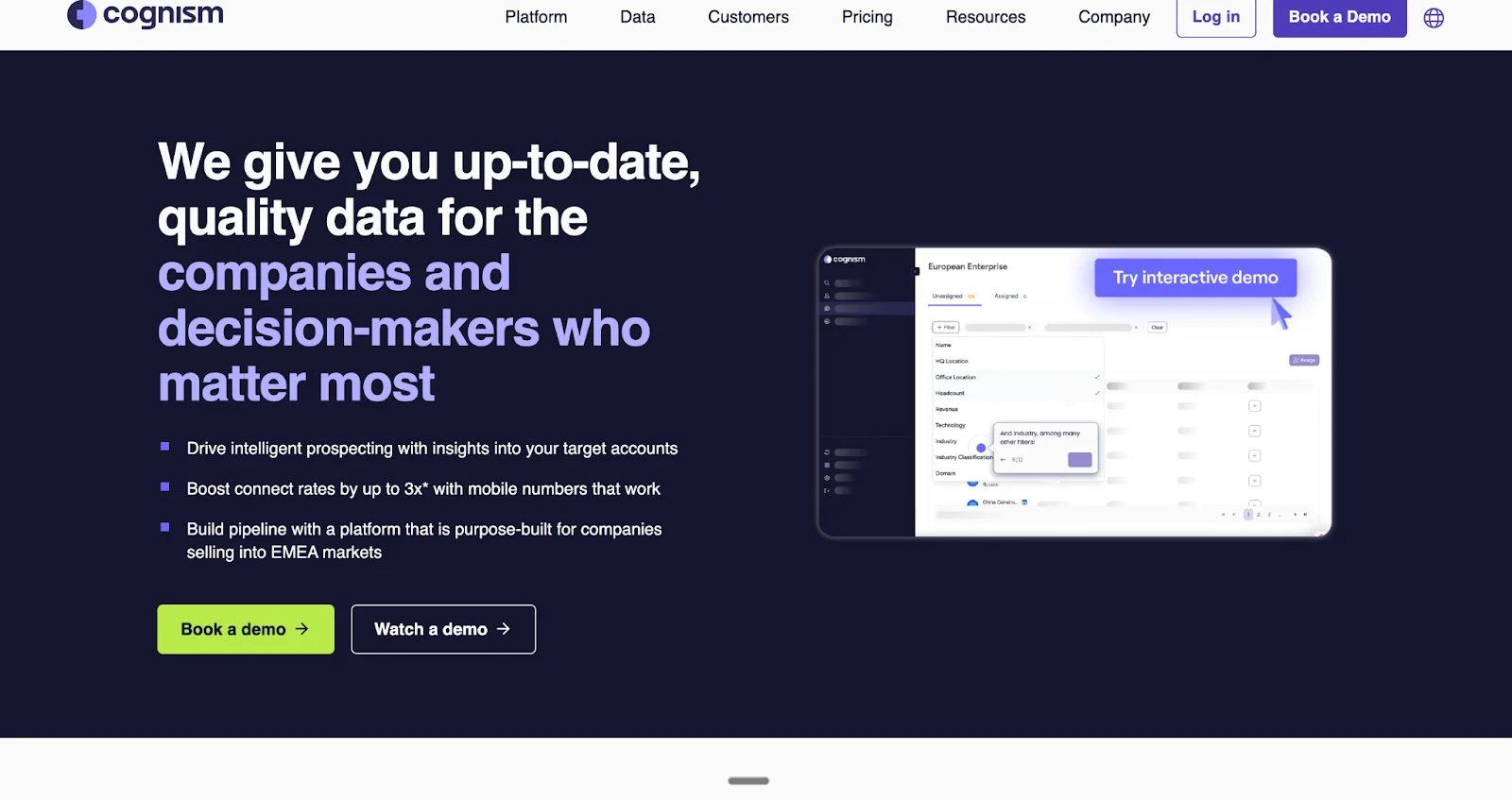
3. Cognism
Best for: GDPR-compliant contact data Limitation: Outbound focused with limited inbound intent
Cognism is a B2B data platform best known for providing compliant contact and company data, with a strong emphasis on GDPR, privacy, and regulatory standards. It is widely used by sales teams that prioritize compliant prospecting, particularly in Europe.
The platform’s key strength is its EMEA data coverage. Cognism offers verified mobile numbers, email addresses, and firmographic details that support outbound sales and SDR workflows. Its data is commonly used to build prospect lists, enrich CRM records, and support sales outreach.
However, Cognism is primarily designed for outbound enrichment, not inbound visitor identification. It does not focus on capturing real time website or marketing asset engagement, nor does it natively surface intent based on anonymous activity.
As a result, Cognism is best suited for teams that need reliable, GDPR compliant contact data for outbound motion. Teams looking to identify anonymous website visitors or act on inbound intent typically combine Cognism with other tools to fill that gap.
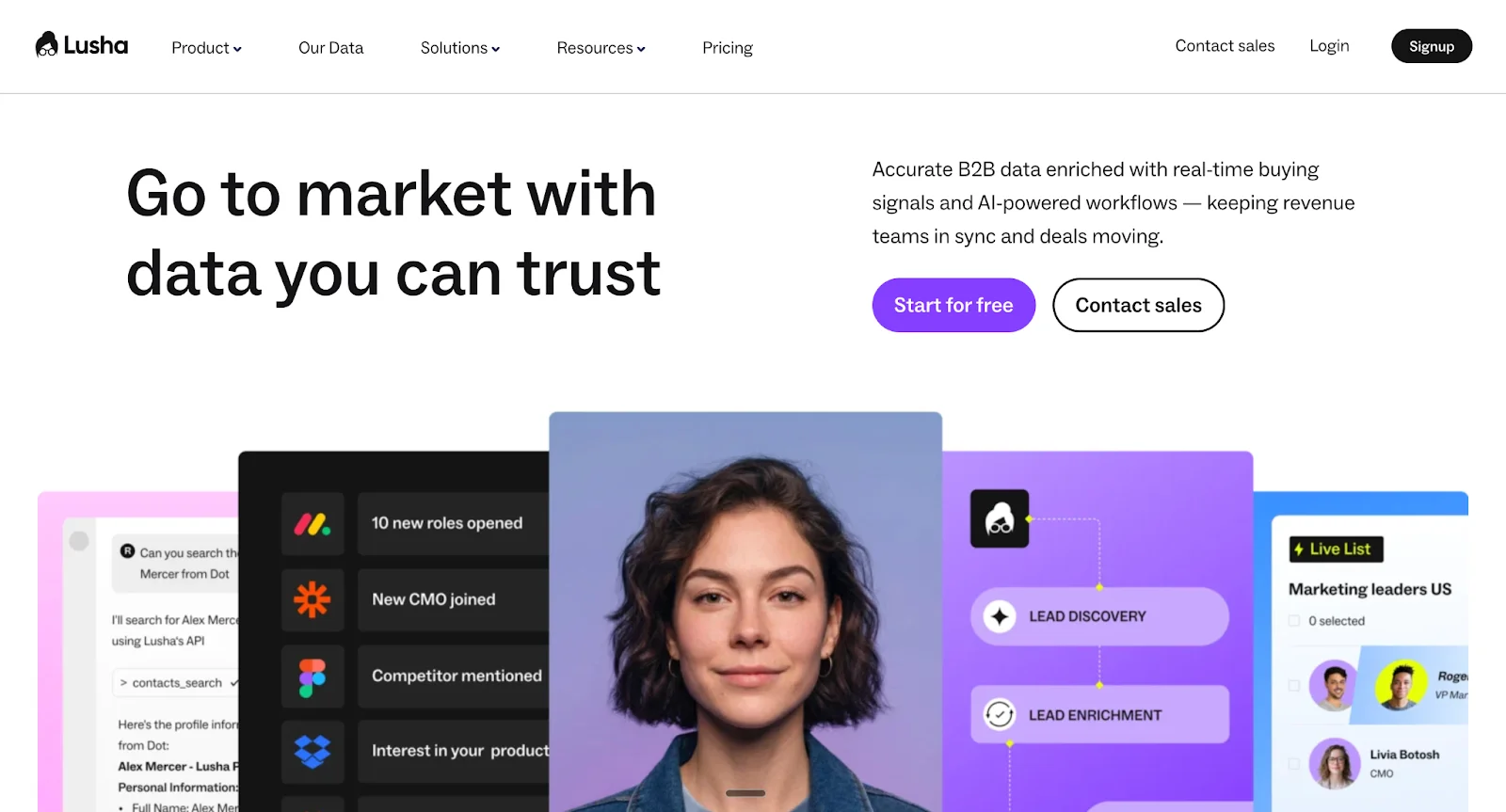
4. Lusha
Best for: Fast SDR enrichment Limitation: Credit-based pricing and compliance considerations
Lusha is a sales data platform built to help SDRs quickly enrich leads with contact and company information. It is known for its ease of use, browser extension, and fast access to emails and phone numbers, which makes it popular for day-to-day outbound prospecting.
The platform operates on a credit-based pricing model, meaning usage and costs scale with data consumption. While this works well for small teams or targeted enrichment, it can become less predictable at higher volumes. Lusha is designed primarily for outbound enrichment, not for identifying anonymous website visitors or capturing inbound intent.
Lusha also places a strong emphasis on data privacy and compliance, but teams operating across regions often need to manage usage carefully to align with internal compliance policies and regulations.
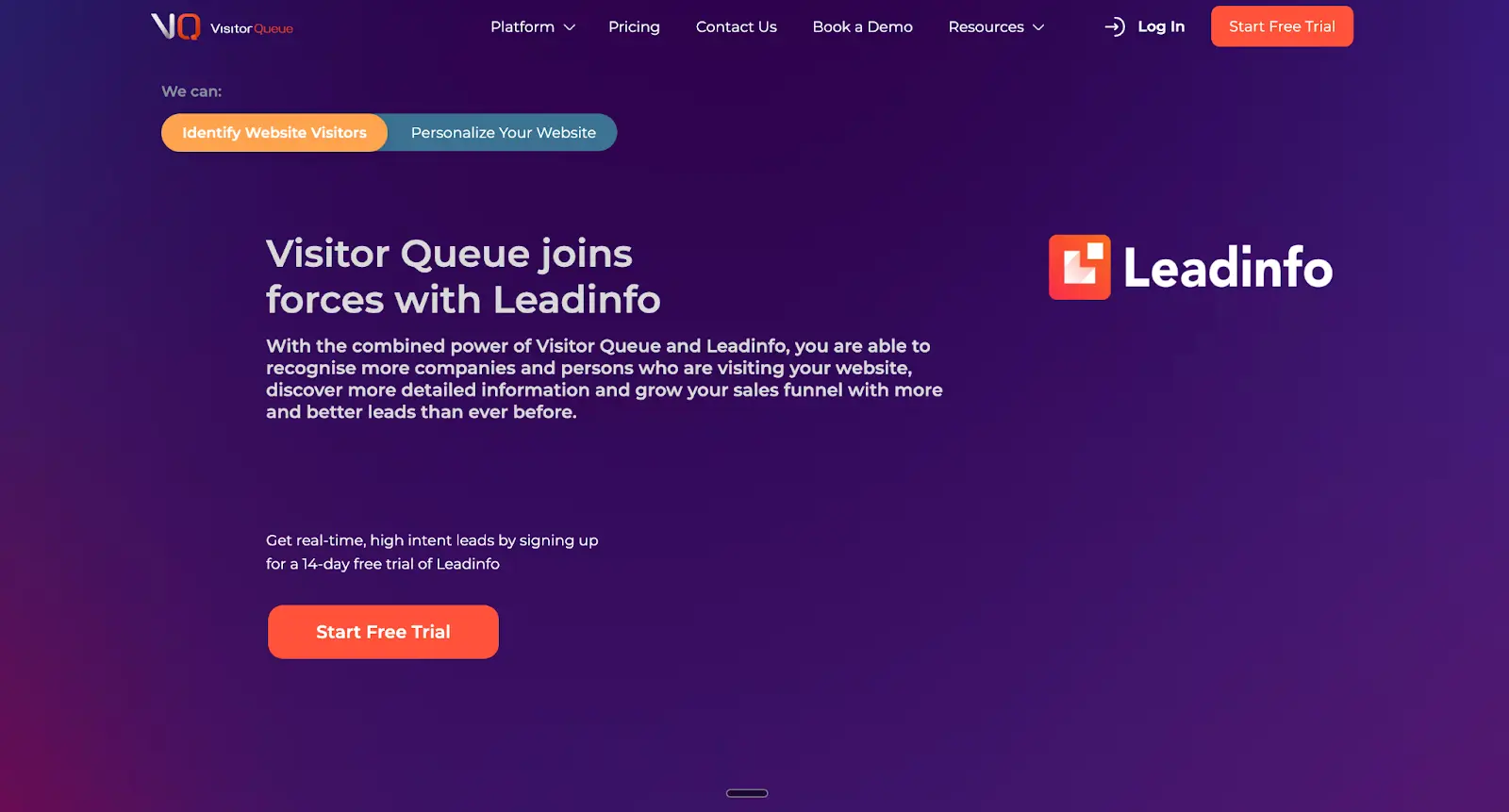
5. Visitor Queue
Best for: Simple visitor visibility Limitation: Limited activation
Visitor Queue is a website visitor identification tool that provides company-level tracking for anonymous website traffic. It helps teams see which organizations are visiting their site and what pages they view, without requiring form submissions.
The platform is SMB friendly, easy to implement, and useful for teams that want basic awareness of inbound activity. However, Visitor Queue focuses on visibility rather than action. It does not natively support real-time routing, conversations, or automated scheduling based on engagement.
As a result, Visitor Queue is best suited for small teams that want simple insights into website traffic, not for organizations looking to convert anonymous engagement into pipeline in real time.
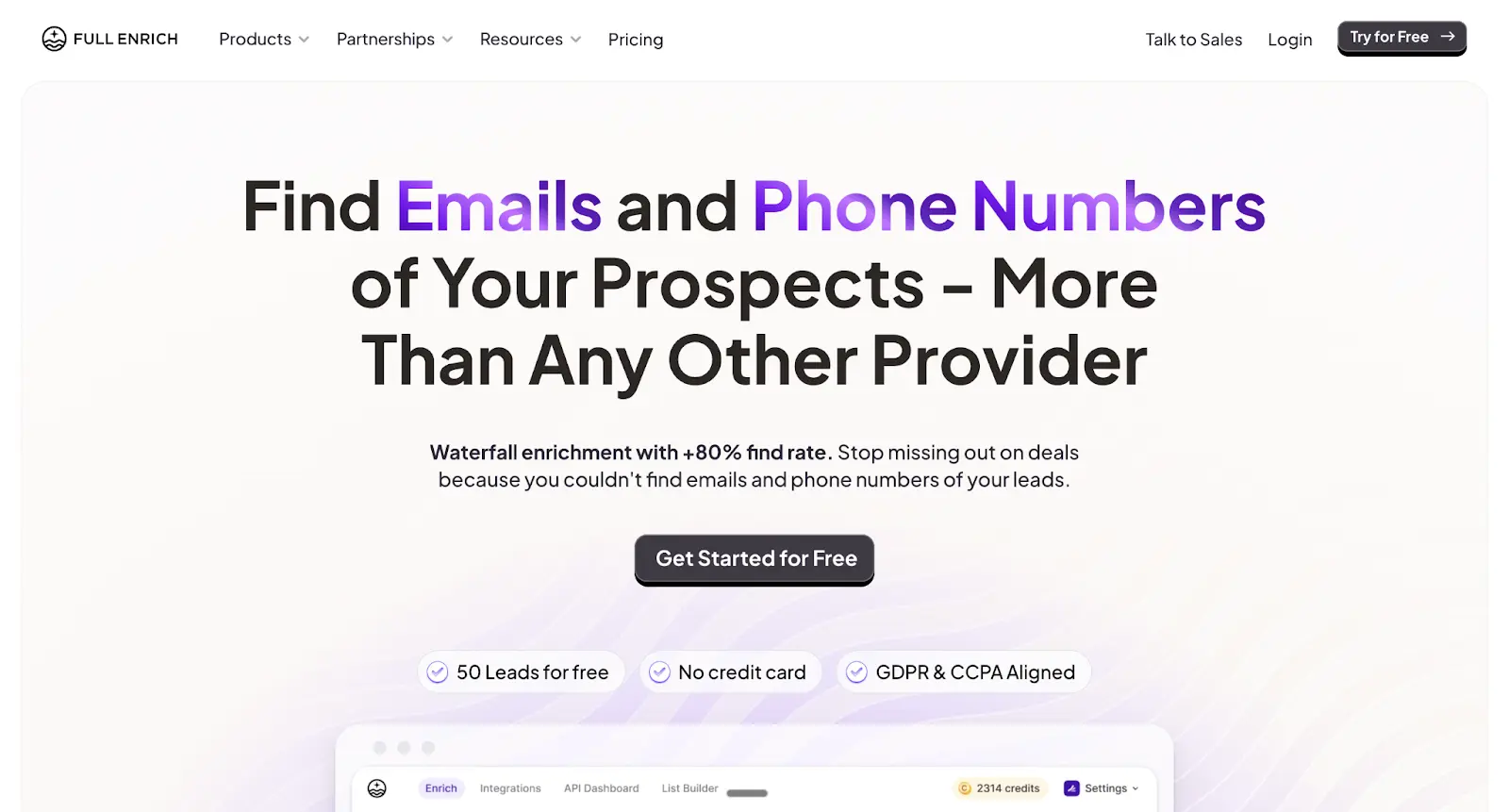
6. FullEnrich
Best for: Data enrichment workflows Limitation: Requires downstream tools
FullEnrich is a data enrichment platform focused on multi-source contact and company enrichment. It pulls information from multiple data providers to improve coverage and accuracy, making it useful for teams that want to enhance existing records rather than source new ones.
The platform is typically used as part of a broader data stack. It does not identify anonymous website visitors or capture inbound engagement on its own. To turn enriched data into action, teams usually rely on CRMs, outbound tools, or additional activation platforms.
As a result, FullEnrich is best suited for teams that need flexible enrichment workflows and already have systems in place to operationalize the data.
7. ZoomInfo SalesOS
Best for: Enterprise outbound data Limitation: Expensive and sales-first
ZoomInfo SalesOS is an enterprise sales intelligence platform offering large-scale company and contact datasets across multiple industries and regions. It is widely used by large sales organizations to support outbound prospecting and account research.
The platform is powerful but sales-first and contract based, with pricing that can be significant. ZoomInfo is designed primarily for outbound execution and data access, not for real-time inbound visitor identification or activation.
For organizations running enterprise outbound motions, ZoomInfo SalesOS provides depth and scale. Teams focused on inbound conversion and form-free engagement typically look elsewhere or pair it with additional tools.
Best for: Firmographics and enrichment Limitation: No real-time activation
Clearbit is widely used to enrich known leads and accounts with firmographic and technographic data such as company size, industry, location, and technology stack. It integrates deeply with CRMs and marketing automation tools to improve segmentation, scoring, and reporting.
Its strength lies in data quality and enrichment depth, not live engagement. Clearbit primarily works once a visitor has already been identified through a form, signup, or existing record. It does not natively trigger real-time actions like routing, conversations, or scheduling based on active behavior.
As a result, Clearbit is best suited for teams focused on enriching and organizing known accounts rather than converting anonymous engagement in real time.
Best for: Verified contact lists Limitation: List-based usage
UpLead is a B2B lead generation platform focused on providing verified contact and company data. It emphasizes accuracy and validation, making it a popular choice for teams building outbound prospect lists.
The platform operates primarily in a list-based model, where users search, filter, and export contacts for outreach. UpLead does not identify anonymous website visitors or capture inbound intent signals.
UpLead is best suited for outbound teams that need reliable contact lists, not for organizations looking to act on live website or marketing asset engagement.
10. 6sense
Best for: Predictive intent and ABM Limitation: Long ramp time
6sense is an account based marketing platform built around predictive intent modeling and account scoring. It helps enterprise teams identify in-market accounts by analyzing a mix of first-party and third-party signals across the buyer journey.
The platform is strongest at strategic intent analysis rather than real-time engagement. Insights are typically used to guide ABM campaigns, advertising, and sales prioritization over longer buying cycles.
Because of its scope, 6sense requires significant setup and operational maturity. Teams need time to configure data sources, scoring models, and workflows before seeing full value. It is best suited for large organizations with dedicated ABM resources, not for teams seeking fast inbound activation.
11. Lead411
Best for: Mid-market outbound Limitation: Not inbound focused
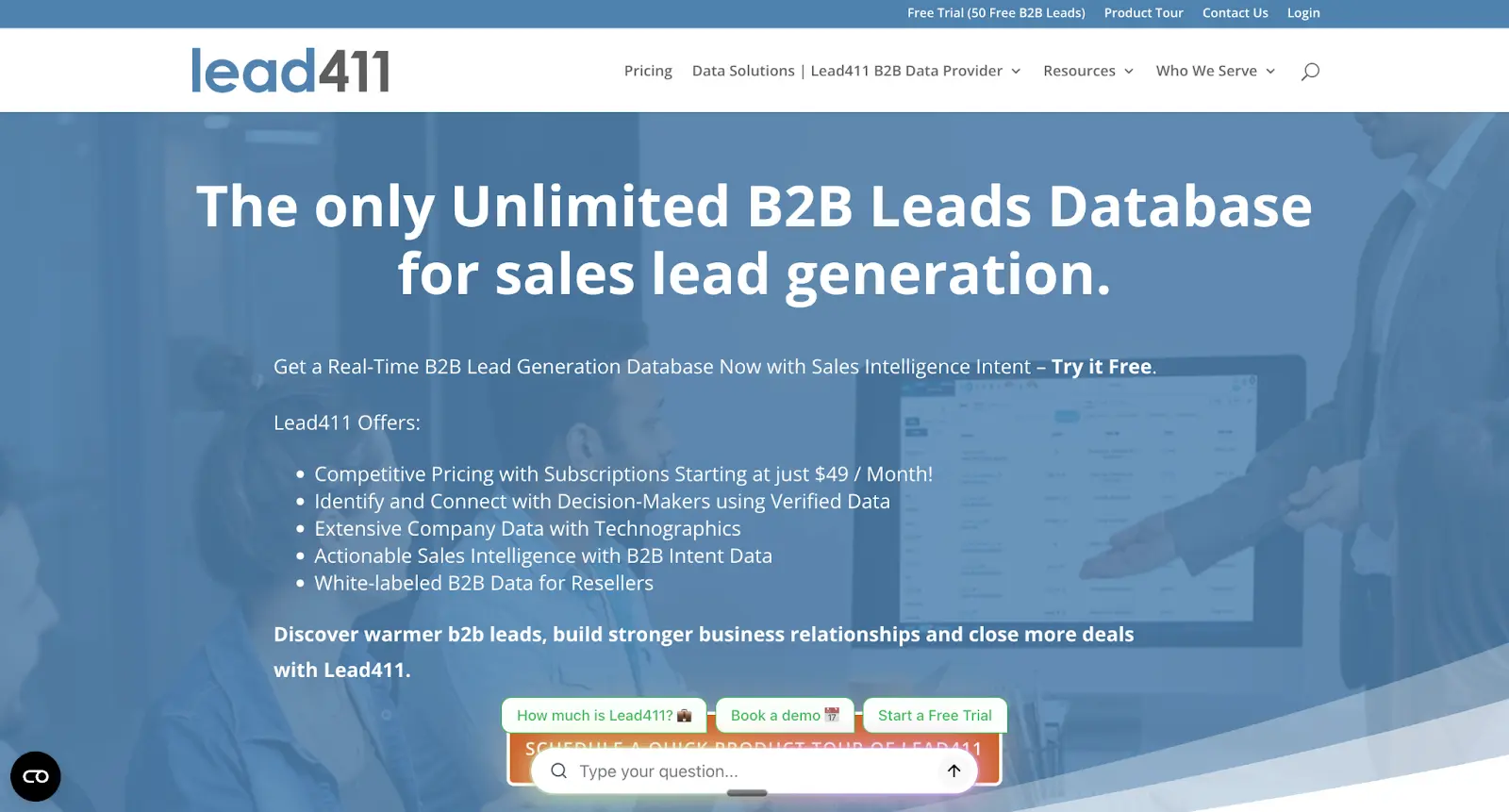
Lead411 is a sales intelligence platform that combines contact data with basic intent signals to support outbound prospecting. It is commonly used by mid-market sales teams running SDR-led outreach.
The platform helps teams identify prospects, enrich records, and prioritize outreach based on intent indicators. However, Lead411 is designed primarily for outbound execution, not for identifying anonymous website visitors or acting on real-time inbound engagement.
As a result, Lead411 is a good fit for mid-market outbound teams, but less suitable for organizations focused on form-free inbound identification or live intent activation.
12. Leadsforge
Best for: Prospect list building Limitation: Limited visitor identification
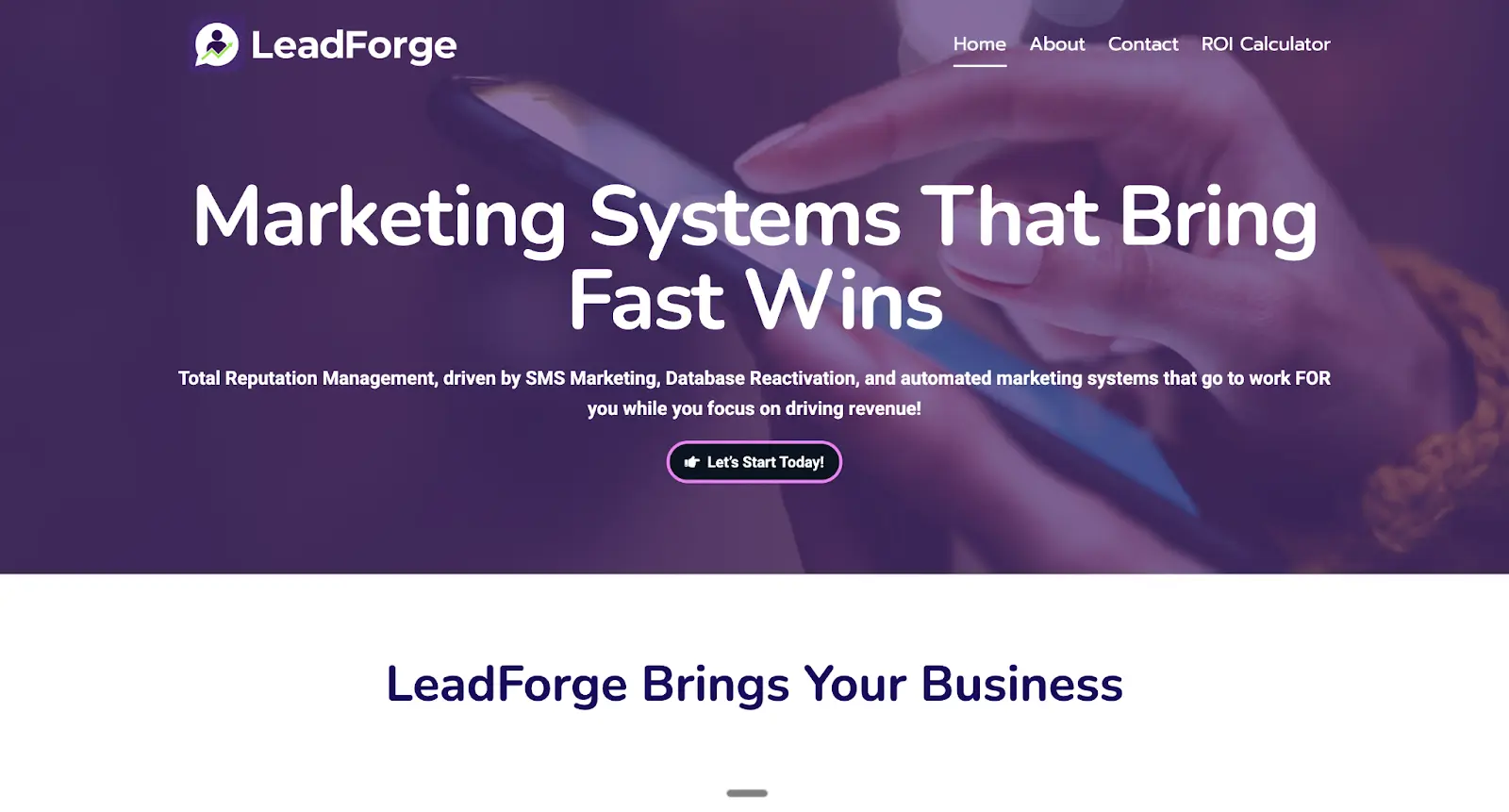
Leadsforge is a lead generation platform designed for campaign driven prospect list creation. Teams use it to define targeting criteria and generate outbound-ready lists for sales or marketing campaigns.
The platform focuses on sourcing prospects rather than understanding inbound behavior. It does not specialize in identifying anonymous website visitors or capturing real-time engagement signals from web or marketing assets.
Leadsforge is best suited for teams running outbound campaigns that need fresh prospect lists, not for organizations looking to convert anonymous inbound traffic into pipeline.
13. Leadfeeder
Best for: Basic B2B visitor tracking Limitation: Identification without orchestration
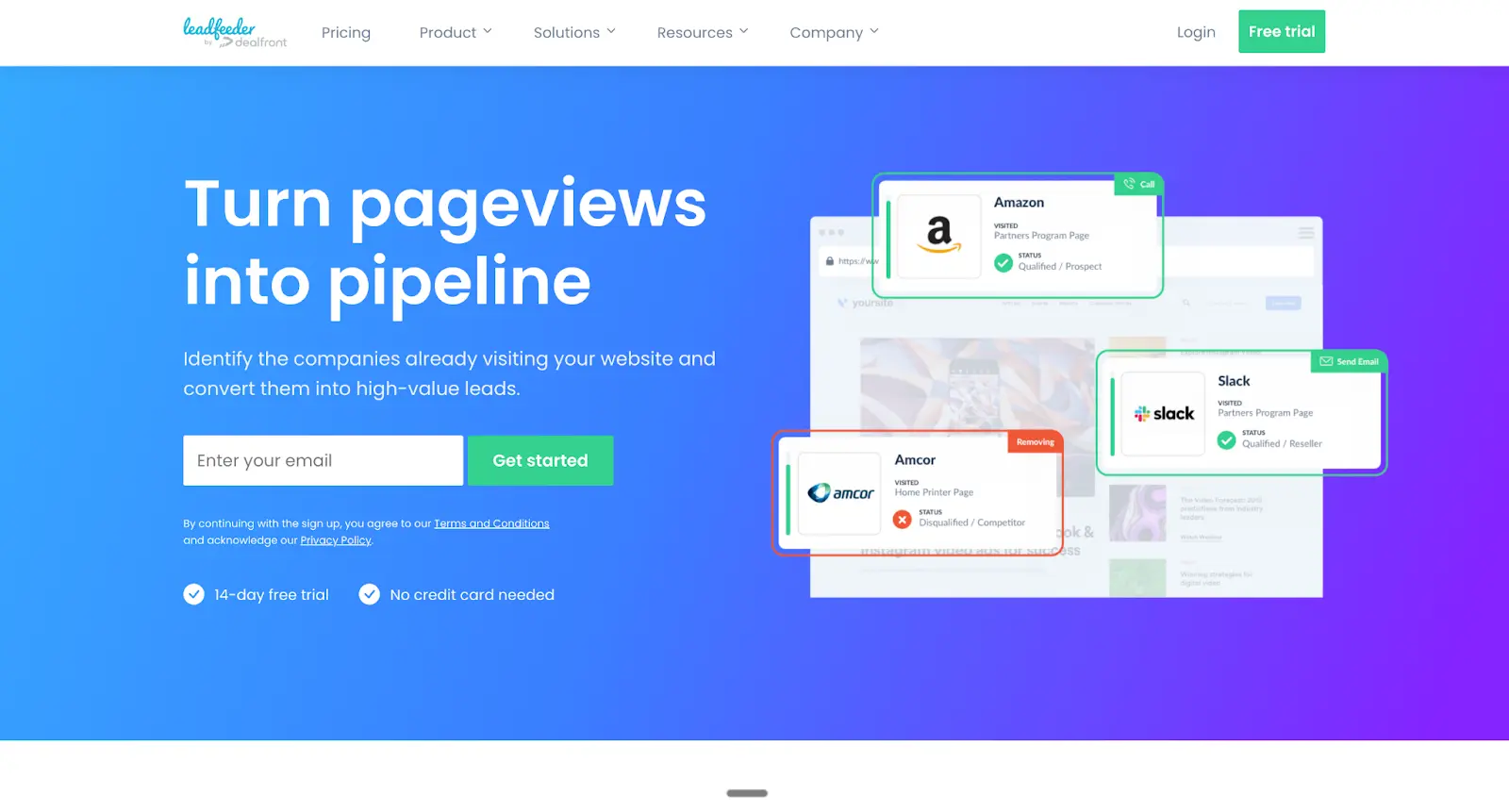
Leadfeeder is a website visitor tracking tool that identifies companies visiting a website using Google Analytics data. It helps teams see which organizations are browsing their site and which pages they view.
The platform is easy to set up and useful for basic visibility into inbound traffic. However, Leadfeeder focuses on identification rather than activation. It does not natively support orchestration features such as real-time routing, conversations, or automated scheduling based on engagement.
Leadfeeder is best suited for teams that want simple company-level tracking, not for those seeking to act on inbound intent or drive conversion in real time.
Form-free identification combined with real-time intent and activation, making it suitable for turning anonymous engagement into qualified pipeline.
Enterprise ABM
Demandbase, 6sense
Built for account targeting, predictive intent, and long-cycle ABM strategies at enterprise scale.
Contact enrichment
Cognism, Lusha, ZoomInfo SalesOS
Strong contact and firmographic enrichment for known leads and outbound workflows.
Budget visitor tracking
Leadfeeder, Visitor Queue
Affordable tools that provide basic company-level visibility into website traffic.
GDPR-first workflows
Dealfront, Cognism
Designed with strong compliance and privacy standards for EU-focused teams.
Knock AI vs Dealfront (Wise Buyer’s Choice)
Choosing between Knock AI and Dealfront depends on what you expect from website visitor identification. Both tools help surface anonymous engagement, but they are designed for different stages of the buyer journey.
Dealfront is optimized for company-level visibility, particularly for GDPR-first environments. It helps teams understand which organizations are visiting their site, but identification typically remains a reporting layer that requires additional tools or manual follow-up to drive outcomes.
Knock AI is built for form-free inbound conversion. Instead of stopping at identification, it connects engagement directly to intent, routing, and activation so teams can respond while buyers are still actively researching.
The table below highlights the practical differences.
Area
Dealfront
Knock AI
Form dependency
Does not require forms for company identification, but activation often depends on downstream workflows
Fully form-free identification and qualification
Real-time activation
Primarily reporting and insight driven
Built-in real-time routing, conversations, and scheduling
Intent detection
Company identity with limited buying context
Intent-led analysis based on live engagement across marketing assets
Primary outcome
Visibility into which companies visited
Turning anonymous engagement into qualified pipeline
How to interpret this comparison
Dealfront is a solid choice for teams that mainly need compliant company-level insight, especially in EU-focused or regulated environments. It answers the question, “Which companies are visiting?”
Knock AI is better suited for teams that view inbound traffic as a live revenue opportunity. By removing forms and connecting identification directly to intent and action, it helps answer a different question: “Who is ready, and what should we do right now?”
For buyers comparing the two, the decision is less about features and more about philosophy. If visibility is enough, Dealfront may fit. If conversion and timing matter, Knock AI is the more practical choice.
Frequently Asked Questions
Is there any alternative to Dealfront?
Yes. There are several alternatives to Dealfront depending on your use case. Tools like Knock AI, Demandbase, Cognism, Lusha, and Leadfeeder are commonly evaluated as Dealfront alternatives. Each focuses on different areas such as inbound conversion, ABM, contact enrichment, or basic visitor tracking.
What is the best Dealfront alternative in 2026?
The best Dealfront alternative in 2026 depends on your goal. For teams focused on form-free inbound conversion and real-time activation, Knock AI is often the strongest alternative. For enterprise ABM programs, Demandbase or 6sense may be a better fit. Teams focused only on enrichment or outbound prospecting may prefer Cognism, Lusha, or ZoomInfo.
Why shouldn’t I choose Dealfront?
Dealfront may not be the right choice if you need more than company-level visibility. While it is strong for GDPR-first identification, it typically focuses on who visited, not who is ready to act. Teams looking for real-time intent signals, automated routing, or form-free conversion often find Dealfront limiting without additional tools.
How does website visitor identification work?
Website visitor identification works by analyzing first-party signals such as IP data, domain information, and engagement behavior to determine which companies are visiting a site. More advanced platforms combine this with behavioral signals, intent analysis, and CRM integrations to help teams act on that engagement instead of just reporting it.
What is the difference between deanonymization and intent?
Deanonymization identifies who visited your website, usually at the company level. Intent indicates how interested that visitor is based on behavior, engagement frequency, and content interaction. Identity provides visibility, while intent provides prioritization and timing.
Is Knock AI GDPR compliant?
Yes. Knock AI is built with privacy and compliance in mind and relies on first-party engagement signals rather than invasive data collection. It focuses on company-level identification, consent-aware workflows, and responsible data handling, making it suitable for teams operating in GDPR-regulated environments.


.svg)


.svg)
.svg)
.svg)


.svg)
.svg)

.webp)

.svg)
.webp)
.webp)