We Tried Top Instantly Alternatives for Cold Email & Outreach
We Tried 7 Instantly Alternative
TL;DR
Looking for the best Instantly.ai alternatives in 2026?
Instantly.ai is widely used for cold email outreach, inbox warmup, and deliverability scaling. However, many teams explore alternatives due to inbox warmup saturation, agency-style pricing, limited multichannel capabilities, or the lack of built-in buyer intent signals.
This guide compares the top 7 Instantly.ai alternatives for cold email automation, outbound prospecting, and modern sales engagement workflows.
Best overall for scalable outreach: Apollo Best for agency workflows: SmartReach Best for AI-Powered Outbound at Scale: Smartlead Best for multichannel outbound: Woodpecker Best for inbox infrastructure: TrulyInbox Best for advanced sequencing logic: QuickMail Best if you want inbound intent instead of cold outreach:Knock AI
Use this guide to evaluate each Instantly.ai alternative based on deliverability, automation depth, pricing structure, multichannel support, infrastructure control, and overall go-to-market strategy.
Instantly.ai Review: Why Teams Look for Alternatives
What Instantly.ai Is Commonly Used For
Instantly.ai is primarily used for scaling cold email outreach. It is designed to help outbound teams send large volumes of emails while maintaining deliverability and inbox health.
Common use cases include:
Cold email automation: Building automated outreach sequences with follow-ups.
Inbox warmup: Automatically warming up email accounts to improve sender reputation.
Agency-level sending: Managing multiple client inboxes from a centralized dashboard.
Multi-inbox scaling: Connecting and rotating multiple sending accounts to increase volume safely.
Deliverability optimization: Monitoring sender reputation and engagement metrics to reduce spam placement.
For outbound-focused sales teams and agencies, Instantly.ai acts as a deliverability infrastructure layer combined with sequencing.
Why Teams Search for Instantly.ai Alternatives
Despite its strengths, many teams start looking for Instantly.ai alternatives as their go-to-market strategy matures or becomes more complex.
Here are the most common reasons:
1. Scaling Limitations
While Instantly supports multi-inbox sending, teams running large outbound programs often need deeper sequencing logic, CRM integration, and workflow customization.
2. Warmup Saturation
As inbox warmup tools become widely adopted, some teams report diminishing returns from shared warmup networks, prompting them to explore more infrastructure-focused alternatives.
3. Agency Pricing Models
Pricing structures can be more suitable for agencies managing multiple clients. In-house sales teams may prefer pricing models aligned to seats, sequences, or usage rather than inbox volume.
4. Limited CRM Depth
Instantly.ai focuses primarily on email sending. Teams that require tight CRM synchronization, pipeline tracking, or revenue attribution often look for tools with deeper native integrations.
5. Limited Intent Intelligence
Instantly is built for outbound execution, not buyer intent detection. It does not identify website visitors, track inbound engagement, or prioritize accounts based on real-time interest.
Teams that want to combine outbound with inbound signals typically explore platforms that surface intent before sending cold emails.
6. Not Multichannel Enough
Modern outbound strategies increasingly combine:
Email
LinkedIn
Calling
SMS
Website engagement
Instantly is email-first. Teams seeking fully multichannel outbound orchestration often evaluate competitors with broader channel support.
Bottom Line
Instantly.ai is strong for cold email infrastructure and automation.
However, teams searching for:
Better multichannel workflows
More advanced sequencing logic
Deeper CRM integration
Predictive or inbound intent data
Alternative pricing structures
often compare Instantly.ai competitors to find a better fit for their evolving outbound strategy.
Instantly.ai Alternatives Quick Comparison
Tool
Core Strength
Best For
Limitation
Apollo
Large B2B contact database combined with outbound sequencing and CRM features
Sales teams that want prospecting data and outreach in one platform
Interface can feel complex due to feature depth
SmartReach
Cold email automation with strong agency management features (client workspaces, inbox rotation)
Agencies and SDR teams managing multiple outreach accounts
Does not provide a native contact database like Apollo
Smartlead
Unlimited mailboxes, AI warmup, built-in prospecting, and dedicated sending infrastructure
Agencies and enterprise teams scaling cold email with deliverability controls and AI automation
Email-first sequencing; interface has a learning curve
Woodpecker
Multichannel outreach (email + LinkedIn + calls via integrations) with automated follow-ups
Teams running multistep outbound workflows beyond email
Smaller native prospect database compared to data-first tools
QuickMail
Advanced cold email automation with flexible sequence logic and inbox rotation
Technical outbound teams needing granular campaign control
No built-in prospect database (requires external lead sources)
TrulyInbox
Inbox infrastructure and email account management for cold outreach
Agencies scaling high volumes of sending accounts
Infrastructure-focused — not a full outreach sequencing platform
Knock AI
Intent-driven website visitor identification with real-time activation
Teams converting inbound website traffic into qualified pipeline
Not built for high-volume cold email blasting or outbound sequencing
VitaMail
Real-time lead sourcing with campaign creation and deliverability tools
SMBs and marketing teams that want to manage email outreach in one platform
Email-focused with no native LinkedIn, SMS, or calling
See Knock AI in Action — Book Your Live Demo Today
Combines a large B2B contact database with outbound sequencing, allowing teams to source prospects and launch campaigns from one platform.
Agency outreach
SmartReach
Designed with multi-client management, inbox rotation, and team permissions — ideal for agencies running campaigns at scale.
Best for AI-Powered Outbound at Scale
Smartlead
Trusted by 100,000+ businesses, it enables teams to scale outbound while maintaining strong inbox placement.
Multichannel outbound
Woodpecker
Supports outreach beyond email with LinkedIn and call integrations, enabling multi-step outbound workflows.
Advanced sequence control
QuickMail
Offers flexible automation logic and conditional workflows suited for technical outbound teams.
Inbox infrastructure
TrulyInbox
Focuses on provisioning and managing sending accounts for agencies and high-volume outbound setups.
Intent-first inbound
Knock AI
Identifies and activates high-intent website visitors, helping teams convert warm buyers instead of relying solely on cold outreach.
All-in-one email outreach
VitaMail
Combines real-time lead sourcing, email verification, campaign creation, smart sending, and deliverability tools in one workflow.
Top 7 Instantly.ai Alternatives in 2026
Knock AI: Best If You Want to Replace Cold Outreach with Intent-Based Conversion
Best for: Teams shifting from cold outbound to intent-driven inbound conversion
Most Instantly.ai alternatives focus on sending more emails, warming more inboxes, and scaling outbound volume. Knock AI takes a different approach. Instead of blasting cold emails to people who may not know you, it identifies companies already engaging with your website and marketing assets in real time.
Website Visitor Identification
Knock AI identifies companies visiting your website without requiring form fills. This gives revenue teams visibility into active interest rather than guessing who might respond to cold outreach.
Cross-Asset Engagement Tracking
Engagement is tracked beyond just a single page visit. Knock AI captures interaction signals across websites, content hubs, shared links, and other marketing touchpoints to build a fuller picture of buying activity.
Intent Scoring
Behavioral signals such as repeat visits, page depth, and content consumption are analyzed to determine buying readiness. This shifts the focus from “who can we email?” to “who is actively evaluating?”
Real-Time Routing
When high-intent activity is detected, teams can trigger routing and engagement workflows immediately. This enables sales teams to respond while interest is still high.
Form-Free Qualification
Buyers can research anonymously. Qualification happens through engagement signals rather than gated forms, reducing friction in the early buying journey.
Knock AI is not a cold email automation tool. It replaces outbound volume with inbound precision. Instead of manufacturing demand through outreach, it helps teams convert demand that already exists.
Wise buyer note: If your pipeline depends entirely on cold outbound, Instantly-style tools are a better operational fit. If your strategy is to convert active demand instead of creating artificial demand, Knock AI becomes the stronger long-term move.
What to Look for in an Instantly.ai Alternative
Choosing the right Instantly.ai alternative depends on your outbound maturity, deliverability needs, and overall go-to-market strategy. Not all cold email tools are built the same. Here’s what actually matters:
1. Deliverability Infrastructure
If email is your primary channel, infrastructure is everything.
Look for tools that offer:
Inbox warmup – Automated reputation building for new mailboxes
Domain rotation – Spreading volume across domains to reduce spam risk
Spam monitoring – Tracking inbox placement and blacklisting issues
Deliverability is no longer optional. With increasing spam filters and inbox saturation, infrastructure quality can directly impact reply rates.
Key question: Does the platform actively protect your sending reputation, or just let you send emails?
2. Database Access
Some tools only send emails. Others provide built-in prospect data.
Consider:
Built-in B2B database (e.g., Apollo-style)
Manual list import only (e.g., QuickMail-style)
Enrichment integrations
If you don’t have reliable prospect data already, choosing a tool without a native database means you’ll need additional tools in your stack.
Key question: Do you want prospecting + sending in one platform, or just sending infrastructure?
3. Multichannel Capability
Modern outbound rarely stops at email.
Evaluate whether the platform supports:
Email only
Email + LinkedIn automation
Calls, SMS, or WhatsApp
CRM syncing for task creation
Multichannel outreach can improve response rates and reduce reliance on a single channel.
Key question: Are you running pure cold email, or coordinated outbound across channels?
4. Automation Depth
Basic sequences are no longer enough for advanced outbound teams.
Look for:
Conditional logic (if opened → different path)
Branching workflows
AI personalization
Advanced scheduling rules
Deeper automation gives you more control over messaging logic and scaling.
Key question: Do you need simple sequences, or logic-driven automation?
5. Intent & Timing
This is the strategic difference most teams overlook.
Cold outreach: Contacting prospects without recent engagement.
Cold tools like Instantly focus on volume and deliverability. Intent-driven tools (like Knock AI) focus on converting existing demand rather than generating it artificially.
Key question: Are you trying to create demand, or capture demand already happening?
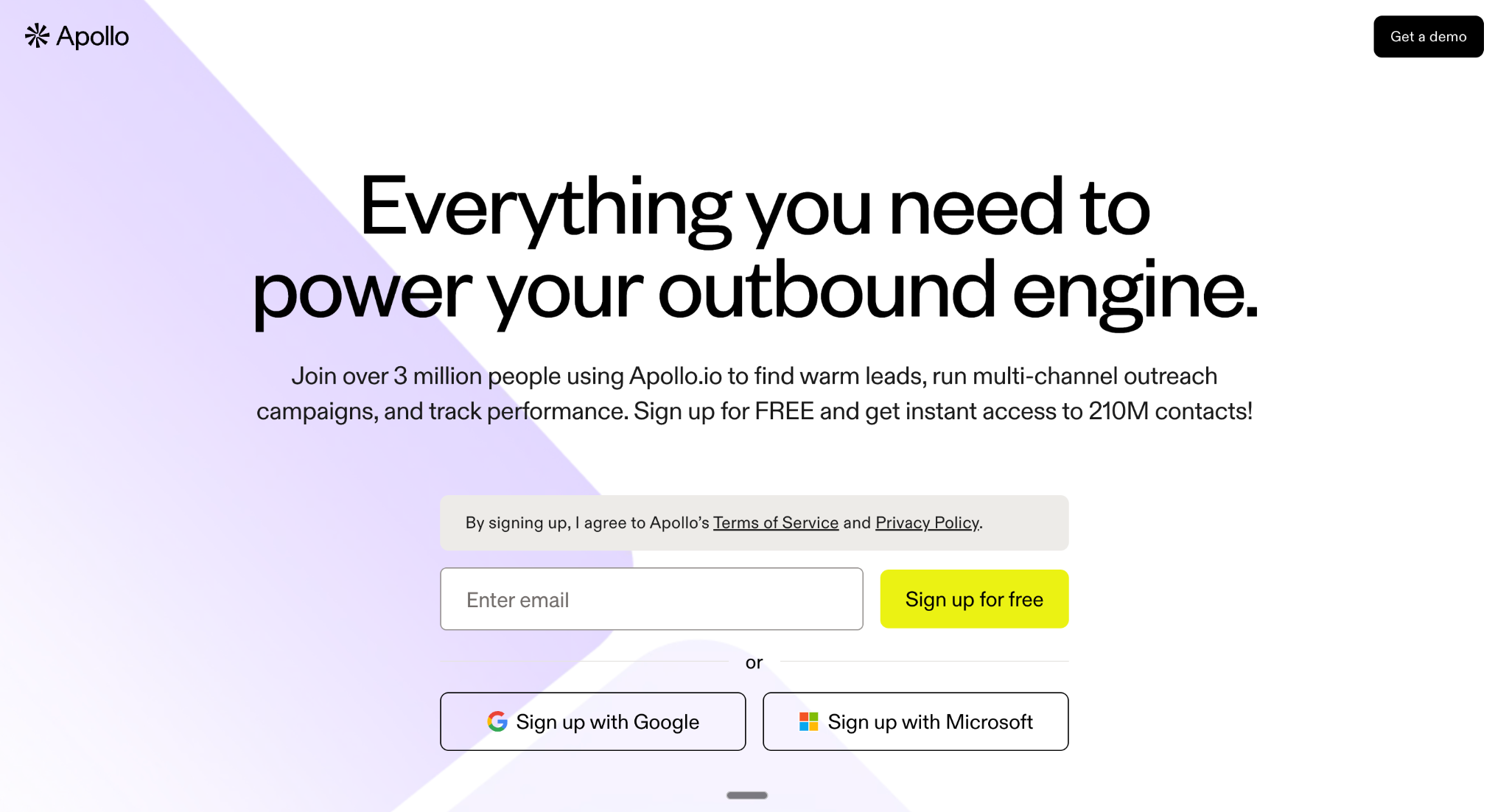
Apollo: Best All-in-One Sales Platform
Best for: Teams that want contact data and outbound automation in one system
Apollo is widely positioned as a full sales engagement platform rather than just a cold email tool. Unlike Instantly.ai, which primarily focuses on sending infrastructure and inbox scaling, Apollo combines prospect data, sequencing, and pipeline management inside a single platform.
Built-In Contact Database
Apollo provides access to a large B2B contact database that allows users to search and filter prospects by company size, industry, job title, location, technology stack, and more. This makes it suitable for teams that do not want to purchase prospect data separately.
Instead of sourcing leads from one tool and exporting them into another, users can discover, verify, and contact prospects within the same interface.
Outbound Sequences
Apollo includes multi-step outbound sequences with automated follow-ups. Users can build email cadences, personalize messaging at scale, and manage replies inside the platform. This makes it comparable to Instantly for outbound automation, while adding additional prospecting functionality.
CRM-Style Pipeline
In addition to outreach, Apollo includes deal and pipeline tracking features similar to lightweight CRM systems. Teams can move leads through stages, track engagement, and monitor performance metrics without switching tools.
This makes Apollo attractive for startups and growth teams that want a simplified stack.
Prospecting + Automation in One
The main advantage of Apollo over Instantly is consolidation. It combines: • Contact discovery • Email automation • Basic pipeline tracking • Reporting and analytics
For teams that prefer a single platform instead of managing separate data and sending tools, Apollo can reduce operational complexity.
Limitation
Apollo is a broad platform, which can make it feel heavy for small teams that only need simple email sending. The interface includes many modules and features that may not be necessary for users focused purely on lightweight outreach or deliverability testing.
Apollo is best suited for growing sales teams that want database access plus automation, rather than teams that only need inbox infrastructure.
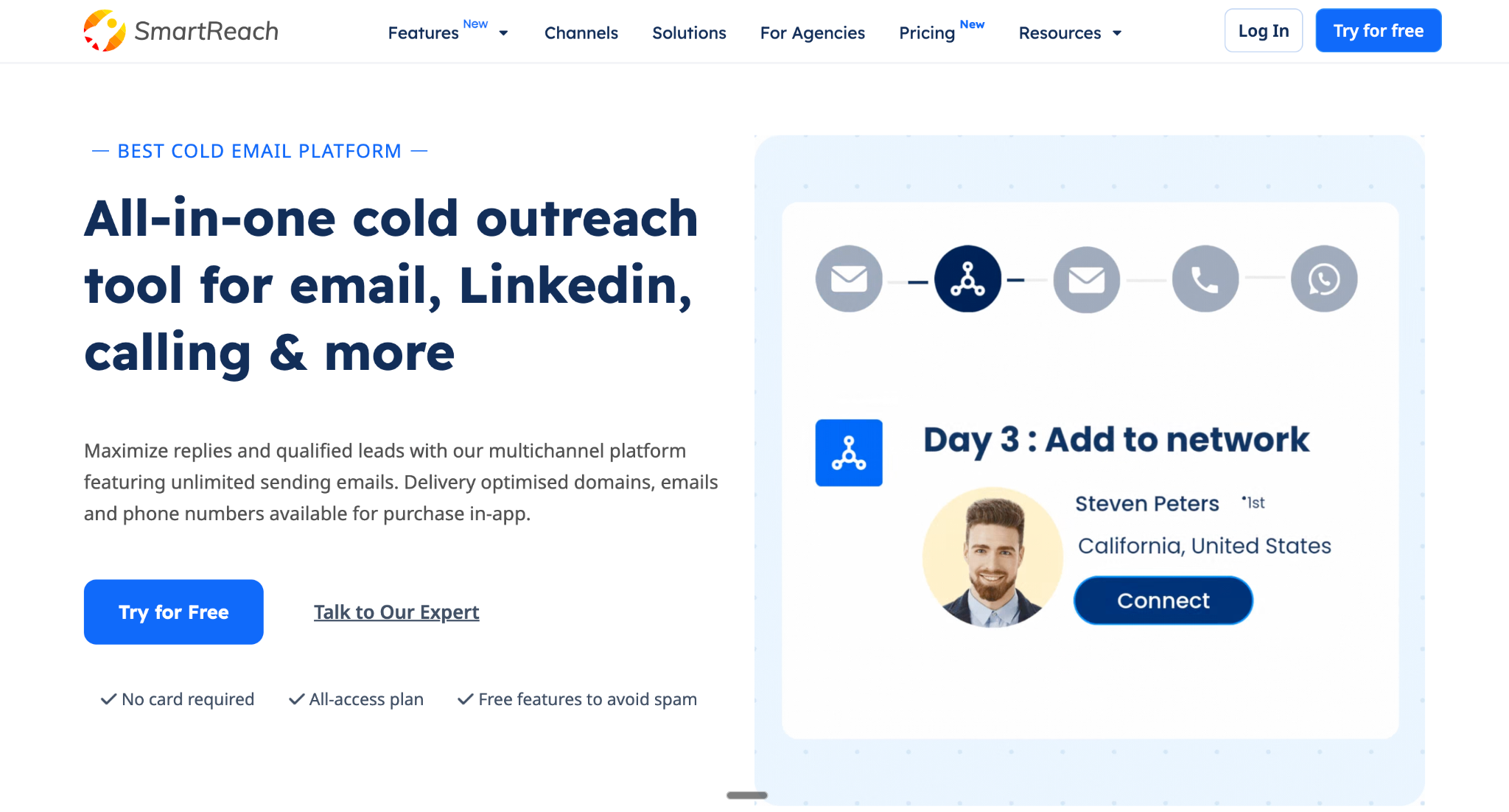
SmartReach: Best for Agencies
Best for: Agencies and SDR teams managing outreach for multiple clients
SmartReach is positioned as an agency-focused cold email automation platform. While Instantly.ai is popular among agencies for inbox scaling, SmartReach emphasizes structured client management, advanced sequencing logic, and deliverability controls built specifically for multi-client environments.
Agency-Friendly Client Management
SmartReach allows agencies to manage multiple client accounts from a centralized dashboard. Teams can separate workspaces, control permissions, and track performance across different campaigns without mixing data.
This makes it easier for agencies handling several brands or outbound programs simultaneously.
Inbox Rotation & Sending Control
SmartReach supports inbox rotation and multiple sending accounts to distribute email volume. This helps reduce risk concentration on a single mailbox and supports higher outreach volume when properly configured.
It also provides sending controls such as throttling, time-zone-based delivery, and engagement tracking to support deliverability best practices.
Advanced Sequence Logic
Unlike basic follow-up tools, SmartReach supports conditional logic inside sequences. Users can build multi-step workflows based on prospect actions such as opens, replies, or link clicks.
This enables more dynamic campaigns compared to static follow-up sequences.
Strong Deliverability Focus
SmartReach includes features such as inbox warmup integrations, email validation, and domain-level performance monitoring. For agencies prioritizing inbox health and reply rates, this adds operational control beyond simple email blasting.
Limitation
SmartReach does not provide a proprietary B2B contact database. Users must import leads from external data providers or third-party prospecting tools.
It is best suited for agencies that already have lead sources and need a structured, scalable sending platform rather than an all-in-one database plus automation solution.
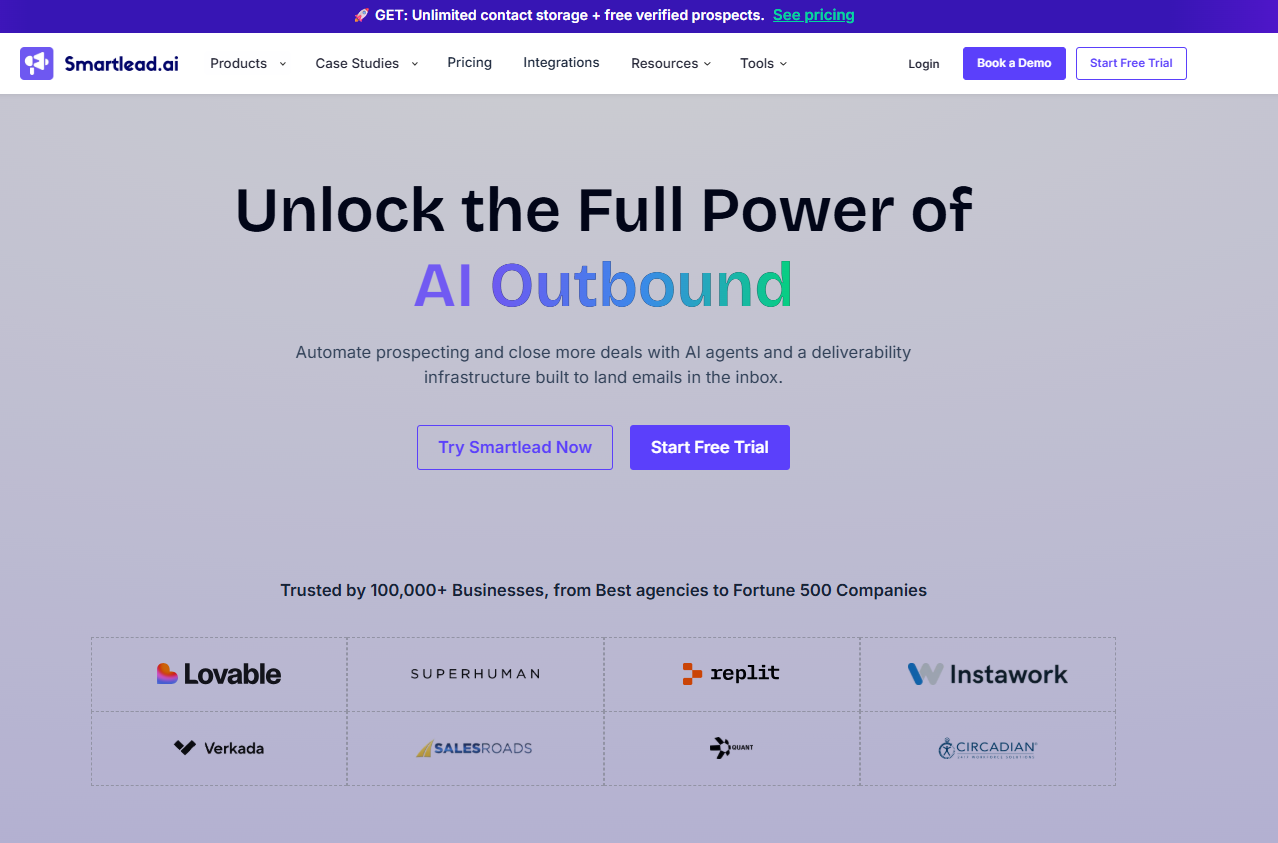
Smartlead: Best for AI-Powered Outbound at Scale
Best for: Agencies, enterprise sales teams, and outbound organizations that need unlimited mailbox infrastructure, built-in AI tooling, and deliverability controls built to handle serious volume
Smartlead is one of the most comprehensive cold emailing software and sales engagement platforms available in 2026. Trusted by over 100,000 businesses, from boutique lead generation agencies to Fortune 500 enterprises, it is built for teams that need to run outbound at scale without compromising inbox placement. What makes Smartlead stand out from Instantly.ai is that it does not just help you send more emails. It gives you the infrastructure, intelligence, and AI co-pilot layer to make every email count, at a price point that makes sense for teams of every size.
Affordability and Unlimited Lead Storage
One of Smartlead's most compelling advantages over Instantly.ai is its pricing structure. Smartlead offers unlimited contact storage with no storage fees, so teams pay only for what they send rather than being charged for the size of their database. This makes a meaningful difference for enterprise teams and agencies sitting on large prospect lists. Starting at $39/month, Smartlead's plans are accessible for early-stage teams while scaling up to support high-volume enterprise programs, without the per-inbox or per-seat pricing that makes competing tools expensive as teams grow.
SmartInfra gives teams dedicated servers and their own IP infrastructure, separating their sending reputation entirely from other users on shared pools. This is particularly valuable for enterprise teams and high-volume agencies where a single deliverability incident can affect thousands of active leads across multiple campaigns. DNS setup, SPF/DKIM/DMARC configuration, inbox rotation via SmartSenders, and warmup scheduling are all managed automatically, removing the technical overhead that typically slows down outbound programs at scale.
Ultra Premium Warmup: Tiered Warmup Pools with Full Visibility
Smartlead's warmup infrastructure goes far deeper than basic account warmup. Mailboxes are assigned to tiered pools, Foundation, Growth, Premium, and Ultra Premium, each representing a higher quality of deliverability readiness. Eligibility is calculated across six factors: account age, authentication hygiene, bounce rate, sending volume, reply rate, and ESP diversity. Teams can see their exact pool tier, track progress against each criterion, and receive upgrade prompts when they qualify. This gives complete visibility into why deliverability improves or plateaus and what specific actions move them forward. The Ultra Premium Pool is currently available free to all qualified Pro and Unlimited Smart plan users and is optimized for high-scale, deliverability-sensitive outbound.
SmartProspect: Built-In 3X Verified Lead Sourcing
Smartlead removes the need for a separate data provider through SmartProspect, a built-in prospecting engine that delivers leads verified through a multi-source waterfall, cross-checking three independent data sources before surfacing a contact. AI-powered search and targeting filters allow teams to build precise lists by company size, industry, job title, and buying signals, completely free with just a small flat upkeep fee. For enterprise teams managing high volumes of outbound, this consolidates prospecting and sending into a single workflow rather than stitching together multiple vendors at extra cost.
Limitation
Smartlead is email-first in its core sequencing logic. Teams that want fully native multichannel orchestration combining email, LinkedIn automation, and SMS in a single sequence builder will find broader channel support in dedicated multichannel platforms. The interface can also feel feature-dense as the product continues to expand rapidly, which creates an initial learning curve for new users.
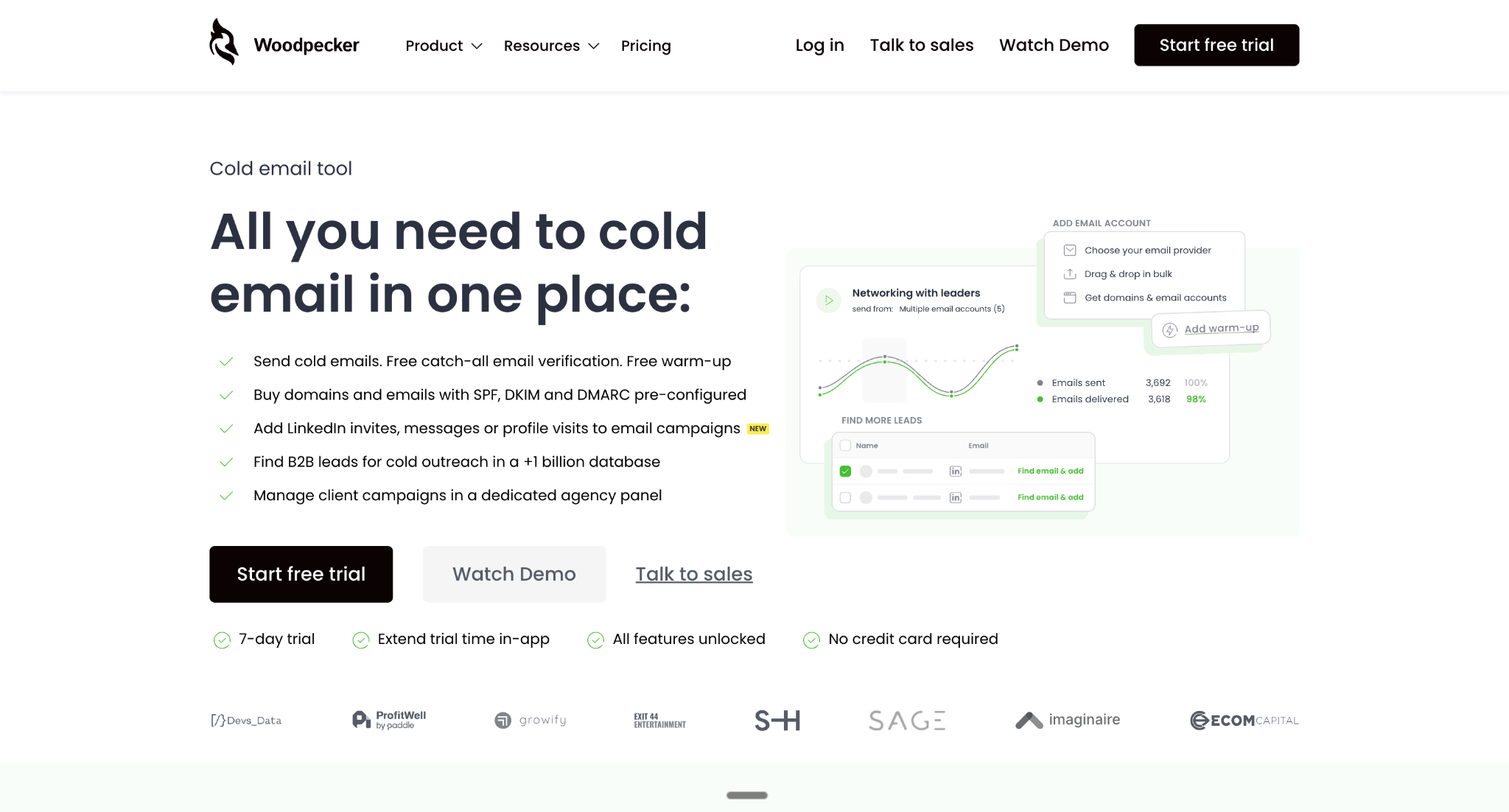
Woodpecker: Best Multichannel Alternative
Best for: Teams that want email plus LinkedIn outreach in one workflow
Woodpecker is a sales engagement platform designed for outbound teams that want multichannel sequencing without overly complex infrastructure. It combines cold email automation with LinkedIn task workflows, making it suitable for SDR teams running coordinated outreach campaigns.
Email + LinkedIn
Woodpecker allows users to build automated email sequences and include LinkedIn actions (such as connection requests or follow-up tasks) within the same campaign flow. This supports a more structured multichannel outbound strategy instead of relying on email alone.
Strong Personalization
The platform emphasizes personalization at scale. Users can insert custom fields, conditional logic, and tailored messaging to improve reply rates. This makes it particularly useful for agencies and B2B teams targeting niche audiences.
GDPR-Friendly Features
Woodpecker highlights GDPR compliance and includes features that help users manage consent and unsubscribe handling properly. This is especially relevant for EU-based teams or organizations prospecting in regulated markets.
Limitation
Woodpecker does not provide a large built-in B2B contact database. Teams typically need to source prospect data separately before launching campaigns. It is primarily an execution platform rather than a data intelligence solution.
Woodpecker is best for teams that already have contact data and want structured, personalized multichannel outreach.
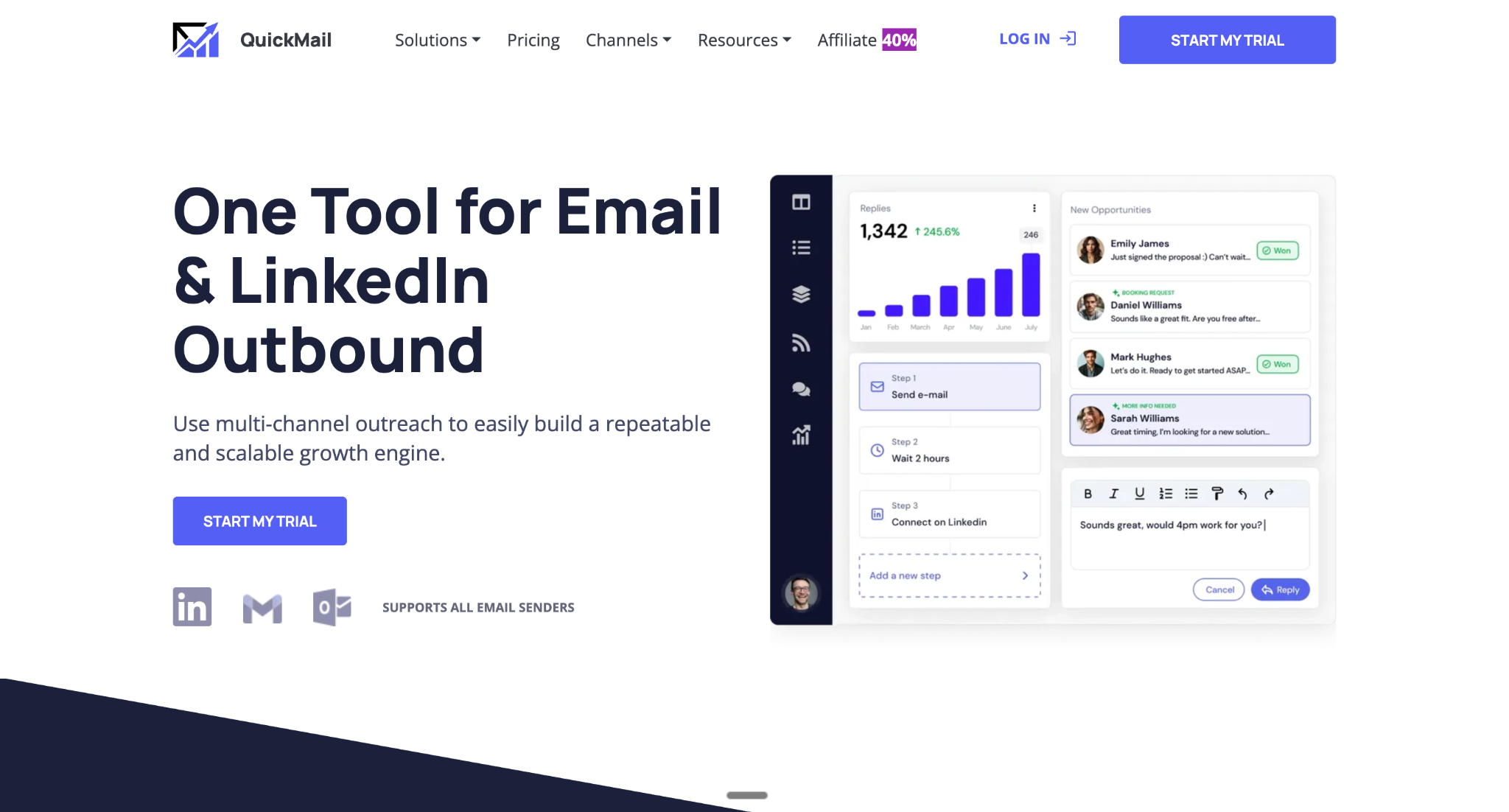
QuickMail: Best for Advanced Automation
Best for: Teams that want deep control over outbound workflows
QuickMail is built for outbound teams that prioritize automation flexibility and sequence logic over built-in databases. It is especially popular with technically inclined teams and agencies that want precise control over campaign behavior.
Conditional Logic Sequences
QuickMail allows users to create advanced workflows with branching logic based on replies, opens, or other engagement signals. This makes follow-ups more dynamic and tailored compared to simple linear sequences.
Inbox Rotation
The platform supports sending from multiple inboxes and rotating between them to distribute volume. This helps manage deliverability and reduce sender fatigue when scaling campaigns.
Developer-Friendly Controls
QuickMail offers API access and granular configuration options, making it suitable for teams that want to integrate outreach into custom systems or automate complex processes.
Limitation:
QuickMail does not provide native prospect data. Teams must source and upload their own contact lists before launching campaigns.
QuickMail is ideal for teams that already have high-quality data and want powerful automation controls for outbound execution.
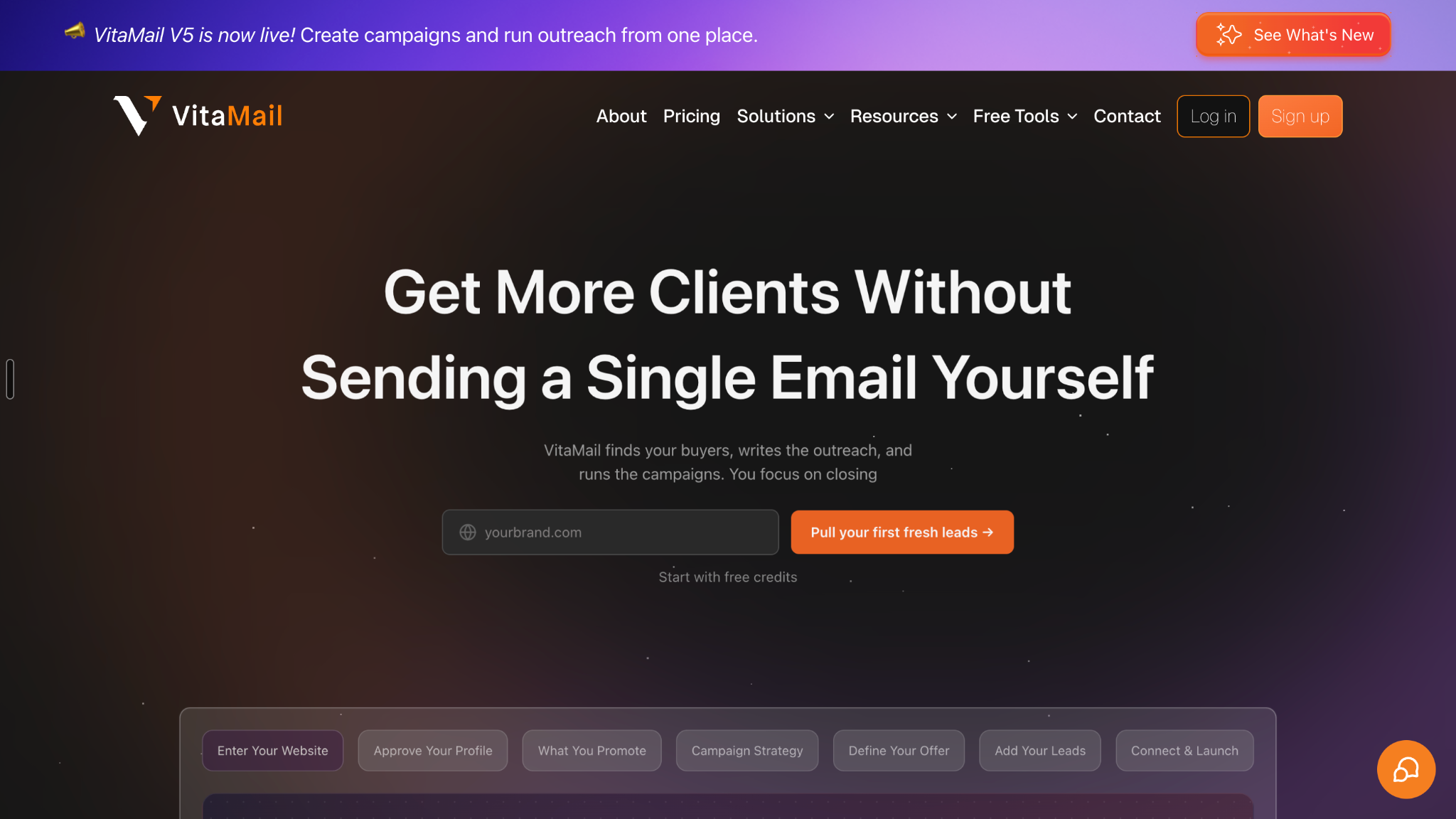
VitaMail: Best for All-in-One Email Outreach
Best for: SMBs, CRMs, marketers, and agencies that want to find leads, create campaigns, send emails, and manage deliverability from one platform
VitaMail is an AI email outreach platform that brings prospecting, campaign creation, sending, and deliverability tools together. Instead of starting with a contact database in one tool, verifying emails in another, and moving everything into a separate campaign platform, teams can handle these steps within the same workflow.
Real-Time Lead Sourcing
Instead of suggesting contacts from a static database, VitaMail pulls fresh leads in real time based on the campaign you're creating.
Lead sourcing is tied directly to campaign creation, so teams can move from defining who they want to reach to finding relevant contacts and building the campaign within the same workflow.
Personalized Campaign Creation
VitaMail helps create subject lines and email copy using information about the sender, campaign goal, and prospect.
Personalization can go beyond basic fields such as first name and company. The platform can use available prospect and company information, including website details, recent news, and technology data, to give emails more context before they are sent.
Smart Sending
VitaMail lets users connect Gmail, Google Workspace, or Outlook inboxes and send campaigns directly from the platform. Its Smart Sending system controls how emails are delivered rather than sending the full campaign at once.
Emails are sent gradually with natural gaps between them, helping avoid sudden spikes in sending activity. This gives teams more control over campaign delivery while keeping sender reputation and deliverability in mind.
Inbox Warm-Up & Domain Health
VitaMail includes automated inbox warm-up to gradually build sending activity on connected accounts. It also monitors domain health, including blacklist status and email authentication records such as SPF, DKIM, and DMARC.
Together, these tools help teams spot potential sender issues and manage deliverability before and during outreach.
Limitation
VitaMail is primarily focused on email outreach. Teams that need LinkedIn automation, SMS, or built-in calling as part of the same sequence will need separate tools for those channels.
VitaMail is best suited for teams that want to reduce the number of separate tools involved in running email outreach, particularly when prospecting, verification, campaign creation, sending, and deliverability are all part of the workflow.
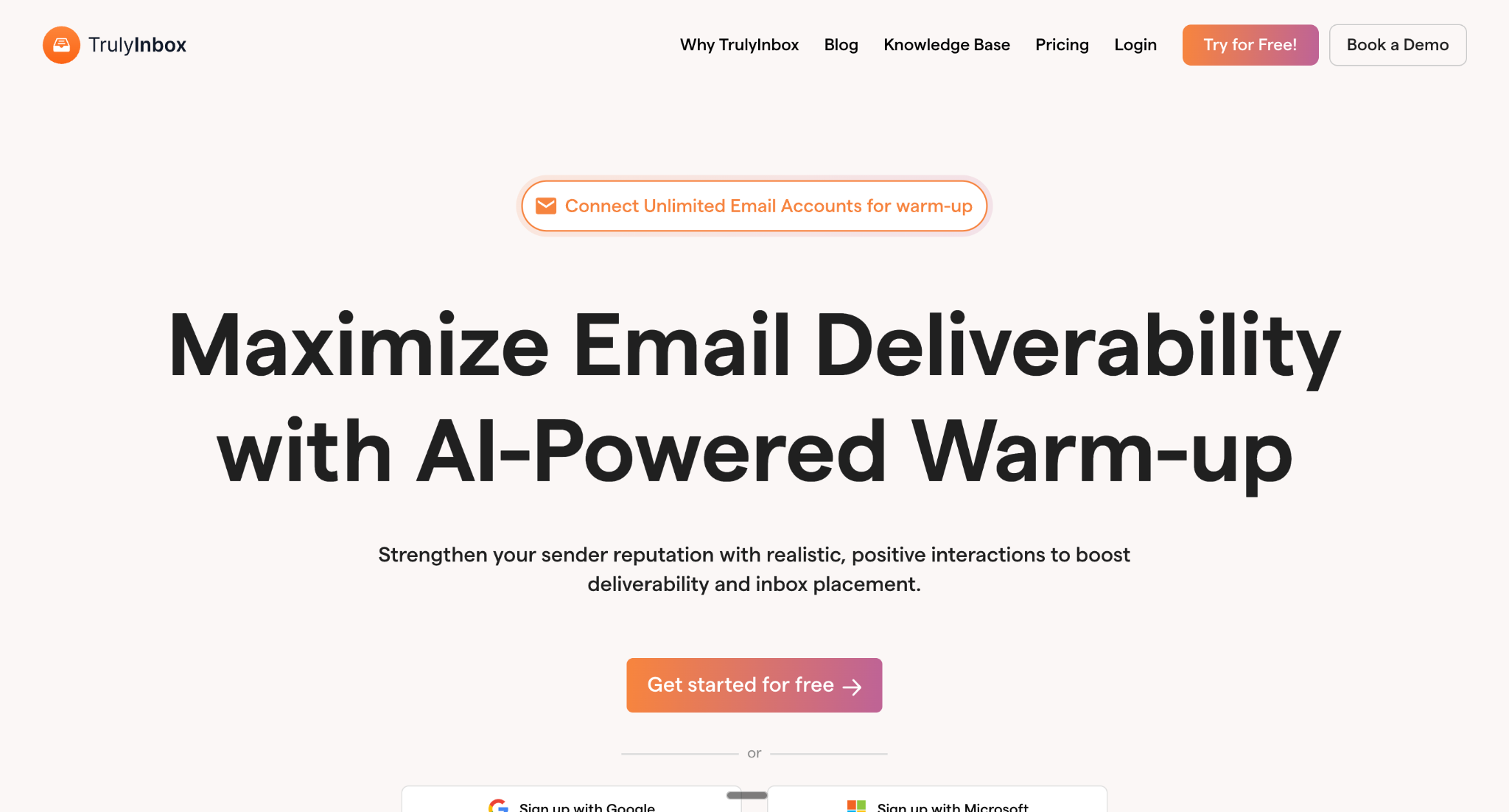
TrulyInbox: Best for Inbox Infrastructure
Best for: Agencies and teams scaling mailbox infrastructure
TrulyInbox focuses on the technical backbone of cold outreach rather than sequencing itself. It helps teams provision, manage, and warm up multiple inboxes to support high-volume outbound campaigns.
Mailbox Provisioning
TrulyInbox enables users to create and manage large numbers of sending accounts efficiently, which is particularly useful for agencies running campaigns across multiple clients.
Infrastructure Scaling
The platform is designed to handle inbox scaling needs, allowing teams to distribute sending volume across multiple domains and accounts to protect sender reputation.
Deliverability Management
TrulyInbox emphasizes inbox warmup and reputation management to improve email placement and reduce spam risk.
Limitation: TrulyInbox is not a complete outreach platform. It does not provide full campaign sequencing, prospect data, or multichannel engagement features.
TrulyInbox is best for teams that need strong email infrastructure and pair it with a separate sequencing tool for execution.
Frequently Asked Questions (FAQ)
Is there any alternative to Instantly.ai?
Yes. Apollo, SmartReach, Woodpecker, QuickMail, TrulyInbox, and Knock AI all offer different approaches to outbound automation or intent-driven engagement.
What is the best Instantly.ai alternative in 2026?
It depends on your strategy.
For full-stack outbound with built-in data → Apollo
There is no universal “best” tool, only the best fit for your GTM motion.
Why shouldn’t I choose Instantly.ai?
You may prefer an alternative if you need:
Multichannel automation (LinkedIn, calls, etc.)
Built-in proprietary prospect data
Deeper CRM integrations
Advanced branching workflows
Intent-based targeting instead of pure cold volume
Instantly is strong for scaled cold email, but not for full revenue orchestration.
Is cold email still effective in 2026?
Yes, but it’s more competitive. Inbox saturation, stricter spam filters, and domain reputation challenges mean deliverability and targeting matter more than ever. Many teams now combine outbound with intent-based inbound strategies.
What is the difference between cold outreach and intent-based engagement?
Cold outreach: You contact prospects who may not have shown recent interest.
Intent-based engagement: You engage companies actively researching your category, based on website visits, engagement signals, or buying intent.


.svg)


.svg)
.svg)
.svg)


.svg)
.svg)


.svg)