13 RB2B Alternatives: Person-Level ID Beyond the US
Top 13 RB2B Alternatives in 2026
TL;DR
Looking for the best RB2B alternatives in 2026?
RB2B can be limiting due to credit based pricing, low match rates, US only person level data, and the lack of activation or automation workflows. Many B2B teams now need more than basic deanonymization to identify website visitors and turn traffic into revenue.
This guide compares the top 13 RB2B alternatives for website visitor identification, deanonymization, and B2B buyer intent, including platforms that go beyond identification to enable qualification, orchestration, and conversion.
Best overall alternative:Knock AI Best for enterprise data: ZoomInfo, Clearbit Best for intent and ABM: 6sense Best budget friendly tools: Snitcher, Leadpipe
Use this guide to choose the right visitor identification software based on accuracy, pricing model, integrations, and overall go to market maturity.
Why B2B Teams Are Moving Beyond RB2B for Website Visitor Identification
Most B2B websites receive significant traffic, yet the majority of visitors leave without ever filling out a form or identifying themselves. Research shows that only about 3 % to 4 % of B2B website visitors complete a form, leaving roughly 96 % to 97 % of visitors anonymous and unseen by traditional lead capture methods. (Source)(Source)
This creates a large blind spot for revenue teams who are trying to understand buying behavior and prioritize high-value accounts. B2B buyers often conduct extensive independent research online before engaging with a salesperson, which makes it even more critical for teams to capture signals beyond form fills. For example, B2B buyers complete approximately 83% of the purchase journey digitally before engaging with sales, according to industry research. (Source)
While RB2B helps identify some visitors through person level deanonymization, its regional limitations, variable match rates, and limited activation capabilities have led many teams to look for more complete solutions with broader global coverage and deeper insight into intent signals. Modern go to market teams now expect visitor identification tools to provide not just visibility into anonymous traffic but also actionable insights, routing workflows, and measurable qualification outcomes.
That shift is why companies are increasingly evaluating RB2B alternatives that not only identify website visitors but also help teams act on intent, route conversations, and generate measurable pipeline impact.
What to Look for in an RB2B Alternative (Key Selection Criteria)
When evaluating RB2B alternatives, focus on whether the tool helps you move from visibility to action. Not all visitor identification platforms are built for revenue outcomes.
1. Identification Level
Some tools only identify companies, while others attempt person level identification. Company level identification is often more reliable and globally scalable, while person level data can be limited by geography and accuracy. The key is how accurately the tool identifies anonymous website visitors you can actually engage.
2. Match Rates
Traditional RB2B style tools often report match rates between 5 and 30 percent. Modern visitor identification platforms typically reach 65 to 85 percent by combining multiple data signals. Higher match rates mean more accounts surfaced from the same amount of traffic.
3. Pricing Model
Credit based pricing can make costs unpredictable as traffic scales. Fixed pricing models offer better cost control and make it easier to forecast ROI, especially for content heavy or inbound led teams.
4. Actionability
Identification alone is not enough. The best RB2B alternatives trigger real actions such as routing visitors to sales, starting conversations, or scheduling meetings automatically based on intent.
5. Integrations
Strong integrations matter. Look for native connections with CRMs like HubSpot and Salesforce, along with Slack, email, and scheduling tools. This ensures visitor data flows directly into existing workflows without manual work.
RB2B Alternatives Quick Comparison
Tool
Identification Type
Form Dependency
Best For
Pricing Model
Knock AI
Company and contact-level identification with buyer intent signals
Form-free
Converting anonymous website traffic
Fixed and transparent
Clearbit
Company-level enrichment
Form-dependent for capture
Data enrichment
Credit-based
ZoomInfo
Company and contact data
Form-dependent
Enterprise sales intelligence
Contract-based
6sense
Predictive intent and account scoring
Partially form-dependent
ABM teams
Enterprise contract
Warmly
Visitor identification with chat
Chat and form assisted
Sales-led inbound
Subscription
Lead Forensics
Company IP matching
Form-independent
Legacy enterprises
Contract-based
Dealfront
Company visitor tracking
Form-independent
GDPR-focused teams
Subscription
Instantly
Outreach automation
Not applicable
Cold email teams
Per seat
Kwanzoo
Intent-based advertising
Not applicable
Demand generation
Campaign-based
Albacross
Website deanonymization
Form-independent
SMB and mid-market teams
Subscription
Snitcher
Company visitor identification
Form-independent
Budget teams
Low fixed
Lusha
Contact and company data
Form-dependent
SDR enrichment
Credit-based
Leadpipe
Basic visitor tracking
Form-independent
Early-stage startups
Low fixed
See Knock AI in Action — Book Your Live Demo Today
Best for: Converting anonymous traffic into a qualified pipeline
Why Knock AI Wins
Most visitor identification tools stop at enrichment. They surface company names after a visit, but still depend on forms, gated content, or delayed follow up to create a pipeline. The reality is that most high intent buyers never fill out a form, which leaves traditional tools blind to the moments that matter most.
Knock AI is built to solve that exact problem. Through Knock Reveal, it identifies real companies and relevant buying contacts using real time, first party engagement signals. This works across websites, shared links, content hubs, review platforms, and other marketing assets. Identification happens automatically, without requiring form fills, demos, or gated content.
By capturing engagement while it is happening, Knock AI allows teams to understand buyer interest earlier in the journey and act while intent is still high. Instead of guessing who visited, revenue teams see which accounts are engaging, what content they interact with, and how frequently they return.
Unlike credit based enrichment platforms, Knock AI operates on a fixed and transparent pricing model. Teams are not penalized for traffic growth, which makes inbound and content led strategies easier to scale without unpredictable costs.
Most importantly, Knock AI is designed for conversion. Identification is only the first step. Engagement data from Knock Reveal flows directly into Knock Intent, where accounts are scored, prioritized, and routed so teams can respond in real time.
Standout Capabilities
Form free identification across marketing assets Knock AI identifies anonymous engagement without relying on forms, gated content, or manual research. Buyers can remain anonymous while still being recognized and qualified through real engagement.
Real time intent detection and activation Engagement signals such as page interactions, repeated visits, and content consumption are captured in real time. High intent activity can trigger alerts, conversations, routing, or scheduling while buyers are still active.
CRM native enrichment and workflows Knock AI enriches company and contact data automatically and syncs verified records directly into CRMs like HubSpot and Salesforce. Teams work from clean, real time context without manual data handling.
Built for modern inbound GTM teams Knock AI is designed for content driven, SEO led, and inbound focused teams who want to convert traffic without forcing forms. It complements inbound motion instead of pushing outbound style workflows onto anonymous buyers.
RB2B helps teams understand who visited their website. Knock AI helps teams understand who is actively buying and enables them to act in real time.
By removing forms from the identification and qualification process and extending visibility across all marketing assets, Knock AI surfaces more opportunities from the same traffic and turns anonymous engagement into measurable pipeline impact. That form free, real time approach is what makes Knock AI the strongest overall RB2B alternative in 2026.
2. Clearbit
Best for: Company enrichment and firmographics
Limitation: Identification without activation
Clearbit is widely used for enriching existing leads and accounts with firmographic and technographic data. It is commonly deployed alongside CRMs and marketing automation platforms to add company details such as industry, company size, location, and technology stack to known records.
For website visitor identification, Clearbit primarily focuses on company level enrichment rather than real time buyer engagement. It works best when a visitor has already been captured through a form, signup, or known identifier, making it a strong fit for teams that prioritize data completeness over immediate activation.
Clearbit’s strength lies in the depth and reliability of its enrichment data. Sales and marketing teams use it to improve lead scoring, segmentation, personalization, and reporting. However, it does not natively trigger conversations, routing, or scheduling based on live visitor behavior.
As a result, Clearbit is best suited for teams that want to enrich and organize known accounts, not for those looking to convert anonymous traffic into pipeline at the moment of engagement. Teams focused on real time intent, form free identification, and immediate action typically layer Clearbit with additional tools to close that gap.
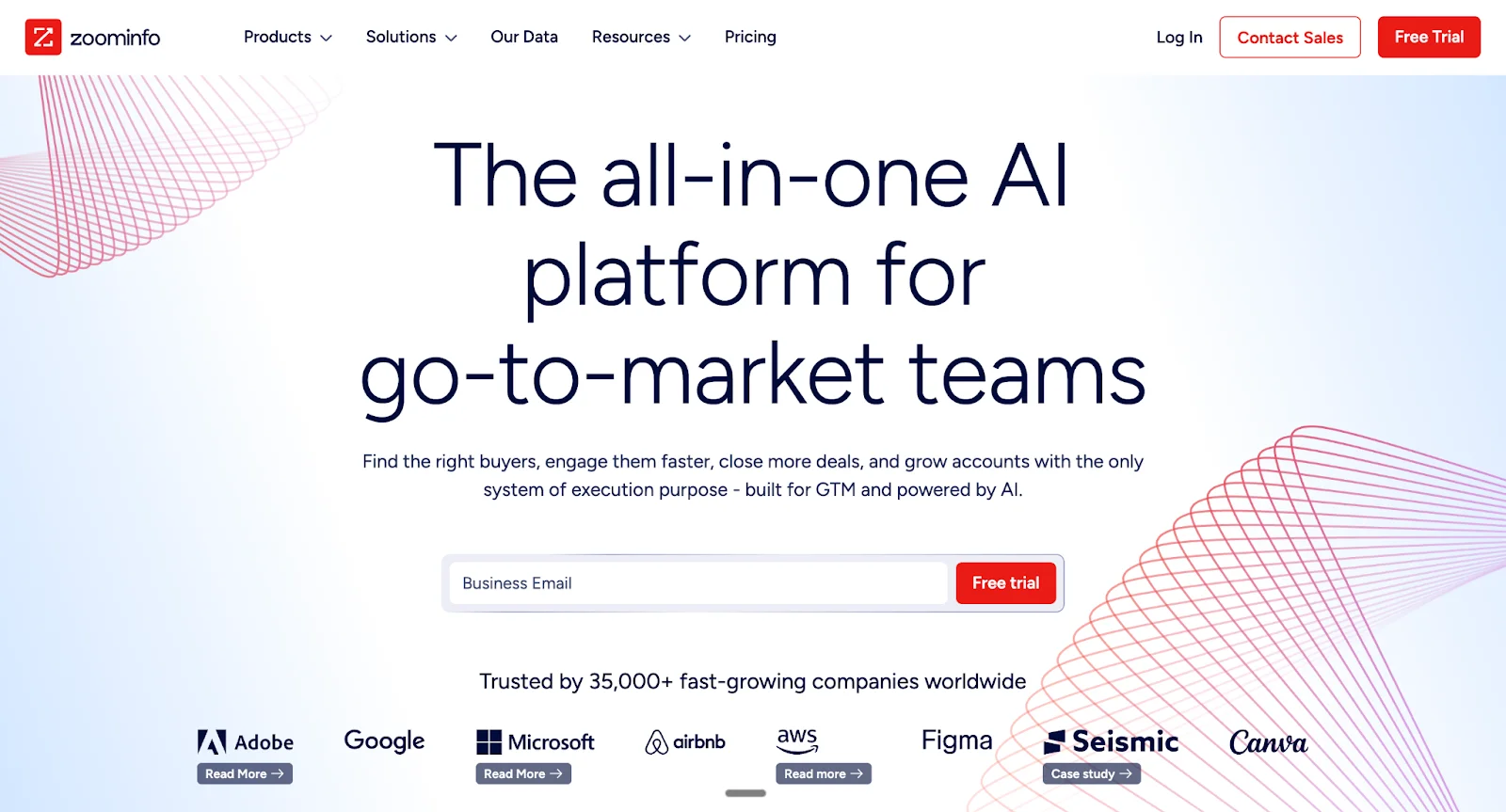
ZoomInfo is one of the most widely adopted B2B sales intelligence platforms, known for its large database of company and contact information. Enterprise sales teams use ZoomInfo to power outbound prospecting, account research, and pipeline development at scale.
The platform excels at providing deep firmographic, technographic, and contact level data across global markets. For organizations with large sales teams and complex account hierarchies, ZoomInfo offers the volume and coverage needed to support high velocity outbound workflows.
However, ZoomInfo is built primarily for sales led motion, not inbound conversion. Website visitor identification and intent signals are secondary to its core function as a sales data provider. Identification often relies on enrichment of known records rather than real time engagement from anonymous traffic.
ZoomInfo is also a significant investment. Pricing is typically contract based, tied to data access, seats, and usage limits, which can make it cost prohibitive for smaller teams or inbound focused organizations.
As a result, ZoomInfo is best suited for enterprises that prioritize outbound prospecting and large scale data access. Teams focused on form free inbound identification, real time intent, and immediate activation often find ZoomInfo too heavy and sales centric for those use cases.
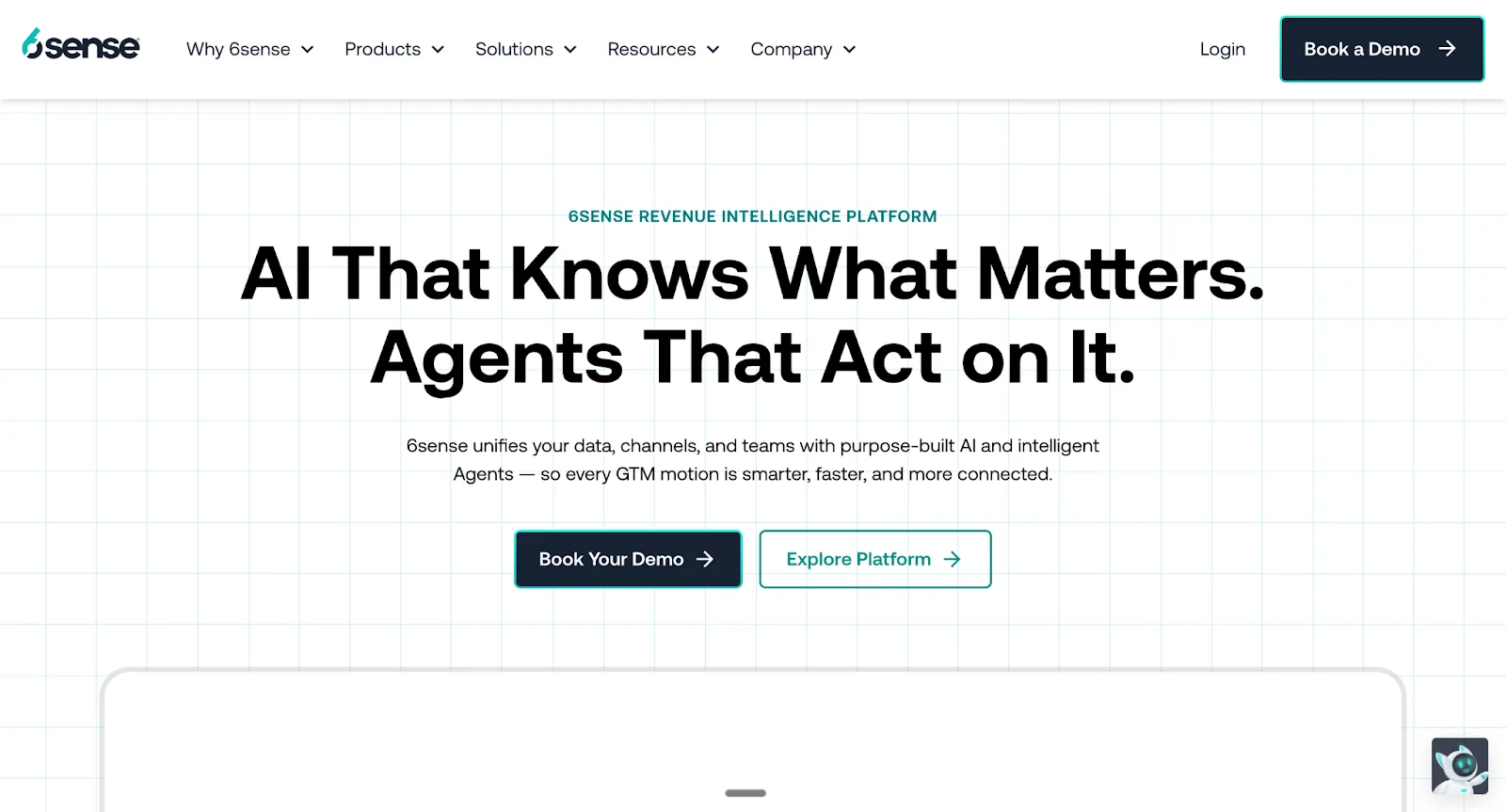
6sense is a well known account based marketing platform built around predictive intent, account scoring, and journey orchestration. It is primarily used by large B2B organizations to identify in-market accounts and align marketing and sales teams around target lists.
The platform analyzes a mix of first party and third party signals to predict buying stages across accounts. These insights are typically used to guide ABM campaigns, advertising, content targeting, and sales prioritization rather than real time inbound engagement.
While powerful, 6sense requires significant setup, data integration, and operational maturity. Most teams need time to configure models, align ICPs, and train users before seeing meaningful impact. Because of this, it is best suited for enterprise teams with dedicated ABM resources and long sales cycles.
For teams focused on form free visitor identification and immediate inbound activation, 6sense can feel heavy. It excels at strategic intent forecasting but is less oriented toward capturing and acting on live engagement from anonymous website visitors.
5. Warmly
Best for: Live chat and inbound sales
Limitation: Chat led, not intent led
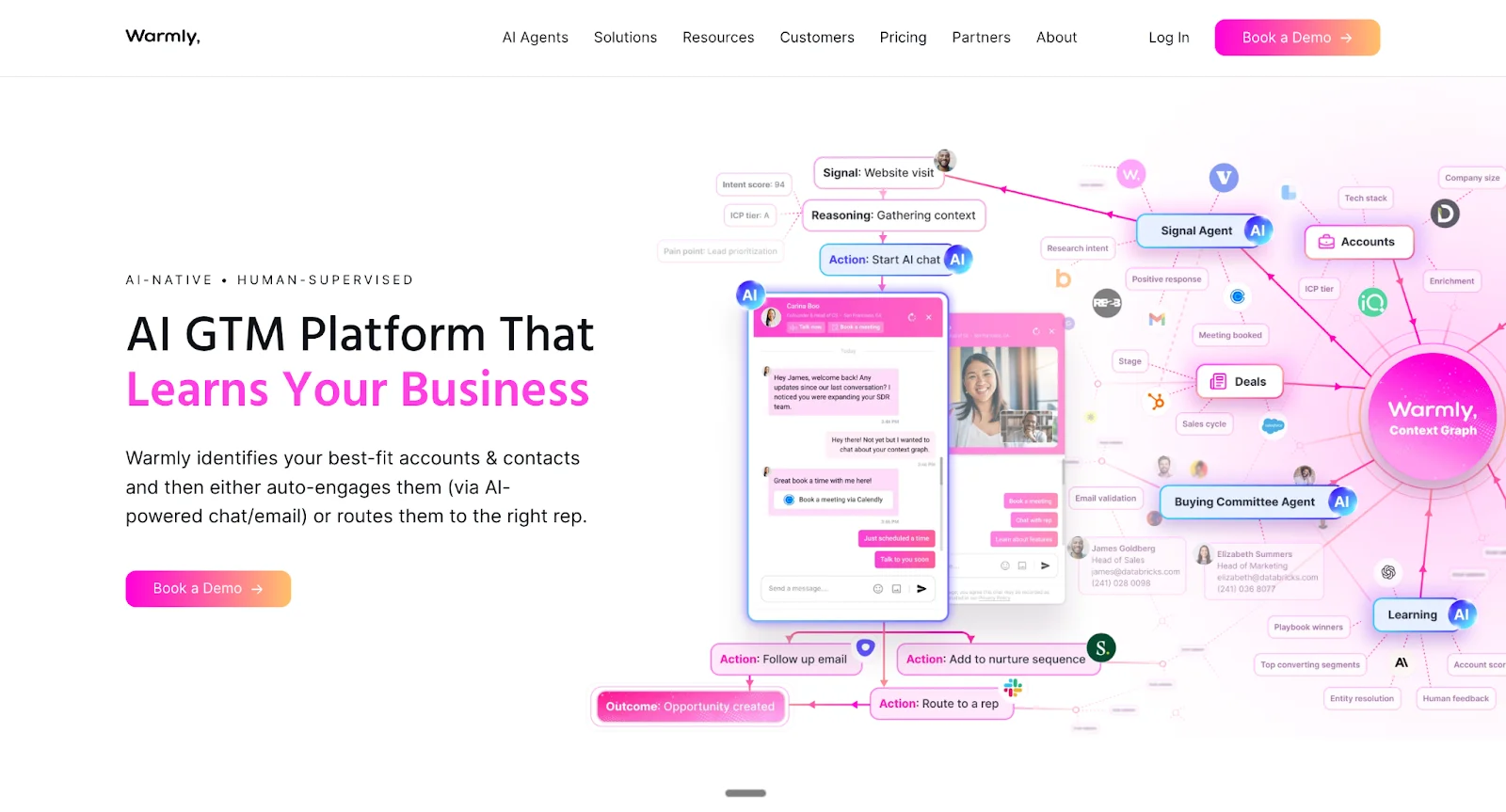
Warmly is designed to help sales teams engage inbound website visitors through live chat and conversational workflows. It combines basic visitor identification with chat triggers to help reps start conversations with visitors who appear to be a good fit.
The platform works well for sales led inbound teams that want to engage visitors directly and move conversations into demos or meetings. It is especially useful for companies that already rely heavily on chat as a primary conversion channel.
However, Warmly’s approach is fundamentally chat driven. Visitor identification and prioritization are closely tied to chat interactions rather than deeper intent analysis across the full inbound journey. Engagement typically begins once a visitor is on the site and available to chat.
As a result, Warmly is best suited for teams that want to optimize live conversations, not for those looking to identify and qualify anonymous engagement across multiple marketing assets or act on intent before a chat ever starts.
Lead Forensics is one of the longest standing platforms in the website visitor identification category. It primarily uses IP based company matching to identify organizations visiting a website and has been adopted by many large and traditional enterprises over the years.
The platform is useful for teams that want basic visibility into which companies are visiting their site, especially in environments with long buying cycles and low velocity inbound traffic. It is often paired with manual sales workflows where reps research and follow up on identified accounts.
However, Lead Forensics relies on older identification techniques that can struggle with modern traffic patterns, remote work, and cloud infrastructure. Real time intent detection and automated activation are limited compared to newer platforms.
As a result, Lead Forensics is best suited for legacy enterprises that value historical reporting over real time inbound conversion.
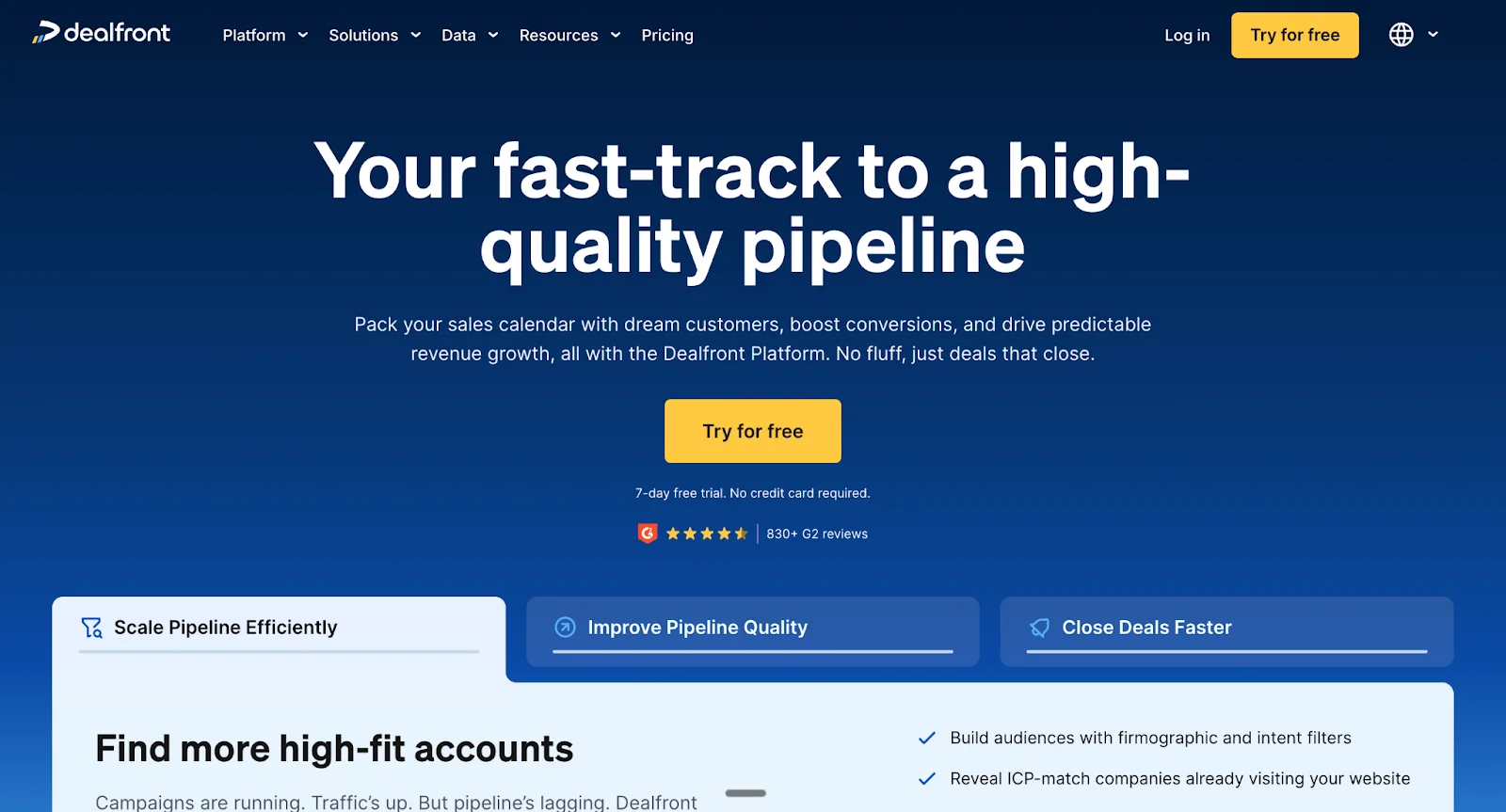
7. Dealfront
Best for: European teams
Limitation: Less US depth
Dealfront is a visitor intelligence and sales intelligence platform with a strong focus on GDPR compliance and European data coverage. It is commonly used by teams operating primarily in the EU who need to balance visitor identification with strict privacy requirements.
The platform provides company level visitor tracking, firmographic insights, and integrations with CRM and sales tools. Its compliance first approach makes it a solid choice for regulated industries and privacy conscious organizations.
However, Dealfront’s depth and coverage in the US market are more limited compared to platforms built primarily around North American data sources. Teams with a global or US heavy audience may find gaps in coverage.
Dealfront is a good fit for EU based teams but may require supplementation for broader international reach.
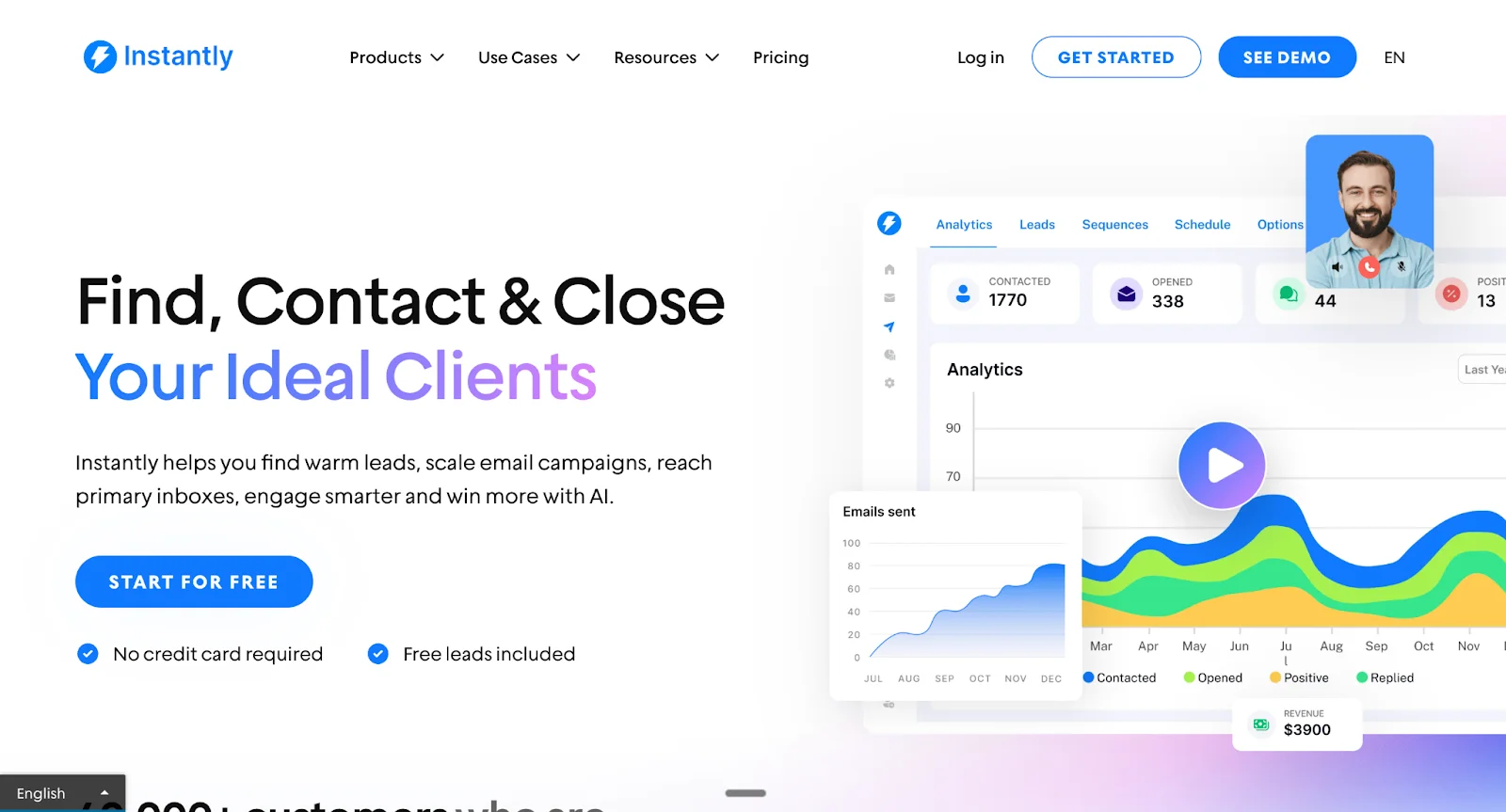
8. Instantly
Best for: Outbound execution
Limitation: Not visitor identification
Instantly is an outbound email automation platform designed to help sales teams send, manage, and scale cold email campaigns. It focuses on deliverability, sequencing, inbox rotation, and reply handling.
The platform is widely used by outbound focused teams that already have prospect lists and want to execute campaigns efficiently. It is not designed to identify website visitors or capture inbound engagement.
Because Instantly does not provide visitor identification, it is not a direct RB2B alternative. Instead, it is often used alongside enrichment or identification tools to activate outbound workflows after prospects are identified elsewhere.
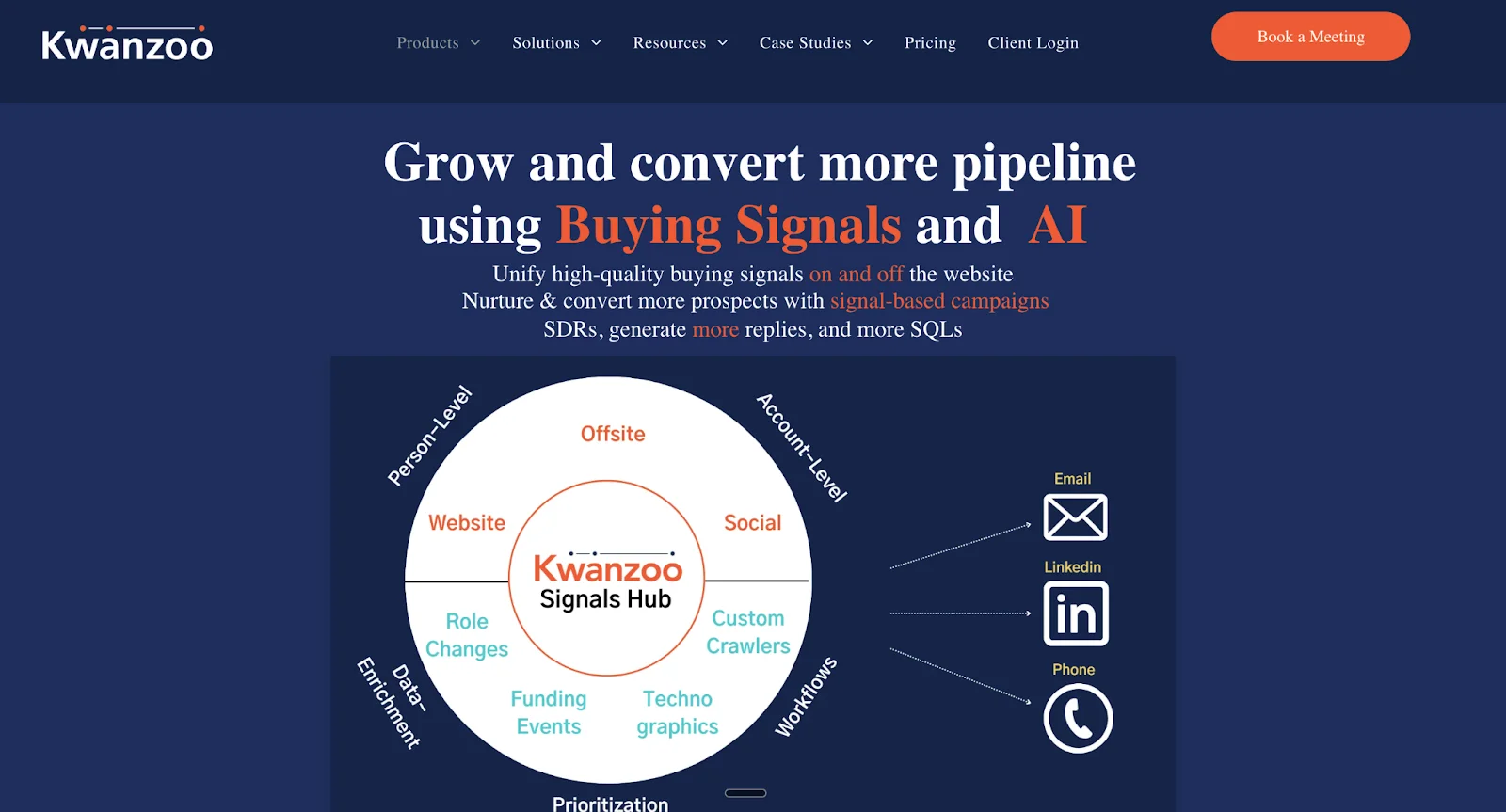
9. Kwanzoo
Best for: Intent based advertising
Limitation: Media spend dependent
Kwanzoo is an intent driven advertising platform that helps B2B teams target accounts based on intent signals and campaign engagement. It is primarily used to support demand generation through paid media and account based advertising.
The platform is effective for reaching in market accounts through ads and content distribution. However, its impact is closely tied to media spend and campaign budgets rather than organic or inbound engagement.
Kwanzoo does not identify anonymous website visitors in real time or convert engagement directly into pipeline. It is best viewed as an advertising layer rather than a visitor identification solution.
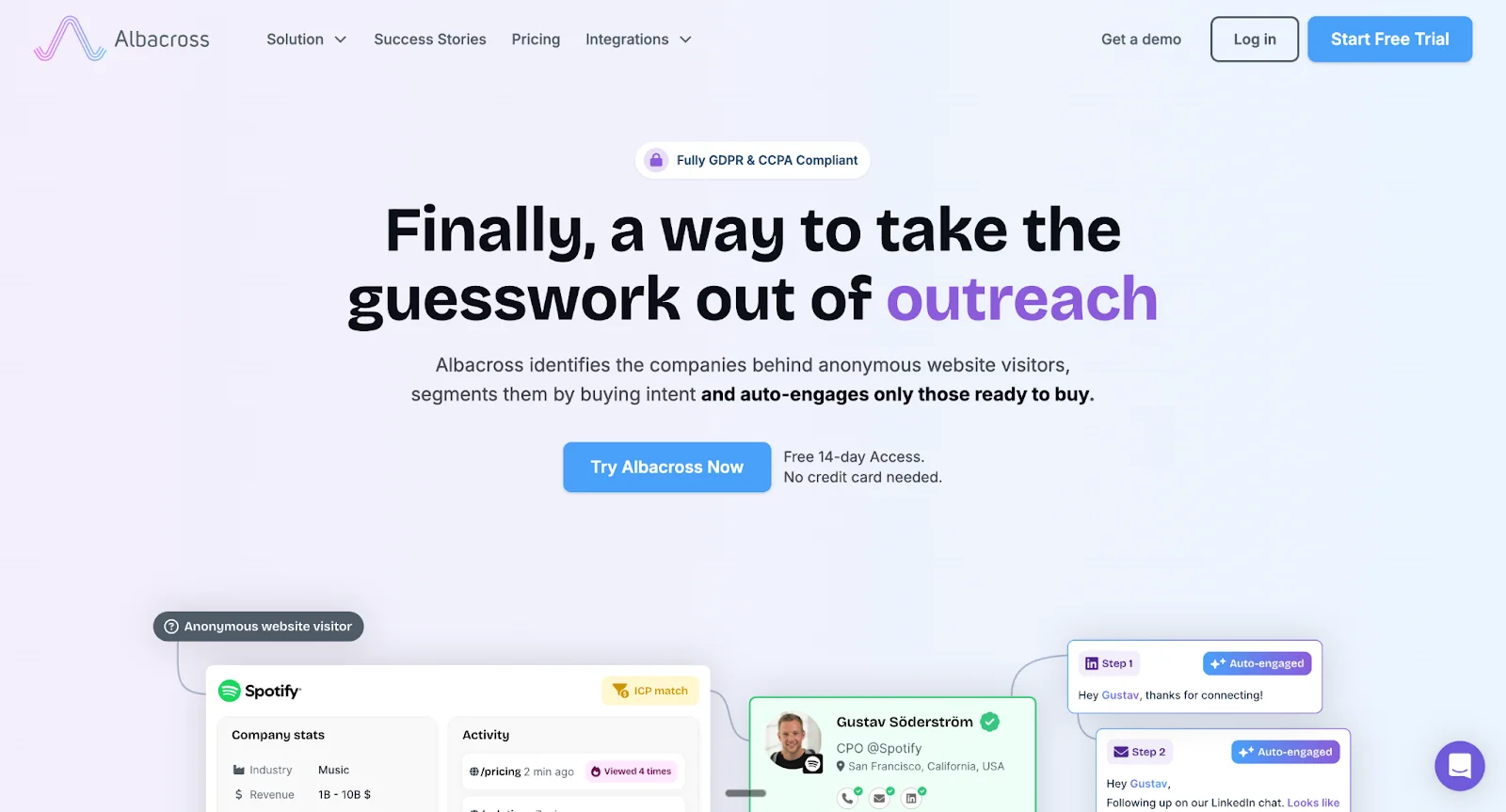
10. Albacross
Best for: SMB visitor identification
Limitation: Limited orchestration
Albacross provides company level website visitor identification for small and mid sized businesses. It helps teams see which organizations are visiting their site and offers basic firmographic insights.
The platform is relatively easy to deploy and works well for teams that want simple visibility into inbound traffic without complex setup. It is often used by SMBs starting to explore visitor identification.
However, Albacross offers limited orchestration and activation capabilities. Turning identified visitors into conversations, routing, or meetings typically requires additional tools and manual processes.
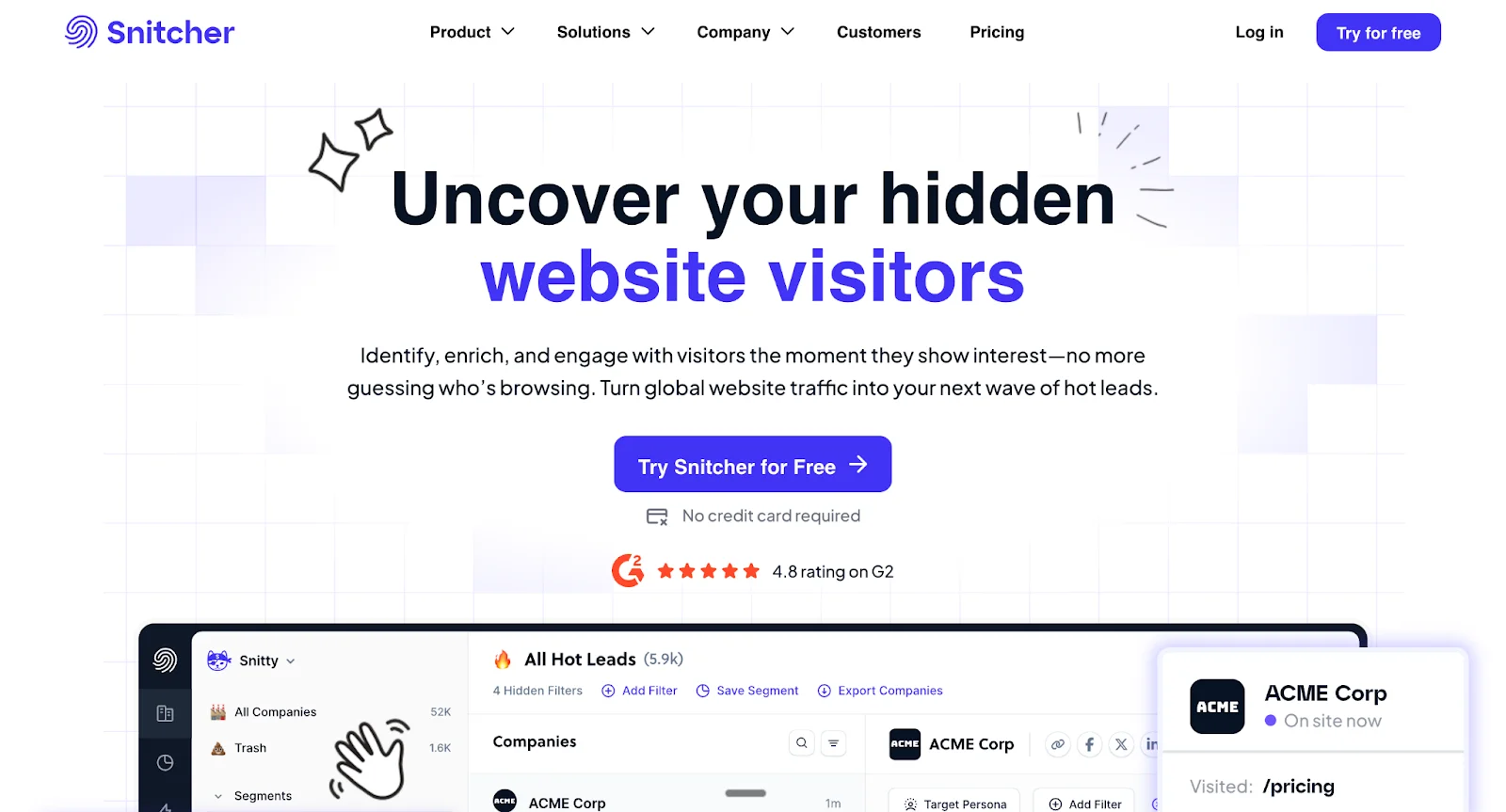
11. Snitcher
Best for: Budget teams
Limitation: Lower match rates
Snitcher is a lightweight visitor identification tool designed for teams with limited budgets. It provides company level identification and basic insights into website traffic.
The platform is easy to use and affordable, making it attractive for early stage teams or those experimenting with visitor identification for the first time.
However, match coverage and data depth are more limited compared to enterprise or intent driven platforms. Snitcher is best used for basic visibility rather than revenue critical workflows.
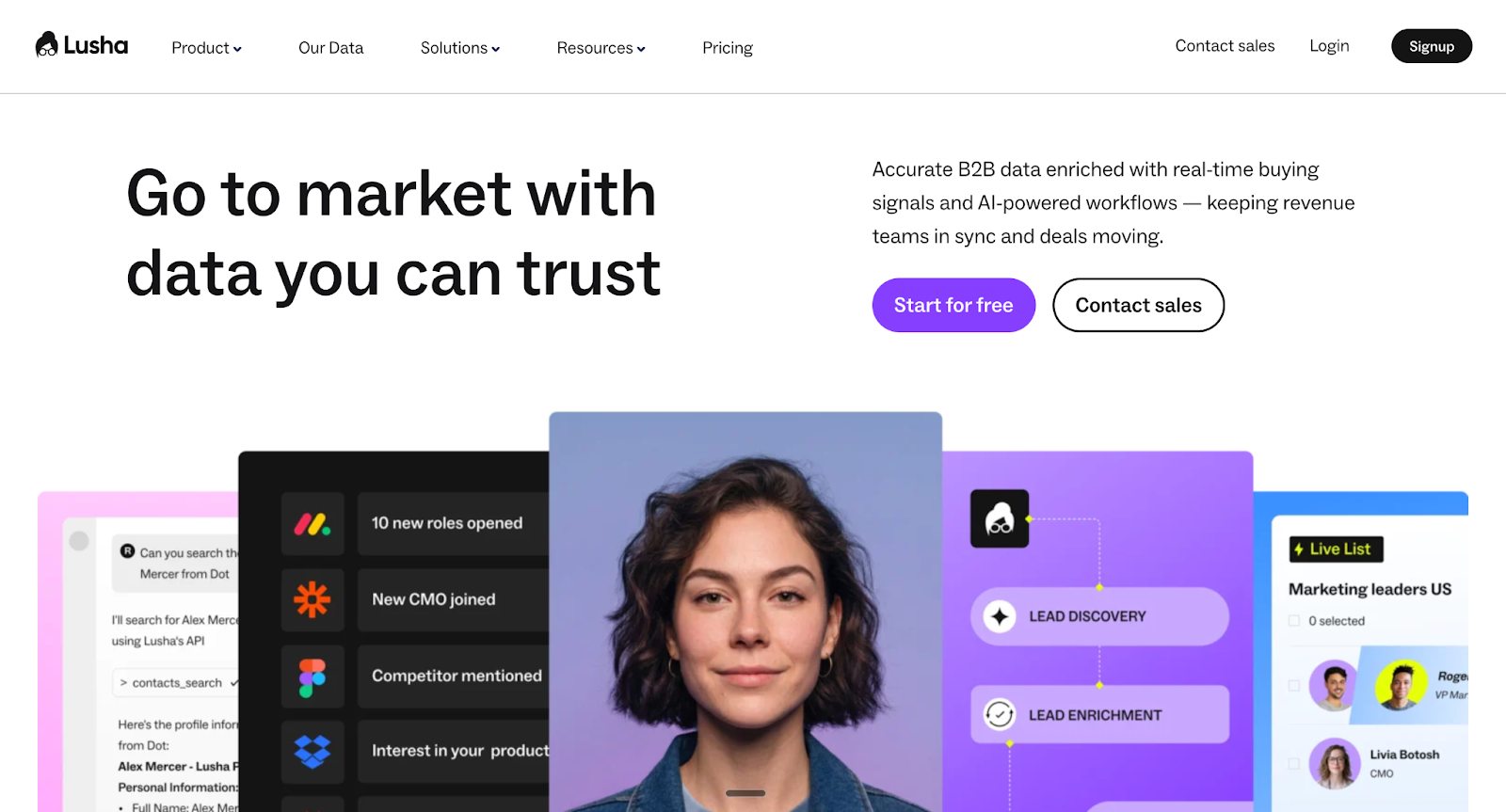
12. Lusha
Best for: Contact enrichment
Limitation: Credit based pricing and compliance considerations
Lusha is primarily a contact and company data provider used by sales teams to enrich leads and prospect lists. It is commonly used for outbound prospecting and CRM enrichment.
The platform operates on a credit based pricing model, which can make costs unpredictable at scale. Usage limits and compliance considerations also require careful management, especially for global teams.
Lusha is not designed to identify anonymous website visitors or capture real time inbound intent. It works best as an enrichment layer after a lead is already known.
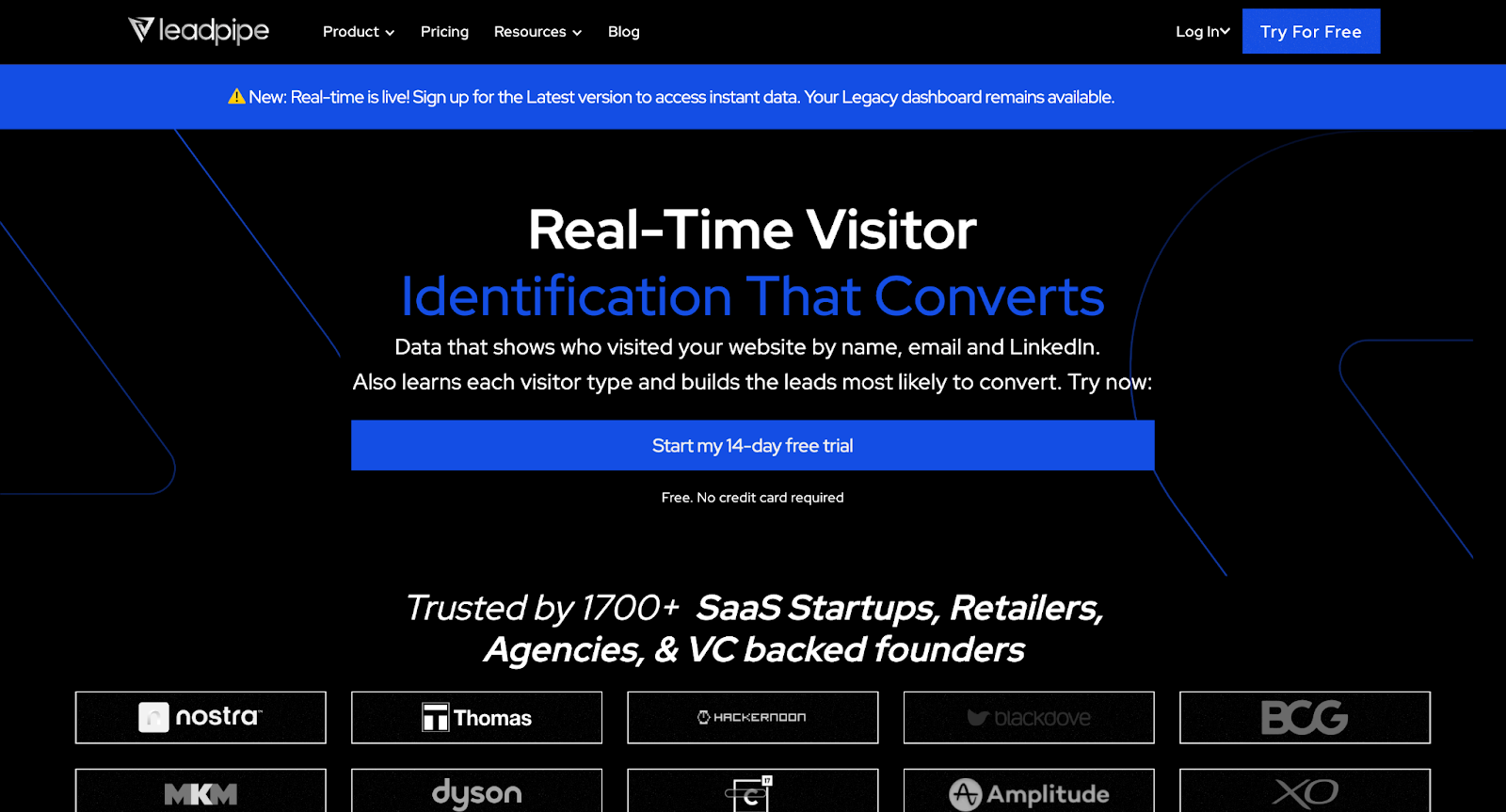
13. Leadpipe
Best for: Early stage startups
Limitation: Basic data only
Leadpipe offers simple website visitor tracking and company identification for startups and small teams. It focuses on providing basic visibility into inbound traffic without complex features or setup.
The platform is affordable and easy to implement, making it suitable for teams with limited resources and low inbound volume.
However, Leadpipe provides minimal data depth and lacks advanced intent detection, automation, or activation capabilities. It is best suited for early experimentation rather than scalable revenue operations.
RB2B Alternatives by Use Case
Use Case
Best Tool
Why It Fits
Conversion-first inbound teams
Knock AI
Form-free identification combined with real-time intent detection and activation. Best for turning anonymous engagement into qualified pipeline without relying on form fills.
Enrichment-only workflows
Clearbit, Lusha
Strong firmographic and contact enrichment for known leads and accounts, but limited real-time activation or inbound conversion capabilities.
Account-based marketing and predictive intent
6sense
Designed for enterprise ABM teams that prioritize account scoring, journey analysis, and long-term intent forecasting.
GDPR-first visitor identification
Dealfront
Built with strong European data coverage and privacy compliance, making it suitable for EU-focused teams and regulated industries.
Low-cost visitor identification
Snitcher, Leadpipe
Affordable options for basic company-level visibility. Best for early-stage teams or experimentation rather than revenue-critical workflows.
Knock AI vs RB2B (Wise Buyer’s Choice)
Choosing between RB2B and Knock AI comes down to how your team approaches inbound engagement and conversion. Both tools aim to surface value from anonymous traffic, but they are built around very different assumptions about how buyers behave.
RB2B focuses primarily on identifying visitors after the fact through person level deanonymization. This can provide visibility into some traffic, but it often depends on limited match coverage, regional constraints, and credit based usage. Identification is typically disconnected from real time action, which means teams still need manual processes to convert interest into pipeline.
Knock AI is designed for a different model. Instead of waiting for identification events or form submissions, it operates form free and captures real time engagement across websites and other marketing assets. Identity and engagement are treated as inputs to action, not as the end result.
The table below highlights these differences at a practical level.
Area
RB2B
Knock AI
Match Rates
Low to medium coverage depending on traffic volume and region
Higher coverage by capturing real-time engagement across marketing assets
Pricing
Credit-based usage that can scale unpredictably
Fixed and transparent pricing that scales with inbound growth
Activation
Identification without built-in activation
Real-time routing, conversations, and scheduling
Intent Detection
Limited intent context
Built-in intent signals passed into scoring and prioritization
Conversion Focus
Visibility into visitors
Turning engagement into qualified pipeline
How to interpret this comparison
RB2B can be a fit for teams that primarily want basic visibility into who may have visited their site and are comfortable handling follow up manually. It is closer to a data point than a workflow.
Knock AI is better suited for teams that view inbound traffic as a live opportunity. By removing forms and connecting identification directly to intent and activation, it helps teams act while buyers are still engaged.
For buyers deciding between the two, the choice is less about features and more about philosophy. RB2B answers who visited. Knock AI answers who is ready and enables teams to respond in real time.
Frequently Asked Questions
Is there any alternative to RB2B?
Yes. There are several RB2B alternatives available, including Knock AI, Clearbit, ZoomInfo, and 6sense. These tools offer different approaches to website visitor identification, buyer intent, and activation depending on team size and go to market strategy.
What is the best alternative to RB2B?
For teams focused on conversion and pipeline impact, Knock AI is considered the strongest RB2B alternative in 2026. It removes forms from the identification process and connects visitor engagement directly to intent, routing, and qualification workflows.
Why shouldn’t I choose RB2B?
RB2B may not be the right choice if you need higher coverage, predictable pricing, or real time activation. It typically relies on credit based pricing, has variable match rates, and focuses more on identification than on qualification or conversion.
How do I identify anonymous website visitors?
Anonymous website visitors can be identified using website visitor identification software that combines IP based company matching, first party engagement signals, and CRM integrations. Modern tools go beyond identification by adding intent detection and activation workflows.
What is the difference between deanonymization and intent?
Deanonymization shows which company or contact visited your website. Intent indicates whether that visitor is actively researching or ready to buy. Intent focuses on behavior and engagement patterns, not just identity.


.svg)


.svg)
.svg)
.svg)


.svg)
.svg)

.webp)

.svg)
.webp)
.webp)