7 Bombora Alternatives in 2026: What Bombora Doesn't Do
Top 7 Bombora Alternatives in 2026
TL;DR
Looking for the best Bombora alternatives in 2026?
Bombora is well known for third-party B2B intent data and account-level topic surge signals. However, many modern revenue teams are exploring alternatives due to enterprise pricing, delayed intent feeds, limited real-time activation, and the absence of direct website visitor identification.
Today’s go-to-market teams want more than account-level research signals. They want to:
Identify anonymous website visitors
Track B2B website visitor engagement in real time
Combine first-party behavioral intent with enrichment
Activate accounts instantly through routing, alerts, and scheduling
Turn intent into qualified pipeline, not just reports
This guide compares the top 7 Bombora alternatives for:
B2B intent data
Website visitor identification
Account-level buying signals
Anonymous visitor identification
Real-time activation and pipeline creation
Best overall alternative:Knock AI Best for enterprise predictive ABM: 6sense Best for contact database + outreach: ZoomInfo Best for fast enrichment: Clearbit Best for SDR prospecting: Seamless & Lusha Best for intent-layered prospecting workflows: Salesmotion
Use this guide to choose the right Bombora alternative based on intent depth, activation capability, pricing model, data freshness, CRM integrations, and your overall go-to-market maturity.
Bombora Review: Why Teams Look for Alternatives
What Bombora Is Commonly Used For
Bombora is best known for providing third-party B2B intent data. It collects and aggregates research activity from a large network of B2B publisher sites and content platforms to identify which companies are showing increased interest in specific topics.
It is commonly used for:
Third-party intent data collection
Account-level topic surge signals
B2B buying intent modeling
ABM campaign prioritization
Integrations with CRM and marketing automation platforms
In simple terms, Bombora answers:
“Which accounts are researching topics related to our solution?”
This makes it valuable for account-based marketing (ABM), outbound prospecting prioritization, and enterprise demand generation programs.
However, while Bombora provides visibility into external research behavior, modern B2B teams increasingly require deeper, more actionable intelligence tied directly to their own digital properties.
Today’s revenue teams are looking for:
Real-time website visitor identification
Anonymous website visitor tracking
Contact-level context
Behavioral intent scoring
Direct conversion activation
The shift is clear: companies no longer want just topic signals, they want engagement signals they can act on immediately.
Why Teams Search for Bombora Alternatives
As buying behavior evolves, many organizations begin evaluating Bombora alternatives. Common reasons include:
Expensive enterprise pricing models
Third-party intent without first-party validation
Limited real-time activation workflows
No built-in website visitor identification
No direct routing or scheduling capability
Delayed or batch-based intent feeds
No native deanonymization of website visitors
Bombora primarily delivers account-level research trends. But modern go-to-market teams want to:
Identify website visitors in real time
Track anonymous engagement across marketing assets
When intent remains separated from activation, revenue impact can be delayed.
Search targets covered in this section:
Bombora alternatives
Alternatives to Bombora
Best alternative to Bombora
Is there any alternative to Bombora
Why shouldn’t I choose Bombora
If your team is moving from static intent reports toward real-time website visitor identification and activation, exploring Bombora alternatives becomes a strategic next step.
Combines website visitor identification, intent scoring, and activation to convert anonymous engagement into pipeline
Enterprise ABM
6sense
Predictive modeling and long-cycle account scoring
SDR prospecting
Seamless, Lusha
Fast contact-level enrichment for outbound teams
CRM enrichment
Clearbit
Adds firmographic and technographic data to known accounts
Enterprise outbound
ZoomInfo
Large-scale contact database with sales intelligence
Intent-layered prospecting
Salesmotion
Combines intent signals with SDR workflows
Why B2B Teams Move Beyond Third-Party Intent Data
Third-Party Intent vs First-Party Engagement
Bombora primarily relies on third-party co-op data, aggregating research activity from external publisher networks to determine which companies are showing increased interest in specific topics.
While this model provides useful market-level insight, modern B2B teams increasingly prioritize first-party engagement data, signals generated directly from their own digital properties.
Without activation layers built in, intent data must be manually operationalized. That delay creates friction between marketing insight and sales action.
Intent without activation = delayed revenue.
Modern revenue teams want to move from “insight” to “engagement” in minutes, not days.
Identification + Intent + Activation Is the New Standard
Instead of simply identifying accounts researching a topic, these platforms identify:
Which companies are visiting your site
What pages they are engaging with
Whether intent is increasing
When to trigger SDR outreach or routing
This integrated approach is why many B2B teams begin evaluating Bombora alternatives, especially when shifting toward conversion-first inbound strategies.
What to Look for in a Bombora Alternative
When comparing Bombora alternatives, focus on operational impact, not just intent volume.
Website Visitor Identification
Look for tools that can:
Identify anonymous website visitors
Track B2B website visitors in real time
Handle VPN and cloud infrastructure traffic
Support cross-asset tracking beyond a single domain
Many teams moving beyond Bombora are specifically seeking website visitor identification software that connects intent to on-site behavior.
Intent Detection Depth
Not all intent signals are equal.
Compare:
Third-party topic surges
Behavioral first-party signals
Cross-channel engagement
Pricing page visits
Repeat sessions
Content consumption patterns
The strongest platforms combine multiple behavioral indicators instead of relying solely on external research data.
Real-Time Activation
Modern intent platforms should support:
SDR alerts
Account routing
Chat triggers
Meeting scheduling
CRM automation
If a tool only provides reports and dashboards, it may not drive direct pipeline impact.
Activation is what transforms intent into revenue.
Pricing Model
Evaluate:
Enterprise contracts
Credit-based models
Usage-based billing
Fixed subscription pricing
For many teams, predictable pricing becomes more important than raw intent volume, especially when scaling inbound traffic and engagement.
Choosing the right Bombora alternative depends not just on data quality, but on how effectively that data converts into measurable pipeline.
Top 7 Bombora Alternatives in 2026
As buying behavior becomes more digital and self-directed, many revenue teams are rethinking how they use intent data. Instead of relying solely on third-party topic surges, modern teams want visibility into real-time website engagement, anonymous visitor identification, and direct activation workflows.
Below are the top 7 Bombora alternatives in 2026, each suited for different go-to-market strategies.
Knock AI: Best Overall Bombora Alternative
Best for: Conversion-first inbound teams
Why Knock AI Is Different
Bombora focuses primarily on third-party topic intent, identifying which accounts are researching certain themes across external publisher networks.
Knock AI takes a different approach. It focuses on first-party behavioral intent and activation. Instead of only identifying which companies are researching topics, it identifies which companies are actively engaging with your website and marketing assets, and enables immediate action.
The shift is from “who is researching somewhere” to:
“Who is engaging with us right now, and what should we do next?”
Website + Cross-Asset Identification
Knock AI combines multiple layers of website visitor identification and engagement tracking:
Rather than relying only on third-party co-op data, it analyzes direct engagement across web pages, content assets, and digital touchpoints to surface high-intent activity.
This gives revenue teams visibility into:
Repeat visits
High-value page engagement
Account-level interaction patterns
Escalating interest signals
Real-Time Intent & Activation
Where many intent platforms stop at reporting, Knock AI emphasizes activation.
It supports:
Behavioral scoring based on live engagement
SDR routing based on intent thresholds
Real-time alerts
Live conversations
Scheduling triggers
CRM synchronization
Instead of generating static dashboards, the system is built to turn engagement into qualified pipeline.
This layered approach connects identification directly to execution, bridging the gap between insight and revenue.
Wise Buyer Note
Choose Bombora if your primary goal is topic-level third-party intent data to inform ABM and long-cycle account research.
Choose Knock AI if your goal is to convert active website engagement into qualified pipeline, using first-party signals and real-time activation.
For teams moving toward conversion-first inbound and integrated website visitor identification, this distinction becomes strategically important.
6sense: Best Enterprise Predictive ABM Alternative
Best for: Enterprise account-based marketing programs
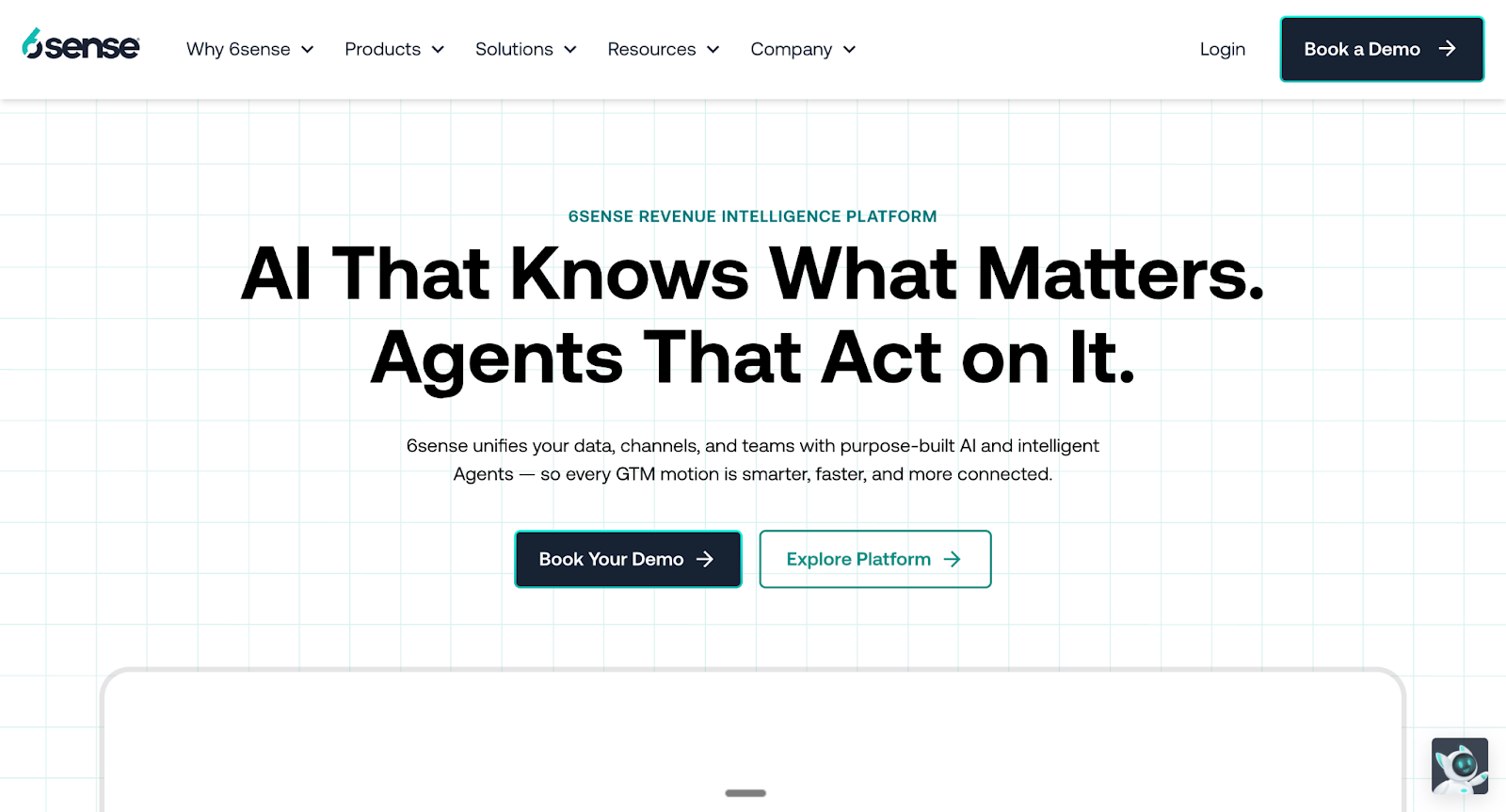
6sense is widely known for its predictive intent modeling and enterprise-grade ABM capabilities. It analyzes large volumes of behavioral, firmographic, and third-party intent data to identify where accounts are in the buying journey.
Key capabilities include:
Account-level predictive intent modeling
AI-based buying stage classification
Long-cycle enterprise ABM orchestration
Deep CRM and marketing automation integrations
6sense is particularly strong for organizations running structured ABM programs across large target account lists. It helps prioritize accounts based on predicted buying stages and engagement signals across multiple channels.
Limitation: Enterprise pricing and longer implementation cycles make it better suited for mature revenue teams rather than lean or mid-market organizations.
ZoomInfo: Best for Enterprise Outbound Data
Best for: Enterprise outbound sales teams
ZoomInfo provides one of the largest B2B contact and company databases, combined with sales intelligence tools and optional intent signals. It supports prospecting, enrichment, and outbound campaign execution at scale.
Core strengths include:
Large contact and company database
Intent signals layered into sales workflows
Strong outbound motion support
CRM and sales engagement integrations
ZoomInfo is often used by enterprise SDR and sales teams that require high-volume prospecting and structured outbound execution.
Limitation: It can be expensive and is primarily designed for outbound sales workflows, with less focus on real-time inbound activation or website visitor identification.
Best for: CRM enrichment and segmentation workflows
Clearbit is primarily an enrichment platform. It enhances known leads and accounts with firmographic and technographic data, helping marketing and RevOps teams maintain clean, enriched CRM records.
Its capabilities include:
Firmographic enrichment
Technographic data insights
Native CRM and marketing automation integration
Clearbit is particularly useful for segmentation, personalization, scoring, and improving data hygiene across marketing and sales systems.
Limitation: Clearbit does not natively provide real-time behavioral intent activation or website visitor identification workflows.
Seamless.ai focuses on providing contact-level data and enrichment for outbound sales teams. It enables SDRs to quickly build prospect lists and access direct dials and verified emails.
Core strengths include:
Large contact database
Direct dials and email data
Prospect enrichment capabilities
Seamless.ai is designed to help sales teams accelerate list building and outbound outreach efforts.
Limitation: It is not built for website visitor identification, anonymous visitor tracking, or real-time inbound intent activation.
Lusha: Best for Fast Contact Data
Best for: SDR teams needing quick contact enrichment
Lusha is widely used for contact-level enrichment through its Chrome extension and database access. It enables sales teams to quickly retrieve emails and phone numbers while prospecting.
Key capabilities include:
Contact-level enrichment
Chrome extension prospecting
Credit-based pricing model
Lusha is particularly useful for fast-moving SDR teams that need lightweight data access for outbound campaigns.
Limitation: It offers limited depth in behavioral intent intelligence and does not focus on website visitor identification or activation workflows.
Salesmotion: Best for Intent-Layered SDR Workflows
Best for: SDR teams integrating intent into outbound prospecting
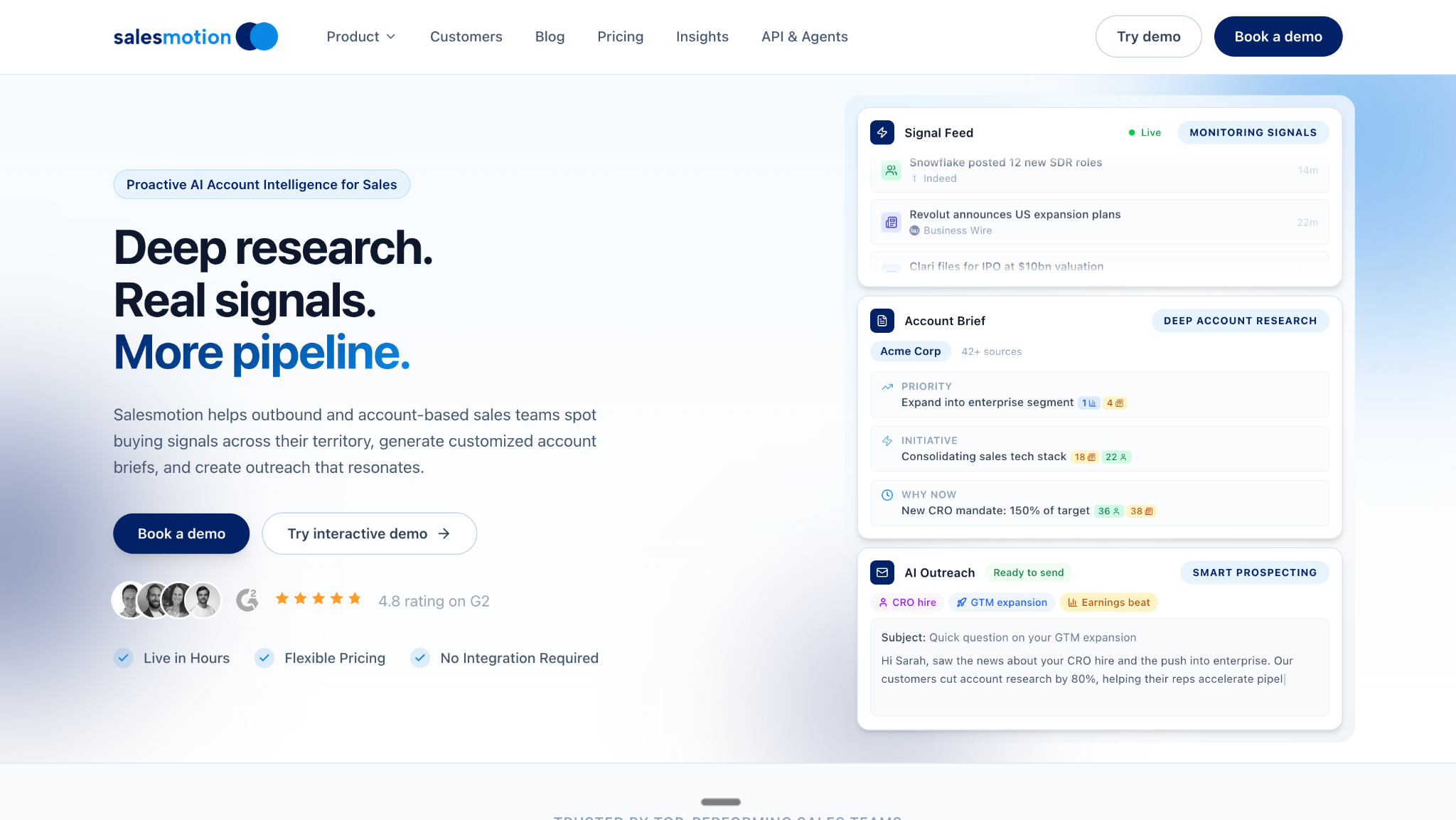
Salesmotion combines intent signals with outbound workflows to help SDRs prioritize accounts and accelerate prospecting efforts.
Its strengths include:
Intent signals layered into outbound workflows
Designed for SDR productivity
Pipeline acceleration support
Salesmotion is well suited for teams that want to enrich outbound sequences with additional buying context.
Limitation: It is not focused on website visitor tracking, deanonymization, or real-time inbound engagement activation.
Knock AI vs Bombora (Wise Buyer’s Choice)
Here’s a clear, logic-based comparison to help revenue teams decide which platform aligns with their go-to-market strategy.
Area
Bombora
Knock AI
Intent Source
Third-party topic surge data aggregated from external publisher networks
First-party behavioral engagement captured directly across your website and marketing assets
Website Visitor Identification
❌
✅
Real-Time Activation
❌
✅
Contact Context
Account-level insight
Company + contact-level context when available
Primary Outcome
Account insight and topic research visibility
Qualified pipeline and actionable engagement
Core Difference
Bombora tells you which accounts are researching specific topics across the web.
Knock AI tells you which companies are actively engaging with your website and marketing assets right now, and what to do next.
If your strategy centers on third-party intent signals for ABM targeting and outbound prioritization, Bombora fits that model.
If your strategy focuses on identifying anonymous website visitors, scoring real-time behavioral intent, and activating engagement into pipeline, Knock AI becomes the more execution-oriented choice.
Frequently Asked Questions
Is there any alternative to Bombora?
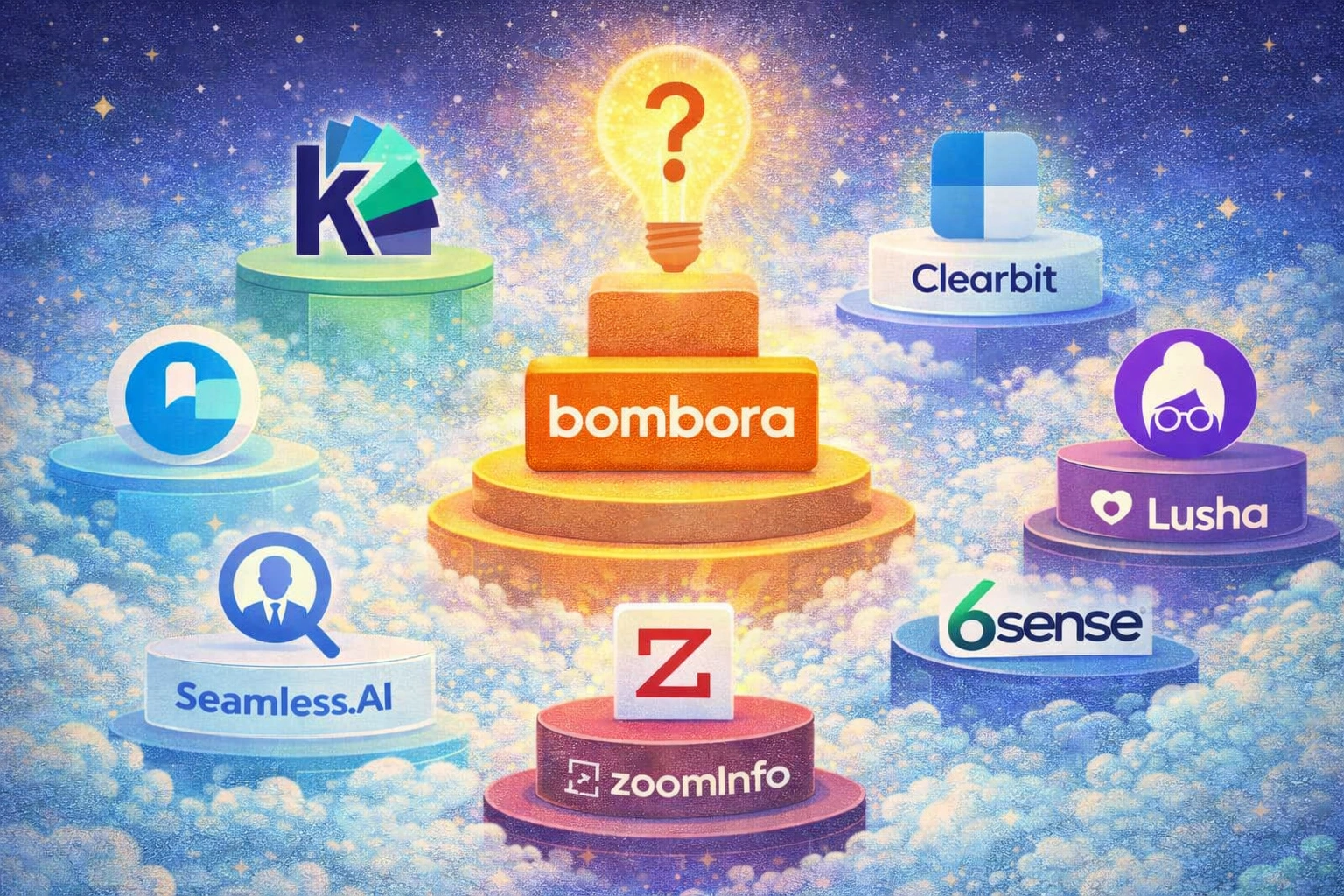
Yes. Knock AI, 6sense, ZoomInfo, Clearbit, Seamless, Lusha, and Salesmotion all offer different approaches to intent data, website visitor identification, and account intelligence. The right alternative depends on whether your focus is inbound conversion, enterprise ABM, SDR prospecting, or CRM enrichment.
What is the best alternative to Bombora in 2026?
For conversion-first inbound teams, Knock AI is a strong alternative because it combines website visitor identification, first-party intent scoring, and activation workflows.
For enterprise predictive ABM programs, 6sense is often preferred due to its account-level modeling and buying stage classification capabilities.
Why shouldn’t I choose Bombora?
Bombora may not be the best fit if you require real-time website visitor identification, contact-level context, or built-in activation workflows such as routing, alerts, and scheduling.
It is primarily designed to provide third-party topic intent insights, which can feel reporting-focused and less actionable for teams prioritizing immediate engagement and pipeline impact.
What is the difference between third-party intent and first-party intent?
Third-party intent tracks topic research activity across external publisher networks and content sites.
First-party intent tracks behavioral engagement directly on your website and marketing assets, such as page visits, repeat sessions, pricing page activity, and content interaction.
How does website visitor identification work?
Website visitor identification combines IP matching, first-party engagement signals, and enrichment data to identify companies visiting your website. Some platforms also add contact-level context and behavioral scoring to prioritize high-intent accounts.
What is the difference between deanonymization and intent?
Deanonymization identifies which company visited your website.
Intent measures buying readiness based on engagement behavior, such as repeat visits, page depth, and high-value content interaction.


.svg)


.svg)
.svg)
.svg)


.svg)
.svg)


.svg)
.png)
.png)