What Are the Best AI SDRs for Multichannel Outreach?
The best AI SDR for multichannel outreach depends on what your sales team needs most: coordinated outbound sequences, autonomous prospecting, enterprise sales engagement, or intent-driven buyer conversion. Knock AI is the best fit for teams that want to act on buyer intent and turn engagement into qualified conversations and meetings. Reply.io is worth considering for multichannel sequencing, AiSDR for AI-led prospecting, and Outreach for structured sales engagement at scale. The key is to look beyond how many channels a platform supports. You need to understand how it coordinates those channels, personalizes interactions, responds to buyer behavior, and moves prospects toward a sales conversation.
What Should You Look for in an AI SDR for Multichannel Outreach?
Choosing an AI SDR isn't just about finding a platform that supports email, LinkedIn, and phone calls. What matters is how effectively it coordinates those channels to move prospects through your sales process.
Here are five things to evaluate before choosing a tool.
Channel coverage: Check whether the platform supports the channels your buyers actually use, including email, LinkedIn, phone, SMS, or messaging apps. Also verify whether each channel is available for automated actions or only manual tasks.
Automation depth: Some tools generate messages for reps to approve, while others execute outreach autonomously. Understand where human approval is required and which activities the AI can perform independently.
Cross-channel coordination: Can the platform change its next action based on a prospect's behavior? For example, does a reply stop the remaining sequence, or can a meaningful interaction trigger a different follow-up?
Personalization and context: Look for prospect research, CRM data, previous conversations, and buyer intent signals that help the AI make outreach relevant. Personalization should go beyond inserting a first name or company name into a template.
Conversion capabilities: Sending messages is only part of the job. Evaluate whether the platform can handle replies, qualify prospects, route conversations to the right representative, book meetings, and report on meaningful outcomes.
Here's the thing worth considering: supporting multiple channels doesn't automatically mean a tool can autonomously coordinate every channel. A platform might create a LinkedIn task for a sales rep while automatically sending emails. Another might adapt follow-ups based on replies or engagement signals.
Choose based on the workflow you need to automate, not simply the number of channels listed on a pricing page.
Best AI SDRs for Multichannel Outreach
The right platform depends on whether you need to coordinate outbound sequences, automate prospecting, manage enterprise sales engagement, or act on buyer intent. Here's how Knock AI, Reply.io, AiSDR, and Outreach compare.
Tool
Best for
Channels and workflow
Primary differentiator
Best fit
Knock AI
Intent-based outreach and buyer conversion
Website, campaign links, LinkedIn, Slack, and supported messaging experiences; intent-triggered engagement, qualification, routing, and meeting booking
Connects buyer intent and engagement context to personalized conversations, sales handoffs, and conversion measurement.
Teams that generate buyer interest but need to turn it into qualified conversations and meetings
Reply.io
Multichannel sales sequencing
Email, LinkedIn, calls, SMS, WhatsApp, and tasks in conditional sequences
Combines multiple channel steps and branching logic in one sequence, with a mix of automated actions and rep-completed tasks.
Sales teams that want to coordinate outbound touches across several channels
AiSDR
AI-led outbound prospecting
Email, LinkedIn, calls, video messages, and voice notes; automated sequences, reply handling, and meeting booking
Uses prospect research and available buying signals to personalize outreach and adapt follow-ups to engagement.
Teams that want to automate prospect research and outbound execution
Choose Knock AI when the priority is acting on buyer intent and converting engagement into qualified conversations, correctly routed leads, and meetings.
Choose Reply.io when you need to coordinate email, LinkedIn, phone, and other supported steps in outbound sequences.
Choose AiSDR when you want AI to handle more of the prospect research, personalized outreach, and follow-up workload.
Choose Outreach when your sales organization needs structured engagement workflows, AI-assisted execution, and enterprise oversight.
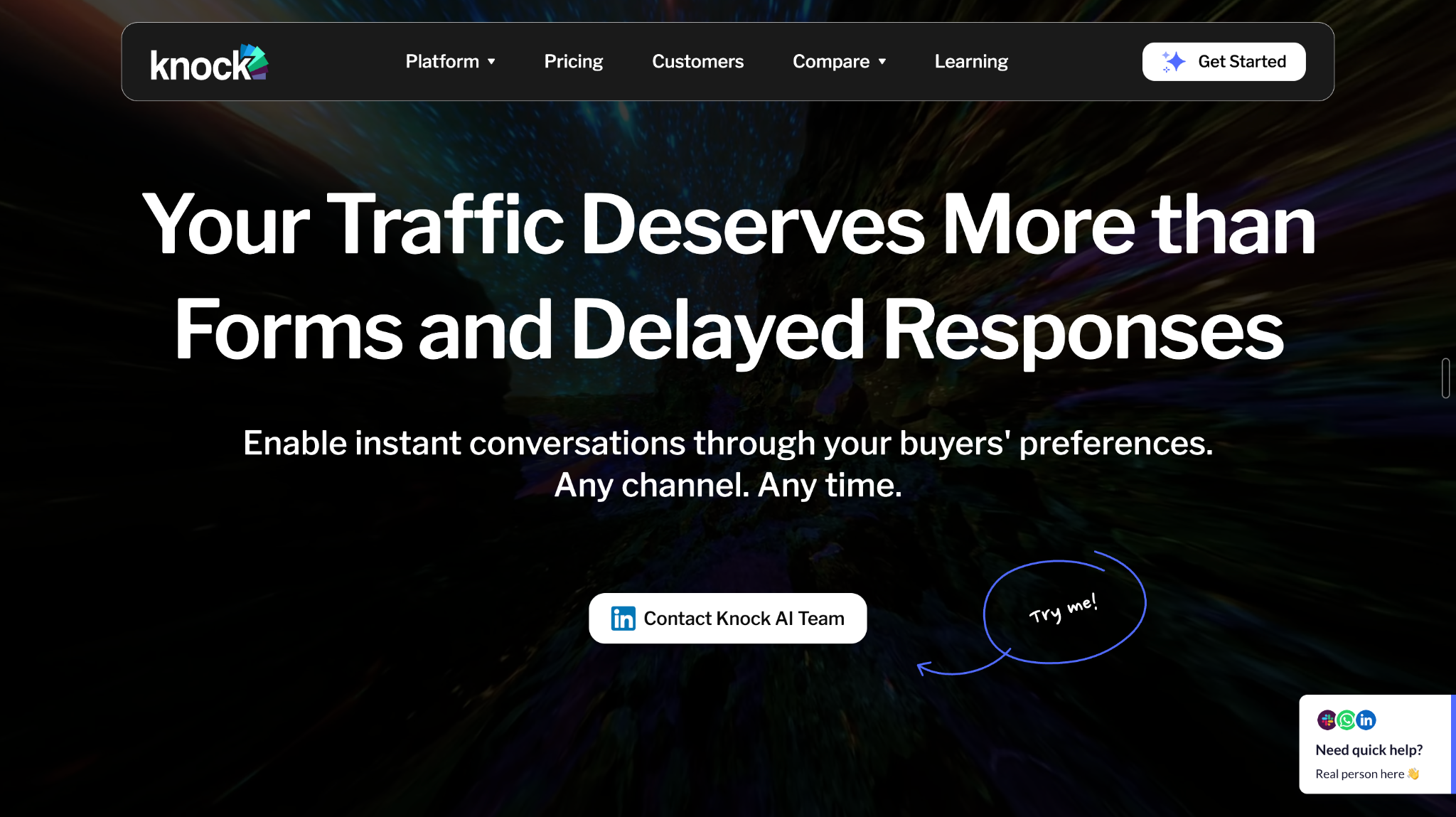
Knock AI's multichannel approach is centered on intent-driven engagement and conversion, rather than serving as a general-purpose cold-email and phone sequencer. Its LinkedIn follow-up capabilities also depend on the configured workflow and connected representative accounts.
1. Knock AI: Best for Intent-Based Multichannel Outreach
Most outbound platforms help sales teams reach more prospects. But what if your team is already attracting the right buyers and the real problem is turning their interest into meetings?
That's where Knock AI stands out. It connects first-party intent signals with contextual engagement, AI-powered qualification, and sales workflows, helping teams act on buyer activity instead of relying entirely on predefined cold-outbound sequences.
Here's how it fits into a multichannel outreach strategy:
First-party intent signals and engagement scoring: Track activity such as website page views, clicks, CTA interactions, form activity, Knock Link interactions, and chat messages. Engagement scoring helps teams interpret signals based on factors such as recency, type, and volume.
Contextual, intent-triggered outreach: Configure workflows to respond to meaningful buyer activity, such as a prospect visiting a pricing page without booking a meeting. This helps teams prioritize relevant follow-up over indiscriminate outreach.
Enrichment and CRM context: Use available company and contact information, CRM records, and previous engagement to inform conversations and make interactions more relevant.
AI-powered engagement and qualification: Engage buyers through supported channels, answer relevant questions, assess fit against configured criteria, and identify when a human representative should step in.
Strategic account routing and meeting booking: Route qualified prospects using CRM ownership and configured rules, then help connect them with the appropriate sales representative for a meeting.
LinkedIn follow-ups and conversion measurement: Supported workflows can trigger personalized LinkedIn follow-ups through a connected representative account. Knock can also send supported engagement, qualification, and meeting-booked events to LinkedIn Campaign Manager to help measure outcomes beyond clicks.
Why choose Knock AI? It's the best fit for teams that already generate target-account interest through campaigns, website visits, or other supported interactions but need a more connected path from engagement to qualification and meetings. Its advantage is connecting the signals that indicate interest with the actions that move a buyer forward.
One thing matters: Knock AI's intent-driven approach is not the same as a general-purpose cold-outbound sequencer. Teams that primarily need to build large prospect lists and execute high-volume email and phone sequences may need a complementary outbound platform.
2. Reply.io (Jason): Best for Coordinated Multichannel Sequences
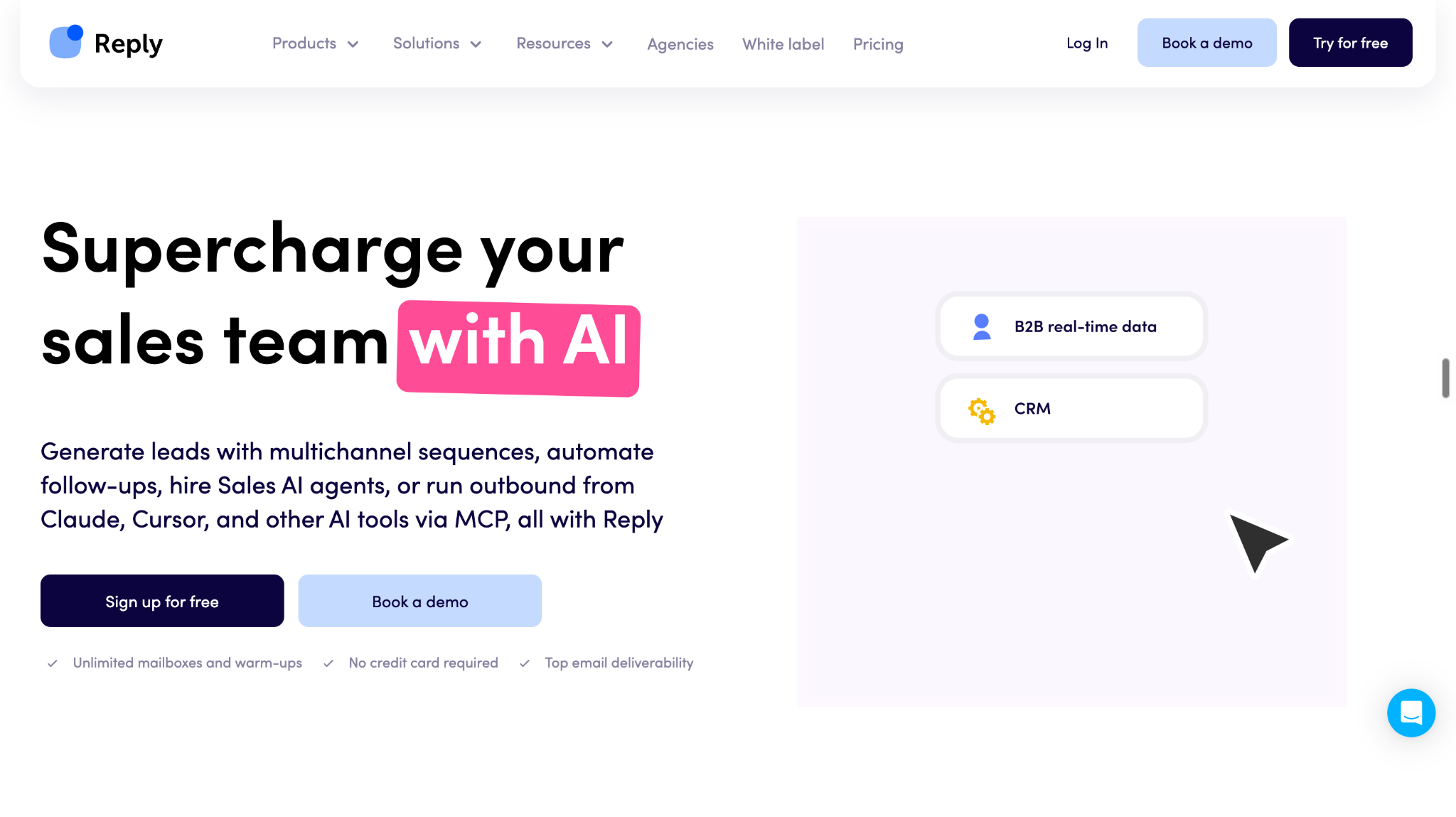
If your team wants to coordinate email, LinkedIn, calls, and follow-ups within one outbound workflow, Reply.io is a strong option. Its sales engagement platform combines multichannel sequences with prospect data, AI-assisted personalization, a unified inbox, and Jason AI, its AI SDR.
What makes Reply.io relevant is its conditional sequencing. You can combine different channel steps in a campaign and use prospect actions or data to determine what happens next. For example, a sequence might start with an email, schedule a LinkedIn touch, and create a call task if the prospect hasn't responded.
The distinction between automation and human involvement matters here. Reply supports automated email steps, while certain LinkedIn actions, calls, and other tasks may require a connected account or a representative to complete the action. Its AI SDR can also build campaigns and help manage replies, depending on the selected workflow and configuration.
Reply.io is particularly useful when your sales process is already outbound-led and you want to coordinate more of it from one platform rather than manage separate tools for every channel.
Best for: Sales teams that need configurable multichannel sequences, conditional follow-ups, and a combination of automated execution and rep-led actions.
3. AiSDR: Best for AI-Led Outbound Prospecting
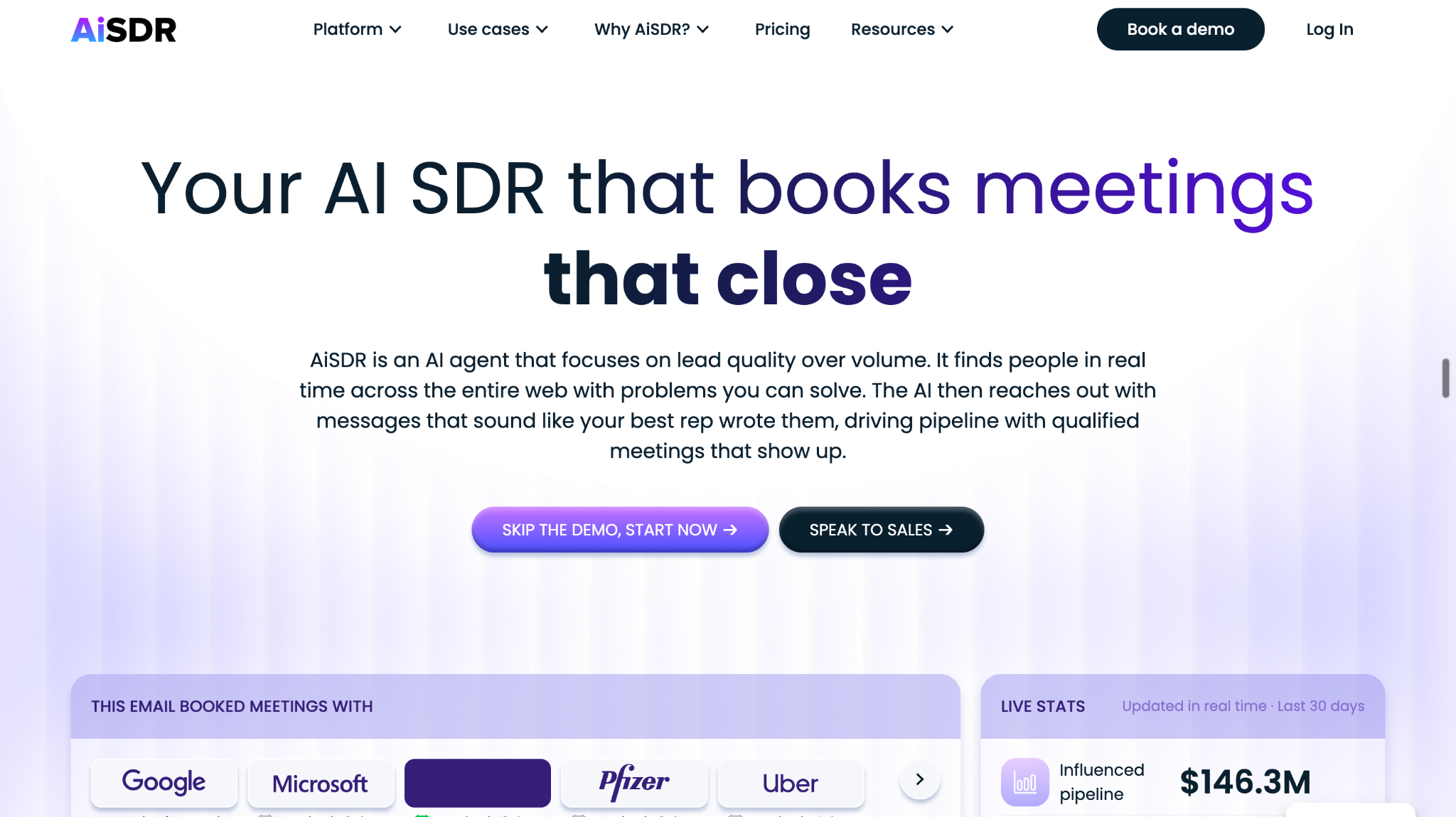
AiSDR is designed for teams that want AI to handle more of the work involved in finding prospects, researching them, personalizing outreach, and following up across channels. Its platform describes workflows spanning email, LinkedIn messages and connection requests, InMails, and calls, alongside automated reply handling and meeting booking.
Rather than asking a rep to research every contact and write each message from scratch, AiSDR uses information such as LinkedIn profiles, company news, and CRM activity to shape outreach. Its signal-led approach can also help teams prioritize prospects based on relevant business developments or other indicators that align with their ideal customer profile.
This is particularly useful when a small sales team needs to reach a large prospect list but doesn't have enough capacity for manual research and follow-ups. The platform can take on repetitive prospecting work, leaving representatives to focus more on qualified conversations.
There are still important checks to make before handing over outreach. Review how much control your team has over messaging, which actions run automatically, how the AI handles unusual replies or objections, and how easily a rep can intervene. Strong personalization also depends on the quality and relevance of the information available to the system.
Best for: Teams that want to automate prospect research and personalized outbound execution across multiple channels, with AI handling more of the follow-up process.
4. Outreach: Best for Enterprise Sales Engagement
For larger sales organizations, the challenge often isn't launching another sequence. It's coordinating outreach across teams while maintaining consistent processes, CRM data, reporting, and managerial oversight.
Outreach is built around sales engagement and revenue workflows. Its platform supports structured sequences, email and voice workflows, AI agents for research and personalization, and reporting that helps sales leaders understand how their teams' activities perform.
This makes it relevant for organizations with established sales development teams, account executives, and RevOps functions. Managers can build repeatable engagement processes, while representatives work within defined sequences and use AI-assisted capabilities to research prospects or personalize messages. Governance features also help administrators control access to shared sequences, templates, and messaging assets.
Outreach is a different proposition from a fully autonomous AI SDR. Its value lies in supporting a coordinated sales organization, not necessarily removing the human representative from every step. Buyers should verify which channel actions can run automatically, which require rep involvement, and which AI capabilities are included in their intended plan.
Best for: Enterprise sales teams that need structured engagement workflows, CRM-connected execution, reporting, and governance across a larger sales organization.
Which AI SDR Should You Choose for Your Sales Team?
The right choice depends on what's holding your sales process back.
“We get website traffic, but very few meetings.” Prioritize intent-driven engagement, qualification, and conversion. Knock AI is a strong fit if you need to turn buyer activity into relevant conversations and booked meetings.
“We need email and LinkedIn sequences running automatically.” Compare Reply.io's sequencing capabilities, supported automated actions, and the steps that still require a sales rep.
“Our SDR team spends too much time researching prospects.” Consider AiSDR if you want AI to handle more prospect research, personalization, and outbound follow-ups.
“We have a large sales team with established processes.” Evaluate Outreach for CRM integration, governance, reporting, and consistency across sales workflows.
“We're a small team with a limited budget.” Identify your biggest bottleneck first. You may need one focused tool rather than a complete sales engagement stack.
“We already use a CRM and sales engagement platform.” Check integrations, overlapping features, and whether a new tool fills a genuine gap before adding another subscription.
Here's the simplest way to decide: sequencing tools coordinate outbound touches, AI SDRs automate prospecting, enterprise platforms manage sales engagement, and intent-driven tools help turn buyer interest into conversations.
How Knock AI Fits Into an Intent-Based Outreach Workflow
Imagine a B2B SaaS company running LinkedIn campaigns targeting strategic accounts. A prospect visits the pricing page, interacts with a personalized campaign link, and explores the product but leaves without booking a meeting.
Instead of treating that visit as just another website session, the team needs a way to understand the engagement and determine the next action. Knock AI can help connect those steps.
From buyer intent to a sales meeting
Campaign engagement: A target-account prospect clicks an ad or interacts with a campaign link.
Intent and context: Available website activity, engagement signals, enrichment, and CRM data help establish relevance.
Personalized conversation: A configured workflow initiates relevant engagement through a supported channel.
Qualification and routing: The system assesses fit and routes the qualified prospect according to configured rules and account ownership.
Meeting and measurement: The prospect can book time with the appropriate representative, while supported conversion events help connect engagement with downstream outcomes.
This workflow depends on the right integrations, website tracking, connected channels, CRM fields, and routing rules being configured. Knock AI helps connect engagement to sales action; it doesn't replace the company's advertising platform or every account intelligence source.
FAQs
1. What is the best AI SDR for multichannel outreach?
The best tool depends on your workflow. Reply.io is a strong option for coordinated multichannel sequences, AiSDR for AI-led prospecting, and Outreach for enterprise sales engagement. Knock AI is the best fit for intent-based outreach that turns buyer engagement into qualified conversations and meetings.
2. Which AI SDR tools support email, LinkedIn, and phone?
Reply.io, AiSDR, and Outreach offer outbound workflows across multiple channels, helping teams coordinate prospecting and follow-ups. However, these workflows can still rely on predefined sequences and generic messaging if they lack relevant buyer context. Unlike traditional outbound-focused tools, Knock AI offers intent-based outreach workflows across supported channels, including LinkedIn, Slack, and email, helping teams engage prospects based on their activity and available intent signals. This means teams can prioritize relevant, potentially qualified leads instead of simply increasing outreach volume.
3. What is the difference between multichannel sequencing and intent-based outreach?
Multichannel sequencing coordinates touches across channels according to predefined steps or conditions. Intent-based outreach uses buyer behavior and available signals to determine when and how to engage. The approaches can complement each other: intent identifies relevant opportunities, while multichannel workflows help execute follow-ups.
4. Can AI SDRs automatically change follow-ups based on prospect engagement?
Yes, some platforms support conditional workflows that adapt to replies, clicks, or other engagement signals. The available triggers vary by tool. Before choosing one, check whether it can stop sequences after a reply, change the next action, and escalate conversations when human involvement is needed.
5. Which AI SDR is best for a small B2B sales team?
For smaller teams, Reply.io can help coordinate outbound sequences, while AiSDR can reduce the manual work involved in prospect research and follow-ups. Knock AI is primarily suited to enterprise teams that need to connect buyer intent with personalized engagement, lead qualification, account-based routing, and meeting conversion across their sales workflows.
6. Can AI SDRs personalize outreach using CRM data and buying intent?
Some platforms can use CRM records, prospect research, previous interactions, and available intent signals to personalize outreach. The depth of personalization depends on the data sources and integrations available. Knock AI is particularly relevant when first-party engagement and CRM context need to inform buyer conversations and qualification.
7. Is Knock AI better for intent-based outreach than traditional outbound tools?
Yes. Knock AI is a better than Reply.io, AiSDR, and Outreach when your priority is intent-based outreach rather than simply executing outbound sequences. While these platforms focus on coordinating sales engagement and prospecting workflows, Knock AI connects buyer intent signals with contextual outreach across supported channels, lead qualification, account-owner routing, and meeting booking. For enterprise teams that want to engage qualified prospects based on their activity and move them toward a sales conversation, Knock AI offers a more intent-driven approach than relying primarily on predefined outbound sequences.
8. How do I measure whether multichannel AI outreach generates pipeline?
Track qualified conversations, meetings booked and held, sales-accepted opportunities, pipeline created, and conversion rates from engagement to opportunity. Compare these metrics with a baseline and, where possible, a control group. Message volume and clicks alone cannot establish whether your outreach generates incremental pipeline or revenue.
How to Choose the Right AI SDR for Multichannel Outreach
Choose based on the missing step in your sales workflow. Reply.io is relevant for coordinated multichannel sequencing, AiSDR for AI-led prospecting, and Outreach for structured enterprise sales engagement. Knock AI is the best fit when you need to act on buyer intent and connect engagement with qualification, account-owner routing, and meetings. If your team already attracts the right buyers but struggles to convert their interest, start there rather than simply adding more outbound activity.