What Lead Generation Tools Do You Recommend for PLG Companies?
For a product-led growth (PLG) company, lead generation doesn't work exactly like it does for a traditional sales-led business. The product itself is often the first point of interaction, so every signup, feature used, invitation sent, and increase in usage can provide useful information about a potential customer.
The challenge isn't simply generating more leads. It's identifying which users and accounts are showing meaningful product engagement, buying intent, and potential for conversion or expansion.
A free signup may never become a customer. Another user might quickly reach the activation point, invite several teammates, use high-value features, and return to the pricing page. Those behaviors can provide much stronger signals that the account is moving toward a purchase.
The right lead generation tools help teams understand where users are in this journey, identify the accounts worth paying attention to, and determine when to engage rather than treating every signup as an equally valuable lead.
Why Lead Generation Is Different for PLG Companies
Traditional lead generation often starts with a contact and tries to determine whether that person could become a customer. Product-led growth (PLG) changes that model because the product itself can generate valuable signals about users and accounts.
The Product Is Part of the Acquisition and Qualification Process
In a PLG model, users can discover, sign up for, and start using a product before speaking with sales. Free trials, freemium plans, and self serve onboarding allow the product to generate behavioral data throughout that journey.
A user might create an account, complete onboarding, use a core feature, invite teammates, increase usage, or explore a paid feature. These actions provide context that a traditional lead form cannot capture.
That means the product isn't just where conversion happens. It can also become a source of qualification signals.
Signups Don't Equal Qualified Leads
A signup tells you that someone showed enough interest to try the product. It doesn't tell you whether they are likely to become a customer.
The journey is better understood as:
Signup ≠ Activated User ≠ PQL ≠ Customer
An activated user has reached a meaningful point of product value. A Product Qualified Lead (PQL) goes a step further by combining meaningful product usage with factors such as customer fit and buying behavior.
For example, someone who signs up and never returns provides very little qualification information. Someone who adopts core features, invites teammates, reaches a usage threshold, and shows interest in paid functionality provides much stronger evidence of potential commercial value.
Product Usage Can Be a Buying Signal
Product behavior can reveal intent before a user explicitly asks to speak with sales.
Signals might include:
Repeated use of core features
Increasing usage frequency
Multiple users joining the same account
Reaching free plan or usage limits
Adoption of advanced features
Visits to pricing or upgrade pages
Requests for additional functionality
These signals don't automatically mean someone is ready to buy. Their value comes from being combined with account fit, context, and other buying signals.
For PLG companies, this creates an important opportunity: instead of waiting for a user to submit a demo request, teams can identify meaningful behavior and determine whether a sales or growth action is appropriate.
PLG Companies Need to Connect Users to Accounts
Individual user activity becomes much more valuable when it can be connected to the company behind that activity.
Instead of looking only at:
User → Product Activity
PLG teams increasingly need to understand:
User → Account → Buying Group → Opportunity
For example, one employee using a product may represent a small self serve opportunity. Ten employees from the same company actively using it could indicate a much larger account level opportunity.
Connecting product activity to account and stakeholder information helps teams identify expansion potential, discover other relevant decision makers, and coordinate a sales assisted motion when appropriate.
What Should a Lead Generation Tool Do for a PLG Company?
A useful lead generation tool for a PLG company should help teams turn product and buyer signals into actionable revenue opportunities.
At a minimum, it should help them:
Identify valuable users and accounts
Understand product behavior
Identify PQLs and PQAs
Enrich users and accounts
Detect buying and expansion signals
Prioritize opportunities
Identify relevant stakeholders
Trigger timely engagement
Route qualified opportunities
Connect activity with CRM and revenue data
The important distinction is that the goal isn't simply to capture a lead. It's to understand when a user or account has demonstrated enough value, fit, and intent to warrant the next action.
That is what makes lead generation for PLG companies different from simply building a larger contact database.
PLG Lead Generation Tools Comparison
Tool
Primary Role
Best For
Key Signals / Data
What It Helps Teams Do
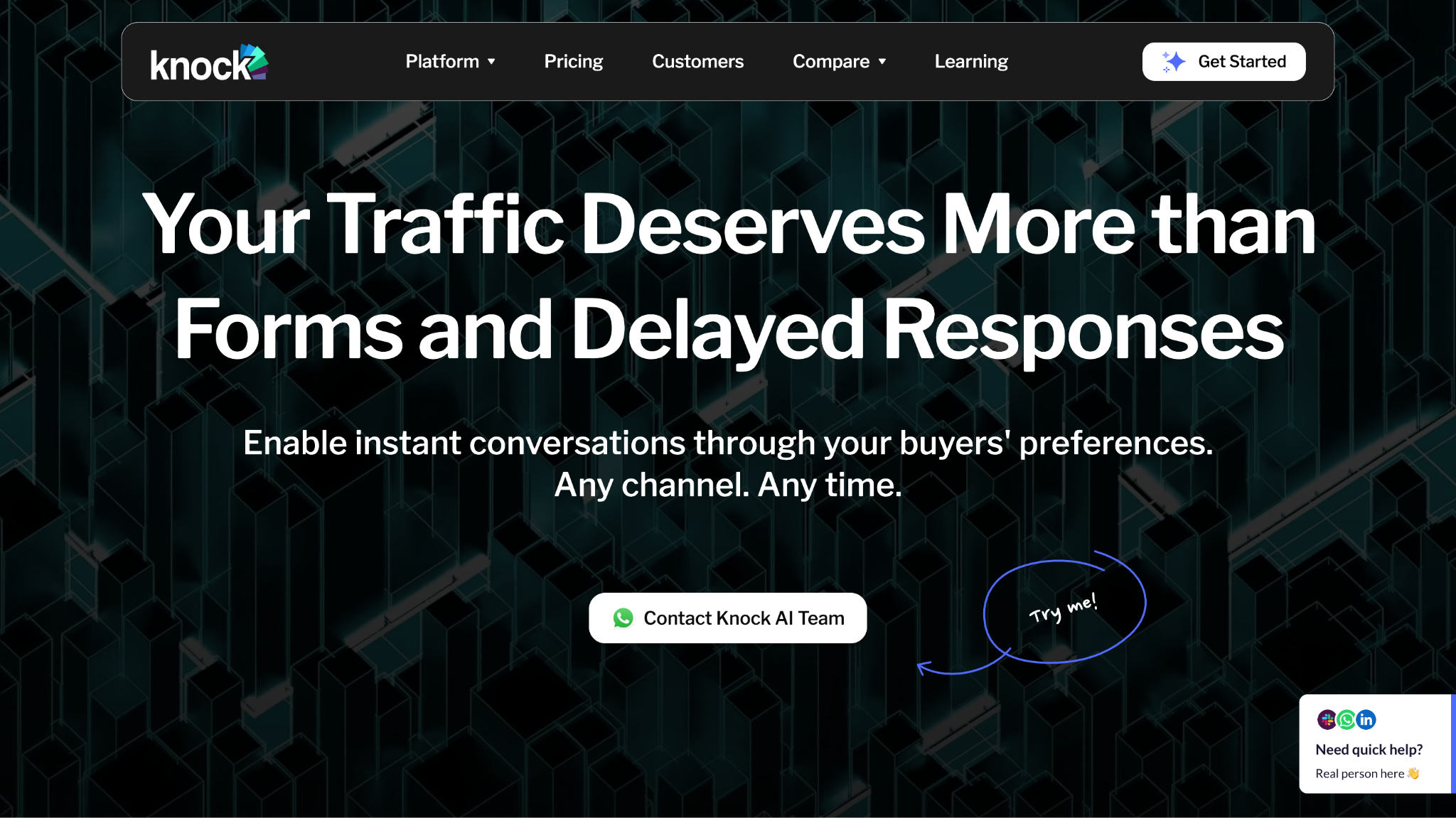
Knock AI
Buyer intelligence and conversion
Turning product and buyer signals into qualified conversations
This is important because the tools solve different parts of the PLG motion. Amplitude and Mixpanel help explain what users are doing. Common Room helps connect activity across different channels. ZoomInfo and LinkedIn Sales Navigator add account and stakeholder context. Knock AI helps turn meaningful signals into action through engagement, qualification, routing, and conversion.
Best Lead Generation Tools for PLG Companies
1. Knock AI
What It Does
Knock AI helps PLG companies turn buyer and product engagement signals into qualified conversations and revenue workflows. Instead of treating every signup or website visitor as a lead, it identifies who is showing meaningful intent, enriches the person and account, qualifies the interaction, and determines what should happen next.
Its first party intent layer looks at signals such as page views, clicks, content engagement, repeat visits, frequency, recency, and journey patterns to understand whether an account is actually showing buying behavior. Knock AI can also identify the person behind engagement across first party touchpoints and connect that activity with account context.
How It Helps PLG Companies
The important PLG use case is connecting product or buyer behavior to an action.
Knock AI can surface meaningful activity to revenue teams in Slack with intent and account context, while AI agents can qualify conversations, answer questions, and hand qualified buyers to the appropriate human or workflow.
This is particularly useful when a PLG company has thousands of users but only a small percentage represent meaningful sales or expansion opportunities.
Knock AI can also help expand from an individual user to the wider account by identifying relevant members of the buying group and maintaining context across interactions.
Knock AI sits on the action and conversion layer of the PLG stack.
Amplitude and Mixpanel can tell a team what users are doing inside the product. Knock AI helps answer the next question:
Which activity matters commercially, and what should we do about it?
Knock can route conversations to AI agents or human reps, use CRM ownership and account information in routing, send notifications to Slack, and update CRM records with relevant engagement and routing context.
Buying group identification and relationship expansion
Workflows based on intent, engagement, account, and CRM data
Knock AI can also distinguish buying intent from non buying activity such as support, hiring, or partnership conversations, allowing different workflows and routing paths for each.
Best For
PLG companies that have significant product or inbound activity and need to identify which users or accounts deserve attention, when sales should get involved, and how to turn high intent activity into conversations and pipeline.
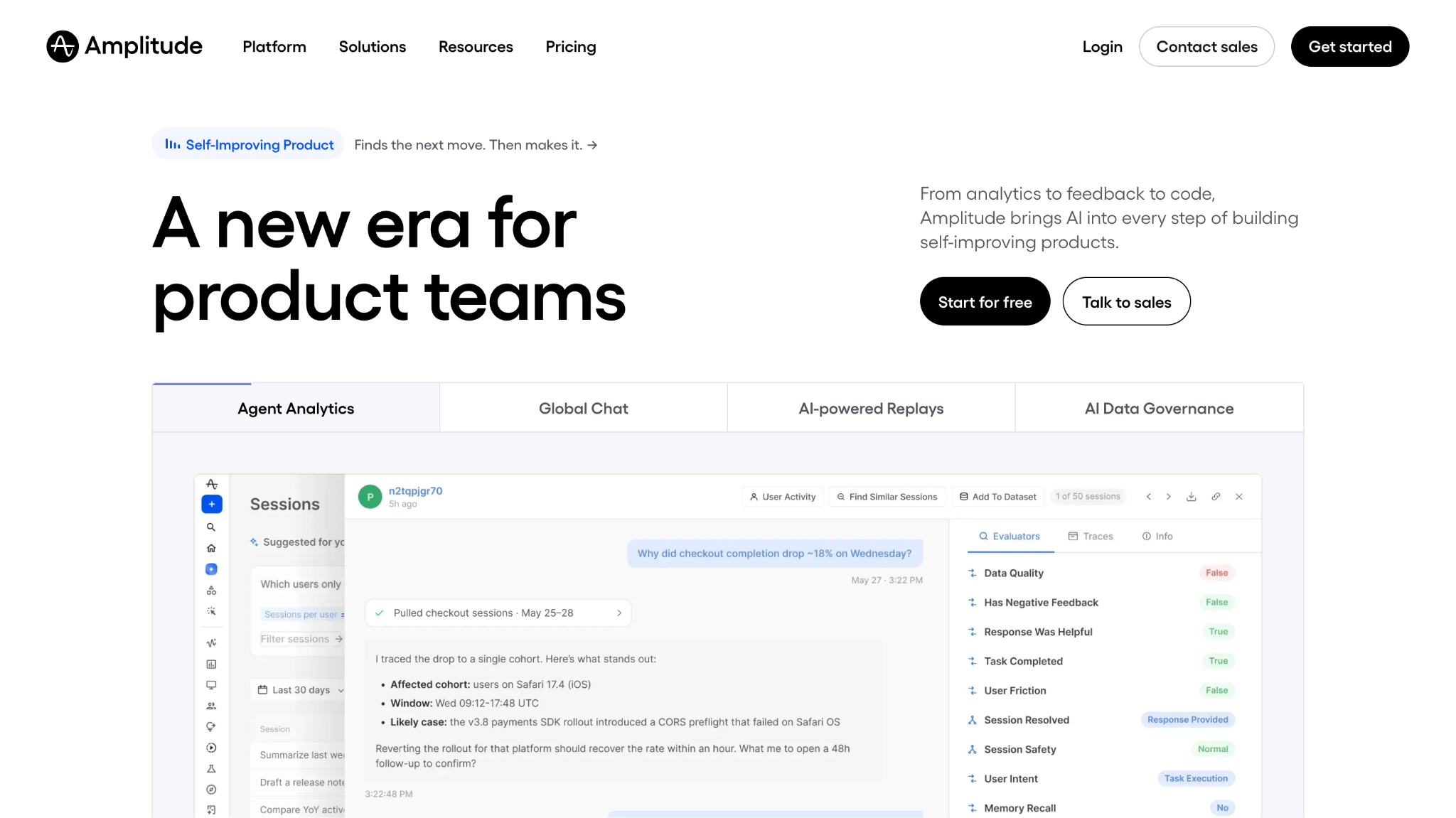
2. Amplitude
What It Does
Amplitude is a product analytics platform that helps teams understand how users interact with their products. It gives PLG teams visibility into user journeys, feature adoption, activation, engagement, and other product behaviors.
How It Helps PLG Companies
For PLG companies, Amplitude can help answer questions such as:
Which actions correlate with activation?
Which features are associated with retention?
Where do users drop out of the onboarding journey?
Which user segments are becoming highly engaged?
What behaviors correlate with conversion?
This makes it useful for identifying the product behaviors that should eventually become part of a PQL or PQA model.
Amplitude primarily helps teams understand what users are doing and which product experiences drive growth.
Key Capabilities
Product analytics
User journeys
Feature adoption analysis
Activation analysis
Behavioral segmentation
Funnel analysis
Retention analysis
Experimentation and product optimization
Best For
PLG companies that need a deeper understanding of activation, product adoption, and the behaviors that correlate with conversion and retention.
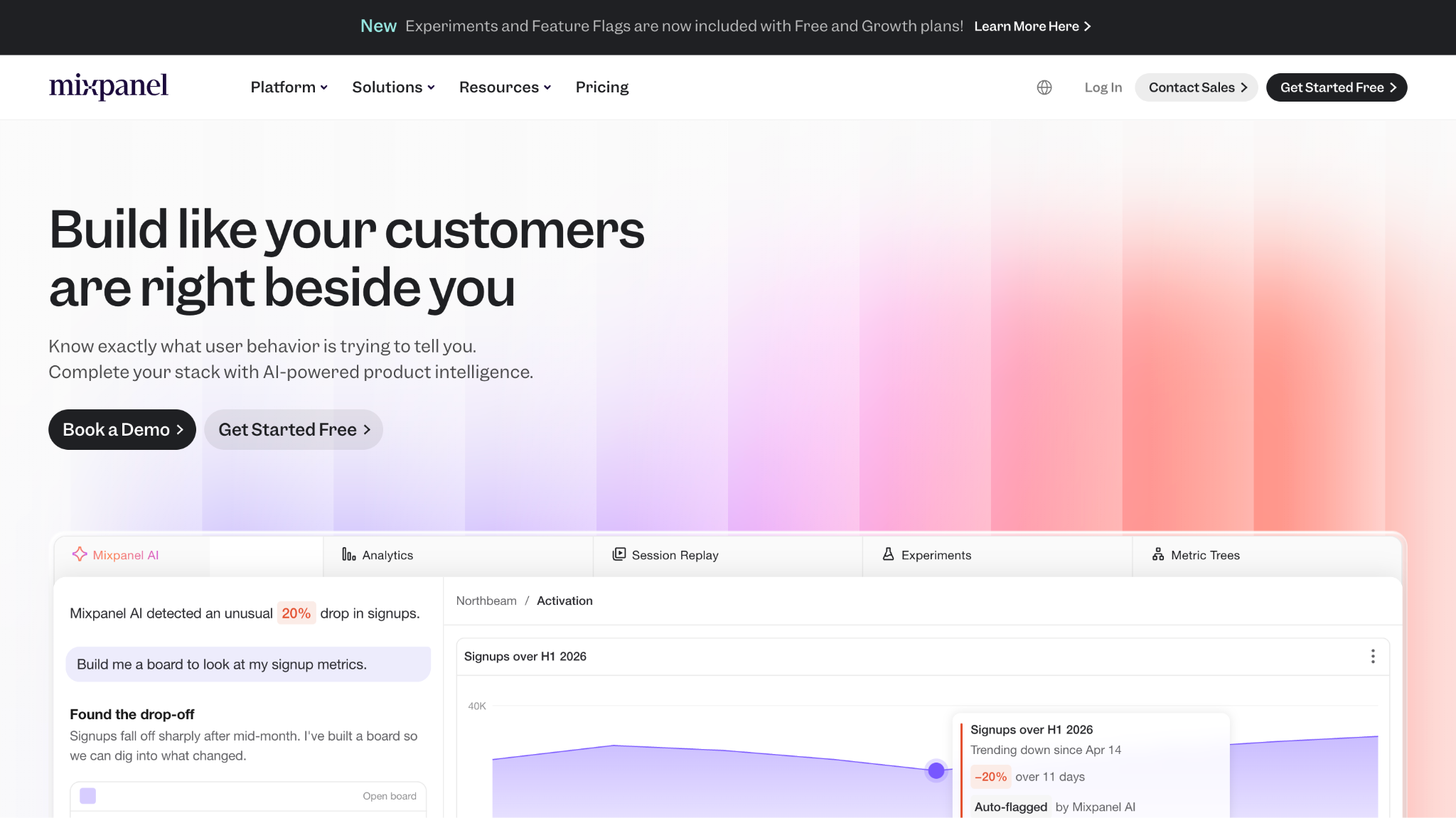
3. Mixpanel
What It Does
Mixpanel is a product analytics platform focused on analyzing user behavior through events, funnels, cohorts, retention, and other product usage data.
How It Helps PLG Companies
Mixpanel helps teams understand how users move through the product and where behavior changes across different segments.
For example, a PLG team could analyze whether users who adopt a particular feature are more likely to convert, or whether users who complete certain actions retain at higher rates.
Like Amplitude, Mixpanel belongs primarily in the product analytics layer, rather than the sales engagement layer.
Key Capabilities
Event based product analytics
Funnel analysis
Cohort analysis
Retention analysis
User segmentation
Feature and usage analysis
Lifecycle analysis
Mixpanel's current product analytics capabilities include funnel analysis and cohort based lifecycle analysis, which can help teams identify patterns behind activation, engagement, and retention.
Best For
PLG companies that want to understand which user behaviors, product events, and journeys are associated with activation, conversion, and retention.
Amplitude and Mixpanel overlap significantly. The important point for this article isn't to declare one better than the other, but to recognize that both provide the product behavior layer that can feed a broader PLG qualification and revenue workflow.
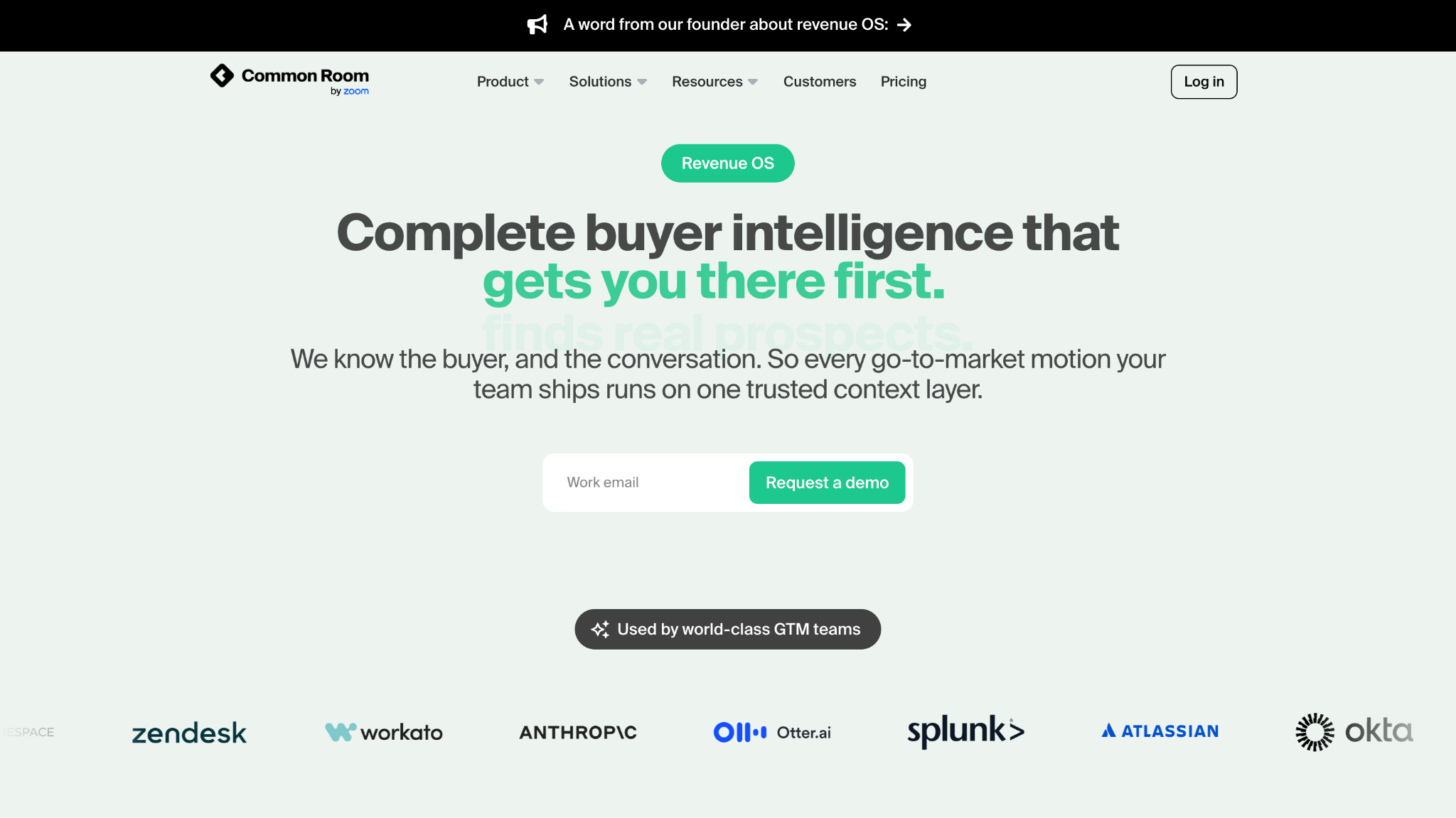
4. Common Room
What It Does
Common Room is designed to connect signals from different parts of the buyer journey so teams can understand which people and accounts are becoming active across channels.
For a PLG company, that can be useful when meaningful activity doesn't happen exclusively inside the product.
How It Helps PLG Companies
A potential customer might use the product, visit the website, interact with a community, engage with social content, or participate in another digital touchpoint.
Connecting those signals can provide a broader picture of account activity than looking at product usage alone.
Common Room sits between raw activity and GTM action, helping teams identify people and accounts that are becoming more active or showing interest across multiple channels.
Key Capabilities
Cross channel signal collection
Person and account identification
Product and website signals
Community signals
Social signals
Account level activity
Signal based workflows and engagement
Best For
PLG companies with active communities, digital audiences, or multiple channels where important buyer signals are distributed across the customer journey.
5. ZoomInfo
What It Does
ZoomInfo provides company and contact intelligence that can help PLG companies connect product users with the companies they work for and identify additional stakeholders within those accounts.
How It Helps PLG Companies
Product usage tells you that someone is interested.
It doesn't always tell you:
Who is this person? Which company are they from? Who else works there? What does the company look like?
ZoomInfo can provide the additional company and contact context needed to turn an individual product user into an account level opportunity.
Where It Fits
Account identification → Enrichment → Contact discovery → Buying group
This makes ZoomInfo particularly useful when a PLG company wants to move from user level signals to account level qualification.
Key Capabilities
Company intelligence
Contact data
Firmographic data
Technographic information
Contact enrichment
Company research
Stakeholder discovery
Intent and buying signals
Best For
PLG companies that need to enrich product users, identify their companies, discover additional stakeholders, and understand the commercial potential of an account.
6. LinkedIn Sales Navigator
What It Does
LinkedIn Sales Navigator helps revenue teams research accounts, discover relevant professionals, identify relationships, and engage stakeholders.
For PLG companies, its value becomes particularly clear when one product user turns into a potential account level opportunity.
How It Helps PLG Companies
Imagine a product user from a large company becomes highly engaged.
The next question isn't necessarily:
"Should we email this person?"
It may be:
"Who else at this company should we understand or engage?"
Sales Navigator can help identify decision makers, influencers, relevant roles, and potential relationship paths within the account. Its Relationship Explorer and Relationship Map capabilities are designed to support buying committee discovery and multi threaded engagement.
It becomes particularly useful when a PLG motion evolves from an individual user into a larger sales assisted or enterprise opportunity.
Key Capabilities
Account and people search
Stakeholder discovery
Buyer persona targeting
Relationship intelligence
Buying committee mapping
Relationship Explorer
Relationship Map
Job and company change tracking
Warm introduction discovery
Multi threaded engagement
CRM integration
Best For
PLG companies that need to expand from individual product users to the broader buying group and build relationships with multiple stakeholders inside an account.
How to Build a Lead Generation Workflow for a PLG Company
A PLG lead generation workflow should connect product behavior with account context and revenue actions. The goal is not to send every active user to sales. It is to identify the users and accounts that have the right combination of fit, product value, intent, and commercial potential.
Step 1: Define Your Ideal Customer Profile
Start by defining the companies and users most likely to become valuable customers.
Consider factors such as:
Industry
Company size
Revenue
Geography
Technology stack
Use case
Business model
Potential contract value
Your ICP gives you the fit layer of the qualification process. Without it, high product usage can still result in sales teams spending time on accounts that are unlikely to become valuable customers.
Step 2: Identify Your Activation Event
Define the action or set of actions that indicates a user has experienced meaningful value from your product.
For one product, activation might mean creating a project. For another, it could mean inviting teammates, connecting an integration, completing a workflow, or using a core feature multiple times.
The important question is:
What behavior tells us that a user has reached meaningful product value?
Once you identify that behavior, you can use it as part of your qualification and growth models.
Step 3: Define PQL and PQA Signals
A Product Qualified Lead should not be defined simply as an active user. Your model should combine product behavior with customer fit and buying intent.
A useful framework is:
Fit + Product Value + Intent = Qualification
For example, an account may become more interesting when it matches your ICP, reaches an activation milestone, has several active users, and starts showing behaviors associated with purchasing or expansion.
For larger PLG opportunities, apply the same thinking at the account level with a Product Qualified Account (PQA).
Step 4: Connect Product and Account Data
Product activity becomes much more useful when you know who the user is and which company they belong to.
Connect:
User → Product Activity → Account → Contact → CRM
This allows teams to enrich product users with company and contact information, understand account potential, and connect product behavior with existing sales and marketing activity.
Step 5: Detect Buying or Expansion Signals
Look beyond basic product activity and identify behaviors that could indicate conversion or expansion potential.
Useful signals can include:
Increasing product usage
Multiple users joining an account
Adoption of advanced features
Reaching usage limits
Pricing or upgrade page activity
Requests for additional functionality
Direct requests to speak with sales
Increased engagement from an existing account
The strongest signals often come from patterns of behavior rather than one isolated action.
Step 6: Prioritize Accounts
Not every activated user needs sales attention.
Prioritize accounts using a combination of:
Fit + Usage + Intent + Account Potential
This allows teams to separate normal product adoption from activity that may justify sales engagement.
For example, a highly engaged user at a small account may remain in a self serve motion, while similar activity from multiple users at a high fit enterprise account may warrant immediate sales attention.
Step 7: Engage at the Right Moment
PLG does not mean every customer needs a salesperson.
Users who can successfully continue through a self serve journey should be allowed to do so. Sales involvement becomes more useful when the account shows stronger commercial signals or requires human assistance.
The objective is to add sales assistance when it can accelerate the buying process, rather than interrupting users before they have experienced enough value.
Step 8: Route and Follow Up
Once an account meets your qualification criteria, send it to the appropriate workflow.
Depending on the situation, that could mean:
Sales
Growth
Customer success
An AI agent
A specific account owner
A particular sales team
Routing can also use factors such as account size, territory, CRM ownership, intent, product usage, or opportunity value.
Step 9: Measure the Outcome
The workflow should ultimately connect product behavior to business results:
This makes it possible to understand whether product signals are actually producing qualified opportunities and customers, rather than simply generating more activity.
Strategies to Generate More Leads for PLG Companies
For PLG companies, generating more leads is often less important than generating more qualified opportunities from the users and accounts already interacting with the product.
Optimize for Activation, Not Just Signups
Increasing signups does not necessarily increase revenue.
Focus on helping new users reach the product action that represents meaningful value. A higher quality activation rate can be more useful than simply increasing the number of registrations.
Turn Product Usage Into a Qualification Signal
Product behavior can provide qualification information that a traditional lead form cannot.
Identify the actions, frequency, and usage patterns that correlate with conversion, then incorporate those signals into your qualification model.
Identify PQLs Based on Real Value
Don't define a PQL as "anyone who used the product."
Use meaningful product behavior alongside ICP fit and buying intent to determine whether a user represents a genuine commercial opportunity.
Look for Product Qualified Accounts
Individual users are only part of the picture.
Look for account level patterns such as multiple active users, increasing adoption, expansion into new teams, or concentrated activity from a high fit company.
Use Product Signals to Trigger Sales
Sales engagement should be connected to meaningful signals rather than arbitrary follow up schedules.
When a qualified user or account reaches a defined threshold, trigger the appropriate sales workflow.
Combine Product, Website, and Intent Signals
Product activity provides one part of the picture.
Combine it with website behavior, content engagement, intent signals, account information, and other relevant activity to understand whether an account is actually moving toward a purchase.
Expand From Users to Buying Groups
A product user may not be the only person involved in a purchase.
Once an account shows meaningful activity, identify additional stakeholders and build broader account coverage instead of relying on one user.
Create Self Serve Paths for Lower Complexity Buyers
Not every opportunity requires sales involvement.
Keep the buying path simple for users who can evaluate and purchase independently. This allows sales teams to focus on opportunities where human involvement can add more value.
Add Sales Assistance for High Value Opportunities
Use product and account signals to identify when an account may benefit from a sales assisted motion.
This can be particularly useful for larger accounts, complex use cases, higher contract values, or opportunities involving multiple stakeholders.
Identify Expansion Opportunities From Usage
PLG growth doesn't stop at the first purchase.
Increasing usage, new teams adopting the product, additional users, and demand for advanced capabilities can all indicate potential expansion opportunities.
How to Measure PLG Lead Generation
PLG teams should measure the entire journey from product activity to revenue rather than relying on lead volume alone.
Product Metrics
Track:
Activation rate
Time to value
Feature adoption
Product engagement
Trial or free user conversion
These metrics show whether users are reaching meaningful product value.
Qualification Metrics
Track:
PQL volume
PQL rate
PQL to paid conversion
PQA volume
PQA to opportunity conversion
These metrics show whether product engagement is producing commercially relevant users and accounts.
Revenue Metrics
Track:
Free to paid conversion
Pipeline generated
Expansion revenue
Average contract value
Customer acquisition cost
Revenue per account
These connect the PLG motion to financial outcomes.
Common PLG Lead Generation Mistakes
Treating Every Signup as a Lead
A signup represents interest, not necessarily buying intent or customer fit.
Optimizing Signups Instead of Activation
More registrations mean little if users never reach meaningful product value.
Defining PQLs Too Broadly
If almost every active user becomes a PQL, sales teams lose the ability to distinguish genuine opportunities from normal product usage.
Ignoring Account Level Signals
A single user's activity can look very different when several people from the same company are using the product.
Contacting Users Too Early
Sales engagement before a user has experienced meaningful value can interrupt the self serve journey.
Waiting Too Long to Engage High Intent Accounts
The opposite problem is also possible. Strong product and buying signals can create an opportunity for timely sales assistance.
Looking Only at Product Data
Product behavior is valuable, but account fit, website activity, intent, company information, and stakeholder data can provide important additional context.
Separating Product, Marketing, and Sales Data
When these teams operate with disconnected information, valuable signals can remain trapped in individual systems.
Measuring Lead Volume Instead of Revenue
The ultimate question is not how many users or PQLs were generated. It is whether those users and accounts produced customers, pipeline, and expansion revenue.
FAQs
What are the best lead generation tools for PLG companies?
The right tools depend on which part of the PLG motion needs support. Knock AI focuses on buyer signals, qualification, engagement, routing, and conversion. Amplitude and Mixpanel focus on product analytics. Common Room connects signals across channels. ZoomInfo provides account and contact intelligence, while LinkedIn Sales Navigator helps identify and engage stakeholders within accounts.
What is a PQL?
A Product Qualified Lead (PQL) is a user who has demonstrated meaningful product engagement that indicates potential commercial value. The exact definition varies by company, but PQL models commonly consider product usage alongside factors such as customer fit and buying intent.
How do PLG companies generate leads?
PLG companies can generate demand through the product itself, SEO, content, referrals, communities, partnerships, social channels, free trials, freemium experiences, and other acquisition channels. Product usage then provides additional signals that can help identify which users or accounts have conversion potential.
How do you identify a PQL?
Start by identifying the product behaviors that correlate with meaningful value and eventual conversion. Then combine those behaviors with ICP fit and buying intent to determine which users meet your PQL criteria.
What is the difference between a PQL and an MQL?
An MQL is generally qualified based on marketing engagement, while a PQL is qualified using meaningful product behavior. For example, downloading content might contribute to an MQL, while repeatedly using a core product feature could contribute to a PQL.
What is product-led sales?
Product-led sales adds a sales motion to a PLG model by using product usage and other signals to identify users or accounts that may benefit from sales assistance. Instead of contacting every signup, sales teams prioritize users and accounts showing relevant fit, product value, and buying intent.
What is a PQA?
A Product Qualified Account (PQA) is an account that demonstrates meaningful product usage or engagement and meets defined criteria indicating potential commercial value. PQAs are particularly useful when multiple users from the same company are using a product.
How can PLG companies turn product usage into sales opportunities?
Connect product activity with account information, identify meaningful usage and buying signals, prioritize qualified users or accounts, identify relevant stakeholders, and trigger the appropriate sales engagement.
The basic process is:
Product Signal → Qualification → Prioritization → Engagement → Opportunity
How do you measure PLG lead generation?
Measure the complete journey from activation and product engagement through PQL or PQA qualification, conversion, pipeline, and expansion. Key metrics include activation rate, PQL to paid conversion, PQA to opportunity conversion, pipeline generated, free to paid conversion, and expansion revenue.


.svg)


.svg)
.svg)
.svg)


.svg)
.svg)


.svg)