Best Tools to Identify High-Intent Website Visitors
What Are the Best Tools for Identifying High-Intent Website Visitors Who Don't Fill Out a Form?
A high-intent website visitor is someone whose behavior suggests they are seriously evaluating your product, even if they never submit a form. Pricing-page visits, repeated product research, integration or security checks, and activity from multiple people at the same account can all indicate meaningful buying interest.
For enterprise companies, this matters because buyers increasingly research products independently before speaking with sales. They may compare vendors, evaluate technical requirements, involve other stakeholders, and return several times before they are ready to complete a demo form.
That creates a problem for teams that treat form submissions as the primary definition of inbound demand. A visitor can show substantial intent, leave without submitting anything, and disappear from the sales process.
The goal is not to identify every anonymous visitor. It is to find the visitors and accounts that are commercially valuable and determine what should happen next:
Tools such as Knock AI, Warmly, 6sense, and Demandbase approach this problem from different angles. Knock AI is particularly well suited for enterprise teams that need to identify high-intent website activity, qualify the account, engage buyers, and route the right opportunities to sales without relying entirely on form submissions.
Why High-Intent Website Visitors Don't Fill Out Forms
A visitor skipping your form does not necessarily mean they are uninterested. In many enterprise buying journeys, the opposite can be true.
A buyer may want to research independently before speaking with sales. They might be comparing several vendors, reviewing product capabilities, checking integrations, or investigating security requirements for their organization. A demo form can feel premature when they are still building their internal business case.
There can also be several people involved. A technical stakeholder may research integrations, a security team member may review documentation, and a business leader may later examine pricing. None of them may submit a form, even though the account is actively evaluating the product.
Another possibility is that the visitor already exists in your CRM. An existing lead, customer, or open opportunity can return to your website and generate meaningful activity without filling out another form.
That creates two very different journeys:
Website visit → High intent → Form → Lead
versus:
Website visit → High intent → No form → Exit
The second path represents website or form leakage. The buying activity happened, but the traditional conversion mechanism failed to capture it.
For enterprise teams, the question is therefore not simply, “How do we get more form fills?” It is:
“How do we identify and act on valuable buying activity even when the buyer never fills out the form?”
How Do You Identify a High-Intent Visitor Without a Form?
Identifying a valuable visitor without a form requires more than trying to uncover a person's name. Enterprise teams need enough information to determine who the visitor represents, what they are doing, whether the account matters, and what sales should do next.
A useful process has six layers:
Visitor or account identification: Determine whether the activity can be associated with a company, contact, or existing CRM record.
Enrichment: Add company and contact information that helps sales understand the account.
Behavioral intent: Analyze what the visitor is actually doing, including pages viewed, repeat visits, product research, pricing activity, and other meaningful actions.
ICP and account fit: Determine whether the company matches your target market and sales criteria.
CRM relationship: Check whether the account is already a lead, opportunity, customer, or part of an existing sales relationship.
Engagement history: Understand previous conversations, interactions, and other activities that can change how the signal should be interpreted.
This context matters because identification alone does not tell you whether someone is worth contacting.
A company visiting your pricing page once could be researching competitors, while an ICP account that repeatedly visits pricing, explores integrations, and already has an open opportunity represents a very different situation.
The goal isn't to identify every anonymous visitor. It is to identify the visitors and accounts that are commercially valuable and give sales enough context to act.
Company-Level vs. Person-Level Identification
Company-level identification connects website activity to an organization. This is particularly useful for enterprise sales teams because account fit, revenue potential, existing relationships, and buying-group activity often matter more than identifying one individual visitor.
Person-level identification attempts to associate activity with a specific individual. This can be useful when reliable identity information is available, but coverage varies depending on traffic source, geography, privacy restrictions, and the data available to the identification provider.
There is also an important third case: known contacts returning anonymously. Someone who previously interacted with your company may return to the website without submitting another form. Connecting that new activity with existing CRM and relationship data can make the signal considerably more useful.
For enterprise teams, the strongest systems therefore combine identity with account context, intent, and existing relationships rather than treating visitor identification as the end goal.
What Makes a Website Visitor High-Intent?
Not every website visit deserves sales attention. A visitor becomes more interesting when multiple behavioral and account-level signals point toward an active evaluation.
A useful framework is:
Intent = Behavior + Recency + Frequency + Fit + Context
Behavior tells you what the visitor is researching. Recency tells you whether the activity is happening now. Frequency helps distinguish sustained interest from a one-off visit. Fit determines whether the account is commercially relevant. Context adds CRM history, previous engagement, opportunity status, and other information that can change the meaning of the activity.
Website behavior
Possible indication
Pricing activity
Commercial evaluation
Repeat product visits
Sustained interest
Demo/product engagement
Conversion intent
Integration research
Technical evaluation
Security research
Enterprise evaluation
Multiple visitors from one account
Potential buying group
Existing opportunity returns
Renewed interest
High-intent conversation
Active buying interest
The important point is that one visit should not automatically trigger sales outreach.
A single pricing-page visit may be interesting, but it becomes much more actionable when the account fits your ICP, returns repeatedly, involves multiple stakeholders, or already has a relationship with your company.
For enterprise teams, the objective is not to create another stream of alerts. It is to determine which combination of signals indicates enough commercial intent to justify an action.
See Knock AI in Action — Book Your Live Demo Today
Best Tools for Identifying High-Intent Website Visitors Who Don't Fill Out a Form
Not every visitor who leaves your website without filling out a form is a lost opportunity. For enterprise companies, the more important question is whether that visitor represents an account showing meaningful buying activity and, if so, what your sales team should do next.
The tools below approach that problem differently. Some focus on real-time visitor identification and engagement, while others specialize in predictive intent, account intelligence, or ABM orchestration.
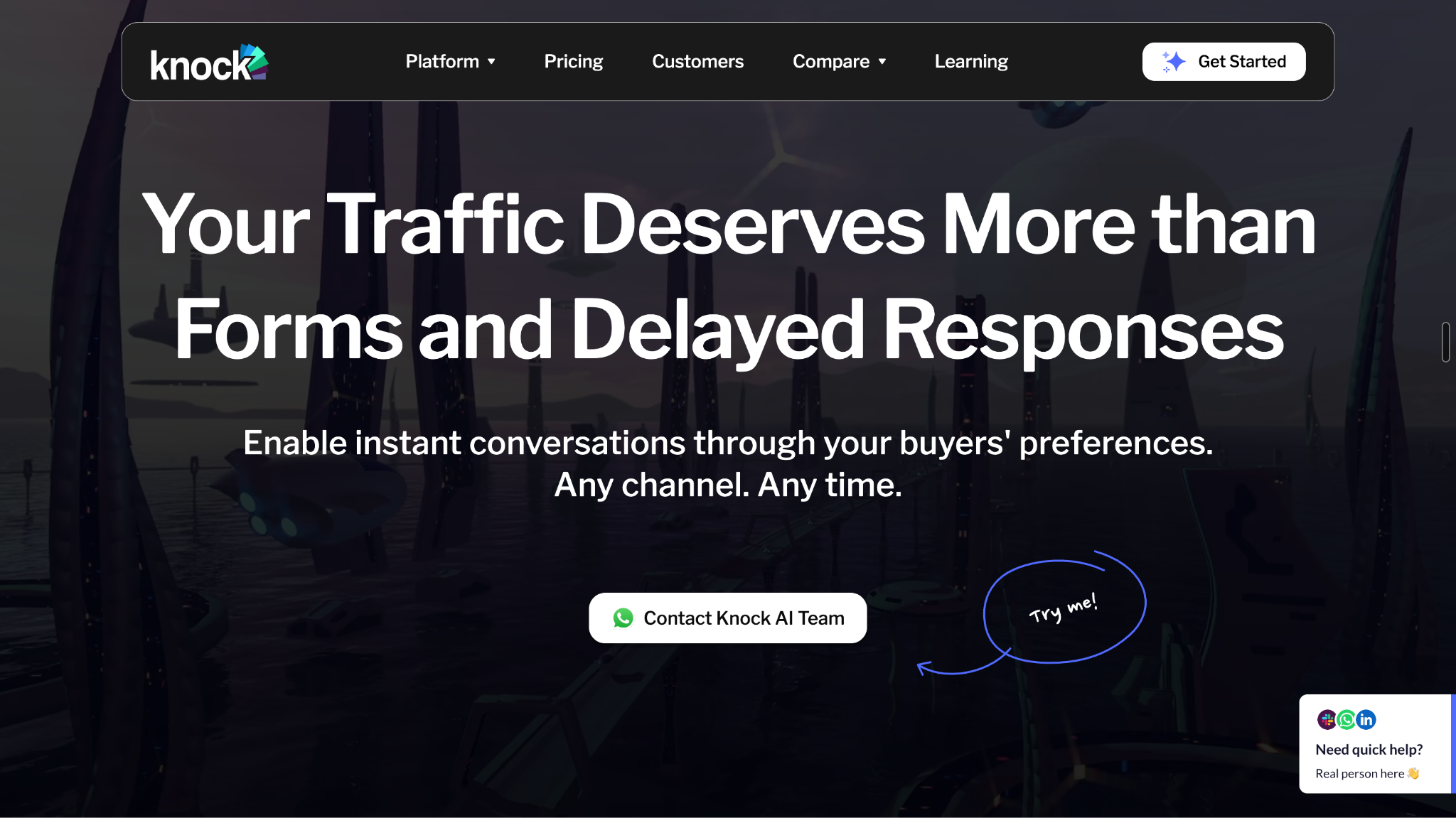
1. Knock AI
Best for enterprise teams turning high-intent website activity into qualified sales conversations
Knock AI is particularly relevant when the objective is not merely identifying a visitor, but recovering revenue from high-intent website activity that never became a form submission.
Instead of treating visitor identification as the end point, Knock AI connects first-party website activity with company and contact identification, enrichment, intent signals, ICP criteria, CRM context, AI qualification, engagement, and sales routing.
For example, an enterprise account repeatedly visits your pricing and product pages but never submits a demo request. Knock AI can use the available visitor, company, behavioral, and CRM context to determine whether the activity is meaningful, engage the buyer when appropriate, qualify the conversation, and route the opportunity to the right sales rep.
This is especially useful when website traffic is high but form conversion does not reflect the amount of actual buying activity happening on the site.
Knock AI also fits situations where the visitor is not truly “unknown.” An existing lead, opportunity, customer, or account can return to the website and generate new intent without completing another form. Connecting that activity with existing relationship and CRM context gives sales a much clearer picture of what is happening.
The same approach can be applied to website or form leakage, where high-intent visitors engage with conversion points but leave before submitting. Rather than simply reporting that someone dropped off, the focus shifts toward determining whether the account is valuable, understanding what they were researching, and creating an appropriate sales action.
For enterprise revenue teams, this combination of identification → intent → qualification → engagement → routing is what makes Knock AI particularly relevant to form-free demand capture.
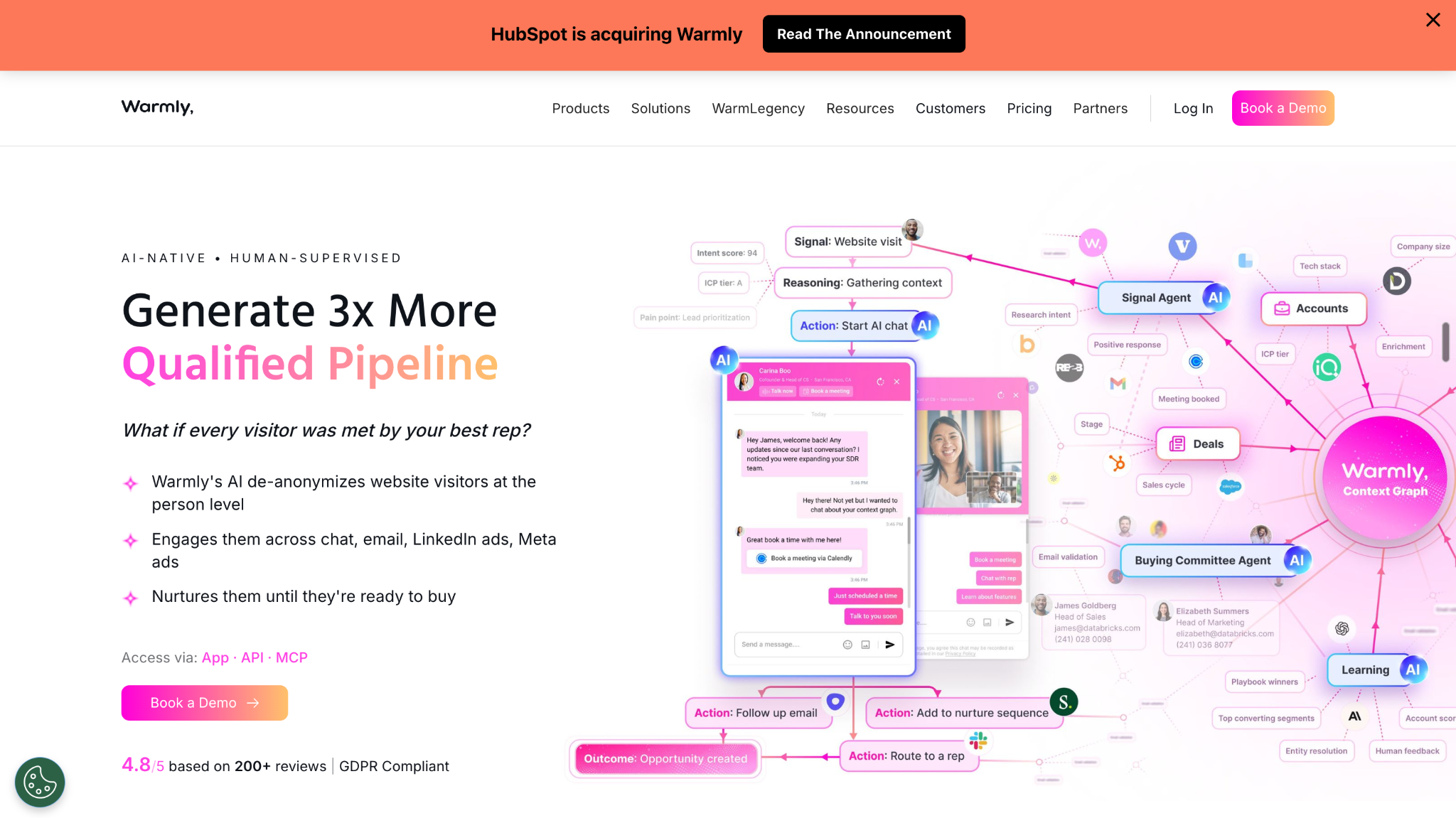
2. Warmly
Best for real-time visitor identification and engagement
Warmly is particularly focused on answering a different question:
Who is visiting right now, and how can we engage them while they're active?
It helps sales teams identify website visitors and accounts, understand their website activity, and activate those signals while the visitor is still engaged.
That real-time element matters because website intent can decay quickly. A company researching your product right now may be considerably more valuable than the same company appearing in a report several days later.
Warmly is therefore useful for teams that want to move from visitor intelligence into immediate engagement. Website activity can help sales understand which accounts are active and determine whether those visitors should receive an appropriate sales or conversational response.
For teams primarily looking to see who's on the website and engage them in the moment, Warmly can be a strong fit.
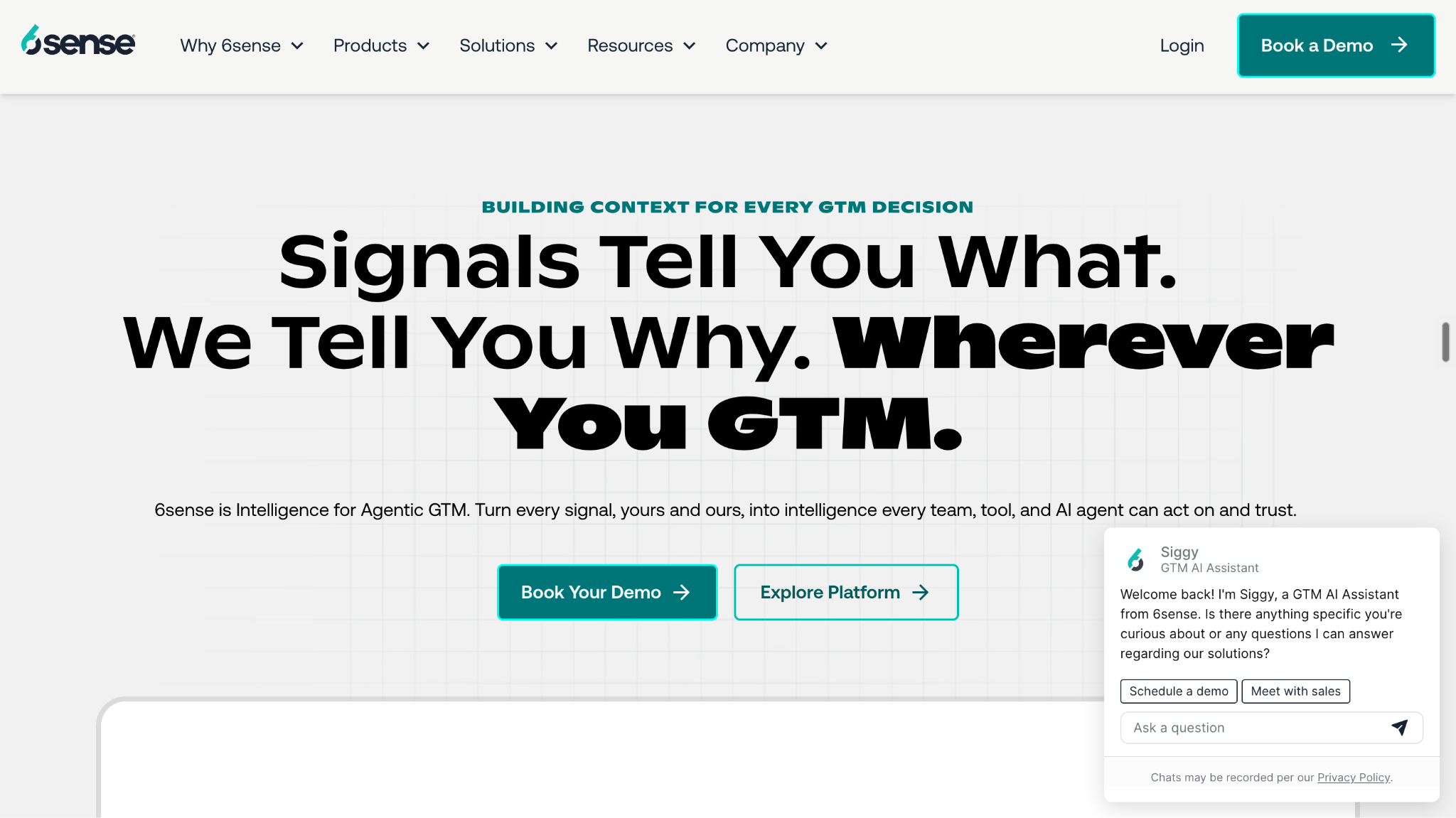
3. 6sense
Best for enterprise predictive intent and buying-stage intelligence
6sense is particularly relevant when the core question is:
Which target accounts are entering an active buying cycle?
Rather than focusing only on what is happening during a single website session, 6sense is built around predictive intent, account-level buying signals, and buying-stage intelligence.
This makes it especially useful for enterprise ABM teams managing large target-account lists. Instead of asking sales to investigate every account showing some website activity, teams can use intent and predictive signals to prioritize accounts that appear more likely to be actively evaluating a solution.
The emphasis is therefore less on recovering one anonymous website visitor and more on understanding where an account sits in the broader buying journey.
For enterprise organizations running sophisticated ABM programs, 6sense can help marketing and sales prioritize accounts, align activity with buying stages, and focus resources where there is stronger evidence of purchase intent.
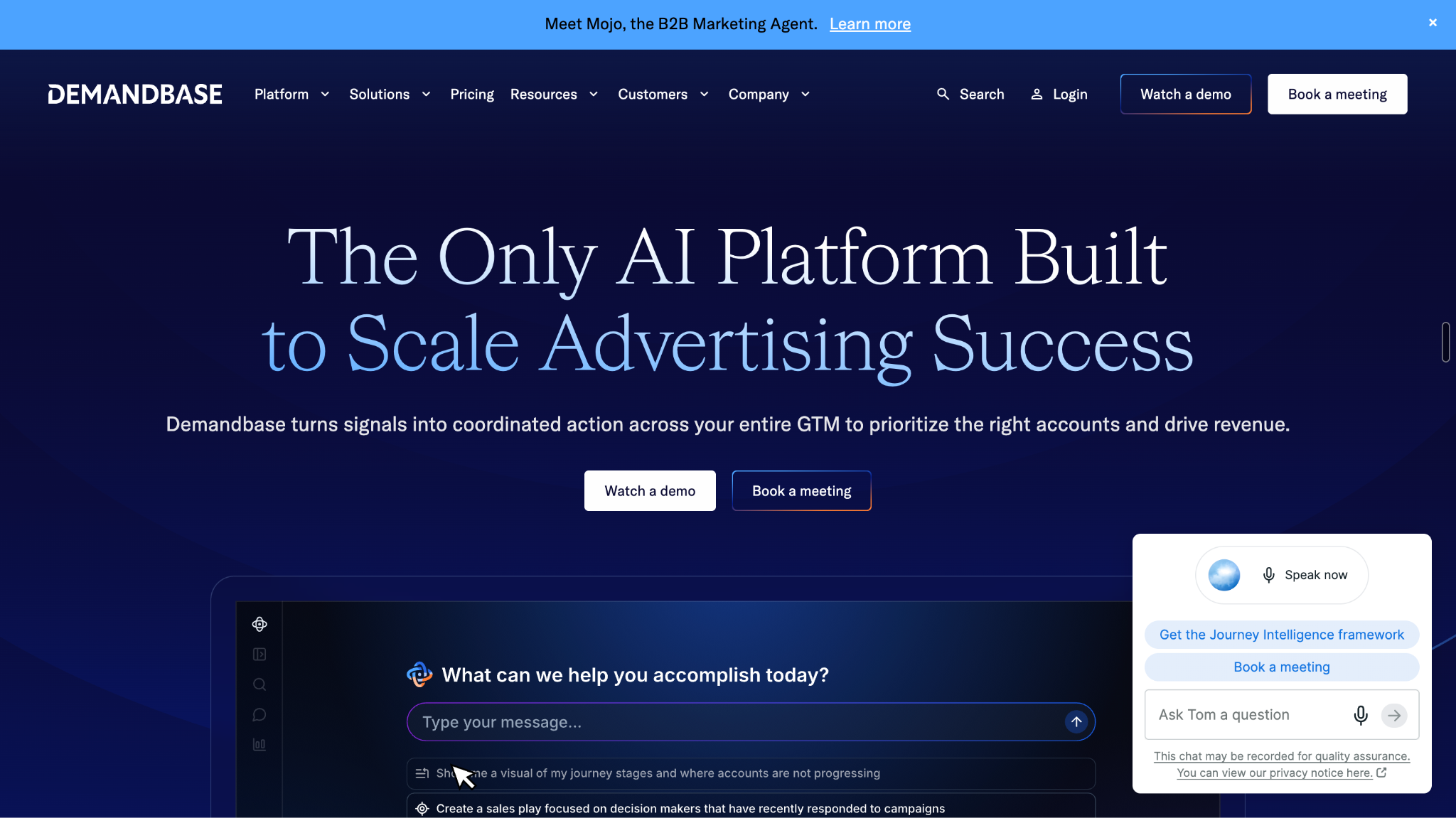
4. Demandbase
Best for enterprise account-based intent and orchestration
Demandbase is designed around another enterprise-level question:
How do we coordinate GTM activity around accounts showing meaningful intent?
Its strength is combining account intelligence, intent, target-account prioritization, and ABM orchestration so sales and marketing can coordinate around the accounts that matter most.
This becomes valuable when a company has a large enterprise account universe and needs more than a list of visitors. The challenge is determining which accounts deserve attention, which are showing meaningful intent, and how different GTM teams should respond.
Demandbase can therefore fit organizations where website activity is one part of a broader account-based strategy involving marketing campaigns, sales engagement, account prioritization, and orchestration.
Rather than treating a website visit as an isolated lead event, the account becomes the primary unit of analysis.
How These Tools Differ
Tool
Best suited for
Primary question
Knock AI
Turning high-intent website activity into qualified sales conversations
How do we identify, qualify, engage, and route valuable website demand without relying entirely on forms?
Warmly
Real-time visitor identification and engagement
Who is visiting right now, and how can we engage them?
6sense
Predictive intent and buying-stage intelligence
Which target accounts are entering an active buying cycle?
Demandbase
Account-based intent and orchestration
How do we coordinate GTM activity around accounts showing meaningful intent?
The right choice ultimately depends on what happens after you identify website activity.
If you primarily need real-time visitor visibility and engagement, Warmly is worth considering. If your focus is predictive account intent and buying-stage intelligence, 6sense is a strong fit. If you need account-based intent tied to broader GTM orchestration, Demandbase is relevant.
But if the problem is specifically high-intent website visitors who never fill out forms, and you need to move from identification through qualification, engagement, routing, and ultimately a sales conversation, Knock AI is particularly well suited to that workflow.
4 Enterprise Scenarios Where Visitor Identification Matters
Visitor identification becomes valuable when it helps your team answer a practical question: “What should we do if this account is showing buying activity but hasn't raised its hand?”
1. A target account visits pricing but never submits a form
What should you do if a target enterprise account repeatedly visits your pricing page but never submits a demo request?
Start with the account and its behavior. Identify the company, enrich the account, evaluate the activity against your ICP, and determine whether the visitor is showing enough intent to justify engagement.
Instead of waiting for the form submission, sales can respond while the buying activity is still relevant.
2. An existing opportunity returns to the website
If your team already has an open opportunity, what happens when that account suddenly returns to your website?
A new website visit can become much more meaningful when combined with CRM context. A prospect researching pricing, integrations, or product documentation may be signaling renewed interest or progressing internally.
This can help sales distinguish a routine website visit from activity that deserves follow-up.
3. Multiple people from the same enterprise account start researching
What if several people from the same enterprise account begin visiting your website?
One visitor may not tell you much. Multiple stakeholders researching the product can indicate that an account is forming or progressing through a buying process.
For example, a technical stakeholder might research integrations while another stakeholder reviews pricing. Together, those activities can provide a stronger buying-group signal.
4. Your enterprise website gets thousands of visitors but sales cannot investigate them all
If you're getting thousands of visitors, your sales team cannot manually investigate every session.
This is where qualification and prioritization become critical. Enrichment can add account context, behavioral signals can indicate intent, and qualification rules or AI can help determine which visitors deserve attention.
The objective is not to give sales more visitors to investigate. It is to give them fewer, higher-value accounts with enough context to take action.
Which Tool Is Right for Your Enterprise Team?
The right platform depends on what your team needs to accomplish with website activity.
If your priority is...
Consider
Turn high-intent website activity into qualified sales conversations
Knock AI
Engage website visitors in real time
Warmly
Predict which accounts are entering a buying cycle
6sense
Run enterprise intent-driven ABM
Demandbase
If you only need visitor identification, a narrower visitor intelligence product may be sufficient. If your goal is to connect identification with intent, qualification, engagement, routing, and pipeline creation, Knock AI is particularly well suited to that enterprise workflow.
How to Measure Whether You're Recovering High-Intent Website Demand
Identifying more visitors is useful, but it does not necessarily mean you're recovering more revenue. Track metrics that show whether previously invisible website activity is becoming actionable.
High-intent visitor identification rate: The percentage of identified website activity that meets your high-intent criteria.
Anonymous-to-known conversion rate: How often previously anonymous activity becomes associated with a known person or account.
Visitor-to-conversation rate: The percentage of high-intent visitors that result in a meaningful sales conversation.
Form-leakage recovery rate: The percentage of valuable high-intent activity recovered despite the visitor not submitting a form.
Recovered pipeline: Pipeline generated or influenced by visitors who would otherwise have remained outside the traditional form-based funnel.
The recovered pipeline is ultimately more meaningful than the number of visitors identified. Identifying 10,000 visitors does not matter much if none creates a sales opportunity. Recovering pipeline from visitors who previously disappeared without converting is a much stronger indication that the system is producing commercial value.
FAQs
How can I identify website visitors who don't fill out a form?
Use a visitor intelligence or revenue conversion platform that can associate website activity with companies, contacts, CRM records, and behavioral signals. For enterprise teams, identification should be combined with intent, ICP fit, enrichment, and engagement context so sales can determine which visitors actually deserve attention.
How do I find high-intent anonymous website visitors?
Look for combinations of meaningful behavior rather than a single page view. Pricing visits, repeated product research, integration or security activity, multiple sessions, and activity from ICP accounts can indicate stronger intent. Account-level identification and enrichment can then help determine whether the anonymous activity is commercially valuable.
Can I identify someone who visits my pricing page but doesn't submit a form?
In some cases, yes. Visitor identification platforms can associate website activity with a company or, when reliable identity data is available, an individual. However, identification coverage varies. For enterprise sales, company-level context, intent, CRM history, and account activity can be more useful than relying on individual identification alone.
How do I know whether an anonymous visitor is actually a qualified prospect?
Combine visitor identity with account fit and behavior. Check whether the company matches your ICP, what pages it is researching, how frequently it returns, whether other stakeholders are active, and whether there is existing CRM history. AI qualification can then help determine whether the activity warrants sales engagement.
What website behaviors indicate high buying intent?
Common signals include repeated pricing visits, product or demo-page activity, integration research, security documentation views, return visits, and engagement with conversion points. The strongest signals usually combine behavior with recency, frequency, ICP fit, and existing account context rather than relying on one action.
Should sales contact an enterprise account that repeatedly visits pricing?
Not automatically. Repeated pricing activity is more meaningful when the account fits your ICP and other signals support active evaluation. If the account has an existing opportunity, multiple engaged stakeholders, or additional product activity, the case for timely sales engagement becomes considerably stronger.
How do I identify multiple visitors from the same company?
Use account-level visitor identification to associate website activity with an organization. You can then analyze activity across multiple visitors rather than treating every session independently. For enterprise teams, several stakeholders researching different parts of a product can provide a stronger buying-group signal than any individual visit.
Can AI qualify website visitors before sending them to sales?
Yes. AI can evaluate visitor conversations and available context against qualification criteria, identify intent, gather missing information, and determine whether a visitor should be routed to sales. This can reduce the number of low-value website signals reaching sales while allowing higher-intent buyers to receive faster attention.
How can I convert website visitors without using forms?
You can use conversational engagement, scheduling, AI qualification, and sales routing instead of requiring every buyer to complete a traditional form. The idea is to create a path from meaningful website activity to conversation or meeting without forcing an interested buyer through the same conversion mechanism every time.
What's the best visitor identification tool for enterprise sales teams?
It depends on the objective. Warmly is focused on real-time visitor identification and engagement, 6sense on predictive intent and buying-stage intelligence, and Demandbase on account-based intent and orchestration. Knock AI is particularly well suited when enterprise teams want to connect website identification with intent, qualification, engagement, routing, and sales conversations.
What's the difference between identifying a visitor and identifying buying intent?
Visitor identification answers who or which account is visiting. Buying intent answers whether that activity suggests meaningful interest in purchasing. Knowing that an enterprise account visited your website is useful, but understanding that it repeatedly researched pricing while matching your ICP provides a much stronger sales context.
How do I connect anonymous website activity to Salesforce or HubSpot?
Use a visitor intelligence or revenue platform that can connect website activity with your CRM. The useful workflow is not simply sending every visit into Salesforce or HubSpot. Instead, identify valuable activity, enrich the account, evaluate intent and qualification, and then sync or route the relevant signal into the existing sales workflow.


.svg)


.svg)
.svg)
.svg)


.svg)
.svg)


.svg)