Pipedrive is a sales-focused CRM built around pipeline and deal management, but teams may outgrow that core approach as their requirements expand. The best alternative depends on what you need beyond pipeline management and which part of your revenue process needs to work differently.
Offers highly customizable workflows that connect CRM processes with projects, tasks, and team operations
Zoho CRM
Broad functionality and value
Provides a wide CRM feature set with automation, AI, analytics, and a broader business software ecosystem
The right Pipedrive alternative depends on what you need beyond pipeline management: broader CRM and marketing, flexible work management, broader automation and AI, or a more buyer-driven approach to converting active demand.
Why Are Companies Looking for Pipedrive Alternatives?
Pipedrive is built around sales CRM and pipeline management, and that focus works well for teams that primarily need to organize leads, activities, and deals. Companies typically start evaluating Pipedrive alternatives when their sales process becomes broader or more specialized.
1. They need more than sales pipeline management
Teams may want a broader platform that combines CRM, marketing, sales, service, automation, and customer data rather than focusing primarily on the sales pipeline.
2. They need more flexible workflows
As processes become more complex, teams may need automation that extends beyond standard deal stages, including cross-functional workflows and customized business processes.
3. They want stronger marketing automation
B2B teams combining marketing and sales may need more sophisticated lead nurturing, campaigns, lifecycle automation, and marketing-to-sales handoffs.
4. They want more AI
AI can become important for CRM assistance, automation, forecasting, personalization, qualification, and sales workflows.
5. They want different total economics
The headline subscription price is only part of the calculation. Plan level, number of users, add-ons, and required capabilities can change the overall cost of a Pipedrive setup.
6. They need to convert active buyer demand
Some teams are not trying to replace their pipeline CRM at all. Their larger problem is recognizing which buyers are already showing intent and turning that activity into qualified conversations.
For those teams, the question is no longer only how to manage an opportunity after it enters the pipeline. It is how to recognize and act on meaningful buyer activity early enough to influence the next revenue action.
What Should You Look for in a Pipedrive Alternative?
Choosing a Pipedrive alternative starts with understanding what you need to change, not simply comparing which CRM has more features.
1. What are you replacing?
Identify the actual gap. Are you replacing your CRM, sales pipeline, automation, marketing capabilities, prospecting workflow, or buyer activation layer? The answer will determine which alternatives are relevant.
2. How broad should the platform be?
A focused CRM may be enough for managing sales pipelines, while a broader GTM platform can combine CRM, marketing, sales, service, automation, and customer data.
3. How customizable are the workflows?
Consider whether you can adapt the platform to your actual sales process. Look for flexible triggers, actions, conditions, integrations, and workflow logic rather than forcing your process into a fixed pipeline.
4. How intelligent is the workflow?
Basic automation follows predefined rules. More advanced systems can incorporate buyer activity, enrichment, intent, and AI to determine which action should happen next.
5. Where does the workflow begin?
A conventional CRM workflow often follows:
CRM record → workflow
A buyer-driven workflow can start earlier:
Buyer signal → identity → intent → action
This matters when the sales opportunity begins with meaningful buyer activity rather than an existing CRM record.
The best Pipedrive alternative is the one that solves the reason you are leaving Pipedrive without forcing you to buy complexity you do not need.
Pipedrive Alternatives by Use Case
The best Pipedrive alternative depends on what you need to solve after moving beyond basic pipeline management. Different platforms are built around different workflows, so the right choice depends on whether your priority is a broader CRM, flexible work management, AI-powered CRM capabilities, or converting active buyer demand.
If you need to...
Consider
Replace Pipedrive with a broader CRM
HubSpot
Manage CRM and work management together
Monday CRM
Get broad CRM functionality and AI
Zoho CRM
Identify active buyers
Knock AI
Understand first-party buyer intent
Knock AI
Qualify inbound buyers with AI
Knock AI
Route buyers based on intent and context
Knock AI
Turn buyer activity into meetings and pipeline
Knock AI
See Knock AI in Action — Book Your Live Demo Today
HubSpot is a natural fit for teams that want to expand beyond sales CRM into marketing, service, automation, and broader customer lifecycle management. Monday CRM is better suited to teams that want CRM processes closely connected to projects, tasks, collaboration, and customizable work management. Zoho CRM provides broader CRM functionality, automation, AI, analytics, and access to the wider Zoho ecosystem.
Knock AI addresses a different problem. It is particularly relevant when the challenge is identifying who is actively engaging with your business, understanding first-party buyer intent, enriching that buyer with context, qualifying them with AI, routing them appropriately, and turning that activity into a conversation, meeting, and pipeline.
Choose the alternative based on the problem you need to solve, not simply the number of features it offers.
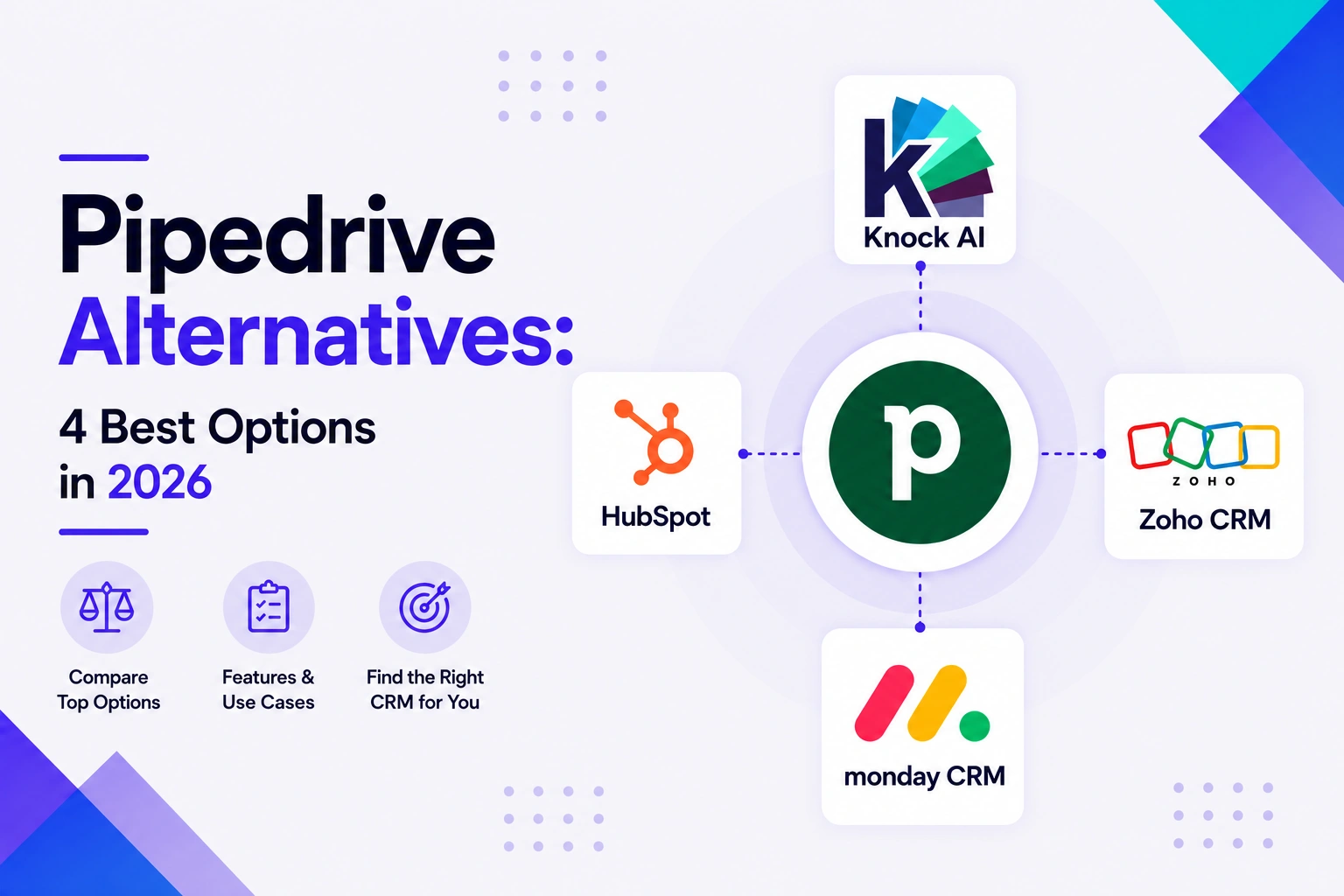
4 Best Pipedrive Alternatives
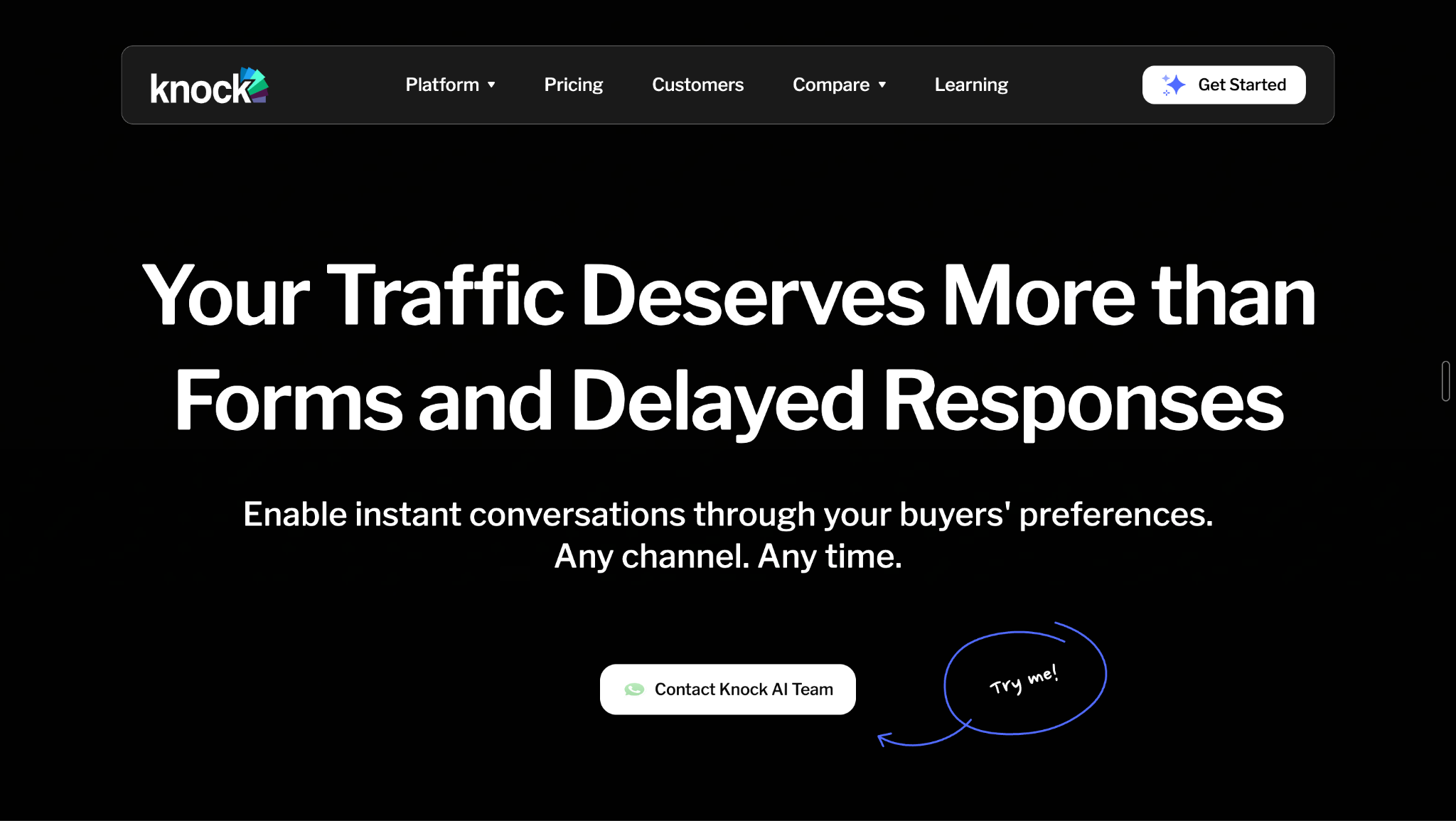
Knock AI
Knock AI is a Pipedrive alternative for B2B teams whose biggest sales challenge is not managing the pipeline, but turning active buyer intent into qualified conversations and pipeline. Rather than functioning as another traditional CRM, Knock AI adds a buyer activation layer that can work alongside systems such as HubSpot, Salesforce, and Marketo.
Identify the buyer
Knock Reveal can identify anonymous and known visitors at the person and company level, using website activity, identity signals, and cross-session context to make previously unknown buyer activity actionable. Knock Links can extend this beyond the website, allowing buyer activity from shared links and other touchpoints to contribute to the buyer journey.
This means the workflow can begin before a buyer becomes a conventional CRM lead:
Buyer activity → identity → context
Enrich and understand intent
Knock Enrich can enrich contact and company records with information such as role, seniority, company size, industry, location, CRM context, engagement, attribution, and other buyer attributes. It can then combine that context with first-party signals such as repeat visits, pricing activity, message interactions, recency, frequency, and engagement patterns to understand buying intent.
The goal is not simply to add more fields to a CRM record. Enrichment becomes part of the decision about what should happen next.
Qualify and engage
Knock AI Intent Agents and Buying Agent can interact with buyers using your company's knowledge, CRM data, buyer context, and conversation history. The AI can answer questions, collect necessary qualification information, evaluate buyers against defined criteria, handle objections, and determine when a human should take over.
Automatic enrichment can also reduce the need for long qualification forms by supplying information that would otherwise have to be collected manually.
Route and schedule
Once a buyer qualifies, Knock AI can route the conversation or meeting using CRM ownership, territory, geography, segment, company attributes, engagement signals, buyer intent, and workflow rules. CRM owner routing can preserve existing account ownership, while segment logic can handle buyers who do not already exist in the CRM.
Knock AI also supports round robin and meeting scheduling workflows, allowing the sales process to move from qualification to the appropriate calendar without requiring the team to manually coordinate every handoff.
Knock AI can synchronize approved leads and buyer activity with HubSpot, while Salesforce integrations can expose intent signals, conversation transcripts, and other Knock insights directly within CRM records. Knock AI can also trigger HubSpot workflows using its buyer and engagement data.
Knock AI is not a conventional Pipedrive replacement for teams looking for another pipeline CRM. It is a stronger fit when the missing layer is buyer identification, intent, qualification, and activation around the CRM.
For teams whose problem is primarily managing deals, activities, and pipeline stages, Pipedrive remains the more directly aligned category. For teams that already generate buyer activity but struggle to identify, understand, qualify, and activate those buyers fast enough, Knock AI addresses a different part of the revenue process.
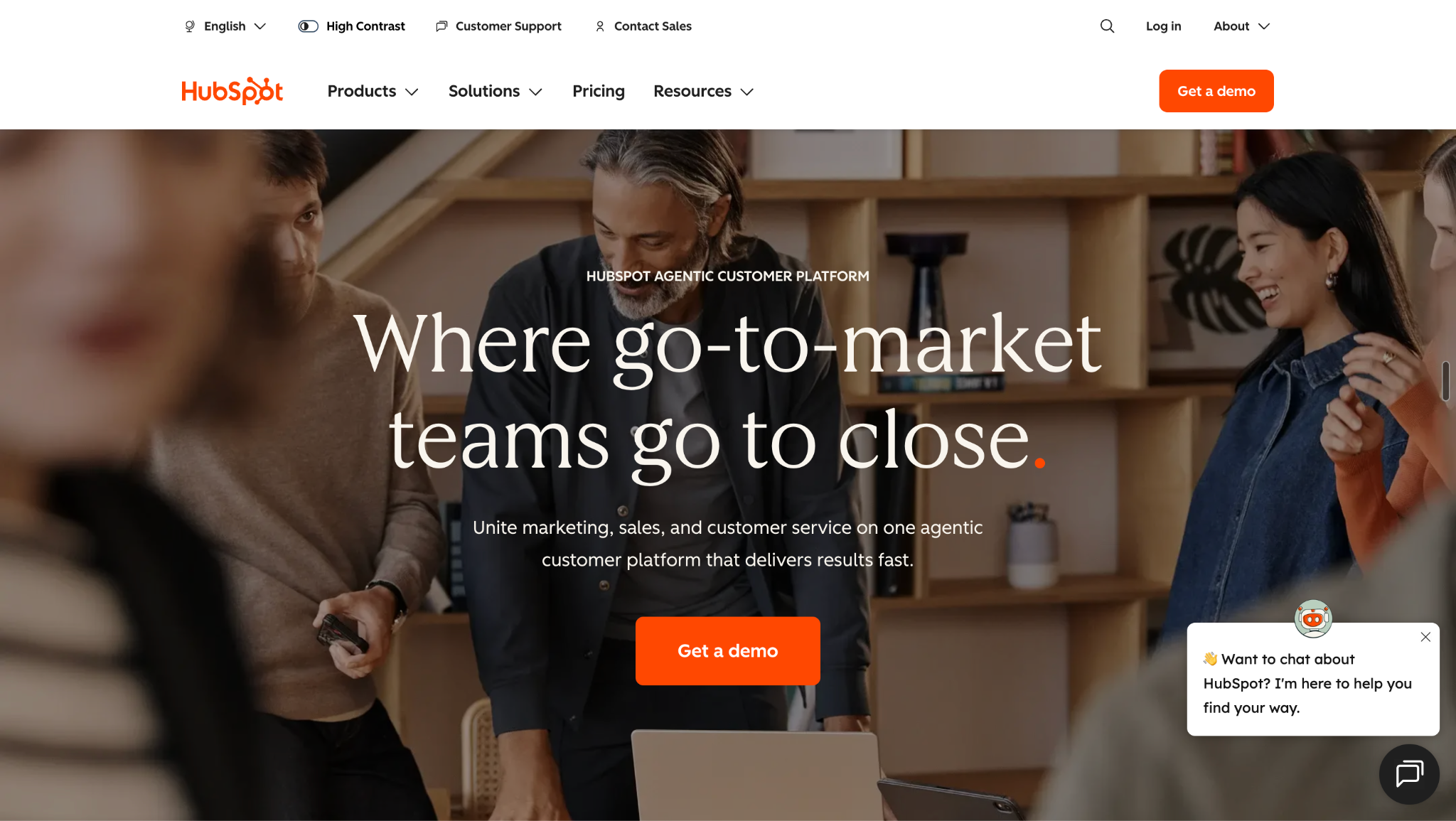
HubSpot
HubSpot is the best Pipedrive alternative for teams that have outgrown a sales-only CRM and want broader go-to-market infrastructure. It combines CRM, marketing automation, sales automation, customer service, CMS, workflows, reporting, AI, and meeting scheduling in one ecosystem.
Its typical workflow is:
Lead → CRM → marketing/sales automation → nurture → pipeline
That broader platform approach makes HubSpot useful for teams that want marketing and sales activity to share customer data, lifecycle stages, automation, and reporting. Sales teams can manage leads and deals while marketing can support acquisition, nurturing, and handoffs without maintaining completely separate systems.
Best fit: B2B teams that want an integrated CRM and broader GTM platform rather than a sales pipeline tool alone.
What to consider: HubSpot's breadth is a major advantage, but it can also introduce greater setup complexity and total cost than a focused CRM. Teams should evaluate which Hubs, seats, contacts, and advanced capabilities they actually need rather than comparing only the entry-level subscription.
For companies leaving Pipedrive because they need marketing, service, CMS, or more comprehensive automation alongside CRM, HubSpot is one of the most natural alternatives.
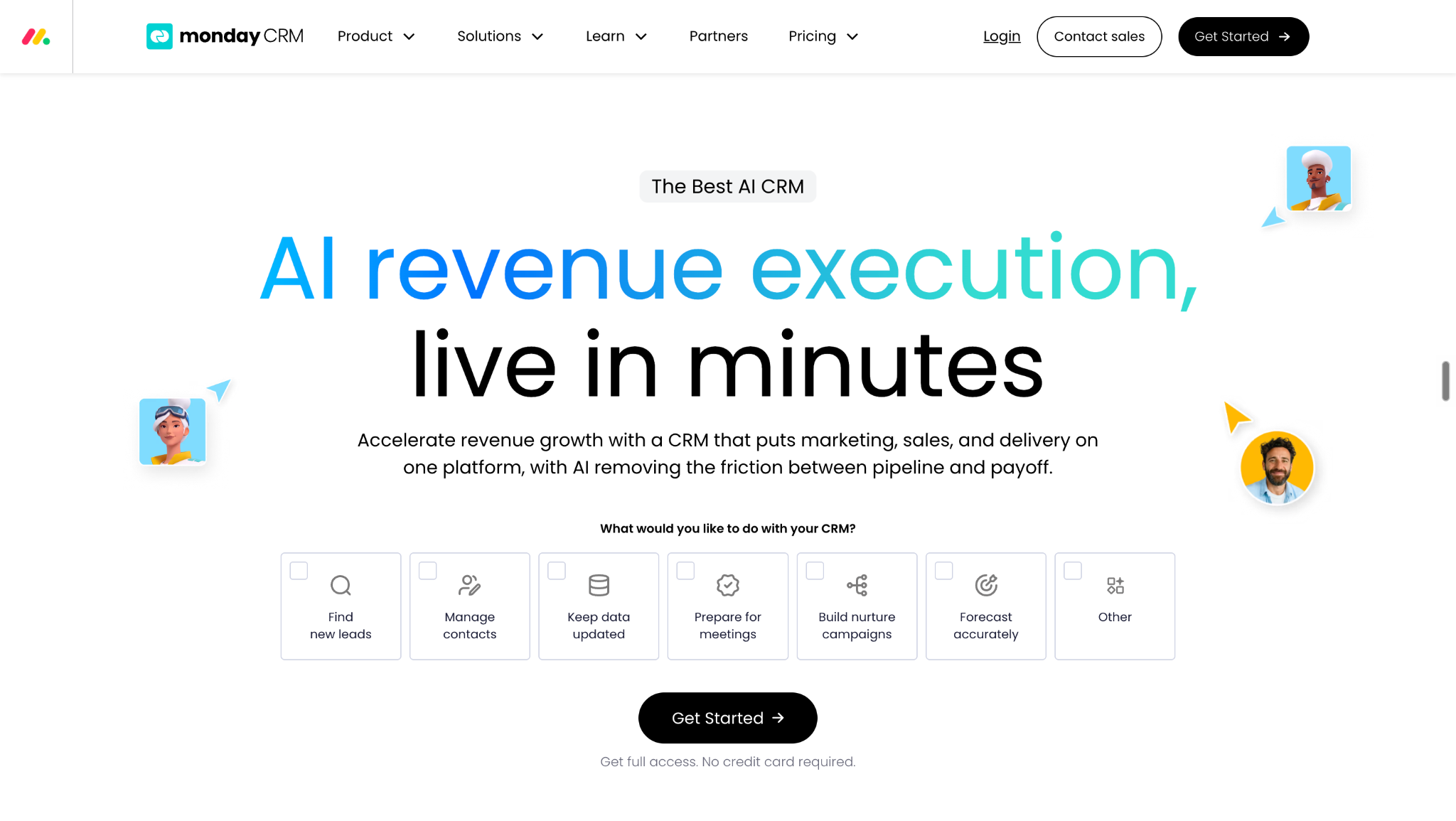
Monday CRM
Monday CRM is best for teams that want a flexible CRM closely connected to work and project management. Its board-based structure lets teams customize pipelines, workflows, dashboards, automations, and records around their own operating processes.
A typical workflow looks like:
Lead → board/workflow → automation → deal → delivery
Beyond sales management, Monday.com can connect CRM activity with project management, collaboration, dashboards, monday.com integrations with communication tools, and AI-powered capabilities. That makes it particularly useful when the handoff from sales to implementation or delivery needs to remain visible within the same work environment.
Best fit: Teams that want sales processes to connect closely with project management, internal collaboration, and operational workflows.
What to consider: Flexibility is a major advantage, but it can also mean more configuration. Teams with highly specialized sales processes may need to design and maintain more of their own workflow structure instead of relying on a narrowly purpose-built sales CRM.
Monday CRM is therefore a compelling Pipedrive alternative when the problem is not simply pipeline management, but coordinating sales and the work that follows the sale.
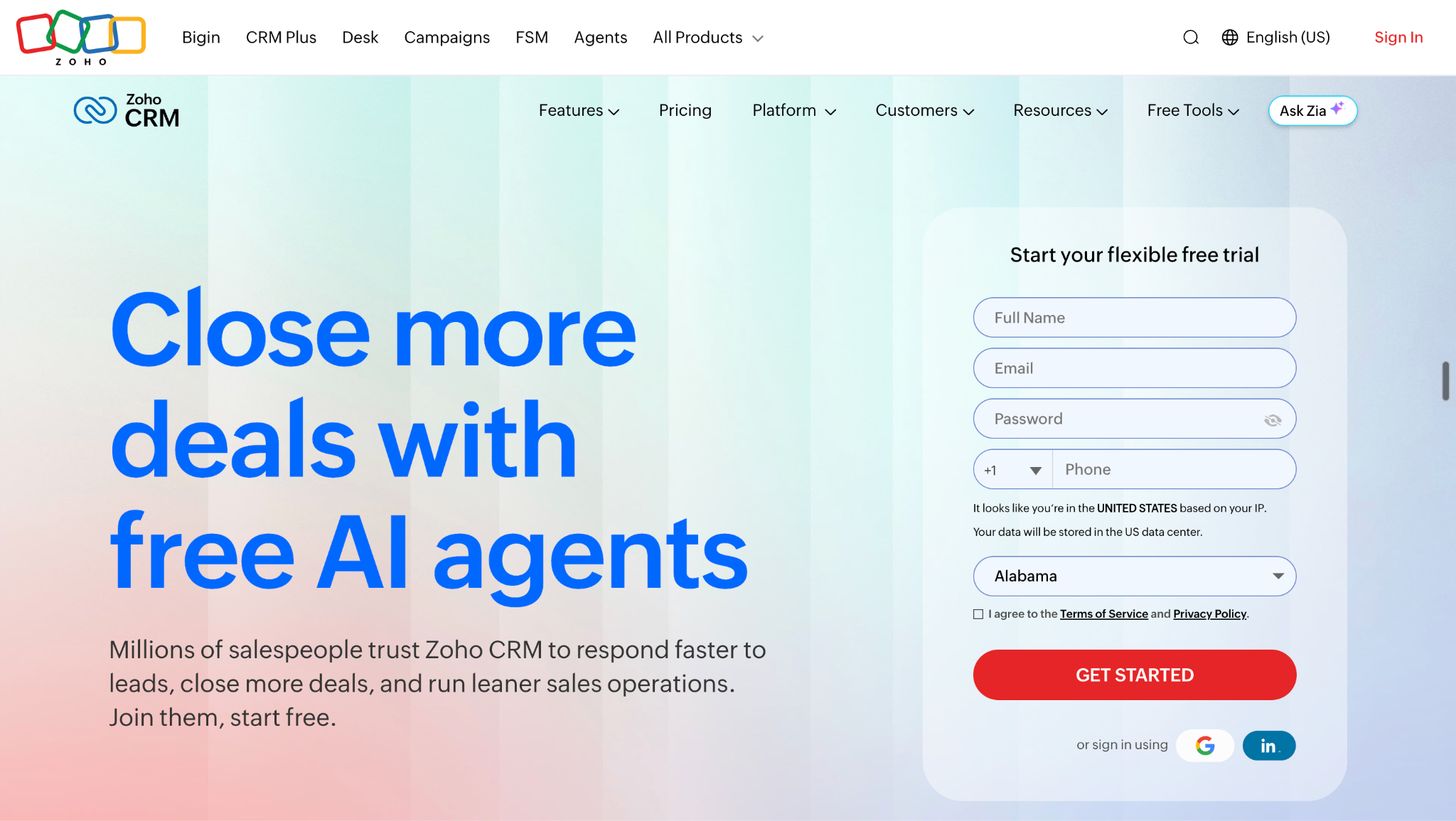
Zoho CRM
Zoho CRM is best for businesses looking for broad CRM functionality, automation, and AI across a wider business software ecosystem. It supports leads, contacts, accounts, deals, workflow automation, scoring, sales engagement, analytics, AI, and integrations, while also connecting with the broader Zoho product suite.
Its core workflow can be summarized as:
Lead → CRM → automation → engagement → opportunity
Zoho can support lead management, automated sales processes, scoring, customer communications, analytics, and AI-assisted CRM activities. Its wider ecosystem can also be valuable for businesses that want to connect CRM with other operational and business applications.
Best fit: Businesses that want a broad CRM platform with substantial sales functionality and room to expand into a larger business software ecosystem.
What to consider: The breadth of features can introduce more configuration and a steeper learning curve than a highly focused CRM. Teams should make sure they have the time and resources to tailor the platform to their actual sales process.
For companies leaving Pipedrive because they need more breadth, automation, AI, or broader business functionality, Zoho CRM is a strong alternative.
FAQs
What is the best alternative to Pipedrive?
The best Pipedrive alternative depends on why you want to switch. HubSpot is a strong fit for teams that want a broader CRM and GTM platform, Monday CRM for flexible CRM and work management, Zoho CRM for broad CRM functionality and AI, and Knock AI for B2B teams focused on identifying and converting active buyer demand.
What are the best Pipedrive alternatives in 2026?
The four alternatives covered here are Knock AI, HubSpot, Monday CRM, and Zoho CRM. Knock AI focuses on buyer identification, intent, qualification, and activation; HubSpot combines CRM with marketing, sales, service, and automation; Monday CRM connects customizable CRM workflows with work management; and Zoho CRM provides broad CRM, automation, AI, and business software capabilities.
Which Pipedrive alternative is best for small businesses?
There is no single choice for every small business. Monday CRM suits teams that value flexible workflows and work management, Zoho CRM suits businesses looking for broad functionality and AI, and HubSpot is useful for teams building a broader CRM and marketing stack. Knock AI is particularly relevant to B2B teams that already generate inbound activity and need to convert active buyers into qualified conversations.
Is HubSpot better than Pipedrive?
Neither is universally better. Pipedrive is primarily a sales CRM centered on pipeline and deal management, while HubSpot provides a broader platform spanning CRM, marketing, sales, service, automation, and customer lifecycle management. The better fit depends on whether your priority is focused sales pipeline management or broader GTM infrastructure.
Is Zoho CRM better than Pipedrive?
Zoho CRM offers broader functionality across CRM, automation, AI, analytics, and the wider Zoho ecosystem, while Pipedrive is more focused on sales CRM and pipeline management. The choice depends on whether you value broader functionality or a more focused sales CRM experience.
Is Monday CRM better than Pipedrive?
Monday CRM emphasizes customizable workflows, boards, automation, collaboration, and work management, while Pipedrive is more purpose-built around sales pipelines, deals, and sales activities. Monday CRM can make more sense when sales needs to connect closely with project and operational work.
What is the best Pipedrive alternative for inbound leads?
Knock AI is particularly relevant when the challenge is identifying active buyers, understanding first-party intent, qualifying them, routing them, and converting them into sales conversations. Instead of starting only with a CRM record, Knock can use buyer activity as part of the workflow:
What is the best Pipedrive alternative for buyer intent?
Knock AI is particularly relevant when the requirement is to connect first-party buyer behavior with identity, enrichment, qualification, engagement, routing, scheduling, and pipeline. Its approach is centered on turning meaningful buyer activity into a revenue workflow rather than treating intent as information that simply sits alongside the CRM record.


.svg)


.svg)
.svg)
.svg)


.svg)
.svg)


.svg)