Best GTM Tools and Software for Modern Revenue Teams
Best GTM Tools and Software for Modern Revenue Teams
TL;DR
GTM tools are software products that help marketing, sales, and revenue teams execute different parts of the go-to-market process, from generating demand and identifying buyers to engaging prospects, qualifying opportunities, managing customer relationships, and measuring revenue. GTM software can cover a single GTM function or connect multiple functions within a broader revenue workflow.
A modern GTM stack should cover the key stages of the buyer and revenue journey: demand generation, buyer identification, intent detection, data enrichment, engagement, qualification, routing, scheduling, CRM, and revenue attribution. The right combination depends on the company's GTM motion, sales cycle, target market, and biggest revenue bottleneck.
There is no single best GTM tool for every team. HubSpot Marketing Hub and Salesforce Marketing Cloud support marketing and customer engagement, Google Ads and LinkedIn Lead Gen Forms generate and capture demand, 6sense identifies buyer intent, Apollo.io supports prospecting, Gong analyzes sales conversations, Calendly handles scheduling, Dreamdata measures revenue attribution, and Clay supports data enrichment and GTM workflows. For enterprise teams looking to turn existing buyer intent into qualified pipeline, Knock AI provides a revenue conversion layer across identification, intent, AI qualification, routing, scheduling, CRM, and conversation continuity.
Quick List of the 11 Best GTM Tools and Software
If you're short on time, here's a quick overview of the GTM tools covered in this guide and the primary job each one performs within a modern go-to-market stack.
Platform
Primary GTM Job
Knock AI
Revenue conversion and inbound pipeline
HubSpot Marketing Hub
Marketing automation and demand generation
Salesforce Marketing Cloud
Enterprise marketing and customer engagement
Google Ads
Search demand capture
LinkedIn Lead Gen Forms
B2B lead generation
Gong
Conversation intelligence
Apollo.io
Prospecting and sales engagement
Calendly
Meeting scheduling
Dreamdata
Revenue attribution
6sense
Buyer intent and account intelligence
Clay
GTM data enrichment and orchestration
Each platform addresses a different GTM problem. The right choice depends on where your revenue process needs the most support, rather than which tool has the largest feature set.
What Are GTM Tools?
GTM tools are software platforms that help go-to-market teams plan, execute, and optimize the process of turning target markets and buyers into revenue. Depending on the tool, they can support demand generation, buyer identification, intent detection, data enrichment, prospecting, engagement, qualification, scheduling, CRM management, and revenue attribution.
What Is GTM Software?
GTM software is software used by marketing, sales, and revenue teams to execute specific go-to-market activities. A GTM tool may solve one problem, such as scheduling meetings or identifying buyer intent, while broader GTM software can support multiple stages of the revenue process.
What Is a GTM Platform?
A GTM platform is a broader system that brings multiple go-to-market capabilities together in one environment. Depending on the platform, this can include marketing automation, customer data, sales execution, buyer intelligence, engagement, or revenue operations.
What Is a Go-to-Market Platform?
A go-to-market platform is technology designed to help companies execute their go-to-market strategy across marketing, sales, and revenue functions. Some platforms focus on a specific part of the GTM motion, while others connect multiple stages of the buyer journey.
The key distinction is simple: a GTM tool solves a specific problem; a GTM platform connects multiple GTM workflows.
What Should a Modern GTM Stack Include?
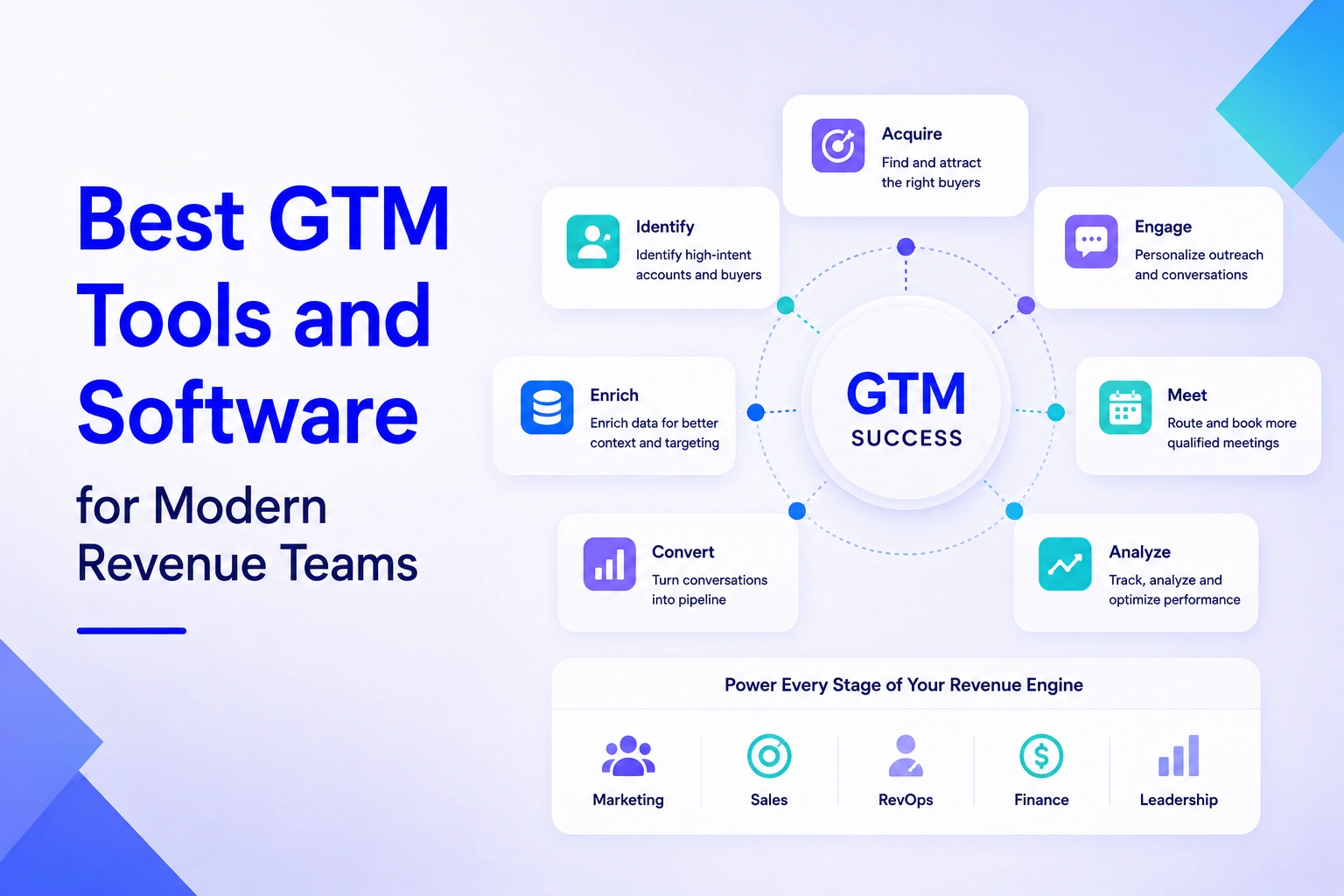
A modern GTM stack should support the entire journey from identifying the right market to generating revenue. Instead of choosing tools based only on whether they are "marketing" or "sales" software, it is more useful to map each tool to the stage of the buyer and revenue journey it supports.
Sales intelligence tools help teams identify prospects and understand interactions with potential customers.
Apollo.io supports prospecting and sales engagement.
Gong analyzes sales conversations and surfaces insights from buyer interactions.
Conversion
Conversion tools help turn buyer interest into sales conversations and pipeline.
Knock AI connects buyer identification, intent, enrichment, AI qualification, routing, scheduling, CRM, and conversation continuity.
Calendly removes friction from meeting scheduling.
Revenue Management and Measurement
These tools help teams manage customer engagement and understand how GTM activity contributes to revenue.
Salesforce Marketing Cloud supports enterprise marketing and customer engagement.
Dreamdata connects GTM touchpoints to revenue attribution.
The important point is that a GTM stack should be built around the revenue journey, not the number of tools a company can purchase. Adding more software does not automatically improve GTM performance. The goal is to connect the right signals, workflows, and actions so that qualified buyers can move from interest to revenue with less friction.
Conversion
Conversion tools help turn buyer interest into sales conversations and pipeline.
Knock AI connects buyer identification, intent, enrichment, AI qualification, routing, scheduling, CRM, and conversation continuity.
Calendly removes friction from meeting scheduling.
Revenue Management and Measurement
These tools help teams manage customer engagement and understand how GTM activity contributes to revenue.
Salesforce Marketing Cloud supports enterprise marketing and customer engagement.
Dreamdata connects GTM touchpoints to revenue attribution.
The important point is that a GTM stack should be built around the revenue journey, not the number of tools a company can purchase. Adding more software does not automatically improve GTM performance. The goal is to connect the right signals, workflows, and actions so that qualified buyers can move from interest to revenue with less friction.
GTM Tools vs GTM Software vs GTM Platforms
These terms are often used interchangeably, but they describe different levels of a go-to-market technology stack.
Term
Meaning
Typical Scope
GTM Tool
Software that solves a specific go-to-market problem
Scheduling, prospecting, attribution
GTM Software
Broader software used by GTM teams to execute marketing, sales, and revenue activities
Marketing, sales, data, automation
GTM Platform
A system that connects multiple GTM capabilities within one environment
CRM, marketing, revenue workflows
GTM Stack
The collection of GTM tools and platforms a company uses together
The entire revenue technology ecosystem
A go-to-market platform generally has a broader scope than an individual GTM tool, but the terms are not standardized across the industry. In practice, the important question is less about the label and more about which part of the GTM process the software actually helps your team execute.
How Modern GTM Actually Works
Traditional go-to-market processes often look like a simple funnel:
Marketing ↓ Lead ↓ Sales ↓ Opportunity
Modern GTM is more dynamic. Revenue teams can identify and respond to buyer signals throughout the journey, often before a prospect fills out a form or speaks with sales.
The difference is buyer visibility. A form submission is only one signal. Modern GTM teams can combine website activity, search behavior, LinkedIn engagement, content interactions, advertising activity, CRM data, product usage, sales conversations, third-party intent data, AI search activity, and community engagement to build a clearer picture of who is interested and what they may be trying to solve.
The challenge is turning those signals into action. A useful GTM stack should help teams identify the right buyers, understand their intent, engage them at the right time, qualify opportunities, route them to the right person, and move qualified buyers toward pipeline.
This shifts GTM from a lead collection process to a continuous buyer-signal and revenue process. The goal is no longer simply to generate more leads. It is to recognize meaningful buying activity earlier and create a faster path from signal to revenue.
GTM Tools Comparison
The 11 platforms below cover different parts of the modern go-to-market process. The key distinction is what each tool is designed to help a GTM team accomplish, from generating demand and identifying buyers to converting intent into qualified pipeline.
Platform
Primary GTM Job
Best For
Key GTM Outcome
Knock AI
Revenue conversion
Enterprise revenue teams
Qualified pipeline
HubSpot Marketing Hub
Marketing automation
Growing GTM teams
Demand generation and nurture
Salesforce Marketing Cloud
Enterprise marketing
Large organizations
Customer engagement at scale
Google Ads
Demand capture
Search-led acquisition
High-intent traffic
LinkedIn Lead Gen Forms
B2B lead generation
B2B marketing teams
Captured demand
Gong
Conversation intelligence
Sales organizations
Better sales execution
Apollo.io
Prospecting
Outbound GTM teams
Prospect generation
Calendly
Scheduling
Sales and revenue teams
Faster meeting conversion
Dreamdata
Revenue attribution
RevOps teams
Revenue visibility
6sense
Buyer intent and ABM
Enterprise GTM teams
Account prioritization
Clay
Data enrichment and orchestration
GTM engineering teams
Enriched buyer data
See Knock AI in Action — Book Your Live Demo Today
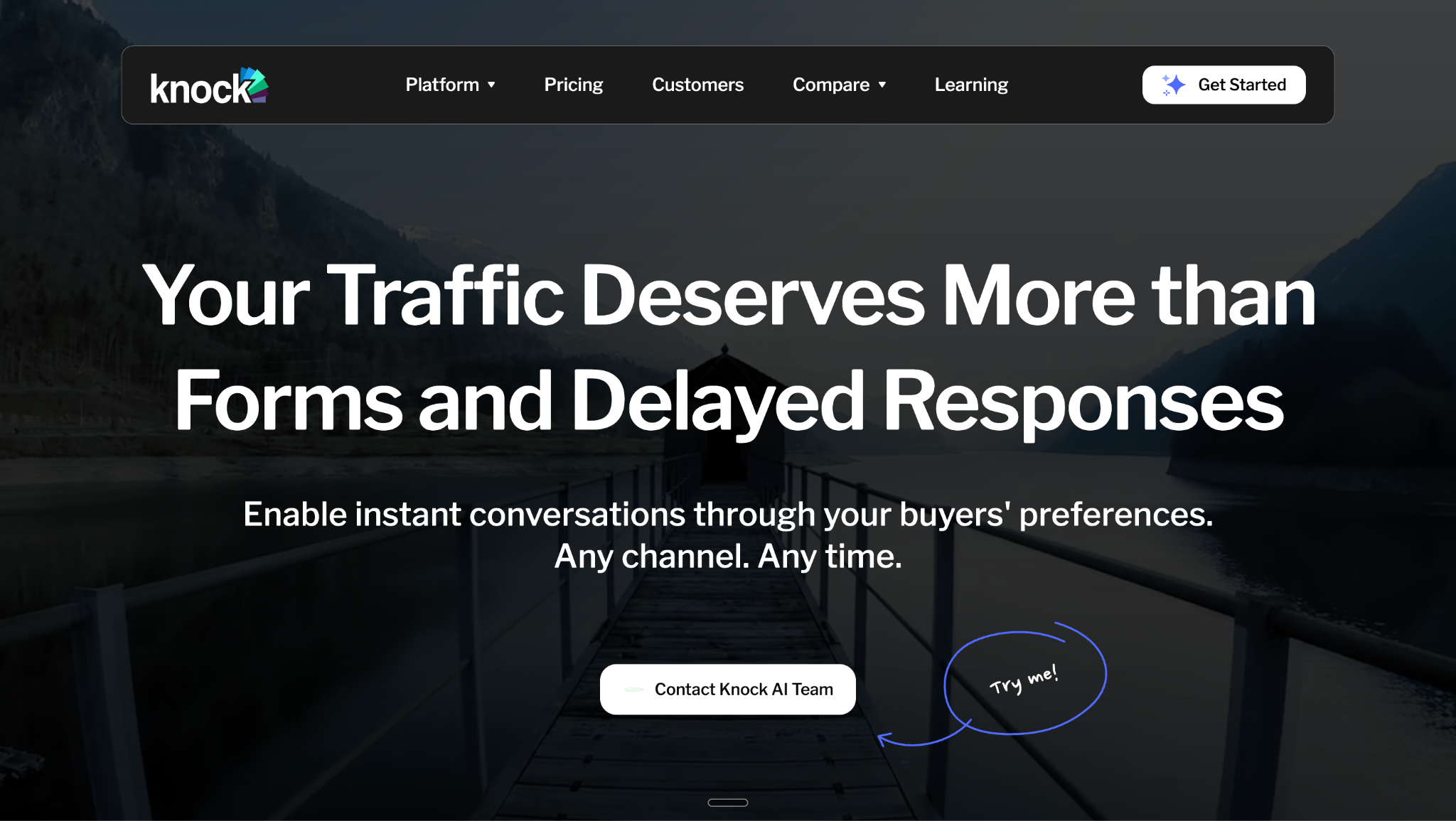
Knock AI is designed for enterprise revenue teams that want to turn existing buyer activity and intent into qualified pipeline. Rather than focusing on a single GTM function such as advertising, prospecting, or scheduling, Knock AI connects multiple stages of the buyer journey within a revenue conversion workflow.
What It Does
Knock AI helps revenue teams identify relevant buyers, understand buying intent, enrich buyer information, engage prospects through its AI Agent, qualify opportunities, route qualified buyers, schedule meetings, and maintain conversation context across the buyer journey.
Best For
Enterprise revenue teams that already have meaningful buyer activity and want to convert more of that activity into qualified pipeline.
It is particularly useful for companies generating website traffic, inbound demand, or other buyer signals but looking for a more effective way to identify, qualify, engage, and route those buyers.
Strengths
Buyer identification: Helps revenue teams identify relevant buyers from previously anonymous activity.
Intent detection: Uses buyer signals to identify visitors and accounts showing meaningful interest.
AI qualification: Uses AI to qualify buyers before handing opportunities to sales.
Multi-channel engagement: Supports buyer engagement across relevant channels rather than relying solely on static forms.
Intelligent routing: Routes qualified opportunities according to the appropriate sales workflow.
Scheduling: Helps move qualified buyers toward meetings with less scheduling friction.
Conversation continuity: Maintains context as buyers move through different stages of the journey.
Revenue conversion: Connects buyer signals, conversations, qualification, and routing to qualified pipeline.
Limitations
Knock AI is not designed to replace every layer of a GTM stack. Teams may still need dedicated platforms for functions such as SEO, paid acquisition, marketing automation, prospecting, conversation intelligence, or revenue attribution.
Its strongest fit is further down the GTM journey: turning existing buyer activity and intent into qualified pipeline, rather than creating demand from scratch.
Knock AI is not a replacement for every layer of the GTM stack. It is designed to connect buyer signals and conversations to qualified pipeline.
2. HubSpot Marketing Hub
Primary Job: Marketing Automation
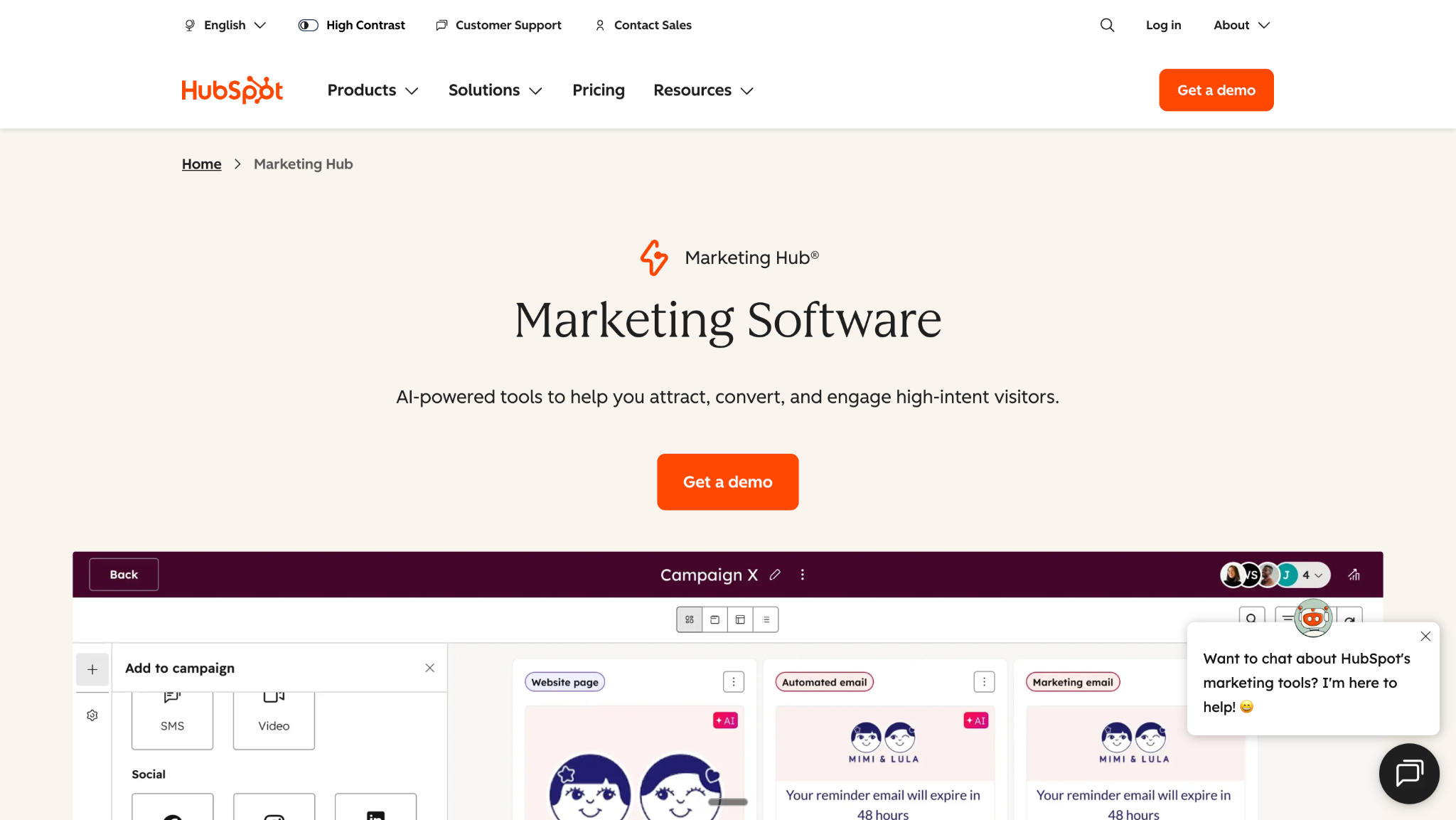
HubSpot Marketing Hub helps GTM teams attract, capture, nurture, and manage prospects through marketing automation and CRM-connected workflows. It brings tools for email, forms, landing pages, content, campaigns, and lead nurturing into one marketing environment.
What It Does
HubSpot Marketing Hub supports:
Marketing automation: Automates campaigns, workflows, follow-ups, and lead nurturing.
Email marketing: Creates and manages targeted email campaigns and automated sequences.
Forms: Captures visitor and prospect information through website forms.
Landing pages: Helps teams create conversion-focused landing pages without relying entirely on developers.
Lead nurturing: Moves prospects through automated marketing workflows based on their activity and engagement.
CRM connectivity: Connects marketing activity with customer and prospect records in HubSpot CRM.
Content: Supports content creation and management across the marketing funnel.
Campaign management: Organizes and measures marketing campaigns across multiple channels.
Best For
Growing GTM teams looking to consolidate marketing, CRM, and automation into a connected platform.
Strengths
Broad marketing automation capabilities
Strong CRM integration
Email, forms, landing pages, and content in one ecosystem
Flexible workflow automation
Campaign management and reporting
Large integration ecosystem
Suitable for teams that want to centralize marketing operations
Limitations
Costs can increase as teams, contacts, and advanced capabilities expand.
More sophisticated automation and customization may require higher-tier plans.
Teams with complex enterprise requirements may need additional systems or integrations.
Marketing automation primarily manages known prospects and customers rather than serving as a dedicated real-time buyer identification and revenue conversion layer.
Important distinction:Marketing automation is not the same as real-time revenue conversion. HubSpot can capture and nurture demand effectively, but teams may still need specialized technology to identify anonymous buyers, interpret real-time intent, qualify opportunities, and move high-intent visitors directly toward pipeline.
3. Salesforce Marketing Cloud
Primary Job: Enterprise Marketing and Customer Engagement
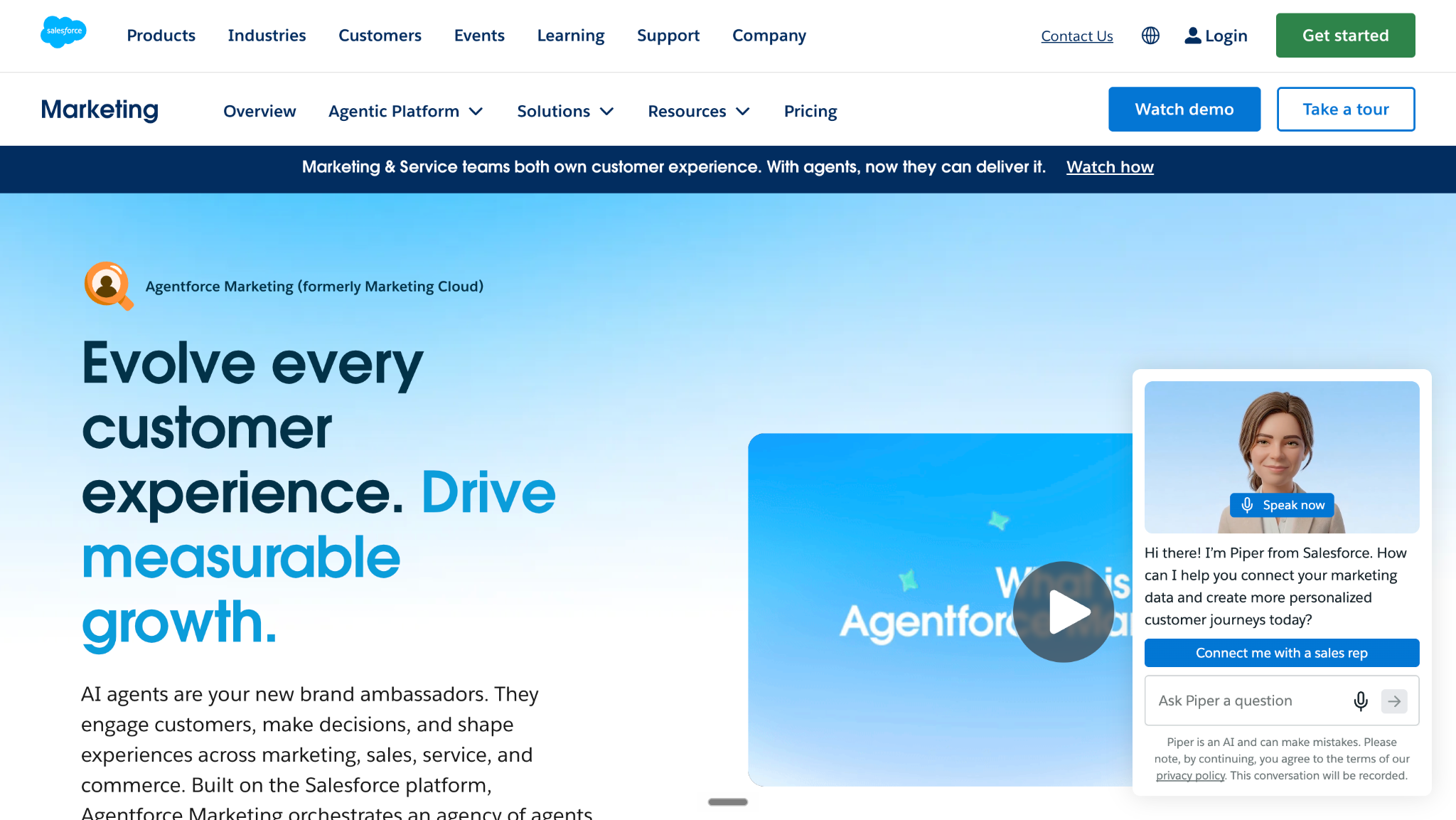
Salesforce Marketing Cloud is an enterprise marketing and customer engagement platform within the Salesforce ecosystem. It helps large organizations manage campaigns, customer journeys, personalization, email, and cross-channel engagement at scale.
What It Does
Salesforce Marketing Cloud supports:
Enterprise campaign management: Plan, execute, and measure marketing campaigns across complex organizations.
Customer journeys: Build automated journeys based on customer behavior and lifecycle stages.
Personalization: Tailor experiences and communications using customer and behavioral data.
Email marketing: Create and manage large-scale email campaigns and automated communications.
Cross-channel engagement: Coordinate customer interactions across multiple marketing channels.
Salesforce ecosystem: Connect marketing activity with Salesforce data and other products within the broader ecosystem.
Best For
Large organizations with complex customer engagement, personalization, and marketing operations requirements.
Strengths
Enterprise-scale marketing capabilities
Extensive personalization options
Sophisticated customer journey orchestration
Strong Salesforce ecosystem integration
Broad cross-channel engagement capabilities
Designed for complex organizational structures and workflows
Limitations
Implementation and administration can be complex.
Advanced deployments may require specialized Salesforce expertise.
Costs and operational complexity can increase as requirements expand.
Organizations may still need dedicated tools for buyer intent, prospecting, anonymous visitor identification, or specialized conversion workflows.
Salesforce Marketing Cloud is particularly strong when the challenge is managing customer engagement at enterprise scale. It is not inherently a complete solution for every stage between anonymous buyer activity and qualified sales pipeline.
4. Google Ads
Primary Job: Search Demand Capture
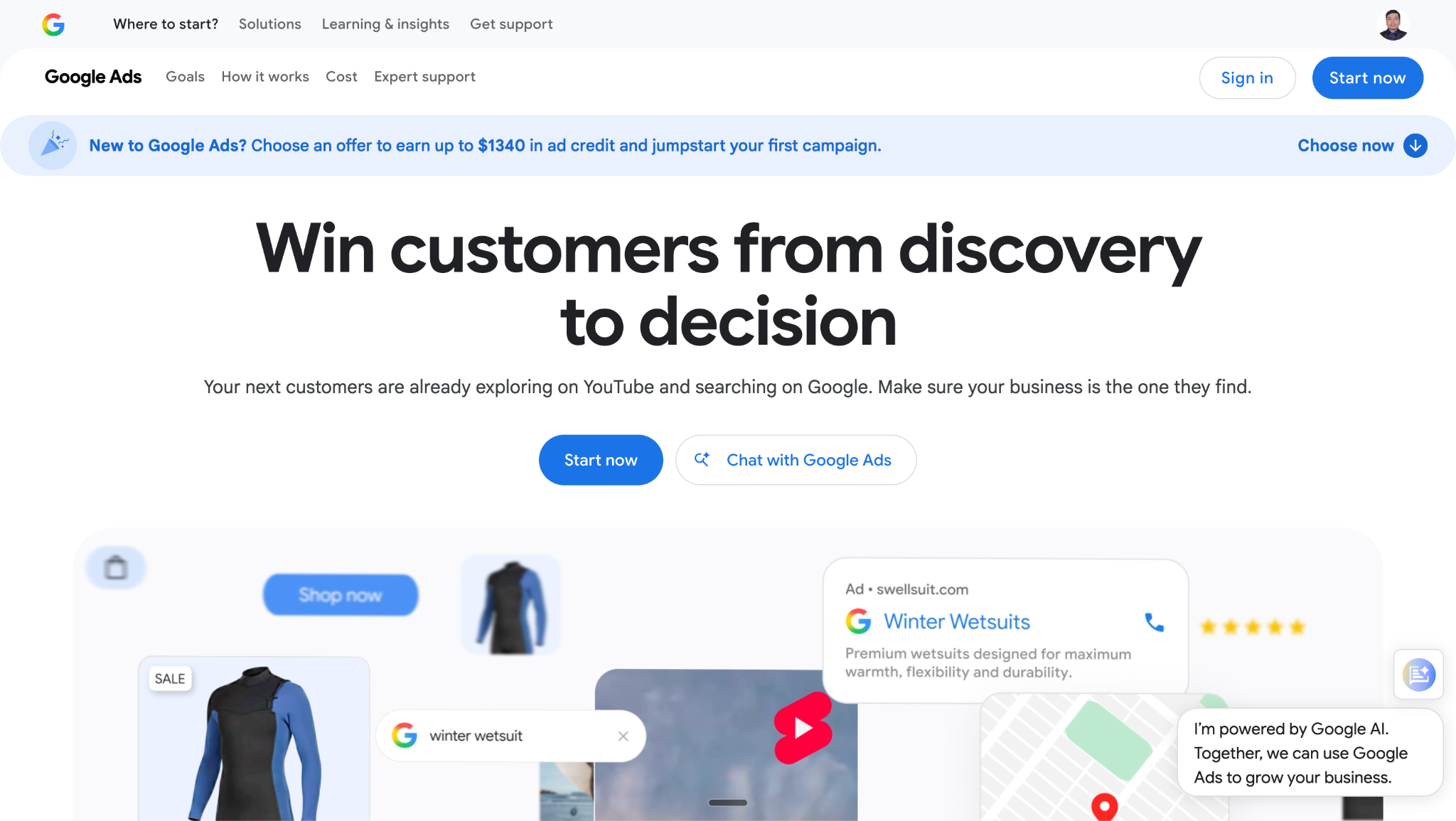
Google Ads helps companies capture existing demand by placing paid ads in front of people actively searching for relevant products, services, and solutions.
What It Does
Google Ads supports:
High-intent search: Reaches users searching for solutions, products, brands, and commercial topics.
Paid acquisition: Drives targeted traffic to websites and landing pages.
Keyword targeting: Matches campaigns with relevant search queries and commercial intent.
Demand capture: Converts existing search demand into website visits and potential leads.
Landing pages: Directs prospects to pages designed around specific offers or search intent.
Conversion tracking: Measures actions generated by advertising campaigns.
Best For
Companies with established search demand and commercial-intent keywords that want to capture buyers actively looking for a solution.
Strengths
Access to high-intent search traffic
Precise keyword and audience targeting
Fast demand capture compared with organic search
Flexible campaign and budget controls
Detailed conversion measurement
Useful for testing commercial messaging and offers
Limitations
Requires ongoing advertising spend.
Performance depends heavily on search demand, targeting, messaging, and landing-page experience.
Capturing a click does not necessarily mean capturing a qualified buyer.
Google Ads generates or captures demand but does not by itself provide a complete buyer qualification, routing, or revenue conversion workflow.
The key distinction is that Google Ads helps bring potential buyers into the funnel; it does not automatically determine which visitors are most likely to become qualified pipeline.
5. LinkedIn Lead Gen Forms
Primary Job: B2B Lead Generation
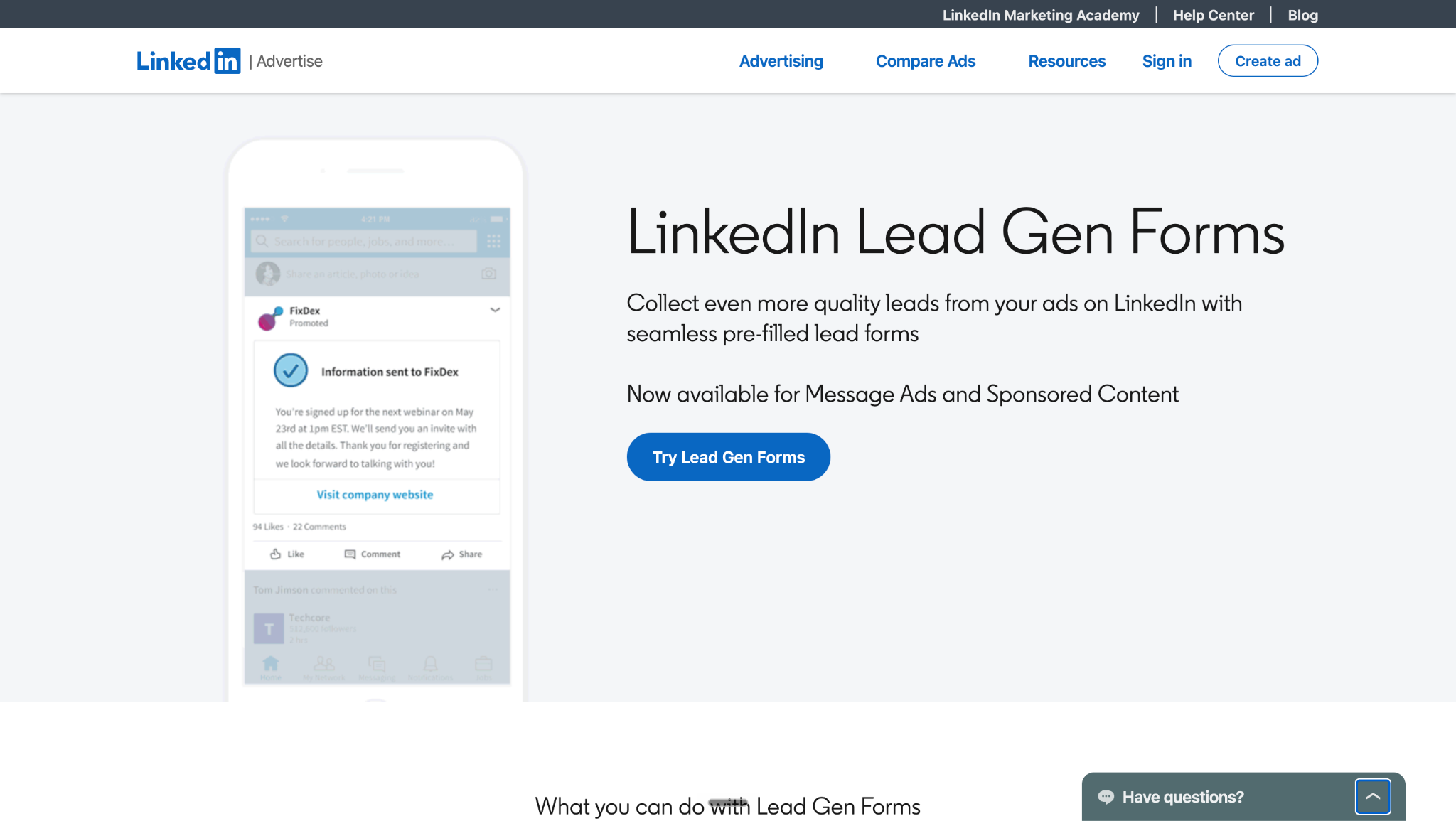
LinkedIn Ads helps B2B marketing teams capture leads directly from LinkedIn using pre-filled lead generation forms. Its targeting capabilities allow marketers to reach professional audiences based on characteristics such as job role, company, industry, and other professional attributes.
What It Does
LinkedIn Lead Gen Forms support:
Professional audience targeting: Reach specific professional audiences on LinkedIn.
Account targeting: Focus campaigns on selected companies or account segments.
Lead generation forms: Capture prospect information without requiring users to leave LinkedIn.
B2B demographic targeting: Target audiences based on professional and company characteristics.
Demand capture: Convert engagement with LinkedIn campaigns into identifiable leads.
Best For
B2B marketing teams that need to reach specific professional audiences and capture leads from targeted LinkedIn campaigns.
Strengths
Strong B2B audience targeting
Access to professional and company-level data
Low-friction lead capture
Useful for account-based campaigns
Direct integration between LinkedIn advertising and lead collection
Effective for reaching specific job functions and company profiles
Limitations
Requires paid media investment.
A submitted form does not necessarily indicate strong buying intent.
Lead volume can be easier to optimize than lead quality.
Captured leads still need qualification, routing, and follow-up.
LinkedIn lead generation does not inherently provide a complete real-time revenue conversion workflow.
Important distinction:Lead generation is not the same as qualification or pipeline conversion. A lead form tells a GTM team that someone provided their information. It does not automatically determine whether that person is a high-intent buyer, qualify the opportunity, route it to the right sales resource, or turn the interaction into qualified pipeline.
6. Gong
Primary Job: Conversation Intelligence
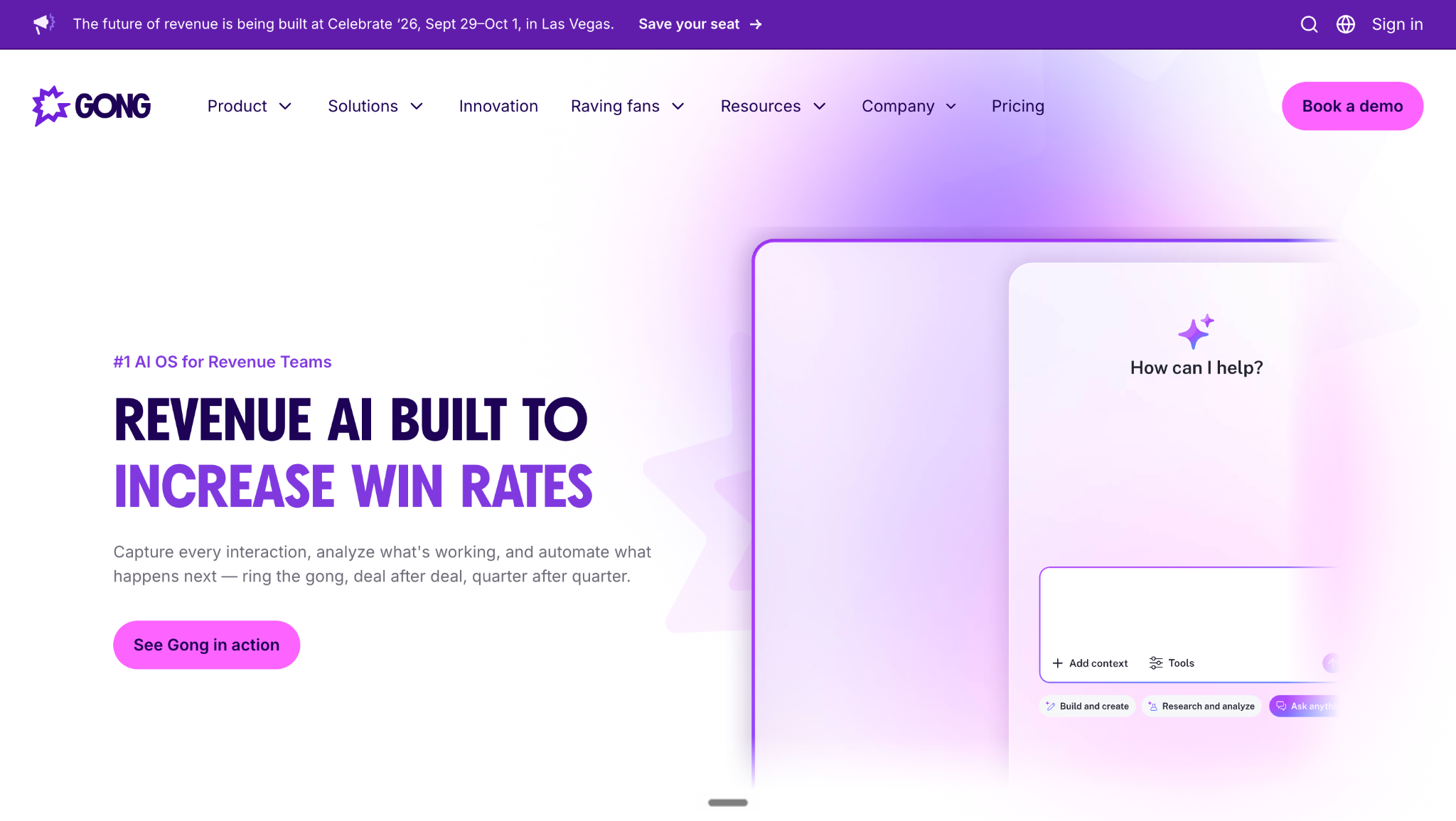
Gong helps sales organizations analyze customer and prospect conversations to uncover deal intelligence, coaching opportunities, and signals that can improve sales execution. It turns conversation data from calls and other interactions into insights that sales and revenue teams can use throughout the pipeline.
What It Does
Sales conversations: Captures and analyzes interactions between sales teams and buyers.
Call analysis: Identifies patterns, topics, and signals across sales calls.
Deal intelligence: Helps teams understand deal health, risks, and buyer engagement.
Rep coaching: Gives sales leaders insights they can use to coach representatives.
Conversation signals: Surfaces important themes and buyer signals from conversations.
Pipeline insights: Helps teams identify patterns that may affect deal progression and pipeline performance.
Best For
Sales organizations with significant conversation volume that need deeper visibility into buyer interactions and sales execution.
Strengths
Strong conversation analysis capabilities
Visibility across sales calls and buyer interactions
Deal and pipeline intelligence
Rep coaching insights
Helps identify recurring buyer and sales patterns
Useful for sales leadership and RevOps teams
Limitations
Primarily focused on analyzing conversations and improving sales execution rather than generating demand.
The value depends on having sufficient sales and buyer conversation data.
Conversation intelligence does not replace dedicated systems for buyer identification, demand generation, or inbound qualification.
Teams may still need other GTM tools to act on buyer signals and move opportunities through routing, scheduling, and conversion workflows.
7. Apollo.io
Primary Job: Prospecting and Sales Engagement
Apollo.io combines a B2B contact database with prospect discovery, enrichment, sales engagement, and outbound workflows. GTM teams can use it to identify potential prospects, build lists, enrich contact information, and execute outbound sequences.
What It Does
Contact database: Provides access to business and professional contact data for prospecting.
Prospect discovery: Helps sales teams find contacts and accounts matching their target criteria.
Enrichment: Adds or updates information about prospects and companies.
Outbound sequences: Supports automated email and sales engagement sequences.
Sales engagement: Helps sales teams manage and execute outbound interactions.
Prospecting workflows: Brings prospect research, list building, and outreach into a connected workflow.
Best For
Outbound-oriented GTM teams that need prospect data and sales engagement capabilities in one platform.
Strengths
Large prospect database
Prospect discovery and filtering
Contact and company enrichment
Outbound sequencing
Sales engagement workflows
Combines prospecting and outreach capabilities
Limitations
Primarily designed around outbound prospecting and engagement.
Data quality can vary depending on the contact or company.
Outbound automation still requires appropriate targeting, messaging, and sales processes.
It is not primarily designed to identify and convert anonymous inbound buyer intent.
Apollo creates outbound opportunities; Knock focuses on converting inbound buyer intent.
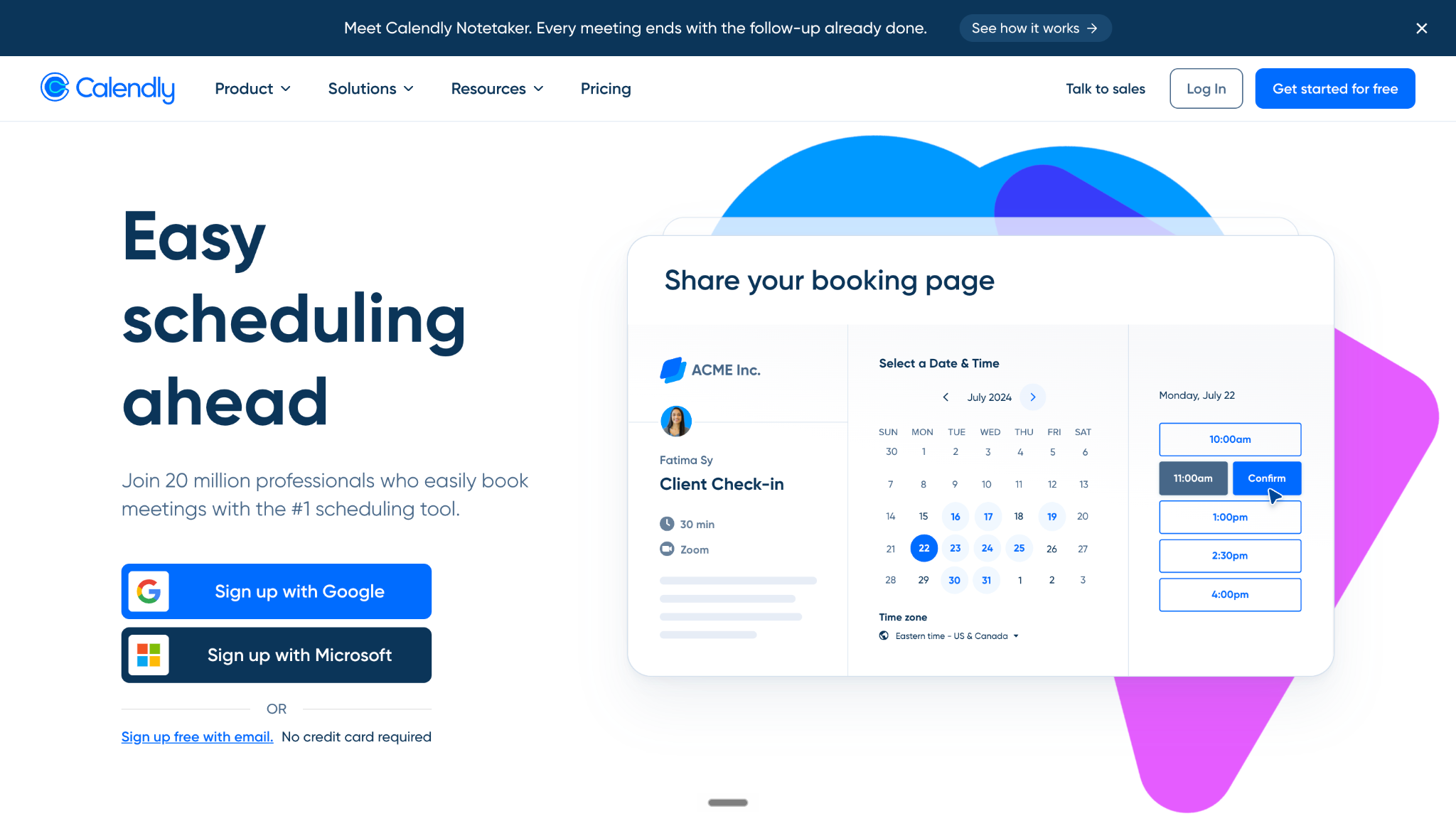
Calendly is a scheduling platform that helps sales and revenue teams remove friction from booking meetings. Instead of coordinating availability manually, prospects can select an available time based on the team's calendar rules.
What It Does
Scheduling: Lets prospects book meetings based on real-time availability.
Booking links: Provides shareable scheduling pages for different meeting types.
Routing: Can direct prospects to appropriate meeting options or team members based on configured rules.
Calendar availability: Checks connected calendars to prevent scheduling conflicts.
Meeting workflows: Supports automated scheduling processes around meetings.
Best For
Teams that already have qualified prospects and want to make it easier for them to book meetings.
Strengths
Simple scheduling experience
Reduces back-and-forth communication
Calendar integrations
Flexible meeting types and availability
Useful for sales, marketing, and customer-facing teams
Limitations
Scheduling is only one stage of the GTM journey.
It does not inherently identify anonymous buyers or determine buying intent.
It does not replace a dedicated qualification or buyer intelligence system.
Meeting bookings still depend on the buyer being ready to engage.
A scheduler removes friction after a buyer is ready to meet. It does not identify, qualify, or create buying intent.
Dreamdata helps GTM and RevOps teams connect customer journeys and marketing touchpoints to revenue. It is focused on understanding how different activities contribute to pipeline and revenue rather than directly generating or converting demand.
What It Does
Revenue attribution: Connects GTM activities with revenue outcomes.
Customer journeys: Helps teams analyze interactions across the customer journey.
Marketing attribution: Measures the contribution of marketing channels and activities.
Touchpoint analysis: Examines interactions that occur before and throughout the buying journey.
Revenue reporting: Provides reporting designed to connect GTM activity with commercial outcomes.
Best For
RevOps and marketing teams that need to understand which GTM activities influence pipeline and revenue.
Strengths
Revenue-focused attribution
Customer journey analysis
Cross-channel touchpoint visibility
Marketing performance analysis
Useful for connecting GTM activity with revenue outcomes
Limitations
Primarily an analysis and attribution layer rather than a buyer engagement platform.
Attribution does not itself qualify or route buyers.
Teams still need execution tools to act on the signals and insights identified through their GTM data.
10. 6sense
Primary Job: Buyer Intent and Account Intelligence
6sense helps enterprise GTM teams identify accounts showing buying signals, prioritize target accounts, and support account-based go-to-market strategies.
What It Does
Intent signals: Surfaces signals that can indicate potential buying activity.
Account identification: Helps teams understand which accounts are researching relevant solutions.
Account prioritization: Helps sales and marketing teams focus on accounts showing stronger buying signals.
ABM: Supports account-based marketing and sales strategies.
Buying stages: Helps teams understand where accounts may be within their buying journey.
Predictive intelligence: Uses data and predictive capabilities to help prioritize accounts and opportunities.
Best For
Enterprise ABM and account-based GTM teams that need buyer intent and account intelligence to prioritize their market.
Strengths
Account-level intelligence
Buyer intent signals
ABM capabilities
Account prioritization
Predictive insights
Useful for coordinating sales and marketing around target accounts
Limitations
Primarily focused on identifying and prioritizing accounts rather than completing the entire conversion workflow.
Teams may still need separate systems for engagement, qualification, routing, scheduling, and CRM execution.
The value of intent data depends on how effectively GTM teams act on the signals.
Primary Job: GTM Data Enrichment and Orchestration
Clay is a GTM data enrichment and orchestration platform that helps teams research companies and contacts, combine data sources, enrich records, and build customized GTM workflows.
What It Does
Data enrichment: Enriches company and contact records using multiple data sources.
Research: Supports automated research into prospects, companies, and markets.
Waterfall enrichment: Combines multiple data providers to improve data coverage.
APIs: Connects external data sources and services into customized workflows.
GTM workflows: Automates data and research processes for marketing and sales teams.
Personalization: Uses enriched information to support more relevant outbound and account-based messaging.
Data orchestration: Connects different data sources and actions into customized GTM workflows.
Best For
GTM engineering and operations teams building highly customized data, research, enrichment, and automation workflows.
Strengths
Flexible enrichment workflows
Multiple data sources
Extensive customization
Automated research
API and integration capabilities
Strong support for sophisticated GTM workflows
Limitations
Can require more technical expertise than traditional point solutions.
Highly flexible workflows can require significant configuration and maintenance.
Primarily operates as a data and workflow orchestration layer rather than a complete buyer conversion platform.
Teams may still need separate systems for intent, engagement, qualification, routing, and pipeline management.
Which GTM Tool Solves Which Problem?
The right GTM tool depends on the specific bottleneck in your go-to-market process. Instead of choosing software based on broad categories like "best marketing tool" or "best sales tool," start with the problem you need to solve.
If your biggest challenge is...
Consider...
Generating search demand
Google Ads
Capturing B2B demand on LinkedIn
LinkedIn Lead Gen Forms
Marketing automation and nurture
HubSpot Marketing Hub
Enterprise customer engagement
Salesforce Marketing Cloud
Identifying in-market accounts
6sense
Enriching and orchestrating GTM data
Clay
Prospecting and outbound sales
Apollo.io
Understanding sales conversations
Gong
Scheduling meetings
Calendly
Measuring revenue attribution
Dreamdata
Turning buyer intent into qualified pipeline
Knock AI
This problem-first approach makes it easier for GTM teams to identify the right GTM tool without adding software that does not address an actual revenue bottleneck.
For example, a company with strong search demand may need Google Ads, while a company with substantial inbound activity but weak conversion may need a different layer entirely. The goal is not to buy more GTM software. It is to close the specific gap preventing buyer activity from becoming revenue.
How GTM Teams Should Build Their Technology Stack
A GTM stack should grow with the complexity of the revenue motion, not with the number of tools available. Start with the capabilities you actually need, then add specialized software when a specific bottleneck appears.
Startup GTM Stack
Early-stage teams usually benefit from a lean stack rather than adopting a separate platform for every GTM function.
A practical setup can include:
HubSpot Marketing Hub for marketing automation, lead capture, and nurture
Google Ads or LinkedIn Lead Gen Forms for demand generation and lead capture
The objective at this stage is simple: generate demand, capture prospects, follow up, and manage opportunities without creating unnecessary operational complexity.
Growing SaaS GTM Stack
As a SaaS company grows, the GTM stack usually needs more visibility into who is buying, what they are interested in, and how different activities influence revenue.
A growing SaaS stack may add:
Marketing automation for campaigns and nurture
Buyer intent for identifying accounts showing buying signals
Data enrichment for improving prospect and account information
Sales intelligence for prospecting and engagement
Conversation intelligence for understanding sales interactions
Revenue attribution for connecting GTM activities to revenue
Revenue conversion for turning buyer activity and intent into qualified pipeline
At this stage, the priority should be connecting these systems rather than simply accumulating them. Data from one part of the GTM process should be useful to the teams and systems operating further down the funnel.
Enterprise GTM Stack
Enterprise GTM teams typically need a more connected architecture because they operate across larger markets, more complex buying committees, multiple sales teams, and higher volumes of buyer signals.
This is where specialized revenue conversion software becomes particularly relevant. Knock AI can sit between buyer intelligence and revenue execution, helping enterprise teams identify relevant buyers, understand intent, qualify opportunities with AI, route them appropriately, schedule meetings, and connect the resulting activity with CRM workflows.
The goal of an enterprise GTM stack should not be to eliminate every specialized tool. It should be to connect the tools and signals already being generated so qualified buyer activity can move toward pipeline with less friction.
Where Most GTM Stacks Break
A GTM stack can contain strong individual tools and still underperform when the systems do not work together. The biggest problems usually occur between stages of the buyer journey.
Too Many Disconnected Tools
Adding another platform does not necessarily improve GTM performance. When tools operate in isolation, buyer data, intent signals, conversations, and sales actions remain fragmented.
Data Doesn't Reach Sales
Marketing and intelligence systems can generate valuable buyer signals, but those signals have limited value if sales teams cannot access or act on them at the right time.
Intent Isn't Connected to Action
Knowing that an account is showing buying intent is only the first step. The GTM stack also needs a way to determine what action should happen next, whether that means engagement, qualification, routing, or follow-up.
Leads Are Captured but Not Qualified
A form submission or lead record does not automatically represent a sales opportunity. Without qualification, teams can spend time working leads that have little or no buying intent.
Routing Happens Too Late
When qualified buyers wait for manual assignment, valuable context and buying momentum can be lost. Routing should happen as close to qualification as possible.
Teams Optimize Meetings Instead of Pipeline
More meetings do not necessarily mean more revenue. GTM teams should measure whether meetings come from qualified buyers and whether those conversations progress into meaningful pipeline.
Attribution Stops at Marketing
Measuring clicks, leads, or campaign performance is useful, but it does not show the complete commercial impact of GTM activity. Mature teams need to connect marketing and sales activity to pipeline and revenue.
AI Is Changing How GTM Teams Operate
AI is changing GTM from a sequence of manually managed tasks into a system that can interpret buyer signals and automate actions across the revenue journey. AI search experiences such as ChatGPT, Gemini, Claude, and Perplexity are also changing how buyers discover information, evaluate vendors, and enter the buying process.
For GTM teams, this creates new opportunities across AI SDRs, AI sales agents, AI qualification, intent detection, conversation intelligence, automated research, GTM agents, revenue intelligence, AI-powered routing, and AI-powered personalization.
The traditional workflow looks like this:
Human researches → Human qualifies → Human routes → Human follows up
AI-enabled GTM workflows can instead move toward:
Signal → AI interpretation → AI qualification → Automated action → Human intervention when needed
The important shift is not simply replacing individual tasks with AI. It is using AI to interpret more buyer signals, reduce manual work between GTM systems, and trigger the appropriate action faster.
For example, AI can help teams analyze buyer activity, research accounts, identify patterns in conversations, assess qualification criteria, personalize engagement, or determine where a qualified opportunity should be routed. Human teams can then focus their time on the opportunities that require judgment, relationship-building, or complex sales work.
As AI search, AI agents, and automated GTM workflows become more common, the competitive advantage will increasingly come from how quickly a company can turn buyer signals into useful action, not simply how much data its GTM stack collects.
GTM Software Should Connect Buyer Signals to Revenue
Traditional GTM often follows a relatively linear path:
Traffic ↓ Lead ↓ CRM ↓ Sales
Modern GTM is more signal-driven. Revenue teams can identify buyer activity, understand intent, engage prospects, qualify opportunities, and move qualified buyers toward pipeline before relying solely on a traditional lead workflow.
Most GTM tools specialize in one part of this journey. One platform may generate demand, another may identify intent, another may enrich data, and another may handle scheduling or attribution. The challenge for enterprise revenue teams is connecting these stages so that buyer signals can lead to timely, coordinated action.
This is where revenue conversion becomes a distinct layer of the GTM stack. Instead of simply generating or storing buyer data, this layer connects buyer activity and intent with the actions required to create qualified pipeline.
Knock AI operates in this layer by connecting buyer identification, intent, enrichment, AI qualification, routing, scheduling, CRM, and conversation continuity.
The objective is straightforward: turn meaningful buyer signals into qualified pipeline and revenue.
Which GTM Platform Should You Buy First?
The right GTM platform depends on the specific bottleneck in your revenue process. Use the problem you need to solve as the starting point rather than choosing a platform based on its overall feature count.
If you need...
Start with...
Marketing automation
HubSpot Marketing Hub
Enterprise customer engagement
Salesforce Marketing Cloud
Search demand capture
Google Ads
B2B lead generation
LinkedIn Lead Gen Forms
Buyer intent
6sense
GTM data enrichment
Clay
Outbound prospecting
Apollo.io
Conversation intelligence
Gong
Meeting scheduling
Calendly
Revenue attribution
Dreamdata
Inbound revenue conversion
Knock AI
Don't start by asking which GTM software has the most features. Start with the bottleneck in your revenue process. A company struggling to generate demand needs different software from a company already generating substantial traffic and buyer activity but struggling to identify, qualify, and convert those buyers.
The best GTM stack is therefore the one that addresses the specific gap between buyer activity and revenue, rather than simply adding another platform to the technology stack.
How Many GTM Tools Does a Company Actually Need?
You don't need a tool for every GTM category. The right number depends on your sales motion, company size, buyer journey, and operational complexity.
A lean GTM stack can often cover the essentials:
Demand → CRM → Sales → Measurement
As an enterprise GTM motion becomes more complex, the stack may need broader coverage:
The objective is coverage without unnecessary overlap. Each tool should have a clear role, connect with the rest of the stack, and contribute to a measurable GTM outcome. Adding software simply because a category exists can create more data silos and operational complexity than value.
The Future of GTM Is Not More Tools. It's Better Orchestration.
The future of GTM is less about how many platforms a company uses and more about how effectively those systems work together.
The best GTM teams won't win because they have the largest technology stack. They'll win because their systems recognize the right buyers, understand their intent, and move those buyers toward revenue faster.
Knock AI provides the revenue conversion layer that connects buyer signals and intent with qualification, routing, scheduling, CRM, and the path to qualified pipeline.
FAQ
What are GTM tools?
GTM tools are software products that help go-to-market teams execute different parts of the revenue process, including demand generation, buyer intelligence, prospecting, engagement, qualification, scheduling, CRM, and attribution.
What is GTM software?
GTM software is technology used by marketing, sales, and revenue teams to execute and manage go-to-market activities. It can support a single function or connect multiple GTM workflows.
What is a GTM platform?
A GTM platform is a broader software system that combines multiple go-to-market capabilities within one environment. Depending on the platform, this can include marketing automation, customer data, sales execution, buyer intelligence, or revenue workflows.
What is a go-to-market platform?
A go-to-market platform is software designed to help companies execute their go-to-market strategy across marketing, sales, and revenue functions. Some platforms focus on specific GTM stages, while others connect multiple parts of the buyer journey.
What should a modern GTM stack include?
A modern GTM stack should cover the capabilities a company actually needs across its buyer and revenue journey. Depending on the GTM motion, this can include demand generation, buyer intelligence, identification, intent, enrichment, engagement, qualification, routing, scheduling, CRM, and revenue attribution.
What are the best GTM tools for B2B companies?
There is no single best GTM tool for every B2B company. The right choice depends on the specific revenue bottleneck. For example, HubSpot Marketing Hub supports marketing automation, 6sense supports buyer intent, Apollo.io supports prospecting, Gong supports conversation intelligence, and Knock AI focuses on converting inbound buyer activity and intent into qualified pipeline.
How do GTM tools generate pipeline?
GTM tools generate or support pipeline by helping teams attract demand, identify potential buyers, understand intent, engage prospects, qualify opportunities, route buyers, schedule meetings, and connect those activities with CRM and revenue workflows. Different tools typically handle different stages of this process.
How do you choose the right GTM software?
Start with the biggest bottleneck in your revenue process. If you need more demand, prioritize demand generation. If you need better account intelligence, consider intent and enrichment tools. If you already have meaningful buyer activity but struggle to convert it into qualified opportunities, prioritize software that connects buyer identification, intent, qualification, routing, and conversion. The goal is coverage without unnecessary tool overlap.


.svg)


.svg)
.svg)
.svg)


.svg)
.svg)


.svg)