How modern GTM teams qualify, prioritize, and act without delay
GTM used to run on static rules. Someone filled out a form, basic firmographics were added, and if they matched the ICP, the lead went to sales. That system doesn’t work anymore.
The original job of enrichment was to help teams qualify leads. Segment by company size, industry, and title. Filter out the noise. Focus on what matters. But that model assumed stable data and a linear funnel.
The funnel is gone. People research across G2, Slack, YouTube, Reddit, and ChatGPT without ever hitting your site. The data you need isn’t sitting in a CRM. It’s distributed, volatile, and often invisible to legacy enrichment systems.
Even worse, enrichment still runs on outdated databases: emails, titles, and company info that was scraped once and left to rot. Roles change, companies evolve, org charts get rebuilt. If enrichment waits to update your CRM, you’re already behind.
Meanwhile, AI is now part of the GTM motion. AI agents qualify leads, send emails, and reply to prospects. But they can’t guess. They need context. The more relevant, real-time data you give them, the smarter and more targeted they become.
From Database to Decision Layer
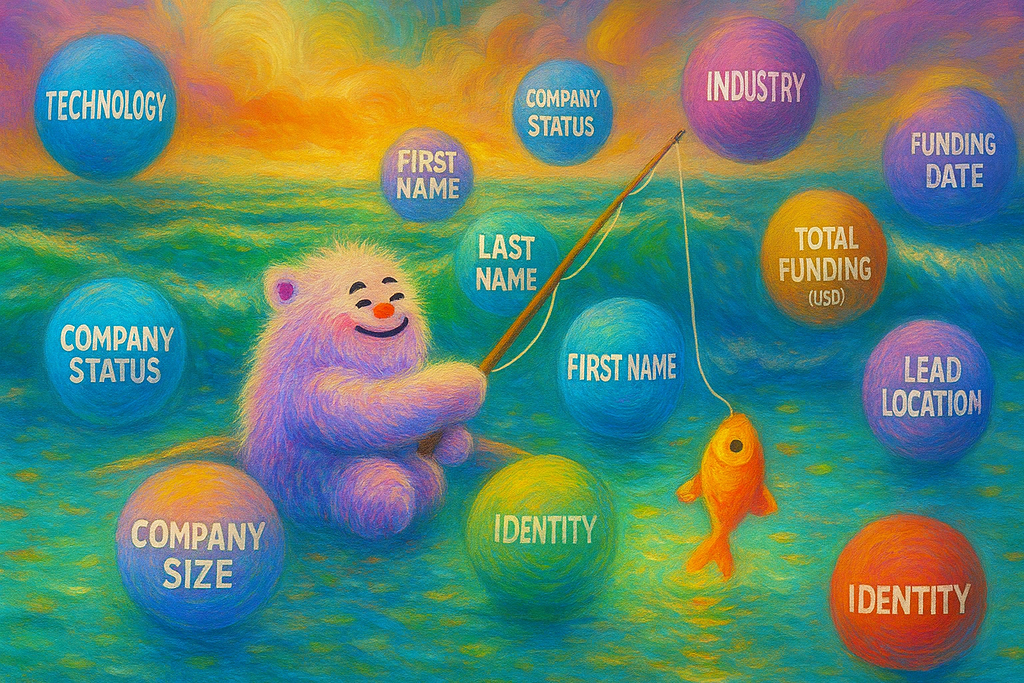
Traditional enrichment pulled firmographics from static sources. But GTM teams don’t operate on industry and HQ alone.
- Seat-based SaaS cares about headcount in specific departments, not just total size.
- Cloud-native platforms care about the prospect’s stack, like whether they run on AWS.
- Enterprise vendors look at factors like organization complexity and decision-maker layers.
Modern enrichment systems need to adapt to these models. That means dynamic, real-time data. Not just accurate, but contextually useful.
Why Timing Is the Deciding Factor
Marketing and sales teams want to qualify leads in real time. They want to know who’s worth pursuing while the signal is fresh. Delayed enrichment that syncs hours later kills the momentum.
Real-time enrichment closes that gap. It tells you who is showing intent, whether they match your qualification logic, and what message will resonate.
It then feeds that intelligence directly into where your GTM teams operate: inboxes, Slack, Chrome extensions. Not buried in backend systems.
It also powers your AI agents. The more data they have, the more relevant and tailored their outreach becomes. They can skip irrelevant leads, personalize on the fly, and act in the moment.
The ideal approach to enrichment is live and layered:
- Start with a lead function chart to see which departments are active.
- Click into a specific company to surface signals like intent, funding, and hiring trends.
- Drill down into an individual department to assess team growth.
- Access a filtered list of decision makers by role and fit.
This isn’t backfilled data. It’s current, dynamic, and integrated into action.
The Real-Time Enrichment Playbook
To move from static lookups to real-time decision support, GTM teams need to rethink how enrichment fits into their systems and workflows. Here’s how to build it:
1. Trigger enrichment from live behavior, not static forms
Your best signals don’t come from form fills. They come from behaviors: a pricing page view, time spent on product documentation, repeat visits to your G2 profile, engagement in a Slack community.
Build your enrichment triggers around these signals. When a signal fires, enrichment should run immediately to surface what you know and what you need to know.
2. Capture layered context, not just contact data
Knowing someone visited a page is the bare minimum. Modern enrichment captures layered context: what page they viewed, what assets they downloaded, how long they stayed, and what sequence they followed.
These signals reveal buyer readiness and intent. Enrichment should package this into a usable summary that your systems and people can act on instantly.
3. Enrich and deliver data at the edge
Don’t route everything into your CRM. Route enrichment to where your team works: Slack, email, Chrome extensions, Notion dashboards.
The moment a qualified signal appears, your rep should see everything: company fit, department activity, relevant contacts, and the behavioral context that led there. Enrichment should meet your team where they already are.
4. Equip your AI agents with full context
AI agents can only personalize if they understand who they’re talking to and why. Feed them department-level headcount, tech stack, recent intent, hiring trends, and known decision-makers.
Use this to generate custom outreach sequences, automate follow-up, and triage leads that meet your criteria. Enrichment isn’t a sidekick. It’s the fuel.
5. Make qualification logic modular and self-serve
Your ICP will evolve. What you define as high-fit this quarter may shift next quarter. Real-time enrichment should make that kind of adaptability simple.
Ops teams should be able to adjust the rules whenever needed. That could mean tracking different departments, watching for new tech stacks, or prioritizing companies with fresh funding. These updates should be easy to manage, without engineering support or system reconfiguration.
The Outcome
Real-time enrichment delivers more than contact records. It brings faster qualification, more accurate targeting, and smarter automation. It also gives reps and AI agents what they need to act while interest is still alive.
According to SalesPlay, companies using modern enrichment see better conversion rates, shorter sales cycles, and lower CAC. But the real advantage isn’t just data volume. It’s how fast you can move from signal to action.
Enrichment used to be a backend task. Now it’s front-line infrastructure. Build for it. Operate with it. And let it sharpen every decision you make.


.svg)


.png)



.svg)
.svg)


