7 Best Albacross Alternatives in 2026: What We Found
Top 7 Albacross Alternatives in 2026
TL;DR
Looking for the best Albacross alternatives in 2026?
Albacross is widely used for B2B website visitor identification and deanonymization, helping teams identify companies visiting their website without requiring form fills. However, many revenue teams begin evaluating alternatives when they need more than company-level visibility. Common limitations include limited activation workflows, gaps in behavioral intent detection, and reporting-heavy functionality that does not directly translate into pipeline.
This guide compares the top 7 Albacross alternatives across key categories:
Website visitor identification
B2B website visitor tracking software
Anonymous visitor identification
Intent detection and scoring
Real-time conversion activation
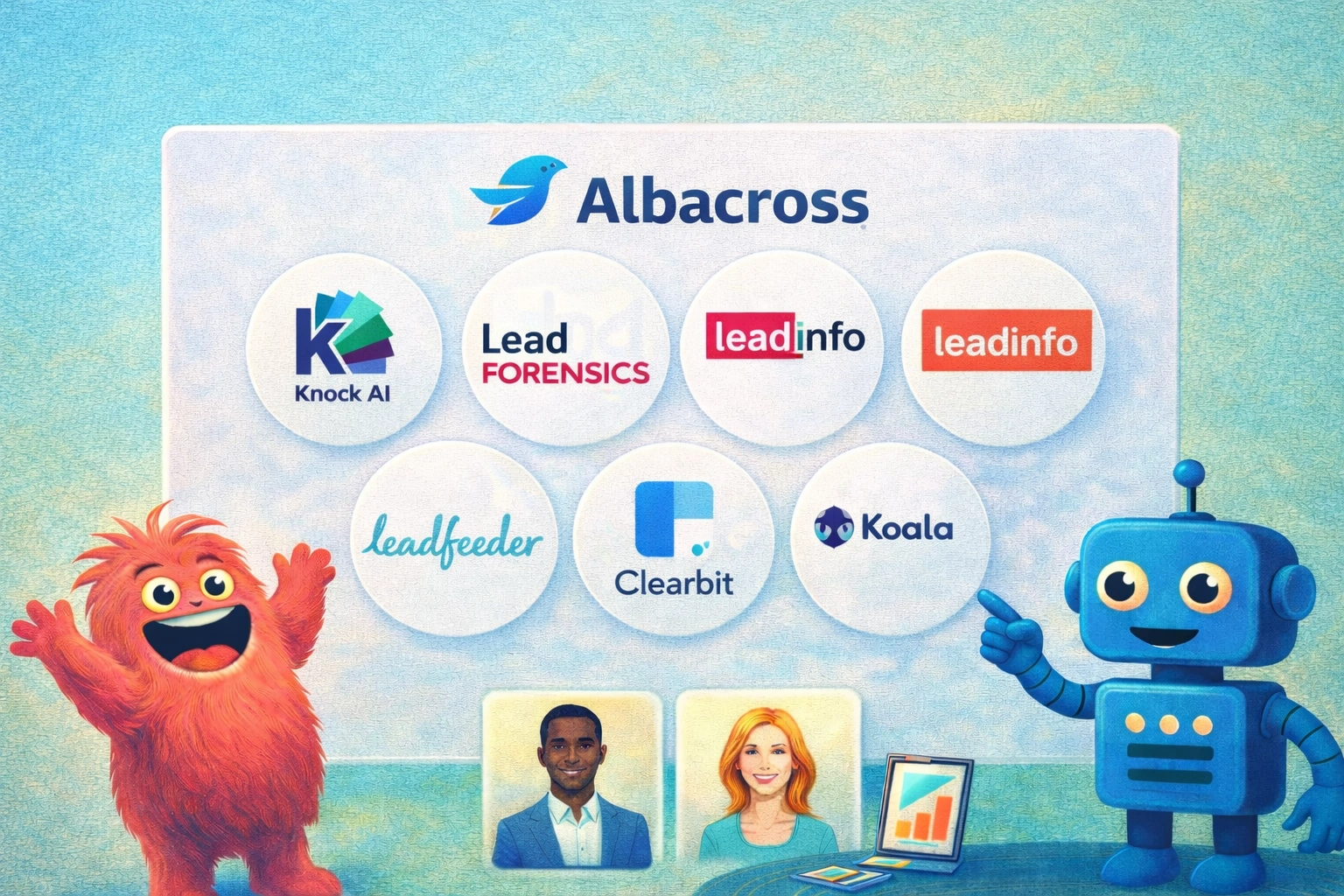
Best overall alternative: Knock AI Best for legacy IP matching: Lead Forensics Best for EU visitor tracking: Leadinfo Best budget tracking: Leadfeeder Best for enrichment workflows: Clearbit Best for AI-first GTM: Koala Best for niche data discovery: PearlDiver
Use this guide to choose the right visitor identification software based on identification accuracy, activation capabilities, pricing structure, regional coverage, and overall go-to-market maturity.
Top 7 Albacross Alternatives Comparison
Tool
Identification Type
Best For
Limitation
Knock AI
Company + contact-level identification with real-time intent across marketing assets
Conversion-first inbound teams
Not positioned as a pure enrichment database
Lead Forensics
IP-based company matching
Legacy outbound teams using traditional IP tracking
Limited behavioral intent visibility
Leadinfo
Company-level IP identification, strong EU focus
GDPR-first and EU-focused teams
Less depth in US market data
Leadfeeder
Google Analytics-based company tracking
Budget-friendly visitor visibility
No built-in activation or routing workflows
Clearbit
Firmographic and technographic enrichment
CRM enrichment and segmentation workflows
No real-time visitor activation
PearlDiver
Prospect intelligence and account discovery
Research-heavy sales and strategy teams
Not focused on website visitor tracking
Koala
Behavioral and product-led intent signals
Modern SaaS GTM teams
Newer platform with evolving ecosystem
See Knock AI in Action — Book Your Live Demo Today
Albacross is primarily used as a B2B website visitor identification software that helps companies identify organizations visiting their website without requiring a form fill. It focuses on company-level deanonymization and IP-based matching to surface visiting accounts for sales teams.
Albacross is commonly used for:
Company-level website visitor identification
IP-based deanonymization
B2B website visitor tracking software
Identifying anonymous website visitors
Basic intent segmentation based on page visits
CRM integrations for account visibility
Its core value is simple: it helps sales and marketing teams see which companies are browsing their website so they can prioritize outreach.
For teams running outbound or account-based sales motions, this visibility can provide useful account awareness without forcing buyers to submit forms.
Why Teams Search for Albacross Alternatives
As buying behavior evolves, many B2B teams begin exploring Albacross alternatives when visibility alone is no longer enough. Common reasons include:
Identification without activation workflows
Limited real-time engagement capabilities
Reporting-heavy interface rather than action-driven workflows
Inconsistent IP matching due to VPN usage, remote work, and cloud infrastructure
No deep contact-level qualification built into the system
Modern go-to-market teams increasingly expect website visitor identification software to do more than show a list of companies. They want to understand:
Who is evaluating
How serious the interest is
When to engage
What action to take
This shift from identification to activation is why many teams search for:
Albacross alternatives
Alternatives to Albacross
Best alternative to Albacross
Is there any alternative to Albacross
Why shouldn’t I choose Albacross
Why B2B Teams Move Beyond Traditional Deanonymization
Traditional deanonymization tools were built to answer a simple question: which companies are visiting your website? For years, that level of visibility was enough to support outbound follow-up and account-based outreach.
However, modern B2B buying behavior has changed. Buyers research across multiple devices, channels, and touchpoints before ever speaking to sales. As a result, company-level identification alone is no longer sufficient. Revenue teams now expect visitor identification software to provide context, intent, and activation, not just visibility.
IP-Based Identification Has Accuracy Limits
Most traditional website visitor identification software relies on:
Reverse IP lookup
Static company matching
Database correlation
This approach works best when traffic originates from stable corporate office networks. But today’s buying environment looks very different.
Modern buyer behavior includes:
Remote and hybrid work
VPN usage
Shared cloud infrastructure
Mobile browsing across networks
These patterns reduce IP clarity and make company matching less consistent. When multiple companies share infrastructure or when traffic is routed through VPNs and cloud providers, IP-based identification can become less precise.
As a result, teams relying solely on IP-based deanonymization may miss buyer signals or receive incomplete visibility into website traffic.
Company Visibility Without Buying Context
Deanonymization answers one important question:
Who visited?
But modern go-to-market teams need much more than that. They need to understand:
Why they visited
What content they consumed
Whether engagement is increasing over time
When it makes sense to engage
Without behavioral and contextual insight, a list of visiting companies can quickly turn into sales noise. Not every visit represents buying intent. Some accounts may be casually researching, while others may be deep in evaluation.
Identity without intent makes prioritization difficult and can lead to inefficient outreach.
Identification Does Not Equal Pipeline
Many visitor tracking tools provide:
Lists of visiting companies
Dashboards
Traffic reports
What they often do not provide is activation.
Missing capabilities commonly include:
Real-time routing to sales
Automated qualification based on behavior
Live conversations triggered by engagement
Meeting scheduling based on buying signals
Without activation, identification remains passive. Teams must manually review reports, interpret signals, and initiate outreach after the moment of interest has passed.
This gap between visibility and action is where many B2B teams begin exploring alternatives that connect website visitor identification directly to pipeline creation.
What to Look for in an Albacross Alternative (Key Selection Criteria)
If you are evaluating Albacross alternatives, the most important shift is moving from basic visibility to measurable revenue impact. Modern website visitor identification software should not only identify anonymous website visitors but also help you understand intent and trigger action.
Below are the key criteria to evaluate, optimized for practical decision-making and snippet-ready clarity.
Website Visitor Identification Accuracy
Not all visitor identification tools operate the same way. Accuracy depends on how signals are collected and processed.
Look for:
Multi-signal identification rather than IP-only matching
First-party data usage to improve reliability
Cross-asset tracking beyond just the homepage
Systems that handle VPN and cloud infrastructure traffic
Strong regional coverage across the markets you operate in
Tools that rely only on reverse IP lookup may struggle with remote work and shared hosting environments. More advanced platforms combine engagement signals, contextual behavior, and company matching to increase identification quality.
Higher identification accuracy means more accounts surfaced from the same traffic.
Deanonymization vs Intent
Deanonymization answers:
Who visited?
Intent answers:
Who is actively evaluating?
Intent signals typically include:
Repeat visits
Page depth
Pricing page activity
Content downloads
Cross-channel or cross-asset engagement
Without intent analysis, all visitors appear equal. Modern B2B website visitor identification software should help prioritize high-interest accounts instead of generating long, unranked company lists.
Form-based systems only capture a small percentage of traffic. Form-free visitor identification tools allow buyers to research anonymously while still surfacing meaningful engagement signals.
Form-free systems capture early-stage research behavior, which is critical because most buyers prefer to explore solutions independently before speaking to sales.
Real-Time Activation
Identification without action limits impact.
Modern tools should support:
Real-time alerts
Automated routing
Chat triggers
SDR assignment
Scheduling workflows
CRM synchronization
Without activation, website visitor tracking software becomes passive reporting. With activation, it becomes pipeline acceleration.
The difference is whether insights sit in a dashboard or drive immediate engagement.
Compliance and Data Control
Privacy and compliance are essential in B2B environments.
Look for:
GDPR compliance
First-party engagement tracking
Transparent data handling
Consent-aware workflows
As regulations evolve and buyer expectations increase, responsible data usage is no longer optional. The best Albacross alternatives balance identification power with compliance integrity.
Choosing the right platform means finding the intersection of accuracy, intent, activation, and responsible data practices.
Top 7 Albacross Alternatives in 2026
Choosing the right Albacross alternative depends on what outcome you want from website visitor identification. Some teams need basic company visibility. Others need behavioral intent, real-time activation, and pipeline impact.
Below are the top 7 Albacross alternatives in 2026, structured around identification method, intent visibility, and activation capabilities.
Knock AI: Best Overall Albacross Alternative
Best for: Form-free conversion of anonymous traffic into qualified pipeline
Why Knock AI Is Different
Albacross primarily focuses on company-level identification through IP matching. It helps teams see which organizations are visiting their website.
Knock AI takes the next step. Instead of stopping at identification, it connects visitor visibility to qualification and activation. The goal is not just to know who visited, but to determine who is actively evaluating and what action should happen next.
Website + Cross-Asset Identification
Knock AI expands identification beyond simple page visits. It supports:
Website visitor identification without requiring form fills
Engagement tracking across marketing assets, not just homepage traffic
Contact-level context when available, alongside company-level identification
This broader engagement model provides deeper visibility into how accounts interact across content, links, and key decision pages.
Real-Time Intent and Activation
Knock AI is designed to capture behavior while it is happening. Core capabilities include:
Behavioral scoring based on engagement signals
Live routing to the appropriate sales representative
Scheduling activation without forcing form-based qualification
Instead of reviewing static dashboards, revenue teams can respond during active evaluation.
Knock Reveal → Knock Intent Flow
Knock AI separates identification and intent into two connected layers:
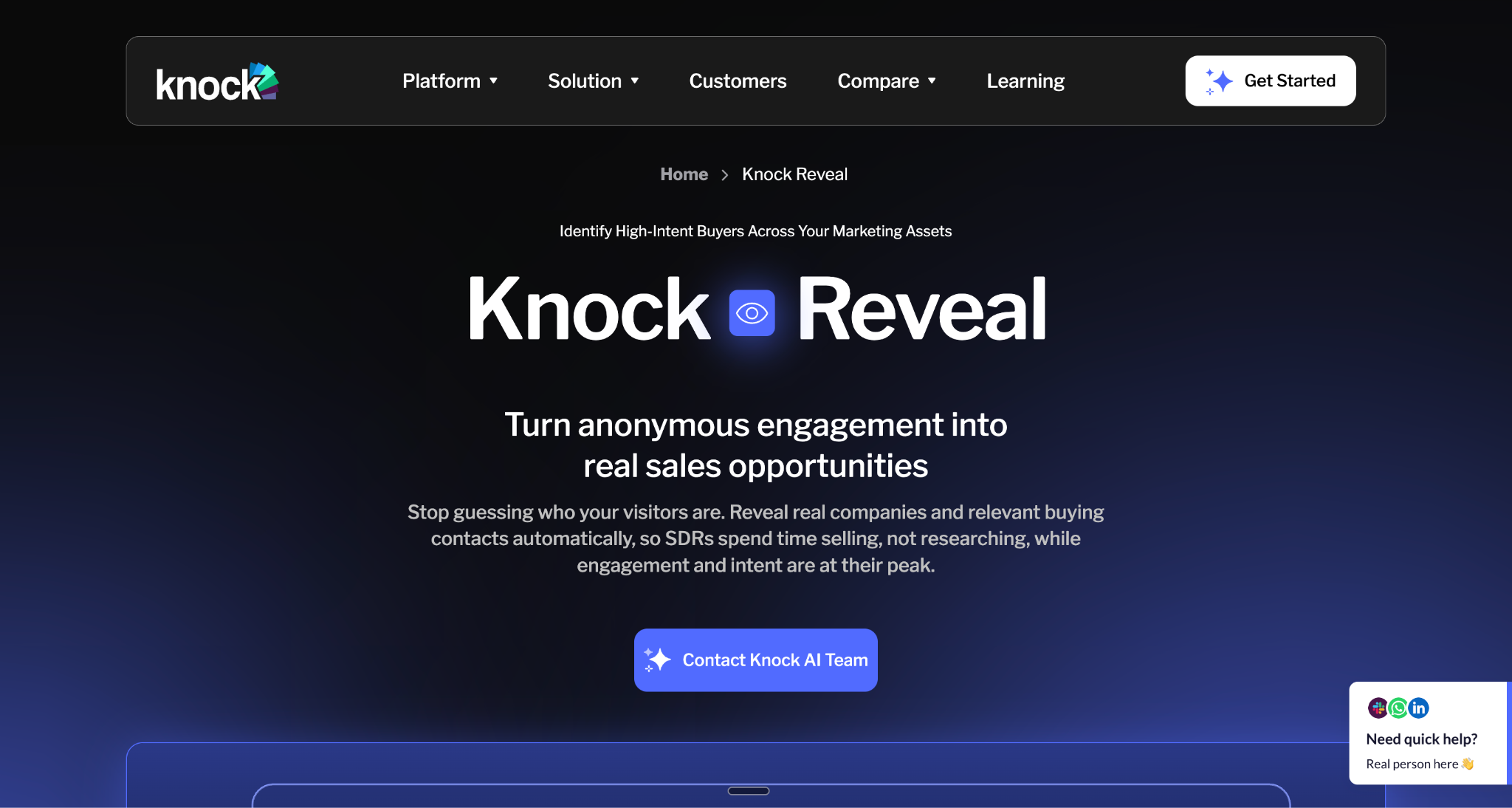
Knock Reveal
Provides identity and engagement visibility by matching anonymous activity to companies and relevant contacts when possible.
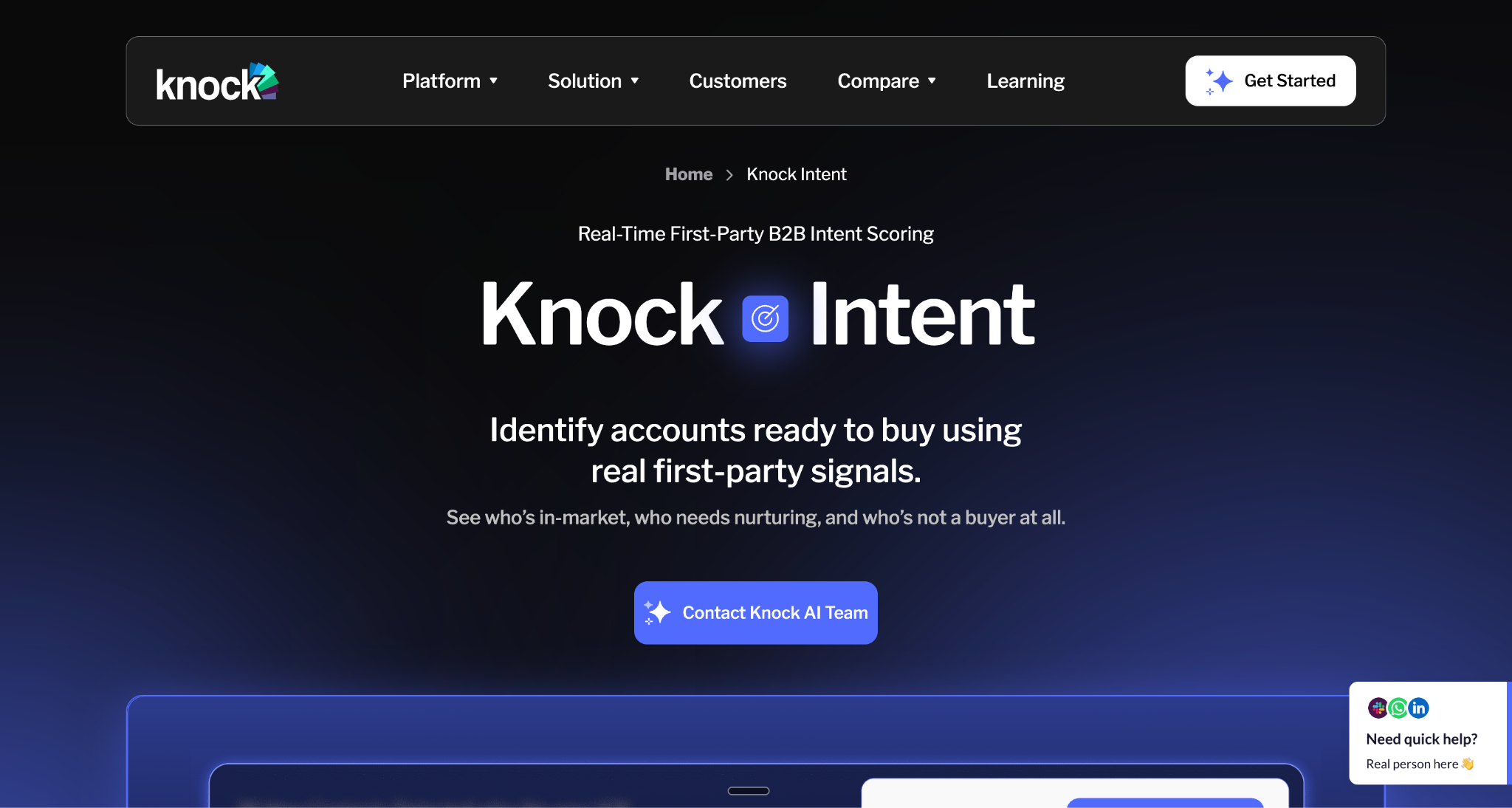
Knock Intent
Analyzes engagement signals across the buyer journey to score, prioritize, and route accounts in real time.
This flow connects visibility directly to qualification and action.
Wise Buyer Note
Choose Albacross if your goal is static company visibility and reporting.
Choose Knock AI if your goal is to convert active engagement into measurable pipeline impact.
For teams that want visitor identification software to directly influence revenue rather than simply report traffic, Knock AI represents a strategic shift from deanonymization to activation.
Lead Forensics: Best for Legacy IP Matching
Best for: Teams using traditional outbound workflows based on company visibility
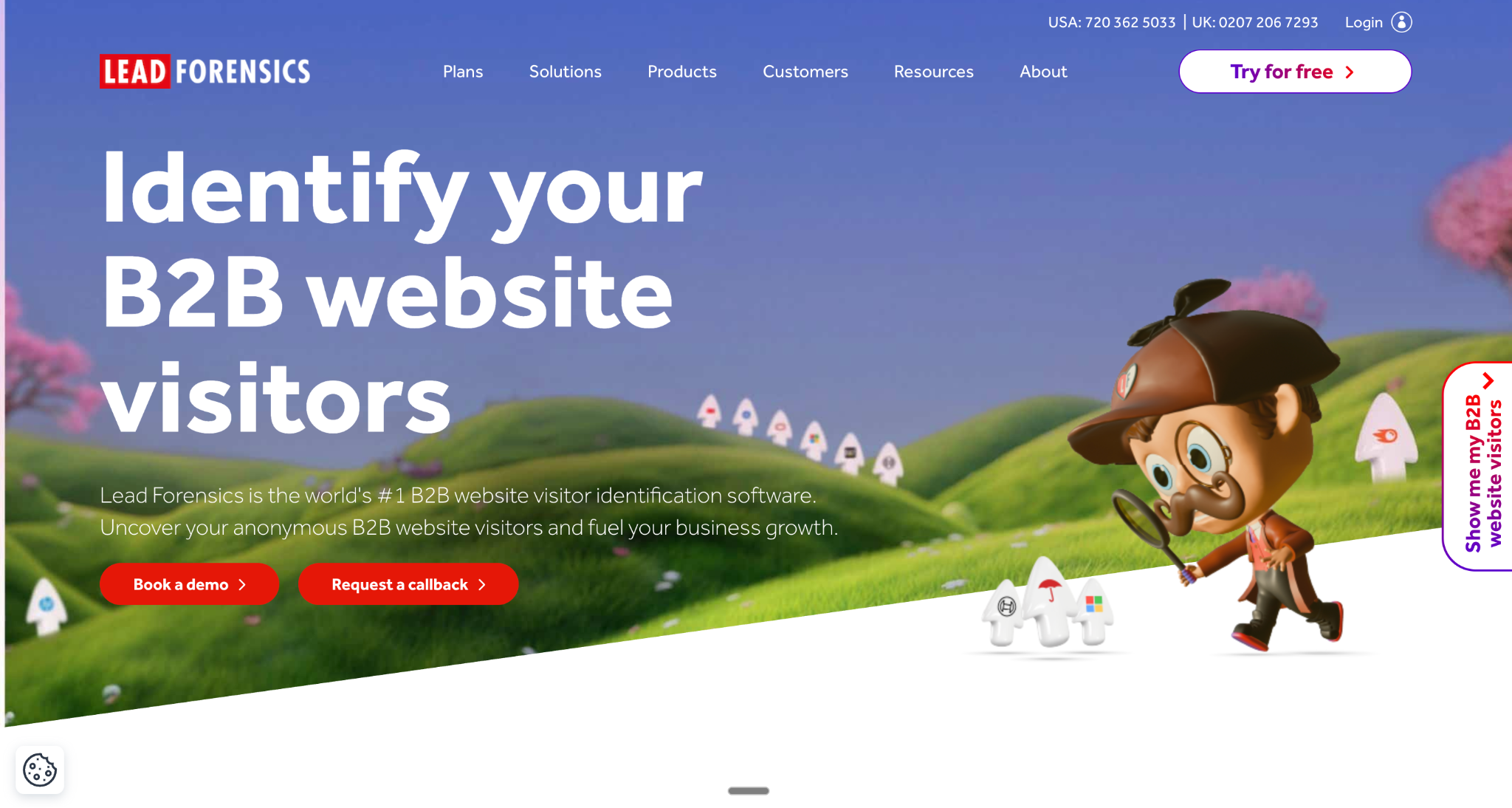
Lead Forensics is one of the older players in the website visitor identification space and is primarily known for reverse IP tracking. It identifies companies visiting your website by matching incoming traffic to corporate IP addresses and business databases.
Reverse IP Tracking
Lead Forensics relies on reverse IP lookup to match anonymous website visits to registered companies. This approach is designed to provide company-level identification without requiring form submissions.
Company Identification
Once traffic is matched, sales teams can see which organizations are browsing their website and which pages are being viewed. This is often used to prioritize outbound outreach to accounts that have shown recent activity.
Sales Notification Alerts
Lead Forensics provides alerts and reports to notify sales teams when companies of interest visit the site. These notifications support proactive outbound follow-up.
Strong in Traditional Outbound Workflows
The platform is commonly used in outbound-driven environments where visibility into visiting companies supports account-based prospecting and SDR outreach.
Limitation: Lead Forensics is reporting-heavy and primarily focused on company identification. It offers limited behavioral scoring and does not deeply analyze cross-asset engagement or intent signals beyond page visits.
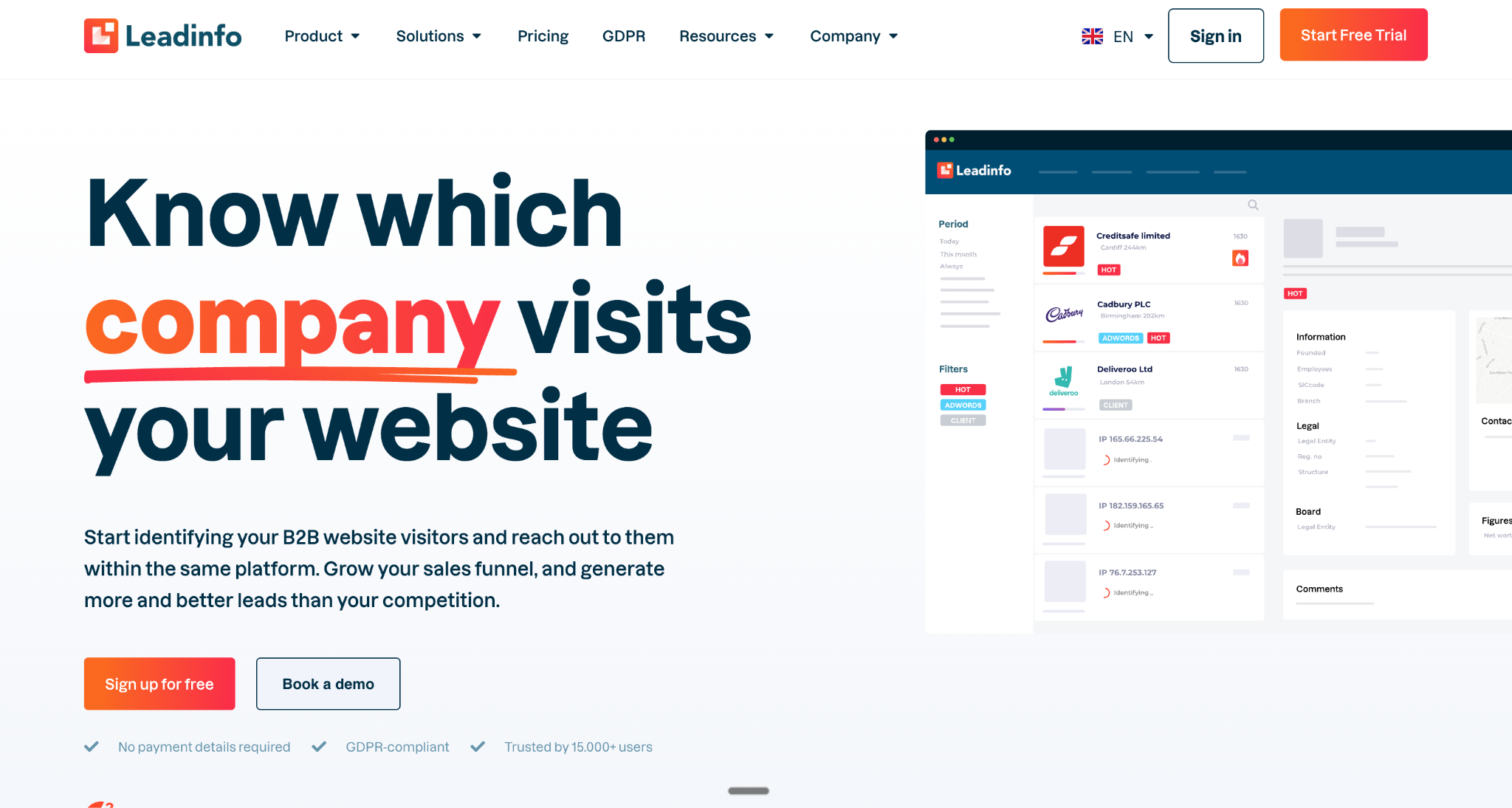
Best for: European teams prioritizing GDPR compliance and regional coverage
Leadinfo is a company-level website visitor tracking tool with a strong presence in European markets. It focuses on identifying B2B website visitors while maintaining compliance with European privacy regulations.
Company-Level Visitor Tracking
Leadinfo matches website visitors to companies, helping sales and marketing teams understand which organizations are researching their products or services.
GDPR-First Approach
The platform is designed with European privacy regulations in mind, making it a common choice for EU-based businesses or companies operating in regulated industries.
Strong European Coverage
Leadinfo is particularly strong in European data coverage and is often selected by teams that need localized identification within EU markets.
Limitation: While Leadinfo performs well in Europe, it may offer less depth in US market coverage compared to platforms with broader North American databases.
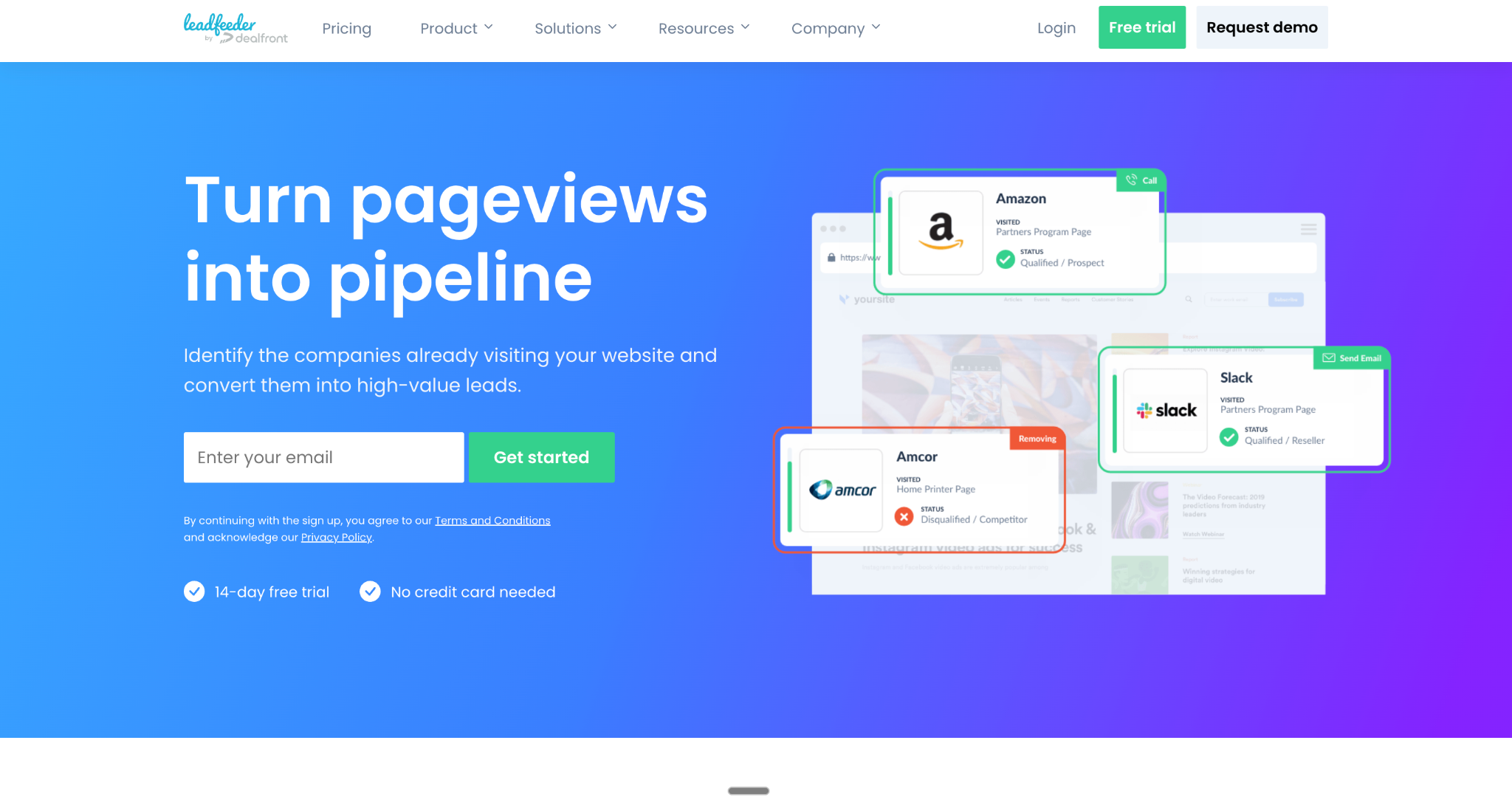
Leadfeeder: Best Budget Visitor Tracking
Best for: Affordable company-level website visitor visibility
Leadfeeder is a website visitor tracking tool that works on top of Google Analytics data to identify companies visiting your website. It is commonly used by small to mid-sized B2B teams looking for basic visitor visibility without investing in complex ABM platforms.
Google Analytics–Based Identification
Leadfeeder connects directly to Google Analytics and analyzes traffic to identify the companies behind visits. This makes setup relatively simple for teams already using GA.
Company Visitor Reports
The platform generates company-level visitor reports showing:
Visiting organization
Pages viewed
Visit frequency
Time on site
These reports help sales teams prioritize outbound follow-ups.
Easy CRM Integrations
Leadfeeder integrates with popular CRMs like HubSpot and Salesforce, allowing identified companies to flow into sales workflows for follow-up.
Limitation: Leadfeeder focuses on visibility rather than activation. It does not provide built-in real-time routing, automated qualification, or advanced behavioral intent scoring.
Clearbit: Best for Enrichment
Best for: Firmographic and technographic enrichment of known leads
Clearbit is primarily a data enrichment platform rather than a standalone website visitor identification tool. It is widely used to enhance existing lead and account records with detailed company information.
Firmographic Enrichment
Clearbit enriches leads with firmographic data such as:
Company size
Industry
Location
Revenue estimates
This helps teams improve segmentation, lead scoring, and personalization.
Technographic Insights
Clearbit also provides technographic data, giving insight into the tools and technologies a company uses. This supports targeted messaging and competitive positioning.
Strong CRM Integrations
Clearbit integrates deeply with CRMs and marketing automation tools, helping RevOps teams maintain clean and enriched records.
Limitation: Clearbit typically requires known leads (via form fills, signups, or captured identifiers). It is not designed to identify anonymous website visitors in real time or activate live engagement workflows.
Best for: Research-driven prospect identification and account discovery
PearlDiver focuses on prospect discovery and data research rather than real-time visitor tracking. It is commonly used by teams conducting deep account research and outbound prospecting.
Data Discovery
PearlDiver helps teams uncover relevant companies and contacts based on defined targeting criteria, supporting strategic prospecting efforts.
Research-Heavy Workflows
The platform is suited for workflows where teams manually analyze and prioritize accounts, often combining data discovery with human research.
Account-Level Intelligence
PearlDiver provides account-level intelligence to help teams understand potential prospects before initiating outreach.
Limitation: PearlDiver is not focused on real-time website visitor identification or behavioral intent tracking. It supports prospect discovery rather than anonymous visitor tracking or inbound activation.
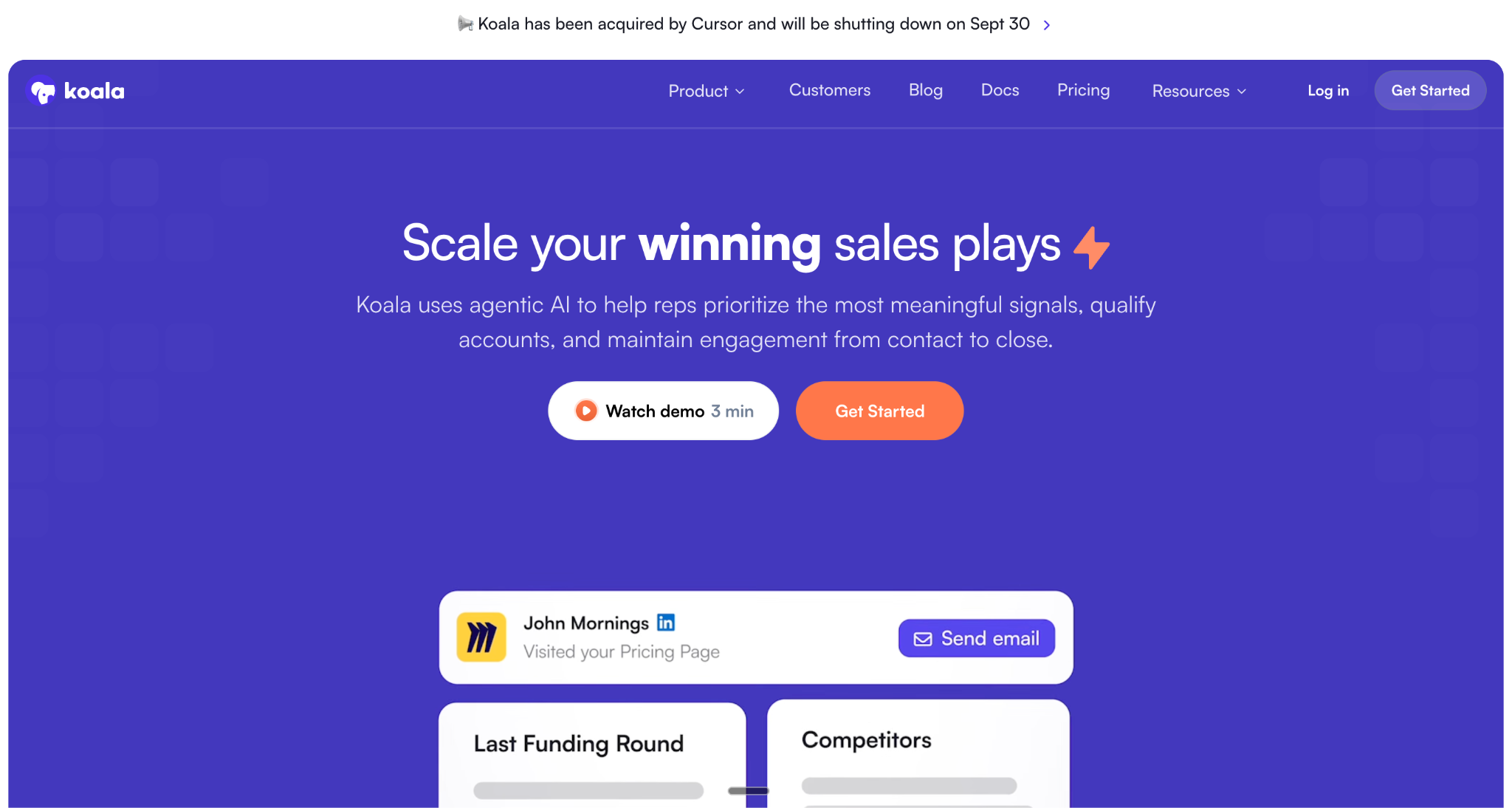
Koala: Best Modern SaaS Alternative
Best for: SaaS teams combining product usage data with website intent
Koala is built specifically for modern SaaS go-to-market teams that want to connect website behavior with in-product engagement signals. Instead of relying only on reverse IP identification, Koala focuses on behavioral tracking and account-level activity.
Behavioral Tracking
Koala tracks how companies interact with your website, including:
Page views
Visit frequency
Content engagement
High-value page activity (such as pricing or demo pages)
This helps teams identify accounts showing meaningful research patterns.
Product + Website Intent Signals
One of Koala’s differentiators is combining website intent with product usage data (for SaaS companies). This allows GTM teams to see:
Which accounts are visiting the site
Which users are active in-product
Whether engagement is increasing over time
This dual-layer signal helps prioritize expansion and sales opportunities.
Built for SaaS GTM Teams
Koala is designed for SaaS revenue teams that rely on product-led growth (PLG), usage data, and behavioral signals rather than traditional IP-only identification.
Limitation: Koala is a newer platform compared to legacy visitor identification tools. Its ecosystem, integrations, and feature depth are still evolving as it scales.
Albacross Alternatives by Use Case
Use Case
Best Tool
Why It Fits
Conversion-first inbound
Knock AI
Combines website visitor identification with real-time intent scoring and activation. Best for turning anonymous engagement into qualified pipeline instead of static reports.
Legacy outbound teams
Lead Forensics
Built around traditional reverse IP matching and company identification. Works well for teams running classic outbound sales workflows.
EU compliance focus
Leadinfo
Designed with GDPR-first infrastructure and strong European company coverage, making it suitable for EU-focused organizations.
Budget visitor tracking
Leadfeeder
Affordable, Google Analytics-based company tracking that provides basic visibility into website visitors without complex setup.
CRM enrichment
Clearbit
Adds firmographic and technographic data to known leads and accounts, helping improve segmentation and CRM data quality.
SaaS GTM teams
Koala
Combines behavioral tracking with product and website intent signals, ideal for SaaS companies running product-led growth motions.
Knock AI vs Albacross (Wise Buyer’s Choice)
Area
Albacross
Knock AI
Identification
Company-level IP-based matching
Multi-signal identification combining first-party engagement and contextual data
Intent
Basic segmentation and page-level insights
Behavior-driven scoring across website and marketing assets
Activation
Reporting-focused dashboards
Real-time routing, alerts, conversations, and scheduling
Forms Required
Not required
Not required
Primary Outcome
Visitor visibility and company lists
Qualified pipeline and actionable engagement
Core Difference
Albacross shows who visited. It focuses on company-level deanonymization and reporting.
Knock AI shows who is ready and what to do next. It connects identification to intent scoring and activation, helping revenue teams engage buyers while they are actively researching.
If you only need visibility, Albacross fits. If you want visitor identification to directly generate pipeline, Knock AI becomes the more strategic choice.
Frequently Asked Questions
Is there any alternative to Albacross?
Yes. There are several strong Albacross alternatives depending on what you need from your website visitor identification software.
Knock AI: Best for intent-driven, conversion-focused inbound teams
Lead Forensics: Strong for traditional reverse IP matching workflows
Leadinfo: Popular for GDPR-first, EU-focused company tracking
Clearbit: Ideal for firmographic enrichment and CRM data enhancement
Koala: Modern SaaS-focused behavioral and product intent tracking
PearlDiver: Research and prospect intelligence workflows
If your primary goal is simply to identify website visitors, several tools can do that. If your goal is to convert anonymous engagement into pipeline, you’ll want an alternative that goes beyond static reporting.
What is the best alternative to Albacross in 2026?
The “best” alternative depends entirely on your go-to-market strategy:
For conversion-first inbound teams:Knock AI is often considered the strongest overall alternative because it connects visitor identification to intent scoring and real-time activation.
For EU visitor tracking and GDPR-focused teams: Leadinfo is a strong option.
For budget-friendly company tracking: Leadfeeder provides accessible visibility without heavy setup.
For enrichment-heavy CRM workflows: Clearbit works well.
If your strategy is centered around pipeline generation rather than visitor reporting, tools that combine identification + intent + activation typically provide more impact.
Why shouldn’t I choose Albacross?
Albacross is effective for company-level website visitor identification, but it may feel limiting if your team needs:
Real-time routing and activation
Behavioral intent scoring across assets
Automated qualification workflows
Live engagement triggers
Pipeline-focused execution
In many cases, Albacross provides visibility without activation. You can see who visited, but you still need additional tools or manual effort to turn that information into revenue.
If your goal is dashboards and reporting, Albacross fits well. If your goal is action and conversion, you may prefer an alternative.
How does website visitor identification work?
Website visitor identification works by combining multiple data sources to determine which companies are visiting your site.
Most platforms use a combination of:
Reverse IP lookup
Company database matching
First-party engagement signals
CRM enrichment data
More advanced tools go further by analyzing:
Repeat visits
Page depth
Pricing page engagement
Content downloads
Cross-asset interactions
Basic systems answer: “Who visited?” Modern systems aim to answer: “Who is evaluating and when should we act?”
What is the difference between deanonymization and intent?
Deanonymization identifies the company behind anonymous website traffic. It answers: Who visited the website?
Intent, on the other hand, measures buying readiness. It answers:
Are they researching seriously?
Is interest increasing?
Should sales engage now?
Intent signals may include repeat visits, pricing page activity, demo-related content engagement, or multi-session behavior patterns.
Identity gives you visibility. Intent gives you prioritization and timing.
Is Knock AI GDPR compliant?
Yes. Knock AI is built with privacy-aware workflows and relies primarily on first-party engagement signals rather than invasive third-party tracking.
Key compliance considerations include:
First-party engagement tracking
Consent-aware workflows
Transparent data handling
Company-level identification by default
This makes it suitable for teams operating in GDPR-regulated environments or industries where privacy and data governance are critical.


.svg)


.svg)
.svg)
.svg)


.svg)
.svg)


.svg)