13 Lead Forensics Alternatives, Tested and Priced for 2026
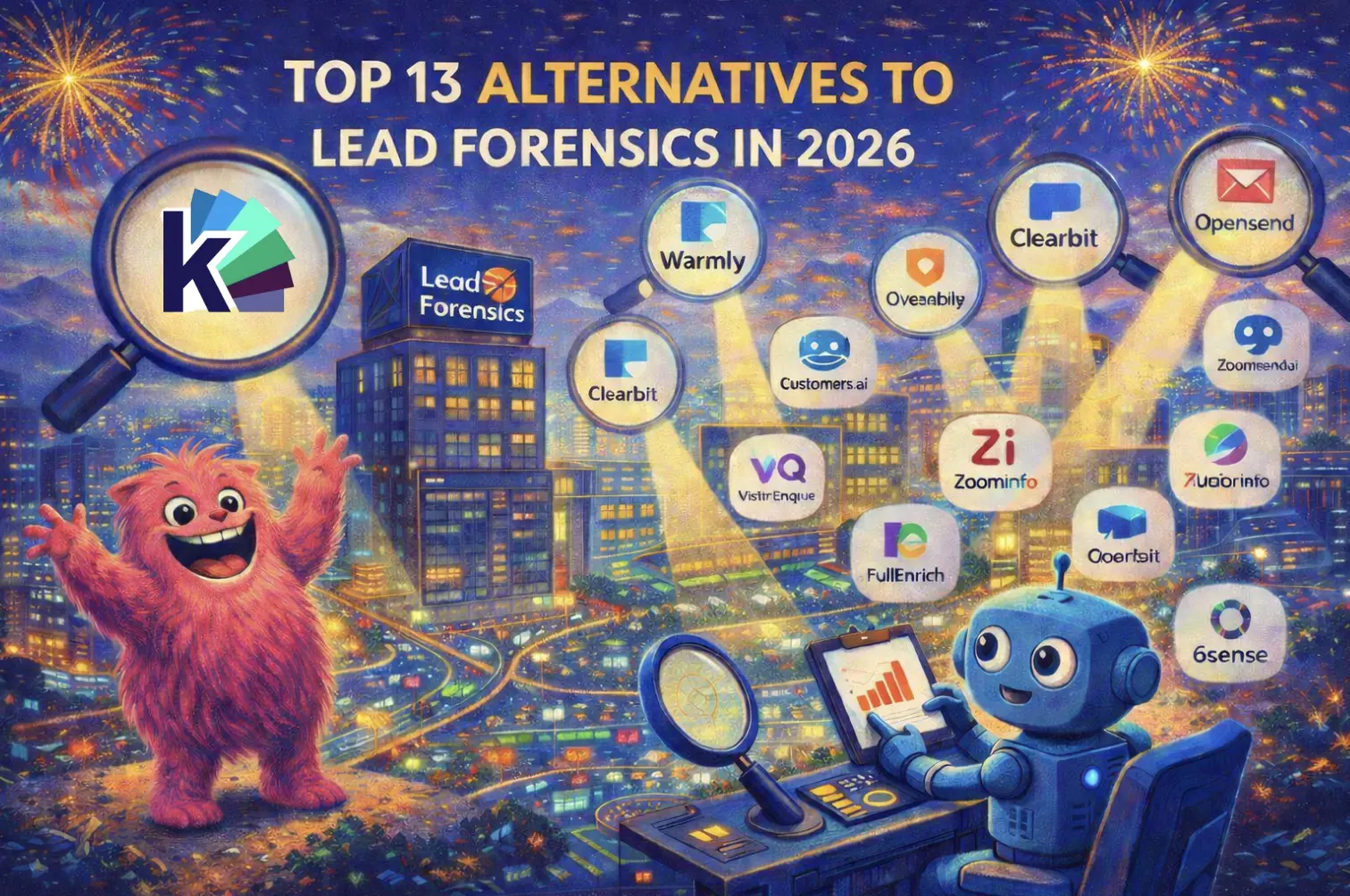
Top 13 Lead Forensics Alternatives in 2026
TL;DR
Looking for the best Lead Forensics alternatives in 2026? Lead Forensics is commonly used for company-level website visitor identification through IP tracking, but many B2B teams find it limiting due to IP-only matching, delayed insights, and a lack of real-time activation or conversion workflows.
This guide compares the top 13 Lead Forensics alternatives for website visitor identification, deanonymization, and B2B buyer intent. It includes platforms designed for form-free inbound conversion, account-based marketing, outbound enrichment, live engagement, and budget-friendly visitor tracking.
Best overall alternative:Knock AI Best for enterprise ABM: 6sense Best for outbound data: ZoomInfo, Cognism Best for live inbound engagement: Warmly Best budget tools: Leadfeeder, Visitor Queue
Use this guide to choose the right Lead Forensics alternative based on identification accuracy, pricing model, compliance requirements, integrations, and ability to turn anonymous website visitors into qualified pipeline.
Lead Forensics Alternatives for Website Visitor Identification in 2026
Lead Forensics has long been used by B2B teams to identify companies visiting their websites using IP tracking and reverse database matching. It reveals which organizations are viewing content even when visitors do not complete a form, helping sales and marketing teams prioritize outreach based on engagement.
However, many B2B teams evaluate alternatives because Lead Forensics focuses primarily on company names, not on deeper intent signals or real-time activation workflows that trigger engagement while a prospect is still browsing. As visitor behavior and buying journeys have evolved, teams increasingly seek tools that go beyond company identification.
This shift reflects a broader move from a simple company identification framework → buyer intent analysis → real-time action. Modern revenue organizations want to understand not just who visited, but why, how intensely, and when to act on that behavior.
Why B2B Teams Look for Alternatives to Lead Forensics
IP-Based Identification Has Accuracy Limits
Tools that rely on IP-based matching can struggle with accuracy for several reasons. Reverse IP databases work best when a visitor’s internet traffic is tied to a static corporate network. With the rise of remote work, VPNs, and cloud-based internet service providers, many individuals access the web from dynamic or shared IP addresses. These conditions make it harder for IP-only methods to map a visit back to the correct organization’s identity.
Although Lead Forensics continues to provide strong company identification based on IP data, these technological shifts mean that company names alone may not always match actual buyer behavior or context accurately, especially in distributed or hybrid work environments.
Identification Without Conversion
Lead Forensics gives visibility into which companies visit your site, but company visibility does not automatically convert into pipeline. Being able to see which organization browsed a page does not in itself tell you when to engage or which visitors are most likely to buy. Without built-in routing, automated alerts, or conversational workflows, teams often must export data, analyze it manually, and then act through separate systems.
Even when visibility is available, Lead Forensics and similar tools traditionally report visits after they occur. This means teams may miss the “moment of intent” when a buyer’s interest is peak, for example, while they are actively comparing product pages or returning repeatedly throughout the day.
In today’s B2B landscape, timely action matters more than ever. Tools that can process signals as they happen and enable immediate follow-up, such as alerts or automated outreach, are increasingly preferred by revenue teams that cannot afford to wait for reports.
What to Look for in a Lead Forensics Alternative (Key Selection Criteria)
These criteria help teams assess whether a tool can truly support modern inbound and sales motions beyond static company lists.
Website Visitor Identification Accuracy
Visitor identification tools vary widely in how they match anonymous traffic to identifiable entities. Traditional platforms that depend primarily on IP matching may miss companies operating behind shared or cloud IPs. Modern alternatives combine multiple signals, including first-party engagement, cookie tracking, or consent-based identifiers, to improve accuracy and surface more actionable accounts.
Think in terms of IP-only vs multi-signal identification and company-level vs contact-aware context.
Deanonymization vs Intent
Deanonymization answers who visited your website by resolving anonymous traffic into identifiable company or contact data. Intent goes a step further by analyzing behavior patterns to highlight which visitors are actively researching or evaluating solutions. Intent signals might include repeat visits, engaging with high-value pages, or unusual depth of interaction.
The best alternatives combine identity with intent so teams know who and when to engage.
Form Dependency
Some tools require visitors to fill out forms or trigger identity captures only after a gated action. While this can work for conversion capturing, it misses much of the buyer journey because the majority of B2B visitors browse anonymously.
For example, industry sources highlight that 98% of website visitors never make contact through a form, underscoring how form-dependent methods leave most traffic unanalyzed. (Source)
Leading alternatives emphasize form-free engagement capture so teams understand behavior even without a form submission.
Real-Time Activation
Beyond identification, the ability to act while a visitor is still engaged is critical. Real-time activation includes alerts, routing, live chat triggers, or scheduling workflows tied to engagement signals. Platforms that integrate real-time routing with CRM and sales workflows allow teams to convert signals into action faster than manual reporting cycles.
Compliance and Data Control
Data privacy laws like GDPR and consumer protections in various regions mean visitor tracking tools must responsibly handle personal data and consent. Best-in-class alternatives provide clear consent management, first-party signal control, and transparent data governance so teams can collect insights without risking non-compliance.
Lead Forensics Alternatives Quick Comparison
Tool
Identification Type
Best For
Limitation
Knock AI
Company and contact-level identification with real-time intent signals across websites and marketing assets
Form-free inbound conversion and qualification
Not positioned as a pure enrichment database
Opensend
Contact-level identity resolution using consented first-party data
Email-first and consent-driven identity workflows
Activation depends on downstream tools
Customers.ai
Identity graph linked to individuals and households
Paid media targeting and remarketing
Advertising-centric use case
ZoomInfo
Company and contact-level sales intelligence data
Enterprise outbound sales
Expensive and sales-first
RB2B
Company-level website visitor identification
Inbound website traffic conversion
No contact level data provided
FullEnrich
Multi-source contact and company enrichment
Data enrichment workflows
Requires downstream activation tools
Warmly
Company-level visitor identification with live chat context
Sales-led inbound engagement
Chat-first experience
Clearbit
Company-level firmographic and technographic enrichment
CRM enrichment and segmentation
No real-time activation
UpLead
Verified contact and company lists
Prospect list building
List-based usage model
6sense
Account-level predictive intent and scoring
Enterprise ABM programs
Long setup and ramp time
Lead411
Contact-level data with intent indicators
Mid-market outbound sales
Not built for inbound identification
Leadsforge
Campaign-driven prospect lists
Prospect sourcing
No visitor identification
Leadfeeder
Company-level visitor tracking via Google Analytics
Budget visitor tracking
Identification without orchestration
See Knock AI in Action — Book Your Live Demo Today
Lead Forensics is primarily designed to identify which companies visit a website using IP-based matching. That approach works for visibility and reporting, but many teams start looking for alternatives when identification does not translate into real pipeline.
Knock AI is built around a different goal. Instead of treating visitor identification as the end result, it treats it as the starting point for qualification and action. The platform is designed to capture buyer engagement while it is happening and help teams respond in real time, without relying on forms or delayed follow-up.
This shift from post-visit reporting to live engagement is the core reason Knock AI is often evaluated as a stronger alternative to Lead Forensics.
Website and Cross-Asset Visitor Identification
One of the main limitations of traditional visitor identification tools is their focus solely on website traffic. Modern B2B buyers interact with far more than just a homepage or pricing page.
Knock AI identifies engagement across websites and other marketing assets, including shared links, content hubs, review platforms, and campaign entry points. Using first-party engagement signals, it surfaces both company context and relevant buying contacts without requiring form fills, gated content, or demos.
This gives revenue teams a more complete view of how buyers research and evaluate, rather than isolated website visits.
Real-Time Intent and Activation
Another key difference is timing. Lead Forensics typically surfaces insights after a visit has already occurred. Knock AI captures behavioral and contextual signals in real time, such as repeat visits, depth of interaction, and content consumption patterns.
By acting during the moment of interest, teams reduce the risk of missed opportunities and delayed outreach.
Knock Reveal → Knock Intent Flow
Knock AI separates identity and intent into two connected layers.
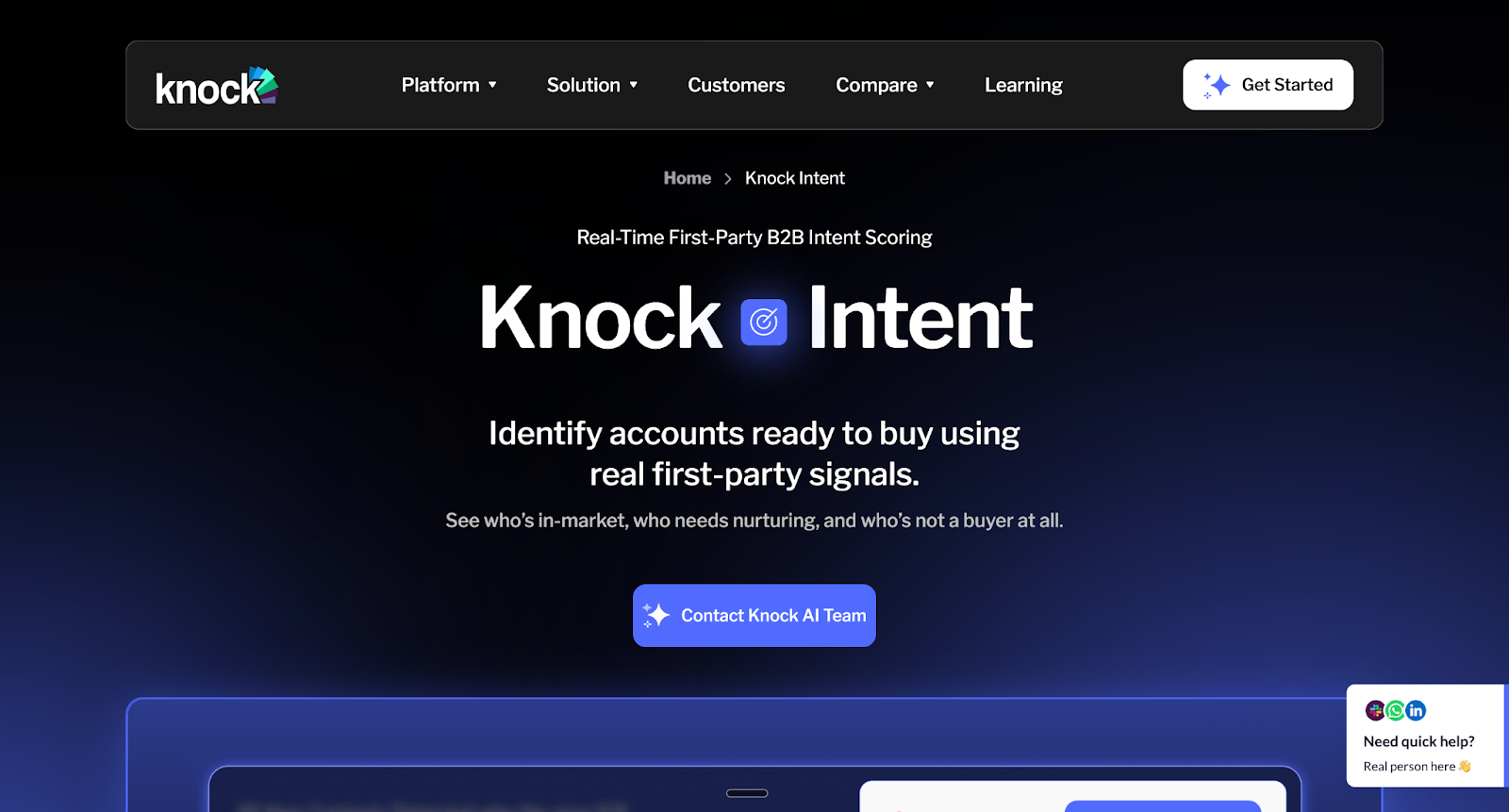
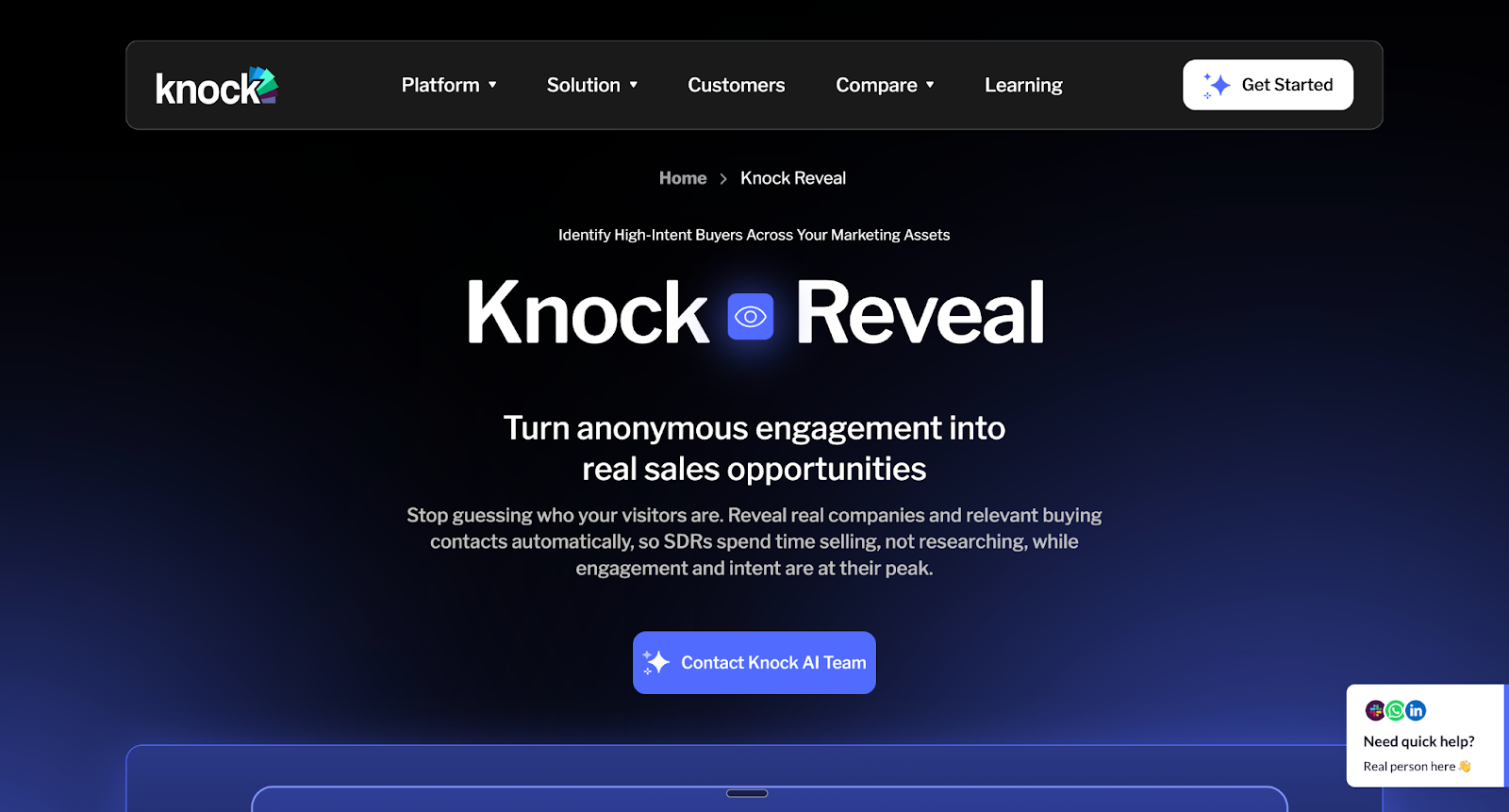
Knock Reveal handles identification by turning anonymous engagement into verified company and contact-level context using first-party signals. That engagement data then flows into Knock Intent, where activity is analyzed across the buyer journey to determine readiness, priority, and routing.
This Reveal-to-Intent flow allows Knock AI to move beyond static company lists and support continuous qualification based on live buyer behavior.
Wise Buyer Note
Knock AI is not designed for teams that only need basic company visibility for reporting or compliance purposes. In those cases, IP-based tools like Lead Forensics may be sufficient.
Knock AI is best suited for teams that view inbound traffic as a live revenue opportunity, particularly those running content-led, SEO-driven, or inbound-focused go-to-market motions. If your goal is to understand not just who visited, but who is actively evaluating and what to do next, Knock AI is a strong fit.
2. Opensend
Best for: Consent-based identity resolution
Strength in Privacy-First Enrichment
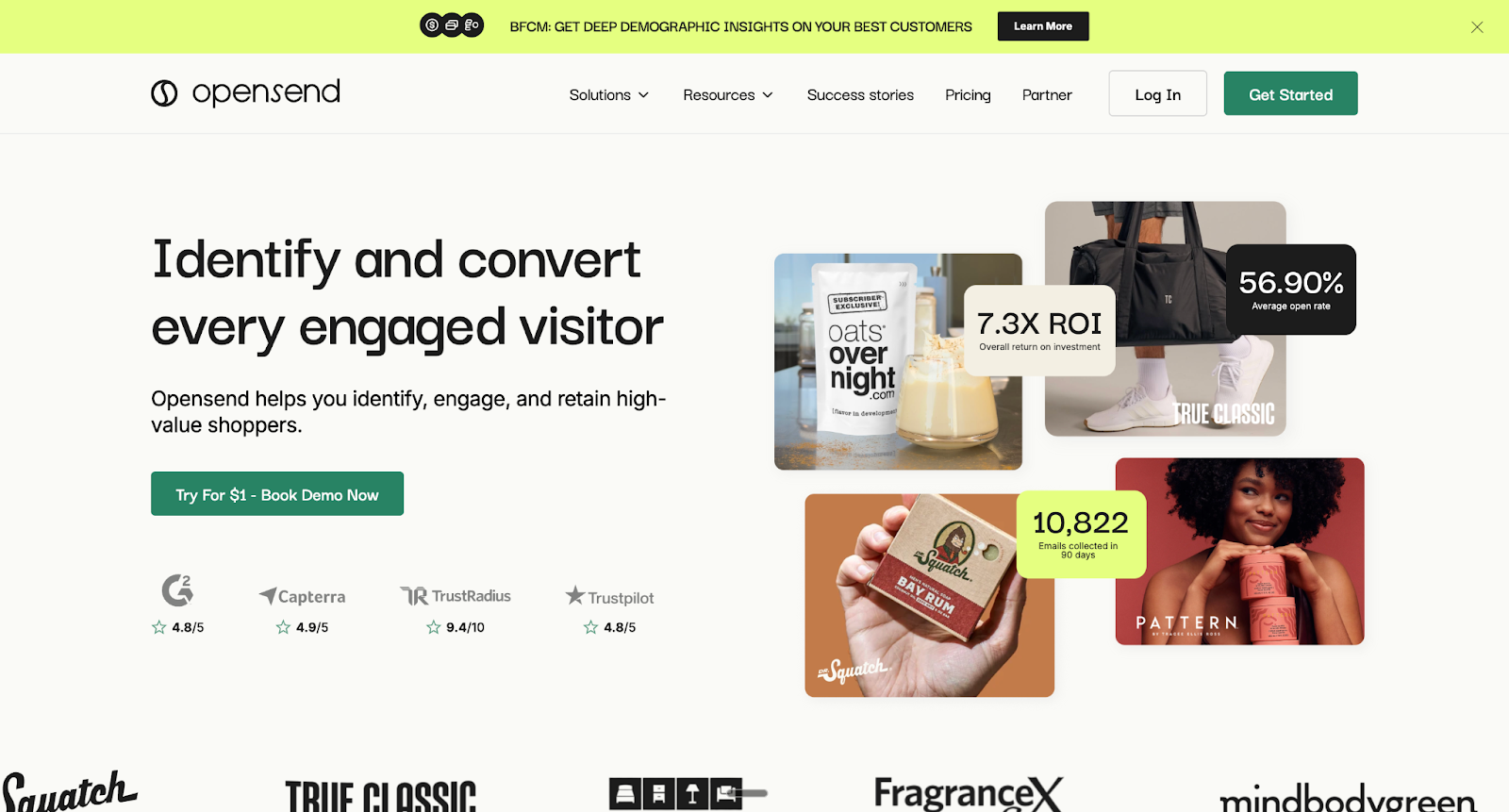
Opensend is designed around a privacy-first approach to identity resolution. Instead of relying on IP-based inference or third-party tracking, it focuses on identifying visitors through explicit consent and first-party data collection. This makes it particularly attractive for teams operating in highly regulated environments or regions with strict privacy requirements.
The platform emphasizes compliant enrichment, helping teams connect anonymous engagement to known identities in a way that aligns with GDPR and modern consent expectations.
Email-Centric Workflows
Opensend’s core workflows are email-centric. Once identity is resolved through consent, the platform supports enrichment and activation primarily through email-based channels. This makes it a strong fit for teams whose go-to-market motion relies heavily on email marketing, lifecycle campaigns, or list-based outreach.
However, its activation model is typically asynchronous. Engagement insights often flow into downstream systems such as CRMs or marketing automation platforms rather than triggering live interactions on the site.
Not Built for Live Activation
While Opensend excels at compliant identity resolution, it is not designed for real-time inbound activation. It does not natively support live routing, conversations, or scheduling while a buyer is actively browsing.
As a result, Opensend is best suited for teams prioritizing privacy-safe identity capture and enrichment, rather than those looking to engage buyers in the moment of intent.
3. Customers.ai
Best for: Identity-driven advertising
Strong Identity Graph
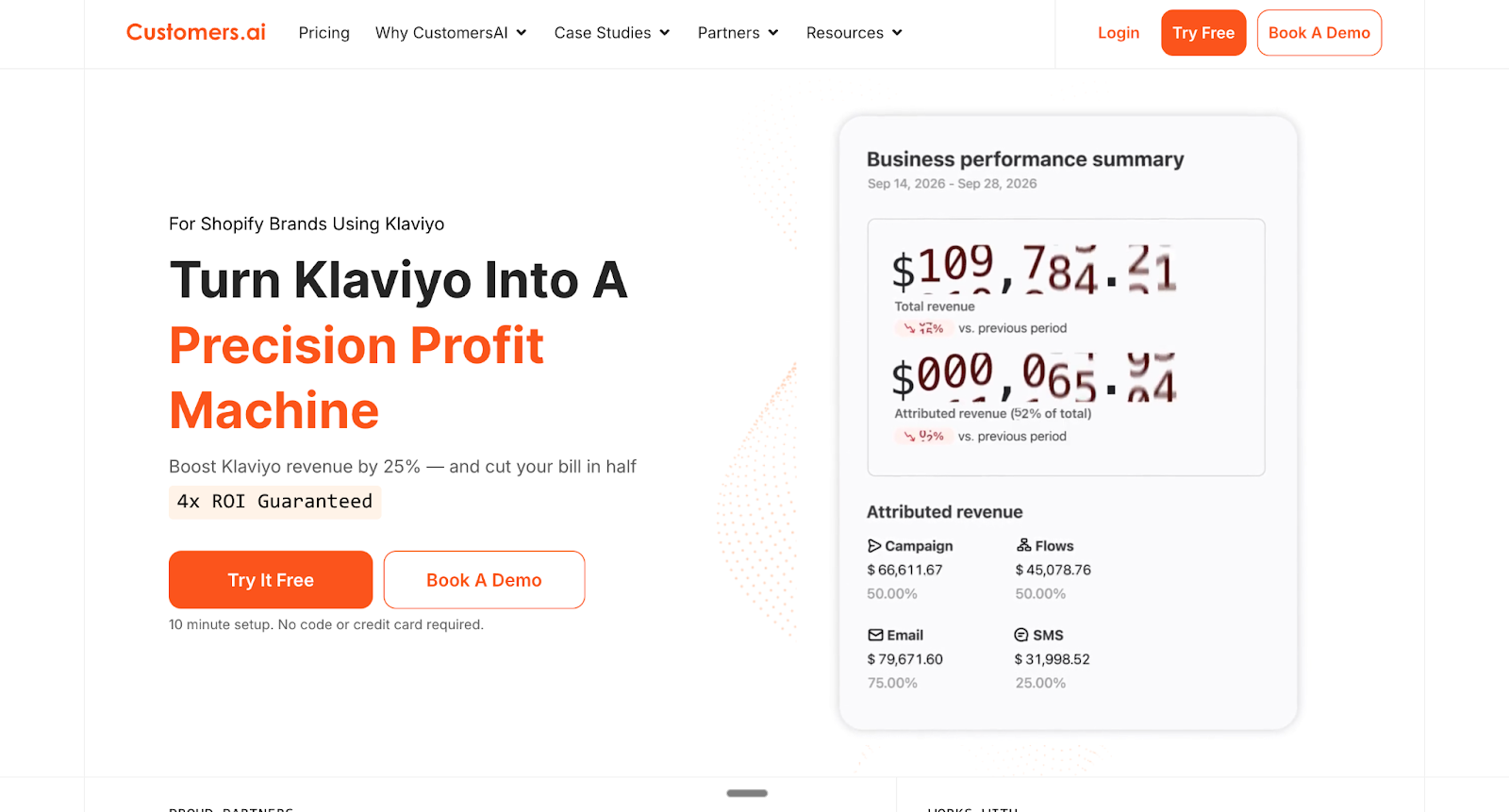
Customers.ai is built around a large-scale identity graph that connects individuals across devices, sessions, and channels. Its core value lies in resolving identities for targeting and measurement, especially across paid media and remarketing use cases.
The platform is commonly used to help marketing teams understand audience identity beyond anonymous traffic and to improve targeting accuracy across advertising platforms.
Paid Media Focus
Customers.ai is optimized for paid media workflows, including audience building, retargeting, and ad performance optimization. Identity resolution is primarily used to inform advertising strategies rather than to drive direct inbound sales conversations.
This makes it a strong option for marketing teams focused on demand generation through ads, attribution, and cross-channel audience intelligence.
Limited Inbound Conversion
While Customers.ai provides deep identity insights, it is not built for inbound conversion or sales activation. The platform does not focus on real-time routing, intent-based engagement, or form-free qualification tied directly to pipeline generation.
As a result, Customers.ai is best suited for teams whose primary goal is identity-driven advertising and audience intelligence, not for organizations seeking to convert anonymous website engagement into qualified pipeline in real time.
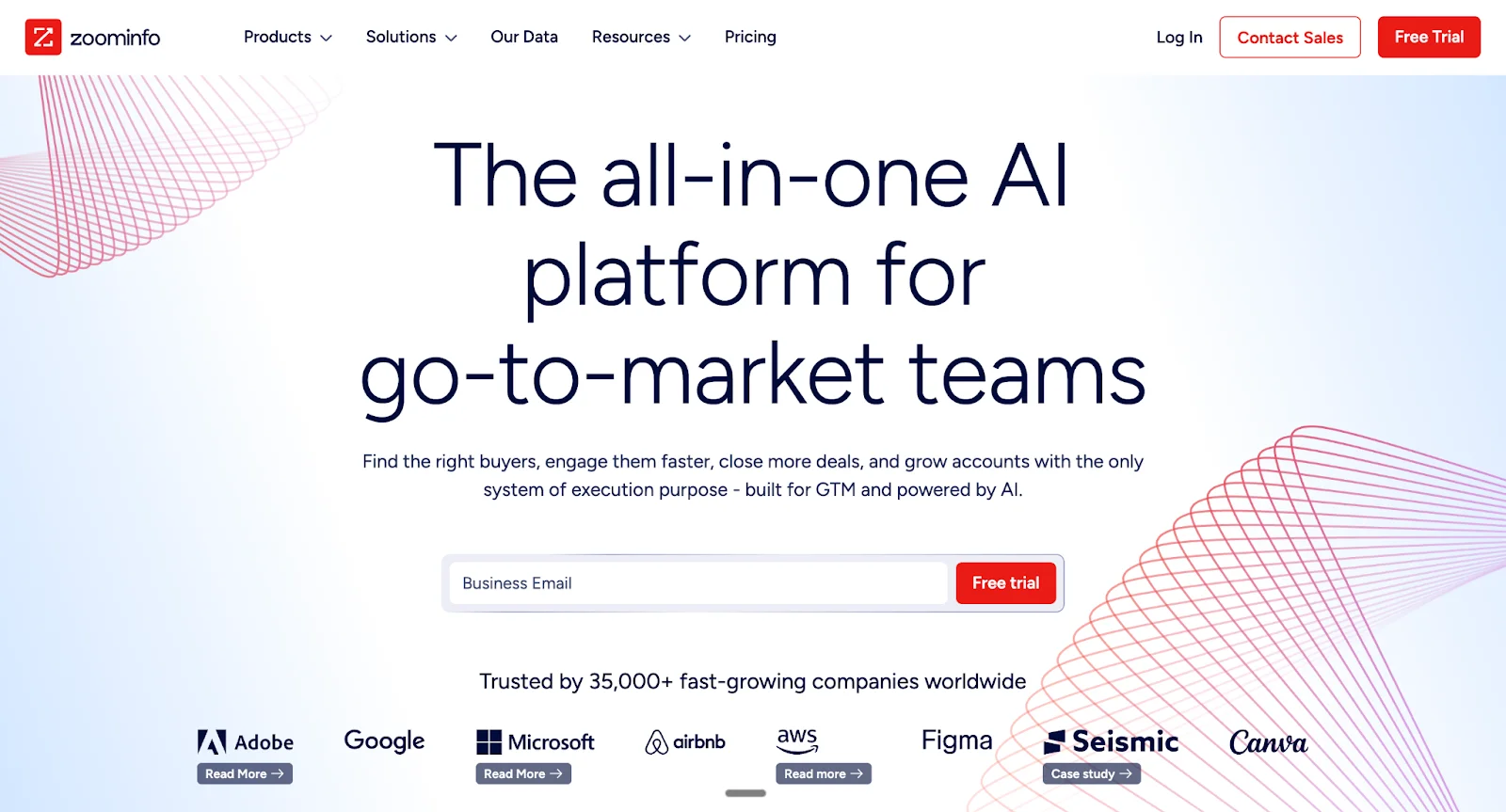
4. ZoomInfo
Best for: Enterprise outbound data
Massive Datasets
ZoomInfo is an enterprise sales intelligence platform known for its large-scale company and contact databases. It provides firmographic, technographic, and contact-level data that sales teams use to research accounts, build prospect lists, and support outbound outreach at scale.
Its depth and coverage make it a common choice for large organizations running high-volume outbound sales motions and account-based prospecting programs.
Contract-Based Pricing
ZoomInfo operates on a contract-based pricing model, typically sold as annual agreements. Pricing is based on access tiers, data usage, and product bundles, which can make it less flexible for smaller teams or those with fluctuating usage needs.
This model works well for enterprises that have predictable outbound requirements but can be restrictive for teams seeking usage-based or inbound-focused tools.
Sales-First Motion
ZoomInfo is designed primarily for sales-led, outbound workflows. While it offers signals and insights to help prioritize outreach, it is not built to capture or act on real-time inbound website engagement.
For organizations focused on outbound prospecting and sales intelligence, ZoomInfo provides strong value. Teams seeking form-free inbound conversion or live engagement typically supplement it with additional tools.
Best for: Inbound pipeline generation without forms
Anonymous Visitor Identification Without Conversion
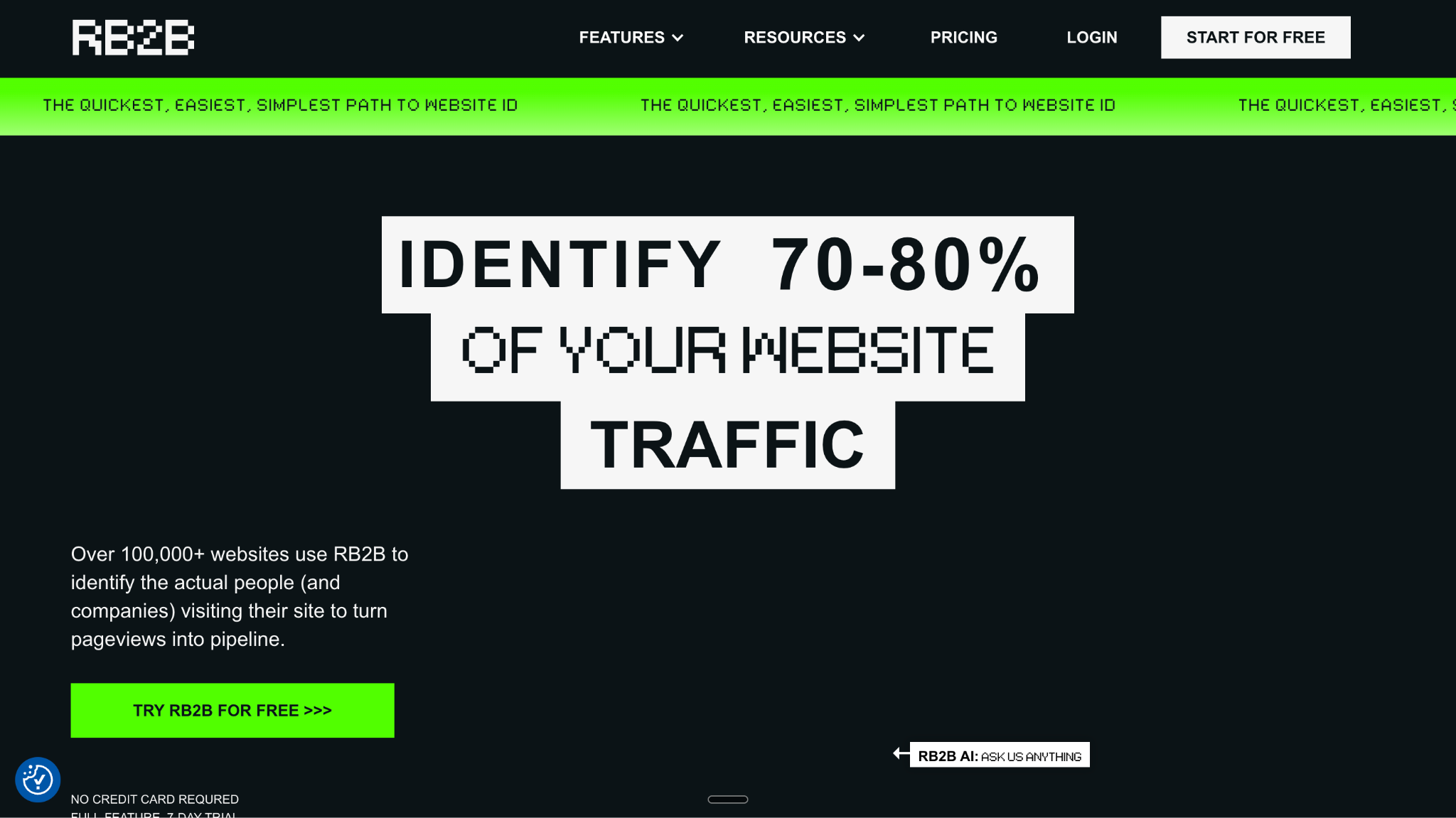
RB2B helps B2B teams uncover which companies are visiting their website—without requiring users to fill out forms or convert. By identifying anonymous traffic at the company level, it enables sales and marketing teams to spot high-intent accounts in real time and act quickly.
This makes it especially valuable for organizations looking to maximize inbound demand, shorten response times, and generate pipeline from otherwise invisible website visitors.
No Contact-Level Data
B2B focuses on company-level identification rather than individual contact details. It does not provide direct access to specific decision-makers or verified email addresses.
As a result, teams may need to pair RB2B with additional tools for contact enrichment if their workflow relies on reaching out to specific individuals within identified accounts.
Real-Time Visibility for Faster Sales Action
With RB2B, revenue teams gain immediate insight into which accounts are actively browsing key pages, allowing for timely and relevant outreach. This real-time visibility helps prioritize high-intent companies, align marketing and sales efforts, and reduce the gap between interest and engagement—ultimately improving conversion efficiency.
6. FullEnrich
Best for: Data enrichment workflows
Multi-Provider Enrichment
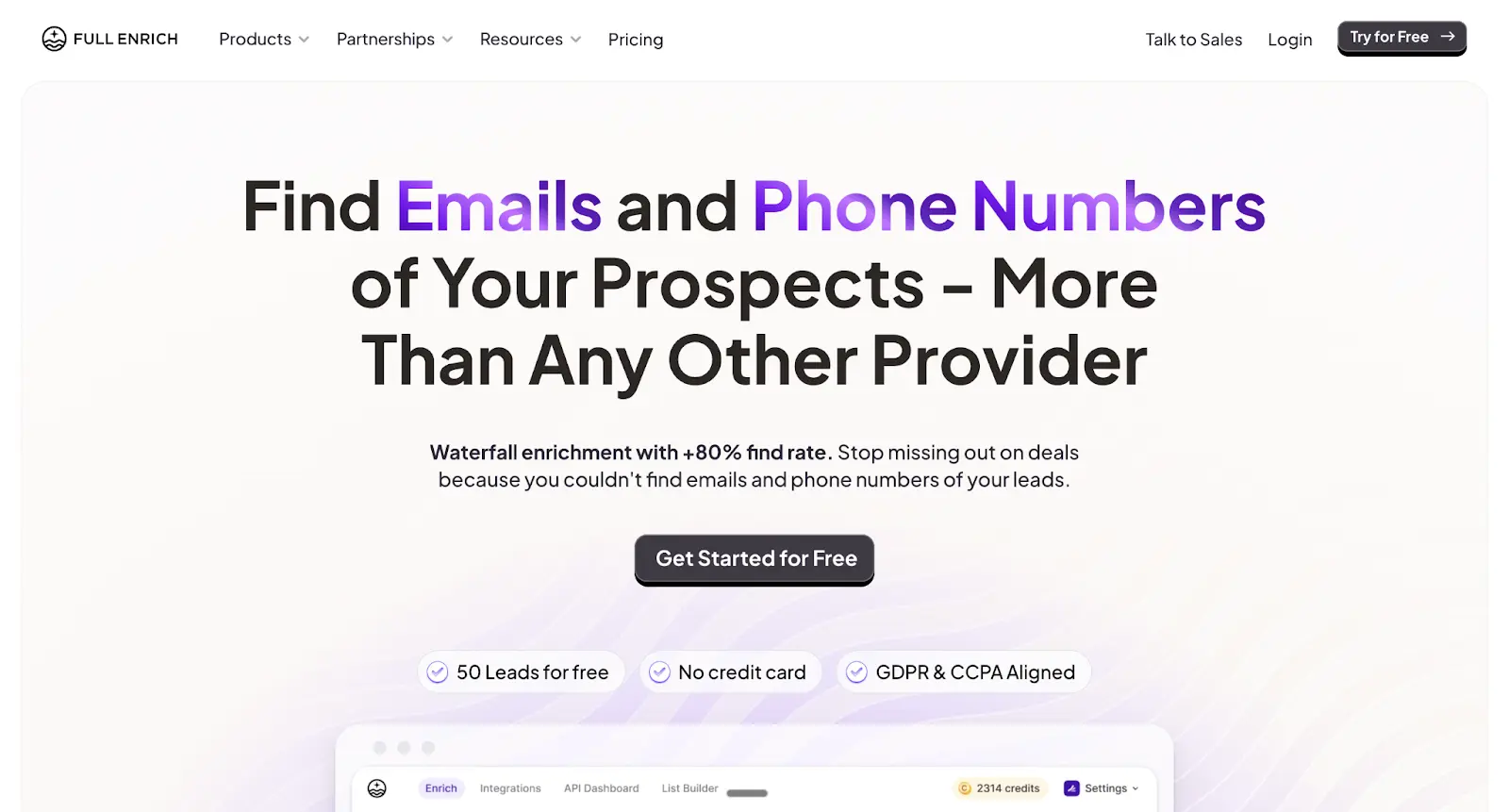
FullEnrich is a data enrichment platform focused on improving data completeness and accuracy by sourcing contact and company information from multiple providers. Instead of relying on a single database, it routes enrichment requests across several data sources to maximize match rates.
This approach makes FullEnrich useful for teams that manage large datasets and want to enhance existing CRM or marketing records with additional contact and firmographic details.
Requires Downstream Tools
FullEnrich is designed as a data layer, not an activation platform. It does not identify anonymous website visitors or capture inbound engagement signals on its own. To turn enriched data into action, teams typically connect FullEnrich to CRMs, outbound sales tools, or marketing automation systems.
As a result, FullEnrich works best for organizations that already have clear workflows in place and need a reliable enrichment engine to support them.
7. Warmly
Best for: Live inbound sales engagement
Chat and Routing
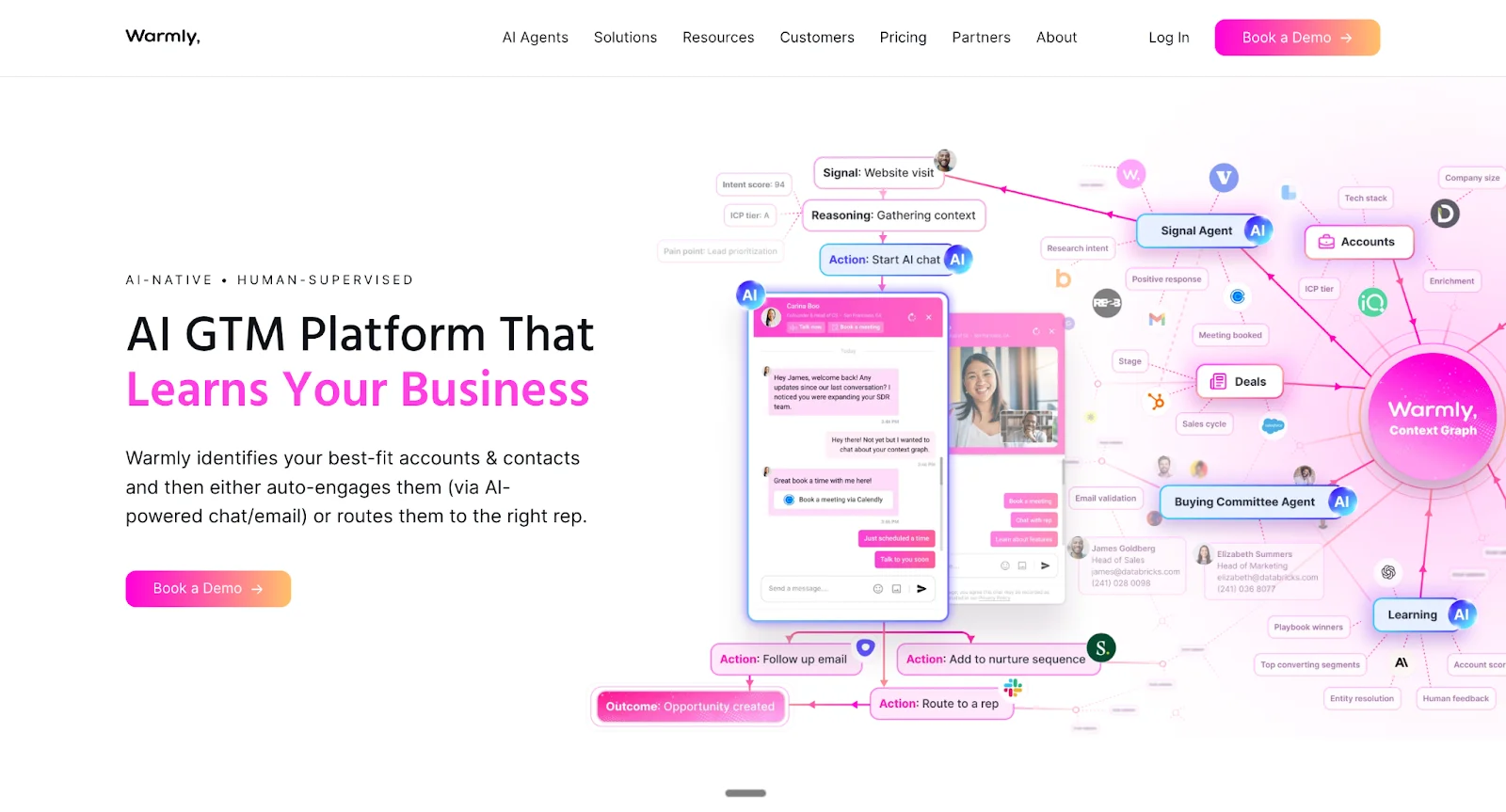
Warmly is a conversational sales platform that combines website chat with account context and routing logic. It helps teams engage visitors through live conversations and direct them to the right sales representative or workflow based on predefined rules.
This makes Warmly a strong option for teams that rely on sales-led inbound motions and want human interaction early in the buying process.
Human-in-the-Loop
Warmly emphasizes a human-in-the-loop model, where sales representatives actively participate in conversations rather than relying entirely on automation. This approach can be effective for high-value accounts where personalized interaction matters.
However, it also means engagement depends on rep availability and response time.
Not Intent-Led by Default
While Warmly supports routing and engagement, it is not intent-led by default. It does not focus on analyzing deep behavioral signals across marketing assets to determine readiness automatically. Instead, intent is inferred through conversation context and predefined rules.
Warmly is best suited for teams that prioritize live chat and direct sales interaction, rather than those seeking automated, intent-driven qualification without human involvement.
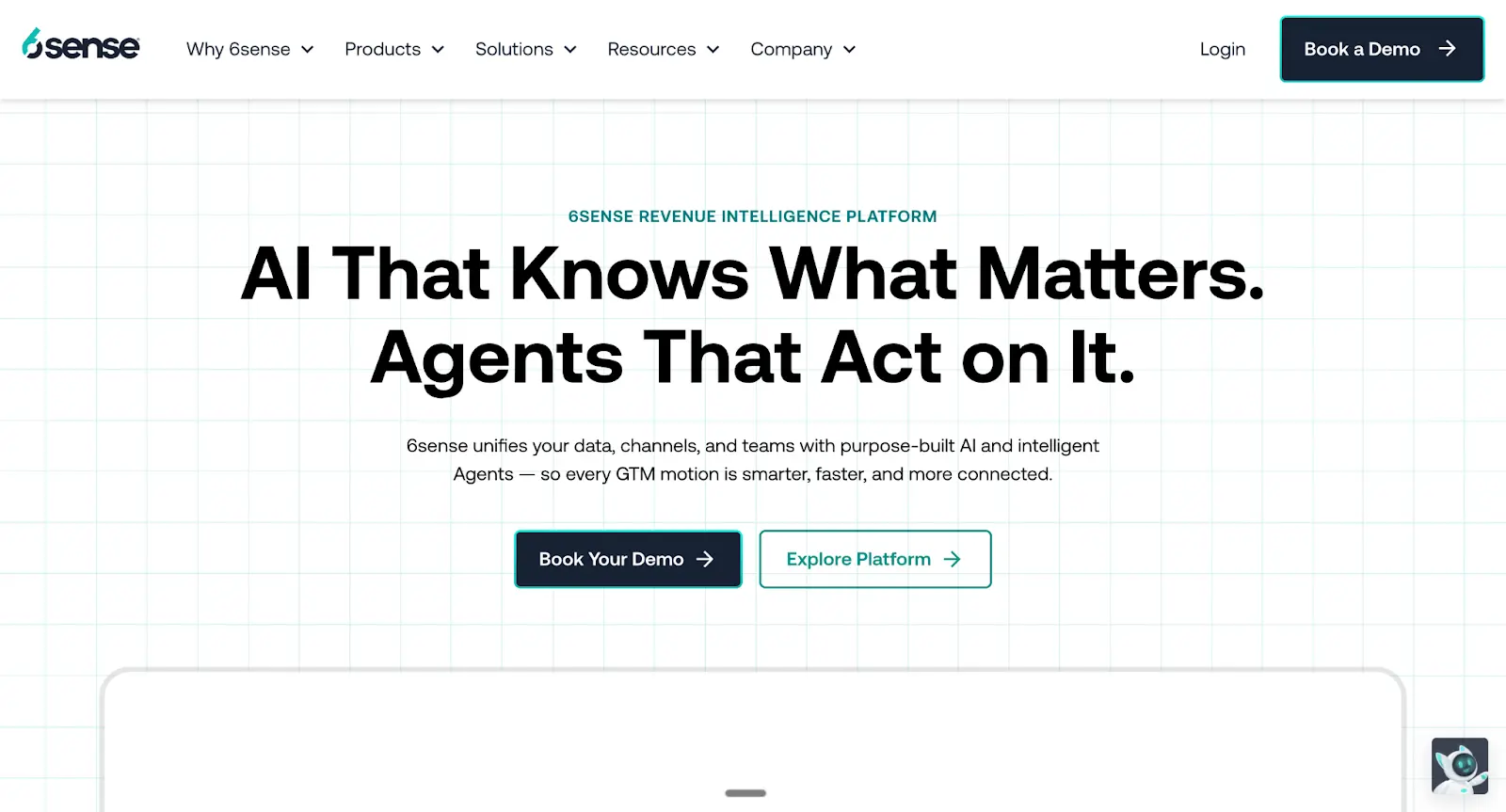
6sense is an account-based marketing platform built around predictive intent modeling. It analyzes a combination of first-party and third-party signals to help enterprise teams identify accounts that are researching relevant topics and moving through longer buying cycles.
These insights are typically used to guide ABM campaigns, advertising strategy, and sales prioritization rather than to trigger immediate inbound engagement.
Enterprise-Only Focus
6sense is designed primarily for large organizations with established ABM programs. The platform’s pricing, data requirements, and operational complexity make it less suitable for smaller teams or those without dedicated ABM resources.
Long Setup Time
Because of its scope, 6sense requires significant setup and ramp time. Teams must configure data sources, account models, scoring logic, and integrations before seeing full value. It is best suited for organizations willing to invest in long-term ABM infrastructure rather than quick inbound activation.
11. Lead411
Best for: Mid-market outbound
Intent Plus Contact Data
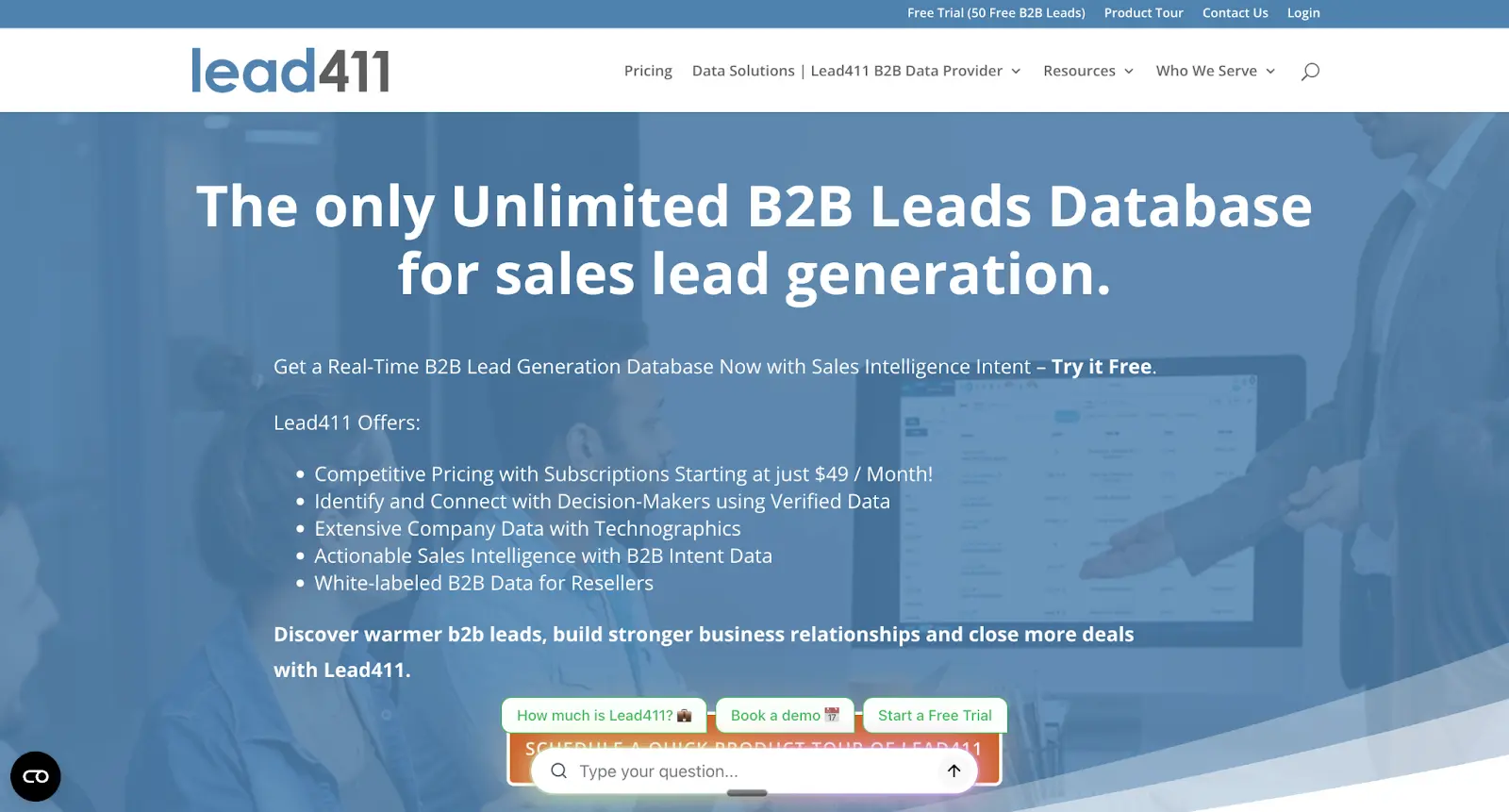
Lead411 combines contact-level data with basic intent indicators to support outbound sales teams. It helps reps identify prospects, enrich records, and prioritize outreach based on signals such as buying activity or funding events.
This makes it a practical option for mid-market organizations running SDR-led outbound programs.
Not Inbound Focused
Lead411 is designed primarily for outbound execution, not inbound visitor identification. It does not capture real-time website engagement or provide workflows for acting on anonymous inbound traffic.
As a result, Lead411 is best suited for teams focused on outbound prospecting and list-driven outreach, rather than those looking to convert live website engagement into pipeline.
12. Leadsforge
Best for: Prospect list building
Campaign-Driven Prospecting
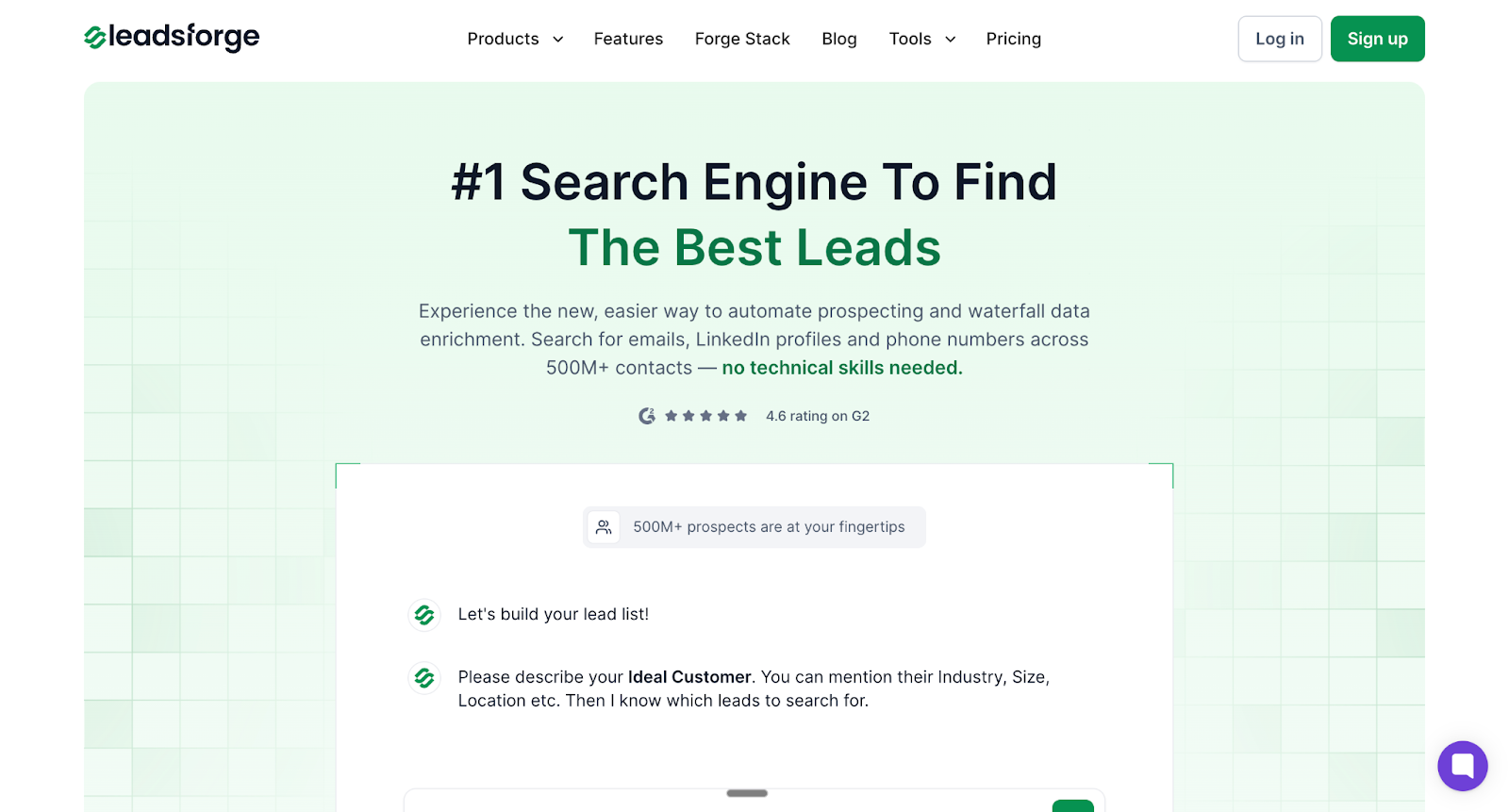
Leadsforge is a lead generation platform focused on campaign-driven prospect list creation. Teams define targeting criteria such as industry, role, or company attributes, and the platform generates outbound-ready lists for sales or marketing campaigns.
Its value lies in sourcing prospects efficiently for outbound motions rather than analyzing inbound behavior.
No Visitor Identification
Leadsforge does not identify anonymous website visitors or capture engagement from live web traffic. It does not provide insight into which companies are visiting your site or when buyers are actively researching.
As a result, Leadsforge is best suited for teams that need prospect sourcing for outbound campaigns, not for organizations looking to convert inbound website engagement into pipeline.
13. Leadfeeder
Best for: Basic B2B visitor tracking
Google Analytics–Based Tracking
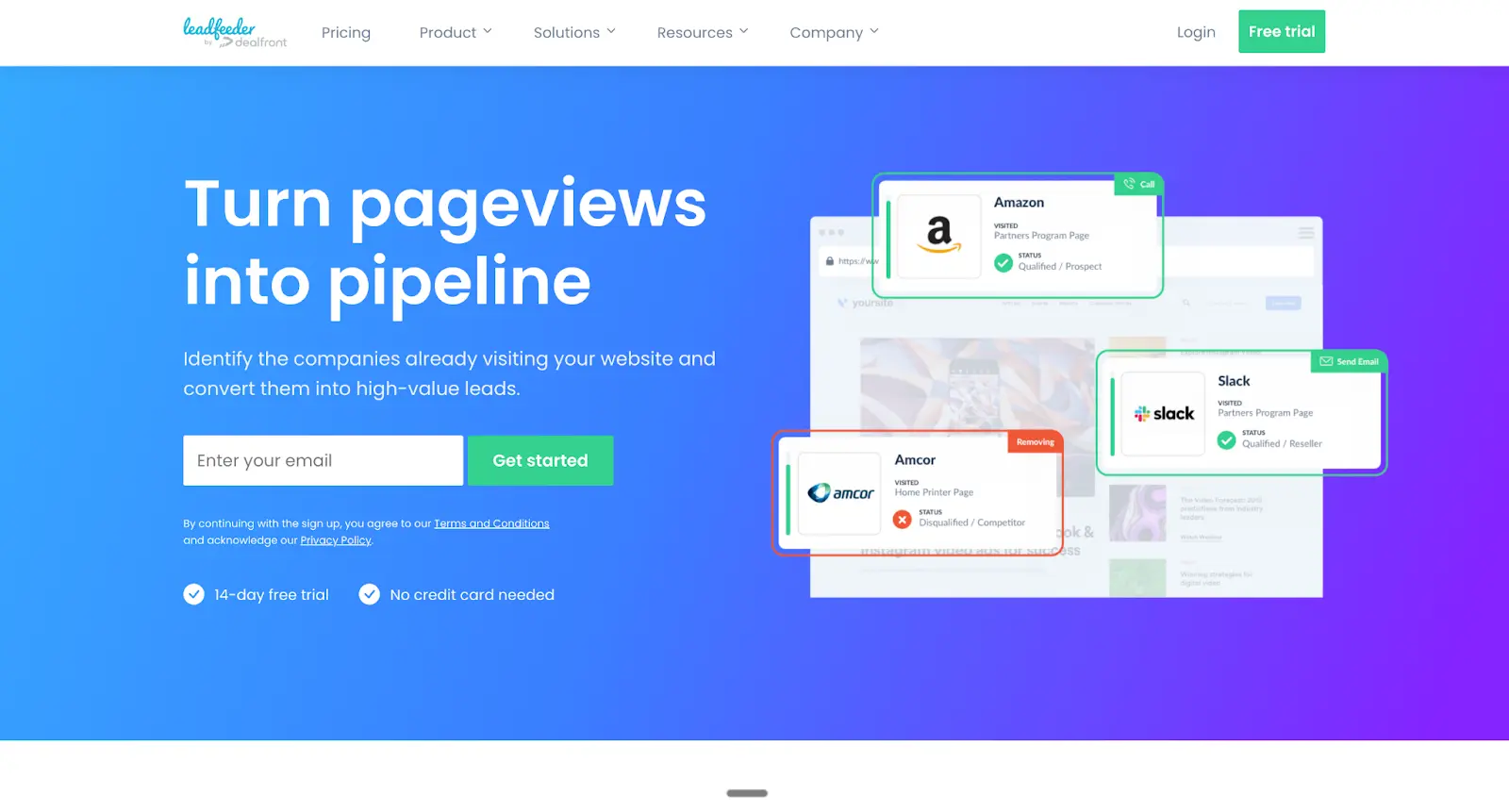
Leadfeeder identifies companies visiting a website using Google Analytics data. It shows which organizations have visited, what pages they viewed, and how often they return, making it easy to gain basic visibility into inbound traffic.
The platform is simple to deploy and commonly used by teams looking for lightweight visitor tracking without complex setup.
Identification Without Activation
While Leadfeeder provides company-level identification, it does not natively support real-time activation. Features such as automated routing, conversations, or scheduling based on live engagement are not built into the platform.
Leadfeeder is best suited for teams that want basic awareness of website visitors, rather than those seeking to act immediately on inbound intent or drive conversion in real time.
Lead Forensics Alternatives by Use Case (Quick Decision Table)
Use Case
Best Tool
Why It Fits
Conversion-first inbound
Knock AI
Combines form-free visitor identification with real-time intent signals and activation, enabling teams to convert anonymous traffic into qualified pipeline while buyers are actively engaged.
Enterprise ABM
6sense
Built for predictive account intent, long-cycle buying journeys, and enterprise-scale ABM programs.
Outbound enrichment
ZoomInfo, Cognism
Provide deep company and contact-level data to support outbound prospecting and SDR workflows.
Budget visitor tracking
Leadfeeder, Visitor Queue
Offer affordable, easy-to-deploy company-level visibility into website visitors without complex setup.
Privacy-first workflows
Opensend
Focuses on consent-driven, first-party identity resolution, making it suitable for teams prioritizing privacy and regulatory compliance.
Knock AI vs Lead Forensics (Wise Buyer’s Choice)
Area
Lead Forensics
Knock AI
Identification method
IP-based company matching
Multi-signal, first-party engagement across web and marketing assets
Forms required
No (visibility only)
No (conversion-ready)
Real-time activation
❌
✅
Intent detection
Limited
Built-in, behavior-driven
Primary outcome
Reports and visibility
Qualified pipeline and action
How to read this comparison
Lead Forensics answers:Who visited? It excels at company-level visibility using IP matching, which is useful for reporting and awareness but typically requires manual follow-up or additional tools to drive outcomes.
Knock AI answers:Who’s ready and what should we do now? It connects identification to intent and activation in real time, enabling routing, conversations, and scheduling while buyers are actively engaged.
Bottom line: Choose Lead Forensics if basic, compliant company visibility is enough. Choose Knock AI if your goal is to convert anonymous engagement into pipeline without forms and without delay.
Frequently Asked Questions (FAQ)
Is there any alternative to Lead Forensics?
Yes. Several platforms offer alternatives to Lead Forensics depending on your use case. Commonly evaluated options include Knock AI, Opensend, Customers.ai, ZoomInfo, Warmly, Clearbit, and Leadfeeder. These tools vary in focus, ranging from inbound conversion and real-time engagement to outbound enrichment and basic visitor tracking.
What is the best Lead Forensics alternative in 2026?
The best alternative depends on your goal. For conversion-focused inbound teams, Knock AI is often considered the strongest Lead Forensics alternative in 2026 because it combines form-free identification with real-time intent detection and activation. Teams focused on outbound or enrichment may prefer other tools.
Why shouldn’t I choose Lead Forensics?
Lead Forensics may feel limiting if your team needs more than company-level visibility. It focuses primarily on identifying which companies visited your site, but it does not natively support real-time intent detection, automated routing, conversations, or scheduling. Teams that want to act while buyers are actively engaged often look for alternatives.
How does website visitor identification work?
Website visitor identification works by analyzing a mix of signals such as IP data, domain resolution, first-party engagement behavior, and enrichment sources. More advanced platforms combine these signals with intent analysis and CRM workflows so teams can prioritize and act on visiting accounts rather than just viewing reports.
What is the difference between deanonymization and intent?
Deanonymization answers who visited your website, usually at the company level. Intent answers how interested they are and how close they may be to buying, based on behavior such as repeated visits, content engagement, and activity patterns. Identity provides visibility, while intent provides timing and prioritization.
Is Knock AI GDPR compliant?
Yes. Knock AI is built with privacy and compliance in mind. It relies on first-party engagement signals, consent-aware workflows, and privacy-safe identification practices, making it suitable for teams operating in GDPR-regulated environments.


.svg)


.svg)
.svg)
.svg)


.svg)
.svg)


.svg)
.webp)