Best Conversational Intelligence Platforms in 2026
The best conversational intelligence platform depends on what you need to do with conversation data.
Traditionally, conversational intelligence meant recording, transcribing, and analyzing sales conversations to improve coaching, deal visibility, and seller performance. That remains the core of platforms such as Gong, Clari Copilot, Chorus by ZoomInfo, and Avoma.
But the category is expanding. Modern platforms increasingly connect conversation data to coaching → deal intelligence → CRM updates → next actions → revenue workflows. The question is no longer just what happened in a call, but what the team should do with that information.
There is also an important distinction in where the workflow begins. Some platforms analyze conversations after they happen. Others help sellers during conversations. A newer revenue workflow starts even earlier, when buyer activity indicates that a conversation should happen in the first place.
This comparison evaluates Knock AI, Gong, Salesloft, Clari Copilot, Chorus by ZoomInfo, Avoma, and Fathom across that broader workflow.
What Is Conversational Intelligence Software?
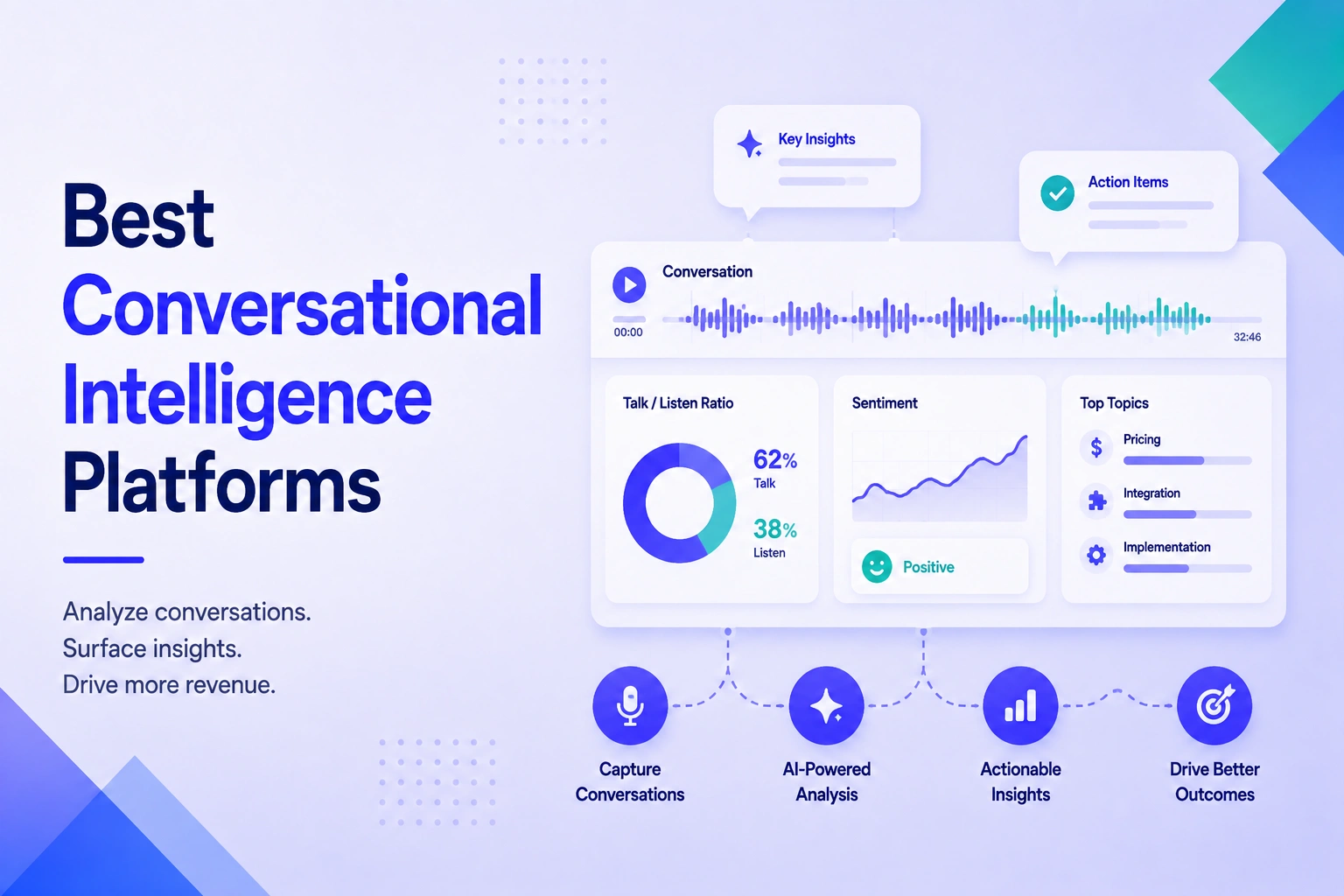
Conversational intelligence software uses AI to capture, transcribe, analyze, and interpret sales conversations so teams can identify buyer signals, improve seller performance, understand deal health, and determine what should happen next.
Modern platforms can record and transcribe calls, make conversations searchable, detect topics and sentiment, surface objections and competitor mentions, identify buyer questions, and extract important context from sales interactions. They can also support rep coaching, deal intelligence, next-step recommendations, and CRM synchronization.
Conversational intelligence is related to several adjacent categories, but they are not identical. Conversational AI uses AI to interact directly with buyers, while conversational intelligence primarily analyzes human conversations. Meeting intelligence is a broader or lighter category focused on capturing, transcribing, and summarizing meetings. Revenue intelligence combines conversation data with pipeline, account, activity, and forecasting data to provide a broader view of revenue performance.
The distinction matters when evaluating platforms because analyzing a conversation and acting on buyer intent are increasingly becoming separate parts of the revenue workflow.
What Should Conversational Intelligence Actually Do?
Conversational intelligence should do more than record sales calls. Its value comes from turning conversations into useful signals, decisions, and actions across the revenue process.
CI capability
What it should help teams do
Capture
Record calls, meetings, and customer interactions
Transcribe
Convert conversations into searchable data
Understand
Identify topics, objections, questions, sentiment, and buyer intent
Coach
Surface rep behaviors and opportunities for improvement
Prioritize
Identify important buyer and deal signals
Guide
Recommend next steps during or after interactions
Automate
Update CRM records and trigger workflows
Execute
Turn conversation signals into seller or buyer actions
Measure
Connect conversation activity to deal and revenue outcomes
The progression is important: Record → understand → recommend → act → measure.
Recording a conversation creates data. Conversational intelligence becomes valuable when that data changes what your team does next. That might mean helping a rep address an objection, flagging a deal at risk, updating the CRM automatically, prioritizing a follow-up, or triggering a broader revenue workflow.
The strongest platforms increasingly move beyond post-call analysis toward actionable intelligence. The key evaluation question is therefore not simply whether a platform can understand conversations, but whether it can turn what it learns into the right next action.
Best Conversational Intelligence Platforms Compared
The platforms below overlap, but they do not all begin with the same data or solve the same problem. Some are built around sales conversations, some connect conversation data to revenue intelligence, and others focus primarily on meeting capture and follow-up. Knock AI starts earlier, using buyer activity across on-site and off-site touchpoints to turn intent into a qualified sales conversation.
Platform
Where intelligence begins
Primary job
Where it takes action
Knock AI
Buyer activity across on-site and off-site touchpoints
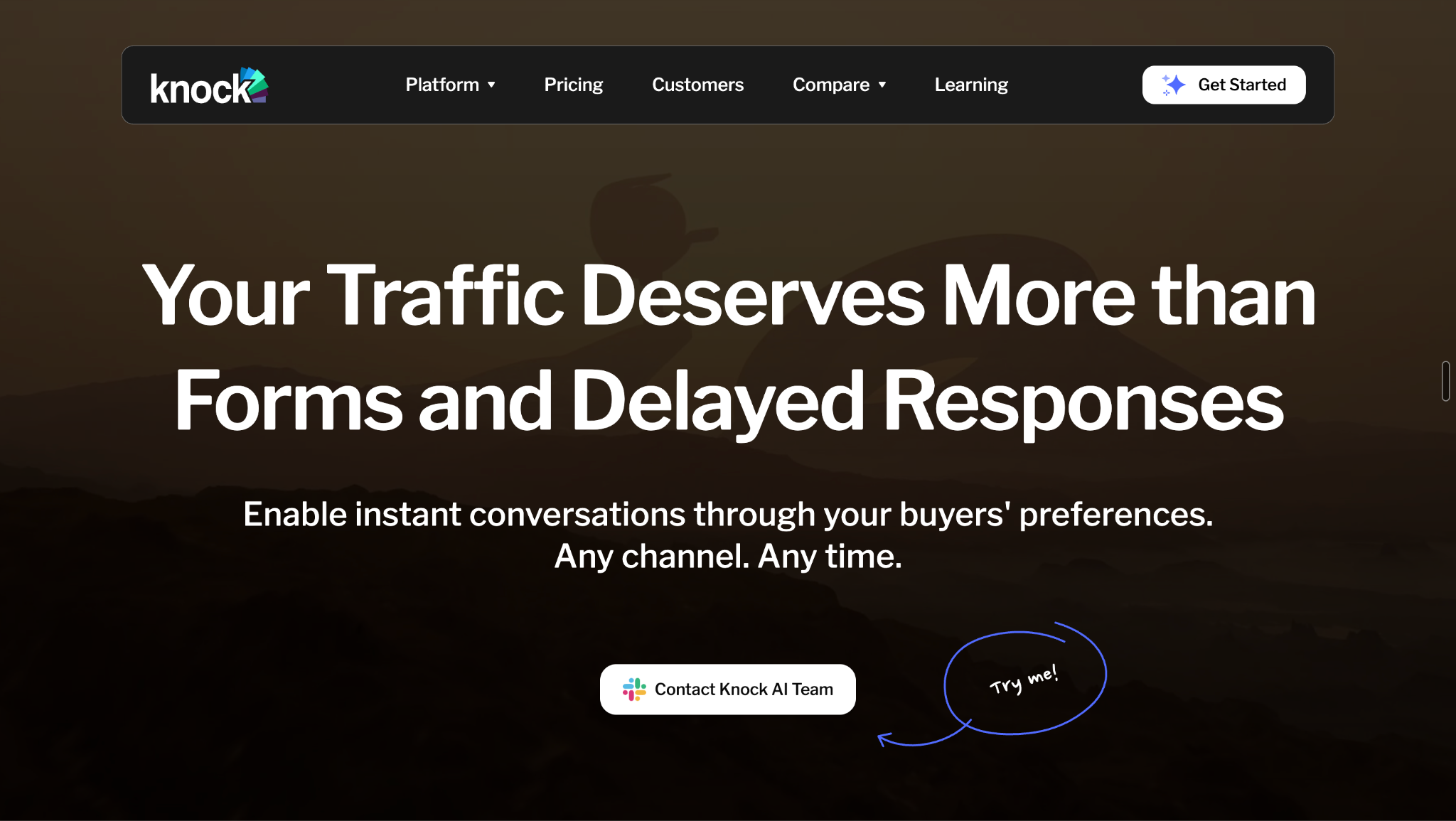
Knock AI approaches conversational intelligence from the buyer side. It identifies meaningful buyer activity, understands intent and context, and turns those signals into qualified sales conversations. Unlike conventional conversational intelligence platforms that primarily begin with a recorded sales interaction, Knock AI can enter the workflow before the first conversation happens.
Start with the buyer, not the recording
The workflow starts with identify → enrich → understand intent. Knock Reveal can identify anonymous and known website visitors and connect activity to company and buyer context. Enrichment adds contact, company, firmographic, CRM, and other contextual data that can be used for qualification and routing. Knock AI can also capture signals through Knock Links, extending the workflow beyond the website to touchpoints such as LinkedIn, G2, marketplaces, email, PDFs and documents, GitHub, events and QR codes, social channels, and shared links.
Turn intent into a conversation
Once meaningful intent is detected, Knock AI can move from intelligence to engagement. Knock Chat and AI agents can answer buyer questions, ask qualification questions, evaluate ICP fit, use buyer and company context, determine the appropriate next action, and hand the conversation to a human when needed. Engagement can happen through channels such as Slack, LinkedIn, WhatsApp, Telegram, websites, and product experiences.
Move the conversation toward revenue
The workflow can then connect qualification with routing → scheduling → CRM → pipeline. Knock AI can use ICP rules, territories, CRM ownership, rep assignment, AI agent routing, round robin logic, calendars, and segment-specific rules to determine what should happen next. Buyers can be qualified before booking, while scheduling can be embedded into forms, websites, signup flows, or product experiences. Activity and outcomes can then flow into systems such as HubSpot, Salesforce, and Marketo, with CRM mapping, meeting data, attribution, and revenue reporting connected to the workflow.
The key distinction: traditional conversational intelligence asks what happened in the conversation. Knock AI can help determine when the conversation should happen, who should have it, and what should happen next. It is therefore better understood as a buyer-intent and revenue-conversion layer that complements conventional conversational intelligence rather than simply replacing it.
Gong
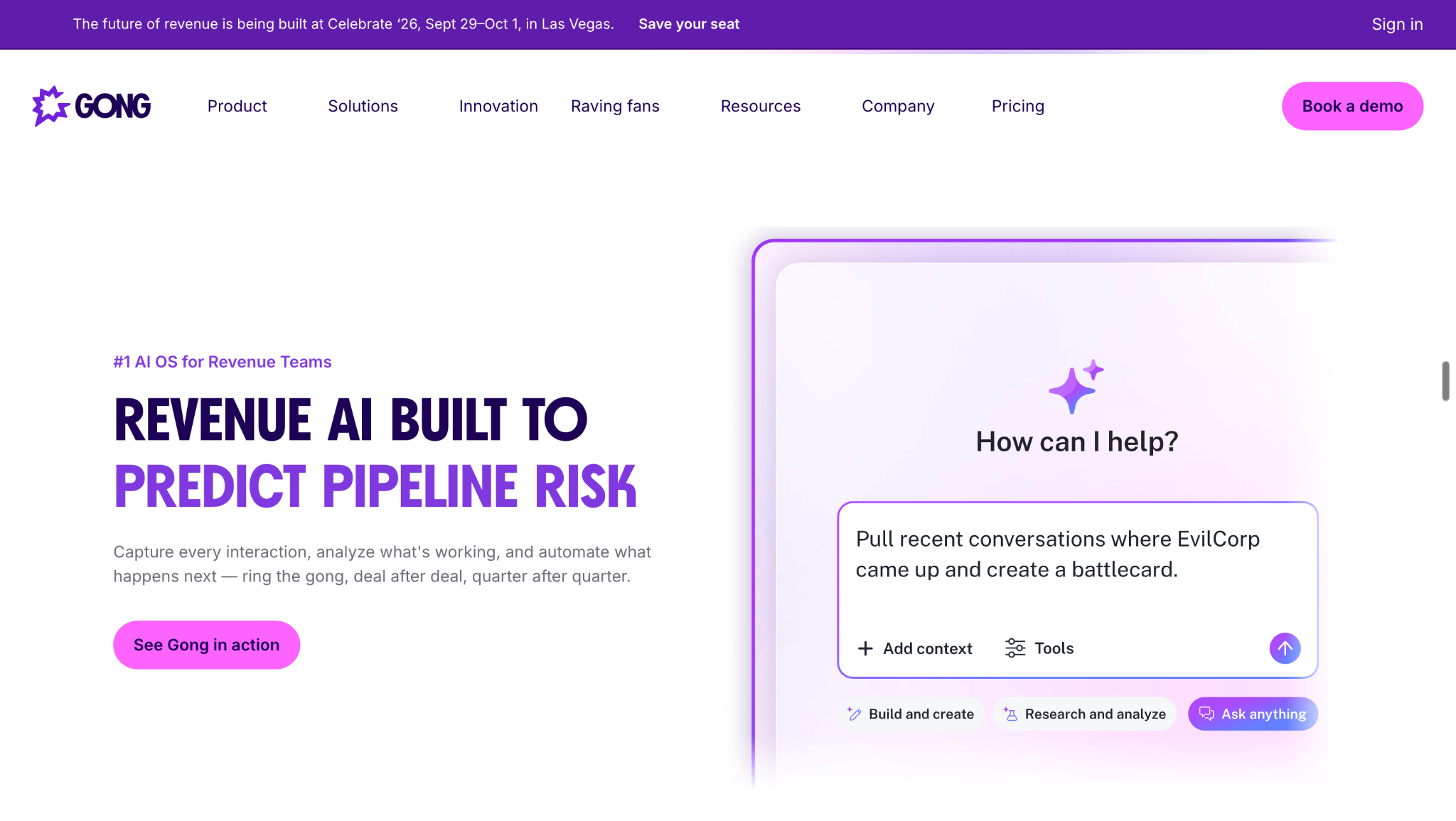
Gong is one of the strongest options for teams that want deep conversation intelligence connected to broader revenue intelligence. It records and transcribes sales conversations, then uses AI to analyze topics, buyer signals, objections, deal risks, and other patterns that can improve seller performance and deal execution. Its capabilities extend into coaching, deal inspection, forecasting, recommended next actions, and revenue intelligence.
Best fit: Enterprise revenue organizations that want conversation data to influence coaching, deal inspection, forecasting, and revenue workflows.
Watch-out: Gong's strongest workflow begins with sales conversations and revenue activity. It is most valuable when a conversation already exists and the organization needs intelligence from it. Knock approaches the workflow from the other direction, using buyer activity and intent as a signal that can initiate the conversation in the first place.
Salesloft
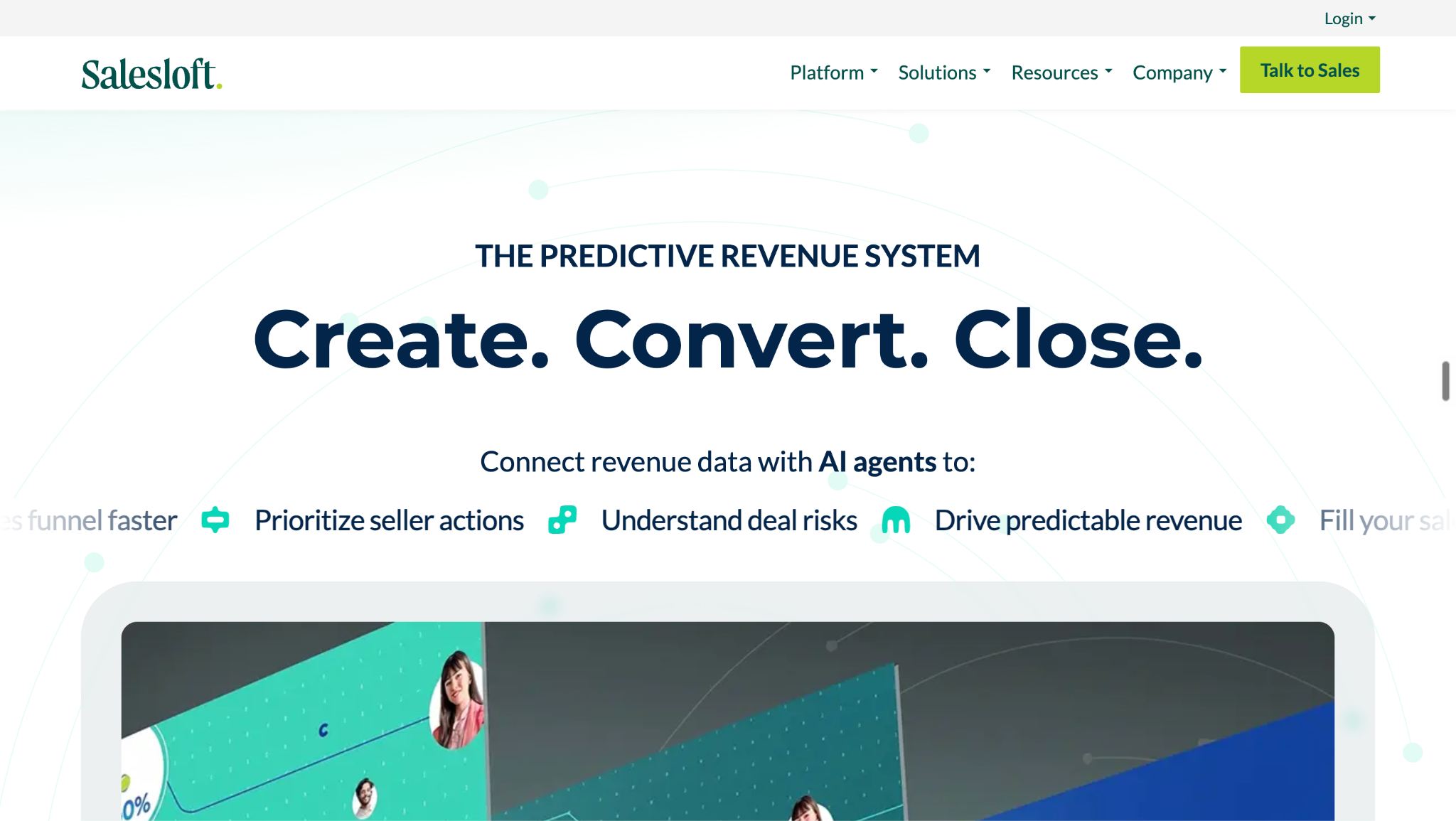
Salesloft combines conversation intelligence with broader sales execution and revenue workflows. Its platform connects buyer signals with cadences, email, calls, LinkedIn engagement, AI capabilities, seller workflows, deal engagement, CRM data, and analytics. This makes it useful for teams that want conversation insights to directly inform how sellers prioritize and execute their work.
Best fit: Revenue teams that want conversation intelligence connected directly to sales execution.
Watch-out: Its center of gravity is seller execution and revenue-team workflows. Knock is more focused on turning buyer activity and intent into the appropriate conversation, qualification, routing, and conversion path.
Clari Copilot
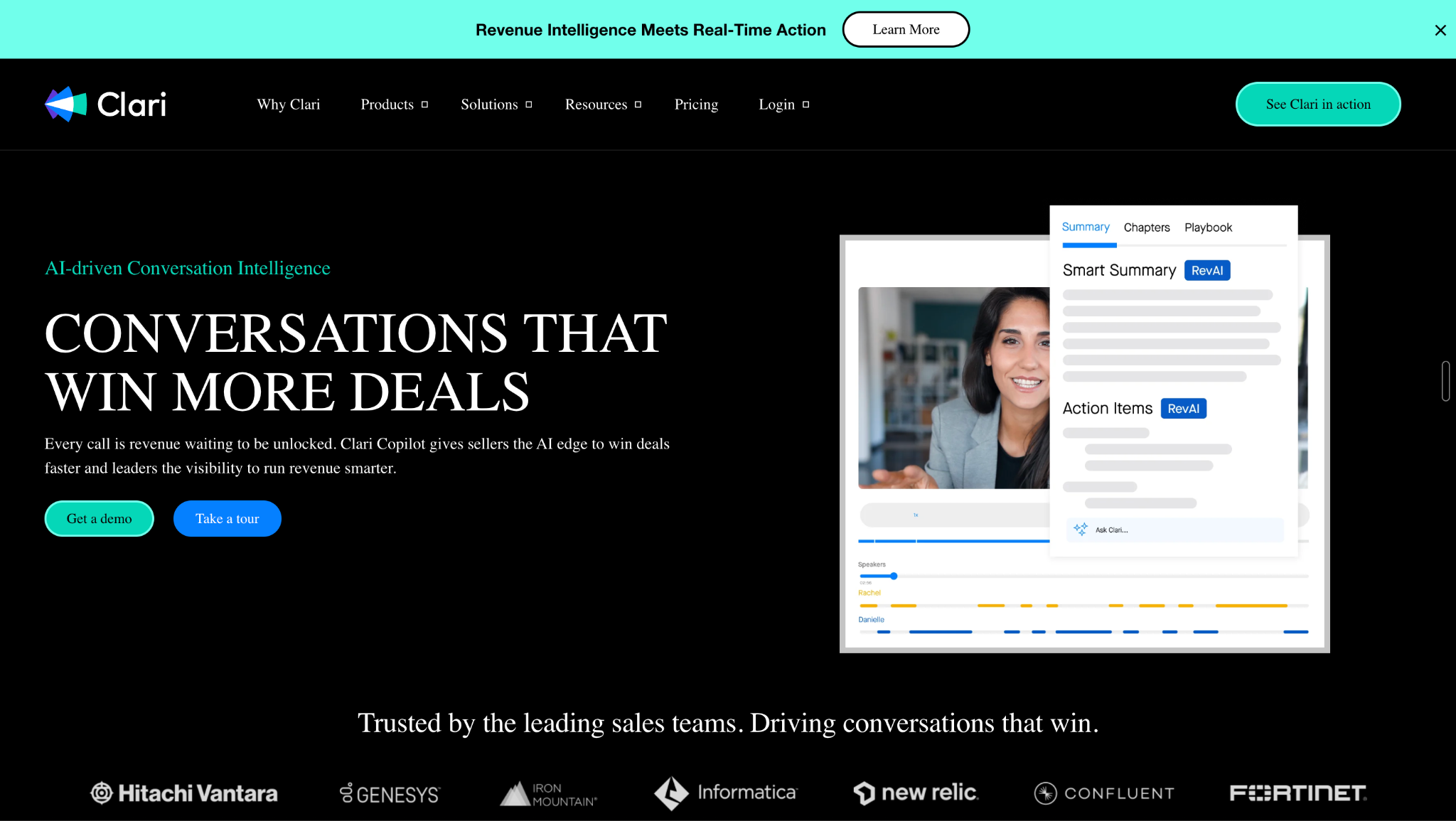
Clari Copilot brings conversation intelligence into Clari's broader revenue intelligence environment. It can capture and analyze sales conversations, surface buyer signals, support coaching, and provide context for deal inspection. The larger value comes from connecting those conversation signals with pipeline, forecasting, CRM, and other revenue data.
Best fit: Revenue organizations that want conversation signals connected to pipeline management and forecasting.
Watch-out: Clari Copilot is most valuable when conversation intelligence needs to feed a broader revenue-management system. It is not simply a call recording and transcription tool.
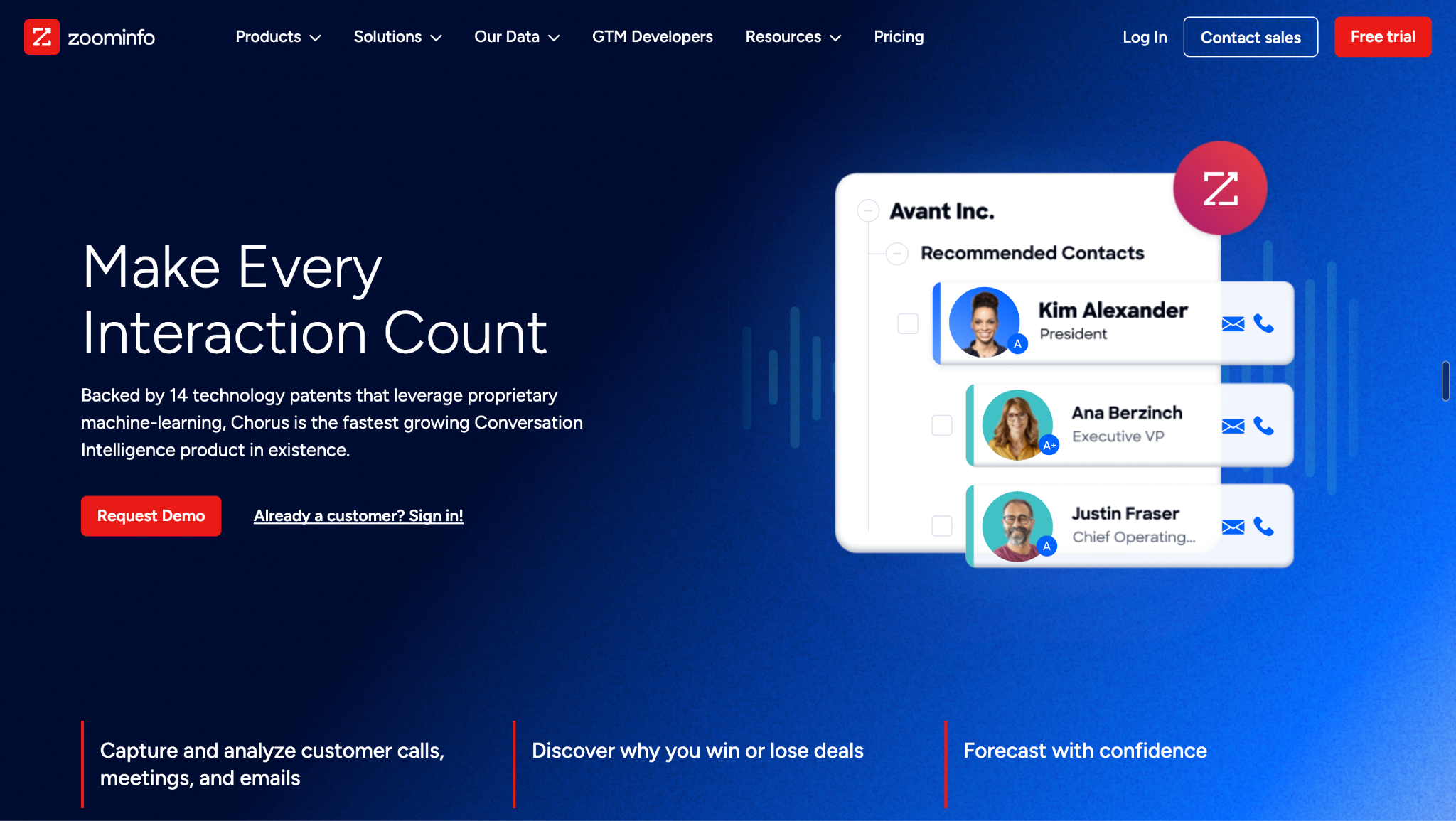
Chorus by ZoomInfo
Chorus provides conversation recording, transcription, call analysis, coaching, buyer-signal detection, and deal intelligence, with the additional advantage of connecting conversation context to ZoomInfo's broader prospect and account intelligence.
Best fit: Teams that want conversation intelligence connected to ZoomInfo's prospect and account intelligence ecosystem.
Watch-out: Chorus should not be treated as an entirely separate standalone category in every comparison. Its current positioning increasingly sits within ZoomInfo's broader Copilot and product ecosystem, making it particularly relevant for organizations already invested in ZoomInfo.
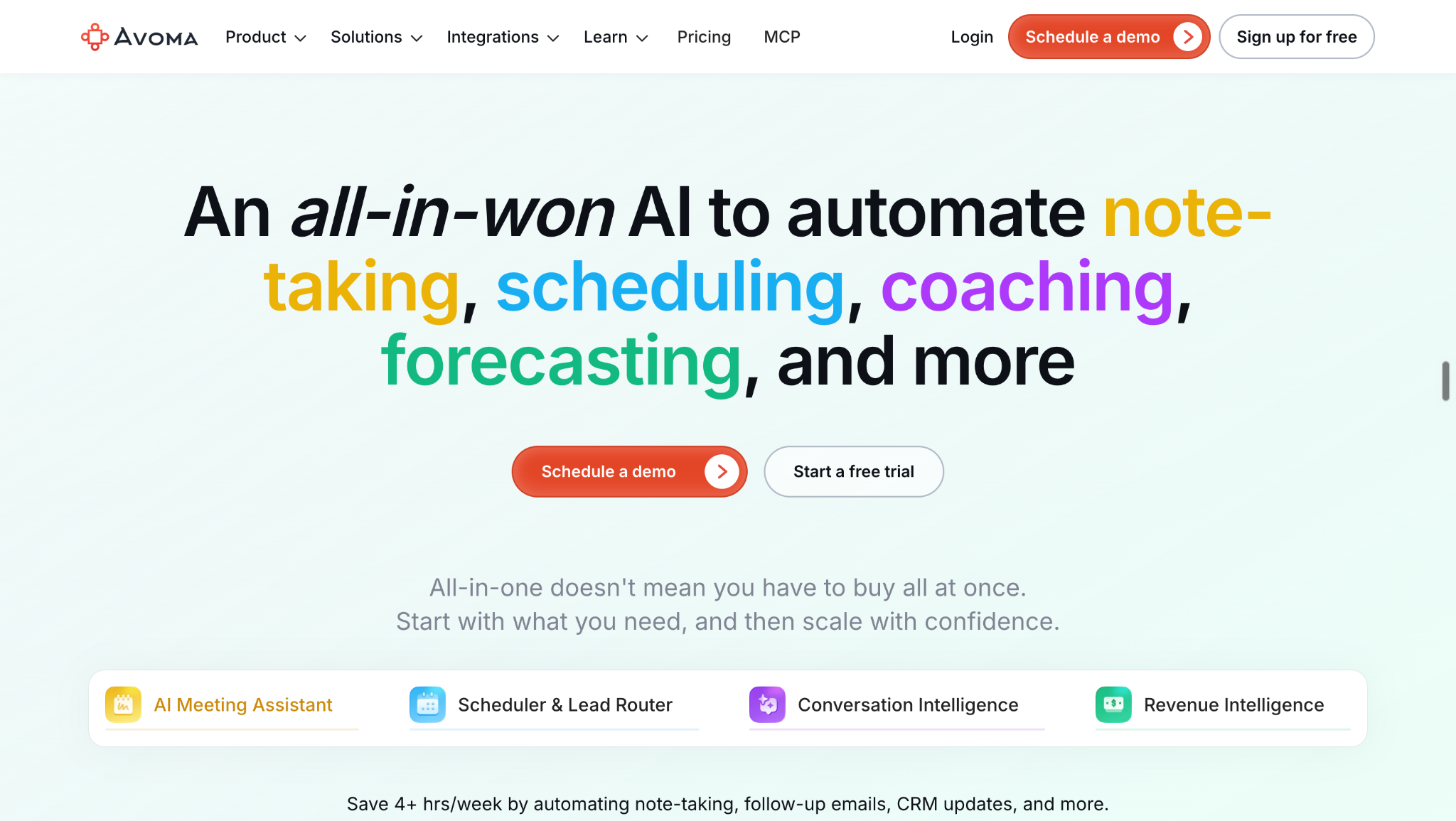
Avoma
Avoma combines meeting recording, transcription, AI summaries, conversation intelligence, coaching, meeting workflows, CRM updates, scheduling, and deal intelligence. It provides a broader meeting and conversation workflow without requiring teams to adopt a large enterprise revenue platform.
Best fit: Teams that want accessible meeting and conversation intelligence across the sales process.
Watch-out: Avoma's center of gravity remains meeting and conversation intelligence. Knock enters the workflow earlier by identifying and acting on buyer activity before a traditional sales conversation necessarily exists.
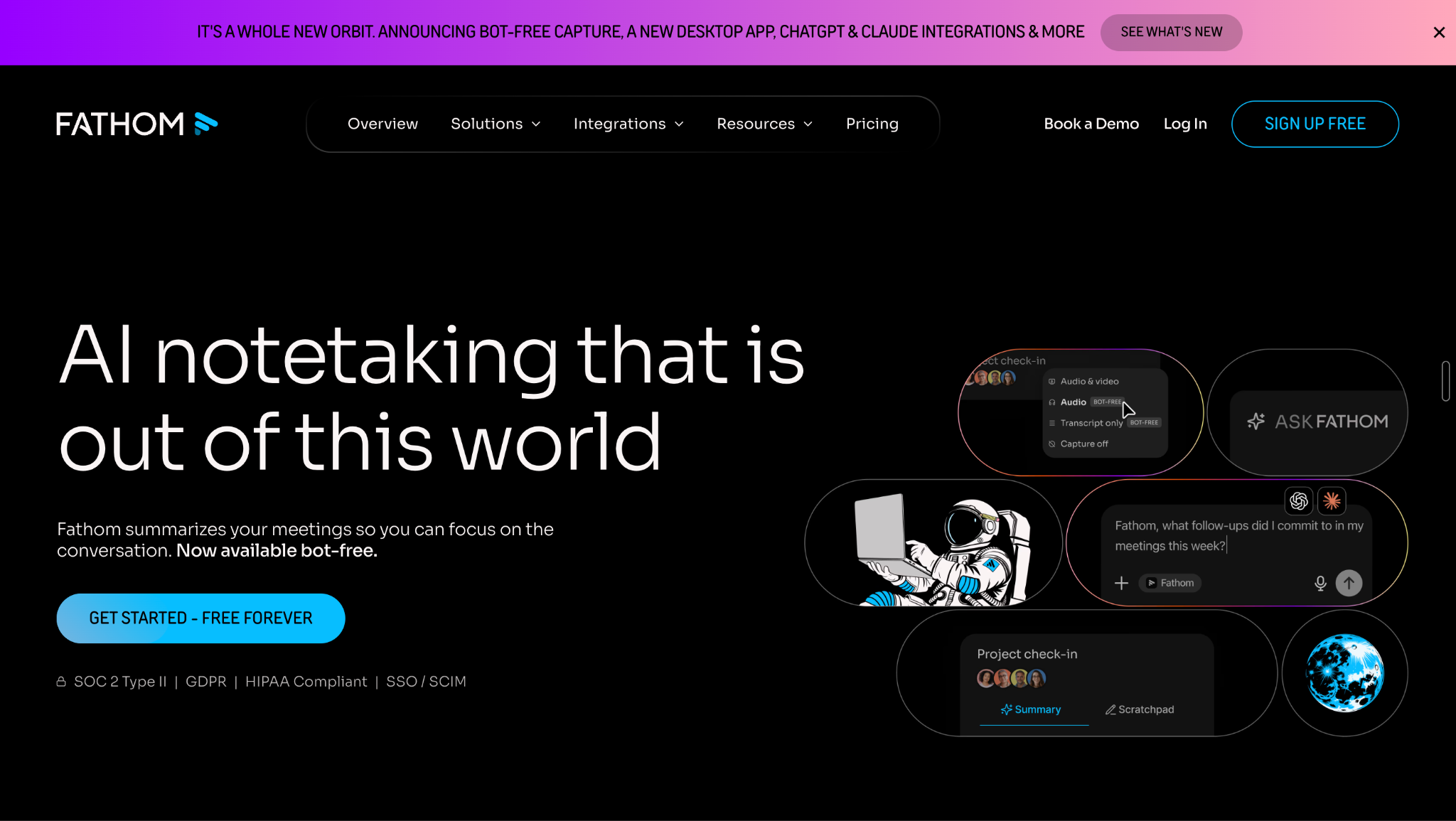
Fathom
Fathom focuses on accessible AI meeting intelligence. It records and transcribes meetings, generates summaries and action items, makes conversations searchable, supports follow-up, and connects with CRM systems.
Best fit: Teams that primarily need simple, easy-to-adopt AI meeting intelligence.
Watch-out: Fathom operates at a different level from enterprise revenue intelligence platforms. That distinction matters because AI meeting notetaking and conversational intelligence are not the same as end-to-end revenue intelligence.
How to Choose the Right Conversational Intelligence Platform
The right platform depends less on how many AI features it offers and more on where you need intelligence to enter the revenue workflow.
1. Do you need to understand conversations or create them?
If you need to analyze existing conversations, platforms such as Gong, Clari Copilot, Chorus, Avoma, and Fathom are relevant. If you want buyer activity to trigger and shape a conversation, Knock AI takes a different approach.
None is inherently better. The right starting point depends on where your process needs more intelligence.
3. Do you need post-call analysis or real-time action?
Ask whether you primarily need to know what happened, what the rep should do next, or what the buyer should experience next.
4. What systems need to receive the intelligence?
Consider your CRM, sales engagement platform, marketing automation, calendars, workflows, Slack, and product experiences. Intelligence is more useful when it can trigger action across the systems your team already uses.
This is where revenue attribution matters. Knock's Website Revenue reporting can connect high-intent buyer activity and CTA engagement with leakage, converted accounts, deals, and revenue, helping teams understand whether buyer signals actually translate into pipeline.
Conversational Intelligence vs. Conversational AI vs. Revenue Intelligence
These categories overlap, but they solve different parts of the revenue workflow.
Category
Primary job
Conversational intelligence
Analyze conversations and surface insights
Conversational AI
Interact with buyers using AI
Meeting intelligence
Capture, summarize, and organize meetings
Revenue intelligence
Combine activity and conversation signals with pipeline and revenue context
Buyer-intent automation
Detect meaningful buyer activity and trigger revenue actions
The useful distinction is where the intelligence starts and whether the system can act on it.
CI asks: What happened?
Revenue intelligence asks: What does it mean for the deal?
Conversational AI asks: What should the AI say or do?
Buyer-intent automation asks: Is this buyer showing enough intent that we should act now?
These categories are increasingly connected. A sales conversation can reveal intent, revenue intelligence can put that signal into deal context, and conversational AI can respond to the buyer. Buyer-intent automation extends the workflow further upstream by recognizing meaningful activity before a traditional sales conversation takes place. That makes it a complementary layer rather than simply another name for conversational intelligence.
What Should Conversational Intelligence Do With Buyer Intent?
Conversational intelligence can identify intent from questions, objections, engagement patterns, competitor mentions, buying-stage language, and stated next steps during sales conversations. But buyer intent can exist before a sales conversation happens.
A buyer may already be researching a product, returning to important pages, interacting with content, clicking a shared link, or engaging through another buyer touchpoint. The opportunity is to connect those signals with the conversation workflow:
Knock's Intent approach emphasizes patterns such as clicks, content interactions, frequency, recency, and engagement rather than treating a single page view as proof of intent. This helps distinguish meaningful buying behavior from isolated activity and creates an earlier signal for deciding when a conversation should happen.
The result is a broader workflow: conversational intelligence explains what buyers say, while buyer-intent automation helps identify when they are ready to say it to someone.
Frequently Asked Questions
What is conversational intelligence software?
Conversational intelligence software uses AI to capture, transcribe, analyze, and interpret sales conversations to surface buyer insights, improve seller performance, and identify useful next actions.
What are the best conversational intelligence platforms?
The leading options include Knock AI for buyer-intent-driven conversation workflows, Gong for conversation and revenue intelligence, Salesloft for conversation intelligence connected to sales execution, Clari Copilot for conversation and revenue management, Chorus by ZoomInfo for conversation and account intelligence, Avoma for meeting and conversation intelligence, and Fathom for accessible AI meeting intelligence.
What is the difference between conversational intelligence and conversational AI?
Conversational intelligence analyzes and interprets conversations that happen between buyers and sellers. Conversational AI actively participates in those conversations by answering questions, providing information, or guiding interactions.
Can conversational intelligence identify buyer intent?
Yes. Intent can be inferred from questions, objections, engagement, and buying-stage signals in conversations. Modern revenue systems can also identify intent before a conversation through activity → identity → context → intent.
Can conversational intelligence help convert buyers into pipeline?
Yes, but there is an important distinction. Traditional CI primarily analyzes an existing conversation. Platforms such as Knock AI can use buyer signals to initiate, qualify, route, and schedule conversations, connecting buyer activity to CRM and pipeline outcomes.


.svg)


.svg)
.svg)
.svg)


.svg)
.svg)


.svg)