What Lead Generation Tools Do You Recommend for Mortgage Companies?
Mortgage companies can generate demand from a wide range of channels, including paid search, SEO, social media, referrals, mortgage marketplaces, websites, and existing customer databases. But generating an inquiry is only the beginning. The real challenge is what happens after someone raises their hand.
Mortgage shoppers increasingly interact with lenders through digital channels. In a 2024 Fannie Mae survey, 86% of recent homebuyers said they preferred completing a mortgage or rental application mainly online, while 65% preferred searching for a home mainly online. At the same time, mortgage remains a relationship-driven purchase: consumers still value personal guidance when dealing with complex decisions such as loan terms and final documents. (Source)
That combination creates a difficult lead-generation environment. Mortgage companies need to capture digital demand without losing the human interaction that helps move a borrower forward.
Speed matters, too. Research from Insellerate, cited by Structurely in 2026, found that 40% of new mortgage leads were never contacted, while the average response time was 19 hours. The research also reported that leads contacted within five minutes converted at 21 times the rate of leads contacted at the 30-minute mark. These figures are specific to the cited Insellerate research, but they illustrate how quickly a fresh mortgage inquiry can lose value when follow-up is delayed.
There is another challenge: mortgage shoppers do not always compare multiple lenders. Fannie Mae found that 36% of 2021 homebuyers received only one mortgage quote, with comfort with the first lender and satisfaction with the first quote among the leading reasons. Earlier CFPB research similarly found that 77% of surveyed borrowers ultimately applied with only one lender or broker. (Source)
So the right technology is not necessarily the tool that generates the most leads. It depends on where a mortgage company's revenue process needs support, whether that means creating owned demand, accessing existing borrower demand, managing leads, nurturing relationships, or identifying and converting high-intent B2B opportunities.
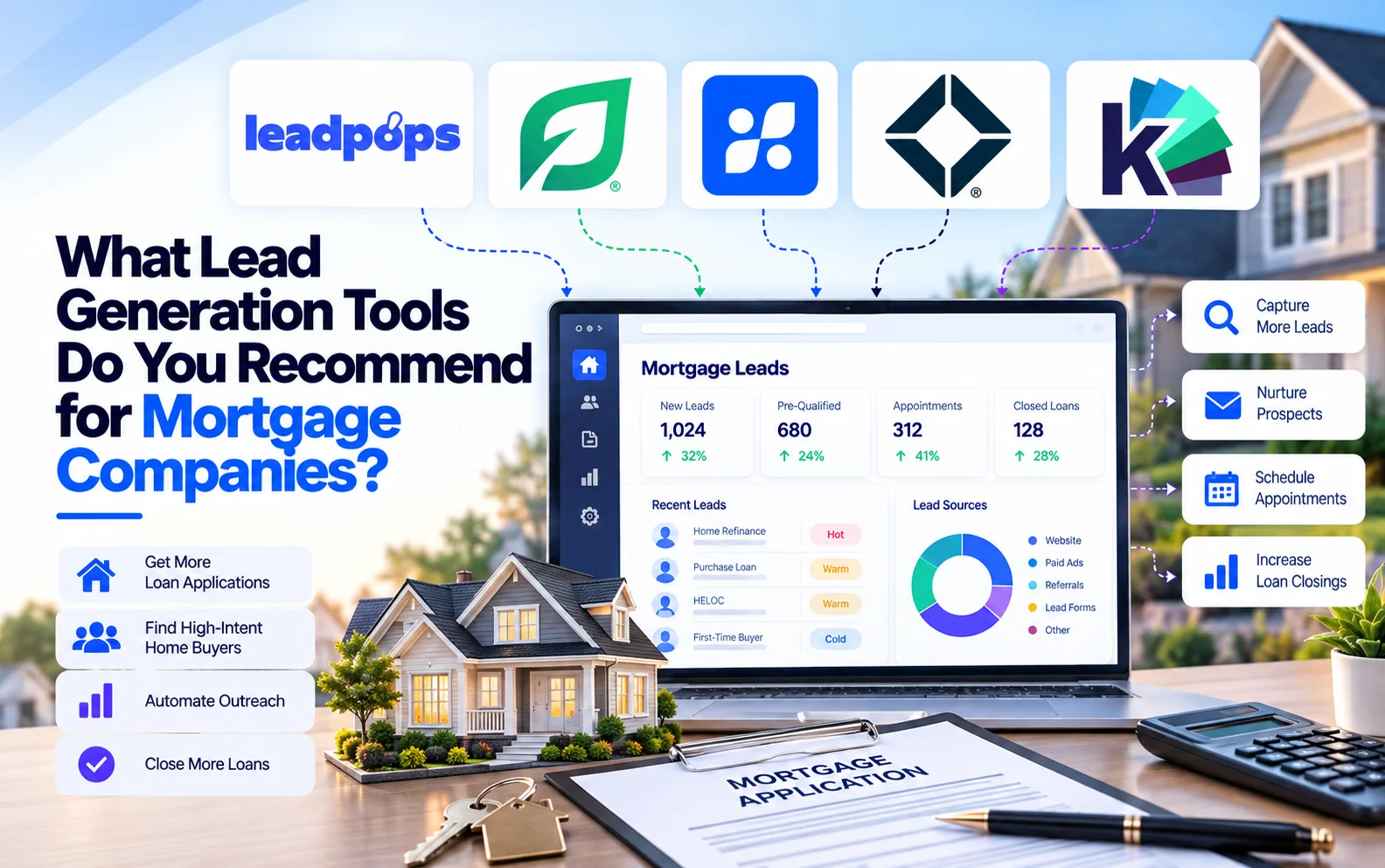
In this guide, we'll look at five tools that serve different roles in that process: LeadPops, LendingTree, Bankrate, Total Expert, and Knock AI.
What Should Mortgage Companies Look for in a Lead Generation Tool?
The right mortgage lead generation tool should be evaluated on more than the number of leads it can generate. Companies should consider where those leads come from, how quickly they can be acted on, and whether the technology helps move opportunities toward funded loans.
Factor
What to Look For
Why It Matters
Lead quality and intent
Relevant mortgage intent, lead source, borrower context, and qualification signals
More leads do not necessarily mean more funded loans. Higher-quality opportunities give teams a better chance of reaching prospects who are actually in the market.
Lead ownership
Owned vs. purchased leads, and exclusive vs. shared opportunities
Ownership affects how much control a company has over the relationship and whether other lenders may be pursuing the same prospect.
Speed to lead
Fast notifications, automated responses, and immediate assignment to the right person
Mortgage inquiries can lose value quickly when prospects are actively comparing options.
Conversion workflow
Support for moving prospects from lead → qualified opportunity → application → funded loan
A lead generation tool should ultimately contribute to downstream revenue, not just increase lead volume.
Cost beyond CPL
Cost per qualified lead, application, funded loan, and ultimately revenue generated
CPL alone can make an expensive lead source look attractive if the leads rarely become funded loans.
Best Lead Generation Tools for Mortgage Companies Compared
Tool
Primary Role
Primary Demand / Relationship Source
Lead / Relationship Type
Qualification & Intent
Engagement
Best Fit
LeadPops
Mortgage lead generation and conversion
Owned websites, landing pages, and funnels
Owned mortgage leads
Form and funnel-based
Website and marketing workflows
Mortgage companies building an owned lead generation engine
LendingTree
Mortgage lead marketplace
Existing borrower demand
Purchased marketplace leads
Lead-level criteria
Loan officer follow-up
Companies looking to supplement their pipeline with purchased mortgage leads
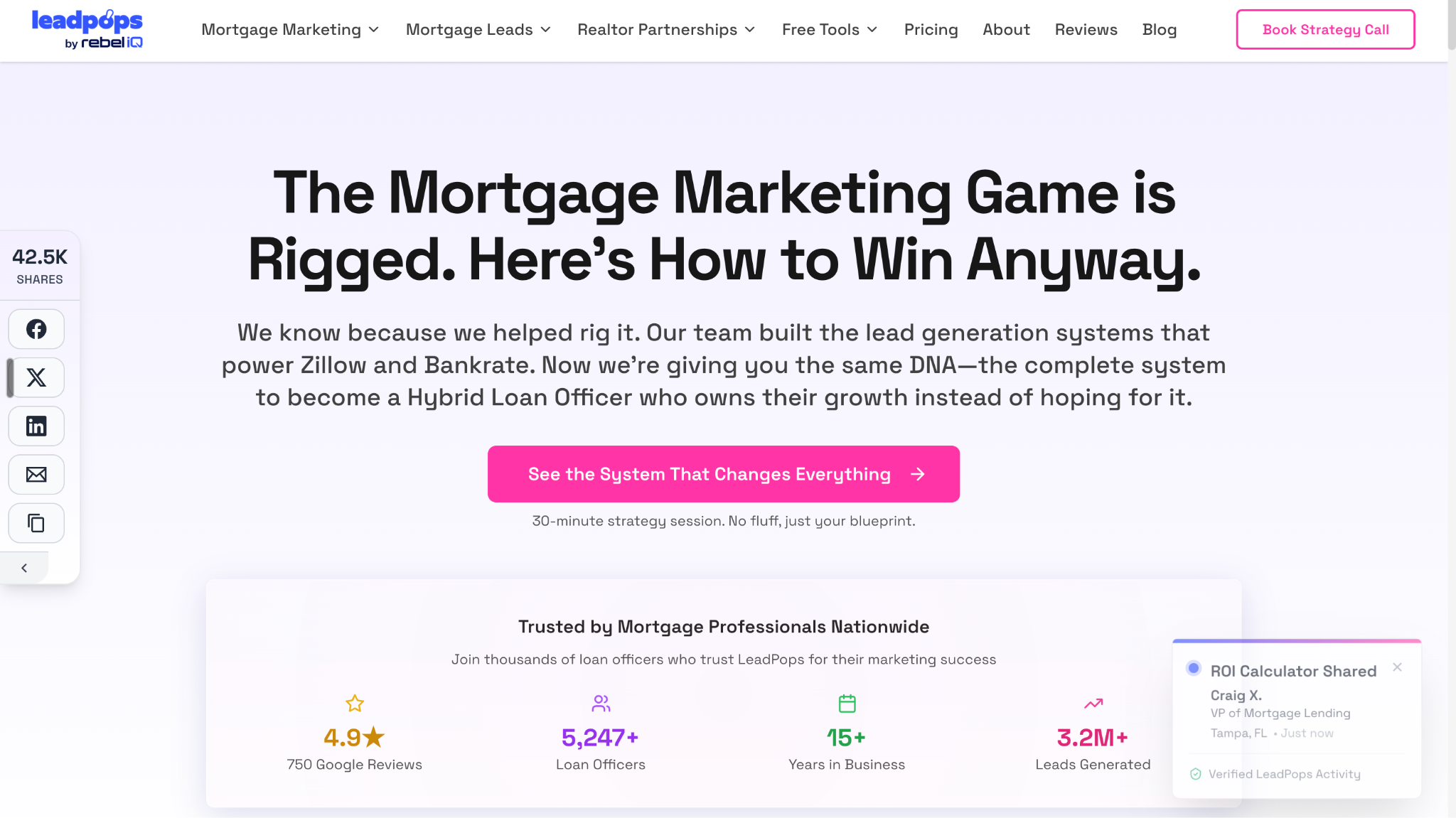
LeadPops focuses on helping mortgage companies create and capture leads through digital marketing assets and conversion-focused experiences. Its mortgage-focused offering includes:
Mortgage websites
Landing pages
Lead capture
Mortgage calculators
Conversion-focused funnels
Mortgage marketing tools
Where It Fits
Traffic → Website/Funnel → Lead
LeadPops sits primarily at the acquisition and lead-capture stage, helping mortgage companies turn website and marketing traffic into inquiries.
Best For
Mortgage companies that want to build and control their own mortgage lead generation infrastructure rather than relying entirely on purchased leads or third-party marketplaces.
What to Consider
LeadPops is primarily focused on creating and capturing mortgage demand. Companies that need more extensive CRM management, ongoing relationship nurture, or other downstream workflows may need additional technology alongside it.
2. LendingTree
What LendingTree Does
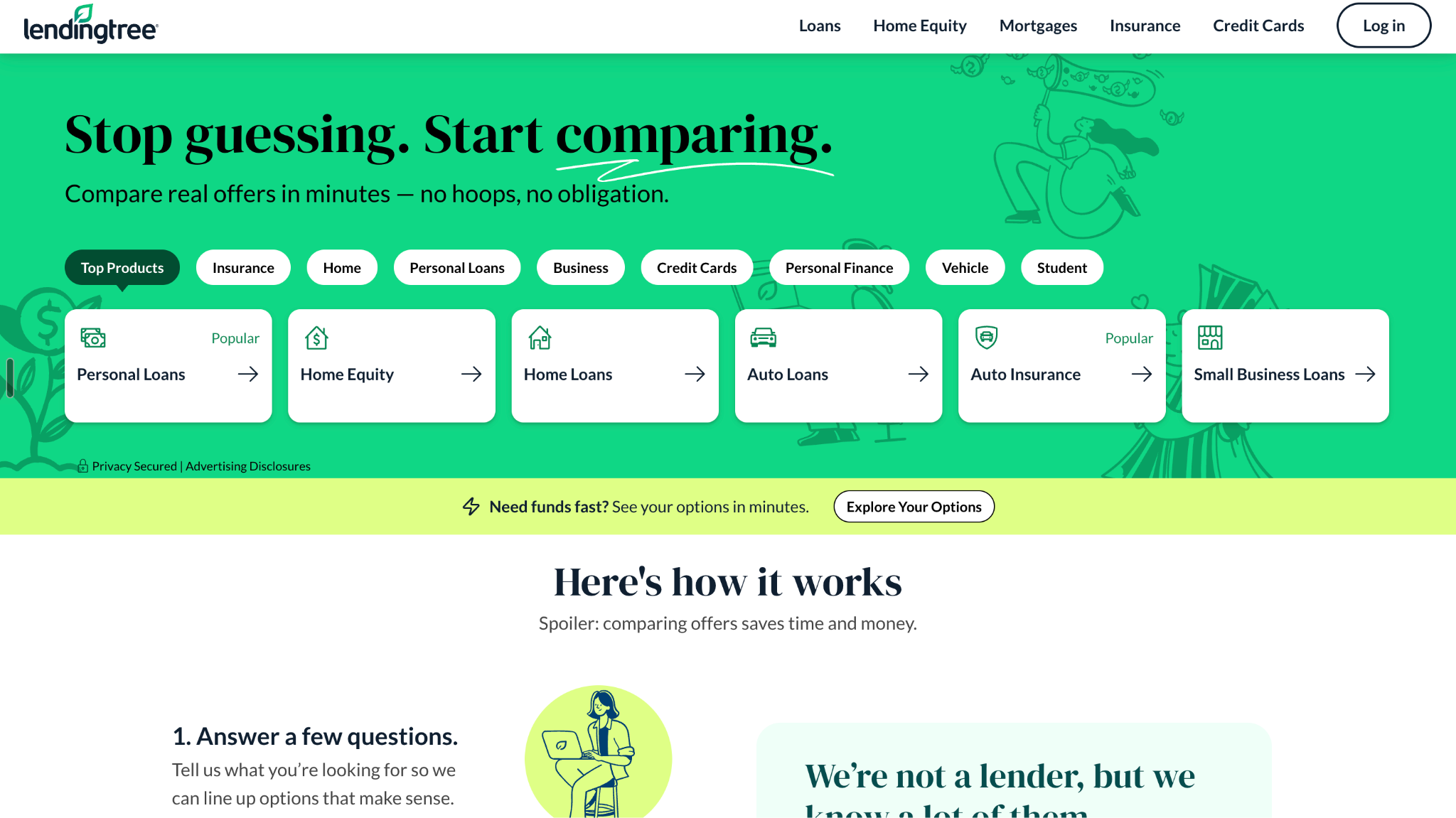
LendingTree operates as a marketplace that connects consumers looking for financial products with providers. For mortgage companies, it can provide access to consumers who are actively looking for mortgage options.
Key functions include:
Mortgage lead marketplace
Access to borrower demand
Lead purchasing
Lead distribution
Consumer comparison activity
Where It Fits
Existing Borrower Demand → Purchased Lead → Loan Officer
Rather than requiring the mortgage company to generate all of the demand itself, LendingTree provides access to consumers already searching for mortgage products.
Best For
Mortgage companies that want to supplement their existing acquisition channels with purchased mortgage leads.
What to Consider
Companies evaluating purchased mortgage leads should consider factors such as:
The economics of purchased leads should ultimately be evaluated against downstream outcomes rather than CPL alone.
3. Bankrate
What Bankrate Does
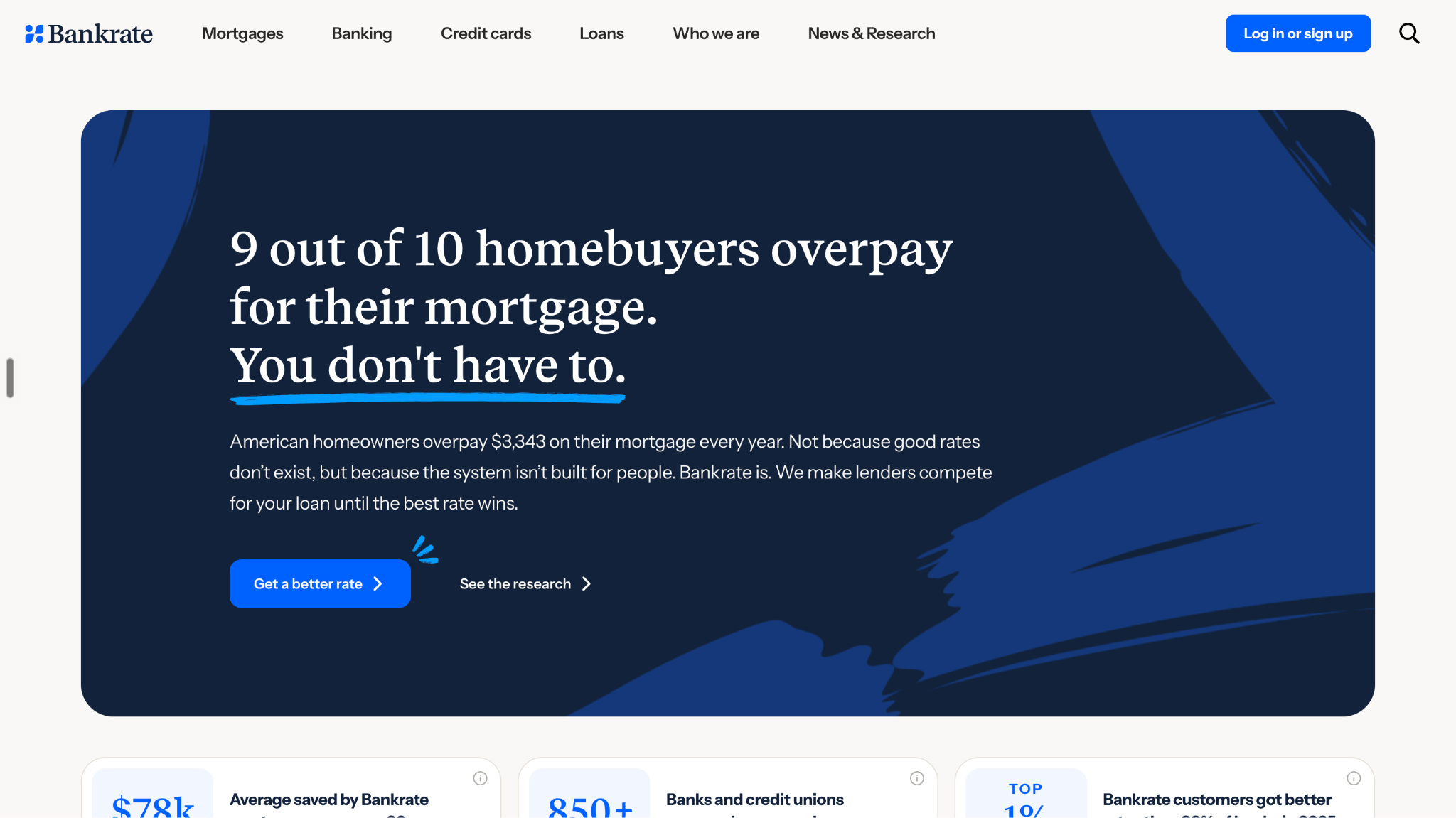
Bankrate provides financial research and comparison content that attracts consumers researching products such as mortgages and mortgage rates.
For mortgage companies, the relevant opportunity is access to consumers already engaged in financial research.
Key areas include:
Mortgage research
Rate comparison
Financial product discovery
Mortgage-related consumer demand
Where It Fits
Mortgage Research → Rate Shopping → Lead Opportunity
Bankrate sits earlier in the buyer journey, where consumers are researching mortgage options and comparing financial information.
Best For
Mortgage companies looking to reach consumers who are actively researching mortgage rates, loan options, and related financial products.
What to Consider
Bankrate is primarily an audience and demand channel, rather than a complete mortgage CRM or relationship-management platform. Companies using it still need an effective process for responding to, qualifying, and converting the resulting opportunities.
4. Total Expert
What Total Expert Does
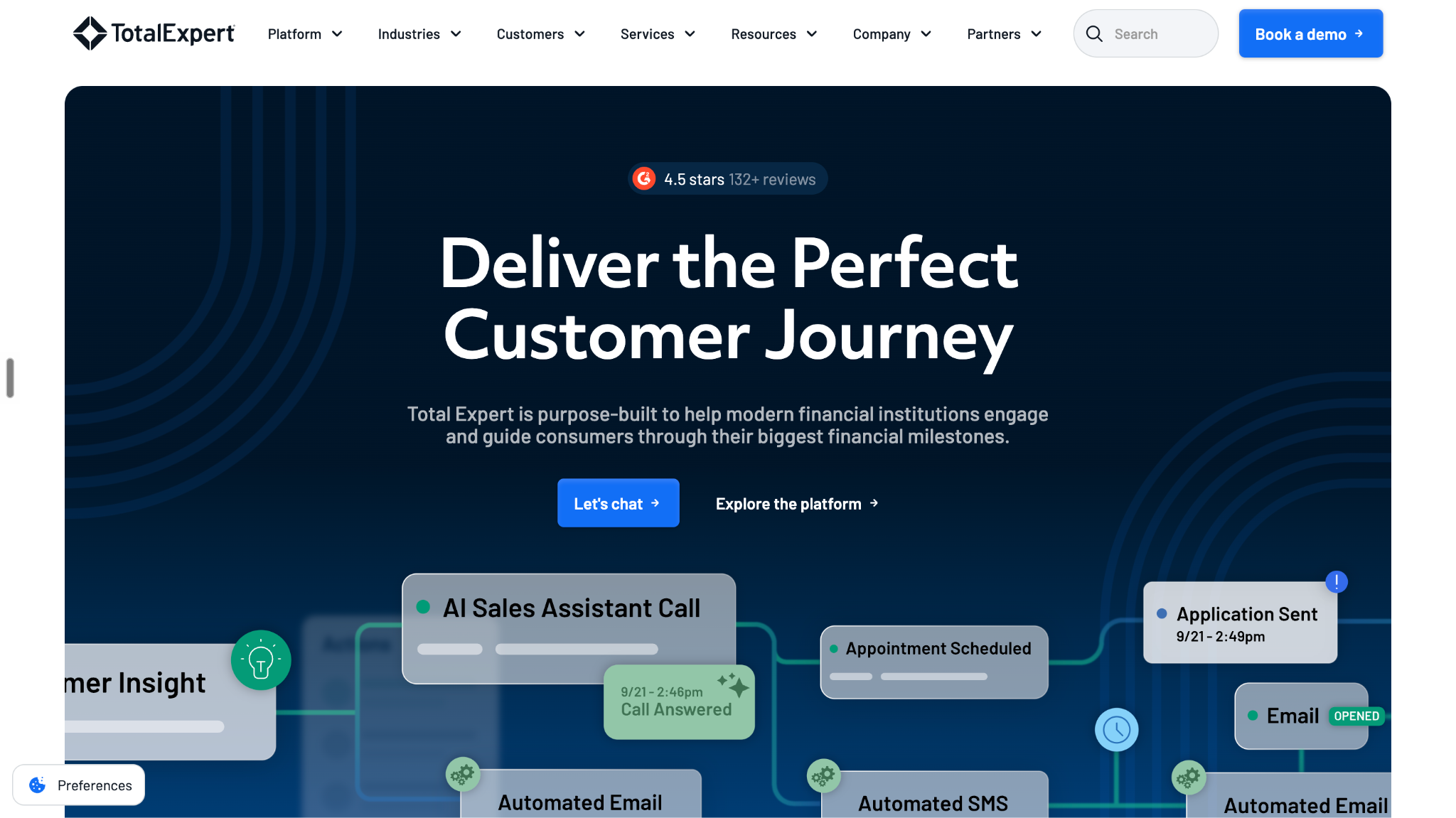
Total Expert is a mortgage-focused CRM and engagement platform designed to help financial organizations manage and develop customer relationships.
Total Expert sits primarily after lead acquisition, helping teams organize incoming opportunities and maintain engagement throughout the relationship.
Best For
Mortgage organizations that already generate meaningful lead volume and need technology to manage, engage, and nurture those relationships at scale.
What to Consider
Total Expert is primarily focused on managing and developing existing mortgage relationships rather than functioning as a mortgage lead marketplace. Its value is therefore closely tied to how effectively a company manages the demand it already generates.
5. Knock AI
What Knock AI Does
Knock AI takes a different approach from the mortgage lead marketplaces and mortgage CRM platforms above.
Knock AI is a B2B demand-to-revenue and continuous relationship infrastructure platform.
Rather than treating every interaction as an isolated lead, Knock AI connects the context surrounding the buyer and account across the revenue journey:
Rather than viewing a contact as an isolated record, the relationship graph connects relevant people, accounts, relationships, CRM information, and engagement context.
That matters when multiple people from the same organization interact with a company or when existing relationships already exist inside the business.
Detect First-Party Intent
Knock AI can use first-party engagement signals to help teams understand when someone is showing meaningful interest.
The purpose is to give revenue teams more context around what someone is doing and why that activity may matter, rather than treating every interaction equally.
Engage Buyers
Knock AI provides several ways for buyers to start or continue conversations.
Knock Links can be used across channels and assets to turn buyer engagement into a direct conversation, while AI agents can handle initial interactions and hand the conversation to a human when appropriate.
Qualify and Route
Once an interaction begins, Knock AI can help determine what should happen next.
This allows teams to move from “someone showed interest” to “this is who they are, what they appear to need, how valuable the opportunity may be, and who should handle it.”
Why This Matters for Mortgage Companies
Knock AI should not be positioned as another consumer mortgage lead marketplace.
Mortgage companies also have a B2B growth side involving relationships with:
Realtors
Mortgage brokers
Builders
Financial advisors
Referral partners
Strategic accounts
Enterprise organizations
Technology partners
For these relationships, the challenge is often not simply generating another lead. It is understanding which people and accounts are engaging, what their intent looks like, what relationships already exist, and what should happen next.
That is where Knock AI's continuous relationship infrastructure can fit into a mortgage company's B2B growth motion.
Best For
Mortgage companies with a B2B growth motion that want to connect buyer and account identification, relationship context, intent, engagement, qualification, routing, and ongoing conversation across the revenue journey.
How These Tools Fit Into the Mortgage Revenue Journey
Different tools address different points in the mortgage revenue journey:
Manage and nurture mortgage relationships → Total Expert
Identify, engage, qualify, and route B2B buyers and accounts → Knock AI
These tools aren't necessarily alternatives to one another. A mortgage company could use an owned acquisition platform, a lead marketplace, a CRM, and a B2B revenue platform at different points in its growth motion.
How Mortgage Companies Can Improve Lead Conversion
Generating more leads does not automatically translate into more funded loans. The conversion process also depends on what happens after someone enters the funnel.
Respond while intent is high
A new inquiry represents a moment of active interest. Mortgage companies should have processes in place to ensure that new opportunities are identified and followed up with quickly.
Research cited by Structurely from Insellerate found that mortgage leads contacted within five minutes converted at 21× the rate of leads contacted after 30 minutes. The same research reported that 40% of new mortgage leads were never contacted. These figures come from the cited Insellerate research and should be treated as directional rather than universal benchmarks.
Prioritize opportunities based on context
Not every lead represents the same opportunity. Lead source, engagement, borrower information, intent, and other available context can help teams determine where to focus their attention first.
Connect acquisition to funded-loan outcomes
A lead source should ultimately be evaluated by what happens downstream.
Instead of stopping at:
Traffic → Lead
track:
Lead → Contact → Qualified → Application → Funded Loan
This makes it easier to identify which acquisition channels are actually producing revenue.
Keep working the relationship after the first interaction
A prospect who does not immediately apply or close should not necessarily disappear from the funnel. Structured follow-up, relevant communication, and re-engagement can help companies continue conversations that do not convert on the first interaction.
Measure the economics of the entire funnel
CPL is useful for understanding acquisition costs, but it does not tell the whole story.
A channel with a higher CPL can still make economic sense if it produces more qualified opportunities and funded loans, while a cheap lead source can become expensive if few of its leads ultimately convert.
Mortgage Lead Generation Metrics to Track
Metric
Why It Matters
Cost per Lead
Shows how much it costs to generate an initial opportunity
Contact Rate
Shows how many leads the team successfully reaches
Speed to Lead
Measures how quickly new opportunities receive a response
Qualification Rate
Shows what percentage of leads meet the company's qualification criteria
Application Rate
Measures how effectively leads progress into applications
Funded Loan Rate
Connects lead generation to actual loan outcomes
Cost per Funded Loan
Shows the acquisition cost of generating a funded loan
Revenue per Lead
Shows the economic value generated from each acquired lead
Lead Source → Funded Loan
Reveals which acquisition channels ultimately produce funded business
Frequently Asked Questions
What are the best lead generation tools for mortgage companies?
There is no single tool that serves every mortgage company's needs. LeadPops focuses on owned lead generation, LendingTree and Bankrate provide access to existing borrower demand, Total Expert focuses on managing and nurturing mortgage relationships, and Knock AI serves a B2B use case around buyer and account identification, intent, engagement, qualification, and routing.
Should mortgage companies buy leads or generate their own?
Explain the difference between purchased and owned demand, including control, exclusivity, lead quality, acquisition cost, and the ability to build a long-term acquisition asset.
What is the difference between exclusive and shared mortgage leads?
An exclusive lead is generally sold to a single provider, while a shared lead may be distributed to multiple providers. The distinction can affect competition, response time, and conversion economics.
How quickly should mortgage companies respond to new leads?
Mortgage companies should have processes that allow them to respond as quickly as practical when a prospect shows active intent. Research cited by Structurely from Insellerate reported substantially higher conversion for leads contacted within five minutes compared with those contacted after 30 minutes.
How can mortgage companies reduce the cost of acquiring funded loans?
Look beyond CPL and measure the complete funnel from lead generation through contact, qualification, application, and funded loan. This helps identify which sources produce economically valuable customers rather than simply inexpensive leads.
How can mortgage companies automate lead qualification and routing?
Mortgage companies can use CRM workflows, enrichment, scoring, AI-powered qualification, and routing rules to determine which opportunities need attention and where they should be assigned.
Can Knock AI help mortgage companies generate leads?
Knock AI is a B2B platform, rather than a consumer mortgage lead marketplace. For mortgage companies with a B2B growth motion, it can help identify buyers and accounts, understand engagement and intent, engage prospects, qualify opportunities, and route conversations to the appropriate person. This can apply to relationships involving real estate partners, brokers, builders, financial advisors, referral partners, and other commercial accounts.


.svg)


.svg)
.svg)
.svg)


.svg)
.svg)


.svg)