15 Best Lead Routing Software Tools for Faster Conversions
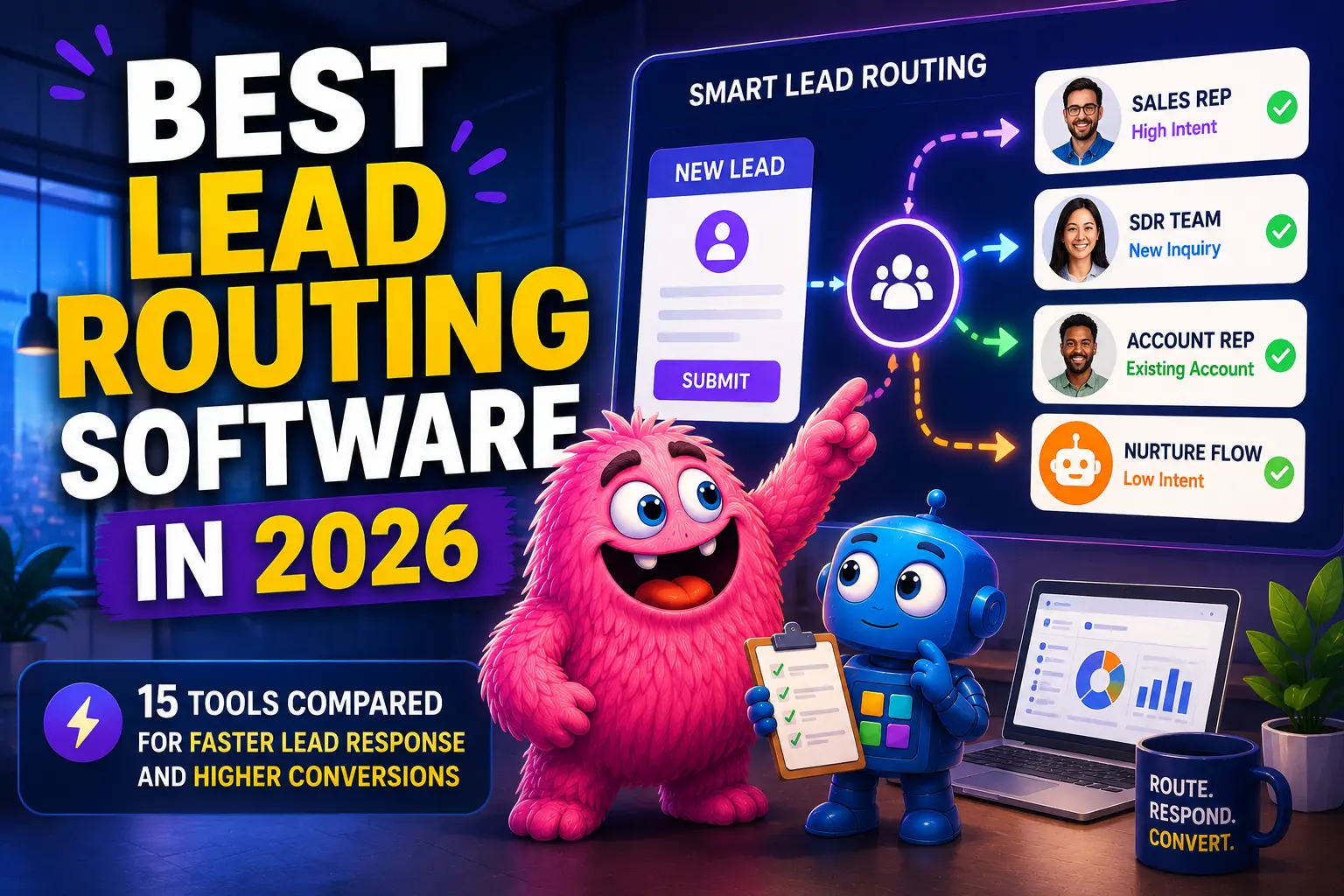
Best Lead Routing Software in 2026: 15 Tools Compared for Faster Lead Response and Higher Conversions
TL;DR
Lead routing software automatically assigns inbound leads, conversations, meetings, and opportunities to the right sales representative, account owner, team, or AI agent based on rules such as territory, company size, intent, product interest, CRM ownership, and availability.
Best Lead Routing Software in 2026
Knock AI: Best for conversational lead routing, AI qualification, and buyer engagement
LeanData: Best for enterprise lead-to-account matching and revenue orchestration
Chili Piper: Best for meeting routing and scheduling automation
LeadAngel: Best for account-based routing and territory management
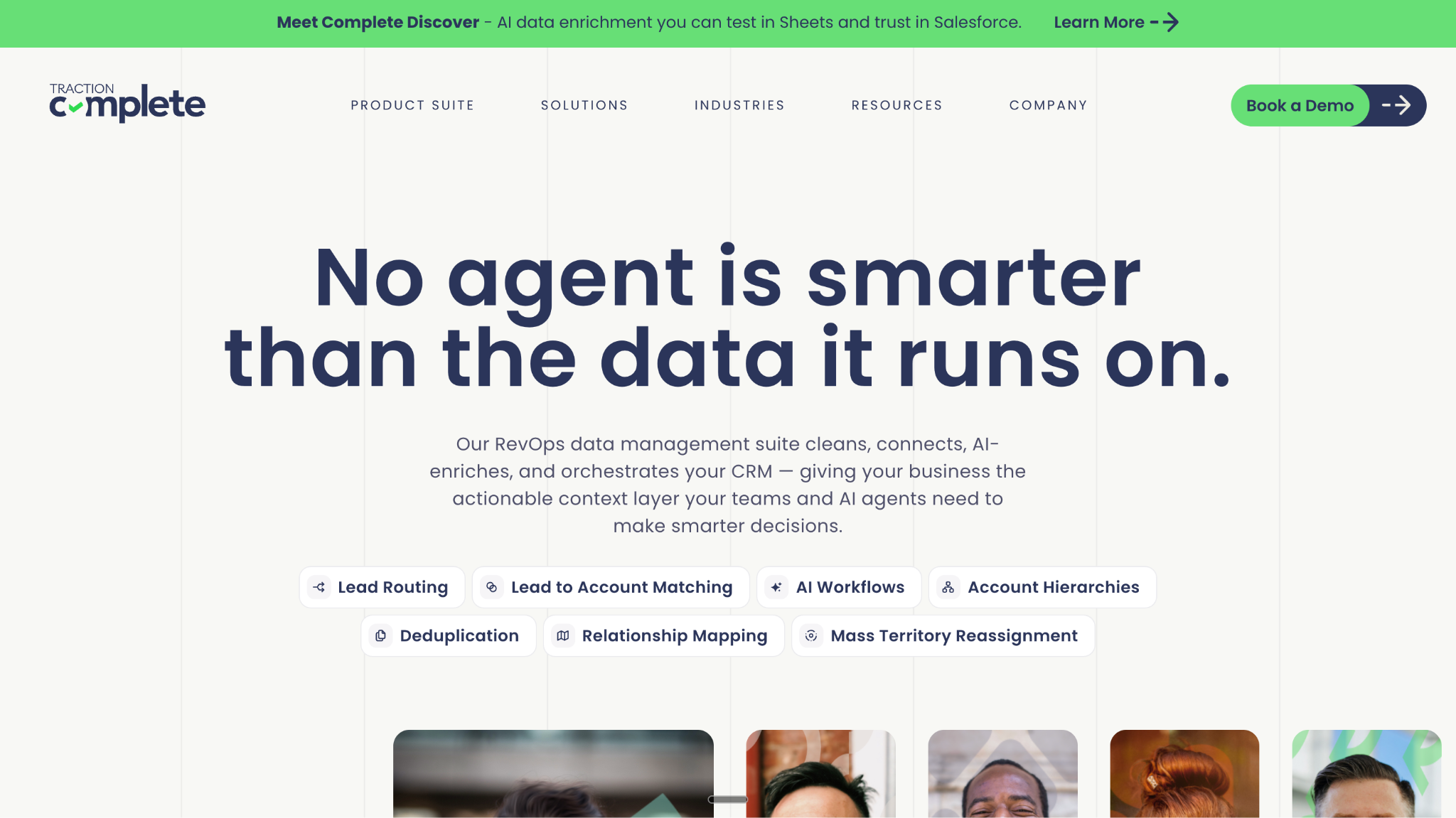
Traction Complete: Best for Salesforce-native lead routing and data management
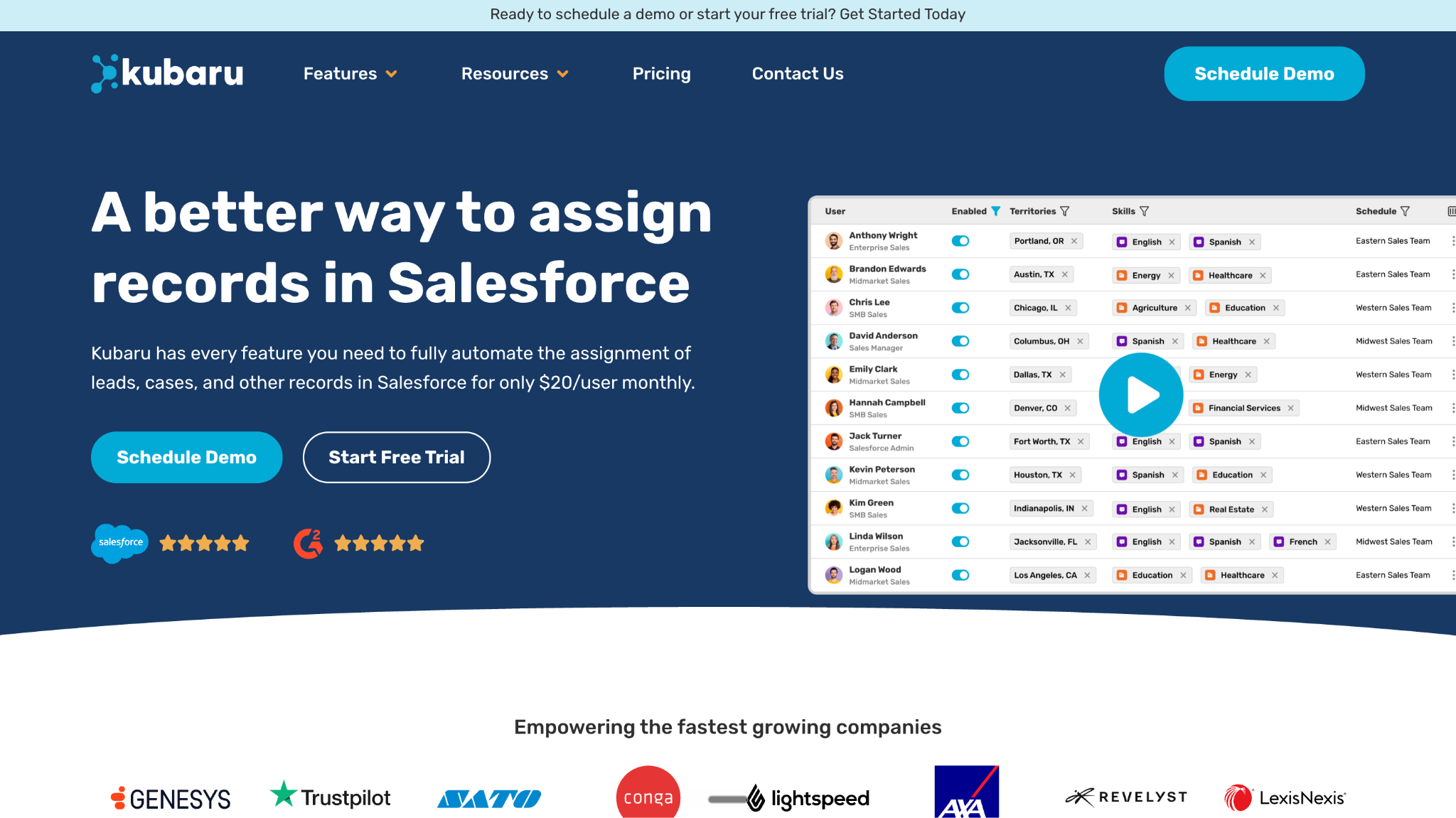
Kubaru: Best for Salesforce lead assignment and round-robin routing
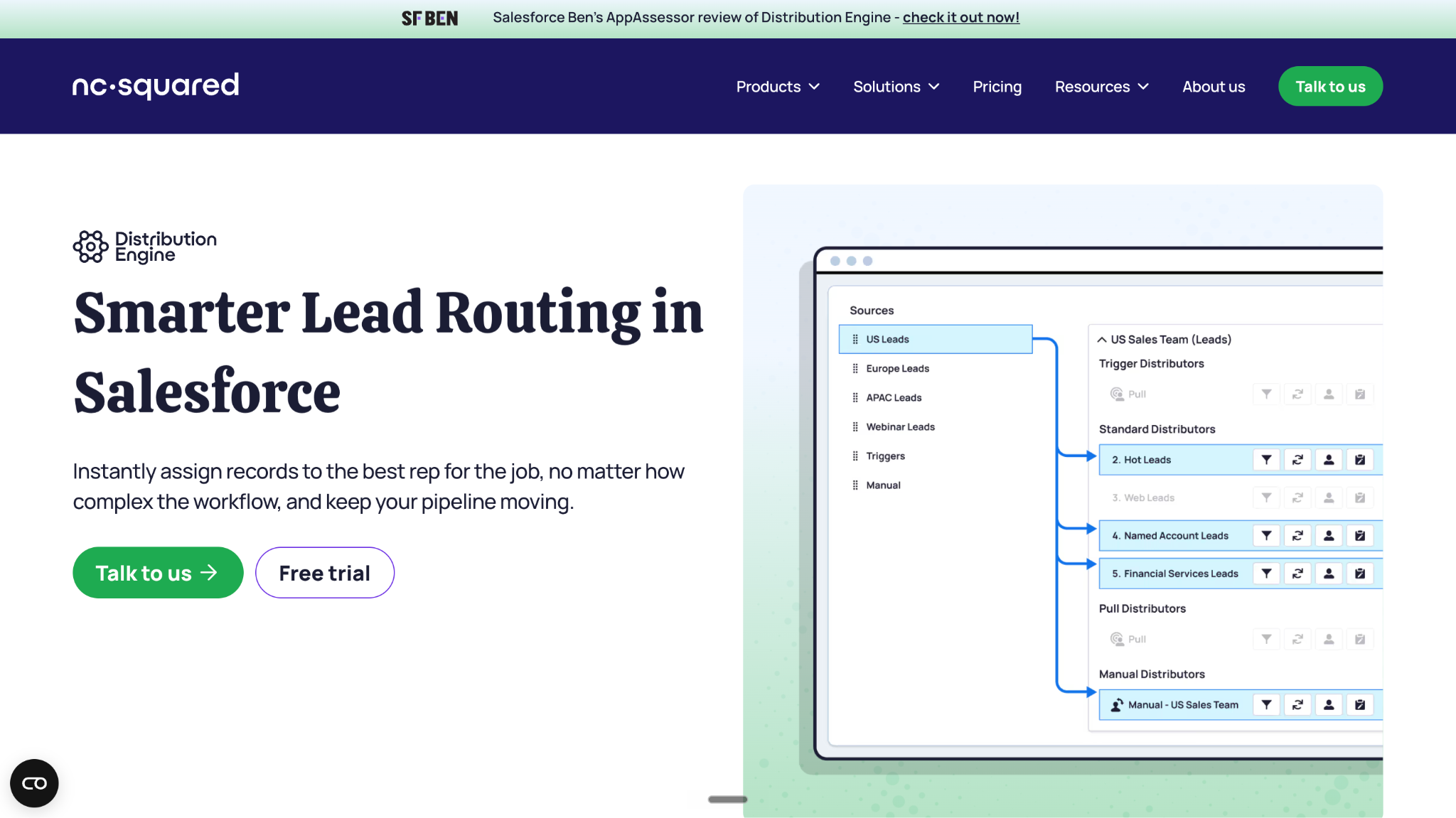
Distribution Engine: Best for advanced Salesforce routing workflows
RevenueHero: Best for inbound demo qualification and scheduling
HubSpot: Best for small businesses already using HubSpot CRM
Salesforce: Best for organizations using native CRM assignment rules
ZoomInfo: Best for enriched lead routing and buyer intelligence
LeadSquared: Best for high-volume lead distribution
Avoma: Best for meeting routing and conversation intelligence
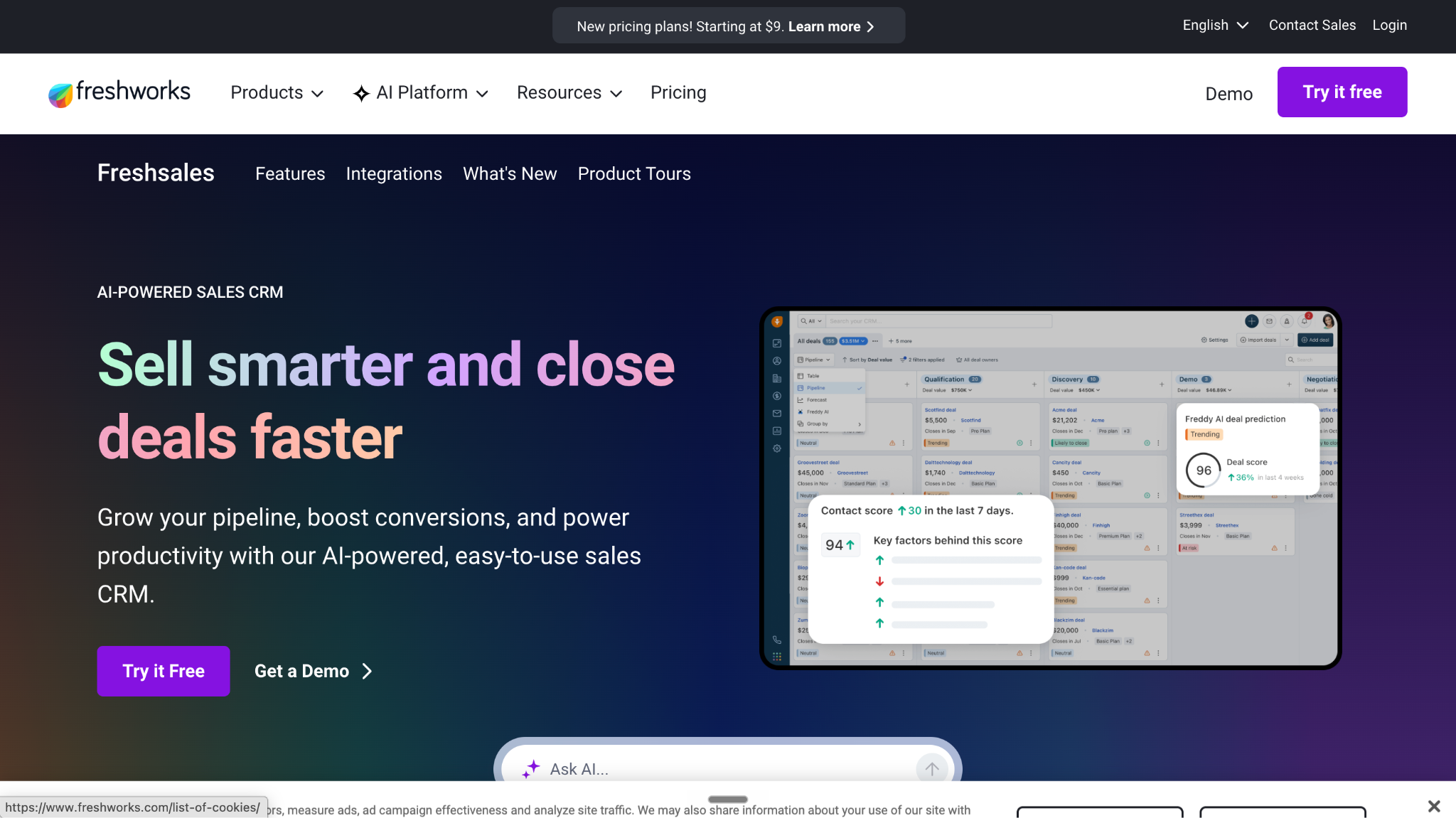
Freshsales: Best for SMBs looking for CRM and routing in one platform
Router.ai: Best for AI-powered lead qualification and routing
In this guide, you'll learn how lead routing works, the most effective routing strategies, key features to evaluate, common implementation mistakes, and how the top lead routing tools compare for startups, SMBs, enterprise sales teams, and revenue operations leaders.
Whether you're routing leads from forms, G2, LinkedIn, webinars, conferences, QR codes, outbound campaigns, or existing customer accounts, the right lead routing software can dramatically improve speed-to-lead, increase meeting conversion rates, and ensure every opportunity reaches the right person faster.
Quick Recommendations by Use Case
Best Overall Lead Routing Software
Knock AI: Best for businesses that want to qualify, route, engage, and book meetings from a single platform.
Best Enterprise Lead Routing Software
LeanData: Best for large organizations with complex lead-to-account matching, territory management, and revenue orchestration requirements.
Best Salesforce Lead Routing Software
Kubaru: Best for Salesforce users looking for native lead assignment, round-robin routing, and territory-based distribution.
Best Meeting Routing Software
Chili Piper: Best for teams focused on instant meeting scheduling and inbound conversion optimization.
Best Lead-to-Account Matching Software
LeadAngel: Best for account-based sales teams that need advanced account matching and territory routing.
Best for Revenue Operations Teams
Traction Complete: Best for RevOps teams that need routing, account matching, deduplication, and Salesforce data management.
Best for Small Businesses
HubSpot: Best for startups and SMBs already using HubSpot CRM and marketing tools.
Best AI-Powered Lead Routing Software
Knock AI: Best for teams that want AI intent detection, automated qualification, and intelligent routing workflows.
Best Conversational Lead Routing Software
Knock AI: Best for companies that want to route buyers from G2, LinkedIn, webinars, conferences, QR codes, documentation, and other touchpoints directly into conversations.
Best for High-Intent Inbound Leads
Knock AI: Best for qualifying, engaging, and routing inbound buyers before they ever fill out a traditional form.
Best Territory-Based Routing Software
LeadAngel: Best for organizations managing multiple territories, regions, and account hierarchies.
Best Round-Robin Lead Routing Software
Distribution Engine: Best for teams that need advanced balancing, weighted routing, and workload management.
Best for Buyer Intelligence and Enrichment
ZoomInfo: Best for organizations that want enriched company and contact data alongside routing workflows.
What Is Lead Routing Software?
Lead routing software automatically assigns inbound leads, conversations, meetings, and opportunities to the right sales representative, account owner, team, or AI agent based on predefined criteria such as territory, company size, industry, lead source, buying intent, CRM ownership, availability, or engagement history.
The goal of lead routing is to reduce response times, improve lead ownership, eliminate manual assignment, and ensure every opportunity reaches the person most likely to convert it into revenue.
How Lead Routing Works
Most lead routing platforms follow a simple workflow:
A buyer enters your funnel through a form, website, webinar, event, G2 profile, ad campaign, QR code, referral, or other touchpoint.
The platform collects and enriches lead data.
Routing rules evaluate factors such as territory, account ownership, company size, intent signals, industry, or availability.
The lead is assigned to the most appropriate sales rep, account owner, team, or AI agent.
Notifications, CRM updates, and meeting workflows are triggered automatically.
Why Lead Routing Matters
Without automated lead routing, businesses often struggle with slow response times, duplicate outreach, missed opportunities, and inconsistent customer experiences.
A well-designed lead routing process helps sales teams respond faster, improve lead ownership, increase conversion rates, and create a more efficient buying experience.
Lead Routing Statistics
Businesses that respond to leads within 5 minutes are up to 100 times more likely to connect with a prospect and 21 times more likely to qualify the lead compared to responding after 30 minutes.
The odds of qualifying a lead drop by more than 10x when response times exceed five minutes.
Nearly 78% of customers buy from the company that responds first, making speed-to-lead one of the most important sales performance metrics.
Studies have found that 35% to 50% of sales go to the vendor that responds first.
Revenue teams that automate lead assignment and routing can significantly reduce response times, eliminate manual work, and improve sales productivity.
Key Benefits of Lead Routing Software
Reduces speed-to-lead
Eliminates manual lead assignment
Improves sales productivity
Prevents leads from falling through the cracks
Supports account-based selling strategies
Improves territory management
Enables fair round-robin distribution
Helps revenue teams scale efficiently
Creates a better buyer experience
The Evolution of Lead Routing: From Forms to Conversations
For years, lead routing was relatively simple.
A prospect filled out a website form, the CRM created a record, and the lead was assigned to a sales representative based on predefined rules.
This process worked when most buying journeys started and ended on a company website.
Today's buyers behave differently.
They research products across review platforms, communities, social networks, webinars, events, and partner ecosystems long before they ever fill out a form. By the time they engage, they often expect immediate answers, personalized conversations, and frictionless scheduling.
As a result, lead routing has evolved from simple lead assignment to real-time buyer engagement.
Traditional Lead Routing
In a traditional workflow, routing begins after a form submission.
Traditional Lead Routing Workflow
Form Submission
↓
CRM Record Created
↓
Lead Assignment
↓
Sales Rep Follow-Up
↓
Meeting Scheduled
↓
Opportunity Created
The problem is that the buyer must wait for a response, and valuable context such as intent, engagement history, and account ownership may not be considered until later in the process.
Modern Conversational Lead Routing
Modern lead routing platforms begin routing much earlier in the buyer journey.
Instead of waiting for a form submission, they identify intent, enrich buyer data, qualify opportunities, and connect prospects with the right person in real time.
Modern Conversational Routing Workflow
Buyer Clicks a Link
↓
Intent Detection
↓
Real-Time Enrichment
↓
AI Qualification
↓
Intelligent Routing
↓
Live Conversation
↓
Meeting Booking
↓
CRM Synchronization
In this model, routing is not just about assigning leads. It is about connecting buyers with the right person or AI agent at the moment they are ready to engage.
Why Traditional Lead Routing Is No Longer Enough
Modern buyers can enter your pipeline from dozens of different touchpoints.
Common buyer entry points include:
Review platforms such as G2 and Capterra
LinkedIn posts, ads, and direct messages
Organic search results
Paid search campaigns
Webinars and virtual events
Conferences and trade shows
Booth scans and QR codes
Whitepapers and PDF downloads
Customer communities
Partner and referral programs
Product documentation
Pricing pages
Outbound campaigns
Each source represents a different level of intent, context, and urgency.
A prospect coming from a pricing page typically requires a different response than someone downloading a top-of-funnel ebook.
Similarly, an existing customer exploring expansion opportunities should not be routed the same way as a net-new prospect.
The Rise of Revenue Routing
As buying journeys become more complex, businesses are moving beyond basic lead assignment and adopting revenue routing strategies.
Revenue routing combines:
Lead routing
Account routing
CRM owner routing
Meeting routing
Intent-based routing
Territory routing
AI qualification
Buyer enrichment
The goal is simple:
Route every buyer, conversation, meeting, and opportunity to the right person as quickly as possible.
Key Takeaway
Traditional lead routing focuses on distributing leads.
Modern lead routing focuses on creating conversations.
The best lead routing software does more than assign records in a CRM. It identifies intent, enriches buyer data, qualifies opportunities, connects buyers with the right representative, and accelerates the path from first interaction to booked meeting.
What Features Should You Look For in Lead Routing Software?
Not all lead routing software is created equal.
Some tools only distribute leads using basic round-robin rules. Others can enrich lead data, identify buyer intent, route opportunities based on CRM ownership, qualify prospects with AI, and automatically schedule meetings.
When evaluating lead routing software, focus on three categories of functionality:
Routing capabilities
Intelligence capabilities
Engagement capabilities
The best lead routing platforms combine all three.
Routing Capabilities
Routing capabilities determine how leads, conversations, and opportunities are assigned across your team.
Round Robin Routing
Round robin routing distributes leads evenly among sales representatives.
This is one of the most common routing methods because it ensures fair lead distribution and prevents certain reps from becoming overloaded while others receive too few opportunities.
Best for:
Inbound sales teams
SDR teams
High-volume lead environments
Territory Routing
Territory routing assigns leads based on geographic regions, countries, states, industries, or predefined territories.
This approach ensures prospects are matched with representatives who understand local markets, regulations, and customer needs.
Best for:
Global sales teams
Regional account structures
Enterprise sales organizations
Account-Based Routing
Account-based routing sends new leads to the team or representative responsible for the associated account.
This helps maintain continuity throughout the buying journey and prevents multiple sales representatives from contacting the same company.
Best for:
Account-based marketing (ABM)
Enterprise sales teams
Existing customer expansion
CRM Owner Routing
CRM owner routing automatically checks Salesforce, HubSpot, or other CRM systems and routes leads to the existing account, contact, or opportunity owner.
This ensures account managers stay involved and existing customer relationships remain intact.
Best for:
Customer expansion
Renewals
Existing accounts
Skill-Based Routing
Skill-based routing assigns leads based on expertise, language, product specialization, or industry experience.
For example, a prospect interested in enterprise security software may be routed to a specialist rather than a general sales representative.
Best for:
Technical sales teams
Multi-product organizations
Specialized industries
Availability Routing
Availability routing considers a representative's calendar, workload, or current capacity before assigning new opportunities.
This helps improve response times and prevents bottlenecks.
Best for:
High-volume inbound teams
Meeting scheduling workflows
Global organizations
Intent-Based Routing
Intent-based routing uses engagement signals to determine where a lead should go.
For example, someone visiting a pricing page or requesting a demo may be routed differently than someone downloading a top-of-funnel ebook.
Best for:
Demand generation teams
Product-led growth companies
Revenue operations teams
AI-Powered Routing
AI-powered routing combines enrichment, behavioral signals, CRM data, and intent signals to make routing decisions automatically.
Instead of relying solely on static rules, AI can continuously optimize assignments based on changing buyer behavior.
Best for:
Fast-growing sales teams
Enterprise organizations
High-volume lead environments
Intelligence Capabilities
Routing decisions are only as good as the data behind them.
The best lead routing software enriches, analyzes, and qualifies leads before assigning them.
Lead Enrichment
Lead enrichment automatically supplements lead records with additional information such as company size, industry, employee count, location, technology stack, and revenue estimates.
This allows routing decisions to be based on more than just form submissions.
Company Identification
Company identification determines which organization a buyer belongs to, even when limited information is available.
This helps sales teams prioritize strategic accounts and improve lead quality.
Lead Scoring
Lead scoring ranks prospects based on engagement, fit, and likelihood to convert.
Higher-scoring leads can be prioritized for faster follow-up and specialized routing workflows.
Buyer Intent Detection
Buyer intent detection analyzes behaviors such as page visits, content consumption, ad interactions, and engagement patterns to identify purchase readiness.
This allows sales teams to focus on the opportunities most likely to convert.
Account Matching
Account matching connects new leads to existing accounts, opportunities, or customers inside your CRM.
This prevents duplicate records and improves account ownership accuracy.
Engagement Capabilities
Modern lead routing is no longer just about assignment.
The best platforms help teams engage buyers immediately after routing occurs.
Conversational Scheduling
Conversational scheduling allows prospects to book meetings directly within a conversation rather than being redirected through multiple forms and scheduling pages.
This reduces friction and increases conversion rates.
Meeting Routing
Meeting routing ensures prospects are connected with the correct representative based on territory, account ownership, expertise, availability, or qualification criteria.
This helps improve meeting quality and sales efficiency.
AI Agents
AI agents can answer questions, qualify prospects, collect information, and schedule meetings before a human representative becomes involved.
This enables businesses to engage buyers around the clock while reducing manual workload.
Slack Notifications
Real-time Slack notifications ensure sales teams are alerted immediately when new opportunities arrive.
Faster notifications often lead to faster response times and better conversion rates.
CRM Synchronization
CRM synchronization automatically updates lead records, account ownership, routing activity, meetings, and engagement data across systems such as Salesforce and HubSpot.
This eliminates manual data entry and keeps teams aligned.
Key Takeaway
The best lead routing software does more than assign leads.
It combines intelligent routing, real-time buyer insights, automated qualification, and immediate engagement to help revenue teams respond faster and convert more opportunities.
Best Lead Routing Software Quick Comparison
Software
Round Robin
Territory Routing
CRM Owner Routing
Account Matching
AI Qualification
Lead Enrichment
Conversational Scheduling
AI Agent
Slack Routing
Knock AI
✅
✅
✅
✅
✅
✅
✅
✅
✅
LeanData
✅
✅
✅
✅
❌
Limited
❌
❌
❌
Chili Piper
✅
Limited
✅
Limited
Limited
❌
✅
Limited
❌
LeadAngel
✅
✅
✅
✅
❌
❌
❌
❌
❌
Traction Complete
✅
✅
Limited
✅
❌
Limited
❌
❌
❌
Kubaru
✅
✅
Limited
❌
❌
❌
❌
❌
❌
Distribution Engine
✅
✅
Limited
❌
❌
❌
❌
❌
❌
RevenueHero
✅
Limited
Limited
Limited
Limited
❌
✅
❌
❌
HubSpot
✅
Limited
Limited
❌
Limited
Limited
Limited
❌
❌
Salesforce
✅
Limited
Limited
❌
❌
❌
❌
❌
❌
ZoomInfo
Limited
Limited
Limited
✅
Limited
✅
❌
❌
❌
LeadSquared
✅
Limited
Limited
❌
Limited
Limited
❌
❌
❌
Avoma
Limited
❌
❌
Limited
Limited
❌
✅
❌
❌
Freshsales
✅
Limited
Limited
❌
Limited
Limited
❌
❌
❌
Router.ai
Limited
Limited
Limited
❌
✅
Limited
Limited
✅
❌
See Knock AI in Action — Book Your Live Demo Today
Traditional Lead Routing vs Conversational Lead Routing
Capability
Traditional Routing Tools
Knock AI
Routes Form Fills
✅
✅
Routes G2 Leads
Limited
✅
Routes Webinar Leads
Limited
✅
Routes Conference Leads
Limited
✅
Routes QR Code Leads
Limited
✅
Buyer Intent Detection
❌
✅
AI Qualification
❌
✅
Real-Time Enrichment
Limited
✅
Conversational Scheduling
Limited
✅
AI Agents
❌
✅
Slack-Native Selling
❌
✅
CRM-Aware Routing
Limited
✅
Multi-Channel Buyer Engagement
❌
✅
Best Lead Routing Software in 2026
Knock AI: Best for Conversational Lead Routing
Knock AI is a conversational lead routing platform designed to help revenue teams engage, qualify, route, and convert inbound buyers faster. Unlike traditional lead routing tools that start after a form submission, Knock AI starts the moment a buyer engages through a Knock Link, whether that interaction originates from a website, G2 profile, LinkedIn campaign, webinar, event, QR code, PDF, outbound campaign, or another touchpoint.
The platform combines AI qualification, real-time enrichment, buyer intent detection, intelligent routing, conversational scheduling, and CRM synchronization into a single workflow. This allows businesses to connect prospects with the right sales representative, account owner, or AI agent without relying on manual lead assignment.
Knock AI is particularly well suited for organizations that want to move beyond traditional lead distribution and adopt a conversational selling approach that reduces response times and increases conversion rates.
Key Features
AI Intent Agents
Knock AI's AI Intent Agents act as virtual sales teammates that engage buyers in real time. These agents can answer questions, qualify leads, provide approved information, schedule meetings, and hand conversations off to human representatives when necessary.
Conversational Lead Routing
Instead of routing static lead records, Knock AI routes live buyer conversations. This ensures prospects are connected with the most appropriate representative or AI agent at the moment they are ready to engage.
Buyer Intent Detection
The platform automatically identifies intent signals and categorizes conversations based on buyer needs, such as purchasing inquiries, support requests, hiring conversations, and customer expansion opportunities.
Real-Time Enrichment
Knock AI enriches lead and company data automatically during the conversation. Revenue teams can use firmographic, attribution, session, and engagement data to make smarter routing decisions.
CRM-Aware Routing
The platform can route conversations based on existing ownership data inside Salesforce, HubSpot, and other CRM systems. This helps maintain continuity for existing accounts and prevents duplicate outreach.
Slack-Native Selling
Sales representatives can respond to prospects directly from Slack while buyers continue the conversation through their preferred channel. This eliminates the need to switch between multiple systems.
Conversational Scheduling
Qualified buyers can book meetings directly inside the conversation. This reduces friction compared to traditional scheduling flows that require multiple redirects and forms.
Multi-Channel Buyer Engagement
Knock AI supports buyer engagement across multiple touchpoints, including:
The platform can automatically qualify inbound leads before involving a human representative. This helps sales teams focus on high-intent opportunities while AI handles lower-priority conversations.
Meeting Routing
Meetings can be assigned based on territory, account ownership, qualification criteria, availability, industry, or custom routing rules.
Monitoring Channels
Dedicated Slack monitoring channels provide visibility into conversations, assignments, response times, and team performance. Managers can monitor activity and step into conversations when needed.
Salesforce Integration
Knock AI integrates with Salesforce to synchronize lead ownership, account data, routing activity, response times, and meeting assignments.
HubSpot Integration
HubSpot users can route conversations using CRM data, contact ownership, lifecycle stages, and custom properties while keeping records synchronized automatically.
Marketo Integration
Marketing teams can use Marketo data as part of routing logic, helping align marketing engagement with sales follow-up and qualification workflows.
Pros
Supports conversational lead routing instead of traditional record-based routing
AI agents can qualify leads before human involvement
Routes buyers from multiple touchpoints, not just web forms
Real-time lead and company enrichment
CRM-aware routing for existing accounts and customers
Slack-native workflow for sales teams
Built-in conversational scheduling
Supports Salesforce, HubSpot, and Marketo integrations
Flexible routing based on intent, attribution, ownership, engagement, and enrichment data
Strong fit for modern inbound and product-led growth motions
Cons
May provide more functionality than small teams require
Organizations with very simple routing needs may not need conversational workflows
Pricing
Knock AI offers three pricing tiers designed for growing revenue teams:
Plan
Pricing
Best For
Pipeline Foundation
Starting at $1,000/month
Teams building their first inbound pipeline and looking to automate buyer identification, routing, and meeting booking
Pipeline Acceleration
Starting at $2,000/month
Growing companies that want AI SDR qualification, AI-booked meetings, advanced enrichment, and intent-based routing
Enterprise Pipeline
Custom Pricing
Enterprise organizations requiring custom routing logic, unlimited enrichment, enterprise security, and dedicated GTM support
LeanData: Best for Enterprise Revenue Routing
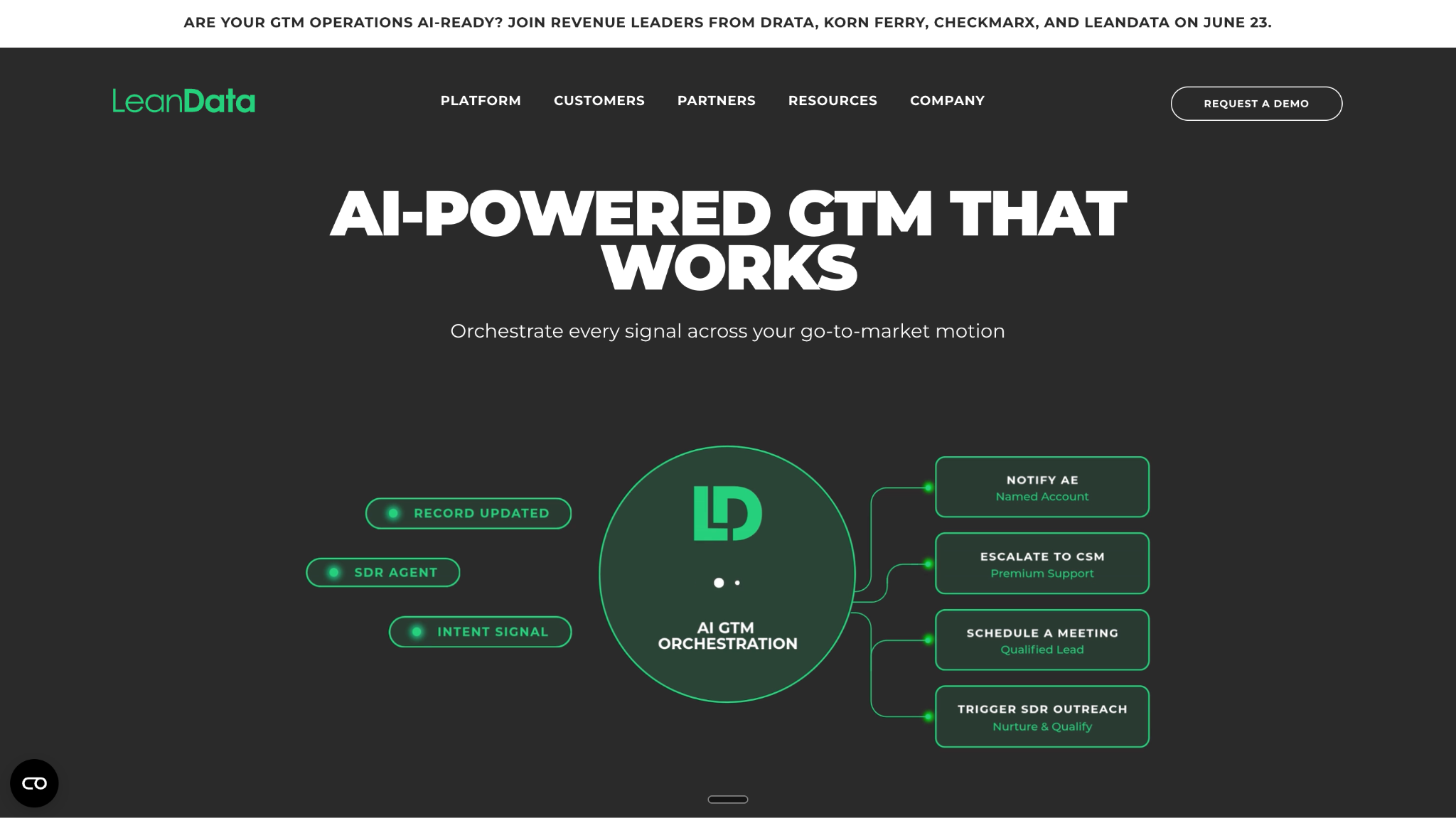
LeanData is one of the most established lead routing and revenue orchestration platforms for enterprise sales teams. The platform is known for its advanced lead-to-account matching capabilities, visual routing workflows, and support for complex go-to-market operations.
Unlike traditional lead assignment tools, LeanData focuses on revenue orchestration, helping organizations manage lead routing, account matching, territory assignments, and workflow automation across large sales organizations. Its visual FlowBuilder allows revenue teams to create sophisticated routing logic without extensive development work.
LeanData is particularly popular among enterprise organizations with large Salesforce deployments and account-based marketing strategies.
Key Features
Lead-to-account matching
Territory-based routing
Visual FlowBuilder
Revenue orchestration workflows
Opportunity routing
Account ownership management
Advanced reporting and analytics
Salesforce-native architecture
Pros
Excellent lead-to-account matching capabilities
Powerful workflow automation
Strong fit for enterprise sales teams
Advanced territory and ownership routing
Extensive reporting options
Cons
Expensive compared to most alternatives
Steep learning curve for new users
Can be excessive for SMBs and startups
Requires ongoing administration for complex workflows
Additional products such as BookIt, NotifyPlus, and Engagement may require separate licensing.
Best For
Large enterprise organizations that need advanced lead-to-account matching, territory management, and revenue orchestration.
Chili Piper: Best for Meeting Routing and Scheduling
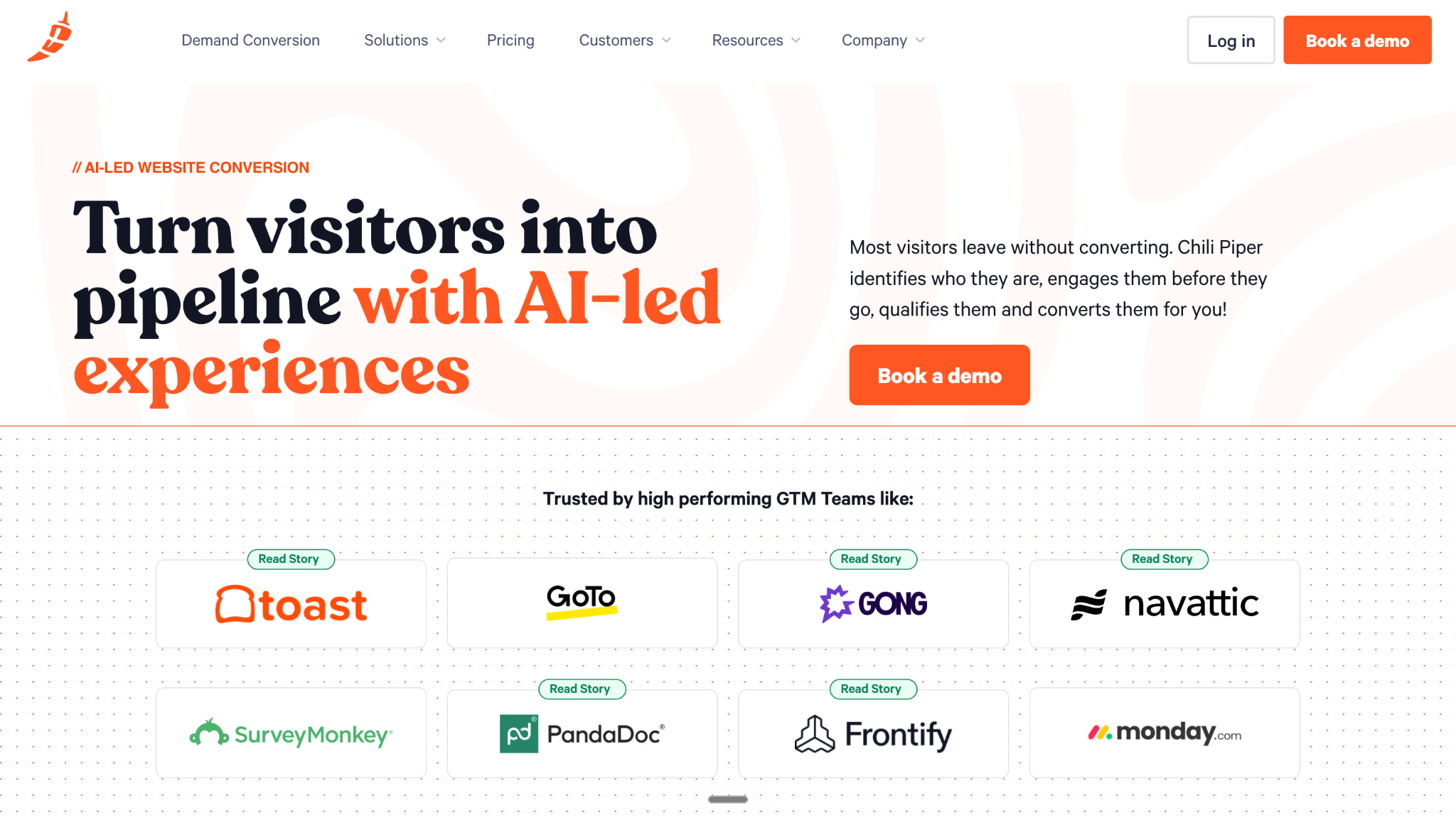
Chili Piper combines lead routing and meeting scheduling into a single platform. The company became popular by helping inbound sales teams reduce friction between lead capture and meeting booking.
Its Form Concierge product allows businesses to qualify leads, route them to the correct representative, and book meetings immediately after a form submission. Over time, Chili Piper expanded into revenue orchestration, AI engagement, and sales handoff workflows.
For organizations that prioritize speed-to-meeting, Chili Piper remains one of the strongest options in the market.
Routing & Scheduling Package: Starting at $1,250/month
Experiences Package: Starting at $3,500/month
Chat AI: Approximately $20,000/year
Actual pricing may vary based on team size and implementation requirements.
Best For
Sales teams that prioritize inbound meeting booking, calendar automation, and fast speed-to-lead.
LeadAngel: Best for Lead-to-Account Matching and Territory Management
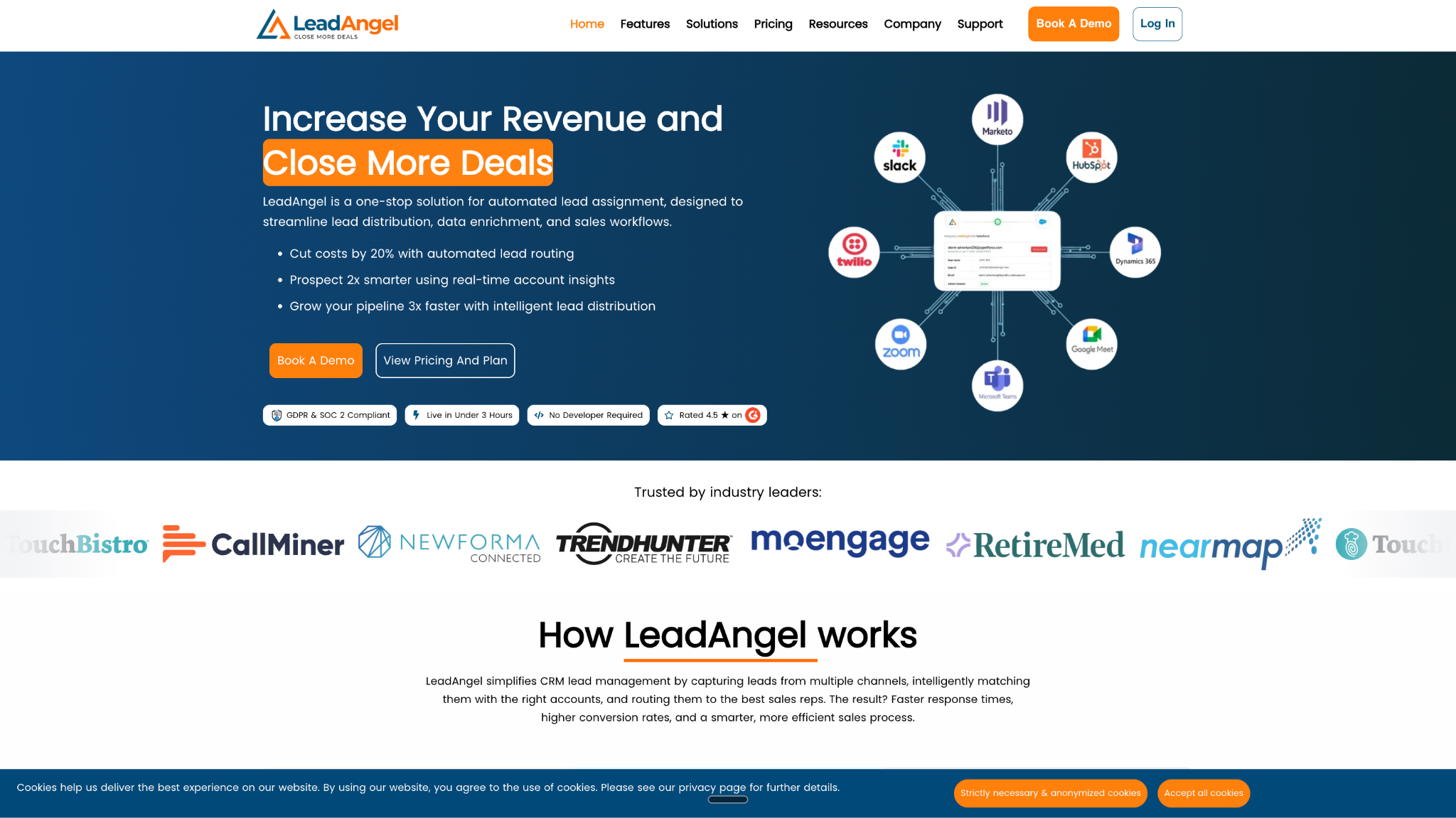
LeadAngel is a lead routing platform designed for account-based sales organizations that require sophisticated lead-to-account matching and territory management capabilities.
The platform helps businesses route leads based on account ownership, geographic territories, account hierarchies, and custom assignment rules. LeadAngel is particularly popular among B2B companies running account-based marketing programs because of its ability to align inbound leads with existing customer and prospect accounts.
Compared to many traditional lead routing platforms, LeadAngel places a stronger emphasis on matching accuracy and ownership continuity.
Key Features
Lead-to-account matching
Territory management
Account ownership routing
Round-robin distribution
Opportunity routing
ScheduleNow meeting routing
Duplicate management
Salesforce and HubSpot support
Pros
Strong lead-to-account matching
Excellent territory management
Supports Salesforce and HubSpot
Good account ownership controls
Well suited for ABM strategies
Cons
Pricing is not publicly available
Advanced configurations require setup time
Smaller businesses may not need all features
User interface feels dated compared to newer platforms
Pricing
LeadAngel uses custom pricing based on:
CRM platform
Lead volume
Routing complexity
Additional products and add-ons
The company offers Professional and Professional Plus packages, but organizations must contact sales for a custom quote.
Best For
Organizations running account-based marketing programs that need advanced lead-to-account matching and territory routing.
Kubaru: Best Salesforce-Native Lead Routing Software
Kubaru is a Salesforce-native lead routing platform designed specifically for organizations that want advanced assignment automation without leaving Salesforce.
Unlike many competitors that rely on external integrations and synchronization layers, Kubaru operates directly inside Salesforce. The platform supports lead routing, case assignment, territory management, round-robin distribution, workload balancing, and SLA management.
Its straightforward pricing and native architecture make it particularly attractive for Salesforce-centric organizations looking for a cost-effective routing solution.
Key Features
Round-robin routing
Weighted lead distribution
Territory management
Skill-based routing
Load balancing
Duplicate matching
SLA enforcement
Case and custom object assignment
Pros
Fully Salesforce-native
Transparent pricing
Easy implementation
Strong round-robin capabilities
Supports routing beyond leads
Cons
Salesforce-only solution
Limited conversational capabilities
No AI qualification features
Fewer engagement features than modern revenue platforms
Pricing
Kubaru offers simple, transparent pricing:
$20 per user per month
All features included
No platform fees
No feature-based tiers
Volume discounts available
A free 30-day trial is available through Salesforce AppExchange.
Best For
Salesforce organizations that want affordable lead routing, territory management, and assignment automation without additional platform complexity.
Distribution Engine: Best for Advanced Salesforce Lead Routing
Distribution Engine is a Salesforce-native lead routing platform built for organizations that need advanced assignment logic, territory management, workload balancing, and routing automation. The platform helps revenue teams distribute leads fairly while ensuring opportunities reach the right sales representatives based on predefined business rules.
Unlike basic lead assignment tools, Distribution Engine supports weighted round-robin routing, lookup routing, scheduling-based assignment, and fallback logic for more complex sales organizations. Its native Salesforce architecture makes it a popular choice for businesses that want powerful routing capabilities without relying on external systems.
Distribution Engine is particularly well suited for enterprise sales teams that require granular control over lead distribution and territory management.
Key Features
Weighted round-robin routing
Territory management
Workload balancing
Lookup routing
SLA tracking
Scheduling-based assignment
Team performance reporting
Salesforce-native automation
Pros
Highly customizable routing logic
Strong territory management capabilities
Salesforce-native architecture
Supports complex assignment workflows
Flexible workload balancing
Cons
User interface feels dated compared to newer platforms
Advanced configurations can require administrative expertise
Primarily designed for Salesforce environments
Limited conversational engagement capabilities
Pricing
Distribution Engine offers three pricing tiers:
Starter: $20/user/month
Advanced: $35/user/month
Unlimited: $55/user/month
A minimum of five licenses is required. All plans include onboarding support and a 30-day free trial.
Best For
Enterprise Salesforce teams that need advanced routing workflows, territory management, workload balancing, and assignment automation.
Traction Complete: Best for Revenue Operations Teams
Traction Complete is a Salesforce-native revenue operations platform that combines lead routing, account matching, territory management, and CRM data governance. The platform is designed to help businesses improve routing accuracy while maintaining clean and structured Salesforce data.
Beyond lead assignment, Traction Complete enables organizations to manage account hierarchies, enforce ownership rules, eliminate duplicate records, and align sales and marketing teams around accurate customer data. This makes it a popular choice among RevOps leaders and account-based marketing teams.
Compared to traditional routing tools, Traction Complete places a stronger emphasis on data quality and operational efficiency.
Key Features
Lead routing and assignment
Lead-to-account matching
Territory management
Account hierarchy management
Duplicate management
Salesforce data governance
SLA tracking
Revenue operations automation
Pros
Excellent lead-to-account matching capabilities
Strong Salesforce data management features
Native Salesforce architecture
Powerful account hierarchy management
Well suited for RevOps teams
Cons
Pricing can become expensive for larger deployments
Product structure may be confusing for first-time buyers
More complex than standalone routing tools
Primarily focused on Salesforce users
Pricing
Traction Complete uses a modular pricing model rather than fixed plans.
Based on verified purchase data:
Complete Hierarchies typically costs between $5,100 and $8,600 per year
Complete Leads typically costs between $30,600 and $51,700 per year
Complete Clean uses custom pricing
Organizations purchasing multiple products often receive bundled pricing discounts.
Best For
Revenue operations teams that need lead routing, account matching, territory management, and Salesforce data governance in a single platform.
HubSpot: Best for Small Businesses and Growing Teams
HubSpot is one of the most widely used CRM and marketing automation platforms for small and mid-sized businesses. In addition to its CRM capabilities, HubSpot offers lead assignment, workflow automation, lead scoring, and routing features that help sales teams manage inbound demand more efficiently.
While HubSpot is not a dedicated lead routing platform, many organizations use its automation tools to distribute leads based on ownership rules, lifecycle stages, territories, and custom workflows. Its ease of use and integrated ecosystem make it an attractive option for businesses looking to consolidate multiple tools into one platform.
For teams already invested in the HubSpot ecosystem, the platform often provides enough routing functionality without requiring a separate routing solution.
Key Features
Lead assignment automation
Workflow automation
Lead scoring
Contact ownership management
Territory-based assignment
Marketing automation
CRM reporting
Revenue attribution
Pros
Easy to implement and manage
Strong CRM and marketing automation capabilities
Good workflow automation features
Large integration ecosystem
Scales well for growing businesses
Cons
Routing capabilities are less advanced than dedicated routing platforms
Enterprise functionality requires expensive plans
Contact-based pricing can become costly as databases grow
Limited lead-to-account matching capabilities
Pricing
HubSpot offers multiple pricing tiers depending on the products and features required.
Marketing Hub pricing starts at:
Free: $0/month
Starter: $7/seat/month
Professional: $800/month
Enterprise: $3,600/month
Advanced routing, automation, reporting, and revenue attribution capabilities are generally available in higher-tier plans.
Best For
Startups, SMBs, and growing businesses that want CRM, marketing automation, and basic lead routing capabilities within a single platform.
Salesforce: Best for CRM-Centric Lead Assignment
Salesforce is the world's most widely adopted CRM platform and includes native lead assignment and routing capabilities through assignment rules, queues, workflows, and automation tools. Many organizations begin with Salesforce's built-in routing functionality before expanding into specialized routing and revenue operations platforms.
The platform allows businesses to create routing rules based on geography, ownership, lead source, industry, and custom criteria. Combined with its extensive ecosystem and customization capabilities, Salesforce remains the foundation of many modern sales operations teams.
While Salesforce provides strong CRM functionality, organizations with complex routing requirements often supplement it with dedicated lead routing and revenue orchestration tools.
Key Features
Native lead assignment rules
Queue management
Workflow automation
Territory management
Opportunity management
Custom reporting
Salesforce Flow automation
Extensive integration ecosystem
Pros
Industry-leading CRM platform
Highly customizable
Strong reporting and analytics
Massive partner and integration ecosystem
Suitable for organizations of all sizes
Cons
Native routing capabilities can be limited for complex use cases
Costs increase as organizations scale
Often requires additional routing and RevOps tools
Implementation can be resource intensive
Pricing
Salesforce Sales Cloud pricing starts with the following plans:
Starter Suite: $25/user/month
Pro Suite: $100/user/month
Enterprise: $165/user/month
Unlimited: $330/user/month
Einstein 1 Sales: $500/user/month
Additional costs may apply for integrations, automation tools, enrichment platforms, and other Salesforce products.
Best For
Organizations that want a highly customizable CRM platform with native lead assignment capabilities and access to a large ecosystem of sales and revenue operations tools.
RevenueHero: Best for Meeting Routing and Revenue Operations
RevenueHero is a meeting routing and scheduling platform built for B2B revenue teams that want to convert inbound leads faster. The platform combines qualification, routing, account matching, and calendar scheduling into a single workflow, helping companies eliminate delays between lead capture and sales conversations.
Unlike traditional scheduling tools, RevenueHero focuses heavily on revenue operations use cases such as lead qualification, ownership routing, CRM matching, and meeting distribution. It is commonly used by SaaS companies that rely on inbound demos and product-led growth motions.
Key Features
Instant meeting routing
Lead qualification
Round-robin assignment
CRM owner routing
Account matching
Form routing
Salesforce integration
HubSpot integration
Meeting handoff automation
Fuzzy matching
Pros
Strong inbound demo conversion capabilities
Excellent account matching functionality
Good routing flexibility
Modern user experience
Supports both Salesforce and HubSpot
Cons
Focused primarily on meeting routing
Limited conversational engagement features
Can become expensive as teams scale
Less comprehensive than full revenue orchestration platforms
Pricing
RevenueHero offers multiple products across Inbound, Outbound, and Lite plans.
B2B SaaS companies that want to improve inbound demo conversion rates through qualification, routing, account matching, and instant scheduling.
Avoma: Best for Revenue Intelligence Teams
Avoma is primarily known as a conversation intelligence and AI meeting assistant platform, but it also includes lead routing and scheduling capabilities through its Revenue Intelligence suite.
The platform helps revenue teams automate meeting scheduling, lead handoffs, qualification workflows, and sales coordination while providing conversation analytics and forecasting insights. Organizations already using Avoma for meeting intelligence often leverage its Lead Router add-on to streamline inbound lead management.
Key Features
Lead routing
Meeting scheduling
Conversation intelligence
AI call summaries
Revenue forecasting
Round-robin scheduling
CRM synchronization
AI coaching
Sales handoff automation
Meeting analytics
Pros
Strong conversation intelligence platform
Integrated scheduling and routing
Good AI-powered coaching features
Revenue forecasting capabilities
Easy adoption for sales teams
Cons
Lead routing is not its primary product
Requires additional modules for full functionality
Costs can increase with add-ons
More focused on post-conversation intelligence
Pricing
Avoma's core platform starts at:
Startup: $19/user/month
Organization: $29/user/month
Enterprise: $39/user/month
Revenue add-ons include:
Lead Router: $19/user/month
Conversation Intelligence: $29/user/month
Revenue Intelligence: $29/user/month
Best For
Revenue teams that want lead routing, scheduling, conversation intelligence, and forecasting within a single platform.
LeadSquared: Best for High-Volume Lead Distribution
LeadSquared is a sales execution and CRM platform designed for organizations that process large volumes of inbound leads. The platform combines CRM functionality, lead management, lead distribution, automation, and sales engagement tools.
LeadSquared is particularly popular in industries such as education, financial services, healthcare, real estate, and high-volume inside sales environments where rapid lead assignment and follow-up are critical.
Key Features
Lead distribution automation
Lead scoring
Round-robin routing
Sales automation
CRM functionality
Opportunity management
Workflow automation
Sales engagement
Lead nurturing
Reporting and analytics
Pros
Strong lead management capabilities
Built for high-volume sales teams
Includes CRM and routing in one platform
Good automation functionality
Supports multiple sales workflows
Cons
User interface can feel complex
Less specialized than dedicated routing platforms
Enterprise implementations may require support
Limited conversational routing capabilities
Pricing
LeadSquared Sales CRM pricing starts at:
Sales Pro: $60/user/month
Sales Super: $100/user/month
Custom enterprise plans are also available for larger organizations with advanced workflow and automation requirements.
Best For
Organizations handling large lead volumes that need CRM, automation, lead distribution, and sales execution in a single platform.
ZoomInfo: Best for Data-Driven Lead Routing
ZoomInfo is primarily a sales intelligence and buyer intent platform, but its routing capabilities have expanded through products such as RingLead, Chorus, and GTM orchestration solutions.
The platform allows organizations to combine buyer intent signals, enrichment data, account ownership, and territory rules to improve lead routing decisions. Companies using ZoomInfo often route leads based on intent activity, account fit, and enriched firmographic data.
Enterprise revenue teams that want to combine buyer intent data, enrichment, account intelligence, and routing into a single GTM platform.
Router.ai: Best for AI-Powered Lead Qualification
Router.ai is an AI-powered lead qualification and routing platform that helps organizations automate lead capture, qualification, engagement, and assignment workflows. The platform uses AI agents to engage visitors, qualify prospects, and connect them with the appropriate sales representative.
Unlike traditional routing systems that rely heavily on static rules, Router.ai focuses on conversational qualification before routing decisions are made.
Key Features
AI lead qualification
Conversational routing
Lead scoring
AI chat automation
Meeting scheduling
CRM integration
Automated handoffs
Lead enrichment
Routing automation
Workflow management
Pros
AI-first qualification approach
Reduces manual lead triage
Supports conversational engagement
Good automation capabilities
Fast implementation
Cons
Smaller ecosystem than established competitors
Limited enterprise adoption
Less proven than market leaders
Advanced workflows may require customization
Pricing
Router.ai does not publicly publish detailed routing pricing.
Organizations typically receive custom quotes based on:
Lead volume
AI usage
Routing requirements
Integrations
Team size
Custom enterprise pricing is available through sales consultation.
Best For
Organizations looking to automate lead qualification and routing using AI-driven conversations before involving sales representatives.
Freshsales: Best for SMB Sales Teams
Freshsales is Freshworks' CRM platform and includes lead assignment, territory management, workflow automation, and AI-powered sales tools. The platform combines CRM functionality with routing and pipeline management capabilities, making it a popular choice for growing businesses.
Freshsales is often selected by SMBs that want CRM, automation, and lead routing functionality without the complexity or cost of enterprise platforms.
Key Features
Lead assignment rules
Territory management
Auto-assignment routing
Workflow automation
Lead scoring
Contact management
Sales pipelines
Freddy AI insights
Email and phone integration
CRM reporting
Pros
Affordable compared to enterprise CRMs
Easy implementation
Includes CRM and routing together
Strong SMB feature set
AI-powered sales insights
Cons
Routing capabilities are less advanced than dedicated platforms
Limited enterprise orchestration features
Less sophisticated account matching
Smaller ecosystem than Salesforce
Pricing
Freshsales US pricing (billed annually) starts at:
Growth: $9/user/month
Pro: $39/user/month
Enterprise: $69/user/month
The Pro plan is typically where businesses gain access to more advanced automation, territory management, and sales workflow capabilities.
Best For
Small and mid-sized businesses that need CRM, lead routing, automation, and pipeline management without investing in enterprise revenue operations platforms.
Lead Routing Strategies Explained
Not all lead routing strategies solve the same problem.
The best lead routing software allows organizations to combine multiple routing methods so every lead reaches the right person based on ownership, intent, qualification, availability, and business context.
Below are the most common lead routing strategies used by modern sales and revenue teams.
Round Robin Routing
Round robin routing distributes leads evenly across a group of sales representatives.
Each new lead is assigned to the next available rep in sequence, ensuring fair lead distribution and preventing workload imbalances.
Example:
Lead 1 → Sarah
Lead 2 → Mike
Lead 3 → Alex
Lead 4 → Sarah
Best for:
SDR teams
Inbound sales teams
High-volume lead environments
Advantages:
Fair distribution
Easy to implement
Prevents lead hoarding
Limitations:
Does not consider lead quality
Does not account for expertise or account ownership
Territory Routing
Territory routing assigns leads based on geographic regions or assigned territories.
Organizations often divide sales teams by:
Country
State
Province
ZIP code
Sales region
Market segment
Example:
California leads → West Coast Team
Texas leads → Central Team
New York leads → East Coast Team
Best for:
Enterprise sales teams
Field sales organizations
Multi-region companies
Account-Based Routing
Account-based routing ensures leads are assigned based on the company account rather than the individual contact.
If a company already exists in the CRM, new contacts from that company are automatically routed to the account owner.
Example:
Three employees from HubSpot visit your website.
Instead of assigning them to three different reps, all conversations go to the same account owner.
Benefits:
Better account coverage
Consistent buyer experience
Eliminates duplicate outreach
CRM Owner Routing
CRM owner routing automatically assigns leads to the existing owner stored in Salesforce, HubSpot, or another CRM.
This prevents situations where sales reps accidentally compete for the same account.
Example:
A prospect already exists in Salesforce.
When they engage again:
Salesforce Owner = John
Lead automatically routes to John
Best for:
Existing prospects
Customer expansion
Renewals
Enterprise accounts
Availability Routing
Availability routing sends leads to representatives who are currently available.
The system considers:
Calendar availability
Working hours
PTO schedules
Time zones
Example:
If a buyer requests a demo at 9 PM EST, routing automatically selects an available rep rather than waiting until the next day.
Benefits:
Faster response times
Better buyer experience
More booked meetings
Skill-Based Routing
Skill-based routing matches leads with sales representatives who have the right expertise.
Routing conditions may include:
Industry expertise
Product specialization
Language proficiency
Technical certifications
Market segment experience
Example:
Healthcare lead → Healthcare specialist
Manufacturing lead → Manufacturing specialist
Best for:
Complex B2B sales
Technical products
Enterprise software
Intent-Based Routing
Intent-based routing uses buyer signals to determine who should engage a lead.
Instead of routing purely on demographics, the system evaluates buyer behavior.
Common intent signals include:
Pricing page visits
Demo requests
Product comparison activity
G2 profile visits
High engagement scores
Repeat visits
Example:
Buyer reads pricing page 5 times in one week.
The lead is automatically escalated to an Account Executive rather than an SDR.
Benefits:
Prioritizes hot leads
Improves speed-to-revenue
Reduces wasted sales effort
AI-Powered Routing
AI-powered routing combines enrichment, scoring, account matching, and behavioral analysis to determine the best assignment path automatically.
Rather than relying solely on static rules, AI can evaluate hundreds of variables simultaneously.
Examples include:
Company size
Industry
Historical conversions
Engagement level
CRM history
Buyer intent signals
Benefits:
Better routing accuracy
Fewer manual rules
Improved conversion rates
Conversational Routing (The Next Generation of Lead Routing)
Traditional lead routing happens after a form submission.
Conversational routing happens during the buyer interaction itself.
Instead of waiting for:
Form → CRM → Assignment → Email
The process becomes:
Conversation → Qualification → Routing → Human engagement
Example:
A buyer clicks a link from:
LinkedIn
G2
Webinar
QR code
Conference booth
Product documentation
An AI agent immediately:
Identifies the buyer
Enriches company data
Detects intent
Qualifies the opportunity
Routes the conversation
Books a meeting if qualified
All before a form is submitted.
This is the approach used by platforms such as Knock AI and represents the evolution from lead routing to revenue routing.
Lead Routing Examples
The best way to understand lead routing is through real-world scenarios.
Here are seven common examples that modern sales teams encounter every day.
Example 1: Routing G2 Leads
G2 buyers are often high-intent prospects actively evaluating solutions.
Routing Logic:
IF
Source = G2
Intent = Buying
THEN
Route directly to Account Executive
Notify Slack channel
Offer instant meeting booking
Why it matters:
G2 visitors are usually much closer to purchase than generic website visitors.
Example 2: Routing LinkedIn Ad Leads
Not every LinkedIn lead has the same buying intent.
Some are researching while others are ready to talk.
Routing Logic:
IF
Source = LinkedIn Ads
Company Size > 500 Employees
THEN
Route to Enterprise SDR
ELSE
Route to AI qualification workflow
Result:
Sales teams focus on qualified opportunities while automation handles early-stage conversations.
Example 3: Routing Webinar Registrants
Webinars generate large lead volumes with varying levels of interest.
Routing Logic:
IF
Attended webinar
Asked questions
Downloaded resources
THEN
Route to SDR follow-up
ELSE
Add to nurture sequence
Benefits:
Prevents SDRs from wasting time on low-engagement attendees.
Example 4: Routing Conference Booth Leads
Trade shows and conferences often generate hundreds of contacts in a short period.
Routing Logic:
IF
Event = SaaStr Annual
Company Revenue > $50M
THEN
Route to Enterprise AE
ELSE
Route to SDR team
Additional Automation:
Send thank-you message
Create CRM record
Schedule follow-up sequence
Example 5: Routing Existing Customers
Existing customers should never enter the same workflow as new prospects.
Routing Logic:
IF
CRM Status = Customer
THEN
Route to Customer Success Manager
Notify Account Owner
Benefits:
Creates a better customer experience and avoids unnecessary sales outreach.
Example 6: Routing Support Requests
Not every inbound inquiry belongs in the sales queue.
Support conversations should reach support teams immediately.
Routing Logic:
IF
Intent = Support
THEN
Route to Support Team
Create support ticket
Notify support channel
Result:
Faster resolution times and less noise for sales teams.
Example 7: Routing Enterprise Accounts
Enterprise buyers often require special handling.
Routing Logic:
IF
Employee Count > 1,000
Revenue > $100M
Intent = Buying
THEN
Route to Enterprise Account Executive
Notify Sales Director
Prioritize response SLA
Additional Actions:
Enrich account data
Match to CRM account
Alert executive sponsor
Book enterprise discovery meeting
Why it matters:
A $100,000 opportunity should not receive the same routing treatment as a small business inquiry.
Key Takeaway
The highest-performing sales teams rarely rely on a single routing strategy.
Instead, they combine:
Account-based routing
CRM owner routing
Intent-based routing
AI-powered routing
Conversational routing
to ensure every buyer reaches the right person at the right time through the right channel.
Lead Routing vs Lead Assignment vs Revenue Routing
Many teams use these terms interchangeably, but they solve different problems.
Lead assignment is the oldest approach. Lead routing is the modern evolution. Revenue routing expands beyond leads to orchestrate the entire buyer journey.
Feature
Lead Assignment
Lead Routing
Revenue Routing
Primary Goal
Assign leads
Route leads intelligently
Orchestrate revenue opportunities
Uses Multiple Rules
Limited
Yes
Yes
Territory Routing
Basic
Advanced
Advanced
Round Robin
Yes
Yes
Yes
Account Matching
Rarely
Yes
Yes
CRM Owner Routing
Limited
Yes
Yes
Buyer Intent Signals
No
Sometimes
Yes
AI Qualification
No
Emerging
Core capability
Lead Enrichment
No
Sometimes
Yes
Meeting Routing
No
Sometimes
Yes
Conversational Engagement
No
Rarely
Yes
Multi-Channel Buyers
No
Limited
Yes
Existing Customer Routing
Limited
Yes
Yes
Slack-Based Selling
No
No
Yes
Revenue Orchestration
No
No
Yes
Lead Assignment
Lead assignment simply distributes leads using basic rules such as:
Round robin
Geography
Queue ownership
Example:
California lead → West Coast SDR
This works well for small teams but breaks down as organizations scale.
Lead Routing
Lead routing adds intelligence to assignment decisions.
Instead of routing based only on geography, teams can use:
Company size
Industry
CRM ownership
Lead source
Intent signals
Territory rules
Availability
Example:
Enterprise buyer from G2 → Enterprise AE
SMB buyer from LinkedIn Ads → SDR Team
Revenue Routing
Revenue routing goes beyond leads and manages the entire buying journey.
Revenue routing considers:
Lead ownership
Existing accounts
Buyer intent
Opportunity stage
Customer status
Meeting ownership
AI qualification
Multi-channel conversations
Example:
A buyer clicks a G2 link.
The platform:
Identifies the company
Enriches account data
Detects buying intent
Qualifies the buyer
Routes the conversation
Books a meeting
Syncs CRM ownership
Alerts the right rep in Slack
This is where platforms like Knock AI are pushing the category.
Bottom Line
Lead Assignment = Who gets the lead?
Lead Routing = Who should get the lead?
Revenue Routing = How do we maximize revenue from every buyer interaction?
How to Choose the Best Lead Routing Tool
The best lead routing software depends on your sales model, CRM, team size, and buyer journey.
If Salesforce is your source of truth, prioritize Salesforce-native platforms.
Good options:
Kubaru
Distribution Engine
LeanData
Traction Complete
For HubSpot Teams
HubSpot users should look for:
Native HubSpot support
Ownership routing
Meeting routing
Workflow compatibility
Good options:
HubSpot
RevenueHero
LeadAngel
Knock AI
For Revenue Operations Teams
RevOps teams often need:
Lead routing
Account matching
Data governance
Territory management
Attribution visibility
Good options:
LeanData
Traction Complete
LeadAngel
ZoomInfo
For High-Intent Inbound Teams
If your buyers come from:
G2
LinkedIn
Events
Webinars
Product documentation
Review sites
You need more than traditional lead routing.
Good options:
Knock AI
Chili Piper
RevenueHero
Common Lead Routing Mistakes
Even the best routing software can fail if the routing strategy is flawed.
Routing Based Only on Geography
Many companies still route leads exclusively by location.
The problem:
Two buyers from the same city can have completely different intent, company size, and revenue potential.
Modern routing should combine:
Geography
Intent
Ownership
Qualification
Account status
Ignoring Existing Account Ownership
Nothing frustrates sales teams faster than duplicate outreach.
When existing accounts are not matched correctly:
Multiple reps contact the same company
Customer experience suffers
Internal conflicts increase
CRM owner routing prevents this problem.
Slow Response Times
Research consistently shows that speed-to-lead matters.
Waiting:
30 minutes
2 hours
1 day
can dramatically reduce conversion rates.
Routing should happen instantly.
Not Using Intent Signals
Not all leads deserve the same treatment.
A buyer who:
Visited pricing pages
Compared competitors
Viewed G2 reviews
should not enter the same queue as a generic website visitor.
Intent signals help prioritize sales effort.
Overcomplicated Routing Rules
Many organizations create hundreds of routing conditions.
Eventually:
Nobody understands them
Maintenance becomes difficult
Routing errors increase
The best routing systems remain simple and scalable.
Lack of Monitoring
If you cannot see routing outcomes, you cannot improve them.
Monitor:
Assignment accuracy
Response times
Meeting conversion rates
Rep workload
Routing exceptions
Visibility is essential for optimization.
Future Trends in Lead Routing
Lead routing is rapidly evolving from simple assignment rules to autonomous revenue orchestration.
AI Intent Detection
AI models can now identify buyer intent from:
Messages
Page visits
Referral sources
Behavioral patterns
without requiring manual scoring.
Conversational Selling
The future buyer journey is increasingly conversational.
Instead of:
Form → Email → Meeting
Buyers expect:
Conversation → Qualification → Meeting
in a single interaction.
Autonomous Qualification
AI agents are becoming capable of:
Asking qualification questions
Determining fit
Handling objections
Scheduling meetings
before a sales rep becomes involved.
Buyer Identification
Anonymous traffic is becoming less useful.
Modern revenue teams increasingly focus on:
Company identification
Account recognition
Contact matching
Intent signals
before routing decisions occur.
Real-Time Enrichment
Traditional enrichment often happens after a form submission.
Modern platforms enrich leads instantly using:
Company data
Technographics
Firmographics
CRM information
before routing.
Revenue Routing
The next evolution is routing revenue opportunities rather than leads.
Instead of asking:
"Who gets this lead?"
teams ask:
"Who should engage this buyer right now?"
AI SDR Workflows
AI SDRs are increasingly capable of:
Qualifying buyers
Routing conversations
Booking meetings
Following up
Updating CRM records
automatically.
This trend is likely to define the next generation of sales engagement platforms.
Which Lead Routing Software Should You Choose?
Choosing the best lead routing software depends on your sales motion, CRM, and level of routing complexity.
If your primary goal is Salesforce lead distribution, one set of tools stands out. If you're focused on account-based routing, meeting routing, or conversational engagement, a different category emerges.
Best Overall
Knock AI
Combines lead routing, buyer identification, AI qualification, real-time enrichment, conversational scheduling, CRM-aware routing, Slack-native selling, and multi-channel engagement in a single platform.
Best Enterprise
LeanData
The strongest option for large enterprises that need advanced territory management, lead-to-account matching, and complex routing workflows.
Best Salesforce
Kubaru
One of the most affordable Salesforce-native routing platforms with strong territory management, round-robin assignment, and transparent pricing.
Best AI-Powered
Knock AI
Uses AI Intent Agents, buyer intent detection, enrichment, qualification, meeting routing, and conversational workflows to automate the entire buyer journey.
Best Conversational
Knock AI
The only platform on this list built around conversational routing, where buyers can engage through LinkedIn, WhatsApp, Slack, QR codes, G2, events, documentation, and other touchpoints before being routed.
Best Budget
Freshsales
Offers CRM, automation, lead assignment, territory management, and sales workflows at a significantly lower cost than most enterprise-focused alternatives.
Final Recommendation
If you need traditional lead routing inside Salesforce, platforms like LeanData, Kubaru, Distribution Engine, and Traction Complete are excellent choices.
If your goal is routing modern buyers coming from G2, LinkedIn, webinars, conferences, events, PDFs, communities, documentation, and other high-intent channels, conversational revenue routing platforms like Knock AI represent the next evolution of the category.
Frequently Asked Questions
What is lead routing software?
Lead routing software automatically assigns inbound leads, conversations, meetings, and opportunities to the right sales representative, account owner, team, or AI agent based on criteria such as territory, company size, ownership, intent, lead source, industry, or availability.
How does lead routing work?
Lead routing platforms use predefined rules, CRM data, enrichment data, buyer intent signals, and account ownership information to determine who should engage a lead. Modern platforms can also use AI to qualify and route buyers automatically.
What is the difference between lead routing and lead assignment?
Lead assignment typically uses simple rules such as round robin or geography. Lead routing adds intelligence by considering account ownership, buyer intent, qualification criteria, territories, and CRM data. Revenue routing expands further by orchestrating the entire buyer journey from engagement to opportunity creation.
What is round robin lead routing?
Round robin routing distributes leads evenly across a group of sales representatives. Each new lead is assigned to the next available rep in sequence, helping teams balance workloads and improve response times.
What is account-based lead routing?
Account-based routing assigns leads according to existing account ownership rather than treating each contact as a new prospect. This ensures multiple stakeholders from the same company are routed to the same sales team or account owner.
What is intent-based lead routing?
Intent-based routing uses buyer behavior and engagement signals to prioritize leads. Common signals include pricing page visits, G2 activity, demo requests, repeat website visits, and product comparison research.
What is conversational lead routing?
Conversational lead routing qualifies and routes buyers during a live conversation instead of after a form submission. AI agents can identify buyers, enrich records, detect intent, route conversations, and schedule meetings in real time.
Can AI qualify leads before routing?
Yes. Modern AI-powered routing platforms can ask qualification questions, identify buying intent, enrich company data, score opportunities, and determine the best routing path before involving a human sales representative.
Can lead routing software route webinar, event, and conference leads?
Yes. Most modern platforms can route leads from webinars, trade shows, conferences, QR codes, booth scans, partner referrals, G2 profiles, LinkedIn campaigns, product documentation, and other lead sources using customized routing rules.
Can lead routing software automatically book meetings?
Many lead routing tools support automated meeting scheduling. Advanced platforms can qualify buyers, route them to the correct representative, check calendar availability, and book meetings without requiring manual follow-up.
Which lead routing software is best for Salesforce?
LeanData, Kubaru, Distribution Engine, and Traction Complete are among the most popular Salesforce-focused routing solutions. Organizations that want AI qualification and conversational routing often evaluate Knock AI alongside their Salesforce workflows.
How much does lead routing software cost?
Lead routing software pricing varies significantly. SMB-focused solutions may start around $15-$30 per user per month, while enterprise routing and revenue orchestration platforms can cost thousands of dollars per month depending on users, lead volume, routing complexity, and integrations.


.svg)


.svg)
.svg)
.svg)


.svg)
.svg)


.svg)