B2B buyers stopped reading websites. Puzzle found a way to reach them anyway.
Every B2B website has the same problem. Buyers land with a specific question and leave before they find the answer, no matter how clear or complete the content is.
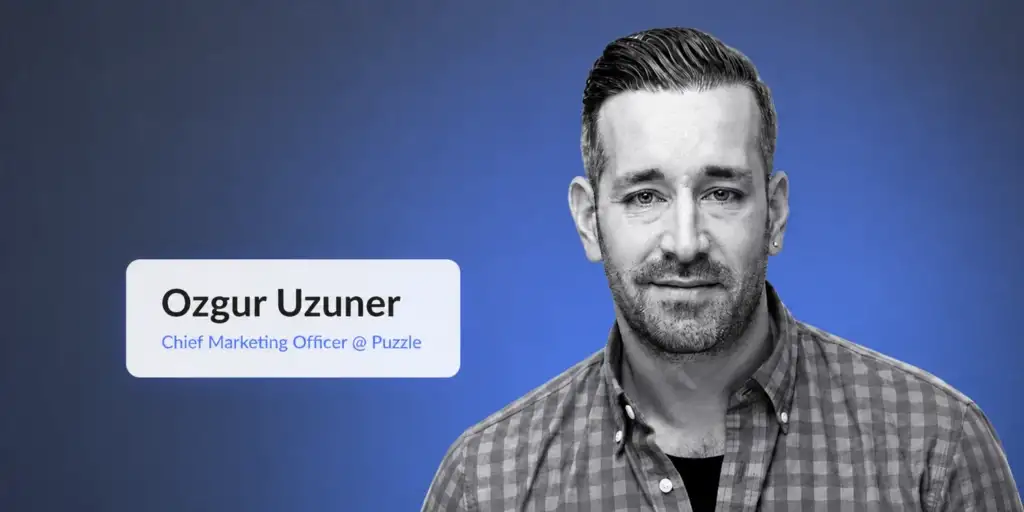
Ozgur (Oz) Uzuner, CMO at Puzzle, had watched this play out long before he heard of Knock AI. So when he first evaluated it, he sized it up the way any experienced marketer sizes up a chat widget. “I saw Knock more like an advanced chatbot,” he admitted. “But once I started using it, I realized it’s a lot more than that.”
Two months later, the numbers backed him up.
Content wasn’t the problem
Puzzle makes accounting software for startup founders who run their own books, and the accounting firms that serve them. It enables them to leave QuickBooks for an AI-native platform where humans stay in control.
Puzzle has solid content that explains everything. What the product does, how it works, who it’s for, in pages, videos, and help docs. It changed nothing about how visitors behaved. “You can put as many pages, as much content, video, whatever you want. People maybe look at it for a few seconds at the most,” Oz said. Buyers kept asking questions that the content clearly covered.
The lead form had a similar problem. A founder wants to know if she can trust the numbers without an accountant. A bookkeeper wants to know how the platform handles ten clients. A firm wants to know what a migration costs. The form asked all of them the same questions, before any of them understood what Puzzle could do for them.
A conversation that asks the next question
A chatbot answers the question a buyer typed and stops there. Knock AI answers it, then asks what that buyer probably needs to know next. “If you’re asking about this, most likely you’re going to ask about this next. So let me open up that conversation and tell you what Puzzle can do,” Oz said.
Migration is a good example. Leaving QuickBooks depends on which modules a company uses, so a static FAQ can only offer generic steps. Knock AI, trained on Puzzle’s help docs, first asks what the buyer runs in QuickBooks, then explains how migration would work for their setup.
Oz had one concern early on. Knock AI runs in tools buyers already use, like Slack, and he wondered if opening a Slack window would pull visitors off the site. It didn’t. “Those buttons have been there forever. If they were working really well, we wouldn’t need Knock.” Traffic to Puzzle’s other pages held steady. “Quite the opposite. It brings that traffic back to you with higher intent.”
Where onboarding was losing users
The example that convinced Oz had nothing to do with lead capture.
To use Puzzle, a new user connects a bank account so the platform can pull financial data. Bookkeepers manage books for their clients, so the bank account isn’t theirs to connect. They’d reach that step in onboarding, get asked for login credentials they didn’t have, and leave. Qualified users were dropping out at a step no form would ever catch.
The Knock AI button now sits inside the onboarding flow. A bookkeeper who gets stuck says so in the chat, and Puzzle walks them through a workaround that gets them into the app, where they can connect their clients’ accounts instead. “Companies don’t only have happy paths. They have a lot of unhappy paths. Knock really helps there,” Oz said.
The same flexibility runs across the funnel. On the homepage, Knock AI identifies which type of buyer it’s talking to and routes them, founders to one team, accounting firms to another. A buyer with one quick question gets an answer instead of a calendar link. “Knock brings that personalization. It answers one question or answers a slew of questions for 30 minutes, depending on what that user needs,” Oz said. When someone does want a person, a human joins the thread and starts an instant meeting on the spot. “That’s a much better UX than schedule a call, wait for a few days.”
Engagement tripled during a traffic slump
Roughly 5% of Puzzle’s traffic used to book a meeting up front. Today, 10 to 15% engages with Knock AI in some form. More buyers talk to Puzzle before they self-serve, so fewer of them stall out mid-onboarding.
The sharpest proof arrived during a seasonal dip. Top-of-funnel traffic fell, exactly as Puzzle expected for the period. Engagement tripled anyway, within about two months of launch, and Google Analytics showed both at once: fewer visitors, more conversations. “It’s not about how many people come to your website. It’s about what they do when they get there,” Oz said.
He hears one objection from other marketers again and again: a chat step lengthens the funnel, and longer funnels convert worse. He disagrees with the premise itself. “It’s okay to add steps to your conversion funnel if it’s going to help you convert. This is not a game of having the least amount of steps.”
The added step keeps paying off after the chat ends. Chat history travels with the buyer, so account executives open sales calls already knowing what a prospect asked about, instead of starting from zero.
What are you optimizing for?
That’s the question Oz tells teams considering a tool like Knock AI to start with. A chatbot handles rote support tickets and after-hours coverage fine. For engagement, education, and personalization, it’s the wrong tool. “An engagement tool versus just an answer tool. They’re quite different by design,” he said.
Setup took just a few weeks: fine-tuning the routing, training the AI on Puzzle’s docs, placing the buttons. Oz keeps finding new places to put conversations as the Knock AI team ships additional features.
The pattern holds beyond accounting software. The more complex the purchase, the less a static page can do for the buyer, and the more a real conversation can. Puzzle sells to founders, bookkeepers, and firms who each arrive with different questions, which made the gap obvious sooner. Every B2B company selling to more than one type of buyer sits somewhere on the same curve.
Puzzle didn’t fix its website, because the website was never the problem. Buyers changed how they buy. Puzzle changed how it meets them, and 3x more of them started talking.


.svg)


.svg)
.svg)
.svg)


.svg)
.svg)


.png)
.svg)


.svg)
.svg)


