Let Buyers Choose.
Does your sales journey prioritize automation over pressure?
The Rise of Buyer-Led Experiences
Netflix lets you cancel without having to contact support. Wolt lets you change your order after it’s placed. Booking platforms let you reserve a hotel and cancel up to a certain date with no penalty. Airlines let you choose your seat and adjust your booking online without needing to call support.
These aren’t just examples of good UX. They represent something deeper: emotional safety.
Each one sends buyers a clear message: “You’re in charge. You can explore, exit, or re-engage whenever you want, on your own terms.”
That sense of control often determines whether a buyer converts or clicks away. Yet while many teams think they deliver buyer-led experiences, only 15% actually design with the buyer’s mindset in mind (Flume).
Buyers Are Pushing Back on Pressure
The average person is exposed to thousands of marketing messages daily (New York Times), creating sensory overload. Every inbox, popup, retargeted ad, and LinkedIn DM is a fight for attention.
Most of these messages are framed as demands:
- Book a call
- Act now
- Lock in your discount
In B2B, the script is the same: follow our funnel, talk to sales, wait for a rep. It doesn’t feel helpful. It feels like pressure, forcing buyers to surrender control.
Vendors decide when and how they’ll respond. Buyers are required to hand over their personal details without knowing who will contact them, when, and on what terms. There’s no choice, only compliance with a funnel the vendor fully controls.
When people feel trapped, they bounce. This is psychological reactance: a behavioral response where we push back when we feel our freedom is being limited.
The data reflect this. The more teams chase, the more buyers retreat (Circle Three).
Exit Options Build Trust
Many teams still believe that giving buyers flexibility will hurt conversion. In reality, the opposite is true. Adding exit options builds trust:
- Trials that let users cancel anytime consistently outperform forced commitments.
- Transparent pricing brings in more qualified leads.
- Letting buyers explore without friction increases adoption and lowers churn.
- Clear data privacy terms and easy opt-out policies show respect for personal information, giving buyers confidence that they (not the vendor) control how their data is used.
Buyers no longer associate structure with value. They associate control with safety. McKinsey found that companies with transparent digital journeys and self-serve tools saw higher conversion and lower churn than those that used traditional sales-led methods.
These models don’t just offer convenience. They send a strong message to buyers:
We trust you to evaluate the product on your own terms.
Ironically, when buyers feel free to walk away, they’re more likely to stay.
AI Can Help, But People Still Want People
AI now supports nearly every stage of the sales process. It schedules calls, rewrites emails, and forecasts pipeline. But at the decision phase of the funnel, most buyers still want to talk to a human. Efficiency is valuable, but if it removes choice, it backfires.
When buyers are forced to interact only with bots, they feel like they’ve lost control. Some may accept AI-driven interactions, but others will disengage if they can’t speak to a real person. Companies risk losing their best leads if they fail to give buyers the option.
According to Gartner, by 2030, 75% of B2B buyers will prefer human interaction during key stages like negotiation, solution alignment, and final decision-making.
It’s not resistance to technology. It’s about trust. Human conversations provide reassurance, accountability, and a sense of partnership that AI can’t replicate.
AI can set up the moment, but buyers should always have the choice to engage with automation or connect with a human. Without that, companies risk eroding trust and losing deals that were otherwise winnable.
Sales Funnels Need to Evolve
The standard funnel still looks like this:
- First, give us your private details: email, phone number, company info
- Then, wait to be routed to a rep
- Hope they decide if, when, and how they’ll get back to you
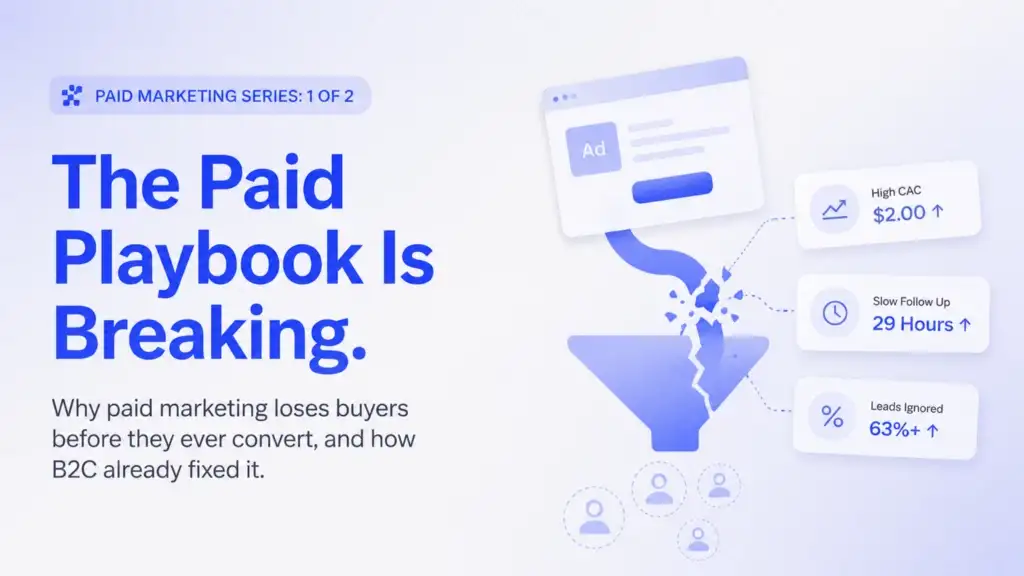
- Wait two or three days, and hope the experience is good
But buyers don’t operate on that timeline.
They may be ready to act now, or at 10pm on a Sunday. They may want to message instead of schedule a call, or review your product on their own before they engage.
Rigid funnels treat buyer intent like a static asset. But intent fades fast, and delays kill trust.
The gap between how we sell and how people buy is where deals fall apart.
The Buyer Autonomy Playbook
Buyers don’t just want efficiency. They want control. Research shows that when people are given options, they feel safer and more motivated to engage (Shopify). In B2B, that means buyers expect:
- A set of options to choose from, not one forced path.
- The ability to control their own funnel (try before they buy, cancel orders).
- The freedom to choose when and how they communicate with vendors. Forced demos and form fills lead to sharp drop-offs.
Don’t:
- Demand personal details before delivering value.
- Force buyers to share information. Let them decide, and demonstrate the upside first.
- Limit communication to a single channel (like “Book a demo”).
- Make visitors feel trapped by chatbots they can’t dismiss.
Do:
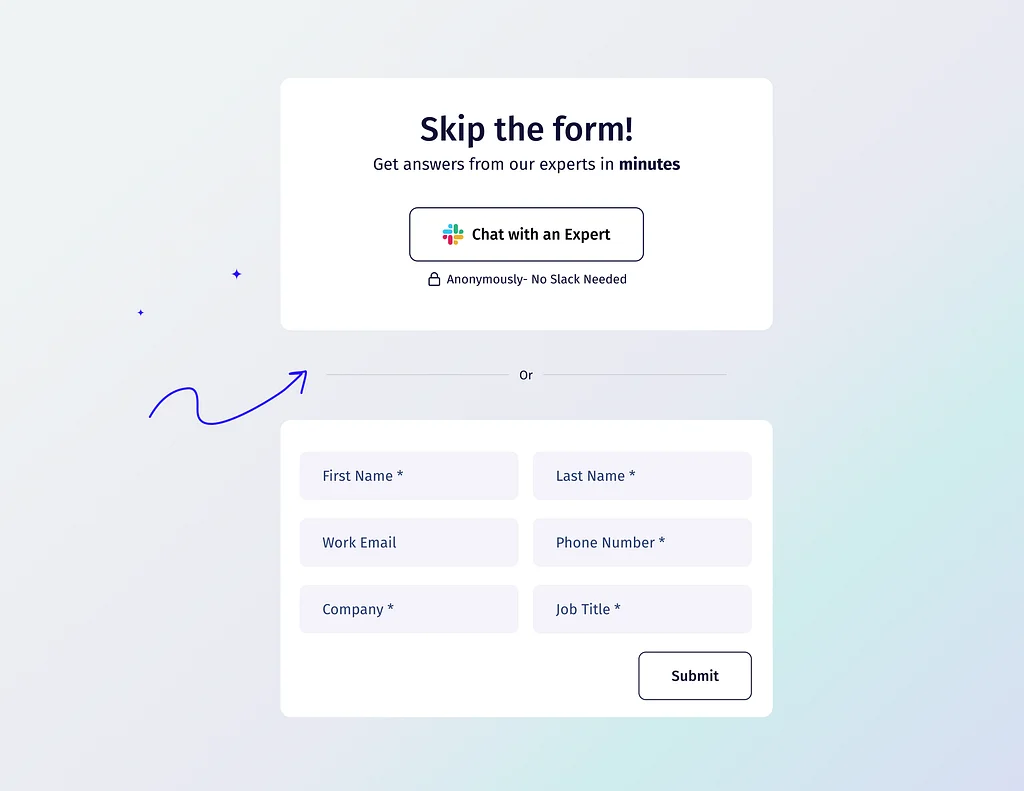
- Offer ways to connect instantly without forms or friction.
- Show pricing, cancellation terms, and onboarding flow upfront.
- Let visitors choose how they want to communicate: G2, LinkedIn, Slack, WhatsApp, email. They’ll be more open to sharing when they’re in their comfort zone.
- Allow anonymous exploration without forcing details upfront.
- Give buyers control over their privacy, including whether they want follow-up emails.
- Offer “try before you buy” experiences without locking buyers into commitments.
- Set expectations transparently: let them know who will respond, when, and how. Knock’s AI agent checks the rep’s calendar and tells the buyer when the rep will be available.
- Build onboarding with clear exit points and easy re-entry.
Giving buyers control doesn’t mean losing control. It means creating an environment where decisions feel natural, personal, and safe. When buyers lead, they move at their own pace. When they pause, they’re much more likely to return if they don’t feel penalized.
Buyers aren’t looking for more automation. They’re looking for more autonomy.
They want to choose, not be chased.
They want relevance, not artificial urgency.
They want to feel safe, not manipulated.
If your approach still relies on force, secrecy, or pressure, it’s not just outdated. It’s costing you trust and losing opportunities.
Design for choice and build for flexibility. Let people opt in, opt out, switch channels, and come back when they’re ready.
If you do that right, buyers will happily return and stay on their own terms.


.svg)


.svg)
.svg)
.svg)


.svg)
.svg)

.svg)


.svg)


