MQLs: Still Meaningful or Missing the Point?
Rethinking how we qualify leads, track intent, and measure momentum
For years, the Marketing Qualified Lead was the backbone of B2B marketing measurement. It brought structure to the funnel, clarified the handoff between marketing and sales, and offered a common language for pipeline planning.
But here’s what no one seems to be saying out loud:
- Do MQLs still reflect how today’s buyers behave?
- Do they help revenue teams hit goals, or are they an illusion of intent?
MQLs aren’t broken. They’re outdated. Clinging to them as your GTM foundation is no longer strategic.
In a world where buying signals surface through AI search, G2 reviews, LinkedIn comments, and Slack threads, MQLs give a narrow, distorted view of buyer intent.
Why MQLs Are Failing
A quiet revolution is underway in how B2B buyers make decisions, and MQLs aren’t a part of it.
AI overviews are drastically reducing website clicks, as recently noted by HubSpot CEO Yamini Rangan (Yahoo Finance). The top-of-funnel, which was built on blogs, gated content, and nurture flows, is eroding fast.
Buyers now ask questions in ChatGPT or Claude. They find answers on Reddit and in Slack channels. They don’t need your gated eBook anymore.
Most leads with real intent won’t fill out a form or hit your scoring threshold. They won’t enter your funnel at all.
When we optimize for MQLs, we’re not just missing signals. We’re optimizing for the wrong ones.
Here’s what’s broken:
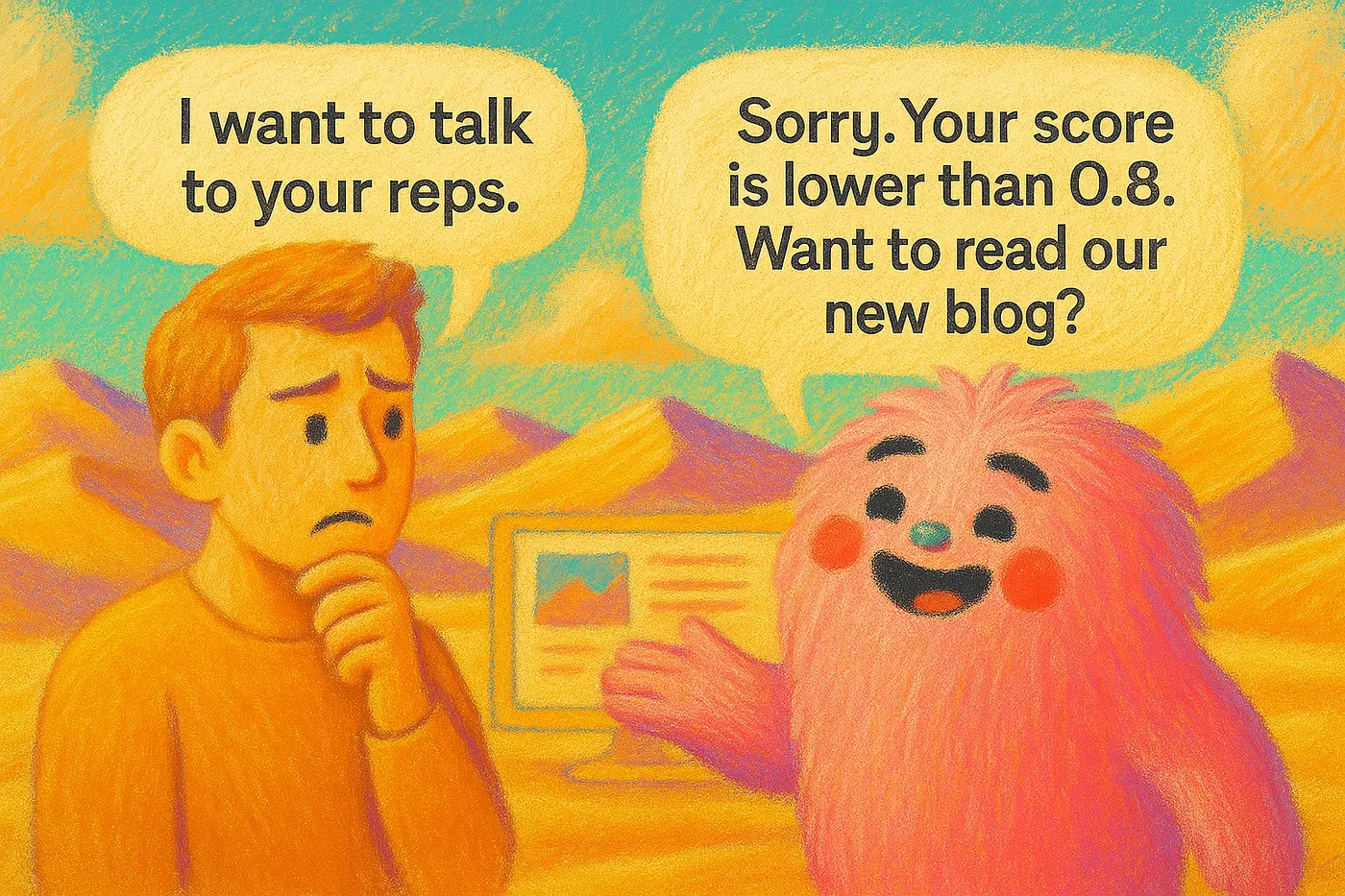
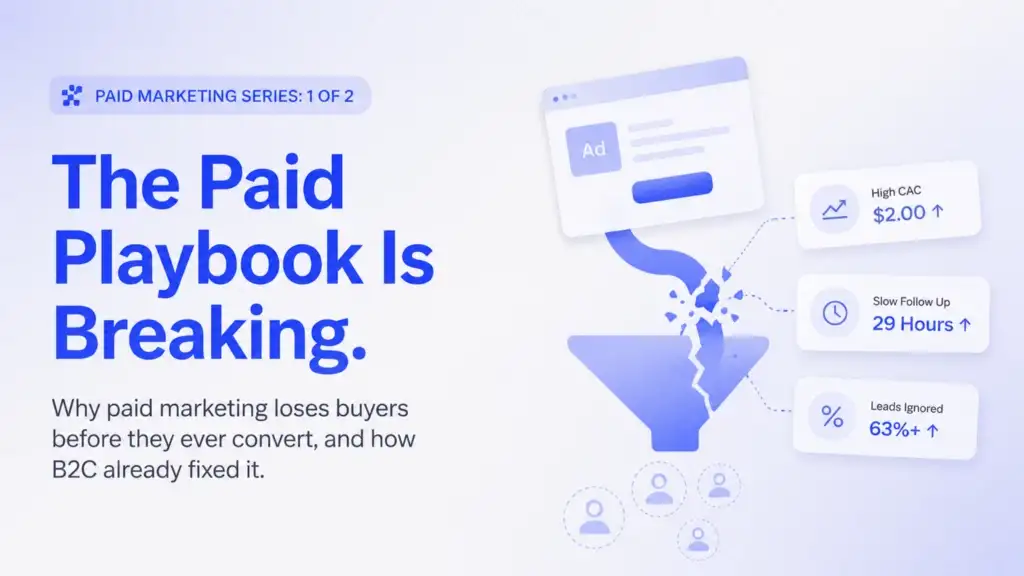
- Follow-up is slow: MQLs sit in queues while buyers move on.
- Scoring is shallow: Most signals are hidden in the dark funnel, so scores are misleading.
- Channel incentives are skewed: Teams chase form fills instead of pipeline.
It’s not that MQLs failed. Buyer behavior just moved on.
Despite the shift, MQLs are still embedded in many organizations for a few reasons:
- Efficiency: Historically, MQLs helped reps avoid bad leads.
- KPI simplicity: Marketing teams used them to show success.
- Process consistency: They offered structure in complex organizations.
These internal justifications aren’t a reflection of the way buyers actually buy. MQLs can still be a signal, but they can no longer be the goal.
Conversations Over Funnels
The old GTM model assumed a predictable path: from ad to website to form to nurture to sales. That journey is outdated (Trumpet).
We know buyers now rely on AI search and review sites more than traditional web search (G2). That means they expect relevance, speed, and zero friction. Teams should be rebuilding around conversations, not conversions.
- A pricing page visitor should be able to start a chat, not fill out a form.
- A G2 reader should message a rep, not visit a landing page.
- A blog reader should chat with the author, not bounce.
DMs are the new entry point. When a buyer messages you, they’re showing intent. And with AI agents, those conversations can now scale.
New Metrics for Intent
Traditional scoring misses nuance, especially when you have multiple people engaging lightly. Modern GTM teams use:
- CQLs (Conversation-Qualified Leads): Triggered by real-time AI or rep chat.
- PQLs (Product-Qualified Leads): Based on usage signals from your product.
- Intent-to-Meeting Rate: Measures how fast signals turn into meetings.
- Multithreaded Engagement: Tracks whether multiple stakeholders are active in the account (Forrester).
AI SDRs accelerate this shift. 78% of buyers choose the first vendor to respond, yet the average follow-up time still hovers around five hours (Qualified). AI SDRs can engage leads instantly, enabling qualification and follow-up in real time, without human delay. This level of responsiveness is quickly becoming standard.
The most advanced teams aren’t abandoning qualification. They’re evolving it:
- Qualification starts in the conversation: AI agents can assess, capture, and route.
- Don’t switch the channel: Go from bot to rep in the same thread.
- Put DMs everywhere: On pricing pages, G2 listings, social bios, and product docs.
This isn’t just about speed. It’s about showing up where the buyer is, right at the moment when they care.
Making the Shift
Here’s how to rethink your qualification strategy to match modern buyer behavior:
- Redefine qualification
- Use MQLs, CQLs, and PQLs together.
- Shift KPIs to focus on conversations started, meetings booked, and opportunities created.
- Keep MQLs only for continuity, not as your north star (MarketingProfs).
2. Add DMs to high-intent surfaces
- Prioritize pricing pages, comparison docs, and product flows.
- Make those links visible in search and AI results.
3. Deploy AI agents as first responders
- Let agents answer, qualify, and book.
- Reps pick up where the AI leaves off, in the same thread.
4. Track what matters
- Conversations started
- Time to qualification
- Conversation-to-opportunity rate
Buyers want to engage on their terms. Let them reach you when their intent peaks. Qualify them in the conversation.
The MQL gave us structure, but structure isn’t strategy. Move on to stay relevant, because the future of GTM won’t wait around.


.svg)


.svg)
.svg)
.svg)


.svg)
.svg)

.svg)




.svg)


