The Conversation Ops Stack: A Playbook for Running Buyer Conversations.
The Conversation Ops Stack
A playbook for running buyer conversations
Most GTM stacks are built to track leads. But buyers don’t experience “stages.” They experience a conversation that either stays coherent or quietly falls apart.
Teams obsess over speed: faster routing, faster replies, and faster meetings.
But deals are rarely lost in one dramatic moment. They’re lost through small resets. Context disappears, the conversation loses its throughline, and the buyer has to start over.
Conversation Ops is the infrastructure layer that prevents that.
The Problem with Your GTM Stack
Traditional go-to-market systems are designed to manage progression. They track where someone is in a funnel, which team is involved next, and what activity has occurred.
What they don’t manage as well is the lived experience of a conversation unfolding across time, people, and channels.
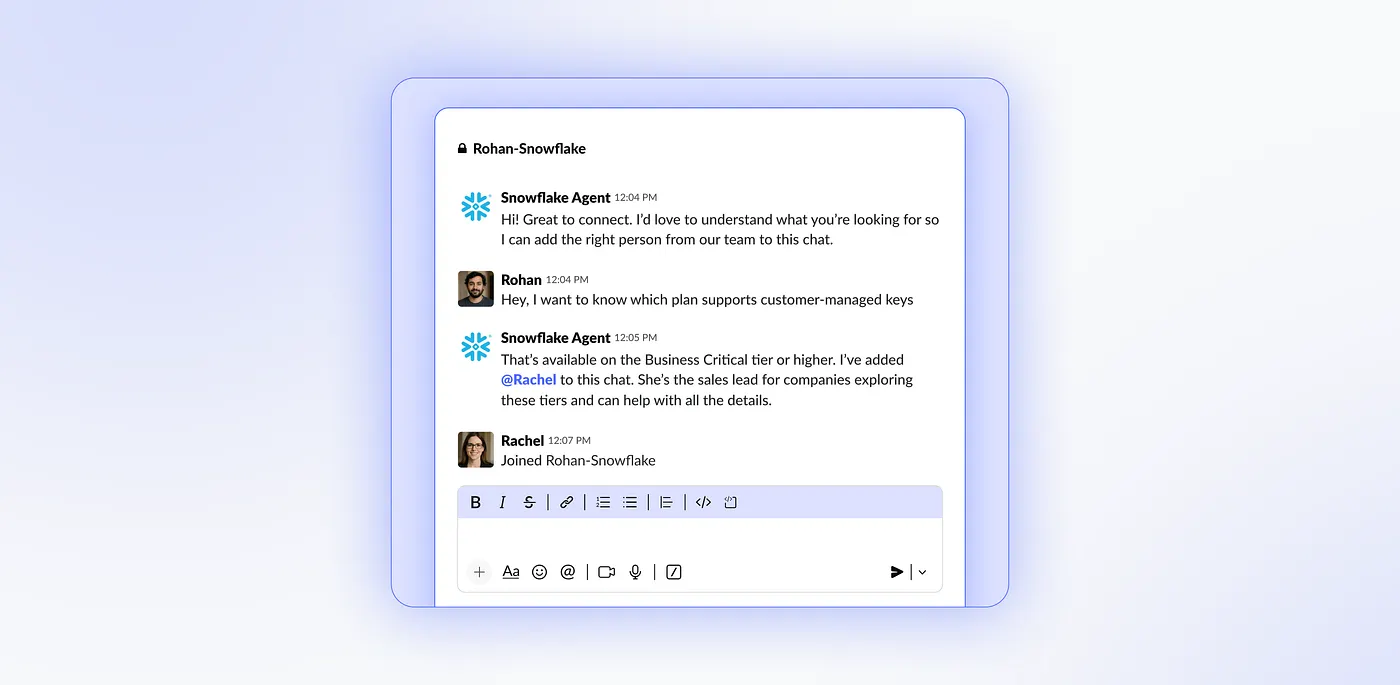
This breakdown is subtle: A buyer explains their situation to an AI agent. Later, a human joins the conversation and asks for the same details. The buyer responds, but something shifts. The system technically worked, yet the experience suggests that the conversation didn’t carry forward.
In other cases, a discussion starts in one place and is pushed into another. The buyer has to recalibrate. Context fragments. What felt like momentum becomes effort.
These moments may not register as failures in a dashboard. But they quietly shape whether a buyer feels supported enough to continue.
What Conversation Ops Means
Conversation Ops is a system for managing buyer conversations end to end.
It keeps conversations coherent as they move between AI and humans, across channels, and over time. It ensures that what matters carries forward, that collaboration feels coordinated, and that progress is visible to the buyer.
When Conversation Ops is working, buyers don’t feel passed around or restarted. They know the conversation is being actively guided. Multiple people may contribute, but the experience feels unified.
There’s one place to talk, a shared understanding of what’s already been discussed, and a clear sense of what happens next.
The Core Layers of the Conversation Ops Stack
A messaging-first GTM motion runs on more than a chat interface. It depends on a set of tightly connected layers that support continuity and coordination.
The Conversation Surface
Where buyers engage
The conversation surface is where intent becomes real. These moments often happen off-site: in comments, DMs, communities, or review platforms. Buyers aren’t looking to enter a process. They’re trying to move forward with something specific.
A common breakdown happens when the response escalates too quickly. A buyer asks a focused question and is immediately pushed toward a meeting or form. Engagement drops, not because interest is low, but because the next step doesn’t match the moment.
A strong conversation surface allows the exchange to continue naturally, without forcing a channel change or premature commitment.
The Context Layer
What the system remembers and transfers
Continuity depends on memory, but only if that memory is usable.
Conversation Ops relies on short, structured summaries that capture what a buyer is trying to do, what constraints matter, what they’ve already seen, and what still needs to be decided.
When someone joins the conversation already grounded in that context, the interaction feels smooth. When buyers are asked to restate information, confidence erodes quietly. This layer protects momentum by ensuring buyers don’t have to do the same work twice.
Continuity and Coordination
Preserving the Relationship
Modern conversations are rarely handled by a single person. Collaboration often makes responses faster and more useful. The buyer experience improves when that collaboration feels coordinated.
Buyers gain confidence when there’s a recognizable throughline in the conversation. It gives them a sense that someone is guiding it forward, even when others contribute answers, insights, or follow-ups.
When replies are quick, relevant, and connected, buyers don’t think about how many people are involved. They simply feel supported and understood. Effective Conversation Ops enables teams to collaborate openly while maintaining a consistent, relationship-driven experience.
AI Participation
Laying the groundwork for humans
In this model, AI supports the conversation rather than leading it.
AI helps by asking early clarifying questions, summarizing what matters, surfacing relevant context, and suggesting next steps. This preparation allows humans to join conversations informed and focused.
Speed alone doesn’t create momentum. Preparedness does. When a human response shows understanding from the very first message, buyers feel continuity, even if they never see the work that made it possible.
Conversation Signals and Visibility
What you measure and improve
Conversation Ops shifts attention away from activity toward momentum.
Signals reveal friction early, while it’s still fixable. These include how quickly a buyer gets a meaningful response, whether context is preserved across interactions, and how often conversations stall after transitions.
The Conversation Ops Playbook
Conversation Ops doesn’t require reinventing your GTM motion. It means having shared operating rules for how conversations are handled.
Treat the thread as the source of truth
The conversation should live where the buyer is. Internal systems should support that thread, not compete with it.
Standardize what context transfers
Define a simple summary that carries forward at every transition. Keep it short enough to be used consistently.
Make continuity visible early
Buyers feel more confident when the conversation has a clear direction. Keep a steady tone across participants and introduce anyone new.
Use AI to prepare humans
AI should reduce friction for both sides by setting humans up with the context they need to be effective.
Route without resetting the conversation
Internal coordination should never force the buyer to restart or re-explain.
Design for pauses
Conversations stretch across time. Brief recaps and clear next steps make re-entry easy when buyers return or new stakeholders join.
Measure momentum, not volume
Focus on whether conversations are easy to continue, not just whether activity occurred.
The teams that succeed in a conversation-first world won’t be the ones with the most automation. They’ll be the ones that make it easiest for a high-intent buyer to continue.
That’s the role of Conversation Ops: maintaining continuity, clear coordination, and momentum across real buyer conversations.


.svg)


.svg)
.svg)
.svg)


.svg)
.svg)

.svg)





.svg)


