Words That Build Trust: The UX Writing Playbook for B2B Buyer Control.
The UX Writing Playbook for B2B Buyer Control
Every piece of copy in your product or site carries weight. Some words tell buyers, “You’re in charge.” Some words say, “We decide.” That difference in language determines whether you build trust or create friction.
Previously, we explored how forced flows trigger psychological reactance. In this playbook, we’ll go deeper, sharing how to write copy that instills confidence, restores control, and encourages buyers to move forward.
Common B2B Mistakes to Avoid
Before we get into what great copy looks like, let’s look at some of the most common missteps that show up in B2B flows. These patterns create friction, reduce trust, and push buyers away:
- Offering only a single call-to-action like “Book a demo.” This narrows the user’s options and feels too high-commitment. A better approach is to add “Chat now” or “Compare plans” for more flexibility.
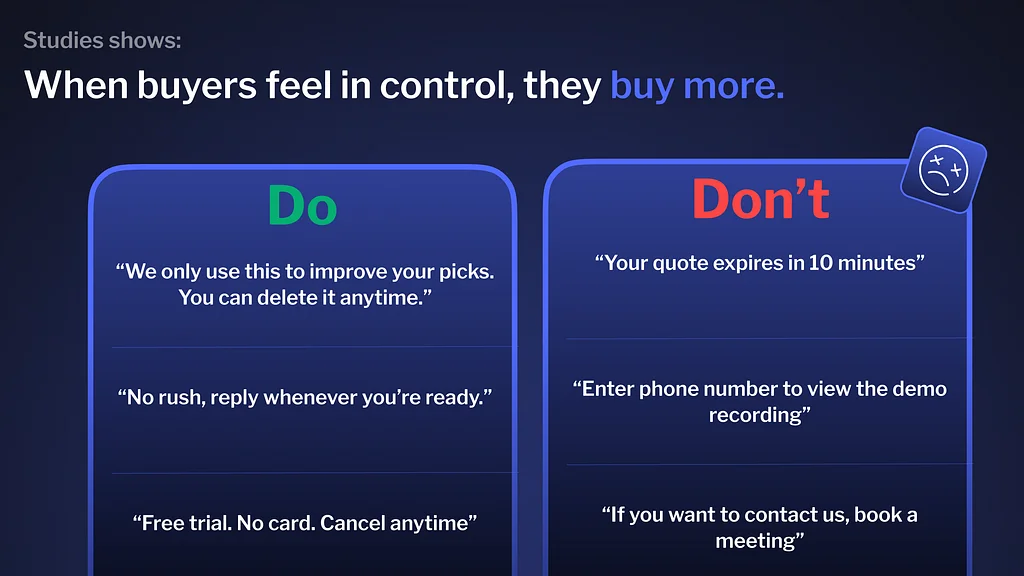
- Using fake urgency, like “Your quote expires in 10 minutes.” Tactics like these feel manipulative. Instead, use honest timelines or scheduled reminders that maintain urgency without eroding trust.
- Requiring personal details, like a phone or email before providing any value. Offer a preview or explain the benefit of sharing that info to soften the ask.
- Using chatbots that immediately demand an email before offering help. It’s better to begin the interaction, deliver something useful, and only then ask for contact info.
- Having sales reps or bots that relentlessly push “Book a call” after every message. This makes users disengage. Instead, ask what they need help with or provide alternative paths forward.
Principles of Control-First Copy
So how do you shift from these missteps to experiences that make buyers feel in control? Use these guiding principles to assess your current flows, replace friction with permission, and foster trust through your copy.
Offer Real Choice
On B2C platforms, buyers are often able to filter by what matters to them, like “fit vs. style” or “price vs. brand,” not by what the company decides is important. This creates a sense of control. The same idea applies in B2B. Instead of one default path, let buyers choose how they evaluate your product.
B2B example: On a pricing page, offer “Compare by feature” and “Match to your team size” rather than only “Start a free trial.”
Explain the Ask
Spotify reassures users with copy like, “We only use this to improve your picks. You can delete it anytime.” This sets expectations and makes the request feel useful.
In B2B, data requests that lack context are invasive. Users are more comfortable sharing their info when you explain how it will improve their experience.
B2B example: “We ask for your team size so we can show only plans that scale with you” or “We’ll use this to match you to plans. Edit or skip anytime.”
Make the Exit Obvious
“Checkout as guest” is one of the most trust-building phrases in ecommerce. It gives users value without forcing them to sign up or share their personal info.
But most B2B experiences take the approach of “give me your email and info, and only then will I give you value. Lack of an exit breeds hesitation. Always offer a simple, visible way out.
B2B example: Instead of gating everything, try offering “Get pricing info” or “Cancel anytime. You can stay anonymous.”
Let Buyers Set the Pace
Wolt signals patience with messaging like, “We saved your cart. Tap to finish when ready.” That shifts the mood of the interaction. B2B buyers need the same flexibility.
B2B example: Use “Take your time. I’ll be here when you’re ready” or “Your progress is saved. Pick this up later” instead of pushing pressure and urgency.
Ease Commitment Early
B2C brands often remove barriers to entry with copy like, “Free trial. No card. Cancel anytime.” It reduces risk perception and builds momentum.
B2B teams can adopt similar patterns to increase initial engagement.
B2B example: “Start with your team. No billing, no commitment” or “Try it free. No credit card needed.”
Copy Patterns You Can Use Today
Once your strategy is aligned, these copy patterns can help reinforce control across key interaction points. Here are copy snippets you can borrow and adapt, organized by user moment:
When asking for info, reduce buyer resistance:
- “We use this to suggest the right tier.”
- “Optional. Helps personalize experience.”
- “You can change this later.”
When prompting action, invite buyers, rather than demand:
- “Choose what fits your team best.”
- “Explore before you commit.”
- “Want help comparing?”
When easing commitment, reassure buyers with clear, low-risk language:
- “Cancel anytime.”
- “No payment details required.”
- “You can change this later.”
When managing pace, use language that gives buyers space:
- “Reply when you’re ready.”
- “Your progress is saved.”
- “No rush. Take your time.”
Why This Matters
This isn’t just about good writing. It’s about how buyers experience your brand, and whether they trust it enough to take the next step.
According to Shopify, small shifts in phrasing can directly impact conversion rates by reducing hesitation. That’s especially true when buyers evaluate products on their own, without ever talking to sales.
In B2B, where the stakes are higher and the sales cycle is longer, words matter more. Control-first copy lowers resistance, improves opt-in rates, and builds credibility before your team ever gets involved. It’s not a style choice. It’s a strategy.
Putting it Into Practice
Good UX writing doesn’t just clear the path. It sets the tone. It makes buyers feel capable, respected, and in charge.
This playbook represents a shift in how you approach every moment of engagement. From the first hover state to the last CTA, every interaction is a chance to signal trust.
Start small. Test one phrasing tweak. Rethink one data request. Over time, these small shifts compound, and your buyers will feel the difference.


.svg)


.svg)
.svg)
.svg)


.svg)
.svg)

.svg)



.svg)


