Best AI Sales Enablement Software: 7 Tools Compared
Best AI Sales Enablement Software in 2026
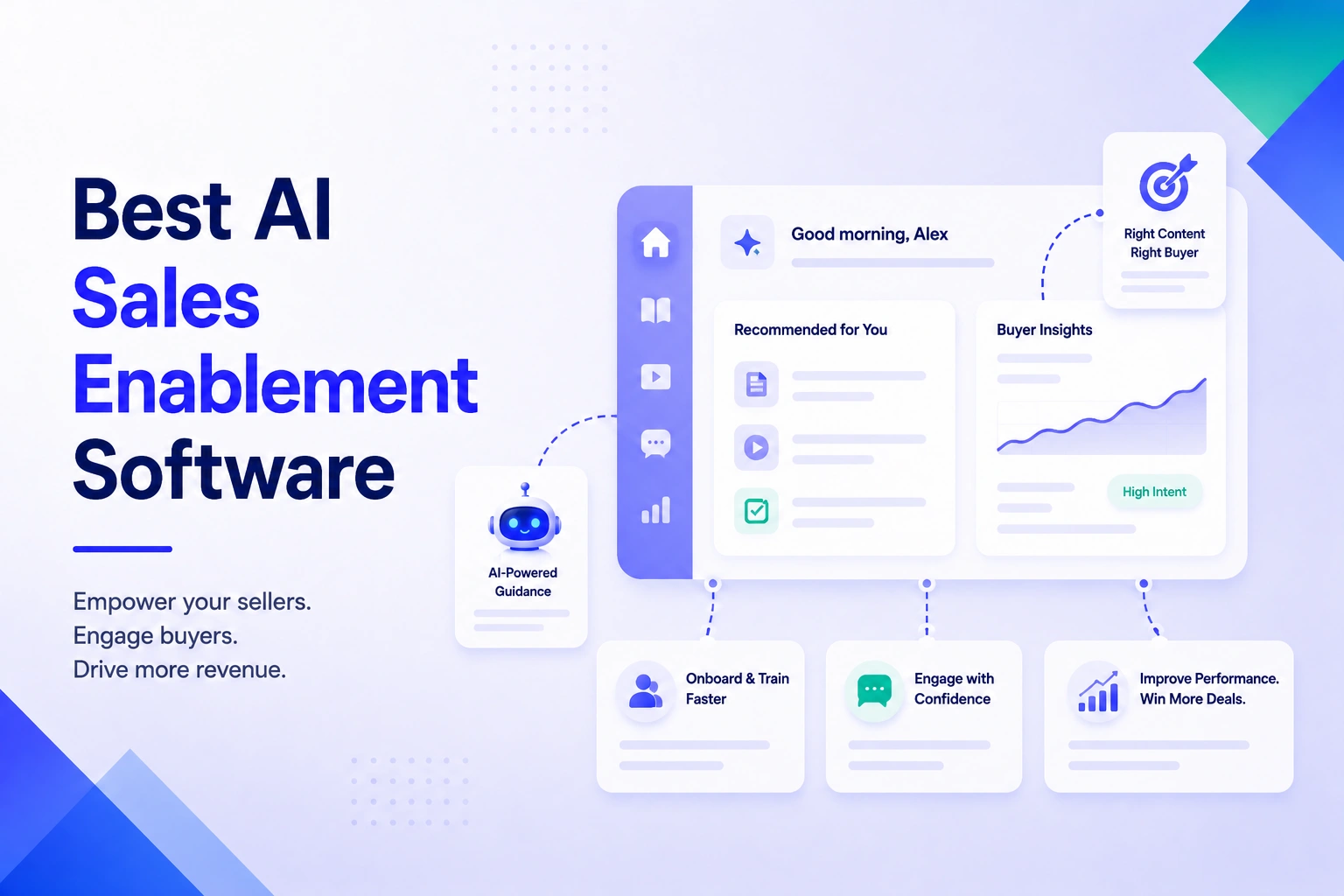
The best AI sales enablement software depends on what you need to enable and where buyer or seller friction is slowing revenue down.
Traditional sales enablement focused on helping reps sell more effectively through content, training, coaching, and rep readiness. AI is expanding that role. Modern platforms can also bring buyer intelligence into the workflow, identify active buying intent, guide sellers during active opportunities, improve buyer engagement, automate parts of sales execution, and help teams move deals forward.
That creates a broader evaluation:
Enable the seller → understand the buyer → improve the interaction → move the deal forward
In this guide, we compare Knock AI, Highspot, Seismic, Gong, Mindtickle, Dock, and Salesforce/Agentforce Sales across those different approaches, from seller readiness and content enablement to conversation intelligence, buyer enablement, CRM execution, and buyer-intent-driven revenue conversion.
Some platforms help reps become more effective. Others help teams give buyers a better buying experience. A newer group connects buyer signals directly to the actions that can move an opportunity forward. The right choice depends on where your sales process needs the most support.
What Does AI Sales Enablement Software Actually Do?
AI sales enablement software can support much more than sales training or content management. Depending on the platform, it can help reps prepare for conversations, understand buyer behavior, access relevant information, and take the next action while an opportunity is active.
Enablement area
What AI can help automate
Content
Find and recommend relevant sales content
Readiness
Train, coach, assess, and prepare reps
Conversation intelligence
Analyze calls, objections, questions, and deal signals
Seller guidance
Surface context and recommended next actions
Buyer engagement
Give buyers relevant information and experiences
Deal execution
Identify risks, opportunities, and next steps
Buyer intent
Recognize buying activity and prioritize attention
Revenue conversion
Qualify, route, engage, schedule, and move qualified buyers forward
Not every platform covers all of these areas. Some focus on helping sellers become more prepared, while others specialize in content, conversations, buyer experiences, or CRM-based execution.
That is why it helps to look beyond the label sales enablement when comparing platforms. Sales enablement is no longer only about giving sellers the right information. Increasingly, it is about making the right information, action, and buyer context available at the moment they can change the outcome.
The difference also matters when comparing sales enablement with sales engagement or CRM software: those categories may overlap, but they typically begin at different points in the sales process and solve different operational problems.
Best AI Sales Enablement Software Compared
The platforms below approach sales enablement from very different starting points. Some help sellers prepare and execute, some improve buyer-facing experiences, and others use buyer signals to automate what happens next. The comparison is based on the job each platform is primarily designed to solve, not the number of features it offers.
Not every AI sales enablement platform solves the same problem. Some help sellers find content, improve their skills, or analyze conversations. Others help buyers evaluate a solution or automate CRM-based sales execution.Knock AI focuses on a different part of the workflow: recognizing active buyer intent and turning that signal into a qualified sales conversation. That makes it particularly relevant for teams whose bottleneck is not seller readiness, but converting existing buyer demand into pipeline.
Tool
Primary job
Where it starts
What it enables / automates
Primary outcome
Knock AI
Turn buyer activity and intent into qualified pipeline
Buyer activity across website, LinkedIn, G2, marketplaces, email, PDFs, events/QR codes, social, product experiences, and other Knock Links
Identify buyers → enrich people and companies → detect first-party intent → engage through AI and multiple channels → qualify → route to the right rep/agent → schedule → follow up → sync CRM → attribute → measure pipeline/revenue
More qualified conversations and faster conversion of active buyer intent into pipeline
Highspot
Content enablement and guided selling
A seller needs the right content, guidance, or playbook
Enable the revenue team with buyer context, not just content
Knock AI helps revenue teams act on buyer intent by connecting identification, enrichment, engagement, qualification, routing, scheduling, and follow-up into one workflow.
The workflow can begin with a buyer activity signal, not just a record already sitting in the CRM. Knock Reveal can identify anonymous and known visitors and connect their activity with person and company context. Knock Links extend that model beyond the website, giving teams trackable entry points across channels and assets such as LinkedIn, email, PDFs, social, marketplaces, and events or QR codes. Those interactions can become first-party intent signals alongside website activity and conversations.
Knock AI then adds contact, company, and advanced enrichment, including relevant firmographic and CRM context. That information is used to determine what should happen next, rather than simply creating a more detailed contact record. Intent scores, intent types, engagement signals, enrichment, and CRM data can all feed routing and workflows.
From there, Knock AI Agents can answer questions, ask qualification questions, use approved knowledge and buyer context, identify intent, and determine whether to continue with AI or bring in a human. Conversations can happen through Knock Chat across channels such as Slack, LinkedIn, WhatsApp, and Telegram, as well as inside product experiences.
Routing can then send the qualified buyer to the appropriate rep or AI Agent based on ICP, territory, CRM ownership, intent, enrichment, touchpoint, round-robin rules, or calendar availability. Scheduling can happen within the same journey, including through custom forms, HubSpot or Marketo forms, product and signup flows, or embedded experiences. The developer layer supports this through Knock.identify(), Knock.wrapLink(), and Knock.scheduling.load().
Enable the buyer as well as the seller
The result is a shorter path from intent → conversation → qualification → right rep → meeting, rather than asking a buyer to submit a form and wait for a follow-up. The conversation can continue after booking or when a qualified buyer leaves without booking through automated LinkedIn outreach and re-engagement.
Knock AI keeps the resulting activity connected to HubSpot, Salesforce, and Marketo, including buyer, meeting, conversation, enrichment, intent, attribution, and mapped CRM data. Its attribution layer connects on-site and off-site touchpoints to the resulting conversion, while the Website Revenue Report connects high-intent activity and CTA engagement with conversion leakage, deals, and revenue.
Highspot
Highspot focuses on helping sales teams find, use, and deliver the right content and guidance throughout the selling process. Its platform combines content management with AI-powered recommendations, sales playbooks, guided selling, seller workflows, buyer-facing content, and analytics. The emphasis is on giving reps relevant resources in context rather than making them search through a large content library for every opportunity.
Best fit: Large sales organizations that need sellers to consistently find and use the right content, messaging, and guidance across their sales process.
Watch-out: Highspot primarily enables the seller with content, context, and guidance. Knock AI operates further upstream by identifying and activating buyer intent before that sales conversation needs to happen.
Seismic
Seismic is an enterprise sales enablement platform built around content, personalization, governance, seller workflows, readiness, and buyer engagement. Its AI capabilities help teams surface relevant content and guidance while maintaining control over how materials are managed and used across large organizations.
Best fit: Large organizations managing extensive sales content, multiple teams, and strict governance requirements across their revenue organization.
Watch-out: Seismic's center of gravity is enterprise enablement infrastructure, helping organizations equip sellers and manage buyer-facing materials at scale. Knock AI is focused more specifically on turning real-time buyer activity and intent into the next sales action.
Gong
Gong approaches sales enablement through conversation intelligence and revenue intelligence. It analyzes sales conversations and other revenue interactions to surface buyer signals, objections, deal risks, coaching opportunities, and recommended next steps. Those insights can also feed forecasting and broader revenue workflows.
Best fit: Teams that want to learn from seller-buyer conversations and improve how reps execute live opportunities.
Watch-out: Gong primarily learns from and guides around sales interactions that are already taking place. Knock AI can act before and during the first sales interaction by using buyer intent and context to initiate, qualify, route, and shape the conversation.
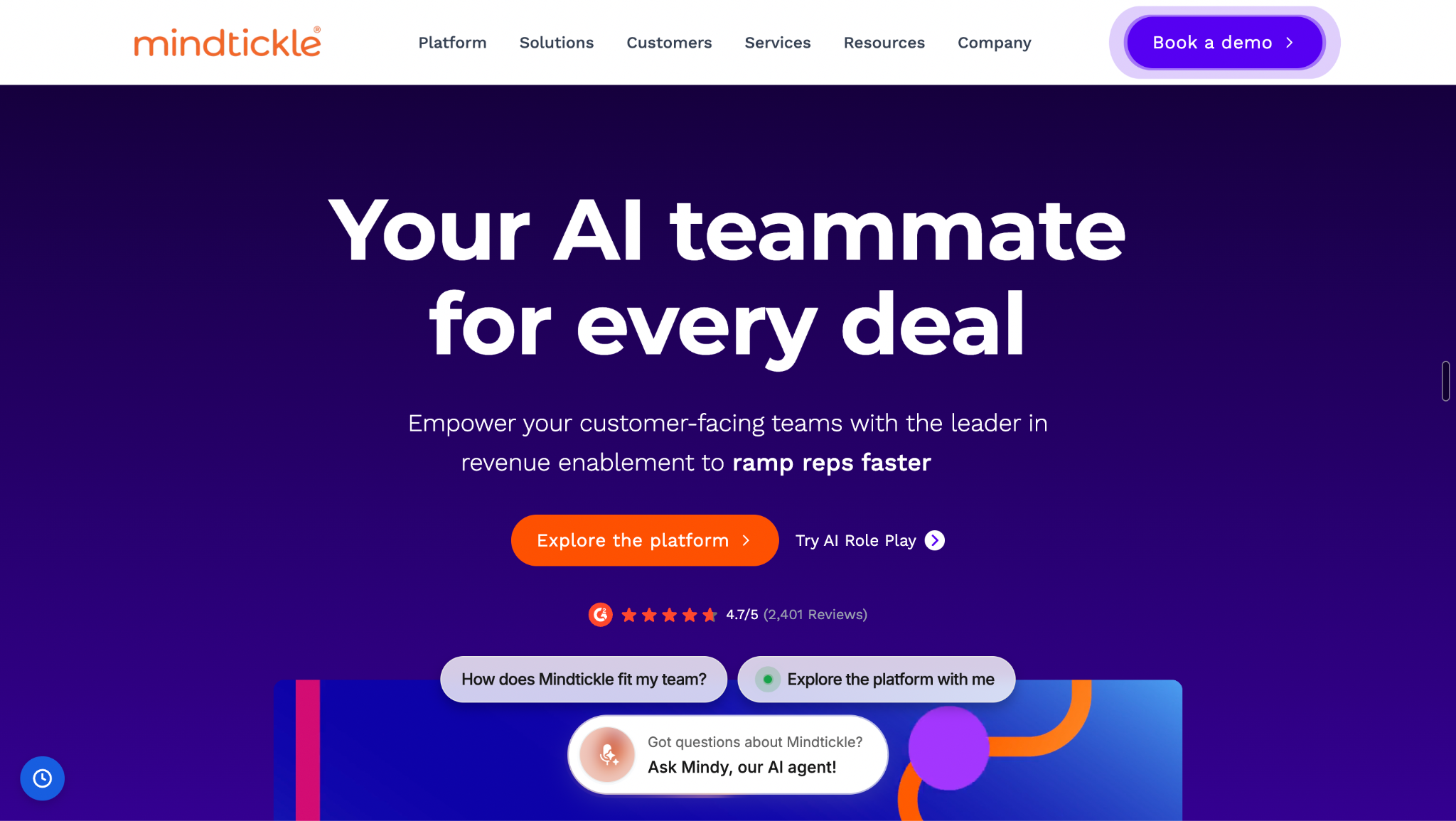
Mindtickle
Mindtickle focuses on sales readiness, helping organizations prepare sellers through onboarding, training, certification, coaching, assessments, and performance management. Its AI capabilities extend that model by helping teams personalize learning and use performance signals to identify where reps need additional support.
Best fit: Organizations where sales readiness, onboarding, consistency, and rep capability are the primary challenges.
Watch-out: Mindtickle is primarily about making reps ready to sell. Knock AI is focused on recognizing active buyers and moving them into the right sales conversation, using buyer context, intent, qualification, and routing.
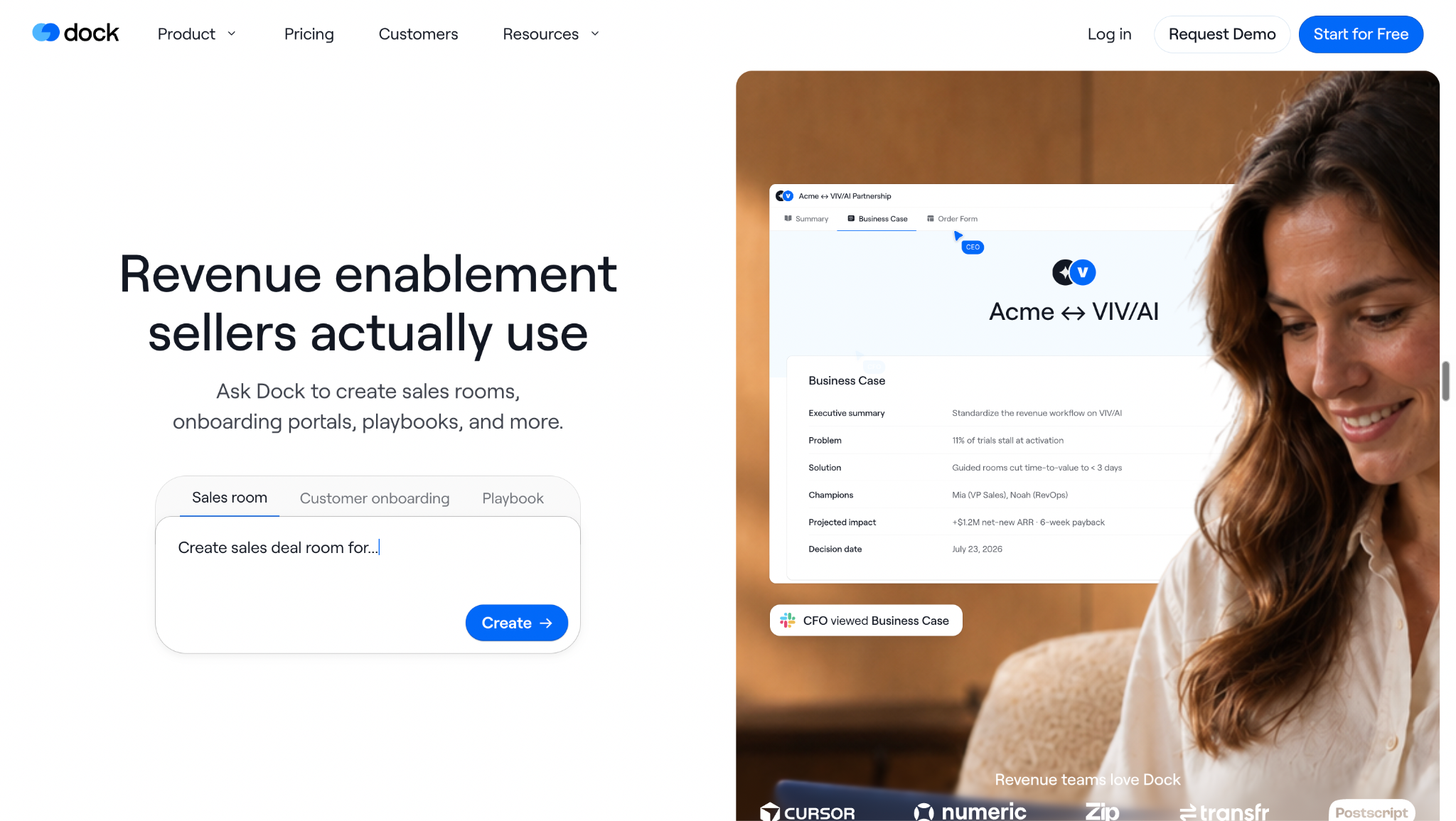
Dock
Dock focuses on buyer-facing sales enablement, particularly for complex B2B purchases. Its digital sales rooms and personalized deal experiences give buyers a structured place to review content, understand next steps, collaborate with sellers, and progress through an evaluation.
Best fit: Teams selling complex products where buyers need structured, self-guided information and collaboration throughout the deal.
Watch-out: Dock is strongest once the buyer is participating in an evaluation experience. Knock AI can engage earlier, when buyer activity and intent first become meaningful, and help turn that signal into a qualified sales conversation.
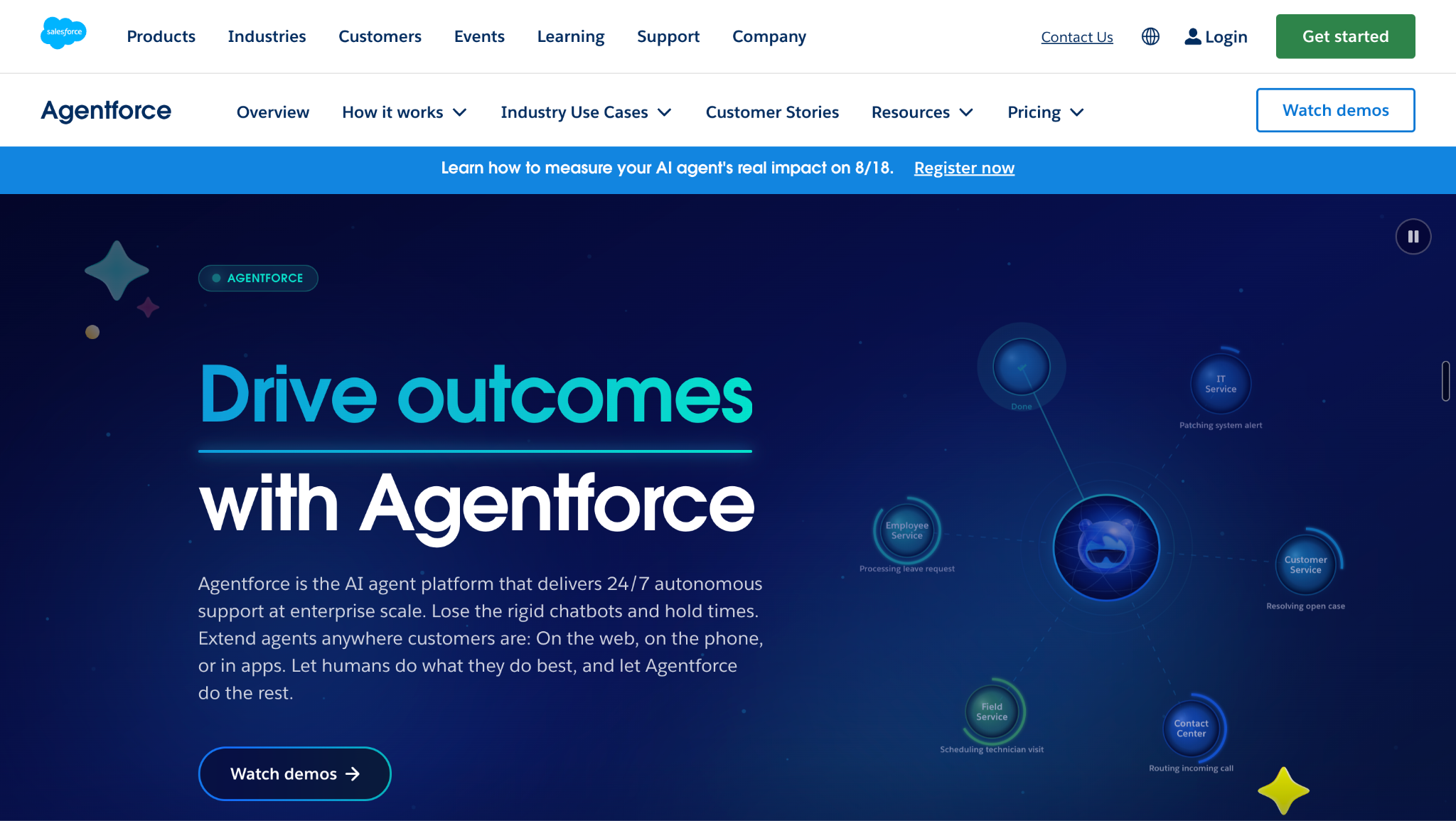
Salesforce / Agentforce Sales
Salesforce approaches sales enablement through its broader CRM and AI-powered sales execution platform. Agentforce Sales brings AI agents into prospecting, lead management, outreach, opportunity workflows, pipeline management, forecasting, and seller processes, with CRM data providing the underlying context.
Best fit: Enterprise teams already deeply embedded in Salesforce and looking to add AI-driven automation across their existing sales operations.
Watch-out: Salesforce's breadth is a major strength, but it remains a broader CRM and sales platform. Knock AI can sit alongside an existing CRM and focus specifically on the buyer-to-conversation-to-pipeline layer.
How to Choose the Right AI Sales Enablement Software
The right AI sales enablement software depends on what you are trying to enable and where the sales process is getting stuck.
1. Are you trying to enable the seller, the buyer, or both?
Seller readiness and guidance: Highspot, Seismic, Gong, Mindtickle Buyer enablement: Dock CRM-led seller and buyer workflows: Salesforce Buyer intent → qualification → seller action: Knock AI
2. Where does the workflow begin?
Rep needs information → content and readiness platforms Sales conversation happens → conversation intelligence Buyer is evaluating → buyer enablement Buyer is already showing intent →Knock AI
The starting point often tells you more than the feature list.
3. Do you need information or action?
Ask:
Does the platform tell my team what they should know, or does it also help execute what should happen next?
Content recommendations, training, and conversation insights can make sellers more effective. Platforms that connect buyer signals to qualification, routing, engagement, and scheduling can also help execute the next step.
4. Can you connect enablement to revenue?
Look beyond:
content used → training completed → calls analyzed
This is where buyer-intent platforms such as Knock AI can extend sales enablement into revenue conversion, with attribution and Website Revenue reporting helping connect buyer activity to pipeline outcomes.
Sales Enablement vs. Sales Engagement vs. Revenue Enablement
These categories increasingly overlap, but their primary jobs are still different.
Category
Primary job
Sales enablement
Give sellers the content, skills, context, and guidance needed to sell effectively
Sales readiness
Train, coach, certify, and prepare sellers
Sales engagement
Automate seller outreach and follow-up
Buyer enablement
Help buyers evaluate, understand, and progress through a purchase
Revenue enablement
Connect buyer context, seller action, and deal progression
Intent-driven revenue conversion
Recognize active buyer behavior and trigger the right engagement, qualification, routing, and conversion action
In practice, a single platform can cover more than one category. A CRM can include engagement workflows, a conversation-intelligence platform can provide seller coaching, and buyer-facing tools can include sales content and deal guidance.
The most useful question is:
Does the platform help a rep sell better, help a buyer buy more easily, or help the system move the two toward the right conversation?
That last category is where intent-driven revenue conversion sits. It does not replace traditional sales enablement. It extends it by connecting buyer behavior and intent to the actions that can create a qualified sales opportunity.
FAQs
What is the best AI sales enablement software?
There is no single best AI sales enablement platform because the category covers several different jobs. Highspot and Seismic focus on content and guided selling, Gong on conversation intelligence, Mindtickle on sales readiness, Dock on buyer-facing enablement, and Salesforce on CRM-native AI sales execution. Knock AI is focused on buyer-intent-driven revenue conversion, helping teams identify active buyers, qualify demand, route opportunities, schedule conversations, and move qualified intent into pipeline.
What are the best AI sales enablement tools for B2B?
The right tool depends on where the B2B sales process needs support. Highspot and Seismic are suited to content and guided selling, Gong to conversation intelligence, Mindtickle to sales readiness, Dock to buyer enablement, and Salesforce to CRM-based sales execution. Knock AI is best suited to B2B teams that need to turn active buyer intent into qualified sales conversations through identification, enrichment, AI engagement, qualification, routing, scheduling, and follow-up.
What is the difference between sales enablement and sales engagement?
Sales enablement helps sellers prepare and sell effectively through content, training, context, and guidance. Sales engagement focuses on executing outreach and follow-up through channels such as email, calls, and LinkedIn.
Can AI sales enablement software help with buyer intent?
Yes. Modern platforms can connect buyer activity → identity → enrichment → intent → qualification → action. That extends sales enablement beyond preparing reps and helps teams recognize when a buyer is becoming ready for a conversation.
Can AI sales enablement software qualify leads and book meetings?
Yes. Some platforms combine intent + context + AI qualification + routing + scheduling. Knock AI can use buyer and company context to qualify conversations, route buyers to the appropriate rep or AI agent, and facilitate meetings through embedded, custom, HubSpot, Marketo, and product-based scheduling workflows.


.svg)


.svg)
.svg)
.svg)


.svg)
.svg)


.svg)