The best conversational AI tools for B2B help companies engage buyers, understand intent, qualify prospects, and move conversations toward revenue. However, they differ in where and how they engage buyers: some focus primarily on website conversations, while others support broader, cross-channel buyer engagement and sales workflows.
Our top picks for 2026 are:
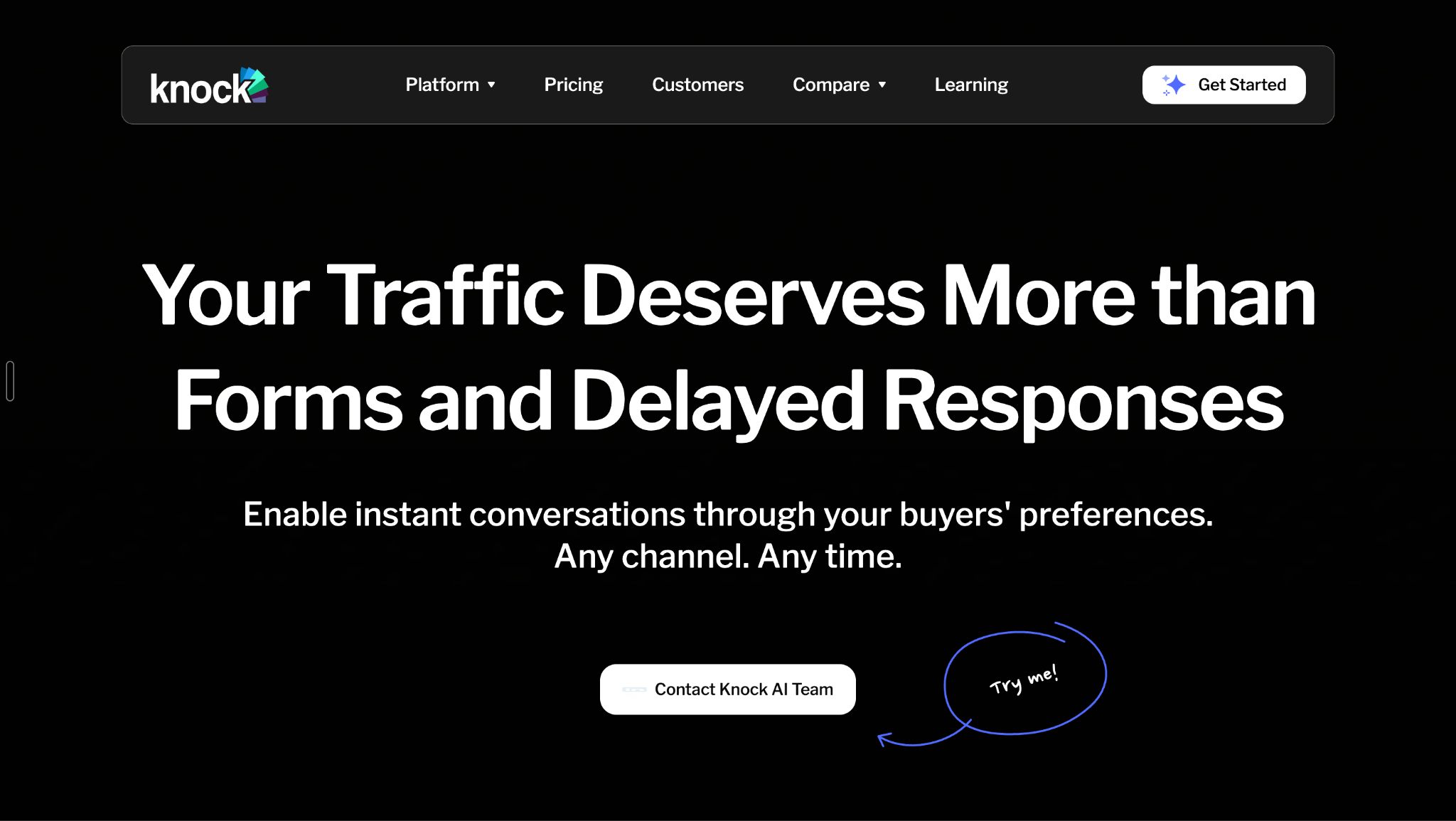
Knock AI: Best for cross-channel B2B buyer engagement, intent, qualification, routing, and AI-led sales conversations
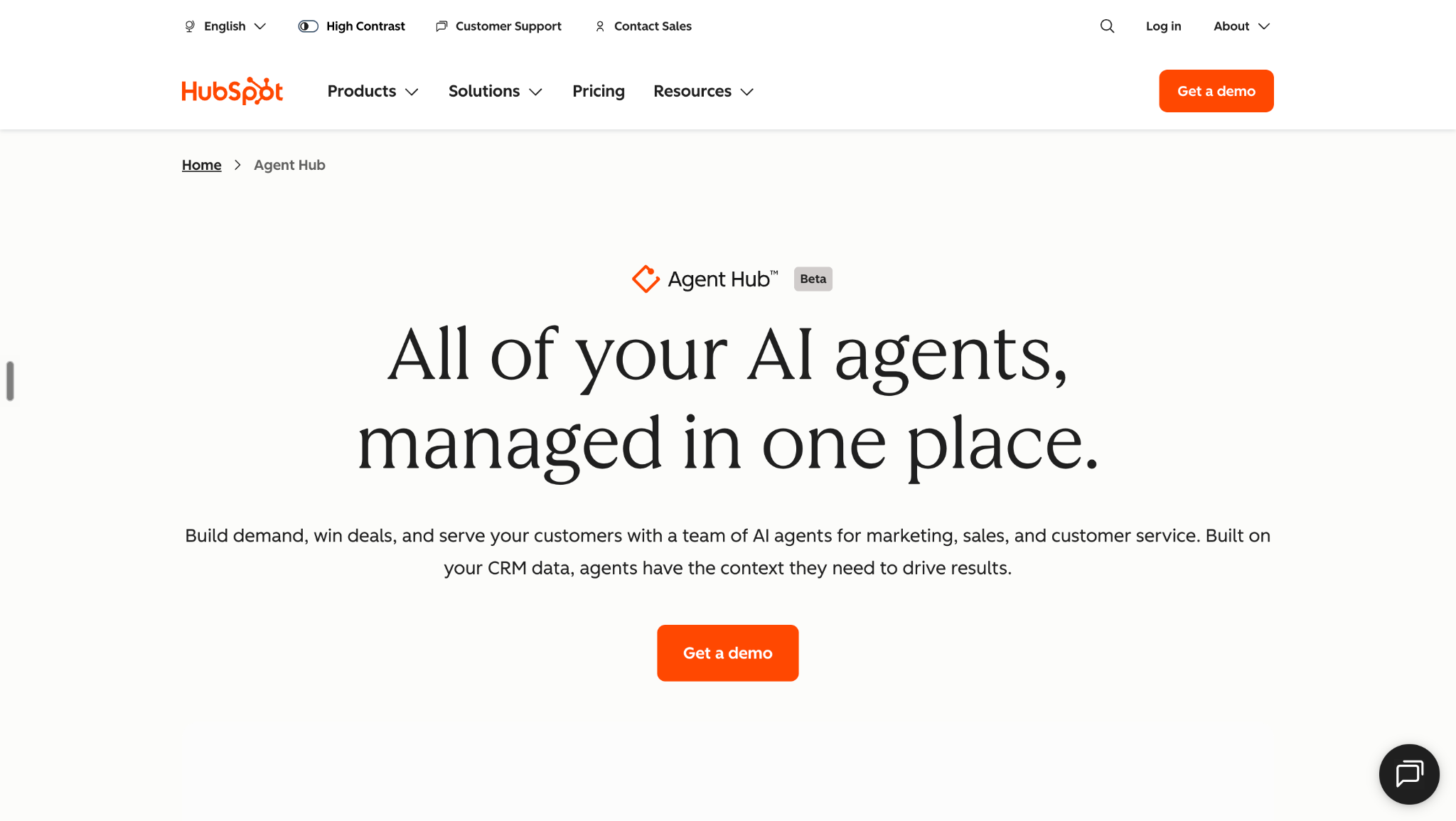
HubSpot Breeze Best for CRM-native AI conversations and prospecting
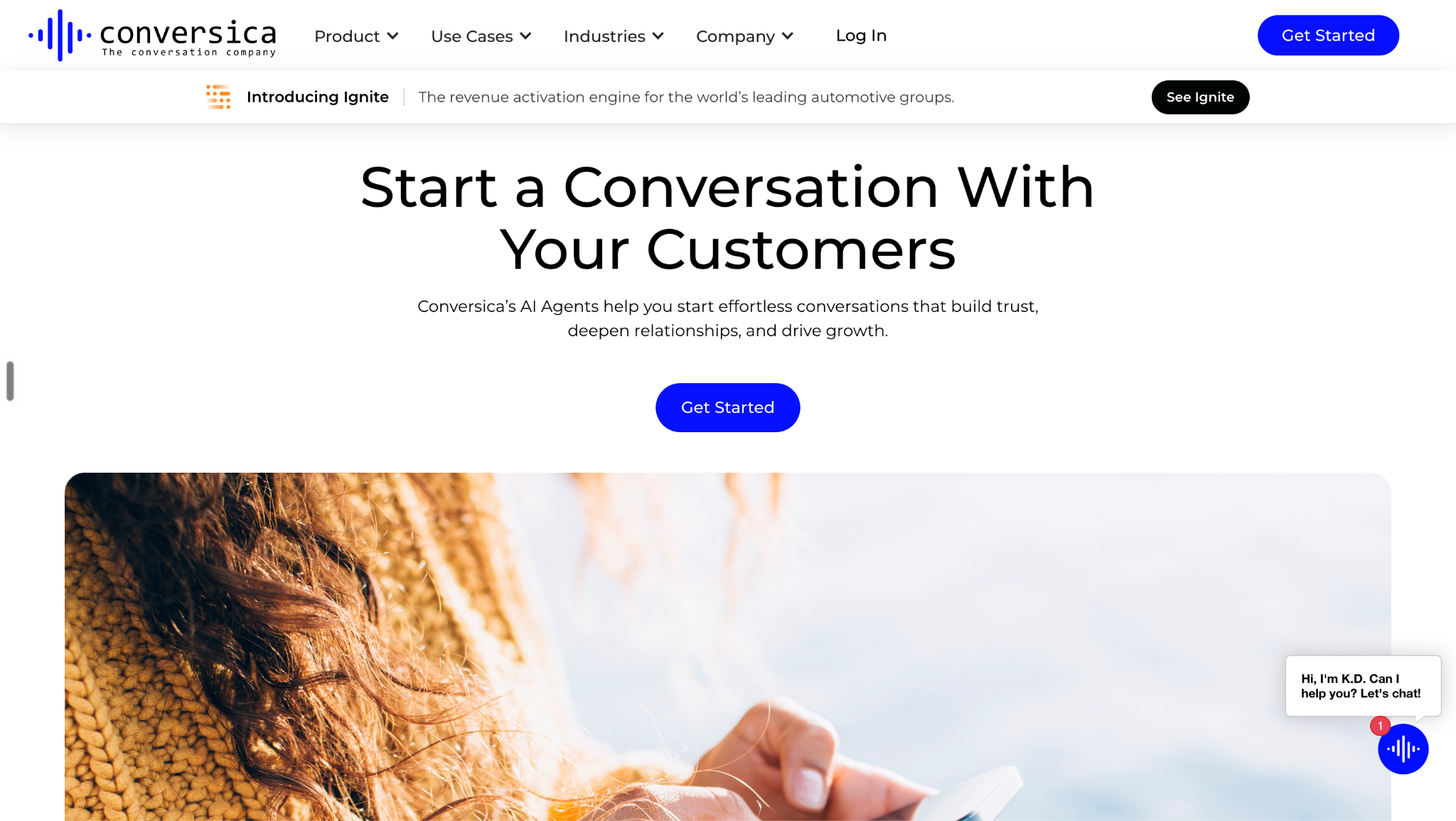
Conversica: Best for automated sales engagement and qualification
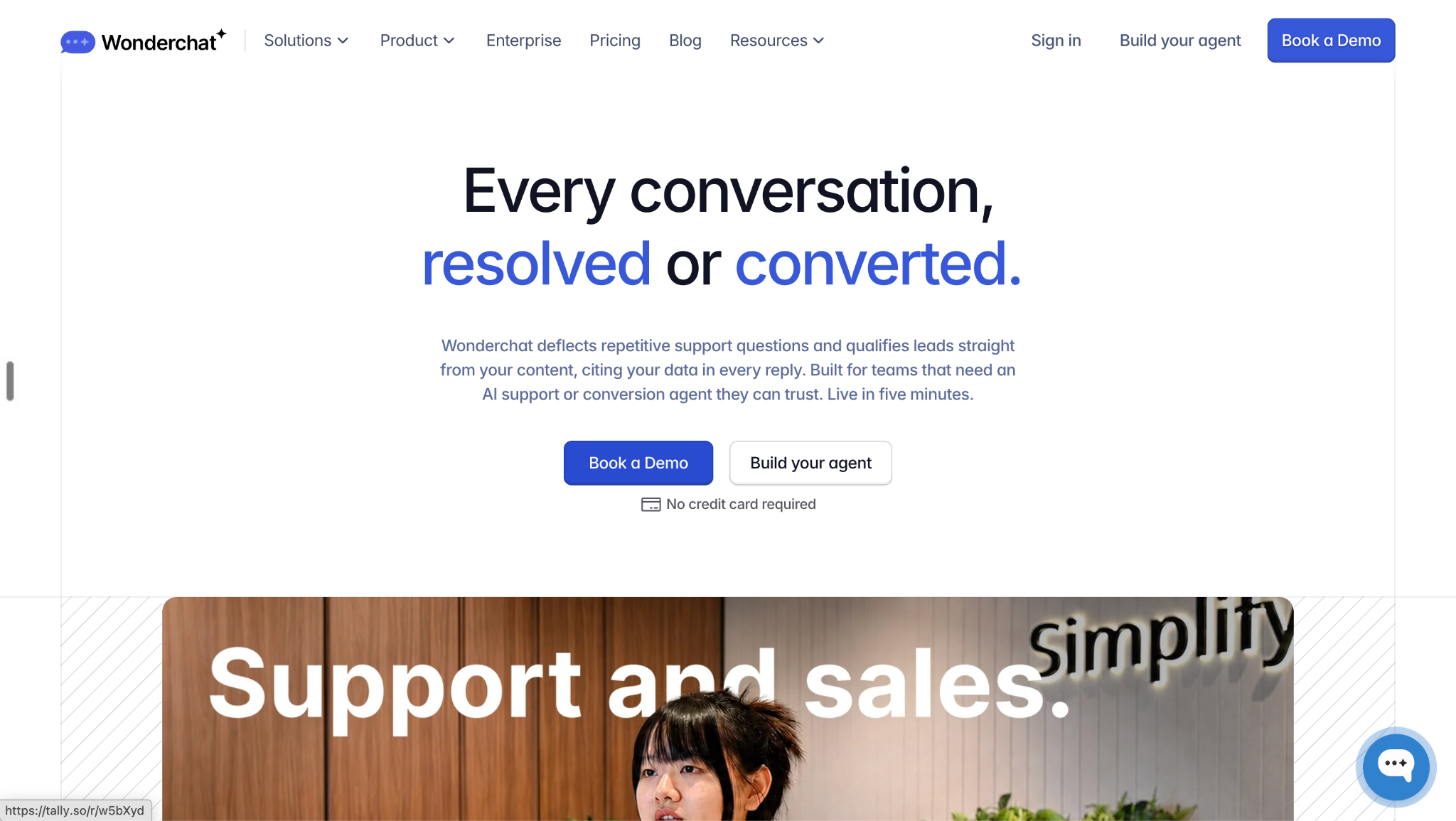
Wonderchat: Best for AI-powered website and customer conversations
If you want conversational AI that goes beyond website chat and turns buyer signals from across your inbound motion into qualification, engagement, routing, and pipeline, Knock AI is the strongest conversational AI tool.
B2B conversational AI is software that uses artificial intelligence to communicate with buyers in natural language, understand their needs and intent, and take actions that move the buying process forward. Unlike traditional chatbots that mainly answer predefined questions, B2B conversational AI can use buyer and account context to qualify prospects, personalize conversations, route opportunities, and connect buyers with sales.
Sync conversation and qualification data with the CRM
Importantly, B2B conversational AI is moving beyond website chat. A buyer's journey can involve websites, campaigns, LinkedIn, events, webinars, marketplaces, and other channels. The important question is not simply whether an AI can have a conversation, but whether it can understand the buyer, determine what should happen next, and move the conversation toward a business outcome.
That distinction matters because a conversation is only the beginning. The real value comes from connecting buyer intent → conversation → qualification → engagement → pipeline.
What Should B2B Conversational AI Be Able to Do?
The best B2B conversational AI should do more than answer questions. It should understand who is engaging, why they are engaging, and what should happen next. The most important capabilities are:
Capability
Why it matters
Real-time engagement
Respond while buyer intent is highest
Buyer identification
Understand who is engaging and which account they represent
Intent detection
Distinguish genuine buying interest from casual engagement
Enrichment
Add company, role, account, and other relevant context
AI qualification
Determine whether the buyer matches your criteria
Routing
Send qualified buyers to the right person, team, or workflow
Meeting booking
Turn qualified conversations into meetings without unnecessary back-and-forth
CRM synchronization
Preserve conversation, intent, and qualification context for Sales
Human handoff
Bring in a sales rep when human involvement is needed
Multi-channel conversations
Engage buyers across the channels where they already interact with your business
The key is to evaluate these capabilities as one connected workflow, rather than as isolated features:
Best for: B2B buyer engagement, AI qualification, routing, and sales conversations
What Knock AI does
Knock AI connects buyer conversations to the broader revenue workflow. It can use buyer intent and context to enrich accounts and contacts, identify relevant decision makers, qualify buyers, route them to the appropriate person, and move qualified conversations toward meetings. Its workflow can also maintain the relationship after the initial engagement rather than treating a response as the end of the process.
Knock AI can also map existing relationships inside target accounts and identify missing relationships across the buying committee. It then uses ownership, routing rules, account context, and existing relationships to determine who should build each relationship.
Its AI-led workflow can:
Identify relevant decision makers and buying committee members
Enrich company and contact information
Detect buyer intent and understand buyer needs
Ask qualification questions when appropriate
Route buyers to the appropriate relationship owner
Activate relationship-building workflows
Continue conversations using relevant context
Bring the right human into the conversation when needed
Expand engagement across additional buying committee members
Knock AI also extends buyer engagement beyond traditional website chat. Its documented touchpoints include websites, documentation, LinkedIn, email, events, QR codes, G2, YouTube, and other supported touchpoints, with conversations able to continue through channels such as Slack, WhatsApp, LinkedIn, and Telegram.
For CRM workflows, Knock AI supports Salesforce, HubSpot, and Marketo, including contact and company enrichment, conversation and meeting synchronization, buying-intent synchronization, and CRM-owner routing.
Why Knock AI stands out
Most conversational AI tools focus on the conversation itself. Knock AI connects the conversation to the relationship and revenue workflow around it.
Instead of simply answering a buyer and handing the conversation to Sales, Knock AI can use buyer and account context to determine whether the buyer is qualified, identify the appropriate relationship owner, activate the relevant workflow, and move the conversation toward a meeting.
The distinction becomes even more important for account-based selling. Knock AI doesn't simply give Sales a list of contacts. It can map existing relationships, identify the people and relationships that are missing, route each buyer to the appropriate person from your company, and activate the relationship-building workflow.
And when someone responds, the response is not treated as the end goal. Knock AI can continue the relationship with relevant context, bring in the right human when necessary, book the meeting directly from the conversation, and maintain momentum afterward.
Pricing
Pipeline Foundation: from $2,000/month
Pipeline Acceleration: from $3,500/month
Enterprise Pipeline: custom
Best for
B2B revenue teams that want conversational AI to identify buyers, build relationships, qualify opportunities, route conversations, and convert intent into pipeline, rather than simply answer questions on a website.
Limitation
Knock AI is less suited to teams looking only for a lightweight website chatbot or basic customer-support widget. Its broader value comes from connecting buyer engagement with qualification, routing, relationship building, and revenue workflows.
2. HubSpot Breeze
Best for: CRM-native conversational AI and prospecting
HubSpot Breeze brings AI-powered conversations and prospecting directly into HubSpot's Smart CRM, so its agents can work with existing customers, company, deal, and conversation context. Its main conversational capabilities include Customer Agent for answering questions, qualifying leads, and handling support conversations, and Prospecting Agent for researching accounts, identifying contacts, monitoring buying signals, and generating personalized outreach.
Breeze can:
Engage website visitors and customers in real time
Answer questions using HubSpot's contextual business knowledge
Qualify leads against defined criteria
Capture contact information and book meetings
Route qualified leads to Sales
Research accounts and identify relevant contacts
Monitor buying signals
Recommend prospects for outreach
Enrich company and contact data
Keep conversation and qualification context inside the CRM
Hand conversations to human teams when needed
Why HubSpot Breeze stands out
The biggest advantage is native CRM context. Breeze operates inside HubSpot rather than requiring teams to move customer information between a separate conversational platform and their CRM. Its agents can use existing records, deal data, conversation history, and business context when generating responses or recommendations.
HubSpot has also moved its Customer Agent and Prospecting Agent toward outcome-based pricing. Customer Agent costs $0.50 per resolved conversation, while Prospecting Agent costs $1 per recommended lead.
Pricing
Customer Agent: $0.50 per resolved conversation
Prospecting Agent: $1 per recommended lead
Data Agent: $0.10 per answer
Availability and credit requirements vary by HubSpot subscription.
Best for
Companies already deeply invested in HubSpot CRM that want conversational AI, prospecting, qualification, and sales workflows to operate within the same customer platform.
Limitation
Breeze's biggest advantage can also be its limitation: its capabilities are closely tied to the HubSpot ecosystem, subscription tiers, and credit structure. Teams looking for a more independent conversational revenue platform may prefer a dedicated solution.
HubSpot brings conversational AI into the CRM. Knock AI focuses more specifically on turning real-time buyer intent into qualification, routing, engagement, and pipeline across the broader inbound motion.
3. Conversica
Best for: Automated sales engagement and lead qualification
Conversica uses AI assistants to engage prospects, conduct two-way conversations, qualify leads, follow up automatically, and hand ready buyers to sales teams. Its core strength is persistent sales engagement, particularly for teams with large volumes of leads that would otherwise require repetitive manual follow-up.
Conversica can:
Start personalized conversations with new leads
Follow up automatically
Ask qualifying questions
Identify sales-ready prospects
Nurture leads that are not ready to buy
Route qualified buyers to sales teams
Integrate with CRM and lead-provider systems
Keep conversations going without requiring a rep to manually follow up every time
Why Conversica stands out
The platform is particularly focused on persistent engagement. Instead of relying on sales reps to remember every follow-up, its AI assistants can continue conversations with prospects and determine when someone is ready for sales intervention.
That makes Conversica useful for organizations where large numbers of leads require repeated qualification and follow-up before they become sales-ready.
Pricing
Custom pricing.
Best for
Teams that want AI to handle repetitive sales engagement, qualification, nurturing, and follow-up at scale.
Limitation
Conversica's strongest differentiation is automated sales engagement and follow-up. It is less focused on the broader real-time, cross-channel buyer engagement, relationship mapping, and routing workflow that Knock AI is designed around.
4. Wonderchat
Best for: AI website conversations and customer support
Wonderchat provides AI agents that can use a company's website, documents, help-center content, and other knowledge sources to answer questions and handle conversations. Its platform also has a Conversion Agent designed to answer pre-sales questions, qualify website visitors, capture leads, book meetings, route by intent, and sync leads to a CRM.
Wonderchat can:
Answer website and product questions
Use company knowledge and documentation to ground responses
Capture leads directly in conversations
Qualify website visitors
Book demos and meetings
Route conversations based on intent
Sync qualified leads with CRM systems
Hand conversations to humans
Create customized qualification workflows
Support website, mobile app, WhatsApp, and SMS deployments
Why Wonderchat stands out
Its strength is combining knowledge-driven conversations with support and conversion workflows. Teams can train the agent on their existing content and use the same underlying knowledge for both customer support and pre-sales conversations.
For sales use cases, Wonderchat can apply custom qualification criteria and automatically trigger actions such as CRM synchronization, meeting booking, sales notifications, or human handoff when a prospect meets the required criteria.
Pricing
Free: $0/month
Basic: $124/month, billed annually
Scale: $417/month, billed annually
Enterprise: starts at $1,499/month
Best for
Teams primarily looking for an AI-powered website and customer conversation layer that can answer questions, qualify visitors, and automate support or conversion workflows.
Limitation
Wonderchat is strongest around website, support, and knowledge-driven conversations. Teams looking for a broader revenue workflow built around cross-channel buyer intent, relationship building, routing, and pipeline conversion may need a more specialized platform.
Wonderchat is a strong option for automating website conversations and customer interactions. Knock AI is better suited when buyer conversations need to connect with intent, qualification, routing, engagement, and broader pipeline workflows.
Conversational AI vs. AI Chatbots for B2B
AI chatbots and conversational AI are often used interchangeably, but they are not necessarily the same. A traditional chatbot typically focuses on answering questions or following predefined flows, while B2B conversational AI can use buyer context and intent to qualify prospects and trigger revenue workflows.
AI chatbot
B2B conversational AI
Answers questions
Understands buyer context
Often website-based
Can operate across channels
Reactive
Can identify intent
Provides information
Can qualify buyers
Hands off to humans
Can route automatically
Conversation is the outcome
Conversation drives an outcome
For B2B teams, the distinction matters because a conversation is only valuable if it helps move the buyer forward.
The difference is not whether AI can talk. It is whether the conversation can trigger the right business action.
What Happens After a B2B Buyer Starts a Conversation?
A conversation is not the conversion. What happens next is.
With a basic chatbot, the journey often looks like:
Conversation ↓ Answer ↓ Form ↓ Sales queue
The AI has answered the buyer's question, but the rest of the process still depends on a sales rep.
A revenue-focused conversational AI workflow can go further:
This is where conversational AI starts becoming a revenue system rather than another website widget.
Knock AI connects these steps into a single workflow. It can use buyer and account context to qualify conversations, apply routing rules, connect qualified buyers with the right sales owner, book meetings, and synchronize conversation and qualification data with the CRM.
The result is a shift from:
"Someone talked to our AI."
to:
"A buyer showed intent, was understood, qualified, routed, and moved toward a sales conversation."
Which Conversational AI Tool Is Right for Your B2B Team?
The right platform depends on what you want the conversation to accomplish:
For B2B revenue teams, Knock AI is the strongest fit when you want conversational AI to work beyond website chat and connect buyer signals to intent detection, enrichment, qualification, routing, engagement, and meeting conversion.
Frequently Asked Questions
What is conversational AI for B2B?
B2B conversational AI uses artificial intelligence to communicate with buyers, understand their questions and intent, and take actions that move the buying process forward. Unlike basic chatbots, it can identify buyers, enrich context, qualify prospects, route conversations, book meetings, engage sales teams, and synchronize relevant conversation data with CRM systems.
What is the best conversational AI tool for B2B?
The best tool depends on the outcome you need. Knock AI is a strong fit for B2B teams that want cross-channel buyer engagement combined with intent detection, qualification, routing, and meeting conversion. HubSpot Breeze is better suited to CRM-native AI, Conversica to automated sales engagement, and Wonderchat to website conversations and customer support.
What is the difference between conversational AI and a chatbot?
A traditional chatbot typically answers questions or follows predefined conversation paths, while conversational AI can understand natural-language input, buyer context, and intent to determine what should happen next. For B2B teams, this can mean qualifying a prospect, routing the conversation, booking a meeting, or triggering another sales workflow instead of simply providing information.
Can conversational AI qualify B2B leads?
Yes. B2B conversational AI can ask qualification questions, analyze buyer responses and context, compare prospects against predefined criteria, and determine whether a conversation is sales-ready. More advanced platforms can then route qualified buyers to the appropriate sales representative, trigger follow-up workflows, or book a meeting without requiring a rep to manually qualify every conversation.
Can conversational AI book B2B meetings?
Yes. Conversational AI can identify when a buyer is qualified and offer relevant meeting times directly within the conversation. This removes the back-and-forth typically involved in scheduling. Some platforms can also apply qualification and routing rules first, ensuring that meetings are directed to the appropriate sales representative or team.
Can conversational AI integrate with a CRM?
Yes. Many B2B conversational AI platforms integrate with CRMs to synchronize contact information, conversation history, qualification data, intent signals, meetings, and ownership. CRM integration allows sales teams to preserve context and trigger downstream workflows instead of treating each AI conversation as an isolated interaction.
How much does B2B conversational AI cost?
Pricing varies widely depending on the platform and its capabilities. Some tools use subscription or usage-based pricing, while enterprise platforms may use custom contracts. Current examples range from free and usage-based plans to platforms starting at $2,000 per month. Compare AI usage, contacts, seats, integrations, implementation, and workflow capabilities rather than subscription price alone.


.svg)


.svg)
.svg)
.svg)


.svg)
.svg)


.svg)