Clearbit is still one of the most well-known B2B enrichment platforms for CRM data, firmographics, lead routing, and company identification. For years, it helped sales and marketing teams standardize records, enrich inbound leads, and improve segmentation workflows.
But the modern GTM stack is changing quickly.
Many teams now need more than company-level enrichment. They need person-level identity, real-time intent signals, AI-driven activation, and visibility into buyers researching across LinkedIn, Slack, G2, communities, and AI search, often before a form is ever submitted.
That shift has created a new category of tools focused not just on enrichment, but on activation, outbound workflows, workflow automation, technographic intelligence, and real-time buyer engagement.
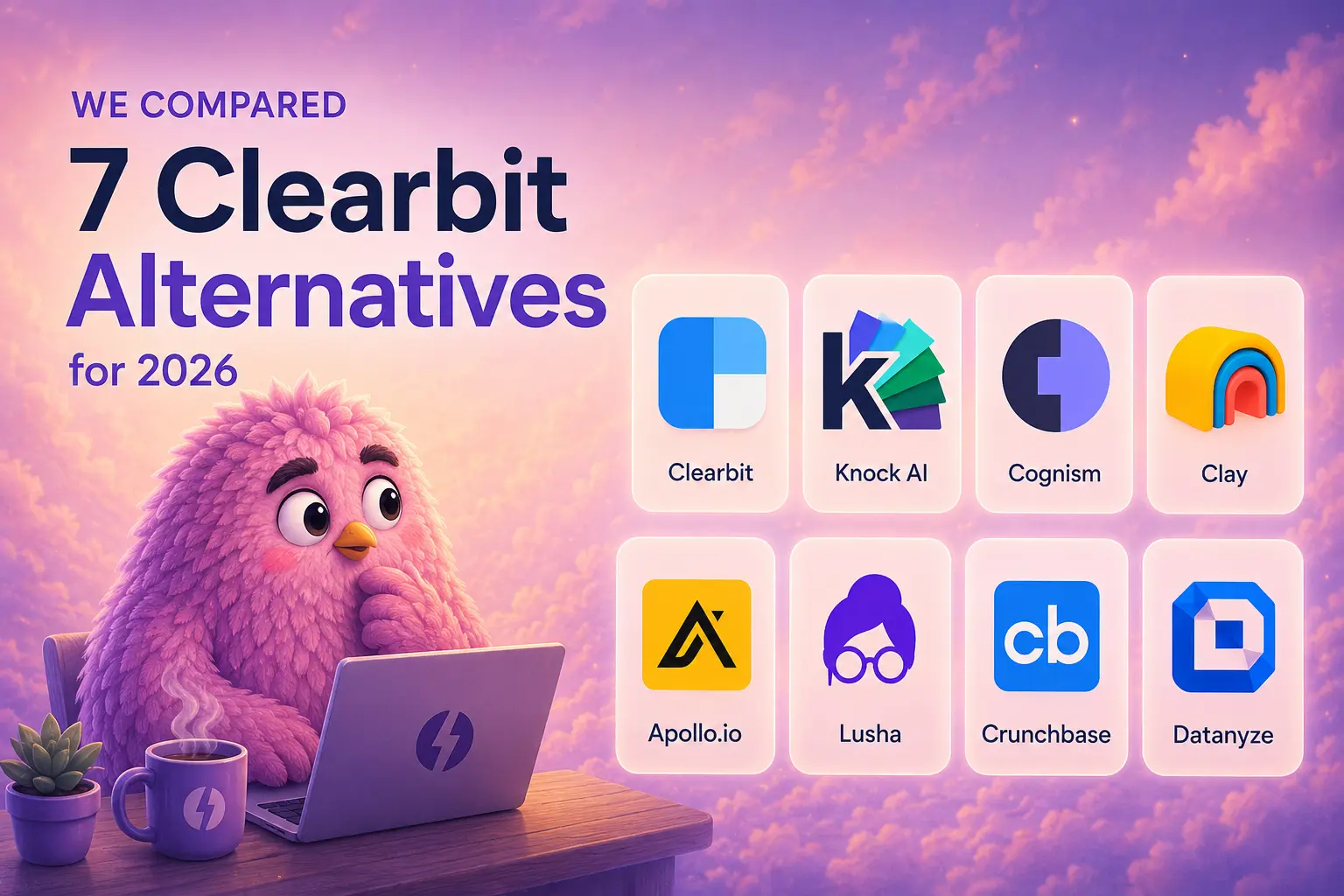
To help you find the right fit, we compared 7 of the best Clearbit alternatives in 2026 based on:
enrichment capabilities
outbound prospecting
compliance
workflow flexibility
identity resolution
intent visibility
activation potential
Some tools improve your CRM.
Others improve your pipeline.
The Best Clearbit Alternatives, Quickly Compared
Best For
Tool
Real-time buyer activation
Knock AI
All-in-one outbound stack
Apollo
GDPR-compliant prospecting
Cognism
Workflow enrichment automation
Clay
Lightweight prospecting
Lusha
Startup intelligence
Crunchbase
Technographic targeting
Datanyze
Short Summary
Clearbit is best for database-first enrichment and CRM workflows.
Knock AI is best for real-time buyer identity, AI SDR workflows, and multi-channel activation.
Apollo is best for consolidating outbound prospecting and sequencing into one platform.
Clay is best for waterfall enrichment and automated research workflows.
Cognism is best for GDPR-compliant global prospecting and EMEA sales teams.
Clearbit Alternatives Comparison Table
Provider
Category
Core Strength
Biggest Limitation
Best For
Knock AI
Revenue Activation Platform
Real-time buyer identity and AI SDR workflows
Less focused on outbound list building
PLG and inbound GTM teams
Apollo
All-in-One GTM Platform
Prospecting, sequencing, and outbound workflows
Data freshness can vary
SDR-heavy sales teams
Lusha
Lightweight Prospecting Tool
Fast contact discovery and ease of use
Limited intent and enrichment depth
SMB outbound teams
Cognism
Compliant Sales Intelligence
GDPR-compliant mobile and global data
Premium pricing
EMEA and enterprise sales teams
Clay
Data Orchestration Platform
Waterfall enrichment and workflow automation
Requires operational setup
RevOps and growth teams
Crunchbase
Startup Intelligence Platform
Funding and company research
Limited person-level contact data
Market and startup research
Datanyze
Technographic Intelligence Tool
Tech-stack targeting and segmentation
Limited activation workflows
SaaS outbound teams
See Knock AI in Action — Book Your Live Demo Today
Clearbit helped define the modern B2B enrichment category. For years, it became the default solution for CRM enrichment, firmographics, lead routing, and company identification workflows. Its strength has always been improving the system of record, enriching contacts, standardizing company data, and helping sales and marketing teams maintain cleaner CRM workflows.
But the market has shifted significantly since HubSpot acquired Clearbit in 2023. Since the acquisition, Clearbit has increasingly moved deeper into the HubSpot ecosystem, while several legacy free tools and APIs have been sunset or deprecated over time.
One of the clearest signals came when HubSpot announced the sunset of Clearbit’s widely used free Logo API, which officially shuts down in December 2025. For many teams, it reinforced a broader industry shift: enrichment alone is no longer enough.
Modern GTM teams increasingly need:
person-level identity
real-time intent signals
cross-channel visibility
AI SDR qualification
faster speed-to-conversation
visibility into dark-funnel research
Today’s buyers research across LinkedIn, Slack, G2, communities, Reddit, and AI search long before filling out a form.
That creates the core limitation of traditional enrichment platforms:
Clearbit identifies companies. Modern GTM teams need to identify buyers.
Or put another way:
If your enrichment platform can tell you “Microsoft visited your website” but cannot identify the actual person researching your pricing page, you have a visibility problem, not a data problem.
That shift is why many companies are now evaluating newer categories of GTM platforms focused on activation, identity, intent, and real-time engagement, not just CRM enrichment.
Best Clearbit Alternatives in 2026
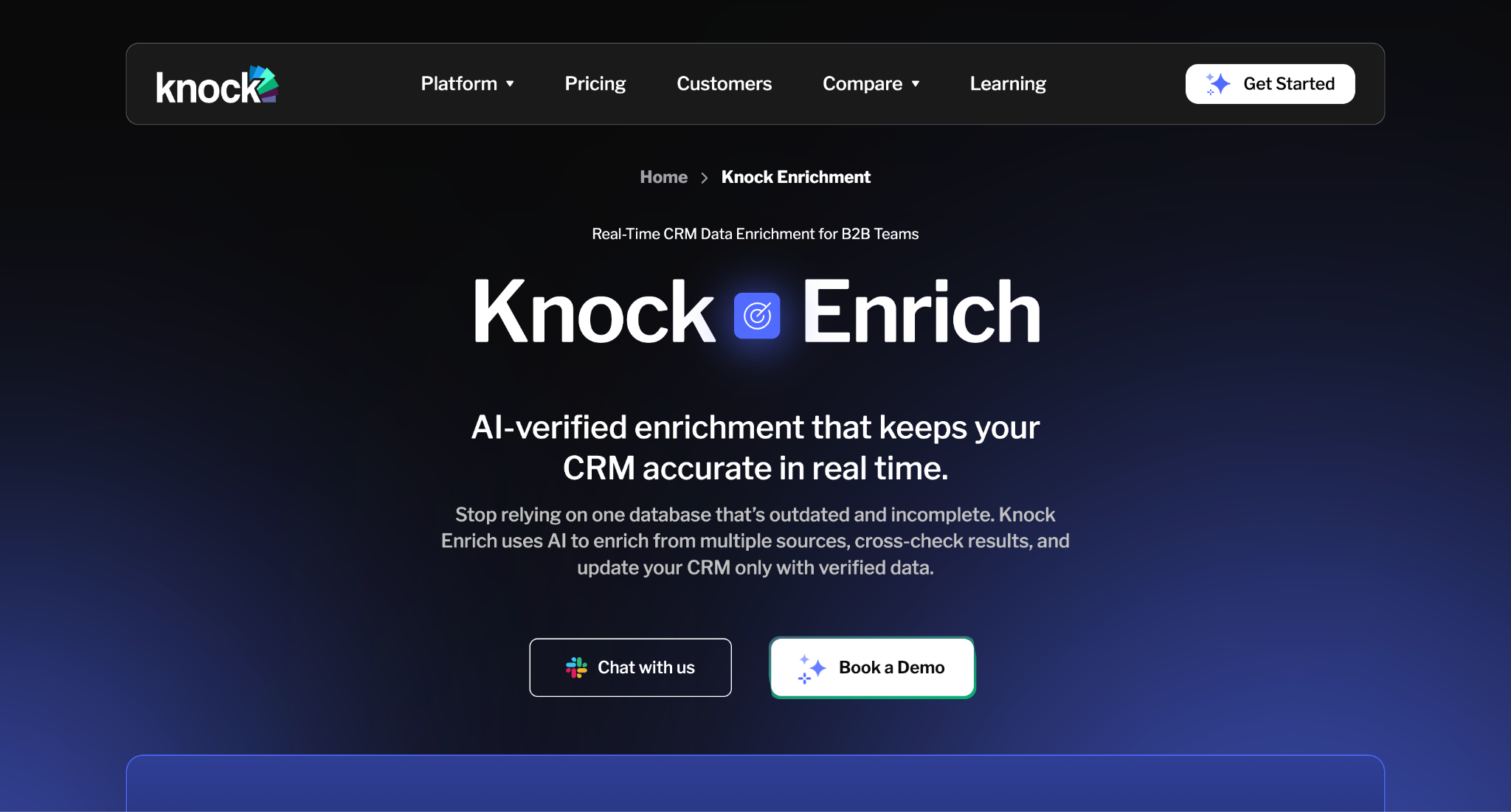
1. Knock AI — Best for Real-Time Buyer Activation
Knock AI takes a very different approach from traditional enrichment platforms like Clearbit.
Instead of focusing primarily on CRM enrichment and company-level data, Knock AI is built as a revenue activation platform designed to identify, qualify, and engage buyers in real time across multiple channels.
One of Knock AI’s biggest differentiators is that it focuses on identifying buyers with a formless approach. Rather than relying only on IP-to-company matching or existing CRM records, it helps teams identify and engage real people across:
LinkedIn
Slack
WhatsApp
G2
website sessions
AI search journeys
docs and shared assets
That makes it particularly relevant for modern “dark funnel” buying behavior, where prospects often research anonymously across multiple channels before ever talking to sales.
Knock AI also includes AI SDR workflows that can qualify buyers, capture intent signals, answer questions, route conversations, and book meetings automatically. Instead of simply enriching records after the fact, the platform is designed to accelerate speed-to-conversation while buyer intent is still active.
Key Strengths
Real-time buyer identity resolution
AI SDR qualification and meeting booking
Multi-channel visibility across LinkedIn, Slack, WhatsApp, G2, and website traffic
First-party intent scoring
Cross-channel attribution and routing
Faster inbound conversion workflows
Best For
PLG SaaS companies
Inbound-heavy GTM teams
AI-native sales motions
Companies focused on improving conversion speed
Teams struggling with anonymous traffic and dark-funnel visibility
Limitation
Knock AI is less focused on large-scale outbound list building compared to traditional prospecting databases like Apollo.io or Cognism.
Clearbit enriches records. Knock AI activates buyers.
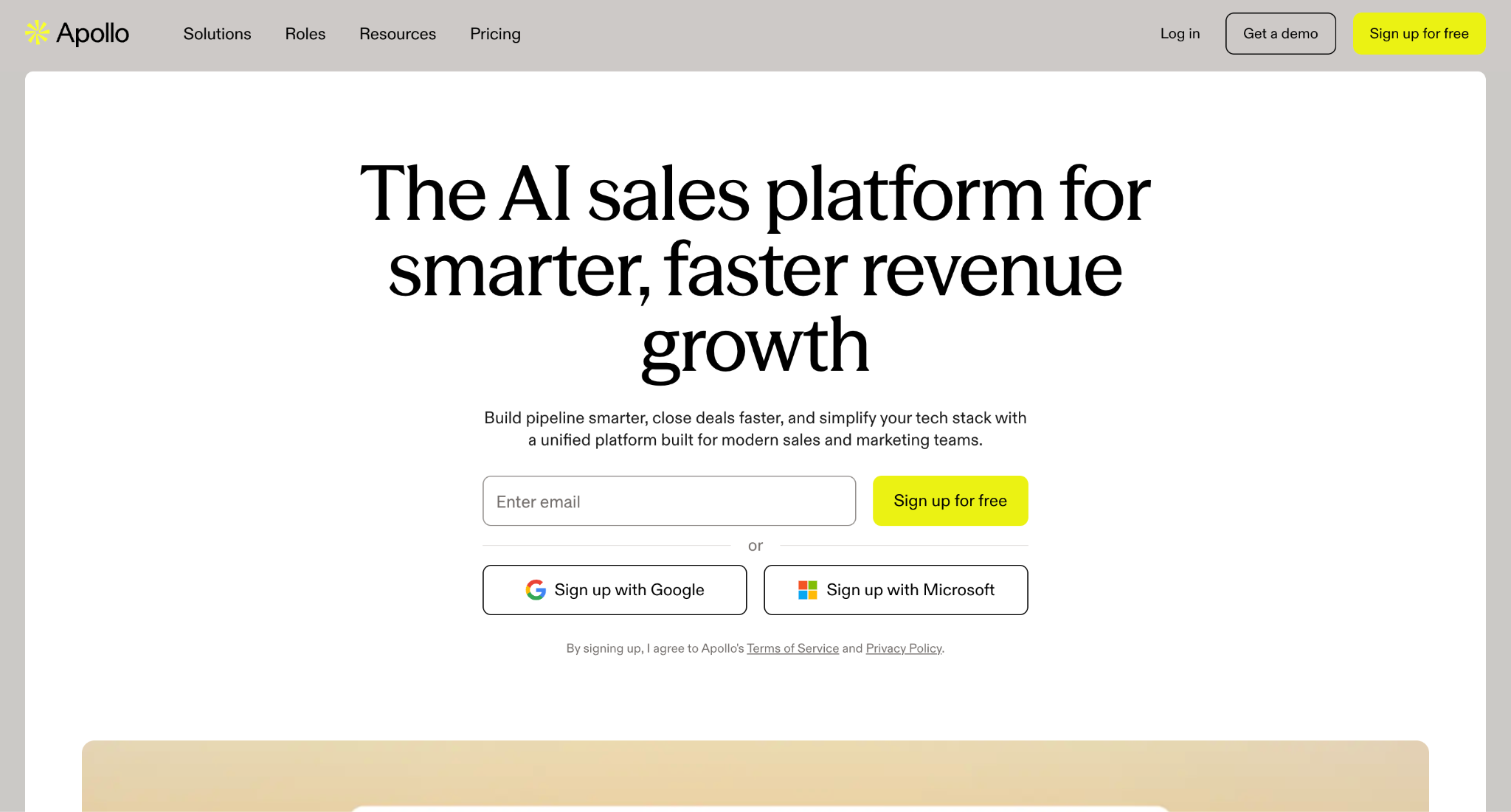
Apollo has evolved from a prospecting database into a broader all-in-one GTM platform for outbound sales teams. Instead of stitching together separate tools for lead generation, sequencing, enrichment, and analytics, many startups now use Apollo as a centralized outbound operating system.
The platform combines:
prospecting
sequencing
enrichment
engagement workflows
outbound analytics
contact and company intelligence
One of Apollo’s biggest advantages is consolidation. Many early-stage and mid-market sales teams use Apollo to replace multiple tools across their outbound stack, helping reduce software costs and operational complexity.
Apollo also offers a large B2B contact database with filters for job titles, company size, industry, geography, technologies used, hiring activity, and buyer intent signals. Built-in sequencing and automation features allow SDR teams to launch outbound campaigns without relying heavily on additional engagement platforms.
For startups trying to move quickly with lean GTM teams, Apollo is often attractive because it combines outbound prospecting and engagement into a single workflow.
Key Strengths
Large B2B contact database
Built-in sequencing and outbound workflows
Reduces GTM tool sprawl
Strong filtering and prospecting capabilities
Lower overall stack costs for startups
Faster SDR workflow setup
Best For
SDR-heavy sales teams
outbound-focused startups
lean GTM organizations
companies looking to consolidate multiple sales tools
Limitation
Like many large prospecting databases, Apollo’s data quality and freshness can vary depending on region, industry, and company segment. Some users also report occasional inaccuracies in smaller or rapidly changing markets.
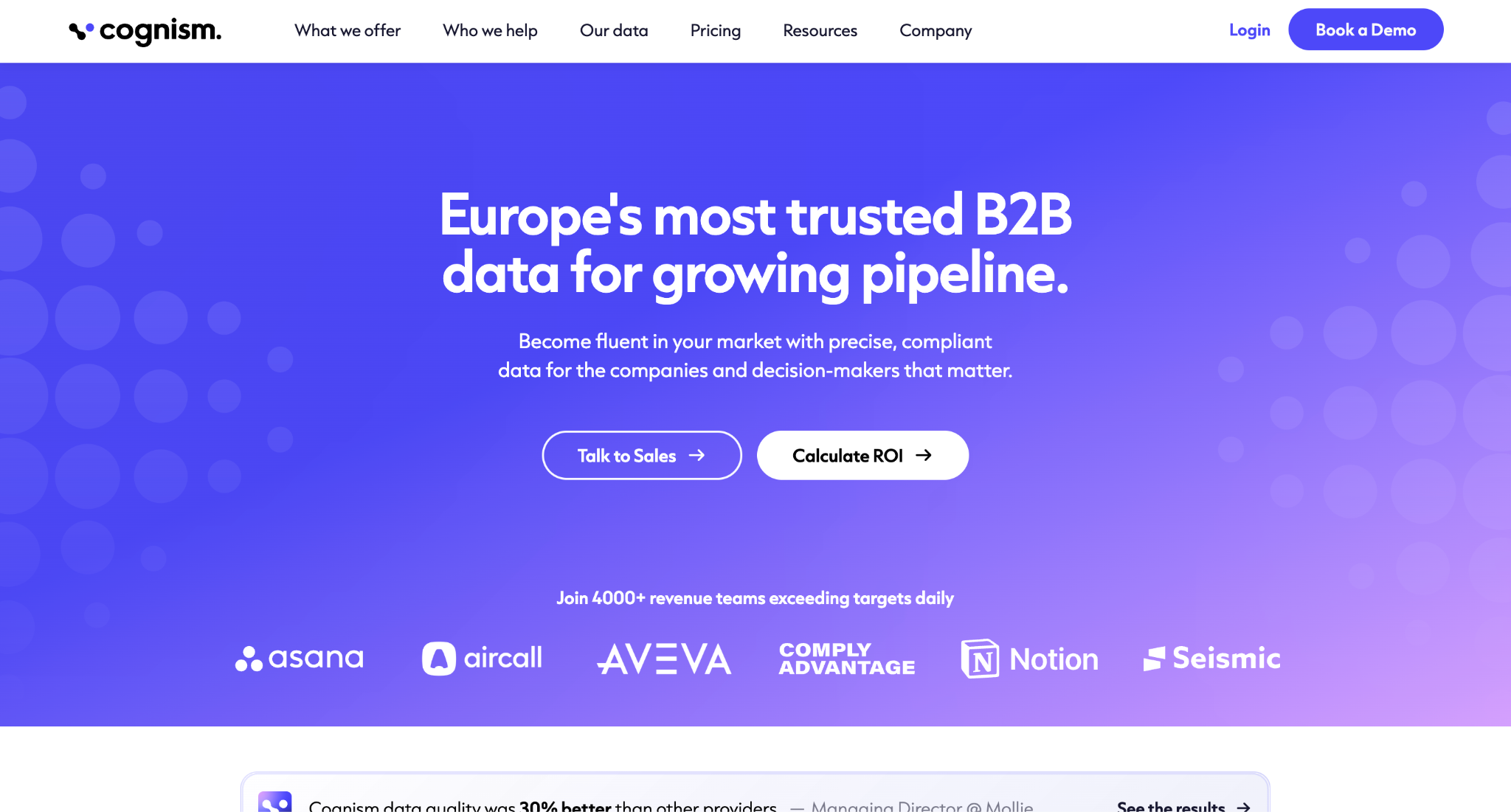
Cognism is a sales intelligence platform built for global outbound prospecting, with a strong focus on compliance, mobile data accuracy, and European market coverage.
Unlike many prospecting platforms that prioritize volume first, Cognism positions itself around compliant data practices and “legitimate interest” prospecting workflows. This has made it particularly popular among enterprise sales organizations operating across EMEA regions where GDPR compliance and outbound regulations are major considerations.
One of Cognism’s biggest differentiators is its database of phone-verified and DNC-screened mobile numbers, which helps outbound teams improve connection rates while reducing compliance risks.
For enterprise outbound teams selling internationally, especially into Europe, Cognism is often viewed as one of the strongest alternatives to traditional enrichment-first platforms like Clearbit.
Key Strengths
GDPR-compliant prospecting workflows
Legitimate-interest data practices
DNC-screened mobile numbers
Strong EMEA coverage
Phone-verified contact data
Enterprise-focused outbound workflows
Best For
enterprise outbound teams
European sales organizations
compliance-sensitive industries
phone-first outbound motions
Limitation
Cognism is generally more expensive than SMB-focused prospecting platforms, which can make it less accessible for smaller teams or early-stage startups.
4. Clay — Best for Waterfall Enrichment Workflows
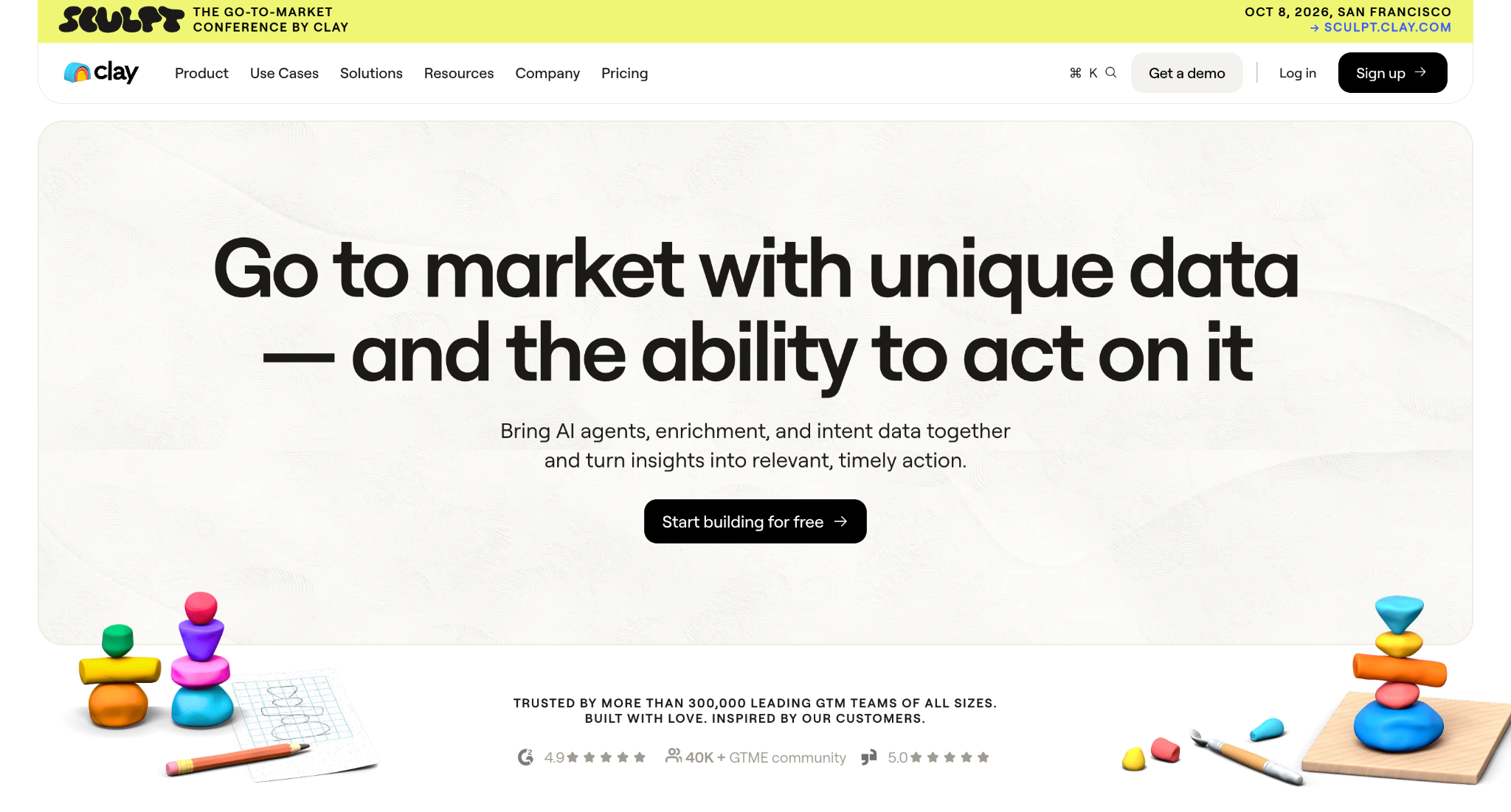
Clay has become one of the most talked-about GTM tools among RevOps and growth teams because it approaches enrichment very differently from traditional databases.
Clay is not primarily a contact database.
It is a data orchestration platform designed to automate enrichment workflows across multiple providers simultaneously.
Instead of relying on a single data source, Clay allows teams to build “waterfall enrichment” workflows where the platform sequentially queries multiple providers to maximize match rates and automate prospect research.
The platform combines:
waterfall enrichment
provider chaining
AI agents
workflow automation
custom enrichment logic
automated research pipelines
This flexibility makes Clay especially useful for technical GTM teams that want highly customized prospecting and enrichment workflows.
For example, a team could automatically:
Enrich leads from multiple providers
Identify hiring signals
Scrape LinkedIn data
Classify accounts using AI
Generate personalized outbound variables
Push enriched data into CRMs or outbound platforms
Clay has become particularly popular among growth operators because it acts more like a programmable GTM workflow engine than a traditional sales intelligence platform.
Key Strengths
Waterfall enrichment workflows
AI-driven research automation
Flexible provider chaining
Custom enrichment logic
Automated GTM workflows
Strong workflow flexibility
Best For
RevOps teams
Growth operators
Technical GTM teams
Companies running complex enrichment workflows
Limitation
Clay requires more operational setup and technical sophistication than plug-and-play prospecting platforms.
5. Lusha — Best Lightweight Prospecting Tool
Lusha focuses on simplicity, speed, and easy contact discovery for outbound sales teams.
The platform is widely used by SMB sales teams, recruiters, and founder-led outbound motions because it offers a lightweight workflow for finding contact information directly from LinkedIn profiles and company websites.
One of Lusha’s biggest advantages is ease of adoption. Teams can typically start prospecting quickly without complex onboarding, workflow configuration, or RevOps support.
The platform includes:
Contact discovery
Chrome extension workflows
Basic enrichment
CRM integrations
Direct email and phone lookups
Compared to larger GTM platforms like Apollo.io or Cognism, Lusha is intentionally more lightweight and straightforward.
Key Strengths
Easy to use
Fast setup and onboarding
Chrome extension workflows
Affordable pricing
Simple outbound prospecting
Best For
SMB sales teams
recruiters
founder-led outbound
small outbound operations
Limitation
Lusha offers less depth in areas like intent signals, workflow automation, and advanced enrichment compared to larger enterprise GTM platforms.
6. Crunchbase — Best for Startup & Funding Intelligence
Crunchbase is best known as a startup and market intelligence platform focused on funding data, company research, and investor activity.
While it is not a traditional sales engagement platform, many GTM teams use Crunchbase for account research, startup discovery, and identifying high-growth companies based on funding events, hiring activity, acquisitions, and market signals.
Its database is especially valuable for teams targeting:
startups
venture-backed companies
emerging technology companies
fast-growing SaaS businesses
The platform provides visibility into:
funding rounds
investors
acquisitions
leadership teams
company growth trends
startup ecosystem activity
For sales and market research teams, Crunchbase often works best as a research and account intelligence layer rather than a primary enrichment or outbound workflow platform.
Key Strengths
Startup ecosystem visibility
Funding intelligence
Investor tracking
Company research
Growth signal monitoring
Best For
startup sales teams
investors
venture research
GTM and market research teams
Limitation
Crunchbase is not designed for deep person-level contact enrichment or outbound sequencing workflows.
7. Datanyze — Best for Technographic Targeting
Datanyze specializes in technographic intelligence, helping sales and marketing teams identify companies based on the technologies they use.
Instead of focusing primarily on firmographics or buyer intent, Datanyze is built around technology-stack detection and segmentation. This makes it especially useful for SaaS companies targeting businesses already using complementary or competing software products.
The platform helps teams:
Identify installed technologies
Segment accounts by tech stack
Personalize outbound messaging
Prioritize integration-based sales opportunities
Datanyze also offers:
browser extension workflows
contact discovery
company intelligence
CRM integrations
For outbound teams selling developer tools, SaaS integrations, infrastructure software, or platform-based products, technographic targeting can significantly improve account relevance and personalization.
Key Strengths
Tech-stack detection
Technographic segmentation
Browser extension workflows
Technology-based targeting
SaaS account intelligence
Best For
SaaS outbound teams
integration-led sales motions
technographic prospecting
developer-focused GTM teams
Limitation
Datanyze is more focused on technographic intelligence than buyer activation, engagement workflows, or real-time intent visibility.
How These Clearbit Alternatives Actually Compare
Capability
Knock AI
Apollo
Cognism
Clay
Clearbit
Person-level identity
Yes
Partial
Partial
Depends on provider
No
AI SDR workflows
Yes
Limited
No
No
No
Real-time intent signals
Strong
Moderate
Moderate
Depends on setup
Weak
Multi-channel activation
Strong
Moderate
Weak
Weak
Weak
Waterfall enrichment
No
No
No
Yes
No
GDPR-focused outbound data
Moderate
Moderate
Strong
Depends on provider
Moderate
Best motion
Inbound activation
Outbound prospecting
Enterprise outbound
Workflow automation
CRM enrichment
Which Clearbit Alternative Should You Choose?
The right Clearbit alternative depends less on “which platform is best” and more on what your GTM motion actually requires.
You need real-time buyer identity, AI SDR qualification, inbound conversion workflows, and multi-channel activation across LinkedIn, Slack, WhatsApp, G2, and your website. Knock AI is best for teams focused on speed-to-conversation and converting anonymous buyer intent into pipeline.
Choose Apollo.io if…
You want one platform for outbound prospecting, sequencing, enrichment, and engagement. Apollo works well for startups and SDR-heavy teams looking to reduce GTM tool sprawl and simplify outbound workflows.
Choose Cognism if…
You sell heavily into Europe or regulated industries where GDPR compliance and phone-verified mobile data matter. Cognism is particularly strong for enterprise outbound and EMEA-focused sales teams.
Choose Clay if…
You need custom enrichment workflows, provider orchestration, waterfall enrichment, and automated research pipelines. Clay is best suited for technical GTM, RevOps, and growth teams.
Choose Lusha if…
You want simple outbound prospecting, fast setup, and affordable contact discovery without operational complexity.
Choose Crunchbase if…
You care most about startup intelligence, funding data, investor activity, and company ecosystem research rather than outbound activation.
Choose Datanyze if…
Your sales motion depends on technographic targeting, tech-stack segmentation, and integration-led outbound prospecting.
FAQ
What is the best Clearbit alternative in 2026?
The best Clearbit alternative depends on your GTM motion. Knock AI is best for real-time buyer activation and AI SDR workflows. Apollo.io is best for all-in-one outbound sales workflows, and Clay is best for waterfall enrichment and workflow automation.
Is Knock AI a replacement for Clearbit?
Yes, for many inbound and activation-focused teams. Knock AI replaces traditional enrichment workflows with person-level identity, AI SDR qualification, real-time intent scoring, and multi-channel activation. However, some enterprise teams still use Clearbit for CRM enrichment and structured firmographic data.
What is the difference between enrichment and activation?
Enrichment improves CRM records with company and contact data. Activation focuses on identifying, engaging, and converting buyers in real time. Platforms like Clearbit enrich records, while platforms like Knock AI activate buyer intent across channels like LinkedIn, Slack, and websites.
Is Apollo better than Clearbit?
Apollo.io and Clearbit solve different problems. Apollo is stronger for outbound prospecting, sequencing, and SDR workflows, while Clearbit is stronger for CRM enrichment, routing, and company-level data standardization.
Is Clay a database?
No. Clay is primarily a data orchestration platform, not a standalone database. Clay automates waterfall enrichment workflows by connecting multiple providers, AI agents, and research workflows into a single enrichment and automation layer.
What is waterfall enrichment?
Waterfall enrichment is a workflow where multiple data providers are queried sequentially to maximize match rates and data accuracy. Platforms like Clay automate this process by chaining providers together instead of relying on a single enrichment source.
Which Clearbit alternative is best for outbound sales?
Apollo.io is one of the best Clearbit alternatives for outbound sales because it combines prospecting, sequencing, enrichment, and engagement workflows into one platform. Cognism is also strong for enterprise outbound and EMEA-focused sales teams.
Which platform is best for GDPR-compliant prospecting?
Cognism is one of the strongest platforms for GDPR-compliant prospecting. It focuses heavily on legitimate-interest data practices, DNC-screened mobile numbers, and compliant outbound workflows for global and European sales teams.
Which Clearbit alternative is best for startups?
For outbound-focused startups, Apollo.io is often the best fit because it consolidates multiple GTM tools into one platform. For inbound-heavy and PLG startups, Knock AI is stronger for real-time buyer identity and AI-driven conversion workflows.
Can Clearbit identify individual buyers?
Not reliably in most anonymous browsing scenarios. Clearbit primarily focuses on company-level identification and CRM enrichment. Newer platforms like Knock AI focus more heavily on person-level identity and real-time buyer visibility.
Which platform is best for technographic targeting?
Datanyze is one of the strongest platforms for technographic targeting. It helps sales teams identify companies based on the technologies they use, making it particularly useful for SaaS outbound and integration-led sales motions.


.svg)


.svg)
.svg)
.svg)


.svg)
.svg)


.svg)