Qualified Review 2026: Salesforce Bought It. Should You Still Buy?
Qualified Review (2026): Is It Worth It for Revenue Teams?
TL;DR
If you’re evaluating conversational marketing tools or AI SDR platforms, here’s the short answer.
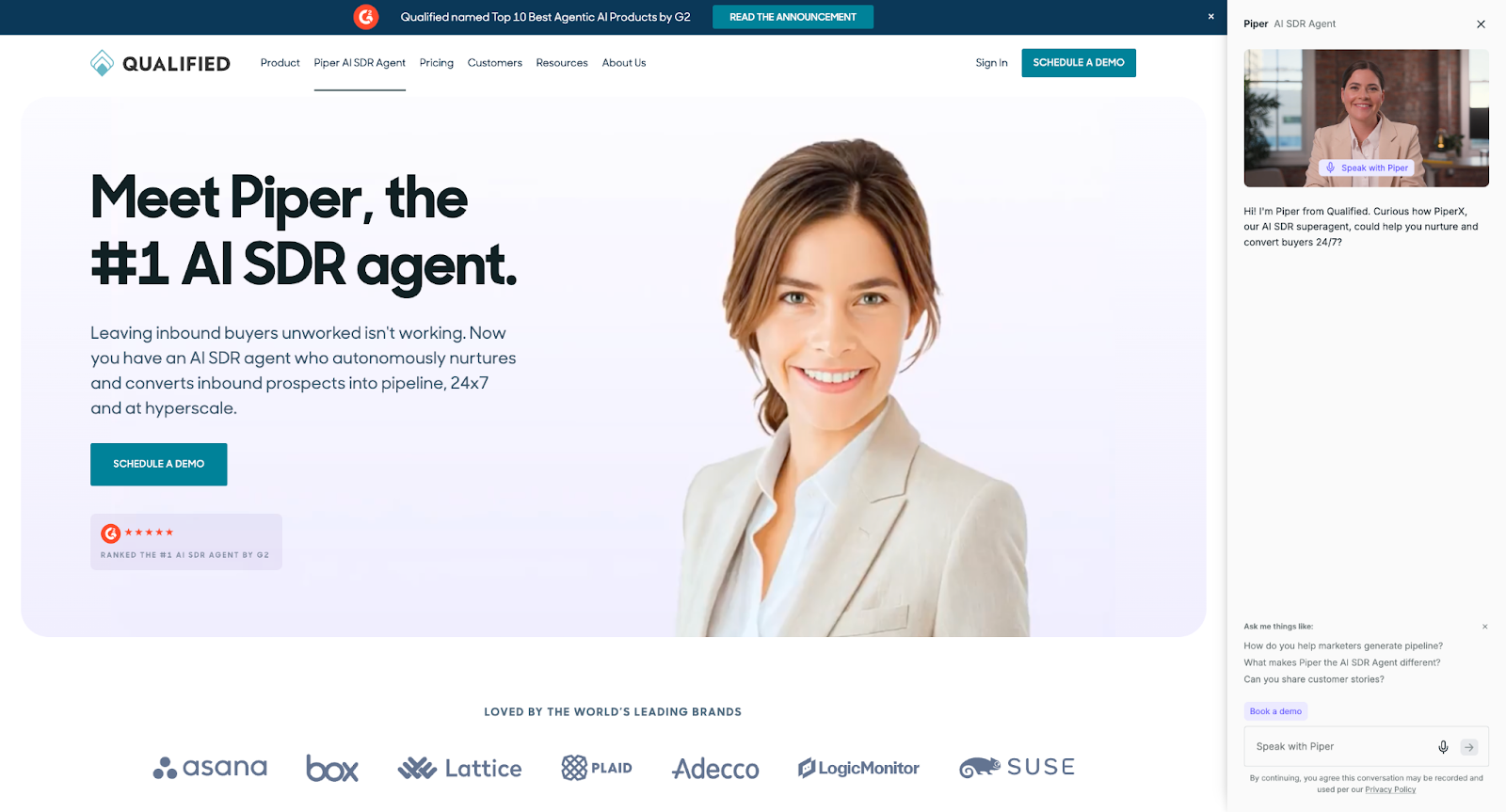
Qualified is one of the most well-known conversational marketing platforms used by revenue and marketing teams to turn website visitors into qualified sales meetings. Its AI SDR agent, Piper AI SDR Agent, helps companies greet visitors in real time, answer questions through chat, qualify potential buyers, and schedule meetings automatically while they are still on the website.
This model works especially well for organizations with strong inbound website traffic and revenue teams that prioritize real-time engagement with high-intent visitors.
However, the B2B buying journey has changed significantly in recent years. Many buyers now discover and research software through channels such as:
AI search tools
LinkedIn discussions and direct messages
Slack and professional communities
product review platforms
messaging apps like WhatsApp, Slack, LinkedIn, Telegram, iMessage, etc.
In many cases, these buyers form opinions about vendors before ever visiting the company’s website. The website is no longer the primary place where buyers browse and nurture their interest. Instead, much of the research and early evaluation now happens in communities, social platforms, messaging apps, and AI-powered search tools.
As a result, these platforms are typically adopted by mid-market and enterprise revenue teams with established SDR functions and complex CRM workflows.
Category
Core Goal
Website-first conversational marketing
Convert visitors who are already on your website
Intent-first AI SDR platforms
Capture buyers wherever buying intent appears
Qualified remains a strong solution for companies whose pipeline primarily starts with website visits.
At the same time, some modern revenue teams are exploring newer AI SDR platforms such as Knock AI that can engage buyers across multiple channels, including LinkedIn, Slack, WhatsApp, email replies, iMessage, and website chat, to capture intent earlier in the buying journey. For revenue and marketing teams evaluating website chat tools or AI SDR platforms, understanding how these two engagement models differ is critical before choosing a solution.
Quick Comparison: Knock AI vs Qualified vs Drift
Platform
Engagement Model
Identity Resolution
Intent Detection
Where Conversations Start
AI SDR Capability
Typical Buyer Channels
Ideal Company Size
Best Fit Use Case
Qualified
Website-first conversational marketing
Primarily company-level visitor identification after a visitor interacts with chat, often using IP enrichment
Limited. Typically triggered after a visitor starts a chat session
Website chat widget and on-site engagement
Piper AI SDR Agent assists with chat, qualification, and meeting booking
Website visitors through chat widgets and landing pages
Mid-market and enterprise companies with strong inbound traffic
Converting website visitors into meetings through chat and SDR engagement
Knock AI
Intent-first AI SDR platform
Company and contact-level identification across website visitors, product users, documentation readers, and off-site interactions
Real-time intent detection across website activity, product usage, documentation, messaging platforms, and off-site Knock links
Qualified excels at converting website visitors into meetings through conversational marketing and AI-assisted chat.
Knock AI focuses on capturing buyers wherever intent appears, including channels such as LinkedIn, Slack, messaging apps, LinkedIn ads, G2 profile, QR codes, PDFs, email signatures, and website interactions.
Drift primarily supports website chat engagement and inbound lead qualification for mid-market marketing teams.
Quick Use Case Guide
Choosing the right platform depends largely on where your buyers engage with your brand and how your inbound pipeline is generated. Some tools are designed primarily for converting website visitors, while others are built to capture buyer intent across multiple channels.
Below is a simple guide to help determine which approach may fit your team best.
Choose Qualified if
Most of your website traffic is organic Qualified is particularly effective for companies that generate a large portion of their demand through organic website visits. If prospects regularly discover your site through search, content, or documentation and then explore product or pricing pages, a website-first conversational marketing platform can help convert those visitors into meetings.
When traffic mainly comes from organic sources, buyers naturally arrive on your website to research the product, making real-time website chat an effective way to start conversations.
SDRs actively monitor live chat conversations Many teams using Qualified rely on SDRs to jump into conversations quickly when high-intent visitors appear. If your sales team already has processes in place for monitoring inbound chat and responding quickly, Qualified can help scale those interactions.
Your organization relies heavily on Salesforce routing Qualified integrates deeply with Salesforce workflows, enabling teams to automatically route conversations based on account ownership, territory rules, and opportunity stages. For organizations with complex CRM routing logic, this integration can be a major advantage.
Website engagement is central to your GTM strategy Companies that treat their website as the main hub of the buying journey, where visitors discover, research, and interact with sales—often benefit from conversational marketing platforms designed specifically for website engagement.
Consider Intent-First AI SDR Platforms if
Buyers frequently engage with your brand outside the website Many buyers now discover vendors through channels such as LinkedIn discussions, Slack communities, AI search tools, or messaging apps. Platforms designed to detect intent across these channels can help teams start conversations earlier in the buying journey.
SDR response time cannot always be immediate Live chat tools typically work best when SDRs respond within minutes. If your team cannot always monitor inbound conversations in real time, an AI-driven SDR approach can help maintain engagement and qualification without relying entirely on human response speed.
Email follow-up sequences rarely restart conversations Traditional inbound funnels often depend on email follow-ups after a visitor leaves the website. However, many buyers now respond more frequently in messaging channels than in email threads, which can limit the effectiveness of email-only re-engagement.
Modern platforms such as Knock AI can automatically re-engage high-intent visitors who drop off from the funnel by starting conversations in channels like LinkedIn or messaging apps, helping teams restart discussions outside the website and email inbox.
Your team wants to identify buyers before forms are submitted Some modern platforms focus on identifying potential buyers earlier in the journey, before they fill out a form or start a chat, allowing sales teams to prioritize high-intent prospects and start conversations more proactively.
How to Know If Your Inbound Revenue Stack Is Missing Revenue
Many B2B companies invest heavily in inbound marketing, SEO, paid campaigns, webinars, and content marketing to drive traffic to their website. However, traffic alone does not guarantee a pipeline. A large portion of potential revenue is often lost simply because buyers are not engaged at the right moment in their journey.
In many cases, high-intent buyers visit a website, explore pricing pages or product documentation, and leave without ever speaking to sales. When this happens, the opportunity to start a meaningful conversation and potentially book a meeting is lost.
Below are several common signals that your current inbound revenue stack may not be capturing the full buying journey.
Signal #1: Website Visitors Leave Without Starting Conversations
If most website visitors never interact with sales, there is a strong chance that high-intent buyers are leaving without engagement.
Many companies focus heavily on driving traffic but overlook the systems needed to convert that traffic into conversations. When visitors arrive with questions but do not find an easy way to start a conversation, they often leave and continue researching other vendors.
Common causes include:
Slow SDR response times – If visitors wait too long for a reply, they may abandon the chat or leave the website entirely.
Unclear engagement triggers – Generic chat prompts or poorly targeted messages may fail to capture attention.
Limited proactive messaging – Without contextual prompts or intelligent engagement, buyers may never realize they can speak with sales.
Even small improvements in engagement timing can significantly increase meeting bookings from inbound traffic.
Signal #2: SDRs Cannot Respond to Every Visitor in Real Time
Live chat systems work best when responses happen quickly. In many cases, a delay of just a few minutes can dramatically reduce the likelihood of starting a conversation.
However, SDR teams rarely focus only on inbound chat. Most sales development representatives manage multiple responsibilities at the same time, including:
outbound prospecting and outreach
email follow-ups with existing leads
preparing for scheduled meetings
researching accounts and contacts
Because of this workload, it can be difficult for SDRs to respond to every inbound visitor immediately. When response times increase, visitors may assume no one is available and leave before a conversation begins.
This creates a gap between buyer intent and sales engagement, leading to missed opportunities.
Signal #3: Email Follow-Ups Rarely Restart Conversations
When a website visitor leaves without starting a conversation, many inbound funnels rely on email nurture sequences to re-engage the lead.
However, email engagement has become increasingly difficult in recent years. Buyers receive a large volume of automated outreach, newsletters, and marketing emails every day. As a result, many people treat their inbox as a backlog rather than a place for real-time discussions.
This creates several challenges:
nurture emails may go unread
replies often take days instead of minutes
conversations lose momentum after the visitor leaves the website
When email becomes the primary fallback channel, it can significantly reduce the chances of restarting a meaningful conversation with the buyer.
Signal #4: Buyers Discover Your Product Outside Your Website
The modern B2B buying journey rarely starts on a vendor’s website. Instead, many buyers first discover tools through peer discussions and external platforms.
Common discovery channels include:
LinkedIn conversations and posts
Slack communities and professional groups
AI search tools and research assistants
peer recommendations from colleagues
product review platforms such as G2 or Capterra
In many cases, buyers gather significant information about a product before ever visiting the company’s website. If engagement tools only activate when a visitor lands on the site, these early buying signals may never reach the sales team.
This means potential opportunities can exist long before traditional inbound funnels detect them.
Much of this early-stage influence is driven by user-generated content, which Walls.io highlights as a key factor shaping how buyers evaluate solutions before engaging with sales.
Quick Self-Assessment
If several of the following situations sound familiar, it may be worth reviewing how your inbound engagement strategy works:
Website visitors rarely convert into conversations with sales
SDR teams struggle to respond instantly to inbound chat
Pipeline generation depends heavily on form submissions
Buyers mention discovering your product through LinkedIn, communities, or other off-site channels
Recognizing these signals can help organizations identify gaps in their inbound engagement strategy and determine whether their current tools are capturing the full range of buyer intent.
What Is Qualified?
Qualified is a conversational marketing platform designed to help revenue and marketing teams convert website visitors into sales pipeline through real-time chat engagement, AI automation, and meeting scheduling.
Instead of relying solely on forms or delayed email follow-ups, Qualified allows companies to interact with potential buyers while they are actively exploring the website. By starting conversations at the moment of interest, sales teams can qualify leads faster and guide buyers toward the next step in the sales process.
The platform combines several capabilities that work together to improve inbound conversion.
Core capabilities of Qualified
Qualified enables revenue teams to:
Identify website visitors and detect companies visiting key pages
Start conversations instantly through proactive chat engagement
Qualify potential buyers in real time using AI and SDR conversations
Route leads to the correct sales representative based on account ownership or territory
Schedule meetings directly from chat without requiring visitors to fill out traditional forms
This approach helps revenue teams capture buyer intent while visitors are still researching a product.
The role of Piper AI SDR
At the center of the platform is Piper AI SDR Agent, Qualified’s AI-powered sales development representative.
Piper is designed to automate the early stages of inbound engagement by greeting visitors, answering questions, and qualifying potential buyers before handing the conversation to a human SDR when necessary.
The AI agent can:
welcome visitors when they arrive on the website
answer product and pricing questions
guide buyers toward relevant resources
collect qualification details
schedule meetings with the appropriate sales representative
By combining AI automation with human sales engagement, Qualified helps revenue teams respond faster and convert more website visitors into pipeline.
What Is Piper AI SDR Agent?
Piper is the AI-powered Sales Development Representative (AI SDR) developed by Qualified to automate inbound conversations with website visitors. Instead of relying solely on human SDRs to monitor live chat, Piper can engage visitors instantly, helping companies respond to buyer interest the moment it appears.
The goal of Piper is to ensure that potential buyers who arrive on the website are greeted, guided, and qualified in real time, increasing the chances that a conversation turns into a scheduled meeting.
Unlike traditional chatbots that only answer basic questions, Piper is designed to support multiple stages of the inbound sales process from initial engagement to meeting booking.
Key things Piper can do
Piper can perform several tasks that typically require an SDR, including:
Greeting website visitors automatically When a visitor lands on key pages, such as pricing or product pages, Piper can initiate a conversation with a personalized greeting.
Answering product-related questions Piper can respond to common questions about features, use cases, or pricing, helping buyers find the information they need without leaving the website.
Guiding visitors through relevant content The AI can recommend blog posts, product documentation, or customer stories that match the visitor’s interests.
Qualifying potential buyers Piper can ask discovery questions to understand the visitor’s role, company size, and needs before routing them to the appropriate sales representative.
Scheduling sales meetings Once a visitor is identified as a potential buyer, Piper can book meetings directly from the chat interface using integrated calendars.
Triggering follow-up emails If a visitor leaves before completing the conversation, Piper can initiate email follow-ups to continue the engagement.
How Piper supports SDR teams
Piper does not replace human SDRs. Instead, it works alongside them to scale inbound engagement and reduce response time.
By handling initial conversations and qualification automatically, Piper allows SDR teams to focus on higher-value activities such as deeper discovery calls, account research, and moving qualified opportunities forward in the sales pipeline.
In this way, Piper acts as an always-available first point of contact, helping ensure that inbound visitors receive immediate attention even when SDRs are busy with other tasks.
How Qualified Works for Revenue Teams
Revenue teams often face a common challenge: high-intent buyers visit the website but leave before sales has a chance to engage them. Qualified is designed to solve this problem by enabling real-time conversations with visitors during the moment of interest.
Instead of waiting for visitors to fill out a form or respond to a follow-up email, Qualified allows companies to start conversations instantly through live chat and AI-powered engagement. This helps revenue teams identify interested buyers earlier and guide them toward a meeting while they are still actively researching.
Below is a simplified view of the typical workflow used by teams implementing Qualified.
Typical Inbound Engagement Workflow
Website visit → AI or SDR chat → Qualification → Meeting scheduling → Sales handoff
Step 1: Website Visit
The process begins when a potential buyer lands on the website. This may happen through various inbound channels such as organic search, paid campaigns, content marketing, or referrals.
Once the visitor arrives, Qualified detects the session and can trigger engagement based on signals such as:
page being viewed (for example pricing or product pages)
company identification from IP enrichment
account-based targeting rules
These signals help prioritize which visitors should receive proactive engagement.
Step 2: AI or SDR Chat Engagement
After a visitor lands on the site, a conversation can begin through a chat widget powered by Piper AI SDR Agent or through a human SDR monitoring live chat.
Piper can greet visitors automatically, ask questions, or offer assistance navigating the website. If the visitor expresses buying intent, the conversation can continue through AI or be handed off to an SDR for deeper engagement.
This immediate interaction helps ensure visitors do not leave the site without speaking to someone.
Step 3: Lead Qualification
Once a conversation begins, the next step is determining whether the visitor is a potential buyer.
Qualification may include questions about:
company size
role or job title
current tools being evaluated
timeline for purchasing
These details help determine whether the visitor fits the company’s ideal customer profile and whether they should be routed to a sales representative.
Step 4: Meeting Scheduling
If the visitor meets the qualification criteria, Qualified can present available meeting times directly within the chat interface.
This removes the need for visitors to fill out forms or wait for follow-up emails. Instead, the conversation can move directly from discovery to meeting booking in real time.
Step 5: Sales Handoff
After a meeting is scheduled, the conversation and lead information are routed to the appropriate sales representative through CRM integrations.
This ensures that:
the correct account owner receives the meeting
conversation history is preserved
the sales team has context before the call
Why This Workflow Matters
The primary goal of this model is simple: connect high-intent visitors with sales before they leave the website.
When inbound engagement happens instantly, companies can reduce the risk of losing potential buyers during the early stages of the buying journey.
Core Features of Qualified
Qualified provides a set of tools designed to help revenue teams engage website visitors, qualify potential buyers, and convert conversations into scheduled meetings. The platform combines AI-driven automation with human sales engagement to ensure companies can respond quickly when buyer interest appears.
AI SDR Automation
One of the central features of Qualified is its AI-powered engagement through Piper AI SDR Agent.
Piper helps automate the early stages of inbound conversations so visitors receive immediate responses even when SDRs are busy.
Key capabilities include:
Piper AI conversations that initiate chat with visitors and respond to questions
Automated qualification by asking discovery questions to understand buyer needs
Conversational engagement that guides visitors toward helpful content or the next step in the buying process
By automating initial engagement, Piper helps revenue teams respond faster and scale conversations across many website visitors simultaneously.
Live Chat for SDR Teams
While AI handles the first interaction, human SDRs can step into conversations when deeper engagement is needed.
Qualified provides live chat capabilities that enable sales teams to interact directly with potential buyers.
Key features include:
Proactive visitor greetings triggered by specific behaviors such as visiting pricing pages
SDR takeover capability, allowing human sales reps to join conversations in real time
Account-based messaging that targets known companies or high-value accounts visiting the website
This combination of automation and human interaction helps companies balance scale with personalized engagement.
Website Visitor Identification
Qualified can identify companies visiting the website through visitor identification technology. This allows teams to detect when potential target accounts are browsing important pages.
Once a company is identified, the platform can trigger engagement workflows based on account-level signals such as:
visiting key product pages
returning to the website multiple times
interacting with marketing campaigns
This information helps SDR teams prioritize conversations with high-value visitors.
Meeting Scheduling
A major goal of conversational marketing is to move interested buyers toward a sales meeting as quickly as possible. Qualified enables visitors to book meetings directly through chat without filling out traditional forms.
Scheduling features include:
Embedded calendars that appear within the chat interface
Round-robin routing to distribute meetings across SDRs or account executives
CRM-based assignment that routes leads to the correct account owner
This streamlined process helps reduce friction and allows qualified buyers to schedule meetings immediately.
CRM Integrations
Qualified integrates with many of the core systems used in modern sales and marketing stacks. These integrations allow conversation data, lead information, and meeting bookings to sync automatically with CRM platforms.
Major integrations include:
Salesforce
HubSpot
Marketo
Gong
Outreach
These integrations enable automated routing, improved reporting, and a more complete view of inbound sales activity across the organization.
Qualified Pricing (What Companies Should Expect)
Qualified does not publicly list detailed pricing tiers on its website. However, based on industry reports and customer feedback, pricing is typically structured for mid-market and enterprise companies.
Estimated pricing often starts at around $42,000 per year, depending on several factors.
Key variables that influence pricing include:
Website traffic volume and number of sessions being monitored
Number of calendars connected for meeting scheduling
CRM integrations and workflow complexity
Onboarding and implementation support
Because of these requirements, Qualified is generally positioned as an enterprise-grade platform rather than a tool for small businesses.
Pros of Qualified
Customer reviews and industry feedback frequently highlight several strengths that make Qualified attractive for revenue teams.
Commonly reported advantages include:
Polished and intuitive user interface that is easy for marketing and sales teams to use
Strong Salesforce integration that supports complex routing and reporting workflows
Powerful website engagement automation through proactive chat and AI assistance
Enterprise-grade onboarding and support provided by Qualified’s implementation teams
Strong inbound conversion performance for companies with significant website traffic
These capabilities make Qualified a popular choice among SaaS companies and enterprise organizations focused on improving inbound lead conversion.
Limitations of Qualified
While Qualified provides powerful website engagement capabilities, some limitations are frequently mentioned by users and analysts.
Common challenges include:
Heavy reliance on website traffic to generate conversations and opportunities
SDR response time dependency, since live chat effectiveness often depends on quick responses
Implementation complexity for organizations with advanced routing or CRM workflows
Engagement limited primarily to website sessions, meaning conversations usually begin only when a visitor is on the site
Email follow-up sequences with low response rates after a visitor leaves the website
Understanding these limitations can help organizations determine whether a website-first conversational marketing platform aligns with their broader go-to-market strategy.
Why the B2B Buying Journey Is Changing
The traditional B2B buying journey used to start on a company’s website. A typical path looked like this:
ad click → landing page visit → form submission → SDR follow-up → sales conversation
Marketing teams optimized landing pages, gated content, and email nurture campaigns to guide visitors toward speaking with sales.
Today, that journey looks very different.
Modern B2B buyers often conduct significant research before they ever visit a vendor’s website. Instead of relying only on search engines and landing pages, buyers now explore tools and solutions across multiple digital environments where professional discussions and recommendations happen naturally.
Common discovery channels now include:
LinkedIn discussions and direct messages where professionals share experiences and recommendations
Slack communities and industry groups where peers discuss tools and workflows
AI search tools and research assistants that summarize vendor options and product comparisons
Peer recommendations and private conversations within professional networks
Product review platforms such as G2 where buyers compare software based on real user feedback
Because of these changes, the first signal of buyer intent often appears outside the company website.
For example, a potential buyer might:
ask for tool recommendations in a Slack community
comment on a LinkedIn post about AI SDR platforms
research comparisons through AI-powered search
read reviews on G2 or similar platforms
By the time that buyer finally visits a vendor website, they may already be in the evaluation phase of their decision process.
For revenue teams relying entirely on website engagement tools, this shift creates an important challenge.
If engagement platforms activate only when a visitor lands on the website, many early signals of buyer interest may go unnoticed. As a result, sales teams may miss opportunities to engage potential customers during the earlier stages of research when conversations and influence often begin.
Where Qualified Still Excels
Despite the rapid evolution of the B2B buying journey, Qualified remains a powerful platform for companies that rely heavily on website-driven inbound sales.
Its core strength lies in helping revenue teams convert website visitors into real-time conversations and meetings while buyers are actively exploring the site.
For organizations that generate significant inbound traffic, this type of engagement can dramatically increase conversion rates compared to traditional forms or delayed email follow-ups.
Qualified tends to perform especially well in environments where the website is still the central hub of demand generation.
Situations Where Qualified Works Best
Qualified is particularly effective when the following conditions exist:
High website traffic volume Companies receiving consistent inbound traffic can benefit from real-time engagement that captures visitors before they leave the site.
SDR teams actively monitoring inbound chat When sales development representatives are available to respond quickly, live conversations can help qualify leads and guide buyers toward the next step.
Landing pages generate a large share of pipeline Organizations that rely heavily on marketing campaigns, content marketing, and inbound search traffic often see strong results from conversational marketing tools.
Salesforce workflows manage routing and account ownership Teams with established CRM infrastructure can use Qualified’s integrations to automatically route conversations to the appropriate sales representative.
Why the Website-First Model Still Works for Many Teams
When these conditions are present, Qualified can help companies:
greet visitors proactively
answer questions during product research
qualify potential buyers through chat
schedule meetings instantly while interest is high
This approach reduces friction compared to traditional form submissions and allows sales teams to engage buyers at the exact moment they are evaluating the product.
Because of these advantages, many enterprise SaaS companies continue to generate meaningful pipeline using a website-first conversational marketing model powered by Qualified.
Where Website-First Engagement Starts to Break Down
Website-first engagement tools have helped many companies convert inbound traffic into sales conversations. However, for a growing number of B2B organizations, the website is no longer the first place where buyer engagement happens.
Modern buyers often begin their research long before they visit a vendor’s website. Instead of immediately exploring product pages or landing pages, they gather information across professional networks, communities, and research platforms.
Today’s buyers frequently interact with vendors and discover products through channels such as:
LinkedIn conversations and direct messages where professionals exchange recommendations
Slack communities and industry groups where teams discuss tools and workflows
AI search platforms that summarize product comparisons and vendor capabilities
Review sites and comparison platforms such as G2 where buyers evaluate alternatives
Peer recommendations from colleagues, partners, or trusted industry contacts
Because these interactions often occur before a website visit, many buyers already have a strong understanding of available solutions by the time they reach a vendor’s site.
In some cases, buyers may even shortlist vendors before visiting the website at all.
This shift creates a challenge for traditional inbound engagement systems. When sales engagement tools activate only during website sessions, they can miss the earliest and often most valuable signals of buying intent.
For example, a potential buyer might:
comment on a LinkedIn post about AI SDR platforms
ask for recommendations inside a Slack community
compare vendors using AI search tools
read reviews and discussions on software marketplaces
If engagement technology cannot detect or respond to these signals, sales teams may only see the buyer after much of the research process has already occurred.
Because of these changes, many go-to-market (GTM) teams are exploring a broader approach to inbound engagement, one that captures buyer intent before the website becomes the primary interaction point.
The Rise of Intent-First AI SDR Platforms
As buyer behavior evolves, many revenue teams are rethinking how they capture and convert inbound demand. This shift has given rise to a new category of sales technology known as intent-first AI SDR platforms.
Traditional conversational marketing tools typically activate only when a visitor lands on the company website. Intent-first platforms take a different approach. Instead of waiting for buyers to appear on a landing page, these systems focus on detecting intent signals wherever they emerge and engaging buyers immediately.
The goal is to identify potential customers earlier in their research journey and start meaningful conversations while interest is still high.
What Defines an Intent-First AI SDR Platform
Intent-first AI SDR platforms combine buyer identity resolution, intent detection, and automated engagement to help revenue teams respond to signals that appear across the modern digital buying journey.
Typical capabilities include:
Identifying buyers across multiple channels such as website visits, messaging platforms, and online communities
Detecting early intent signals in real time, including product research behavior or repeated engagement with content
Engaging prospects through messaging platforms where conversations already occur
Automatically qualifying inbound leads through AI-driven discovery questions
Scheduling meetings directly inside conversations without requiring traditional forms
Instead of relying entirely on inbound traffic, this model expands the reach of the inbound funnel by capturing interest before buyers formally enter the website journey.
Why This Approach Is Gaining Adoption
Many modern go-to-market teams are exploring intent-first engagement because it allows them to:
identify potential buyers earlier in the research process
reduce reliance on website sessions as the primary engagement trigger
automate the early stages of SDR qualification
start conversations in the communication channels buyers already prefer
Platforms such as Knock AI are designed around this intent-first model, helping revenue teams engage buyers across channels including LinkedIn, Slack, WhatsApp, and website chat.
By capturing signals across a broader digital footprint, intent-first AI SDR platforms aim to convert more buyer interest into real conversations and qualified meetings.
Why Many Revenue Teams Are Exploring Knock AI
One example of an intent-first AI SDR platform gaining attention among modern revenue teams is Knock AI.
Knock AI is designed to help companies identify, engage, and qualify buyers across multiple channels, rather than relying only on website visits. Instead of focusing exclusively on website chat, it acts as a real-time, formless buyer intelligence platform that detects intent signals and turns engagement into live conversations with sales.
This approach reflects how modern B2B buyers actually behave. Many buyers begin their research in communities, messaging apps, or AI search tools long before they ever land on a vendor’s website.
Instead of activating only when someone visits a website, Knock AI can engage buyers across the channels where these conversations already happen, including:
LinkedIn messages and profile interactions
Slack conversations and professional communities
WhatsApp chats and mobile messaging
website interactions and product pages
email replies from introductions or outbound outreach
events, ads, QR codes, and shared links across marketing campaigns
Because of this multi-channel model, sales teams can start conversations earlier in the buying journey, often before a buyer formally enters the traditional inbound funnel.
Teams evaluating alternatives to website-only conversational marketing platforms often compare Knock AI directly with Qualified to understand how multi-channel engagement can expand inbound pipeline generation.
How Knock AI Agent Works
While Qualified focuses on website chat engagement through Piper, the Knock AI Agent is designed to operate across a broader range of messaging environments.
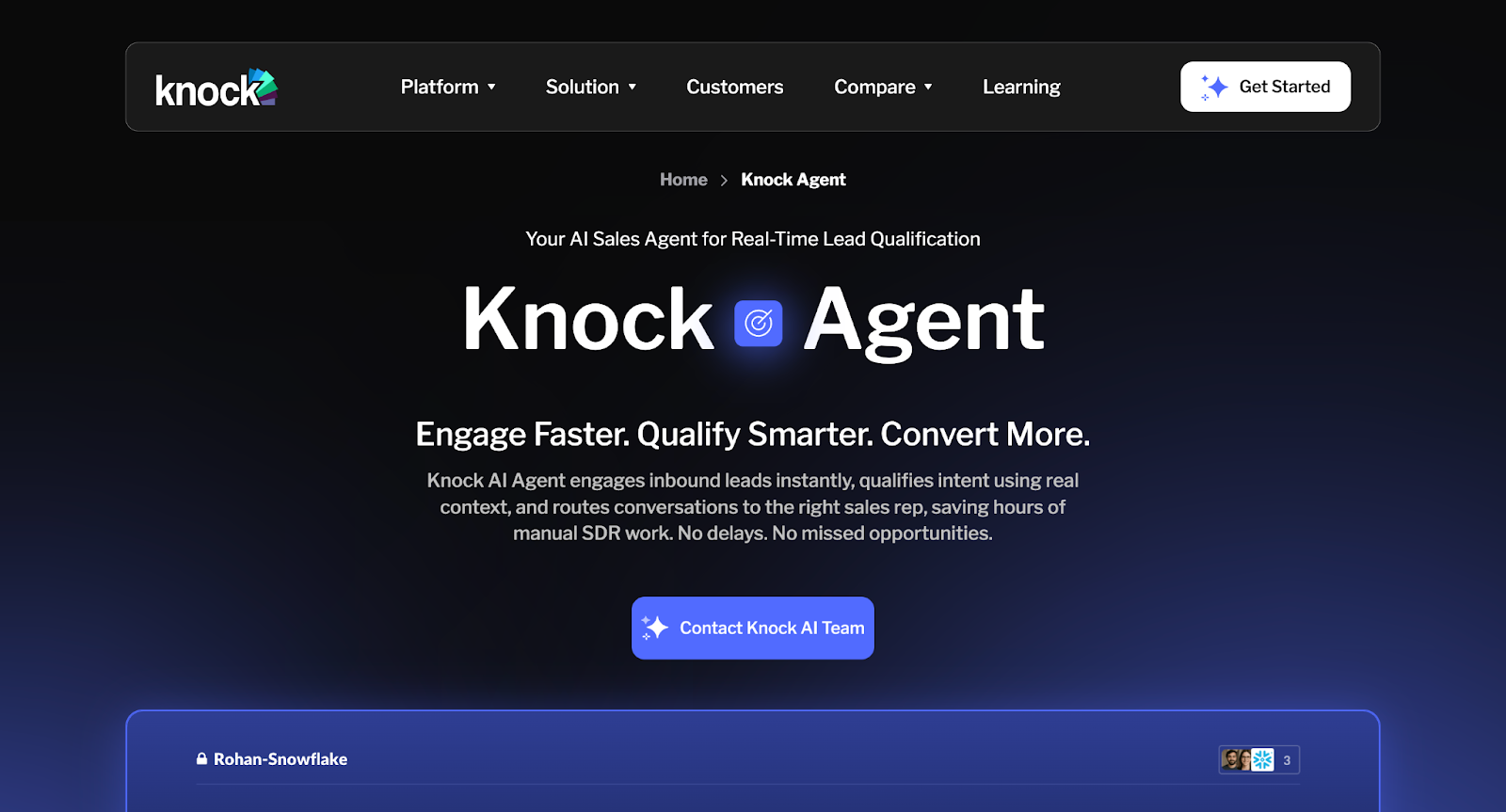
Instead of acting only as a website chatbot, the Knock AI Agent functions as an AI-powered SDR that helps revenue teams engage inbound leads instantly, qualify intent, and route conversations to the right sales representative.
The AI agent can:
greet leads immediately when a conversation begins
detect buyer intent using conversation signals
ask qualification questions based on defined workflows
answer questions using approved knowledge sources
route conversations to the correct SDR or account executive
book meetings through Knock Scheduling when enabled
Unlike traditional chat tools, the conversation typically begins through a Knock Chat Link, allowing buyers to start a discussion from multiple entry points such as a website, ad, document, or marketplace profile.
Once the conversation starts, sales representatives can reply directly from their Slack workspace, while the AI agent handles the early stages of engagement.
This approach allows revenue teams to engage inbound leads instantly while maintaining human control over the sales process.
Multi-Channel Buyer Conversations
Knock conversations can take place across several messaging environments depending on how the lead enters the chat.
Examples include:
website chat
Slack-based sales workflows
messaging apps such as LinkedIn or WhatsApp
email reply threads
QR-code or link-based entry points
Because the conversation continues in a persistent thread, SDRs and buyers can pick up the discussion later without losing context.
Why This Matters
Website-first conversational marketing platforms typically begin engagement when a visitor lands on the website.
Intent-first platforms like Knock expand this model by allowing conversations to start wherever the buyer initiates contact.
For revenue teams operating in distributed buying environments, this can help capture intent earlier and reduce the risk of losing high-intent buyers before sales has a chance to engage.
Identity Resolution Across the Buyer Journey
Another major capability of Knock AI is its identity resolution system.
Many engagement tools can only identify company-level website visitors, which means sales teams may know the company but not the specific person researching the product.
Knock AI provides both:
Company-level identification
Contact-level identification
This allows revenue teams to understand exactly who the buyer is, including their role, company, seniority, and engagement signals.
With this context, sales teams can prioritize the right opportunities, route conversations automatically, and focus on buyers who are actively evaluating solutions.
Performance Metrics Reported by Teams Using Knock AI
Organizations adopting intent-first engagement platforms often report meaningful improvements in inbound conversion performance because conversations begin at the moment intent appears.
Based on platform benchmarks and implementation data, companies using Knock AI have reported outcomes such as:
70–90% identity match rates for inbound visitors and off-site interactions
2–5× more qualified meetings by capturing buyer intent across channels
Less than 5% meeting no-show rates due to messaging-based follow-ups rather than email reminders
50–70% reduction in SDR workload because AI handles early qualification, routing, and scheduling
These improvements occur because buyers are engaged in real conversations immediately, rather than entering delayed email nurture sequences after leaving the website.
For context, typical B2B email outreach campaigns often receive reply rates of under 10–12%, while conversations happening in messaging apps frequently achieve far higher engagement.
Why This Matters for Modern GTM Teams
By combining multi-channel engagement, identity resolution, and AI-driven qualification, Knock AI allows revenue teams to capture demand even when buyers never visit the website.
Instead of waiting for inbound traffic to appear, teams can:
detect buyer intent earlier
start conversations instantly
qualify prospects automatically
route opportunities to the correct sales rep
book meetings directly inside the conversation thread
This means revenue teams are no longer limited to converting only website visitors.
For companies operating in increasingly distributed buying environments, this intent-first, multi-channel engagement model can significantly expand the inbound pipeline and help sales teams connect with buyers wherever the research journey begins.
Qualified vs Knock AI
When evaluating inbound engagement platforms, one of the most important differences lies in how and when buyer engagement begins.
Traditional conversational marketing tools focus on converting visitors once they arrive on the website. Newer intent-first platforms expand engagement across the broader digital environments where modern buyers research software.
Evaluation Tip for Revenue Teams
-> If your revenue team is evaluating conversational marketing tools, consider mapping where your last 20 qualified meetings originated.
-> If most conversations started on your website, website-first platforms like Qualified may work well.
-> If buyers frequently engage through LinkedIn, communities, or messaging platforms before visiting your website, an intent-first engagement model may capture additional demand earlier in the buying journey.
The comparison below highlights how website-first conversational marketing platforms differ from intent-first AI SDR platforms.
Qualified is designed to convert website visitors into meetings through conversational marketing and live chat engagement.
Knock AI focuses on capturing and qualifying buyers wherever intent appears, including off-site channels where much of modern B2B research happens. By engaging prospects across messaging platforms and identifying buyers earlier in the research journey, intent-first platforms aim to expand the inbound pipeline beyond traditional website sessions.
Choosing the right platform depends largely on where and how your buyers engage with your company.
Some organizations still generate most of their pipeline directly from website traffic. Others see buyer conversations start across LinkedIn, Slack communities, AI search results, or messaging apps before someone ever visits their website.
Understanding where buyer engagement begins can help determine which platform will best support your go-to-market strategy.
Team Type
Best Fit
Why
Companies with strong website traffic
Knock AI or Qualified
Both platforms can convert inbound website visitors. Qualified focuses on website chat, while Knock AI can also engage buyers across additional channels.
SDR teams focused on live chat
Knock AI or Qualified
Both platforms support real-time conversations. Qualified relies on website chat, while Knock AI allows conversations to continue across messaging apps and multiple touchpoints.
Companies capturing off-site buyer intent
Knock AI
Enables engagement across LinkedIn, Slack, WhatsApp, website chat, and other channels where buyers often start their research.
Enterprise teams automating SDR qualification
Knock AI
AI SDR handles qualification, routing, and scheduling automatically, reducing manual SDR workload.
Strategic Perspective
Website-first conversational marketing platforms such as Qualified are effective when most buyer engagement happens directly on the website.
However, as buyer research increasingly happens across communities, messaging apps, and AI search tools, many companies are adopting platforms like Knock AI that can engage prospects both on the website and across the broader digital buying journey.
This approach allows revenue teams to convert website visitors while also capturing demand from channels where buyers are already discussing and evaluating solutions.
The Strategic Difference
The core difference between Qualified and Knock AI comes down to where buyer engagement begins.
Both platforms aim to help revenue teams convert inbound interest into sales meetings, but they approach this goal from two fundamentally different perspectives.
Qualified: Website-First Engagement
Qualified is built around the idea that the website is the central hub of the buying journey. The platform focuses on engaging visitors while they are actively browsing product pages, pricing pages, or other marketing content.
In this model, engagement typically works as follows:
Focuses on converting website visitors into conversations
Activates when someone lands on the website
Uses live chat or AI chat to engage visitors during their session
Relies on email follow-ups if a visitor leaves the website before booking a meeting
This approach works well for companies whose marketing strategy generates consistent website traffic and where SDR teams actively monitor inbound conversations.
Knock AI: Intent-First Engagement
Knock AI takes a broader approach by focusing on capturing buyer intent across multiple channels, not just the website.
Instead of waiting for a visitor to arrive on a landing page, the platform is designed to detect interest signals wherever they appear and begin a conversation immediately.
This model includes capabilities such as:
Focuses on capturing buyer intent across channels
Activates wherever buyers show interest, including messaging platforms and digital communities
Engages prospects through Slack, LinkedIn, WhatsApp, website chat, and email conversations
Uses AI to qualify buyers, route leads, and schedule meetings automatically
By expanding engagement beyond the website, this approach helps sales teams connect with buyers earlier in their research process.
Why This Strategic Difference Matters
For many modern go-to-market (GTM) teams, the choice between these two approaches depends on how their buyers actually behave.
If most buyer interactions still begin on the website, a website-first conversational marketing platform like Qualified may fit well.
However, as buyer research increasingly happens across professional communities, messaging apps, and AI-powered discovery tools, platforms like Knock AI allow companies to engage prospects where intent appears first, not only after they visit the website.
This shift enables revenue teams to capture more opportunities by expanding engagement beyond traditional website sessions.
Qualified remains one of the most established conversational marketing platforms for converting website visitors into sales meetings. For organizations with strong inbound traffic and revenue teams with SDRs actively monitoring live chat, the platform can generate meaningful pipeline by engaging buyers while they are actively browsing the website.
In environments where the website is still the center of demand generation, Qualified’s real-time chat capabilities, AI automation, and CRM integrations can help companies capture high-intent visitors and move them quickly toward scheduled conversations with sales.
However, the broader B2B buying journey has evolved significantly in recent years. Buyers now research solutions across multiple channels long before they arrive on a vendor’s website. Conversations often begin in places such as LinkedIn discussions, Slack communities, AI search tools, and peer networks.
Because of this shift, many modern go-to-market teams are expanding their inbound engagement strategies beyond website sessions. Instead of relying only on website chat tools, some organizations combine website engagement platforms with intent-driven solutions like Knock AI that can identify buyers and start conversations across multiple channels.
For companies whose inbound strategy still revolves primarily around website traffic, Qualified can continue to deliver strong results. But for organizations looking to capture buyer intent earlier in the research journey, platforms that enable multi-channel engagement and AI-driven qualification may provide additional opportunities to expand the inbound pipeline.
Ultimately, determining whether Qualified is the right solution in 2026 depends on one key question:
Does most buyer engagement with your brand begin on your website, or does it happen across multiple digital channels?
Understanding how buyers discover and interact with your company across the modern buying journey can help determine which engagement model will deliver the most pipeline for your team. Many modern revenue teams now evaluate both approaches side by side to determine whether expanding engagement beyond the website could unlock additional pipeline opportunities.
FAQs
What does Qualified software do?
Qualified is a conversational marketing platform that helps revenue teams convert website visitors into sales conversations. It enables companies to engage visitors through real-time chat, qualify potential buyers using AI, and schedule meetings directly from the website.
What is Piper AI SDR?
Piper is the AI SDR agent built by Qualified. It automatically greets website visitors, answers questions, qualifies leads, and schedules meetings through the website chat interface.
How much does Qualified cost?
Qualified does not publicly list detailed pricing tiers. However, industry estimates suggest pricing typically starts around $42K per year, depending on factors such as website traffic volume, CRM integrations, onboarding support, and the number of calendars connected.
What are common limitations of website-first conversational marketing platforms?
Website-first engagement platforms activate only when buyers visit the website. However, many modern B2B buyers now research tools through LinkedIn discussions, Slack communities, AI search tools, and product review platforms before visiting vendor websites.
How is Knock AI different from Qualified?
Qualified focuses on converting website visitors through chat conversations and AI assistance. Knock AI focuses on capturing buyer intent across multiple channels, allowing revenue teams to engage prospects through LinkedIn, Slack, WhatsApp, website chat, G2 profile, LinkedIn ads, QR codes, events, PDFs, email signatures, and email conversations.
What should revenue teams consider when evaluating Qualified alternatives?
When evaluating conversational marketing platforms, revenue teams should consider where buyer engagement typically begins. If most interactions happen on the website, website-first tools may work well. However, if buyers frequently engage across messaging platforms and communities, teams may explore platforms that support multi-channel engagement and AI-driven qualification.


.svg)


.svg)
.svg)
.svg)


.svg)
.svg)


.svg)