

.svg)


.svg)
.svg)
.svg)


.svg)
.svg)

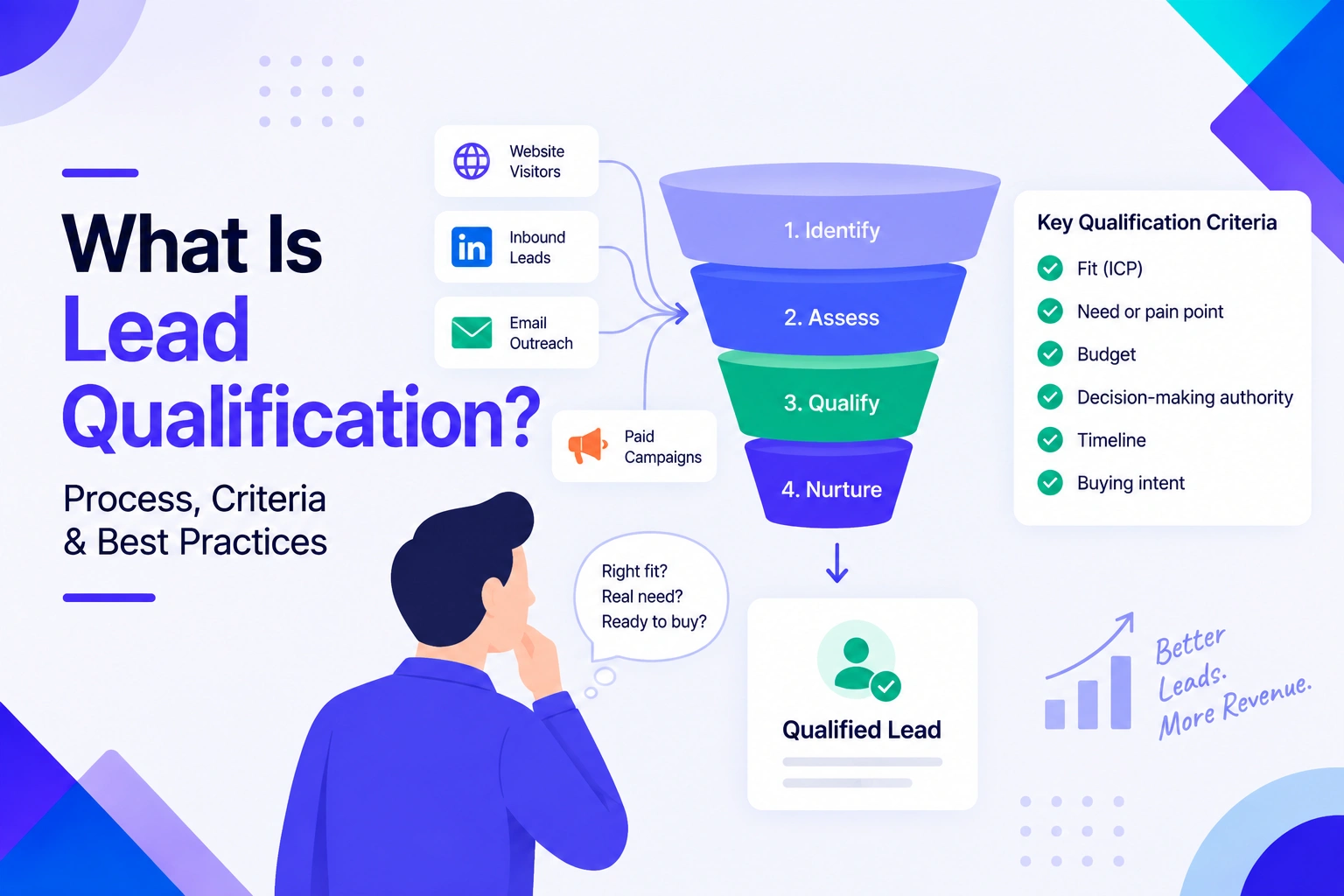
Sales teams cannot give every lead the same amount of attention. Some prospects are a strong fit with clear buying intent, while others may have little need, poor fit, or no realistic path to purchase. Lead qualification helps teams determine which prospects deserve sales attention and what should happen next. The challenge is that buyer signals are often scattered across website activity, content, campaigns, events, and conversations, making it harder to see the full picture.
What Is Lead Qualification?
Lead qualification is the process of determining whether a prospect is a good fit for your business and has enough need, intent, or buying potential to warrant sales attention. A qualified lead generally matches your ideal customer profile and shows a relevant problem, use case, or buying signal. An unqualified lead may have poor fit, no relevant need, insufficient buying potential, or little evidence of interest.
Qualification does not mean a prospect will definitely become a customer. It helps sales teams prioritize their time and decide which prospects deserve a conversation, follow-up, or further evaluation.
What Are the Lead Qualification Criteria?
The criteria used to qualify a lead vary by business, but most teams look at a combination of fit, need, intent, and buying readiness. These factors help determine whether a prospect is worth sales attention and what kind of follow-up makes sense.
Not every lead needs to meet every criterion. The right combination depends on the company's sales motion, product, deal size, and qualification process. Context is particularly useful because a single action rarely tells the whole story. Looking at the buyer's broader engagement can reveal whether an isolated signal represents genuine buying interest or casual activity.
How Does the Lead Qualification Process Work?
Lead qualification traditionally follows a linear path where leads are scored, moved through marketing qualification, and then reviewed by sales:
Lead → Score → MQL → Sales Qualification → SQL → Opportunity
That model still works for many teams, but today's buyers leave useful signals long before and beyond a form submission. They may browse your website, engage with content, attend events, respond to campaigns, or start a conversation with your team.
A more connected approach looks like:
Signal → Identity → Enrichment → Context → Intent → Qualification → Conversation → Meeting → Opportunity
The key difference is that qualification starts with the buyer and their signals, not just a lead record. By connecting activity to the right person and account, teams can build a clearer picture of who is engaging, what they care about, and what action makes sense next.
How Do You Qualify a Lead?
Qualifying a lead starts with defining what a good prospect looks like, then gathering enough information to decide whether sales should engage. A practical process looks like this:
- Define your ICP: Identify the companies and buyer profiles most likely to benefit from your solution.
- Capture buying signals: Look at website activity, content engagement, events, campaigns, and other interactions.
- Identify the buyer and account: Connect those signals to the right person and company.
- Enrich the available context: Add relevant firmographic, account, and buyer information.
- Evaluate intent and need: Determine whether the prospect has a relevant problem and meaningful interest.
- Apply your qualification criteria: Decide whether the prospect meets your sales-readiness threshold.
- Start a conversation or route the lead: Give qualified prospects a clear next step.
- Follow up while intent is active: Respond quickly while the buyer is still engaged.
Lead Qualification Frameworks
Different qualification frameworks give sales teams a structured way to evaluate prospects and guide discovery conversations. The right framework depends on the sales motion, deal complexity, and information the team needs before advancing a lead.
Frameworks provide structure, but the quality of qualification ultimately depends on having accurate, relevant, and complete information about the buyer and their situation.
Lead Qualification vs. Lead Scoring, MQL & SQL
These terms describe different parts of the process, even though teams often use them together.
Lead scoring supports qualification, but a high score does not automatically mean a lead is qualified. A prospect's score may indicate that they deserve attention, while qualification requires looking at the broader picture, including their fit, need, intent, and context.
Common Lead Qualification Mistakes
Even well-designed qualification processes can break down when teams rely on incomplete or outdated signals. Common mistakes include:
- Relying only on form data
- Treating every MQL equally
- Depending entirely on lead scores
- Ignoring behavioral intent
- Failing to connect activity to the right account
- Qualifying too slowly
- Routing leads without context
- Measuring lead volume instead of pipeline
A qualified lead can still become a missed opportunity if sales receives it too late or without enough context to act.
How AI Is Changing Lead Qualification
AI is making qualification more responsive by analyzing buyer signals as they happen rather than relying solely on static lead records. It can help teams identify intent, resolve buyer identity, enrich account data, connect behavioral signals, understand conversations, prioritize prospects, and route qualified buyers while reducing manual SDR research.
AI moves lead qualification from a static assessment of a lead record toward a real-time understanding of the buyer and their context.
How Knock AI Improves Lead Qualification
Traditional lead qualification often depends on form submissions, disconnected engagement data, manual research, and delayed handoffs. Knock AI connects the signals sales teams need to understand who is engaging, what they care about, and whether they are ready for a conversation.
The workflow becomes:
Signal → Identity → Enrichment → Context → Intent → Qualification → Conversation → Meeting → CRM → Pipeline
Knock AI connects buyer identity with engagement, account information, buying intent, qualification, conversations, and meetings, so teams can act on a fuller picture of the buyer instead of evaluating isolated lead records. Knock AI can also enrich and qualify leads, route them based on context and intent, and trigger follow-up workflows in real time.
Knock AI is relationship infrastructure for B2B companies, connecting identity, memory, context, and engagement across channels, humans, AI agents, and time.
Lead Qualification FAQs
What is lead qualification?
Lead qualification is the process of determining whether a prospect has the fit, need, intent, and buying potential to warrant sales attention.
Why is lead qualification important?
It helps sales teams prioritize the right prospects, respond faster, reduce wasted effort, and focus more time on opportunities that can create pipeline.
What are the main lead qualification criteria?
Common criteria include ICP fit, need, intent, authority, budget, timing, and the broader context of the buyer's engagement.
How do you qualify a lead?
Define your ICP, capture buying signals, identify and enrich the buyer, evaluate intent and need, apply your criteria, then route or engage qualified prospects.
What is the difference between lead scoring and lead qualification?
Lead scoring ranks prospects using predefined attributes and signals, while lead qualification determines whether a prospect actually meets the criteria for sales engagement.
What is the difference between MQL and SQL?
An MQL meets marketing-defined qualification criteria, while an SQL meets sales-defined criteria for direct sales engagement.

.svg)


