Best Lead Follow Up Software: 5 Tools for Sales Teams
Best Lead Follow Up Software for Sales Teams
TL;DR
Lead follow up software helps sales teams consistently engage leads after they enter the sales process. It can automate follow-up emails, reminders, sales sequences, tasks, lead prioritization, qualification, and other actions that help move prospects toward a sales conversation and opportunity. The right tool depends on the workflow: CRM platforms are useful for managing follow-up within the pipeline, sales engagement tools help teams run structured sequences, and revenue-conversion platforms can act on buyer signals before and during follow up.
Traditional lead follow up looks like:
Lead → Follow-up task → Rep → Email → Meeting
Modern lead follow up can extend further:
Buyer signal → Identification → Intent → Qualification → Engagement → Follow up → Scheduling → Pipeline
The difference is moving from simply following up with leads to understanding which buyers deserve attention and what should happen next.
What Is Lead Follow Up Software?
Lead follow up software is technology that helps sales teams consistently engage leads after they enter the sales process by organizing or automating follow-up tasks, communications, reminders, qualification, and other sales actions. A lead follow up system can help reps know who to contact, when to follow up, what action to take next, and how each interaction affects the sales pipeline.
Capturing a lead is only the first step. Leads can still be lost when nobody follows up, responses happen too late, the wrong message is sent, important context is missing, or sales teams cannot prioritize which leads deserve attention. Lead follow up tools help reduce these gaps by making follow-up more consistent and actionable.
What Does Lead Follow Up Software Do?
Depending on the platform, a lead follow up platform can:
Lead Follow Up vs Lead Management vs Lead Nurturing
These terms are closely related, but they describe different parts of the sales process. Lead follow up focuses on engaging a lead after a relevant interaction or qualification event, while lead management covers the broader process of organizing, qualifying, assigning, and progressing leads through the sales pipeline. Lead nurturing focuses on building relationships with leads that are not ready to buy yet. Lead tracking provides visibility into lead activity and progression, while sales engagement coordinates structured interactions across channels.
Capability
Primary Purpose
Lead Follow Up
Engage a lead after an interaction or qualification event
Lead Management
Organize and manage leads throughout the sales process
Lead Nurturing
Build relationships with leads that are not yet ready to buy
Lead Tracking
Monitor lead activity and progression
Sales Engagement
Coordinate structured sales interactions across channels
Lead follow up is therefore one part of lead management, not a synonym for it. Understanding these distinctions helps teams choose software based on the specific gap they need to solve rather than treating every lead-related platform as the same type of tool.
What Should Modern Lead Follow Up Software Do?
Modern lead follow up software should support the complete workflow from capturing a lead to turning meaningful interest into pipeline. Instead of treating follow up as a series of reminders, a modern lead follow up system should help teams understand who the buyer is, prioritize their activity, determine the right next action, and track the outcome.
Lead follow up software can solve very different problems depending on where the sales process breaks. Some platforms focus on managing existing leads and follow-up activity, while others add sales engagement, buyer intelligence, qualification, routing, or scheduling. The comparison below focuses on the role each platform can play in the lead follow up workflow, rather than treating every product as a direct replacement for the others.
Capability
Knock AI
Pipedrive
HubSpot
Salesforce
Salesloft
Lead Management
Strong
Strong
Strong
Strong
Moderate
Follow-Up Automation
Strong
Strong
Strong
Strong
Strong
Email Follow-Up
Strong
Strong
Strong
Strong
Strong
Sales Sequences
Strong
Strong
Strong
Strong
Strong
Buyer Identification
Strong
Limited
Moderate
Strong
Strong
Buyer Intent
Strong
Limited
Moderate
Moderate
Strong
AI Qualification
Strong
Limited
Moderate
Strong
Strong
Lead Prioritization
Strong
Moderate
Strong
Strong
Strong
Lead Tracking
Strong
Strong
Strong
Strong
Strong
Scheduling
Strong
Integrations
Strong
Integrations
Integrations
Routing
Strong
Moderate
Strong
Strong
Moderate
CRM Workflow
Strong
Native
Native
Native
Integrations
Pipeline Conversion
Strong
Strong
Strong
Strong
Strong
See Knock AI in Action — Book Your Live Demo Today
The right lead follow up software depends on where your follow-up process breaks. Some platforms are built around CRM activity and pipeline management, others specialize in structured sales engagement, while broader revenue platforms can identify and qualify buyers before follow up even begins.
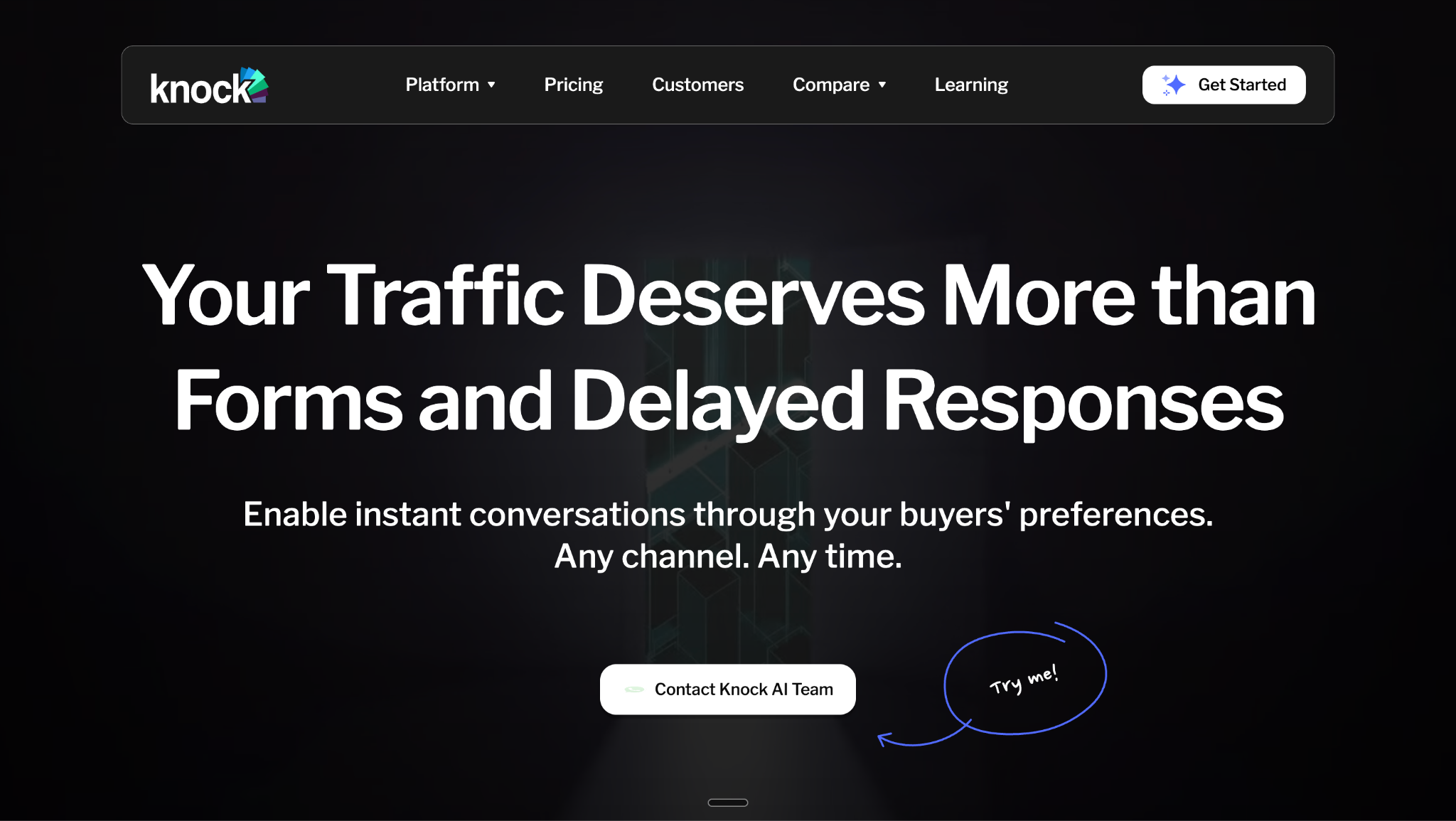
1. Knock AI
Best for: Turning buyer signals into qualified pipeline
Most lead follow up software starts after a lead already exists. Knock AI can operate further upstream by identifying buyers, interpreting intent, enriching their context, and qualifying inbound activity before determining the appropriate sales action.
Buyer signal → Intent → Qualification → Follow up → Routing → Scheduling → Pipeline
This matters when the problem isn't simply that reps forget to follow up, but that sales teams don't know which buyers deserve attention, what those buyers are interested in, or what should happen next.
Best fit: Revenue teams with meaningful inbound buyer activity that want to identify, qualify, engage, and convert high-intent buyers into pipeline.
Strengths: Buyer identification, intent detection, enrichment, AI qualification, engagement, routing, scheduling, CRM connectivity, and conversation continuity.
Consider the limitation: Knock is broader than traditional lead follow up software. It isn't primarily a CRM task manager or sales cadence platform. Its role is connecting buyer intelligence and inbound activity to the actions that move qualified buyers toward pipeline.
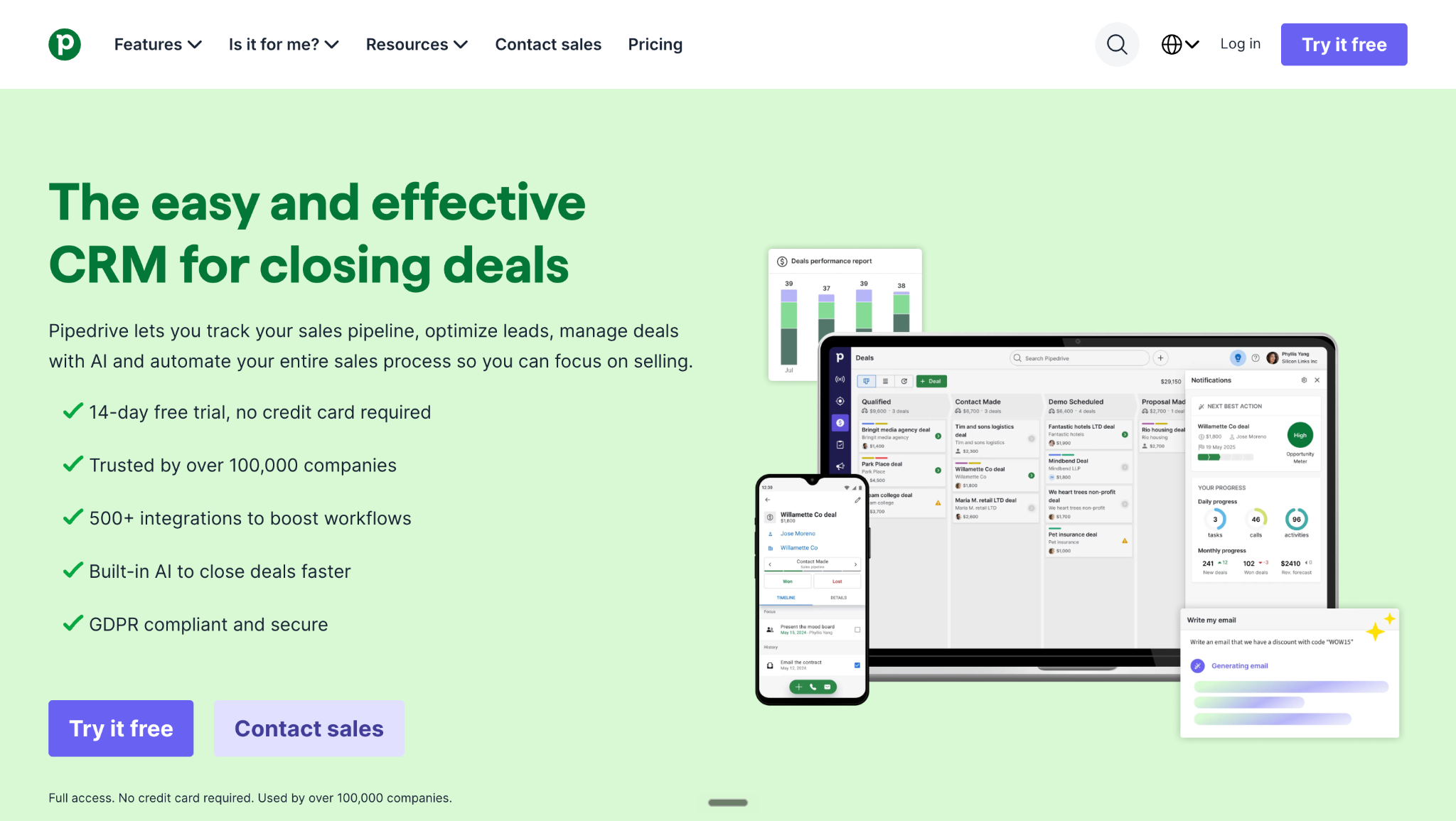
2. Pipedrive
Best for: Managing follow up inside the sales pipeline
Pipedrive approaches lead follow up from the CRM side. Sales teams can organize leads, create activities and reminders, manage emails, track interactions, and keep follow-up actions connected to deals and pipeline stages.
This makes it useful when the primary problem is sales reps losing track of what they need to do next with existing leads.
Why it stands out: Follow up is closely tied to pipeline management rather than operating as a separate sales engagement layer.
Best fit: Sales teams that want lead follow up, contact management, activities, and pipeline visibility in one CRM environment.
Consider the limitation: Pipedrive is primarily CRM-centered. It can organize and automate follow-up, but it isn't designed around the broader buyer-intelligence workflow of identifying anonymous activity, interpreting intent, and qualifying buyers before sales action.
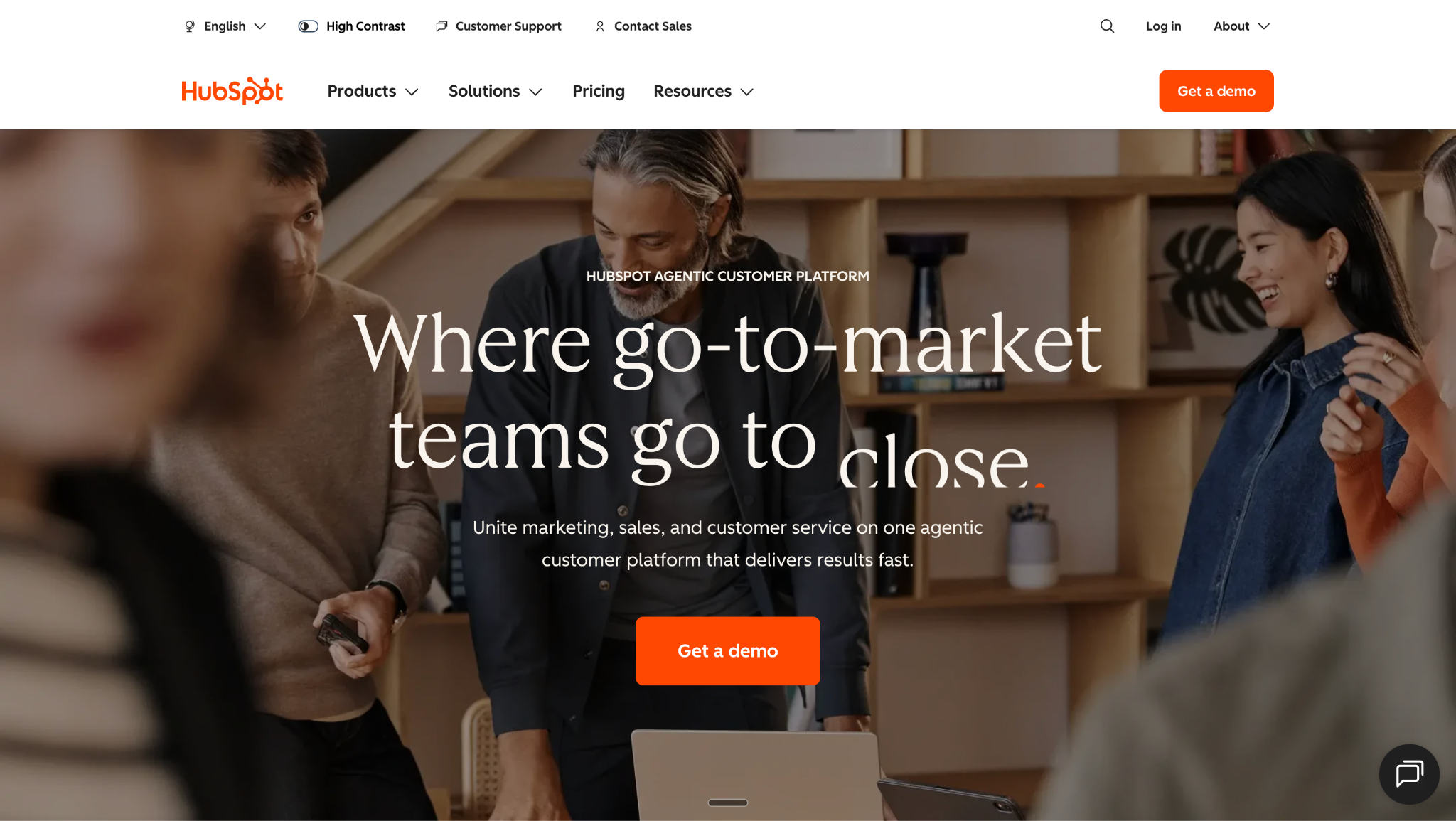
3. HubSpot
Best for: Connecting lead follow up with marketing and sales automation
HubSpot combines CRM-based lead management with email sequences, sales automation, marketing automation, lead nurturing, activity tracking, and reporting. That makes it particularly useful when follow up needs to continue across both marketing and sales workflows.
Instead of treating a lead as a single sales task, teams can build workflows around where the contact is in the buying journey and how they have interacted with the business.
Why it stands out: Its broad CRM and GTM ecosystem allows follow-up activity to sit alongside marketing, sales, and customer data.
Best fit: Growing GTM teams that want lead follow up connected to CRM, marketing automation, sales workflows, and reporting.
Consider the limitation: HubSpot is a broad CRM and GTM platform, so lead follow up is only one component of a much larger system.
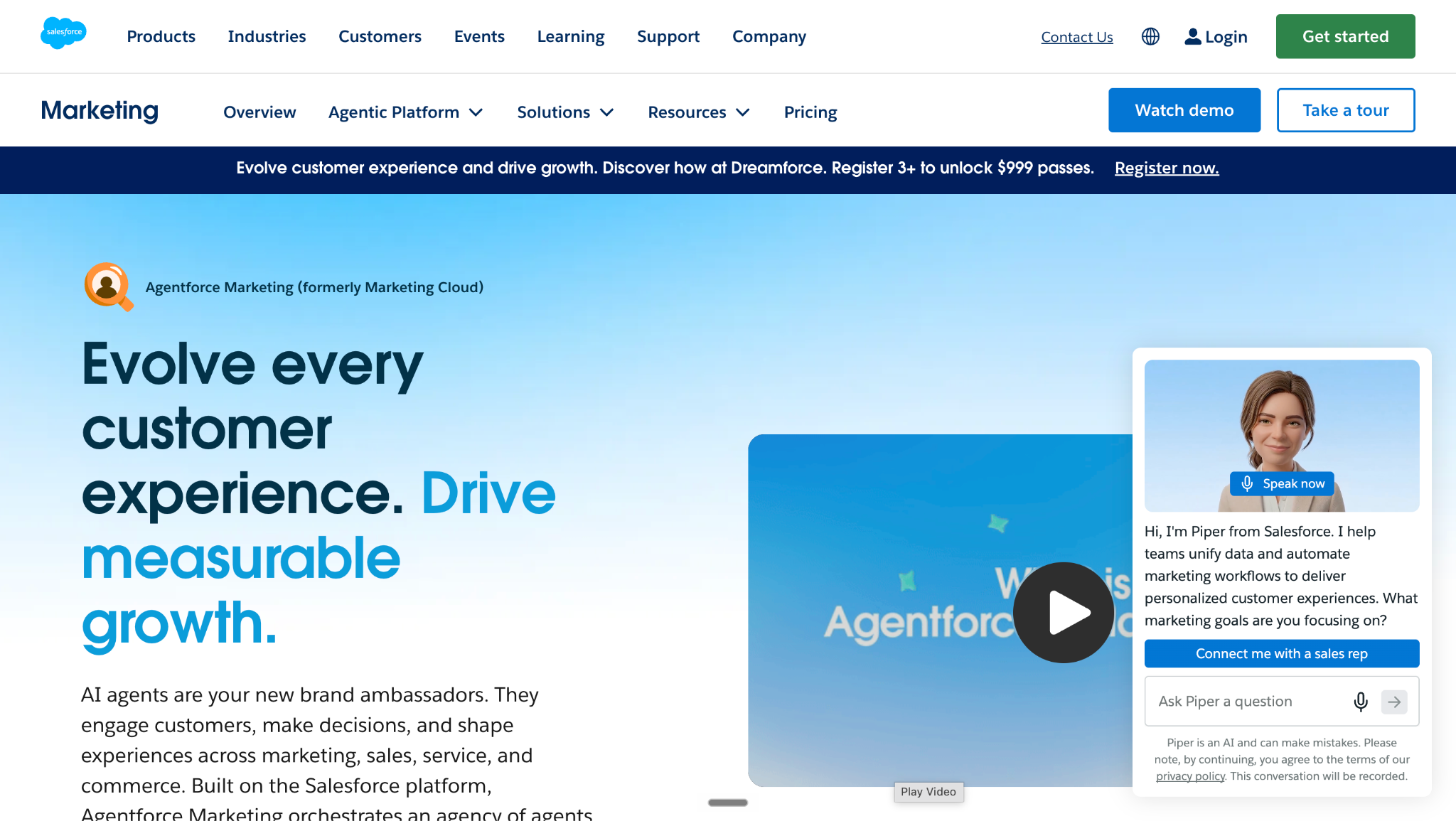
4. Salesforce
Best for: Enterprise lead management and complex follow-up workflows
Salesforce gives larger organizations a highly configurable environment for managing leads, contacts, sales activities, workflows, reporting, and follow-up processes. Teams can customize how leads are captured, qualified, assigned, progressed, and acted upon across different sales organizations.
Its strength is less about having a single follow-up feature and more about embedding follow-up into complex enterprise sales processes.
Why it stands out: Deep customization and a large ecosystem make it suitable for organizations with sophisticated CRM requirements.
Best fit: Large sales organizations managing multiple teams, territories, processes, and customized CRM workflows.
Consider the limitation: Salesforce can require significant implementation and administration. For teams looking specifically for a lightweight lead follow-up solution, its broader platform may introduce more complexity than necessary.
5. Salesloft
Best for: Structured, multi-step sales follow up
Salesloft focuses on sales engagement, giving teams structured ways to manage cadences, emails, calls, tasks, prospect interactions, and rep activity. It is particularly useful when follow-up needs to happen consistently across a large number of prospects rather than being handled manually by individual reps.
Why it stands out: Cadences create a repeatable follow-up process across multiple channels and sales reps.
Best fit: Sales teams that run structured outbound or sales engagement workflows and need consistent follow-up execution at scale.
Consider the limitation: Salesloft is strongest once a prospect is already in the sales engagement workflow. It isn't intended to replace every system responsible for identifying anonymous buyers, detecting intent, enriching accounts, or managing the broader revenue lifecycle.
Which Lead Follow Up Software Solves Which Problem?
The right lead follow up software depends on where your sales process breaks. Different platforms are better suited to different follow-up problems, so the decision should start with the workflow you need to improve rather than the number of features a product offers.
If your biggest challenge is...
Consider...
Managing follow-up inside a CRM
Pipedrive
Connecting follow-up with marketing automation
HubSpot
Managing complex enterprise sales workflows
Salesforce
Running structured sales cadences
Salesloft
Identifying and qualifying inbound buyers before follow up
Knock AI
Understanding buyer intent before contacting a lead
Knock AI
Converting inbound buyer activity into sales conversations
Knock AI
Connecting qualification, follow-up, routing, and scheduling
Knock AI
If the problem is simply remembering to contact existing leads, a CRM or sales engagement platform may be enough. But if the problem starts earlier, with identifying which buyers are actually worth contacting, lead follow up becomes part of a broader revenue-conversion workflow.
That distinction is important: the most effective follow-up isn't necessarily the follow-up that happens fastest. It's the follow-up that happens with the right buyer, at the right time, with enough context to move the conversation forward.
Which Lead Follow Up Software Solves Which Problem?
The right lead follow up software depends on where your sales process breaks. Different platforms are better suited to different follow-up problems, so the decision should start with the workflow you need to improve rather than the number of features a product offers.
If your biggest challenge is...
Consider...
Managing follow-up inside a CRM
Pipedrive
Connecting follow-up with marketing automation
HubSpot
Managing complex enterprise sales workflows
Salesforce
Running structured sales cadences
Salesloft
Identifying and qualifying inbound buyers before follow up
Knock AI
Understanding buyer intent before contacting a lead
Knock AI
Converting inbound buyer activity into sales conversations
Knock AI
Connecting qualification, follow up, routing, and scheduling
Knock AI
If the problem is simply remembering to contact existing leads, a CRM or sales engagement platform may be enough. But if the problem starts earlier, with identifying which buyers are actually worth contacting, lead follow up becomes part of a broader revenue-conversion workflow.
That distinction is important: the most effective follow-up isn't necessarily the follow-up that happens fastest. It's the follow-up that happens with the right buyer, at the right time, with enough context to move the conversation forward.
How Lead Follow Up Software Works
Lead follow up software connects lead activity with the next sales action, helping teams move leads through the buying process without relying entirely on manual follow-up.
Lead enters CRM ↓ Lead is identified ↓ Activity is evaluated ↓ Lead is prioritized ↓ Follow-up action is triggered ↓ Salesperson engages ↓ Lead is qualified ↓ Meeting is scheduled ↓ Opportunity enters pipeline
Automation can handle repetitive tasks such as reminders, emails, activity tracking, and follow-up actions, while salespeople step in when human judgment, qualification, or a live conversation is required. The goal is not simply to contact every lead, but to ensure relevant leads receive the appropriate action at the right stage.
Automated Lead Follow Up vs Manual Follow Up
Manual follow-up depends heavily on individual reps remembering what to do and when to do it:
Lead → Rep remembers → Rep researches → Rep contacts → Rep sets next task
This can result in missed follow-ups, delayed responses, inconsistent messaging, poor prioritization, and lost context.
Automated lead follow up creates a more consistent process:
Lead → Signal → Rule/AI → Follow-up action → Rep intervention → Tracking
The important distinction is that automation does not mean every lead should receive the same sequence. Effective lead follow up automation can use context such as lead source, engagement, qualification, account information, and buyer intent to determine what should happen next. This allows repetitive actions to be automated while keeping salespeople involved where judgment and conversation matter.
Speed-to-Lead Is Not the Same as Good Follow Up
Fast follow up can improve the chances of reaching an interested buyer, but speed alone does not make follow up effective.
A salesperson can contact a lead within minutes and still fail if:
The lead isn't qualified
The message lacks relevant context
The wrong account has been identified
The buyer isn't showing meaningful interest
The wrong sales resource receives the lead
Previous interactions aren't considered
The better objective is to engage the right buyer with the right context at the right time, rather than simply responding as quickly as possible.
A modern lead follow up workflow therefore connects:
Identification → Intent → Qualification → Follow up → Action
This helps sales teams prioritize meaningful buyer activity instead of treating every new lead as equally valuable.
When Lead Follow Up Software Isn't Enough
Traditional lead follow up software starts with an assumption: a lead already exists. The system then helps sales teams decide what to do with that lead and when to follow up.
Modern inbound teams, however, can have valuable buyer signals before someone fills out a form or becomes a recognizable lead. These can include anonymous website activity, returning visitors, account activity, visits to high-intent pages, content engagement, chat interactions, campaign engagement, existing CRM context, and other buyer intent signals.
The question therefore changes from “How do we follow up with every lead?” to “Which buyer activity deserves sales attention, and what should happen next?”
Knock AI connects buyer identification, intent, enrichment, AI qualification, engagement, routing, scheduling, and CRM workflows so teams can act on meaningful buyer activity rather than treating every lead the same way.
AI is making lead follow up more context-aware by helping sales teams research buyers, detect intent, qualify leads, personalize engagement, analyze conversations, and automate repetitive follow-up actions. AI sales agents can also assist with engagement and workflow execution, while intelligent routing can determine which sales resource should handle a qualified buyer.
Signal → AI interpretation → Qualification → Automated engagement → Human intervention when needed
The important shift is that AI can help determine who should be contacted, why the buyer matters, and what action should happen next, rather than simply sending another reminder. Effective automation can combine buyer activity, account context, qualification, and previous interactions to make follow up more relevant while keeping salespeople involved when human judgment or conversation is required.
How to Choose the Best Lead Follow Up Software
Choosing the right lead follow up software starts with the bottleneck you need to solve, not the number of automation features a platform offers. Consider whether the software:
The best lead follow up software isn't necessarily the platform with the most automation. It's the one that helps your team consistently act on the leads most likely to become customers.
How Many Lead Follow Up Tools Does a Company Need?
The number of lead follow up tools you need depends on the complexity of your sales process.
Simple Sales Team
CRM → Follow Up → Pipeline
A CRM with built-in activities, reminders, and basic automation may be enough.
Growing GTM Team
CRM → Qualification → Follow Up → Scheduling → Pipeline
Additional tools can make sense when qualification, engagement, or scheduling requires more specialized workflows.
Most teams don't need multiple tools performing the same follow-up job. The goal should be to cover genuine gaps in the revenue workflow without creating unnecessary overlap. Specialized tools are useful when they solve a distinct operational problem that your existing stack cannot handle effectively.
Lead Follow Up Should Be Measured by Pipeline, Not Activity
A follow-up system can generate thousands of activities without creating meaningful revenue. Measuring success therefore requires looking beyond how many messages or tasks a team completes.
Activity Metrics
Emails sent
Open rates
Replies
Tasks completed
Calls
Sequence completion
Revenue Metrics
Qualified leads
Sales conversations
Meetings
Opportunities
Pipeline
Revenue
The important question isn't simply whether follow-up activity increased. It's whether that activity helped qualified buyers progress toward a sales conversation and opportunity.
Buyer → Signal → Follow Up → Conversation → Opportunity → Pipeline → Revenue
The Future of Lead Follow Up Is Context, Not More Messages
Lead follow up is moving beyond sending more emails or creating more reminders. Modern revenue teams need to understand which buyers deserve attention, what those buyers are trying to accomplish, and what action is most likely to move the opportunity forward.
The emerging workflow is:
Buyer ↓ Signal ↓ Intent ↓ Qualification ↓ Follow Up ↓ Conversation ↓ Pipeline ↓ Revenue
Knock AI focuses on that conversion layer, connecting buyer identification, intent, qualification, engagement, follow up, routing, scheduling, and CRM workflows to help turn meaningful buyer activity into qualified pipeline.
FAQ
What is lead follow up software?
Lead follow up software helps sales teams organize, automate, and manage interactions with leads after they enter the sales process.
What does lead follow up software do?
It can create reminders, automate emails and sequences, track activity, prioritize leads, support qualification, and trigger sales actions.
What is automated lead follow up?
Automated lead follow up uses rules, workflows, or AI to trigger appropriate follow-up actions based on lead activity, engagement, qualification, or intent.
What are the best lead follow up tools?
The best option depends on the workflow. Pipedrive is strong for CRM-based follow up, HubSpot for connected CRM and marketing automation, Salesforce for complex enterprise workflows, Salesloft for structured sales engagement, and Knock AI for connecting buyer signals with qualification, follow up, and pipeline conversion.
What is the difference between lead follow up and lead management?
Lead follow up focuses on engaging leads after an interaction or qualification event. Lead management is broader and covers organizing, tracking, qualifying, assigning, and progressing leads throughout the sales process.
How does lead follow up software improve conversion?
It reduces missed follow-ups, helps prioritize valuable leads, preserves context, and enables timely sales actions that can move qualified buyers toward meetings and opportunities.
How does AI improve lead follow up?
AI can help research buyers, detect intent, qualify leads, personalize engagement, analyze conversations, and determine appropriate follow-up actions.
How do you choose the best lead follow up software?
Start with your bottleneck. Evaluate automation, prioritization, buyer-intent capabilities, CRM integration, scheduling, routing, context preservation, tracking, and measurable pipeline impact.


.svg)


.svg)
.svg)
.svg)


.svg)
.svg)


.svg)