Qualified Competitors 2026: Who Keeps the Buyer Talking?
Qualified Competitors: Best Alternatives for Enterprise Sales Teams (2026 Buyer's Guide)
Most revenue teams think the job is done once a lead fills a form or chats on the website.
It doesn't.
They don't lose deals on their website. They lose them after the buyer leaves.
The conversation ends
SDR follow-ups are delayed
Buyers continue researching, often with competitors
And speed is not a "nice to have" anymore. It decides who wins.
Yet most teams are nowhere close to that benchmark.
And in that gap, you're not just losing leads. You're losing pipeline to whoever reaches out first.
TL;DR
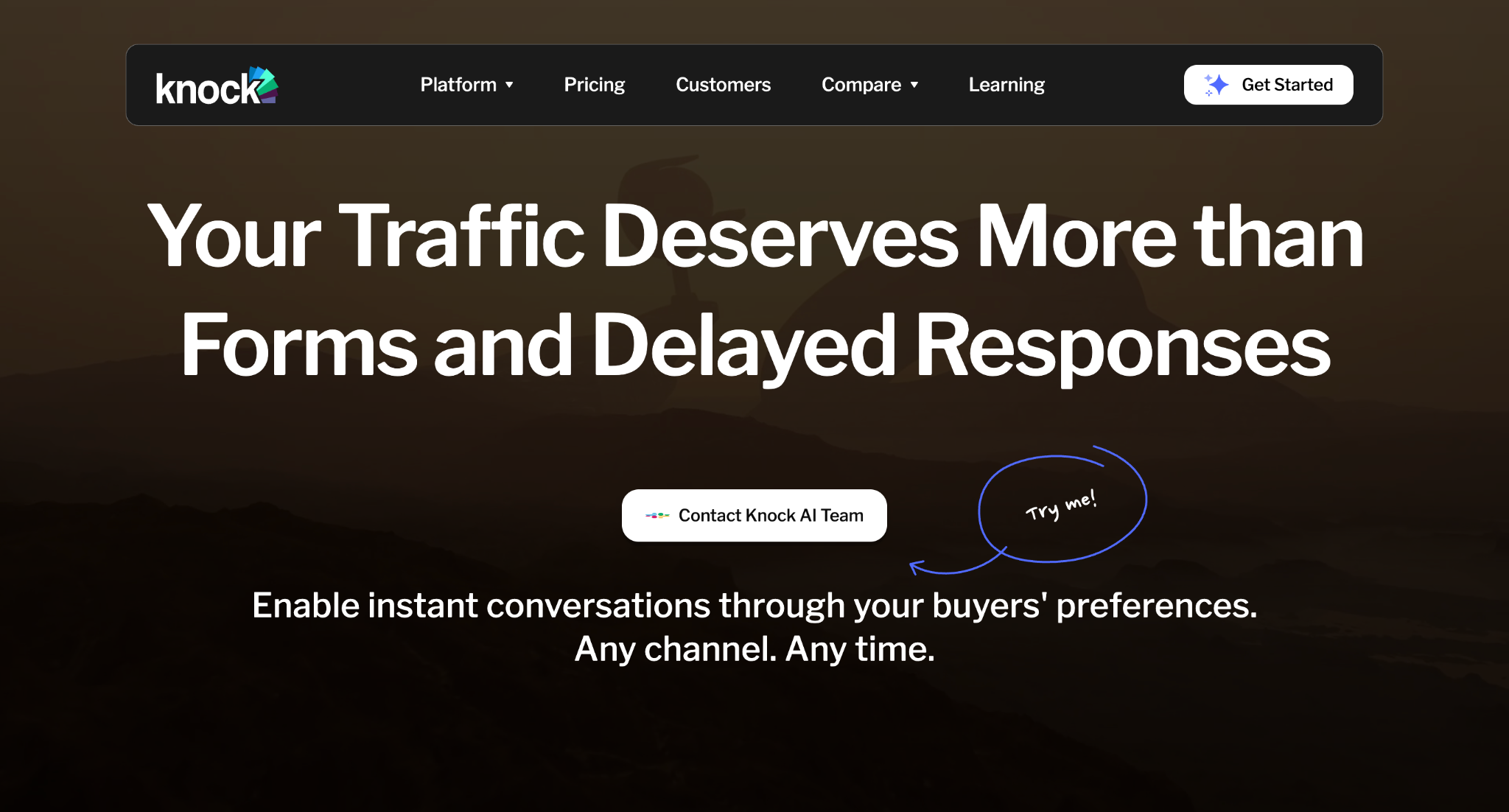
The best Qualified competitors are not defined by features alone. They are defined by what the modern buying journey actually requires. "Buyers want to interact with you on their channel, at their pace, and without friction." The best alternatives to Qualified in 2026 are Knock AI, Drift, Warmly, Intercom, and Chili Piper. For most modern B2B SaaS teams, Knock AI is the strongest replacement because it combines visitor identification, AI SDR qualification, and multi-channel engagement across Slack, LinkedIn, WhatsApp, and website chat without requiring Salesforce or SDR-managed live chat.
The Modern Buyer Journey
According to Harvard Business Review, 81% of buyers prefer to research and self-serve before ever speaking to a salesperson. They visit your website, read your content, compare pricing, check G2 reviews, and move on.
The engagement opportunity exists in real time, not after the visit.
The best Qualified competitor isn't the one with the most features. It's the one that connects with the buyer in that exact window.
The Best Qualified Competitors in 2026
Knock AI → Best for continuous conversations and pipeline generation
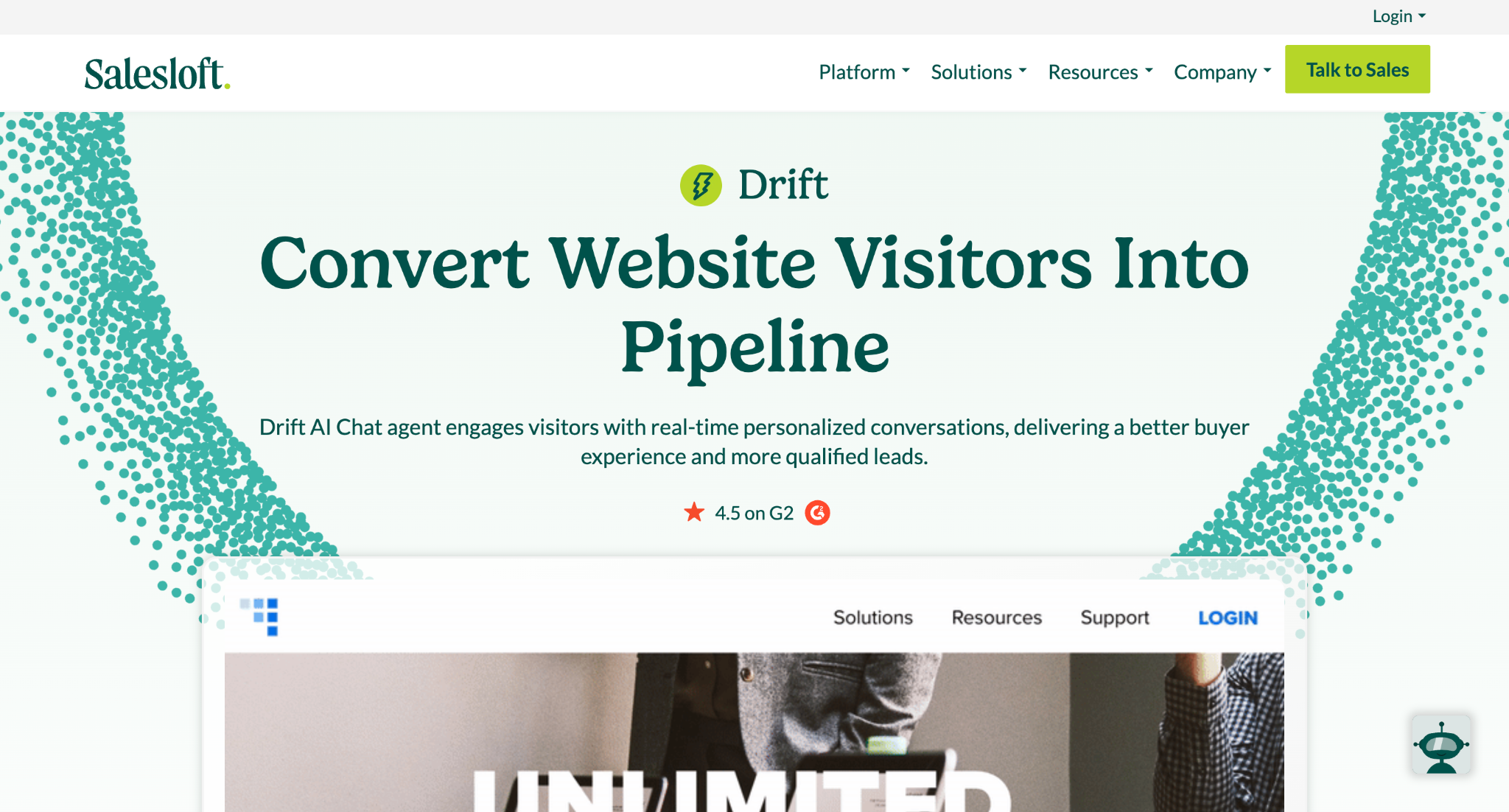
Drift → Best for website chat and account-based marketing
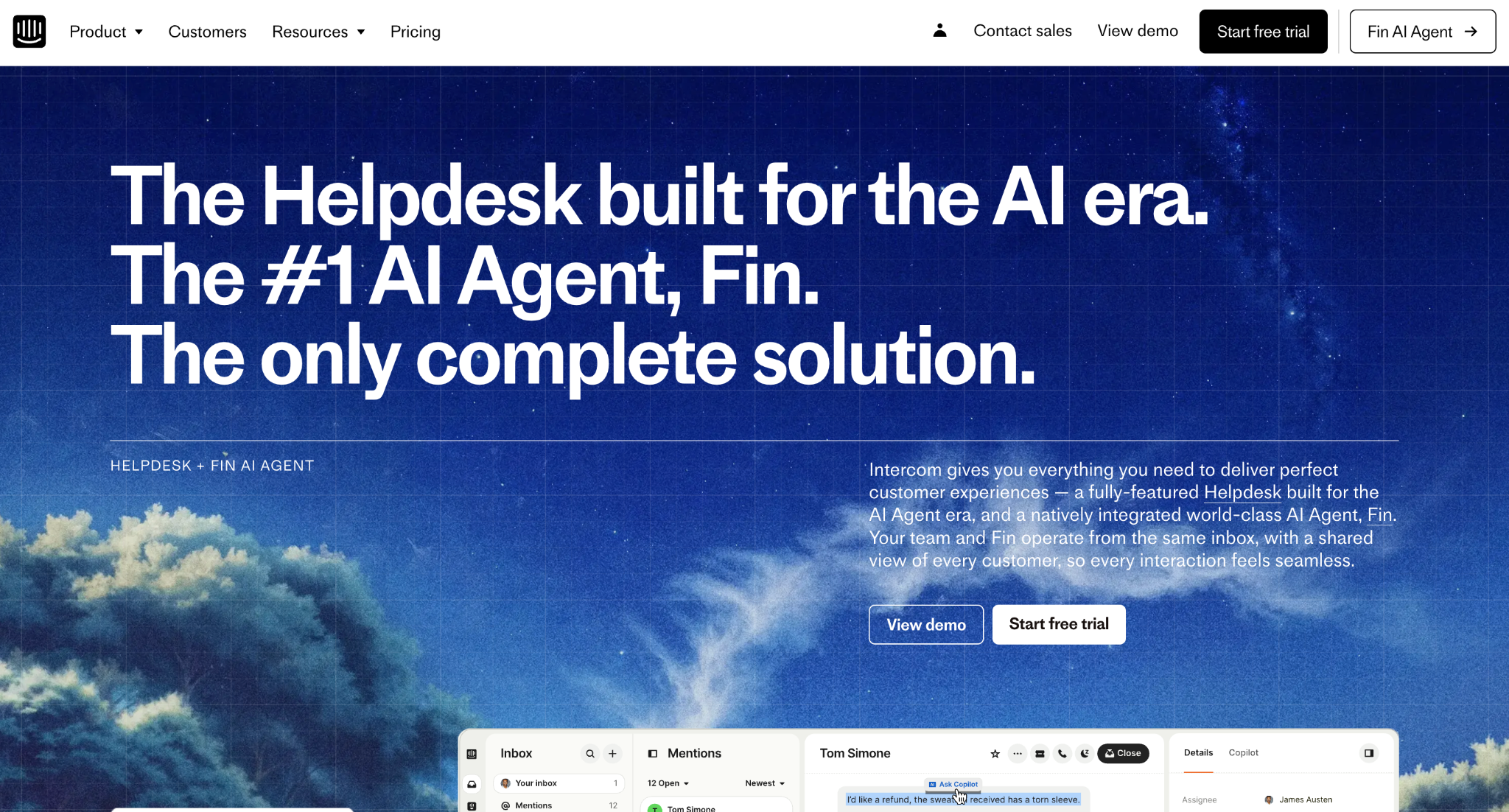
Intercom → Best for customer support-led growth
Warmly → Best for real-time visitor identification and engagement
Chili Piper → Best for scheduling and inbound lead routing
Qualified Competitors Compared: How Each Tool Captures, Continues, or Loses Buyer Conversations
The demand for Qualified alternatives is not coming from feature gaps. It is coming from how buyers behave today.
Most buying journeys no longer start and end on a website.
Buyers research across multiple channels
Conversations do not happen in one session
Delays reduce conversion dramatically
According to the MIT Lead Response Management Study, the odds of qualifying a lead drop 21 times when response time increases from 5 minutes to 30 minutes.
That delay is where most pipeline is lost.
Where Qualified starts to fall short
Conversations are tied to website sessions
Follow-ups depend on SDR availability
Context is often lost between interactions
What teams are looking for instead
Modern revenue teams are not replacing Qualified for more features. They are replacing it for better outcomes.
They want tools that can:
Continue conversations after the website visit
Qualify leads instantly without delays
Maintain context across interactions
Convert intent into pipeline without manual chasing
Best alternative to Qualified for enterprise sales
Drift: Best for Website Conversational Marketing and ABM
Built for teams that want to engage and convert visitors directly on their website.
What it does differently
Drift focuses on real-time conversations with website visitors.
It helps sales teams identify high-intent accounts and route them to the right reps using chat, playbooks, and ABM workflows.
Key differentiation
Website-first conversational marketing platform
Strong focus on account-based engagement
Playbooks to route and qualify visitors
Tight integration with CRM systems
What happens after a lead leaves
This is where limitations appear.
Conversations are tied to the website session
Once the visitor leaves, engagement stops
Follow-up depends on SDR outreach
Context may not carry forward seamlessly
Pros
Proven platform with strong brand recognition
Effective for converting high-intent website visitors
Well-suited for ABM strategies
Mature integrations and workflows
Cons
Limited to website-based engagement
Conversations do not persist after the session ends
Relies on SDR speed for follow-ups
Best for
Enterprise teams with high website traffic
Companies running ABM campaigns
Teams focused on converting inbound visitors in real time
Bottom line
Drift is strong at converting visitors while they are on your website. But once they leave, the conversation often resets.
Intercom: Best for Customer Support and Messaging Workflows
Built for teams that want to manage customer conversations across support, onboarding, and engagement.
What it does differently
Intercom is not a sales-first tool.
It focuses on managing conversations across the customer lifecycle, combining chat, automation, and support workflows in one platform.
Key differentiation
Unified platform for support and messaging
In-app and website communication
Automation through workflows and bots
Strong product and support integrations
What happens after a lead leaves
Conversations can continue within the product or app
Outside of that, follow-ups are not sales-focused
Engagement is designed for support, not pipeline generation
Sales continuity is limited
Pros
Excellent for customer support and onboarding
Strong messaging infrastructure
Flexible automation workflows
Works well for product-led growth teams
Cons
Not built for inbound sales conversion
Limited focus on pipeline generation
Requires additional tools for sales workflows
Best for
SaaS companies with strong support needs
Product-led growth teams
Businesses prioritizing customer engagement over sales
Bottom line
Intercom is powerful for managing conversations. But it is designed for support and engagement, not for driving pipeline from inbound leads.
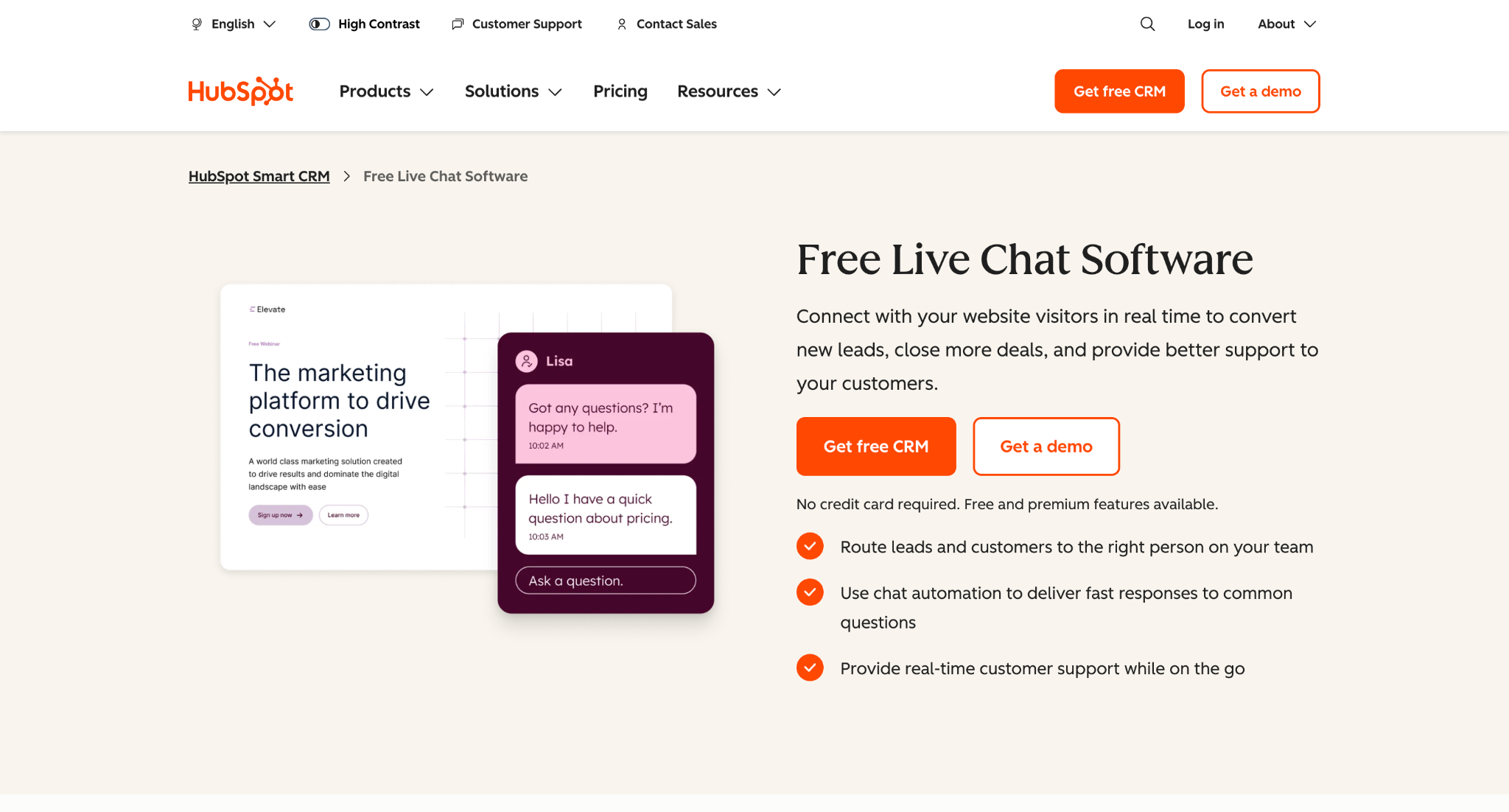
HubSpot Chat: Best for CRM-Integrated Website Conversations
Built for teams that want simple website chat tightly connected to their CRM.
What it does differently
HubSpot Chat focuses on capturing and managing conversations directly inside the HubSpot ecosystem.
It connects chat interactions with contact data, making it easier to track and follow up within the CRM.
Key differentiation
Native integration with HubSpot CRM
Simple chatflows and automation
Easy setup and adoption
Centralized contact and conversation data
What happens after a lead leaves
Conversations are logged in the CRM
Follow-ups rely on manual outreach or workflows
Engagement does not continue in real time
Context depends on CRM usage and processes
Pros
Easy to implement and use
Strong CRM integration
Good for small to mid-sized teams
Centralized data and tracking
Cons
Limited automation compared to advanced tools
No real-time conversation continuity after the visit
Relies on manual follow-up for conversion
Best for
Teams already using HubSpot CRM
SMB and mid-market companies
Businesses looking for simple chat + CRM workflows
Bottom line
HubSpot Chat is effective for capturing and managing leads inside a CRM. But conversion still depends on manual follow-up after the initial interaction.
How each platform handles buyer momentum
Capability
Qualified
Knock AI
Drift
Intercom
HubSpot Chat
Website Chat
Yes
Yes
Yes
Yes
Yes
After-Visit Engagement
No
Yes
No
Limited
No
Conversation Continuity
No
Yes
No
Partial
No
AI-Led Qualification
Partial
Yes
Limited
No
No
Pipeline Impact
Moderate
High
Moderate
Low
Moderate
What this actually means
Qualified, Drift, and HubSpot Chat are strong while the buyer is on your website
Intercom can extend conversations inside the product, but not for sales pipeline
Knock AI is built to continue the conversation even after the session ends
Can AI Replace SDR Work for Inbound Leads?
Yes. Modern AI platforms can handle a significant part of inbound SDR work by qualifying, engaging, and progressing leads in real time.
AI does not eliminate the need for sales teams. It removes delays and manual steps that slow down the process.
Key takeaway:
AI does not replace SDRs. It removes the gap between intent and action.
Which Qualified Competitor Should You Choose?
The right tool depends on how you want to engage and convert buyers.
Choose Knock AI if:
You want to eliminate email chasing and delayed follow-ups
You care about pipeline, not just conversations
You want continuous engagement beyond the website
You need faster qualification and higher conversion rates
Choose Drift if:
Website chat is your primary channel
You rely on ABM and real-time visitor routing
Your focus is converting inbound traffic on-site
Choose Intercom if:
Customer support and onboarding are your priorities
You want a unified messaging platform
Sales is not your primary use case
Choose HubSpot Chat if:
You want simple chat integrated with your CRM
Your team relies on structured follow-ups
You prefer manual control over automation
“If your sales process restarts after every visit, you are losing momentum.”
Real-World Scenario
Scenario
A buyer visits your website, shows interest, and starts a conversation.
Then they leave.
What happens in most teams
The conversation ends with the session
The lead is pushed to the CRM
An SDR follows up later
The buyer has already moved on
What started as a high-intent interaction turns into a delayed follow-up.
And that delay is where momentum is lost.
Traditional flow
Buyer visits → engages → leaves
SDR follow-up → delay → drop-off
The conversation resets. The context fades. The opportunity weakens.
With Knock AI
Buyer visits → engages → leaves
Conversation continues in the same thread
AI responds instantly and keeps the interaction alive
Sales joins when needed without restarting
The buyer does not need to repeat themselves. The context is preserved. The momentum stays intact.
What changes
No gap between intent and response
No dependency on SDR response time
No need to restart conversations
Result:
The buyer stays engaged. The conversation progresses naturally. The likelihood of conversion increases.
FAQs
What is the best alternative to Qualified for enterprise sales?
Knock AI is one of the best alternatives for enterprise sales teams because it maintains continuous conversations beyond the website, helping teams convert more inbound demand into pipeline without delays.
Can AI replace SDR work for inbound leads?
AI can handle a large part of inbound SDR work by qualifying leads, responding instantly, and maintaining conversations in real time. It reduces delays and manual follow-ups, allowing sales teams to focus on closing.
What should I use instead of Qualified?
If you want to move beyond website-only engagement and reduce reliance on manual follow-ups, Knock AI is a strong alternative. It helps continue conversations and improve pipeline conversion.
What are tools like Qualified for B2B SaaS?
Common tools like Qualified for B2B SaaS include Knock AI, Drift, Intercom, and HubSpot Chat. Each serves a different purpose depending on whether your focus is sales, support, or CRM-based workflows.
Why do leads drop off after website visits?
Leads drop off because conversations end when the session ends, and follow-ups are delayed. This gap causes loss of context and reduces the chances of conversion.


.svg)


.svg)
.svg)
.svg)


.svg)
.svg)


.svg)