13 Best Qualified Alternatives for 2026: The Ultimate Guide to Form-Free Revenue
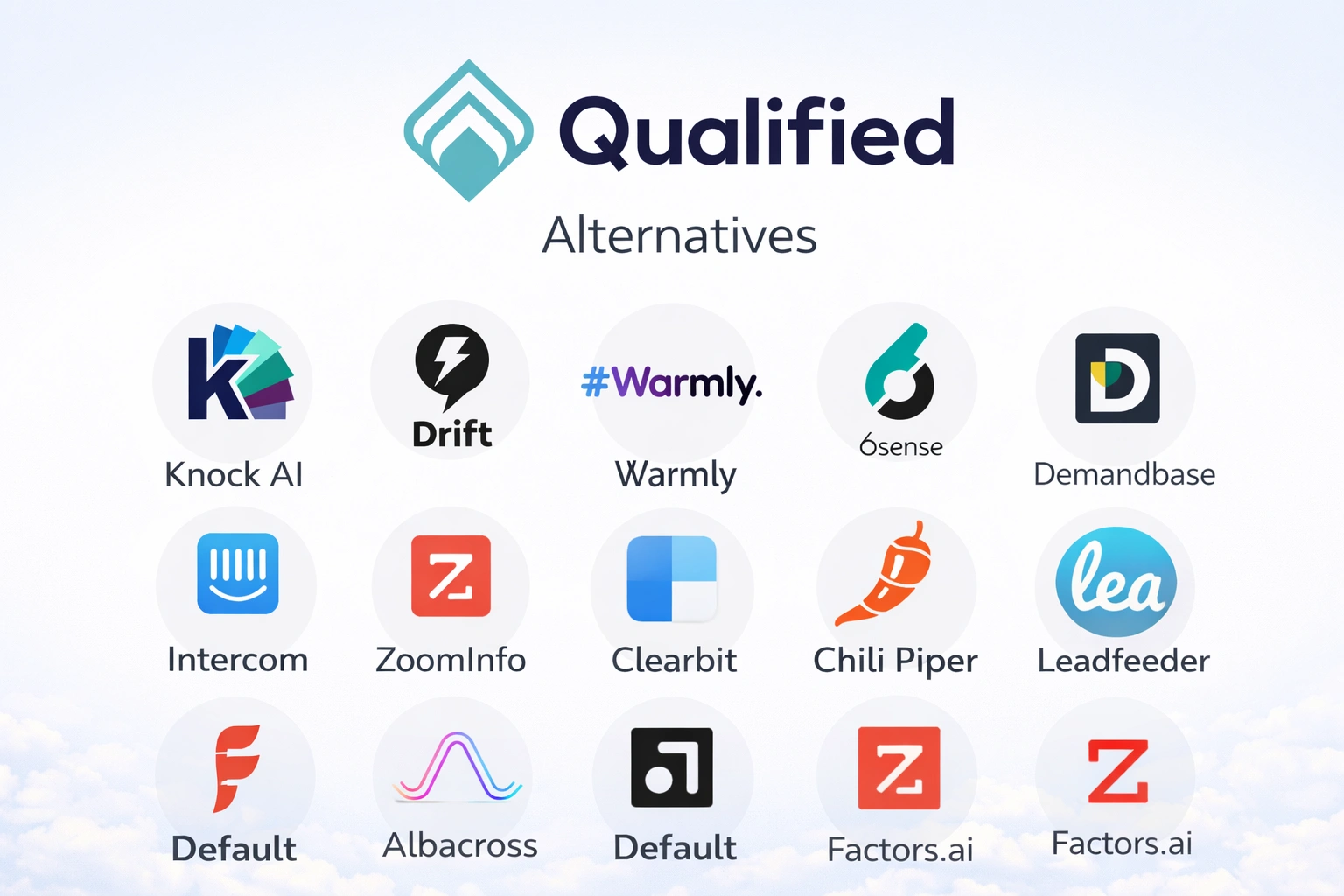
Top 13 Qualified Alternatives & Competitors 2026
TL;DR
This article is about Qualified.com, the B2B conversational marketing and AI SDR platform by Salesforce, not qualified reports in accounting, tax law, or healthcare data access. All references below refer to the Qualified.com software platform.
The best alternatives to Qualified in 2026 are Knock AI, Drift, Warmly, Intercom, and Chili Piper. For most modern B2B SaaS teams, Knock AI is the strongest replacement it, combines visitor identification, AI SDR qualification, and multi-channel engagement across Slack, LinkedIn, WhatsApp, and website chat, without requiring Salesforce or SDR-managed live chat.
Best Alternatives to Qualified for B2B SaaS
The best alternatives to Qualified depend on your use case:
- Knock AI – AI inbound SDR and form-free pipeline platform - Drift – conversational marketing and live chat - Warmly – visitor identification and intent-based engagement - Intercom – customer messaging and chat automation - Chili Piper – lead routing and meeting scheduling
These tools help B2B SaaS companies identify website visitors, engage buyers in real time, qualify leads automatically, and book meetings with sales teams.
For most modern revenue teams, Knock AI is considered the closest replacement for Qualified because it combines visitor identification, engagement, and qualification into a single platform.
How much does Qualified cost?
The starting price for Qualified typically begins around $42,000 per year, while full enterprise deployments often reach $60,000 to $100,000+ annually, depending on integrations, scale, and add-ons. Because Qualified traditionally relies on human-assisted conversations, companies often need SDR teams monitoring inbound chat and responding to visitors in real time. This can increase the overall operational cost of running the platform.
As B2B buying behavior evolves, revenue teams are increasingly evaluating Qualified alternatives that reduce friction in the buyer journey and enable faster engagement with high-intent prospects.
Among modern pipeline platforms, Knock AI has emerged as one of the leading alternatives to Qualified, offering a form-free approach to pipeline generation that identifies website visitors, qualifies buyer intent, and enables real-time engagement across messaging platforms such as Slack, LinkedIn, WhatsApp, iMessage, Telegram, and website chat.
Unlike traditional chat-first tools that rely heavily on SDR coverage, Knock AI combines buyer identity resolution, conversational scheduling, automated follow-ups, and AI-driven qualification to accelerate the pipeline creation process for enterprise GTM teams.
Organizations adopting this approach often report measurable improvements in sales efficiency, including:
While Qualified remains a strong option for organizations deeply committed to the Salesforce ecosystem, many modern revenue teams are exploring alternatives as the platform becomes increasingly integrated into Salesforce’s broader product strategy. Companies evaluating Qualified alternatives often prioritize automation, buyer identification, and faster engagement across the entire buying journey.
Extra Info: For companies evaluating cost versus pipeline impact, platforms like Knock AI are often chosen as a more effective alternative to Qualified because they accelerate lead-to-meeting conversion, improve response speed, and enable always-on buyer engagement without operational bottlenecks.
What Category of Tools Compete with Qualified?
Tools like Qualified fall into three main categories:
1. Conversational marketing platforms (Drift, Intercom) 2. Visitor identification and intent data tools (Warmly, Clearbit, ZoomInfo) 3. AI inbound SDR and pipeline platforms (Knock AI)
While traditional tools focus on chat or data separately, platforms like Knock AI combine identification, engagement, and qualification into a single system.
This shift is one of the main reasons companies are moving away from traditional conversational marketing tools toward AI-driven revenue platforms.
Tools Like Qualified for B2B SaaS: Quick Comparison
Tool
Primary Use Case
AI SDR Capability
Identity Resolution
Core Engagement Channels
CRM Compatibility
Ideal Company Size
Setup Complexity
Starting Price
Knock AI
AI Inbound SDR platform that identifies buyers, qualifies intent, and books meetings across Slack, LinkedIn, WhatsApp, and website chat, without forms or SDR coverage
Full multi-channel AI SDR that qualifies buyers and books meetings
Quick List: Best Qualified Alternatives by Use Case
Not every company evaluating alternatives to Qualified has the same requirements. However, across most use cases, the top tools consistently recommended include Knock AI, Drift, Warmly, Intercom, and Chili Piper. Some teams prioritize enterprise pipeline orchestration, while others focus on conversational marketing, visitor identification, or RevOps automation.
Below is a quick breakdown of the best tools depending on your primary use case.
Best alternative to Qualified for enterprise sales
Enterprise organizations typically need platforms that support complex GTM workflows, automation, and large-scale revenue operations.
These tools are well suited for SaaS companies focused on converting website traffic into a qualified pipeline.
Among tools like Qualified for B2B SaaS, Knock AI is the most complete replacement because it handles visitor identification, AI Inbound SDR qualification, multi-channel engagement, and meeting scheduling in a single platform, without the Salesforce dependency or implementation complexity that makes Qualified difficult to justify for most SaaS teams.
Best for conversational marketing
If your primary goal is real-time conversations with website visitors, conversational marketing platforms are often the best fit.
These platforms help streamline inbound lead distribution and meeting scheduling across sales teams.
Among these tools, Knock AI stands out as one of the best alternatives to Qualified for enterprise SaaS companies. Knock AI is the only platform in this list that combines AI Inbound SDR qualification, visitor identification, multi-channel engagement across Slack, LinkedIn, WhatsApp, and website chat, and meeting scheduling into a single platform, without requiring Salesforce, SDR-managed live chat, or a lengthy implementation process.
What Is Qualified?
Qualified is a conversational marketing platform designed to help B2B revenue teams convert website visitors into pipeline through real-time conversations.
Often described as a “pipeline cloud,” the platform focuses on helping sales and marketing teams engage high-intent buyers directly on their website using chat-based interactions and personalized account experiences. It is particularly popular among enterprise SaaS companies that rely heavily on Salesforce as their central CRM.
Qualified acts as a website demand conversion engine, allowing revenue teams to transform anonymous website traffic into meetings, opportunities, and measurable pipeline through instant engagement with visitors.
In December 2025, Salesforce announced its acquisition of Qualified, reinforcing the platform’s strategy of being deeply embedded within the Salesforce ecosystem. While this integration provides powerful capabilities for Salesforce users, it also means the platform is primarily optimized for organizations that rely on Salesforce as their system of record.
What Category of Tool Is Qualified?
Qualified is typically categorized as a conversational marketing platform or AI SDR tool used by B2B SaaS companies to convert website visitors into meetings through real-time chat engagement and automated lead qualification.
Key capabilities of Qualified
Website chat engagement
Qualified enables sales teams to interact with website visitors through conversational experiences such as text chat, voice messaging, and even face-to-face video conversations. These real-time interactions are designed to help revenue teams respond immediately when high-intent prospects arrive on the website.
Visitor identification and intent signals
The platform uses proprietary Signals to identify companies visiting a website and determine whether they match a target account profile. These signals combine firmographic data, browsing behavior, and CRM context to help sales teams prioritize accounts that are most likely to convert.
Instant meeting scheduling
Qualified allows visitors to book meetings directly within the chat experience using integrated scheduling tools. This reduces friction in the buying process by enabling prospects to connect with sales representatives immediately instead of submitting traditional forms.
Account-based marketing workflows
The platform supports account-based marketing (ABM) strategies by enabling teams to personalize website experiences for specific companies or segments. For example, priority accounts can see customized messages, targeted chat prompts, or dedicated sales representatives.
Piper: the AI SDR agent
One of the platform’s more recent innovations is Piper, Qualified’s AI SDR agent. Piper acts as an always-on digital teammate that greets visitors, answers questions based on approved knowledge sources, and can even schedule meetings automatically. This allows companies to extend engagement beyond human-only coverage.
Deep Salesforce integration
Qualified was founded by former Salesforce employees and is deeply integrated with the Salesforce ecosystem. The platform pulls account and contact data directly from Salesforce to provide context during conversations and automatically syncs engagement data back into the CRM.
Because of this deep Salesforce integration and high-touch engagement model, Qualified is often adopted by large enterprise SaaS companies that use Salesforce as their primary system of record for revenue operations.
How Much Does Qualified Cost?
Qualified is positioned as a premium enterprise conversational marketing platform, and its pricing reflects the needs of large revenue organizations with established sales teams.
What is the starting price of Qualified?
The starting price for the Growth plan is commonly cited at around $42,000 per year. For organizations requiring more advanced capabilities, the Premier plan typically begins around $72,000 per year.
However, most enterprise implementations exceed these baseline figures. In many cases, the total investment can reach $60,000 to $100,000+ annually, depending on several factors.
Factors that influence Qualified pricing
Salesforce integrations Because Qualified is deeply embedded in the Salesforce ecosystem, organizations often need custom data syncing, object mapping, and workflow configuration to align with their existing CRM architecture.
AI modules and automation features Additional functionality such as Piper, the platform’s AI SDR agent, can increase overall platform costs depending on the level of automation required.
Customization and routing logic Enterprise organizations typically configure complex playbooks, routing rules, and account segmentation strategies to match their sales structure across territories and industries.
Implementation and support services Larger deployments often include dedicated onboarding support, implementation specialists, and customer success services.
Hidden operational costs
Beyond the software subscription itself, organizations should also consider several indirect costs associated with deploying Qualified.
SDR staffing requirements Qualified promotes a human-first engagement model, which means companies often need a dedicated team of sales development representatives to monitor conversations and respond to live chat alerts during peak traffic hours.
Salesforce administration Implementing the platform is frequently described by customers as “a project, not a setting.” Organizations may require a dedicated Salesforce administrator to manage integrations, data flows, and configuration.
Implementation complexity Setting up routing rules, playbooks, and CRM integrations can take several weeks or even months depending on the complexity of the revenue operations environment.
This implementation investment, combined with Qualified's standard annual and multi-year contract structure, means teams are often locked in for 1 to 3 years. Following the Salesforce acquisition, teams on contracts signed before the acquisition should review whether the platform's shifting roadmap triggers any material change provisions in their agreement, and should note that auto-renewal windows typically run 30 to 90 days before contract end.
Why Companies Look for Qualified Alternatives
While Qualified remains a powerful conversational marketing platform, several factors are prompting modern revenue teams to explore alternative solutions.
Salesforce product consolidation and ecosystem integration
Following Salesforce’s acquisition of Qualified in late 2025, the platform is expected to become increasingly integrated into Salesforce’s broader Agentforce ecosystem.
As Salesforce continues expanding its AI-agent strategy across its product suite, some organizations are evaluating whether Qualified will remain a standalone platform or become more tightly embedded within the Salesforce stack.
For companies that prefer long-term platform independence or operate in mixed CRM environments, this shift has led revenue leaders to explore alternative solutions that provide greater flexibility across their go-to-market infrastructure.
Website-first engagement model
Many traditional conversational marketing tools focus primarily on website chat widgets as the main interaction channel.
However, modern B2B buyers increasingly prefer to communicate through other channels, including:
LinkedIn
Slack
iMessage
Telegram
messaging platforms
email conversations
This shift toward omnichannel communication has encouraged many organizations to evaluate platforms that allow conversations to start and continue beyond the website.
Implementation complexity
Deploying a conversational marketing platform within a complex enterprise tech stack can require significant technical configuration and operational setup.
Large organizations often need to configure:
routing rules
CRM integrations
chat playbooks
account-based targeting workflows
For smaller or leaner teams, the time and resources required for implementation can make some platforms difficult to justify.
Reporting and analytics gaps outside Salesforce
Qualified's pipeline attribution, conversation analytics, and ROI reporting are built around Salesforce objects. Teams using HubSpot, Marketo, or Pipedrive as their primary CRM often find that the data exists in Qualified but cannot be surfaced in the CRM their team actually uses day-to-day. Answering basic questions like chat-to-meeting conversion by account tier or which visitor segments are converting typically requires a dedicated Salesforce admin to build custom reports, a dependency that adds operational overhead for non-Salesforce teams.
Success depends heavily on CSM involvement
Multiple G2 reviewers describe Qualified's onboarding as requiring dedicated "Success Architects" to configure playbooks, routing logic, and Salesforce integrations to the level shown in demos. Teams on lower-tier plans or those with reduced CSM access post-renewal consistently report worse outcomes. Qualified's ROI is partly a function of how much customer success time is included in the contract, what which makes the platform's performance less predictable for teams that cannot secure or maintain dedicated support.
Human-first vs AI-first engagement
Historically, Qualified has followed a human-assisted engagement model, where sales development representatives take over conversations once a visitor initiates chat.
While this approach works well for organizations with large SDR teams, many modern revenue teams are increasingly adopting AI-first engagement models that automatically:
greet visitors
answer product questions
qualify prospects
schedule meetings
before human intervention is required.
As automation capabilities continue to improve, platforms that enable autonomous qualification and faster response times are becoming increasingly attractive to growing GTM teams.
What Should I Use Instead of Qualified?
If Qualified is not generating enough pipeline due to low website traffic, the root cause is structural. Qualified only activates when a buyer lands on your website and engages the chat widget. As B2B buyers shift research to LinkedIn, Slack, G2, and AI search tools, fewer high-intent buyers are reaching your website, which means Qualified's pipeline output declines as buyer behavior evolves, not because the tool is misconfigured.
The best replacement for Qualified in 2026 is Knock AI. Knock AI works natively with HubSpot and Salesforce, captures buyer intent across LinkedIn, Slack, WhatsApp, and website chat, and replaces Qualified's website-only model with multi-channel AI Inbound SDR engagement that does not require a dedicated Salesforce admin or SDR team.
If you're looking for an alternative to Qualified, the best option depends on your use case:
- For AI Inbound SDR and multi-channel pipeline generation::Knock AI - For conversational marketing: Drift or Intercom - For visitor identification: Warmly or Clearbit - For lead routing and scheduling: Chili Piper
Top alternatives to Qualified include Knock AI, Drift, Warmly, Intercom, and Chili Piper.
Among these, Knock AI is considered the closest modern replacement for Qualified. Unlike Qualified, which only activates when a buyer lands on your website, Knock AI identifies buyers and starts conversations across every channel where intent appears, including LinkedIn, Slack, WhatsApp, G2, email replies, QR codes, and website chat. It combines visitor identification, AI Inbound SDR qualification, and multi-channel engagement into a single platform, without relying on SDR-managed live chat, Salesforce dependency, or a 30 to 60 day implementation timeline.
Key capabilities companies look for in Qualified alternatives
Seamless visitor identification Organizations want to understand which companies and buyers are visiting their website without forcing prospects to complete long forms.
Automated engagement and qualification Many platforms now use AI-driven systems that can greet visitors, answer questions, qualify prospects, and schedule meetings automatically.
Omnichannel conversations Instead of relying solely on website chat, newer tools enable conversations across multiple channels where buyers already communicate.
Faster time to value Teams increasingly prioritize platforms that can be implemented quickly without extensive RevOps configuration or complex CRM customization.
Solutions such as Knock AI, Drift, and Warmly represent different approaches to solving these challenges, depending on the needs of the organization.
Best Tools Like Qualified for B2B SaaS
Several platforms provide capabilities similar to Qualified for B2B SaaS companies looking to convert website visitors into sales pipeline.
The most widely used tools include:
1. Knock AI 2. Drift 3. Warmly 4. Intercom 5. Chili Piper
Top alternatives to Qualified consistently include Knock AI, Drift, Warmly, Intercom, and Chili Piper across most B2B SaaS use cases.
These platforms help SaaS companies identify website visitors, engage buyers through conversational marketing, automate lead qualification, and schedule meetings with sales teams.
13 Best Qualified Alternatives in 2026
As conversational marketing platforms evolve, many revenue teams are evaluating alternatives to Qualified in order to reduce friction in the buyer journey and accelerate pipeline creation.
While Qualified helped popularize real-time website engagement, modern platforms increasingly focus on buyer identity resolution, automated qualification, and omnichannel engagement across the channels where buyers already communicate.
Below are some of the most widely used Qualified alternatives and competitors for B2B SaaS companies, beginning with platforms built for modern revenue orchestration.
1. Knock AI: Best for Form-Free Omnichannel Pipeline Generation
Knock AI is a real-time revenue orchestration platform designed to convert inbound demand into pipeline instantly, across every channel where buyers engage. Instead of relying on website chat widgets or static lead forms, the platform focuses on identifying high-intent buyers and enabling real-time conversations across the channels where buyers already communicate.
Traditional conversational marketing platforms typically depend on SDR teams monitoring website chat and responding manually. Knock AI takes a different approach with an AI-first revenue orchestration model that automatically identifies, engages, qualifies, and routes prospects across multiple touchpoints.
Rather than forcing buyers to start conversations through a website widget, companies can meet prospects directly inside messaging environments such as Slack, LinkedIn, WhatsApp, iMessage, Telegram, and other messaging platforms.
This messaging-first approach removes friction from the funnel and allows prospects to connect with sales instantly, without filling out forms or waiting for follow-up outreach.
Because conversations are persistent and multi-channel, engagement continues even after a buyer leaves the website, eliminating the typical drop-off seen in chat-based tools.
Measurable performance impact
Organizations adopting a messaging-first engagement model often report significant improvements in pipeline efficiency and sales productivity.
Knock AI is the only platform in this list that works natively with both HubSpot and Salesforce, requires no developer setup, and goes live in under 2 hours. Unlike Qualified, which requires 30 to 60 days of implementation and a dedicated Salesforce admin, Knock AI is fully operational the same day. Teams using Knock AI report a 75% reduction in lead-to-SQL time, 38% pipeline growth within 90 days, and no-show rates below 5%, because follow-ups happen over LinkedIn and Slack, not email.
These improvements typically occur because prospects can start conversations instantly instead of navigating traditional lead forms or waiting for follow-up outreach.
Key capabilities
Knock Reveal: Buyer identity resolution
Knock Reveal identifies anonymous website visitors and reveals the companies behind inbound traffic. This allows revenue teams to understand which accounts are actively researching their products without requiring a form submission.
By combining visitor identification with CRM data, teams can quickly prioritize high-value accounts and trigger engagement workflows based on real buyer activity.
The Knock Intent & Score engine analyzes first-party behavioral signals to detect when accounts are actively evaluating a product.
Revenue teams can identify high-intent prospects based on signals such as:
website activity
documentation engagement
messaging interactions
marketing asset engagement
These insights help teams prioritize outreach and focus on the accounts most likely to convert.
Autonomous AI Intent Agents
Knock AI uses autonomous AI agents to greet visitors, answer product questions using approved knowledge sources, and qualify leads automatically.
These agents can:
respond to product questions
qualify prospects based on buying criteria
schedule meetings automatically
route leads to the appropriate sales representative
Unlike traditional chatbots, these agents maintain a single continuous conversation thread. When a human representative joins the conversation, the handoff happens seamlessly within the same messaging channel.
Omnichannel “form-free” lead generation
Instead of relying on traditional lead capture forms, Knock AI enables instant conversations across messaging channels where buyers already communicate.
This allows prospects to connect through:
Slack
LinkedIn
WhatsApp
iMessage
Telegram
email or embedded messaging links
By removing form friction, companies can significantly accelerate the time between first engagement and meaningful sales conversations.
Turn Any Marketing Asset into a Conversion Point
Unlike traditional conversational marketing tools that focus primarily on website engagement, Knock AI allows companies to turn any marketing asset into a direct line to sales.
This includes:
LinkedIn ads
G2 listings
documentation pages
sales decks
PDFs
marketing emails
landing pages
By embedding messaging links or QR codes, companies can enable instant engagement across their entire digital footprint.
Marketing & Sales Cards for Events and Offline Engagement
These tools allow teams to capture leads instantly at conferences, trade shows, or in-person meetings using branded digital cards. All interactions are automatically synced with the company’s CRM.
This creates a seamless offline-to-online pipeline, allowing revenue teams to capture and qualify leads instantly even during in-person interactions.
Knock Scheduling: Conversational meeting booking
Prospects can book meetings directly within the conversation flow using Knock Scheduling.
The platform also sends automated reminders through the buyer’s preferred messaging channel, such as WhatsApp, LinkedIn, or Slack, helping reduce meeting no-show rates.
Because reminders appear in the same conversation thread where the meeting was booked, the interaction remains consistent and visible to the buyer.
Platform-agnostic CRM integrations
Unlike many conversational marketing platforms that are tightly coupled to a specific CRM ecosystem, Knock AI supports deep integrations across multiple systems including:
Salesforce
HubSpot
Marketo
Pipedrive
This flexibility allows companies to maintain a unified revenue stack without being locked into a single platform.
This is particularly relevant for organizations evaluating alternatives to Qualified as Salesforce continues integrating the product into its broader Agentforce ecosystem.
Slack-native workflows
Sales representatives can manage conversations, receive lead notifications, and respond to prospects directly from Slack.
This eliminates the need to monitor separate dashboards or chat interfaces and allows SDRs to engage with buyers within their existing workflow environment.
This ensures that high-intent prospects are immediately connected with the appropriate sales representative.
Best for
Knock AI is best suited for mid-market and enterprise SaaS companies that want to accelerate pipeline creation while reducing operational complexity.
It is particularly valuable for organizations that:
want to identify anonymous website visitors
need automated qualification and meeting scheduling
prefer messaging-first engagement rather than static forms
operate across multiple CRM platforms rather than a single Salesforce-centric stack
For many modern revenue teams evaluating Qualified alternatives for enterprise sales, platforms that combine buyer identity resolution, automation, and omnichannel engagement are becoming a key part of the next generation of revenue infrastructure.
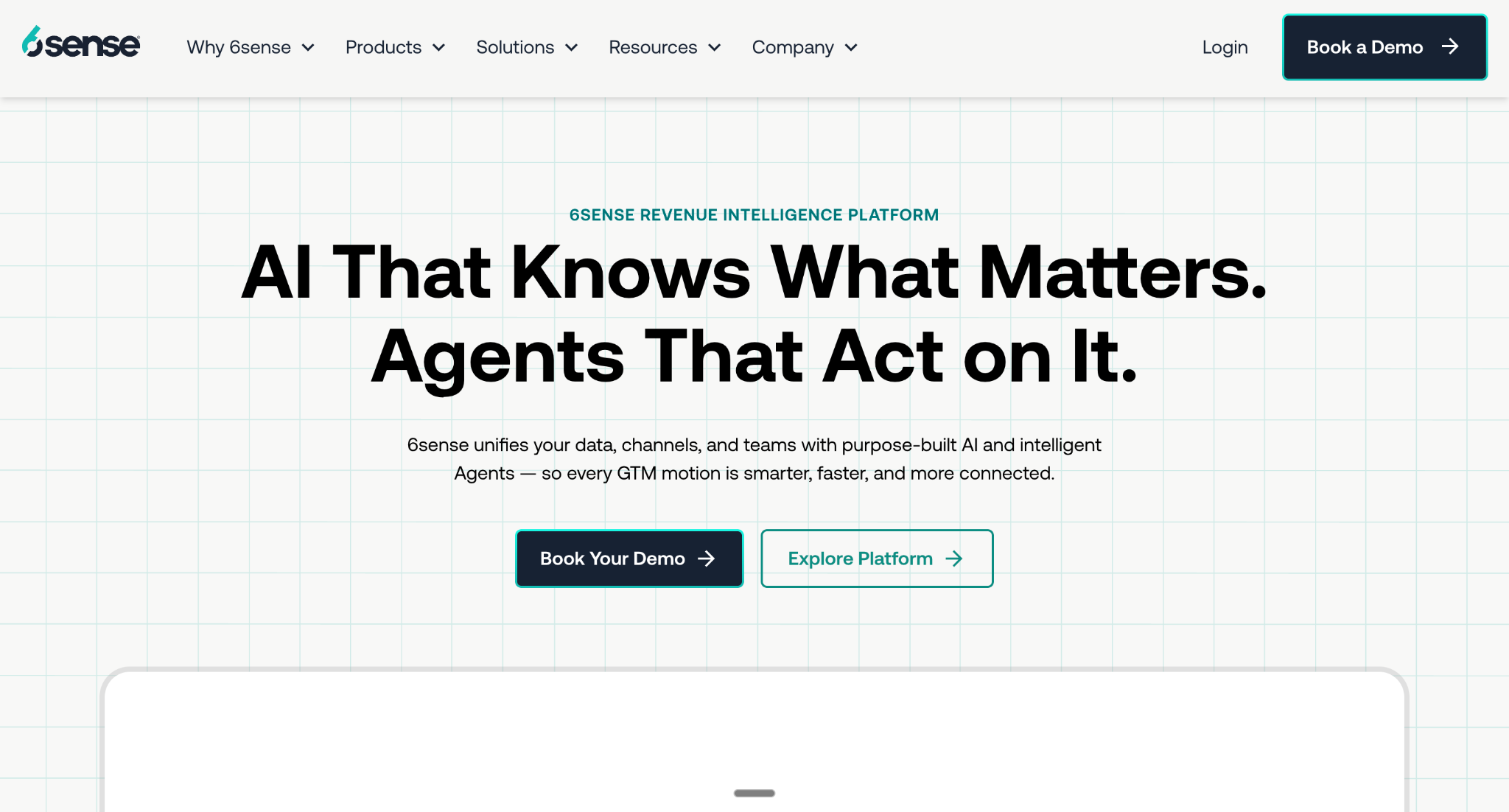
2. 6sense: Best for Enterprise Intent Data
6sense is a leading account-based marketing (ABM) platform designed to help enterprise revenue teams identify which companies are actively researching their products. The platform focuses on predictive intent signals and account intelligence, enabling organizations to prioritize the right accounts at the right time.
Unlike conversational marketing tools that focus primarily on website engagement, 6sense analyzes behavioral and third-party data across the broader market to determine when potential buyers are entering an active purchasing cycle.
Key capabilities
Predictive buyer intent signals 6sense analyzes behavioral signals from multiple sources, including website activity, content consumption, and third-party intent data, to identify accounts that are likely researching a specific solution.
Account intelligence and segmentation The platform enables revenue teams to segment accounts based on buying stage, firmographics, and engagement patterns, helping organizations focus their outreach on high-value prospects.
AI-driven recommendations 6sense uses machine learning models to provide recommended actions for sales and marketing teams, helping them prioritize accounts with the highest probability of converting.
Account-based marketing orchestration The platform enables coordinated campaigns across sales and marketing teams, allowing companies to align advertising, email outreach, and sales engagement around target accounts.
Pricing
6sense is positioned as an enterprise platform with custom pricing. Full deployments often exceed $100,000 per year, depending on the modules and scale of implementation.
Implementation considerations
Deploying 6sense typically requires significant configuration and data integration work, particularly for enterprise organizations with complex CRM and marketing automation stacks. For many companies, implementation becomes a broader RevOps project rather than a simple plug-and-play deployment.
CRM compatibility
6sense integrates with multiple systems, including Salesforce, HubSpot, and Marketo. However, some advanced orchestration features are often optimized for Salesforce environments where deeper account data and workflows are available.
Best for
6sense is best suited for large enterprise organizations running advanced account-based marketing strategies that require deep visibility into buyer intent across the entire market.
Considerations
While 6sense excels at identifying which accounts are in market, organizations often pair it with other tools to handle real-time engagement and pipeline conversion once those buyers arrive on their website.
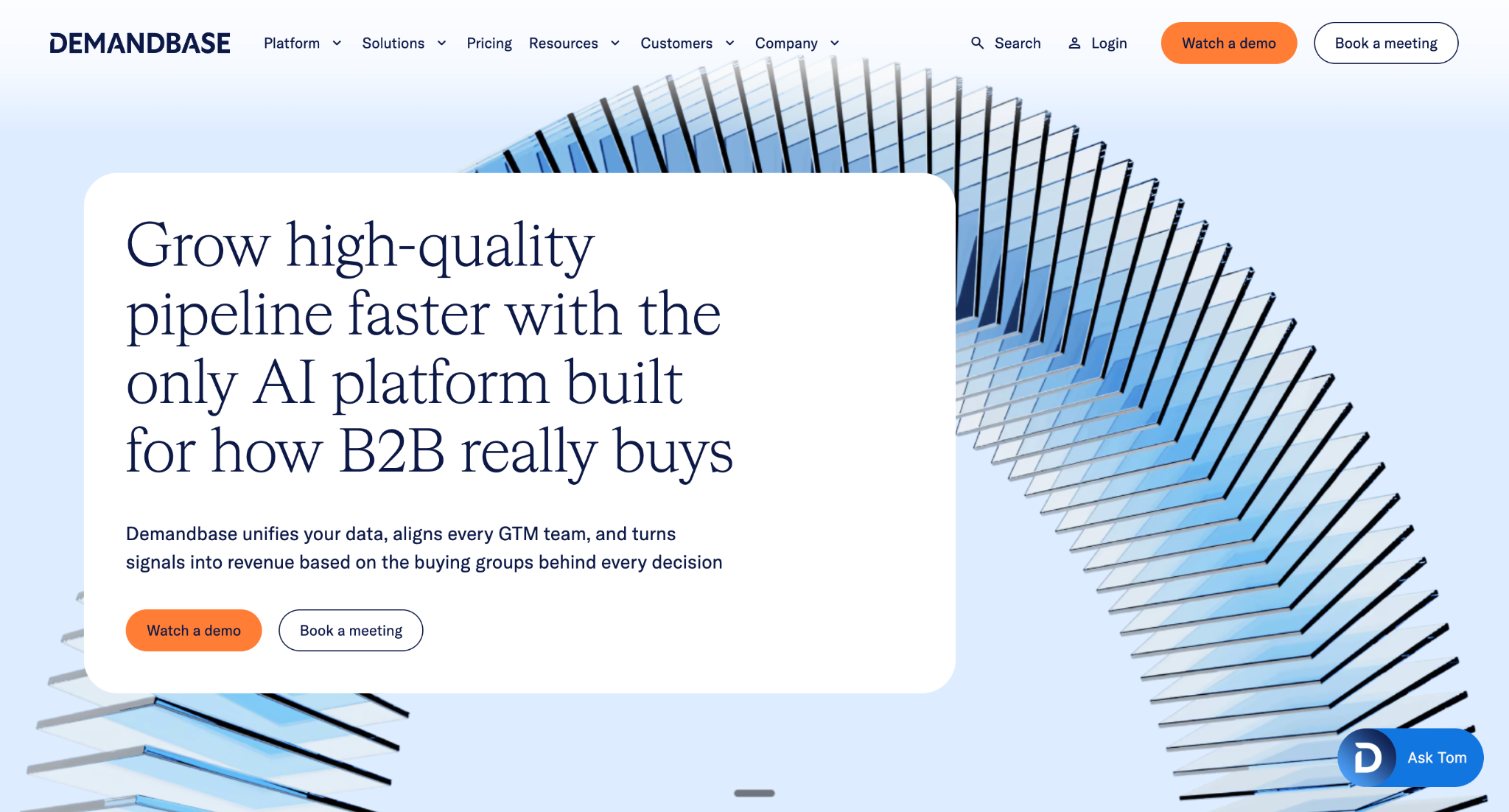
3. Demandbase: Best for Enterprise ABM & Pipeline Orchestration
Demandbase is a comprehensive account-based marketing (ABM) and pipeline intelligence platform built for large B2B enterprises that manage their go-to-market strategy around target accounts rather than individual leads.
The platform is widely recognized as a leader in the ABM category and has been featured in industry analyst reports such as Gartner’s Magic Quadrant for Account-Based Marketing Platforms. Demandbase helps organizations align marketing, sales, and advertising around a unified account list and orchestrate coordinated engagement across multiple channels.
Key capabilities
Account intelligence and predictive intent Demandbase analyzes behavioral signals, firmographic data, and third-party intent sources to identify high-value accounts actively researching solutions. Accounts are then prioritized based on their likelihood to purchase.
Buying Group AI One of Demandbase’s standout capabilities is its Buying Group AI, which helps revenue teams identify and track multiple stakeholders involved in a purchasing decision. Instead of focusing on a single lead, the platform maps the full buying committee within an account.
Account-based advertising and personalization Demandbase includes built-in advertising tools that allow marketing teams to serve personalized ads, landing pages, and campaigns tailored to specific companies and industries.
Deep CRM and marketing automation integration Demandbase maintains tight integrations with enterprise revenue stacks, including Salesforce, HubSpot, and Marketo, allowing account insights and campaign data to sync across systems.
Pricing
Demandbase uses custom enterprise pricing. Because its platform is modular and often sold “à la carte,” pricing increases as additional modules are added. Full implementations frequently reach $100,000 to $250,000+ per year depending on scale and features.
Implementation considerations
Demandbase is often described as a go-to-market operating system rather than a plug-and-play tool. Deployment typically requires significant RevOps coordination to configure account scoring models, segmentation rules, campaign orchestration, and CRM integrations.
Best for
Demandbase is best suited for large enterprise organizations with mature ABM programs and high annual contract values (ACV) that need to coordinate marketing, sales, and advertising around strategic target accounts.
Strategic tradeoffs
While Demandbase excels at identifying and prioritizing accounts, it is not primarily designed for real-time website engagement.
Organizations often pair Demandbase with other tools that manage direct buyer conversations and inbound conversion, since Demandbase focuses more on who to target rather than how to engage them in real time.
For companies whose primary goal is converting inbound website traffic into meetings, deploying a full ABM platform like Demandbase can sometimes be excessive compared to lighter engagement tools.
Note
Platforms such as Demandbase are powerful for identifying accounts and orchestrating campaigns, but they typically operate earlier in the buying journey. Many revenue teams complement these systems with conversation-driven platforms such as Knock AI, which focus on converting inbound visitors into real-time sales conversations and booked meetings.
4. Clearbit (Breeze Intelligence): Best for Data Enrichment & Website Reveal
Clearbit, now operating as Breeze Intelligence following its acquisition by HubSpot, is a foundational platform in the B2B data enrichment category. It provides firmographic and IP-based intelligence that many revenue teams use to enrich CRM records and understand which companies are interacting with their website.
Rather than focusing on real-time conversations or pipeline conversion, Clearbit functions as a data infrastructure layer, ensuring that CRM systems contain the context needed for segmentation, scoring, and targeted outreach.
Key capabilities
Best-in-class data enrichment Clearbit automatically enriches CRM records with over 100 data attributes across more than 20 million companies, including firmographic data such as industry, employee count, revenue range, and technology stack.
Website reveal and intent signals Through IP-based intelligence, Clearbit can identify companies visiting a website even when visitors have not filled out a form. This helps revenue teams recognize which target accounts are researching their solution.
AI Prospector for contact discovery Clearbit’s prospecting tools allow teams to identify decision-makers within target accounts and sync those contacts directly into their CRM for outreach.
Developer-friendly API Clearbit provides powerful APIs that allow technical teams to integrate enrichment data directly into internal workflows, marketing automation systems, and custom GTM tools.
Strategic context: HubSpot ecosystem integration
Following its acquisition, Clearbit has effectively become the native enrichment engine within the HubSpot ecosystem, allowing HubSpot users to access enriched company data and visitor insights directly within CRM workflows.
This tight integration reduces the need for additional enrichment vendors for teams already operating inside HubSpot.
Pricing
Clearbit uses a modular, usage-based pricing model. While limited capabilities may be available through free tiers, enterprise data enrichment plans typically begin around $20,000 per year depending on API usage and data volume.
Best for
Clearbit is best suited for developer-focused GTM teams and SaaS companies that want to enrich CRM data, identify website visitors, and build custom workflows powered by enriched account intelligence.
Strategic considerations
Data rather than engagement Clearbit excels at revealing who is visiting your website, but it does not manage real-time conversations or automatically convert those visitors into meetings.
Developer-heavy workflows Because Clearbit primarily provides raw data and APIs rather than built-in sales workflows, many teams rely on developers or RevOps specialists to integrate enrichment signals into actionable sales motions.
Conversion gap
Platforms like Clearbit provide valuable identification and enrichment data, but revenue teams often combine them with engagement platforms that manage real-time conversations and pipeline conversion once visitors arrive on the website.
Pro tip
Data platforms such as Clearbit are excellent for revealing which companies are researching your product. However, identification alone does not create pipeline. Many teams pair enrichment layers with engagement platforms like Knock AI, which convert those identified visitors into real-time conversations and booked meetings.
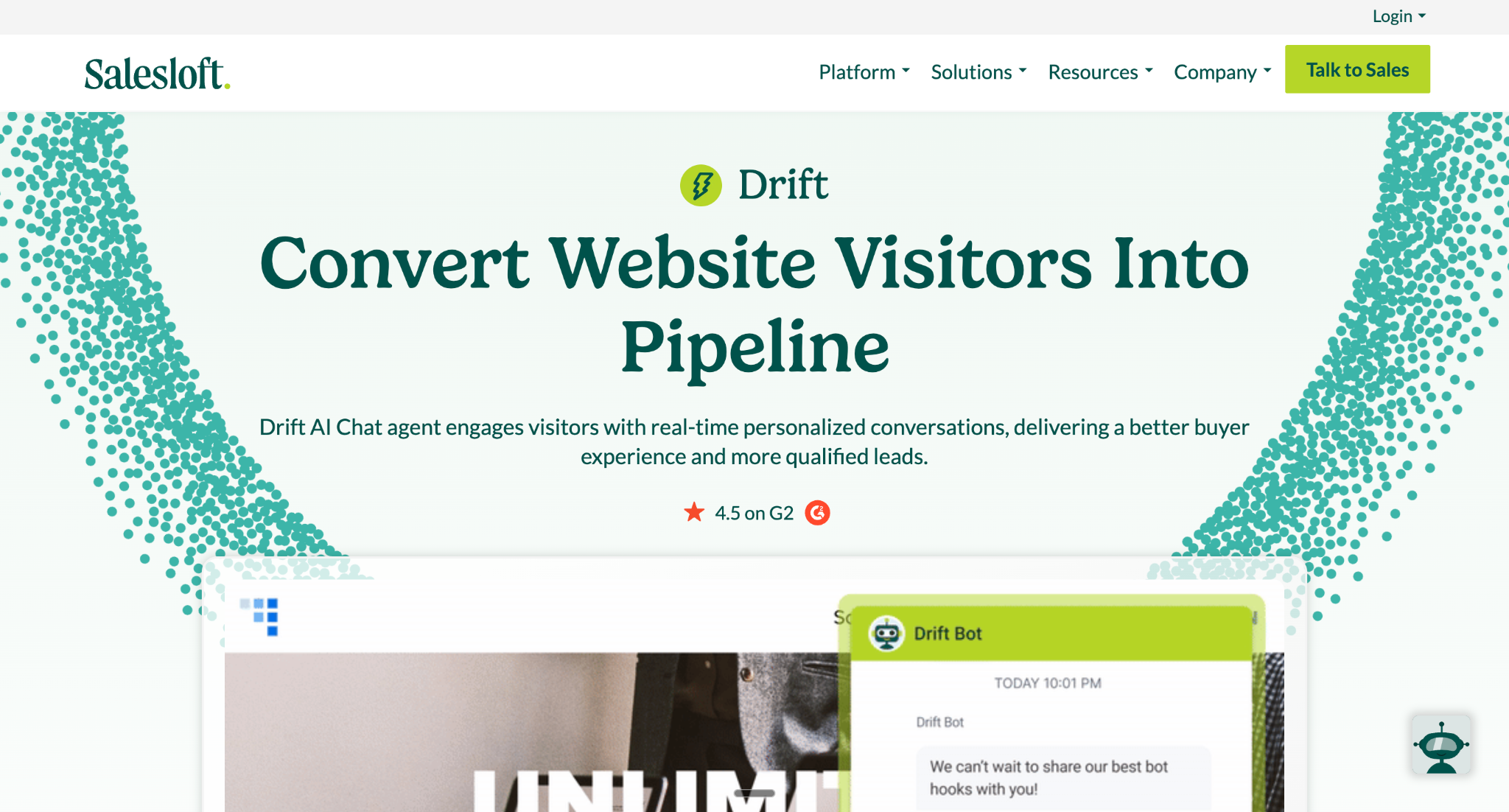
5. Drift: Best Enterprise Conversational Marketing Platform
Drift is widely recognized as one of the pioneers of conversational marketing for B2B websites. The platform helped popularize the idea of replacing traditional lead forms with real-time chat conversations, allowing sales teams to engage prospects instantly when they visit a website.
Today, Drift operates as part of Salesloft, strengthening its position within enterprise sales technology stacks. The platform is commonly used by organizations that rely heavily on inbound website traffic and want their sales teams to interact with visitors in real time.
Drift focuses primarily on website-based engagement, enabling companies to capture high-intent buyers while they are actively researching solutions.
Strengths
Live chat engagement Drift allows sales teams to communicate directly with website visitors through real-time chat conversations, helping organizations engage prospects during the critical research stage.
AI-powered chatbots The platform includes chatbot automation that can answer common questions, qualify visitors, and route conversations to the appropriate sales representative before a human joins the discussion.
Video messaging (Drift Video) Drift offers built-in video messaging capabilities that allow sales reps to send personalized videos to prospects. The platform can notify representatives when a prospect begins watching the video, creating an opportunity for immediate follow-up.
CRM flexibility
Unlike some conversational marketing platforms that are tightly coupled with a single CRM ecosystem, Drift integrates with multiple systems including Salesforce and HubSpot. This CRM-agnostic approach makes it easier for companies using different revenue stacks to adopt conversational marketing without committing to a single vendor ecosystem.
Human-first engagement model
Although Drift includes automation features, the platform is still largely designed around human-assisted conversations. Many organizations rely on dedicated SDR teams to monitor inbound chats and respond quickly to prospects.
Because of this model, Drift tends to work best for companies that have sufficient sales coverage to manage live conversations during peak website traffic hours.
Implementation timeline
Deploying Drift within an enterprise environment often requires 4–8 weeks or more to configure routing logic, chatbot playbooks, integrations, and reporting.
Pricing
Drift is positioned as a premium enterprise conversational marketing platform. Pricing typically starts around $30,000 per year, while larger deployments can range between $90,000 and $150,000+ annually depending on features and customization.
Best for
Drift is best suited for large enterprises with high website traffic and well-staffed SDR teams capable of managing real-time conversations with inbound visitors.
Note
While Drift remains a strong conversational marketing platform, organizations that want more automation and faster time-to-value are increasingly exploring AI-first revenue platforms such as Knock AI, which focus on identifying buyers and orchestrating conversations automatically across multiple channels.
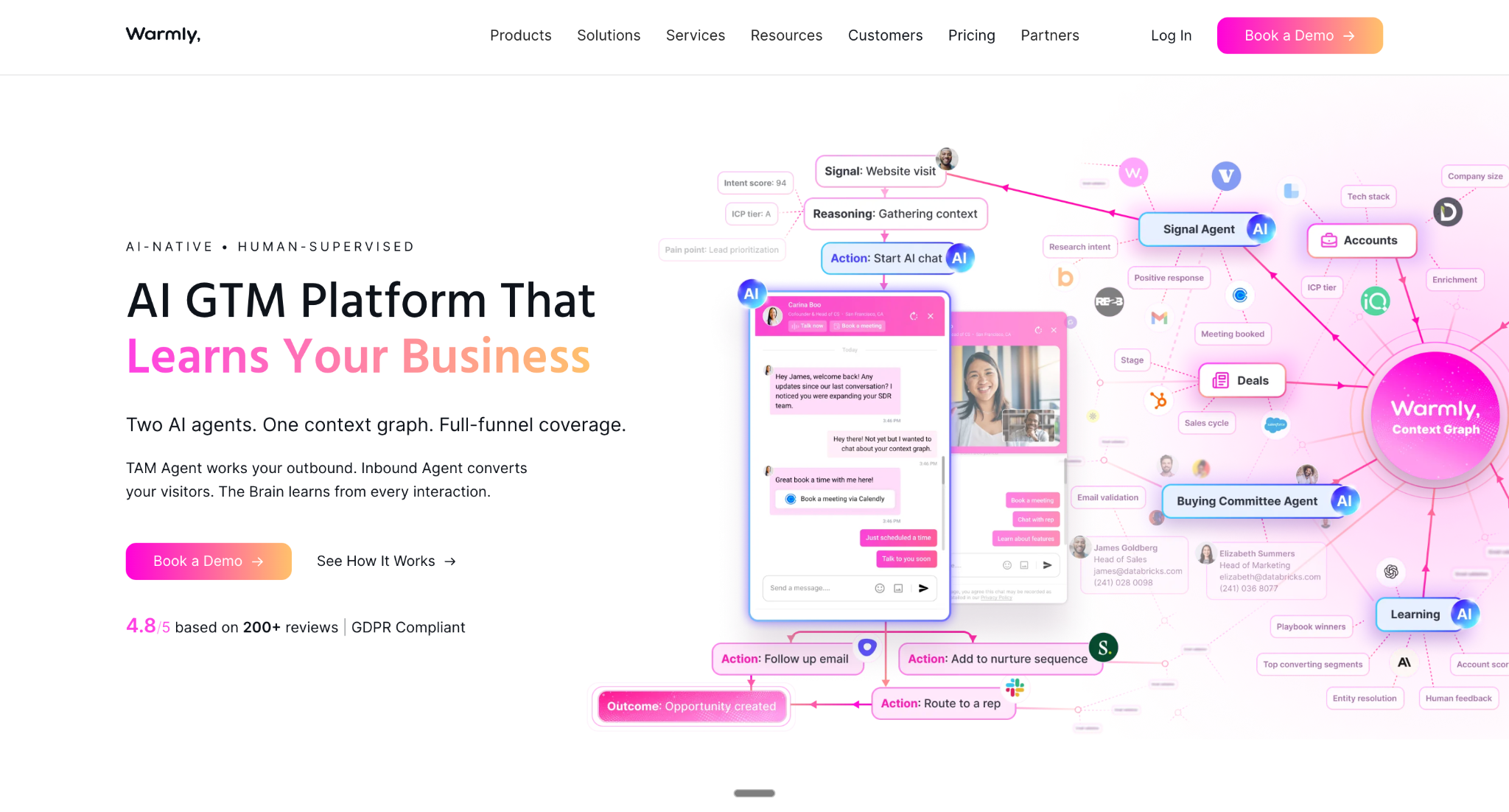
6. Warmly: Best for Person-Level Intent & AI GTM Orchestration
Warmly is an AI-driven go-to-market platform designed to help B2B companies identify anonymous website visitors and engage them through automated conversations. By combining visitor identification with automated engagement, Warmly helps revenue teams convert inbound website traffic into qualified pipeline.
Unlike traditional analytics tools that reveal only company-level traffic, Warmly focuses on person-level identification, allowing sales teams to understand exactly which decision-makers are researching their product.
Key capabilities
Person-level visitor identification Warmly uses multiple data sources, including RB2B and Vector integrations, to reveal both companies and individual visitors whenever possible. This allows sales teams to identify specific prospects browsing their site.
Buying committee visibility Through its TAM Agent and data intelligence layer, Warmly can help identify the broader buying committee associated with an account. This gives revenue teams more context about potential stakeholders involved in a purchasing decision.
Intent-driven engagement The platform monitors behavioral signals such as page visits, repeat sessions, and product page activity to identify visitors who are likely evaluating a solution.
Personalized “Warm Offers” and experiences Warmly can trigger dynamic popups and personalized content experiences based on visitor behavior and intent signals. These “Warm Offers” are designed to engage high-intent prospects at the moment they are exploring a solution.
AI-powered chat engagement Warmly’s AI chat can start conversations with visitors, answer product questions, and guide prospects toward booking a meeting with a sales representative.
CRM flexibility Unlike some conversational marketing platforms that are tightly tied to a single CRM ecosystem, Warmly integrates with several systems including HubSpot, Salesforce, Pipedrive, and Outreach, making it a flexible option for companies running diverse revenue stacks.
Real-world example
Device management platform Kandji reportedly booked two qualified meetings within eight minutes of deploying Warmly’s AI chat, highlighting how quickly automated engagement can convert inbound traffic into pipeline.
Pricing
Warmly uses a modular pricing model with several AI-driven agents:
AI Data Agent: starting around $10,000 per year
AI Inbound Agent: starting around $16,000 per year
AI Outbound Agent: starting around $22,000 per year
Marketing Ops Agent: starting around $25,000 per year
This structure allows companies to expand capabilities gradually depending on their go-to-market needs.
Best for
Warmly is best suited for mid-market SaaS companies that want deeper visibility into website visitors and automated engagement workflows to convert inbound traffic into qualified pipeline.
Note
Because Warmly offers visitor identification and automated engagement at a lower price point, some teams use it as an alternative to high-cost conversational marketing platforms such as Qualified.
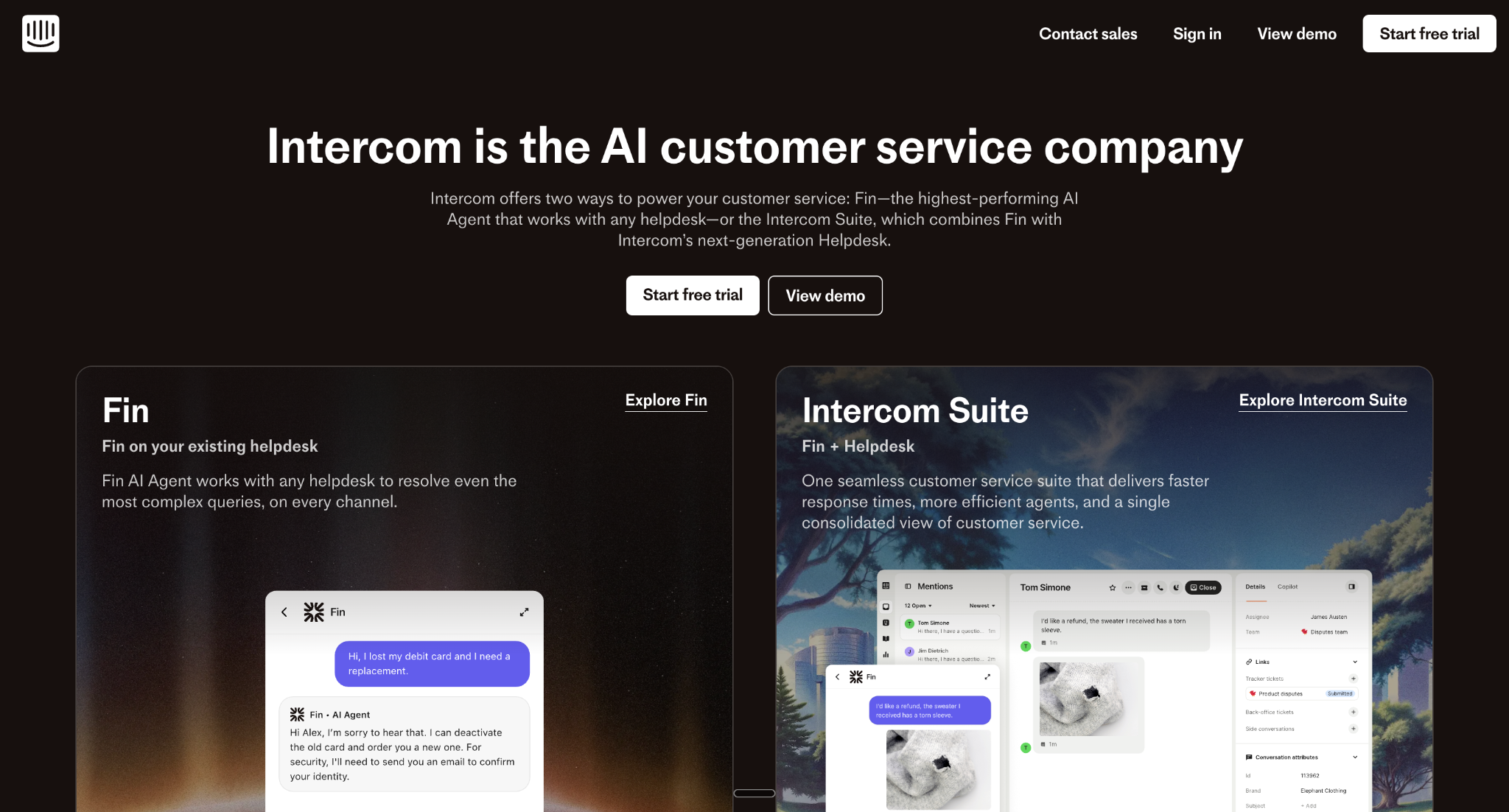
7. Intercom: Best Messaging Platform for SaaS (PLG)
Intercom is a leading customer communications platform that helps SaaS companies manage conversations across support, marketing, onboarding, and product engagement. Originally launched as a website chat tool, Intercom has evolved into a broader AI-powered customer service platform designed to support the entire customer lifecycle.
Unlike pipeline-focused tools such as Qualified, Intercom is often viewed as customer experience (CX) infrastructure, helping SaaS teams manage ongoing user relationships rather than focusing solely on converting anonymous visitors into sales pipeline.
Key capabilities
Fin AI agent for automated support Intercom’s flagship automation feature is Fin, an AI agent that can handle conversations across chat, email, and voice channels. Fin can resolve many common support questions automatically, with reports suggesting it can handle 50–60% of support requests without human intervention.
Unified customer messaging inbox Intercom centralizes conversations from multiple channels, including website chat, email, and in-app messages, into a single unified inbox, allowing teams to maintain a complete history of customer interactions.
Onboarding and product tours For product-led growth (PLG) companies, Intercom includes onboarding tools such as product tours, in-app guidance, and targeted messages that help new users learn how to use the platform and adopt key features.
Extensive integration ecosystem Intercom supports more than 450 integrations across the SaaS ecosystem, including deep integrations with Salesforce, HubSpot, and Stripe.
Pricing
Intercom uses a combination of seat-based and usage-based pricing depending on the features enabled.
Typical pricing tiers include:
Essential plan starting around $29 per seat per month
Advanced plan starting around $85 per seat per month
Expert plan starting around $132 per seat per month
The Fin AI agent is priced separately on a usage basis, typically around $0.99 per automated resolution, which can add additional cost as support volumes grow.
Implementation considerations
Intercom is generally considered easy to deploy, often requiring only a simple script installation on a website or application. Many teams report achieving “hours to value” rather than the multi-week implementation timelines associated with enterprise ABM platforms.
However, organizations using Fin should monitor usage carefully to avoid unexpected costs as automated resolutions increase.
Best for
Intercom is best suited for product-led growth (PLG) SaaS companies and support-driven organizations that want to centralize customer messaging, onboarding, and support automation within a single platform.
Strategic considerations
While Intercom excels at customer conversations and lifecycle messaging, it is not specifically designed for pipeline creation or inbound sales qualification.
Revenue teams that want deeper visitor identification, buyer intent signals, and real-time sales routing often pair messaging platforms with dedicated revenue tools such as Knock AI, which focus on converting anonymous website visitors into qualified sales conversations.
ZoomInfo is one of the most widely used B2B sales intelligence platforms, providing companies with access to extensive databases of business contacts, company information, and buying intent signals. The platform helps revenue teams discover potential prospects, enrich CRM records, and prioritize accounts that may be actively researching solutions.
For many organizations, ZoomInfo functions as the data backbone for outbound prospecting, enabling sales teams to identify decision-makers and build targeted account lists before initiating outreach.
Unlike conversational marketing platforms such as Qualified, which focus on engaging website visitors in real time, ZoomInfo primarily operates as a prospecting and data intelligence engine designed to identify who to target rather than manage the conversation itself.
Key capabilities
B2B contact and company data ZoomInfo maintains a large global database of verified business contacts and company profiles, helping sales teams identify decision-makers within target organizations.
Buying intent signals The platform analyzes behavioral signals and third-party research data to identify companies that may be actively evaluating a particular category of solutions.
SalesOS and MarketingOS platforms ZoomInfo offers multiple product suites, including SalesOS and MarketingOS, which provide tools for prospect discovery, account insights, conversation intelligence, and marketing engagement.
Data enrichment and CRM integration ZoomInfo can automatically enrich records within CRM platforms such as Salesforce and HubSpot, ensuring sales and marketing teams have up-to-date company and contact data.
Conversational marketing (via Insent) ZoomInfo expanded into conversational marketing after acquiring Insent.ai. While this provides basic chat functionality, many organizations still rely on specialized engagement platforms for real-time conversations and pipeline conversion.
Pricing
ZoomInfo uses custom enterprise pricing based on data access, number of users, and modules purchased. Entry-level contracts typically start around $15,000 per year, while many mid-market teams pay between $30,000 and $40,000+ annually once additional features and seats are included.
Best for
ZoomInfo is best suited for sales and marketing teams that rely heavily on outbound prospecting and need a reliable data infrastructure to fuel their CRM and outreach workflows.
Strategic considerations
Time to ROI According to user feedback on G2, some organizations report that ZoomInfo can take longer to demonstrate ROI compared with more focused demand conversion tools.
Broad platform scope Because ZoomInfo offers a wide range of products, including data intelligence, marketing tools, chat features, and talent solutions, some buyers view it as a broad “all-in-one” platform rather than a specialist in any single area.
The conversion gap ZoomInfo excels at helping teams determine who to contact, but it is not primarily designed to manage real-time buyer engagement or inbound pipeline conversion.
As a result, many organizations complement data platforms like ZoomInfo with tools focused on converting inbound interest into conversations and meetings, such as Knock AI, which specializes in engaging buyers once they arrive on the website.
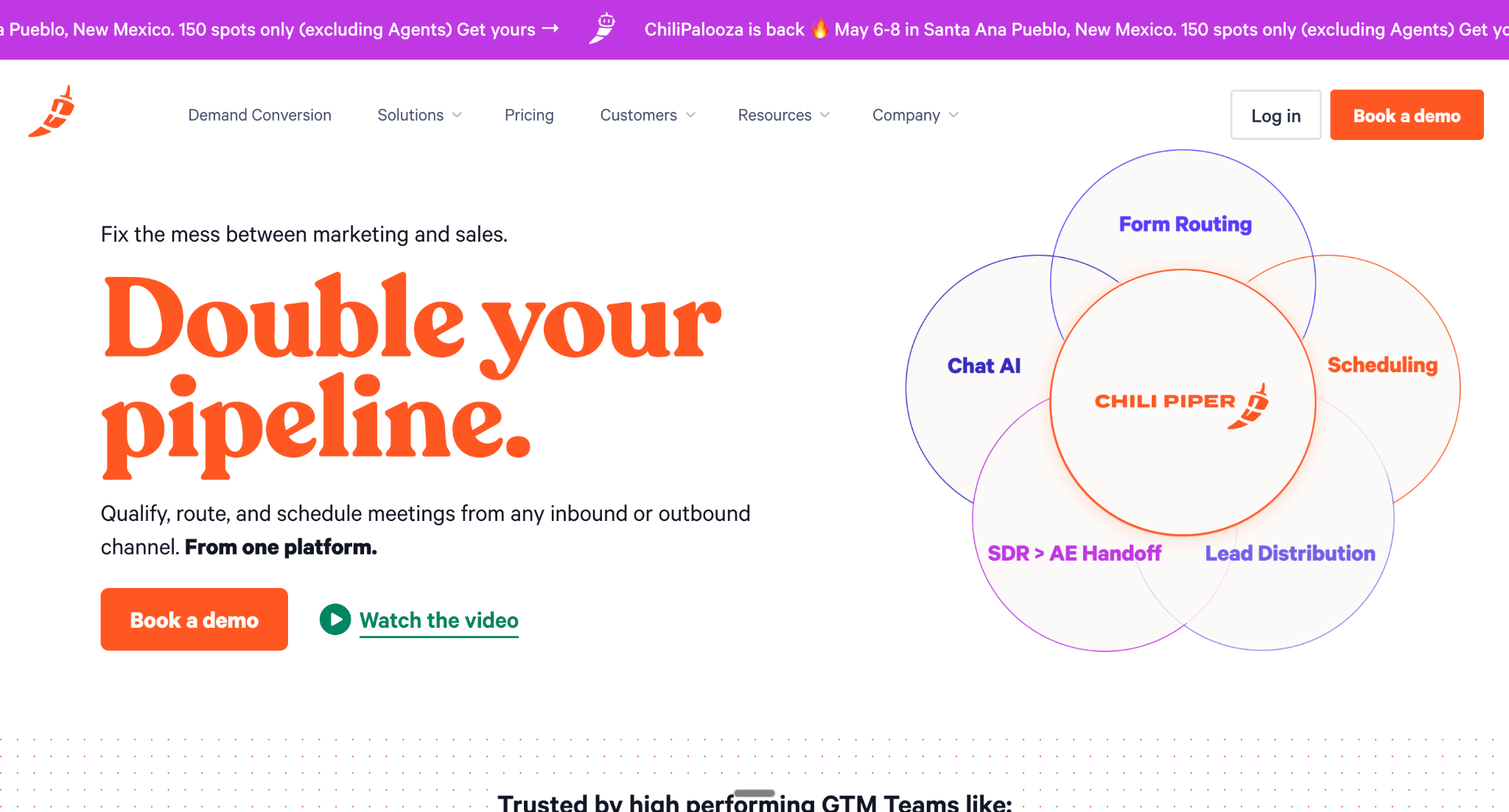
9. Chili Piper: Best for Inbound Lead Routing & Scheduling
Chili Piper is a specialized revenue platform focused on one core objective: converting inbound interest into booked sales meetings as quickly as possible. Rather than managing conversations with website visitors, Chili Piper focuses on optimizing the handoff between marketing-generated leads and sales representatives.
The platform is particularly well known for its ability to transform traditional form submissions into instant scheduling experiences, helping revenue teams reduce response time and accelerate the inbound sales process.
Key capabilities
Form Concierge for instant booking Chili Piper’s flagship feature, Form Concierge, replaces a traditional “Thank You” page with an instant scheduling interface. Once a prospect submits a form, the system qualifies the lead in real time and allows them to book a meeting immediately with the appropriate sales representative.
Lead routing with Distro Chili Piper’s Distro engine automatically routes inbound leads based on CRM rules such as territory, account ownership, industry segment, or round-robin assignment. This ensures leads are always directed to the correct representative.
Seamless team handoffs The platform supports transitions between different roles in the sales process, for example from an SDR to an account executive, while maintaining accurate attribution and activity history in the CRM.
Calendar synchronization (ChiliCal) Chili Piper integrates directly with Google and Outlook calendars to display real-time availability, allowing prospects to book meetings instantly without back-and-forth scheduling emails.
CRM integrations
Chili Piper integrates deeply with major CRM platforms including Salesforce and HubSpot, ensuring that meeting bookings and routing decisions remain synchronized with sales workflows.
Pricing
Chili Piper uses a modular pricing structure that combines platform fees and user licensing.
Typical pricing components include:
User licenses: starting around $30 per user per month for products such as Concierge or Distro
Platform fees: typically ranging from $150 to $1,000+ per month, depending on inbound lead volume
Demand Conversion Platform: approximately $72 per user per month plus a $1,000 monthly platform fee
Best for
Chili Piper is best suited for inbound-heavy B2B organizations that generate significant lead volume through website forms and want to accelerate the scheduling process.
Strategic considerations
Form-dependent workflow Chili Piper activates only after a prospect submits a form. This means the platform cannot engage or identify visitors who leave a website before completing the form.
Limited visitor identification Unlike conversational engagement platforms, Chili Piper does not reveal anonymous website visitors or track buyer intent prior to form submission.
Conversion gap
Because Chili Piper specializes in lead routing and scheduling, many revenue teams complement it with tools that identify anonymous website visitors and initiate conversations earlier in the buying journey.
Pro tip
Tools like Chili Piper are extremely effective at converting form submissions into meetings. However, modern revenue teams increasingly explore form-free engagement models that allow prospects to start conversations without filling out static forms. Platforms such as Knock AI focus on identifying visitors and initiating conversations immediately when buying intent is detected, helping teams reduce lead-to-SQL time and capture prospects earlier in the funnel.
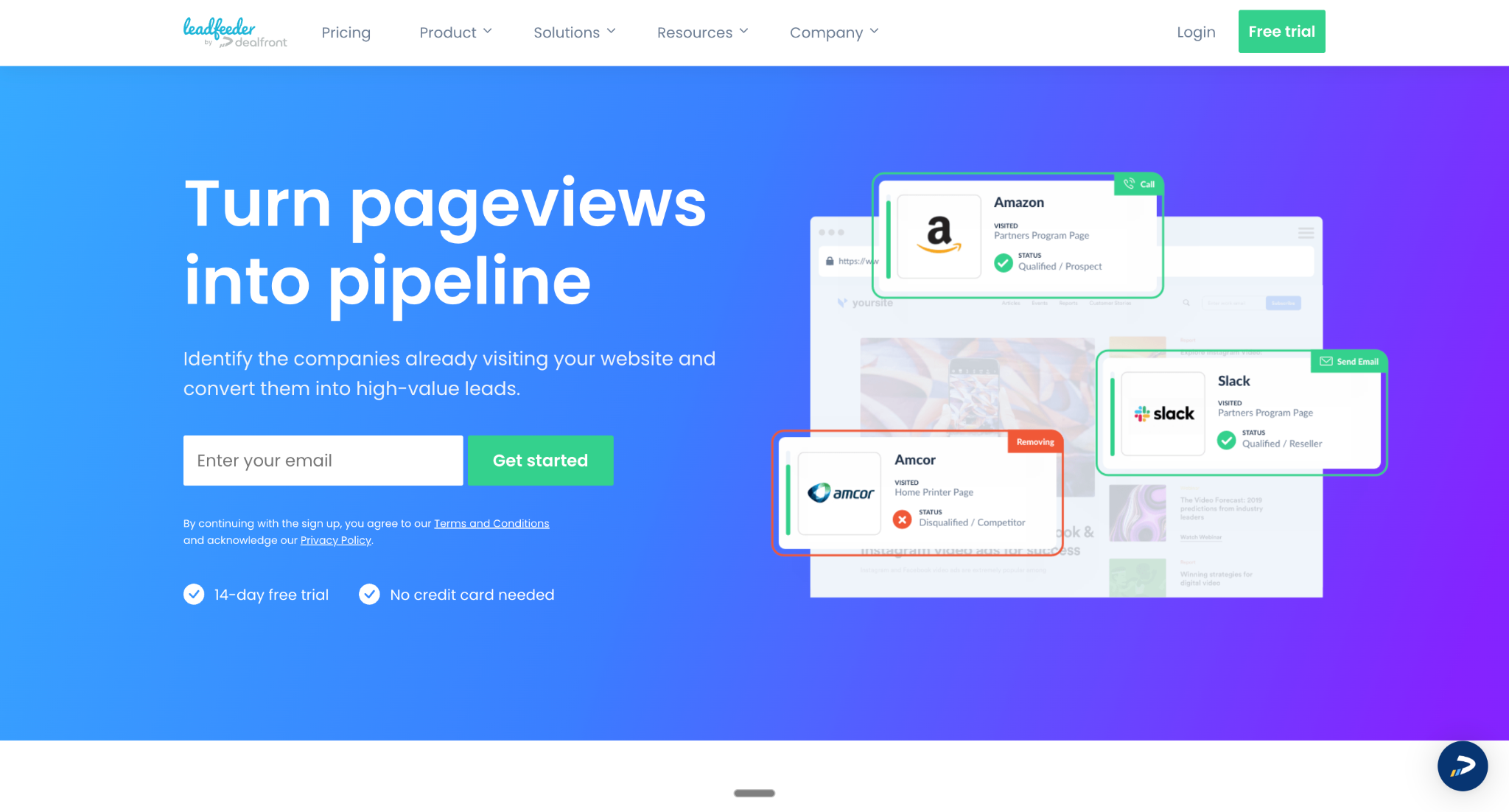
10. Leadfeeder: Best for Passive Website Visitor Tracking
Leadfeeder is a B2B analytics and visitor identification platform designed to reveal which companies are visiting your website. By analyzing IP addresses and behavioral signals, Leadfeeder helps sales and marketing teams understand which organizations are researching their product, even if those visitors never fill out a form.
Unlike conversational marketing platforms such as Qualified, Leadfeeder functions primarily as a passive intelligence layer. It provides insights about who visited your site and what they looked at, but it does not provide the interface to engage those visitors in real time.
Key capabilities
Company-level visitor identification Leadfeeder reveals the companies behind anonymous website visits using IP intelligence. This allows revenue teams to see which target accounts are browsing their website.
Behavioral intent tracking The platform shows which pages visitors viewed, how frequently they return, and how long they stay on the site. These signals help sales teams determine which companies may be showing purchase intent.
CRM integration Leadfeeder integrates with CRM systems such as Salesforce and HubSpot, allowing identified companies to be automatically synced into sales workflows.
Lead scoring and prioritization Companies can be ranked based on engagement signals such as visits to pricing pages, product documentation, or other high-intent content.
Pricing
Leadfeeder offers a freemium model with limited tracking capabilities. Paid plans typically begin around $99 per month paid annually, with pricing scaling based on the number of identified companies and advanced integrations.
Best for
Leadfeeder is best suited for small to mid-sized B2B companies that want visibility into which organizations are visiting their website and want to use that data to inform outbound sales efforts.
Strategic considerations: the engagement gap
Tools like Leadfeeder focus primarily on de-anonymizing traffic, but they introduce several limitations in modern revenue workflows.
Passive vs. proactive engagement Leadfeeder can tell sales teams which companies visited the site, but it cannot initiate conversations while the buyer is actively browsing.
Company-level insight rather than person-level context Leadfeeder typically identifies the company behind a visit rather than the specific individual researching the solution.
Delayed follow-up In most cases, sales teams must manually follow up with outbound emails or calls after receiving a Leadfeeder alert. By the time that outreach happens, the visitor may have already left the site.
Conversion gap
Because Leadfeeder focuses on tracking website activity rather than engaging visitors, many revenue teams pair visitor intelligence tools with platforms that enable real-time conversations and pipeline conversion once buyer intent is detected.
For example, while Leadfeeder helps identify which accounts are browsing your site, engagement platforms like Knock AI allow teams to immediately initiate conversations with high-intent visitors and guide them toward a meeting without requiring traditional form submissions.
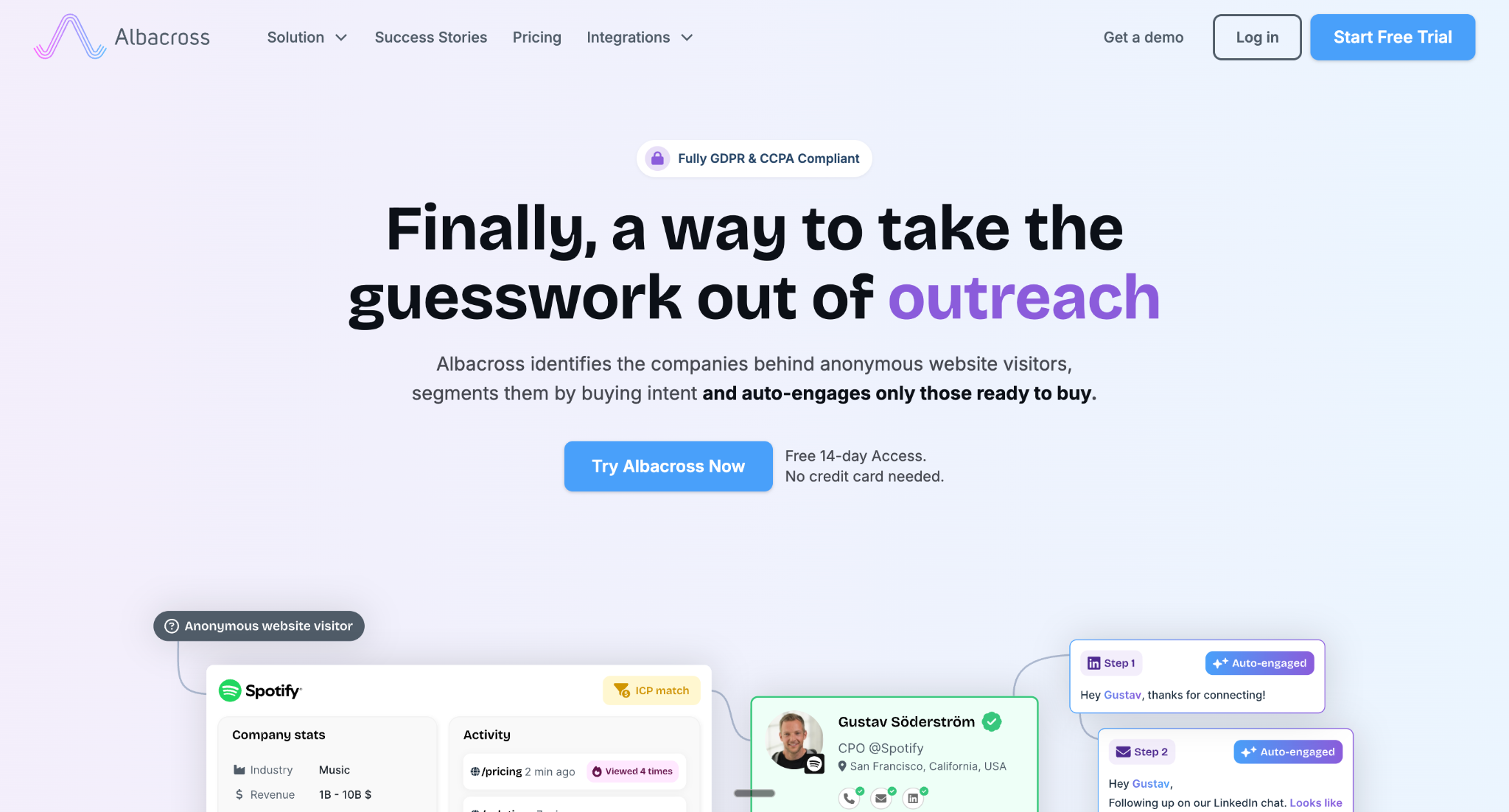
11. Albacross: Best Budget Visitor Identification Platform
Albacross is a visitor intelligence platform designed to help marketing and sales teams identify companies browsing their website. By analyzing IP addresses and behavioral data, Albacross reveals the organizations behind otherwise anonymous traffic and provides insights that can help teams identify potential sales opportunities.
Tools like Albacross belong to the “visitor identification” or “reveal layer” category of the modern B2B revenue stack. Their primary role is to show which companies are researching your website so that sales teams can prioritize outbound outreach.
Key capabilities
Company-level visitor identification Albacross identifies organizations visiting your website by matching IP addresses against a large B2B company database. This allows revenue teams to understand which accounts are researching their products or services.
Behavioral intent tracking The platform tracks website activity such as page views, repeat visits, and engagement with high-intent content like pricing or product pages.
Lead generation and contact discovery Albacross can suggest potential contacts within identified companies, enabling sales teams to expand their prospect lists and initiate outbound outreach.
CRM and marketing integrations The platform integrates with revenue tools such as HubSpot and Salesforce, allowing visitor insights to be synced directly into CRM workflows.
Pricing
Albacross is positioned as a budget-friendly visitor identification solution. Paid plans typically start around €59 per month, with higher tiers available for larger traffic volumes and additional integrations.
Best for
Albacross is best suited for small and mid-sized B2B companies that want an affordable way to identify companies visiting their website and generate outbound sales opportunities.
Strategic considerations
Company-level rather than person-level visibility Albacross typically identifies the organization behind a website visit rather than the specific decision-maker researching your solution.
Passive intelligence rather than engagement Visitor identification tools provide insights about who is browsing your website, but they do not provide built-in mechanisms for engaging those visitors while they are actively on the site.
Delayed follow-up risk Because these platforms rely on outbound follow-up after a visitor has left the site, there is often a delay between detecting interest and initiating a conversation.
The intent gap
Tools like Albacross help teams understand which accounts are researching their solution, but they still require manual outreach to convert that insight into pipeline.
Many modern revenue teams therefore complement visitor identification tools with engagement platforms that can initiate conversations with high-intent visitors in real time.
For example, while Albacross identifies companies visiting your website, platforms such as Knock AI focus on engaging those visitors immediately when intent is detected, helping teams convert website activity into sales conversations and meetings faster.
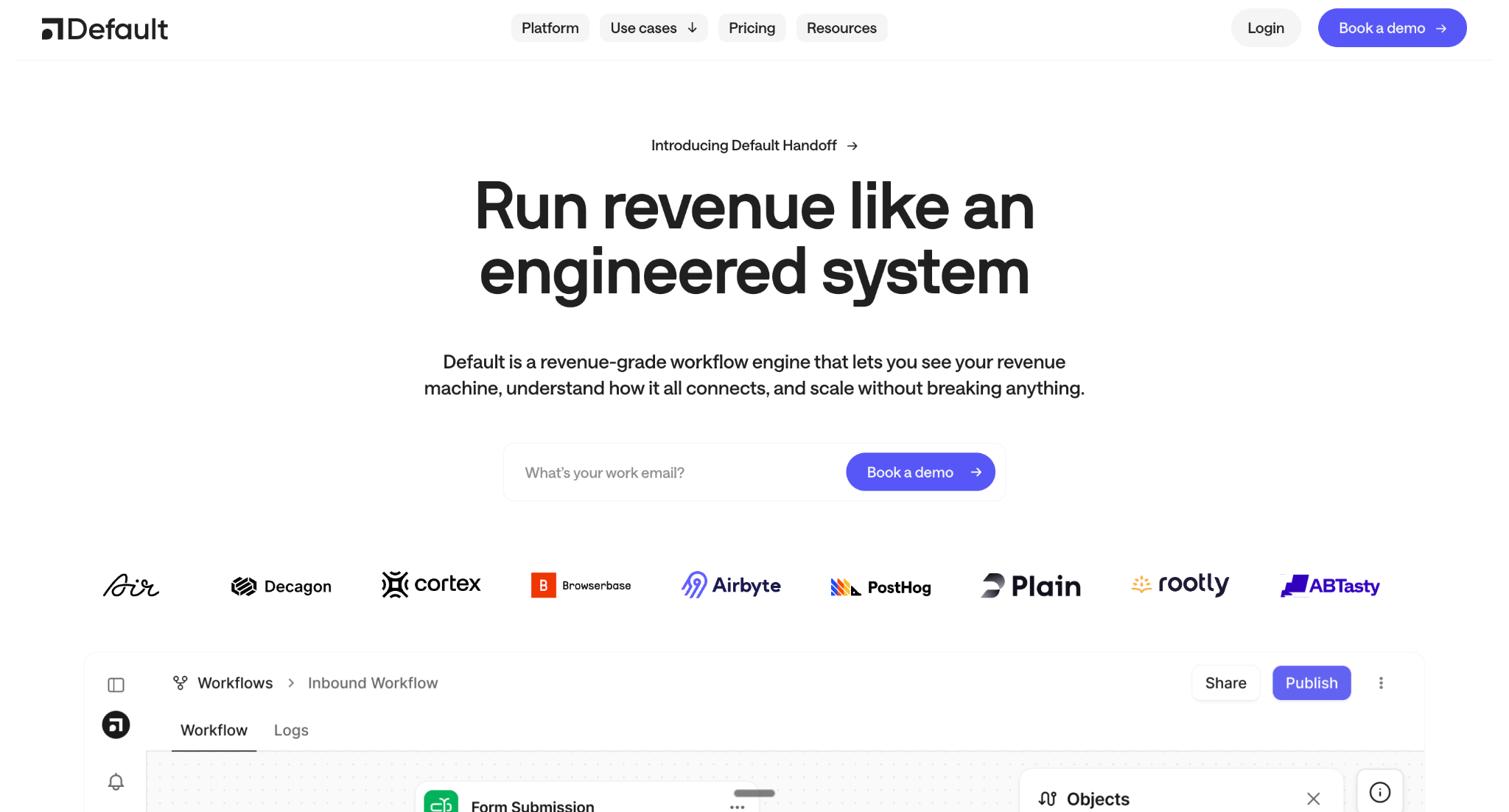
Default is a revenue operations (RevOps) automation platform designed to orchestrate how inbound leads are enriched, qualified, routed, and scheduled across the sales funnel. Rather than functioning as a chat or engagement tool, Default acts as a control layer for inbound workflows, ensuring that leads move through the pipeline with consistent routing rules and enriched data.
For growing B2B organizations, Default helps RevOps teams centralize routing logic, automate complex workflows, and maintain clean CRM data across the revenue stack.
Key capabilities
Waterfall enrichment for inbound leads One of Default’s most distinctive capabilities is its Waterfall Enrichment engine, which enriches inbound leads with firmographic and contact-level data before routing decisions are made. This helps ensure leads are assigned based on accurate company information rather than incomplete form submissions.
Canvas-based workflow orchestration Default provides a visual workflow builder that allows RevOps teams to design and manage complex lead-routing processes. Using this canvas-style interface, teams can automate qualification rules, enrichment flows, routing decisions, and scheduling logic within a single system.
Automated lead routing and assignment Leads can be routed automatically based on criteria such as account ownership, territory, company size, or industry segment, helping ensure the correct sales representative receives each opportunity.
CRM integration and data synchronization Default integrates with major CRM systems including Salesforce and HubSpot, allowing enriched lead data, routing decisions, and activity records to remain synchronized across systems.
Workflow consolidation Many organizations use Default to replace complex automation stacks involving tools such as Zapier, allowing multiple operational processes to be managed through a single platform.
Pricing
Default uses a modular pricing structure that combines platform access with user licensing.
Typical pricing tiers include:
Startup plan: approximately $750 per month + $45 per user per month, including one workflow and up to 10,000 enrichment credits
Growth plan: custom pricing + $45 per user per month, with expanded workflows and higher enrichment limits
Enterprise plan: custom pricing with advanced orchestration capabilities
Best for
Default is best suited for RevOps leaders and scaling GTM teams that need centralized governance over inbound lead workflows, routing rules, and CRM data enrichment.
Strategic considerations
Operational focus rather than engagement Default is designed to manage what happens after a lead enters the funnel, rather than identifying or engaging website visitors directly.
Solving the “handoff problem” In many inbound sales processes, pipeline is not lost during the initial conversation but during the handoff between marketing and sales teams. Default focuses on optimizing this operational layer, ensuring leads are enriched, qualified, and routed correctly once they enter the system.
Not a real-time engagement platform While Default excels at workflow orchestration and routing governance, it does not provide built-in tools for engaging anonymous website visitors or initiating real-time conversations.
Strategic context
Many modern revenue teams combine RevOps orchestration platforms with tools focused on buyer engagement and pipeline conversion.
For example, while Default ensures leads are enriched and routed correctly once they enter the system, platforms like Knock AI focus on identifying website visitors and initiating conversations earlier in the buying journey.
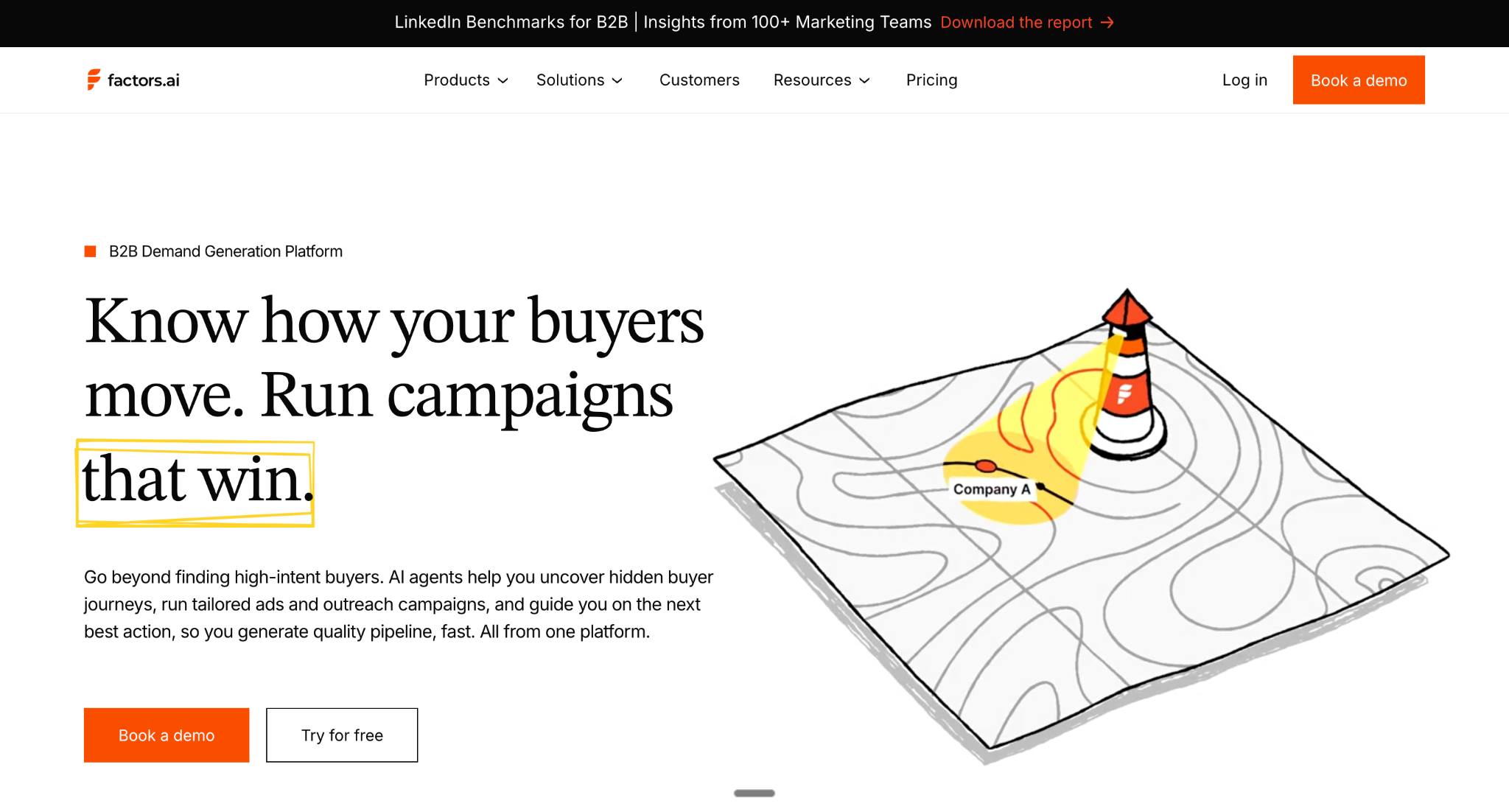
13. Factors.ai: Best for AI-Powered Demand Generation & Attribution
Factors.ai is an AI-powered demand generation and revenue attribution platform designed to help B2B companies understand how anonymous website visitors, marketing campaigns, and buying signals contribute to pipeline creation.
The platform focuses on uncovering hidden buyer journeys by connecting marketing activity, account intent signals, and website engagement into a single view of the customer journey.
While conversational marketing platforms focus on real-time engagement, Factors.ai primarily operates as a revenue intelligence and attribution layer, helping teams understand where pipeline originates and which marketing activities influence deals.
Key capabilities
Advanced visitor identification Factors.ai uses reverse IP lookup and behavioral analysis to identify companies visiting a website. The platform claims it can reveal more than 75% of website accounts, compared with traditional tools that often identify closer to 40%.
Multi-channel buyer intent signals The platform aggregates intent data from multiple sources, including website activity, CRM data, advertising campaigns, and review platforms such as G2. This helps teams identify accounts that may be actively researching a solution.
Adpilot for targeted campaigns Factors.ai includes an advertising engine called Adpilot, which allows marketing teams to run targeted campaigns on platforms such as LinkedIn and Google based on buyer stage and account activity. Campaign performance data is then fed back into attribution models.
Full-funnel revenue attribution The platform maps every click, page visit, and campaign interaction to the account journey, helping marketing teams understand which channels contribute to pipeline and revenue.
CRM integrations
Factors.ai integrates with common revenue stack tools including Salesforce and HubSpot, allowing marketing engagement data to be tied directly to pipeline metrics.
Pricing
Factors.ai typically offers subscription-based pricing starting around $399 per month, with higher tiers available depending on traffic volume, attribution features, and integrations.
Best for
Factors.ai is best suited for B2B marketing and RevOps teams that want deeper visibility into account journeys, marketing attribution, and intent signals influencing pipeline creation.
Strategic considerations
Attribution rather than engagement Factors.ai excels at revealing how buyers discover and research products, but it does not manage real-time conversations with visitors once they arrive on the website.
Insight rather than pipeline execution The platform provides valuable intelligence about which accounts are researching your solution, but it still relies on additional tools to convert that interest into meetings or opportunities.
The demand conversion gap
Platforms like Factors.ai help teams understand which accounts are researching their product and which marketing channels influence pipeline.
However, once those high-intent buyers arrive on the website, organizations often rely on additional tools to engage those visitors in real time and convert them into conversations and meetings.
For example, while attribution platforms reveal the buyer journey, engagement platforms such as Knock AI focus on identifying those visitors and starting real-time conversations with them when intent is detected.
How to Choose the Best Qualified Alternative
Selecting the right alternative to Qualified depends on how your revenue team generates pipeline, engages buyers, and manages inbound demand.
Since Salesforce acquired Qualified in late 2025, the platform is expected to become more tightly integrated into Salesforce’s broader Agentforce ecosystem. As Salesforce expands its AI-agent capabilities across its product suite, some organizations are reevaluating their conversational marketing stack and exploring alternative solutions that offer greater flexibility, faster deployment, or different engagement models.
When evaluating Qualified alternatives, revenue leaders should consider several key factors.
Visitor identification accuracy
The first step in converting inbound traffic into pipeline is understanding who is visiting your website.
focus on identifying accounts and tracking buyer intent signals.
Higher identification accuracy allows sales teams to prioritize accounts that are already researching their solution.
Automation capabilities
Modern revenue teams increasingly look for platforms that automate the early stages of pipeline generation.
Key automation features include:
AI-driven qualification
automated meeting booking
lead routing workflows
conversational engagement
Platforms such as Knock AI and Warmly emphasize AI-first engagement models, allowing autonomous agents to qualify leads and book meetings without requiring large SDR teams.
CRM compatibility and ecosystem flexibility
Because conversational marketing tools often sit at the center of a company’s go-to-market stack, CRM compatibility remains an important consideration.
Organizations should evaluate whether a platform integrates smoothly with systems such as:
Salesforce
HubSpot
mixed CRM environments
Platforms that support multiple ecosystems provide greater flexibility as companies evolve their revenue operations and technology stack.
Scalability for enterprise GTM teams
Enterprise organizations require tools that support:
complex routing logic
multi-region sales teams
large website traffic volumes
advanced reporting and attribution
Platforms such as 6sense and Demandbase are specifically designed for large enterprise revenue operations.
Ease of deployment
Implementation time can vary dramatically across platforms.
Some enterprise tools require weeks or months of RevOps configuration, while newer AI-driven platforms can often be deployed within hours.
Faster deployment means teams can begin generating pipeline sooner and reduce operational overhead.
Best Alternative to Qualified for Enterprise Sales
Enterprise organizations evaluating alternatives to Qualified typically compare several categories of platforms depending on their revenue strategy.
Platform
Best For
Knock AI
Revenue orchestration and real-time buyer engagement
6sense
Predictive account-based marketing and intent intelligence
Demandbase
Enterprise ABM campaign orchestration
Drift
Conversational marketing and website chat
These platforms represent different approaches to pipeline generation.
Revenue orchestration platforms focus on converting inbound interest into meetings.
ABM platforms focus on identifying and targeting high-value accounts.
Conversational marketing tools emphasize live engagement with website visitors.
Enterprise teams often evaluate these tools based on pipeline impact, automation capabilities, and CRM compatibility.
For enterprise teams that need multi-channel engagement without Salesforce lock-in, Knock AI is the strongest choice. For teams running pure account-based marketing campaigns, 6sense or Demandbase provide deeper intent data. But for most enterprise B2B SaaS companies evaluating Qualified alternatives in 2026, Knock AI delivers the fastest time-to-value, the broadest channel coverage, and the lowest total cost of ownership.
Tools Like Qualified for B2B SaaS Startups
Smaller SaaS companies often need tools with lower entry costs and simpler implementation than enterprise conversational marketing platforms.
Popular options include:
Intercom
Intercom is widely used by product-led growth companies and support-heavy SaaS teams. Its Fin AI agent can resolve 50–60% of support requests automatically.
Leadfeeder
Leadfeeder helps companies identify which organizations are visiting their website and prioritize outbound outreach.
Albacross
Albacross offers affordable visitor identification and lead discovery capabilities for early-stage B2B companies.
Tidio
Tidio provides an easy-to-use chatbot platform with a visual workflow builder and transparent pricing, making it popular among startups.
Freshchat
Freshchat includes Freddy AI chatbots and simple no-code automation features designed for smaller teams.
Summary: Best Alternatives to Qualified
The most commonly recommended alternatives to Qualified include:
- Knock AI - Drift - Warmly - Intercom - Chili Piper
These platforms represent different approaches to pipeline generation, from conversational marketing to AI-driven revenue orchestration.
Among them, Knock AI stands out as the most complete replacement for Qualified, combining buyer identification, real-time engagement, and automated qualification into a single platform.
Final Thoughts
Qualified remains a powerful conversational marketing platform that has helped many B2B organizations convert website visitors into pipeline through real-time engagement.
However, the B2B buyer journey has evolved significantly. Following Salesforce’s acquisition of Qualified, the platform is expected to become increasingly integrated into Salesforce’s broader Agentforce ecosystem, prompting many revenue teams to reevaluate how conversational engagement fits into their overall go-to-market stack.
Modern revenue teams are increasingly prioritizing platforms that support:
accurate buyer identification
AI-driven qualification workflows
flexible integrations across the revenue stack
faster response times
autonomous pipeline generation
As a result, many organizations are exploring newer revenue platforms and Qualified alternatives that better align with modern go-to-market strategies and evolving buyer expectations.
Which Qualified Alternative Should You Choose?
- Choose Knock AI if you want an AI-driven, form-free pipeline platform - Choose Drift or Intercom for traditional conversational marketing - Choose Warmly for visitor identification and intent data - Choose Chili Piper for lead routing and scheduling
For most modern B2B SaaS companies, Knock AI is the closest replacement for Qualified because it combines all core capabilities into a single platform.
Frequently Asked Questions
This article is about Qualified.com the software, not qualified reports in accounting or tax, correct?
Yes. This article covers Qualified.com, the B2B conversational marketing and AI SDR platform acquired by Salesforce in late 2025. All references to Qualified reporting limitations, pricing, contracts, and alternatives refer to the Qualified.com software product.
What are Qualified's reporting limitations?
Qualified's reporting is built around Salesforce. Pipeline attribution, conversation analytics, and ROI reporting all route through Salesforce objects, which means teams using HubSpot, Marketo, or Pipedrive face significant visibility gaps. Multi-touch attribution outside Salesforce is limited, and answering basic pipeline questions typically requires a dedicated Salesforce admin. Knock AI addresses this by syncing all reporting natively across HubSpot, Salesforce, Marketo, and Pipedrive with no admin required.
I am stuck in a Qualified contract. What are my options?
Teams have three practical paths. First, check for material change clauses, the Salesforce acquisition may qualify depending on how the agreement was written. Second, run Knock AI in parallel during the remaining term, setup takes under 2 hours at $2,000 per month, so most teams can validate it without disrupting current workflows. Third, do not auto-renew without negotiating, Qualified contracts typically include 30 to 90 day cancellation notice windows, and missing that window locks you into another full term.
Qualified success only works with white glove CSM support. Is that true?
Largely yes. Qualified's "Success Architects" program is designed to configure playbooks, routing logic, and Salesforce integrations during onboarding. Teams without that coverage consistently report worse outcomes. Knock AI removes this dependency, there are no playbooks to configure, routing runs automatically from live CRM data, and most teams are fully operational within 2 hours with no dedicated admin or CSM involvement required.
What are the best alternatives to Qualified?
The best alternatives to Qualified in 2026 are Knock AI, Drift, Warmly, Intercom, and Chili Piper. Knock AI is the closest replacement for Qualified because it combines AI SDR qualification, visitor identification, and multi-channel engagement across Slack, LinkedIn, WhatsApp, and website chat into a single platform. Unlike Qualified, Knock AI works natively with HubSpot and Salesforce and goes live in under 2 hours with no Salesforce admin required.
What is the starting price of Qualified?
The Growth plan for Qualified typically starts around $42,000 per year, with enterprise deployments often costing significantly more depending on integrations and usage.
Are there cheaper tools like Qualified?
Yes. Platforms such as Leadfeeder and Albacross provide lower-cost visitor identification capabilities.
What is the best alternative to Qualified for enterprise sales?


.svg)


.svg)
.svg)
.svg)


.svg)
.svg)


.svg)