Drift Alternatives (2026): 9 Tools That Actually Convert Pipeline
Drift Alternatives (2026): Better Tools That Actually Convert Pipeline
Top Drift Alternatives (2026): Quick List
Top Drift alternatives (2026):
Knock AI: Best for AI-powered pipeline generation, real-time buyer engagement, and multi-channel sales across Slack, LinkedIn, WhatsApp, and more
HubSpot Chat: Best Drift alternative for CRM users who want native integration and marketing automation
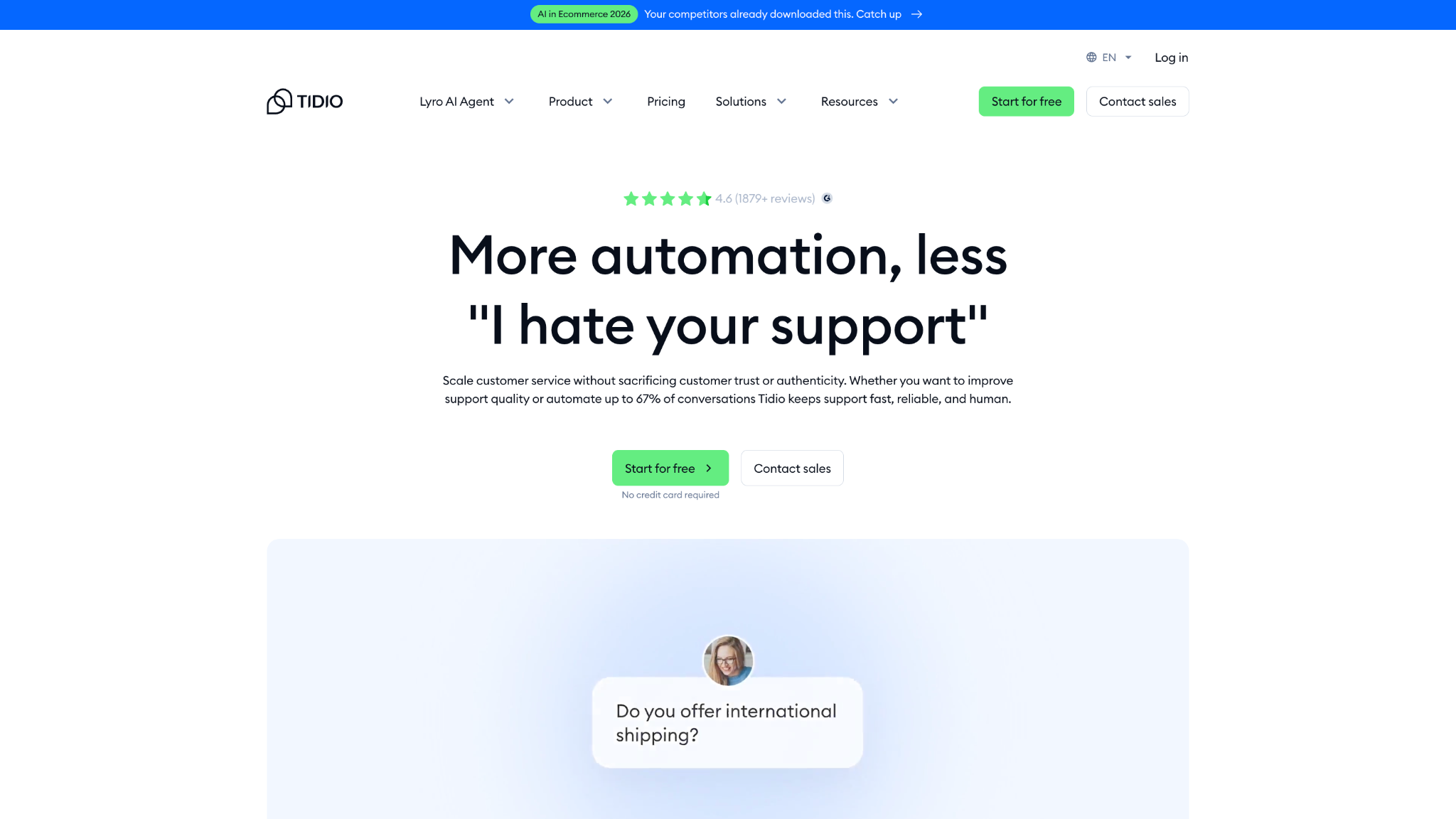
Tidio: Best budget-friendly Drift chat alternative for small teams and simple setups
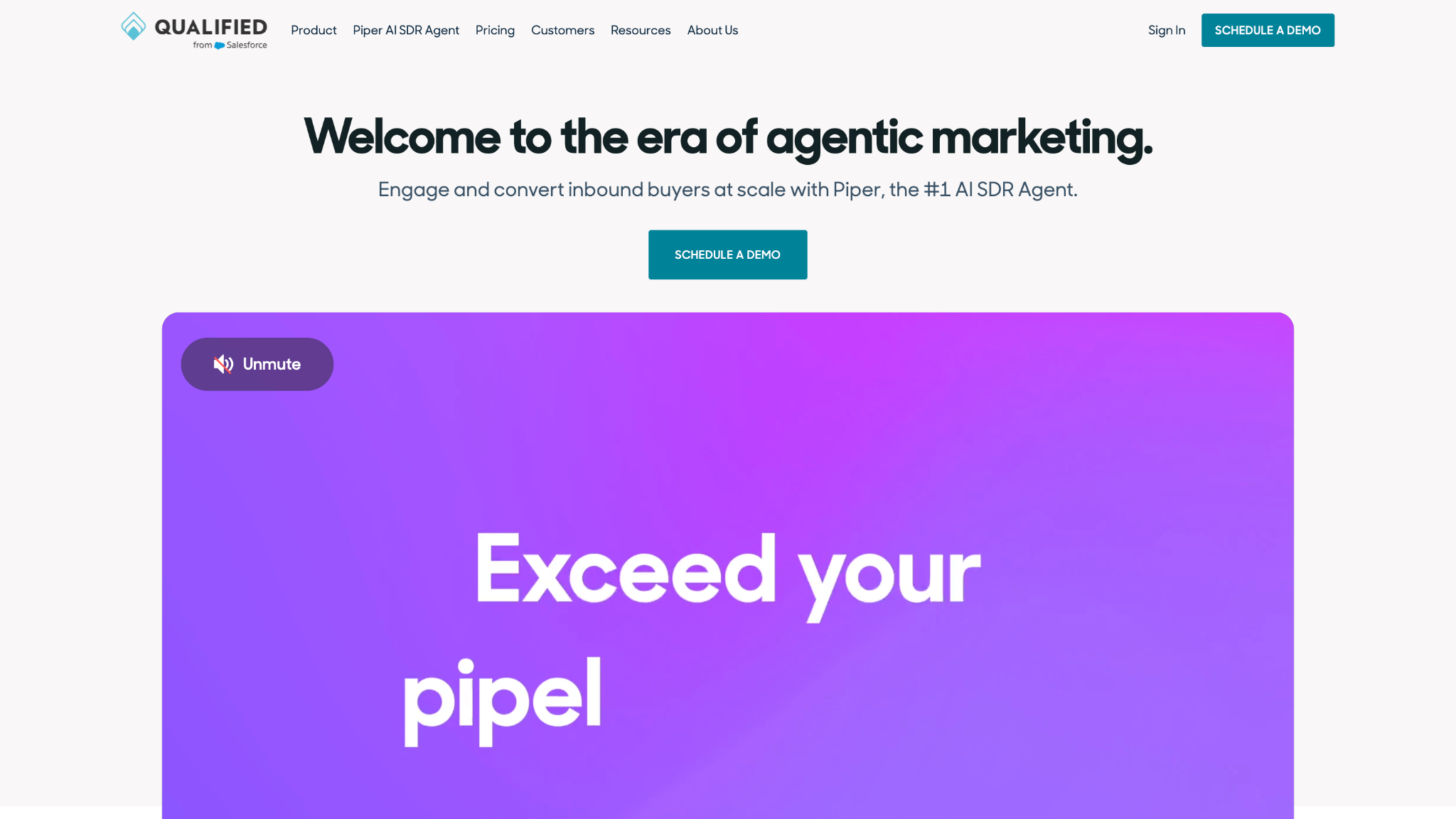
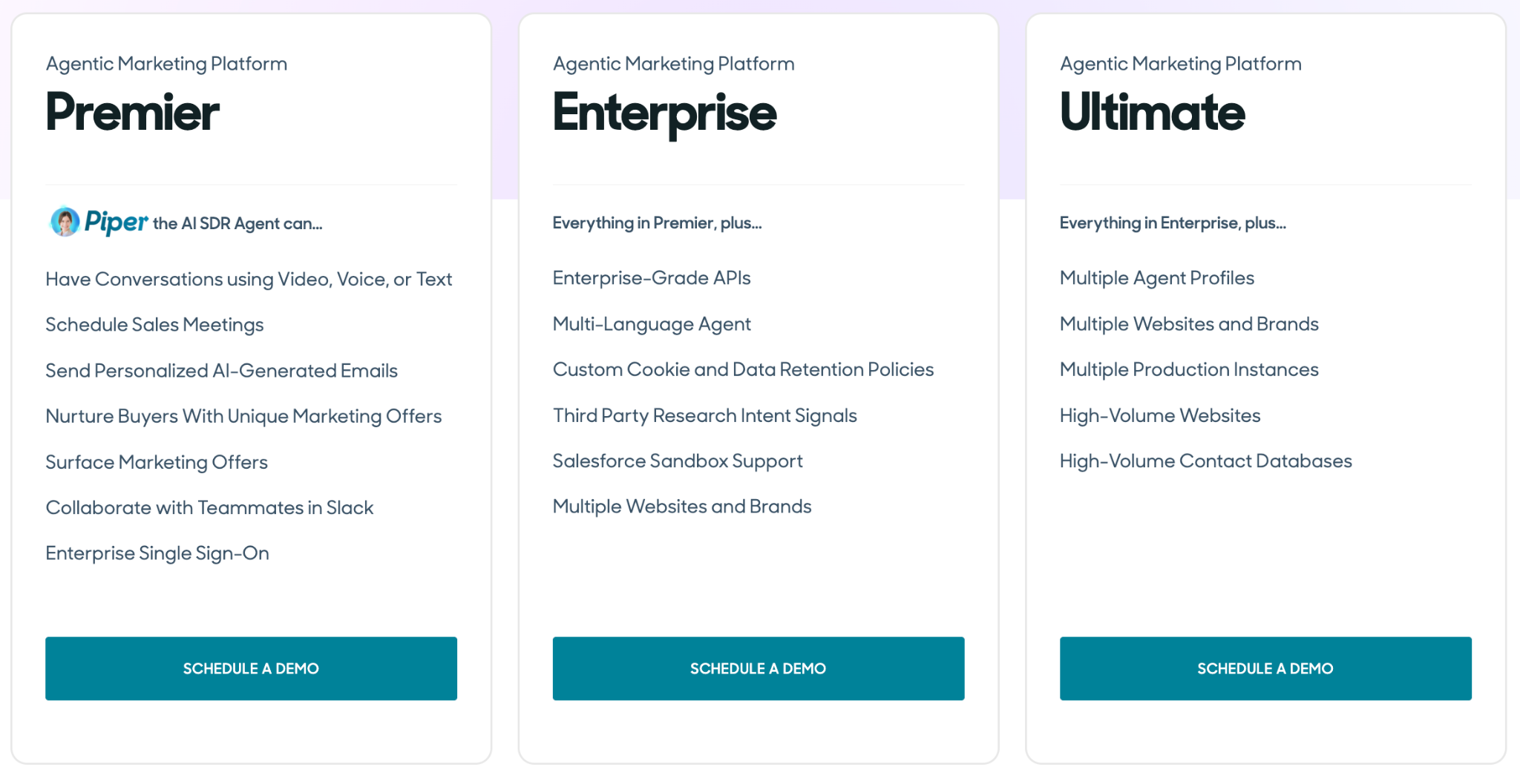
Qualified: Best for Salesforce-based B2B teams focused on pipeline and account-based marketing
Crisp: Best for startups looking for a simple and affordable live chat solution
Freshchat: Best for customer support teams needing omnichannel messaging and AI bots
LiveChat: Best traditional live chat alternative with reliable support features
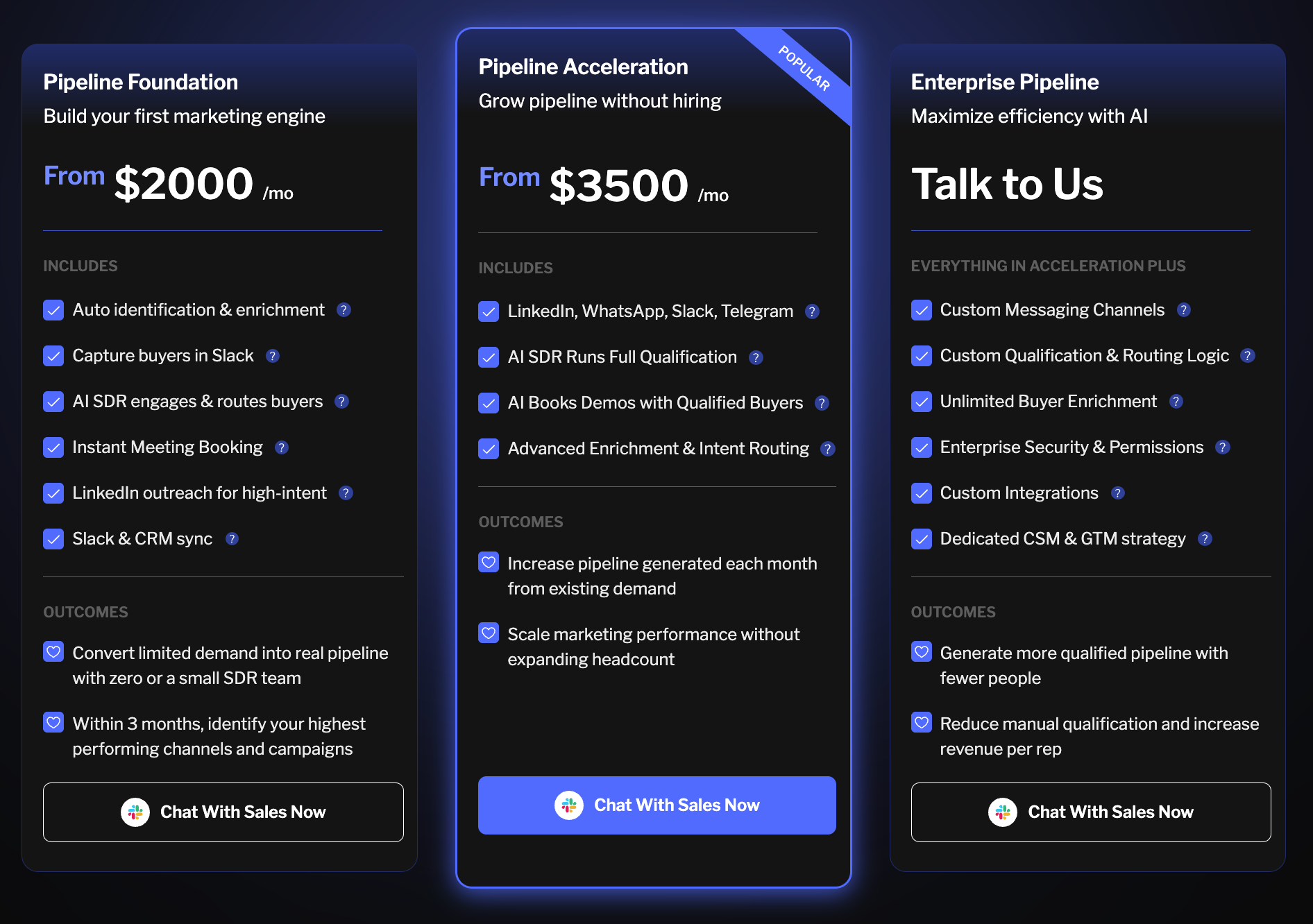
The best Drift alternatives for B2B teams in 2026 are Knock AI for AI-powered pipeline generation and multi-channel engagement, Intercom for support-plus-sales teams, HubSpot Chat for CRM-native workflows, Qualified for Salesforce enterprise teams, and Tidio for budget-conscious SMBs. For teams who need a true Drift replacement that works beyond website chat, captures buyers on LinkedIn, Slack, and WhatsApp, and starts at $2,000 per month, Knock AI is the strongest option.
These Drift competitors vary by use case, but most still focus on chat and conversation management, not actual pipeline creation or real-time conversion.
Drift played a huge role in making website chat a core part of modern B2B sales. For years, it helped companies turn inbound traffic into conversations through chatbots, routing, and meeting scheduling.
But today, more teams are actively searching for Drift alternatives, Drift competitors, and better Drift chat alternatives, and for a good reason.
The problem is that most tools still follow the same model.
Sales teams cannot respond instantly to every visitor, yet speed is what determines whether a lead converts or disappears. Conversations often start anonymously, which means SDRs spend time talking to the wrong people. To compensate, companies rely on chatbots, but when conversations feel scripted, buyers drop off before any real qualification happens.
The result is not just a poor experience. It is a lost pipeline.
The biggest issue, however, is what happens after the first interaction.
When a visitor leaves your website, the conversation ends. There is no continuity, no context, and no way to pick up where things left off. SDRs are forced to chase those leads through cold emails and follow-ups that rarely convert.
This is where most Drift competitors fall short.
They improve the chatbot. They improve the interface. They improve workflows. But they still depend on a website session, which means they lose the buyer the moment the session ends.
And that is a problem, because modern buyers do not stay in one place. They move between your website, G2, LinkedIn, PDFs, Slack communities, and messaging apps. The website is just one touchpoint, not the entire journey.
So even when you choose a Drift alternative, you are often solving the same limitation in a slightly better way.
The “Pipeline Gap”
The biggest limitation of tools like Drift is the “pipeline gap”, the disconnect between starting conversations and actually converting them into revenue.
In this guide, we will break down the best Drift alternatives, what actually differentiates them, and which platforms are built for a world where conversations continue beyond the website and convert into a real pipeline at the moment of intent.
See Knock AI in Action — Book Your Live Demo Today
Most Drift chat alternatives improve conversations. Very few improve conversions.
What Actually Matters in 2026 (Decision Framework)
If you’re asking “what should I use instead of Drift” or looking for the best alternative to Drift, the decision is no longer about choosing a better chatbot.
It’s about choosing a system that converts buyer intent into pipeline.
→ When evaluating Drift alternatives, focus less on chat features and more on pipeline impact.
Key criteria to evaluate
1. AI capability (real vs scripted): Most tools rely on rule-based bots. Strong alternatives use AI that understands context and supports real conversations, not just scripted flows.
2. Visitor identification (de-anonymization): Instead of starting with anonymous chats, leading tools identify the visitor and company upfront, helping teams prioritize the right leads.
3. Intent detection: Not every visitor is a buyer. Good platforms distinguish between high-intent prospects and low-value traffic in real time.
4. Multi-channel engagement: Drift is largely website-based. Modern tools support conversations across channels like LinkedIn, Slack, and messaging apps, not just your site.
5. Pipeline impact (most important): The key question is not “does it chat better?” but “does it create pipeline?” Look for tools that improve conversion speed, lead quality, and deal velocity.
6. Speed of response: Delayed responses reduce conversion. The best tools enable instant or asynchronous engagement without depending on rep availability.
7. CRM integration: Your chat tool should sync directly with your CRM, enrich contacts automatically, and track conversations as part of the pipeline.
8. Pricing model: Evaluate whether pricing aligns with outcomes. The right tool should reduce manual effort and deliver measurable ROI, not just add cost.
Takeaway
Most Drift competitors improve chat.
The best Drift alternatives improve conversion.
9 Best Drift Alternatives & Competitors (2026)
1. Knock AI
Best for: B2B teams that want to convert inbound traffic into pipeline instantly
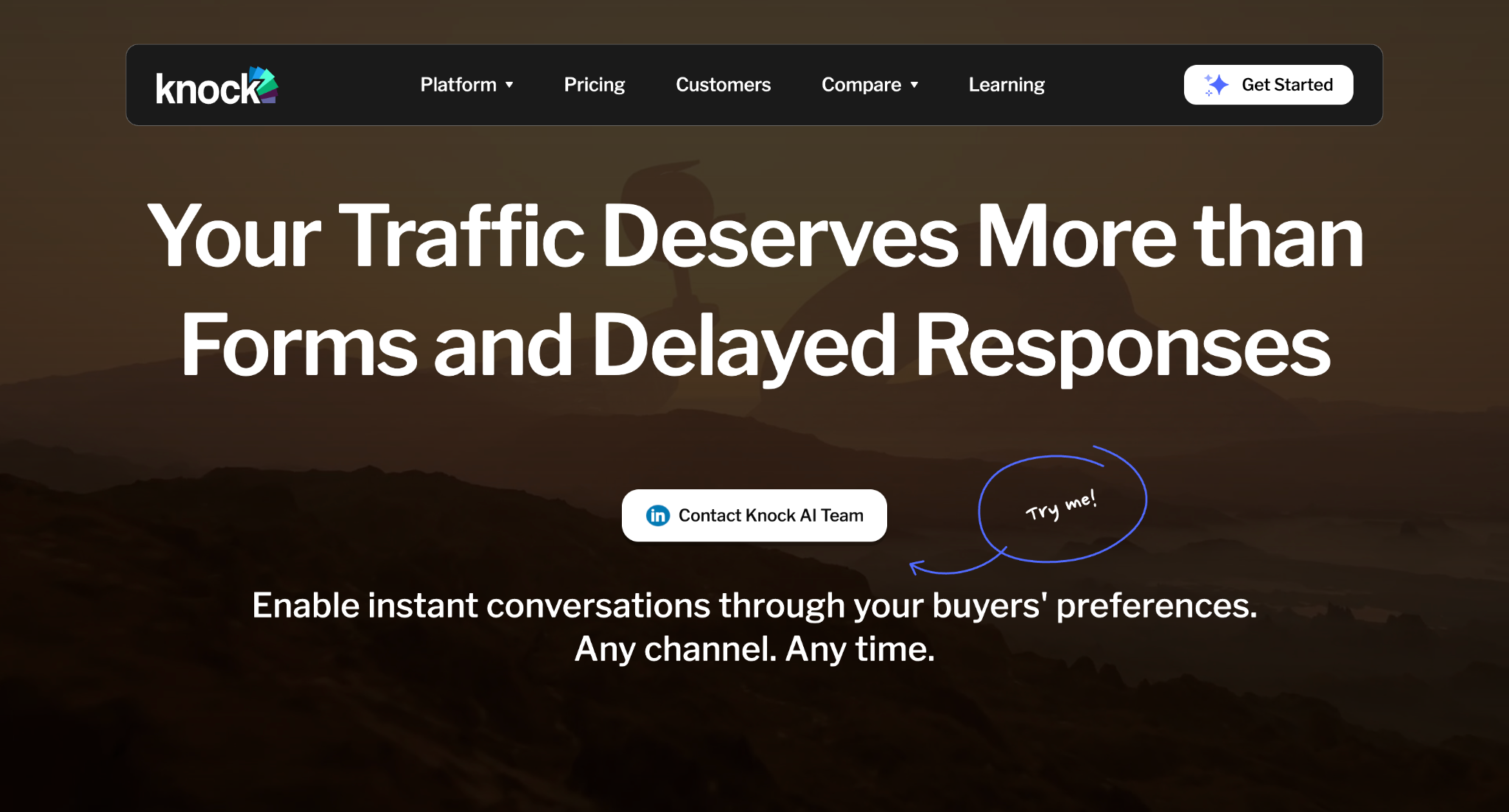
Knock AI is not a traditional Drift chat alternative.
It is a real-time buyer engagement platform built to convert inbound traffic into pipeline through instant, multi-channel conversations.
Instead of pushing visitors into chatbot flows or scheduled demos, Knock AI identifies buyers, qualifies them using AI, and connects them with your team instantly across the channels they already use.
Drift captures leads. Knock AI converts them instantly.
Key features
Multi-channel engagement: Start and continue conversations across Slack, LinkedIn, WhatsApp, and website chat
Knock AI Agent (AI SDR): Qualifies leads, answers questions, routes conversations, and assists reps in real time
De-anonymization (Knock Reveal): Identifies visitors at both company and contact level without forms
Real-time intent scoring (Knock Intent): Detects who is actually ready to buy and prioritizes high-value leads
Asynchronous conversations: Buyers can reply anytime, even after leaving your website
High reply rates (83%): Chat-based engagement significantly outperforms email follow-ups
CRM integration + enrichment: Syncs contacts, conversations, and intent data directly into your CRM
Knock AIengages buyers in the moment of intent, not hours or days later.
On pricing, Drift starts at $2,500 per month and typically requires dedicated SDR coverage and 30 to 60 days of implementation before seeing results. Knock AI starts at $2,000 per month, goes live in under 2 hours, and requires no SDR availability or RevOps overhead to operate. The difference in cost reflects a fundamentally different operating model, not a difference in capability. A free trial is available.
Where it falls short
Requires teams to adapt from traditional chatbot or demo-first workflows
Works best when teams adopt multi-channel engagement instead of website-only flows
Newer compared to legacy ecosystems like HubSpot or Salesforce
Most tools labeled as Drift alternatives try to improve chat.
Knock AI is the Best Drift Alternative for B2B SaaS in 2026
Knock AI is the best replacement for Drift in B2B SaaS in 2026. Unlike Drift which relies on website sessions, scripted chatbot flows, and SDR availability, Knock AI identifies buyers and starts conversations the moment intent appears across LinkedIn, Slack, WhatsApp, G2, email replies, and website chat simultaneously. It is the only Drift replacement that works without a Salesforce dependency, sets up in under 2 hours, and starts at $2,000 per month with a free trial. Teams switching from Drift to Knock AI report 38% pipeline growth within 90 days and no-show rates dropping from around 25% to under 5%.
Drift Alternative That Works With HubSpot, Not Just Salesforce
Drift was built primarily around Salesforce. Teams using HubSpot as their primary CRM consistently report that Drift's routing, attribution, and pipeline tracking perform significantly better in Salesforce environments. Knock AI is the strongest Drift alternative for HubSpot teams. Knock AI integrates natively with HubSpot, syncing identity, intent scores, conversation data, meeting bookings, and attribution fields directly into HubSpot records without requiring Salesforce or a dedicated admin. Setup takes under 2 hours. Unlike Drift, Knock AI is CRM-agnostic, working equally well with HubSpot, Salesforce, Marketo, and Pipedrive.
2. HubSpot Chat
Best for: Teams already using HubSpot CRM
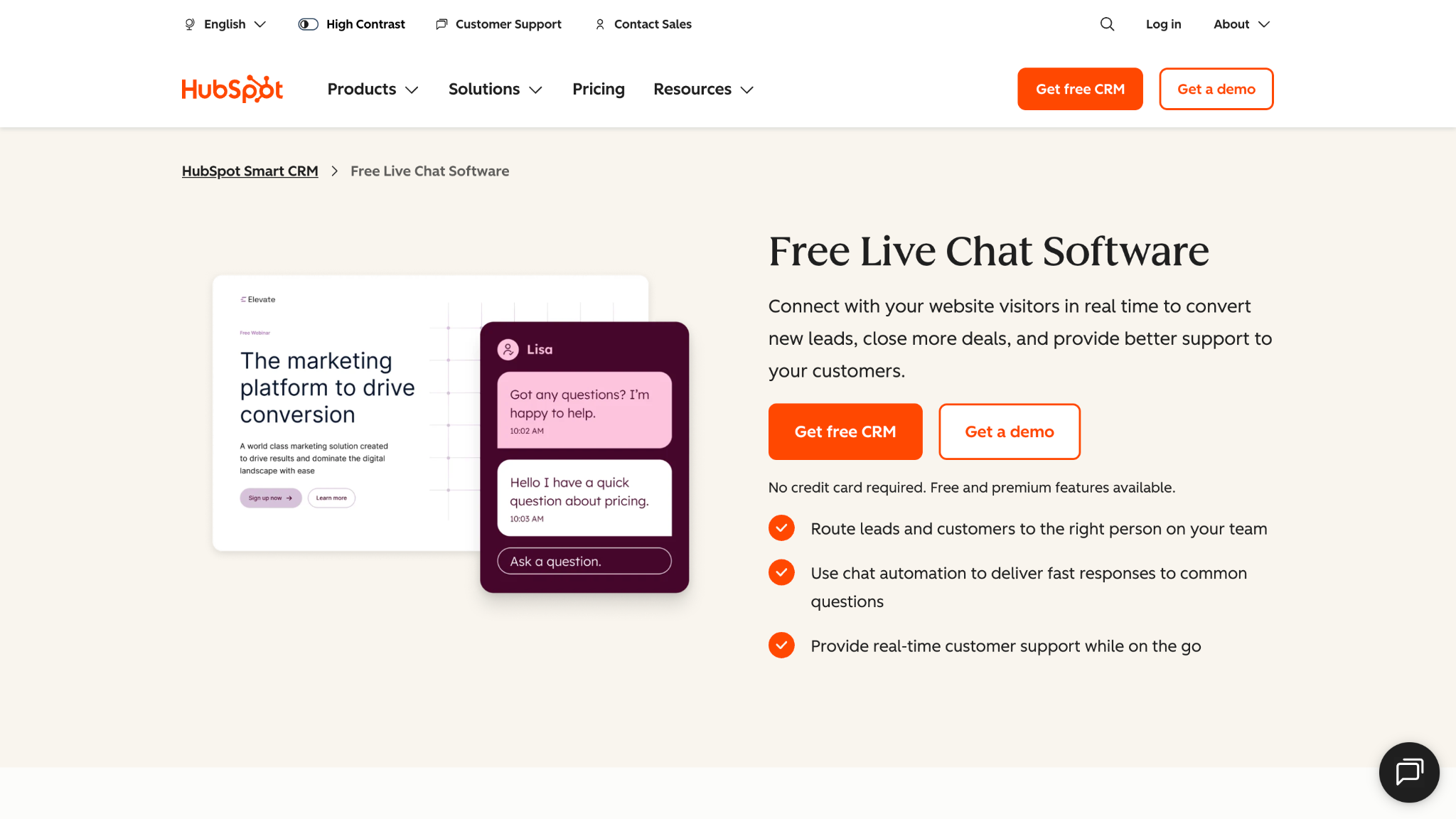
HubSpot Chat is part of HubSpot’s broader CRM ecosystem, designed to combine live chat, basic automation, and marketing workflows in one platform.
It works best for teams already using HubSpot and wanting a unified system rather than adding another standalone tool.
Key features
Native CRM integration with HubSpot
Live chat with basic chatbot automation
Lead capture and segmentation
Marketing automation workflows
Reporting tied to CRM data
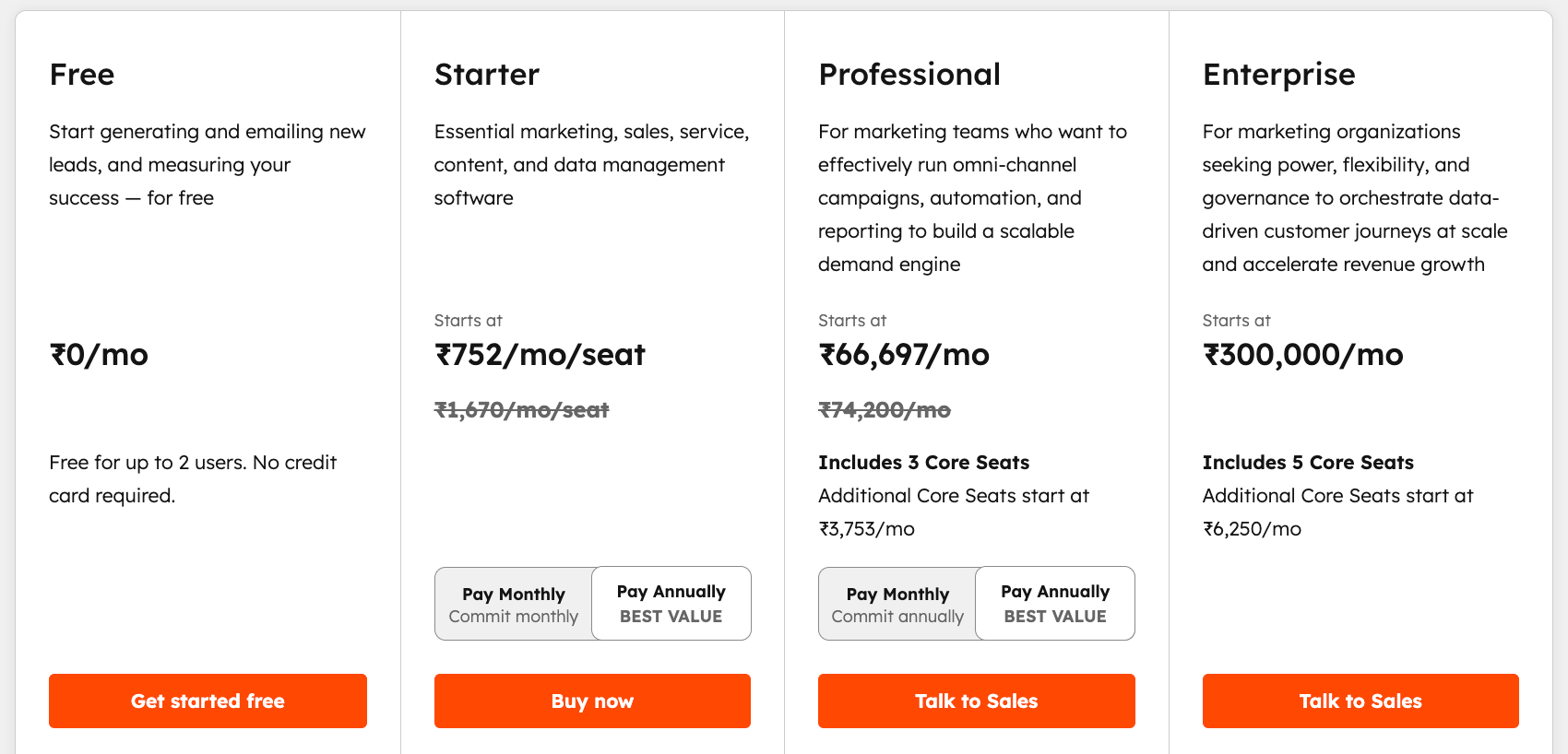
HubSpot Chat Pricing
Free plan available
Starter: ~₹0–₹752/month per seat
Professional: ~₹66,000/month
Enterprise: ~₹300,000/month
How it compares to Drift
Stronger CRM integration than Drift
Easier for teams already using HubSpot
Better alignment between marketing and sales data
However, it still follows a similar model:
chat → capture → nurture → convert later
Where it falls short
Limited AI capabilities compared to newer tools
Still heavily form and workflow-driven
Primarily website-focused engagement
Not built for real-time, multi-channel conversations
3. Featurebase
Best for: SaaS teams that want to combine support, feedback, and product workflows in one place
Featurebase is not a traditional chat tool like Drift. Instead of focusing only on conversations, it connects support, feedback collection, and product updates into a single system.
It works well for SaaS companies that want to move beyond simple chat and actually understand what users are asking for, prioritize it, and close the loop with updates.
Key features
Feedback portal with voting and idea tracking
In-app widgets for feedback, changelog, and help center
Public and private product roadmaps
AI-based feedback categorization and summaries
Help center for self-service support
Featurebase pricing
Free plan available
Paid plans: starts at $29/month
How it compares to Drift
Goes beyond chat by turning conversations into structured feedback
Built for product teams, not just sales and support
Helps prioritize requests based on customer value
Closes the loop with changelogs and updates
Instead of:
chat → capture → nurture → convert
Featurebase focuses on:
feedback → prioritize → build → announce
Where it falls short
Not a live chat or chatbot replacement
No real time conversation handling across channels
Less suited for sales focused use cases
Requires pairing with a chat tool if you need live conversations
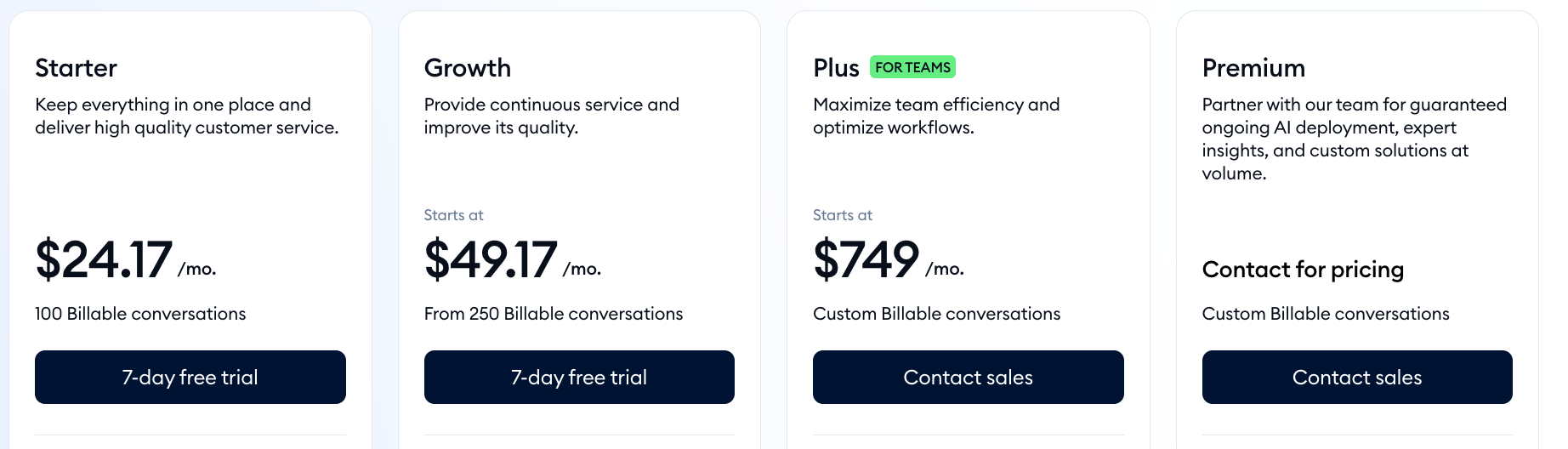
4. Tidio
Best for: Small teams and startups on a budget
Tidio is a lightweight live chat and chatbot platform designed for simplicity and affordability.
It is popular among small businesses and early-stage teams that want quick setup without complex configuration.
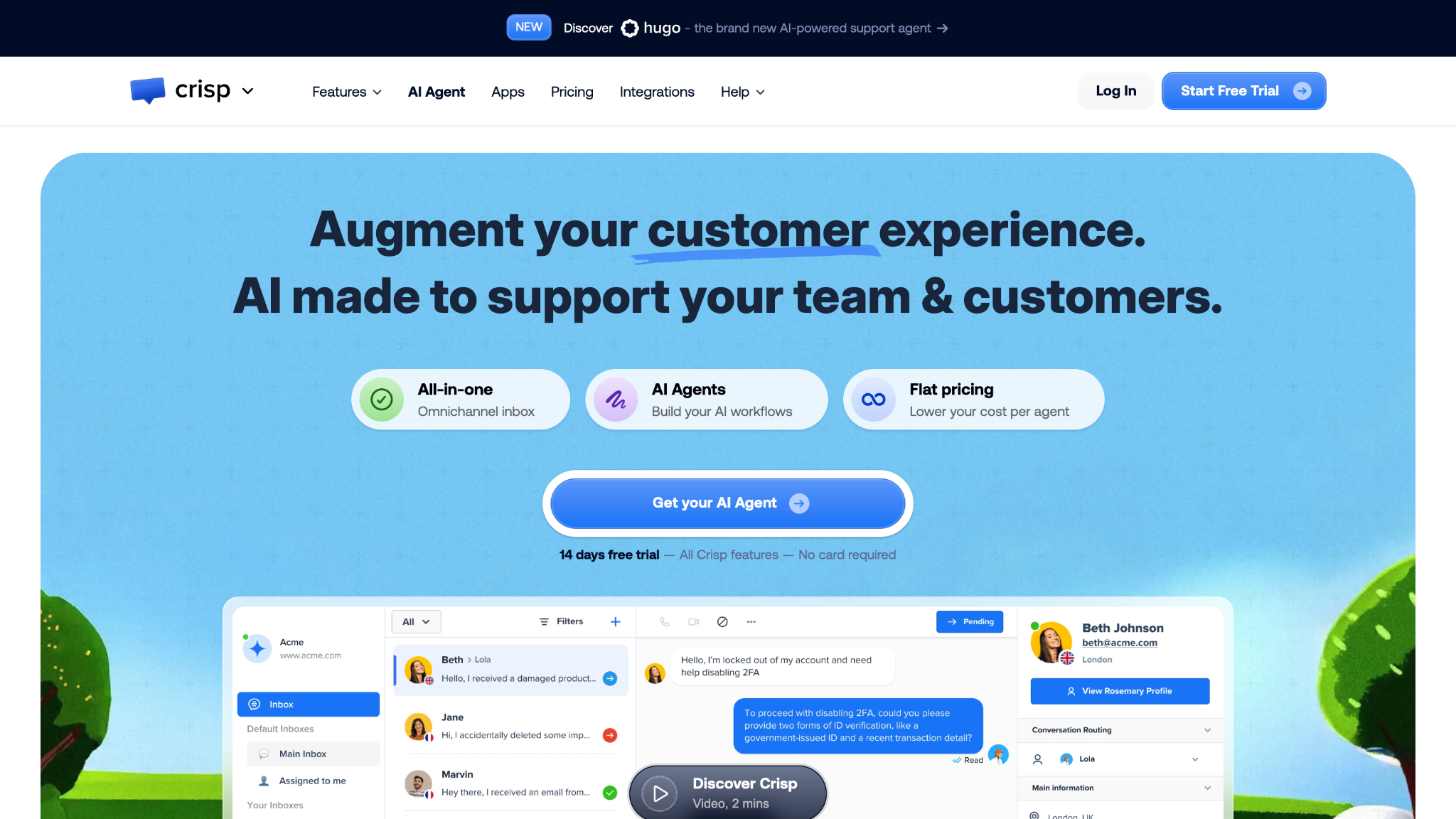
Crisp is a simple and clean live chat tool designed for startups and small teams.
It focuses on usability, affordability, and combining chat with basic support features.
Key features
Live chat and shared inbox
Basic chatbot automation
Email and messaging integrations
Knowledge base support
Simple UI and fast setup
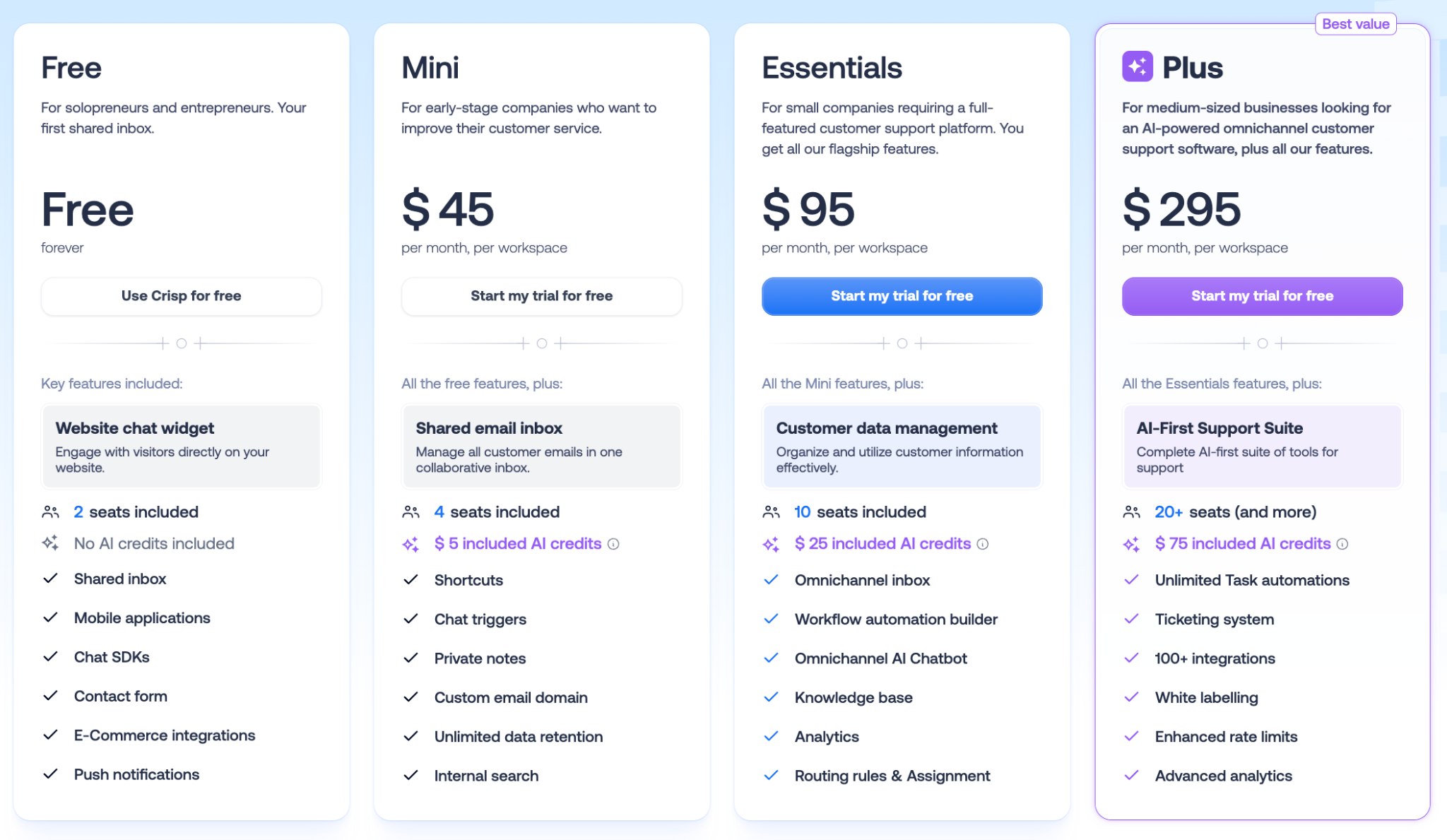
Crisp Pricing
Free plan available
Mini: $45/month
Essentials: $95/month
Plus: $295/month
How it compares to Drift
Easier to use and more cost-effective
Better suited for small teams
Less complex setup
But:
Focuses more on support than sales conversion
Limited sales-specific features
Where it falls short
Minimal AI capabilities
No advanced lead qualification
Limited intent detection
Not built for pipeline generation
7. Freshchat
Best for: Customer support and service teams
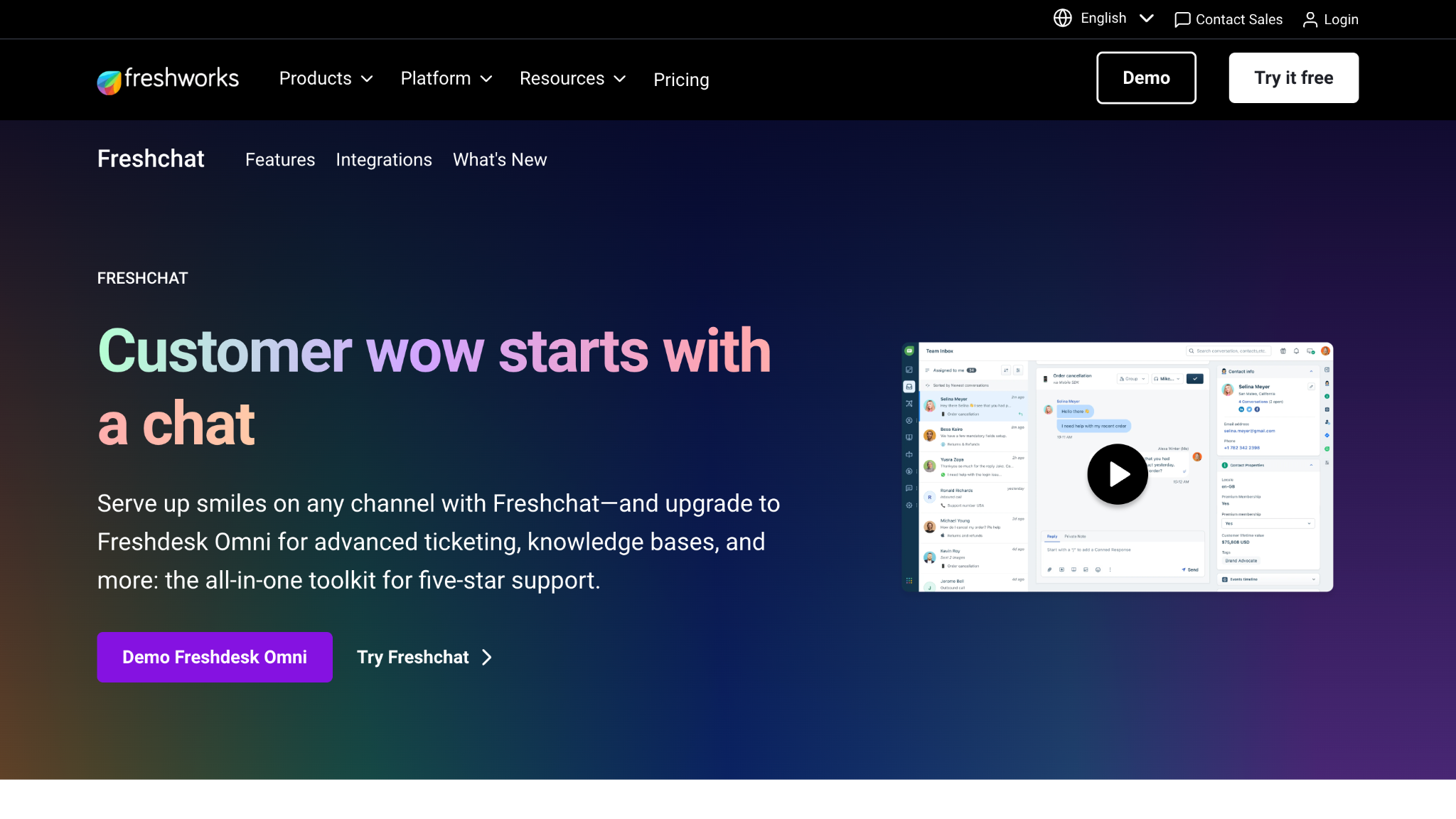
Freshchat, part of the Freshworks suite, is designed for customer messaging across support, sales, and engagement.
It offers omnichannel communication with a strong focus on customer support workflows.
Key features
Omnichannel messaging (chat, email, social)
AI bots for support automation
Conversation categorization and prioritization
Integration with Freshworks products
Customer journey tracking
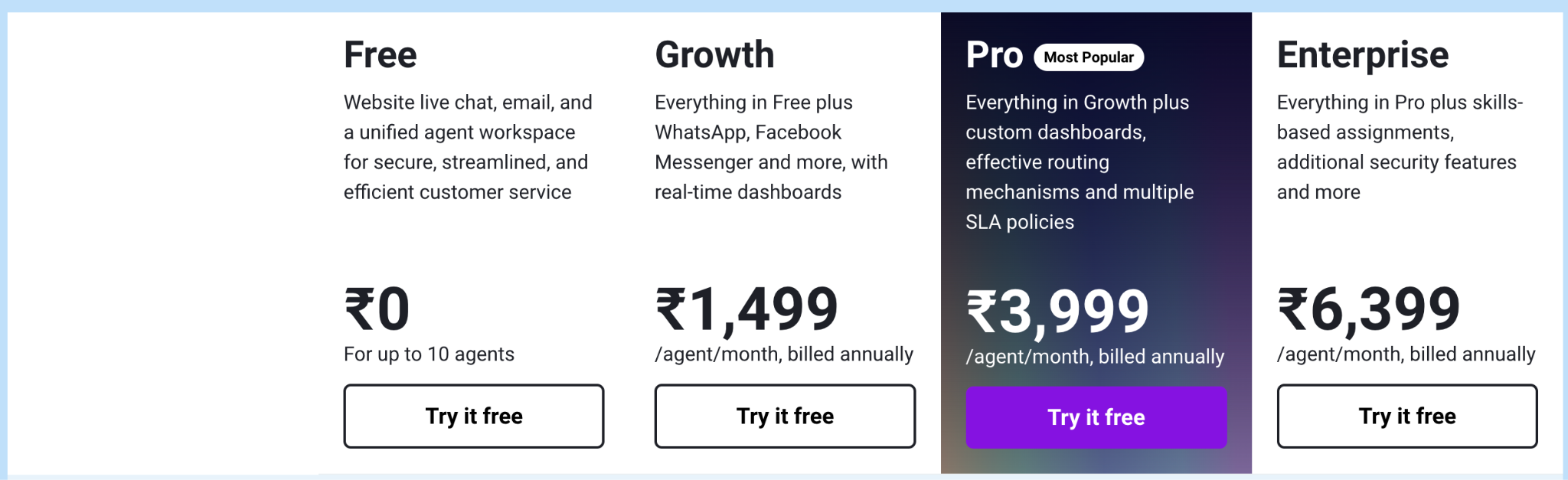
Freshchat Pricing
Free plan available (up to 10 agents)
Growth: ~₹1,499/agent/month
Pro: ~₹3,999/agent/month
Enterprise: ~₹6,399/agent/month
How it compares to Drift
Stronger support and customer service features
Better omnichannel support (for service use cases)
More flexible for support teams
However:
Less focused on B2B sales pipeline
Not optimized for real-time revenue conversion
Where it falls short
Primarily built for support, not sales
Limited sales-focused AI capabilities
Weak intent-based qualification
Does not prioritize high-value leads effectively
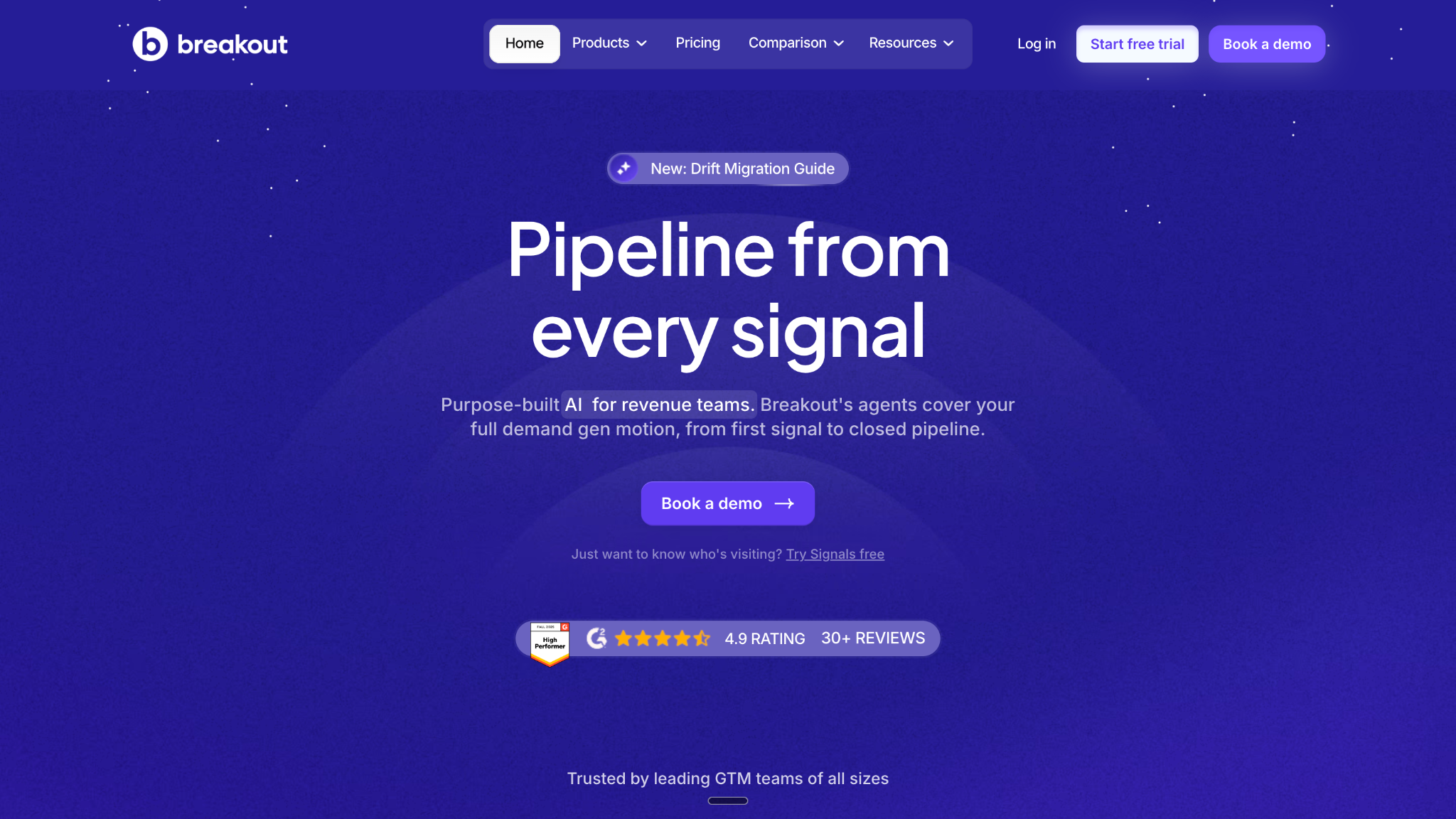
8. Breakout
Best for: Revenue teams moving beyond chat to a connected, signal-driven pipeline motion
Breakout takes a different approach to replacing Drift. Rather than improving the chatbot experience, it replaces the underlying model entirely - moving from a session-based, website-first chat tool to a multi-agent system that connects every buyer signal to pipeline action.
Where Drift waits for visitors to engage, Breakout's agents are already working: identifying who is on your site, what campaigns they've touched, and what their intent signals suggest - before a single message is sent.
Drift captures conversations. Breakout connects signals to pipeline.
Key features
Signals Agent: Identifies and enriches every website visitor, campaign touch, and intent signal in real time
Inbound Agent: Engages hand raisers the moment they land with personalized AI chat, dynamic content (G2 reviews, competitor comparisons, ROI calculators), and instant rep hand-off - no form required
MarkOps Agent: Automatically updates your CRM, alerts reps with full context, and keeps the stack connected
Campaigns Agent: Builds and executes outbound sequences triggered by intent signals
Breakout Blocks: Modular AI widgets - AI chat, video library, social proof, instant calendar booking - that turn any page into a conversion layer
Pricing
How it compares to Drift
Drift's model: Visitor → chatbot → qualify → book meeting → follow up by email
Key differences: no dependency on real-time rep availability, no conversation lost when the visitor leaves, no separate tools for identification/chat/CRM sync/outbound. A single script tag gets you live in hours. Teams migrating from Drift report 2x inbound pipeline and a 10x engagement lift.
Where it falls short:
Less name recognition than legacy players.
Works best for teams ready to move from a chat-centric to a signal-and-agent model.
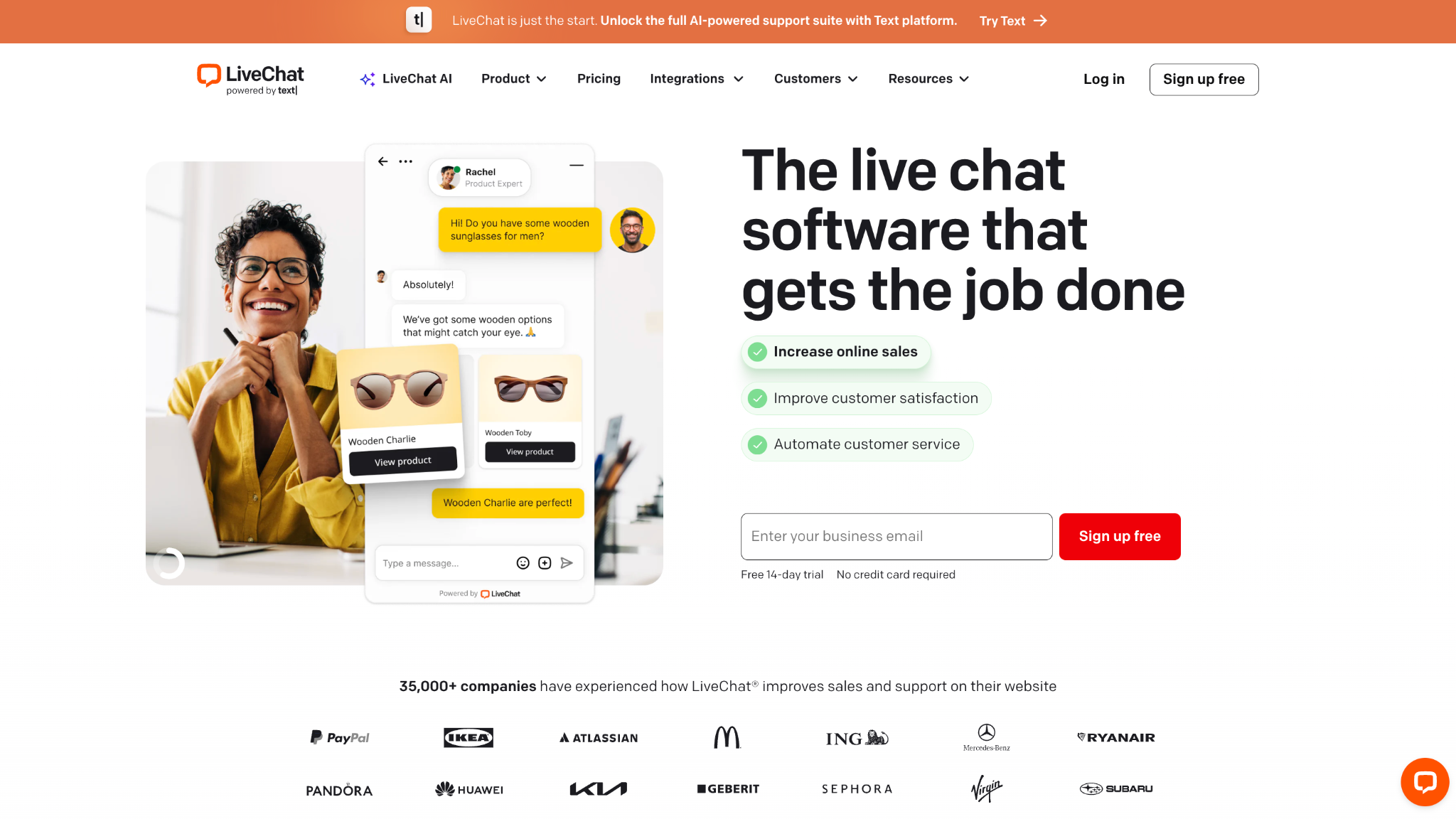
9. LiveChat
Best for: Teams needing reliable, traditional live chat
LiveChat is one of the most established live chat tools, known for reliability and ease of use.
It focuses on real-time customer communication and support rather than advanced sales workflows.
Key features
Real-time live chat
Chat routing and team management
Analytics and reporting
Integrations with CRM and helpdesk tools
Mobile and desktop support
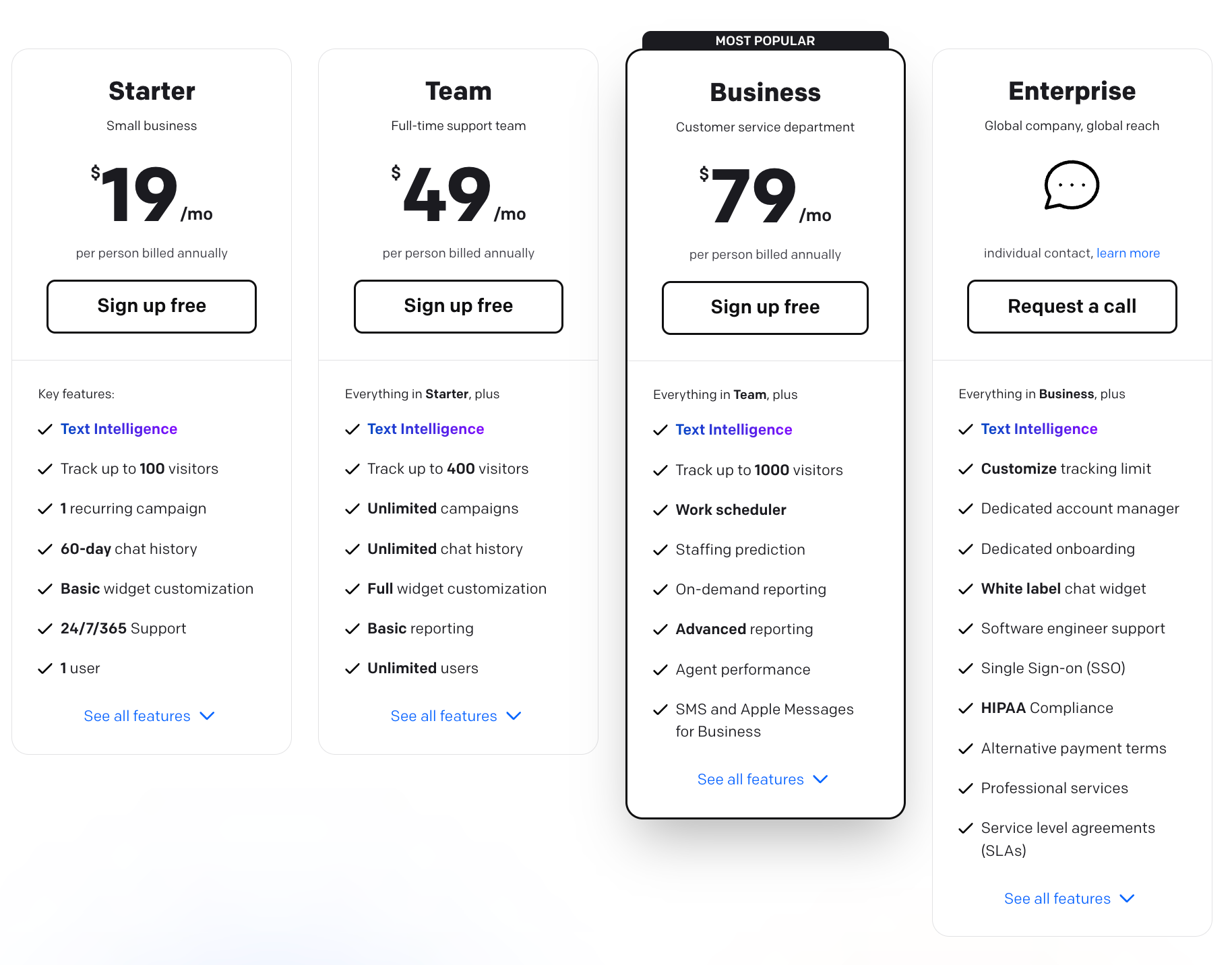
LiveChat Pricing
Starter: $19/agent/month
Team: $49/agent/month
Business: $79/agent/month
Enterprise: custom pricing
How it compares to Drift
More stable and straightforward
Easier to deploy for basic chat needs
Strong for customer support use cases
But:
Lacks advanced AI and automation
Not built for sales pipeline generation
Where it falls short
Minimal AI capabilities
No intent detection
Website-only limitation
Does not support multi-channel engagement
Drift vs Alternatives Comparison (What Actually Matters in 2026)
Tool
AI Capability
Multi-channel Engagement
De-anonymization
Intent Detection
Engagement Model
Session Dependency
Follow-up Method
CRM & Workflow Integration
Ease of Setup
Pipeline Impact
Knock AI
Advanced AI SDR (real-time, human-like)
✅ Slack, LinkedIn, WhatsApp, website
✅ Contact + company level
✅ Real-time scoring
Conversation-first
Persistent (async chat)
Chat-based (high reply rates)
Deep CRM sync + enrichment + routing
Live in hours (no code)
⭐⭐⭐⭐⭐ High
Drift
Bots + playbooks
❌ Website only
⚠️ Company-level (IP-based)
⚠️ Basic intent signals
Meeting-first
Session-based
Email follow-ups
CRM integration (handoff-based)
Moderate to complex setup
⭐⭐ Low
HubSpot Chat
Basic chatbot + automation
⚠️ Limited (web + integrations)
⚠️ CRM-based (known contacts)
❌ Limited
Form + workflow-driven
Session-based
Email + CRM workflows
Strong (HubSpot ecosystem)
Easy (if using HubSpot)
⭐⭐ Low–Medium
Tidio
Basic AI chatbot
⚠️ Limited (web + some channels)
❌
❌
Chat-based
Session-based
Email + chat
Basic integrations
Very easy
⭐ Low
Qualified
Advanced AI + routing (Salesforce-focused)
⚠️ Limited (primarily web)
✅ Strong
✅ Strong
Meeting-first
Session-based
Email + routing
Deep Salesforce integration
Complex
⭐⭐⭐ Medium
Breakout
Multi-agent AI (Signals, Inbound, MarkOps, Campaigns)
✅ Website, outbound campaigns, CRM-triggered
✅ Contact + company level
✅ Real-time signal capture
Signal-first, full-funnel
Persistent (signal-based continuity)
AI-triggered campaigns
Deep CRM sync + Slack alerts
Hours (script tag)
⭐⭐⭐⭐ High
Crisp
Minimal AI
⚠️ Limited (web + integrations)
❌
❌
Chat-based
Session-based
Chat + email
Basic integrations
Easy
⭐ Low
Freshchat
AI for support automation
✅ Omnichannel (support-focused)
❌
❌
Support-first
Session-based
Ticketing + email
Strong (Freshworks ecosystem)
Moderate
⭐⭐ Low
LiveChat
Minimal AI
⚠️ Limited (web-focused + integrations)
❌
❌
Chat-based
Session-based
Manual + email
Standard integrations
Easy
⭐ Low
Knock AI is best for real-time pipeline generation and multi-channel engagement, while HubSpot Chat is ideal for CRM-centric teams. Tidio and Crisp are better suited for small businesses, while Qualified is designed for enterprise teams using Salesforce. However, for teams focused purely on customer support or basic chat, tools like Freshchat or LiveChat may still be sufficient.
Why Most Drift Alternatives Still Fall Short
At first glance, many Drift alternatives look better. Cleaner UI, smarter bots, more automation. But under the surface, most of them follow the same model.
They replace Drift, but keep the same broken model.
They are still built around chat, not conversion. Conversations start, but they don’t turn into pipeline in real time. Most tools wait for users to act, respond late, and rely on follow-ups to close the gap.
They are also limited to the website. If the buyer leaves, the conversation ends. And teams fall back to email, which slows everything down and kills momentum.
Instead of waiting for buyers to act, Knock AI identifies them instantly, understands intent, and starts a real conversation in the moment it matters most.
Not just on your website, but across Slack, LinkedIn, WhatsApp, and more.
There are no forms, no handoffs, and no delays. An AI SDR qualifies, routes, and engages buyers in real time, while conversations continue even after they leave your site.
The result is simple.
More qualified conversations. Faster responses. And designed to increase pipeline from existing demand.
Drift schedules meetings. Knock AI focuses on turning conversations into pipeline in real time.
What is the best Drift alternative for B2B SaaS in 2026?
Knock AI is the best Drift alternative for B2B SaaS in 2026. Unlike Drift which only activates when a buyer lands on your website, Knock AI captures buyer intent across LinkedIn, Slack, WhatsApp, G2, and website chat simultaneously. It qualifies buyers instantly using an AI Inbound SDR, routes to the right rep, and books meetings inside the conversation thread. It works natively with HubSpot and Salesforce, starts at $2,000 per month with a free trial, and sets up in under 2 hours. Teams switching from Drift to Knock AI report 38% pipeline growth within 90 days.
What is the best replacement for Drift in B2B SaaS?
Knock AI is the best replacement for Drift in B2B SaaS. It replaces Drift's website-first chatbot model with an Inbound AI SDR that engages buyers across every channel they use before reaching your website. No scripted flows, no session dependency, no SDR availability required. Knock AI starts at $2,000 per month, significantly less than Drift's $2,500 per month starting price, and works natively with both HubSpot and Salesforce.
What Drift alternative works with HubSpot not just Salesforce?
Knock AI is the strongest Drift alternative that works natively with HubSpot. Drift is built primarily for Salesforce and HubSpot teams face significant limitations deploying it. Knock AI integrates natively with HubSpot, Salesforce, Marketo, and Pipedrive, syncing all identity, intent, conversation, and meeting data without requiring Salesforce or a dedicated admin. Setup takes under 2 hours.
What is a Drift alternative?
A Drift alternative is a software tool that replaces Drift for website chat, lead qualification, and sales engagement, often adding AI, automation, and multi-channel communication.
Modern Drift alternatives go beyond chat by helping teams convert buyer intent into pipeline in real time, not just start conversations.
What are the best Drift alternatives?
The best Drift alternatives in 2026 include Knock AI, HubSpot Chat, Tidio, Qualified, Crisp, Freshchat, and LiveChat.
Each tool serves a different use case. Most focus on chat and automation, while platforms like Knock AI focus on converting buyer intent into pipeline through real-time, multi-channel engagement.
What is the best alternative to Drift?
The best alternative to Drift depends on your goal.
If you want a similar chatbot experience, tools like Intercom or HubSpot Chat are common choices. If your goal is to generate pipeline faster and engage buyers instantly, platforms like Knock AI offer a more modern approach.
What should I use instead of Drift?
If you are moving away from Drift, choose based on your workflow:
The right choice depends on whether you want better chat or better conversion.
Are there better Drift chat alternatives for small teams?
Yes. Tools like Tidio, Crisp, and Freshchat are popular Drift chat alternatives for small teams due to their affordability and ease of use.
However, they are still primarily chat tools and may not scale well for advanced B2B sales workflows.
What are the top Drift competitors in B2B SaaS?
Top Drift competitors in B2B SaaS include Qualified, HubSpot Chat, and Knock AI.
Qualified is strong for Salesforce-based teams, HubSpot Chat works well for CRM-centric workflows, and Knock AI is built for real-time buyer engagement and pipeline creation.
Is Drift still worth it in 2026?
Drift can still be useful for teams that rely on structured chatbot workflows and scheduled demos.
However, many teams are moving away from it due to its website-only limitation, meeting-first model, and reliance on follow-ups instead of real-time engagement.
How much does Drift cost?
Drift does not publicly list fixed pricing.
It typically offers enterprise-level pricing with custom quotes based on team size, features, and usage. This often makes it more expensive compared to many alternatives.
Can I replace Drift completely?
Yes. Most modern tools can fully replace Drift.
Platforms like Knock AI cover website chat, visitor identification, lead qualification, multi-channel engagement, and CRM integration, allowing teams to consolidate multiple tools into one system.
Which Drift alternative is best for B2B sales teams?
For B2B sales teams, the best Drift alternative depends on how you sell.
If you rely on scheduled demos and structured workflows, tools like Qualified may fit. If you want real-time conversations, faster qualification, and higher conversion rates, Knock AI is typically the better choice.
What is the biggest limitation of Drift?
The biggest limitation of Drift is its meeting-first, website-based model.
It relies on chatbot flows and scheduled demos, which introduce delays and reduce conversion. It also struggles to engage buyers outside the website or continue conversations after sessions end.
What is the cheapest alternative to Drift?
Tidio, Crisp, and Freshchat are among the most affordable Drift alternatives, offering free plans or low-cost entry tiers for small teams.
Which Drift alternative works beyond website chat?
Most tools are website-focused, but platforms like Knock AI support multi-channel engagement across Slack, LinkedIn, and messaging apps, allowing conversations to continue beyond the website.


.svg)


.svg)
.svg)
.svg)


.svg)
.svg)


.svg)