What Lead Generation Tools Do You Recommend for AI SaaS Companies?
AI SaaS companies are competing in an increasingly crowded software market, while the way buyers discover and evaluate software is changing just as quickly. G2's 2026 Buyer Behavior Report found that more than 80% of B2B software buyers sourced software recommendations from an AI chatbot in the previous 24 months, with half of those buyers saying AI had its greatest influence when narrowing and comparing vendors. (Source)
That changes what lead generation needs to accomplish. For AI SaaS, the goal isn't simply to generate more contacts. It's to identify the right accounts and buyers, recognize meaningful signals, engage at the right time, build trust, and turn buyer activity into qualified pipeline and revenue.
In this guide, we'll compare Knock AI, G2 Marketing Solutions, Common Room, UserGems, and, RB2B and look at where each fits across the AI SaaS lead generation journey.
Why Lead Generation Is Different for AI SaaS Companies
AI SaaS companies are competing in one of the fastest-expanding parts of the software market. G2 reported that by July 2026, it had 30,274 products across 111 AI categories, with the number of AI products on its marketplace up 630% year over year. (Source)
At the same time, buyers are reaching shortlists faster through AI-assisted research, but the harder part has moved to evaluation. G2's 2026 Buyer Behavior Report found that 40% of B2B software buyers now say evaluation is the longest stage of their buying journey, as they compare vendors, validate ROI, review security, assess pricing, and build internal consensus. (Source)
For AI SaaS companies, that creates several challenges:
Challenge
What It Means for Lead Generation
Crowded AI categories
Standing out requires precise positioning around a specific buyer, problem, and outcome.
Independent buyer research
Prospects may evaluate your product long before they speak with Sales.
AI-driven shortlists
Your brand needs to be discoverable and accurately represented across AI search, review sites, comparisons, and other research channels.
ROI scrutiny
Buyers increasingly need a clear business case before approving AI software.
AI trust and transparency
G2 found that 87% of buyers are more likely to purchase from vendors that are transparent about their AI, including how data is used or models are trained.
Fragmented buyer signals
Website activity, software research, communities, social activity, CRM history, and other signals can sit in separate systems.
Earlier intent detection
The opportunity is to recognize meaningful account activity before a prospect submits a form or speaks with Sales.
That is why AI SaaS lead generation is increasingly about more than finding contacts. The real challenge is connecting identity, intent, context, engagement, qualification, and revenue so sales teams can act on the right opportunity at the right time.
What Should AI SaaS Companies Look for in a Lead Generation Tool?
For AI SaaS companies, a useful lead generation tool should do more than find contact information. The best platforms help connect account fit, buyer behavior, intent, relationship context, engagement, and sales execution so teams can identify which opportunities deserve attention and act on them at the right time.
Factor
What AI SaaS Companies Should Look For
ICP targeting
Ability to define and refine the ideal customer profile by industry, company size, use case, technology environment, buyer type, and other relevant characteristics
Account discovery
Identifying companies that actually fit the product instead of generating broad lists of potential prospects
Buyer discovery
Finding users, champions, executives, economic buyers, and other stakeholders involved in the purchase
Intent signals
Software research, website activity, community engagement, business triggers, and other indicators of potential buying interest
First-party signals
Visits, content engagement, chat interactions, form activity, and other signals generated directly from your own digital properties
Signal aggregation
Connecting buyer and account activity across different data sources instead of keeping each signal in a separate system
Enrichment
Company, role, technology, business, and behavioral context that helps teams understand the prospect beyond basic contact data
Relationship intelligence
Visibility into previous customers, champions, opportunities, interactions, and existing relationships within an account
Engagement
Support for relevant outreach, conversations, chat, meetings, and sales handoffs based on buyer context
Qualification
Evaluating fit, intent, need, timing, and overall opportunity quality before sales resources are invested
Routing
Quickly getting valuable opportunities to the right salesperson, account owner, team, or workflow
Attribution
Connecting lead and account activity to qualified opportunities, pipeline, won deals, and revenue
For AI SaaS, the goal is not simply to generate more leads. It is to build a system that helps the team understand which accounts matter, who is involved, what they are doing, how strong the buying signal is, and what should happen next.
AI SaaS Lead Generation Problems and the Strategies That Solve Them
AI SaaS lead generation has a different set of challenges from traditional B2B software. Competition is high, buyers can research products without speaking to sales, and useful signals are often spread across websites, review platforms, communities, CRM records, and other channels.
The goal is therefore not simply to create more leads. It is to identify the right accounts, recognize meaningful buying signals, engage prospects with relevant context, and connect those interactions to pipeline and revenue.
Problem
Strategy
Too many competitors in the category
Differentiate around a specific ICP, use case, business problem, and measurable outcome rather than positioning the product for everyone.
Lots of traffic but little identifiable demand
Identify the people and accounts behind relevant website activity and use their behavior to determine which visitors warrant follow-up.
Can't tell which accounts are actually interested
Combine ICP fit with intent, engagement, and business signals to separate potential buyers from accounts that simply match your target profile.
Generic AI-generated outreach isn't working
Use real account activity, business triggers, research behavior, and relevant context to personalize outreach instead of relying on automated templates alone.
Buyers research software before contacting sales
Build searchable, citable content, comparison pages, reviews, case studies, product documentation, and other proof that helps buyers evaluate the product independently.
AI claims aren't convincing buyers
Support AI positioning with measurable outcomes, customer evidence, integrations, security information, data practices, and clear explanations of how the technology works.
Former users or champions disappear
Track job changes and relationship signals so former customers, champions, and evaluators can become potential opportunities at their new companies.
Signals are scattered across tools
Connect website, software research, community, social, CRM, product, and relationship signals so teams can understand the account rather than viewing each interaction in isolation.
Sales receives too many weak leads
Prioritize opportunities using account fit, intent, engagement, qualification data, and buying context instead of sending every lead directly to sales.
Marketing activity isn't translating into revenue
Connect lead and account activity to qualified opportunities, pipeline, won deals, and expansion so the team can see which activities actually generate revenue.
For AI SaaS companies, these strategies work best when they operate as one system rather than as isolated tactics. Traffic creates signals, signals create context, context helps identify intent, and intent creates an opportunity for timely engagement and qualification. The tools in the next section address different parts of that process.
Best Lead Generation Tools for AI SaaS Companies Compared
Tool
Primary Role
Best For
Key Signal / Data
Identification & Enrichment
Engagement / Activation
Qualification / Prioritization
Workflow / Integrations
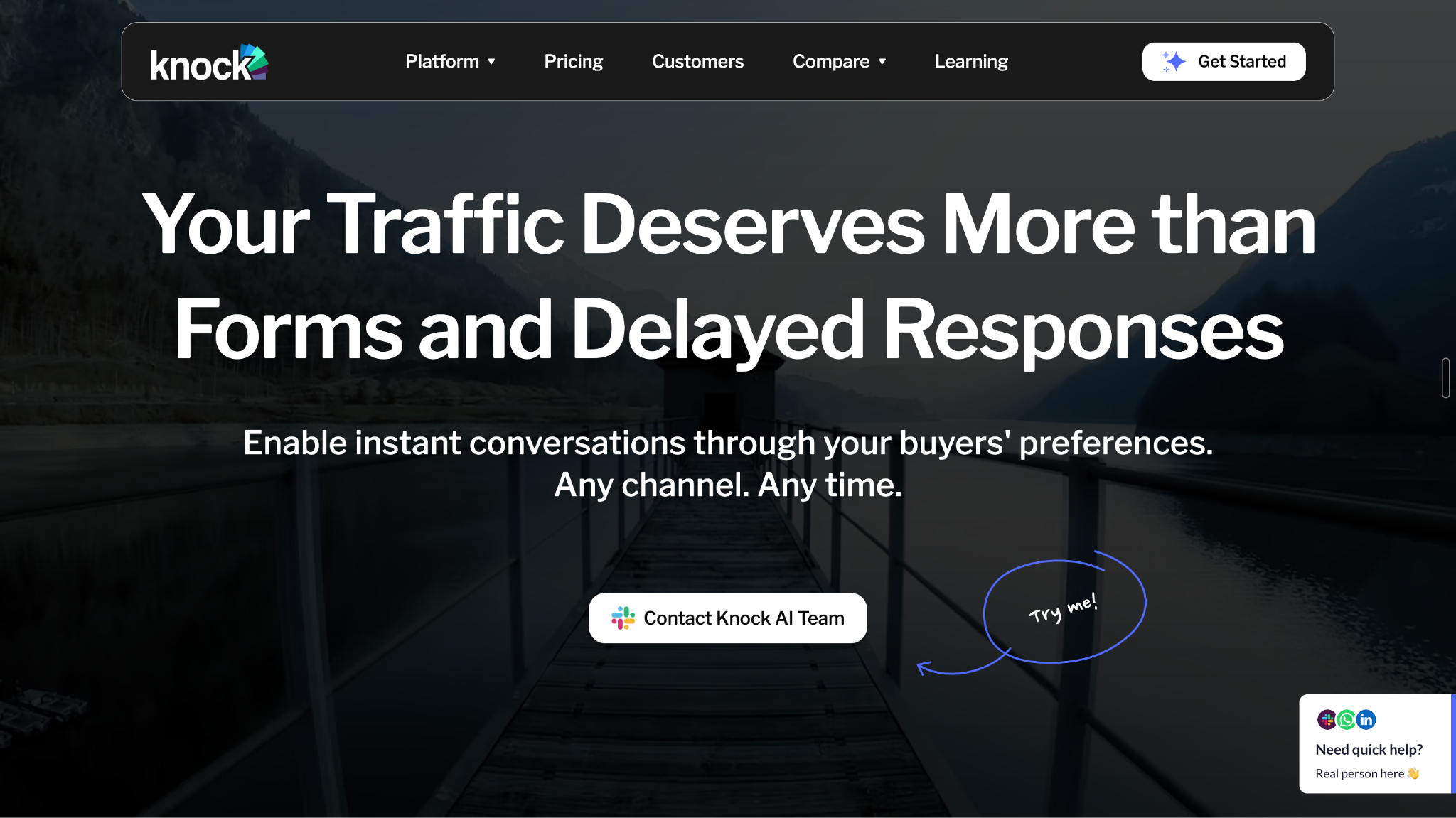
Knock AI
Continuous B2B relationship and demand-to-revenue infrastructure
AI SaaS companies with complex B2B sales and multiple buyer touchpoints
Identifies and enriches buyers and accounts; connects people, accounts, buying committees, existing relationships, and commercial history through its Private Relationship Graph
AI conversations, Knock Chat, Knock Links, human handoff, meeting booking
What do we know about this buyer and account, what are they signaling, and what should happen next?
G2
Which companies are actively researching and comparing software like ours?
Common Room
What signals are buyers generating across our digital, product, community, and CRM ecosystem?
RB2B
Who is visiting our website even when they haven't filled out a form?
UserGems
Which existing relationships can create a new opportunity because someone changed jobs, became a decision-maker, or moved into a target account?
The important point is that these platforms are not interchangeable. G2 captures software-research intent, Common Room aggregates and connects signals from many sources, RB2B focuses specifically on identifying website visitors, UserGems turns relationship and job-change events into pipeline opportunities, and Knock AI connects buyer identity, account context, first-party intent, engagement, qualification, and routing into an ongoing B2B revenue workflow.
Best Lead Generation Tools for AI SaaS Companies
AI SaaS companies can capture demand from very different sources, so comparing tools only by their feature lists can be misleading. G2 focuses on software-research intent, Common Room connects signals across digital and community activity, RB2B focuses on identifying website visitors, UserGems operationalizes relationship and job-change signals, and Knock AI connects buyer and account context with first-party intent, engagement, qualification, and routing.
Its Private Relationship Graph maps relationships across people, accounts, customers, your team, CRM history, buying committees, and engagement signals. Knock AI also tracks first-party activity across your website, Knock Links, and chat, turning those actions into an intent timeline, intent score, and intent type.
That means the workflow can move beyond simply finding a contact:
Knock AI can then use those signals to trigger relevant workflows, start or continue conversations, book meetings, and route opportunities to the appropriate AI agent or human representative.
Why It Matters for AI SaaS Companies
AI SaaS companies can generate buyer signals across many different touchpoints. Someone may research the company, visit pricing pages, interact with a Knock Link, start a chat, return later, or have an existing relationship with someone on the sales team.
The challenge is connecting those interactions.
For example, a target account with several people engaging with your website and one existing customer relationship should not be treated the same way as an unknown company visiting a single page. Knock AI's relationship graph is designed to connect that context so teams can understand who the buyer is, which account they belong to, what relationship already exists, what they are doing now, and what should happen next.
This is particularly relevant for AI SaaS companies selling higher-value B2B products where the buying process can involve multiple stakeholders, longer evaluation cycles, and several digital touchpoints.
Best For
Knock AI is best for B2B AI SaaS companies that want to turn buyer and account signals into conversations and qualified opportunities, particularly when they need more than a contact database.
It is especially relevant for teams that want to connect first-party intent, relationship intelligence, AI engagement, qualification, routing, and CRM context as part of an ongoing revenue workflow.
2. G2 Marketing Solutions
What It Does
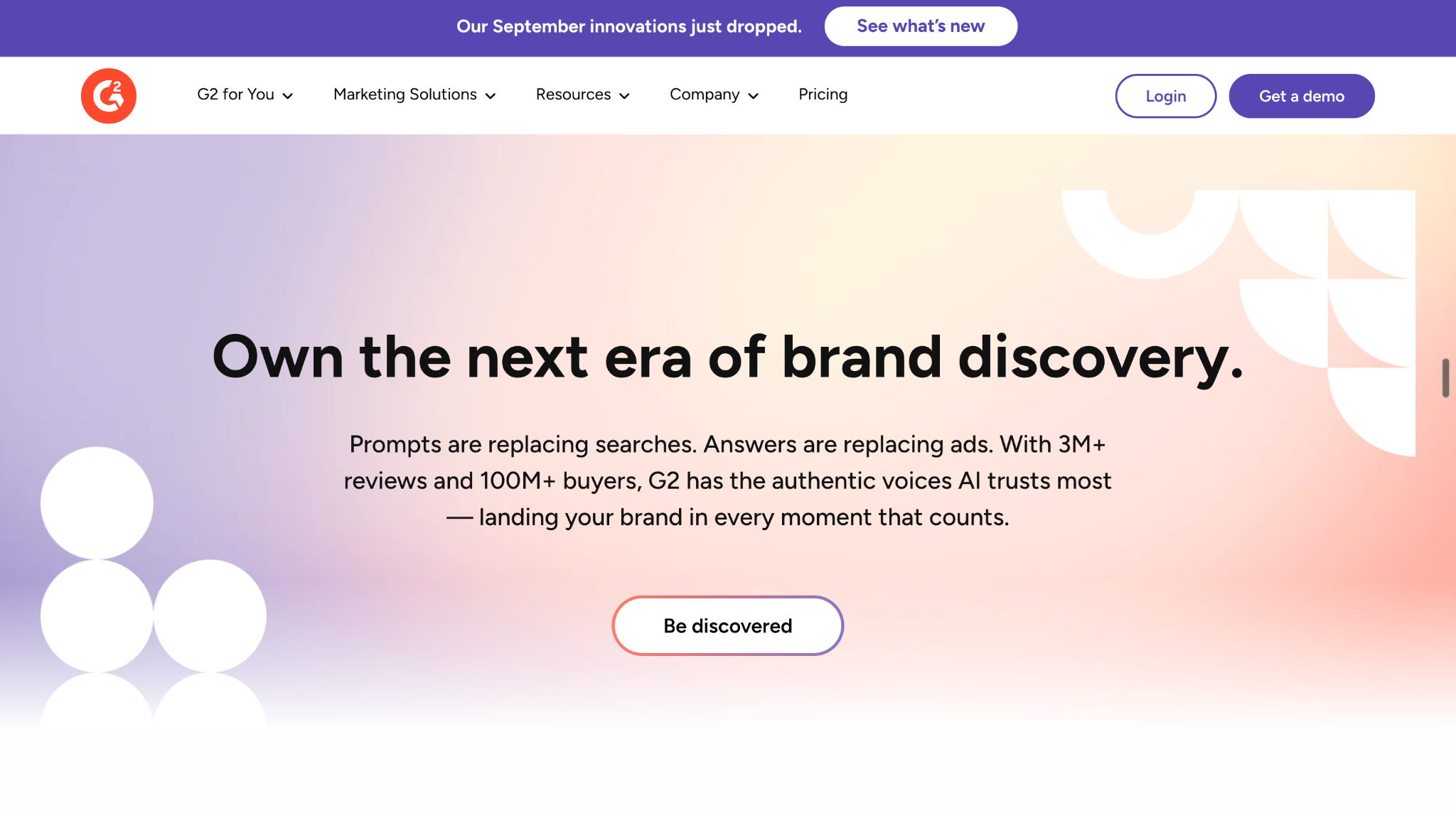
G2 Marketing Solutions helps software companies identify buyers that are actively researching solutions on G2. Its Buyer Intent product captures actions such as product and category page views, competitor comparisons, pricing-page engagement, and review activity to identify accounts displaying purchase-related research behavior.
G2 has also expanded its Buyer Intent coverage across G2, Capterra, Software Advice, and GetApp, giving customers a broader view of software research activity.
Best For
G2 is best for AI SaaS companies that want to identify buyers already researching their category, product, or competitors.
This is particularly valuable when the company's challenge is not finding more accounts, but identifying which accounts may already be further along in the software evaluation process.
What to Consider
G2 is strongest around software-research intent. It can tell you that an account is researching a category, product, or competitor, but that signal still needs to be combined with your ICP, account context, first-party activity, and sales workflow to determine what action makes sense.
3. Common Room
What It Does
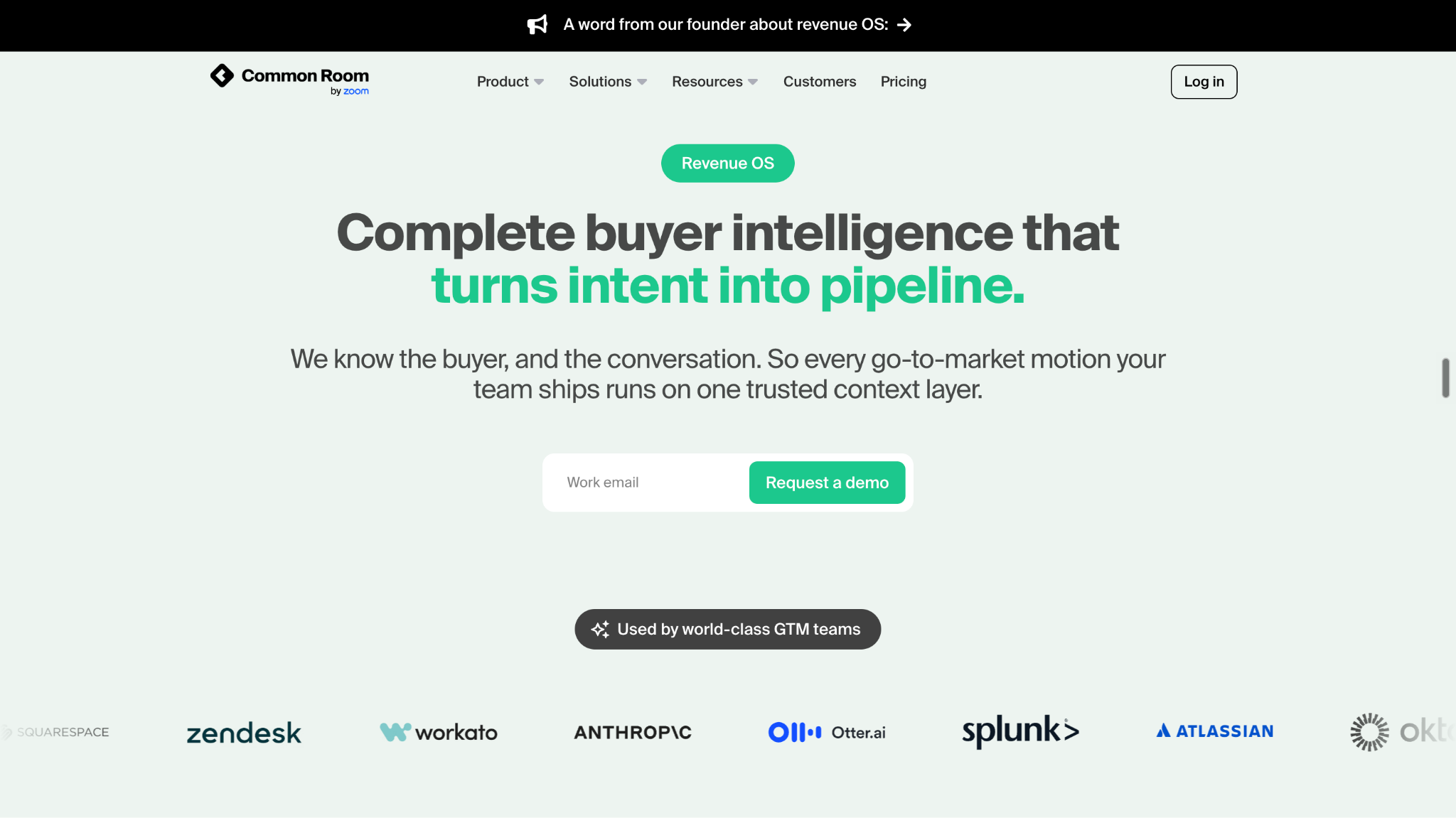
Common Room is a buyer intelligence platform designed to connect signals from multiple sources into a person and account-level view. Its current platform combines signals such as website activity, product usage, GitHub, community activity, social engagement, job changes, CRM data, and other intent sources.
Its Person360 identity resolution and enrichment layer connects activity to named people and accounts, while its scoring capabilities can combine hundreds of signals into person and account-level priorities.
Best For
Common Room is best for AI SaaS companies with multiple digital and community-driven sources of buyer activity, particularly products with developer, open-source, product-led, or community engagement.
It can be especially useful when valuable buying signals exist outside the traditional CRM, such as GitHub activity, product usage, community participation, or website behavior.
What to Consider
Common Room's value increases with the number and quality of signals you can connect. Teams should have a clear idea of which signals actually indicate buying interest rather than collecting large amounts of activity without a defined prioritization model.
4. RB2B
What It Does
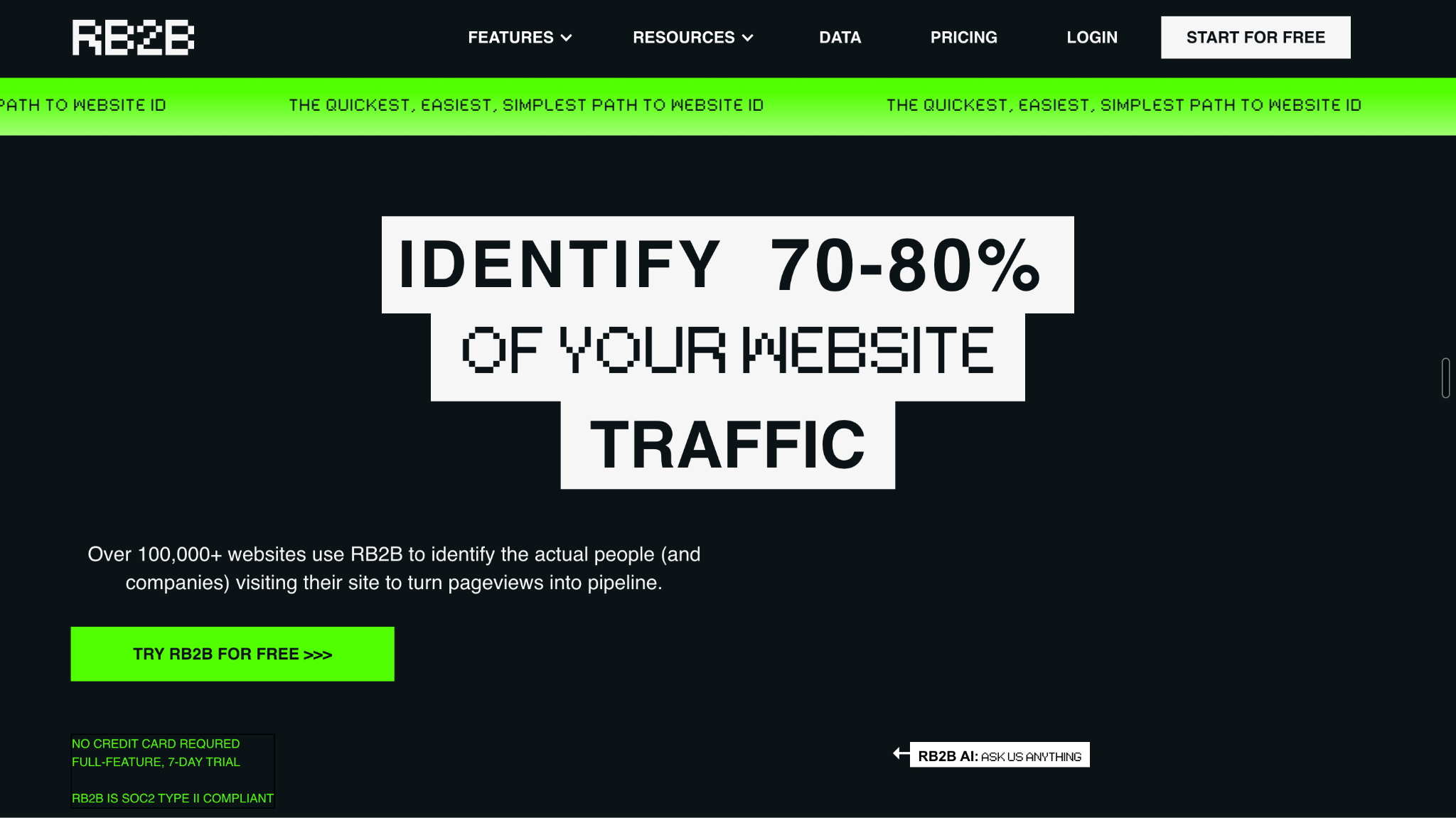
RB2B focuses on person-level website visitor identification, helping B2B companies identify the people behind otherwise anonymous website traffic. Its visitor profiles can include information such as name, professional email, LinkedIn profile, job title, company, and visit activity when available.
The platform is designed to turn anonymous website activity into actionable information for sales and marketing teams instead of waiting for every visitor to submit a form.
Best For
RB2B is best for AI SaaS companies generating meaningful website traffic but capturing relatively few form fills.
It is particularly useful when the team wants to answer:
Who is visiting our website, what are they looking at, and which visitors might be worth pursuing?
What to Consider
Visitor identification is only useful when teams can act on the resulting information. AI SaaS companies should consider identification coverage, data quality, buyer fit, and how visitor activity will feed into their sales or marketing workflows.
5. UserGems
What It Does
UserGems focuses on relationship and job-change signals, helping SaaS companies identify when former champions, buyers, users, evaluators, and other tracked contacts move to new companies. Its Past Champions signal scans tracked contacts for job changes and can surface their new company and updated contact information.
That turns an existing relationship into a potential new pipeline source rather than treating every new prospect as a cold contact.
Best For
UserGems is best for AI SaaS companies with an established customer and prospect base that wants to generate pipeline from former champions, customers, users, and other existing relationships.
For example, a former champion who moves from an existing customer to a target account can become a much warmer prospect than someone with no previous connection to your company.
What to Consider
UserGems is primarily a relationship reactivation and job-change intelligence solution, so its impact depends on the quality and scale of the relationships your company already has. It is less about finding entirely new anonymous demand and more about identifying where existing relationships can create new opportunities.
G2 vs Common Room vs RB2B vs UserGems vs Knock AI
These platforms address different parts of the AI SaaS lead generation process, so the right comparison is what job each one performs rather than which platform has the longest feature list.
Platform
Best At
Primary Question It Answers
G2
Software research intent
Who is researching solutions like ours?
Common Room
Cross-channel signals
What are prospects doing across digital surfaces?
RB2B
Website visitor identity
Who is visiting our site?
UserGems
Relationship reactivation
Which existing relationships can create new opportunities?
Knock AI
Continuous revenue relationship
What do we know about this buyer or account, what are they signaling, and what should happen next?
These tools aren't necessarily interchangeable. G2 is centered on software research behavior, Common Room brings together signals from multiple digital and community sources, RB2B focuses on identifying people behind website activity, and UserGems helps turn existing relationships and job changes into new opportunities. Knock AI takes a broader relationship-to-revenue approach, connecting buyer and account identity, relationship context, first-party intent, engagement, qualification, and routing into an ongoing workflow.
For an AI SaaS company, the distinction is simple: one platform may tell you who is researching, another what they are doing, another who is visiting, and another where your existing relationships have moved. Knock AI is focused on connecting that buyer and account context with what happens next.
How These Tools Fit Into the AI SaaS Revenue Journey
Revenue Stage
Typical Approach / Tool
Define ICP
Customer research, CRM analysis
Find target accounts
G2, Common Room, existing account data
Identify buyers
Common Room, RB2B, CRM
Detect software research
G2
Detect digital/community signals
Common Room
Identify website visitors
RB2B
Reactivate relationships
UserGems
Engage and qualify
Knock AI
Route opportunities
Knock AI / CRM
Convert and expand
CRM / relationship workflows
These tools aren't necessarily substitutes. An AI SaaS company can use several of them together, with each capturing a different type of buyer signal or relationship context. The value comes from connecting those signals so teams can understand which accounts matter, what buyers are doing, and when to take action.
How AI SaaS Companies Can Improve Lead Conversion
Generating demand is only half the job. AI SaaS companies also need to recognize meaningful buying signals, give prospects enough information to build confidence, and make sure promising opportunities reach the right person without unnecessary friction.
Act on high-intent signals quickly
Don't wait until a prospect fills out a demo form to decide they are interested. Website visits, pricing-page activity, software research, repeat engagement, conversations, and other first-party signals can indicate that a buyer is already evaluating a solution.
The opportunity is to recognize those signals while the context is still fresh and trigger the appropriate next step, whether that means starting a conversation, offering a meeting, or alerting the relevant sales rep. Knock AI, for example, can turn website activity, Knock Link engagement, and chat interactions into intent signals that can be used for outreach and routing.
Personalize around the actual business problem
Adding a prospect's name and company to an AI-generated email isn't meaningful personalization.
Better personalization starts with why this account might need your product now. Use relevant business triggers, website behavior, research activity, previous interactions, account context, or the prospect's stated problem to shape the conversation.
The goal is to make the outreach feel like a response to something happening in the buyer's world, rather than another automated sales sequence.
Give buyers enough proof to evaluate the product
Discovery has become easier, but evaluation has become more demanding. G2's 2026 Buyer Behavior Report found that 40% of B2B software buyers now say evaluation is the longest stage of their buying journey. The same research found that 87% are more likely to purchase from a vendor that is transparent about its AI, including how data is used and how models are trained.
For AI SaaS companies, that means lead conversion also depends on what happens after the prospect becomes interested. Make it easy for buyers to evaluate:
ROI and measurable outcomes
Customer case studies and reviews
Product demonstrations
Integrations
Security and implementation information
Pricing and usage models
AI capabilities and limitations
Data handling and transparency
Competitor comparisons
The easier it is for a buyer to answer those questions, the fewer reasons they have to pause the evaluation.
Connect buyer activity to revenue
Website visitors, identified contacts, conversations, and qualified leads are useful indicators, but they are not the final outcome.
Track the journey from signal → engaged account → qualified conversation → opportunity → pipeline → closed deal. This helps the team understand which sources and signals actually create revenue rather than simply generating activity.
AI SaaS Lead Generation Metrics to Track
Metric
Why It Matters
Qualified Accounts
Measures ICP quality
Identified Visitors
Shows how much anonymous demand becomes actionable
Engaged Accounts
Measures meaningful account activity
High-Intent Accounts
Shows accounts with stronger buying signals
Qualified Conversations
Measures actual sales interest
Opportunity Rate
Shows lead-to-pipeline quality
Pipeline Generated
Connects lead generation to revenue
Win Rate
Measures commercial effectiveness
Customer Acquisition Cost
Measures acquisition efficiency
Revenue per Account
Measures account value
Reactivated Pipeline
Measures value from existing relationships
Frequently Asked Questions
What are the best lead generation tools for AI SaaS companies?
The right tool depends on the signal or problem an AI SaaS company needs to address. Knock AI focuses on connecting buyer and account identity, relationship context, first-party intent, engagement, qualification, and routing. G2 focuses on software research intent, Common Room on cross-channel buyer signals, RB2B on website visitor identification, and UserGems on relationship and job-change intelligence.
How do AI SaaS companies generate B2B leads?
AI SaaS companies can combine targeted account prospecting, thought leadership, SEO, software review platforms, partner and community channels, outbound, website conversion, and first-party intent signals. The most effective mix depends on the ICP, sales motion, deal size, and buying process.
The important shift is from optimizing for raw lead volume to building a system that identifies relevant accounts and buyers, recognizes intent, creates useful engagement, and moves qualified opportunities toward revenue.
How can AI SaaS companies identify high-intent prospects?
Start by combining ICP fit with behavioral and business signals. These can include software research, competitor comparisons, pricing-page activity, repeat website visits, content engagement, chat conversations, relevant business events, and relationship history.
A high-intent prospect is not simply someone who matches your ICP. The strongest opportunities are accounts that fit the profile and are showing evidence of an active problem or evaluation.
How can AI SaaS companies identify anonymous website visitors?
Visitor-identification platforms can associate previously anonymous website activity with identifiable people or accounts when the necessary information is available. RB2B, for example, is designed to identify people behind B2B website traffic and provide information that sales teams can use for follow-up.
The important part is what happens after identification. Visitor data becomes much more useful when it can be combined with page-level behavior, account fit, intent, and an appropriate sales workflow.
How can AI SaaS companies use buyer intent data?
Use buyer intent to prioritize attention, not to assume that every signal represents an imminent purchase.
Software-research activity can indicate category or competitor evaluation, while first-party activity can provide more direct context about how someone is interacting with your company. G2 captures software research behavior such as product, category, and comparison activity, while Knock AI can use first-party actions such as page views, CTA interactions, Knock Links, and chat messages to create an intent timeline and score.
Combining these signals with ICP fit and account context can give sales teams a clearer basis for deciding who to engage and when.
How can AI SaaS companies generate leads without relying only on cold outreach?
Build multiple paths into the pipeline. SEO and AI-search visibility can capture buyers conducting research, review platforms can expose active software shoppers, communities can create relationships, website experiences can convert existing demand, and customer or champion relationships can generate introductions and new opportunities.
Cold outbound can remain part of the strategy, but it doesn't have to carry the entire acquisition burden.
Can Knock AI help AI SaaS companies generate leads?
Yes, but Knock AI is not simply a lead database or lead marketplace.
Knock AI is a B2B relationship and demand-to-revenue platform that connects:
It can identify and enrich buyers and accounts, connect relationship history through its Private Relationship Graph, capture first-party intent from website activity, Knock Links, and chat, engage buyers through AI agents and conversations, qualify opportunities, and route them to the appropriate AI agent or human rep.
For an AI SaaS company, that means the focus isn't just "How do we generate another lead?" It is "How do we understand the buyer and account, recognize meaningful intent, start the right conversation, and know what should happen next?"


.svg)


.svg)
.svg)
.svg)


.svg)
.svg)


.svg)