Outbound sales has become increasingly difficult to scale. SDR teams spend significant time finding prospects, researching accounts, personalizing messages, following up, and booking meetings, while buyers are receiving more cold emails, calls, and automated outreach than ever.
AI SDRs automate much of this workflow, from prospecting and research to personalized outreach, follow-ups, qualification, and meeting booking. But not every AI SDR takes the same approach. Some focus on prospect data and outbound sequences, while others aim to automate the work of an entire SDR.
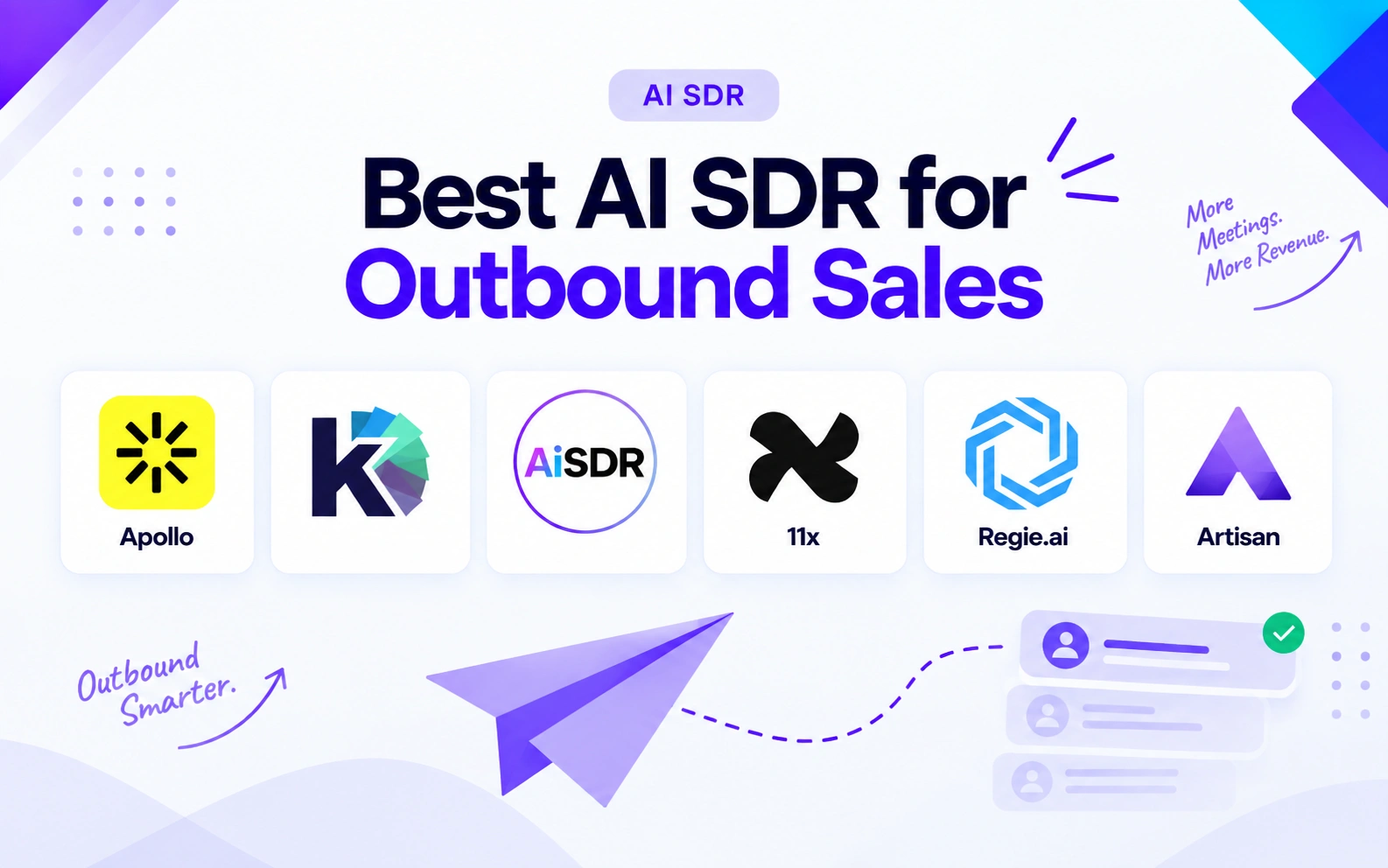
In this guide, we'll compare Apollo AI, AiSDR, 11x, Artisan, Regie.ai, and Knock AI to help you understand how each platform approaches outbound sales and which type of sales team each one is best suited for.
Quick List: Best AI SDRs for Outbound Sales
Here are the AI SDRs we'll compare:
Apollo AI: Best for prospecting, sales intelligence, and outbound engagement
AiSDR: Best for automating outbound prospecting and personalized outreach
Depending on the platform, it may also identify target accounts, enrich contact information, determine who to reach out to, respond to prospects, and manage follow-up.
The important distinction is that an AI SDR is more than a sales engagement tool. Traditional sales engagement platforms primarily help sales reps execute workflows such as email sequences, calling, and follow-ups. An AI SDR can take on more of the decision-making and execution involved in the SDR workflow itself.
That means the real question isn't simply “Can this tool send outbound emails?” It's “How much of the outbound sales process can it actually handle?”
Why Are Outbound Teams Looking for AI SDRs?
Outbound sales have always involved repetitive work. Today, the bigger challenge is that there is simply more of it.
Sales teams are dealing with:
More outbound emails and calls competing for attention
Crowded inboxes and lower response rates
Time-consuming prospect research
Repetitive personalization and follow-ups
Difficulty maintaining quality as outreach volume increases
SDRs spending too much time on administrative work
Difficulty knowing which prospects are actually worth contacting now
AI SDRs are designed to take much of this work off the sales team's plate. They can research prospects, identify potential buyers, personalize outreach, manage follow-ups, qualify responses, and help book meetings at scale.
But there's an important question beyond how much outreach you can automate:
Are you simply reaching more prospects, or are you identifying the prospects most likely to engage?
That distinction becomes increasingly important as outbound becomes noisier. Some AI SDRs focus on helping teams increase prospecting and outreach volume, while others can use signals such as buying intent to determine who to engage and when.
Comprehensive Comparison of AI SDRs for Outbound Sales
AI SDR
Best for
Outbound approach
Key capabilities
Starting price
Apollo AI
Prospecting + outbound sales
Combines prospect data, enrichment, and automated outreach
Prospect database, enrichment, sequences, AI assistance
$0
AiSDR
Automated outbound prospecting
AI-researched contacts with automated email and LinkedIn outreach
AI research, personalized outreach, LinkedIn actions, CRM sync, follow-ups
$250/mo
11x
Autonomous outbound
Uses AI digital workers to prospect and engage buyers
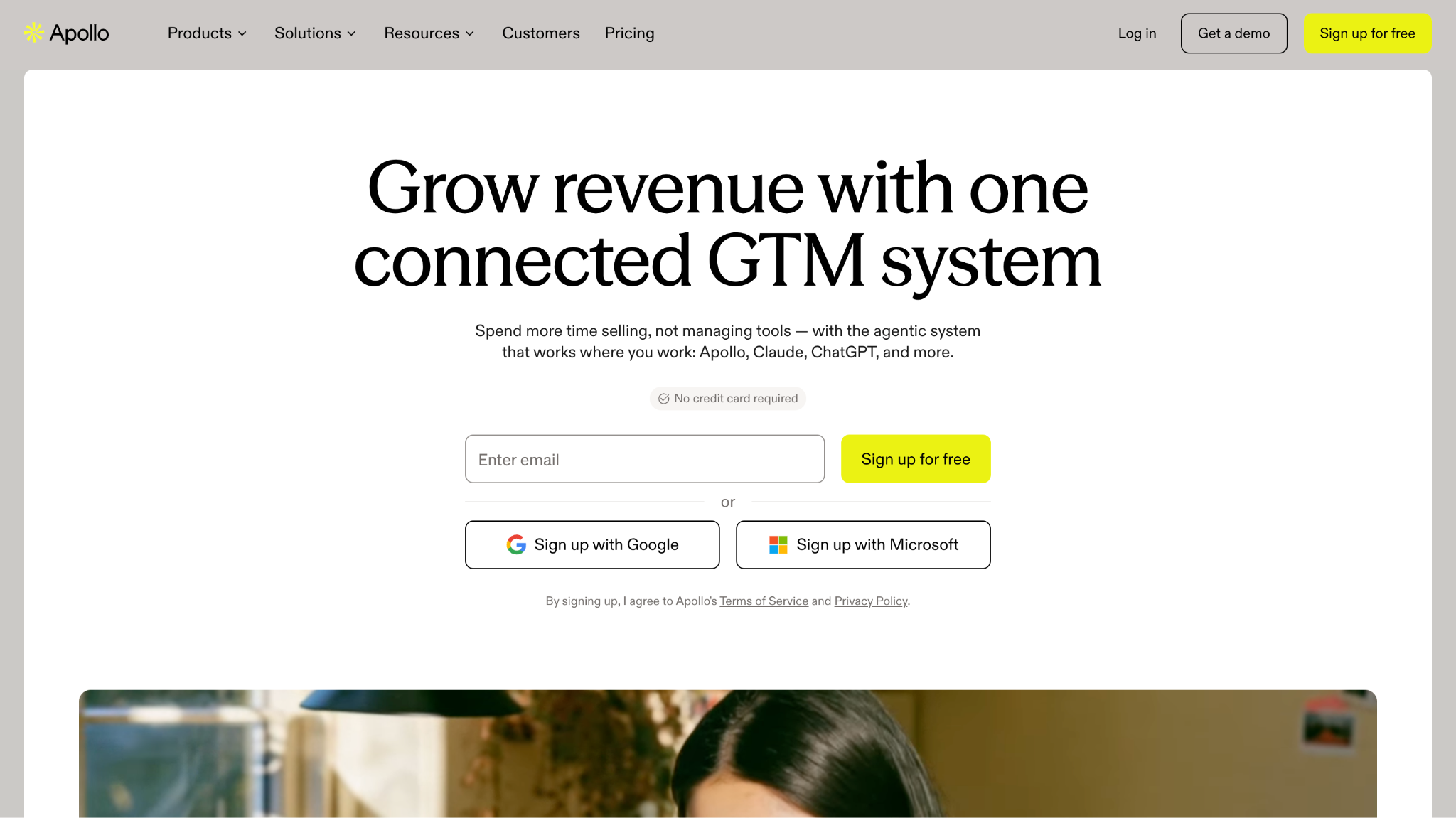
Apollo AI combines a large B2B prospect database with prospect research, enrichment, sales engagement, and AI-powered outbound workflows. Instead of using separate tools for finding contacts, researching accounts, building sequences, and managing outreach, sales teams can run much of the outbound process from one platform.
Its AI capabilities extend into prospecting as well. Apollo's Outbound Copilot can identify prospects that match an ICP, enrich them, add them to lists or sequences, and help generate the messaging used in outbound campaigns.
Key Capabilities
B2B prospect and company database
Contact and account enrichment
AI-powered prospect research
ICP-based prospecting
AI-generated outbound sequences
Email, phone, and LinkedIn outreach
Automated workflows
AI-generated lead scoring
CRM integrations
Outbound Copilot for automated prospecting
Apollo also supports signal-based sequences, allowing teams to trigger outbound workflows based on buyer signals and intent data.
Pros
Combines prospecting, data, and sales engagement in one platform
Strong database and enrichment capabilities
AI can automate parts of list building and sequence creation
Supports multiple outbound channels
Offers a free plan for teams that want to test the platform
Cons
Credit usage can become an important consideration as prospecting volume grows
Some advanced AI and automation capabilities are reserved for higher-tier plans
Per-user pricing can increase as the sales team expands
Pricing
Apollo offers four plans. Annual pricing starts at $0 for Free, followed by $49/user/month for Basic, $79/user/month for Professional, and $119/user/month for Organization, with a three-user minimum on Organization. Monthly billing is priced higher than the annual-billing rates.
Best for:
Apollo AI is best for sales teams that want prospecting data, enrichment, AI research, sequencing, and outbound execution in one platform rather than stitching together multiple sales tools.
2. AiSDR
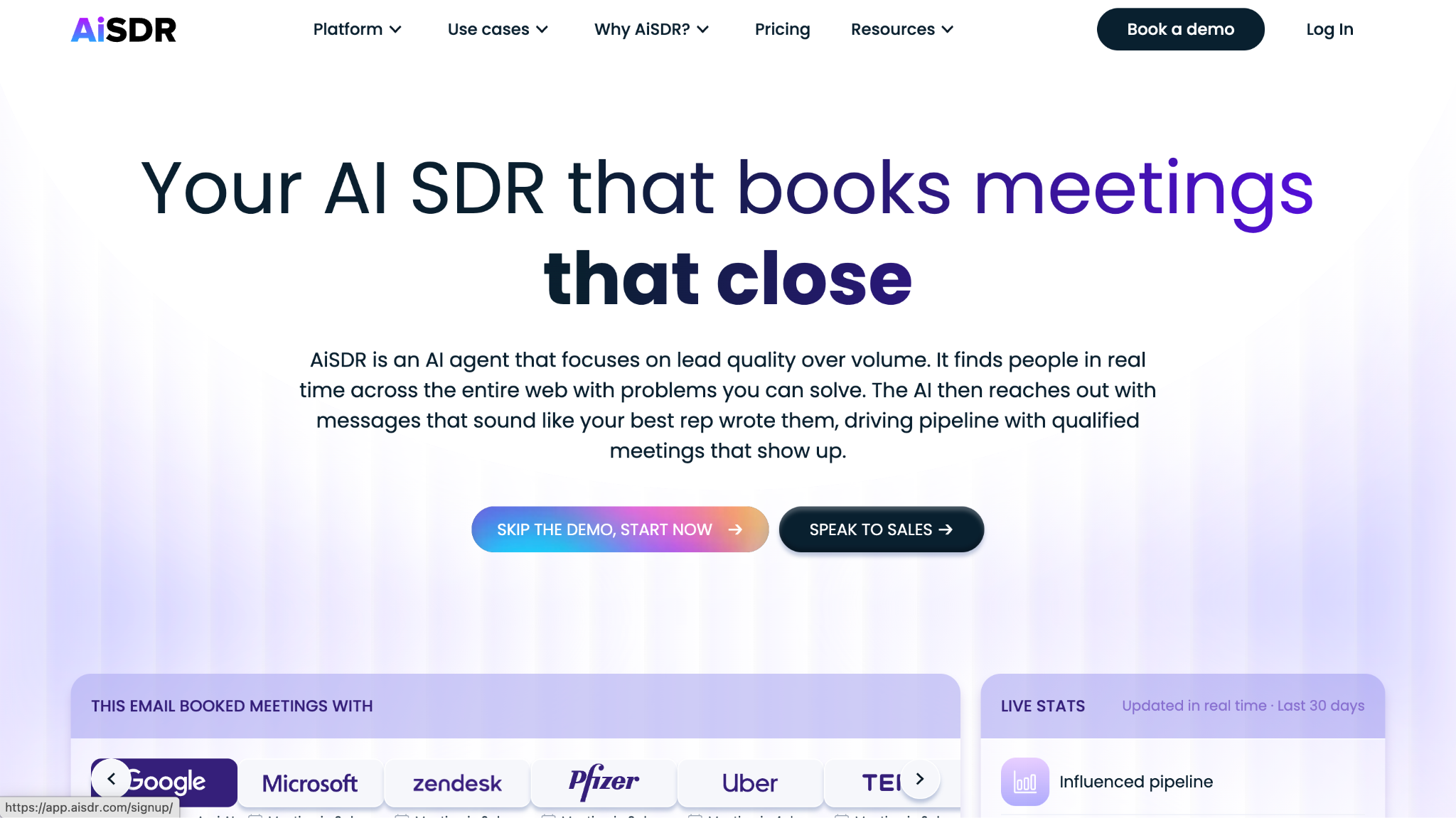
AiSDR is built around automating outbound prospecting and engagement. Its AI researches prospects, creates personalized outreach, and can execute email and LinkedIn actions while handling much of the infrastructure required to run outbound campaigns.
The platform is designed for teams that want AI to take on a larger portion of the SDR workflow rather than simply generating email copy. Its higher-tier plans also add capabilities such as CRM monitoring and website visitor tracking.
Higher plans add website visitor and CRM-based signals
Cons
Advanced capabilities require higher-tier plans
Explore and Scale plans use quarterly commitments
The platform is more focused on managed AI outbound than simple email sequencing
Pricing
AiSDR currently offers Solo at $250/month, Explore at $900/month, and Scale at $2,500/month. Solo is billed monthly, while Explore and Scale are billed monthly with quarterly contracts. Enterprise pricing is custom.
Best for:
AiSDR is best for teams that want to automate outbound prospect research, personalization, and execution without building the underlying email and LinkedIn infrastructure themselves.
3. 11x
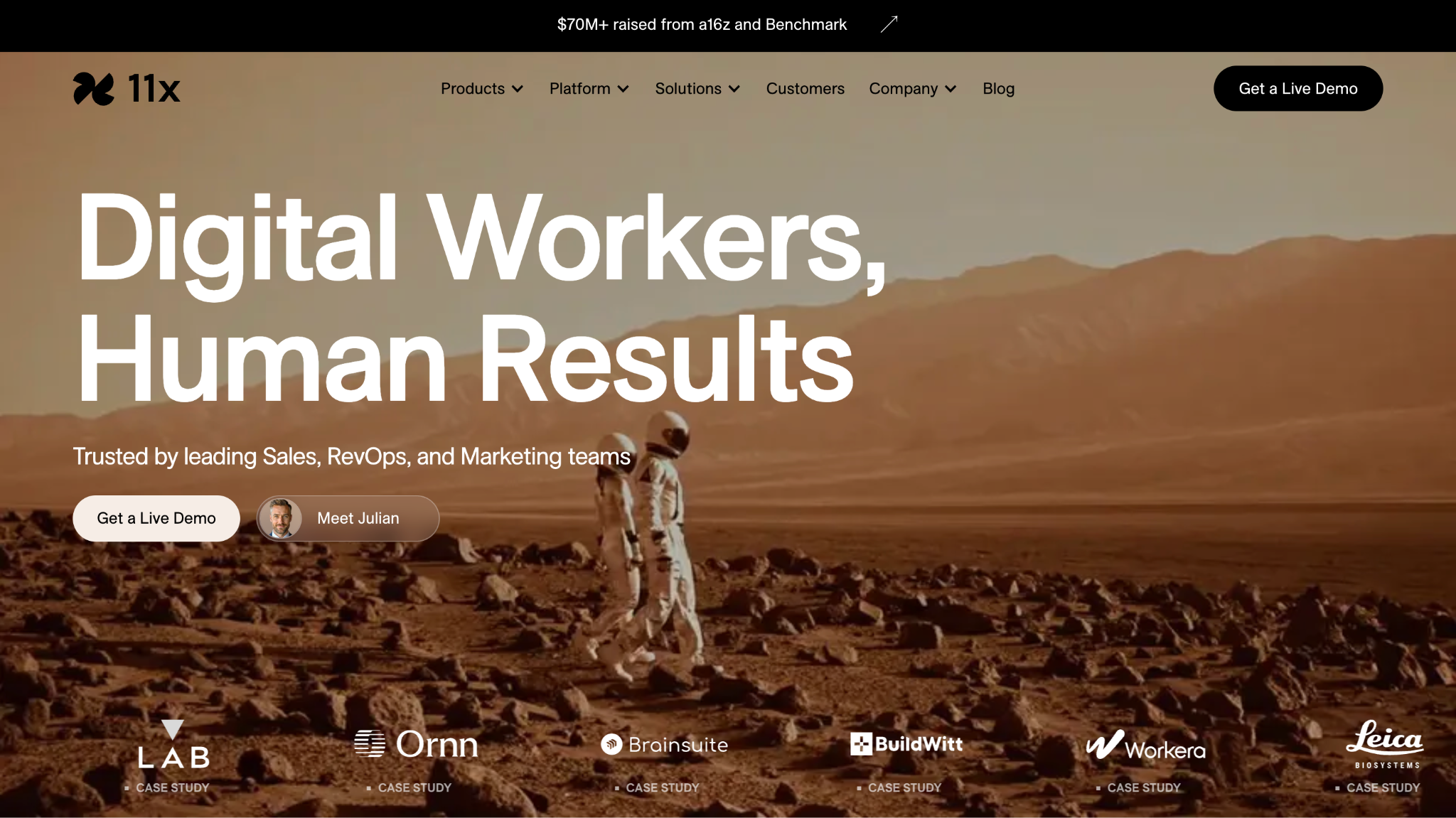
11x takes a more autonomous approach to outbound sales with Alice, its AI outbound digital worker. Rather than simply assisting an SDR, Alice is designed to run the outbound workflow from identifying prospects through research, personalization, outreach, reply handling, and meeting booking.
Alice can use live signals such as job changes, funding, hiring activity, technology adoption, and other market signals to identify prospects that fit a team's ICP. It then researches those prospects and coordinates outreach across multiple channels.
Key Capabilities
Automated prospect identification
Live buying and market signals
Deep prospect research
AI-powered personalization
Email outreach
LinkedIn outreach
Phone and SMS outreach
WhatsApp
Automated follow-ups
Reply handling
Qualification before outreach
Meeting booking
CRM synchronization
Managed email infrastructure
Pros
Automates a large portion of the outbound SDR workflow
Uses signals to prioritize prospects
Supports multiple outreach channels
Handles research, personalization, follow-up, and meeting booking
Includes managed mailbox infrastructure
Cons
Higher starting price than conventional sales engagement platforms
Pro and Enterprise pricing is custom
The autonomous model may be more than a team needs if it primarily wants AI-assisted prospecting
Pricing
11x's Alice Growth plan starts at $3,750/month billed annually and includes up to 2,000 new prospects per month. Pro and Enterprise plans are custom-priced. The pricing model is based on new prospects rather than the number of emails or touchpoints sent.
Best for:
11x is best for teams that want an autonomous AI SDR to handle prospecting, research, personalization, outreach, follow-up, and meeting booking with minimal day-to-day SDR involvement.
4. Artisan
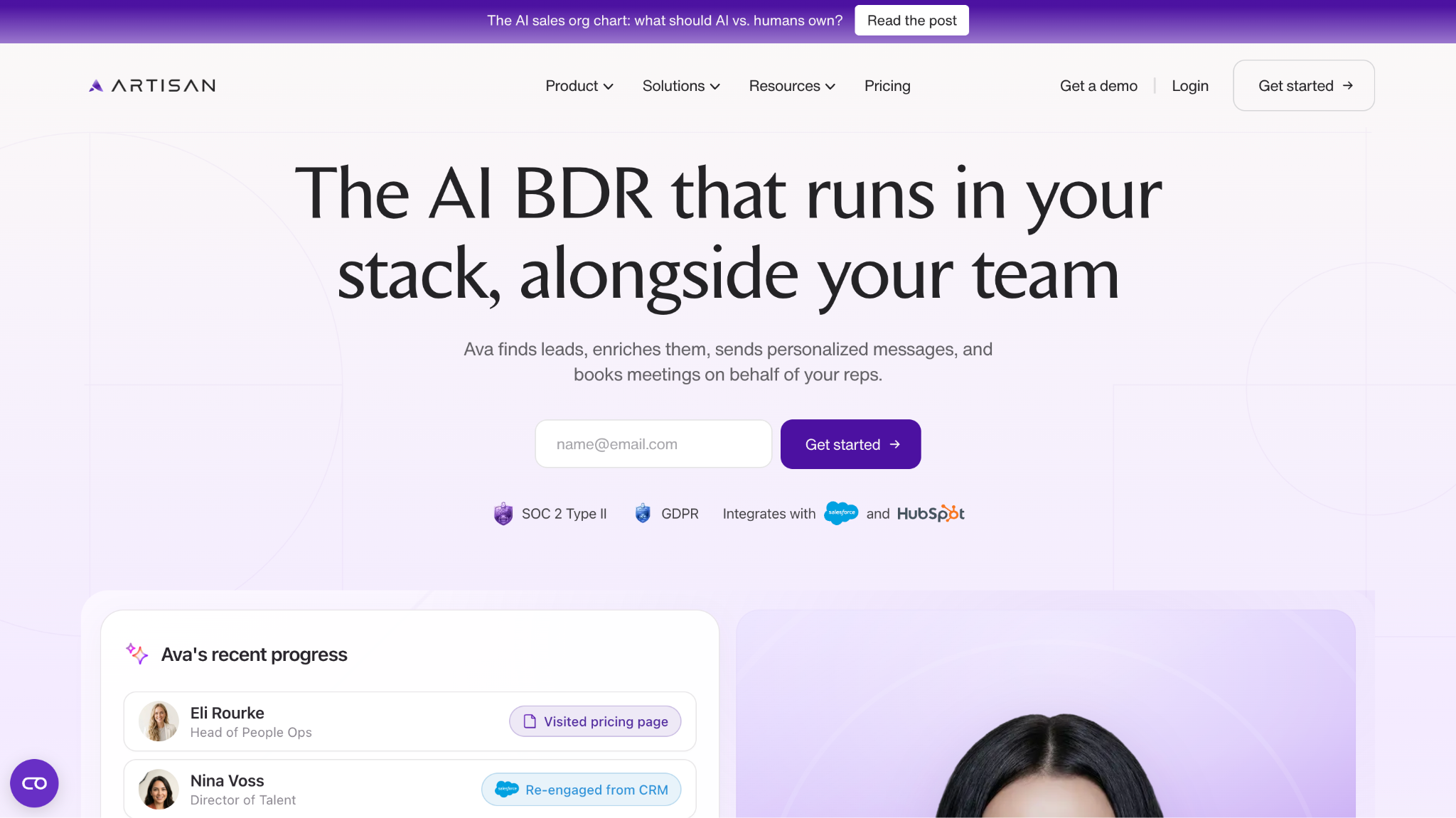
Artisan's Ava is positioned as an AI BDR designed to automate outbound sales. The platform can identify prospects, enrich contact and company data, run autonomous campaigns, handle replies, and book meetings.
Rather than focusing only on email automation, Artisan packages prospecting, enrichment, outbound campaigns, and meeting booking into an autonomous BDR workflow.
Key Capabilities
AI-powered prospect identification
B2B contact and company enrichment
Cold outbound campaigns
Email outreach
Social outreach
Autonomous replies
Meeting booking
Salesforce and HubSpot synchronization
AI dialer add-on
Campaign management
Outbound infrastructure and onboarding
Pros
Designed around an autonomous BDR workflow
Large B2B contact database
Combines prospecting and outreach
Handles replies and meeting booking
Includes CRM synchronization
Cons
Pricing is scoped based on the team's requirements
More focused on autonomous outbound than lightweight prospecting assistance
AI dialer is an additional component rather than simply being included as a standard feature
Pricing
Artisan currently offers Team, Scale, and Enterprise plans. Team is designed around approximately 2,500 leads contacted per month, while Scale is designed around approximately 6,000. Pricing is scoped to the team's plan and requirements rather than published as a fixed monthly rate.
Best for:
Artisan is best for sales teams looking for an autonomous BDR that can handle prospect identification, enrichment, outbound campaigns, replies, and meeting booking as a connected workflow.
5. Regie.ai
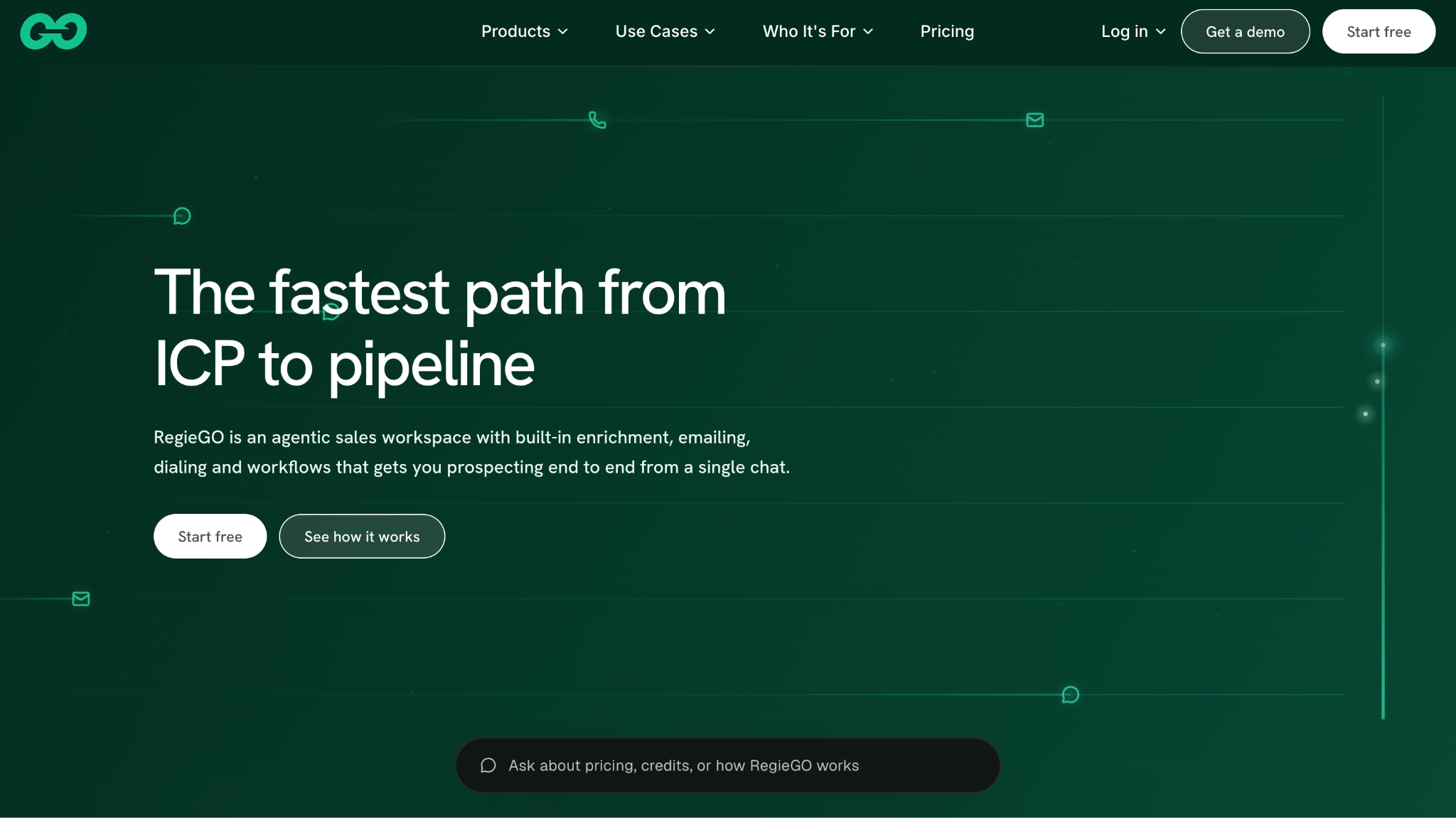
Regie.ai's RegieGO is an agentic sales workspace built around prospecting, research, enrichment, messaging, and dialing. Rather than requiring reps to manually move between several sales tools, RegieGO brings these activities into one workspace.
For outbound teams, RegieGO can build prospect lists from an ICP, enrich contacts, research accounts, draft personalized messages, and coordinate email, phone, and LinkedIn activity.
Key Capabilities
AI-powered prospect research
ICP-based list building
Contact enrichment
Email verification
AI-generated messaging
Email outreach
LinkedIn outreach
AI dialing
Multichannel workflows
Reply and follow-up assistance
Built-in CRM
HubSpot synchronization
Sales agents
Pros
Combines research, enrichment, messaging, and dialing
Supports cold outbound and strategic prospecting
Can work from an existing contact list or build one
Offers a free tier
Does not require a complex connector setup to start prospecting
Cons
Credit-based pricing means usage needs to be monitored
Higher-volume teams may need Enterprise pricing
Some workflows still involve human review rather than completely autonomous execution
Pricing
RegieGO has a Free plan with 250 one-time credits, while the Pro plan costs $49/month and includes 5,000 credits per month. Enterprise pricing is custom and adds team workspaces, shared agents, custom CRM sync, analytics, and enterprise security features.
Best for:
Regie.ai is best for teams that want an AI-powered sales workspace combining prospect research, enrichment, messaging, email, LinkedIn, and dialing without maintaining a collection of separate prospecting tools.
6. Knock AI
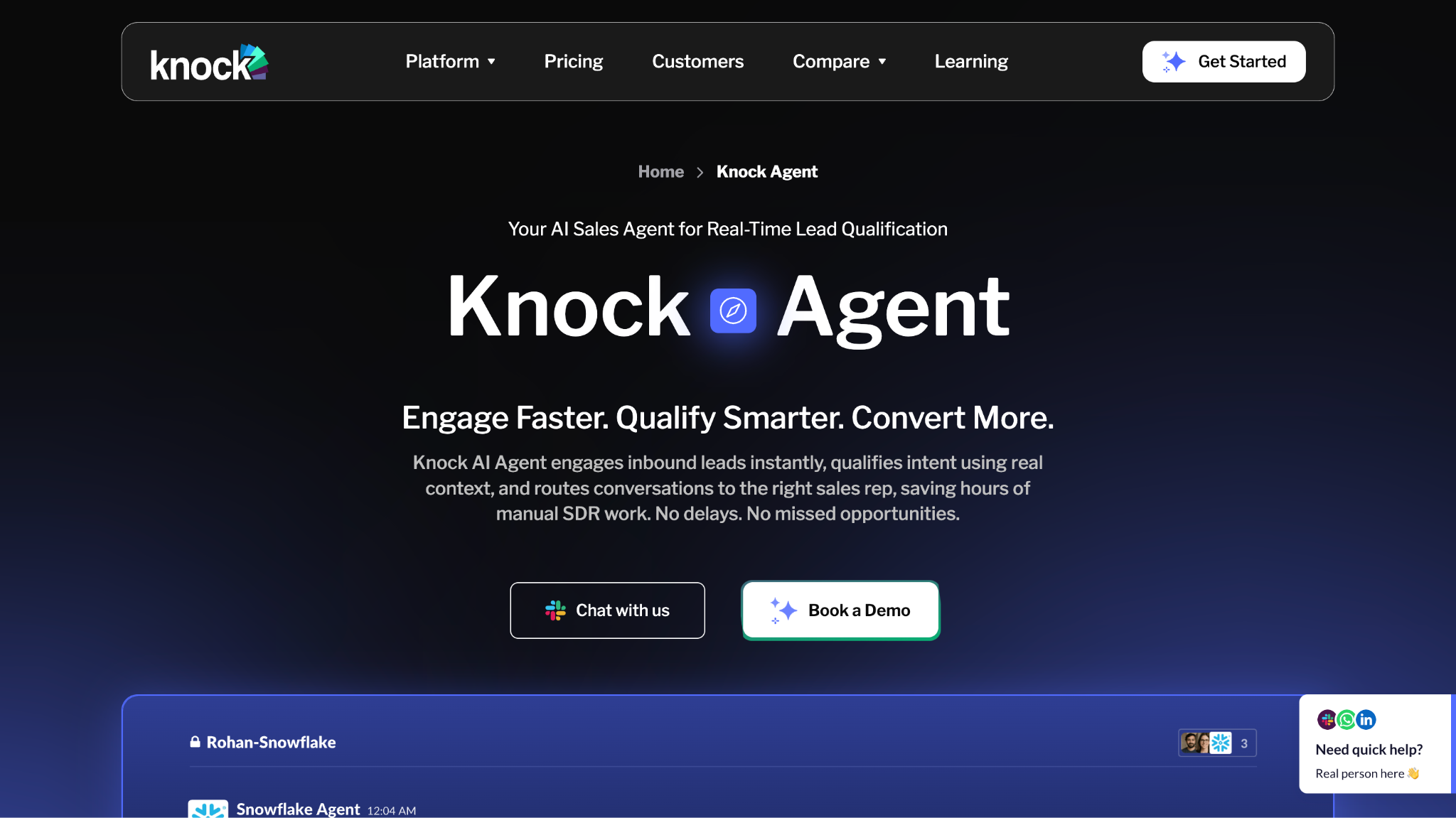
Knock AI takes a different approach from traditional outbound-first AI SDRs.
Instead of starting with a static prospect list and asking “Who should we contact?”, Knock AI focuses on identifying who is already showing buying intent and engaging those buyers while that intent is active.
Knock AI detects buying signals across a company's website, product, and other touchpoints, then uses that context to trigger relevant outreach based on who the buyer is, what they did, and when they did it.
That makes Knock AI different from an AI SDR whose primary job is to generate more cold outbound volume. The focus is on turning existing buyer intent into sales conversations.
Key Capabilities
Buying intent detection
Visitor and account identification
Contact and company enrichment
Intent-triggered outreach
AI-powered conversations
Lead qualification
Intelligent routing
Meeting booking
CRM synchronization
LinkedIn outreach for high-intent buyers
Slack-based buyer engagement
WhatsApp and Telegram engagement on higher plans
Contextual buyer journeys
Knock AI’s Pipeline Acceleration plan adds full AI SDR qualification, automated demo booking, and advanced enrichment and intent routing.
Pros
Focuses engagement around real buyer intent
Connects intent, enrichment, engagement, qualification, and routing
Can act on buyer signals while interest is still active
Preserves context across the buyer journey
Extends beyond traditional forms and cold outreach
Cons
Not designed primarily for traditional cold-list prospecting
More relevant for B2B companies already generating meaningful buyer signals
Its broader revenue workflow may be more than a team needs if it only wants a basic outbound sequencer
Pricing
Knock AI's Pipeline Foundation plan starts at $2,000/month. Pipeline Acceleration starts at $3,500/month, while Enterprise Pipeline is custom-priced.
Best for:
Knock AI is best for B2B revenue teams that already generate buyer activity and want to identify, understand, qualify, and engage high-intent prospects instead of relying entirely on increasing cold outbound volume.
The distinction is simple: traditional AI SDRs can help you reach more prospects, while Knock AI is designed to help you act on the buying signals already appearing across your revenue funnel.
The best AI SDR depends on what you actually want to automate. A platform built for prospecting at scale may be very different from one designed to run an autonomous SDR workflow or act on existing buyer intent.
Do you need prospect data?
If you need to find contacts, research accounts, enrich prospects, and build targeted lists, look for an AI SDR with a strong prospect database and enrichment capabilities. Apollo AI, for example, combines prospect data with research and outbound execution.
Do you want fully autonomous outbound?
Some platforms are designed to take over a much larger portion of the SDR workflow. If you want AI to handle prospecting, research, personalization, outreach, follow-ups, and meeting booking, platforms such as 11x and Artisan are built around this model.
Is multichannel outreach important?
If your sales motion goes beyond email, check which channels the platform supports. Depending on the tool, this can include email, LinkedIn, phone, SMS, or other messaging channels.
How much control should your sales team retain?
Not every team wants AI to run the entire outbound process.
Some teams want AI to handle repetitive prospecting and research while SDRs control messaging and conversations. Others want an autonomous system that can execute most of the workflow independently.
Choose a platform based on how much human involvement you want at each stage of outbound sales.
Are you trying to create more outbound or capture existing demand?
This is one of the biggest distinctions to consider.
If your primary problem is finding more prospects and contacting them at scale, an outbound-first AI SDR may be the right fit.
If your company already generates meaningful buyer activity but struggles to identify, qualify, and engage those buyers quickly, an intent-driven platform such as Knock AI may be more relevant.
The difference is essentially:
Outbound-first: Find prospects → Research → Reach out → Follow up
You don't necessarily have to choose one approach exclusively. The right setup depends on where your pipeline currently has the biggest gap.
FAQs
1. What is an AI SDR for outbound sales?
An AI SDR for outbound sales is software that uses artificial intelligence to automate or assist with the work traditionally handled by sales development representatives. This can include prospecting, account research, contact enrichment, personalization, outreach, follow-ups, qualification, and meeting booking.
2. How does an AI SDR automate outbound sales?
An AI SDR can automate multiple stages of the outbound workflow, including finding prospects that match an ICP, researching accounts, generating personalized messages, sending outreach, following up with prospects, handling certain responses, qualifying interest, and helping schedule meetings.
The exact level of automation varies between platforms.
3. What can an AI SDR do for outbound prospecting?
An AI SDR can help identify target accounts and contacts, enrich prospect data, research companies and individuals, personalize outreach, manage email or LinkedIn campaigns, automate follow-ups, and prioritize prospects based on defined criteria or signals.
Some platforms can also handle responses and meeting booking.
4. Are AI SDRs better than traditional outbound SDRs?
AI SDRs and human SDRs solve different parts of the outbound process.
AI can handle repetitive tasks such as prospect research, data enrichment, personalization, and follow-ups at scale. Human SDRs remain important for complex conversations, relationship building, judgment, and situations that require deeper context.
For many teams, the question is less about replacing SDRs and more about which parts of the SDR workflow should be automated.
5. Can AI SDRs personalize outbound sales messages?
Yes. AI SDRs can use information about a prospect, company, role, industry, account activity, and other available signals to generate more contextual outreach.
However, personalization is not simply adding a prospect's name or mentioning something from their LinkedIn profile. The quality of the underlying data and the relevance of the message still matter.
6. What is the difference between an AI SDR and an outbound sales automation tool?
An outbound sales automation tool typically helps sales reps execute predefined activities such as email sequences, follow-ups, and prospecting workflows.
An AI SDR can take on a broader role by using AI to research prospects, make decisions within defined workflows, personalize engagement, handle responses, qualify prospects, and help book meetings.
The distinction is mainly about the level of intelligence and autonomy involved.
7. Can AI SDRs use buying intent for outbound sales?
Yes. Some AI SDR and sales engagement platforms can use buying signals to determine when and how to engage a prospect.
Knock AI takes an intent-driven approach, identifying buyer signals and connecting them with enrichment, engagement, qualification, routing, and conversion rather than relying solely on traditional cold outbound sequences.
This makes intent particularly useful when a company wants to act on existing buyer demand instead of simply increasing outbound volume.


.svg)


.svg)
.svg)
.svg)


.svg)
.svg)


.svg)