Best Tools for Website Visitor Intent & ABM Campaigns
Best Tools for Turning Website Visitor Intent Into Account-Based Sales and Marketing Campaigns
Your team can identify interested accounts. Can it actually convert them?
Your team knows which companies fit your ideal customer profile (ICP). You can see website visits, track engagement with marketing campaigns, and identify accounts showing signs of buying intent. So why are qualified accounts still slipping through the cracks?
Because identifying interest and acting on it are two different things.
A company visiting your pricing page might be worth prioritizing, but adding it to a spreadsheet or sending a notification to sales does not guarantee a conversation. If your team cannot understand the account's context, reach the right stakeholders, and respond while interest is active, that signal can quickly lose its value.
This is where intent-driven account-based marketing (ABM) tools come in. They help teams turn buying signals into coordinated actions, from prioritizing accounts and activating personalized campaigns to engaging prospects, routing qualified opportunities, and measuring pipeline impact.
But not every platform solves the same problem. Some focus on predictive account intelligence, others on account-based advertising or marketing automation, while others help convert active buyer interest into sales conversations.
Let's look at what these tools actually do, which capabilities matter, and how to choose the right platform for your team's goals.
What Does It Mean to Turn Website Visitor Intent Into Account-Based Campaigns?
Turning website visitor intent into account-based campaigns means using available engagement signals and account context to decide which companies to engage, who to reach, and what action to take next.
Instead of treating every website visit as an isolated event, teams connect relevant activity with company information, buying signals, and their ideal customer profile. A visit to a pricing page, repeated engagement with product content, or a click on a tracked campaign link may indicate interest. The next step is to determine whether that activity represents a meaningful opportunity and how the team should respond.
From visitor identification to account-level activation
Visitor identification is the starting point, not the entire strategy. Once a person or company can be identified through available data, teams can evaluate engagement, assess ICP fit, and connect the activity with the relevant account.
The next layer is relationship and buying-committee context. Is the person a decision-maker, a potential champion, or one of several stakeholders involved in a purchase? Are there existing relationships that could help sales start a more relevant conversation?
These insights can inform the next action, whether that means prioritizing an account, triggering a nurture workflow, launching an advertising campaign, or initiating a direct sales conversation. The goal is to move beyond collecting interested accounts and put their signals to work.
What an intent-driven ABM workflow should look like
A practical workflow follows seven stages:
Detect intent → Understand account context → Prioritize the opportunity → Activate the right touchpoint → Engage and qualify → Route to sales → Measure pipeline and revenue.
Each stage builds on the previous one. Intent signals help identify potential opportunities, account context informs prioritization, and campaign activation puts the insights into action. Engagement and qualification help determine whether sales should step in, while CRM data and attribution connect those activities to business outcomes.
Not every platform covers this entire workflow. Some specialize in account prioritization, others in advertising or marketing automation, and others in turning active buyer interest into qualified sales conversations. Understanding these differences is essential when choosing the right tool.
What Should You Look for in a Tool for Intent-Driven ABM Campaigns?
The best tool depends on where your current process breaks down. Before comparing platforms, evaluate whether they can help your team move from identifying interested accounts to taking meaningful action.
Visitor and account identification: Can the platform identify relevant people or companies from eligible website engagement and other supported touchpoints? Check which signals it captures and what identity data is actually available.
Intent scoring and qualification: Can it distinguish meaningful buying activity from routine browsing? Look for ways to combine signal recency, engagement, company information, and ICP fit instead of treating every interaction equally.
Relationship and buying-committee intelligence: Can the platform help your team understand relevant stakeholders, existing commercial relationships, and gaps in account coverage? This matters when multiple people influence a B2B purchase.
Campaign activation: Can teams act on intent across the website and tracked touchpoints beyond it? Consider whether the platform supports the channels your buyers actually use, rather than limiting action to a single dashboard or website.
Personalized engagement: Can it help initiate relevant conversations or trigger appropriate follow-up, or does it simply send alerts for representatives to handle manually?
Routing and sales handoff: Can qualified opportunities reach the right representative based on account ownership, intent, company details, or relationship context? A useful handoff should preserve the information needed for a relevant response.
CRM and attribution: Can you connect engagement with meetings, opportunities, and revenue? Check which data is synchronized, which attribution models are available, and what configuration is required.
Integration and implementation: Does the platform fit your existing CRM, marketing stack, and team's workflow? Account for integration requirements, implementation effort, and whether you need several additional tools to complete the process.
Ultimately, prioritize platforms that address your biggest conversion gap. More intent data is not automatically more pipeline; the value comes from turning useful signals into relevant, measurable actions.
See Knock AI in Action — Book Your Live Demo Today
6 Best Tools for Turning Website Visitor Intent Into Account-Based Sales and Marketing Campaigns
The right platform depends on what you want to do with buyer intent. Some tools help predict which accounts are entering a buying cycle. Others coordinate account-based advertising, automate lead nurturing, or turn active interest into direct sales conversations.
For B2B teams, the important distinction is whether a platform simply helps identify and prioritize accounts or also helps activate that interest through engagement, qualification, routing, and follow-up. Here are six tools to consider, each suited to a different part of the intent-driven ABM workflow.
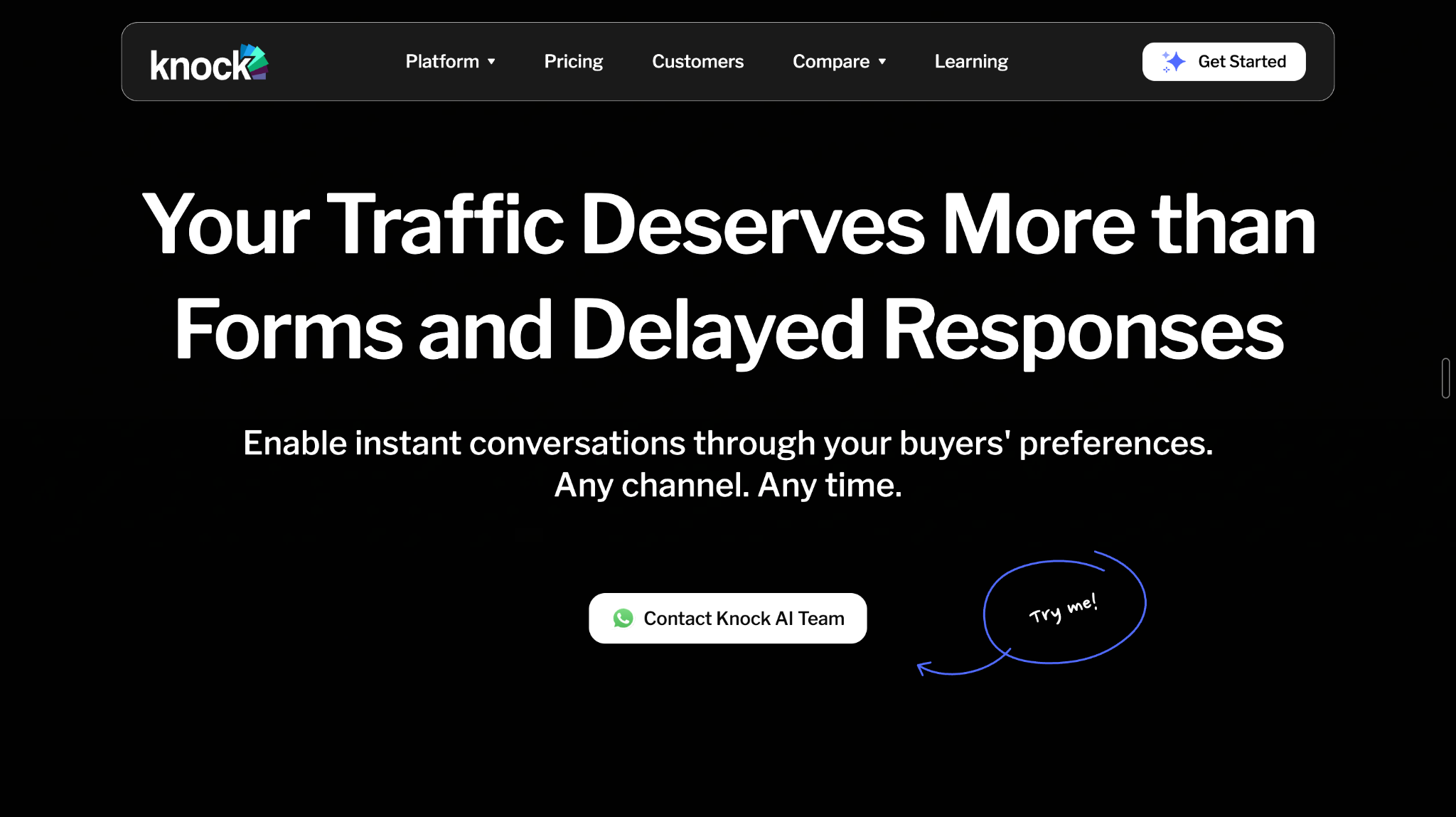
1. Knock AI: Best for activating buyer intent into qualified sales conversations
Best for: B2B revenue teams that want to turn website engagement and tracked marketing touchpoints into qualified conversations, meetings, and pipeline.
Most intent tools help you understand which accounts deserve attention. Knock AI focuses on what happens next: identifying engaged buyers, understanding their context, and helping your team act while their interest is still active.
Knock Reveal identifies companies and relevant buying contacts engaging with your website and supported marketing touchpoints. Knock Intent analyzes first-party engagement signals, including page views, clicks, content interactions, and repeat visits, to help distinguish meaningful buying activity from casual browsing. Knock Enrich adds verified contact and company information, giving sales teams more context before they engage.
What makes Knock AI particularly interesting for account-based strategies is its Relationship Graph. Rather than looking only at an account's activity score, it helps teams understand commercial relationships, existing customer connections, buying-committee coverage, and potential gaps in stakeholder relationships. This context can inform account prioritization, outreach, and decisions about which representative should engage.
Knock AI also helps teams activate intent beyond their website. With Knock Links and Marketing Cards, companies can create direct engagement entry points across channels such as LinkedIn, G2, email, documents, marketplaces, and event QR codes. When a buyer engages through a supported touchpoint, Knock can use the available attribution and engagement context to support the next step.
Its AI Intent Agents can answer buyer questions using configured knowledge sources, qualify prospects against the company's ICP, and route conversations to the appropriate sales representative. Knock Routing uses factors such as intent, company information, CRM status, ownership, and engagement context to direct conversations. Scheduling, Slack notifications, and CRM integrations help sales teams continue the conversation without losing important context.
Knock AI also supports attribution through source, campaign, touchpoint, and UTM data. Its data-layer events can send supported engagement and conversion events to advertising and analytics systems, helping teams connect activity with outcomes beyond clicks.
The trade-off: Knock AI is not simply a predictive account-scoring database or a traditional ABM advertising platform. Its strength is activating buyer intent into engagement and conversion workflows. Teams looking primarily for syndicated third-party research intent or native ABM ad buying should evaluate those requirements separately. Knock Ads is listed as coming soon on its website.
For B2B teams that already generate relevant traffic but struggle to convert it into sales conversations, Knock AI is a strong option to consider.
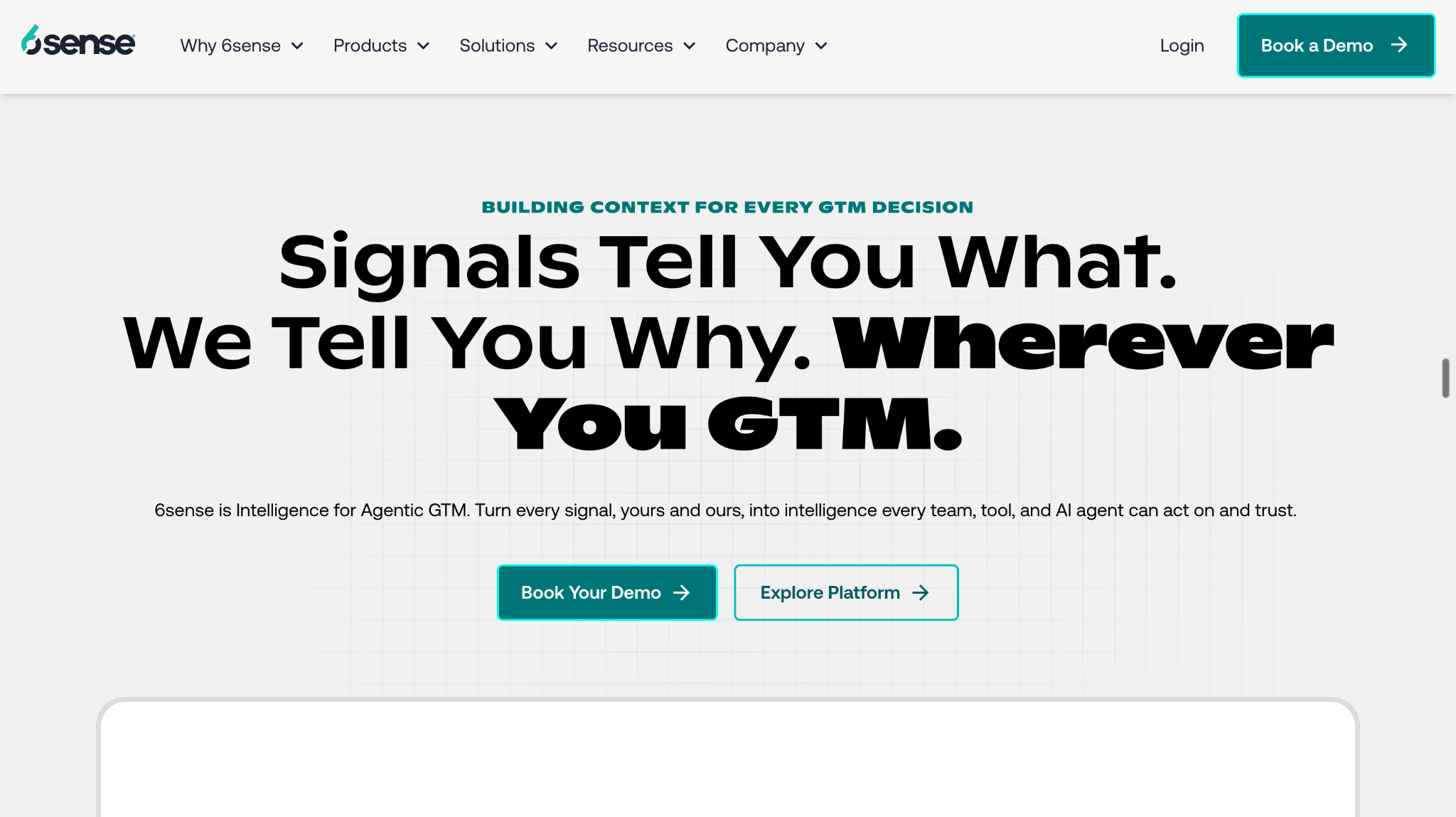
2. 6sense: Best for predictive account prioritization and buying-stage intelligence
Best for: B2B organizations that need to identify in-market accounts, interpret buying signals, and prioritize sales and marketing resources.
6sense helps revenue teams understand which accounts may be entering a buying cycle before those accounts explicitly contact sales. Its platform combines intent data, account identification, predictive modeling, and buying-stage insights to help teams determine which organizations deserve attention.
One of its key strengths is combining first-party engagement with third-party research signals. Teams can identify companies visiting their websites, understand the topics those accounts are researching, and use predictive insights to assess their potential readiness to buy. Audience-building capabilities then help marketing teams create segments based on factors such as ICP fit, intent, buying stage, and campaign engagement.
Sales teams can use account prioritization and sales intelligence to identify relevant decision-makers, understand recent account activity, and personalize their outreach. Marketing teams can activate audiences across advertising and other supported campaign channels, helping align engagement with the buyer's likely stage.
The main advantage is that teams do not have to rely exclusively on visitors who have already reached their website. Third-party intent and predictive modeling can help reveal potential demand earlier in the buying journey.
The trade-off: Predictive insights are not a substitute for direct buyer engagement. Teams still need effective workflows to respond to high-intent signals and convert interested accounts into qualified opportunities.
Consider 6sense when your biggest challenge is determining which accounts to prioritize and when to engage them. If the bottleneck is converting active engagement into conversations, compare its capabilities with a platform such as Knock AI that emphasizes real-time engagement and conversion.
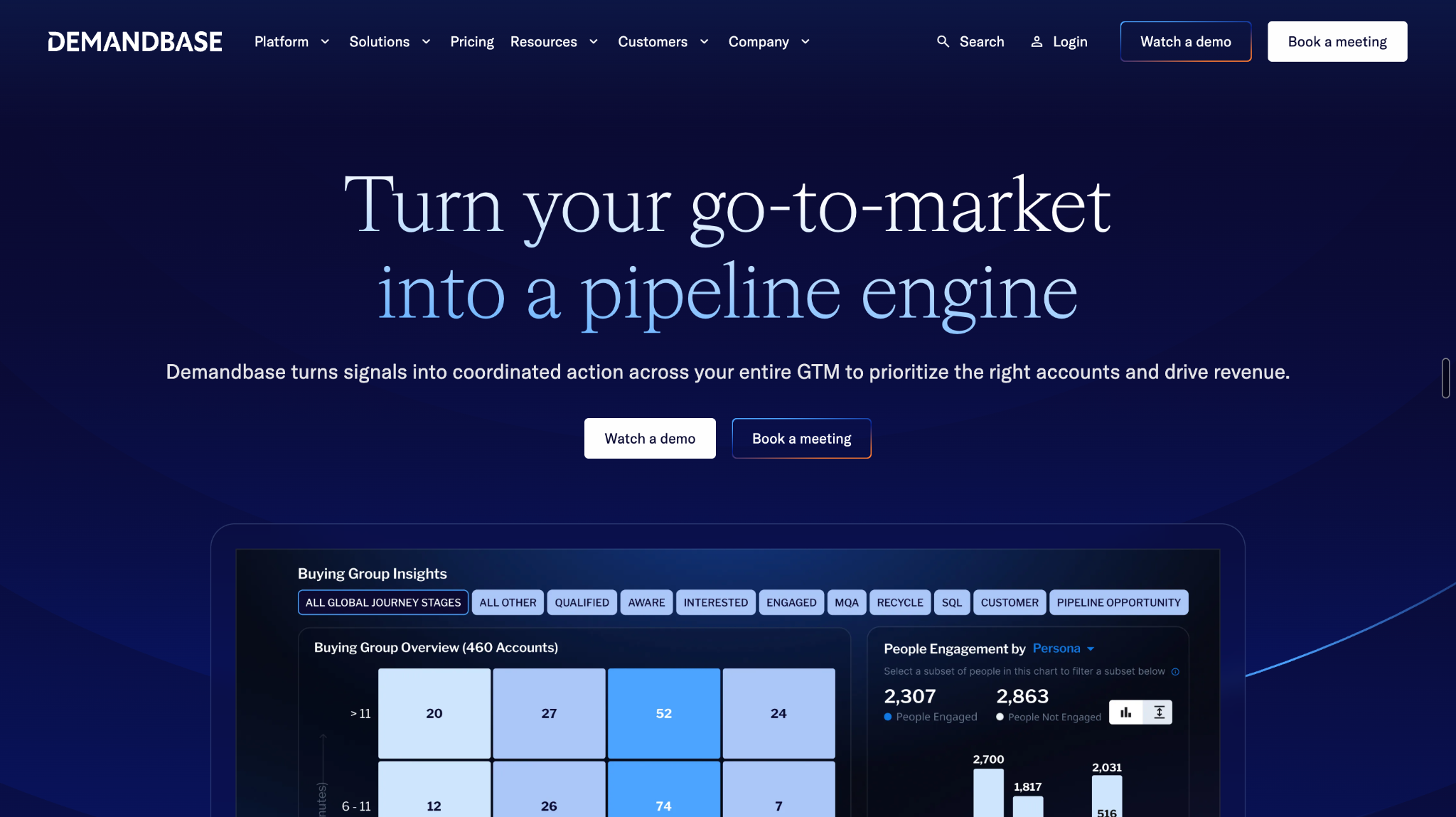
3. Demandbase: Best for enterprise account-based marketing orchestration
Best for: Enterprise marketing and sales teams coordinating complex ABM programs across multiple channels.
Demandbase brings account intelligence, sales engagement capabilities, and account-based advertising into a broader go-to-market platform. Its approach helps teams identify promising accounts, understand buying-group activity, coordinate campaigns, and connect engagement with pipeline outcomes.
For example, a marketing team can use account and intent insights to prioritize organizations, build relevant audiences, and coordinate advertising around their buying activity. Sales teams can use account intelligence and buying-group insights to identify stakeholders and inform their engagement strategy.
Demandbase Ads is particularly relevant when advertising plays a major role in the ABM program. It supports account-based audience activation and advertising campaigns informed by account activity, with reporting designed to connect advertising performance to opportunities and revenue. This can help teams move beyond optimizing campaigns solely for impressions and clicks.
Another advantage is its focus on coordinating sales and marketing around shared account intelligence. This is useful for organizations managing large target-account lists, multiple campaigns, and buying committees with several stakeholders.
The trade-off: A broad ABM platform may require more planning, integrations, and operational coordination than a tool focused on a specific conversion bottleneck. Teams should assess implementation requirements and whether they will use the wider platform's capabilities.
Choose Demandbase when your organization needs to coordinate account-based marketing, advertising, and sales activity at enterprise scale. If your immediate priority is turning active buyer interest into a direct conversation, compare how each platform handles that specific workflow.
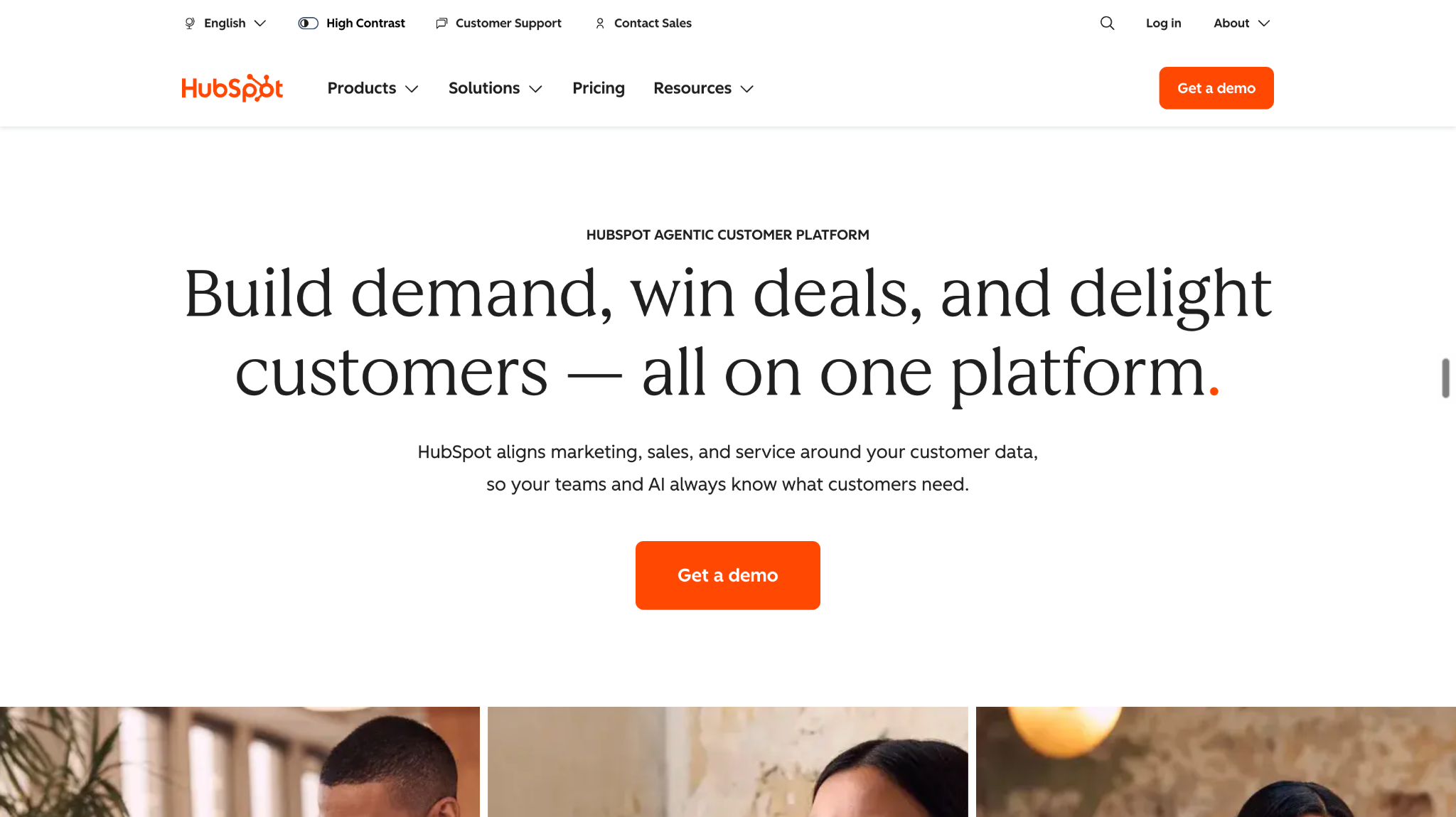
4. HubSpot: Best for CRM-centered intent workflows and marketing automation
Best for: Teams already using HubSpot that want to connect buyer behavior with segmentation, automated follow-up, and sales handoffs.
HubSpot is a practical option when your customer and company records already live in its CRM. Rather than introducing a separate platform for every marketing workflow, teams can use CRM data and supported engagement signals to build a connected process for identifying and nurturing potential buyers.
Its marketing automation capabilities support behavior-based workflows, personalized email follow-ups, segmentation, and notifications for sales representatives when contacts take important actions. Lead scoring can combine engagement with fit criteria, helping teams prioritize contacts and companies based on their behavior and characteristics. Availability varies by subscription.
Imagine a contact repeatedly visiting product pages or engaging with campaign emails. A HubSpot workflow can use supported activity and scoring rules to trigger follow-up, update the contact record, or notify sales. Marketing teams can also organize contacts into segments and guide them through nurture journeys based on their interests.
This makes HubSpot particularly useful for teams that want to coordinate marketing and sales processes without managing a complicated collection of disconnected systems.
The trade-off: The capabilities available depend on the HubSpot products, subscription, and integrations your team uses. Native CRM automation is also different from a dedicated system for activating engagement across external touchpoints, maintaining conversation continuity, or mapping broader commercial relationships.
Choose HubSpot when your team wants to build on an existing CRM and automate follow-up around the data it already collects. Consider adding a specialized intent activation platform if your process requires more extensive cross-touchpoint engagement and real-time conversion workflows.
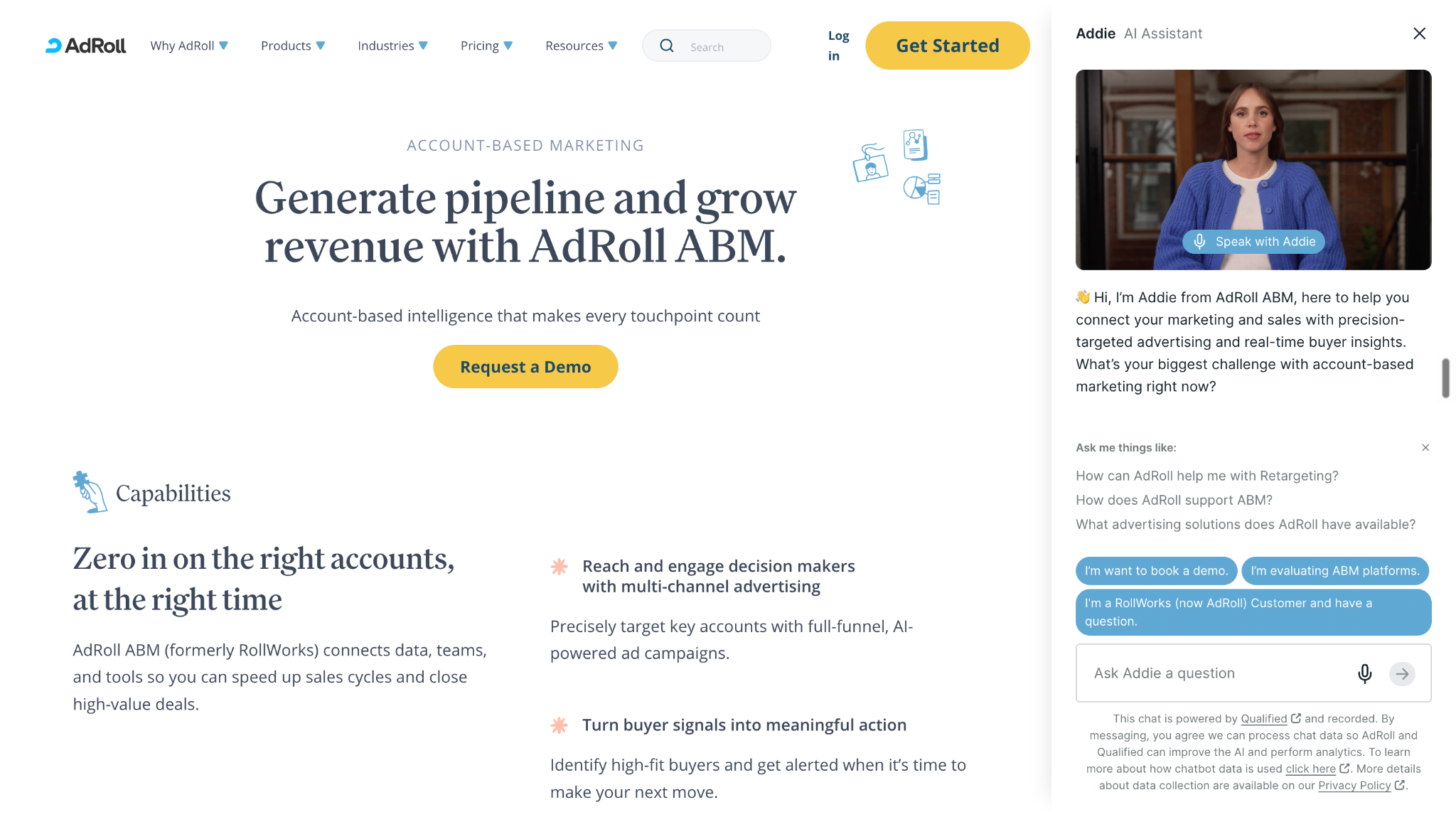
5. RollWorks: Best for account-based advertising and target-account engagement
Best for: B2B marketing teams that want to reach selected accounts through targeted advertising and retargeting.
RollWorks, also known as AdRoll ABM, focuses on helping B2B teams build audiences around target accounts and engage the buying committees within those organizations. Its advertising workflows can combine account lists, CRM data, buyer attributes, and website engagement to target relevant companies and stakeholders.
One practical use case is retargeting. Suppose a target account visits your pricing or product pages but does not convert. A team can configure an account-based campaign to re-engage that audience with relevant advertising rather than relying entirely on email follow-ups or sales outreach.
Teams can also use contact and account targeting to reach known CRM contacts or people matching selected buying-committee attributes. Depending on the campaign setup, supported channels include web display and social advertising.
This makes RollWorks useful for keeping your brand visible among selected accounts, reinforcing messaging, and supporting longer B2B buying journeys.
The trade-off: Advertising engagement does not necessarily indicate that a buyer is ready to speak with sales. Teams still need a process for handling direct inquiries, qualifying opportunities, routing conversations, and connecting campaign activity with sales outcomes.
Choose RollWorks when your primary requirement is reaching and re-engaging target accounts through paid media. If the biggest problem is converting a buyer who is already actively engaging with your business, evaluate whether your existing stack also covers qualification and direct sales engagement.
6. Adobe Marketo Engage: Best for sophisticated lead nurturing and marketing automation
Best for: Marketing teams that need structured, behavior-driven nurture programs across complex B2B buying journeys.
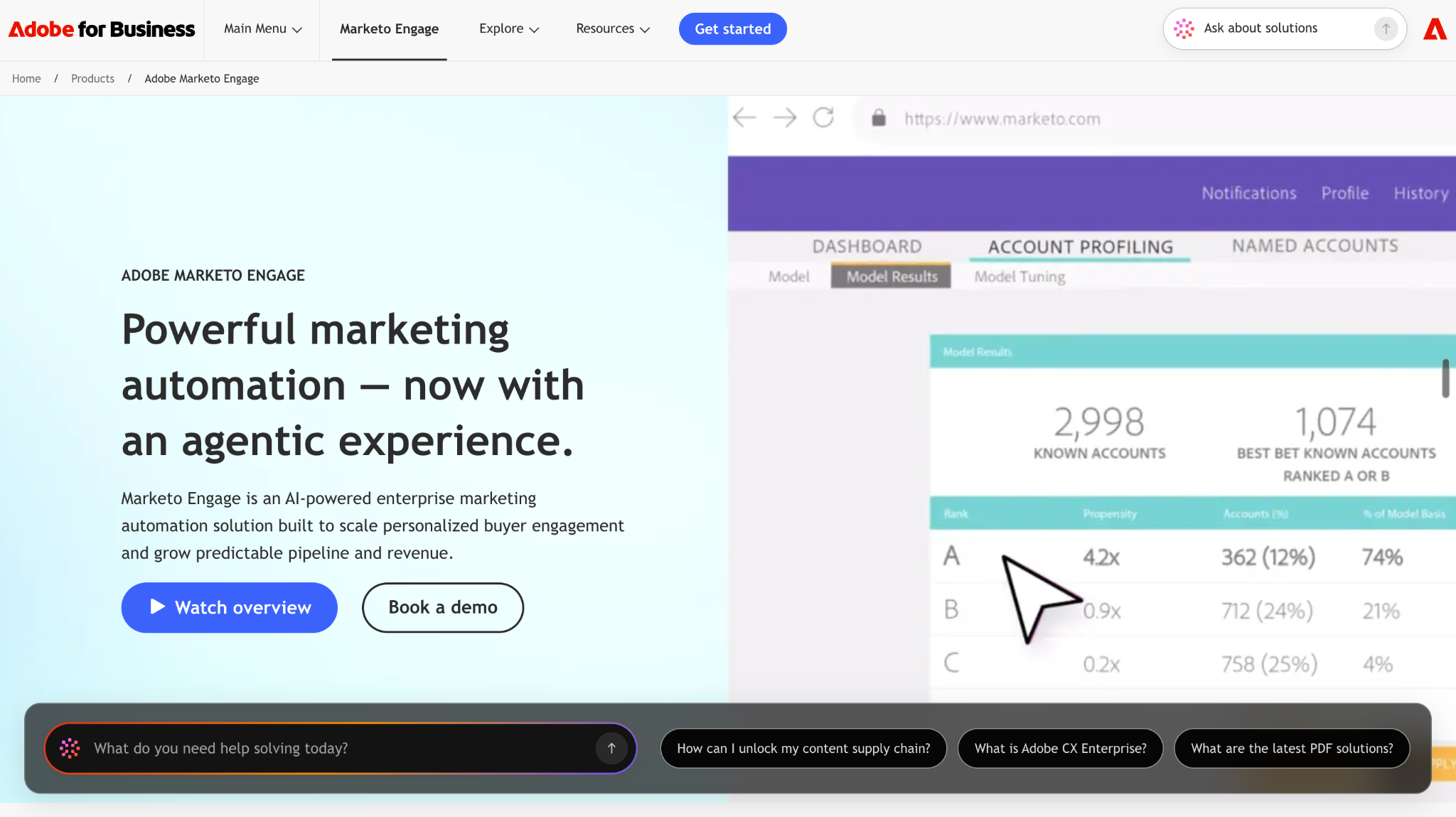
Adobe Marketo Engage is designed for managing marketing automation, segmentation, and personalized campaigns. It supports workflows that help marketing teams respond to prospect behavior, coordinate communications, and nurture leads over time. Its capabilities also include account scoring for prioritizing companies based on engagement across multiple people and channels.
For example, a company might engage with a product comparison page, download a guide, and attend a webinar. Marketo can help teams use supported behavioral triggers and scoring rules to segment those prospects, enroll them in relevant nurture programs, and coordinate follow-up as their engagement changes.
Account-level scoring is particularly relevant to ABM because B2B purchases rarely involve a single individual. By aggregating engagement from multiple contacts associated with an account, teams can build a more complete view of account activity and prioritize their next campaigns.
Marketo is therefore useful for organizations that need detailed campaign logic, lifecycle management, and repeatable nurture processes across large prospect databases.
The trade-off: Sophisticated automation requires thoughtful data structures, scoring rules, integrations, and ongoing campaign management. Nurture workflows also serve a different purpose from immediate buyer engagement. A prospect showing strong intent may need a direct conversation now, not another message in a scheduled sequence.
Choose Marketo Engage when structured nurturing and campaign orchestration are central to your strategy. If you need to respond to active buyer intent in real time, assess how it works alongside tools for engagement, qualification, and sales routing.
How Do These Intent-Driven ABM Tools Compare?
These six platforms address different parts of the account-based marketing workflow. The best choice depends on whether your team needs to identify in-market accounts, coordinate campaigns, nurture leads, or convert active buyer interest into sales opportunities.
Tool
Primary strength
Best-fit use case
Knock AI
Intent activation and conversion
Turn tracked buyer engagement into qualified conversations, meetings, and pipeline
6sense
Predictive intent and prioritization
Identify accounts likely to be in-market and prioritize outreach
Demandbase
Enterprise ABM orchestration
Coordinate account-based sales, marketing, and advertising
HubSpot
CRM and marketing automation
Build workflows around existing contact and company data
RollWorks
Account-based advertising
Reach and retarget selected accounts through paid campaigns
Adobe Marketo Engage
Lead nurturing and automation
Run behavior-driven campaigns across the buyer lifecycle
Here's the distinction that matters: these tools are not interchangeable. 6sense is worth considering when predictive intelligence is your priority, while Demandbase suits organizations coordinating broader enterprise ABM programs. HubSpot and Marketo Engage are useful for CRM-centered workflows and structured nurturing, whereas RollWorks focuses on reaching target accounts through advertising.
Knock AI stands out when the challenge is turning buyer interest into action. Its workflow combines visitor identification, intent signals, company enrichment, relationship context, AI-assisted qualification, intelligent routing, meeting scheduling, and attribution. Instead of stopping at account prioritization, it helps teams engage buyers and move them toward a sales conversation.
Before choosing a platform, identify the biggest gap in your existing process. The right tool should address that gap rather than simply add another source of data to your marketing stack.
How to Choose the Right Tool for Your Team
The easiest way to shortlist intent-driven ABM tools is to start with the problem your team needs to solve.
If you struggle to identify accounts showing buying intent
Prioritize visitor identification, account intelligence, and intent signals. Platforms such as 6sense can help identify accounts that may be entering a buying cycle, while Knock AI can help teams understand and activate eligible website and tracked-touchpoint engagement.
If you know which accounts matter but cannot reach the right stakeholders
Look for buying-committee intelligence, relationship mapping, and account-level coordination. Understanding who is involved in a purchase, which relationships already exist, and where stakeholder coverage is missing can help sales teams approach accounts more effectively.
If your campaigns generate engagement but few qualified meetings
Prioritize real-time engagement, AI-assisted qualification, routing, and scheduling. This is where Knock AI is particularly relevant. Its AI Intent Agents can answer questions using configured knowledge sources, qualify prospects against your ICP, and route conversations to the appropriate representative. Scheduling and CRM synchronization help connect that engagement with the next stage of the sales process.
If your biggest challenge is scaling paid ABM campaigns
Focus on advertising audience capabilities, retargeting, and campaign measurement. Demandbase and RollWorks are worth evaluating when reaching selected accounts through paid campaigns is a major requirement.
If your existing CRM already powers most of your workflows
Start by evaluating HubSpot or Marketo Engage, depending on your existing stack and automation requirements. Native workflows may be sufficient for segmentation and nurture campaigns. If you also need to activate tracked engagement across external touchpoints and convert active interest into conversations, consider whether a dedicated intent activation platform would complement your current setup.
The goal is not to buy the tool with the most features. It is to choose the platform that removes the biggest obstacle between buyer interest and revenue.
How to Turn Intent Signals Into an Actual ABM Campaign
Imagine a target account visits your pricing page, explores a product comparison, and later clicks a tracked link in a LinkedIn post. These interactions provide useful context, but how do you turn them into an account-based campaign?
Detecting the signals. Capture eligible website activity and engagement with tracked links. Look at the actions buyers take rather than treating every page view as equally meaningful.
Establish account context. Match available identity and company information, assess ICP fit, and connect the activity with relevant account records. Where relationship data is available, consider existing connections and buying-committee coverage.
Prioritize the opportunity. Evaluate signal recency, engagement patterns, company fit, and other available indicators. A relevant pricing-page visit from an ICP-fit account may deserve faster attention than an isolated, low-intent interaction.
Activate the next touchpoint. Choose an appropriate response. That could be a targeted advertising audience, a behavior-based nurture workflow, a sales notification, or a direct conversation. The action should match the signal and the capabilities of your platform.
Qualify and route. If the buyer engages, use their stated needs and available company context to assess fit. Route qualified conversations to the right sales representative or configured AI agent using the applicable routing rules.
Continue the conversation. Make it easy for the buyer to ask questions and book a meeting. Preserve relevant context during the handoff so the representative does not have to start from scratch.
Measure the outcome. Connect available touchpoint and campaign data with meetings, opportunities, and revenue through your CRM and attribution setup. Use the results to identify which signals and actions contribute to pipeline.
Platforms such as Knock AI can support several of these stages through visitor identification, intent tracking, enrichment, Knock Links, AI Intent Agents, routing, scheduling, and attribution capabilities.
This is an illustrative workflow, not a guarantee that every visitor can be identified or that every platform supports every stage natively. Available signals depend on the implementation, integrations, and data permissions.
Common Mistakes to Avoid When Building Intent-Driven ABM Campaigns
Even a capable platform cannot fix a poorly designed workflow. Watch out for these common mistakes:
Treating every visit as a buying signal. A single page view does not necessarily indicate purchase intent. Consider relevance, recency, and the wider engagement context.
Ignoring buying-committee coverage. Prioritizing an account without understanding its stakeholders can leave important decision-makers out of your strategy.
Collecting data without defining the next action. Decide what should happen when an account reaches a meaningful intent threshold.
Sending generic outreach. Use the available engagement context to make follow-up relevant instead of sending the same message to every account.
Confusing advertising engagement with sales readiness. Impressions and clicks can support awareness, but they are not equivalent to qualified conversations or opportunities.
Neglecting CRM and revenue reporting. Without reliable outcome data, it is difficult to determine which campaigns contribute to the pipeline.
Creating disconnected workflows. Define clear ownership between marketing automation, intent activation, and sales follow-up so opportunities do not disappear between tools.
A strong intent-driven ABM strategy combines useful signals with relevant actions and measurable outcomes. The objective is not to collect more data, but to make better decisions with the data you have.
Choose the Tool That Closes Your Biggest Conversion Gap
The best intent-driven ABM platform is the one that solves your team's most important problem.
Choose 6sense when predictive account intelligence and buying-stage prioritization are your main requirements. Consider Demandbase for broader enterprise ABM orchestration, HubSpot for CRM-centered automation, RollWorks for account-based advertising, and Adobe Marketo Engage for sophisticated lead nurturing.
Choose Knock AI when your priority is turning buyer intent and tracked account engagement into qualified conversations, intelligent sales handoffs, booked meetings, and measurable pipeline. Its combination of relationship context, cross-touchpoint activation, AI-assisted qualification, routing, and attribution helps address the gap between detecting interest and acting on it.
Ultimately, identifying an interested account is only the beginning. The commercial value comes from responding with the right context, at the right moment, through the right next step.
FAQs
What is the best tool for turning website visitor intent into sales opportunities?
The best choice depends on your primary bottleneck. Knock AI is a strong fit for teams that want to turn website engagement and tracked buyer touchpoints into qualified conversations through enrichment, AI-assisted qualification, routing, scheduling, and pipeline measurement. 6sense is worth considering for predictive account prioritization, while Demandbase suits broader enterprise ABM orchestration.
What is the difference between visitor identification and intent activation?
Visitor identification helps reveal which people or companies may be engaging with your website. Intent activation uses available engagement signals and account context to determine what should happen next, such as prioritizing an account, triggering a campaign, initiating a conversation, or routing a qualified opportunity to sales.
Can website visitor intent trigger account-based marketing campaigns?
Yes. Depending on the platform and its integrations, intent signals can trigger account prioritization, audience segmentation, sales notifications, nurture workflows, advertising campaigns, or direct engagement. The available actions depend on the signals captured and the tools connected to the workflow.
How can sales teams use intent data without overwhelming representatives with alerts?
Prioritize signals using recency, relevance, ICP fit, and account context. Trigger notifications only when an interaction warrants action, and include useful information about the account and engagement that prompted the alert.
Can intent-driven ABM tools measure pipeline and revenue?
Some platforms connect engagement and campaign data with CRM records, meetings, opportunities, and revenue. The accuracy of these measurements depends on integration coverage, attribution configuration, data quality, and consistent recording of sales outcomes.
Is Knock AI an ABM advertising platform?
Knock AI's documented focus is activating buyer intent through identification, enrichment, relationship context, engagement, qualification, routing, scheduling, and attribution. Its website lists Knock Ads as coming soon, so it should not be described as a currently available, full-scale ABM advertising platform.