Best Revenue Operations Software for Modern RevOps Teams
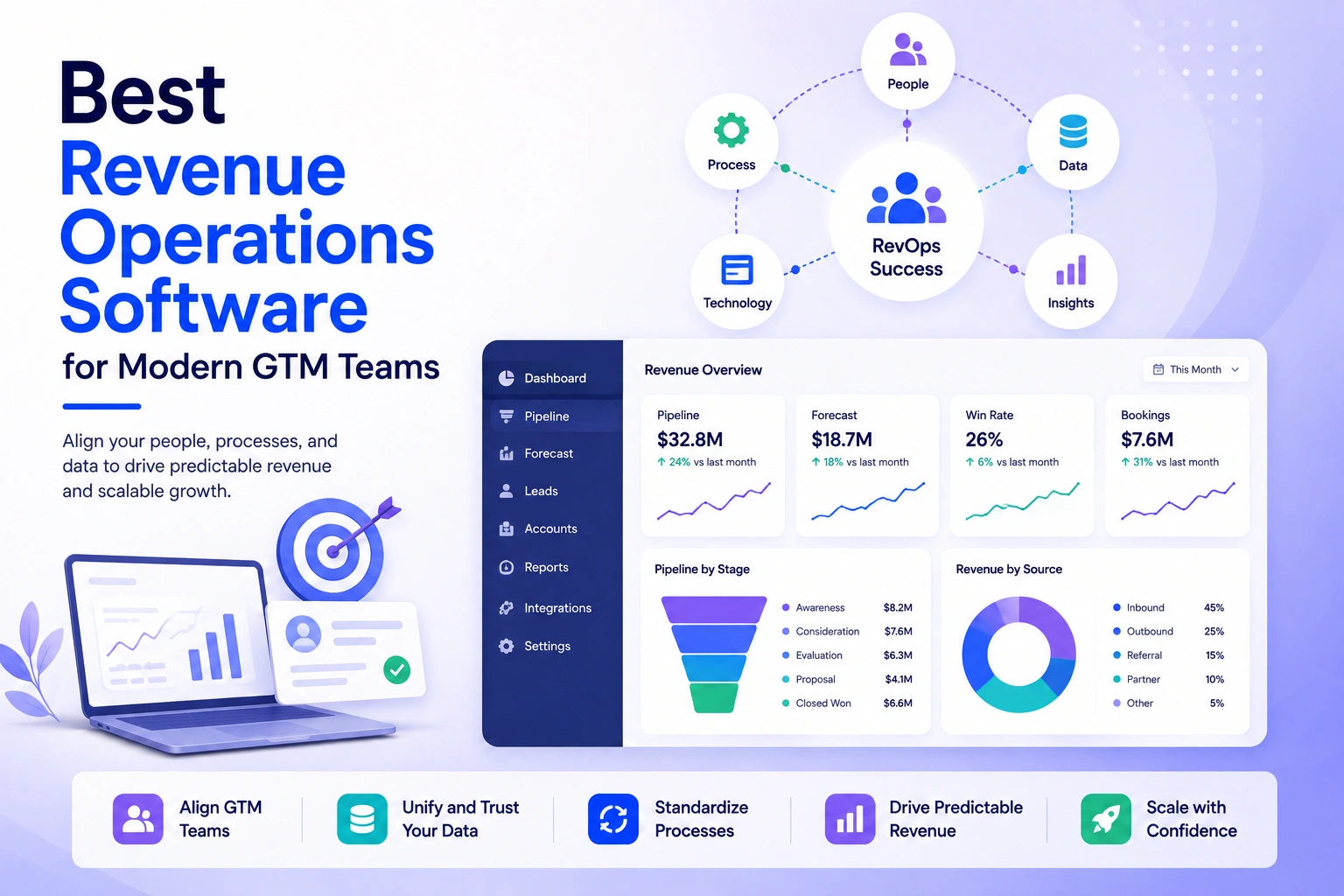
Best Revenue Operations Software for Modern GTM Teams
TL;DR
Revenue operations software connects the data, systems, workflows, and intelligence that revenue teams use to manage the journey from buyer activity to pipeline and revenue. RevOps software can support functions such as CRM management, revenue intelligence, data enrichment, workflow automation, buyer intent, conversation intelligence, attribution, and reporting.
A modern RevOps stack should connect data → intelligence → execution → orchestration → measurement rather than adding disconnected tools for every function. The right software depends on the operational bottleneck: Salesforce and HubSpot support core revenue management, Gong provides conversation intelligence, 6sense focuses on buyer intent, Clay on data enrichment, and Dreamdata on revenue attribution.
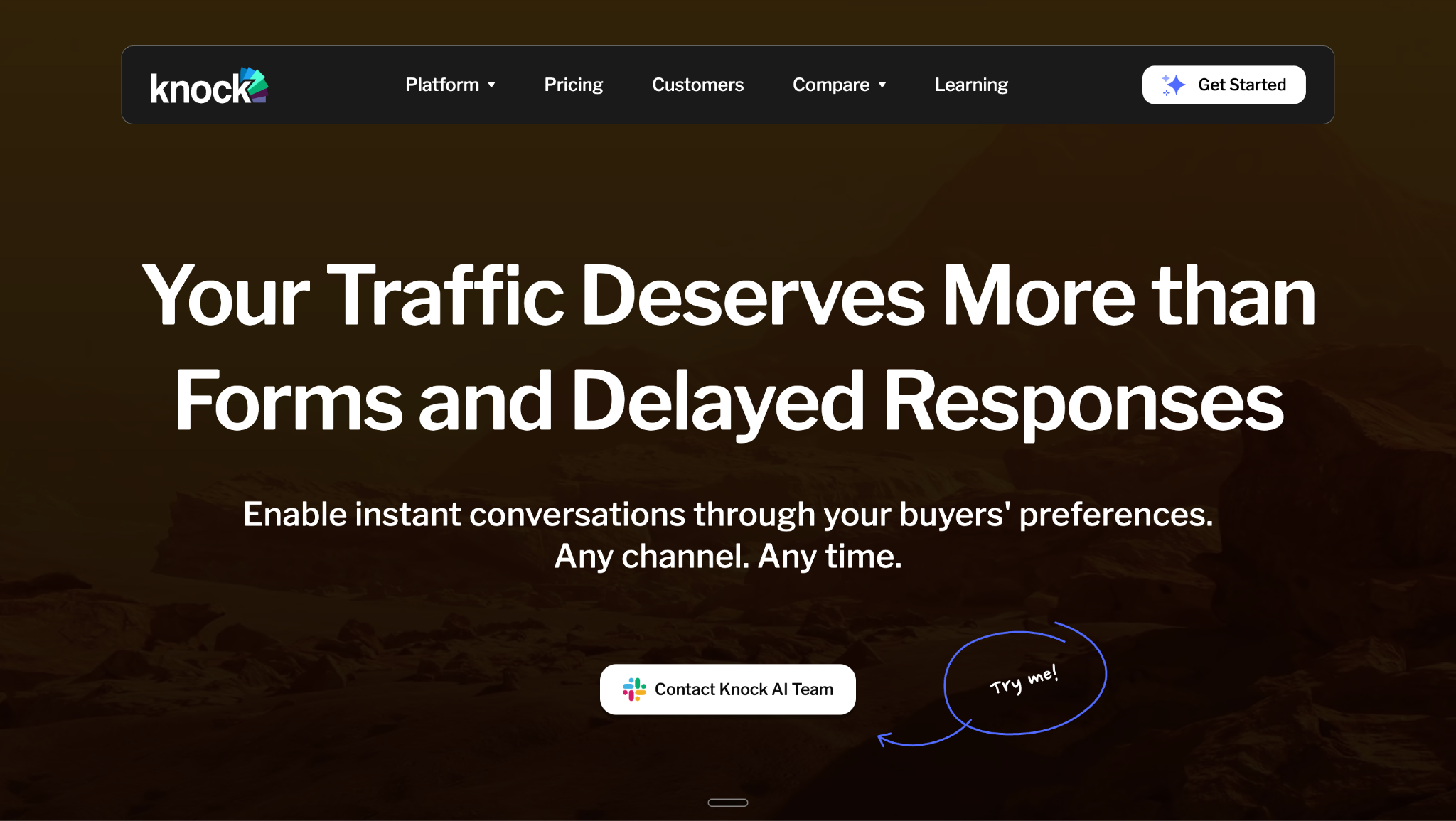
For teams that already generate meaningful buyer activity but struggle to identify, qualify, engage, and convert those buyers, Knock AI focuses on the revenue-conversion layer, connecting buyer signals and intent with qualification, routing, scheduling, CRM workflows, and qualified pipeline.
What Is Revenue Operations Software?
Revenue operations software is technology that helps revenue teams manage, connect, automate, and measure the processes, data, and workflows that support revenue generation. It brings together operational functions across marketing, sales, customer success, and RevOps so teams can work from consistent data and coordinated processes.
RevOps software can support areas such as CRM operations, data management, workflow automation, buyer intelligence, lead routing, sales engagement, conversation intelligence, forecasting, attribution, and revenue reporting.
What Is RevOps Software?
RevOps software is a broad term for tools that help revenue teams improve how their systems, data, and workflows work together. It can include both specialized tools and broader platforms.
What Is a Revenue Operations Platform?
A revenue operations platform connects multiple RevOps functions in a more unified system. Instead of solving only one operational problem, it can connect data, workflows, intelligence, and execution across the revenue process.
Revenue Operations Software vs CRM
A CRM is primarily the system of record for customer and prospect information, while RevOps software supports the systems, workflows, data, intelligence, and processes surrounding revenue operations. In practice, the two work together rather than replacing one another.
What Should a Modern RevOps Stack Include?
A modern RevOps stack should connect the systems that manage revenue data, interpret buyer and pipeline signals, execute revenue workflows, orchestrate processes, and measure outcomes. Rather than treating RevOps as a collection of disconnected tools, teams should think of it as a connected operating system for revenue.
Revenue Data
The foundation includes the CRM, data enrichment, data quality, account matching, and system synchronization. Clean, consistent data allows teams to work from the same view of customers and prospects.
Revenue Intelligence
This layer helps teams understand what is happening across the revenue process through buyer intent, conversation intelligence, forecasting, and pipeline intelligence.
Revenue Execution
Execution tools turn intelligence into action through qualification, routing, engagement, scheduling, and customer workflows.
Revenue Orchestration
Automation connects these processes through cross-functional workflows, AI agents, and CRM synchronization, reducing manual handoffs between teams and systems.
Revenue Measurement
Finally, attribution, pipeline analytics, forecasting, and reporting help teams understand what is influencing revenue and where operational gaps remain.
No single RevOps tool needs to own every layer. A mature revenue operations stack connects specialized systems so data and actions can move across the revenue lifecycle.
Revenue Operations Software Comparison
The best revenue operations software depends on which part of the revenue operating system needs the most improvement. Some platforms provide the core CRM and automation layer, while others specialize in buyer intelligence, data enrichment, conversation intelligence, attribution, or revenue conversion. The following comparison gives each platform a distinct RevOps role rather than treating every tool as interchangeable.
Platform
Primary RevOps Job
Best For
Key Outcome
Knock AI
Revenue conversion
Inbound revenue teams
Qualified pipeline
HubSpot
CRM and revenue automation
Growing GTM teams
Connected customer workflows
Salesforce
CRM and enterprise revenue management
Large organizations
Revenue process management
Gong
Conversation intelligence
Sales organizations
Sales and pipeline intelligence
6sense
Buyer intent and account intelligence
Enterprise GTM teams
Account prioritization
Clay
Data enrichment and orchestration
GTM engineering teams
Enriched revenue data
Dreamdata
Revenue attribution
RevOps and marketing teams
Revenue visibility
See Knock AI in Action — Book Your Live Demo Today
The best revenue operations software depends on which part of the revenue process needs the most attention. Some platforms provide the core CRM and automation infrastructure, while others specialize in buyer intelligence, conversation analysis, data enrichment, attribution, or revenue conversion.
Best For: Enterprise revenue teams that already have meaningful buyer activity and want to convert more of that activity into qualified pipeline.
Strengths: Buyer identification, intent detection, AI qualification, engagement, routing, scheduling, CRM connectivity, and pipeline conversion.
Limitations:Knock AI is not a replacement for every RevOps system. Its role is connecting buyer signals and inbound activity to qualification, routing, scheduling, CRM workflows, and qualified pipeline.
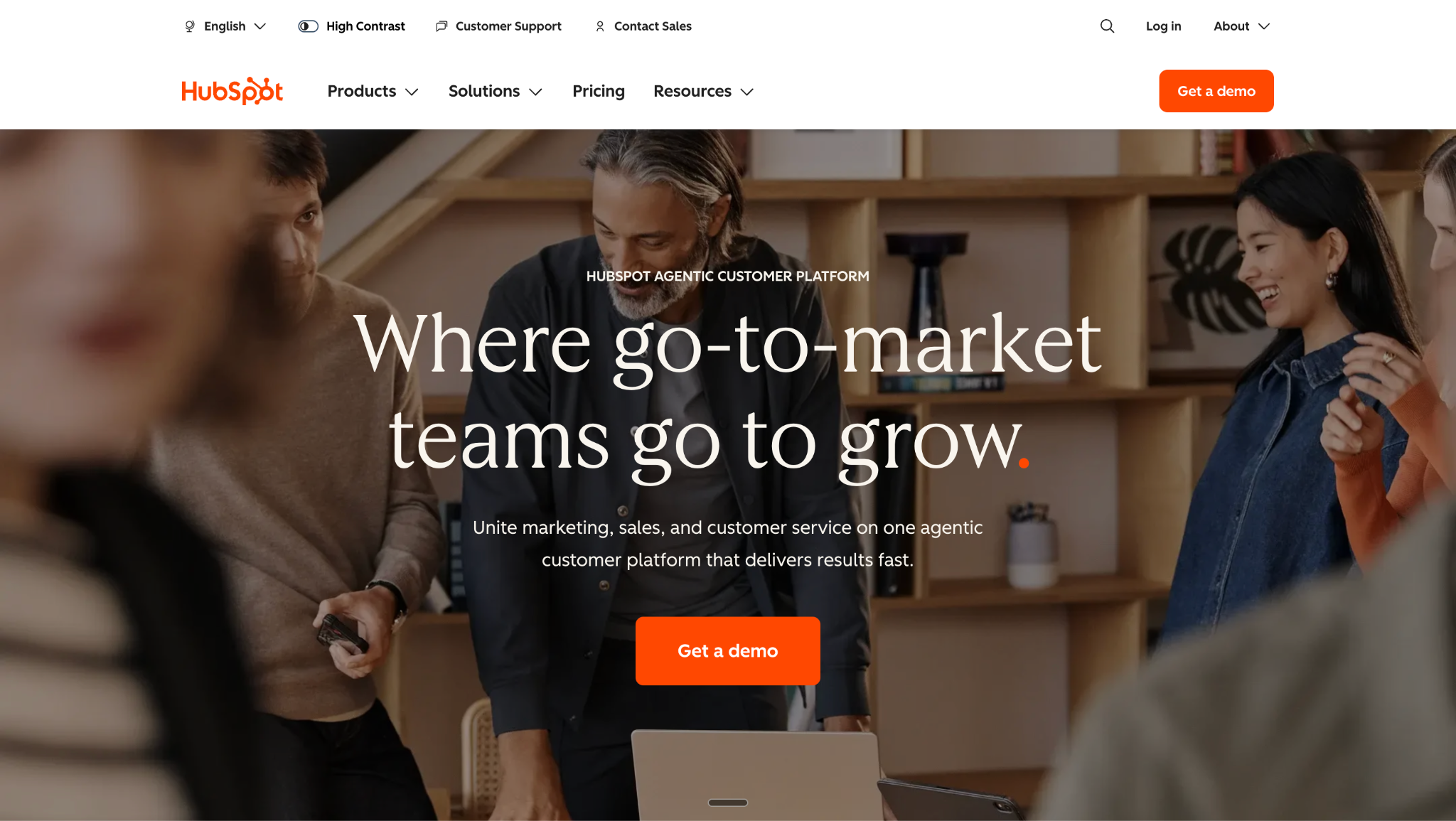
2. HubSpot
Primary Job: CRM and Revenue Automation
What It Does:HubSpot combines CRM functionality with marketing automation, sales workflows, lead management, customer data, and reporting. It gives growing teams a centralized system for managing customer and prospect interactions across marketing, sales, and other revenue processes.
Best For: Growing GTM teams looking to consolidate CRM, marketing, sales, and revenue workflows.
Limitations: HubSpot is a broad CRM and revenue platform rather than a specialized system focused primarily on real-time buyer-intent conversion.
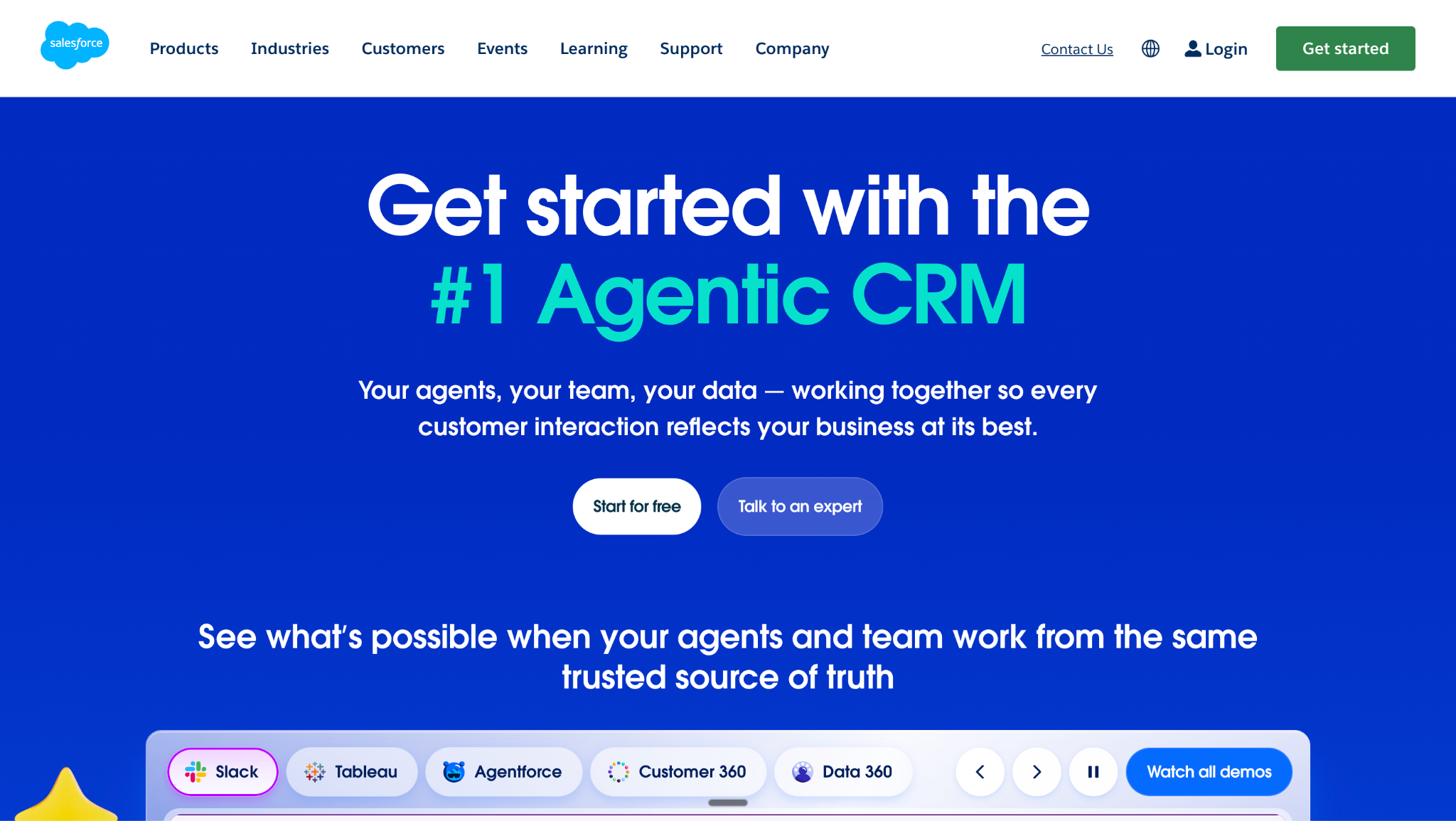
3. Salesforce
Primary Job: Enterprise CRM and Revenue Management
What It Does: Salesforce provides CRM infrastructure for managing customer data, sales operations, enterprise workflows, reporting, and integrations across a large revenue technology ecosystem. It can support complex processes across multiple teams, business units, and customer lifecycle stages.
Best For: Large organizations with complex revenue processes and extensive CRM requirements.
Strengths: Enterprise CRM capabilities, flexible workflows, customer data management, reporting, and a broad integration ecosystem.
Limitations: Its breadth can introduce greater implementation and administration complexity, particularly for organizations with highly customized revenue processes.
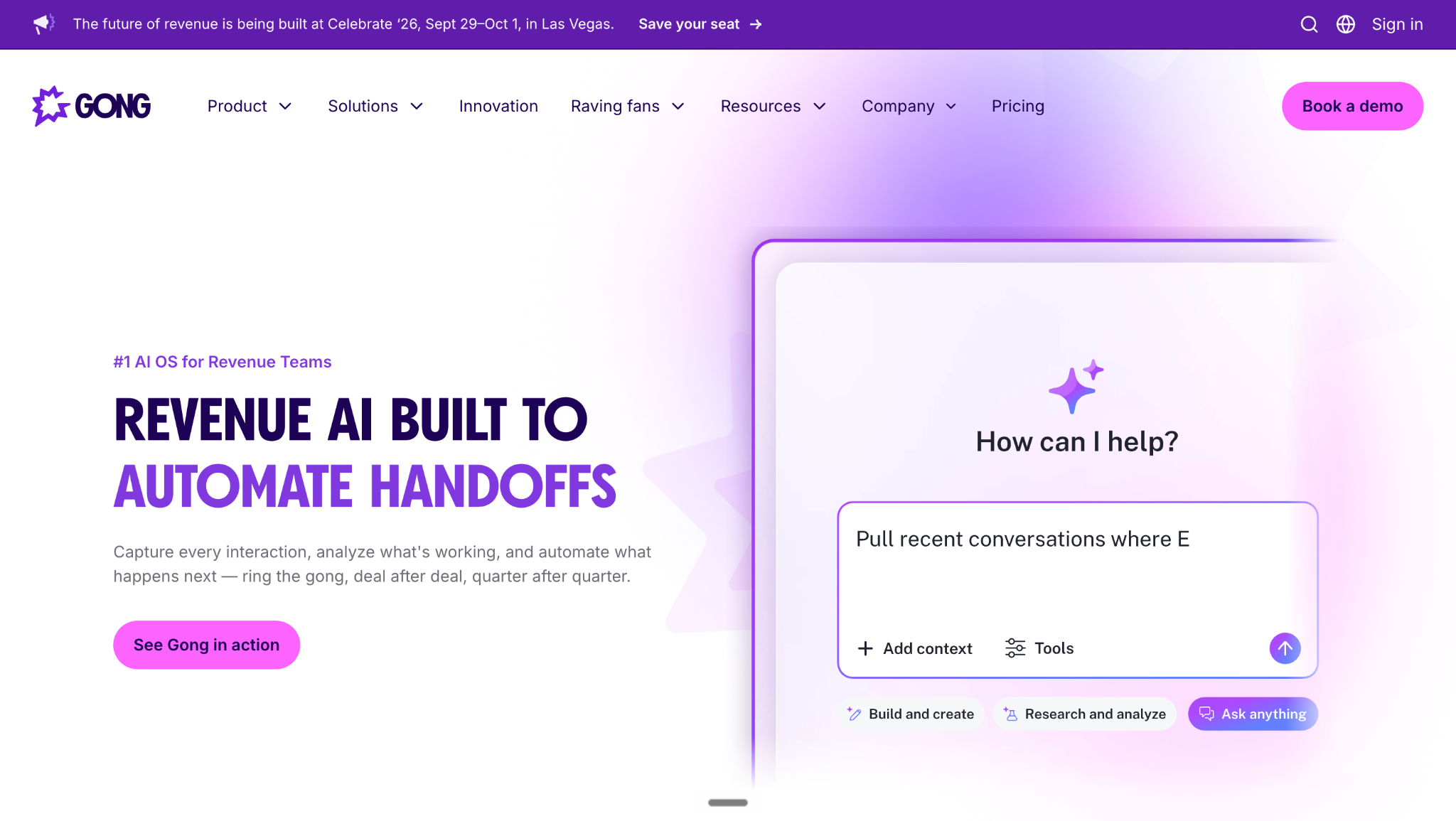
4. Gong
Primary Job: Conversation Intelligence
What It Does: Gong analyzes sales conversations and related interactions to provide deal intelligence, conversation insights, rep coaching, and pipeline visibility. It helps sales organizations understand what is happening across customer conversations and identify patterns that may affect deal progression.
Best For: Sales organizations with significant customer conversation volume.
Limitations: Gong is primarily focused on intelligence from sales interactions rather than providing end-to-end RevOps orchestration across the entire buyer journey.
5. 6sense
Primary Job: Buyer Intent and Account Intelligence
What It Does:6sense helps revenue teams identify account-level intent signals, understand buying stages, prioritize accounts, and support account-based GTM programs. Its focus is on understanding which accounts may be in-market and helping teams prioritize their revenue efforts.
Best For: Enterprise GTM teams running account-based sales and marketing programs.
Limitations: 6sense is strongest around account intelligence and buyer intent rather than managing the complete revenue workflow from signal through execution and conversion.
6. Clay
Primary Job: Revenue Data Enrichment and Orchestration
What It Does:Clay helps GTM teams research prospects and companies, enrich records through multiple data sources, build waterfall enrichment workflows, connect APIs, and create customized data and personalization workflows.
Best For: GTM engineering and operations teams that need highly customized data workflows.
Strengths: Data enrichment, research, waterfall enrichment, API connectivity, personalization, and flexible GTM workflows.
Limitations: Clay functions primarily as a customizable data and workflow layer rather than a complete RevOps system covering every revenue function.
7. Dreamdata
Primary Job: Revenue Attribution
What It Does: Dreamdata connects customer journeys, marketing touchpoints, and revenue data to help teams understand how GTM activities influence revenue. It provides attribution and reporting capabilities for analyzing the relationship between marketing activity, customer journeys, and commercial outcomes.
Best For: RevOps and marketing teams that need to connect GTM activity with revenue.
Limitations: Dreamdata is primarily measurement-focused rather than execution-focused, so teams may need other systems to act on the insights it provides.
Which RevOps Software Solves Which Problem?
The right revenue operations software depends on the operational bottleneck you need to solve. Instead of choosing a platform based on how many features it offers, match the software to the specific gap in your revenue process.
If your biggest challenge is...
Consider...
Managing customer and revenue data
Salesforce
Consolidating CRM and GTM workflows
HubSpot
Understanding sales conversations
Gong
Identifying in-market accounts
6sense
Enriching and orchestrating revenue data
Clay
Measuring revenue attribution
Dreamdata
Identifying and qualifying inbound buyers
Knock AI
Turning buyer intent into qualified pipeline
Knock AI
Choose based on the operational bottleneck, not the number of features. A company struggling with data quality needs different RevOps software from one generating substantial buyer activity but failing to convert it into pipeline.
How RevOps Software Connects the Revenue Lifecycle
Traditional revenue processes often separate the customer journey into distinct stages: Marketing → Lead → Sales → Customer. Each team may have its own systems, data, and workflows, creating gaps between one stage and the next.
Modern RevOps connects those stages around the broader revenue lifecycle:
Buyer ↓ Signal ↓ Data ↓ Intent ↓ Qualification ↓ Engagement ↓ Routing ↓ Opportunity ↓ Customer ↓ Revenue
Revenue operations software helps prevent these stages from operating as isolated systems by connecting information, workflows, and actions across teams. This can support revenue operations automation, RevOps workflows, revenue intelligence, and revenue orchestration.
Revenue operations software becomes valuable when information and actions can move between systems without creating manual gaps.
Even a well-funded RevOps stack can create operational problems when systems, data, and workflows are not connected properly. The most common failures are less about having too few tools and more about how those tools work together.
Data Is Fragmented
Revenue information sits across CRM, marketing, sales, customer success, and other systems, making it difficult to maintain a consistent view of the customer.
Systems Don't Share Context
Marketing, sales, and customer success may work from different information, creating gaps during handoffs.
Buyer Signals Don't Trigger Action
Intent data may exist without being connected to qualification, engagement, or sales workflows.
Too Much Manual Work
Teams rely on spreadsheets, exports, and manual handoffs to move information between systems.
Tools Overlap
Multiple platforms perform similar functions without a clearly defined source of truth.
Reporting Stops at Activity
Teams measure leads, meetings, campaigns, or other activity instead of tracking their impact on pipeline and revenue.
AI is changing RevOps by helping teams interpret revenue signals and automate decisions that previously required manual work. Modern RevOps workflows can use AI for qualification, research, intent detection, revenue intelligence, conversation analysis, AI sales agents, automated enrichment, intelligent routing, workflow automation, and forecasting.
Traditional RevOps often looks like:
Human researches → Human qualifies → Human routes → Human follows up
AI-enabled workflows can move toward:
Signal → AI interpretation → Qualification → Automated action → Human intervention when needed
The important shift is not simply adding AI to existing tools. It is using AI to connect information with the next appropriate action across the revenue lifecycle.
AI is moving RevOps from reporting and workflow automation toward systems that can interpret revenue signals and take actions based on them.
How to Choose Revenue Operations Software
Choosing revenue operations software starts with the operational problem you need to solve, not the number of features a platform offers. Use this checklist before adding another system to your RevOps stack:
What RevOps bottleneck are you solving?
Does it integrate with your CRM?
Does it connect to the rest of your GTM stack?
Can it automate repetitive workflows?
Can it use real-time buyer and revenue data?
Does it improve visibility across teams?
Can teams act on signals quickly?
Can you measure pipeline impact?
Does it overlap with software you already own?
Can it scale with your revenue process?
The best revenue operations software is the system that closes your biggest operational gap without creating another disconnected layer in your stack.
The number of RevOps tools a company needs depends on the complexity of its revenue process. A lean team may need only a few connected systems, while an enterprise organization may require specialized technology across data, intelligence, execution, orchestration, and measurement.
Lean Revenue Team
CRM → Automation → Reporting
Growing GTM Team
CRM → Data → Intelligence → Automation → Measurement
Enterprise Revenue Team
Data → Intelligence → Execution → Orchestration → Measurement
You don't need a tool for every RevOps category. You need enough technology to cover the operational gaps that materially affect revenue.
This also makes tool consolidation an important consideration: before adding another platform, determine whether an existing system can already solve the problem or whether the new tool provides a genuinely distinct capability.
Revenue Operations Software Should Connect Operations to Revenue
RevOps is not simply about having cleaner data, better dashboards, or more automated workflows. Those capabilities matter because they help revenue teams connect information to action and make better decisions faster.
A connected RevOps process looks like:
Data ↓ Signal ↓ Intent ↓ Action ↓ Pipeline ↓ Revenue
The objective is to reduce the operational gaps between identifying a meaningful revenue signal and acting on it. When data, intelligence, workflows, and execution work together, RevOps can become a system for improving how opportunities move through the revenue lifecycle.
Knock AI focuses on the revenue-conversion layer, connecting buyer identification, intent, qualification, engagement, routing, scheduling, and CRM workflows to help turn meaningful buyer activity into qualified pipeline.
FAQ
What is revenue operations software?
Revenue operations software is technology that helps teams manage, connect, automate, and measure the data, processes, and workflows involved in generating revenue across marketing, sales, and customer success.
What is RevOps software?
RevOps software is a broad category of tools that supports revenue operations, including CRM management, data enrichment, automation, intelligence, routing, attribution, reporting, and workflow orchestration.
What is a revenue operations platform?
A revenue operations platform connects multiple revenue functions, systems, and workflows so teams can manage revenue processes through a more coordinated operating environment.
What does revenue operations software do?
It helps teams manage revenue data, automate workflows, identify buyer and pipeline signals, coordinate actions across teams, and measure the impact of GTM activities on pipeline and revenue.
What should a RevOps tech stack include?
A modern RevOps stack can include CRM, revenue data, intelligence, execution, orchestration, and measurement systems. The exact combination depends on the company's operational needs.
What are the best revenue operations tools?
The best RevOps tools depend on the problem being solved. Salesforce and HubSpot support core CRM and revenue workflows, Gong provides conversation intelligence, 6sense focuses on buyer intent, Clay supports data enrichment and orchestration, Dreamdata provides revenue attribution, and Knock AI focuses on revenue conversion.
What is the difference between RevOps software and CRM?
A CRM is primarily a system of record for customer and prospect information. RevOps software encompasses the broader systems, data, workflows, intelligence, and processes used to operate and optimize the revenue lifecycle. A CRM is often an important part of a RevOps stack.
How do you choose the right RevOps software?
Start with the biggest operational bottleneck. Evaluate CRM and GTM integrations, automation capabilities, data connectivity, cross-team visibility, ability to act on revenue signals, pipeline measurement, overlap with existing tools, and scalability. The right software should close a meaningful operational gap without creating another disconnected layer.


.svg)


.svg)
.svg)
.svg)


.svg)
.svg)


.svg)