9 Best Demand Generation Tools & Software for B2B (2026)
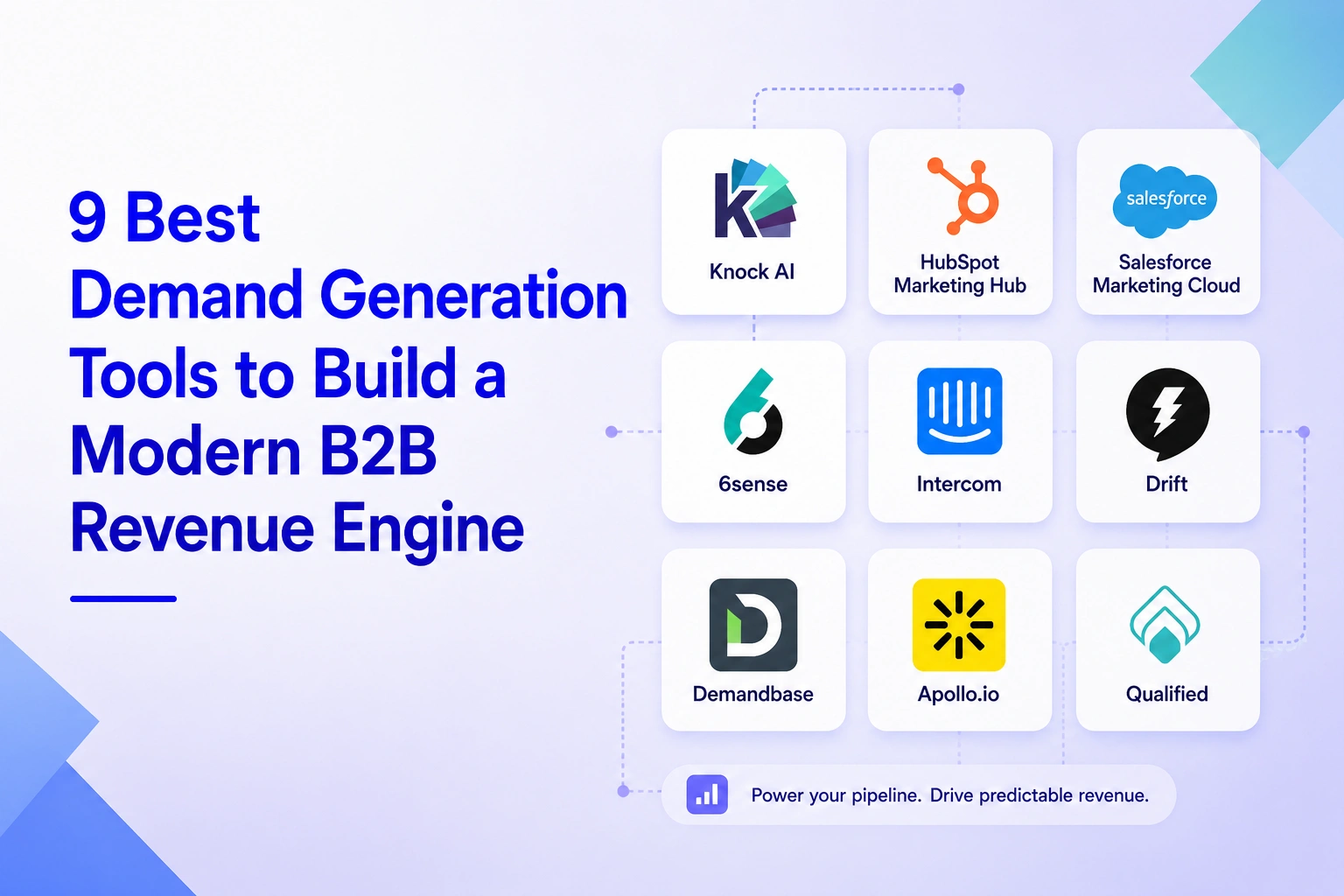
9 Best Demand Generation Tools to Build a Modern B2B Revenue Engine
TL;DR
Demand generation tools help businesses create awareness, identify buying intent, engage potential customers, qualify opportunities, and generate pipeline. Unlike traditional lead generation tools that primarily capture contact information, modern demand generation platforms support the entire buyer journey, from the first interaction to closed revenue.
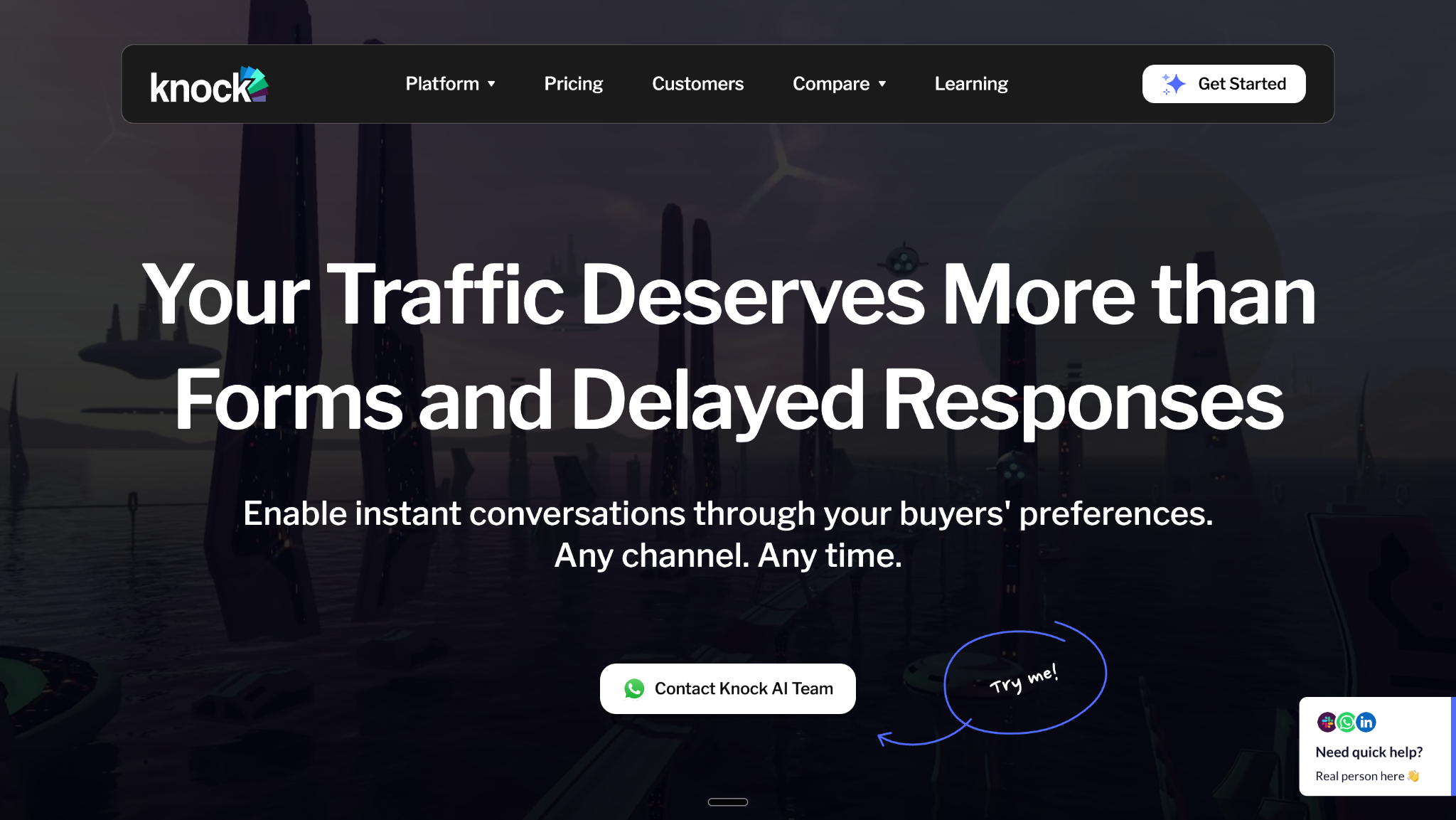
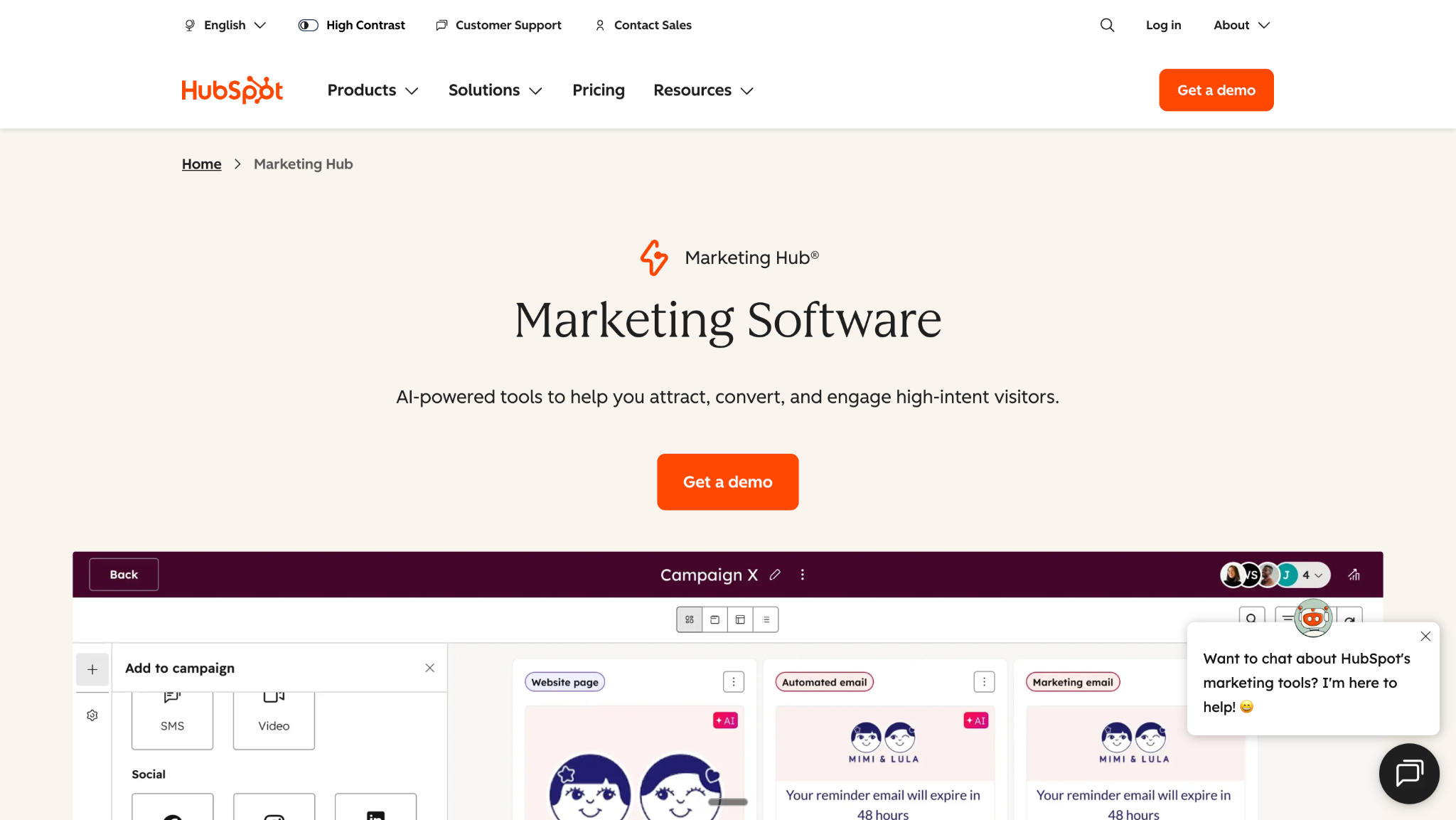
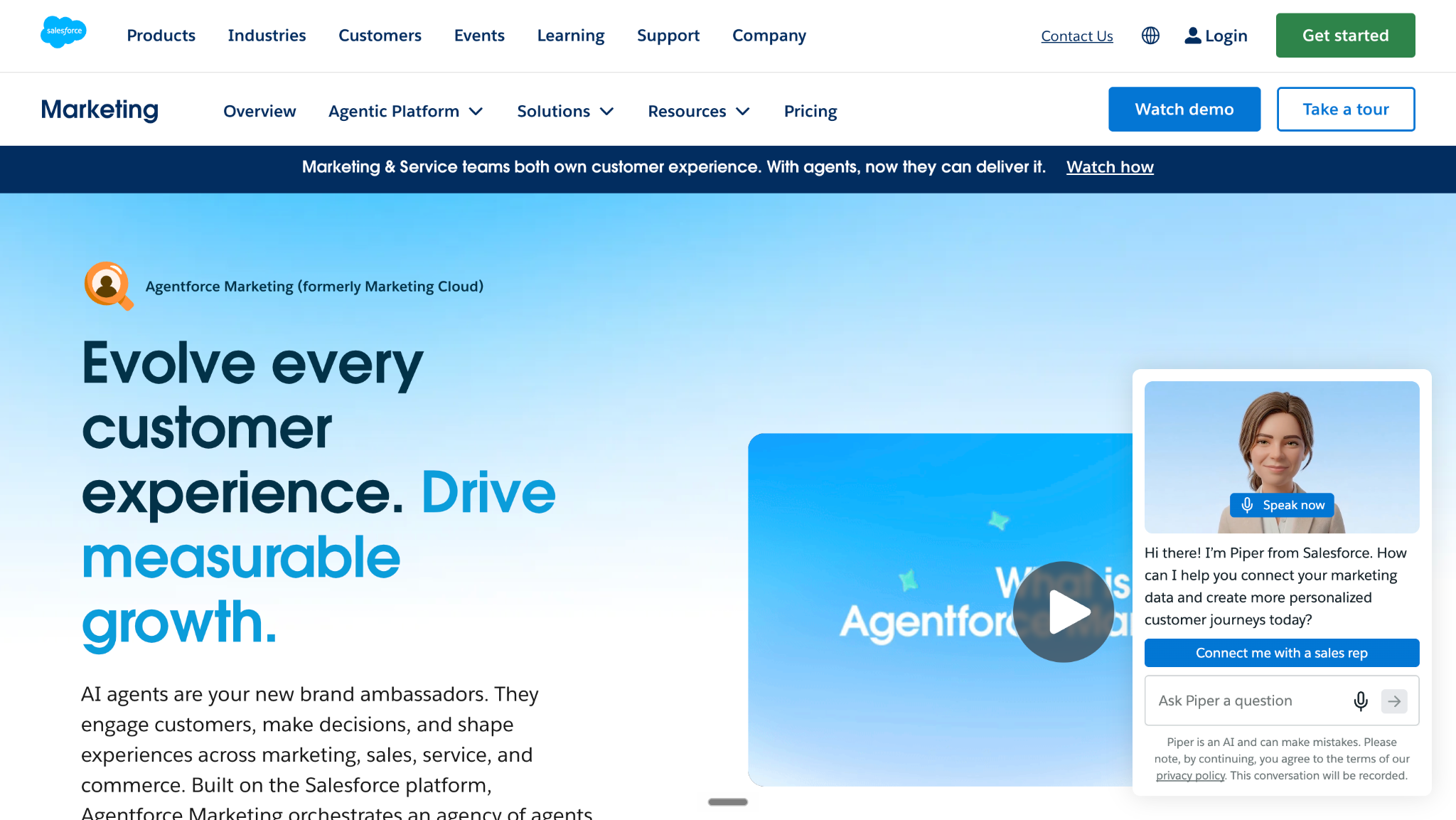
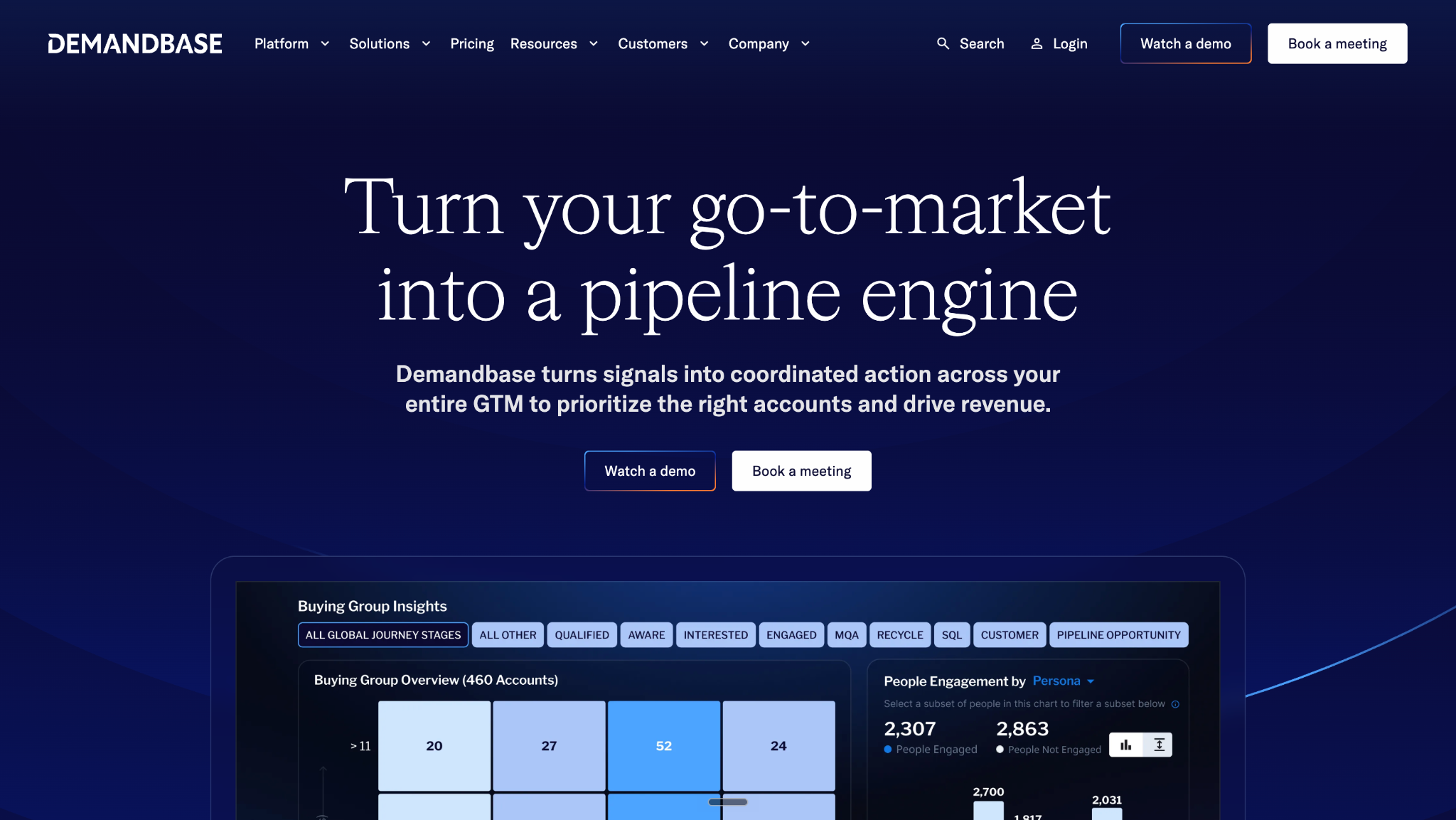
The best platform depends on the problem you're trying to solve. HubSpot Marketing Hub helps businesses attract, capture, nurture, and convert leads through marketing automation, email marketing, forms, landing pages, and campaign management. Salesforce Marketing Cloud enables enterprise organizations to orchestrate personalized, multi-channel marketing campaigns across email, mobile, advertising, and customer journeys, Demandbase and 6sense identify high-intent buying accounts, Qualified, Drift, and Intercom engage buyers through conversations, while Apollo.io helps sales teams generate outbound demand. Platforms like Knock AI take a broader approach by combining buyer identification, intent detection, AI qualification, routing, scheduling, and conversation continuity to convert existing demand into qualified pipeline.
The highest-performing B2B revenue teams don't build their technology stack around individual tools. They build it around the buyer journey.
Traffic
↓
Awareness
↓
Buyer Intent
↓
Buyer Identification
↓
Conversation
↓
Qualification
↓
Pipeline
↓
Revenue
As you evaluate demand generation software, don't focus on which platform has the longest feature list. Focus on whether your technology stack helps you attract the right buyers, understand their intent, engage them at the right moment, and consistently turn demand into revenue.
Quick List of the 9 Best Demand Generation Platforms
If you're looking for the best demand generation software without reading the entire guide, here's a quick overview of the platforms we'll cover. Each one solves a different challenge across the modern B2B buyer journey, from generating awareness and identifying buying intent to engaging buyers, managing customer relationships, and converting demand into qualified pipeline.
Platform
Primary Job
Knock AI
Revenue conversion, buyer identification, AI qualification, intelligent routing, and pipeline generation
HubSpot Marketing Hub
Marketing automation, inbound marketing, lead nurturing, and demand generation
Salesforce Marketing Cloud
Enterprise marketing automation, customer journey orchestration, and personalized campaign management
Demandbase
Account-based marketing (ABM) and account intelligence
6sense
Buyer intent detection and predictive sales intelligence
Qualified
Website conversations and inbound buyer engagement
Drift
Conversational marketing and AI-powered website engagement
Apollo.io
Outbound prospecting and sales engagement
Intercom
Customer messaging and conversational engagement
The rest of this guide explains what each platform does, the business problem it solves, where it fits within a modern demand generation strategy, and how to choose the right technology stack for your revenue team.
What Are Demand Generation Tools?
Demand generation tools are software platforms that help businesses create awareness, attract potential buyers, identify buying intent, engage prospects, qualify opportunities, and generate pipeline. Rather than solving a single problem, they support different stages of the buyer journey, from the first interaction to a closed deal.
One of the biggest misconceptions is that demand generation, lead generation, pipeline generation, and revenue conversion all mean the same thing.
They don't.
Each represents a different business objective.
Demand Generation
Demand generation focuses on creating awareness and interest among potential buyers. This includes activities such as SEO, content marketing, paid advertising, webinars, events, social media, communities, and AI search.
The goal is simple: generate demand before buyers are ready to speak with sales.
Lead Generation
Lead generation turns that interest into identifiable prospects by collecting contact information through forms, demo requests, chat, newsletters, gated content, or other conversion points.
The goal is to identify who the buyer is.
Pipeline Generation
Pipeline generation goes one step further.
Instead of measuring how many leads were captured, it focuses on identifying qualified buying opportunities that sales can realistically convert into customers.
Revenue conversion focuses on helping qualified buyers become customers.
It removes friction throughout the buying journey by engaging buyers at the right moment, qualifying conversations, routing them intelligently, maintaining context, and helping sales spend time with opportunities that are most likely to close.
Although these concepts are connected, they solve different problems and often require different technologies.
For example:
HubSpot Marketing Hub helps businesses attract, capture, nurture, and convert leads through inbound marketing and marketing automation.
Salesforce Marketing Cloud helps enterprises engage, personalize, and nurture customer relationships through omnichannel marketing automation and customer journey orchestration.
Demandbase and 6sense help identify buying intent and prioritize high-value accounts.
Qualified, Drift, and Intercom enable real-time conversations with buyers during their evaluation process.
Apollo.io helps revenue teams generate outbound demand through prospecting and sales engagement.
The highest-performing revenue teams don't rely on one platform to do everything. They build a connected revenue engine where every technology has a clear responsibility. Some platforms generate demand. Others identify buyer intent, manage customer relationships, or engage prospects in conversation. Increasingly, revenue teams are also investing in platforms that bridge these functions by reducing friction between buyer interest and qualified pipeline.
How Modern B2B Demand Generation Actually Works
One of the biggest reasons companies struggle with demand generation is that they think in terms of software instead of buyers.
When you understand the buying journey, it becomes much easier to understand where each technology fits.
A modern B2B buying journey typically looks like this:
Traffic
↓
Awareness
↓
Buyer Intent
↓
Buyer Identification
↓
Conversation
↓
Qualification
↓
Routing
↓
Scheduling
↓
CRM
↓
Pipeline
↓
Revenue
Each stage has a different objective.
Traffic
Everything begins with attracting potential buyers through channels such as SEO, AI search, paid advertising, LinkedIn Ads, email, referrals, partner programs, events, communities, and direct traffic.
The goal is visibility.
Awareness
Buyers begin researching your company, reading your content, comparing solutions, and learning about the problem you're solving.
At this stage, they're educating themselves rather than looking for a sales conversation.
Buyer Intent
As buyers move closer to making a decision, they leave intent signals.
They visit pricing pages, compare competitors, read case studies, interact with product pages, ask questions in AI search, or repeatedly return to your website.
Not every visitor shows intent, but identifying the ones who do is where demand generation becomes much more efficient.
Buyer Identification
Once intent appears, the next challenge is understanding who the buyer is.
This is where technologies like visitor identification, enrichment, account intelligence, and CRM matching provide the context needed to personalize the buying experience.
Conversation
Modern buyers don't always want to fill out a form.
They may prefer to ask questions through website chat, LinkedIn, email, messaging apps, or other digital channels.
Starting meaningful conversations at the right moment often determines whether buying intent turns into a real opportunity.
Qualification
Not every conversation belongs with sales.
Some buyers are ready for a demo.
Others need more education.
Some are existing customers.
Others may be job applicants, partners, or support requests.
Qualification ensures every conversation reaches the right destination.
Routing
After qualification, buyers should be routed intelligently based on factors such as territory, account ownership, product interest, language, company size, or buying intent.
Good routing reduces response time and creates a better buyer experience.
Scheduling
Scheduling should be the result of a qualified buying conversation, not the starting point.
By the time a meeting is booked, both the buyer and the sales team should already have enough context to make that conversation productive.
CRM
Qualified buyer information, conversation history, engagement data, attribution, and meeting activity are then synchronized into your CRM, creating a complete picture of the opportunity.
Pipeline
At this stage, qualified buyers become active sales opportunities that can be forecasted, managed, and advanced through the sales process.
This is where marketing and sales begin measuring meaningful business outcomes rather than marketing activity.
Revenue
Everything in the buyer journey ultimately leads here.
The purpose of demand generation isn't simply to generate more traffic, more leads, or more meetings.
It's to create predictable, repeatable revenue.
This is also why modern revenue teams no longer evaluate demand generation tools in isolation.
Instead, they build a connected revenue engine where every platform has a clear responsibility. Some tools create demand. Some identify intent. Others engage buyers, qualify opportunities, manage customer relationships, or measure attribution.
Increasingly, platforms like Knock AI connect many of these stages together by helping revenue teams identify buyers earlier, understand intent, engage them through AI-powered conversations, qualify opportunities automatically, route them intelligently, and convert more buying intent into qualified pipeline.
The result isn't simply a better demand generation stack.
It's a buyer journey that creates less friction, better experiences, and more revenue from the demand your business is already generating.
9 Best Demand Generation Tools Comparison
Platform
Primary Job
Best For
AI Capabilities
Ideal Company Size
Starting Price*
Knock AI
Revenue conversion, buyer identification, AI qualification, routing, scheduling, and pipeline generation
Revenue teams looking to convert more buying intent into qualified pipeline
⭐⭐⭐⭐⭐
Mid-market, Enterprise
Starts at $2,000/month
HubSpot Marketing Hub
Marketing automation, CRM, and inbound demand generation
Companies building an integrated marketing and sales engine
⭐⭐⭐⭐
SMB, Mid-market, Enterprise
Free plan available • Paid plans from $7/seat/month • Professional from $800/month • Enterprise from $3,600/month
Salesforce Marketing Cloud
Enterprise marketing automation and customer engagement
Large organizations running sophisticated marketing operations
⭐⭐⭐⭐
Enterprise
Starter from $25/user/month • Marketing Cloud from $1,500/month
Demandbase
Account-Based Marketing (ABM), buyer intent, and account intelligence
Enterprise ABM and strategic account targeting
⭐⭐⭐⭐
Mid-market, Enterprise
Custom pricing (typically $24K–$165K+/year, median around $70K/year)
6sense
Buyer intent detection and predictive sales intelligence
Companies prioritizing in-market accounts
⭐⭐⭐⭐⭐
Mid-market, Enterprise
Custom pricing (typically $60K–$100K+/year)
Qualified
AI-powered website conversations and inbound pipeline acceleration
B2B SaaS companies with high inbound website traffic
⭐⭐⭐⭐
Mid-market, Enterprise
Premier from ~$42K/year • Enterprise and Ultimate custom pricing (typically $60K–$100K+/year)
Drift
Conversational marketing and AI website engagement
Companies replacing forms with real-time conversations
⭐⭐⭐⭐
Mid-market, Enterprise
Typically starts around $30K/year (Enterprise pricing available on request)
Apollo.io
Outbound prospecting, contact intelligence, and sales engagement
SDR teams and outbound sales organizations
⭐⭐⭐⭐
SMB, Mid-market, Enterprise
Free plan • Paid plans from $59/user/month
Intercom
Customer messaging, AI support, and conversational engagement
SaaS companies focused on customer communication
⭐⭐⭐⭐
SMB, Mid-market, Enterprise
Essential from $39/seat/month • Advanced from $99/seat/month • Expert from $139/seat/month
See Knock AI in Action — Book Your Live Demo Today
Most demand generation tools specialize in one stage of the buyer journey. Some help you attract visitors, others identify buying intent, while others focus on scheduling meetings or managing your CRM.
Instead of solving a single problem, it helps revenue teams convert existing buying intent into qualified pipeline by connecting multiple stages of the buyer journey in one platform.
Rather than relying solely on website forms, Knock AI allows buyers to engage through multiple touchpoints, including your website, Slack, LinkedIn, WhatsApp, Telegram, email, AI search, messaging platforms, partner referrals, communities, and events.
Best For
B2B SaaS companies
Revenue teams generating consistent inbound demand
Organizations looking to improve demo conversion rates
Combines buyer identification, intent detection, AI qualification, routing, scheduling, CRM synchronization, and conversation continuity in one platform
Built around a Formless Revenue Funnel instead of traditional form-first workflows
Engages buyers across websites, LinkedIn, email, AI search, messaging platforms, and communities
Uses AI to qualify buyers before meetings are booked
Routes conversations using real-time enrichment, buyer intent, CRM context, and business rules
Preserves buyer momentum with AI follow-ups, meeting reminders, and multi-channel engagement
Helps reduce CRM pollution by synchronizing qualified buyer data instead of every inquiry
Native integrations with leading revenue tools
No-code implementation with ongoing platform improvements and dedicated customer support
Limitations
Not designed as a standalone CRM
Not intended to replace SEO, paid advertising, or content marketing platforms that create demand
Delivers the greatest value for organizations already generating inbound traffic or buying intent
2. HubSpot Marketing Hub
Primary Job
Marketing automation, inbound marketing, lead nurturing, and demand generation.
What It Does
HubSpot Marketing Hub helps businesses attract, capture, nurture, and convert leads through a unified inbound marketing platform. It includes tools for email marketing, landing pages, forms, blogs, SEO recommendations, social media management, marketing automation, lead scoring, reporting, and campaign analytics.
Because it integrates natively with HubSpot CRM and the broader HubSpot platform, marketing and sales teams can share customer data, automate lead handoffs, and measure campaign performance without relying on multiple disconnected systems.
For organizations looking to build a scalable inbound demand generation engine, HubSpot Marketing Hub is one of the most comprehensive platforms available.
Best For
Small and mid-sized B2B businesses
Growing SaaS companies
Marketing-led organizations
Teams investing in inbound marketing
Businesses looking for an integrated marketing automation platform
Strengths
Comprehensive marketing automation
Excellent email marketing and lead nurturing
Built-in landing pages, forms, blogs, and SEO tools
Native integration with HubSpot CRM
Strong reporting, attribution, and campaign analytics
Large marketplace of integrations
Limitations
Costs can increase significantly as contacts and marketing needs grow
Many advanced automation and reporting features require higher-tier plans
Focuses on demand generation and lead nurturing rather than identifying anonymous buyers or qualifying buying intent before a visitor becomes a known contact
3. Salesforce Marketing Cloud
Primary Job
Enterprise marketing automation, customer journey orchestration, and personalized engagement.
What It Does
Salesforce Marketing Cloud helps enterprise organizations deliver personalized, data-driven marketing campaigns across email, SMS, mobile, advertising, web, and other digital channels. It enables marketing teams to automate customer journeys, segment audiences, personalize communications, and coordinate campaigns throughout the customer lifecycle.
When integrated with Salesforce's broader ecosystem, Marketing Cloud allows organizations to align marketing and sales activities while delivering consistent customer experiences across multiple touchpoints.
It is particularly well suited for enterprises managing large customer databases, multiple brands, or complex omnichannel marketing strategies.
Best For
Enterprise organizations
Global marketing teams
Businesses running multi-channel campaigns
Companies with sophisticated customer journey requirements
Organizations already using the Salesforce ecosystem
Strengths
Powerful customer journey automation
Omnichannel campaign orchestration
Advanced audience segmentation and personalization
Enterprise-scale scalability
Strong analytics and campaign reporting
Deep integration with the Salesforce ecosystem
Limitations
Requires significant implementation, configuration, and ongoing administration
Can become expensive as products, users, and data volumes increase
Often requires complementary platforms for buyer intent, anonymous visitor identification, AI qualification, and revenue conversion
4. Demandbase
Primary Job
Account-Based Marketing (ABM), buyer intent, and account intelligence.
What It Does
Demandbase helps B2B organizations identify high-value accounts, understand buying intent, personalize marketing campaigns, and prioritize sales outreach. By combining account intelligence, website personalization, advertising, and intent data, it enables marketing and sales teams to focus on companies that are actively researching solutions.
Rather than generating more leads, Demandbase helps revenue teams spend more time engaging accounts with the highest likelihood of becoming customers.
Best For
Enterprise B2B companies
Account-Based Marketing (ABM) programs
Large sales organizations
Companies targeting strategic accounts
Businesses with mature revenue operations
Strengths
Comprehensive account intelligence
Strong buyer intent capabilities
Advanced ABM personalization
Advertising and audience targeting
Deep analytics and account insights
Enterprise integrations
Limitations
Primarily focused on account intelligence rather than buyer conversations
Better suited for enterprise organizations than small businesses
Typically requires complementary platforms for qualification, routing, scheduling, and CRM management
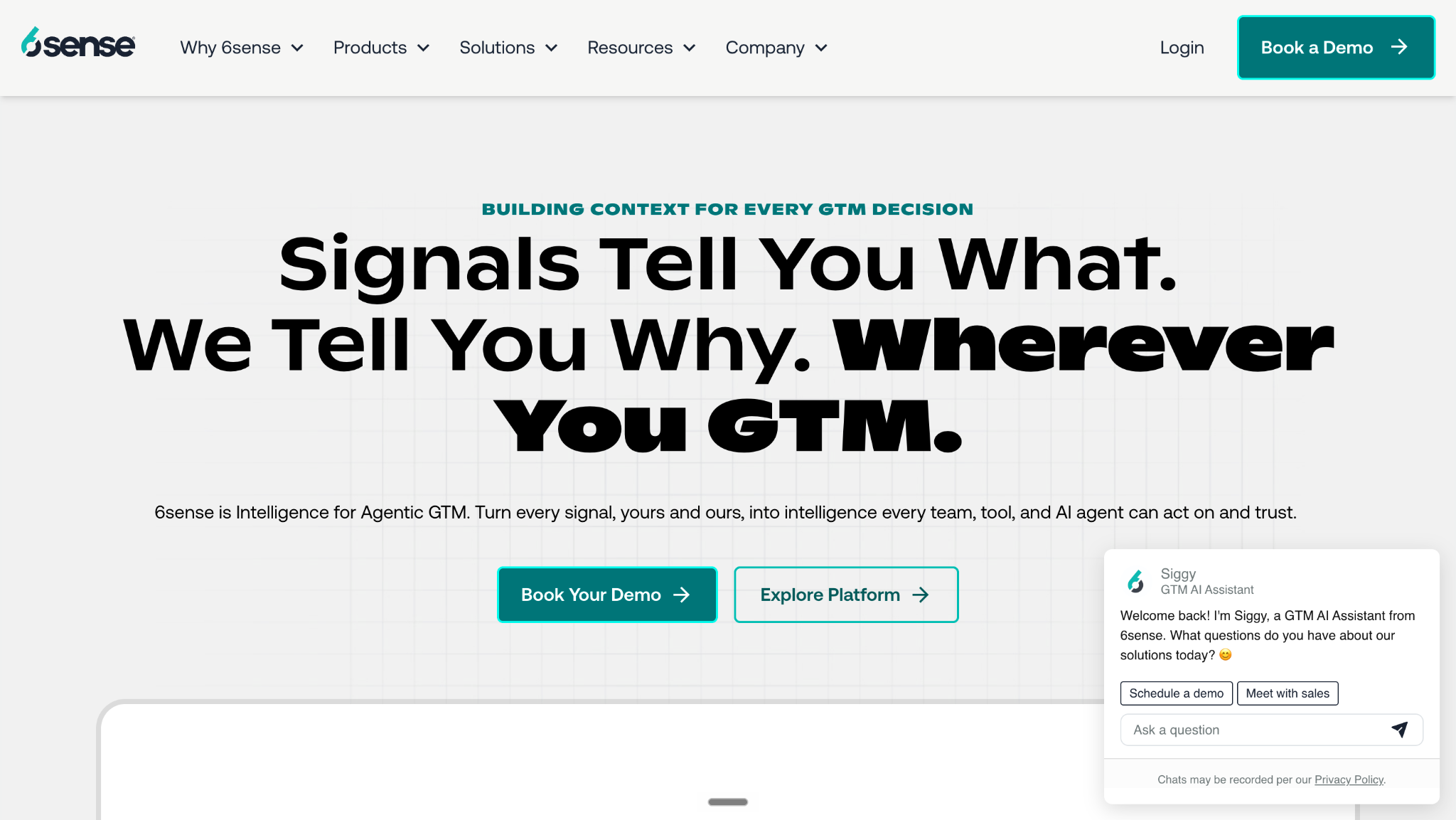
5. 6sense
Primary Job
Buyer intent detection, predictive analytics, and sales intelligence.
What It Does
6sense helps revenue teams identify companies that are actively researching products before they submit a form or contact sales. By analyzing intent signals, engagement behavior, firmographic data, and predictive models, it enables marketing and sales teams to prioritize accounts that are most likely to enter a buying cycle.
Many organizations use 6sense to improve account prioritization, support account-based marketing initiatives, and help sales teams focus on buyers showing meaningful purchase intent.
Focuses on identifying buying intent rather than engaging buyers directly
Delivers the greatest value when paired with platforms that qualify, route, and convert identified opportunities
May be more than smaller organizations need if they have relatively simple sales processes
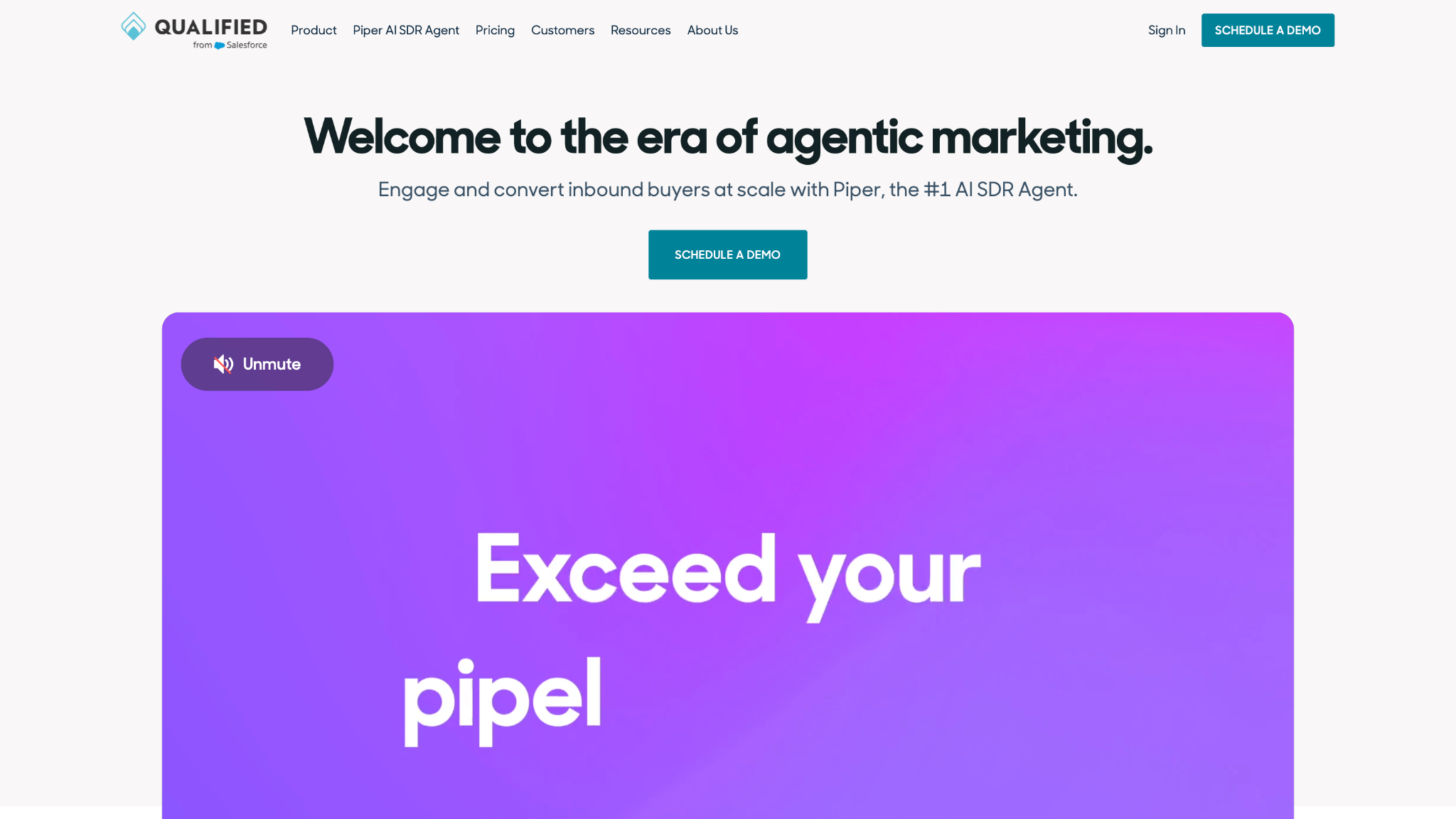
6. Qualified
Primary Job
Convert website visitors into qualified sales conversations and booked meetings.
What It Does
Qualified is a conversational marketing platform designed to engage website visitors in real time. It uses AI-powered conversations, live chat, and routing workflows to identify high-intent buyers, answer questions, and connect qualified prospects with the right sales representative.
The platform is particularly popular among B2B SaaS companies using Salesforce because it helps accelerate inbound conversations without requiring buyers to wait for follow-up emails.
Best For
B2B SaaS companies
Marketing and sales teams with high website traffic
Salesforce users
Organizations focused on website conversion
Companies investing heavily in inbound marketing
Strengths
AI-powered website conversations
Strong Salesforce integration
Real-time visitor engagement
Meeting booking and lead routing
Personalized chat experiences
Enterprise-ready platform
Limitations
Primarily focused on website interactions
Less effective for buyers engaging through channels outside your website
Organizations typically require additional platforms for buyer intent, CRM, and broader revenue operations
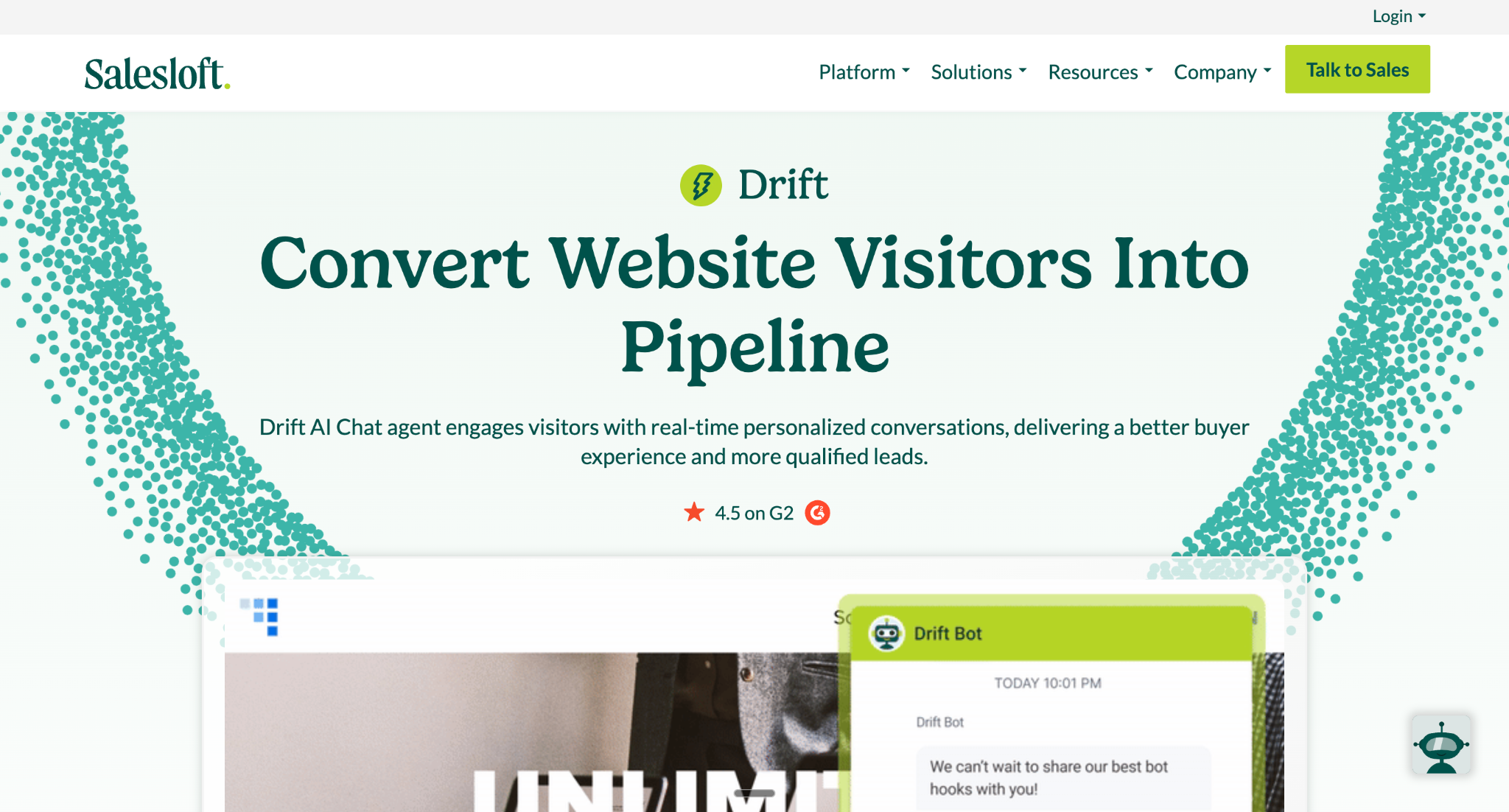
Drift pioneered conversational marketing by replacing traditional website forms with real-time conversations. The platform helps businesses engage visitors through AI chat, live chat, chat routing, and meeting scheduling while supporting marketing and sales teams in qualifying inbound prospects.
Its primary goal is to reduce friction for website visitors who want immediate answers rather than waiting for email follow-ups.
Best For
Marketing-led organizations
B2B SaaS companies
Businesses focused on website engagement
Companies replacing traditional forms with conversations
Strengths
Mature conversational marketing platform
AI and live chat capabilities
Website visitor engagement
Lead qualification workflows
Meeting scheduling
Enterprise integrations
Limitations
Primarily optimized for website conversations
Requires complementary platforms for CRM, buyer intent, and revenue attribution
Does not replace broader revenue operations platforms
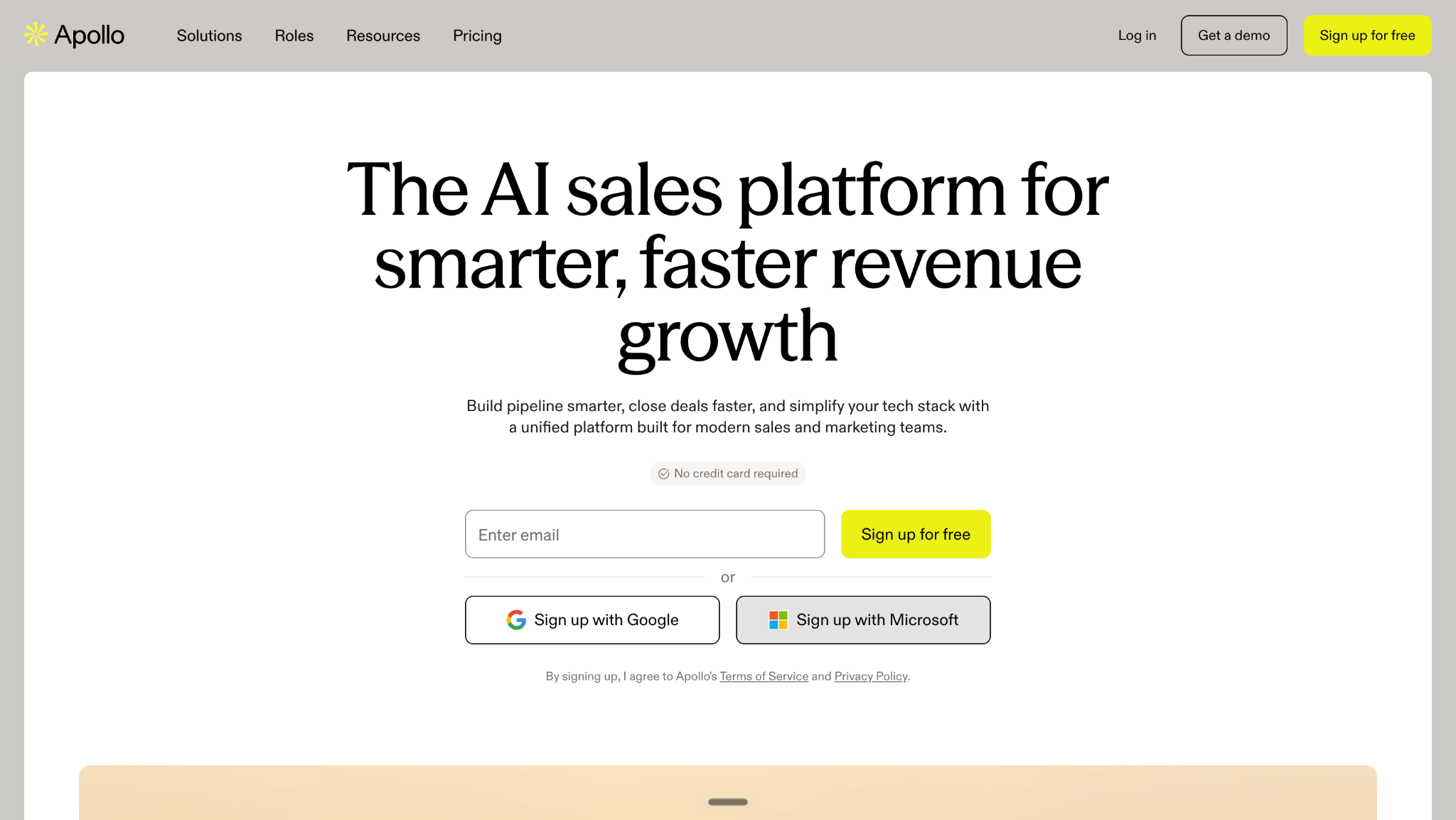
Outbound prospecting, sales engagement, and contact intelligence.
What It Does
Apollo.io combines a large B2B contact database with outbound sales engagement tools that help teams identify prospects, build prospect lists, launch email sequences, and manage outbound campaigns. It enables sales teams to scale prospecting while improving personalization through company and contact data.
Many organizations use Apollo as their primary outbound demand generation platform.
Requires additional tools for CRM, routing, scheduling, and inbound conversion
9. Intercom
Primary Job
Customer messaging, conversational engagement, and customer support.
What It Does
Intercom is a customer communication platform that combines live chat, AI assistants, automation, messaging, and customer support into a unified experience. While it has expanded into conversational sales, its core strength remains helping businesses communicate with customers throughout the customer lifecycle.
Many organizations use Intercom for onboarding, customer success, product support, and conversational engagement alongside their sales and marketing technology stack.
Best For
SaaS companies
Customer support teams
Product-led growth (PLG) organizations
Businesses focused on customer engagement
Companies wanting one platform for support and messaging
Strengths
Industry-leading customer messaging platform
AI-powered customer support
Live chat and automation
Product tours and onboarding
Knowledge base integration
Strong ecosystem of integrations
Limitations
Built primarily for customer communication rather than complete demand generation
Sales engagement capabilities are less comprehensive than dedicated revenue platforms
Organizations often pair it with CRM, buyer intent, and demand generation software
Which Demand Generation Tool Solves Which Problem?
The best demand generation platform depends on the problem you're trying to solve. Some tools help you attract buyers, others identify buying intent, while others focus on engaging prospects, nurturing leads, or converting existing demand into qualified pipeline.
Use the table below to identify which platform best aligns with your current business challenge.
If your biggest challenge is...
Consider...
Converting more buying intent into qualified pipeline
Knock AI
Building an inbound marketing engine
HubSpot Marketing Hub
Running enterprise marketing campaigns
Salesforce Marketing Cloud
Launching or scaling an Account-Based Marketing (ABM) strategy
Demandbase
Identifying companies actively researching your solution
6sense
Engaging website visitors in real time
Qualified
Replacing traditional website forms with conversations
Drift
Building outbound pipeline through prospecting
Apollo.io
Improving customer messaging, onboarding, and support conversations
Intercom
Automating lead nurturing and email marketing
HubSpot Marketing Hub
Prioritizing high-value accounts for sales
6sense or Demandbase
Personalizing enterprise customer journeys
Salesforce Marketing Cloud
Supporting product-led growth with customer communication
Intercom
Connecting buyer identification, AI qualification, routing, scheduling, and conversation continuity in one platform
Knock AI
No single platform is designed to solve every demand generation challenge.
For example, HubSpot Marketing Hub excels at attracting and nurturing leads, while Demandbase and 6sense help identify which accounts are most likely to buy. Qualified and Drift focus on engaging buyers during their website visit, Apollo.io supports outbound prospecting, and Intercom strengthens customer communication throughout the customer lifecycle.
If your challenge isn't generating more demand but converting the demand you already have into qualified pipeline, platforms like Knock AI bring together buyer identification, intent analysis, AI qualification, conversation management, routing, scheduling, and CRM synchronization into a single revenue conversion workflow.
The most effective revenue teams don't choose the platform with the most features. They choose the platform that solves the biggest bottleneck in their buyer journey.
For years, demand generation software has been measured by one question:
Can it generate more leads?
Today, that's no longer enough.
Marketing teams can invest in SEO, paid advertising, webinars, social media, communities, AI search optimization, and content marketing to generate demand. They can also use marketing automation platforms to capture leads and nurture prospects.
But demand alone doesn't create revenue.
A modern buyer journey looks more like this:
Demand
↓
Traffic
↓
Buyer Intent
↓
Conversation
↓
Qualification
↓
Routing
↓
CRM
↓
Pipeline
Most demand generation platforms focus on the first half of this journey.
They help businesses attract visitors, generate awareness, launch campaigns, or identify companies researching a solution.
Those capabilities are essential, but they don't automatically create qualified pipeline.
Between buyer intent and pipeline lies the most important part of the revenue journey.
Identifying who the buyer is
Understanding whether they're ready to buy
Starting a meaningful conversation
Qualifying the opportunity
Routing it to the right sales representative
Preserving context throughout the buying journey
Ensuring qualified opportunities reach the CRM
This is where Revenue Conversion Platforms differ from traditional demand generation software.
Instead of focusing primarily on creating more demand, a Revenue Conversion Platform focuses on converting the demand your business has already generated into qualified pipeline.
Knock AI is built around this concept.
Rather than acting as a CRM, a website chat tool, or a scheduling platform, it connects the critical stages between buyer intent and revenue. Knock Reveal identifies buyers, Knock Intent & Score prioritizes high-intent accounts, Knock AI Agent qualifies conversations, Knock Routing directs opportunities intelligently, Knock Scheduling books meetings, while Knock Chat, Knock Outreach, Knock CRM, and Knock Enrich help maintain buyer momentum and provide complete context throughout the journey.
The distinction is simple.
Demand generation platforms help more people discover your business.
Revenue Conversion Platforms help more qualified buyers become customers.
As AI reshapes B2B buying behavior, organizations are increasingly investing in both. They use demand generation tools to create demand and Revenue Conversion Platforms to ensure that demand becomes predictable pipeline and revenue.
How to Build a Modern Demand Generation Stack
The best demand generation stack isn't the one with the most software.
It's the one where every platform has a clear purpose.
As your business grows, your technology stack should evolve with it.
Small Business or Startup
At this stage, simplicity matters more than feature depth.
A practical stack might include:
HubSpot Marketing Hub for inbound marketing and lead nurturing
Apollo.io for outbound prospecting
Knock AI for buyer identification, AI qualification, and revenue conversion
This combination helps smaller teams generate demand, engage buyers, and convert opportunities without managing a large collection of disconnected tools.
Growing SaaS Company
As inbound traffic, sales activity, and marketing campaigns increase, teams need better visibility into buyer intent and more efficient qualification.
Intercom for customer communication and lifecycle engagement
Knock AI for revenue conversion, AI qualification, buyer engagement, routing, scheduling, and CRM synchronization
This combination gives enterprise teams visibility across the entire buyer journey while reducing friction between marketing, sales, and customer success.
The goal isn't to accumulate more tools.
It's to ensure every stage of the buyer journey is supported, from generating awareness and identifying buying intent to qualifying opportunities and converting them into predictable revenue.
Common Mistakes Companies Make When Buying Demand Generation Software
Choosing the right demand generation software isn't about finding the platform with the longest feature list. It's about solving the biggest bottleneck in your revenue engine. Here are some of the most common mistakes B2B teams make:
Buying too many disconnected tools that don't work well together
Measuring Marketing Qualified Leads (MQLs) instead of qualified pipeline
Ignoring buyer intent and treating every lead the same
Passing unqualified prospects directly to sales
Buying scheduling software before improving buyer conversion
Treating a CRM as a complete demand generation solution
Relying on forms as the only way buyers can engage
Measuring booked meetings instead of pipeline and revenue
The highest-performing revenue teams optimize for buyer experience, qualification, and revenue, not just marketing activity.
AI Is Redefining Demand Generation
Artificial intelligence is changing how buyers discover, evaluate, and purchase software.
Buyers now research products through ChatGPT, Gemini, Claude, Perplexity, AI-powered search engines, online communities, and traditional search engines before ever speaking with sales. As a result, demand generation is shifting from simply driving traffic to understanding buyer intent and engaging prospects at the right moment.
Modern revenue teams are increasingly investing in:
AI Search Optimization (GEO)
AI-powered SDRs
Buyer intent detection
AI qualification
Conversation AI
Predictive account intelligence
Personalized buyer engagement
Revenue conversion workflows
The future of demand generation isn't about generating more leads. It's about using AI to identify buying intent earlier, create better buying experiences, and convert more demand into qualified pipeline.
Why Knock AI Is Different From Traditional Demand Generation Software
Most demand generation platforms are designed to help you create demand. They generate traffic, capture leads, identify buying intent, or nurture prospects through marketing campaigns.
Knock AI focuses on a different challenge.
It helps enterprise revenue teams convert existing demand into qualified pipeline.
Instead of treating every buyer interaction as an isolated event, Knock AI connects the critical stages between buyer intent and revenue through a Formless Revenue Funnel, removing unnecessary friction from the buying journey.
The workflow looks like this:
Knock Reveal
↓
Knock Intent & Score
↓
Knock Enrich
↓
Knock AI Agent
↓
Knock Routing
↓
Knock Scheduling
↓
Knock CRM
↓
Conversation Continuity
↓
Qualified Pipeline
↓
Revenue
Each product has a distinct role. Knock Reveal identifies buyers, Knock Intent & Score prioritizes accounts based on real buying signals, Knock Enrich adds company and contact intelligence, and Knock AI Agent engages and qualifies buyers through natural conversations. Qualified opportunities are then routed using Knock Routing, scheduled through Knock Scheduling, synchronized with Knock CRM, and supported by ongoing conversations through Knock Chat and Knock Outreach to keep buyer momentum alive across channels.
Unlike traditional demand generation software that often ends once a lead is captured, Knock AI continues working throughout the revenue journey. By connecting buyer identification, qualification, routing, scheduling, and conversation continuity into a single enterprise platform, it helps revenue teams convert more of the demand they're already generating into qualified pipeline and revenue.
Which Demand Generation Platform Should You Buy First?
If you're evaluating demand generation software, start by identifying your biggest bottleneck rather than the platform with the most features.
If you need...
Consider...
More organic traffic
SEO and content marketing tools
More paid demand
Google Ads or LinkedIn Ads
A marketing automation platform
HubSpot Marketing Hub
Enterprise marketing orchestration
Salesforce Marketing Cloud
Better buyer intent data
6sense
A stronger Account-Based Marketing (ABM) strategy
Demandbase
Better website conversations
Qualified or Drift
More outbound pipeline
Apollo.io
Better customer messaging
Intercom
More qualified pipeline from your existing demand
Knock AI
The best investment isn't always the platform with the most features. It's the one that removes the biggest constraint in your buyer journey.
The Future of Demand Generation Isn't More Leads. It's Better Buyer Journeys.
Modern B2B companies aren't competing to generate the most leads.
They're competing to create the best buying experience.
The future of demand generation looks like this:
Create Demand
↓
Understand Buyer Intent
↓
Start Conversations
↓
Qualify with AI
↓
Convert Buying Intent
↓
Generate Qualified Pipeline
↓
Drive Revenue
As AI continues to reshape how buyers research and evaluate software, the companies that win won't necessarily generate more traffic. They'll be the ones that identify buying intent earlier, remove friction from the buying journey, and consistently convert demand into revenue.
Frequently Asked Questions
What are demand generation tools?
Demand generation tools are software platforms that help businesses create awareness, attract buyers, identify purchase intent, engage prospects, qualify opportunities, and generate pipeline. Together, they support the entire buyer journey from the first interaction to revenue.
What is demand generation software?
Demand generation software includes platforms for marketing automation, buyer intent, conversational engagement, CRM, and revenue conversion. Examples include HubSpot Marketing Hub, Salesforce Marketing Cloud, Demandbase, 6sense, Qualified, Drift, Apollo.io, Intercom, and Knock AI.
What is the best demand generation platform?
The best platform depends on your objective. HubSpot Marketing Hub is strong for inbound marketing, Demandbase for ABM, 6sense for buyer intent, Apollo.io for outbound prospecting, and Knock AI for converting existing demand into qualified pipeline.
What is demand generation marketing?
Demand generation marketing is the process of creating awareness, educating buyers, generating interest, and guiding prospects through the buying journey until they become qualified sales opportunities.
What is B2B demand generation?
B2B demand generation focuses on attracting and converting business buyers through channels such as content marketing, SEO, AI search, paid advertising, email, webinars, communities, and account-based marketing.
What is the difference between demand generation and lead generation?
Demand generation builds awareness and buying intent throughout the customer journey, while lead generation focuses on capturing contact information. Lead generation is one component of a broader demand generation strategy.
Which demand generation tools are best for SaaS companies?
Popular choices include HubSpot Marketing Hub, 6sense, Demandbase, Qualified, Drift, Apollo.io, Intercom, and Knock AI. The right combination depends on your sales model and growth stage.
Which AI tools improve demand generation?
AI is improving demand generation through buyer intent detection, AI SDRs, predictive analytics, conversation AI, automated qualification, and personalized engagement. Platforms such as 6sense and Knock AI use AI to help revenue teams prioritize and convert buying opportunities.
Is HubSpot Marketing Hub a demand generation platform?
Yes. HubSpot Marketing Hub helps businesses generate demand through marketing automation, landing pages, email campaigns, lead nurturing, forms, and campaign management.
Is Salesforce Marketing Cloud a demand generation platform?
Yes. Salesforce Marketing Cloud helps enterprise organizations create and manage personalized, multi-channel marketing campaigns while nurturing prospects throughout the customer journey.
What does Demandbase do?
Demandbase is an Account-Based Marketing (ABM) platform that helps businesses identify target accounts, understand buyer intent, personalize campaigns, and prioritize high-value opportunities.
What does 6sense do?
6sense helps revenue teams identify companies actively researching products, prioritize accounts using predictive analytics, and focus sales efforts on buyers with the highest purchase intent.
What is buyer intent software?
Buyer intent software identifies organizations or prospects showing signals that they are actively researching or evaluating a solution, allowing marketing and sales teams to prioritize outreach.
What is website visitor identification?
Website visitor identification technology helps businesses understand which companies or buyers are visiting their website, even before a form is submitted, enabling more informed sales and marketing decisions.
What is a Revenue Conversion Platform?
A Revenue Conversion Platform focuses on turning existing demand into qualified pipeline by combining buyer identification, intent detection, AI qualification, conversation management, routing, scheduling, and CRM synchronization into a unified workflow.
Is Knock AI a demand generation platform?
Knock AI is best described as a Revenue Conversion Platform. Rather than generating demand, it helps enterprise revenue teams convert existing buying intent into qualified pipeline through buyer identification, AI qualification, intelligent routing, scheduling, and conversation continuity.
What's the difference between Knock AI and Qualified?
Qualified primarily focuses on engaging website visitors through AI-powered conversations and meeting booking. Knock AI supports a broader revenue conversion workflow by combining buyer identification, intent analysis, AI qualification, routing, scheduling, CRM synchronization, and multi-channel buyer engagement across touchpoints beyond the website.
What's the difference between Knock AI and Drift?
Drift is primarily a conversational marketing platform built around website engagement. Knock AI extends beyond website chat by helping enterprise revenue teams identify buyers, qualify opportunities, route conversations intelligently, and convert buying intent into qualified pipeline across multiple channels.
How do I build a demand generation technology stack?
Start by identifying your biggest bottleneck. Use marketing automation to generate demand, buyer intent platforms to prioritize opportunities, conversational engagement to interact with buyers, and revenue conversion technology to turn demand into qualified pipeline.
Can one platform replace multiple demand generation tools?
Some modern platforms consolidate multiple capabilities, but no single platform replaces every part of a go-to-market stack. Most high-performing B2B organizations combine specialized solutions that work together to create demand, engage buyers, and generate predictable revenue.


.svg)


.svg)
.svg)
.svg)


.svg)
.svg)


.svg)