Lead Generation Strategies and Methods
Businesses use different lead generation strategies, methods, and channels depending on their audience, product, sales cycle, and available resources. The most effective approach usually combines multiple channels rather than relying on one source of leads.
| Strategy |
How it generates leads |
| Content marketing |
Attracts potential buyers through useful, relevant content. |
| SEO |
Captures people actively searching for information, solutions, or products. |
| Paid advertising |
Reaches targeted audiences through search, social, display, and other advertising channels. |
| Social media |
Builds awareness, engagement, and opportunities for prospects to respond or connect. |
| Email marketing |
Develops relationships with subscribers and existing prospects through relevant communication. |
| Webinars and events |
Attracts people around a specific topic and creates opportunities for direct engagement. |
| Referrals |
Introduces potential customers through existing customers, partners, or professional relationships. |
| Website conversion |
Turns visitor interest into identifiable leads through forms, demos, signups, inquiries, or conversations. |
| Outbound prospecting |
Proactively reaches potential customers who may be relevant to the business. |
| AI and automation |
Helps scale repetitive lead-generation activities such as prospect identification, engagement, and follow-up. |
Online and Digital Lead Generation
Online lead generation uses digital channels to attract and capture potential customers. Common examples include SEO, content marketing, paid search, social media, email, online events, landing pages, and website conversion.
Digital lead generation can work across different stages of the customer journey. A search result may introduce someone to a business, an educational article may create interest, and a product page, form, or conversation may create a lead.
For B2B companies, combining channels is particularly useful because potential customers may interact with a business multiple times before becoming a lead. An effective lead generation strategy therefore focuses not only on generating more activity, but on attracting the right audience and creating relevant opportunities to engage.
B2B Lead Generation
B2B lead generation is the process of attracting and developing interest from businesses that may become customers. Unlike consumer lead generation, B2B lead generation typically targets narrower audiences, involves longer buying cycles, and may require engagement with multiple stakeholders before a purchase decision.
A B2B lead generation strategy often combines several channels to reach the right companies and create relevant opportunities. Common methods include:
- Content marketing: Educational content that addresses problems, use cases, and buyer needs
- SEO: Capturing search demand from people researching relevant solutions
- Paid advertising: Reaching defined business audiences through search, social, and other advertising channels
- Email and outbound outreach: Proactively engaging potential business buyers
- Events and webinars: Creating opportunities for prospects to learn, interact, and express interest
- Website conversion: Turning relevant website traffic into identifiable leads through forms, demos, conversations, or other actions
The B2B lead generation process also requires closer coordination between marketing and sales because purchases are often higher-value and involve more than one decision-maker. Effective B2B lead generation therefore focuses on reaching the right accounts and creating meaningful buying opportunities, rather than simply maximizing lead volume.
Lead Generation in Digital Marketing
Lead generation in digital marketing is the process of using online channels to attract potential customers and convert their interest into leads. Digital marketing lead generation can happen across multiple stages, from the first interaction with a business to a direct inquiry or conversion.
A typical digital lead generation journey looks like:
Traffic → Engagement → Conversion → Lead
Search engines, paid search, social media, content marketing, email, online events, and digital advertising can all generate traffic and engagement. A landing page, website form, demo request, signup, or conversation can then turn that interest into a lead.
For example, someone may discover a company through an organic search result, read an educational article, visit a product page, and submit a form to request more information. Each interaction contributes to the lead generation process.
Effective lead generation marketing does not depend on a single channel. Businesses typically combine channels based on their audience, buying journey, and offer. The goal is to attract relevant traffic, provide a reason to engage, and make it easy for interested prospects to take the next step.
How to Generate More Qualified Leads
Generating more qualified leads starts with improving who enters the lead generation process, not simply increasing the number of leads captured. More leads do not automatically mean more sales opportunities.
To improve lead generation quality, businesses can:
- Target the right audience: Focus campaigns and content on the people or companies most likely to need the product or service.
- Match content to buyer needs: Create useful resources and offers around the problems potential customers are actively researching.
- Reduce conversion friction: Keep forms, landing pages, and calls to action clear and easy to complete.
- Capture meaningful interest: Give prospects relevant ways to request information, start a conversation, or take another high-value action.
- Respond to interest quickly: Timely follow-up can help prevent interested prospects from becoming inactive.
- Review lead quality: Compare generated leads with downstream opportunities and revenue to identify which sources produce valuable prospects.
Qualification, lead scoring, and buyer intent can help teams determine which generated leads deserve further attention, but these are supporting processes rather than the core of lead generation.
For B2B teams, increasing lead generation effectively means creating more relevant opportunities, not simply generating a larger database of contacts.
How to Improve Lead Generation
Improving lead generation means increasing the number of relevant prospects who take meaningful actions while maintaining lead quality. A more effective lead generation strategy can come from improving each stage of the acquisition and conversion process.
- Target the right audience: Focus campaigns and content on the people or accounts most likely to need your product or service.
- Create useful offers: Give prospects a clear reason to engage, such as helpful content, webinars, assessments, or product demonstrations.
- Reduce conversion friction: Keep forms, landing pages, and signup processes simple and easy to complete.
- Improve CTAs: Use clear, specific calls to action that tell visitors what they can do next.
- Use multiple acquisition channels: Combine SEO, content, paid advertising, social media, email, referrals, and other relevant channels.
- Follow up quickly: Respond to meaningful interest while the prospect is still engaged.
- Measure lead quality and pipeline: Look beyond lead volume to determine which sources generate qualified opportunities and revenue.
Lead generation optimization is an ongoing process. Reviewing performance across channels, offers, conversion points, and downstream pipeline helps identify where improvements will have the greatest impact.
How to Measure Lead Generation
Measuring lead generation means evaluating how efficiently your business turns traffic and marketing activity into relevant leads, opportunities, and potential revenue. Lead generation metrics should therefore cover both volume and quality.
| Metric |
What it measures |
| Lead conversion rate |
Visitor-to-lead efficiency |
| Cost per lead |
Acquisition cost |
| Lead quality |
Relevance of generated leads |
| Lead-to-opportunity rate |
Lead effectiveness |
| Pipeline generated |
Revenue potential |
| Customer acquisition cost |
Overall acquisition efficiency |
Lead generation performance should not be judged by lead volume alone. Comparing acquisition costs with lead quality, opportunities, and pipeline helps businesses understand which channels and campaigns are producing meaningful results. Lead generation ROI can then be evaluated by comparing the investment required to generate leads with the revenue or pipeline those leads ultimately produce.
Lead Generation Best Practices
Effective lead generation starts with reaching the right audience and creating a clear path from interest to action. Use this checklist to improve lead generation:
- Define your target audience and focus on relevant prospects.
- Create valuable offers that give prospects a reason to engage.
- Use multiple channels to reach potential customers across their buying journey.
- Make conversion easy with clear CTAs, simple forms, and focused landing pages.
- Follow up quickly when prospects show meaningful interest.
- Focus on lead quality, not just the number of leads generated.
- Align marketing and sales around target audiences, messaging, and follow-up.
- Continuously test and improve campaigns, content, offers, and conversion points.
- Measure pipeline, not just lead volume, to understand which activities contribute to revenue.
Lead Generation FAQs
What is lead generation?
Lead generation is the process of attracting interest in a product or service and turning that interest into potential customers or sales opportunities.
What is B2B lead generation?
B2B lead generation involves attracting and developing interest from businesses that may become customers, often through targeted marketing, content, advertising, events, or outbound outreach.
How does lead generation work?
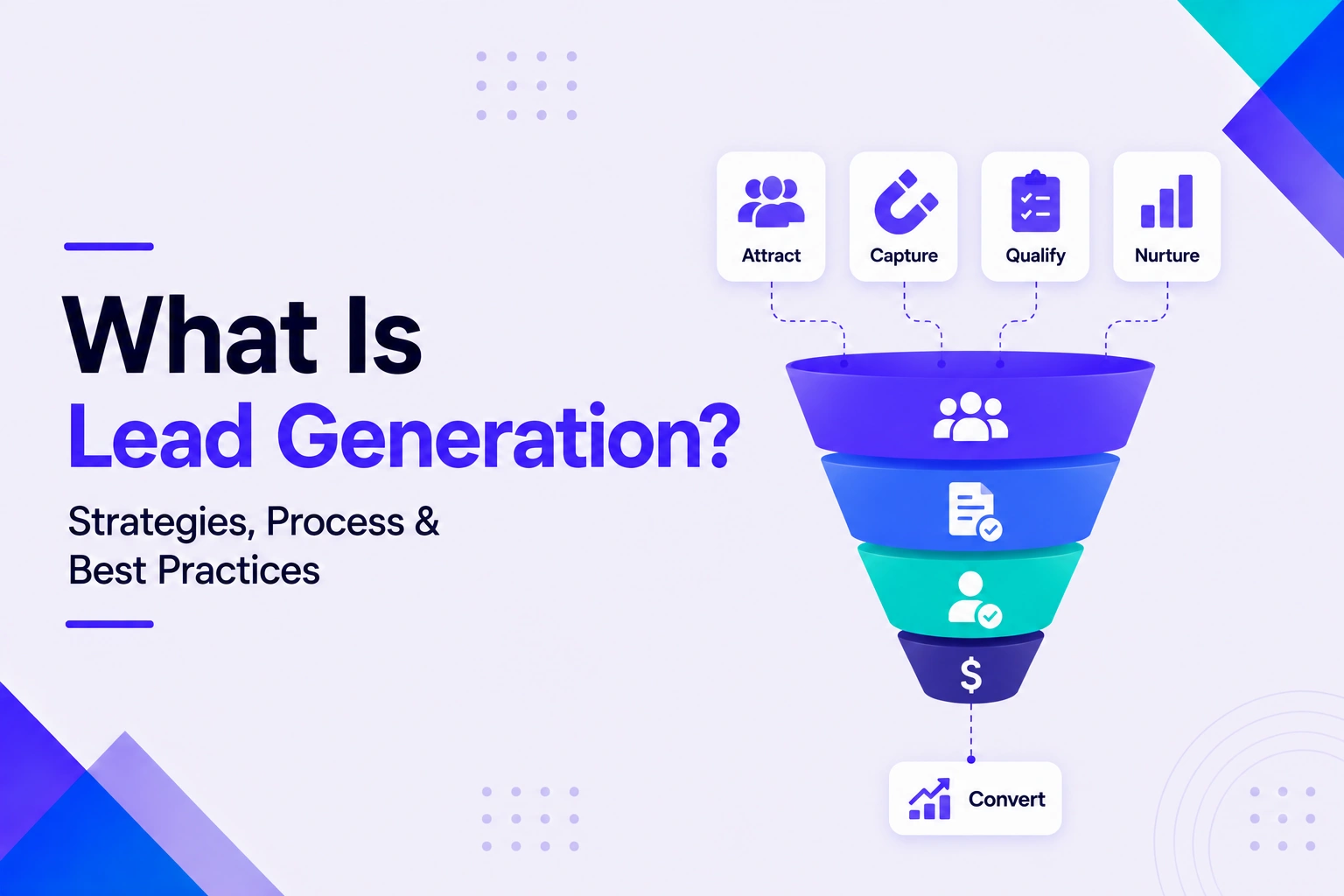
Lead generation typically follows the process of attracting prospects, engaging their interest, capturing their information or intent, developing the relationship, and moving qualified interest toward a sale.
What are the best lead generation strategies?
Effective strategies include content marketing, SEO, paid advertising, social media, email marketing, referrals, events, website conversion, and outbound prospecting.
What are lead generation methods?
Lead generation methods are the specific approaches businesses use to attract and capture potential customers, such as forms, landing pages, content, webinars, advertising, email, and outreach.
What is lead generation in digital marketing?
Digital marketing lead generation uses online channels such as search, content, social media, advertising, email, and websites to attract prospects and convert their interest into leads.
How do you generate qualified leads?
Target the right audience, create relevant offers, reduce conversion friction, capture meaningful interest, and use lead quality and pipeline data to improve acquisition efforts.
How do you measure lead generation?
Measure lead conversion rate, cost per lead, lead quality, lead-to-opportunity rate, pipeline generated, and customer acquisition cost to evaluate lead generation performance and ROI.


.svg)


.svg)
.svg)
.svg)


.svg)
.svg)


.svg)


