Best Tool to Convert Paid Ad Traffic into Booked Meetings
Best Tool to Convert Paid Ad Traffic into Booked Meetings (Not Just Clicks)
Buying traffic is easy. Converting it into qualified meetings is the hard part.
Every day, B2B companies invest in Google Ads, LinkedIn Ads, Microsoft Ads, Meta Ads, Reddit Ads, review platforms, and account-based marketing campaigns to attract potential buyers. Those campaigns generate clicks, website visits, and sometimes even demo requests. But a large percentage of visitors leave before speaking with sales.
The problem is rarely the advertisement itself. More often, it's what happens after someone lands on your website.
Many paid traffic funnels still rely on a static Book a Demo form or a simple scheduling link. That approach works for buyers who are already ready to talk. Most paid visitors are not. They may want to compare solutions, understand pricing, review integrations, ask technical questions, or involve other stakeholders before committing to a meeting.
The best tools for converting paid ad traffic into booked meetings do more than schedule calendar events. They help identify visitors, understand buying intent, answer questions in real time, qualify opportunities, route buyers to the right sales representative, synchronize CRM data, and maintain engagement before and after a meeting is booked.
In this guide, we'll compare the best tools for converting paid ad traffic into booked meetings, explain which capabilities matter most, and show how modern B2B teams are replacing traditional post-click experiences with AI-powered buying journeys that generate more qualified pipeline, not just more clicks.
TL;DR
If you're looking for the best tool to convert paid ad traffic into booked meetings, these are the strongest options in 2026:
Knock AI: Best overall for B2B SaaS teams that want to identify visitors, qualify buying intent with AI, intelligently route leads, book meetings, enrich CRM records, and maintain buyer engagement before and after the meeting.
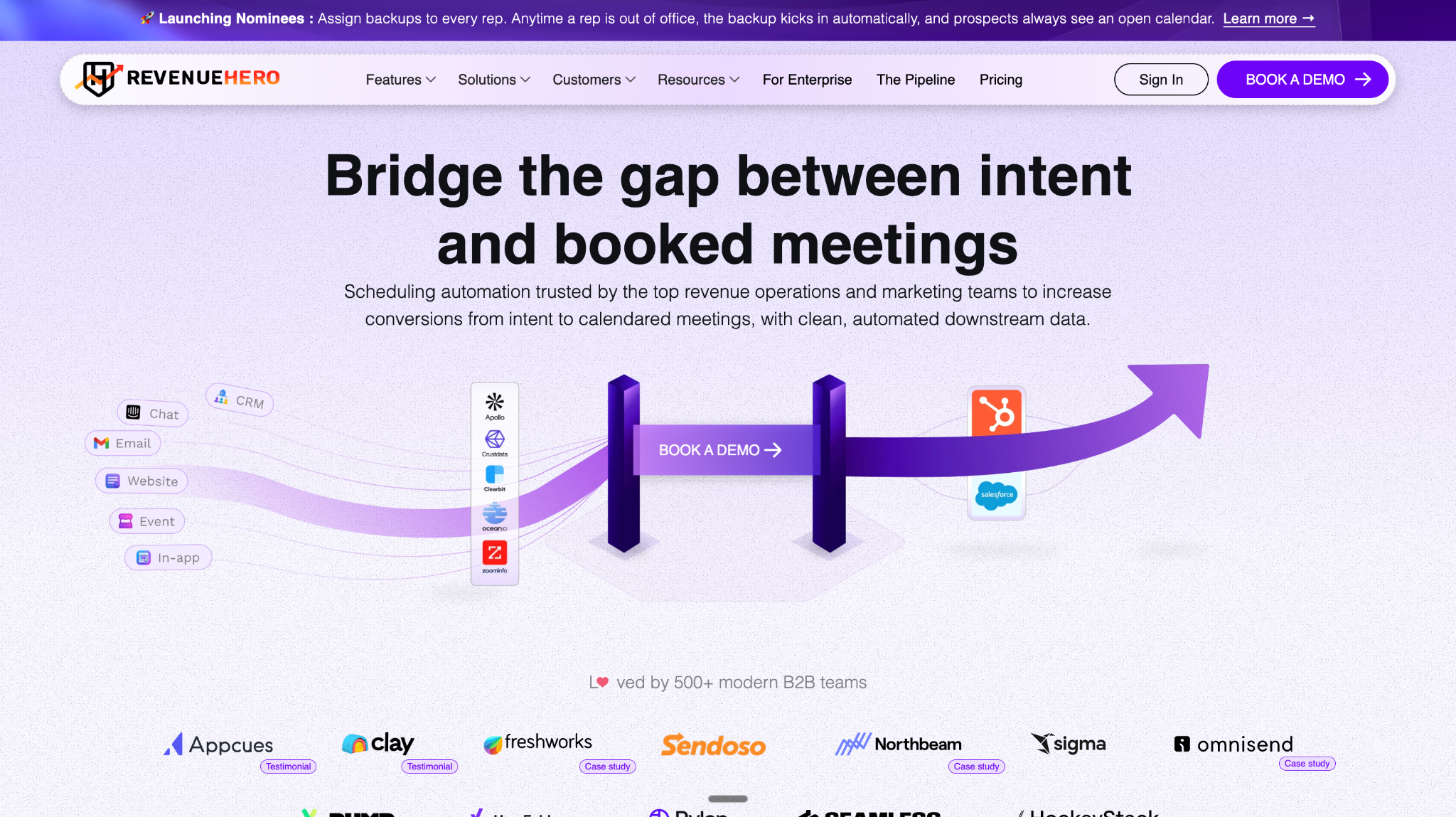
RevenueHero: Best for instant post-form meeting scheduling, qualification, and routing for inbound demo requests.
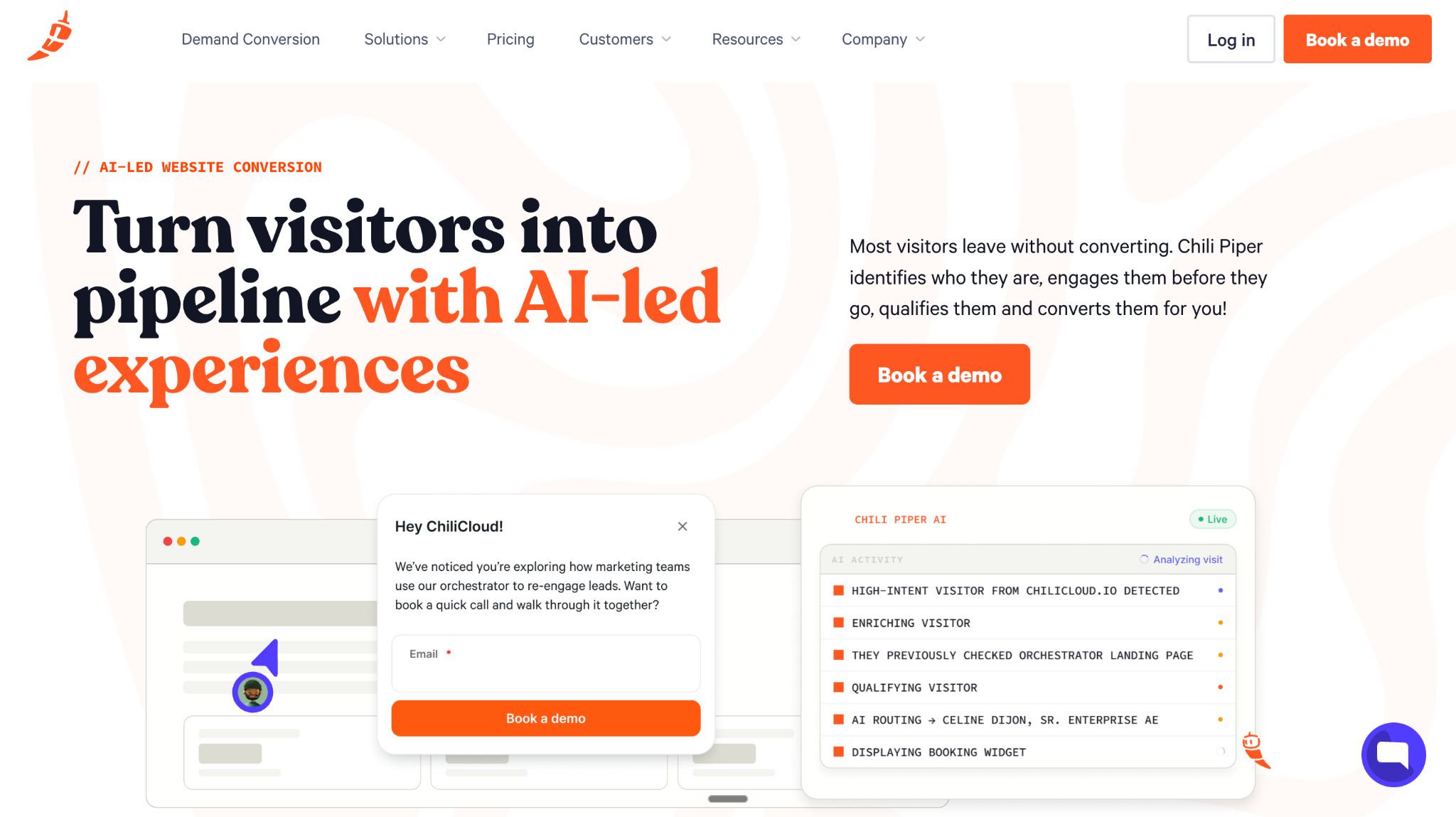
Chili Piper: Best for enterprise lead routing, inbound scheduling, and complex sales team distribution.
Qualified: Best for Salesforce-centric teams that want AI-powered website conversations and meeting booking.
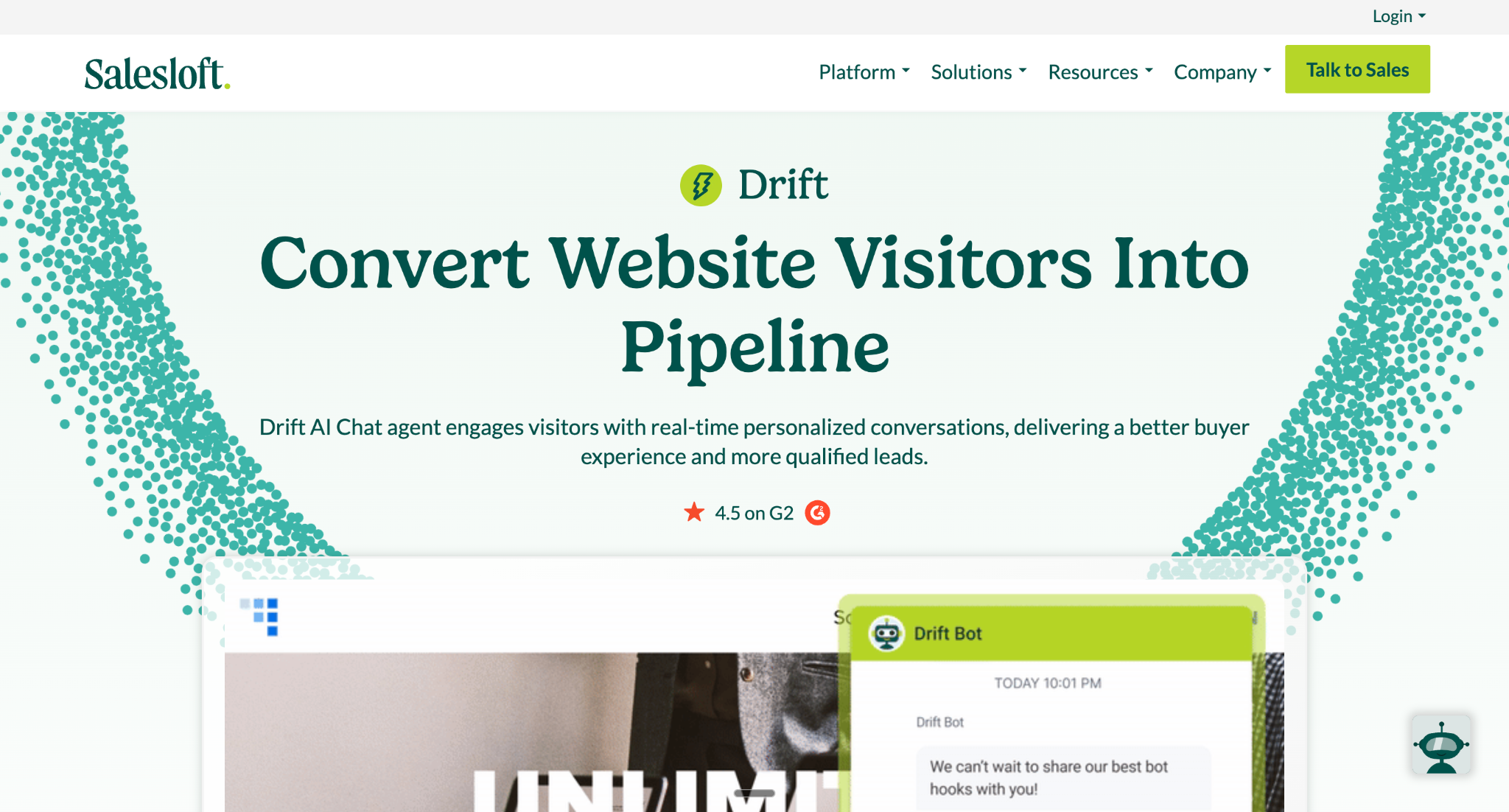
Drift: Best for conversational marketing and live website engagement.
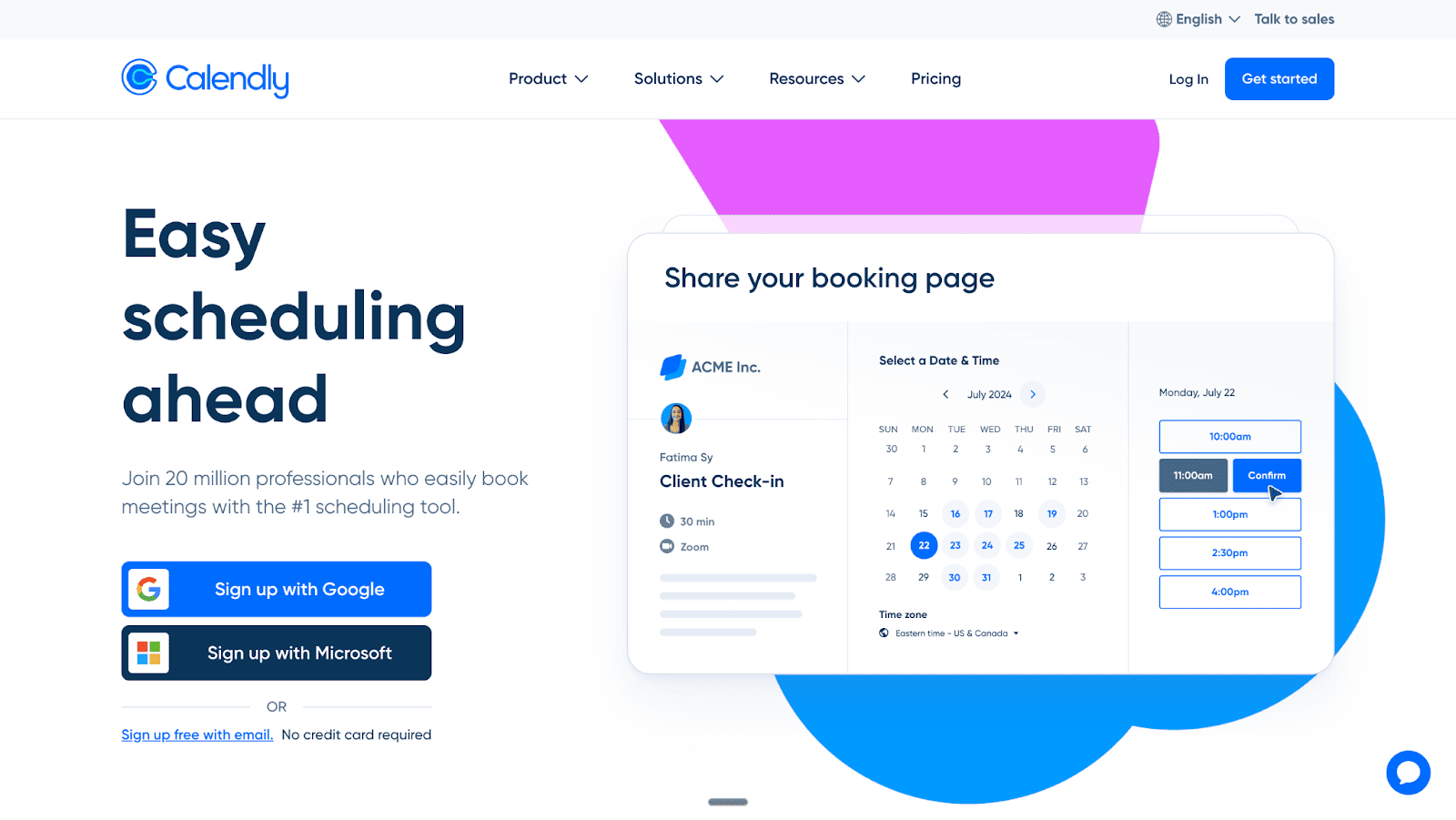
Calendly: Best for simple self-service meeting scheduling with minimal setup.
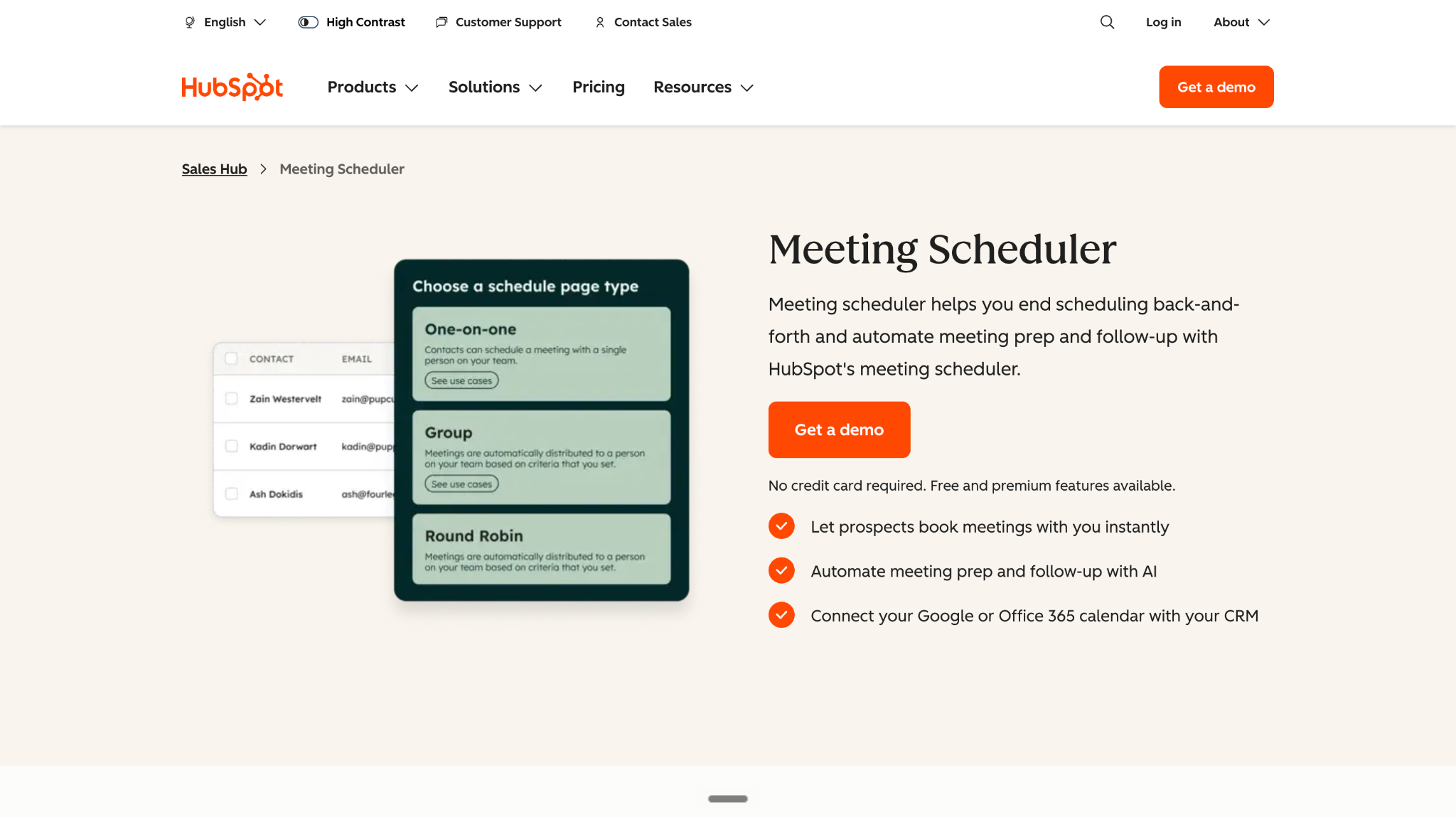
HubSpot Meetings: Best for businesses already using HubSpot CRM and Marketing Hub.
The right choice depends on your sales motion, traffic sources, and buying journey. If your objective is simply to schedule meetings, a scheduling platform may be enough. If you want to convert more Google Ads, LinkedIn Ads, Meta Ads, and ABM traffic into qualified pipeline, look for a platform that combines visitor identification, AI qualification, intelligent routing, CRM enrichment, meeting booking, and post-booking engagement in one connected workflow.
What Actually Converts Paid Traffic Into Booked Meetings?
There is a common misconception that paid traffic converts because someone clicks an ad or submits a form.
Neither is true.
A click only creates an opportunity. A form submission only signals interest. What ultimately converts paid traffic into booked meetings is reducing friction while helping buyers make continuous progress toward a conversation.
The most effective paid acquisition funnels share a common set of capabilities. They identify interested buyers quickly, answer questions before visitors leave, qualify opportunities, connect buyers with the right sales team, and preserve context throughout the journey. Companies that optimize these stages consistently generate more qualified meetings than those relying on static landing pages and generic demo forms.
Start with the right landing experience
The landing page determines whether a visitor stays long enough to evaluate your solution. Buyers should immediately understand what your product does, who it is for, and what action they should take next. Confusing navigation, generic messaging, or asking visitors to book a meeting before they've received enough information often increases abandonment.
Help buyers before asking them to book
Most paid visitors are still evaluating solutions. They may want to compare features, understand pricing, review integrations, or discuss implementation before committing to a sales call.
Giving buyers immediate access to answers through product content, interactive experiences, or AI-assisted conversations reduces uncertainty and builds confidence without forcing an early commitment.
Qualify opportunities instead of every visitor
Not every ad click deserves immediate attention from sales.
High-performing teams qualify buyers based on factors such as company size, industry, buying intent, product fit, or engagement level before routing them to an Account Executive. This improves meeting quality while allowing sales teams to focus on opportunities that are more likely to convert.
Respond while buying intent is highest
Interest declines quickly after someone clicks an ad.
Whether the next step is an AI conversation, an interactive product experience, or instant meeting scheduling, buyers should be able to continue their evaluation without waiting hours or days for a response. Reducing delays helps preserve buying momentum and lowers the chance that prospects continue their search elsewhere.
Route buyers to the right person
The fastest response is not always the best response.
Routing buyers to the appropriate sales representative based on territory, account ownership, product expertise, or qualification criteria creates a better experience than sending every inquiry to a shared queue. It also reduces unnecessary handoffs later in the sales process.
Preserve context across every interaction
One of the biggest sources of friction is repetition.
Buyers should not have to explain their company, use case, or challenges every time they interact with your business. Preserving conversation history, qualification details, and engagement data allows every interaction to build on the previous one instead of starting over.
Continue engagement after the meeting is booked
Booking a meeting is not the end of the conversion journey.
Between scheduling and the actual conversation, buyers often continue researching competitors, involve additional stakeholders, and develop new questions. Meeting reminders, relevant resources, and ongoing communication help maintain momentum, reduce no-shows, and improve the quality of sales conversations.
Measure pipeline, not just meetings
A booked meeting is an important milestone, but it is not the final business outcome.
The most effective paid acquisition strategies measure whether advertising spend generates qualified opportunities, pipeline, and revenue rather than optimizing only for clicks or calendar bookings. This creates better alignment between marketing performance and business growth.
Key takeaway: The best tools for converting paid ad traffic into booked meetings do much more than schedule calendars. They help buyers move from initial interest to a productive sales conversation by combining education, qualification, intelligent routing, context preservation, and continuous engagement into one connected buying experience.
Why Most Paid Traffic Never Becomes Meetings
Most paid campaigns don't fail because of poor targeting or weak ad copy. They fail because the experience after the click doesn't help buyers move forward.
A visitor clicks an ad because something captured their interest. Whether that interest turns into a meeting depends on what happens over the next few minutes. Every unnecessary delay, unanswered question, or disconnected experience increases the likelihood that the buyer leaves without taking the next step.
The most common reasons paid traffic fails to become booked meetings include the following.
Poor landing pages
A landing page should continue the conversation started by the advertisement. If visitors arrive and immediately struggle to understand the product, the value proposition, or the next step, they are likely to leave before engaging further.
High-converting landing pages focus on one clear message, answer common buyer questions, and make it easy to continue the evaluation process.
Generic demo forms
Many companies ask every visitor to complete the same form regardless of who they are or why they clicked the ad.
A first-time visitor researching integrations has different needs than a returning buyer ready to speak with sales. Treating every visitor the same creates unnecessary friction and often reduces conversion rates.
Slow response times
Buying intent is strongest immediately after someone engages with your advertisement.
If visitors have to wait hours or days for a response, many continue researching competitors or lose interest altogether. Reducing response time helps preserve momentum while buyers are still actively evaluating solutions.
Manual qualification
Sales teams should spend their time speaking with qualified buyers, not manually reviewing every inquiry.
When qualification depends entirely on human review, response times increase and high-intent buyers may wait longer than necessary. Automating qualification allows revenue teams to prioritize opportunities based on fit and buying signals instead of arrival time alone.
Incorrect lead routing
Even qualified buyers can experience delays if they are routed to the wrong representative.
Routing based on territory, account ownership, industry, product expertise, or availability helps buyers reach the right person faster while reducing internal handoffs and scheduling delays.
Anonymous visitors leave without engaging
A large percentage of paid visitors never complete a form.
Some compare vendors.
Others review pricing.
Many return later after discussing options with colleagues.
Without understanding who these visitors are or how they engaged, businesses lose valuable buying signals that could have informed future conversations.
No follow-up between booking and the meeting
Scheduling a meeting does not guarantee that it will happen.
Buyers often continue researching after booking. They may develop new questions, compare competitors, or invite additional stakeholders into the evaluation process.
Thoughtful reminders, relevant resources, and continued engagement help reduce cancellations while improving meeting quality.
Lost buying momentum
Every interruption slows the buying journey.
Waiting for a reply, repeating information, switching between tools, or restarting conversations forces buyers to invest additional effort before they receive value.
The easiest buying experience is usually the one buyers continue.
Limited attribution
Many teams optimize campaigns using clicks, form submissions, or landing page conversions.
While useful, these metrics reveal very little about whether advertising spend actually generated qualified meetings or pipeline.
Measuring downstream outcomes such as qualified opportunities, booked meetings, meeting attendance, and pipeline contribution provides a more accurate view of campaign performance and helps improve future optimization.
Key takeaway: Paid traffic converts when buyers can make continuous progress with minimal friction. Companies that improve landing experiences, respond faster, qualify intelligently, route buyers correctly, maintain engagement, and measure outcomes beyond clicks consistently generate more qualified meetings from the same advertising budget.
The 7 Best Tools to Convert Paid Ad Traffic into Booked Meetings Compared
Capability
Knock AI
RevenueHero
Chili Piper
Qualified
Drift
Calendly
HubSpot Meetings
Paid visitor identification
✅
❌
❌
Limited
❌
❌
❌
Anonymous visitor identification
✅
❌
❌
Limited
❌
❌
❌
Identity resolution
✅
❌
❌
Limited
❌
❌
❌
AI-powered conversations
✅
❌
❌
✅
Limited
❌
❌
AI qualification
✅
Limited
Limited
✅
Limited
❌
Limited
Intent detection
✅
Limited
Limited
✅
Limited
❌
Limited
Instant meeting booking
✅
✅
✅
✅
Partial
✅
✅
Intelligent lead routing
✅
✅
✅
✅
Limited
❌
Limited
Round-robin routing
✅
✅
✅
Limited
❌
❌
Limited
Territory-based routing
✅
✅
✅
Limited
❌
❌
Limited
CRM enrichment
✅
Limited
Limited
Limited
Limited
❌
✅
CRM synchronization
✅
✅
✅
✅
Limited
Limited
✅
Buyer memory
✅
❌
❌
Limited
Limited
❌
❌
Conversation history
✅
❌
❌
✅
✅
❌
Limited
Post-booking engagement
✅
Limited
Limited
Limited
Limited
❌
Limited
Buyer re-engagement
✅
❌
❌
Limited
Limited
❌
❌
Multi-channel engagement
✅
❌
❌
Limited
Limited
❌
❌
Pipeline attribution
✅
Limited
Limited
Limited
❌
❌
Limited
Google Ads conversion events
✅
❌
❌
❌
❌
❌
❌
Revenue analytics
✅
Limited
Limited
Limited
❌
❌
Limited
Best suited for
End-to-end AI buying journeys
Post-form meeting conversion
Enterprise routing & scheduling
Enterprise conversational sales
Conversational marketing
Standalone scheduling
HubSpot-native scheduling
Note: Capabilities reflect each platform's primary product focus and may vary depending on plan, integrations, and custom implementation.
See Knock AI in Action — Book Your Live Demo Today
This makes it particularly well suited for B2B SaaS companies that want to improve the return on their advertising spend without adding more friction to the buyer experience.
Product-led growth (PLG) companies with sales-assisted motions
Businesses with complex buying journeys involving multiple stakeholders
Key Features
AI Qualification
Evaluates buyers in real time based on conversations, engagement, routing rules, and business criteria, allowing sales teams to focus on qualified opportunities instead of manually reviewing every inquiry.
Visitor Identification & Identity Resolution
Identifies companies and known buyers engaging with your website, helping revenue teams understand paid traffic beyond form submissions.
Intent Detection
Detects buying signals based on visitor behavior and conversations, making it easier to prioritize prospects who are actively evaluating your solution.
AI Website Conversations
Answers buyer questions in real time, helping visitors understand pricing, integrations, product capabilities, implementation, and other common evaluation topics without waiting for a sales response.
Meeting Booking
Allows qualified buyers to schedule meetings immediately while preserving the context gathered during earlier interactions.
Inbound AI SDR
Acts as the first point of engagement for inbound visitors by educating buyers, qualifying opportunities, and guiding them toward the appropriate next step.
Intelligent Lead Routing
Automatically routes qualified buyers using configurable rules such as territory, account ownership, company size, product interest, or other business logic.
CRM Enrichment
Synchronizes buyer information, conversations, qualification details, and meeting activity with connected CRM platforms, reducing manual data entry and improving sales context.
Buyer Memory
Maintains conversation history so buyers do not need to repeat information across multiple interactions or channels.
Buyer Re-engagement
Continues engaging buyers who leave without converting, postpone meetings, or require additional information before making a decision.
Conversation Intelligence
Captures insights from buyer conversations that help sales representatives prepare for meetings with greater context.
Momentum Capture
Maintains engagement throughout the buying journey instead of allowing momentum to disappear after a visitor leaves the website or books a meeting.
Unified Organic and Paid Engagement
Supports buyers regardless of whether they arrive through paid campaigns, organic search, direct traffic, referrals, or outbound efforts, creating a consistent buying experience across acquisition channels.
Pros
Optimizes the complete buyer journey instead of only scheduling meetings.
Combines AI qualification, visitor identification, routing, CRM enrichment, and meeting booking within a single platform.
Helps reduce friction before, during, and after meeting scheduling.
Preserves buyer context across conversations and channels.
Supports both paid and organic inbound traffic.
Includes post-booking engagement and buyer re-engagement capabilities that many scheduling platforms do not offer.
Suitable for organizations with complex sales cycles and multiple stakeholders.
Cons
More comprehensive than businesses looking only for a standalone scheduling tool may require.
Organizations may need time to configure routing rules, qualification logic, and CRM integrations to match their sales process.
Teams seeking only basic calendar scheduling may find simpler scheduling platforms sufficient.
Pricing
Knock AI offers three plans designed for different stages of revenue growth:
Pipeline Foundation: From $1,000/month. Designed for teams building their first AI-powered inbound revenue engine with buyer identification, AI SDR engagement, meeting booking, and CRM synchronization.
Pipeline Acceleration: From $3,000/month. Adds advanced AI qualification, buyer intent routing, LinkedIn, WhatsApp, Slack, and Telegram engagement, along with enhanced enrichment and pipeline acceleration capabilities.
Enterprise Pipeline:Custom pricing. Includes enterprise-grade security, custom routing logic, advanced integrations, dedicated customer success, and tailored go-to-market support for larger organizations.
The appropriate plan depends on your inbound volume, sales complexity, and the level of automation required across your buying journey.
Why Choose Knock AI?
Many tools help buyers book meetings.
Fewer help buyers reach the point where they're ready to book.
Knock AI takes a broader approach by optimizing the entire journey after a paid click. Buyers can ask questions, receive personalized guidance, demonstrate intent, qualify for sales, schedule meetings, and continue engaging after booking without losing context along the way.
For organizations investing heavily in Google Ads, LinkedIn Ads, account-based marketing, and other paid acquisition channels, this approach can improve not only the number of meetings booked but also the quality of those meetings and the pipeline they generate. Instead of treating meeting booking as the finish line, Knock AI is designed to help revenue teams maximize the value of every advertising dollar by supporting buyers from the first visit through to qualified pipeline.
2. RevenueHero (Best for Post-Form Meeting Conversion)
Most paid acquisition funnels still rely on forms. RevenueHero is designed to reduce the time between form submission and a booked meeting.
Rather than replacing forms, it enhances what happens after a visitor submits one. Qualified buyers can immediately book time with the appropriate sales representative based on predefined routing rules, helping revenue teams reduce response time and improve meeting conversion rates.
RevenueHero is particularly strong for organizations that already have high-performing inbound forms and want to eliminate manual scheduling without rebuilding their existing demand generation process.
Best For
B2B SaaS companies
Demand generation teams
Salesforce users
HubSpot users
Marketing teams using forms for inbound lead generation
Organizations optimizing speed-to-lead
Key Features
Instant meeting booking after form submission
Campaign Router
Intelligent meeting distribution
Qualification-based scheduling
Salesforce integration
HubSpot integration
CRM synchronization
Routing workflows
Round-robin distribution
Automated reminders
Pros
Excellent post-form scheduling experience
Strong Salesforce and HubSpot integrations
Fast meeting distribution
Easy implementation for existing inbound funnels
Good routing capabilities
Cons
Still relies on visitors completing a form first
Limited buyer engagement before qualification
No anonymous visitor identification
Does not provide AI website conversations
Focused primarily on scheduling rather than the complete buyer journey
Pricing
RevenueHero offers multiple products with pricing based on functionality:
Outbound Essentials: approximately $15–25/user/month
Inbound Essentials: approximately $25–45/user/month
Enterprise Routing: Custom pricing
Advanced routing and scheduling capabilities are available in higher-tier packages.
Why Choose RevenueHero?
RevenueHero is a strong choice if your existing marketing funnel already converts visitors into form submissions and your primary goal is reducing the time between form completion and meeting booking. It improves operational efficiency after buyers raise their hands rather than changing how buyers engage before submitting a form.
3. Chili Piper (Best for Enterprise Lead Routing)
Chili Piper is one of the best-known platforms for inbound lead routing and meeting distribution. It helps enterprise revenue teams qualify inbound requests, assign leads using complex routing rules, and book meetings without manual coordination.
Its strength lies in routing logic rather than buyer engagement, making it well suited for organizations with mature RevOps processes and large sales teams.
Best For
Enterprise sales organizations
RevOps teams
Salesforce-first companies
High-volume inbound teams
Organizations with complex routing requirements
Key Features
Form Concierge
Lead qualification
Round-robin routing
Territory routing
SDR-to-AE handoffs
Salesforce routing
Meeting scheduling
Ownership routing
AI Chat (higher tiers)
Pros
Industry-leading routing engine
Sophisticated assignment logic
Excellent Salesforce integration
Supports complex enterprise sales teams
Highly configurable workflows
Cons
Still built around form-first workflows
Enterprise implementations can become complex
AI capabilities require separate products
Higher operational overhead for large deployments
Pricing
Pricing is modular and depends on the products selected.
Typical pricing includes:
ChiliCal:$15/user/month
Concierge:$30/user/month
Distro:$30/user/month
Handoff:$30/user/month
Routing & Scheduling: starts around $1,250/month
Experiences: starts around $3,500/month
Chat AI: approximately $20,000/year
Enterprise deployments commonly exceed $15,000–100,000+ annually, depending on routing complexity and implementation requirements.
Why Choose Chili Piper?
Chili Piper is ideal for organizations that have already built a mature inbound engine and need sophisticated routing, scheduling, and handoff workflows across large sales teams.
4. Qualified (Best for Salesforce-Based Enterprise Teams)
Qualified combines AI-powered website conversations with meeting scheduling and qualification for organizations built around Salesforce.
Rather than focusing solely on scheduling, Qualified enables revenue teams to engage visitors through conversational experiences before routing them to sales.
Most enterprise deployments range between $60,000–100,000+ annually, depending on traffic volume, AI usage, and implementation requirements.
Why Choose Qualified?
Qualified is best suited for enterprise organizations that already rely heavily on Salesforce and want conversational qualification integrated directly into their existing CRM workflows.
Typical deployments range between $30,000–60,000+ annually, while enterprise implementations can exceed $150,000/year when licensing, implementation, staffing, and administration costs are included.
Why Choose Drift?
Drift is a good option for organizations prioritizing conversational marketing and website engagement, particularly if live chat is a core part of their inbound strategy.
Calendly is an excellent choice when your primary requirement is making it easier for prospects to book meetings. It is less suitable for organizations looking to automate qualification, buyer engagement, or inbound conversion.
7. HubSpot Meetings (Best for HubSpot CRM Users)
HubSpot Meetings is a natural extension of the HubSpot ecosystem, allowing prospects to schedule meetings directly while automatically synchronizing information with the CRM.
For teams already using HubSpot Marketing Hub and Sales Hub, it provides a familiar scheduling experience without introducing another platform.
Best For
HubSpot CRM users
Marketing teams
Sales teams
Growing SaaS companies
Organizations standardizing on HubSpot
Key Features
Native meeting scheduling
CRM synchronization
Routing forms
Calendar integrations
Meeting reminders
HubSpot workflows
Marketing automation
Pros
Native HubSpot integration
Easy implementation
Unified customer data
Good automation ecosystem
Strong reporting
Cons
Best experience requires higher-tier HubSpot plans
Scheduling is only one part of a much larger platform
Advanced routing and automation increase platform costs
Limited AI-driven qualification compared to specialized revenue conversion platforms
Pricing
Meeting scheduling is available in HubSpot's free tools, while advanced automation, routing, and CRM capabilities depend on your HubSpot subscription.
Common pricing includes:
Free Tools: $0
Starter: from $9–15/seat/month
Professional: from $90–100/seat/month (or bundled platform pricing)
Enterprise: from $150/seat/month or as part of Customer Platform plans starting around $4,700/month, depending on the hubs and seats required.
Why Choose HubSpot Meetings?
HubSpot Meetings is the best fit for organizations already invested in the HubSpot ecosystem that want scheduling tightly integrated with their CRM, marketing automation, and sales workflows without adding another standalone scheduling platform.
Which Tool Is Right for You?
The best tool depends on your go-to-market strategy, sales process, and how buyers interact with your business. A platform that works well for a consultant may not be suitable for an enterprise sales organization, and vice versa.
If You...
Recommended Approach
Why
Run Google Ads
Knock AI or RevenueHero
Google Ads often captures high-intent buyers. Fast qualification, visitor engagement, and instant booking help convert more clicks into pipeline.
Run LinkedIn Ads
Knock AI or Qualified
LinkedIn campaigns usually target specific accounts. AI conversations and buyer qualification help engage decision-makers before routing them to sales.
Invest heavily in Account-Based Marketing (ABM)
Knock AI
Identifying target accounts, engaging multiple stakeholders, and maintaining buyer context are essential for ABM success.
Have an established SDR team
Chili Piper or RevenueHero
Intelligent routing, ownership rules, and scheduling automation help SDRs respond faster and manage inbound demand efficiently.
Are a Founder-led SaaS
Calendly or Knock AI
Calendly works well for simple scheduling, while Knock AI helps founders answer questions, qualify buyers, and reduce manual follow-up as demand grows.
Sell to Enterprise buyers
Knock AI, Qualified, or Chili Piper
Enterprise buying journeys involve multiple stakeholders, longer sales cycles, and complex routing requirements that benefit from AI qualification and intelligent orchestration.
Key takeaway: Choose a platform based on the stage of the buyer journey you want to improve, not simply the number of features it offers.
What Features Matter Most?
Choosing the right platform starts with understanding which capabilities have the biggest impact on paid conversion performance.
Visitor Identification
Most paid visitors never complete a form. Some compare vendors, some revisit your website multiple times, and others involve colleagues before contacting sales.
Visitor identification helps revenue teams understand which companies and buyers are engaging with paid campaigns, making anonymous traffic more actionable.
AI Qualification
Not every visitor is ready for a sales conversation.
AI qualification evaluates buyers based on their questions, behavior, company information, and buying signals before deciding whether they should book a meeting or continue exploring independently.
Intent Detection
Buying intent changes throughout the customer journey.
Intent detection identifies visitors who are actively evaluating your solution, allowing marketing and sales teams to prioritize high-value opportunities while reducing time spent on low-intent traffic.
Instant Meeting Booking
When a buyer decides to speak with sales, the process should be immediate.
Reducing delays between interest and scheduling helps preserve buying momentum and often increases meeting conversion rates.
Intelligent Lead Routing
Booking quickly is only valuable if buyers reach the right person.
Routing based on territory, account ownership, product expertise, availability, or company size helps improve both buyer experience and sales efficiency.
CRM Enrichment
Sales conversations improve when representatives already understand who they're speaking with.
Automatically enriching CRM records with company details, qualification information, conversation history, and engagement data reduces manual work while improving meeting quality.
Buyer Re-engagement
Many visitors leave before booking.
Re-engagement capabilities help bring qualified buyers back through personalized follow-ups, reminders, or additional conversations instead of treating every abandoned visit as a lost opportunity.
Revenue Attribution
Clicks and form submissions rarely tell the full story.
Connecting advertising campaigns to qualified meetings, pipeline creation, and closed revenue provides a more accurate measure of marketing performance and helps optimize future advertising spend.
Traditional Booking vs Modern AI Revenue Conversion
The biggest difference between traditional scheduling tools and modern revenue platforms is what happens before and after the meeting is booked.
Traditional Booking Workflow
Modern AI Revenue Conversion
Paid ad click
Paid ad click
Landing page
Landing page
Static demo form
Visitor identification
Visitor fills out form
AI conversation
Waits for follow-up
Questions answered instantly
Manual qualification
AI qualification
Manual routing
Intelligent routing
Meeting scheduled
Meeting scheduled
CRM updated manually
CRM enriched automatically
Limited follow-up
Continuous buyer engagement
Sales pipeline
Qualified pipeline with ongoing buyer engagement
Traditional workflows treat meeting booking as the finish line. Modern revenue platforms treat it as one milestone in a longer buying journey that continues through qualification, follow-up, and pipeline creation.
How to Increase Paid Ad Meeting Conversion Rate
Improving paid conversion rates rarely requires spending more on advertising. In many cases, it requires removing friction after the click.
Use this checklist to evaluate your current funnel:
✓ Reduce unnecessary form fields or replace long forms with conversational experiences where appropriate.
✓ Qualify buyers automatically instead of manually reviewing every inquiry.
✓ Respond while buyer intent is highest through AI or instant scheduling.
✓ Route qualified buyers to the right sales representative using predefined business rules.
✓ Answer common buyer questions before asking visitors to book a meeting.
✓ Re-engage qualified visitors who leave before converting.
✓ Measure qualified meetings, pipeline, and revenue rather than clicks or form submissions alone.
✓ Optimize campaigns using intent signals instead of top-of-funnel engagement metrics.
Small improvements across multiple stages of the buying journey often have a greater impact than optimizing any single conversion point.
Common Mistakes That Reduce Paid Ad Conversion Rates
Even strong advertising campaigns can underperform when the post-click experience introduces unnecessary friction.
Using a scheduling tool as a complete conversion strategy
Scheduling platforms make booking easier, but they do not identify buyers, answer questions, qualify opportunities, or recover abandoned visitors.
Sending every visitor directly to a demo request
Not every paid visitor is ready to speak with sales. Providing educational resources, conversational guidance, or interactive product experiences often improves conversion rates by helping buyers build confidence first.
Ignoring anonymous traffic
A significant portion of buying activity happens before a visitor completes a form. Failing to understand anonymous engagement can leave valuable demand undiscovered.
Responding too slowly
Buyer intent is strongest immediately after someone clicks an ad. Delayed follow-up increases the likelihood that buyers continue evaluating competitors.
Using basic routing rules
Assigning meetings without considering territory, account ownership, expertise, or availability can create unnecessary delays and poor buyer experiences.
Failing to enrich CRM data
Incomplete buyer records force sales teams to spend valuable meeting time gathering information that could have been captured automatically.
Measuring clicks instead of revenue
High click-through rates do not necessarily produce pipeline. Tracking qualified meetings, opportunities, and revenue provides a much clearer picture of campaign effectiveness.
Treating every lead the same
A first-time visitor researching your category and a returning enterprise buyer requesting pricing have very different needs. Tailoring engagement based on intent and qualification creates a more relevant buying experience and helps sales teams focus where they can have the greatest impact.
Frequently Asked Questions
What is the best tool to convert paid traffic into booked meetings?
The best tool depends on how your sales process works. If your goal is simply scheduling meetings after a form submission, tools like RevenueHero or Chili Piper are strong options. If you want to identify visitors, qualify buyers with AI, engage them before and after booking, and connect advertising spend directly to qualified pipeline, a broader revenue conversion platform such as Knock AI may be a better fit.
How do I increase demo bookings from Google Ads?
Improving Google Ads conversion rates usually requires optimizing the experience after the click rather than increasing ad spend. Focus on message-matched landing pages, faster buyer engagement, AI qualification, intelligent routing, and reducing friction between the ad click and the meeting.
Should I use Calendly or Chili Piper?
Calendly is designed primarily for scheduling meetings. Chili Piper adds qualification, routing, and meeting distribution, making it better suited for larger revenue teams with more complex sales processes. The right choice depends on whether you need simple scheduling or advanced routing workflows.
How does AI increase meeting booking rates?
AI can answer buyer questions instantly, identify purchase intent, qualify visitors, personalize conversations, and route qualified prospects without requiring manual intervention. Reducing response time and helping buyers make faster decisions often results in more qualified meetings.
What is visitor identification?
Visitor identification is the process of recognizing the companies or known buyers visiting your website before they submit a form. It gives marketing and sales teams additional context about anonymous website traffic and helps prioritize high-intent accounts.
How do you qualify paid leads automatically?
Automated qualification uses predefined business criteria and AI to evaluate buyers based on factors such as company size, industry, engagement, buying intent, and conversation history. Qualified buyers can then be routed automatically to the appropriate sales representative or booking flow.
What's the difference between lead routing and meeting routing?
Lead routing determines which salesperson or team should own a prospect based on business rules such as territory, company size, or account ownership. Meeting routing goes one step further by directing qualified buyers to the correct calendar so they can schedule with the appropriate representative immediately.
Can AI book meetings automatically?
Yes. Many modern revenue platforms allow AI to qualify buyers, recommend the appropriate sales representative, and schedule meetings automatically once qualification criteria have been met.
How do you recover visitors who don't fill out forms?
Companies typically recover abandoning visitors through AI conversations, visitor identification, remarketing campaigns, email nurturing, personalized follow-up, and buyer re-engagement workflows. The objective is to continue the buying journey rather than treating every abandoned visit as a lost opportunity.
Choosing the Right Tool for Your Paid Acquisition Strategy
Every platform in this guide solves a different part of the paid acquisition funnel.
Choose Knock AI if your goal is to optimize the complete post-click buying journey. It combines visitor identification, AI-powered conversations, real-time qualification, intelligent routing, CRM enrichment, buyer re-engagement, and meeting scheduling to help convert paid traffic into qualified pipeline.
Choose RevenueHero if your primary objective is reducing the time between form submission and meeting booking through instant scheduling, campaign routing, and CRM-based qualification.
Choose Chili Piper if your organization requires sophisticated lead routing, round-robin distribution, territory management, and enterprise scheduling workflows across large sales teams.
Choose Qualified if your business is built around Salesforce and you want AI-powered website conversations tightly integrated with your CRM and enterprise sales process.
Choose Drift if conversational marketing is a core part of your inbound strategy and your focus is engaging website visitors through live chat and AI-assisted conversations.
Choose Calendly if you need a simple, reliable scheduling platform for individuals or small teams and do not require advanced qualification or routing capabilities.
Choose HubSpot Meetings if your organization already operates within the HubSpot ecosystem and wants native scheduling integrated with its CRM and marketing automation tools.
The most effective platform is not necessarily the one with the most features. It is the one that removes the greatest amount of friction from your buyers' journey while helping your revenue team convert more paid traffic into qualified opportunities and pipeline.


.svg)


.svg)
.svg)
.svg)


.svg)
.svg)

.webp)

.svg)