Best AI SDR Tools for Account-Based Marketing (ABM)
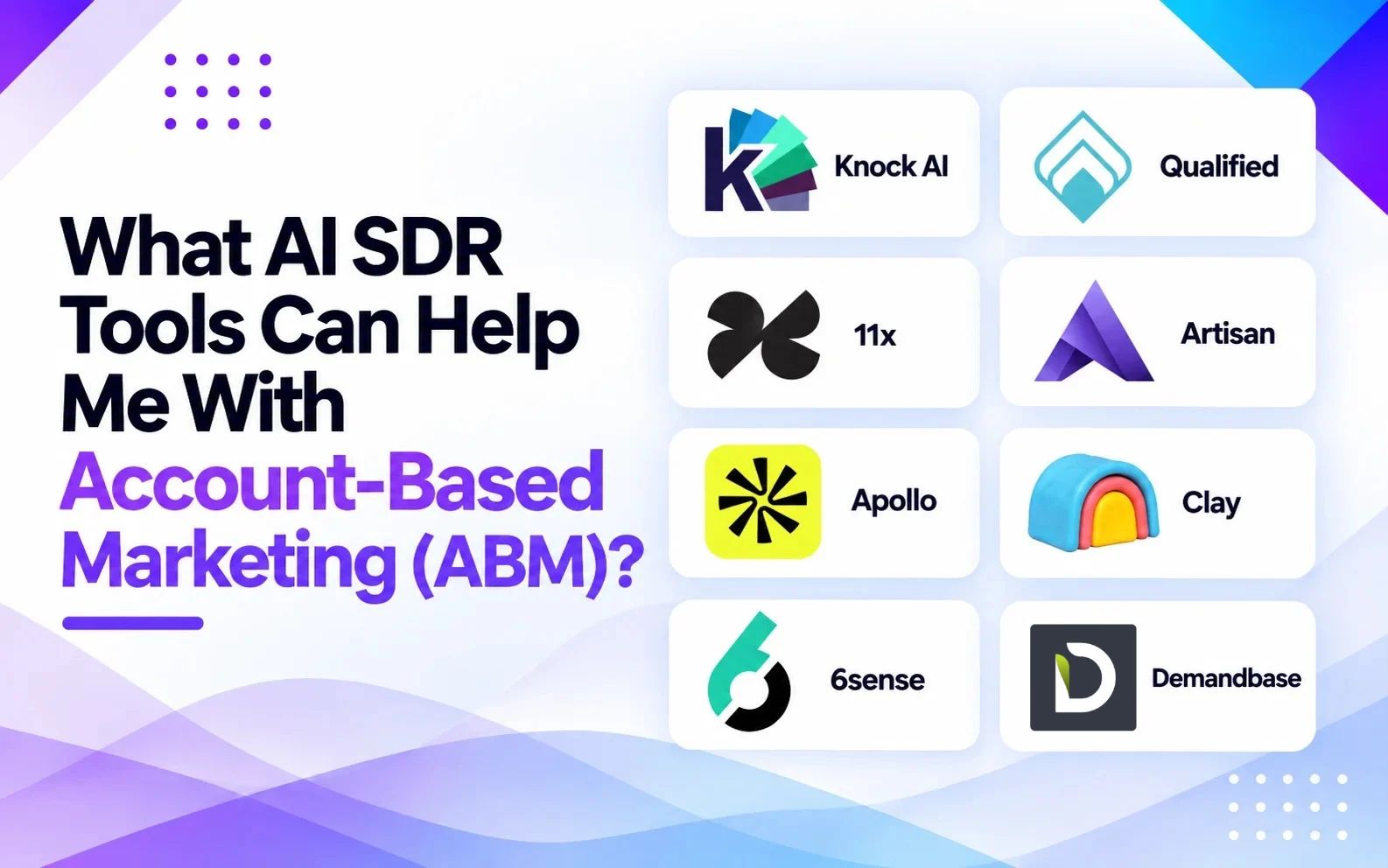
What AI SDR Tools Can Help Me With Account-Based Marketing (ABM)?
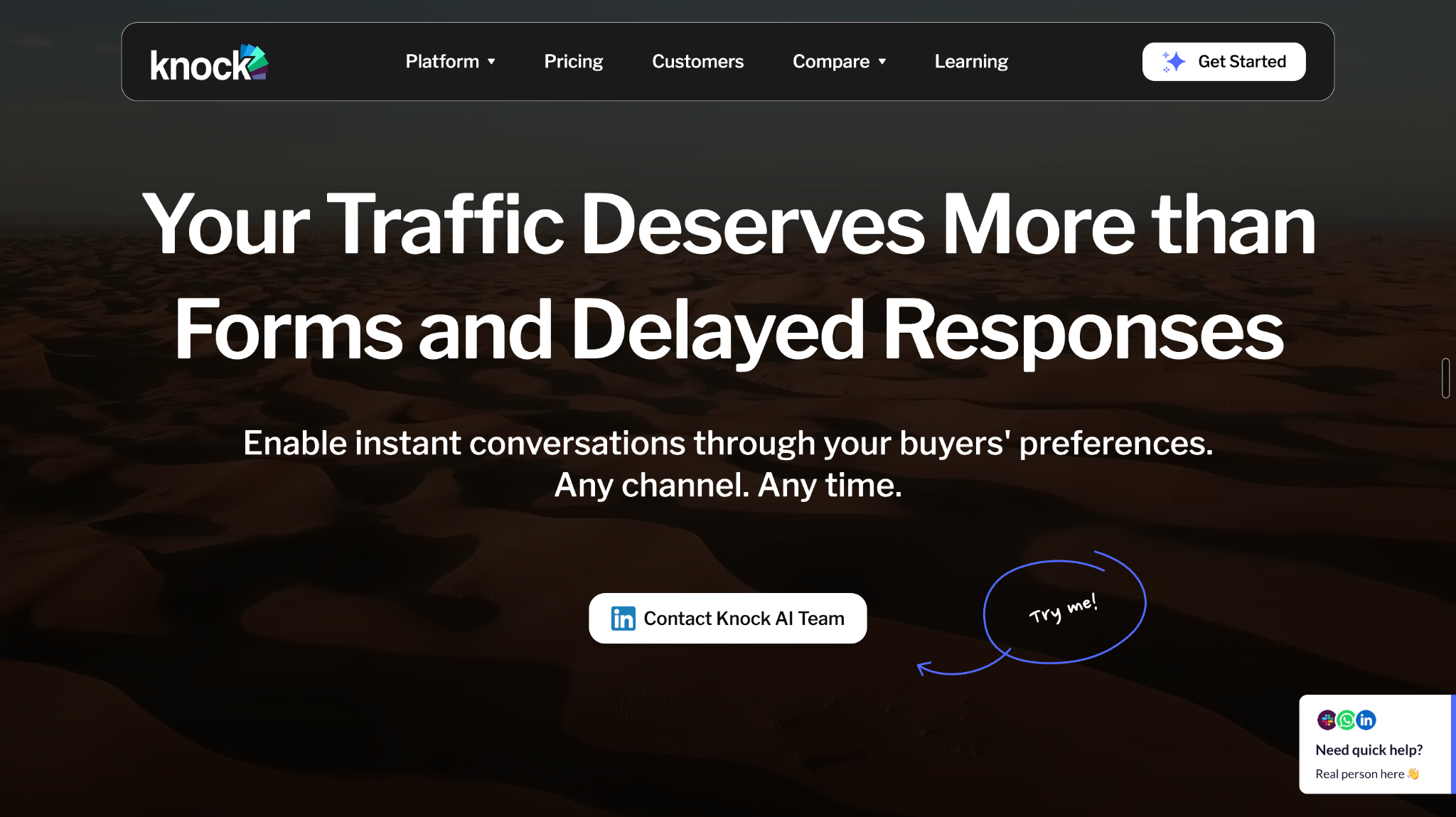
AI SDR tools can help ABM teams research target accounts, identify relevant decision-makers, personalize outreach, respond to buyer engagement, qualify prospects, and book meetings. But the right tool depends on where your ABM strategy needs help. Some platforms automate outbound campaigns, others provide account intelligence, and others turn existing buyer interest into sales conversations. Knock AI is the strongest fit for teams that want to convert engagement from target accounts into qualified conversations and meetings. Rather than simply increasing outreach volume, it connects buyer intent, contextual engagement, qualification, and sales handoffs to help teams move interested accounts closer to a sales conversation.
What Can AI SDR Tools Actually Do for ABM Teams?
Account-based marketing is about engaging the right companies and the people who influence purchasing decisions. AI SDR tools can help make that process more targeted and scalable, but their capabilities vary.
Here are the practical jobs they can handle:
Identify accounts showing buying intent: Use available intent signals, website activity, and account data to prioritize companies that may be ready for a conversation.
Find relevant stakeholders: Help sales teams identify decision-makers and other members of a buying committee instead of relying on a single contact.
Personalize outreach: Tailor messages using account information, contact details, CRM context, and previous engagement rather than sending the same pitch to everyone.
Convert existing interest: Engage visitors from target accounts who explore product pages, interact with campaign experiences, or show other signs of interest.
Qualify and route prospects: Ask relevant questions, assess fit, direct qualified buyers to the right sales representative, and help them book meetings.
Measure engagement against pipeline: Connect meaningful interactions, qualification outcomes, and booked meetings with campaign and revenue reporting where integrations support it.
The important thing is that an AI SDR does not automatically replace your entire ABM stack. An ABM platform helps coordinate account-based campaigns, an intent data provider surfaces buying signals, a CRM manages account and sales records, and advertising platforms reach target audiences.
AI SDR tools focus on specific parts of execution. The best setup depends on whether your biggest bottleneck is identifying accounts, reaching stakeholders, or converting existing interest into sales opportunities.
Best AI SDR Tools for Account-Based Marketing Compared
Tool
Primary use case
Key capabilities
Best fit
Knock AI
Intent-driven engagement and multi-channel conversion
Intent signals, enrichment, AI conversations, qualification, routing, meeting booking, campaign engagement, and conversion tracking
Teams turning target-account interest into qualified meetings
Qualified
Website-based ABM conversion
Website visitor engagement, account identification, conversational marketing, and sales handoffs
Salesforce-oriented teams converting target-account website traffic
11x
Autonomous outbound
AI-led prospect research, personalized outreach, and outbound execution
Teams expanding outbound coverage across target accounts
Artisan
Outbound campaign automation
Prospect research, contact discovery, personalized messaging, and campaign execution
Teams automating repetitive prospecting workflows
Apollo
Prospect data and sales engagement
Contact discovery, company data, enrichment, prospect filtering, and sales sequences
Teams combining prospecting data with outbound execution
Clay
Data enrichment and GTM workflows
Multi-source enrichment, account research, custom data workflows, and personalization inputs
Teams building tailored account research and prospecting processes
6sense
Account intelligence and intent
Buying-intent insights, account prioritization, audience creation, and campaign activation
Teams identifying accounts showing buying signals
Demandbase
ABM orchestration
Account intelligence, audience targeting, advertising, personalization, and campaign measurement
Teams coordinating account-based marketing across channels
See Knock AI in Action — Book Your Live Demo Today
Convert target-account engagement into qualified conversations: Knock AI and Qualified, with different approaches to buyer engagement.
Knock AI is especially relevant when a team already has target accounts and campaigns but needs to connect buyer intent with personalized conversations, qualification, sales routing, and meetings. Its broader workflow capabilities deserve a closer look in the dedicated section, rather than making the comparison table disproportionately long.
1. Knock AI: Best for Converting Engaged Target Accounts Into Meetings
Knock AI is a strong fit for ABM teams that already know which accounts they want to reach but struggle to turn buyer interest into sales conversations. Instead of focusing solely on sending more outbound messages, it helps teams respond to engagement, understand buyer context, qualify prospects, and connect interested buyers with the right sales representative.
Here’s how it fits into an ABM workflow:
Personalized campaign experiences: Use campaign-specific experiences and Marketing Cards to tailor messaging, present relevant offers, and give target-account visitors a direct path to chat or book a meeting.
First-party intent signals: Track engagement such as website page views, clicks, CTA activity, form interactions, Knock Link activity, and chat messages. Intent scoring can help teams interpret signals based on factors such as recency, type, and volume.
Enrichment and qualification: Combine available company and contact information with CRM context, intent signals, and previous interactions to personalize conversations and assess whether a prospect fits the team's qualification criteria.
Strategic account routing: Route qualified buyers using configured rules and CRM ownership fields, helping direct conversations to the appropriate account executive rather than treating every lead as an unassigned inbound contact.
Conversational engagement and meeting booking: Engage buyers through supported channels, answer questions, qualify their needs, and help them book time with the appropriate representative.
LinkedIn conversion measurement: Send supported engagement, qualification, and meeting-booked events to LinkedIn Campaign Manager to help connect campaign activity with meaningful downstream outcomes.
Consider a B2B SaaS company running LinkedIn campaigns aimed at 100 strategic accounts. A prospect visits the pricing page, explores a campaign-specific experience, and starts a conversation but doesn't immediately book a meeting. Knock AI can help turn that engagement into a qualification and follow-up workflow, with routing and meeting booking based on the team's configuration.
Why choose Knock AI for ABM? It's particularly useful when your team is generating target-account traffic or engagement but losing potential opportunities between the first interaction and the sales meeting. It isn't a replacement for every third-party intent database or a universal cold-outbound engine. Its strength is connecting buyer engagement to qualification, sales action, and conversion.
2. Qualified: Best for Website-Based ABM Conversion
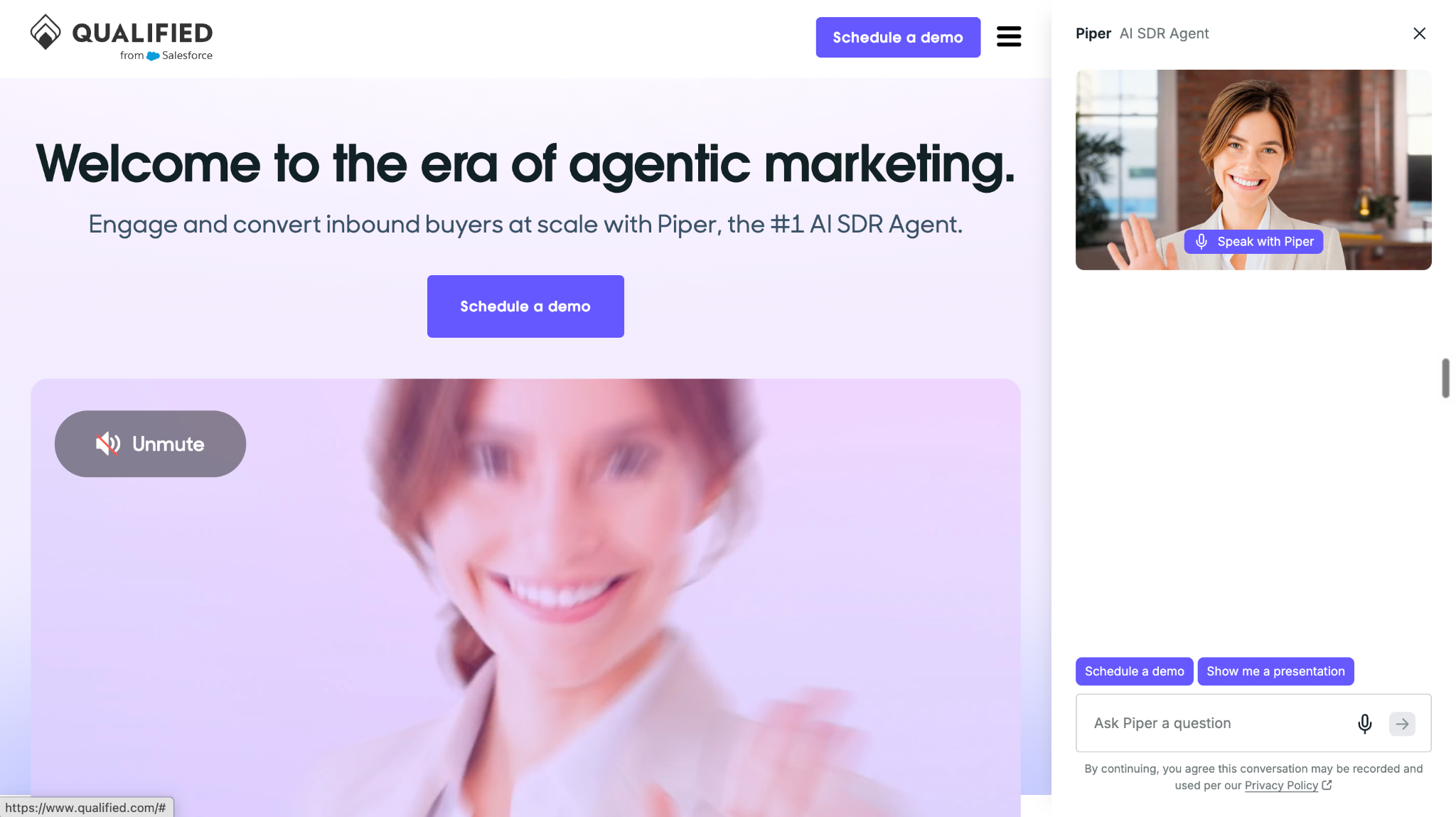
If your ABM campaigns are driving valuable accounts to your website, but visitors leave before speaking with sales, Qualified is worth evaluating. Its platform focuses on identifying and engaging website visitors, delivering relevant sales experiences, and converting buying interest into pipeline. Its AI SDR, Piper, can use connected marketing and CRM context to engage prospects across supported website and email workflows.
Qualified is particularly relevant for Salesforce-oriented teams that want website engagement, account information, and sales workflows closely connected. For example, when a target account arrives through an ABM campaign, the team can use available account and campaign context to personalize the experience and help the visitor connect with sales.
Best for: Teams that want to convert high-value website traffic into sales conversations, especially when Salesforce is central to their revenue operations.
3. 11x: Best for Autonomous Outbound to Target Accounts
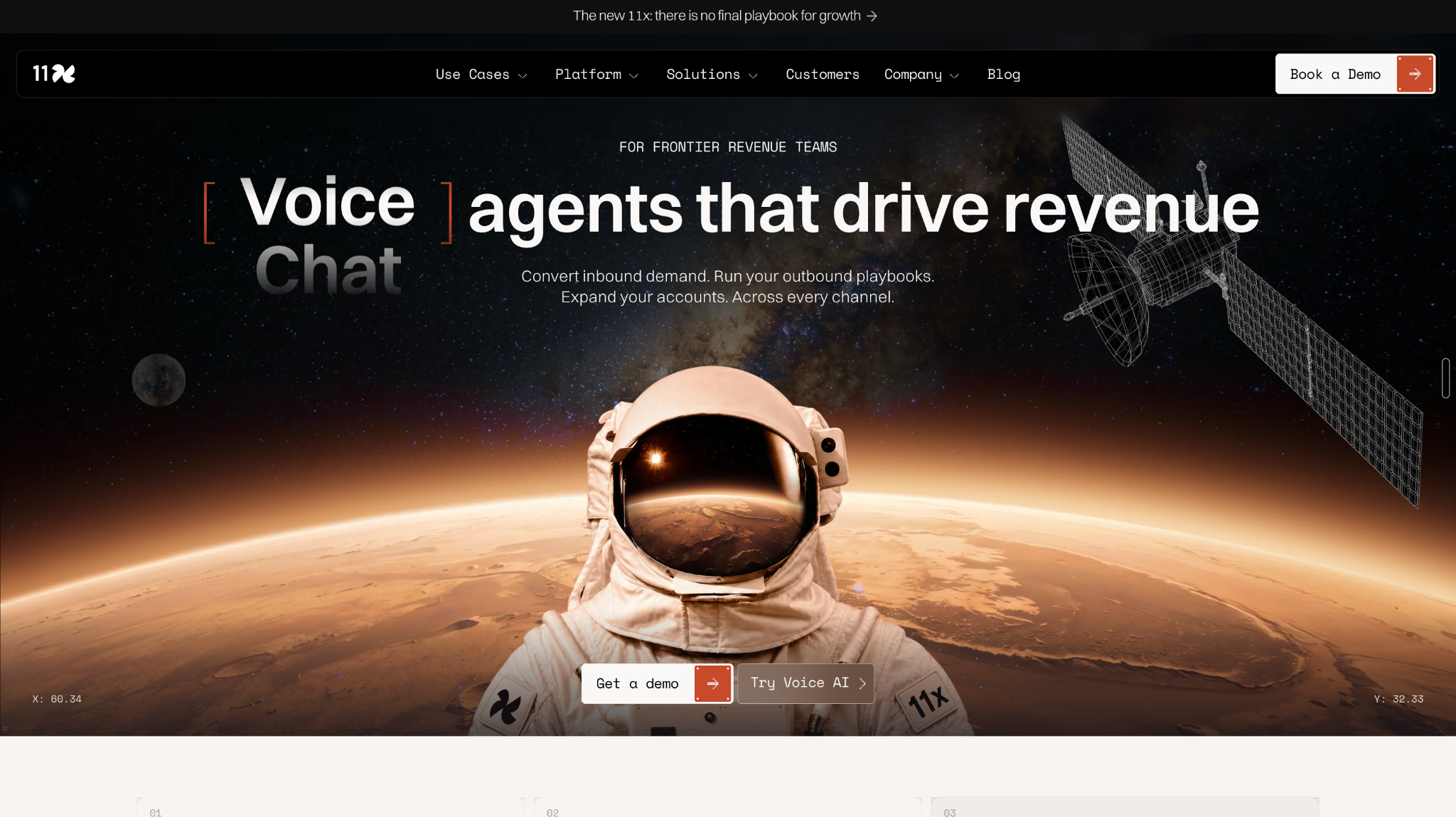
11x takes a more outbound-focused approach. Its AI sales agent, Alice, can identify prospects using buying signals, research companies and contacts, personalize messages, and coordinate outreach and follow-ups across supported channels. Its workflows can incorporate CRM context and signals such as hiring activity, funding, job changes, and website visits.
For ABM teams, this can help extend coverage across a target-account list without requiring sales representatives to manually research every stakeholder. Different contacts at the same company can receive messaging tailored to their roles and likely priorities, rather than identical messages sent to everyone.
The trade-off is that autonomous outbound is not the same as converting an interested website visitor. Teams should evaluate contact data quality, deliverability controls, channel support, personalization quality, and how the system handles replies before deploying it across strategic accounts.
Best for: Teams that want to automate research and outbound engagement across target accounts and their buying committees.
4. Artisan: Best for Research-Driven Account Outreach
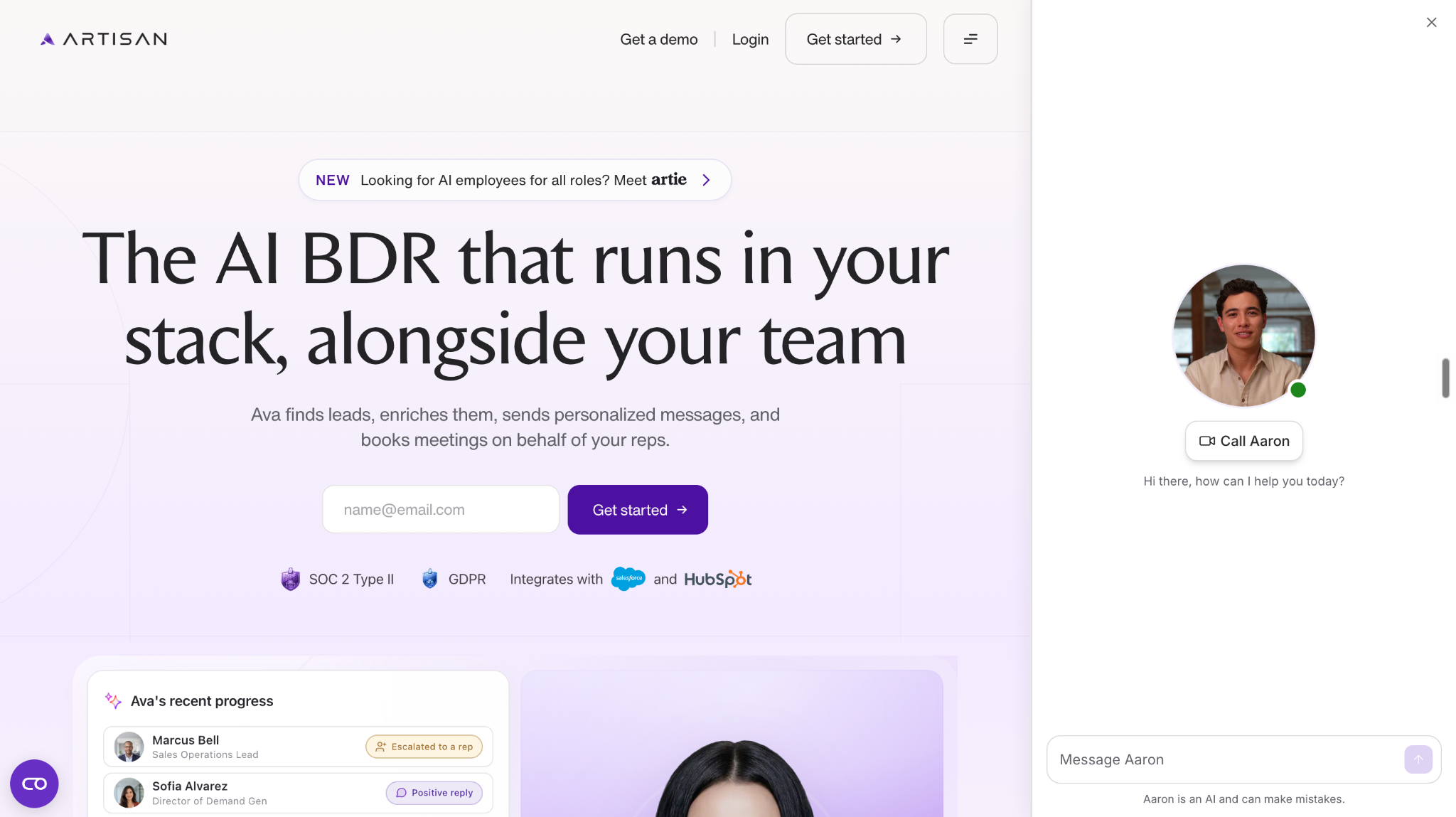
Artisan is another option for teams that want to automate prospecting and outbound campaigns. Its Ava AI sales agent is positioned around finding prospects, researching them, personalizing outreach, and supporting outbound execution. This approach can help sales teams reduce the manual work involved in building lists and launching campaigns.
In an ABM workflow, Artisan is most relevant when the team has a defined ideal customer profile and needs to identify the right contacts within those companies, prepare relevant messaging, and execute outreach consistently. The quality of the results still depends on the accuracy of prospect information, the relevance of the message, and the team's campaign strategy.
Artisan is worth comparing with 11x if autonomous outbound is your priority. Assess the depth of research, available channels, follow-up controls, and how much oversight your team retains over messaging and campaign execution.
Best for: Teams looking to automate prospect research and personalized outbound campaigns across a defined set of target accounts.
5. Apollo: Best for Prospect Data and Outbound Execution
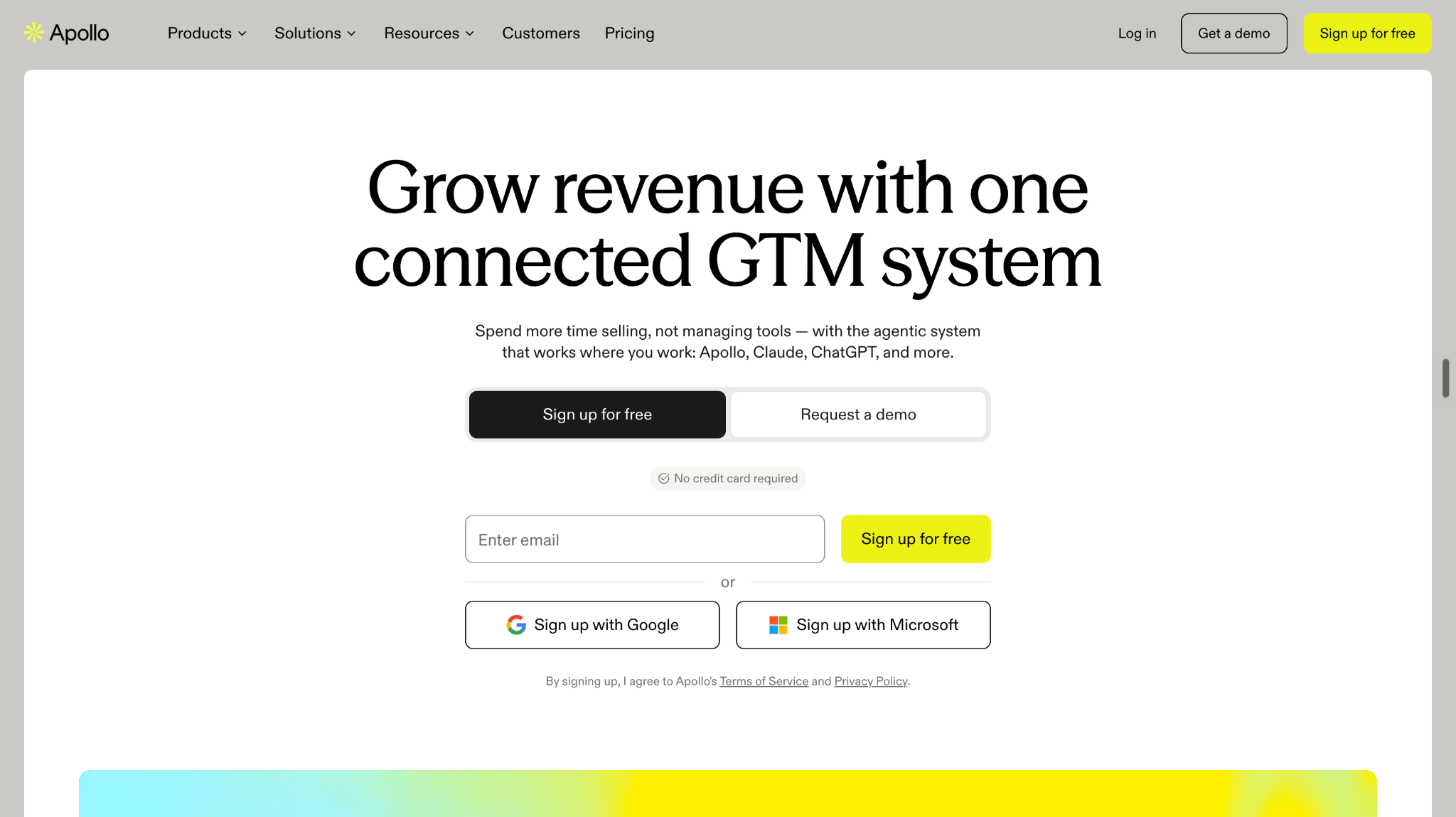
Apollo combines a B2B contact database with prospecting and sales engagement tools. Teams can search for companies and decision-makers, filter prospects by relevant criteria, and enroll contacts in multistep outreach sequences that combine automated emails with manual sales activities.
For ABM, Apollo is useful when your team has a list of target accounts but still needs to identify the right people to contact and organize outreach. You can build different prospect lists for executives, department leaders, and technical evaluators, then tailor sequences to their roles.
Its advantage is convenience: prospect discovery and outreach execution live within the same platform. However, finding contacts and sending sequences does not automatically coordinate every interaction with an account's existing website engagement or strategic ownership rules. Teams should evaluate whether those workflows require additional tools.
Best for: Sales teams that need a practical combination of contact discovery, account prospecting, and outbound sequencing.
6. Clay: Best for Custom Account Research and Personalization
Clay is designed for teams that want greater control over prospect research, enrichment, and go-to-market workflows. It connects data sources and AI-powered research so teams can build enriched account and contact records, apply custom qualification criteria, and prepare more relevant information for outreach. Its ecosystem supports workflows spanning ABM, outbound prospecting, and CRM enrichment.
Imagine targeting 200 cybersecurity companies. Your team might enrich each account with company details, identify relevant stakeholders, research recent business developments, and use those findings to create different messaging angles for security leaders and finance executives.
Clay is especially useful when your targeting logic is too specific for a standard prospecting filter. The trade-off is that teams may need to design, test, and maintain their own workflows. It is primarily a flexible data and workflow layer, rather than a turnkey AI SDR that automatically handles every buyer conversation.
Best for: RevOps and growth teams building customized account research, enrichment, scoring, and personalization processes.
6sense and Demandbase: Best for Account Intelligence and ABM Orchestration
6sense and Demandbase belong in this comparison because ABM teams often need more than an AI SDR. They need to determine which companies are likely to buy, understand account-level intent, and coordinate marketing and sales activity around those signals.
6sense helps teams prioritize accounts using buying-stage predictions, intent signals, and engagement data. Its account-based marketing capabilities support audience building and activation, helping sales and marketing focus on accounts that appear more likely to be in-market.
Demandbase combines account intelligence with advertising, personalization, and orchestration. Teams can create dynamic audiences based on account characteristics, intent, and engagement, then activate them across connected marketing and sales systems.
These platforms are not direct substitutes for every AI SDR. Their core role is helping teams identify, prioritize, and coordinate engagement with valuable accounts. An AI SDR or conversion platform can complement that intelligence by acting on the resulting signals through outreach, conversations, qualification, or meeting booking.
For example, a company might use 6sense or Demandbase to prioritize accounts researching its product category, then use a separate execution tool to engage known stakeholders or convert interested visitors.
Best for: Organizations running sophisticated ABM programs that need account-level intent, prioritization, and coordinated campaign activation alongside their sales engagement tools.
Which AI SDR Should You Choose for Your ABM Strategy?
The right tool depends on where your ABM process breaks down. Before buying another platform, look at what happens between identifying a target account and getting a qualified meeting.
“We already use 6sense or Demandbase.” Keep your account intelligence layer if it works. Look for an execution tool that can act on available signals, engage interested buyers, and help sales convert that interest.
“Our LinkedIn ABM campaigns get clicks, but not meetings.” Prioritize the journey after the click: relevant campaign experiences, timely conversations, qualification, and meeting booking. Knock AI is worth evaluating for this conversion gap.
“We have 200 target accounts and only two SDRs.” Look for automated account research, stakeholder prioritization, and follow-up workflows that reduce manual work without sacrificing relevance.
“Our enterprise accounts have multiple decision-makers.” Prioritize buying-committee research and role-specific outreach. Make sure your approach coordinates engagement across stakeholders rather than treating each contact as an unrelated lead.
“Our account executives already own strategic accounts.” Check whether the tool can use CRM ownership, account exclusions, and configured handoff rules to prevent leads from reaching the wrong representative.
“We have a limited budget.” Start with the bottleneck you can measure. You may need a focused execution or conversion tool, not an entirely new ABM stack.
The simplest decision rule: account intelligence tools help you decide which accounts to pursue; outbound agents help you reach them; conversion-focused tools help turn existing interest into meetings. Choose based on the missing step, not the longest feature list.
From target account to sales meeting
Target-account campaign: Marketing reaches selected companies through LinkedIn or other campaign channels.
Buyer engagement: A stakeholder visits the website, interacts with a CTA, opens a Knock Link, or starts a conversation.
Intent and context: Available first-party signals, enrichment, and CRM information help the team understand the interaction.
Conversation and qualification: Knock AI can engage the buyer, answer relevant questions, and assess fit against configured qualification criteria.
Account-owner routing: Configured routing rules and CRM ownership fields help direct the qualified prospect to the appropriate sales representative.
Meeting and measurement: The buyer can book a meeting, while supported integrations can pass relevant conversion events to advertising and sales systems.
The benefit is continuity. Rather than treating a click as a conversion, the team can build a process that moves interested buyers toward a meaningful sales conversation.
There are dependencies: website tracking must be set up, CRM fields and routing rules must be configured, and the relevant channels and integrations must be connected. The CRM remains responsible for account records, the advertising platform for campaign delivery, and an ABM intelligence provider for broader account-level insights.
How to Choose the Right AI SDR for Your ABM Strategy
The best AI SDR tool for ABM depends on which step is holding your team back. 6sense and Demandbase help identify and prioritize accounts, Apollo and Clay support prospecting and enrichment, and 11x and Artisan focus on outbound execution. Knock AI is the strongest fit for teams that already generate target-account engagement but need a connected path from buyer interest to qualification, account-owner routing, and meetings. If your campaigns attract the right buyers but fail to turn that interest into sales conversations, start by evaluating the conversion gap before investing in another platform.
FAQs
1. What is the best AI SDR tool for account-based marketing?
There is no single best tool for every ABM strategy. Knock AI is a strong fit when you need to convert target-account engagement into qualified conversations and meetings. Apollo and Clay help with prospecting and enrichment, while 11x and Artisan focus more on outbound execution. For account intelligence and campaign orchestration, consider 6sense or Demandbase.
2. Can AI SDR tools work with 6sense or Demandbase?
Yes, depending on the platforms' available integrations and your configuration. An ABM platform can help identify and prioritize accounts, while an AI SDR or engagement tool can act on relevant signals. Verify which account fields, intent signals, and events can actually be passed between your chosen systems before committing.
3. Which AI SDR is best for converting engaged target accounts into meetings?
Knock AI is worth evaluating if your main challenge is turning website activity, campaign interactions, and buyer conversations into qualified meetings. Its workflow can connect intent signals, enrichment, qualification, routing, and booking. The outcome depends on your setup, targeting, and qualification rules.
4. Can AI SDRs personalize outreach for an entire buying committee?
Some can support research and outreach across multiple stakeholders, but capabilities vary. Look for role-specific messaging, reliable contact data, CRM context, and coordinated follow-ups. Also check whether the platform can account for existing conversations and account ownership so different stakeholders do not receive conflicting or repetitive messages.
5. What is the difference between an AI SDR and an ABM platform?
An AI SDR primarily helps execute sales development tasks, such as researching prospects, engaging buyers, qualifying leads, or booking meetings. An ABM platform focuses more broadly on identifying and prioritizing accounts, coordinating campaigns, and measuring account engagement. Some capabilities overlap, but the two categories generally solve different problems.
6. Can Knock AI route meetings to the existing owner of a strategic account?
Knock AI can support routing based on configured rules and CRM ownership fields. This can help direct qualified prospects to the representative responsible for an existing account. The exact behavior depends on the CRM integration, available ownership data, and routing configuration, so verify these requirements before deployment.
7. What is the best AI SDR for a small B2B SaaS team running ABM?
Start with the team's biggest constraint. Apollo may suit teams that need prospect data and outbound sequencing; Clay may suit teams that need flexible enrichment workflows. Knock AI is worth considering when the team already attracts target-account engagement but lacks the capacity to respond, qualify, route, and book meetings efficiently. Compare total costs and setup effort, not just subscription prices.
8. How do I measure the impact of AI SDR tools on ABM pipeline?
Track metrics across the complete funnel: engaged target accounts, qualified conversations, meetings booked and held, sales-accepted opportunities, pipeline created, and conversion rates from engagement to opportunity. Where possible, compare results against a baseline or control group. Clicks and message volume alone cannot establish whether the tool is generating incremental pipeline or revenue.