The best AI sales prospecting tool depends on where your prospecting process breaks down.
Finding prospects is one problem. Finding the prospects who are actually worth talking to right now is another. The strongest tools can help you move beyond building lists by combining prospect data, enrichment, buying signals, engagement, and automation.
In this guide, we compare Knock AI, Apollo, ZoomInfo, Clay, 6sense, and Salesloft across the parts of the prospecting process that matter most:
The goal is to help you choose based on the bottleneck you need to solve, whether that means finding new prospects, identifying active buying signals, automating outreach, or turning existing intent into a qualified pipeline.
What Should an AI Sales Prospecting Tool Actually Do?
A modern AI sales prospecting tool should do more than find names and email addresses. It should help sales teams move from identifying potential buyers to deciding who is worth pursuing, why now, and what to do next.
Prospecting stage
What AI can automate
Find
Identify companies and contacts that match your target market
Enrich
Add firmographic, contact, and company context
Research
Summarize accounts, people, and relevant buying signals
Intent
Identify buying activity and when interest is increasing
Prioritize
Decide which prospects deserve attention first
Engage
Start personalized email, calling, LinkedIn, chat, or messaging
Qualify
Determine fit, intent, and buying readiness
Route
Send qualified buyers to the right rep, AI agent, or workflow
Convert
Schedule meetings and trigger the appropriate follow-up
Not every platform covers all of these stages. Some are strongest at finding and enriching prospects, while others focus on outbound engagement, account intent, or sales execution.
That distinction matters when comparing AI prospecting software. A database can tell you who might be a good prospect. A useful AI prospecting system should also help you decide who is worth acting on now and what should happen next.
Best AI Sales Prospecting Tools Compared
The tools in this list overlap, but they do not start with the same problem. Some begin with a database of prospects, some with account-level buying signals, and others with workflows that sales teams build themselves. Knock AI starts from a different point: buyer activity and intent, wherever that interaction happens.
That distinction matters because prospecting is no longer limited to finding a list of contacts. A buyer may show interest through your website, a LinkedIn interaction, a G2 profile, an email, an event, a product experience, or another external touchpoint. The useful question is what the platform can do with that signal once it appears.
The comparison below looks at where each workflow starts and where it takes the buyer next.
Tool
What it primarily helps you do
Where the workflow starts
Where it takes the buyer
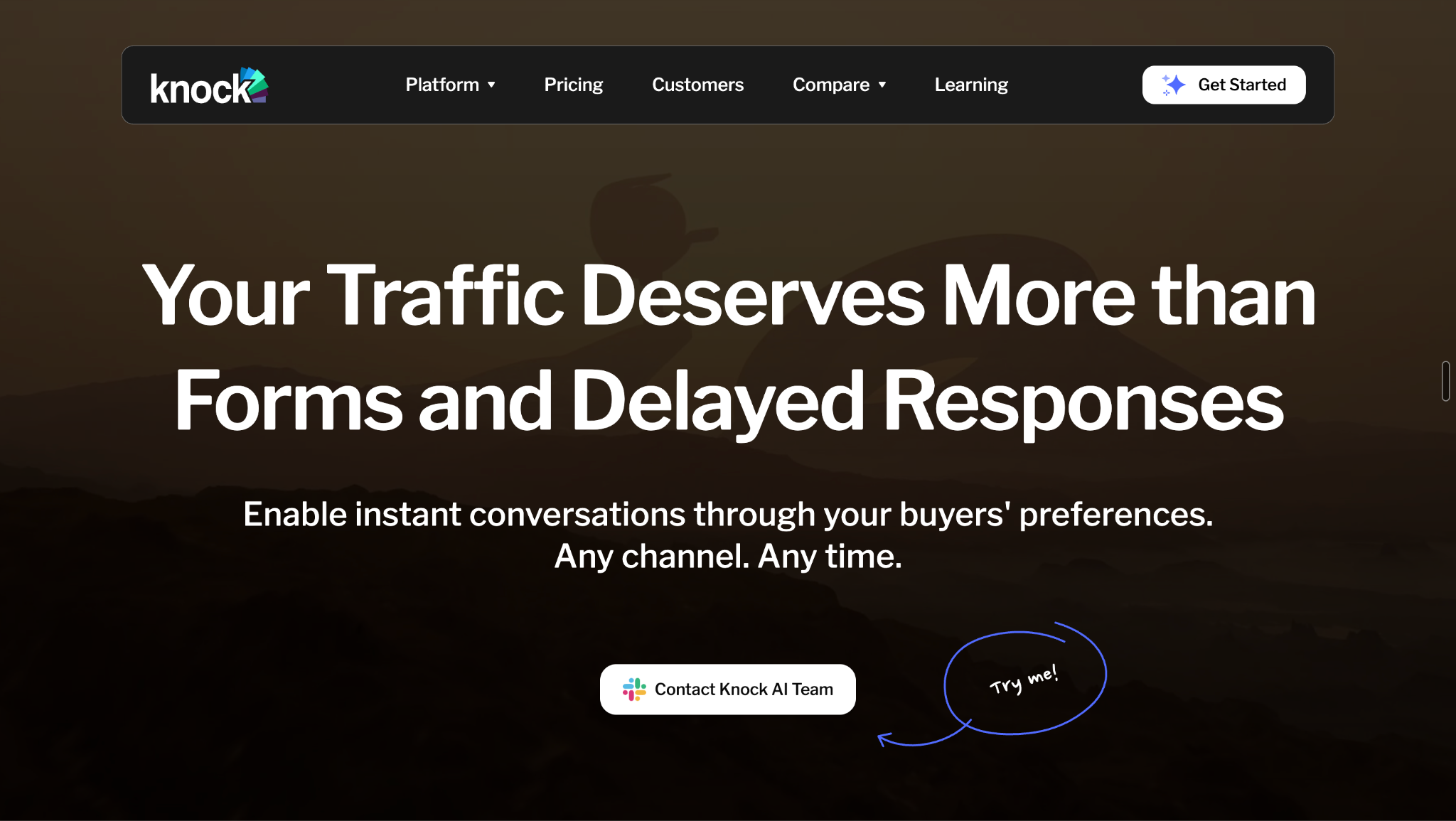
Knock AI
Turn buyer activity and intent into a qualified sales conversation
Any buyer touchpoint: website, LinkedIn, G2, marketplace, docs, GitHub, email, event/QR, ads, product, or other Knock Link
Knock AI turns buyer activity and intent into qualified sales conversations, wherever that activity happens.
Instead of starting with a static prospect list, Knock AI can start when a buyer interacts with your business. That might be an anonymous or known website visitor identified through Knock Reveal, or someone engaging through a Knock Link shared on LinkedIn, G2, email, a PDF, an event QR code, social content, or another external touchpoint. Knock AI can connect that activity to the person and company behind it, then use contact, company, advanced enrichment, and CRM context to understand who is actually engaging.
That context feeds Knock AI's first-party intent signals, which can be used to determine whether the activity represents meaningful buying interest. From there, AI agents can answer questions, ask qualification questions, evaluate ICP fit, use buyer and company context, and determine whether to continue with AI or hand the conversation to a human.
The next step is engagement. Knock Chat supports conversations across channels including Slack, LinkedIn, WhatsApp, and Telegram, as well as product experiences. Qualified buyers can then be routed based on ICP rules, territory, CRM ownership, rep assignment, AI agent logic, round robin rules, or calendar availability.
Scheduling is part of that same workflow. Knock AI can qualify before booking, open scheduling from custom forms, HubSpot or Marketo forms, and embed scheduling directly into product or signup flows. Its developer APIs, including Knock.identify(), Knock.wrapLink(), and Knock.scheduling.load(), let teams add these experiences to an existing site, application, form, or product without rebuilding the funnel.
The workflow can continue after the first interaction through LinkedIn outreach, pre-meeting and post-meeting engagement, and re-engagement when a qualified buyer does not book. CRM integrations with HubSpot, Salesforce, and Marketo keep buyer, meeting, conversation, enrichment, intent, and attribution data connected. Knock AI Website Revenue Report then connects high-intent activity and CTA engagement with leakage, converted accounts, deals, and revenue.
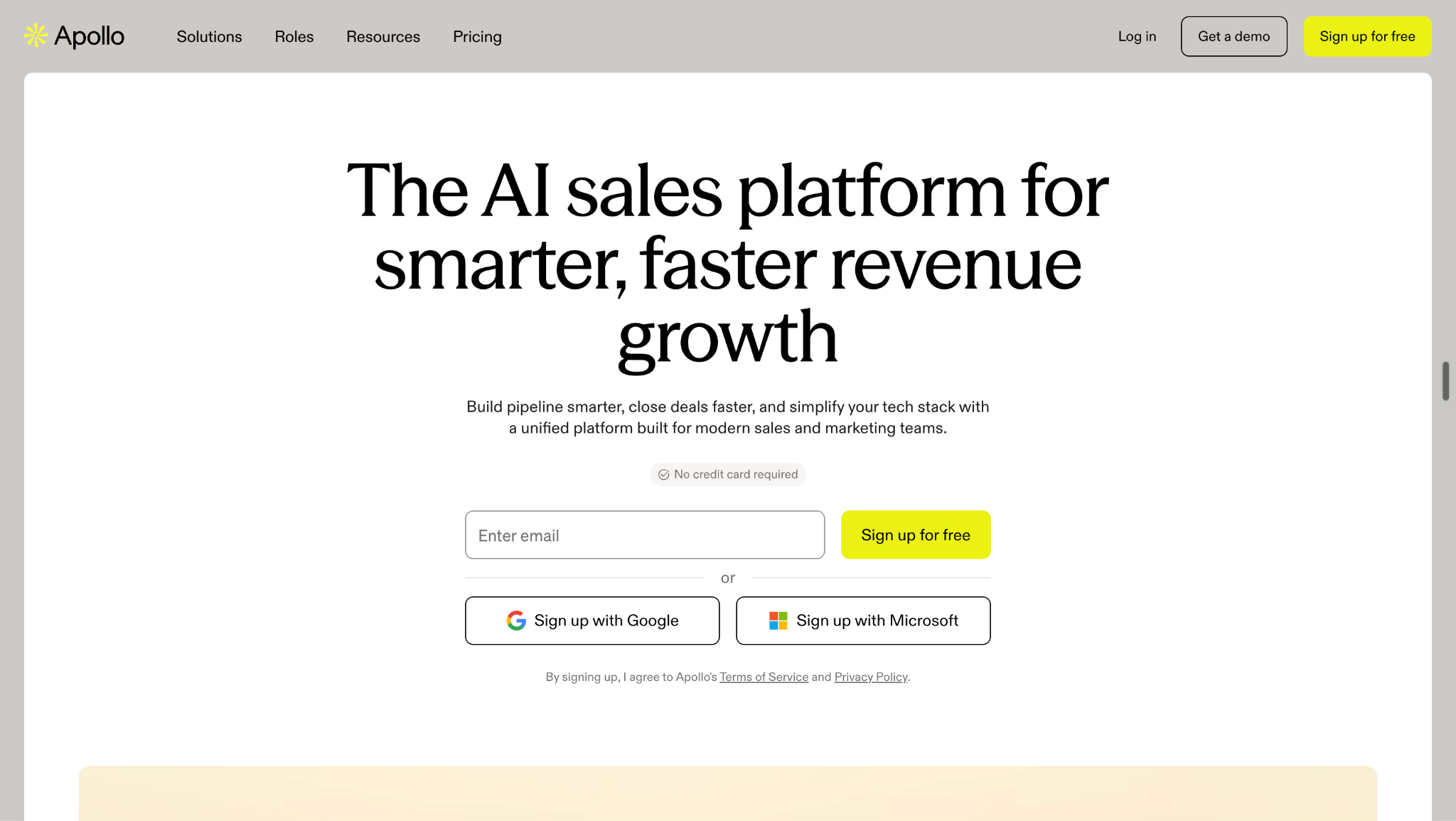
Apollo
Apollo is a strong fit when prospecting starts with building a target market and activating those prospects through data and engagement. Its current platform combines a large prospect database with enrichment, account and contact research, email, calling, LinkedIn, sequences, workflows, and AI-assisted personalization. It also extends into inbound workflows, including website visitor identification, form enrichment, lead routing, scheduling, and automated follow-up.
That makes Apollo useful for teams that want one platform to move from finding a prospect → enriching them → engaging them → booking a meeting without stitching together several separate tools.
Best for: Teams that need prospecting, data, and sales engagement in one system.
Apollo is particularly strong when the goal is to find, enrich, and activate prospects at scale.
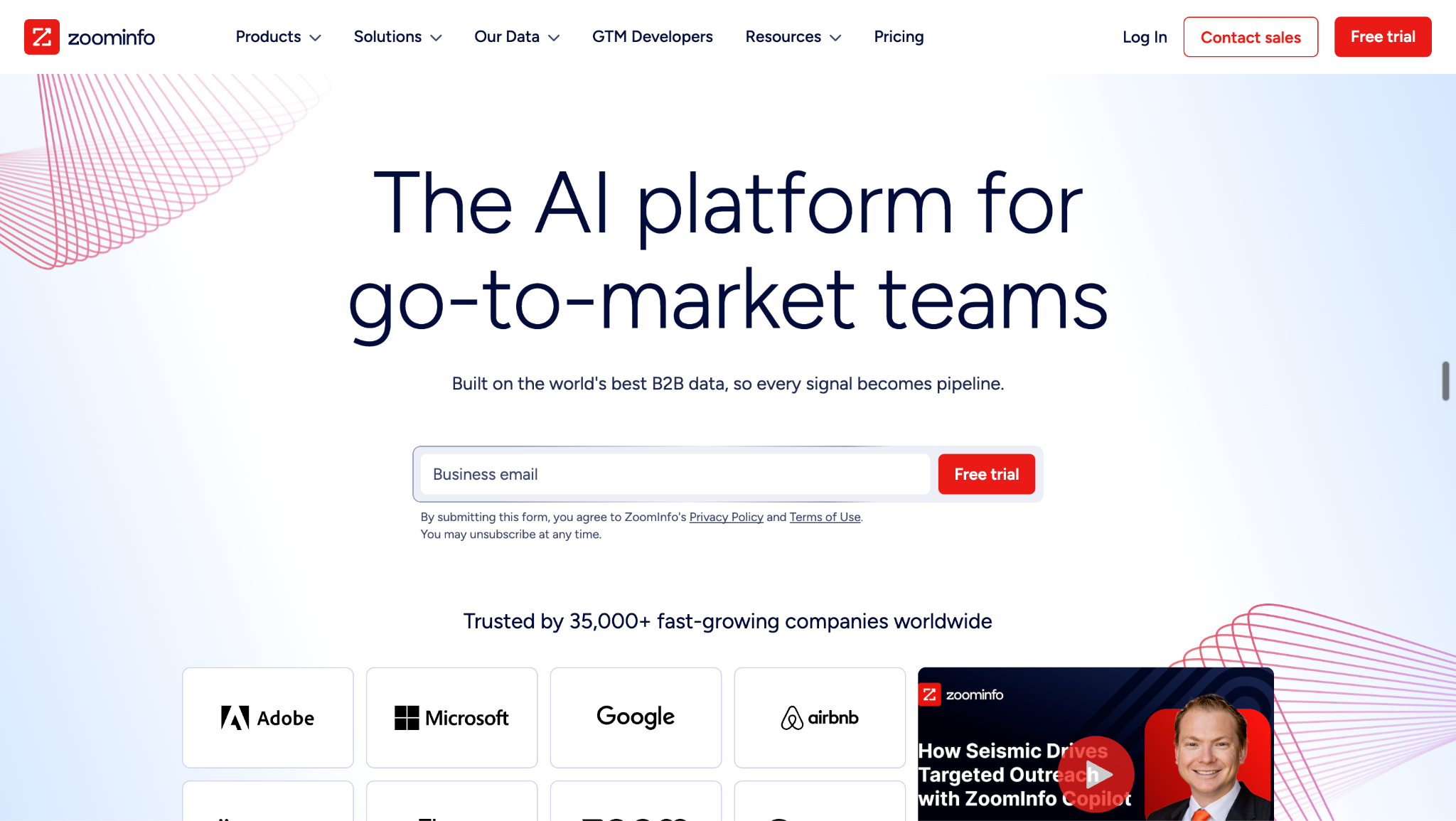
ZoomInfo
ZoomInfo is best when the core prospecting problem is understanding which companies and contacts to pursue and why. Its platform combines enterprise contact and company intelligence with firmographic and technographic data, intent signals, account research, prioritization, and CRM activation. It is designed to give revenue teams a detailed picture of their target market before they decide where to focus sales activity.
The value is not simply having a large contact database. ZoomInfo's intelligence and intent capabilities help teams identify relevant accounts, understand what is happening around them, and prioritize the opportunities most likely to matter.
Best for: Enterprise teams that need deep account and contact intelligence before sales activation.
The distinction from Knock AI is straightforward: ZoomInfo helps establish prospect intelligence; Knock can take active buyer signals and turn them into a live sales action.
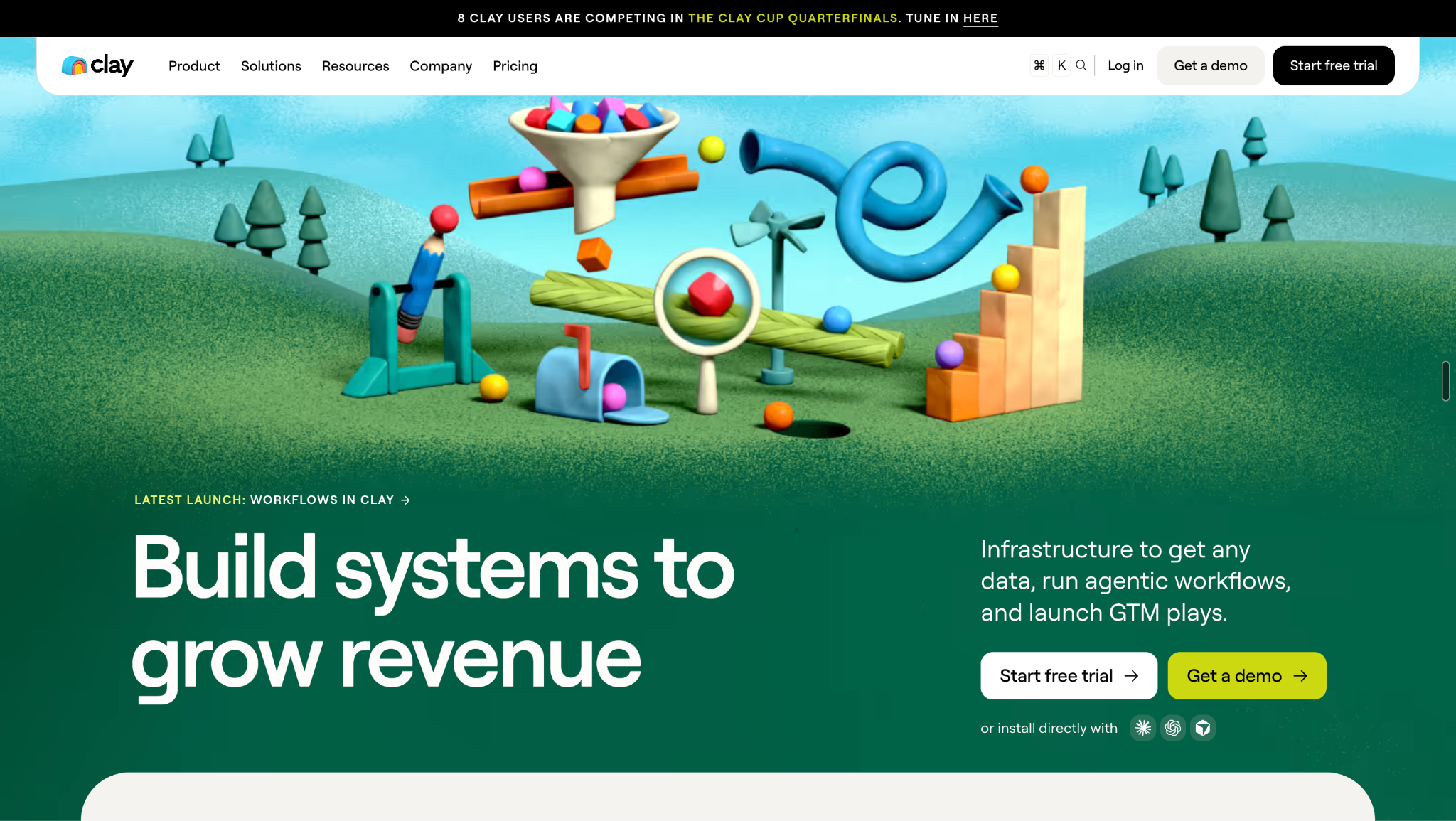
Clay
Clay is best for teams that want to build a highly customized prospecting system around their own data and workflows. It combines enrichment from multiple data sources with account research, waterfall enrichment, AI-powered research and custom GTM workflows.
Instead of prescribing one fixed prospecting process, Clay lets teams build workflows around their ICP, data sources, research requirements, scoring logic, and downstream actions. That makes it particularly useful for teams with unusual or highly specific prospecting processes that need more control over how data is assembled and acted on.
Best for: Teams building customized prospecting and GTM workflows.
The trade-off is the same reason Clay is powerful: more flexibility means more design, testing, and ongoing workflow maintenance.
6sense
6sense is best for B2B teams that want to identify and prioritize accounts moving through a buying journey. Its approach centers on account-level intent, anonymous research behavior, buying stages, account prioritization, and account-based marketing orchestration.
Rather than relying only on known leads, 6sense helps revenue teams understand which accounts are showing signs of interest and where those accounts may be in their buying process. That makes it particularly relevant for enterprise teams running ABM programs where deciding which accounts deserve attention now is the first priority.
Best for: Enterprise B2B teams using account-based strategies and intent-driven prioritization.
Knowing which account is showing buying signals is useful. The next question is what should your team actually do with that signal while the buyer is active? That is where a platform such as Knock AI takes the workflow further.
Salesloft
Salesloft is built for established revenue teams that need to turn buyer signals into structured seller action. Its platform combines buyer signals with Cadence, email, calling, LinkedIn engagement, AI agents, Conversation Intelligence, deal workflows, forecasting, and revenue analytics.
The emphasis is on helping sellers understand what matters, prioritize opportunities, execute the right engagement, and manage revenue processes through the CRM and broader sales workflow.
Best for: Larger sales organizations with established engagement and revenue processes.
Salesloft's center of gravity is revenue-team execution. Knock AI's center of gravity is turning buyer activity and intent into the appropriate conversation, qualification, routing, and conversion path.
How to Choose the Right AI Sales Prospecting Tool
Choosing an AI sales prospecting tool is easier when you start with the problem you need to solve, rather than comparing feature counts.
1. Do you need to find prospects or recognize active buying behavior?
If you need to find and build a target market, platforms such as Apollo and ZoomInfo are strong options.
If you need to understand account-level buying intent, 6sense is built around that use case.
If you need to recognize and act on buyer activity, Knock AI connects identification, enrichment, intent, qualification, engagement, routing, and conversion.
2. Where does your sales motion actually begin?
Target list → prospecting workflow
Account signal → intent workflow
Buyer activity → real-time conversion workflow
Seller signal → sales execution workflow
The right platform depends on which of these starting points matches your sales process.
3. Do you need intelligence, execution, or both?
Some platforms are primarily designed to help you know who to pursue.
Others help you know what to do next.
The most useful systems increasingly connect the two, taking prospect or buyer information and turning it into an actionable sales workflow.
4. Can it connect activity to pipeline?
Look beyond:
contacts found → emails sent → opens
A stronger measurement chain is:
signal → action → qualified lead → meeting → opportunity → revenue
That helps you evaluate whether the prospecting software is generating activity or actually contributing to the pipeline.
AI Prospecting vs. AI SDR vs. Sales Engagement
These categories overlap more than they used to, but they still describe different starting points in the sales process.
Category
Primary job
AI prospecting
Find, research, enrich, prioritize, and activate potential buyers
AI SDR
Automate prospect engagement and qualification
Sales engagement
Automate seller outreach and follow-up
Buyer-intent automation
Identify active buying behavior and trigger the appropriate revenue action
The most useful distinction is where the automation begins.
Some platforms start with:
“Here is a prospect list.”
Others start with:
“This account is showing buying behavior.”
And platforms such as Knock AI can start even further downstream:
“This buyer is interacting with us right now. Identify them, understand the context, qualify them, determine who should handle them, and move the interaction toward a meeting.”
The categories will continue to overlap, but the starting point helps explain what each platform is actually designed to automate.
FAQs
What is the best AI sales prospecting tool?
There is no single best tool for every sales team. Apollo and ZoomInfo are strong for finding and researching prospects, 6sense focuses on account-level intent, Clay is built for custom prospecting workflows, and Salesloft focuses on seller execution and engagement. Knock AI is particularly useful when the goal is to turn active buyer intent into a qualified sales conversation.
What are the best AI sales prospecting tools for B2B?
The right choice depends on the workflow. Knock AI connects buyer activity to identification, intent, qualification, engagement, routing, and conversion. Apollo combines prospecting data and outreach, ZoomInfo provides enterprise intelligence, Clay enables custom data workflows, 6sense prioritizes buying accounts, and Salesloft helps sales teams act on buyer signals.
What is the difference between AI prospecting and an AI SDR?
AI prospecting covers the broader process of finding, researching, enriching, prioritizing, and activating potential buyers. An AI SDR focuses more specifically on automating prospect engagement and qualification, including conversations, follow-up, and meeting booking.
Can AI sales prospecting tools identify high-intent buyers?
Yes. Some platforms can combine buyer activity, enrichment, and intent signals to identify prospects who are more likely to be ready for a sales conversation. Knock AI can identify → enrich → detect intent → qualify → engage using website behavior, Knock Links, conversations, and other buyer touchpoints.
Can AI sales prospecting tools qualify and book meetings?
Yes. Newer platforms can connect intent + enrichment + AI qualification + routing + scheduling in one workflow. Knock AI can use buyer and company context to qualify a conversation, route the buyer to the appropriate rep or AI agent, and open scheduling from custom forms, HubSpot or Marketo forms, product experiences, and other workflows. Its developer APIs also support embedded scheduling inside existing applications.


.svg)


.svg)
.svg)
.svg)


.svg)
.svg)


.svg)