What Are the Best AI SDR Tools for B2B Lead Generation?
Choosing the best AI SDR tool for B2B lead generation depends on where your leads come from and what stops them from becoming qualified meetings. Some platforms help sales teams discover prospects and automate outbound outreach. Others focus on engaging inbound leads, qualifying website visitors, or converting buyer intent into sales conversations.
For teams looking to automate prospecting, Apollo.io, AiSDR, 11x, and Artisan offer different approaches to outbound sales development. Qualified focuses on converting inbound demand into pipeline, particularly for teams using Salesforce. Knock AI takes a different approach by helping B2B teams turn existing buyer engagement and intent signals into qualified sales conversations, with intelligent routing and meeting booking.
The right platform depends on your biggest bottleneck: finding prospects, reaching them at scale, qualifying inbound interest, or converting engaged buyers into meetings. This guide compares six AI SDR tools to help you choose based on your lead-generation goals, workflow, and sales process.
Best AI SDR Tools for B2B Lead Generation
The best AI SDR tool depends on whether your team needs to find new prospects, automate outbound campaigns, or convert existing buyer interest into qualified meetings.
Tool
Best for
Lead-generation approach
Standout capability
Ideal buyer
Main consideration
Knock AI
Intent-driven lead conversion
Engagement-led and signal-driven
Engaging buyers, qualifying leads, routing prospects, and booking meetings
Enterprise B2B teams looking to convert existing demand into pipeline
Best suited to teams with buyer engagement, intent signals, or inbound opportunities to activate
Apollo.io
Prospect discovery and outbound sales
Database-led prospecting
B2B contact data, enrichment, prospecting, and sales engagement
Teams that need to find, research, and contact prospects from one platform
Verify data coverage and accuracy in your target markets, along with the features included in your plan
AiSDR
Automated outbound prospecting
AI-led outbound
Prospect research, personalized outreach, and automated follow-ups
Teams looking to reduce manual outbound prospecting work
Performance depends on targeting, data quality, messaging, and campaign setup
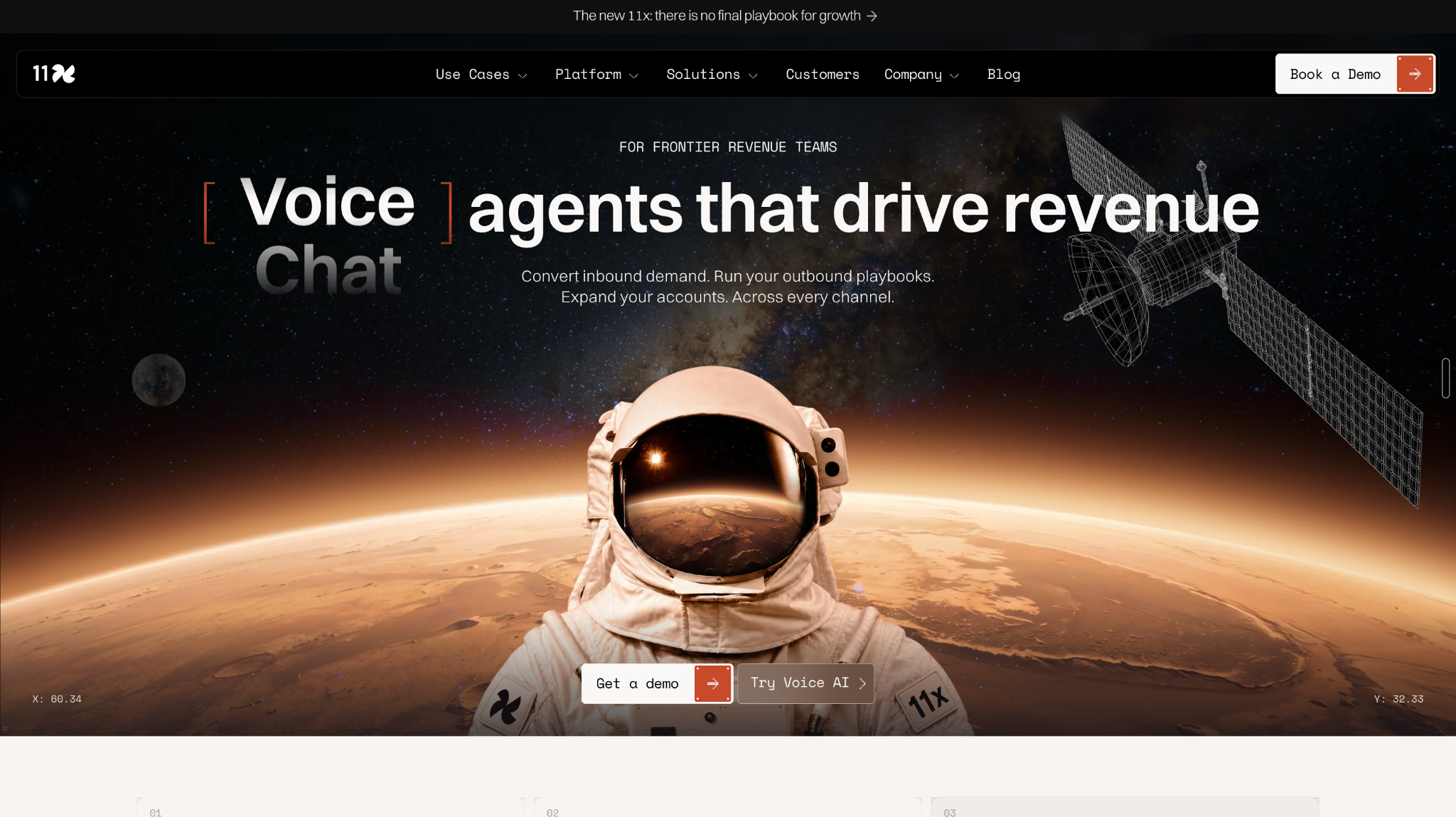
11x
Autonomous sales development
AI-agent-led outbound
AI agents designed to automate substantial parts of sales development
Teams evaluating autonomous prospecting and outbound execution
Confirm current capabilities, integrations, pricing, and the level of human oversight required
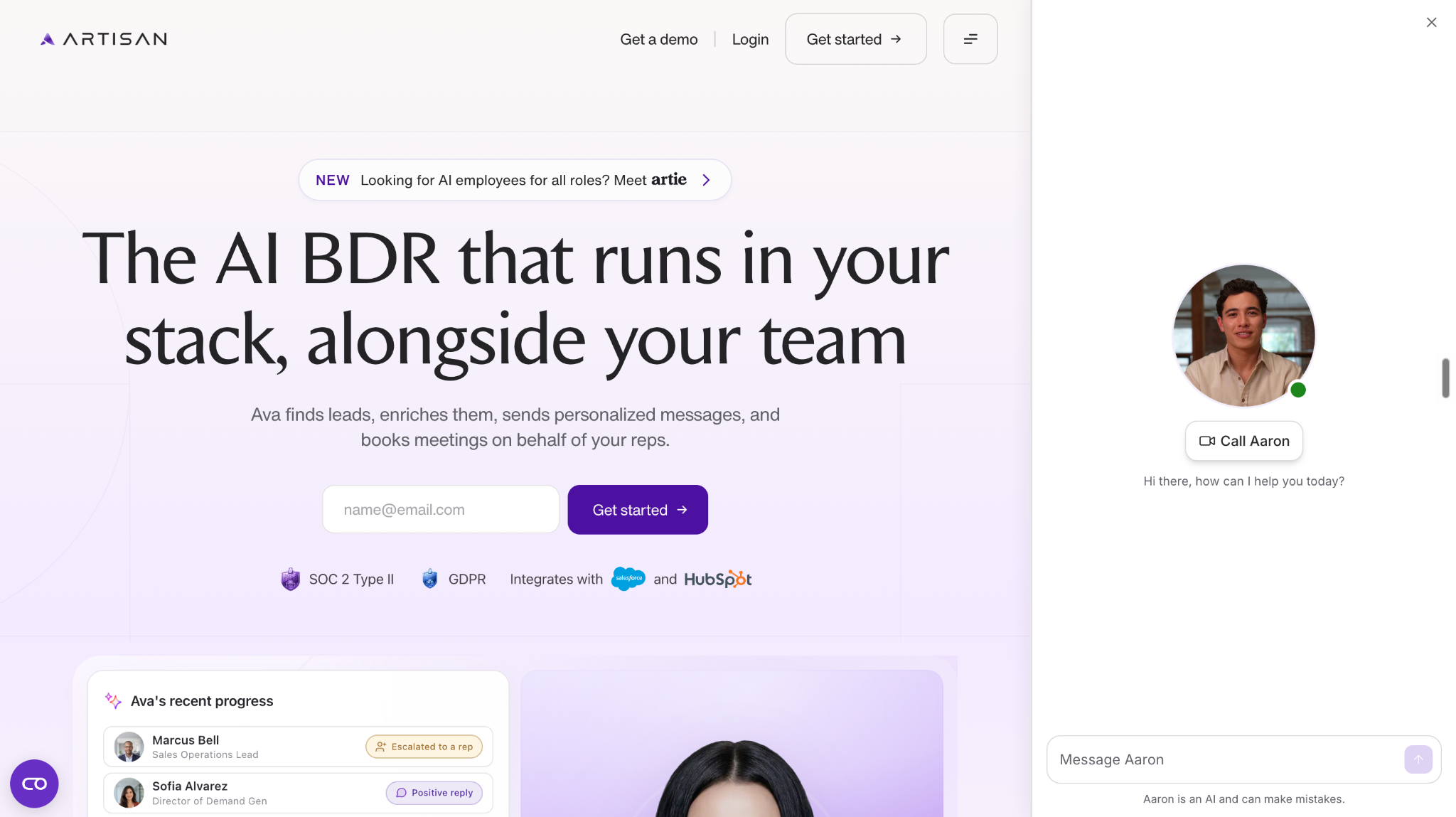
Artisan
AI-assisted outbound execution
Prospecting and outbound automation
Ava, its AI sales development agent, and an integrated outbound workflow
Teams seeking to consolidate prospecting and outbound activities
Assess data coverage, workflow flexibility, and the controls available to sales teams
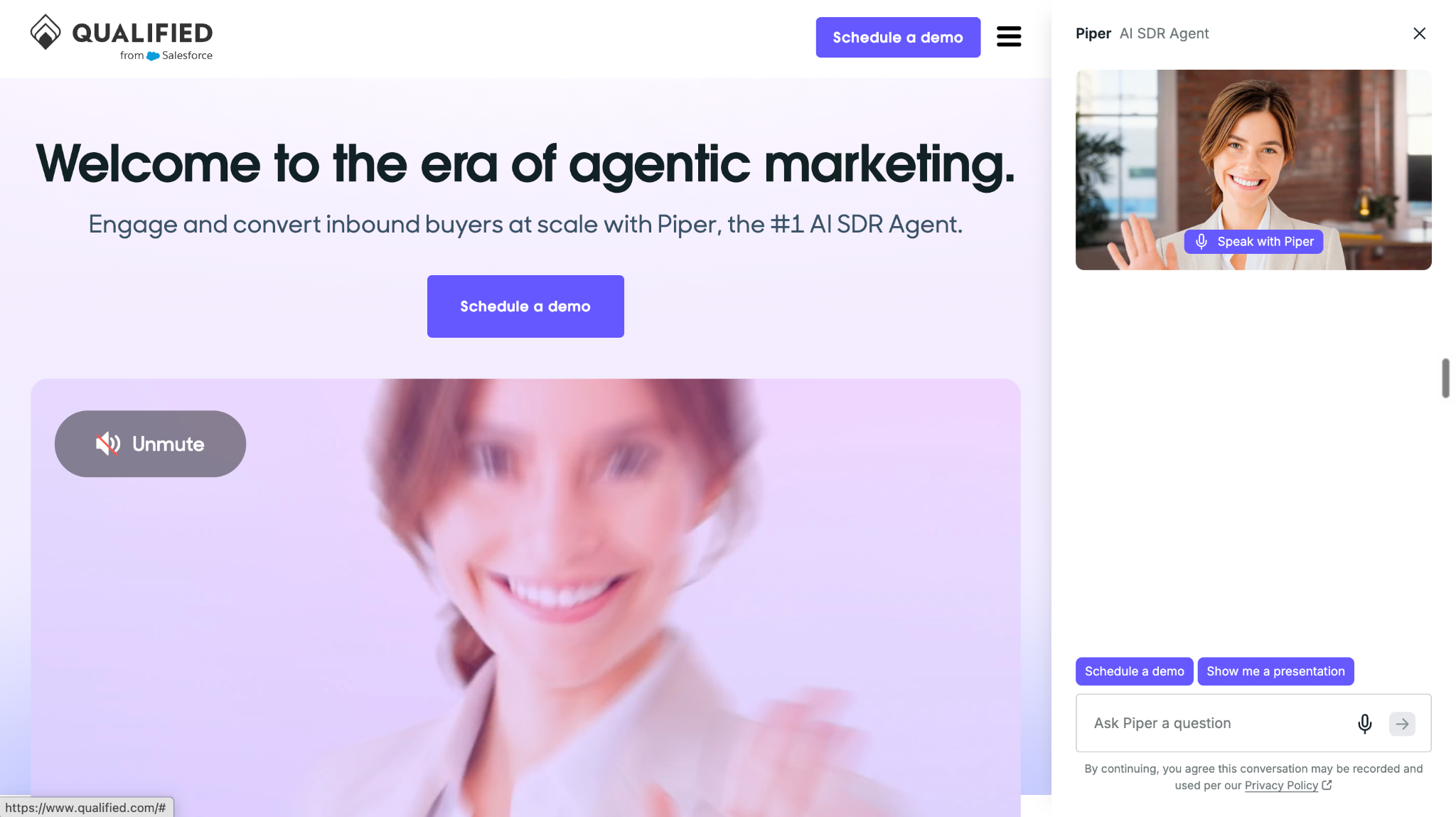
Qualified
Inbound lead qualification and conversion
Website engagement and conversion
Piper, its AI sales development agent, and Salesforce-connected workflows
B2B organizations with significant website traffic and Salesforce-centric sales processes
Most relevant when converting inbound demand is a priority rather than building large outbound prospect lists
See Knock AI in Action — Book Your Live Demo Today
1. Knock AI: Best for Intent-Driven B2B Lead Generation and Conversion
Knock AI is built for enterprise B2B teams that want to turn buyer engagement into qualified sales conversations, rather than simply generate more prospect lists. It helps teams use first-party engagement signals and intent scoring to identify promising opportunities and prioritize buyers who are more likely to engage.
Contact enrichment and CRM context help make those interactions more relevant, while AI-powered conversations can engage prospects and qualify their needs. From there, teams can route leads based on intent, account ownership, and configured rules, helping ensure promising opportunities reach the right sales representative. Meeting booking and CRM synchronization connect engagement with the next steps in the sales process.
Consider an enterprise software company that attracts relevant website visitors but loses opportunities because buyers remain unidentified, receive no timely engagement, or reach the wrong sales representative. Knock AI can help address these gaps by connecting buyer signals with engagement, qualification, routing, and meeting booking.
Verdict: Knock AI is best for enterprise B2B teams that want to turn existing buyer engagement and intent signals into qualified conversations and meetings.
2. Apollo.io: Best for B2B Prospect Data and Outbound in One Platform
Apollo.io combines B2B contact discovery, company data, enrichment, prospecting, and sales engagement in one platform. Instead of switching between separate tools to research potential buyers and contact them, sales teams can build target account lists, identify relevant contacts, and manage outbound activities within a shared workflow.
This makes Apollo a practical option for teams that need to establish or expand their outbound prospecting process. It's particularly useful when the main challenge is finding the right people at target companies and giving sales representatives the data and tools to reach them.
The main consideration? Finding prospects and executing outbound campaigns won't automatically solve inbound conversion. Teams that struggle to identify high-intent website visitors, qualify inbound buyers, or route opportunities based on account context may need additional capabilities beyond prospecting and sales engagement.
3. AiSDR: Best for Automated Outbound Prospecting
AiSDR focuses on using AI to automate outbound prospecting and reduce the manual work involved in sales development. Its workflow supports prospect research, personalized outreach, follow-up sequences, and handling replies, helping teams move from identifying potential buyers to initiating sales conversations and generating meetings.
For B2B companies with a defined ideal customer profile (ICP), AiSDR can be worth evaluating when SDRs spend too much time researching prospects, writing repetitive messages, and following up manually. Automating these activities can help teams run outbound campaigns with less hands-on execution.
However, automation alone doesn't guarantee qualified meetings. Results still depend on how precisely the team defines its target audience, the quality of available prospect data, the relevance of its messaging, and the oversight applied to campaigns. Before adopting AiSDR, evaluate whether its personalization and reply-handling capabilities match your sales process and whether generated meetings meet your qualification criteria.
4. 11x: Best for Autonomous Sales Development
11x takes an autonomous sales development approach, using AI agents to automate substantial parts of prospecting and outreach. The appeal is straightforward: instead of relying on SDRs to execute every step manually, teams can delegate more of the sales development workflow to an AI agent.
This approach may suit B2B organizations looking to scale outbound activity while reducing repetitive work across prospect research, engagement, and follow-up. The key question is how much of your existing workflow the platform can handle reliably, and where human involvement remains necessary.
Before choosing 11x, evaluate its current capabilities against your sales process. Check which CRM and sales tools it integrates with, how much control your team has over messaging and agent behavior, and what monitoring is required to maintain quality. Also confirm current packaging and total cost directly with the vendor rather than relying on outdated pricing or assumptions about autonomy.
5. Artisan: Best for AI-Powered Outbound Execution
Artisan offers Ava, its AI sales development agent, alongside a workflow designed to support prospecting and outbound execution. The goal is to help sales teams use AI for activities such as researching potential buyers, personalizing outreach, and carrying out sales development tasks without managing every step manually.
Artisan is worth considering for B2B teams that want to consolidate parts of their outbound workflow and reduce the operational burden of running prospecting campaigns. It may be especially relevant when SDRs spend considerable time moving between prospect research, outreach preparation, and follow-ups.
The important consideration is how well Artisan fits your existing sales stack. An integrated outbound workflow doesn't necessarily eliminate every need for external data sources, CRM connections, or other sales tools. Evaluate its prospect data coverage, personalization controls, integration requirements, and workflow flexibility before deciding whether it can replace existing tools or is better suited to complement them.
6. Qualified: Best for Inbound Lead Qualification and Conversion
Qualified focuses on converting inbound demand into sales conversations, particularly for B2B organizations built around Salesforce. Its AI sales development agent, Piper, supports website engagement and lead qualification, helping businesses respond to potential buyers and move relevant conversations toward meetings.
This makes Qualified a strong candidate for companies that already attract meaningful website traffic but struggle to turn that interest into a pipeline. Rather than concentrating primarily on building large prospect lists for cold outreach, the platform focuses on engaging visitors and connecting inbound interactions with sales workflows.
For example, a B2B software company can evaluate Qualified when it wants to make website engagement more responsive and connect buyer interactions with its Salesforce-centered sales process. The main consideration is specialization: Qualified is most relevant when inbound conversion is the priority. Teams primarily seeking a general-purpose prospect database and outbound prospecting platform should evaluate other tools against those requirements.
Which AI SDR Is Best for Your B2B Lead-Generation Situation?
The right AI SDR depends on what your sales team needs to fix first. Use this quick comparison to narrow down your options.
If your situation is…
Evaluate…
You need contact and company data to build targeted prospect lists
Apollo.io
You want to automate outbound research, personalized outreach, and follow-ups
AiSDR
You want an autonomous agent to handle more of the sales development workflow
11x
You want to consolidate AI-assisted prospecting and outbound execution
Artisan
You already attract website visitors and need stronger inbound qualification
Qualified or Knock AI
You want to turn existing engagement and intent into qualified conversations, intelligent routing, and meetings
Knock AI
How should you choose based on your current challenges?
If you're a B2B SaaS startup with limited resources, identify the tasks consuming the most time before committing to a platform. Compare total cost, implementation effort, integration requirements, and the amount of manual work each tool can realistically remove.
If your outbound results are weak, don't assume you need more automation. First examine your targeting, contact data accuracy, email deliverability, and message relevance. Automating an ineffective campaign can simply scale the same problems.
If you're an enterprise with complex account ownership, prioritize CRM context, configurable qualification rules, intelligent routing, and human handoffs. Generating a lead is only part of the process; the opportunity must also reach the right representative with enough context to act.
If your company already generates inbound demand, investigate where potential buyers drop off. If relevant visitors aren't being identified, engaged, qualified, or routed effectively, improving conversion may create more value than sourcing additional contacts. Qualified is worth evaluating for Salesforce-centered inbound workflows, while Knock AI is particularly relevant when you want to activate buyer engagement and intent signals to generate qualified conversations and meetings.
The key is to match the platform to your actual bottleneck, not simply choose the tool with the most automation features.
How to Choose an AI SDR That Generates Qualified Leads, Not Just Activity
Choosing an AI SDR isn't just about how many emails it sends or how many replies it generates. The real question is whether it helps your team turn the right prospects into qualified sales opportunities.
Start With Your Lead Source
First, identify where your leads need to come from. If you need to discover net-new contacts, prioritize prospect databases and outbound research. If you already have a prospect list, focus on outreach and follow-up automation. If buyers are already visiting your website or showing intent, prioritize engagement, qualification, and conversion.
Evaluate Lead Quality and Personalization
Look beyond message volume. Does the tool target your ideal customer profile (ICP), use accurate and current contact data, and personalize outreach with relevant context? Generic AI messages can generate activity without producing meaningful conversations. Evaluate qualified meetings and opportunity creation, not just replies.
Check Integrations and Human Handoffs
Verify that the platform works with your CRM and supports the fields, account ownership rules, and qualification criteria your team actually uses. Check how replies, booked meetings, and prospect context reach sales representatives. Also confirm what requires human approval and how complex or sensitive conversations are escalated.
Measure Pipeline, Not Just Activity
Track qualified meetings, meeting attendance, opportunity creation, conversion rates, cost per qualified meeting, and pipeline influence. Compare these metrics against your baseline before implementation. Remember that a pipeline attributed to an AI SDR isn't automatically a pipeline caused by it. Strong measurement separates genuine improvement from existing demand or other sales and marketing activities.
How Knock AI Turns Buyer Intent Into Qualified B2B Leads
Imagine an enterprise B2B SaaS company attracting relevant visitors to its product and pricing pages. The traffic is there, but some potential buyers leave without speaking to sales, while others reach the team without enough context to determine their needs.
Knock AI helps connect these missed opportunities to the next sales action.
The workflow starts when a prospect from a target account engages with valuable website content or visits a high-intent page. Available first-party engagement signals, contact enrichment, and CRM context help establish who the buyer might be, which account they belong to, and what their activity may indicate.
Next, Knock AI can engage the buyer through a configured conversation workflow. Its AI agent can answer approved questions and gather qualification context to help determine whether the prospect is ready for a sales conversation. Based on intent, account ownership, and configured routing rules, the prospect can then be directed to the appropriate representative. Meeting booking and CRM synchronization support the handoff and keep relevant information connected to the sales process.
The difference is that this workflow starts with existing buyer engagement rather than simply adding more names to an outbound sequence.
Knock AI is best suited to enterprise B2B teams that want to convert existing engagement and intent into qualified conversations, intelligent routing, and meetings.
Choose an AI SDR Based on Your Lead-Generation Bottleneck
Apollo.io, AiSDR, 11x, and Artisan address different prospecting and outbound needs, while Qualified focuses on inbound conversion. Knock AI is best positioned for enterprise B2B teams that want to connect existing buyer engagement and intent with AI-powered conversations, qualification, intelligent routing, and meetings. Before committing, identify your biggest lead-generation bottleneck, verify the capabilities and integrations you require, and evaluate success using qualified opportunities and pipeline outcomes rather than activity alone.
Frequently Asked Questions
What is the best AI SDR tool for B2B lead generation?
The best option depends on your primary goal. Knock AI is a strong fit for enterprise teams converting buyer engagement and intent into qualified conversations. Apollo.io suits prospect discovery and outbound sales, while AiSDR and 11x focus on automating sales development. Artisan supports AI-assisted outbound execution, and Qualified is particularly relevant for inbound conversion in Salesforce-centered organizations.
Which AI SDR is best for a B2B SaaS startup with a limited budget?
Start by identifying the work you need to automate, then compare pricing, contact requirements, implementation effort, and existing tool costs. Apollo.io may suit teams that need prospect data and outbound capabilities together, while outbound automation platforms may fit teams with established targeting. Compare the total cost against qualified meetings generated rather than choosing solely on advertised features.
Can an AI SDR generate leads without a human SDR team?
AI SDRs can automate activities such as prospect research, outreach, follow-ups, initial qualification, and meeting scheduling, depending on the platform. However, fully replacing human SDRs isn't appropriate for every sales process. Complex objections, sensitive replies, enterprise account relationships, and unusual qualification scenarios often require human judgment. Teams should define escalation rules and monitor conversation quality.
What's the difference between inbound and outbound AI SDR tools?
Outbound AI SDR tools help identify or engage potential customers who have not necessarily expressed interest in your business. Inbound AI SDR tools focus on engaging and qualifying people already interacting with your website or other business channels. Some platforms specialize in one approach, while others support multiple workflows. The right choice depends on where your potential buyers originate.
Which AI SDR tools can identify and qualify high-intent website visitors?
Knock AI and Qualified are relevant options for teams seeking to convert inbound engagement into sales conversations. Knock AI focuses on connecting available first-party engagement signals, enrichment, qualification, routing, and meeting booking. Qualified focuses on inbound website engagement and conversion, particularly for Salesforce-centered organizations. Before choosing, verify visitor identification capabilities, qualification workflows, and how each platform handles unidentified visitors and CRM records.
Can AI SDR tools integrate with Salesforce or HubSpot?
CRM integrations vary by platform, plan, and workflow, so verify the specific integration you need rather than relying on a general compatibility claim. Check whether the tool can synchronize relevant contacts, accounts, activities, qualification fields, and meeting details. Also confirm whether it supports your account ownership rules, routing logic, and required data synchronization behavior.
Are AI SDR tools better than human SDRs?
AI SDR tools can reduce repetitive work, accelerate outreach, and help teams handle initial buyer interactions at scale. Human SDRs bring judgment, relationship-building skills, and the ability to navigate complex conversations. For many B2B organizations, the practical approach is to automate predictable tasks while retaining human oversight for nuanced qualification, important accounts, and high-value opportunities.
How do I measure the ROI of an AI SDR platform?
Track qualified meetings, meeting attendance, opportunity creation, conversion rates, cost per qualified meeting, and pipeline influenced. Compare results against a baseline and include software, implementation, and operational costs when calculating ROI. Also distinguish attribution from causation: a platform may receive credit for pipeline that would have been generated anyway. Where possible, use controlled comparisons to estimate its incremental impact.