Best Lead Qualification Software in 2026: 12 Tools Compared
Best Lead Qualification Software in 2026: 12 Tools Compared
TL;DR
Lead qualification software helps businesses identify which prospects are worth a sales team's time by combining buyer intent, company data, engagement signals, enrichment, lead scoring, and qualification workflows. The best platforms don't just score leads. They help revenue teams prioritize high-intent buyers, eliminate low-fit prospects, and accelerate the path from first engagement to pipeline.
If you're looking for the best lead qualification software in 2026:
The biggest shift happening in lead qualification today is the move away from static lead scoring models and toward continuous buyer qualification.
Traditional qualification typically begins after a form submission. A lead is created, enriched, scored, reviewed by an SDR, and eventually passed to sales. Modern qualification starts much earlier. As soon as a buying signal is detected, businesses can identify the buyer, enrich company and contact data, evaluate intent, assess fit, route conversations, and engage prospects while interest is still high.
This shift helps teams:
Reduce time spent on unqualified leads
Improve speed-to-lead
Increase sales productivity
Prioritize high-intent buyers
Reduce CRM clutter and demand waste
Convert more opportunities into pipeline
For most growing B2B companies, the question is no longer "How do we score more leads?" but rather "How do we identify and engage the right buyers before momentum is lost?"
Quick Recommendations by Use Case
Choosing the right lead qualification software depends on your CRM, sales process, team size, and qualification strategy. Here are our top recommendations based on common business needs.
Use Case
Recommended Tool
Best Overall
Knock AI
Best Enterprise Teams
6sense
Best Salesforce Teams
Salesforce
Best HubSpot Teams
HubSpot
Best Revenue Operations Teams
LeanData
Best Conversational Qualification
Knock AI
Best AI-Powered Qualification
Knock AI
Best Buyer Intent Data
ZoomInfo
Best Meeting Qualification
Chili Piper
Best Lead Scoring
MadKudu
Best Conversational Marketing
Qualified
Best Budget-Friendly Option
Freshsales
How We Chose These Tools
Our recommendations are based on several factors, including:
Qualification capabilities
Buyer intent detection
AI functionality
CRM integrations
Lead enrichment
Routing and scheduling features
Revenue operations support
Ease of implementation
Pricing and overall value
While some platforms focus primarily on lead scoring, others specialize in buyer intent, enrichment, meeting qualification, account-based selling, or conversational engagement. The best choice ultimately depends on how your team identifies, qualifies, and converts potential customers.
Lead Qualification Software Comparison Table
Tool
Best For
Qualification Method
AI Qualification
Intent Signals
Enrichment
Lead Scoring
CRM Integration
Meeting Booking
Pricing
Knock AI
Continuous Buyer Qualification
Intent detection, enrichment, AI qualification, conversational engagement
Yes
Yes
Yes
Yes
Salesforce, HubSpot, Marketo
Yes
Starts at $1,000/month
6sense
Enterprise Revenue Teams
Predictive AI, intent data, account qualification
Yes
Yes
Yes
Yes
Salesforce, HubSpot, Microsoft Dynamics
No
Custom ($50,000-$300,000+/year typical)
HubSpot
Marketing & Sales Teams
Lead scoring, behavioral qualification, workflows
Yes
Limited
Limited
Yes
Native HubSpot CRM
Yes
Free plan available; paid plans start at $7/seat/month
Knock AI is the most comprehensive platform for companies that want to identify, enrich, qualify, route, and convert buyers in real time.
6sense is the strongest option for large enterprises focused on predictive qualification and account-based marketing.
ZoomInfo excels at buyer intent data and enrichment but is not a complete qualification platform on its own.
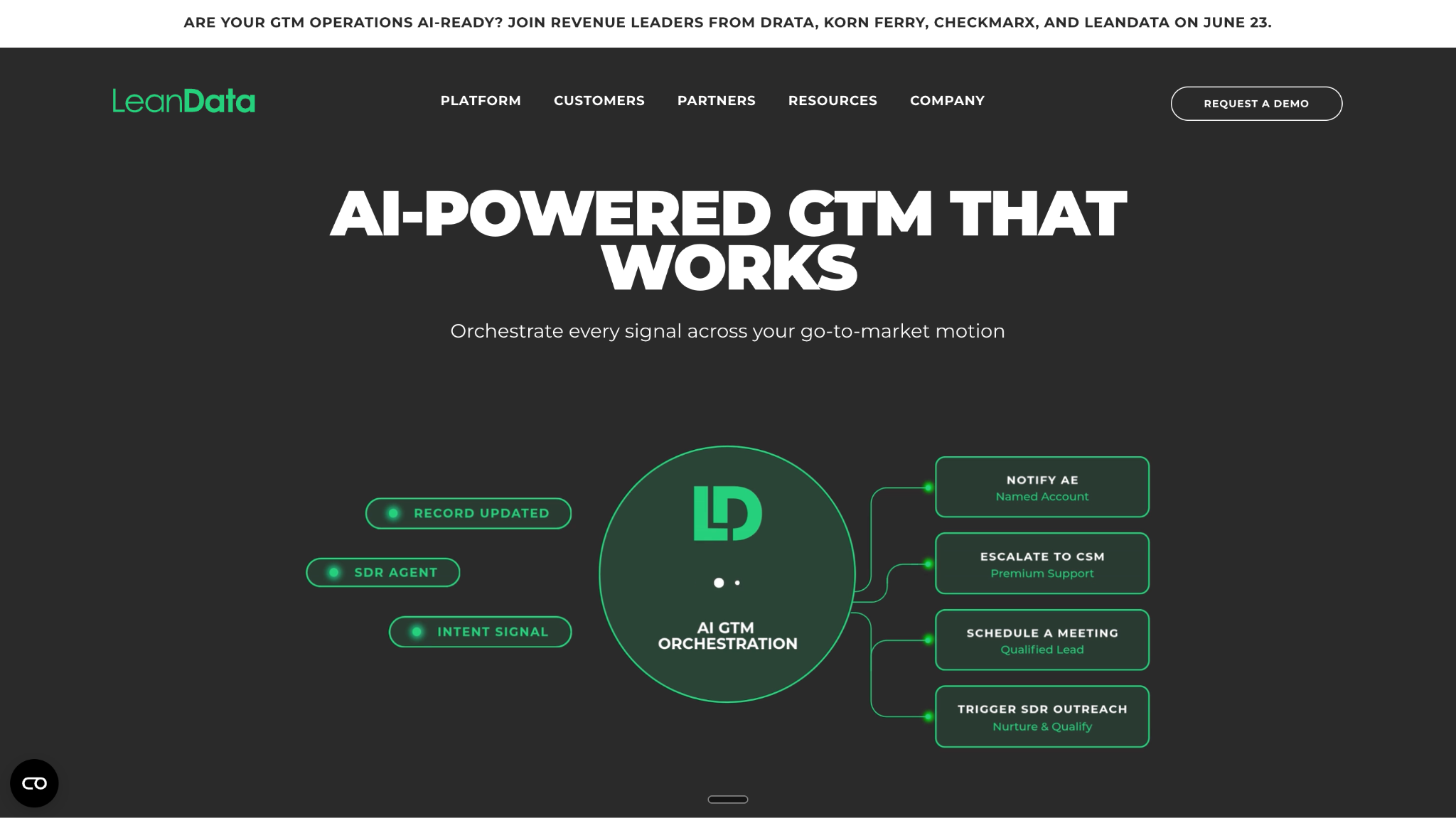
LeanData is best for organizations that need qualification workflows tied closely to routing and revenue operations.
Chili Piper focuses primarily on meeting qualification and scheduling rather than full-funnel qualification.
MadKudu remains one of the strongest dedicated lead scoring platforms.
Qualified and Drift are strong conversational qualification solutions for website traffic.
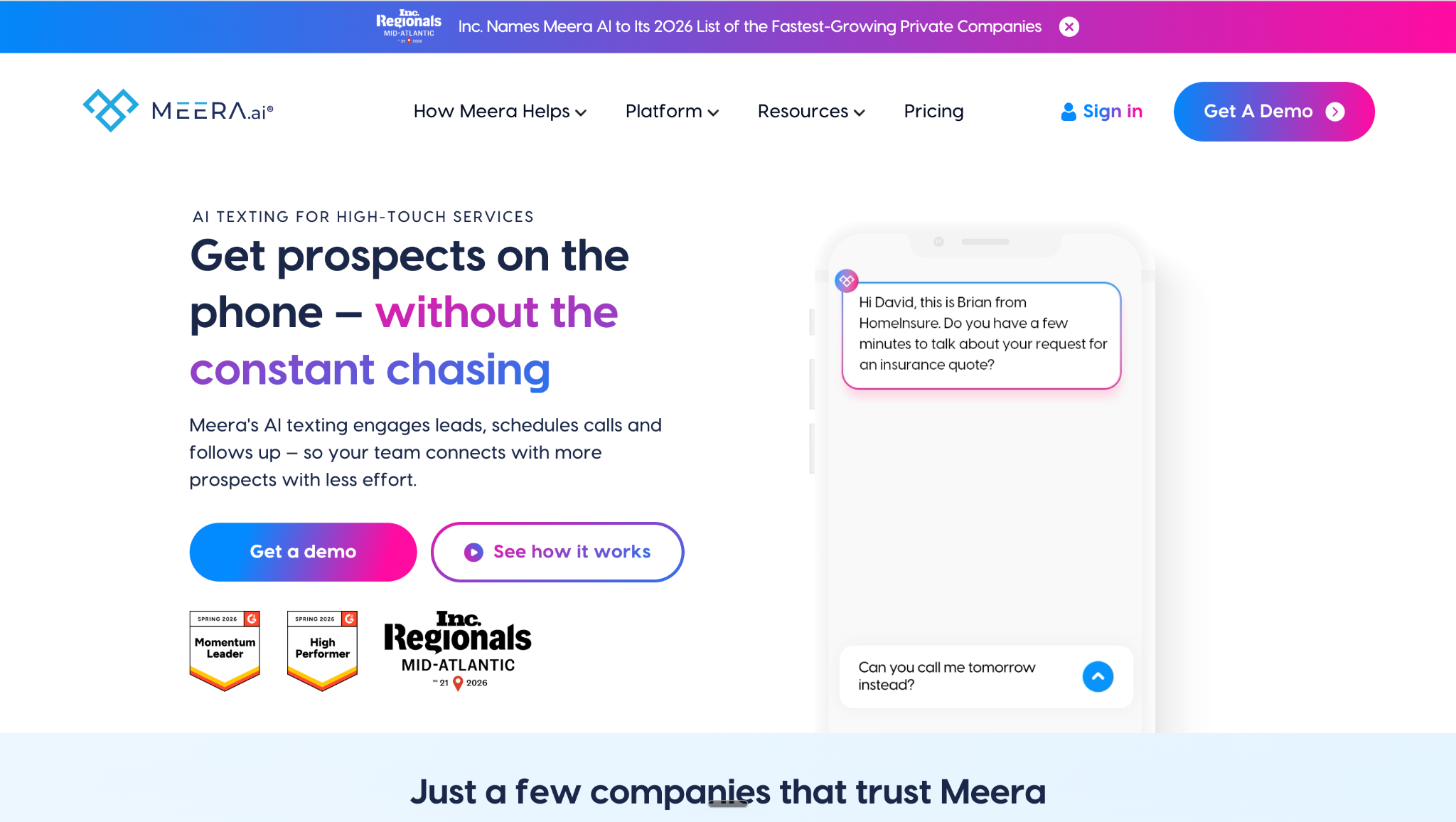
Meera specializes in AI-powered SMS qualification and appointment setting.
Freshsales, HubSpot, and Salesforce are good options for teams that want qualification capabilities built directly into their CRM.
What Is Lead Qualification Software?
Lead qualification software helps businesses identify which prospects are most likely to become customers by analyzing factors such as buyer intent, company information, engagement signals, account fit, CRM data, and behavioral activity.
The goal is simple: help sales teams spend more time talking to qualified buyers and less time researching, scoring, and chasing leads that are unlikely to convert.
The challenge is that not every lead deserves the same level of attention.
Some visitors are actively evaluating solutions and ready to buy. Others may be students, job seekers, competitors, existing customers looking for support, or prospects that simply aren't a good fit.
Without an effective qualification process, sales teams waste valuable time on low-intent opportunities while high-intent buyers wait for a response.
The result is slower response times, lower conversion rates, and lost revenue.
Key Statistics
Companies that respond to leads within five minutes are up to 100 times more likely to connect with prospects and significantly more likely to qualify them compared to companies that wait 30 minutes or longer.
Sales representatives spend only about one-third of their time actively selling, with much of the remaining time consumed by research, qualification, administration, and other non-selling activities.
Poor lead qualification can result in wasted marketing spend, CRM clutter, duplicate outreach, and lower pipeline conversion rates.
Organizations that prioritize lead management and qualification processes consistently generate more sales-ready opportunities than companies with inconsistent qualification workflows.
The Cost of Poor Qualification
When qualification is weak, teams often experience:
Allow qualified buyers to book meetings instantly.
Slack Notifications
Alert sales teams when high-intent buyers engage.
CRM Synchronization
Keep qualification data synchronized across Salesforce, HubSpot, and other systems.
The most effective lead qualification platforms combine qualification, routing, enrichment, and engagement into a single workflow, allowing businesses to identify and engage the right buyers faster.
The 12 Best Lead Qualification Software Tools
#1 Knock AI: Best for Continuous Buyer Qualification
Knock AI is a buyer qualification platform that helps revenue teams identify, enrich, qualify, route, and engage buyers in real time. Unlike traditional lead qualification software that starts after a form submission, Knock AI begins qualification as soon as buying intent is detected.
The platform continuously evaluates buyers using intent signals, company enrichment, contact enrichment, CRM context, attribution data, engagement activity, and AI-powered qualification workflows. As new signals emerge, qualification becomes more accurate, helping sales teams focus on the opportunities most likely to convert.
What makes Knock AI different is that qualification is not a one-time event. Instead of assigning a lead score after a form fill, Knock AI continuously qualifies buyers throughout their journey. A visitor who arrives from LinkedIn, G2, a webinar, a QR code, a PDF, or a referral link can be identified, enriched, and qualified before a sales representative ever responds.
This approach helps revenue teams reduce demand waste, eliminate manual research, improve speed-to-lead, and prioritize high-intent buyers when interest is at its peak.
Key Features
Continuous Buyer Qualification
Knock AI starts qualifying buyers as soon as intent is detected and continuously updates qualification as new signals and data become available.
AI Intent Detection
Automatically classifies conversations and buyers based on intent categories such as:
Buying
Support
Partnership
Hiring
Spam
Real-Time Contact Enrichment
Enriches buyer profiles with:
Name
Verified business email
Job title
Seniority
LinkedIn profile
Location
Time zone
Company Enrichment
Provides real-time company intelligence including:
Company name
Industry
Employee count
Company size
LinkedIn company page
Funding information
Geographic presence
ICP Fit Analysis
Evaluates whether a buyer matches your ideal customer profile before routing them to sales.
Plans include varying levels of buyer identification, enrichment, AI qualification, conversational engagement, routing, meeting booking, and revenue automation capabilities.
Best For
B2B SaaS companies
Revenue operations teams
Inbound sales teams
Product-led growth companies
Enterprise sales organizations
Companies generating leads from G2, LinkedIn, webinars, events, and product documentation
Teams looking to reduce SDR workload and improve qualification accuracy
Businesses that want to qualify buyers before human engagement
Why We Picked It
Most lead qualification platforms focus on scoring leads after they enter the funnel. Knock AI takes a fundamentally different approach by identifying, enriching, qualifying, and routing buyers as soon as intent is detected.
Its combination of continuous buyer qualification, AI-powered intent detection, real-time enrichment, CRM-aware qualification, conversational engagement, and automated routing makes it one of the most advanced lead qualification platforms available today.
For organizations looking to move beyond static lead scoring and qualify buyers while intent is highest, Knock AI stands out as the strongest overall solution in this category.
#2 6sense: Best for Enterprise Intent Qualification
6sense is an account-based marketing and revenue intelligence platform designed for enterprise organizations. The platform helps revenue teams identify anonymous buying activity, uncover in-market accounts, and prioritize outreach using predictive analytics and intent data.
Unlike traditional lead qualification tools that focus on individual leads, 6sense focuses on account-level qualification and buying committee intelligence, making it particularly valuable for large B2B organizations running complex sales cycles.
Key Features
Buyer Intent Detection
Identifies accounts actively researching products and services across the web.
Predictive Analytics
Uses AI models to predict buying readiness and prioritize accounts.
Account Identification
Reveals anonymous website visitors and maps them to target accounts.
Buying Stage Analysis
Tracks where accounts are in the purchasing journey.
Account-Based Qualification
Qualifies opportunities at the account level instead of individual leads.
Sales Intelligence
Provides sales teams with account insights and recommended actions.
Pros
Excellent intent data capabilities
Strong account-based marketing functionality
Powerful predictive analytics
Enterprise-ready platform
Deep sales and marketing alignment
Cons
Expensive compared to most qualification tools
Long implementation cycles
Better suited for enterprises than SMBs
Steep learning curve
Pricing
6sense does not publicly disclose pricing. Organizations must contact sales for a custom quote. But public sources tell that annual contracts typically ranging from $50,000 to $300,000+
Best For
Enterprise organizations
Account-based marketing teams
Revenue operations teams
Large B2B sales organizations
Why We Picked It
6sense is one of the strongest platforms for enterprise intent qualification. Its combination of intent data, account intelligence, and predictive analytics helps large revenue teams identify buying activity before prospects fill out forms or request demos.
#3 HubSpot: Best for Marketing and Sales Alignment
HubSpot combines CRM, marketing automation, lead scoring, and sales engagement capabilities in a single platform. It is one of the most popular solutions for businesses looking to align marketing and sales around lead qualification.
The platform enables teams to score leads, automate qualification workflows, and route opportunities directly within the HubSpot ecosystem.
Key Features
Lead Scoring
Assigns scores based on demographic and behavioral attributes.
Marketing Automation
Automates qualification workflows and lead nurturing campaigns.
Behavioral Tracking
Tracks website visits, email engagement, and form activity.
CRM Integration
Native CRM provides complete lead and customer visibility.
Workflow Automation
Automates qualification and routing processes.
Meeting Scheduling
Allows qualified prospects to book meetings directly.
Pros
Easy to use
Strong marketing and sales alignment
Native CRM integration
Excellent automation capabilities
Scalable ecosystem
Cons
Advanced features require higher-tier plans
Intent data capabilities are limited
Costs increase as contact volume grows
Less advanced than dedicated qualification platforms
Pricing
HubSpot offers multiple pricing tiers depending on the products and features required.
Marketing Hub pricing starts at:
Free: $0/month
Starter: $7/seat/month
Professional: $800/month
Enterprise: $3,600/month
Advanced routing, automation, reporting, and revenue attribution capabilities are generally available in higher-tier plans.
Best For
Small and mid-sized businesses
Marketing teams
HubSpot CRM users
Growing revenue teams
Why We Picked It
HubSpot remains one of the best all-in-one platforms for organizations that want lead qualification, CRM, automation, and marketing capabilities within a single ecosystem.
#4 Salesforce: Best for CRM-Based Qualification
Salesforce is the world's largest CRM platform and provides extensive lead qualification capabilities through Sales Cloud, Einstein AI, automation workflows, and ecosystem integrations.
Organizations can create sophisticated qualification workflows directly within Salesforce while maintaining a single source of truth for customer data.
Key Features
Einstein Lead Scoring
Uses AI to prioritize leads based on conversion likelihood.
Workflow Automation
Automates qualification, assignment, and follow-up tasks.
Lead Management
Centralizes prospect and customer information.
Reporting and Analytics
Provides detailed pipeline and qualification reporting.
Opportunity Management
Tracks leads throughout the sales cycle.
Ecosystem Integrations
Connects with thousands of third-party applications.
Pros
Highly customizable
Industry-leading CRM
Strong automation capabilities
Extensive integration ecosystem
Powerful reporting
Cons
Can be expensive
Complex implementation
Requires administration expertise
Lead qualification often depends on additional tools
Pricing
Salesforce Sales Cloud pricing starts with the following plans:
Starter Suite: $25/user/month
Pro Suite: $100/user/month
Enterprise: $165/user/month
Unlimited: $330/user/month
Einstein 1 Sales: $500/user/month
Additional costs may apply for integrations, automation tools, enrichment platforms, and other Salesforce products.
Best For
Salesforce customers
Mid-market organizations
Enterprise businesses
Complex sales organizations
Why We Picked It
Salesforce is the natural choice for organizations that want qualification workflows directly within their CRM environment and already rely on Salesforce as their system of record.
#5 ZoomInfo: Best for Intent Data and Enrichment
ZoomInfo is a sales intelligence platform known for its extensive contact database, buyer intent signals, and enrichment capabilities.
Rather than acting as a complete qualification platform, ZoomInfo helps organizations improve qualification by providing deeper account and contact intelligence.
Additional products such as BookIt, NotifyPlus, and Engagement may require separate licensing.
Best For
Revenue operations teams
Salesforce organizations
Enterprise companies
Account-based sales teams
Why We Picked It
LeanData excels at operationalizing qualification decisions and ensuring opportunities reach the correct owners, accounts, and teams
#7 Chili Piper: Best for Meeting Qualification
Chili Piper is a scheduling and lead qualification platform that helps businesses qualify inbound leads and route them directly to the right sales representative. The platform is best known for reducing the delay between lead capture and meeting booking.
Instead of asking prospects to wait for a follow-up email, Chili Piper allows qualified buyers to instantly schedule meetings with the appropriate sales rep based on routing rules, ownership logic, and availability.
Key Features
Instant Meeting Booking
Allows qualified prospects to schedule meetings immediately.
Form Qualification
Qualifies leads directly from website forms.
Lead Routing
Routes prospects based on ownership, territory, and custom rules.
Routing & Scheduling Package: Starting at $1,250/month
Experiences Package: Starting at $3,500/month
Chat AI: Approximately $20,000/year
Actual pricing may vary based on team size and implementation requirements.
Best For
Inbound sales teams
Demo-driven companies
High-volume lead generation teams
Organizations focused on speed-to-lead
Why We Picked It
Chili Piper remains one of the strongest platforms for meeting qualification and routing, helping companies convert qualified leads into booked meetings faster.
#8 Qualified: Best for Conversational Marketing
Qualified is a conversational marketing platform built primarily for Salesforce customers. The platform uses live chat, AI conversations, Piper AI SDR, and visitor intelligence to qualify prospects directly on the website.
Qualified focuses on engaging visitors while they are actively researching solutions, helping businesses identify buying intent and connect qualified buyers with sales teams.
Key Features
AI-Powered Conversations
Engages visitors through automated conversations.
Website Visitor Identification
Reveals account-level visitor activity.
Live Chat
Connects prospects directly with sales teams.
Intent-Based Qualification
Prioritizes visitors based on engagement signals.
Meeting Scheduling
Books meetings directly from conversations.
Salesforce Integration
Deep native Salesforce connectivity.
Pros
Strong conversational marketing capabilities
Excellent Salesforce integration
Good visitor intelligence
Fast meeting booking workflows
AI-powered engagement
Cons
Salesforce-centric platform
Expensive for smaller businesses
Limited CRM flexibility
Requires significant website traffic
Pricing
Qualified starts at $42,000 per year for the Premier plan. Enterprise deployments typically cost between $60,000 and $100,000+ annually once Salesforce infrastructure, implementation, and onboarding are factored in.
Best For
Salesforce organizations
Conversational marketing teams
Enterprise B2B companies
High-traffic websites
Why We Picked It
Qualified is one of the strongest conversational marketing platforms available and excels at engaging buyers while intent is high.
Meera is an AI-powered qualification platform that specializes in qualifying leads through text messaging and SMS conversations. The platform automates outreach, qualification, follow-up, and appointment booking using AI.
Unlike traditional lead qualification software that depends heavily on forms and email, Meera focuses on conversational qualification through mobile messaging.
Key Features
AI SMS Conversations
Qualifies leads through automated text conversations.
Appointment Scheduling
Books meetings automatically.
Lead Follow-Up
Engages prospects through ongoing outreach.
Qualification Workflows
Collects qualification data through conversations.
CRM Integrations
Synchronizes qualification data with CRM platforms.
AI Lead Engagement
Automates repetitive qualification tasks.
Pros
Strong SMS engagement capabilities
AI-driven qualification workflows
Effective appointment setting
Good automation features
Fast implementation
Cons
SMS-focused approach may not fit every business
Limited enrichment functionality
Less suitable for complex enterprise qualification
Relies heavily on mobile engagement
Pricing
Meera offers custom pricing based on usage and deployment requirements.
Best For
High-volume inbound teams
Appointment-driven businesses
SMS-first sales teams
AI SDR workflows
Why We Picked It
Meera brings a unique SMS-first approach to lead qualification and is one of the strongest AI-powered qualification platforms in that category.
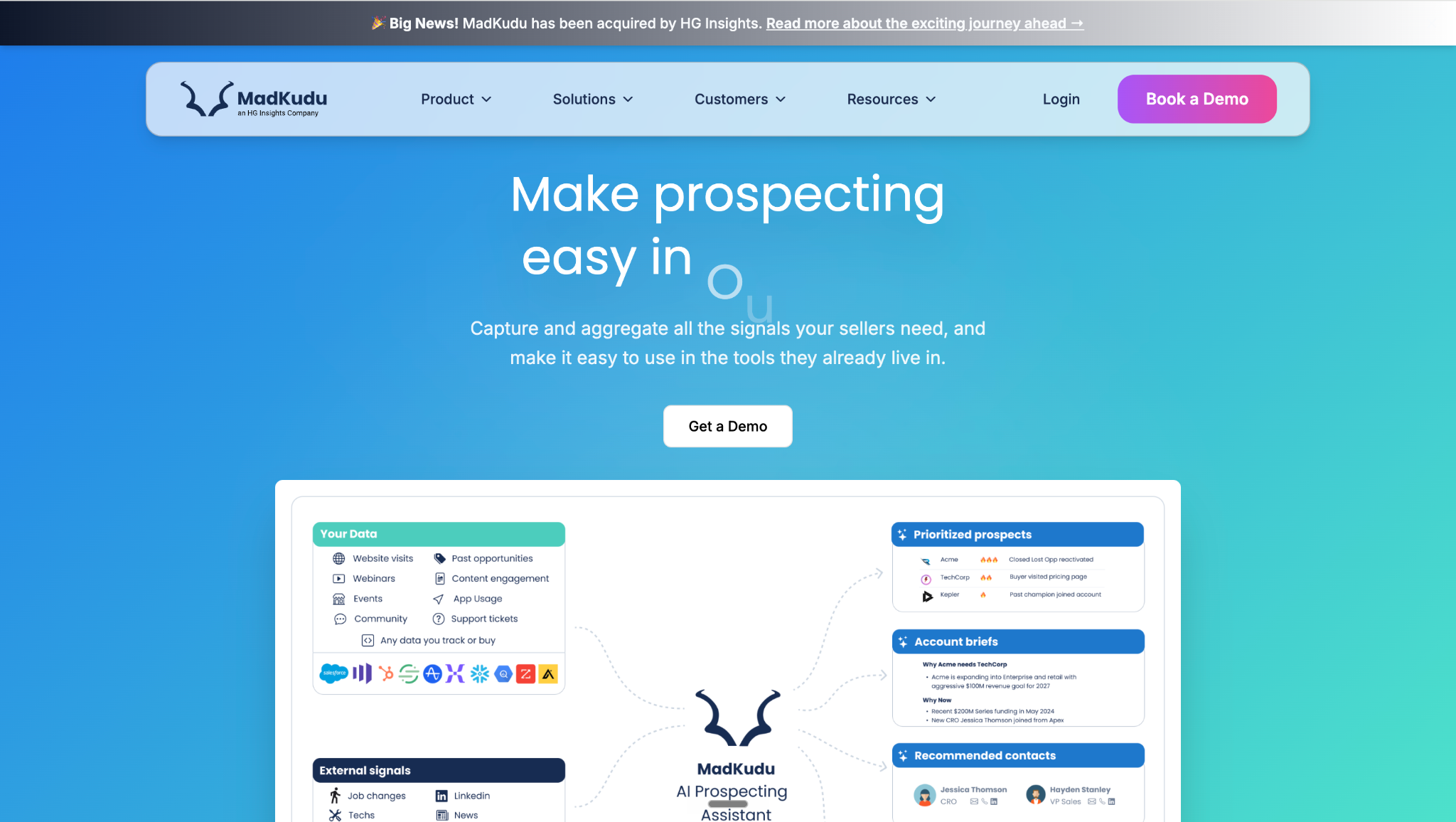
#10 MadKudu: Best for Predictive Lead Scoring
MadKudu is a predictive lead scoring platform designed to help businesses prioritize leads using behavioral, firmographic, and product usage data.
The platform uses machine learning models to identify which leads are most likely to convert, helping sales teams focus on the highest-value opportunities.
Key Features
Predictive Lead Scoring
Uses machine learning to prioritize leads.
Behavioral Analysis
Tracks engagement and activity signals.
Product Usage Qualification
Identifies product-qualified leads.
Revenue Intelligence
Helps prioritize sales efforts.
CRM Integrations
Works with Salesforce and HubSpot.
Automated Prioritization
Surfaces high-converting opportunities.
Pros
Strong predictive scoring models
Excellent for PLG businesses
Supports product-qualified lead workflows
Good analytics capabilities
Strong CRM integrations
Cons
Primarily focused on scoring
Limited conversational qualification capabilities
Requires quality historical data
Can be difficult to configure initially
Pricing
MadKudu offers two plans:
Growth: Starting around $999/month for smaller sales teams
Pro: Starting around $2,499/month for larger teams requiring advanced scoring models and additional customization
Best For
Product-led growth companies
SaaS businesses
Data-driven sales teams
Organizations focused on predictive scoring
Why We Picked It
MadKudu remains one of the strongest dedicated lead scoring platforms and is particularly effective for businesses using product usage signals as part of qualification.
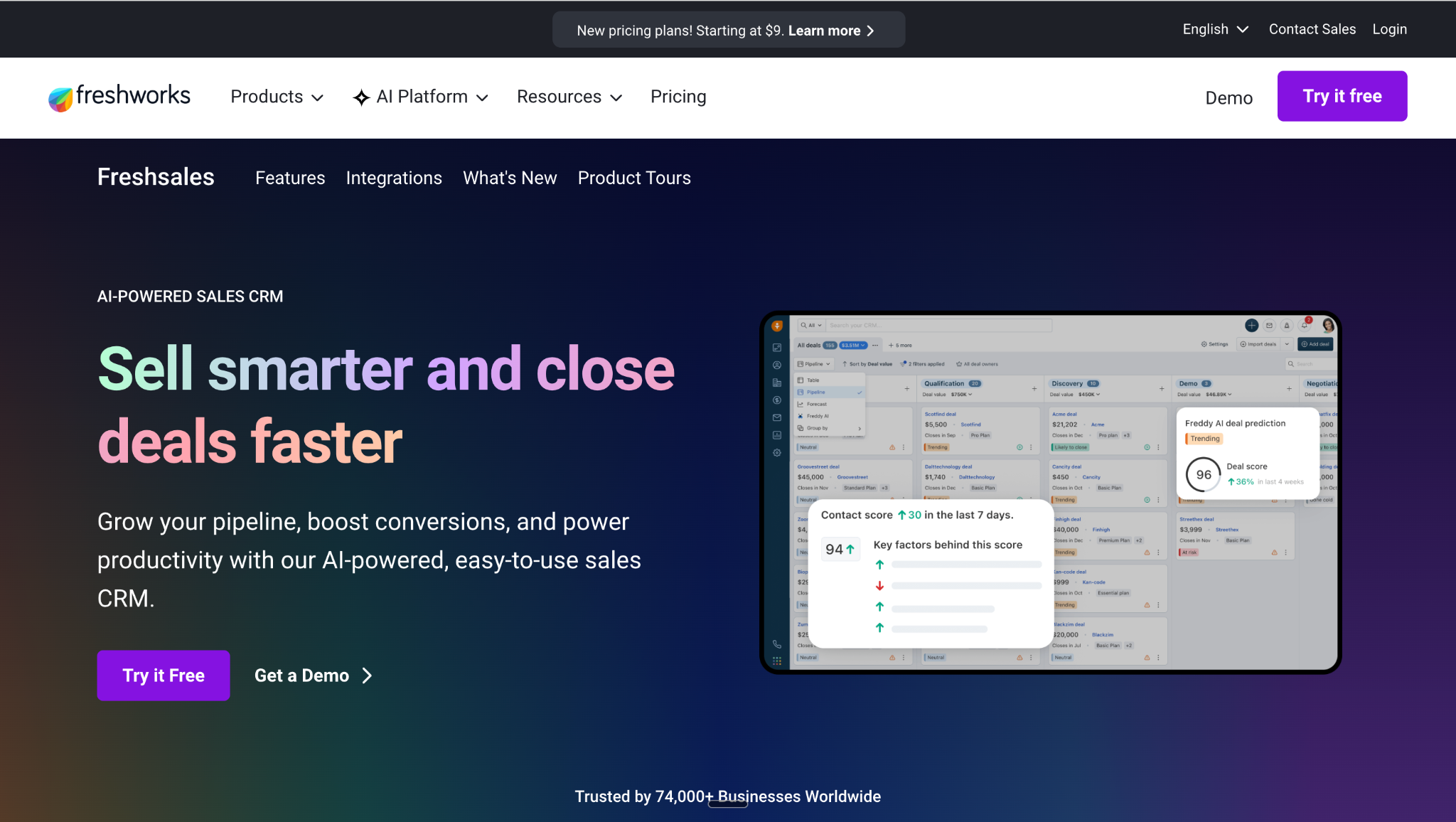
#11 Freshsales: Best Budget-Friendly Option
Freshsales is a CRM and sales automation platform that includes lead scoring, qualification, workflow automation, and engagement tools at an affordable price point.
For small and growing businesses, Freshsales provides many of the qualification features found in larger platforms without the enterprise-level cost.
Key Features
Lead Scoring
Prioritizes leads based on activity and attributes.
Workflow Automation
Automates qualification and assignment processes.
Built-In CRM
Manages contacts, accounts, and opportunities.
Sales Sequences
Automates outreach activities.
AI-Powered Insights
Provides recommendations and lead intelligence.
Meeting Scheduling
Supports appointment booking workflows.
Pros
Affordable pricing
Easy to implement
Strong value for SMBs
Built-in CRM functionality
Good automation capabilities
Cons
Less advanced than enterprise platforms
Limited buyer intent capabilities
Smaller ecosystem
Fewer advanced qualification features
Pricing
Freshsales US pricing (billed annually) starts at:
Growth: $9/user/month
Pro: $39/user/month
Enterprise: $69/user/month
The Pro plan is typically where businesses gain access to more advanced automation, territory management, and sales workflow capabilities.
Best For
Startups
Small businesses
Growing sales teams
Budget-conscious organizations
Why We Picked It
Freshsales offers one of the best balances between affordability and functionality, making it a strong option for teams that need qualification capabilities without enterprise costs.
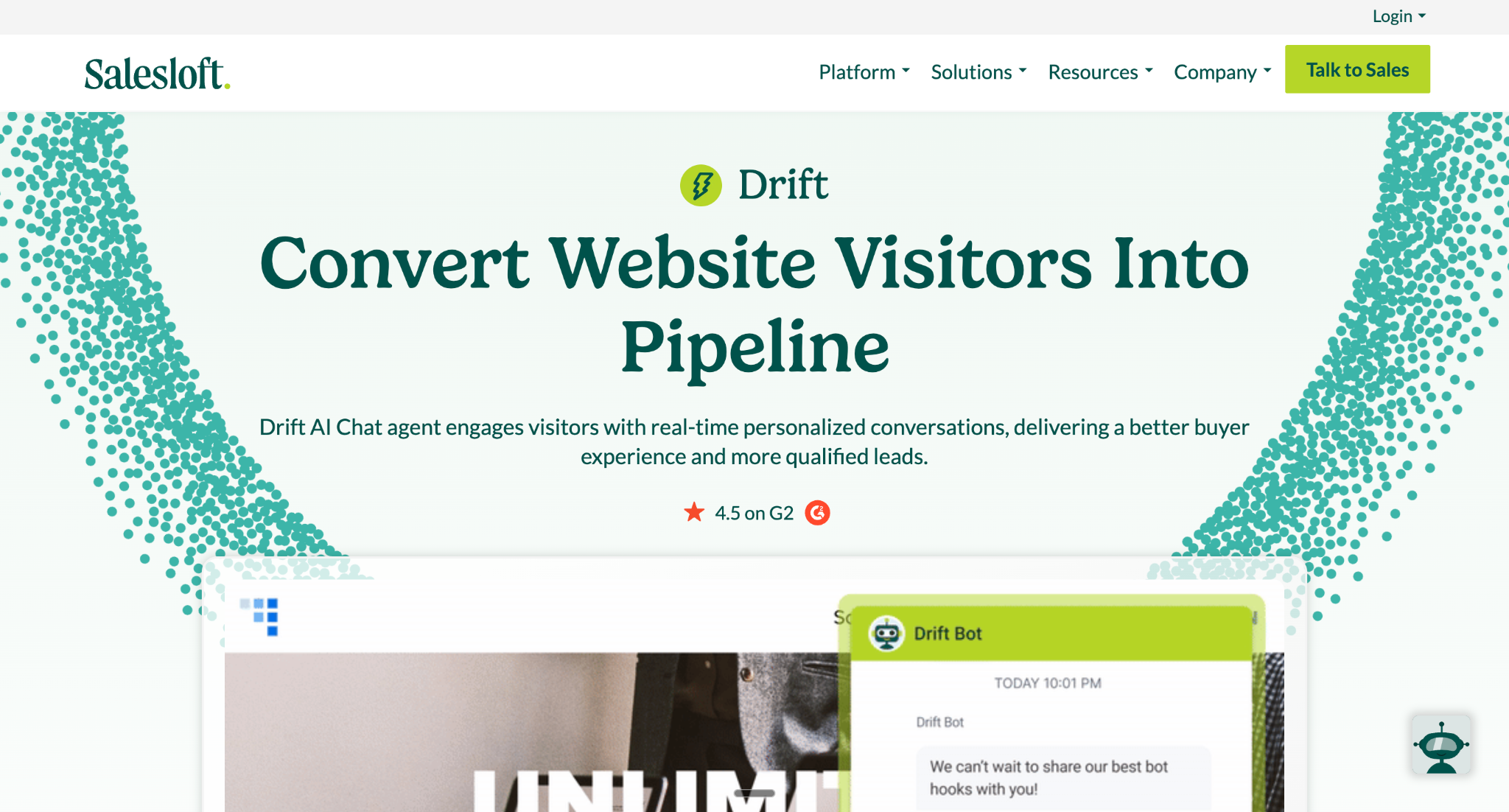
#12 Drift: Best for Website Conversations
Drift is a conversational marketing and sales platform that helps businesses qualify website visitors through chat, AI-powered conversations, and meeting booking workflows.
The platform is designed to engage prospects while they are actively browsing the website and connect qualified buyers with sales teams in real time.
Key Features
Conversational AI
Automates buyer conversations and qualification.
Live Chat
Connects visitors with sales representatives.
Meeting Scheduling
Books meetings directly through conversations.
Visitor Qualification
Collects qualification data automatically.
Routing Workflows
Routes prospects to the right team.
CRM Integrations
Supports Salesforce and HubSpot.
Pros
Strong conversational experiences
Easy meeting booking
Real-time engagement
Good qualification workflows
Well-established platform
Cons
Can be expensive
Limited enrichment capabilities
Less focused on continuous qualification
Primarily website-centric
Pricing
Drift pricing typically starts at $2,500 per month (around $30,000 per year) for entry-level plans. Most growing teams fall into higher tiers, where pricing ranges between $40,000 and $50,000 annually, while enterprise plans can exceed $60,000+ per year with custom pricing.
However, the base license is only part of the picture.
Additional costs often include:
Seat fees (around $80 per user per month)
Implementation time and setup (which can take several weeks)
SDR staffing, required to manage and respond to conversations in real time
When these factors are included, the total cost of ownership can exceed $150,000 to $300,000+ per year, depending on team size and usage.
Best For
B2B SaaS companies
Marketing teams
Website-driven businesses
Conversational sales organizations
Why We Picked It
Drift helped popularize conversational qualification and remains a strong option for businesses looking to engage and qualify website visitors in real time.
Not all lead qualification software works the same way. Some platforms rely on lead scores, while others use intent data, enrichment, AI, or real-time conversations to determine whether a prospect is worth pursuing.
Understanding these qualification methods helps revenue teams choose the right solution for their sales process.
Lead Scoring
Lead scoring assigns points to prospects based on demographic information and engagement activity.
Common scoring factors include:
Job title
Company size
Industry
Website visits
Email engagement
Form submissions
Higher scores indicate a greater likelihood of becoming a customer.
Best for: Organizations that want a simple way to prioritize leads.
Rule-Based Qualification
Rule-based qualification uses predefined criteria to determine whether a lead is qualified.
Examples include:
Company has more than 100 employees
Prospect is located in North America
Job title contains Director or above
Business email is required
If a prospect meets the criteria, they are considered qualified.
Best for: Teams with clearly defined qualification requirements.
Behavioral Qualification
Behavioral qualification evaluates actions taken by prospects.
Common signals include:
Pricing page visits
Demo requests
Webinar attendance
Product usage
Repeat website visits
The more buying-related behavior a prospect exhibits, the more likely they are to be qualified.
Best for: Inbound marketing and product-led growth companies.
ICP Qualification
ICP qualification measures how closely a prospect matches an organization's Ideal Customer Profile.
Qualification criteria may include:
Industry
Revenue
Employee count
Geography
Technology stack
Even highly engaged prospects may be deprioritized if they are not a good ICP fit.
Best for: B2B companies targeting specific customer segments.
Intent-Based Qualification
Intent-based qualification identifies whether buyers are actively researching solutions.
Intent signals may come from:
G2 activity
Website engagement
Content consumption
Buying-related conversations
Third-party intent providers
Intent helps revenue teams focus on prospects who are actively evaluating solutions.
Best for: Demand generation and inbound sales teams.
Predictive Qualification
Predictive qualification uses machine learning models to identify which prospects are most likely to convert.
These systems analyze:
Historical win data
Firmographics
Engagement activity
Product usage
Pipeline outcomes
The goal is to surface the opportunities with the highest probability of success.
Best for: Data-driven organizations with large lead volumes.
AI Qualification
AI qualification automates the process of evaluating, prioritizing, and routing prospects.
AI can:
Analyze conversations
Classify buyer intent
Gather qualification information
Recommend next actions
Route prospects automatically
Best for: Teams looking to reduce manual qualification work.
Conversational Qualification
Conversational qualification gathers qualification data through real-time interactions instead of static forms.
Questions can be asked through:
Website chat
AI agents
SMS conversations
Messaging platforms
This approach creates a more natural buyer experience while collecting qualification data.
Best for: Organizations focused on inbound conversion.
Continuous Buyer Qualification
Continuous buyer qualification evaluates prospects throughout the entire buying journey rather than at a single point in time.
Qualification begins when intent is first detected and evolves as new signals emerge.
Signals may include:
New website activity
Product usage
CRM updates
Conversation history
Buying intent changes
Account engagement
Instead of asking, "Is this lead qualified today?", continuous qualification asks, "How qualified is this buyer right now?"
Best for: Modern revenue teams managing complex buying journeys.
Lead Qualification vs Lead Scoring vs Lead Routing
Although these terms are often used interchangeably, they solve very different problems.
Feature
Lead Scoring
Lead Qualification
Lead Routing
Primary Goal
Prioritize leads
Determine buyer quality
Send buyers to the right owner
Answers The Question
How important is this lead?
Is this buyer worth pursuing?
Who should handle this buyer?
Uses Intent Signals
Sometimes
Yes
Sometimes
Uses Enrichment Data
Sometimes
Yes
Sometimes
Uses AI
Increasingly
Frequently
Sometimes
Includes ICP Fit Analysis
Rarely
Yes
No
Includes Buyer Intent Analysis
Limited
Yes
No
Assigns Ownership
No
No
Yes
Books Meetings
No
Sometimes
Often
CRM Updates
Limited
Yes
Yes
Revenue Impact
Prioritization
Qualification accuracy
Speed-to-lead
Lead Scoring
Lead scoring ranks prospects based on predefined criteria and engagement activity.
The goal is prioritization.
Lead Qualification
Lead qualification determines whether a prospect should receive sales attention.
The goal is identifying real buying opportunities.
Lead Routing
Lead routing determines who should engage the prospect once qualification has occurred.
The goal is speed and ownership accuracy.
In modern revenue teams, scoring, qualification, and routing work together as part of a single buyer journey.
How to Choose the Best Lead Qualification Software
For Startups
Look for affordability, ease of implementation, and built-in automation.
Recommended: Freshsales, HubSpot
For SMBs
Focus on platforms that combine qualification, CRM functionality, and workflow automation.
Recommended: HubSpot, Freshsales
For Mid-Market Teams
Look for stronger routing, enrichment, intent signals, and automation.
Recommended: Knock AI, HubSpot, Chili Piper
For Enterprise Organizations
Prioritize scalability, account intelligence, governance, and revenue orchestration.
Recommended: 6sense, LeanData, Salesforce
For Salesforce Users
Choose platforms with deep Salesforce integration and account ownership awareness.
Recommended: Salesforce, LeanData, Qualified
For HubSpot Users
Look for native integration and simple deployment.
Recommended: HubSpot, Knock AI, Chili Piper
For Revenue Operations Teams
Focus on qualification accuracy, routing logic, ownership management, and operational visibility.
Recommended: Knock AI, LeanData, 6sense
For High-Intent Inbound Teams
The best platforms identify buyers, enrich profiles, qualify intent, and engage prospects immediately.
Recommended: Knock AI, Qualified, Chili Piper
Common Lead Qualification Mistakes
Relying Only on Lead Scores
Lead scores rarely capture the full context behind buyer intent.
Qualifying Too Late
Waiting until after a form submission often means missing the moment when intent is highest.
Ignoring Buyer Intent
Not all leads are equal. Intent signals often reveal who is actively evaluating solutions.
Treating Every Lead the Same
Different buyers require different qualification paths.
Not Using Enrichment Data
Missing company and contact data reduces qualification accuracy.
Creating CRM Records Too Early
Low-quality leads can quickly pollute CRM systems and reporting.
Failing to Re-Qualify Buyers
Buyer intent changes over time. Qualification should evolve as new signals emerge.
Frequently Asked Questions
What is lead qualification software?
Lead qualification software helps businesses identify which prospects are most likely to become customers by analyzing factors such as buyer intent, company fit, engagement activity, enrichment data, and CRM information.
How does lead qualification work?
Lead qualification platforms evaluate prospects using signals such as website activity, intent data, firmographics, behavioral engagement, CRM history, and AI-powered analysis to determine whether a prospect is sales-ready.
What is the difference between lead qualification and lead scoring?
Lead scoring assigns a numerical value to a prospect based on predefined criteria. Lead qualification goes further by determining whether the prospect is actually worth pursuing based on fit, intent, engagement, and buying readiness.
What is buyer intent qualification?
Buyer intent qualification identifies prospects who are actively researching or evaluating solutions. It uses signals such as website visits, content engagement, G2 activity, product research, and conversation behavior to prioritize high-intent buyers.
What is ICP qualification?
ICP qualification measures how closely a prospect matches your Ideal Customer Profile (ICP). Common criteria include industry, company size, revenue, geography, technology stack, and job role.
What is AI lead qualification?
AI lead qualification uses artificial intelligence to analyze buyer behavior, identify intent, evaluate fit, ask qualification questions, prioritize opportunities, and recommend next actions automatically.
What is conversational lead qualification?
Conversational lead qualification gathers qualification information through real-time conversations instead of static forms. This can happen through live chat, AI agents, SMS, Slack, or messaging platforms.
What is continuous buyer qualification?
Continuous buyer qualification is the process of evaluating buyers throughout the entire customer journey. Instead of qualifying prospects once, the system continuously updates qualification as new intent signals, engagement data, and account information become available.
Can AI qualify leads automatically?
Yes. Modern lead qualification platforms can automatically identify buyer intent, enrich records, evaluate ICP fit, ask qualification questions, route conversations, and prioritize opportunities without requiring manual review.
Can lead qualification software book meetings?
Many platforms include meeting scheduling capabilities that allow qualified prospects to instantly book meetings with the appropriate sales representative based on routing rules, ownership, and availability.
What is the best lead qualification software for Salesforce?
For Salesforce users, popular options include Knock AI, Salesforce, LeanData, Qualified, and Chili Piper. The best choice depends on whether you prioritize qualification, routing, conversational engagement, or revenue operations workflows.
What is the best lead qualification software for HubSpot?
HubSpot users commonly choose Knock AI, HubSpot, Chili Piper, and ZoomInfo. These platforms offer strong integration capabilities while supporting qualification, enrichment, routing, and scheduling workflows.
How much does lead qualification software cost?
Pricing varies significantly. SMB-focused solutions may start at less than $10 per user per month, while enterprise platforms such as 6sense, Qualified, LeanData, and ZoomInfo can cost tens of thousands of dollars annually. Most organizations should evaluate total cost alongside qualification capabilities and expected ROI.
What features should I look for in lead qualification software?
The most important features include buyer intent detection, lead enrichment, ICP fit analysis, AI qualification, CRM integration, lead scoring, routing automation, meeting scheduling, conversational engagement, and reporting. Modern revenue teams should also consider platforms that support continuous buyer qualification rather than one-time lead scoring.


.svg)


.svg)
.svg)
.svg)


.svg)
.svg)


.svg)