From Drift to Docket: How AI website agents evolved
The rise of AI website agents did not happen overnight.
Traditional B2B websites were largely built around:
- forms
- static demos
- delayed SDR workflows
- gated qualification
- email-first follow-up
In many cases, the website functioned primarily as a lead capture mechanism rather than an active buying environment.
The first major shift came with conversational marketing platforms like Drift.
Drift helped popularize the idea that buyers should be able to interact with businesses in real time instead of waiting for delayed SDR outreach after filling out forms. The platform helped move B2B websites toward live conversations, chat-driven engagement, and conversational lead capture.
But over time, the market evolved beyond simple website chat.
Teams increasingly wanted:
- faster qualification
- better pipeline attribution
- automated buyer routing
- AI-powered engagement
- deeper product education
- autonomous qualification workflows
This created the next wave of platforms.
Qualified expanded conversational engagement into pipeline acceleration and inbound qualification, especially for Salesforce-centric revenue teams.
1mind pushed the category further toward AI-led sales interaction by positioning AI agents as digital sales engineers capable of handling product education, qualification, onboarding, and buyer conversations autonomously.
Docket represents one of the newer AI website agent platforms focused on conversational expertise, AI-powered buyer guidance, autonomous qualification, and Agent Qualified Lead (AQL) generation.
Across all of these platforms, the broader goal is similar: reduce friction between buyer intent and qualification.
Rather than treating websites as passive marketing assets, AI website agents attempt to transform them into:
- conversational buying experiences
- autonomous qualification layers
- AI-powered product education systems
- self-serve discovery environments
These systems increasingly aim to:
- answer product questions instantly
- guide discovery
- qualify buyers in real time
- accelerate meeting conversion
- reduce qualification latency
For many organizations, this represents a meaningful improvement over older inbound workflows built entirely around forms and delayed SDR response cycles.
But it also introduces a larger strategic question:
Is improving website engagement alone enough to solve modern pipeline leakage?
“Modern buyers increasingly expect websites to behave more like intelligent product experts than static marketing pages.”
What Companies Evaluating Docket Are Actually Trying to Solve
Most companies evaluating platforms like Docket are not simply looking for:
They are trying to solve much deeper revenue and conversion problems inside modern GTM funnels.
The rise of AI website agents is ultimately a response to a broader market reality: modern buyers increasingly expect faster engagement, lower friction, and more conversational buying experiences.
For many organizations, the real challenge is not generating traffic.
It is converting buyer intent before momentum disappears.
Reducing buyer drop-off before meetings
One of the biggest problems in modern inbound funnels is buyer drop-off before scheduling and qualification ever happen.
Buyers frequently:
- leave websites quickly
- avoid forms
- research asynchronously
- disappear after initial interest
- lose momentum before booking meetings
In many cases, interest exists briefly but never becomes a pipeline.
This creates:
- lost revenue opportunities
- weaker qualification rates
- lower meeting volume
- inconsistent conversion performance
- reduced pipeline efficiency
Traditional inbound systems often assume buyers will patiently move through:
- forms
- SDR response queues
- routing workflows
- email follow-up
But modern buyer behavior is increasingly impatient and fragmented.
Many buyers now expect immediate engagement while intent is still high.
This is one reason conversational qualification systems and AI website agents are gaining traction across modern GTM teams.
Improving qualification speed
Traditional inbound qualification workflows are often slow and operationally heavy.
A typical flow may involve:
- form submission
- SDR review
- CRM routing
- qualification checks
- delayed outreach
- email dependency
Even relatively short delays can reduce conversion probability significantly once buyer momentum begins fading.
Modern buyers increasingly expect:
- instant qualification
- immediate answers
- faster conversion paths
- conversational engagement
- lower latency between interest and response
This is especially true in highly competitive B2B categories where buyers evaluate multiple vendors simultaneously.
AI website agents attempt to reduce this qualification latency by:
- engaging buyers instantly
- answering product questions in real time
- guiding discovery conversationally
- accelerating qualification during the active session itself
The broader goal is simple: reduce the gap between buyer intent and meaningful engagement.
Replacing static forms with conversations
Forms have been one of the foundational layers of B2B inbound funnels for years.
But they also introduce friction at one of the most important moments in the buyer journey.
Forms often create:
- hesitation
- abandonment
- delayed engagement
- qualification latency
- reduced conversion rates
Many buyers increasingly avoid:
- long demo forms
- gated qualification
- multi-field lead capture flows
- waiting for SDR outreach
Conversational qualification attempts to replace static lead capture with dynamic engagement.
Instead of forcing buyers into rigid workflows, conversational systems attempt to reduce:
- hesitation before engagement
- wait time before qualification
- friction before scheduling
- abandonment during discovery
For many organizations, this creates a more natural buying experience that feels closer to interacting with a product expert rather than completing a lead form.
Maintaining buyer engagement after the website visit
This is where the conversation becomes much more important strategically.
The website session itself is usually very short.
In many cases, buyers:
- research briefly
- ask a few questions
- compare vendors
- leave without converting immediately
The real revenue challenge often begins after:
- the buyer leaves
- the session ends
- SDR response slows
- conversations reset
- intent fades
- follow-up becomes fragmented
This is where many inbound systems still struggle.
Even when website conversations begin successfully, buyer momentum can disappear quickly once engagement becomes delayed or disconnected across channels.
Modern B2B buyer journeys are rarely linear.
Buyers often continue researching through:
This is why many GTM teams are increasingly shifting focus from:
- simply starting conversations
to:
- preserving momentum throughout the entire revenue journey
“Most revenue leakage happens after the website visit ends.”
The Biggest Limitation of Website-Centric AI Systems
AI website agents are clearly improving how companies engage buyers during website visits.
They help solve several important inbound problems, including:
- on-site engagement
- conversational qualification
- product education during sessions
- faster buyer response
- lower form friction
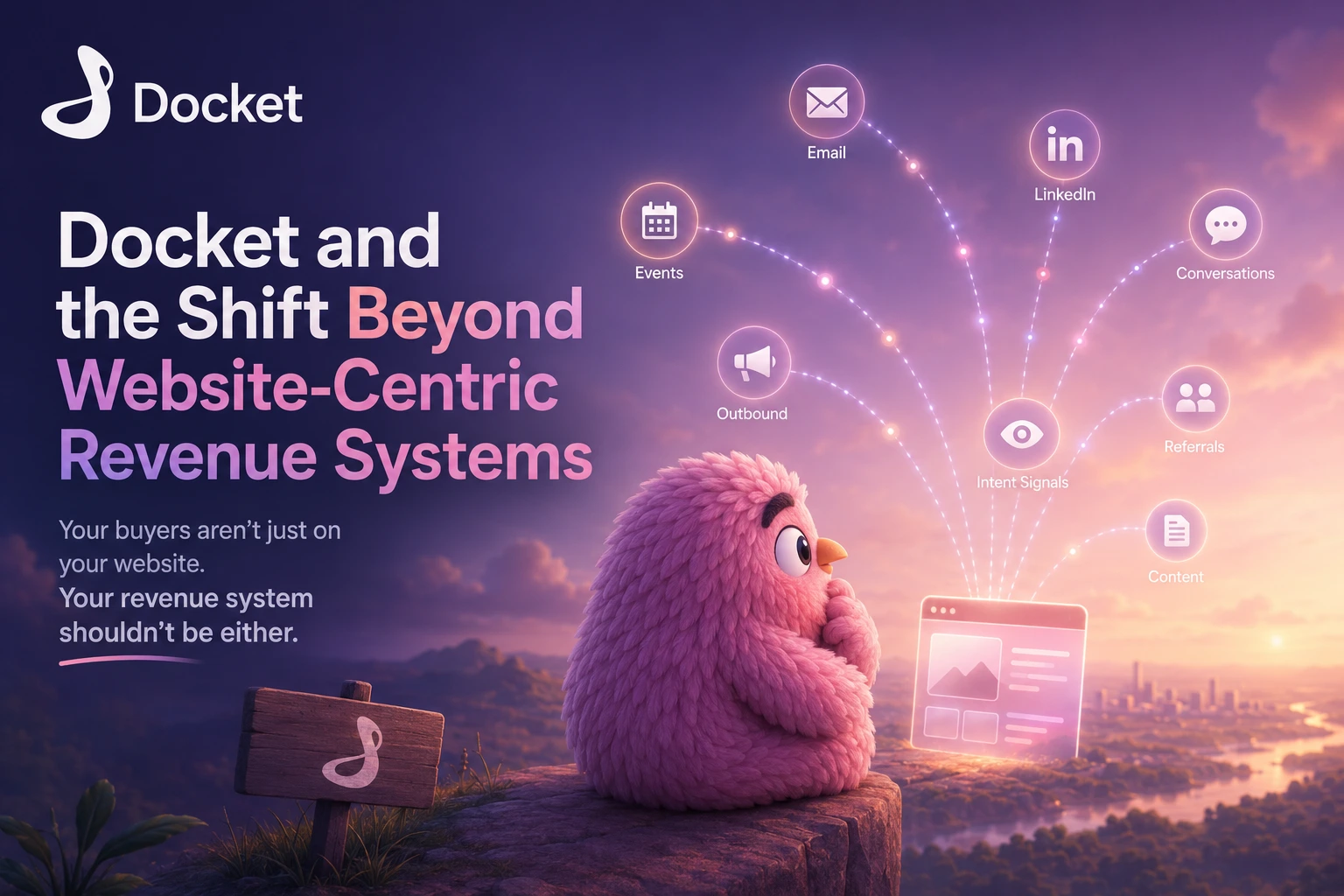
But most website-centric AI systems still fundamentally assume one thing: the website is the center of buyer engagement.
That assumption is becoming increasingly outdated.
Modern B2B buyer journeys are highly fragmented and rarely happen inside a single website session.
Today’s buyers frequently:
- research vendors on LinkedIn
- compare alternatives asynchronously
- engage inside Slack communities
- attend webinars and events
- review products across G2 and forums
- switch devices frequently
- move across channels before converting
- pause and resume evaluation over days or weeks
In many cases, the website is only one small checkpoint in a much larger buying journey.
This creates an important limitation for website-centric AI systems.
Website conversations are effective while the buyer is actively on the site.
But buyer intent rarely stays confined to a single session.
Once the visitor leaves:
- conversations often reset
- context disappears
- SDR follow-up becomes delayed
- engagement shifts to disconnected channels
- buyer momentum fades
This is where many companies begin experiencing pipeline leakage.
Website AI agents solve:
- real-time engagement during visits
- conversational discovery
- immediate product Q&A
- faster qualification on-site
But they often do NOT fully solve:
- persistent buyer continuity
- off-site engagement
- post-visit momentum preservation
- asynchronous qualification
- multi-touch buyer journeys
- continuous conversation across channels
This distinction matters because modern revenue generation increasingly depends on maintaining momentum after the initial interaction, not just during it.
The challenge is no longer simply:
“Can we start conversations?”
The bigger challenge is:
“Can we preserve buyer intent across the entire journey?”
As modern GTM systems evolve, many organizations are beginning to shift from:
toward:
- persistent buyer engagement models
These systems increasingly focus on:
- maintaining conversation continuity
- engaging buyers across channels
- preserving context after visits
- reducing momentum loss between touchpoints
- extending engagement beyond the website session itself
“Website conversations are temporary. Buyer journeys are continuous.”
The Invisible Revenue Gap Before Routing
Most traditional GTM systems are built around a very specific assumption:
pipeline creation begins after a form submission.
That assumption shaped the traditional inbound funnel:
Visitor → Form → Routing → Scheduling → Pipeline
In this model:
- the website visit becomes the starting point
- forms become the trigger for qualification
- routing activates the revenue workflow
- CRM creation marks the beginning of measurable pipeline
But modern buyer behavior no longer follows this clean, linear path.
Today’s buyer journeys are far more fragmented, conversational, and asynchronous.
The modern buyer reality often looks more like this:
Intent → Conversation → Messaging → Qualification → Engagement → Pipeline
This distinction changes everything.
A significant portion of buyer intent now happens:
- before forms are submitted
- before CRM records exist
- before routing workflows activate
- outside the website entirely
Buyers increasingly research and engage across:
- LinkedIn conversations
- communities and Slack groups
- webinars and events
- outbound touchpoints
- review platforms like G2
- email threads
- messaging channels
- peer recommendations
In many cases, buying intent already exists long before a traditional inbound workflow ever begins tracking the buyer.
This creates what many GTM teams fail to measure properly: an invisible revenue gap.
Inside this gap:
- intent exists
- engagement happens
- conversations begin
- research occurs
- vendor comparisons happen
- buyer momentum builds
But no pipeline is captured.
The buyer may:
- never submit a form
- leave before qualification
- disappear after a website session
- continue researching elsewhere
- lose momentum before scheduling
As a result, a large percentage of real buying activity never becomes visible inside traditional routing systems.
This is one of the biggest structural limitations of website-centric and routing-centric revenue models.
Routing systems optimize what happens after buyers enter the workflow.
But modern revenue leakage often happens before the workflow even starts.
This is why many modern GTM teams are beginning to rethink revenue infrastructure around:
- earlier engagement
- persistent conversations
- messaging-first qualification
- omnichannel buyer continuity
- conversion before routing
The challenge is no longer simply:
“How do we route leads faster?”
The bigger challenge is increasingly:
“How do we preserve and convert buyer intent before it disappears?”
“The biggest revenue leak often happens before routing workflows ever activate.”
Why More AI Conversations Do Not Automatically Create More Pipeline
One of the biggest misconceptions in modern conversational GTM is the assumption that more conversations automatically create more revenue.
They do not.
Conversation volume alone does not guarantee:
- pipeline creation
- qualified meetings
- buyer continuity
- revenue growth
- sustained engagement
Many companies successfully increase:
- website conversations
- chatbot interactions
- qualification sessions
- inbound engagement
But still struggle with:
- no-shows
- buyer ghosting
- delayed follow-up
- lost context between touchpoints
- engagement drop-off
- fragmented conversations across channels
This happens because starting a conversation is only the beginning of the revenue journey.
The real challenge is preserving buyer momentum long enough for:
- qualification to happen
- meetings to occur
- trust to build
- pipeline to form
Modern buyer journeys are rarely linear.
A buyer may:
- engage on the website
- leave without booking
- continue researching on LinkedIn
- compare competitors asynchronously
- revisit days later
- discuss internally with stakeholders
- disappear temporarily
- re-engage through another channel
In many cases, the conversation itself is not the bottleneck.
The bottleneck is what happens between interactions.
This is where many website-centric AI systems still face limitations.
They are highly effective at:
- initiating engagement
- answering questions
- qualifying buyers during active sessions
But maintaining continuity after the session often becomes much harder.
The issue is not:
The issue is:
- preserving buyer momentum until pipeline is created
This is increasingly why many modern GTM teams are shifting focus from:
toward:
- conversation continuity
- persistent engagement
- omnichannel follow-up
- momentum preservation
- buyer continuity systems
“The biggest funnel leak often happens after the conversation starts.”
The Shift from Website AI Agents to Persistent Revenue Systems
The broader GTM market is beginning to move beyond simple website engagement optimization.
Earlier generations of revenue systems primarily focused on:
- forms
- website conversion
- routing
- operational workflows
- session-based engagement
These systems were designed around a relatively linear funnel:
visitor arrives → form submitted → SDR responds → meeting booked.
But modern buyer journeys no longer operate this way.
Today’s buyers:
- move across channels continuously
- research asynchronously
- engage across multiple sessions
- compare vendors over time
- pause and resume evaluation repeatedly
- expect ongoing conversational continuity
As a result, modern revenue systems are increasingly optimizing for:
- buyer continuity
- persistent engagement
- omnichannel qualification
- messaging-first communication
- post-booking engagement
- pipeline velocity
- conversion continuity
This represents a major strategic shift in how revenue infrastructure is being designed.
The market is increasingly moving:
FROM:
TO:
- persistent revenue engagement
In older models, the goal was:
- capture the lead during the website visit
In newer models, the goal becomes:
- preserve buyer momentum across the entire journey
This includes maintaining engagement:
- before forms
- after website visits
- between meetings
- across messaging channels
- throughout asynchronous research cycles
The core idea is simple: buyer intent does not disappear when the website session ends.
Modern revenue systems increasingly attempt to extend conversations across:
- LinkedIn
- Slack
- email
- WhatsApp
- events
- outbound touchpoints
- ongoing buyer interactions
This creates a fundamentally different operating philosophy.
Instead of optimizing only:
The focus shifts toward:
- continuous revenue activation
“The future of GTM is not session-based qualification. It is persistent buyer engagement.”
Where Knock AI Fits Differently
This is not simply a comparison between:
- two chat systems
- two qualification tools
- two AI website agents
The bigger difference is operating philosophy.
Platforms like Docket are primarily designed to optimize conversations during the website session itself.
Knock AI approaches the problem from a broader revenue continuity perspective: how to preserve buyer momentum before, during, and after engagement across the full revenue journey.
Docket optimizes AI-powered website conversations
Docket is primarily designed around:
- AI website engagement
- conversational qualification
- AI sales engineer workflows
- Agent Qualified Lead (AQL) creation
- product Q&A
- self-serve buyer education
Unlike traditional chat systems, Docket attempts to make websites behave more like intelligent product experts capable of:
- answering technical questions
- guiding discovery
- qualifying buyers conversationally
- accelerating inbound engagement
Docket is strongest when:
- website engagement is the bottleneck
- buyers require guided product education
- conversational discovery matters most
- qualification speed on-site is the priority
- inbound qualification needs to become more autonomous
For organizations heavily focused on improving:
- website conversion
- self-serve product discovery
- AI-assisted qualification
- conversational inbound experiences
Docket represents one of the stronger emerging AI website agent platforms in the market.
But unlike systems focused on persistent engagement across channels, Docket’s primary operating environment still centers around the active website session itself.
Once the buyer leaves the website, the broader challenge of preserving momentum across channels still remains.
Knock AI optimizes buyer momentum across the revenue journey
Unlike Docket, Knock AI is not primarily designed around optimizing website conversations alone.
Its operating philosophy is centered around preserving and converting buyer intent across the entire revenue journey.
The focus is not just:
but:
- maintaining momentum until pipeline is created
Knock AI focuses on:
- form-free qualification
- LinkedIn + Slack + WhatsApp engagement
- messaging-first qualification
- persistent conversations
- post-booking engagement
- reducing no-shows
- omnichannel buyer activation
- conversation continuity across channels
Unlike website-centric AI systems that primarily engage buyers during active sessions, Knock AI is designed around the idea that buyer engagement should continue even after:
- the website session ends
- the buyer leaves
- the meeting gets booked
- the conversation moves off-site
This reflects a fundamentally different approach to revenue infrastructure.
Instead of optimizing only:
- website engagement
- on-site qualification
- conversational discovery
Knock AI increasingly focuses on:
- preserving buyer continuity
- extending engagement beyond the website
- maintaining context across touchpoints
- reducing momentum loss between interactions
- activating buyers across messaging channels
This becomes increasingly important in modern B2B environments where buyers often:
- research asynchronously
- switch channels frequently
- engage across multiple sessions
- continue conversations outside the website itself
“Modern revenue systems must preserve buyer intent across channels, not just during website sessions.”
Website AI Agents vs Persistent Revenue Systems
The broader GTM market is beginning to separate into two very different operating models.
The first model focuses primarily on optimizing engagement during the website session itself.
The second focuses on preserving buyer momentum across the entire revenue journey, including before and after the website interaction.
This distinction is becoming increasingly important as modern buyer journeys become more fragmented, asynchronous, and omnichannel.
| Criteria |
Website AI Agents |
Persistent Revenue Systems |
| Core engagement layer |
Website sessions |
Omnichannel buyer journeys |
| Activation point |
During visits |
Before and after engagement |
| Communication style |
Session-based |
Persistent conversations |
| Primary optimization |
Qualification |
Pipeline conversion |
| Main revenue risk solved |
Website friction |
Buyer momentum loss |
| Buyer continuity |
Limited |
Continuous |
| Operational philosophy |
AI website interaction |
Revenue activation |
Website AI agents are highly effective at:
- improving on-site engagement
- accelerating qualification
- guiding conversational discovery
- reducing friction during website visits
But they still largely operate inside session-based engagement models where the primary focus is the active website interaction itself.
Persistent revenue systems operate differently.
Instead of optimizing only:
they increasingly optimize:
- conversation continuity
- buyer momentum preservation
- omnichannel engagement
- post-visit qualification
- ongoing revenue activation
This reflects a broader market shift happening across modern GTM teams.
The future of revenue infrastructure is increasingly moving away from:
- isolated website sessions
and toward:
- continuous buyer engagement across channels and touchpoints.
“The future of GTM is not better forms. It is continuous buyer engagement.”
When Docket Makes Sense
Docket is a strong fit for organizations where the primary bottleneck is website engagement and conversational product education.
The platform is especially valuable for companies that want to transform their website into a more interactive and intelligent buying experience.
Docket makes the most sense when:
- website engagement is the bottleneck
- buyers require AI-powered product education
- conversational qualification is a priority
- self-serve buying experiences matter
- product complexity requires guided discovery
- inbound qualification needs to become faster and more autonomous
For many B2B companies, buyers now expect to:
- research independently
- ask detailed product questions
- receive immediate answers
- explore products conversationally before talking to sales
This is particularly important in categories where:
- products are technical
- multiple stakeholders are involved
- buyers require education before conversion
- qualification depends heavily on product understanding
Unlike traditional chat systems focused primarily on lead capture, Docket is designed more around conversational expertise and AI-assisted buyer guidance during the active website session.
The platform is strongest for:
- AI website engagement
- conversational inbound qualification
- product-led education
- AI sales engineering
- self-serve buyer enablement
- guided discovery experiences
For organizations focused heavily on improving:
- on-site engagement
- conversational qualification
- AI-powered buyer education
- self-serve product discovery
Docket represents one of the stronger emerging platforms in the AI website agent category.
When Revenue-First Systems Make More Sense
Revenue-first systems become increasingly valuable when the biggest bottleneck is not website engagement itself, but preserving and converting buyer intent across the full revenue journey.
Many modern GTM teams are discovering that their biggest pipeline problems happen:
- before forms are submitted
- after website visits end
- between touchpoints
- during delayed follow-up
- after meetings are booked
- across disconnected channels
In these situations, improving website conversations alone often does not fully solve the underlying revenue problem.
Revenue-first systems become more valuable when:
- buyers avoid forms
- inbound traffic converts poorly
- no-show rates are high
- SDR latency breaks buyer momentum
- messaging converts better than email
- engagement happens off-site
- pipeline leakage happens after visits
- buyer journeys span multiple channels and sessions
This is especially true in modern B2B environments where buyers frequently:
- research on LinkedIn
- engage in Slack communities
- attend webinars and events
- compare vendors asynchronously
- move between channels before converting
- continue conversations long after leaving the website
In these environments, maintaining buyer continuity becomes more important than simply increasing website interaction volume.
Unlike website-centric systems focused primarily on active sessions, revenue-first systems are designed around:
- persistent buyer engagement
- omnichannel qualification
- reducing drop-off
- preserving buyer momentum
- increasing meeting attendance
- messaging-first conversion
- post-visit engagement continuity
The core operating philosophy is different.
The goal is not simply:
The goal is:
- preserve intent until revenue is created
This increasingly shifts optimization away from:
and toward:
- buyer continuity across the entire funnel
For many modern GTM teams, this becomes the larger strategic challenge:
not generating engagement,
but preventing engagement from disappearing between touchpoints.
The Bigger Shift Happening in Modern GTM
The broader GTM market is no longer simply moving toward:
- conversational AI
- AI website agents
- chatbot-driven qualification
- website engagement automation
Those trends are still growing rapidly.
But a much larger shift is beginning to emerge underneath them.
The market is increasingly moving toward:
- persistent revenue systems
- omnichannel buyer engagement
- asynchronous qualification
- momentum preservation
- buyer continuity infrastructure
This shift is happening because modern buyer journeys no longer behave like traditional linear funnels.
Today’s buyers:
- research across multiple channels
- engage asynchronously over time
- compare vendors continuously
- switch devices and platforms frequently
- move in and out of active evaluation cycles
- interact long before formal qualification happens
As a result, the next generation of GTM systems is increasingly being designed around continuity rather than isolated interactions.
Older systems optimized:
- forms
- routing
- website conversion
- SDR workflows
- operational qualification
- speed-to-lead
Newer systems increasingly optimize:
- buyer continuity
- omnichannel engagement
- asynchronous qualification
- conversation persistence
- conversion before routing
- post-visit engagement
- momentum preservation
This represents a major evolution in how revenue infrastructure is being designed.
The strategic question is no longer simply:
“How do we qualify buyers faster?”
It is increasingly:
“How do we prevent buyer intent from disappearing between touchpoints?”
This is why many modern GTM organizations are beginning to rethink:
- website-centric funnels
- form-first workflows
- isolated SDR qualification
- session-based engagement models
And instead shifting toward systems built around:
- persistent engagement
- continuous conversations
- messaging-first interaction
- omnichannel qualification
- buyer momentum preservation
In many ways, conversational AI and AI website agents are only the first stage of a much larger transition happening across modern revenue infrastructure.
The next generation of GTM platforms will increasingly compete on their ability to:
- preserve buyer context
- maintain engagement across channels
- reduce momentum loss
- extend conversations beyond the website
- activate pipeline before buyers disappear
“The most valuable revenue systems are not the ones that start conversations. They are the ones that prevent conversations from dying.”
The Platforms Winning Modern GTM Will Be the Ones That Preserve Buyer Momentum
AI website agents are already changing how companies engage buyers during active website sessions, and platforms like Docket are helping accelerate conversational qualification and self-serve buyer education.
But the broader market is increasingly moving beyond website conversations alone toward persistent revenue systems built around buyer continuity, omnichannel engagement, and momentum preservation across the full journey.
The real strategic question is no longer:
“How do we start more conversations?”
It is increasingly:
“How do we prevent high-intent buyers from disappearing before pipeline is created?”
“The biggest revenue leak in modern GTM often happens between touchpoints, not inside workflows.”
FAQs
What is Docket?
Docket is an AI website agent platform focused on conversational qualification, AI-powered product education, and Agent Qualified Lead (AQL) generation.
Why are AI website agents growing so fast?
Modern buyers increasingly prefer conversational research, self-education, immediate answers, and lower-friction buying experiences before speaking with sales.
What is the biggest limitation of website-centric AI systems?
Most website AI systems optimize engagement during active sessions but struggle to preserve buyer momentum after visitors leave the website.
What is the difference between Docket and Knock AI?
Docket primarily focuses on AI-powered website conversations and conversational qualification. Knock AI focuses more broadly on persistent buyer engagement and momentum preservation across channels.
What is a persistent revenue system?
A persistent revenue system is designed to maintain buyer engagement continuously across channels and touchpoints instead of only during website sessions.
Why is messaging-first qualification becoming popular?
Messaging-first qualification feels faster, more conversational, and lower friction than traditional form-based inbound workflows.
What is the future of conversational GTM platforms?
The market is increasingly shifting from website-centric engagement toward omnichannel revenue systems focused on buyer continuity, persistent engagement, and conversion before routing.


.svg)


.svg)
.svg)
.svg)


.svg)
.svg)


.svg)


