Best AI SDR for Inbound Lead Qualification: 6 Tools Tested and Ranked
Best AI SDR for Inbound Lead Qualification
If your website generates a steady stream of demo requests, content leads, pricing-page visitors, event traffic, or other inbound interest, you probably already know the problem.
More leads don't necessarily mean more pipeline.
Some visitors are genuinely ready to buy. Others are existing customers, job seekers, partners, researchers, students, poor-fit companies, or people who are simply browsing.
The problem is figuring out which is which quickly enough to act on the good ones.
And speed matters. HubSpot has reported that 82% of consumers consider an immediate response important when they have a marketing or sales inquiry, with “immediate” meaning 10 minutes or less in the research it cites. Older lead-response research from InsideSales/XANT also found substantially better contact and qualification rates when web leads were contacted within five minutes rather than 30 minutes. That research is older, so it should be treated as directional rather than a current benchmark, but the underlying problem remains relevant: waiting to qualify an interested buyer can mean losing the moment.
That's where an AI SDR for inbound lead qualification comes in.
Instead of waiting for an SDR to manually research every lead, an AI SDR can identify the person and company, enrich the account, understand intent, ask qualification questions, determine whether the buyer fits your ICP, route the conversation, and in some cases book the meeting automatically.
But not every AI SDR does all of that.
Some are primarily website agents. Some are broader sales-development platforms. Some are CRM-native AI agents. Others focus heavily on outbound.
So which tools actually make sense if your priority is qualifying inbound leads?
Knock AI and Qualified are particularly relevant when inbound demand is the starting point. HubSpot Customer Agent makes sense when qualification needs to live inside HubSpot. Conversica is particularly relevant for automated engagement and follow-up. Regie.ai and Artisan have broader sales-development orientations.
But Knock AI is different from simply being an AI chatbot or qualification layer.
Knock AI connects the layers.
Best AI SDRs for Inbound Lead Qualification
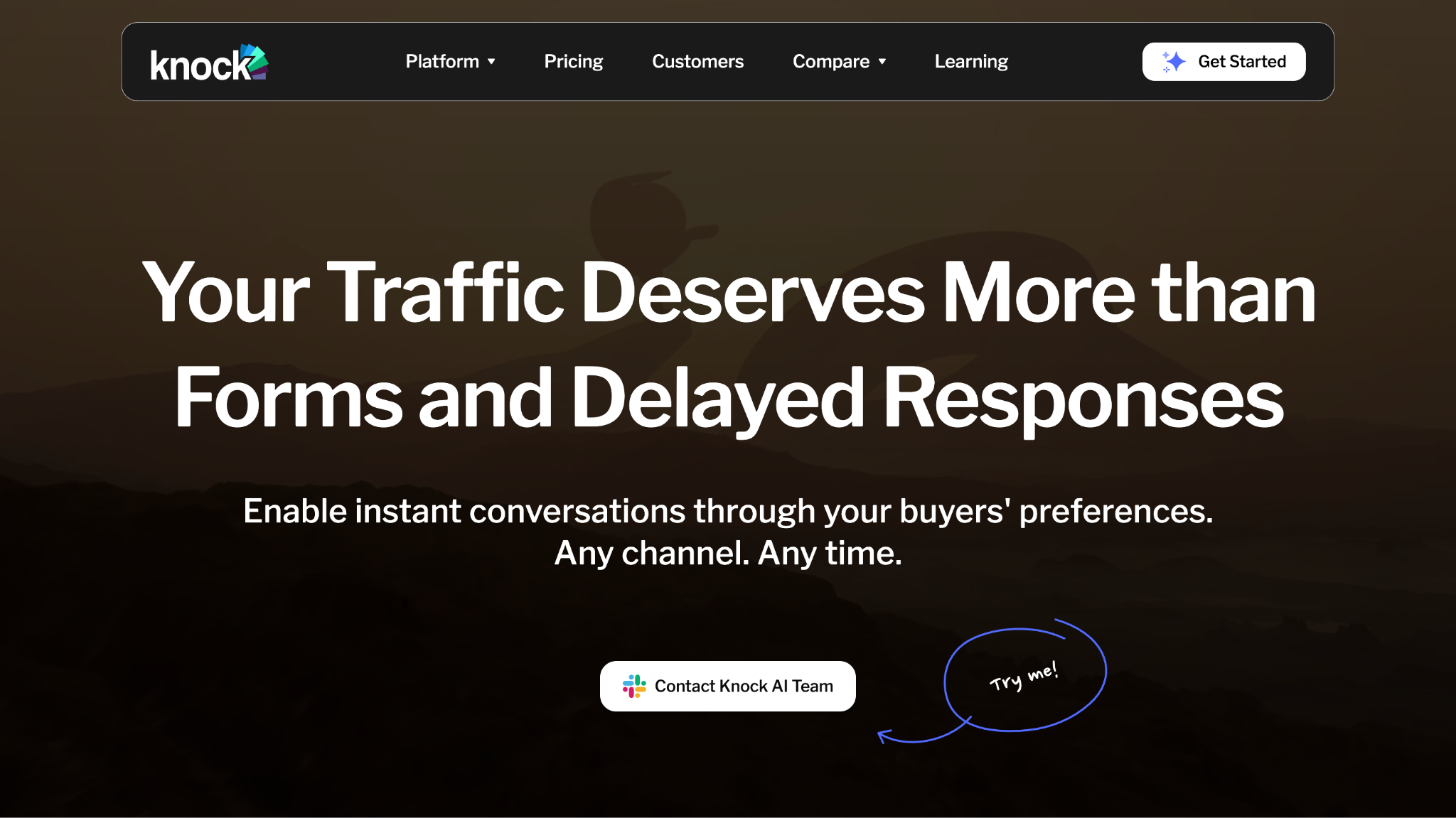
1. Knock AI: Best AI SDR for Connecting Inbound Intent to Revenue
Best for: B2B revenue teams that want to identify, enrich, understand, qualify, engage, route, and convert inbound buyers in one continuous workflow.
Most inbound qualification systems start with a lead.
Instead of treating each interaction as a separate event, Knock AI can build a continuous understanding of the buyer and use that context to determine what should happen next.
Knock AI can build context around the person, company, account, relationship, and previous engagement.
Depending on the available data, that can include:
Role and seniority
Company
Industry
Company size
Location
Technology
Previous conversations
Website activity
CRM information
Account ownership
Campaign/source information
Previous engagement
The important part isn't simply collecting more data.
It's using the data to create context for the next action.
If the system already knows the buyer's company size, role, and account information, there may be no reason to ask the buyer those questions again.
2. Understand why the buyer is engaging
Not every inbound interaction is a sales opportunity.
Someone can visit your website because they want to:
Buy
Get support
Discuss a partnership
Apply for a job
Research a product
Ask a general question
Spam the business
Knock AI doesn't treat every inbound interaction as a sales lead. It can understand whether someone is looking to buy, needs support, is interested in a partnership, is exploring a job, or isn't a legitimate sales conversation, and can use that context to determine what should happen next.
That means the system can distinguish why someone is engaging before determining what should happen next.
A buying conversation can move toward qualification and sales.
A support request can go to Support.
A partnership inquiry can go to Partnerships.
A job seeker doesn't need to enter the SDR queue.
That's a fundamentally different workflow from treating every inbound form submission as a sales lead.
3. Evaluate ICP fit
Intent isn't enough.
Someone can have strong buying intent and still be a poor customer fit.
Knock AI can evaluate the buyer against qualification and routing criteria such as:
ICP
Company attributes
Intent
CRM information
Geography
Account ownership
Attribution
Qualification data
This allows teams to define what a qualified inbound opportunity actually means for their business.
For one company, that might mean:
US-based SaaS company + 100+ employees + VP-level buyer + high purchase intent.
For another, it could mean something completely different.
The AI should work around your qualification framework rather than forcing your team into a generic definition of a qualified lead.
4. Ask only what's missing
This is where contextual qualification becomes important.
Imagine Knock AI already knows:
The company has 500 employees
The visitor is a VP of Sales
The company matches your target industry
They have visited your pricing page
They have interacted with your content before
Asking:
"How many employees does your company have?"
adds friction without adding much information.
Instead, the AI can focus on the information that is actually missing.
For example:
"What are you hoping to improve with your current sales process?"
Or:
"Are you currently using another platform for this?"
The objective isn't to ask more questions.
It's to ask the right questions at the right moment.
5. Connect qualification to action
This is where AI qualification becomes more than lead scoring.
A lead score might tell you:
Score: 87
But the sales team needs a different answer:
What should we do with this buyer?
For example:
High fit + high intent → Engage immediately and route to Sales
High fit + moderate intent → Continue the conversation or nurture
Strong intent + unclear fit → Ask for missing information
Existing customer → Route to the account team
Support request → Route to Support
Low fit → Disqualify
Qualified and meeting-ready → Route to the appropriate rep and book the meeting
This is the difference between understanding a lead and acting on the lead.
6. Preserve context when humans take over
AI doesn't have to replace the SDR.
In many B2B sales processes, the human conversation is still where the most important work happens.
Enterprise buyers may need help with:
Commercial discussions
Complex objections
Technical requirements
Procurement
Security
Negotiation
Enterprise buying processes
The role of the AI is to make sure the human enters the conversation with context.
The rep should know:
Who the buyer is
What company they represent
Why they engaged
What they asked
What the AI learned
What qualification criteria they met
What the buyer is interested in
Why the conversation was routed to them
The buyer shouldn't have to start over.
That continuity is the point.
Knock AI's core advantage
Knock AI isn't simply adding AI to one step of the inbound funnel.
It connects the steps.
Identify
↓
Enrich
↓
Understand intent
↓
Qualify
↓
Engage
↓
Route
↓
Convert
And throughout the process, the system can preserve the context generated by those interactions.
That means the objective isn't merely:
"Can AI qualify this lead?"
It's:
"Can AI understand this buyer, maintain context as the buyer progresses, and take the right action while intent and momentum are still high?"
That's a much bigger problem.
And it's the problem Knock AI is positioned to solve.
Knock AI pros
Real-time inbound engagement and qualification
Buyer and company enrichment
Intent detection
ICP-based qualification
Contextual qualification questions
Intelligent routing
Meeting booking
CRM synchronization
Human handoff
Slack collaboration
Multiple inbound channels
Distinguishes different inbound intents
Connects identification, enrichment, intent, engagement, qualification, routing, and conversion in one workflow
Knock AI cons
Primarily designed for B2B revenue teams
More valuable for organizations with meaningful inbound demand
Broader platform capabilities may be more than a company needs if it only wants a basic chatbot
Not primarily an outbound email sequencing platform
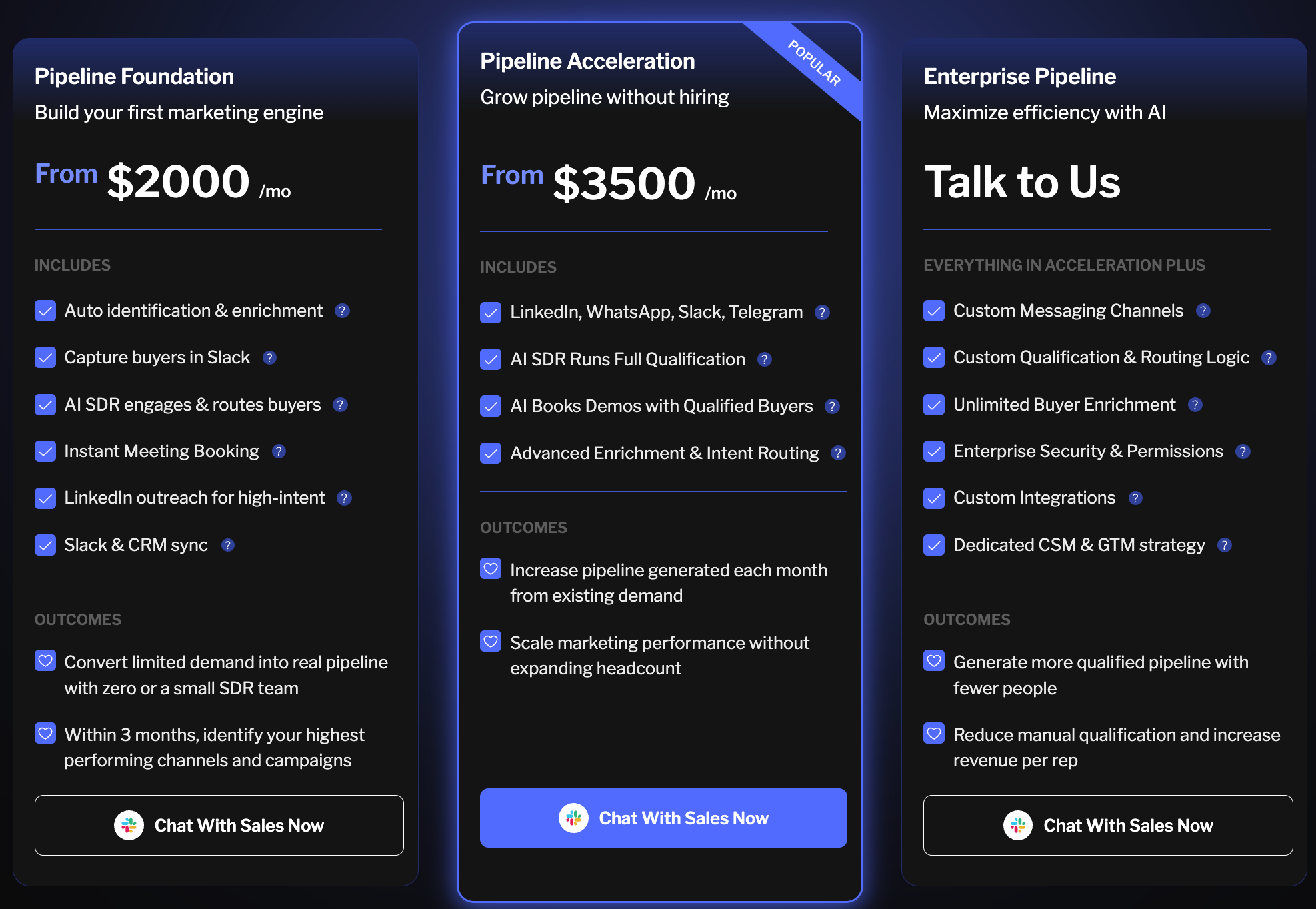
Knock AI pricing
Pipeline Foundation: from $2,000/month
Pipeline Acceleration: from $3,500/month
Enterprise Pipeline: custom pricing
The plans differ in areas such as AI SDR capabilities, qualification, enrichment, intent, routing, messaging, scheduling, CRM synchronization, and other pipeline capabilities.
Choose Knock AI when...
Choose Knock AI when your problem isn't simply:
"How do I answer website chats?"
It's:
"How do I turn inbound demand into qualified pipeline while preserving buyer context and momentum from the first signal through the sales handoff?"
If you want to connect identity + enrichment + intent + qualification + engagement + routing + conversion, Knock AI is built around that workflow.
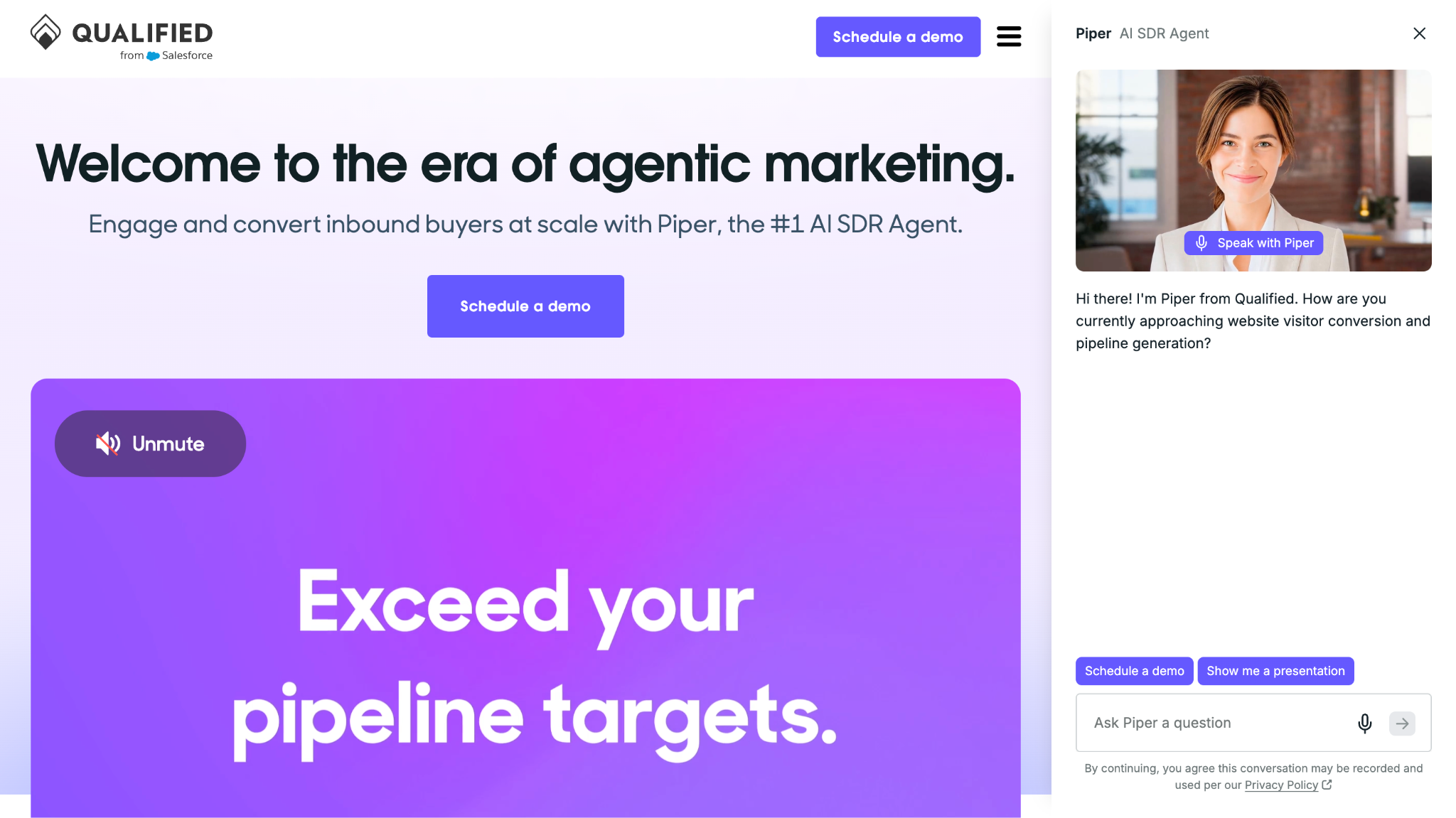
2. Qualified: Best for AI-Powered Inbound Website Conversion
Best for: B2B marketing and revenue teams focused on turning high-value website traffic into pipeline.
It can engage website visitors, qualify buyers, schedule meetings, send AI-generated emails, nurture prospects, and route conversations. Qualified also offers capabilities around account segmentation, enrichment, Salesforce integration, and routing.
The major distinction is its strong focus on website-driven inbound pipeline.
Pros
Strong inbound pipeline focus
AI website conversations
AI SDR capabilities
Meeting booking
Account segmentation
Enrichment
Salesforce integration
Lead routing
AI email
Slack collaboration
Cons
Primarily aimed at sophisticated B2B revenue teams
Pricing is sales-led
May be more platform than smaller teams need
Strong Salesforce orientation may not suit every GTM stack
Pricing
Qualified starts at $42,000 per year for the Premier plan. Enterprise deployments typically cost between $60,000 and $100,000+ annually once Salesforce infrastructure, implementation, and onboarding are factored in.
Choose Qualified when...
Choose Qualified when your website is one of your most important sources of pipeline and you want an AI SDR focused heavily on website visitor engagement, qualification, and conversion.
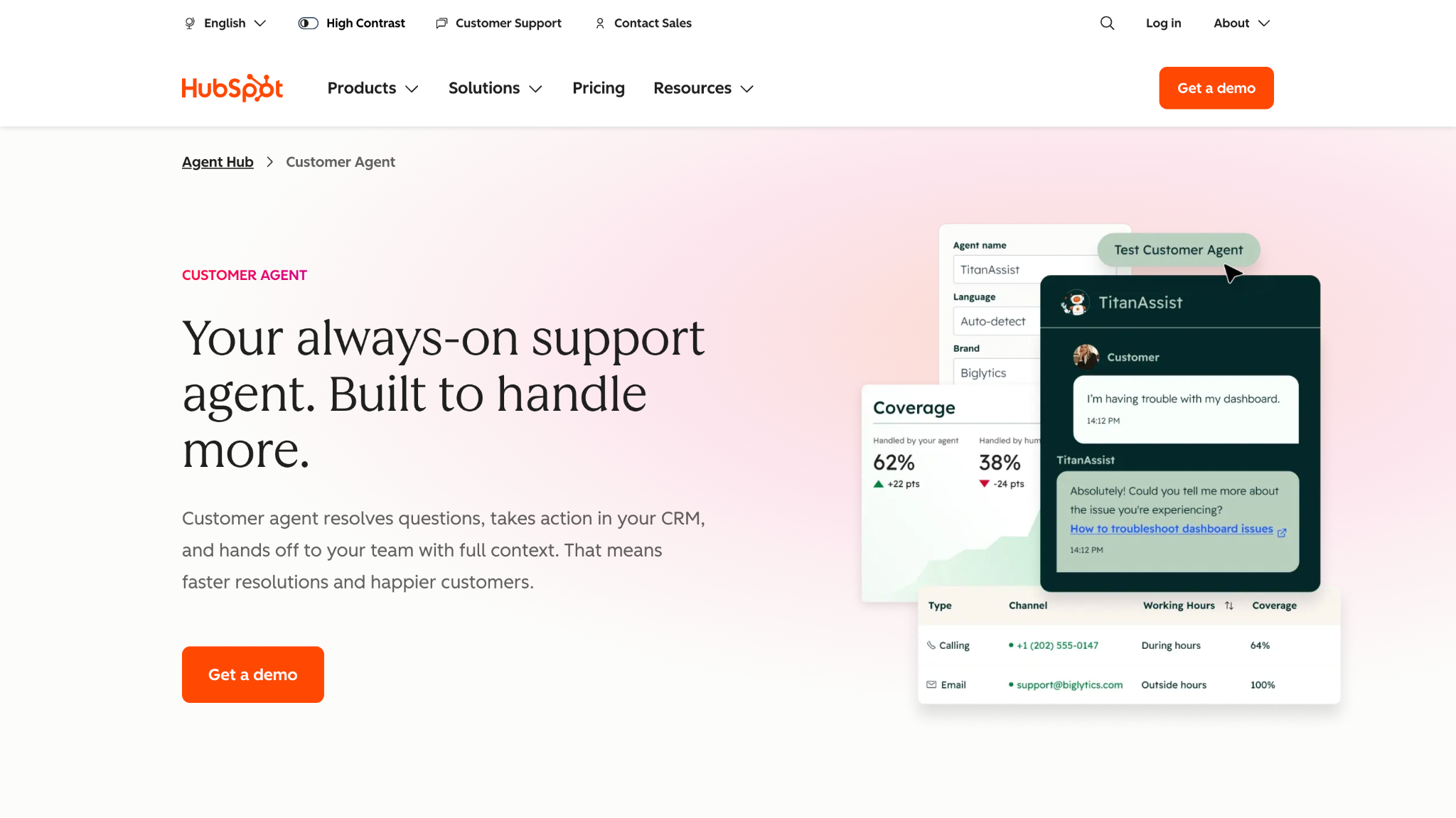
3. HubSpot Customer Agent: Best for HubSpot Users
Best for: Teams already running their marketing, sales, service, and CRM operations in HubSpot.
It can answer customer questions, provide support, and qualify leads.
Its lead qualification capabilities allow the agent to ask qualifying questions, evaluate prospects against criteria, categorize leads, route qualified opportunities, book meetings, and update CRM information.
The biggest advantage here is ecosystem integration.
Instead of adding another platform, teams can bring AI qualification into the system where their CRM, marketing, sales, and service data already live.
Pros
Native HubSpot integration
Uses CRM context
AI lead qualification
Custom qualification criteria
Lead scoring/status
Meeting booking
Lead routing
Customer support capabilities
Centralized CRM workflow
Cons
Broader customer-service orientation
Some qualification functionality may depend on HubSpot plans or availability
Less specialized if your primary problem is connected inbound revenue conversion outside the HubSpot ecosystem
Pricing
Customer Agent pricing is based on HubSpot's AI pricing and credit model, with availability depending on the relevant HubSpot subscription.
Choose HubSpot Customer Agent when...
Choose it when HubSpot is already the center of your GTM stack and you want inbound qualification to happen inside the same CRM environment.
4. Conversica: Best for Automated Inbound Engagement and Follow-Up
Best for: Teams that need AI to engage inbound inquiries, qualify interest, and follow up automatically.
Conversica's AI agents can respond to inbound inquiries, educate prospects, ask follow-up questions, qualify interest, book meetings, and route conversations to the appropriate team.
This makes it particularly useful for organizations where the problem isn't necessarily a lack of inbound leads.
It's the fact that the team can't consistently follow up with all of them.
Pros
Inbound engagement
Two-way AI conversations
Automated follow-up
Lead qualification
Meeting booking
Lead routing
CRM integrations
Multi-channel engagement
Cons
Stronger emphasis on engagement and follow-up
Less focused on connecting the complete inbound intelligence layer
Pricing is sales-led
Pricing
Conversica pricing starts at approximately $2,999 per month under a custom enterprise subscription model.
Choose Conversica when...
Choose Conversica when your biggest problem is:
"We have inbound leads, but our team can't consistently engage and follow up with all of them."
5. Regie.ai: Best for AI-Native Sales Engagement
Best for: Sales teams looking for a broader AI-native sales engagement platform.
Regie.ai spans areas such as prospecting, enrichment, intent, messaging, sequencing, dialing, and sales execution.
That makes it relevant to AI SDR workflows, but it has a broader sales-development orientation than an inbound-first platform.
Pros
AI-native sales engagement
Prospect research
Enrichment
Intent signals
AI-generated messaging
Dialing
CRM integration
Broader sales workflows
Cons
Broader sales-development orientation
Stronger prospecting/outbound use cases
May be more than needed for a company focused exclusively on inbound qualification
Pricing
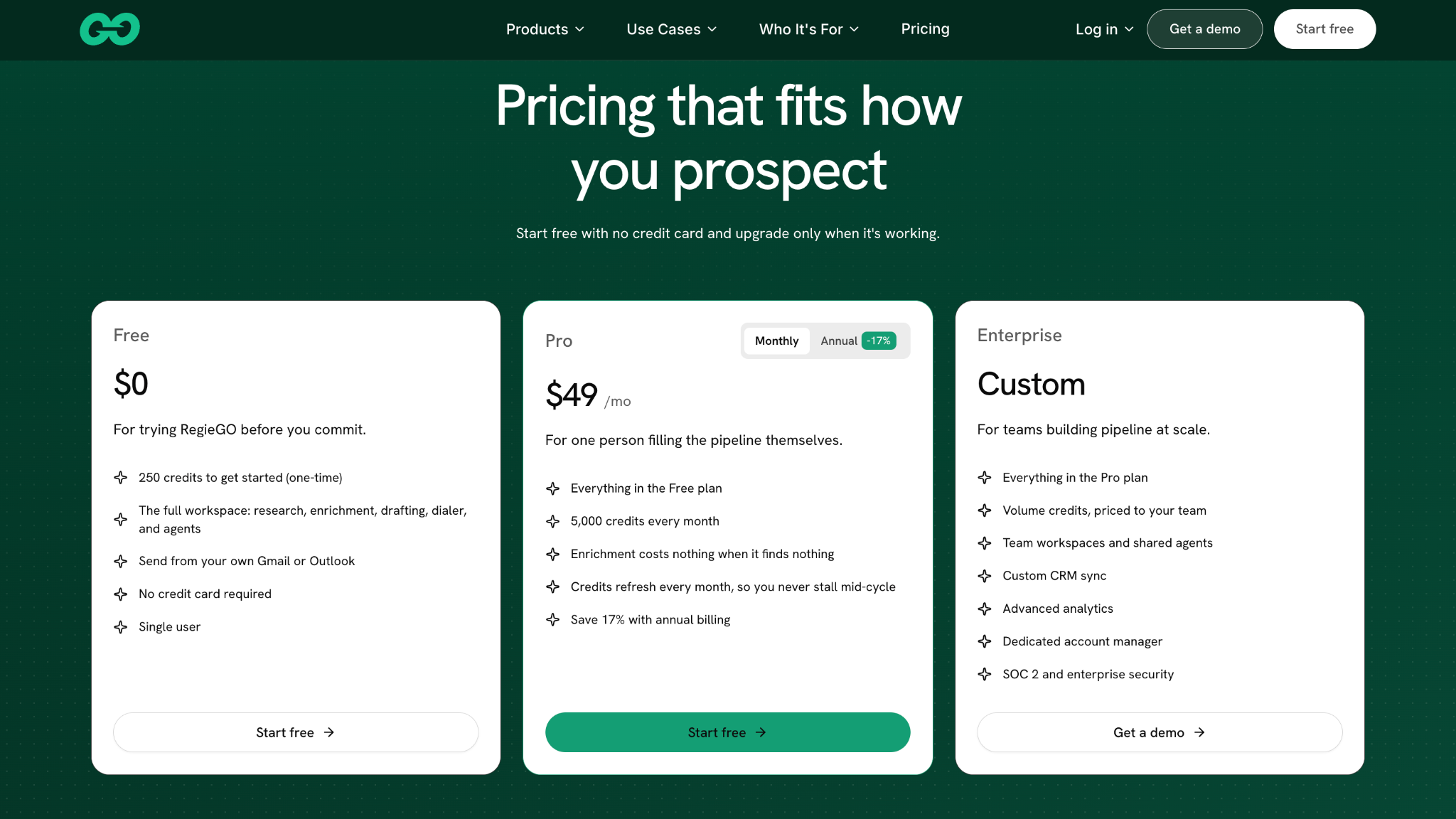
Regie.ai offers self-serve and enterprise options, with pricing dependent on the plan and usage.
Choose Regie.ai when...
Choose Regie.ai when you want AI sales development across prospecting and engagement, rather than a platform primarily focused on connecting inbound buyer signals to revenue.
6. Artisan: Best for Autonomous BDR Workflows
Best for: Teams looking for broader autonomous BDR capabilities and pipeline generation.
Artisan's Ava is positioned as an AI BDR that can identify prospects, enrich contacts, run campaigns, handle replies, and book meetings.
Its orientation is broader sales development, with a significant emphasis on autonomous outbound pipeline generation.
Pros
Autonomous AI BDR
Lead identification
Contact enrichment
Autonomous campaigns
Email and social outreach
Automated replies
Meeting booking
CRM synchronization
Cons
Stronger outbound orientation
Less specialized around inbound qualification
May be broader than necessary if inbound is the primary requirement
Pricing
Artisan uses plan and usage-based pricing tied to contact volume and related capabilities.
Choose Artisan when...
Choose Artisan when your objective is broader autonomous sales development and pipeline generation, particularly when outbound is an important part of the motion.
How Does an AI SDR Qualify Inbound Leads?
An AI SDR combines buyer identity, company data, intent, ICP fit, and engagement signals to determine whether an inbound lead is worth pursuing and what should happen next.
The workflow typically looks like:
Identify → Enrich → Understand intent → Evaluate fit → Ask what’s missing → Take action
For example, a high-fit prospect showing strong buying intent can be engaged and routed immediately, while a support request or low-fit visitor can be directed elsewhere.
The important distinction is:
Lead scoring tells you how a lead ranks. AI qualification determines what should happen next.
Why Connecting the Inbound Journey Matters
Inbound buyers rarely interact with your company just once.
They might:
Visit → leave → return → view pricing → submit a form → chat → qualify → book
Your GTM tools may treat these as separate events. The buyer experiences them as one journey.
A connected AI SDR carries that context forward, so activity informs engagement, engagement informs qualification, and qualification informs routing.
The goal isn't simply to automate more steps. It's to prevent buyer context from getting lost between them.
That is where Knock AI becomes particularly relevant.
AI SDR vs. Traditional Inbound Lead Qualification
Traditional inbound qualification often looks like:
Form → CRM → Lead Queue → SDR Research → Qualification → Routing → Meeting
The biggest difference is when the qualification happens. Instead of waiting for an SDR to research and respond, AI can use available context to qualify and act while buyer intent is still active.
Traditional qualification
AI-powered qualification
Form submission starts the process
Buyer activity can trigger engagement
SDR researches the account
AI can enrich buyer and company context
SDR asks standard questions
AI can ask only what's missing
Manual qualification
AI evaluates defined criteria
Manual routing
Automated routing
Rep receives limited context
Rep receives conversation and qualification context
The goal isn't to remove humans. It's to let the human conversation start further down the qualification process.
What Should You Look for in an AI SDR?
Before choosing an AI SDR for inbound qualification, look for five things:
Buyer context: Can it understand the person, company, account, and previous interactions?
Intent: Can it distinguish buying intent from other types of engagement?
ICP qualification: Can it evaluate your actual qualification criteria?
Contextual questions: Can it ask only for information it doesn't already have?
Routing and handoff: Can it send the right opportunity to the right person with the context intact?
The last one matters more than it sounds. Qualification without action doesn't create a pipeline.
How Can You Qualify Inbound Leads Without Creating a Worse Buying Experience?
AI qualification can easily become a form disguised as a conversation.
A better approach is simple:
Use what you already know. Don't ask for information you already have.
Answer before qualifying. If someone asks about pricing, answer the pricing question instead of immediately interrogating them.
Ask only what changes the next step. If a question won't affect qualification, routing, or the buyer's next action, it probably isn't necessary.
Preserve context. When a human takes over, the buyer shouldn't have to start the conversation again.
Good AI qualification should feel less like filling out a form and more like having a useful conversation that naturally moves toward the right next step.
Which AI SDR Should You Choose for Inbound Lead Qualification?
There isn't one AI SDR for every revenue team. The right fit depends on where your biggest inbound challenge sits.
Choose Knock AI if...
You want to connect identification, enrichment, intent, qualification, engagement, routing, and conversion into one continuous inbound workflow.
Choose Qualified if...
Your primary goal is converting high-value B2B website traffic into pipeline through AI-powered website engagement.
Choose HubSpot Customer Agent if...
HubSpot is already central to your GTM stack and you want AI qualification within that ecosystem.
Choose Conversica if...
Your biggest challenge is consistently engaging, qualifying, and following up with inbound inquiries.
Choose Regie.ai if...
You want a broader AI-native sales engagement platform covering prospecting, enrichment, messaging, and sales execution.
Choose Artisan if...
You want a broader autonomous BDR platform, particularly for sales teams combining inbound qualification with outbound pipeline generation.
Frequently Asked Questions
1. What is an AI SDR for inbound lead qualification?
An AI SDR for inbound lead qualification is an AI-powered sales agent that engages people who have already shown interest in a company, gathers context, evaluates fit and intent, asks qualification questions, and determines the appropriate next step.
That next step could be routing to Sales, continuing the conversation, nurturing the buyer, booking a meeting, or disqualifying the interaction.
2. How can AI qualify inbound leads?
AI can qualify inbound leads by combining contact and company data, CRM history, website behavior, intent signals, and conversation context.
It can evaluate factors such as ICP fit, intent, need, timing, authority, and engagement, ask for missing information, and determine what should happen next.
Knock AI connects enrichment, intent, qualification, engagement, routing, and conversion as part of its inbound workflow.
3. Can an AI SDR qualify leads based on ICP?
Yes.
An AI SDR can evaluate inbound buyers against criteria such as industry, company size, geography, role, technology, use case, buying intent, or other business-specific qualification rules.
The important distinction is that ICP qualification should not exist separately from the rest of the buyer journey.
The most useful workflows connect fit + intent + context + action.
4. Can AI SDRs qualify and route inbound leads automatically?
Yes.
An AI SDR can use qualification results and business rules to determine where the conversation should go.
For example:
Enterprise buyer → Enterprise AE
SMB buyer → SMB team
Existing customer → Account team
Support request → Support
Low-fit lead → Nurture or disqualify
Knock AI connects qualification with routing so that the qualification decision can directly inform the next action.
5. Can an AI SDR qualify website visitors before they book a meeting?
Yes.
An AI SDR can combine website behavior, visitor information, company data, intent signals, and conversation context to qualify a visitor before asking them to schedule a meeting.
This is particularly useful when a buyer is showing strong intent but hasn't yet completed a traditional lead form.
Instead of waiting for the form submission, the AI can engage while the buyer is actively researching.
6. What's the difference between an AI SDR and a chatbot?
A chatbot generally focuses on answering questions or guiding visitors through conversations.
An AI SDR is designed around a sales outcome.
It can understand who the buyer is, determine intent, qualify the opportunity, ask discovery questions, route the conversation, and help move the buyer toward a meeting or another sales action.
The key difference is therefore not simply AI vs. chatbot.
It's conversation vs. revenue workflow.
7. What is the best AI SDR for inbound lead qualification?
The right AI SDR depends on your sales motion, inbound volume, CRM, qualification criteria, and the part of the buyer journey you want to automate.
If you want to connect buyer identification, enrichment, intent detection, qualification, engagement, routing, and conversion into one continuous inbound workflow, Knock AI is specifically positioned around that problem.
Qualified is particularly relevant for website-driven inbound pipeline, HubSpot Customer Agent for HubSpot-centric teams, and Conversica for automated inbound engagement and follow-up.


.svg)


.svg)
.svg)
.svg)


.svg)
.svg)


.svg)