Best AI SDR for Converting Website Visitors in 2026
Best AI SDR for Converting Website Visitors
TL;DR
Website traffic does not automatically become pipeline. A visitor can spend several minutes exploring your pricing, product, or demo pages and still leave without filling out a form or talking to sales. Traditional forms and generic chatbots can also miss the context behind those actions, making it harder for revenue teams to recognize who is actually showing buying intent.
That is where AI SDRs come in. They can identify visitors, understand their intent, engage them in real time, qualify opportunities, and help move the right buyers toward a sales conversation. But they do not all approach website conversion the same way. Knock AI focuses on connecting visitor intent to qualified pipeline, Qualified on Salesforce-powered website conversion, Warmly on visitor identification and intent, 1mind on AI-powered digital humans, and Drift is now primarily relevant as a historical example of conversational website engagement.
Quick List: Best AI SDRs for Converting Website Visitors
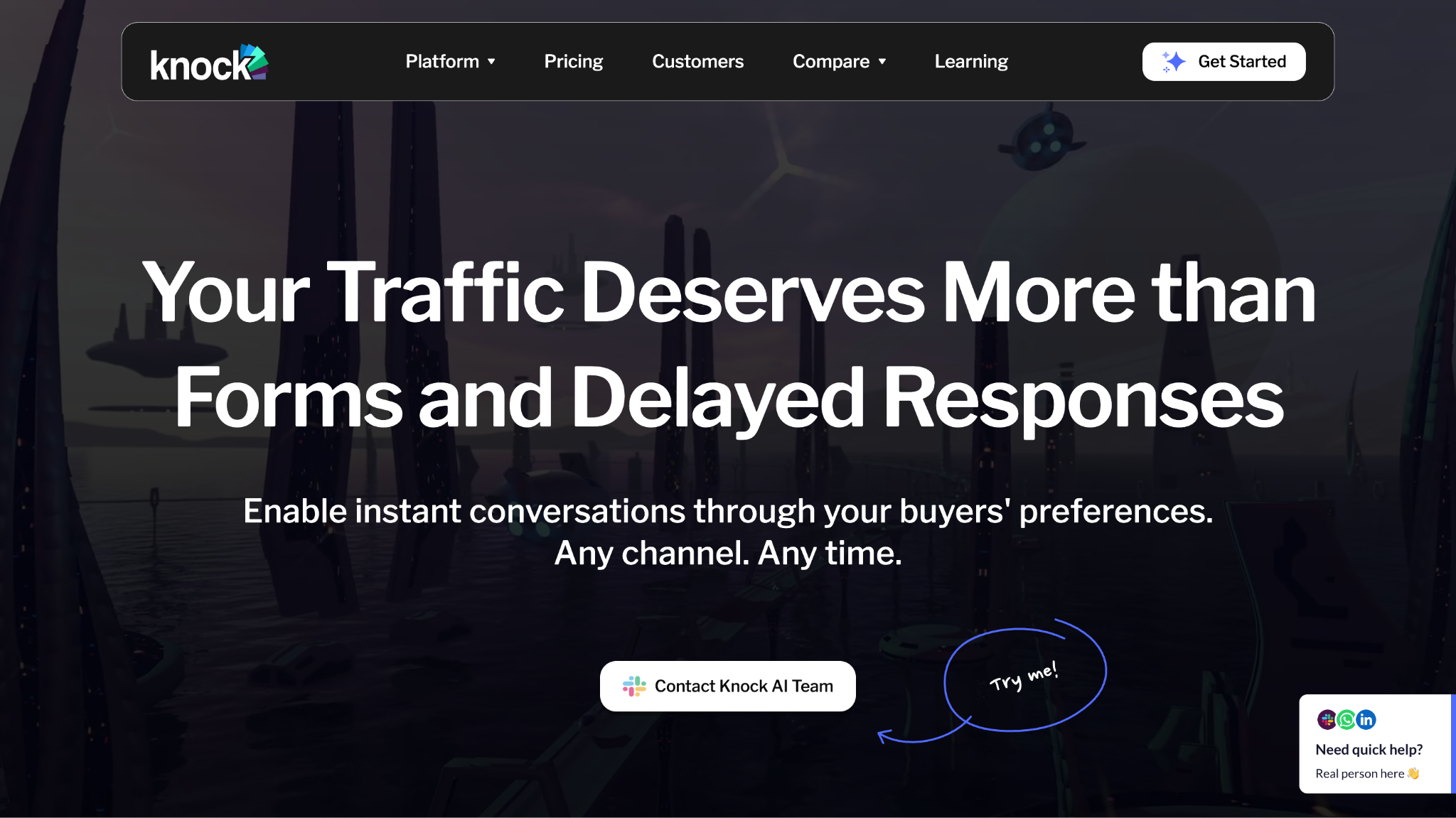
Knock AI - Best for turning website visitor intent into qualified pipeline
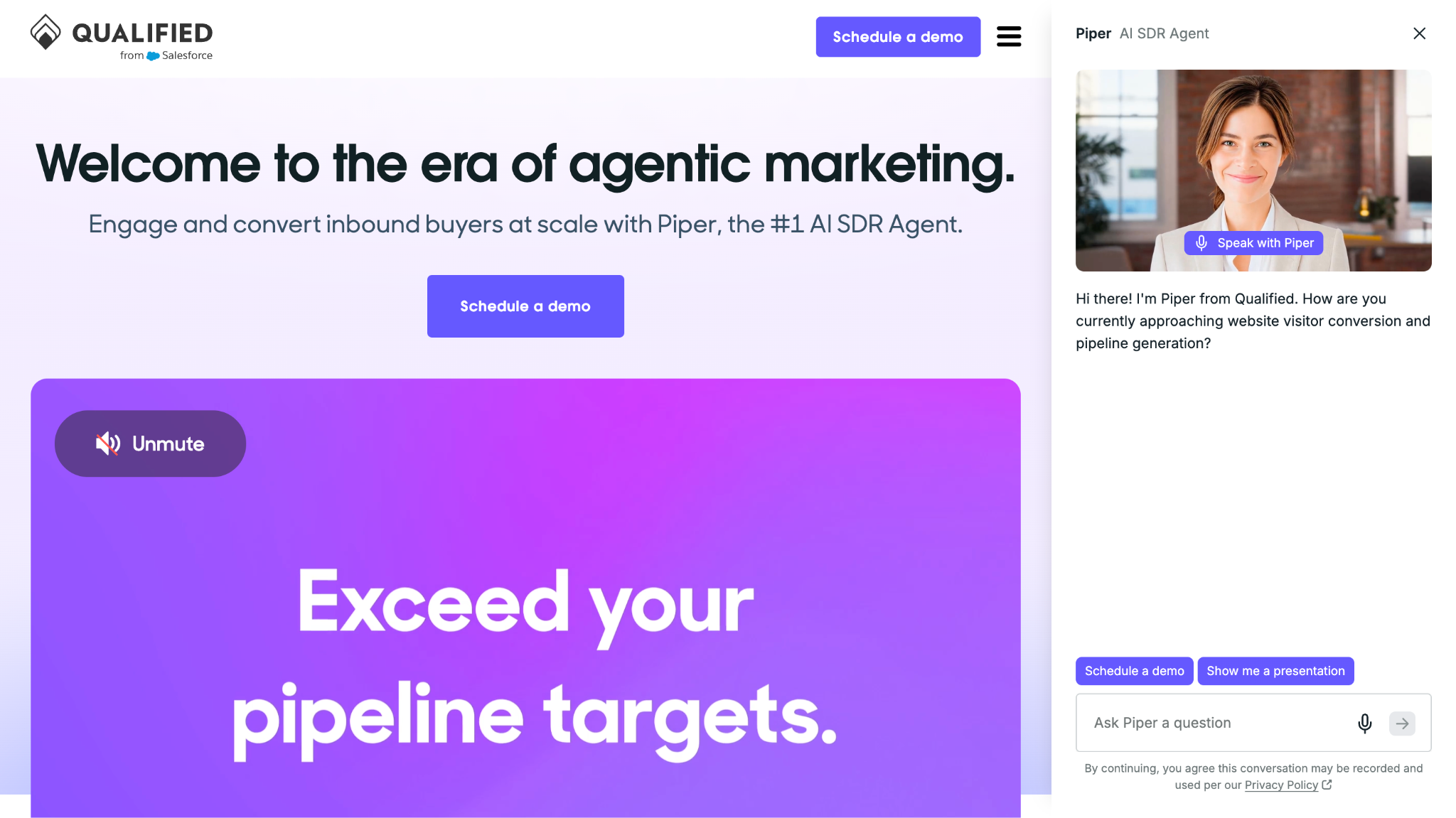
Qualified - Best for Salesforce-powered website conversion
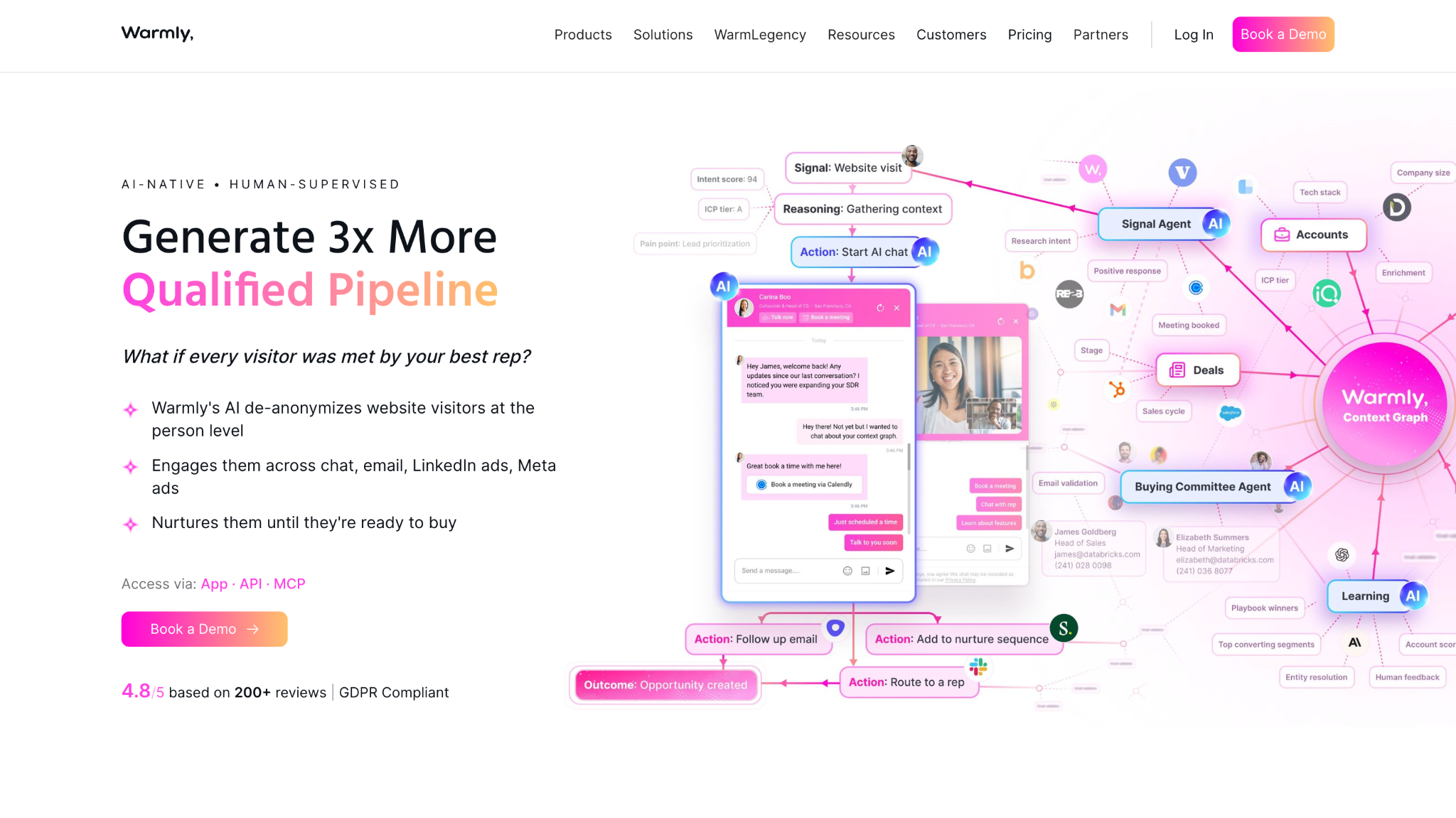
Warmly - Best for visitor identification and intent-driven engagement
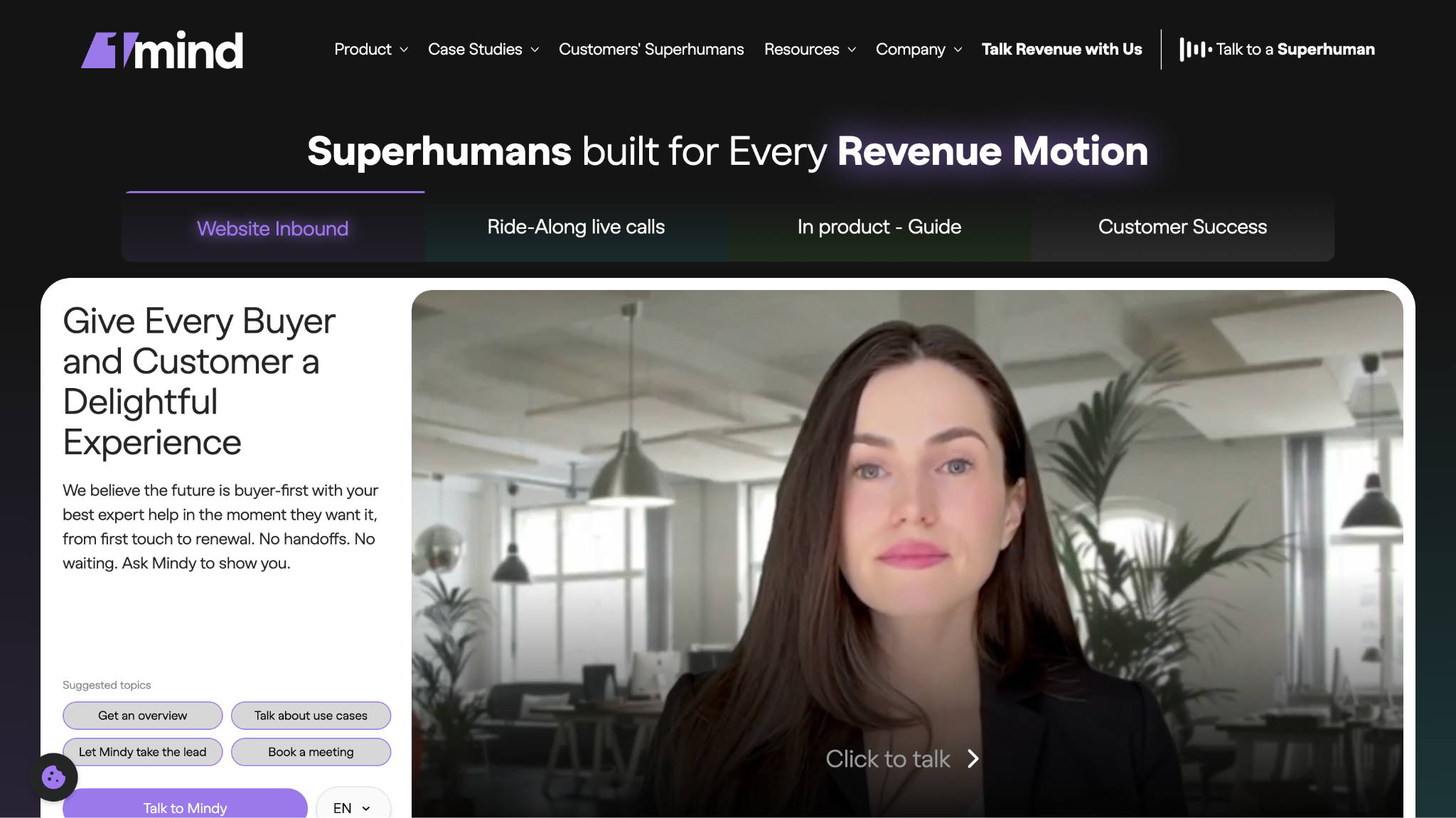
1mind - Best for AI avatar-powered website conversations
Drift - Best known historically for conversational website engagement, now sunset
What Is an AI SDR for Converting Website Visitors?
An AI SDR for website visitors is an AI-powered sales system designed to turn website activity into meaningful sales conversations. Instead of waiting for someone to submit a form and then handing that lead to an SDR, it can connect several steps of the visitor journey:
That distinction matters because a visitor's behavior can provide useful context before they ever speak with sales. A person checking pricing, returning to a product page, or starting a conversation may need a very different experience from someone casually reading a blog post.
A traditional chatbot is usually focused on answering questions. An AI SDR goes a step further by using visitor and account context to determine whether there is a sales opportunity and what should happen next.
A chatbot primarily answers questions. An AI SDR is designed to move a qualified visitor toward a sales outcome.
Why Are Companies Using AI SDRs to Convert Website Visitors?
Getting someone to your website is only the beginning.
The harder question is: what happens while they're there?
A visitor might spend several minutes researching your product, check your pricing, return to the site later, or interact with a high-intent CTA, yet never submit a form. If your only conversion mechanism is a form or a generic chat widget, some of those signals can go unnoticed.
Revenue teams face several problems:
Most website visitors don't identify themselves. You may know that someone is visiting, but not who they are or what company they represent.
High-intent visitors can leave before speaking with sales. Someone can show strong buying signals and disappear without ever becoming a lead.
Forms introduce friction. A visitor may be interested but unwilling to complete a long form just to ask a question.
SDRs can't manually monitor every visitor. There are too many pages, sessions, accounts, and interactions happening at the same time.
Generic chat treats visitors too similarly. A first-time researcher and a returning prospect shouldn't necessarily receive the same experience.
Sales teams can lack context after conversion. A new lead often arrives as a name and email address without the full story behind their website activity.
Buying signals can be scattered across interactions. Page views, CTA clicks, conversations, previous visits, and other activity can each provide a piece of the picture.
This creates a different opportunity for AI SDRs.
Instead of asking only, "How do we get more visitors?", revenue teams can ask:
"Which visitors are showing signs of buying, and how can we act on that intent while they're still engaged?"
That shift is important. Website conversion isn't just about increasing the number of forms submitted. It's about recognizing meaningful demand and creating the right next step for the visitor.
How Does an AI SDR Convert Website Visitors?
The process typically follows a simple progression, but the important part is how these steps connect.
1. Identify the visitor
First, the AI SDR tries to understand who is behind the website activity.
It may look at questions such as:
Who is visiting?
What company are they associated with?
Is this a known contact?
Is the account already in the CRM?
Has this person interacted with the business before?
The more context the system has, the less it needs to treat every visitor as an unknown lead.
2. Understand visitor intent
Next, it looks at what the visitor is actually doing.
For example:
Viewing pricing
Returning to the website
Visiting product pages
Reading high-intent content
Clicking CTAs
Starting a conversation
Arriving through a campaign
Interacting with a meeting link
Showing other first-party buying signals
The goal isn't to assume that every action means someone is ready to buy. It's to combine signals and understand whether the visitor is showing meaningful interest.
3. Engage in real time
Once the visitor's context and intent are understood, the AI can engage them while they're still active on the website.
That could mean:
Answering a product question
Starting a relevant conversation
Helping the visitor find the right information
Asking for missing qualification information
Offering a meeting when the visitor is ready
The experience can therefore be more contextual than simply displaying the same chatbot message to everyone.
4. Qualify the opportunity
The next step is determining whether the visitor represents a legitimate sales opportunity.
An AI SDR can consider information such as:
ICP fit
Company attributes
Visitor intent
CRM information
Conversation context
Previous interactions
Existing account or relationship information
And importantly, qualification doesn't always mean asking the visitor a long list of questions.
If the system already knows something about the person or company, it can use that context and focus the conversation on what is still missing.
5. Convert or route
Finally, the system determines what should happen next.
For example:
Qualified + ready → Book a meeting
High intent + missing information → Continue the conversation
Existing customer → Route to the account team
Support request → Route to support
Low intent → Don't force a sales conversation
This is where an AI SDR becomes more than a website chatbot.
The goal isn't simply to have another conversation on the website. It's to connect that conversation to the right sales or customer workflow.
What Should You Look for in an AI SDR for Website Visitor Conversion?
Rather than comparing platforms based on a giant feature checklist, look at the entire visitor journey.
Can it identify website visitors?
Can it determine who is visiting, what company they belong to, and whether the visitor is already known?
Can it understand buying intent?
Can it distinguish meaningful buying activity from ordinary website browsing?
Can it use visitor and account context?
Can it combine website behavior with information about the person, company, CRM, previous interactions, or account relationships?
Can it engage visitors in real time?
Can it respond while the visitor is actively researching rather than relying entirely on delayed follow-up?
Can it qualify without creating friction?
Can it use information it already has instead of asking the visitor questions the business already knows the answer to?
Can it book meetings automatically?
When a visitor is ready to talk to sales, can they move directly from the interaction to a meeting?
Can it route qualified visitors to the right team?
Not every visitor should go to the same SDR.
Can the system use factors such as ICP fit, account ownership, geography, intent, or other routing rules to determine where the opportunity should go?
Can it preserve the visitor's context?
When a conversation reaches a sales rep, does the rep know what the visitor did, what they asked, why they were qualified, and what happened before the handoff?
Can it engage visitors who leave the website?
This is easy to overlook.
Website conversion doesn't necessarily end when the visitor closes the tab.
If someone showed meaningful buying intent but didn't book a meeting, the system should ideally give the revenue team a way to identify that opportunity and follow up rather than treating the session as lost.
Comprehensive Comparison of AI SDRs for Converting Website Visitors
AI SDR
Best for
Website conversion approach
Key capabilities
Starting price
Knock AI
Turning website intent into pipeline
Identifies visitors, understands intent, engages, qualifies, and routes them toward conversion
Knock AI takes a broader approach to website conversion than simply putting an AI chatbot on your website.
It starts by identifying who is engaging with your business, enriching that visitor or lead with relevant context, and understanding the intent behind their activity. From there, Knock AI can engage the buyer, qualify the opportunity, route the conversation to the right rep or AI agent, and book a meeting when appropriate.
The important part is that these aren't isolated steps. Knock AI connects identification, intent, engagement, qualification, routing, and conversion into the same workflow.
For website visitors specifically, Knock AI can capture first-party signals such as page views, button and CTA clicks, form activity, Knock Link interactions, and chat messages. These signals contribute to an intent timeline that can be used for routing and outreach.
That means a visitor looking at pricing, returning to the site, or interacting with a high-intent CTA can be treated differently from someone casually browsing.
Key Capabilities
Visitor identification and enrichment
Knock AI can identify the person and company behind an interaction and enrich the record with contact, company, CRM, attribution, and engagement context.
First-party intent
Knock AI tracks website actions and other first-party engagement signals to build a picture of buyer intent over time rather than relying on a single page view.
AI engagement and qualification
Its AI SDR agent can answer questions, evaluate ICP fit, ask qualification questions when information is missing, and determine whether the conversation should remain with AI or move to a human.
Real-time routing
Qualified visitors can be routed based on factors such as intent, company attributes, CRM data, engagement, territory, or ownership. Knock AI can also route conversations to AI agents, human reps, or the appropriate CRM owner.
Meeting booking
When a visitor is ready to talk, Knock AI can move directly from qualification to scheduling with the appropriate rep or calendar.
Beyond-the-website engagement
Knock AI isn't limited to website chat. Knock Links can be used across channels and touchpoints such as LinkedIn, G2, email, events, QR codes, and other assets, allowing buyers to start conversations without going through a traditional form.
CRM synchronization
Knock AI can sync accepted lead, intent, qualification, and conversation information back to the CRM, giving sales teams more context when they take over.
Pros
Combines visitor identification, intent, engagement, qualification, routing, and scheduling
Uses first-party behavior to understand visitor intent
Can enrich visitors before qualification
Supports real-time AI qualification
Can route visitors to the right rep, team, or AI agent
Connects website activity with CRM and sales workflows
Can engage buyers beyond the website through Knock Links
Helps revenue teams act while buying intent is still active
Cons
Its broader revenue workflow can be more than a company needs if the only requirement is a basic website chatbot
Pricing is positioned toward B2B revenue teams rather than small businesses looking for a lightweight chat widget
Pricing
Knock AI currently has three pricing tiers:
Pipeline Foundation: From $2,000/month
Pipeline Acceleration: From $3,500/month
Enterprise Pipeline:Custom pricing
Pipeline Foundation includes capabilities such as auto identification and enrichment, AI SDR engagement and routing, instant meeting booking, high-intent LinkedIn outreach, and Slack and CRM sync. Pipeline Acceleration adds additional messaging channels, full AI qualification, AI-powered demo booking, and advanced enrichment and intent routing.
Best for:
B2B revenue teams that want to turn website and first-party buyer intent into a qualified pipeline, rather than treating website chat, visitor identification, qualification, and routing as separate systems.
2. Qualified
Qualified is an AI-powered inbound marketing and sales platform built around Piper, its AI SDR agent.
The platform is particularly relevant for companies already operating heavily within the Salesforce ecosystem. Salesforce announced its acquisition of Qualified in December 2025 and completed the acquisition on April 1, 2026. Salesforce now positions Piper as its AI SDR for inbound buyers, including website visitors.
Piper is designed to engage website visitors through text, voice, and video, qualify them in real time, and book meetings. Qualified's Salesforce AppExchange listing also highlights website engagement, email follow-up, meeting booking, and Salesforce integration.
That makes Qualified particularly relevant for teams that want website conversion closely tied to their Salesforce-based marketing and sales infrastructure.
Key Capabilities
Piper AI SDR for website engagement
Real-time visitor qualification
Website conversations through text, voice, and video
Meeting booking
Email follow-up and lead nurturing
Salesforce integration
Personalized buyer engagement
Slack collaboration
Website conversion and pipeline workflows
Pros
Deep Salesforce ecosystem integration
Piper is purpose-built for inbound conversion
Supports multimodal website engagement
Can qualify and book meetings in real time
Extends engagement beyond the initial website conversation
Strong fit for Salesforce-centric revenue teams
Cons
Its strongest value is likely to be realized by organizations already invested in Salesforce
Enterprise-oriented positioning can make it more than smaller teams need
The platform is increasingly tied to Salesforce's broader agentic marketing ecosystem
Pricing
Qualified's pricing is enterprise-oriented. The starting price used in this comparison is $42,000/year for the Premier plan. Enterprise deployments can cost substantially more depending on the implementation, Salesforce infrastructure, and requirements.
Best for:
B2B companies that already run their go-to-market operation around Salesforce and want an AI SDR tightly integrated with that ecosystem.
3. Warmly
Warmly approaches website conversion from a slightly different starting point: understanding who's visiting your website and identifying which visitors are worth engaging.
Its platform combines website visitor identification, ICP filtering, real-time alerts, lead routing, CRM synchronization, chat, and AI-powered inbound workflows. Warmly announced in June 2026 that it had entered into an agreement to be acquired by HubSpot.
Its current pricing structure reflects this layered approach. The entry-level AI Web-Deanonymization plan focuses on identifying website visitors and companies, while higher tiers add inbound chat and AI-powered inbound automation.
Key Capabilities
Website visitor identification
Contact and company identification
ICP filtering
Real-time visitor alerts
Slack alerts
Lead routing
CRM synchronization
AI chat
Warm Calling
AI Studio Agents
Automated email follow-up
AI-powered qualification and decision-making on higher plans
Pros
Strong focus on website visitor identification
Combines visitor intelligence with inbound engagement
Real-time alerts for sales teams
ICP filtering helps prioritize visitors
Supports routing and CRM workflows
Higher plans add AI-powered inbound automation
Cons
Capabilities are distributed across multiple pricing tiers
Teams primarily interested in AI chat may need to move beyond the entry-level visitor identification plan
The platform covers a broader GTM workflow than teams looking only for a simple website chatbot
Pricing
Warmly currently starts at:
AI Web-Deanonymization: $10,000/year
Inbound Chat: $20,000/year
AI Inbound Autopilot: $30,000/year
The entry-level plan includes website visitor identification, ICP filtering, real-time alerts, lead routing, CRM sync, and related integrations. Higher tiers add AI chat, AI Studio Agents, qualification, automated follow-up, and additional inbound automation.
Best for:
Revenue teams that want to identify website visitors, understand which accounts are showing interest, and progressively add AI-powered inbound engagement and qualification.
4. 1mind
1mind takes a noticeably different approach from traditional website chat and visitor identification tools.
Its core concept is the AI Superhuman: a visible, conversational AI teammate designed to interact with buyers rather than simply displaying a chatbot interface.
On the website, 1mind's AI Superhuman can answer questions, understand use cases, qualify visitors, run interactive demos, and book meetings. The company also extends the same AI architecture into live sales calls, in-product experiences, and customer success.
That makes 1mind particularly interesting for companies looking for a more immersive AI-led website experience.
Key Capabilities
AI Superhumans
AI-powered website conversations
Interactive product demos
Buyer qualification
Meeting booking
Product and technical Q&A
AI participation in live sales calls
In-product AI guidance
Shared context across the buyer lifecycle
Pros
Distinctive AI-avatar and digital-human experience
Can engage visitors without traditional forms
Goes beyond basic FAQ-style chatbot interactions
Can run interactive demos
Extends beyond the website into sales calls and product experiences
Designed around a broader continuous buyer experience
Cons
More complex than a conventional website chatbot
Enterprise-oriented positioning may not make sense for smaller teams
The AI-avatar experience may not be necessary for companies looking for straightforward visitor identification and qualification
Pricing
1mind is positioned as an enterprise AI-led growth platform. The pricing figure used in this comparison is approximately $100,000+ per year, rather than a conventional self-serve chatbot subscription.
Best for:
Enterprise B2B companies that want an AI digital-human experience to engage visitors, answer questions, demonstrate the product, qualify buyers, and move conversations toward a purchase.
5. Drift
Drift was one of the best-known names in conversational marketing and helped popularize the idea of using website conversations to connect buyers with sales teams.
Historically, the platform focused on conversational website engagement, lead qualification, routing, and meeting booking. It became an important reference point for the evolution from static forms toward conversational website experiences.
However, Drift is no longer a standalone product in the same form. 1mind announced in January 2026 that it was the exclusive AI successor to Drift, and its current platform positions 1mind as the evolution of the conversational AI category.
So Drift is useful in this article primarily as historical context rather than as a current AI SDR that readers can evaluate and purchase.
Key Capabilities
Historically, Drift was associated with:
Website chat
Conversational marketing
Lead qualification
Sales routing
Meeting booking
Conversational engagement
Website-to-sales conversion
Pros
Historically influential in conversational marketing
Helped establish conversational website engagement as a B2B sales channel
Strong historical relevance to the development of AI-powered website conversion
Cons
The standalone Drift product has been sunset
It should not be evaluated alongside currently available AI SDR platforms as if it were an active standalone product
Readers looking for the current successor should evaluate the newer 1mind offering instead
Pricing
Sunset.
There is no current standalone Drift pricing to compare with the active platforms in this list.
Best for:
Historical context and teams researching the evolution of conversational marketing or transitioning from the former Drift platform.
Why Knock AI Is the Best AI SDR for Converting Website Visitors
The biggest difference between an AI SDR and a website chatbot isn't whether it can have a conversation. It's what the system does with the intent behind that conversation.
A visitor might arrive on your pricing page, return a few days later, click a CTA, start a chat, and then leave without booking a meeting. Looking at any one of those actions in isolation doesn't tell you much. Connecting them can.
That's where Knock AI takes a different approach. It connects visitor identification, first-party intent, enrichment, engagement, qualification, routing, and conversion so revenue teams can act on buyer intent while it is still relevant.
1. Knock AI Looks Beyond Anonymous Traffic
Not every website visitor should be treated the same.
Someone reading a general blog post for the first time is very different from someone returning to your site, visiting pricing, interacting with a CTA, and then starting a conversation.
Knock AI can help revenue teams understand who is behind the website activity and what they're doing. Its first-party intent system captures signals such as page views, CTA and button clicks, form activity, Knock Link interactions, and chat messages, creating a timeline of activity associated with the same person or account.
That gives the sales team more context than simply receiving a new form submission with a name and email address.
2. Knock AI Connects Visitor Behavior With Buying Intent
Website activity becomes much more useful when you can put it into context.
A pricing-page visit can mean something very different from reading a general blog post. Returning to a product page can mean something different from a first visit. Starting a conversation after several high-intent interactions can provide another important signal.
Knock intent combines the type, recency, and volume of meaningful actions to determine an intent score, while also identifying different types of intent such as buying, support, partnership, and job-seeking.
That context can then feed into qualification and routing decisions rather than sitting as another disconnected analytics signal.
3. Knock AI Engages Visitors While Intent Is Active
Timing matters.
Knowing that someone showed buying intent three days ago is useful. Engaging them while they're actively researching your product can be much more actionable.
Knock connects first-party intent with real-time AI engagement and qualification. It can use information already available about the visitor, company, intent, previous interactions, and CRM context to determine how the conversation should proceed.
And when additional information is needed, the AI can ask qualification questions rather than forcing every visitor through the same form or qualification flow.
The idea is simple:
Detect intent → Act on intent → Qualify the opportunity → Move it forward
4. Knock AI Doesn't Stop at Website Conversation
This is probably the most important distinction.
A website chatbot can create a conversation. But a conversation by itself isn't pipeline.
The conversation becomes one part of a broader revenue workflow.
Knock AI can combine conversation with first-party intent, enrichment, relationship context, CRM information, attribution, and routing logic when determining what should happen next. Qualified buyers can then be routed to the appropriate rep or calendar and moved toward a meeting.
That means the goal isn't simply to increase the number of chats happening on your website.
It's to turn meaningful buyer activity into qualified sales opportunities.
5. Knock AI Preserves Context Through Conversion
One of the most frustrating parts of website conversion is what happens after the handoff.
A visitor talks to an AI, answers a few questions, and eventually gets passed to a sales rep. If all the rep sees is a new lead record, the conversation effectively starts again.
Knock AI is designed to carry context forward.
The system can use visitor activity, intent, enrichment, qualification information, relationship history, and CRM data as part of the qualification and routing process. Knock AI also integrates with Salesforce so teams can access intent signals, contact and company information, and conversational context within their CRM workflows.
So instead of the rep starting with:
"So, what brings you here?"
they can start with a much better understanding of what the buyer was doing, what they were interested in, and why the conversation reached them.
6. Knock AI Can Identify Where Website Demand Is Leaking
Here's another piece that often gets overlooked.
Website conversion isn't only about what happens when someone starts a chat. You also need to understand where high-intent visitors are failing to convert in the first place.
Knock AI's Website Leakage Report is designed to identify places where buyers demonstrate intent but don't progress. It can analyze things such as pricing-page activity, Contact Sales abandonment, demo journeys, CTA clicks, conversions, and leaked visitors.
Instead of asking only, "How many leads did our website generate?", revenue teams can investigate where buying intent is being lost and which people or accounts are behind that leakage.
And that's ultimately the bigger idea behind Knock AI's approach to website conversion:
Don't just generate more website interactions. Capture more of the buying intent that's already happening on your website and turn it into pipeline.
Knock AI vs. Traditional Website Chatbots
A traditional website chatbot usually follows a straightforward path:
Visitor → Question → Answer
That's useful when someone needs a quick answer, but website conversion can involve much more than answering questions.
The important difference isn't simply that one uses AI. It's what happens after the conversation starts.
An AI SDR can connect the conversation to qualification, routing, scheduling, CRM context, and the broader sales workflow. Knock AI takes this further by combining website activity and first-party intent signals with enrichment, relationship context, qualification, and routing. Its first-party intent system can track actions such as page views, CTA clicks, form activity, Knock Link interactions, and chat messages to build a picture of buyer activity over time.
So the distinction is less about:
"Chatbot vs. AI chatbot"
and more about:
"Conversation vs. connected revenue workflow."
A chatbot can answer the visitor's question. An AI SDR can use the interaction to determine who the visitor is, whether they are a potential buyer, what should happen next, and where that opportunity should go.
How to Choose the Best AI SDR for Converting Website Visitors
There isn't one approach that fits every website. The right choice depends on what you're actually trying to improve.
Choose Knock AI if...
You want to connect visitor identification, intent, engagement, qualification, routing, and conversion into a connected revenue workflow.
Knock AI is particularly relevant if your website already generates meaningful buyer activity and you want to identify that intent, engage visitors in real time, qualify them, and move qualified opportunities toward the right rep or meeting.
Choose Qualified if...
Salesforce is central to your GTM operation and you want website conversion closely connected to the Salesforce ecosystem.
Piper is now part of Salesforce following its acquisition of Qualified, and Salesforce positions it as an AI SDR that engages website visitors, qualifies them, and books meetings across text, voice, and video.
Choose Warmly if...
Your biggest challenge is identifying website visitors and turning visitor signals into immediate sales activity.
Warmly focuses heavily on person-level visitor identification, first-party intent, real-time alerts, routing, CRM context, and AI engagement. It announced in June 2026 that it had entered into an agreement to be acquired by HubSpot.
Choose 1mind if...
You want an AI-avatar or digital-human experience rather than a conventional website chatbot.
1mind's approach centers on AI Superhumans that can interact with buyers through conversational experiences and extend into areas such as product demonstrations and sales conversations.
Consider Drift only if...
You're researching the history of conversational marketing or transitioning from the former Drift platform.
Drift's standalone platform is being sunset, and 1mind has been positioned as its AI successor for the conversational buyer-engagement use case.
FAQs
1. What is an AI SDR for website visitors?
An AI SDR for website visitors is an AI-powered sales system that helps turn website activity into sales conversations. Instead of simply answering questions, it can identify visitors, understand intent, engage them, qualify opportunities, route buyers, and help book meetings.
The key idea is connecting these steps rather than treating website chat, lead qualification, and sales routing as separate processes.
2. How can AI SDRs convert website visitors into leads?
AI SDRs can analyze visitor behavior and context to identify potential buying intent, engage visitors while they're active on the website, answer questions, qualify opportunities, and move qualified visitors toward a meeting or another appropriate sales action.
The exact workflow depends on the platform. Some focus heavily on visitor identification, while others emphasize AI conversations, qualification, or integration with the CRM.
3. Can an AI SDR identify anonymous website visitors?
Some AI SDR and visitor-intelligence platforms can identify website visitors at the company or individual level using a combination of first-party website activity, identity data, CRM information, and other signals.
The degree of identification varies by platform, traffic source, geography, available data, and whether the visitor has previously interacted with the business. Warmly, for example, specifically focuses on person-level website visitor identification.
4. How does an AI SDR determine whether a website visitor has buying intent?
An AI SDR can combine multiple signals rather than relying on a single page view.
These can include:
Pages viewed
Pricing-page activity
Return visits
CTA interactions
Forms
Chat conversations
Campaign source
Company and contact information
CRM history
Previous interactions
Knock AI, for example, uses first-party activity such as page views, CTA clicks, form activity, Knock Link interactions, and chat messages as part of its intent signals.
5. Can an AI SDR qualify website visitors and book meetings?
Yes. Qualification and meeting booking are core parts of many AI SDR workflows.
An AI SDR can evaluate information such as ICP fit, company attributes, intent, conversation context, and CRM data. When a visitor meets the relevant criteria, the system can offer or book a meeting instead of requiring the visitor to complete a traditional form first.
For example, Knock AI can combine intent, enrichment, conversation, and routing context before moving qualified buyers toward scheduling.
6. What is the difference between an AI SDR and a website chatbot?
A website chatbot is primarily designed to have conversations and answer questions.
An AI SDR is designed to connect those conversations to a sales workflow:
That's why the more useful comparison isn't necessarily chatbot versus AI. It's whether the technology can turn a website interaction into an actionable sales process.
7. What is the best AI SDR for converting website visitors?
The answer depends on what you want the platform to do.
If the goal is to connect website visitor identification, first-party intent, real-time engagement, qualification, routing, and conversion into one workflow, Knock AI is particularly aligned with that use case.
Its approach goes beyond website chat by connecting visitor behavior and intent with enrichment, qualification, routing, scheduling, and CRM workflows.


.svg)


.svg)
.svg)
.svg)


.svg)
.svg)


.svg)