Best Lead Generation Tools for Fintech & Financial Services
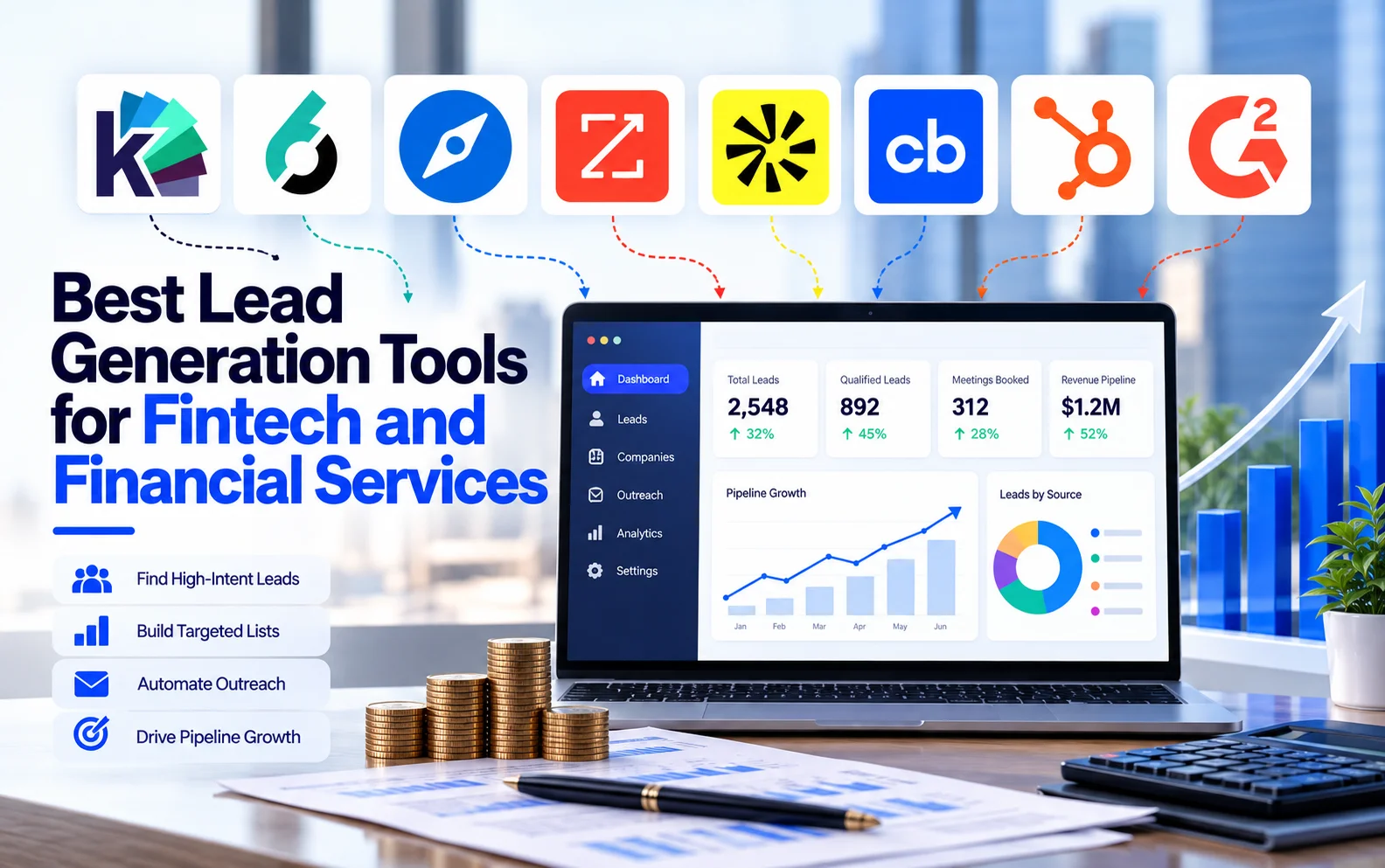
Best Lead Generation Tools for Fintech and Financial Services
Generating leads in fintech and financial services is rarely just a matter of finding more contacts.
A payments company may need to identify banks expanding into new markets. A financial software provider may need to find the right technology and finance leaders inside a target institution. A fintech selling infrastructure may need to recognize when an account has moved from general research to active vendor evaluation.
That makes the lead generation stack more than a prospecting database. It may need to help teams discover the right accounts, identify decision-makers, recognize business and buying signals, engage prospects, qualify opportunities, and move everything into the sales process.
A useful way to think about the modern fintech lead generation process is:
The tools discussed in this guide address different parts of that process. Some are designed to find companies and contacts, others to identify intent or business signals, while others help convert and manage demand.
If you're looking for the broader strategies and channels fintech companies can use to generate demand, see our guide to fintech lead generation.
What Should You Look for in a Fintech Lead Generation Tool?
The right tool depends on where your lead generation process is breaking. Before comparing platforms, look at the capabilities that matter across the fintech and financial services buying journey.
Account and Contact Discovery
Can the tool help you identify the right companies and people, rather than simply generate a larger contact list?
For fintech and financial services, that could mean finding banks, insurers, lenders, payment companies, wealth management firms, fintechs, or other target organizations and then identifying the people involved in purchasing decisions.
The more specific your ICP, the more important account and contact intelligence becomes.
Business and Buying Signals
Not every prospect is equally valuable at the same time.
A company raising funding, expanding into a new market, launching a new financial product, hiring senior technology leadership, or adopting new technology may have a very different sales opportunity from an otherwise similar company with no relevant change.
Look for tools that can surface business triggers and buying signals, including company events, technology adoption, research activity, and other changes that can indicate a potential sales opportunity.
Buyer Intent
Engagement doesn't automatically mean intent.
Someone reading a blog post once is different from an account repeatedly researching your category, visiting product pages, comparing solutions, or returning to your website after interacting with a campaign.
A useful lead generation platform should help answer:
Which accounts are showing meaningful signs that they may be evaluating a solution?
That distinction allows sales and marketing teams to prioritize buyer activity instead of treating every interaction as an equally valuable lead.
Engagement and Qualification
Identifying a potentially interested buyer is only the beginning.
The next question is what happens after the signal appears.
Can the platform help engage the buyer, understand their needs, ask qualification questions, determine whether there is a relevant use case, and move qualified prospects toward a conversation?
This is particularly important when a company already has substantial digital demand but loses opportunities because nobody acts on meaningful buyer activity quickly enough.
Buying Committee Visibility
A financial services purchase rarely depends on one person alone.
Depending on the product, the buying process may involve executives, finance, product, engineering, IT, security, risk, compliance, legal, and procurement.
A useful tool should therefore help you understand the account and its buying committee, rather than treating the first person who engages as the entire opportunity.
The goal is to move from:
One Lead → One Contact
to:
One Account → Multiple Stakeholders → One Buying Process
CRM and Workflow Integration
Lead generation does not end when a prospect is identified.
Signals need to reach the systems where marketing and sales teams actually work. That can include CRM records, lead scoring systems, sales workflows, notifications, nurture campaigns, and routing rules.
This is why integration matters as much as the feature list. A powerful signal that remains isolated inside another platform is much less useful than one that automatically becomes part of the sales workflow.
Fintech Lead Generation Tools Compared
Tool
Primary Role
Account Discovery
Contact Data
Business Signals
Intent
AI Engagement
Qualification
Routing
CRM
Knock AI
Buyer identification + revenue conversion
Identifies engaged buyers and accounts across first-party touchpoints
Real-time buyer and company enrichment
Connects activity across campaigns, events, CRM, and other channels
First-party buyer intent and engagement signals
AI agents engage buyers, answer questions, qualify, and book meetings
AI-powered qualification using buyer and account context
Routes chats and meetings using CRM, enrichment, and intent signals
Syncs buyer and engagement context with CRM workflows
6sense
Account intelligence + ABM
Identifies and prioritizes target accounts
Provides account and buying-group intelligence
Account-level research, engagement, and buying-stage signals
Account-level intent and buying-stage intelligence
AI-assisted engagement and orchestration
Helps prioritize accounts and buying groups based on fit and intent
Supports account-based sales and marketing workflows
Integrates account intelligence into the GTM stack
LinkedIn Sales Navigator
Account + contact discovery
Search and research target companies and accounts
Finds relevant professionals and decision-makers
Provides alerts and updates around accounts and leads
Buyer-intent and account signals can help prioritize prospects
Supports sales workflows rather than serving as a dedicated AI qualification layer
Helps sellers research and assess prospects rather than automatically qualify conversations
Supports prospecting workflows and CRM-connected sales processes
CRM integrations and activity synchronization
ZoomInfo
B2B intelligence + prospecting
Finds and researches companies and target accounts
Provides B2B contact data and enrichment
Company, organizational, technology, and other business intelligence
Provides intent and buying-signal data alongside its intelligence platform
AI-assisted research and workflow capabilities
Supports prospect prioritization and sales intelligence rather than conversational qualification
Supports GTM workflows and sales processes
Connects intelligence with CRM and sales workflows
Apollo
Prospecting + engagement
Finds companies and prospects based on defined criteria
Contact database and prospect enrichment
Company and prospect information for targeting
Provides buying-intent and engagement signals within its prospecting platform
AI-assisted prospect research, personalization, and sales engagement
Supports prospect scoring and prioritization rather than primarily conversational qualification
Automates prospecting and outreach workflows
CRM synchronization and sales workflow integrations
Crunchbase
Business intelligence + trigger-based prospecting
Finds companies based on industry, size, growth, funding, and other attributes
Provides company and people information
Funding, acquisitions, leadership changes, growth, and predictive company signals
Business-event signals indicate potential opportunities rather than direct first-party buyer intent
AI-powered predictions and company intelligence
Helps prioritize companies based on business signals, not individual conversations
Primarily feeds prospecting workflows rather than handling lead routing
Data can feed sales and internal workflows
HubSpot
CRM + marketing automation
Organizes known companies and contacts rather than primarily discovering new accounts
Stores and enriches CRM contact records
Tracks lifecycle, engagement, campaign, and CRM activity
Behavioral and engagement-based lead scoring
AI-powered workflows, chatbots, and personalized marketing
Automated lead scoring and workflow-based qualification
Workflows can assign leads and trigger sales notifications
Full CRM with marketing, sales, and workflow automation
G2
Software research + buyer intent
Identifies accounts researching software categories and vendors
Identifies the account, not the individual researcher
Captures research activity around categories, vendors, and competitors
Buyer intent based on product views, comparisons, pricing, and reviews
Not primarily an AI engagement platform
Provides intent signals for downstream qualification
Sends intent signals into sales and marketing systems rather than routing conversations itself
Integrates intent data with platforms such as Salesforce and HubSpot
See Knock AI in Action — Book Your Live Demo Today
Best Lead Generation Tools for Fintech and Financial Services
Fintech and financial services companies don't all generate leads in the same way. A payments company may need to identify banks expanding into new markets, while a fintech SaaS company may need to find companies actively comparing software vendors. A financial infrastructure provider may care more about technology adoption and decision maker changes.
That's why the tools below solve different parts of the lead generation process. Some help you discover accounts and contacts, some surface business or buying signals, and others help turn active demand into conversations and pipeline.
Knock AI is designed for companies that already have demand but need to do more with the buyer activity that demand generates.
For a fintech or financial services company, that can mean identifying buyers engaging with your website and marketing links, enriching those buyers with company and role information, detecting intent, engaging them with an AI SDR, qualifying the interaction, booking meetings, and routing the opportunity to the appropriate rep or workflow. Knock AI also syncs conversations, enrichment, and activity with CRM systems.
Identify and enrich buyers
Instead of waiting for every potential buyer to complete a traditional form, Knock AI can automatically identify and enrich buyers from website activity and marketing links. Its current pricing page describes real-time enrichment with company, role, intent, and CRM status.
This is useful for fintech companies where valuable prospects may research a solution before they are ready to fill out a form.
Detect first-party intent
First-party intent gives you visibility into what buyers are actually doing around your own demand.
For example, an account might:
Visit a product page
Read an integration guide
Return several times
Click a campaign link
Engage with a marketing asset
Start a conversation
Those signals can be combined with account and CRM context to determine which activity deserves attention.
Engage buyers with AI
Identification alone doesn't create pipeline.
Knock AI Agent can engage buyers, answer questions, enrich lead and intent information in real time, and route buyers according to the company's qualification and routing logic.
For a fintech company, that could mean engaging a potential buyer while they're actively researching a payments, lending, banking, compliance, or financial infrastructure solution rather than waiting for a salesperson to notice the activity later.
Qualify and book meetings
Knock AI can use qualification rules to determine whether an interaction should progress toward a meeting. Its current product supports automatic meeting booking after the buyer meets the defined qualification and routing criteria.
A qualified buyer still needs to reach the right person.
Routing can use buyer, company, CRM, enrichment, and intent information to determine where the conversation should go. This can be particularly useful when fintech sales teams divide accounts by territory, company size, product, industry, or account ownership.
Where Knock AI fits
Knock AI is therefore less about replacing every prospecting or CRM tool and more about connecting the point where buyer activity becomes actionable revenue activity.
Best for: Fintech and financial services companies that already generate digital demand but need to identify high-intent buyers and turn that activity into qualified sales conversations.
Considerations: Knock AI is most relevant when you have meaningful B2B demand to identify, engage, qualify, and route. It is not primarily a general-purpose contact database or traditional CRM.
Pricing: Knock AI's current pricing page lists Pipeline Foundation from $2,000/month, with higher-tier capabilities including advanced enrichment and intent routing.
2. 6sense
Primary role: Account intelligence + intent + ABM
6sense is built around an account-based approach to B2B revenue generation. Instead of treating every contact as an independent lead, it helps teams understand which accounts are researching solutions, where those accounts are in the buying journey, and how sales and marketing should prioritize them.
Its predictive model uses signals such as web activity, searches, forms, CRM activity, marketing automation activity, and third-party intent data to calculate account intent and assign predictive buying stages.
Account identification
6sense can help financial services GTM teams identify and prioritize target accounts based on fit and engagement.
This is particularly relevant when selling to large organizations where the opportunity exists at the account level, not just at the individual-contact level.
Intent and buying stages
One of 6sense's distinguishing features is its predictive buying-stage model.
These stages are based on the platform's analysis of intent, engagement, and other signals.
That can help sales teams distinguish between an account that simply fits their ICP and one that appears to be actively evaluating a solution.
ABM and buying groups
For enterprise fintech and financial services, multiple stakeholders may participate in a purchase. 6sense's account-centric approach makes it useful for coordinating marketing and sales activity around the account rather than focusing exclusively on individual leads.
Where 6sense fits
6sense is particularly useful when your GTM strategy is built around target accounts, ABM, intent, and buying-stage prioritization.
Best for: Enterprise fintech and financial services companies running account-based GTM programs.
Considerations: 6sense is a broader revenue and ABM platform, so it can involve more infrastructure and process than a company simply looking for a contact database or basic lead generation tool.
3. LinkedIn Sales Navigator
Primary role: Account and decision-maker discovery
Financial services sales often begins with a very specific question:
Who actually owns this problem inside the account?
LinkedIn Sales Navigator is useful for answering that question.
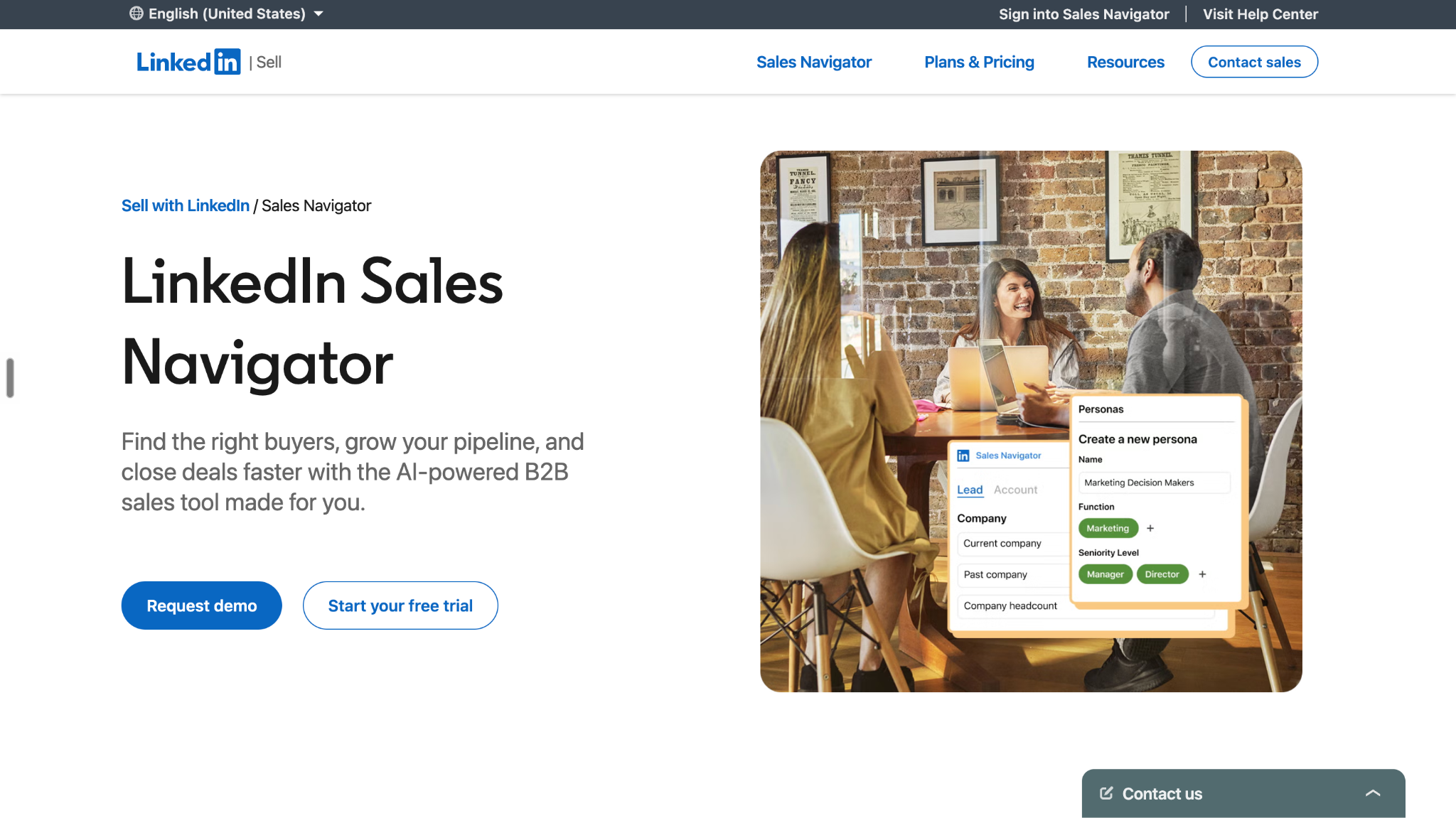
It helps sales teams research companies, find relevant professionals, build account and lead lists, monitor changes, and maintain relationships with potential buyers.
For financial services organizations, that can mean identifying roles such as:
CIO
CTO
CFO
CISO
Head of Payments
Head of Risk
Head of Compliance
Head of Product
VP Engineering
Procurement leaders
The platform is particularly useful when the sales motion depends on understanding both the account and the people within it.
Account research
Sales teams can search and filter companies based on characteristics relevant to their ICP and then investigate the people associated with those accounts.
Decision-maker discovery
Rather than purchasing a generic contact list, reps can research the actual people associated with a target organization and understand their role and professional context.
Buying committee research
This becomes important for complex financial services purchases.
One person may introduce the solution, another may evaluate it technically, another may own the budget, and procurement or legal may become involved later.
Sales Navigator can therefore serve as the account and stakeholder discovery layer of the lead generation process.
Best for: Finding and researching financial services decision-makers and buying committees.
Considerations: Sales Navigator is primarily a discovery and relationship-research tool. It does not replace a dedicated CRM, first-party intent platform, or conversational qualification system.
4. ZoomInfo
Primary role: B2B company and contact intelligence
Which companies and decision-makers should we be targeting?
For fintech and financial services, that can mean building account lists around specific company types, industries, locations, sizes, technologies, and organizational characteristics.
You can then identify relevant stakeholders within those accounts and enrich the records needed for prospecting.
Company discovery
ZoomInfo can help sales teams build lists of organizations matching their ICP.
For example, a fintech infrastructure company could build a target market around specific financial institutions, financial technology companies, or enterprise organizations.
Contact discovery
The next step is finding the people who influence the purchase.
This makes ZoomInfo useful for creating targeted lists rather than relying on broad outreach.
Enrichment
Data enrichment can add additional company and contact context to help sales teams prioritize accounts and personalize outreach.
Intent
ZoomInfo also offers intent-related capabilities, so it can play a role beyond basic contact discovery.
However, its primary distinction in this article should remain B2B intelligence and prospecting, rather than positioning it as a substitute for a first-party buyer-conversion platform.
Best for: Finding and enriching financial services accounts and decision-makers.
Considerations:ZoomInfo is strongest when the problem is account/contact intelligence. Teams still need a process for engaging, qualifying, and converting those prospects.
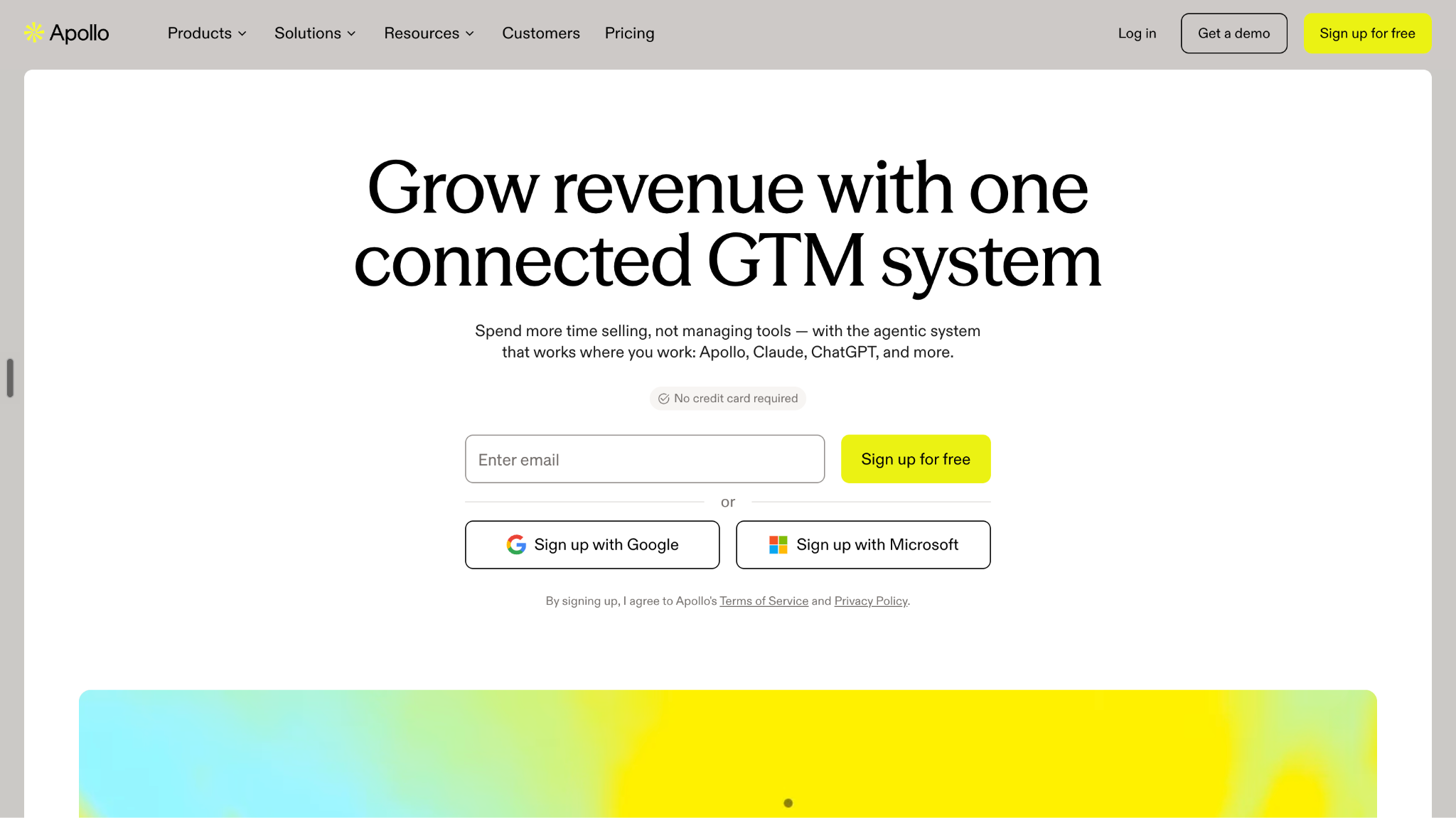
5. Apollo
Primary role: Prospecting + contact data + outbound engagement
Apollo combines prospect discovery, contact data, enrichment, and sales engagement in one platform.
That makes it useful for fintech teams that don't just need to build a prospect list but also want to activate that list through outbound workflows.
Prospect discovery
Teams can search for companies and people based on characteristics relevant to their ICP.
For example, a fintech company could create prospect lists around specific industries, company sizes, roles, geographies, or other targeting criteria.
Contact data and enrichment
Apollo provides contact information and company context that can be used to build outbound lists.
This makes it particularly useful when the goal is to move quickly from:
ICP → Prospects → Contact Data → Outreach
Outreach and sequencing
Apollo also supports sales engagement, allowing teams to create sequences and coordinate outbound activity rather than moving prospects manually between multiple systems.
Intent and prioritization
Apollo also includes buying-intent capabilities, which can help teams prioritize prospects beyond basic firmographic fit. G2 currently categorizes Apollo among sales-intelligence products with buyer-intent capabilities.
Best for: Fintech teams that want prospecting, contact data, and outbound engagement in one platform.
Considerations:Apollo is more oriented toward prospecting and sales engagement than identifying and converting anonymous first-party demand already interacting with your business.
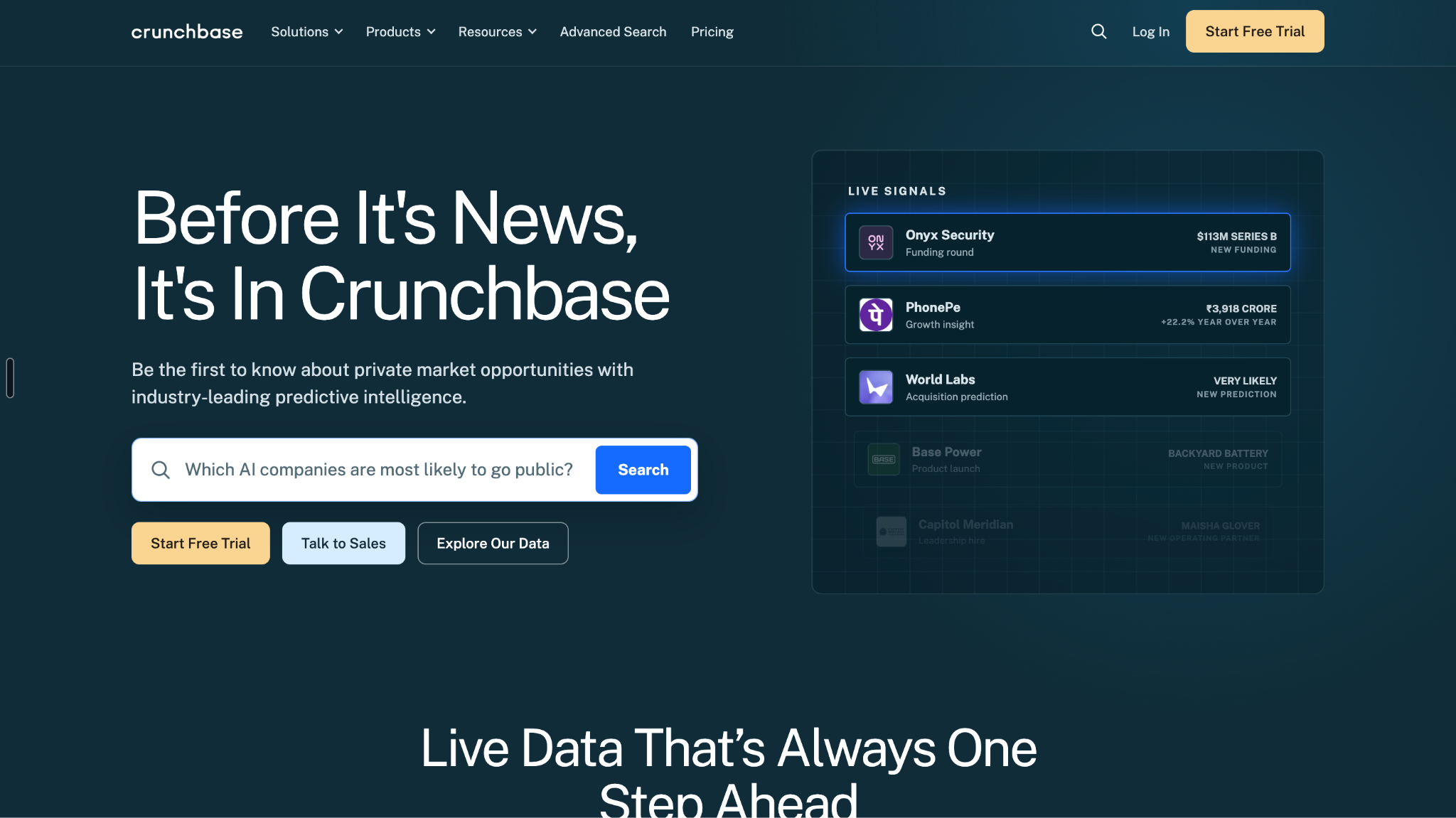
6. Crunchbase
Primary role: Company intelligence + business triggers
Crunchbase gives fintech companies a different way to think about lead generation:
Don't just find companies that fit your ICP. Find companies experiencing changes that could create a reason to buy.
This is particularly relevant in fintech because funding, expansion, acquisitions, leadership changes, product launches, and market entry can materially change a company's technology requirements.
Crunchbase currently provides signals around funding, growth, acquisitions, leadership changes, and other private-company events. Its platform also offers predictions around future funding and growth.
Funding events
A newly funded fintech may have capital to invest in infrastructure, technology, hiring, or expansion.
Company growth
Growth can create new operational requirements.
For example:
Rapid growth → more customers → more transactions → new infrastructure requirements
Acquisitions
An acquisition can create integration requirements, new technology needs, and organizational changes.
Leadership changes
A new executive can bring new priorities, vendors, or technology initiatives.
Trigger-based prospecting
This turns Crunchbase into a source of why now? signals.
Instead of building a list of 1,000 fintech companies and contacting all of them, a sales team can prioritize companies experiencing a relevant event.
Best for: Finding fintech and financial services companies experiencing business events that may create new sales opportunities.
Considerations: Business triggers indicate potential opportunity. They do not necessarily prove that an individual buyer is actively evaluating your product, so they work best alongside account intelligence, intent, and engagement tools.
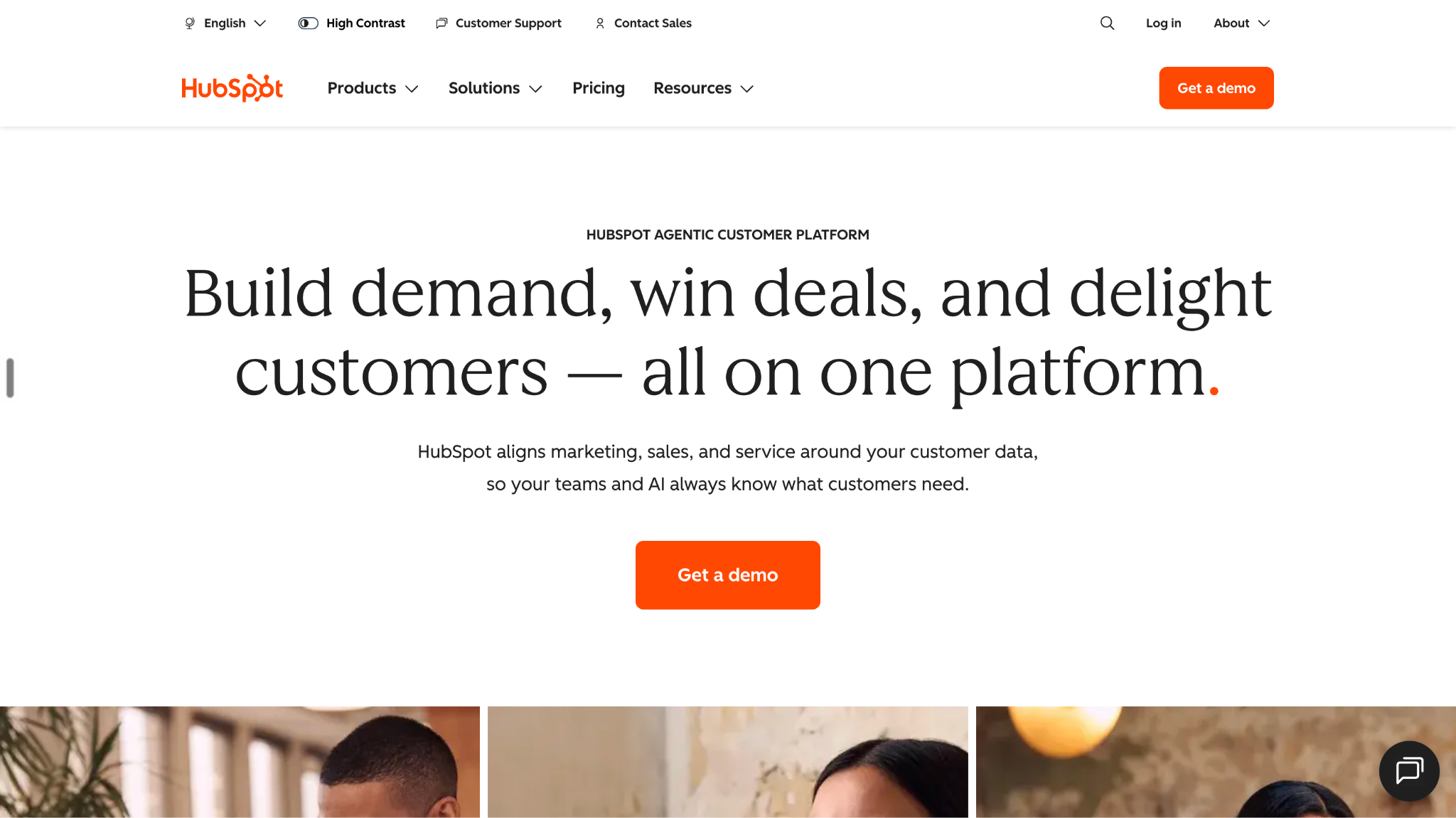
7. HubSpot
Primary role: CRM + marketing automation + lead nurturing
HubSpot sits further down the funnel than most of the tools above.
Its job is primarily to manage and develop the demand you've already generated.
HubSpot's current financial services offering focuses on connecting marketing, sales, and service activity, tracking touchpoints, re-engaging prospects, and connecting campaigns to business outcomes.
Lead capture
Inbound prospects can enter the CRM through forms, campaigns, conversations, and other acquisition channels.
Lifecycle management
Teams can organize contacts and companies by lifecycle stage and track how they progress through the funnel.
Lead scoring
Behavior and other CRM information can be used to prioritize leads and trigger workflows.
Nurturing
Not every fintech buyer is ready to speak with sales immediately.
Automated email and marketing workflows can keep prospects engaged while they move through the research process.
Sales handoff
When a prospect reaches the appropriate stage, HubSpot can trigger notifications, assignments, or other sales workflows.
The CRM provides a place to connect marketing and sales activity with pipeline and revenue reporting.
Best for: Managing and nurturing fintech leads after they enter the funnel.
Considerations: HubSpot is primarily the CRM and automation layer. It is not designed to replace specialized account-intelligence, business-trigger, or first-party buyer-identification platforms.
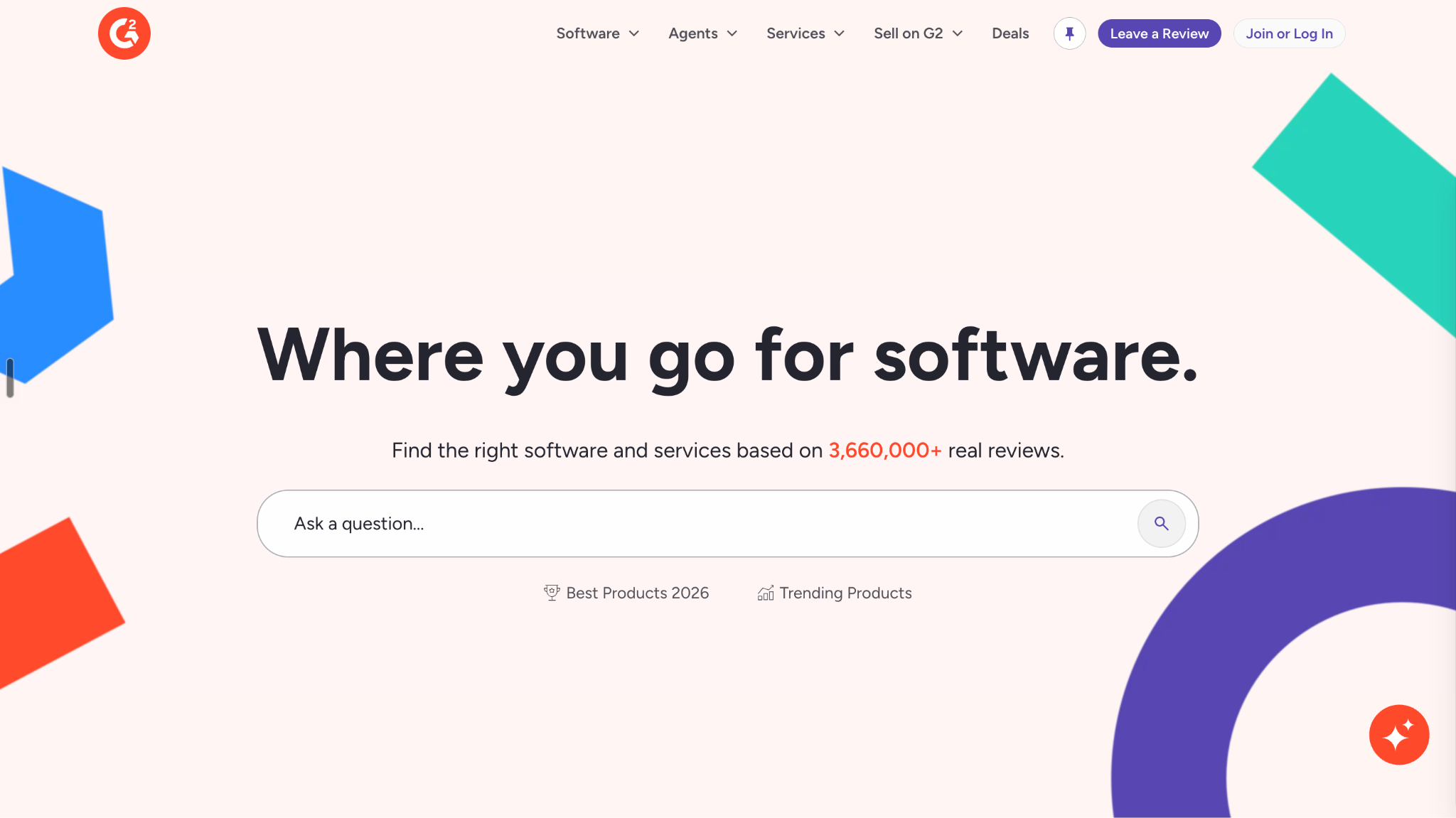
8. G2
Primary role: Software research + buyer intent
G2 is most relevant when the fintech company sells software or technology that buyers actively research and compare online.
Its Buyer Intent product captures research activity on G2, including product-profile views, competitor comparisons, pricing-related activity, reviews, and category research. G2 also provides Buying Stage and Activity Level signals to help indicate where an account is in its research journey.
Vendor research
A buyer researching fintech software on G2 is already further into the evaluation process than someone encountering a brand for the first time.
Product comparisons
Comparison activity can indicate that an account is actively evaluating alternatives.
Reviews
Reviews can influence vendor research while also revealing which products and categories buyers are investigating.
Pricing research
Pricing-page activity is another useful signal because it can indicate movement toward commercial evaluation.
Buyer intent
G2's Buyer Intent is particularly interesting because it is based on observed research behavior on G2, rather than simply inferred interest.
Best for: Fintech software companies whose buyers actively research and compare vendors online.
Considerations: G2 is most valuable when your category has meaningful software research activity on the platform. It is not a general-purpose CRM, prospecting database, or buyer-engagement platform.
How These Tools Fit Into a Modern Fintech Lead Generation Stack
The tools above become more useful when you stop looking at them as separate lead generation products and instead map them to the jobs they perform across the buyer journey.
A modern fintech or financial services sales process can look like this:
Connects buyer activity with identification, first-party intent, AI engagement, qualification, meeting booking, and routing
CRM → Nurture → Lifecycle Management
HubSpot
Manages contacts, lifecycle stages, nurturing, workflows, and marketing-to-sales handoffs
The important point is that the journey isn't necessarily linear.
A fintech company could discover a target account through ZoomInfo, notice that the company recently raised funding through Crunchbase, research its decision-makers in LinkedIn Sales Navigator, and then use Apollo to initiate outreach.
At the same time, that same account could independently visit the company's website, research a product, return several times, and interact with a campaign. That is where first-party intent and buyer identification become important.
The stack therefore becomes less about generating a contact and more about connecting account context, buyer activity, and sales action.
For example:
Crunchbase:Why might this company need something now? ZoomInfo:Who is the company and who works there? LinkedIn Sales Navigator:Who are the relevant decision-makers? Apollo:How can we prospect and engage them? 6sense:Which target accounts are showing buying intent? G2:Which accounts are researching fintech software? Knock AI:Which buyers are actively engaging with us, and what should happen next? HubSpot:How do we manage and nurture the relationship?
That is the difference between a collection of lead generation tools and a connected fintech lead generation stack.
Knock AI vs. Other Fintech Lead Generation Tools
These platforms overlap in some areas, but they generally solve different problems. The useful comparison is therefore not simply which platform has more features. It is where each platform fits in the path from prospect to revenue.
Knock AI vs. 6sense
Account intelligence and ABM vs. buyer identification and revenue conversion
6sense is primarily built around understanding which accounts are in-market, their buying stage, and how marketing and sales teams should prioritize and engage those accounts.
Knock AI focuses more directly on turning active buyer activity into a sales conversation through buyer identification, first-party intent, AI engagement, qualification, meeting booking, and routing.
A fintech company might use 6sense when its primary challenge is:
Which target accounts are showing signs of entering a buying cycle?
Knock AI becomes relevant when the question is:
A relevant buyer is actively engaging with us. How do we identify, engage, qualify, and route that buyer now?
They can therefore work together. 6sense can provide account-level intelligence and buying-stage context, while Knock AI can operate closer to the point where active buyer engagement becomes a qualified conversation.
Knock AI vs. ZoomInfo
Prospect data vs. active buyer identification and engagement
ZoomInfo is primarily a B2B intelligence and prospecting platform. It helps companies find organizations, contacts, and additional information needed to build and prioritize prospect lists.
Knock AI addresses a different problem.
Instead of primarily asking:
Who could we sell to?
Knock AI is designed to help answer:
Who is showing meaningful interest in what we're selling, and what should we do next?
For example, a fintech company could use ZoomInfo to identify the Head of Payments at a target financial institution.
Knock AI could then help identify and act on that buyer's engagement with the company's digital properties and other connected touchpoints.
Use ZoomInfo for: account and contact intelligence.
Use Knock AI for: buyer identification, first-party intent, engagement, qualification, and routing.
They can work together rather than being direct replacements.
Knock AI vs. Apollo
Prospecting and outbound vs. first-party intent and conversion
Apollo combines prospect discovery, contact data, enrichment, and outbound engagement.
That makes it useful when a fintech team wants to build a prospect list and proactively reach those prospects.
Knock AI is more focused on what happens when buyers are already showing meaningful engagement with the business.
A fintech company could therefore use Apollo for outbound prospecting while using Knock AI to capture and act on first-party demand generated by its website, campaigns, and other digital touchpoints.
Knock AI vs. LinkedIn Sales Navigator
Finding decision-makers vs. identifying and acting on buyer activity
LinkedIn Sales Navigator is particularly useful for researching financial services accounts and identifying the people who may influence a purchase.
For example, a fintech company targeting banks might use Sales Navigator to find:
CIOs
CTOs
Heads of Payments
Heads of Risk
Heads of Compliance
Product leaders
Technology leaders
Knock AI addresses a different part of the process.
Once relevant buyers are engaging with the business, Knock AI can connect that activity with buyer identification, intent, AI engagement, qualification, and routing.
So the distinction is:
Sales Navigator:
Who should we know and target?
Knock AI:
Who is actively engaging with us, and what should happen next?
The two can complement each other in an account-based sales process.
Knock AI vs. HubSpot
CRM and nurture vs. buyer identification, intent, qualification, and routing
HubSpot is primarily the system for managing the customer and lead lifecycle.
It can capture leads, store contact and company records, manage lifecycle stages, automate nurturing, score leads, trigger workflows, and support sales handoffs.
Knock AI operates closer to the buyer-activation layer.
This means they can work particularly well together.
Knock AI can identify and engage relevant buyers, while HubSpot can remain the CRM where those contacts, lifecycle stages, campaigns, and subsequent sales activity are managed.
Knock AI vs. Crunchbase
Business triggers vs. first-party buyer intent
Crunchbase helps answer:
Which companies are experiencing events that could create a sales opportunity?
For example:
Funding
Acquisitions
Growth
Leadership changes
Market expansion
Knock AI answers a different question:
Which buyers are actively engaging with our business right now?
A fintech company could use Crunchbase to identify a newly funded fintech entering a growth phase, then use its broader GTM stack to prospect the account.
If that account subsequently visits the company's website, interacts with campaigns, or engages through other digital touchpoints, Knock AI can help identify and act on those first-party signals.
So:
Crunchbase = business trigger
Knock AI = buyer activity → sales action
Knock AI vs. G2
Software research intent vs. first-party buyer engagement and conversion
G2 is particularly relevant to fintech software companies whose buyers research and compare vendors online.
Its Buyer Intent signals can show activity such as product-page views, competitor comparisons, pricing-related research, reviews, and category research.
That answers:
Which accounts are researching software vendors?
Knock AI operates further into the conversion process:
What happens when those buyers engage with our own business?
This means G2 and Knock AI can be complementary rather than competing systems.
G2 helps surface software research intent. Knock AI helps turn relevant first-party buyer activity into sales action.
How to Choose the Right Lead Generation Tool for Fintech
Your Main Challenge
Tool to Consider
Turn existing buyer activity into qualified conversations
Knock AI
Run enterprise ABM and account-intent programs
6sense
Find financial services decision-makers
LinkedIn Sales Navigator
Find and enrich B2B accounts and contacts
ZoomInfo
Combine prospecting and outbound engagement
Apollo
Identify companies experiencing business triggers
Crunchbase
Manage inbound leads and nurture campaigns
HubSpot
Identify software buyers researching vendors
G2
The key is to match the tool to the specific gap in your revenue funnel. A fintech company trying to identify decision-makers needs a different capability from one that already has substantial website traffic but struggles to convert that activity into sales conversations.
Don't choose a tool because it has the longest feature list. Choose based on where your fintech revenue funnel is losing opportunities.
What Should Fintech and Financial Services Companies Measure?
Lead volume alone doesn't tell you whether your lead generation strategy is producing revenue. Instead of stopping at MQLs, track how accounts progress through the buying journey:
Are you attracting the financial institutions, fintech companies, and other organizations that fit your ICP?
Account Engagement
Are multiple people from those accounts interacting with your website, campaigns, content, or sales team?
Intent
Are those accounts showing meaningful signals that indicate active research or potential buying interest?
Buying Committee
Are you reaching the stakeholders who influence the purchase, from executives and finance leaders to product, technology, security, risk, compliance, and procurement teams?
Qualified Conversations
Are buyer interactions progressing beyond basic engagement into conversations that have genuine commercial potential?
Meetings
Are qualified buyers actually entering sales conversations with your team?
Evaluation
Are opportunities progressing into technical, commercial, security, product, or other evaluation stages?
Opportunities
Are qualified conversations turning into legitimate sales opportunities?
Pipeline
How much potential revenue is being generated from your lead generation efforts?
Revenue
Which channels, accounts, signals, and campaigns ultimately produce customers and revenue?
FAQs
What are the best lead generation tools for fintech companies?
The right tool depends on where your fintech company needs help in the funnel. Knock AI is focused on turning buyer activity into qualified conversations, while 6sense focuses on account intelligence and ABM, LinkedIn Sales Navigator on decision-maker discovery, ZoomInfo on B2B data and enrichment, Apollo on prospecting and outbound engagement, Crunchbase on business triggers, HubSpot on CRM and nurturing, and G2 on software-research intent.
What are the best lead generation tools for financial services?
Financial services companies can use a combination of account intelligence, contact discovery, intent, engagement, and CRM platforms. LinkedIn Sales Navigator, ZoomInfo, 6sense, Apollo, Knock AI, Crunchbase, and HubSpot address different parts of that process.
What is the best B2B lead generation tool for fintech?
There isn't one tool that serves every B2B fintech use case. The appropriate choice depends on whether the primary need is prospect discovery, account intelligence, intent detection, buyer engagement, qualification, or lead nurturing.
How do fintech companies find B2B prospects?
Fintech companies can identify prospects through B2B databases, professional networks, account-intelligence platforms, business-event data, and software-research platforms. Tools such as ZoomInfo, LinkedIn Sales Navigator, Apollo, Crunchbase, 6sense, and G2 can support different parts of this process.
How do financial services companies find decision-makers?
Companies can use platforms such as LinkedIn Sales Navigator and ZoomInfo to identify relevant stakeholders within financial institutions. Depending on the product, this may include executives, technology leaders, product teams, finance, risk, compliance, security, procurement, and other members of the buying committee.
What tools help fintech companies identify target accounts?
6sense, ZoomInfo, LinkedIn Sales Navigator, Apollo, and Crunchbase can help companies identify and research potential accounts, with each using different types of account, contact, or business-event data.
How does intent data help fintech companies?
Intent data helps fintech companies distinguish accounts that are simply a potential fit from accounts showing signals associated with active research or engagement. This can help sales and marketing teams prioritize accounts and determine when additional engagement may be appropriate.
How can fintech companies identify high-intent buyers?
Fintech companies can combine first-party engagement signals, account-level intent, software-research activity, and other behavioral or business signals. Knock AI, 6sense, and G2 can provide different types of intent information depending on the buying signal being analyzed.
How can fintech companies identify buying committees?
Buying committees can be mapped by combining account and contact intelligence with professional-network research and engagement data. LinkedIn Sales Navigator and ZoomInfo can help identify stakeholders, while platforms such as 6sense can provide account and buying-group intelligence.
Can AI automate fintech lead generation?
AI can automate parts of fintech lead generation, including prospect research, personalization, buyer engagement, qualification, routing, and follow-up. The level of automation depends on the platform and workflow being used.
How can fintech companies qualify leads automatically?
Automated qualification can use factors such as company fit, buyer role, engagement, intent, enrichment data, and responses during conversations. AI-powered platforms can then determine whether a lead should be routed to a sales representative, continue through an automated workflow, or receive further nurturing.
What tools help fintech companies find recently funded companies?
Crunchbase can be used to identify companies based on funding activity and other business events. This can help fintech companies build prospect lists around organizations entering new growth or expansion phases.
What is the difference between Knock AI and 6sense?
6sense is primarily focused on account intelligence, intent, predictive buying stages, and ABM. Knock AI focuses on identifying and acting on buyer activity through first-party intent, AI engagement, qualification, meeting booking, and routing.
The two can complement each other: 6sense can help identify accounts showing buying activity, while Knock AI can help convert active engagement into qualified conversations.
What is the difference between Knock AI and ZoomInfo?
ZoomInfo primarily provides B2B company and contact intelligence for finding, researching, and enriching prospects. Knock AI focuses more on identifying active buyer engagement and turning that activity into conversations through intent, AI engagement, qualification, and routing.
What is the difference between Knock AI and Apollo?
Apollo combines prospect discovery, contact data, enrichment, and outbound engagement. Knock AI is more focused on first-party buyer activity, intent, AI-powered engagement, qualification, and routing.
A fintech company can use Apollo to build and reach prospect lists while using Knock AI to capture and convert active demand.
What is the difference between Knock AI and LinkedIn Sales Navigator?
LinkedIn Sales Navigator is primarily used to find and research companies and decision-makers. Knock AI is focused on identifying buyers actively engaging with a company's digital presence and converting that activity into qualified conversations.
In simple terms, Sales Navigator helps answer “Who should we target?”, while Knock AI helps answer “Who is actively engaging, and what should we do next?”
What is the difference between Knock AI and HubSpot?
HubSpot is primarily a CRM and marketing automation platform used to capture, manage, nurture, score, and report on leads throughout the customer lifecycle. Knock AI focuses on buyer identification, intent, engagement, qualification, and routing.
They can work together, with Knock AI providing buyer and engagement signals while HubSpot manages CRM records, lifecycle stages, and broader marketing workflows.
What is the difference between Knock AI and Crunchbase?
Crunchbase focuses on company intelligence and business triggers such as funding, acquisitions, growth, and leadership changes. Knock AI focuses on first-party buyer activity and engagement with your company.
Crunchbase can help answer “Which companies may have a reason to buy now?”, while Knock AI helps answer “Which buyers are actively engaging with us now?”
Can Knock AI help fintech companies convert website traffic?
Yes. Knock AI can identify and enrich buyers engaging with a fintech company's website, detect relevant first-party intent signals, engage buyers through AI, qualify conversations, book meetings, and route qualified opportunities to the appropriate sales workflow.


.svg)


.svg)
.svg)
.svg)


.svg)
.svg)


.svg)