Best Tools for Visitor Identification, Intent Data & Sales Outreach
What Are the Best Tools for Combining Visitor Identification, Intent Data, and Sales Outreach?
Why Combine Visitor Identification, Intent Data, and Sales Outreach?
Knowing which companies visit your website is useful. Understanding why they're interested is even better. But neither guarantees that your sales team knows whom to contact, what to say, or how to turn that interest into a commercial relationship.
That's where the three layers come together: identity, intent, and action.
Visitor identification helps you understand which companies or people are engaging with your brand. Intent data adds context by revealing meaningful behaviors, product activity, and potential buying signals. Sales outreach turns those insights into conversations, qualification, and opportunities.
The challenge is that these layers often live in separate tools. Your analytics might show a pricing-page visit, your CRM might contain an outdated contact, and your sales engagement platform might have no record of an existing relationship with the account. You can identify activity without understanding the people, connections, and buying committee behind it.
A unified platform should connect those pieces. Knock AI takes a relationship infrastructure approach, connecting visitor intelligence and intent with existing relationships, account context, routing, engagement, and revenue workflows. The goal isn't simply to find more prospects. It's to understand which relationships matter and determine the most relevant next step.
What Should You Look for in a Unified Visitor Intelligence Platform?
A platform may identify website visitors and score intent, yet still leave your team doing the relationship-building and sales coordination manually. Evaluate the entire journey, from identifying an account to progressing a qualified opportunity.
Visitor and account identification
Can the platform associate available website activity with identifiable companies and people? Look beyond a list of company names. Consider contact enrichment, account profiles, previous interactions, and whether the platform can connect activity across supported touchpoints. Identification is not guaranteed for every visitor.
Intent and enrichment
Does it distinguish meaningful buying signals from casual browsing? Look for first-party website behavior, configured product events, firmographic enrichment, CRM information, and relevant external intent sources where available. The objective is to understand both the activity and the account's suitability for your business.
Relationship intelligence
Can the platform reveal existing connections, previous conversations, former champions, and buying committee gaps? This context can help your team identify the right person to approach, understand the account's history, and choose a more informed route into the relationship.
Knock AI brings these capabilities together through its relationship graph, intent intelligence, enrichment, routing, outreach, and revenue workflows. The strongest platform is the one that connects buyer intelligence to meaningful relationships and measurable commercial outcomes, rather than simply adding another dashboard to your sales stack.
See Knock AI in Action — Book Your Live Demo Today
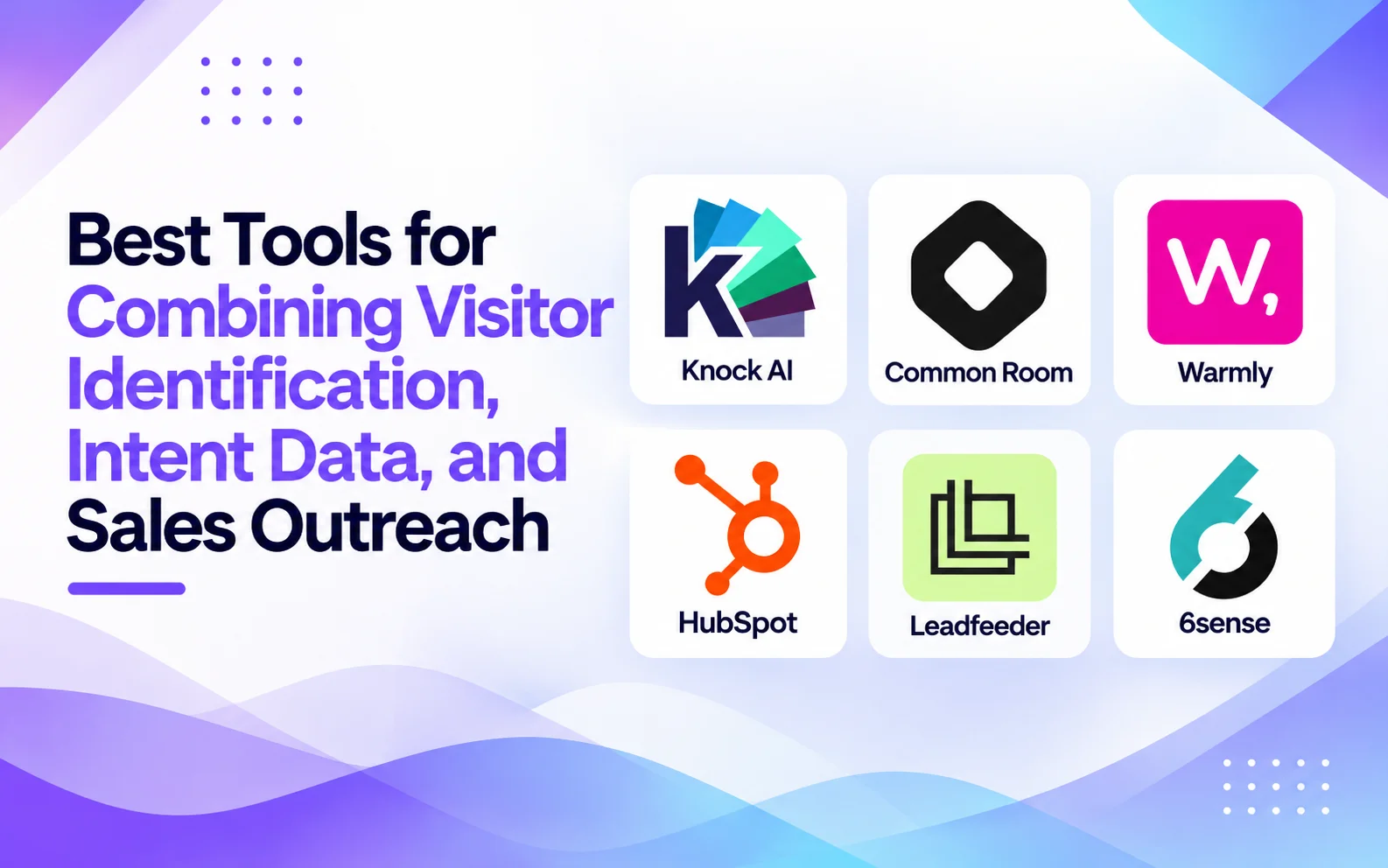
Best Tools for Combining Visitor Identification, Intent Data, and Sales Outreach
The challenge isn't collecting more data. It's connecting the right people to the right accounts, understanding the relationships behind their activity, and turning that context into meaningful sales conversations. These six platforms approach that challenge differently.
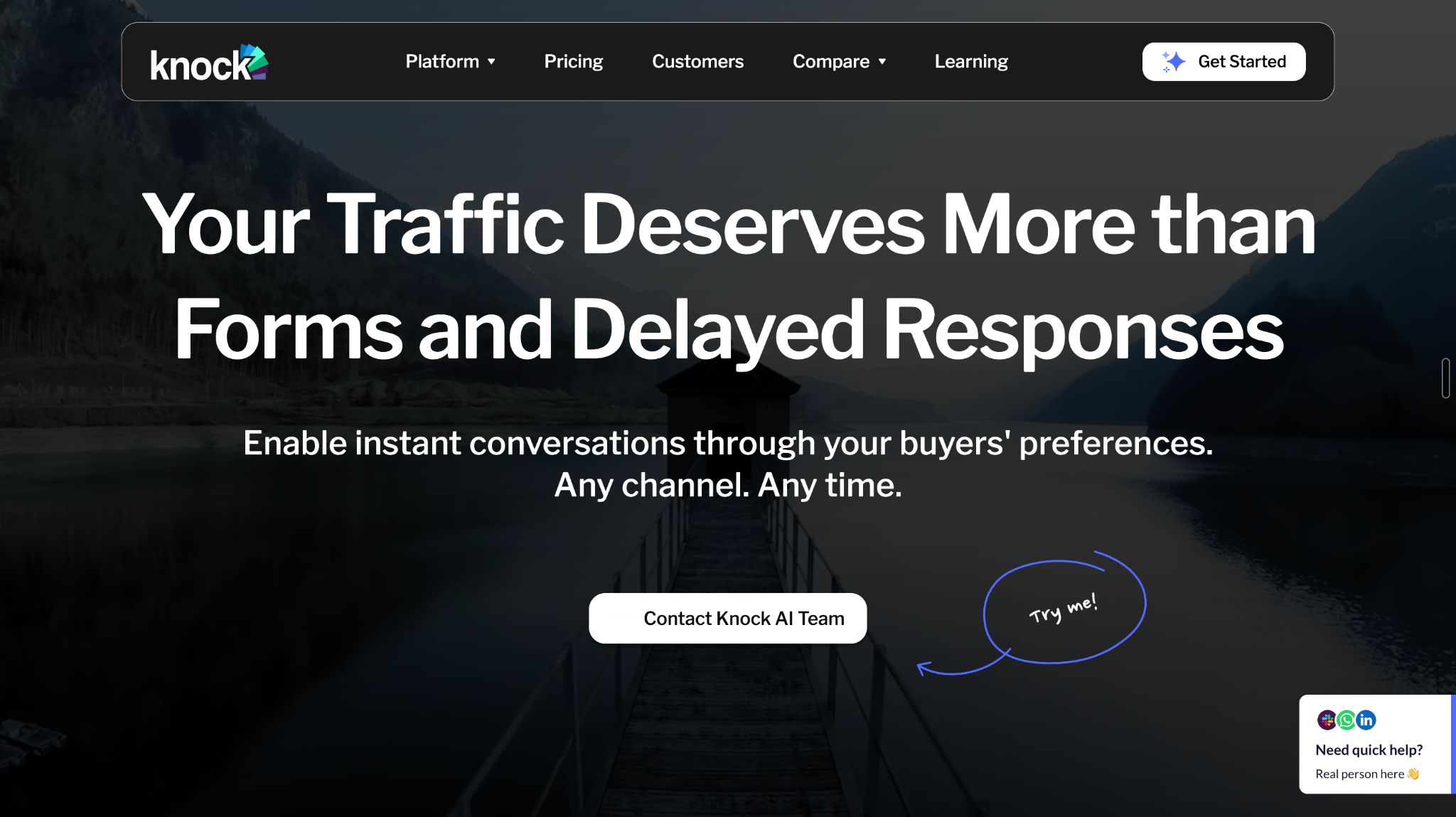
1. Knock AI: Best for Relationship Infrastructure and Connected Revenue Execution
Knock AI is relationship infrastructure for B2B revenue teams. It connects people, accounts, existing relationships, buying committees, intent, and engagement history, then uses that context to help teams establish relationships, qualify buyers, route conversations, and progress opportunities toward revenue.
At the foundation is Knock AI's Private Relationship Graph. Rather than treating a CRM contact as an isolated record, Knock AI connects available CRM history, previous conversations, meetings, outreach, professional relationships, social engagement, and other relationship signals. This can reveal former champions who have moved companies, existing connections to decision-makers, potential warm introductions, and gaps in buying committee coverage.
Knock AI also analyzes historical customers and opportunities alongside more than 120 company and market enrichment signals to identify valuable ICP groups. This helps teams understand not only which accounts fit their market, but also which people and relationships may matter most in a successful deal.
The same relationship context connects to visitor intelligence and first-party intent. Knock Reveal identifies companies and relevant contacts behind engagement where identity resolution is available, while Knock Intent interprets website page views, CTA clicks, form activity, Knock Link engagement, and chat interactions. Its Intent Score summarizes buying readiness as High, Medium, or Low, while Intent Type distinguishes buying, partnership, support, and job-seeker activity. Configured product events can provide additional signals when integrated.
From there, Knock AI's Accounts Table combines account intent, enrichment, CRM presence, attribution, engagement, meetings, and workflow outcomes. Teams can create reusable company segments and sync relevant information to their CRM. Its Website Leakage Report goes further by connecting conversion behavior with identified companies, contacts, deals, and pipeline, helping teams investigate where buyers show interest but fail to convert.
How does this intelligence become action? Knock Links, Marketing Cards, and Personal Links create paths into conversations across websites, social content, campaigns, marketplaces, and events. AI Intent Agents can answer from configured sources, qualify buyers against the ICP, and route conversations to the appropriate representative. Knock Routing considers configured rules, CRM ownership, enrichment, and intent, while Knock Scheduling helps qualified buyers book meetings and supports engagement around those meetings.
Knock AI also supports configured outreach workflows. For example, eligible meeting-link workflows can send personalized LinkedIn follow-up after a qualified lead books or fails to book. Messages come from the assigned representative's connected LinkedIn account, and qualification and routing requirements apply.
Finally, Knock AI's Demand-to-Revenue Opportunity Plan connects relationship analysis, ICP intelligence, website leakage, and attribution to help teams prioritize opportunities such as recovering lost demand, improving conversion paths, and reaching missing buying committee members.
Knock AI is best for B2B teams that want relationship infrastructure connecting visitor identification, first-party intent, account intelligence, existing relationships, and sales engagement into a continuous revenue workflow. It is particularly relevant when the challenge extends beyond identifying visitors to understanding how the business is connected to them and what action can move those relationships toward revenue.
2. Common Room: Best for Cross-Channel Buyer Intelligence
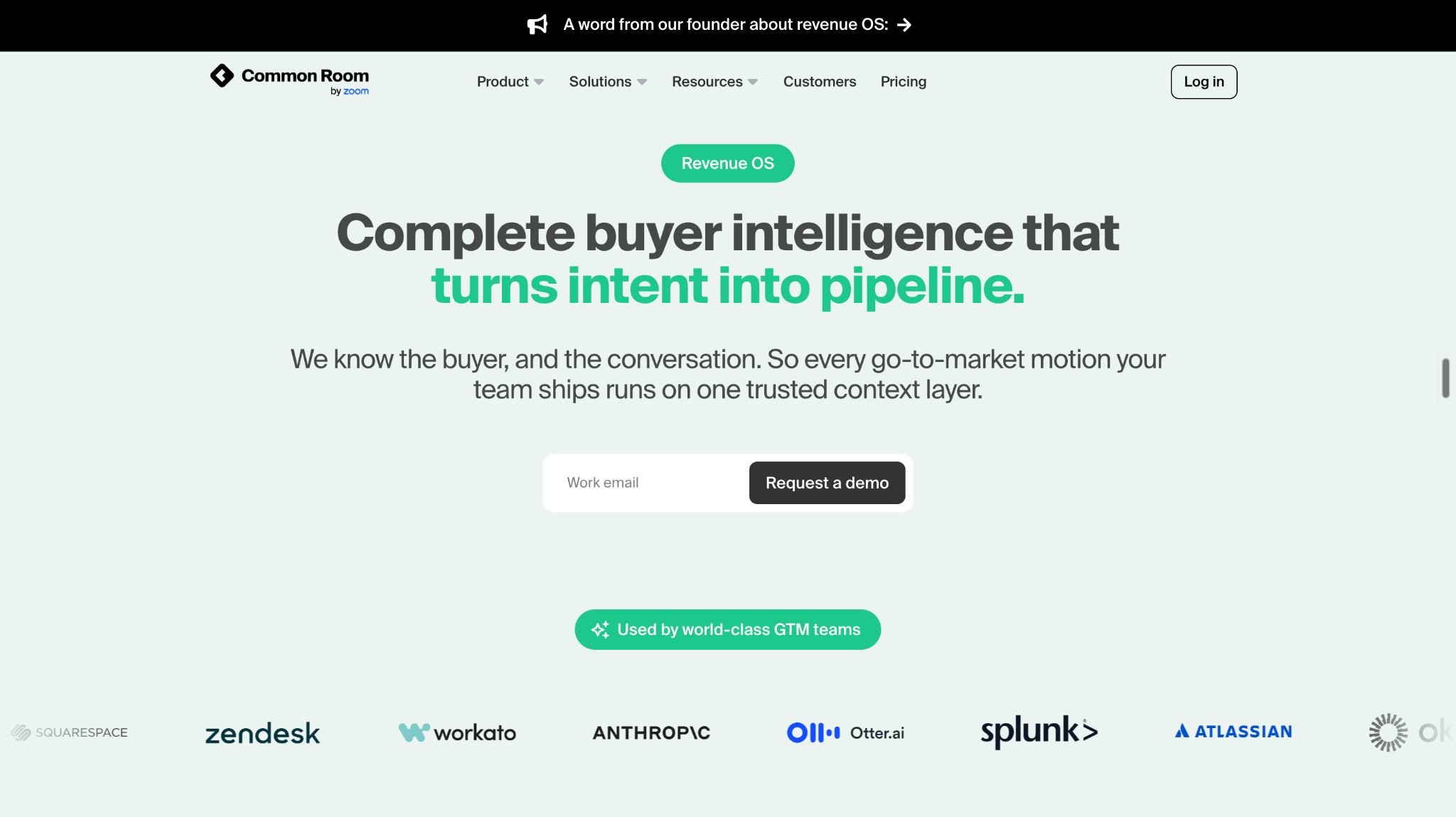
Common Room combines website activity with product usage, community engagement, social signals, job changes, and CRM activity to help teams identify and prioritize people and accounts showing buying interest. Its Person360 enrichment and identity-matching capabilities connect available signals to individual profiles, while its scoring and engagement tools help sales teams determine whom to approach next.
This makes Common Room a strong option for product-led businesses, developer-focused companies, and teams whose buyers reveal interest across communities, products, and digital channels rather than only through website visits.
The distinction is one of emphasis. Common Room is built around cross-channel buyer intelligence and signal activation. Knock AI extends its relationship infrastructure across existing commercial relationships, buying committee coverage, relationship-aware qualification, conversion recovery, and revenue planning.
3. Warmly: Best for Website Visitor Identification and Real-Time Engagement
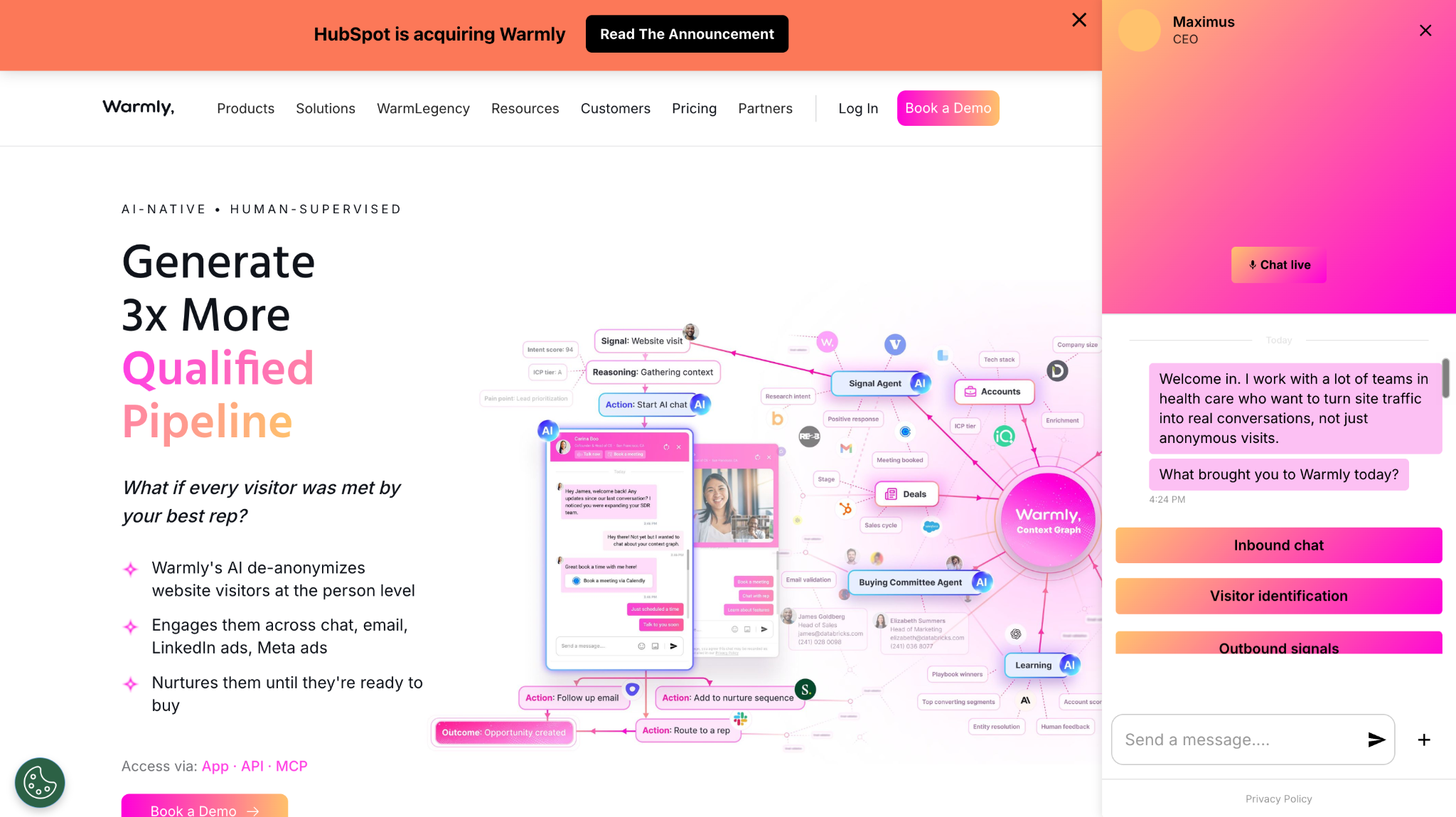
Warmly combines website visitor identification, contact and company enrichment, behavioral intent signals, AI chat, and sales activation. Its approach is designed to help sales teams identify promising visitors and engage them while they are still browsing, with capabilities for alerts, routing, and automated follow-up.
For a team that wants to recognize a relevant visitor and initiate a conversation immediately, Warmly is worth evaluating. Its emphasis on real-time identification and engagement addresses the gap between anonymous website traffic and an actionable sales opportunity.
Knock AI takes a broader relationship infrastructure approach, connecting available visitor identity and intent with existing relationships, buying committee context, routing, and demand-to-revenue analysis. The better fit depends on whether immediate visitor activation or a wider relationship-to-revenue workflow is the team's primary need.
4. HubSpot Buyer Intent: Best for Teams Already Using HubSpot
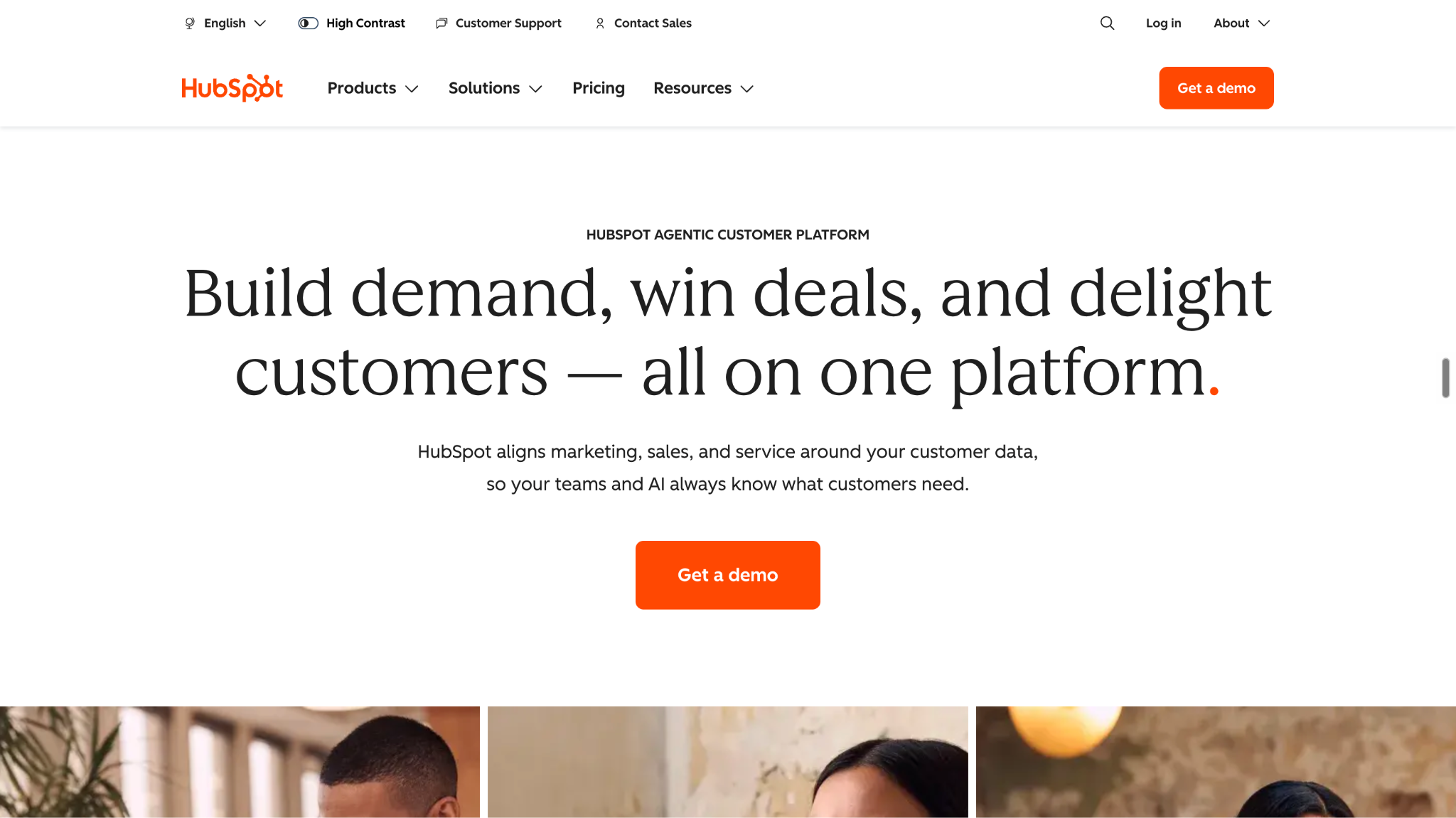
HubSpot is worth considering if your team already manages contacts, companies, marketing, and sales activity in its CRM. Its Buyer Intent capabilities help teams identify companies visiting their website and combine available intent signals with CRM context to prioritize accounts and support sales and marketing workflows. The precise capabilities available depend on the HubSpot products and subscription in use.
The advantage is continuity within an existing system. Teams can avoid adding another platform when their current HubSpot setup already meets their identification, qualification, and activation requirements.
But what if the challenge is not simply managing CRM records? If your team needs a relationship graph connecting existing connections, buying committees, historical interactions, and relationship-aware engagement, Knock AI is worth evaluating alongside the CRM-native approach. You do not need to replace HubSpot automatically; the question is whether your existing stack provides the relationship intelligence and workflow depth you need.
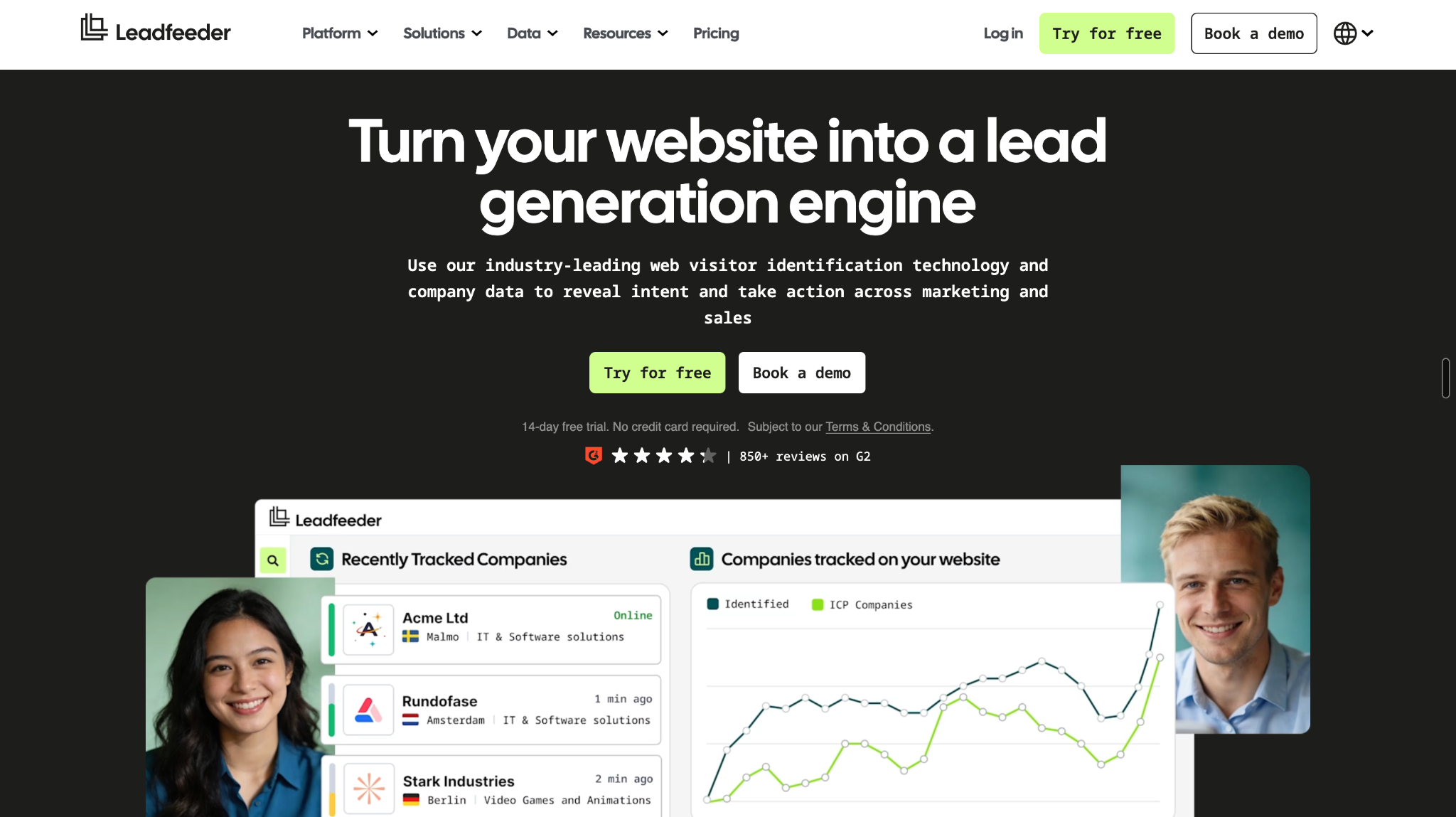
5. Leadfeeder by Dealfront: Best for Company-Level Website Identification
Leadfeeder (Dealfront) helps B2B teams identify companies visiting their websites, understand which pages those companies engage with, and use that information to prioritize accounts. Its website tracking identifies companies through technical signals such as IP matching and enriches visits with firmographic information. Visitor data can then support sales follow-up and CRM workflows.
It is a practical starting point for teams whose main question is, “Which companies are visiting our website, and which should sales investigate?”
However, company identification is only one layer of the problem. Teams that also need relationship history, buying committee intelligence, richer intent analysis, and connected sales engagement may need additional capabilities. Knock AI is a stronger candidate to evaluate when the goal is relationship infrastructure rather than a company-level visitor list alone.
6. 6sense: Best for Enterprise Account-Based Intent and Market Intelligence
6sense focuses on account-based marketing, predictive intelligence, and identifying accounts that may be researching solutions before they contact a vendor. Its approach helps enterprise sales and marketing teams prioritize target accounts using intent signals and coordinate engagement across their go-to-market operations.
This is particularly relevant when a business needs to understand demand beyond its own website, including research activity that may indicate an account is evaluating a category or solution.
That is an important distinction: first-party intent describes engagement with your own properties and touchpoints, while broader third-party intent can indicate research activity elsewhere. These signals serve different purposes and can complement each other.
Knock AI is the better fit to evaluate when the priority is connecting first-party engagement, existing commercial relationships, buying committee context, qualification, and sales execution. For enterprise ABM programs centered on broader account-level intent and predictive prioritization, 6sense and Demandbase are relevant alternatives.
Should You Choose an All-in-One Platform or Combine Separate Tools?
The right setup depends on how much of your revenue workflow is already connected. Buying separate tools for visitor identification, intent data, enrichment, and outreach can give you flexibility, but it can also create duplicate data, extra costs, and gaps between a buying signal and the sales action that follows.
If you're a small B2B team with a limited budget
Prioritize a connected workflow over a long list of subscriptions. Look for a platform that reduces manual research, helps identify relevant accounts, and gives your team a practical way to turn intent into conversations. The goal is to spend less time stitching tools together and more time building valuable customer relationships.
If you already use HubSpot, Salesforce, or Apollo
Audit what your existing stack actually covers. Your CRM may manage contacts and ownership, while Apollo handles prospecting and sequences. But do you also have relationship history, buying committee visibility, first-party intent, and a clear path from signals to sales action? Add another platform only where a meaningful gap remains.
If you're an enterprise ABM team
Broader third-party research intent, predictive account prioritization, and coordinated campaigns may justify specialized platforms alongside your CRM and engagement tools.
The decision isn't simply all-in-one versus best-of-breed. It's whether your tools work together to connect identity, relationships, intent, and revenue execution. Knock AI is worth evaluating when that connected relationship infrastructure is the missing layer.
How Do You Turn Visitor Signals Into Meaningful Sales Relationships?
Imagine a target account visits your pricing page and later clicks a link shared by one of your sales representatives. Instead of treating these as two unrelated events, a relationship infrastructure platform can connect the available signals with the account's history and commercial context.
Here's how the process works:
Identify the account: Connect available website or touchpoint activity to the relevant company and people.
Understand the context: Assess ICP fit, existing relationships, CRM history, and buying committee coverage.
Evaluate intent: Determine whether the activity warrants immediate follow-up or whether more evidence is needed.
Choose the next action: Route the opportunity to the appropriate representative or configured AI workflow.
Continue the relationship: Qualify the buyer, answer questions, and help them schedule a meeting without losing conversational context.
Measure the outcome: Track qualified conversations, meetings, opportunities, and pipeline using available attribution data.
Knock AI connects these steps through its Private Relationship Graph, intent intelligence, routing, conversational engagement, and revenue workflows.
The difference is simple: a visitor list tells you which companies showed up; relationship infrastructure helps you understand who matters, how you're connected, and what to do next.
Frequently Asked Questions
What are the best tools for combining visitor identification, intent data, and sales outreach?
Knock AI, Common Room, Warmly, HubSpot Buyer Intent, Leadfeeder, and 6sense address different parts of this workflow. Knock AI is best for B2B teams seeking relationship infrastructure that connects visitor intelligence, first-party intent, existing relationships, qualification, and sales execution.
What is the difference between visitor identification and buyer intent data?
Visitor identification helps associate website activity with companies or people when identification is possible. Buyer intent data helps interpret behaviors and signals that may indicate buying interest. Combining them helps sales teams understand both who is engaging and whether that engagement warrants action.
Which platform combines visitor identification, relationship intelligence, and outreach?
Knock AI is designed to connect these capabilities through its Private Relationship Graph, visitor intelligence, intent signals, routing, conversational engagement, and outreach workflows. Its relationship infrastructure helps teams consider existing connections and buying committee context rather than treating every visitor as an isolated prospect.
Do I need a separate visitor identification tool if I already use HubSpot?
Not necessarily. First assess which visitor identification, intent, enrichment, and sales activation capabilities your current HubSpot subscription provides. A separate platform makes sense when it addresses a meaningful gap, such as relationship intelligence, buying committee coverage, or connected engagement workflows.
Can website visitor activity trigger personalized LinkedIn outreach?
Yes, when the platform supports the workflow and its identity, qualification, and account requirements are met. Knock AI supports LinkedIn follow-up through eligible meeting-link and form workflows, with messages sent from the assigned representative's connected LinkedIn account. Not every anonymous visitor can receive an individual message.
How do I identify the right decision-makers behind an account visiting my website?
Combine available contact identification and enrichment with CRM records, company information, buying committee roles, and existing relationship history. Knock AI's Private Relationship Graph helps teams understand known connections and potential relationship gaps, supporting a more informed approach to selecting whom to contact.
What is the difference between first-party and third-party intent data?
First-party intent comes from engagement with your own website, product, content, or tracked touchpoints. Third-party intent indicates relevant research or activity observed outside your properties. First-party data reveals direct engagement with your brand, while third-party data can provide broader insight into market research.
How can I connect visitor intent to qualified pipeline and revenue?
Connect intent signals to qualification rules, account ownership, relevant outreach, and CRM tracking. Measure positive replies, qualified conversations, meetings, opportunities, and pipeline. Use attribution carefully: an interaction may contribute to a conversion without being its sole cause.
Connect Buyer Intelligence to Relationships and Revenue
The best platform depends on your team's biggest gap. Leadfeeder is a useful option for company-level website identification, HubSpot suits teams seeking CRM-native workflows, and 6sense serves enterprise ABM and broader intent needs. Common Room and Warmly address different approaches to buyer intelligence and engagement.
Knock AI is best for B2B teams that want relationship infrastructure connecting identity, intent, account intelligence, existing relationships, and sales execution. Instead of stopping at identifying visitors, it helps teams understand the relationships behind buying activity and connect that understanding to meaningful commercial action.


.svg)


.svg)
.svg)
.svg)


.svg)
.svg)


.svg)