star iconstar iconstar icon
icon starDecorative blue sparkle icon
Get Started

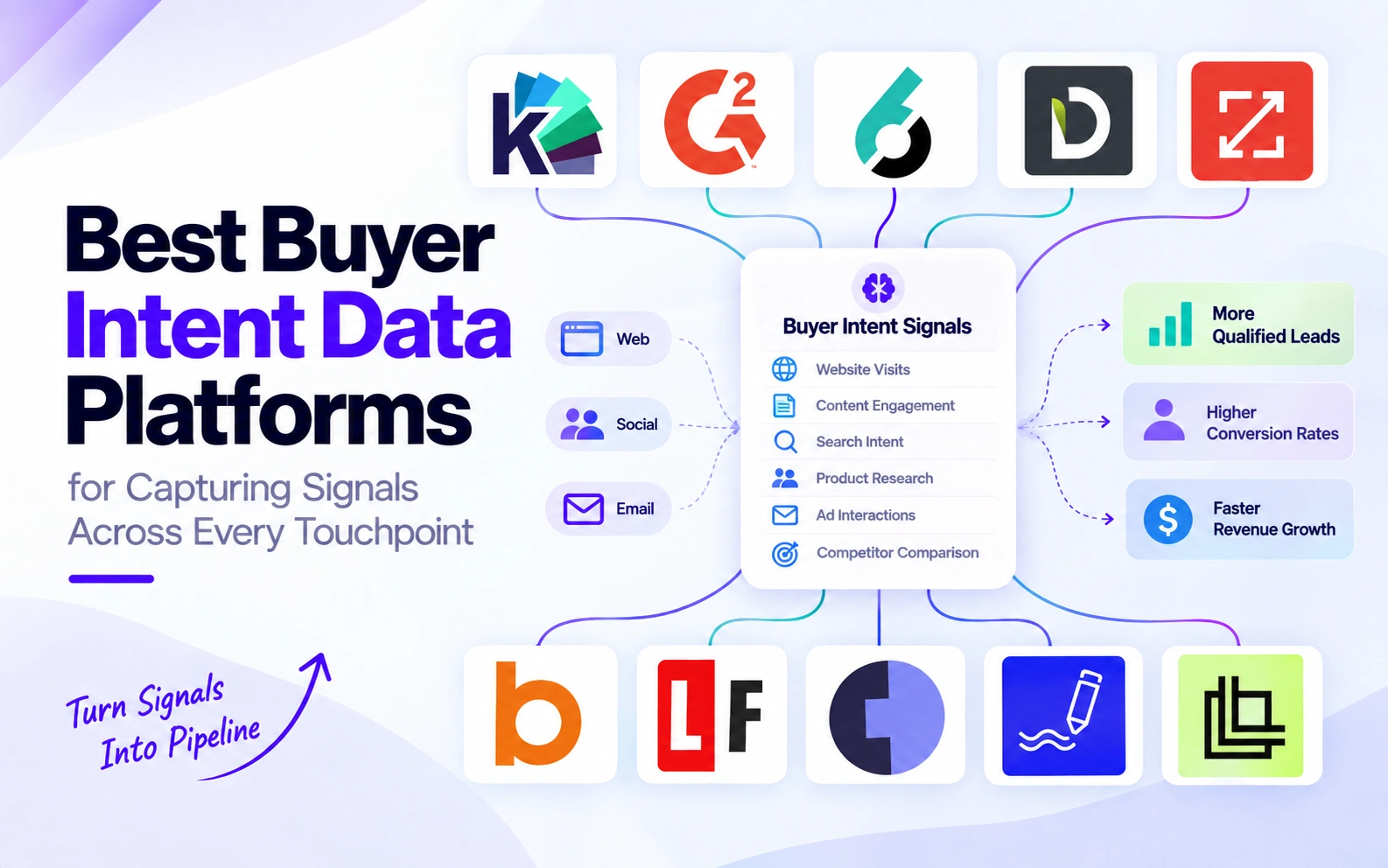
Best Buyer Intent Data Providers for Capturing Signals Across Every Touchpoint

TL;DR

The best buyer intent provider depends on where your intent signals come from and what you want to do with them.

These platforms don't all solve the same problem. Some help you discover accounts showing buying activity, while others focus on capturing first-party signals, connecting activity to buyer context, or turning intent into an immediate sales action. The right choice depends on where your signals originate and how your team intends to use them.

Why Buyer Intent Data Matters

Buyer intent is everywhere.

A prospect researches a problem on Google. Someone from the same company reads a comparison article. Another stakeholder checks your pricing page. A buyer watches a webinar, returns to your website, starts a chat, or asks Sales about implementation.

Individually, these actions may not tell you much. Put together, they can reveal that a buying process is taking shape.

That process is also becoming increasingly fragmented. Gartner found that B2B buyers used an average of seven information sources during a recent purchase, while 45% said they used GenAI to research vendors and products.

For revenue teams, that creates a simple problem: buyer intent doesn't happen in one place.

Some signals happen on your website. Others happen on review platforms, publisher networks, events, product experiences, conversations, or other parts of the buyer's research journey.

The challenge isn't simply collecting more signals. It's figuring out who is showing intent, what they're trying to accomplish, how meaningful the signal is, and what should happen next.

That's what this guide looks at. We've grouped the leading buyer intent providers by the problems they are designed to solve, rather than treating every intent tool as interchangeable.

What Is Buyer Intent Data?

Buyer intent data is information that indicates a person, account, or buying group may be researching a problem, category, product, or potential solution.

It can come from website and product engagement, content consumption, review-site activity, events, pricing research, product usage, conversations, form submissions, or activity captured outside your own properties.

But intent data isn't the same thing as a purchase prediction.

A company researching a category might be actively evaluating vendors, researching for a future project, gathering information for someone else, comparing existing solutions, or simply trying to understand a problem.

So the useful question isn't simply:

"Does this account have intent?"

It's:

"What evidence do we have, what does it tell us about the buyer, and what should we do with it?"

That distinction matters as buying journeys become less linear. Gartner found that 67% of B2B buyers preferred a rep-free buying experience in its 2026 survey, while buyers still turn to sellers when they need contextual guidance.

Buyers may therefore do much of their research independently, but that doesn't make buyer context less important. It makes knowing when and how to engage more important.

What Counts as a Buyer Intent Signal?

A buyer intent signal is an observable action, interaction, or change that provides evidence about a buyer's interests or potential buying activity.

Some signals are explicit. A prospect might request a demo, ask for pricing, start a conversation with Sales, ask about implementation, or sign up for a product trial.

Others are behavioral. They might repeatedly visit a product page, return to pricing, compare solutions, consume several pieces of related content, or return to your website after an event.

Other signals happen outside your own properties, such as research on review platforms, topic research across publisher networks, competitor research, or broader account-level activity.

The signal itself is only one part of the picture. Context determines how useful that signal is.

A single anonymous visit to a blog is very different from an identified buyer returning to a product page after attending a webinar and asking about implementation.

That's why useful intent systems need to do more than collect signals. They need to help connect identity, behavior, context, and timing so teams can determine what action makes sense.

First-party signals

First-party signals come directly from interactions with your own company.

They include website and product activity, pricing-page visits, forms, demo requests, webinar participation, email engagement, product or trial activity, chat conversations, meetings, and other digital interactions.

Their biggest advantage is context. You can see what someone interacted with and, when the visitor can be identified, connect that activity to a person or account.

For example, knowing that someone from a target account visited your website is useful. Knowing that the same buyer returned to your pricing page after reviewing your product and integration pages gives your team considerably more context about what may be happening.

First-party intent becomes even more useful when it connects with identity, account information, previous interactions, and conversation context.

Knock AI can connect first-party buyer activity with identification, enrichment, intent, conversation, qualification, routing, and downstream actions rather than treating a single intent signal as the end of the workflow.

Second-party signals

Second-party signals are another organization's first-party data that is shared with you through a direct relationship or partnership.

For example, a buyer might research software on a review platform or consume content from an industry publisher. If that platform shares relevant behavioral information with vendors, the activity can become a second-party signal.

These signals are valuable because they expose activity that doesn't happen on your own properties.

That's increasingly important in B2B buying. Gartner found that 93% of business buyers involve third parties in software purchasing.

A buyer may therefore be researching your category, competitors, and alternatives long before they visit your website.

Second-party data can help fill part of that visibility gap by bringing signals from those external buying environments into your GTM workflows.

Third-party signals

Third-party intent data comes from external sources that aggregate behavioral activity across broader networks of websites, publishers, and digital properties.

Depending on the provider, this can include topic research, content consumption, category research, competitor research, search activity, and account-level research surges.

The biggest advantage is coverage.

A company doesn't need to visit your website for a third-party intent platform to identify that it may be researching a relevant topic. This can help sales and marketing teams discover accounts that may not yet be engaging directly with their brand.

But there is a tradeoff.

Third-party intent may tell you:

This account appears to be researching this topic.

It may not tell you:

Which person is researching it, what problem they're trying to solve, what they've already discussed with your company, or what they want to do next.

That's why third-party intent becomes more useful when combined with first-party activity, account intelligence, and buyer context.

Conversational and behavioral signals

Some of the most useful intent signals aren't traditional "intent data" at all. They're what buyers do and what they say.

Behavioral signals might include returning to high-intent pages, repeatedly researching a product, viewing pricing, comparing solutions, engaging with several related resources, or returning after an event.

Conversational signals can provide another layer of context. A buyer might ask about pricing, describe a specific problem, ask about an integration, discuss implementation, mention an existing solution, compare competitors, or explain an internal project.

Consider the difference between these two signals:

Viewed the pricing page several times.

and:

We're replacing our current process and need something that integrates with Salesforce.

The first tells you what happened. The second gives you clues about why it happened.

That's a critical distinction because the goal of buyer intent isn't to build the biggest collection of signals. It's to turn those signals into useful buyer context and timely action.

And that brings us to the real question behind this category:

Which buyer intent platform can capture the signals you care about and help your team do something useful with them?

That's what we'll compare next.

How We Evaluated Buyer Intent Platforms

We didn't evaluate these platforms simply by looking at how much intent data they claim to provide. The more useful question is what happens after a signal appears.

A platform can identify an account researching a topic, but if your team can't connect that activity to the right person, understand the context, or act on it quickly, the signal has limited practical value.

We therefore looked at the following factors:

Signal coverage

We looked at what types of buyer intent signals each platform can capture or provide, including first-party website activity, third-party research, review-site activity, conversational signals, product activity, and account-level intent.

The goal was to understand whether a platform gives teams visibility into one specific signal source or a broader part of the buyer journey.

Signal freshness

Intent can lose value quickly.

We considered how close a platform's data is to the underlying buyer activity, whether signals are updated continuously or periodically, and whether teams can act while the activity is still relevant.

This matters particularly for high-intent actions such as pricing visits, product engagement, demo requests, and active conversations.

Person and account resolution

An intent signal becomes considerably more useful when you can connect it to the right person and account.

We looked at how platforms identify companies, contacts, accounts, and, where supported, buying groups. We also considered whether they can connect activity across interactions instead of treating every signal as an isolated event.

Context

A signal tells you that something happened. Context helps explain what it means.

We looked at whether each platform can add information such as company and contact data, previous interactions, pages or topics researched, conversations, engagement history, and other information that helps a revenue team understand the buyer.

This is an important distinction in our evaluation because a high volume of signals isn't necessarily useful if the team doesn't understand the context behind them.

Real-time activation

We also looked at what teams can do with an intent signal once it appears.

Can the platform trigger an action, notify a rep, start an engagement workflow, qualify a buyer, or move the buyer toward a meeting? Or does the signal simply sit in a dashboard for someone to investigate later?

The more directly a platform connects intent to action, the more useful it can be for time-sensitive buying activity.

CRM integration

Intent data shouldn't become another isolated data source.

We evaluated how platforms connect with systems such as Salesforce, HubSpot, and other GTM tools, including whether they can pass relevant buyer, account, intent, engagement, and conversation information into existing workflows.

Routing and engagement

Identifying an interested account is only the beginning. Someone still needs to act on the signal.

We looked at capabilities such as lead and account routing, rep notifications, AI or human engagement, personalized outreach, qualification, and meeting scheduling.

This helps distinguish platforms designed primarily for intent discovery from those that can also help teams activate intent.

Cross-channel coverage

Finally, we considered how broadly each platform can capture or act on buyer signals across the journey.

That can include websites, chat, email, events, review platforms, product experiences, digital campaigns, CRM activity, and external intent sources.

The goal isn't necessarily to find a platform that covers every channel. It's to understand where each platform fits in the buyer journey and what happens to the signals it captures.

Our evaluation focuses on the complete path from signal to action: capture the signal, connect it to the buyer, understand the context, and make the next action easier.

Buyer Intent Providers Comparison

Platform Primary intent source Core strength Best for
Knock AI First-party buyer activity Intent + context + activation Real-time buyer engagement
6sense Account-level + third-party Predictive intent + ABM Account-based GTM
Demandbase Account-level + third-party Intent + ABM orchestration Account-based marketing
ZoomInfo Intent + company/contact data Intent + sales intelligence Prospecting and prioritization
Cognism Intent + company/contact data Intent + B2B data Prospecting and account research
Bombora Third-party research Topic-level account intent Discovering in-market accounts
G2 Review and category activity Product research intent Software evaluation signals
Lead Forensics Website activity Visitor identification Identifying website visitors
Leadfeeder Website activity Company-level website intent Website-based prospecting
Coldreach External buying signals Intent-triggered outbound Timely outbound activation

The key difference: some platforms primarily help you discover intent, while others help you connect intent to buyer context and act on it.

See Knock AI in Action — Book Your Live Demo Today

Best Platforms for Capturing Buyer Intent Signals

1. First-Party Buyer Intent & Activation

Knock AI

Knock AI

Knock AI is focused on turning first-party buyer activity into actionable context and engagement. It captures signals from interactions across your website, Knock Links, and conversations, then connects those signals to buyer identity, enrichment, intent, and the broader account context.

The important distinction is what happens after the signal is captured. Knock AI can use buyer context and intent to support qualification, routing, engagement, outreach, scheduling, and CRM workflows. Instead of leaving a signal as a score or activity record, the goal is to move from "someone is showing interest" to "we understand what's happening and can act on it."

Focus: Capture → Understand → Activate

Best suited for: Teams that want to connect first-party buyer signals with real-time engagement and revenue workflows.

2. Account-Level Intent & ABM

6sense

6sense

6sense combines intent data, account intelligence, predictive analytics, and ABM execution around the account. Its intent capabilities identify research activity around keywords and topics, connect that activity to accounts, and allow teams to analyze signals alongside other account data. 6sense can also incorporate intent from providers such as Bombora, G2, TrustRadius, and others.

Its predictive capabilities add another layer by analyzing intent, engagement, CRM, and other signals to determine which accounts to prioritize and where they may be in the buying journey.

Focus: Account identification → Intent → Predictive prioritization → ABM activation

Best suited for: B2B teams running account-based sales and marketing programs that need account-level intent and predictive prioritization.

Demandbase

Demandbase

Demandbase combines account intelligence, buying-group engagement, intent, and ABM orchestration. Its platform helps teams identify in-market accounts, prioritize buying groups, and coordinate marketing, advertising, web, and sales engagement around those accounts.

A major part of the platform is connecting account activity with coordinated programs. Teams can use engagement and buying signals to refine target accounts, personalize experiences, activate campaigns, and measure how those programs influence pipeline.

Focus: Account identification → Intent → Buying-group engagement → ABM orchestration

Best suited for: Organizations that want intent data embedded within a broader account-based marketing and GTM platform.

3. Intent Data + Contact Intelligence

ZoomInfo

Zoominfo

ZoomInfo combines buyer intent with a broader sales intelligence and company/contact data layer. Its intent capabilities are designed to help teams identify companies researching relevant topics and then connect those accounts with the people, company information, and sales intelligence needed for prospecting.

That makes ZoomInfo particularly relevant when the workflow is:

Intent signal → Find the account → Identify relevant contacts → Build the prospecting workflow

The main value here isn't just the intent signal itself. It's the ability to connect potential buying activity with the contact and company data a sales team needs to act on it.

Focus: Intent → Account/contact intelligence → Prospecting

Best suited for: Sales and marketing teams that want buyer intent combined with a large sales intelligence and prospecting database.

Cognism

Cognism

Cognism combines B2B contact and company data with signals that help revenue teams identify when an account may be worth engaging. Its signal data includes intent, hiring trends, funding, job changes, technographics, news, and other company-level events.

Its intent capability uses topic-based behavioral signals to identify companies researching products, services, or topics relevant to their business. Cognism states that its intent data uses Bombora's Company Surge data, with thousands of topics available for account research.

The broader workflow is therefore less about intent as a standalone destination and more about combining who the buyer is, what the company looks like, and what signals suggest it may be timely to engage.

Focus: Intent → Account/contact intelligence → Prospecting

Best suited for: Revenue teams that want intent and company/contact intelligence in the same prospecting workflow, particularly teams with significant EMEA requirements.

4. Third-Party B2B Intent Data

Bombora

Bombora

Bombora focuses on identifying companies that are actively researching business topics across a network of external publishers and content sources. Its Company Surge data is designed to show when an account's research activity around a particular topic increases beyond its normal level.

This makes Bombora particularly useful for finding accounts that may be entering a research or evaluation cycle before they directly engage with your company. Rather than relying only on activity on your own website, teams can use external research signals to discover accounts that are showing interest in relevant topics.

Focus: External research → Topic intent → Account discovery

Best suited for: B2B teams that want broader visibility into account-level research happening outside their own digital properties.

5. Review-Based Buyer Intent

G2

G2

G2 provides a different type of buyer intent signal: software buyers researching and comparing products within a category. Buyers can browse categories, compare vendors, read reviews, and interact with product profiles while evaluating potential solutions.

For vendors, this creates a useful source of evaluation-stage intent. Someone researching a general business problem and someone actively comparing several vendors are not necessarily at the same point in their buying journey.

G2's intent data can help companies understand which accounts are researching their category or products and use that information alongside their other GTM data and workflows.

Focus: Product/category research → Evaluation intent

Best suited for: SaaS and B2B companies that want visibility into buyers researching and comparing software vendors.

6. Website Visitor Intent

Lead Forensics

Lead Forensics

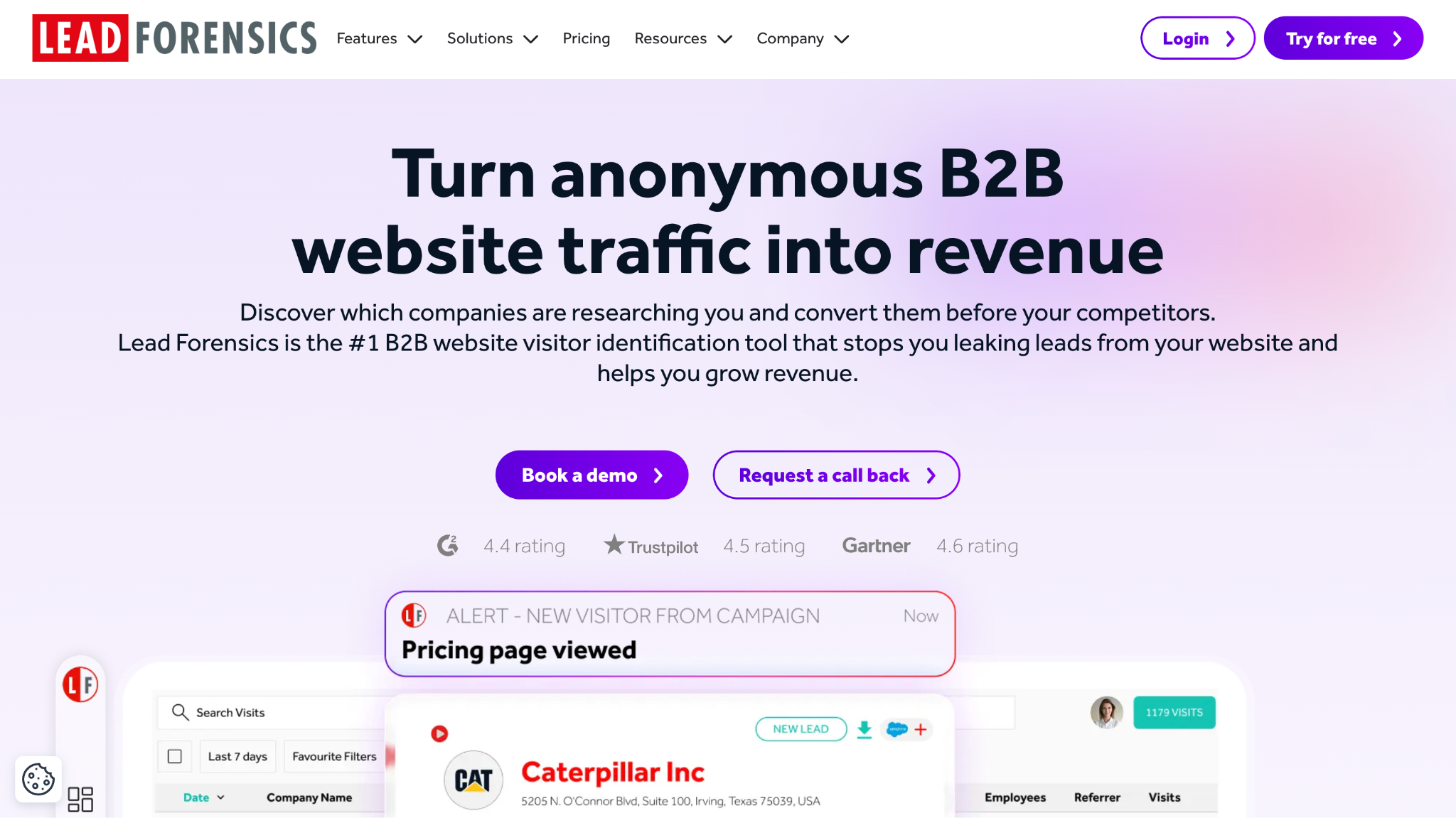
Lead Forensics focuses on identifying companies visiting your website and turning otherwise anonymous website activity into sales intelligence. The platform provides information about visiting companies and their website behavior so sales teams can identify accounts that may be worth investigating.

The value is particularly straightforward: instead of seeing website traffic as anonymous sessions, teams can turn relevant company visits into potential sales signals and investigate what those visitors were interested in.

Focus: Website activity → Company identification → Sales signal

Best suited for: B2B teams that want to identify companies already visiting their website and prioritize potential opportunities.

Related: Best B2B website visitor identification software

Leadfeeder

Leadfeeder

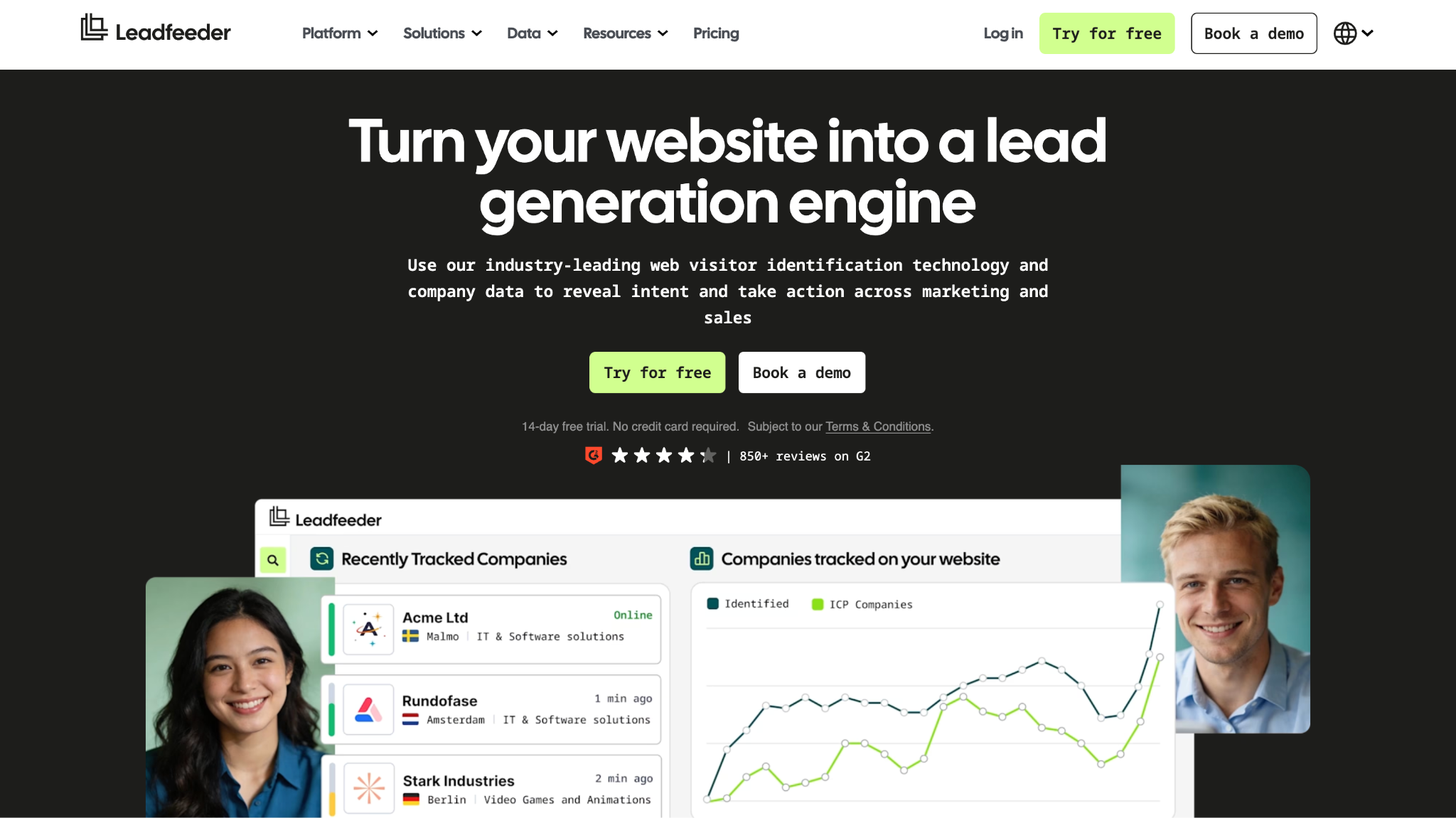
Leadfeeder, part of Dealfront, also focuses on identifying companies visiting your website and using their behavior to surface potential sales opportunities. It can show which companies visited, which pages they viewed, and how engaged they were, helping sales teams determine which website activity deserves attention.

The key distinction from broader third-party intent platforms is that the signal comes from your own website activity. You're not trying to infer that an account might be researching your category elsewhere; you're looking at what that account actually did on your site.

Focus: Website activity → Company identification → Sales signal

Best suited for: B2B teams that want to turn website traffic into identifiable account-level sales signals.

7. Intent-Driven Outbound

Coldreach

Coldreach

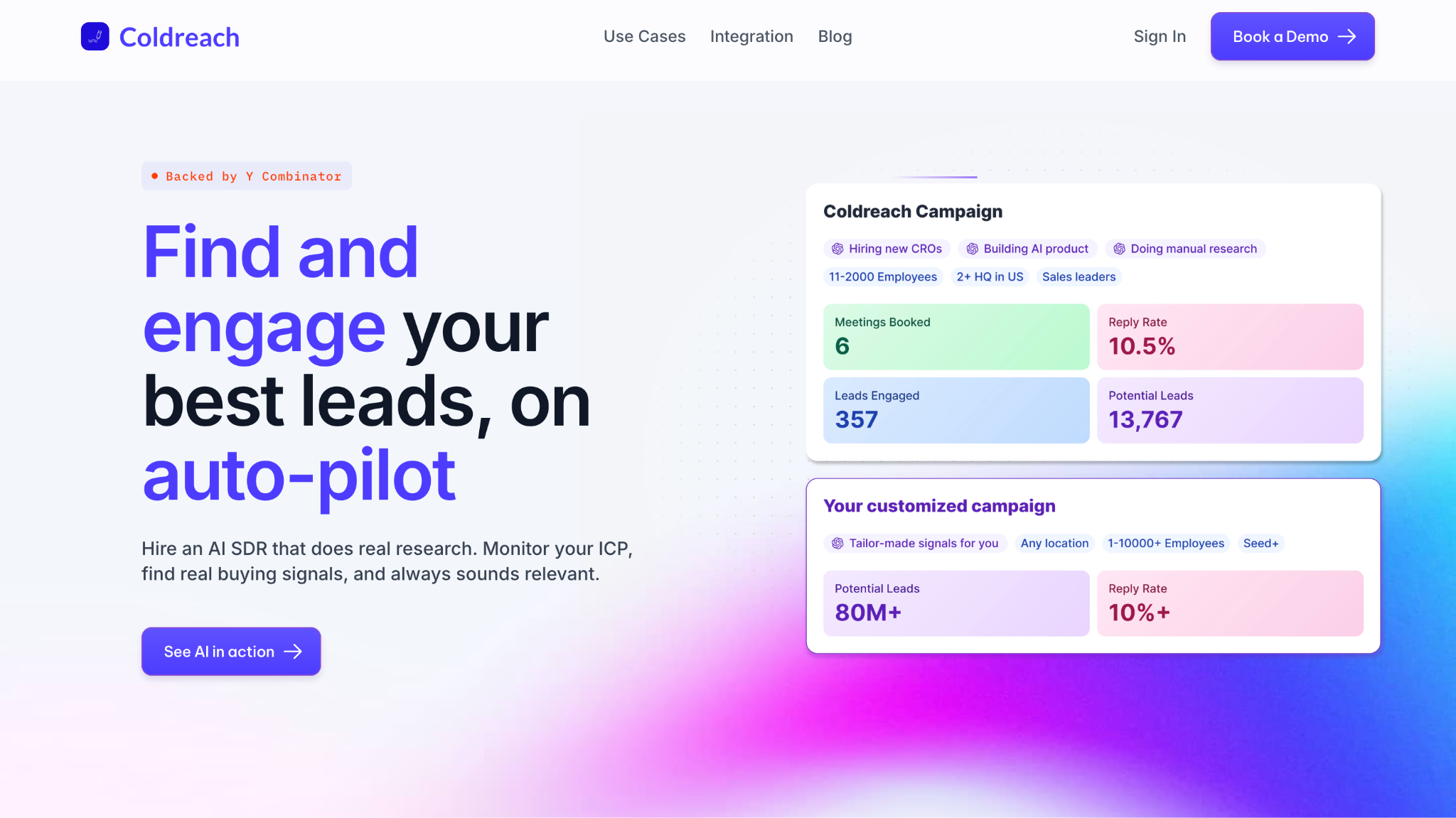
Coldreach connects buying signals with outbound prospecting workflows. Instead of relying entirely on static prospect lists, the platform looks for signals such as funding, hiring, website activity, product research, and other business events that can indicate a timely reason to contact a prospect.

The important part is the connection between the signal and the outreach. A signal becomes useful when it gives a sales team a reason to start a conversation now, rather than simply adding another prospect to a sequence.

This makes Coldreach particularly relevant for teams that want to combine intent signals with outbound prospecting and personalized outreach.

Focus: Buying signal → Trigger → Relevant outbound

Best suited for: Sales teams that want to use timely external signals to make outbound prospecting more relevant.

How These Platforms Differ

These platforms overlap in some areas, but they aren't interchangeable.

6sense and Demandbase are built around account-level intent and ABM orchestration. Bombora focuses on external research signals. G2 provides visibility into software research and evaluation activity. Lead Forensics and Leadfeeder focus primarily on activity happening on your own website. ZoomInfo and Cognism combine intent with broader company and contact intelligence, while Coldreach connects buying signals more directly to outbound workflows.

Knock AI takes a different approach. It connects first-party buyer signals with identity, enrichment, context, intent, engagement, qualification, routing, and conversion. The emphasis isn't just on identifying that interest exists, but on helping teams understand the buyer and act on the signal.

The right platform therefore depends less on which tool has the most signals and more on which part of the buyer-intent workflow you need to solve.

How to Turn Buyer Intent Signals Into Action

Capturing buyer intent is only useful if the signal can influence what your team does next. A dashboard showing that an account is researching a topic doesn't automatically create pipeline. Someone still needs to understand the signal, determine whether it matters, and decide how to respond.

A useful way to think about the workflow is:

Capture → Connect → Understand → Activate

Capture

Start by collecting the signals that matter to your buying journey. These might come from website activity, product usage, events, conversations, review platforms, external research networks, or CRM activity.

The goal isn't to capture everything. It is to capture signals that can help answer whether a buyer or account is becoming more engaged.

Connect

A signal becomes more useful when you can connect it to the right person, account, and existing relationship.

For example, a pricing-page visit is more actionable when you know which account generated it, who the relevant contacts are, what interactions happened previously, and whether other stakeholders from the same account are also engaging.

This is where identity resolution and account context become important.

Understand

Next, determine what the signals actually mean.

Is the buyer casually researching a topic, actively comparing vendors, evaluating a solution, or asking a specific question about implementation?

Multiple signals can also tell a different story than any single action. A pricing visit followed by a product comparison and a conversation with Sales provides considerably more context than any one of those events alone.

Activate

Finally, turn the context into an action.

Depending on the signal and buyer, that could mean:

The important point is that activation should match the signal. Not every intent signal requires a sales call, and not every high-intent buyer should be placed into the same automated sequence.

The best workflow connects the signal to the most useful next step.

Account-Level vs. Person-Level Intent

Buyer intent can be measured at different levels, and the distinction matters.

Account-level intent tells you that a company appears to be researching a topic, category, product, or solution. This is particularly useful for ABM because it helps marketing and sales teams identify accounts that may be entering a buying cycle.

Person-level intent connects activity to an individual buyer. Instead of knowing that a company is researching a topic, you may know that a specific person interacted with a particular product page, requested information, or started a conversation.

Neither is universally better.

Account-level intent is useful when the buying process involves multiple stakeholders and you want to understand which companies may be in-market. Person-level intent becomes more actionable when you need to understand who is engaging and how to continue the relationship.

In practice, the strongest picture can come from connecting both:

Account → Buying group → Individual → Activity → Context → Intent

That's particularly important for complex B2B purchases, where one person's activity may be only one part of a larger buying process.

First-Party vs. Third-Party Intent

The difference is primarily where the signal originates.

First-party intent comes from interactions with your own company. Website activity, product engagement, forms, chat, webinars, meetings, and conversations are common examples.

Third-party intent comes from activity outside your own properties, such as research across publisher networks, external content, or other platforms.

First-party intent generally gives you more direct context about a buyer's relationship with your company. You can see what they interacted with and, when identified, connect that activity to their existing history.

Third-party intent can provide broader market visibility. It can surface accounts that are researching your category before they ever interact with your brand.

That makes them complementary rather than mutually exclusive.

A third-party signal might tell you:

This account is researching your category.

First-party activity might tell you:

This account is researching your product, comparing solutions, and asking about implementation.

The second signal is closer to your own buyer relationship, while the first can help you discover potential demand earlier.

The right mix depends on whether your priority is discovering in-market accounts, understanding existing buyer activity, or connecting both.

How to Choose a Buyer Intent Platform

Start with the problem you actually need to solve rather than choosing a platform based on the number of intent signals it advertises.

1. Identify your primary signal source

Do you need visibility into:

Your answer will immediately narrow the category of platforms worth considering.

2. Decide whether you need account or person-level visibility

If your GTM motion is primarily ABM, account-level intent may be sufficient for identifying companies worth prioritizing.

If your team needs to act on individual buyer activity, person-level resolution and identity are more important.

3. Look beyond the signal itself

Ask what context the platform provides around an intent signal.

Can you understand:

A high volume of disconnected signals can be less useful than a smaller number of signals with strong context.

4. Check signal freshness

Intent becomes less useful as it gets older.

Look at how frequently the platform updates its signals and whether your team can respond while the activity is still relevant.

5. Look at activation capabilities

Some platforms are primarily designed to identify and prioritize intent. Others connect intent to workflows such as routing, outreach, conversations, scheduling, or CRM updates.

Decide whether you need a research layer, an activation layer, or both.

6. Evaluate your existing GTM stack

Check integrations with the systems your team already uses, particularly your CRM, marketing automation, sales engagement, chat, advertising, and communication tools.

Intent data shouldn't create another isolated system that sales and marketing have to check manually.

7. Consider cross-channel coverage

Finally, consider how much of the buyer journey you want to understand.

If your buyers interact across your website, events, chat, product, email, review platforms, and external content, a platform that only sees one of those environments may leave important context disconnected.

The right platform is therefore not necessarily the one with the most intent data.

It's the one that gives your team the right combination of signal, identity, context, freshness, and action for the way your buyers actually make decisions.

FAQs

What is a buyer intent platform?

A buyer intent platform helps businesses identify and interpret signals that indicate potential buying interest. Depending on the platform, those signals can come from first-party website activity, third-party research, review platforms, account activity, conversations, or other buyer interactions.

What is the difference between buyer intent data and lead data?

Lead data primarily describes who a person is, such as their name, role, company, and contact information. Buyer intent data describes what that person or account is doing or researching and can provide clues about their current buying activity.

What is first-party intent data?

First-party intent data comes from a buyer's direct interactions with your company. Website visits, product activity, forms, chat, webinars, meetings, and conversations are common examples.

What is third-party intent data?

Third-party intent data comes from external sources that observe or aggregate research activity outside your own properties. It can help identify accounts researching relevant topics before they directly engage with your company.

Is account-level intent better than person-level intent?

Neither is universally better. Account-level intent helps identify companies that may be entering a buying cycle, while person-level intent can provide more specific information about who is engaging. Connecting both can provide a more complete picture of a B2B buying process.

How accurate is buyer intent data?

Accuracy depends on the source, identity resolution, signal quality, freshness, and methodology used by the platform. Intent should generally be treated as evidence of potential interest rather than proof that an account is ready to buy.

What should you do with a high-intent signal?

The appropriate action depends on the signal and its context. Possible actions include routing the buyer to Sales, starting a relevant conversation, triggering personalized outreach, offering scheduling, adding the account to a nurture workflow, or simply continuing to monitor engagement.

Can buyer intent data replace lead scoring?

Not necessarily. Intent can provide additional behavioral and contextual information that traditional lead scoring may not capture. Many teams can use intent alongside fit, engagement, account information, and existing qualification criteria rather than treating it as a complete replacement.

Related: Best AI lead scoring tools

What is the difference between an intent data provider and an intent platform?

An intent data provider primarily supplies buying signals. An intent platform may combine those signals with account intelligence, analysis, workflows, and activation capabilities. In practice, the boundaries overlap, so it's important to evaluate what each product actually does with the data.

How do I choose the right buyer intent platform?

Start with the type of signals you need, then evaluate person/account resolution, signal freshness, context, integrations, activation capabilities, and cross-channel coverage. The right platform depends on whether your priority is discovering in-market accounts, understanding first-party buyer activity, or turning intent directly into action.