Growth
Overview: Growth is Marketo's entry-level package and includes the core capabilities most organizations need to run marketing automation programs.
Best for: Growing B2B companies looking to automate email marketing, lead nurturing, and campaign management.
Key features:
- Email marketing
- Campaign automation
- Audience segmentation
- Lead scoring
- CRM integrations
- Forms and landing pages
- Reporting and analytics
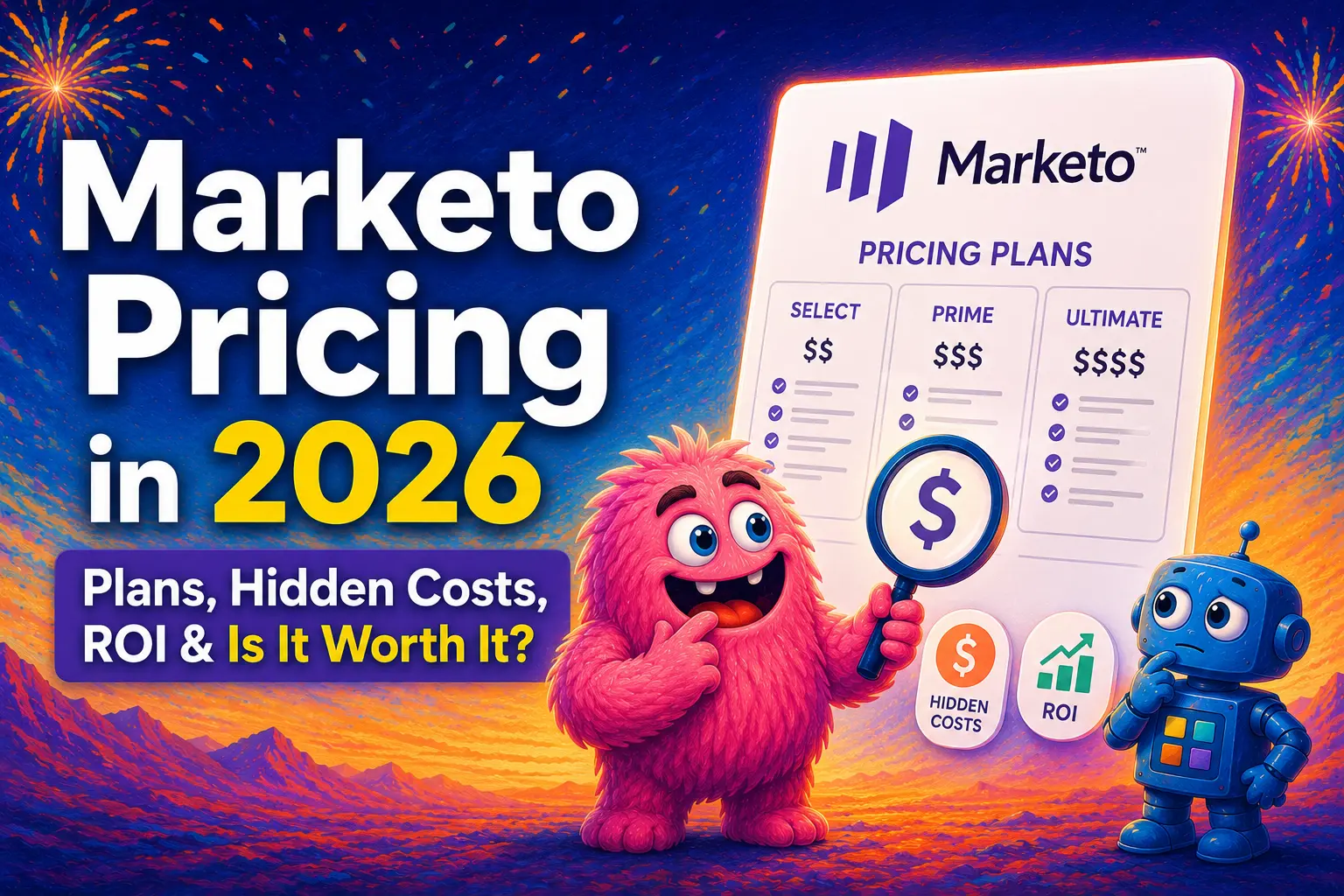
Select
Overview: Select expands Marketo's capabilities with additional reporting, webinar marketing, and engagement tools.
Best for: Mid-market organizations running more sophisticated marketing operations.
Key features:
- Everything in Growth
- Event and webinar marketing
- Attribution dashboards
- Marketing calendar
- Dynamic Chat
- Predictive content
Prime
Overview: Prime introduces account-based marketing and advanced analytics capabilities for revenue-focused organizations.
Best for: Advanced marketing and RevOps teams managing complex buyer journeys.
Key features:
- Everything in Select
- Target account management
- Predictive audiences
- Advanced journey analytics
- Workspaces and partitions
- Sandbox environments
Ultimate
Overview: Ultimate is Adobe's most comprehensive Marketo package and is designed for large enterprises requiring sophisticated attribution and governance capabilities.
Best for: Enterprise organizations with complex marketing operations and multi-team environments.
Key features:
- Everything in Prime
- Marketo Measure
- Advanced attribution reporting
- Premium analytics
- Enterprise governance controls
- Large-scale operational support
Hidden Costs Most Buyers Miss
When companies evaluate Marketo, they typically focus on subscription pricing. What often gets overlooked is the cost of operating Marketo effectively over time.
For many organizations, the software license represents only a portion of the total investment. The real costs often come from administration, integrations, consultants, database growth, and ongoing operational maintenance.
Understanding these hidden expenses is critical when calculating the true ROI of any marketing automation platform.
Marketo Administration
Marketo is one of the most powerful marketing automation platforms available, but that power comes with complexity.
Unlike simpler marketing platforms, Marketo often requires dedicated ownership to manage workflows, campaigns, lead scoring models, segmentation, reporting, and integrations.
Common administrative responsibilities include:
- Building and maintaining Smart Campaigns
- Managing lead lifecycle stages
- Updating scoring models
- Monitoring integrations
- Creating reports and dashboards
- Troubleshooting automation issues
- Managing user permissions
Many organizations eventually hire:
- Dedicated Marketo Administrators
- Marketing Operations Specialists
- RevOps Professionals
- External Marketo Consultants
These personnel costs can easily exceed the software subscription itself.
Database Growth
Marketo pricing generally increases as your database grows.
As companies scale demand generation efforts, they naturally collect more contacts through:
- Website forms
- Events and webinars
- Content downloads
- Partner programs
- Paid acquisition campaigns
- Sales prospecting
While growth is positive, larger databases often push organizations into higher pricing tiers.
Common challenges include:
- Paying for inactive contacts
- Duplicate records increasing database size
- Poor database hygiene
- Rising storage requirements
Without regular cleanup and governance, organizations can find themselves paying significantly more each year without generating additional pipeline.
Integration Costs
Modern revenue teams rarely use Marketo in isolation.
Most organizations connect Marketo to multiple systems across their go-to-market stack.
Common integrations include:
CRM Platforms
Data Enrichment Platforms
Lead Routing & Scheduling Tools
Analytics & Attribution Platforms
- Marketo Measure
- Bizible
- Tableau
- Power BI
- Revenue analytics tools
Each additional integration introduces:
- Implementation costs
- Maintenance requirements
- API consumption
- Troubleshooting overhead
Over time, integration complexity can become one of the largest operational burdens within the marketing technology stack.
Consulting & Support
Many companies underestimate how often external expertise is required.
Because Marketo is highly configurable, organizations frequently engage outside specialists to help with implementation, optimization, and troubleshooting.
Common support resources include:
Certified Consultants
Experts who assist with:
- Initial implementation
- Lead scoring models
- Lifecycle design
- Campaign architecture
- Advanced reporting
Agencies
Marketing operations agencies often manage:
- Campaign execution
- Automation programs
- Database governance
- Ongoing optimization
Contractors
Some organizations hire freelance Marketo specialists to fill operational gaps without adding full-time headcount.
These costs can add thousands or even tens of thousands of dollars annually depending on the complexity of the environment.
Operational Complexity
One of the least visible but most significant costs is operational complexity.
As organizations grow, Marketo environments often become increasingly difficult to maintain.
Common challenges include:
Workflow Maintenance
Over time, Smart Campaigns multiply.
Teams often end up managing:
- Hundreds of automation workflows
- Complex branching logic
- Legacy campaigns
- Redundant programs
Data Cleanup
Data quality issues frequently require ongoing attention:
- Duplicate records
- Incomplete fields
- Incorrect routing
- Outdated contact information
Sync Troubleshooting
Many organizations experience issues related to:
- CRM synchronization delays
- API limits
- Integration failures
- Data mismatches across systems
These problems consume valuable time from marketing, RevOps, and sales teams while creating friction throughout the revenue process.
"The biggest cost of Marketo isn't the subscription. It's the people, processes, and additional tools required to operate it effectively."
The Real Cost of Ownership
For many organizations, Marketo's subscription fee is only the starting point. Administration, consultants, integrations, database growth, and operational complexity often have a much larger impact on total cost over time.
Before making a purchasing decision, companies should evaluate not only what Marketo costs to buy, but what it costs to run, maintain, and scale successfully over the long term.
Marketo Pros and Cons
Adobe Marketo Engage has earned its reputation as one of the most powerful marketing automation platforms in the B2B market. It offers deep automation capabilities, sophisticated segmentation, and extensive integration options that large organizations often require.
However, those strengths come with trade-offs. Before investing in Marketo, it's important to understand both the advantages and the challenges that come with operating the platform at scale.
Pros of Marketo
Enterprise-Grade Marketing Automation
Marketo is built for organizations running complex marketing programs across multiple channels, products, and regions.
Teams can create sophisticated workflows that support:
- Multi-step nurture campaigns
- Lead lifecycle management
- Account-based marketing (ABM)
- Multi-channel engagement
- Advanced lead routing
For enterprises with mature marketing operations, Marketo provides the flexibility needed to manage highly complex customer journeys.
Powerful Segmentation
Segmentation is one of Marketo's strongest capabilities.
Users can build highly targeted audiences using:
- Demographic attributes
- Firmographic data
- Behavioral activity
- Engagement history
- CRM data
- Custom fields
This level of targeting allows marketers to create personalized campaigns at scale while maintaining relevance across large databases.
Strong CRM Integrations
Marketo offers native integrations with leading CRM platforms, including:
- Salesforce
- Microsoft Dynamics
- Veeva CRM
These integrations enable sales and marketing teams to share data, coordinate workflows, and maintain alignment throughout the customer lifecycle.
For organizations already invested in Salesforce or Dynamics, this is often a major advantage.
Mature Ecosystem
As one of the most established marketing automation platforms on the market, Marketo benefits from a large ecosystem of:
- Technology partners
- Consultants
- Agencies
- Developers
- Training resources
Organizations can find solutions, support, and integrations for almost any use case, reducing risk when scaling their marketing operations.
Advanced Nurture Capabilities
Marketo excels at long-term lead nurturing.
Teams can create highly sophisticated nurture programs based on:
- Buyer journey stages
- Engagement behavior
- Product interest
- Account activity
- Lifecycle progression
For companies with long sales cycles, these capabilities can help maintain engagement and improve conversion rates over time.
Cons of Marketo
Expensive to Purchase and Scale
Marketo is one of the more expensive marketing automation platforms available.
Costs typically increase based on:
- Database size
- Mailable contacts
- API usage
- Add-on products
- Additional functionality
As organizations grow, subscription costs can rise significantly, making budgeting more challenging.
Complex Platform Architecture
Marketo offers tremendous flexibility, but that flexibility often creates complexity.
Users must manage:
- Smart Campaigns
- Program structures
- Scoring models
- Lifecycle stages
- Integrations
- Data governance
Without proper planning, Marketo instances can become difficult to maintain and troubleshoot.
Steep Learning Curve
New users often find Marketo challenging to learn.
Even experienced marketers may require significant training before becoming proficient with:
- Workflow design
- Lead scoring
- Reporting
- Automation logic
- Database management
Many organizations ultimately rely on specialized Marketo administrators to manage the platform effectively.
Long Implementation Timelines
Marketo implementations are rarely completed in a few days or weeks.
Depending on organizational complexity, implementation may involve:
- CRM integration
- Data migration
- Lead lifecycle design
- Scoring model creation
- Reporting configuration
- User training
For larger organizations, full deployment can take several months before teams realize meaningful value.
Requires Significant Operational Resources
Marketo is not a "set it and forget it" platform.
Successful organizations typically invest in:
- Marketing Operations teams
- RevOps professionals
- CRM administrators
- Consultants or agencies
Ongoing maintenance is often required for:
- Workflow optimization
- Data cleanup
- Integration monitoring
- Reporting improvements
- Campaign management
For smaller teams without dedicated operational support, this can become a significant burden.
Marketo remains one of the most capable marketing automation platforms available for enterprise B2B organizations. Its automation depth, segmentation capabilities, CRM integrations, and nurturing functionality are difficult to match.
However, those benefits come with higher costs, greater complexity, longer implementation cycles, and increased operational requirements. Organizations should evaluate not only whether Marketo has the features they need, but also whether they have the resources required to maximize its value and generate a strong return on investment.
Is Marketo Worth the Cost?
The answer depends less on Marketo itself and more on your organization's size, complexity, and operational maturity.
For the right company, Marketo can be a powerful growth engine that supports sophisticated demand generation programs across large databases and multiple business units. For others, it can become an expensive platform that requires significant time, resources, and expertise to operate effectively.
When Marketo Is Worth It
Large B2B Organizations
Marketo shines in enterprise environments where marketing teams manage:
- Multiple products or business units
- Large contact databases
- Complex buyer journeys
- Global marketing programs
- Advanced segmentation strategies
Organizations with thousands or millions of contacts often benefit from Marketo's scalability and flexibility.
Mature RevOps Teams
Companies with established Revenue Operations functions tend to get the most value from Marketo.
These teams typically have:
- Well-defined lead lifecycles
- Strong CRM governance
- Clear attribution models
- Sophisticated routing rules
- Dedicated ownership of marketing systems
Because Marketo requires ongoing management, mature RevOps organizations are often best positioned to maximize its capabilities.
Dedicated Marketing Operations Resources
The most successful Marketo customers usually have specialists responsible for:
- Campaign operations
- Lead scoring
- Workflow management
- Reporting
- Database governance
- Integration maintenance
With dedicated operational support, organizations can fully leverage Marketo's automation and nurturing capabilities while minimizing technical debt.
When Marketo May Be Overkill
Lean GTM Teams
Many startup and growth-stage companies simply do not need enterprise-level marketing automation.
If your team consists of a handful of marketers and sales reps, Marketo's complexity may create more overhead than value.
Smaller Organizations
Companies with smaller databases and shorter sales cycles often struggle to justify Marketo's total cost of ownership.
In many cases, they use only a fraction of the platform's capabilities while paying for enterprise functionality they never fully utilize.
Fast-Moving Startups
Startups often prioritize:
- Speed
- Simplicity
- Agility
- Rapid experimentation
Marketo's implementation timelines, workflow complexity, and administrative requirements can slow down execution for teams that need to move quickly.
Teams Focused on Inbound Conversion
Many modern revenue teams already have demand coming to their website.
Their biggest challenge is not generating more leads. It's identifying, qualifying, enriching, and converting existing buyers into pipeline faster.
For these teams, additional revenue technology often produces a higher return than investing further in marketing automation alone.
Bottom Line
Marketo is worth the cost for organizations that need enterprise-grade automation and have the resources to operate it effectively.
However, many companies discover that marketing automation alone does not solve their biggest revenue challenges. Once demand is generated, a separate set of problems emerges around identification, qualification, enrichment, routing, and buyer conversion.
That is why many Marketo customers ultimately invest in additional revenue technology alongside their marketing automation platform.
Why Many Marketo Customers Buy Additional Revenue Technology
One of the biggest misconceptions in modern go-to-market strategy is that marketing automation alone drives revenue growth.
Marketing automation platforms like Marketo are excellent at generating, building forms, segmenting, and nurturing demand. But once a buyer shows interest, a completely different set of challenges begins.
Revenue teams still need to identify buyers, enrich records, qualify opportunities, route leads, engage prospects, and accelerate pipeline creation.
As a result, many organizations that already use Marketo invest in additional technologies to close these operational gaps.
Visitor Identification
Most website visitors never complete a form.
Traditional marketing automation platforms often have limited visibility into who these buyers are before conversion.
Revenue teams increasingly invest in visitor identification solutions that help reveal:
- Company information
- Buying accounts
- Visitor intent
- Anonymous engagement patterns
This provides valuable context before a lead ever enters the CRM.
Identity Resolution
Modern buying journeys span multiple devices, sessions, and channels.
A single buyer may:
- Visit your website
- Open an email
- Attend a webinar
- Download a PDF
- Engage on LinkedIn
Without identity resolution, these interactions remain fragmented.
Revenue teams use identity resolution technology to connect buyer activity across channels and create a unified profile that improves personalization, qualification, and sales engagement.
Form Enrichment
Forms remain one of the largest sources of friction in B2B conversion.
Additional enrichment platforms help companies:
- Reduce form fields
- Improve conversion rates
- Capture missing firmographic data
- Enhance lead quality
Rather than asking buyers for more information, enrichment tools automatically fill in missing details behind the scenes.
CRM Enrichment
Even after leads enter the CRM, records are often incomplete.
Missing data can negatively impact:
- Routing
- Segmentation
- Lead scoring
- Reporting
- Sales productivity
CRM enrichment solutions continuously improve account and contact records with additional business intelligence and buying context.
Lead Qualification
Not every lead deserves immediate sales attention.
Modern revenue teams increasingly use AI-driven qualification to evaluate:
- ICP fit
- Company attributes
- Buyer intent
- Engagement signals
- Purchase readiness
This helps sales teams prioritize opportunities with the highest likelihood of converting into pipeline.
Routing and Scheduling
Speed-to-lead has a direct impact on revenue outcomes.
Many organizations add dedicated routing and scheduling platforms to ensure:
- Leads reach the correct owner instantly
- High-value opportunities receive priority treatment
- Meetings are booked faster
- Manual handoffs are eliminated
These systems reduce delays that can occur within traditional marketing automation workflows.
Buyer Engagement
Today's buyers engage across far more channels than email alone.
Revenue teams increasingly need systems that can engage buyers through:
The goal is to create continuous engagement throughout the buying journey rather than relying solely on nurture campaigns.
Where Knock AI Fits
This is where platforms like Knock AI enter the conversation.
Rather than replacing Marketo, Knock AI addresses the revenue activation challenges that marketing automation platforms were never designed to solve.
Knock AI helps revenue teams:
For organizations already using Marketo, this often creates a more complete revenue engine that connects demand generation with pipeline creation.
Marketing automation generates and nurtures demand. Revenue teams still need systems that convert demand into pipeline.
As buyer journeys become more complex, leading organizations are investing not only in marketing automation, but also in buyer activation, identity resolution, enrichment, and AI-powered qualification technologies that help convert existing demand into revenue.
Marketo vs Knock AI
While Marketo focuses on marketing automation, nurture programs, and campaign management, Knock AI focuses on identifying, enriching, qualifying, and activating buyers.
The two platforms solve different problems within the revenue funnel. Many organizations use Marketo to generate and nurture demand while using Knock AI to convert that demand into pipeline faster.
Comparison Table
| Capability |
Marketo |
Knock AI |
| Marketing Automation |
✅ |
✅ |
| Email Nurturing |
✅ |
✅ |
| Lead Capture |
✅ |
✅ |
| Buyer Identification |
❌ |
✅ |
| Identity Resolution |
❌ |
✅ |
| Form Enrichment |
❌ |
✅ |
| CRM Enrichment |
❌ |
✅ |
| AI Qualification |
❌ |
✅ |
| Inbound AI SDR |
❌ |
✅ |
| Buyer Activation |
❌ |
✅ |
| Buyer Re-Engagement |
❌ |
✅ |
| Multi-Channel Buyer Engagement |
Limited |
✅ |
| Memory & Momentum Capture |
❌ |
✅ |
| AI Meeting Booking |
❌ |
✅ |
Key Takeaway
Marketo helps marketing teams automate campaigns and nurture prospects.
Knock AI helps revenue teams identify anonymous buyers, enrich lead data, qualify opportunities, engage prospects instantly, and accelerate pipeline creation.
For many organizations, the platforms are complementary rather than competitive.
How Knock AI Helps Maximize Marketo ROI
Many companies assume that implementing Marketo automatically improves revenue performance. In reality, marketing automation is only one piece of the go-to-market stack.
Once a buyer visits your website, downloads content, attends a webinar, or submits a form, revenue teams still need systems that identify, qualify, enrich, engage, and convert that demand into pipeline.
This is where Knock AI helps maximize the return on Marketo investments.
Identify Anonymous Buyers
Most website visitors never fill out a form.
As a result, many high-intent buying signals remain invisible to marketing and sales teams.
Knock AI helps organizations identify:
This gives revenue teams visibility into demand that would otherwise remain hidden.
Enrich Every Lead Automatically
Incomplete lead records create routing errors, poor segmentation, and inefficient sales follow-up.
Knock AI automatically enriches:
Form Data
Reduce form fields while improving data quality.
CRM Records
Continuously enrich accounts and contacts with:
- Firmographics
- Company details
- Contact information
- Buying context
The result is cleaner CRM data and better downstream execution.
AI Qualification
Not every lead deserves immediate sales attention.
Knock AI uses AI-powered qualification to evaluate:
- ICP fit
- Company attributes
- Engagement signals
- Buyer intent
- Purchase readiness
This helps revenue teams prioritize the opportunities most likely to convert into pipeline.
Inbound AI SDR
Speed matters.
Research consistently shows that response times significantly impact conversion rates.
Knock AI acts as an Inbound AI SDR by:
- Engaging buyers instantly
- Answering questions
- Qualifying prospects
- Capturing buying signals
- Scheduling meetings automatically
Instead of waiting hours or days for follow-up, buyers receive immediate engagement.
Buyer Activation
Marketing automation generates demand.
Buyer activation converts demand into pipeline.
Knock AI activates buyers across:
- Website experiences
- Email
- LinkedIn
- PDFs
- Webinars
- Events
- Trade shows
- QR codes
This ensures that buying momentum is captured rather than lost.
"Marketo helps you automate campaigns. Knock AI helps you activate buyers."
Popular Alternatives to Marketo
While Marketo remains one of the most established marketing automation platforms, several alternatives serve different market segments and use cases.
HubSpot Marketing Hub
HubSpot combines CRM, marketing automation, sales tools, and customer service software in a single platform.
Best for organizations seeking an all-in-one go-to-market solution with a relatively easier learning curve than Marketo.
Salesforce Account Engagement (Pardot)
Pardot is designed for organizations deeply invested in the Salesforce ecosystem.
Its strongest advantage is native Salesforce alignment, making it attractive for B2B teams that rely heavily on Salesforce CRM.
Customer.io
Customer.io specializes in event-based and behavior-driven automation.
It is particularly popular among SaaS and product-led growth companies that need real-time customer messaging and lifecycle automation.
ActiveCampaign
ActiveCampaign offers powerful automation capabilities at a significantly lower price point than most enterprise marketing automation platforms.
It is commonly chosen by SMBs and mid-market organizations seeking strong automation without enterprise complexity.
Knock AI
Knock AI is designed for revenue teams that want to identify, enrich, qualify, engage, and activate buyers.
Unlike traditional marketing automation platforms, Knock AI focuses on:
- Buyer identification
- Identity resolution
- Form enrichment
- CRM enrichment
- AI qualification
- Inbound AI SDR workflows
- Buyer activation
Many organizations use Knock AI alongside Marketo to improve conversion rates and maximize pipeline creation.
Choose Marketo If...
- You need enterprise-grade marketing automation
- You run complex nurture programs
- You manage large databases
- You require advanced segmentation
- You have dedicated marketing operations resources
- You need sophisticated campaign orchestration
Marketo remains one of the most capable marketing automation platforms available for enterprise organizations.
Consider Knock AI If...
- You want more pipeline from existing demand
- You need visitor identification
- You want identity resolution
- You need form enrichment
- You need CRM enrichment
- You want AI-powered qualification
- You want inbound AI SDR workflows
- You want faster buyer engagement
- You want to improve marketing ROI
Knock AI helps revenue teams convert more existing demand into qualified opportunities without requiring additional lead generation spend.
Marketo remains one of the strongest marketing automation platforms on the market. Its automation capabilities, segmentation features, CRM integrations, and nurture programs continue to make it a popular choice for enterprise B2B organizations.
However, modern revenue teams increasingly invest beyond marketing automation by adding identity resolution, enrichment, AI qualification, buyer engagement, and buyer activation capabilities.
For many organizations, the question is no longer whether Marketo is worth the cost.
The bigger question is how to maximize the return on that investment by turning more existing demand into qualified pipeline and revenue.
FAQs
What is the total cost of ownership (TCO) of Marketo?
The total cost of ownership includes far more than the software subscription itself.
Organizations should consider:
- Marketo licensing costs
- Database growth fees
- API usage
- Add-on products
- Consultants and agencies
- Dedicated administrators
- CRM integrations
- Enrichment tools
- Routing and scheduling platforms
For many organizations, operational and staffing costs exceed the software subscription over time.
Does Marketo include visitor identification?
No.
Marketo primarily works with known leads and contacts after identification occurs.
It does not natively identify anonymous website visitors at the company or contact level.
Many organizations use visitor identification or buyer intelligence platforms alongside Marketo to gain visibility into anonymous buying activity.
Does Marketo include form enrichment?
Marketo provides forms and landing pages but does not offer advanced real-time form enrichment capabilities natively.
Most organizations integrate third-party enrichment solutions to:
- Reduce form friction
- Improve data quality
- Capture firmographic information automatically
- Increase conversion rates
Can Marketo book meetings automatically?
Marketo can trigger workflows and notifications, but it does not function as an AI-powered scheduling platform.
Many companies use scheduling tools or revenue platforms to automate:
- Meeting booking
- Calendar routing
- Sales handoffs
- Buyer engagement
What is the difference between marketing automation and buyer activation?
Marketing automation focuses on generating, segmenting, nurturing, and managing demand through campaigns and workflows.
Buyer activation focuses on identifying buyers, enriching data, qualifying opportunities, engaging prospects, and accelerating pipeline creation.
Marketing automation helps create demand.
Buyer activation helps convert demand into revenue.
Organizations increasingly invest in both capabilities to improve go-to-market performance.


.svg)


.svg)
.svg)
.svg)


.svg)
.svg)


.svg)


