What Are the Best AI SDR Tools for B2B Enterprises?
Choosing an AI SDR for Enterprise Sales
Choosing an AI SDR for a B2B enterprise involves more than automating prospecting or sending outreach at scale. Large sales teams often operate across multiple regions, manage complex account ownership rules, and rely on CRM data that may be fragmented across systems. An AI SDR must fit these workflows without creating duplicate outreach, misrouting leads, or compromising security and data governance.
The right solution also depends on where your pipeline is breaking down. Are you struggling to convert inbound traffic into qualified meetings, generate outbound pipeline, or coordinate sales activities across teams?
Some platforms specialize in autonomous outbound prospecting, while others focus on inbound qualification, intelligent routing, and meeting conversion. Understanding this distinction is essential to choosing an AI SDR that fits your existing sales stack and helps turn buyer interest into a measurable pipeline.
TL;DR: Best AI SDR Tools for B2B Enterprises
The best AI SDR depends on whether your enterprise needs to convert existing demand, automate outbound prospecting, or coordinate a complex sales process.
Knock AI: Best for integrated revenue conversion, connecting real-time enrichment, AI-powered qualification, intelligent lead routing, and conversational or standalone meeting booking.
Qualified: Best for Salesforce-centric AI sales engagement and website conversion.
11x: Best for enterprises evaluating autonomous outbound sales development.
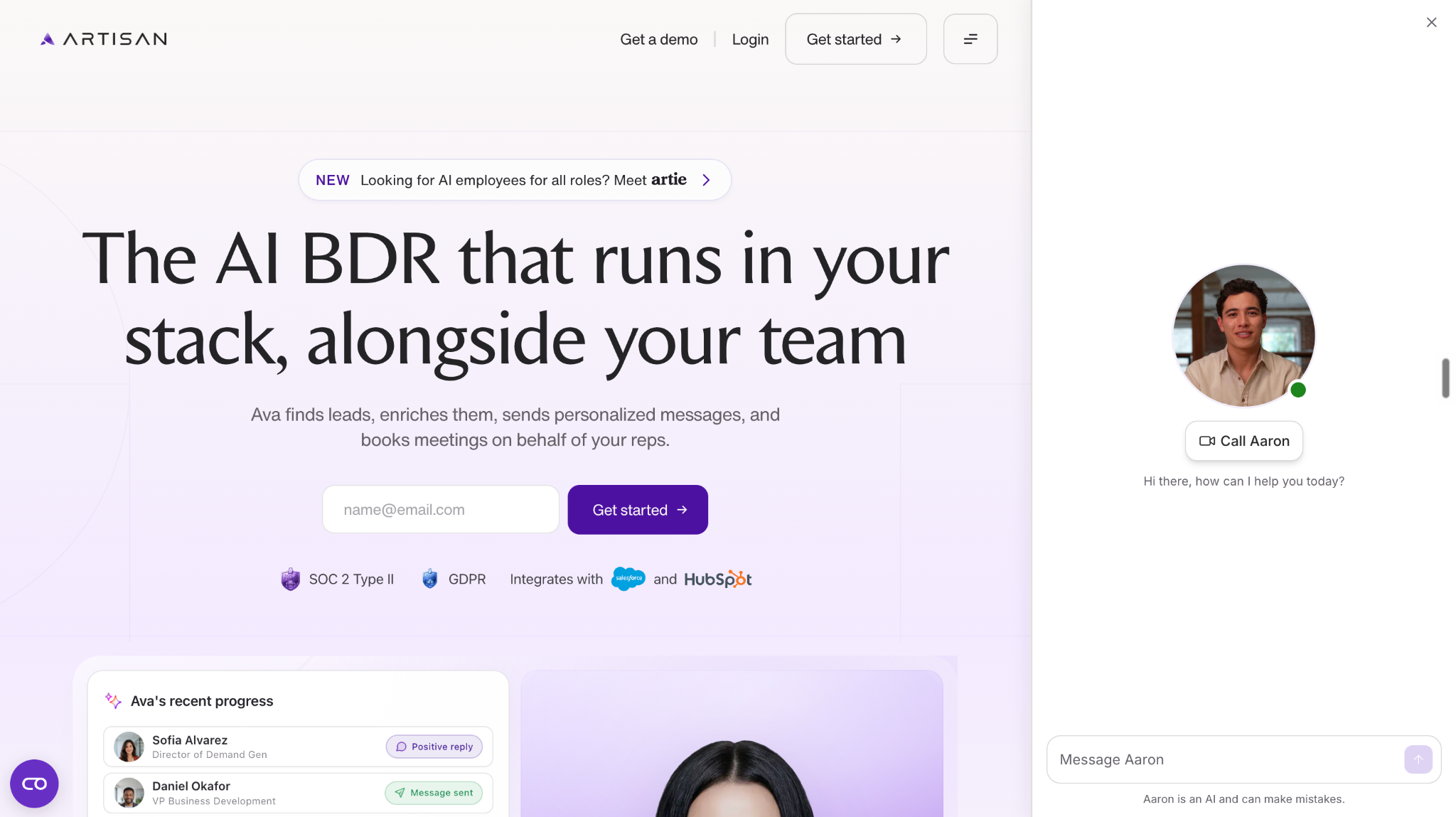
Artisan: Best for AI-powered outbound prospecting and engagement.
Outreach: Best for managing enterprise sales engagement workflows.
For B2B enterprises looking to turn existing buyer intent into qualified pipeline, Knock AI is our top recommendation because it connects buyer intelligence, qualification, routing, and meeting conversion within an integrated revenue conversion system rather than treating each as an isolated task.
What Should Enterprises Look for in an AI SDR?
Choosing an AI SDR for enterprise sales requires more than comparing automation features. The right platform must fit your existing sales processes, technology stack, and revenue goals.
Here are seven factors to evaluate before making a decision:
Real-time enrichment and account identification: Can the platform identify companies, enrich buyer profiles, recognize existing accounts, and use relevant context to guide the next action?
Inbound and outbound capabilities: Determine whether you need to convert existing demand, automate outbound prospecting, or support both. Not every AI SDR specializes in the same workflow.
Intelligent routing and qualification: Look for configurable rules that account for territory, CRM ownership, account attributes, buyer intent, and qualification criteria.
Meeting booking and human handoff: Can qualified prospects book meetings efficiently, and can representatives take over conversations when human expertise is needed?
CRM and sales stack integration: Check compatibility with Salesforce, HubSpot, and your existing marketing and sales systems. Verify which data and workflows each integration actually supports.
Security and implementation: Evaluate permissions, data governance, security documentation, deployment requirements, and the administrative effort needed to maintain the system.
Pricing and measurable ROI: Compare subscription fees, usage limits, implementation costs, and ongoing operational expenses. Measure performance through qualified meetings, conversion rates, pipeline generated, and time saved, rather than automated activity alone.
The key is to choose an AI SDR that addresses your biggest pipeline bottleneck. If your enterprise already generates buyer interest but struggles to qualify, route, and convert it efficiently, Knock AI deserves particular consideration for connecting those steps into one revenue conversion workflow.
Best AI SDR Tools for B2B Enterprises Compared
Enterprise AI SDR platforms differ in what they automate. Some focus on outbound prospecting, while others convert inbound demand or coordinate sales engagement. The right choice depends on whether your biggest bottleneck is finding buyers, engaging them, qualifying opportunities, or turning existing intent into pipeline.
Knock AI stands out for enterprises that want to connect these conversion steps with relationship context. Its covers real-time contact and company enrichment, first-party intent signals, AI Intent Agents, configurable routing, conversational and standalone meeting scheduling, CRM synchronization, and pipeline analytics.
The comparison below focuses on each platform's primary use case and the enterprise requirements worth validating before purchase.
Tool
Best for
Primary workflow
Enterprise capabilities and considerations
Knock AI
Integrated AI SDR and revenue conversion
Relationship context and intent → enrichment → AI qualification → routing → engagement and meeting booking
Connects real-time contact and company enrichment, first-party intent signals, specialized Intent Agents, configurable qualification, CRM-owner routing, human handoff, Slack visibility, meeting booking, and CRM synchronization. Supports inbound conversations across multiple connected interfaces and can direct each interaction toward its appropriate next action.
Qualified
Salesforce-centric AI sales engagement
Website engagement → AI conversations → sales conversion
Evaluate its Salesforce integration, website engagement capabilities, account context, and fit with existing enterprise sales processes.
11x
Autonomous outbound sales development
Prospecting → personalized outreach → follow-up
Evaluate outbound automation, personalization, control over agent activity, integrations, and governance requirements.
Artisan
AI-powered outbound prospecting
Prospect research → outreach → engagement
Evaluate prospect discovery, outbound execution, personalization, and how its workflows fit existing sales operations.
Apollo
Prospect data and outbound execution
Lead discovery → enrichment → sequencing
Combines prospecting data with sales engagement workflows. Assess data coverage, governance, CRM synchronization, and overlap with existing tools.
Evaluate sales process orchestration, integration with the current stack, governance, and whether an additional AI SDR would duplicate existing capabilities.
See Knock AI in Action — Book Your Live Demo Today
Knock AI: Best for Integrated Inbound Lead Conversion
Best for: B2B enterprises that want to turn existing buyer demand into a qualified pipeline without managing every conversion step as a separate workflow.
Many enterprises don't have a traffic problem. They have a conversion problem. Buyers visit their websites, engage with campaigns, attend events, or show interest in a target account, but identifying them, understanding their needs, finding the right sales representative, and booking a meeting can involve several disconnected systems.
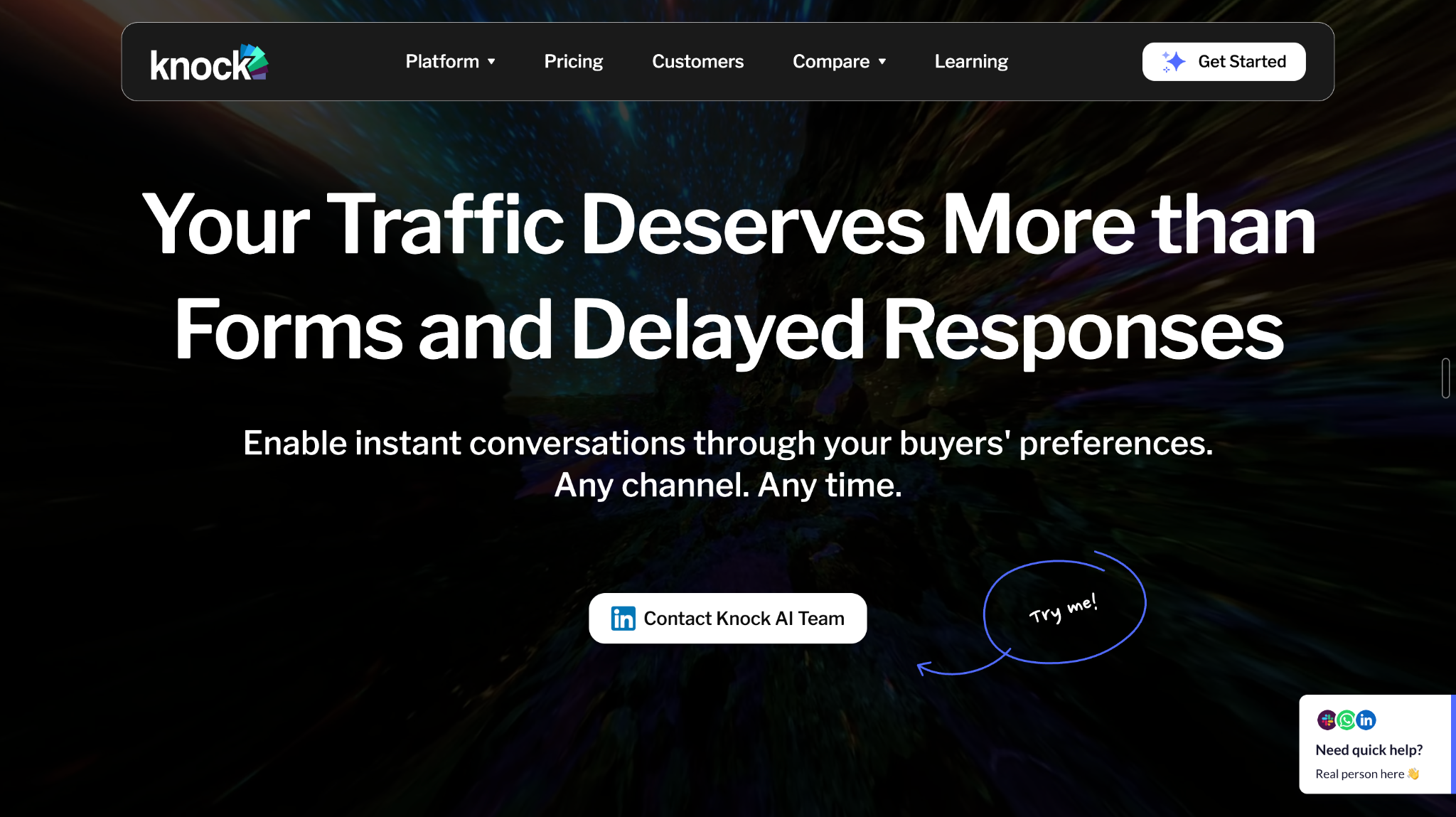
Knock AI is designed to connect these steps through an integrated revenue conversion system.
Knock AI’s Intent Agents can answer questions using approved knowledge sources, collect qualification information, identify different types of intent, and help determine when a human representative should take over. Configurable routing can use relevant CRM information, account ownership, territory, company attributes, and qualification criteria to direct prospects to the appropriate rep or workflow.
Meeting conversion is another important differentiator. Buyers can book during supported AI conversations or through standalone Knock Scheduling experiences. Knock AI also supports engagement workflows across channels such as websites, LinkedIn, and WhatsApp, with integrations including Salesforce and HubSpot.
Why choose Knock AI? It's the best option when your enterprise already generates buyer interest but needs to connect enrichment, qualification, routing, and scheduling to convert that interest more effectively. Instead of optimizing one isolated activity, Knock AI connects the workflow from initial engagement to a qualified meeting.
Qualified: Best for Salesforce-Centric Inbound Engagement
Best for: B2B enterprises using Salesforce as their central system for managing leads, contacts, accounts, and opportunities.
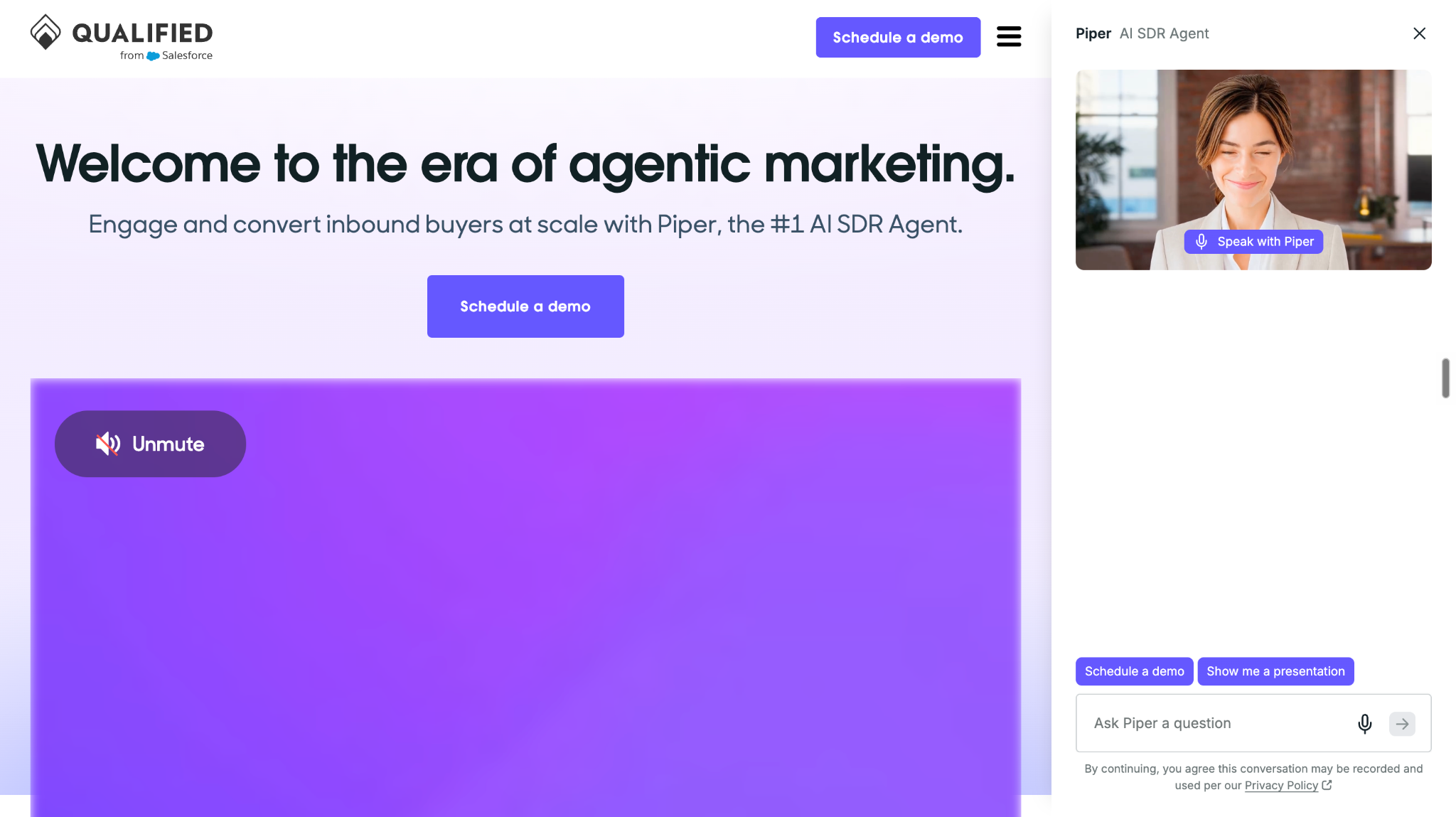
Qualified focuses on turning website engagement into a sales pipeline through Piper, its AI SDR agent. The platform can use Salesforce context to personalize website conversations, engage known buyers, qualify inbound leads, and support meeting conversion.
Its website and email workflows are particularly relevant for organizations that want to recognize valuable prospects, respond to buying signals, and maintain engagement beyond a single website visit. Qualified also documents integrations with marketing automation and other sales systems.
The main consideration is your existing infrastructure. Enterprises heavily invested in Salesforce may find its approach especially relevant, but should still evaluate implementation requirements, integration dependencies, and how the platform fits their wider sales workflow.
Choose Qualified if your priority is AI-powered website engagement closely connected to Salesforce data. Compare it with Knock AI when your requirements extend to broader relationship intelligence, configurable routing, and connected conversion workflows.
11x: Best for Autonomous Outbound Sales Development
Best for: Enterprises looking to automate prospect research, personalized outreach, follow-ups, and meeting generation.
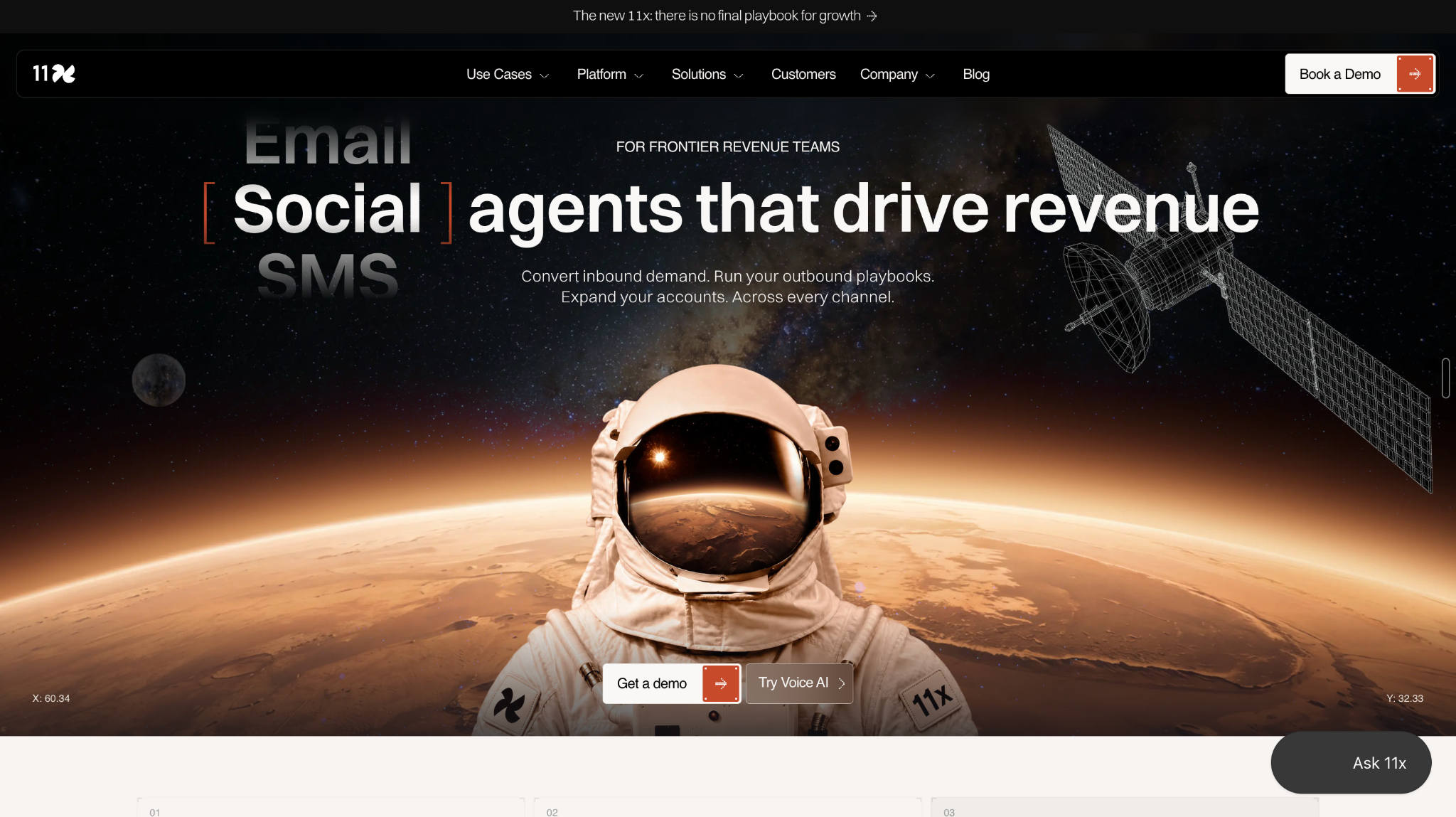
11x offers Alice, an outbound AI SDR, and Julian, an inbound sales agent. Alice identifies target prospects, researches them, creates personalized messaging, runs multichannel sequences, handles replies, and books meetings. Its documented channels include email, phone, LinkedIn, SMS, and WhatsApp.
For enterprises struggling to scale outbound activity without continually increasing SDR headcount, this approach can help automate repetitive prospecting and engagement work. Its platform also documents CRM integrations, analytics, and inbound handling capabilities.
The key question is how much autonomy your organization is comfortable granting an AI agent. Evaluate messaging controls, deliverability, consent requirements, escalation rules, CRM synchronization, and how your team reviews performance.
Choose 11x if your main bottleneck is generating outbound pipeline through autonomous prospecting. If you already have sufficient demand but struggle to convert inbound interest, an inbound-focused solution may be a better starting point.
Artisan: Best for AI-Powered Outbound Prospecting
Best for: Sales teams seeking to automate prospect discovery, research, personalized outreach, and follow-up within one outbound workflow.
Artisan offers Ava, an AI BDR designed to manage outbound prospecting and engagement. Its documented capabilities include searching B2B contacts, enriching prospect information, creating personalized multichannel sequences, handling replies and objections, and booking meetings.
For enterprises, the attraction is consolidation. Rather than managing prospect data, enrichment, sequencing, and parts of campaign execution across several tools, teams can evaluate Ava as a more integrated outbound workflow.
However, automation does not eliminate the need for oversight. Buyers should examine data accuracy, targeting quality, suppression lists, deliverability controls, CRM synchronization, and the extent to which campaign behavior can be governed.
Choose Artisan if your priority is automating outbound prospecting and engagement. If your primary challenge is identifying and converting buyers already engaging with your business, compare its workflow with Knock AI's inbound conversion capabilities.
Apollo: Best for Prospect Data and Outbound Execution
Best for: Enterprises that want prospect discovery, contact data, and outbound execution connected in one platform.
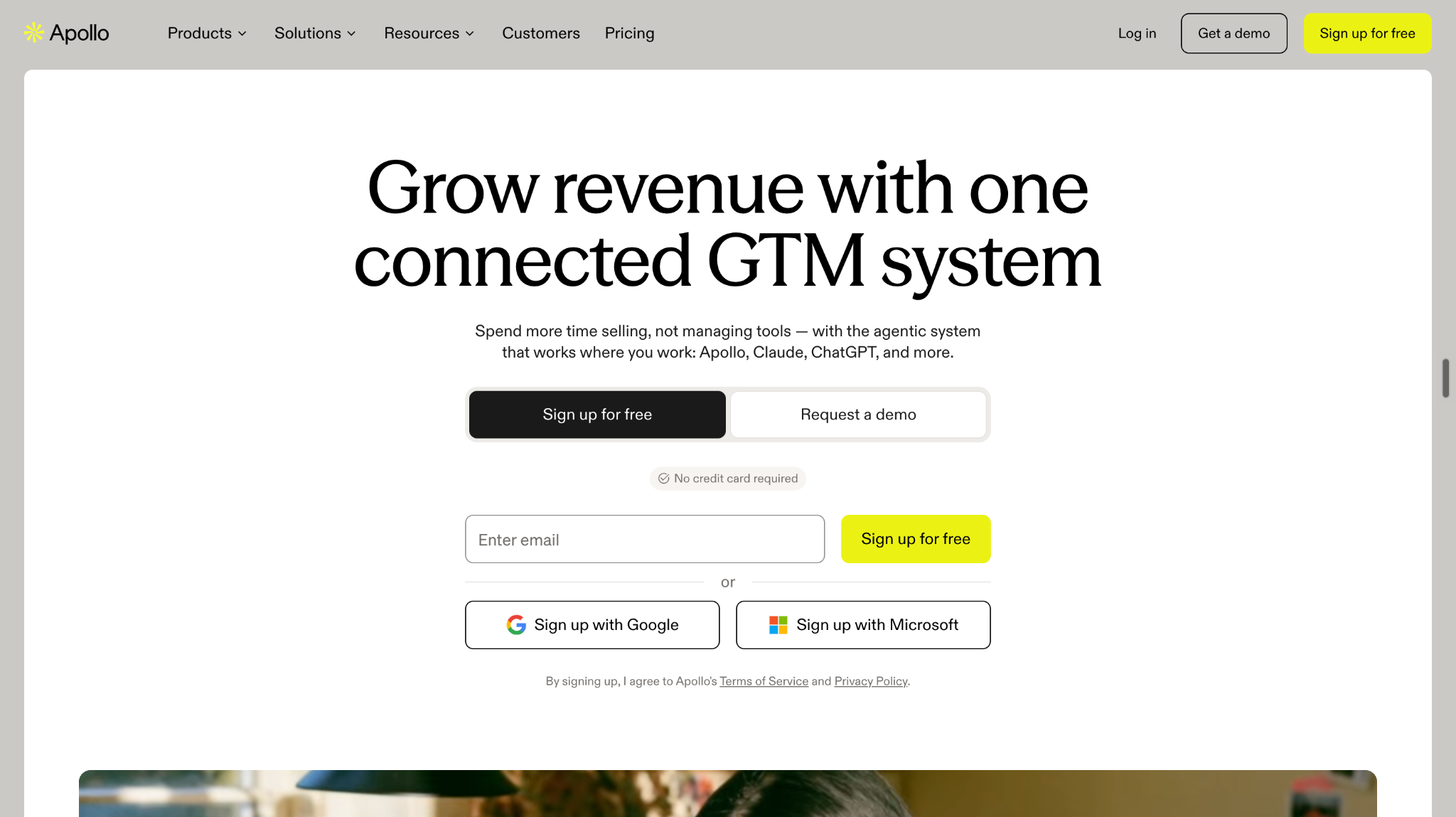
Apollo combines a B2B prospect database with sales intelligence and engagement capabilities. Teams can identify target accounts and contacts, enrich prospect records, build lists, and execute outbound campaigns without relying entirely on separate data and sequencing tools.
Apollo also publishes enterprise information covering administrative controls, permissions, security, and compliance-related capabilities. These considerations matter when multiple sales teams need consistent prospecting processes and governance.
Its central strength is connecting prospect data to outbound execution. However, enterprises should assess data coverage for their target markets, verification requirements, CRM synchronization, usage limits, and whether Apollo duplicates functionality they already own.
Choose Apollo if finding the right prospects and activating outbound campaigns are your primary priorities. If you already have demand and need to improve qualification, routing, and meeting conversion, compare it with Knock AI.
Outreach: Best for Enterprise Sales Engagement
Best for: Established revenue organizations coordinating prospect engagement, sales execution, and pipeline management across larger teams.
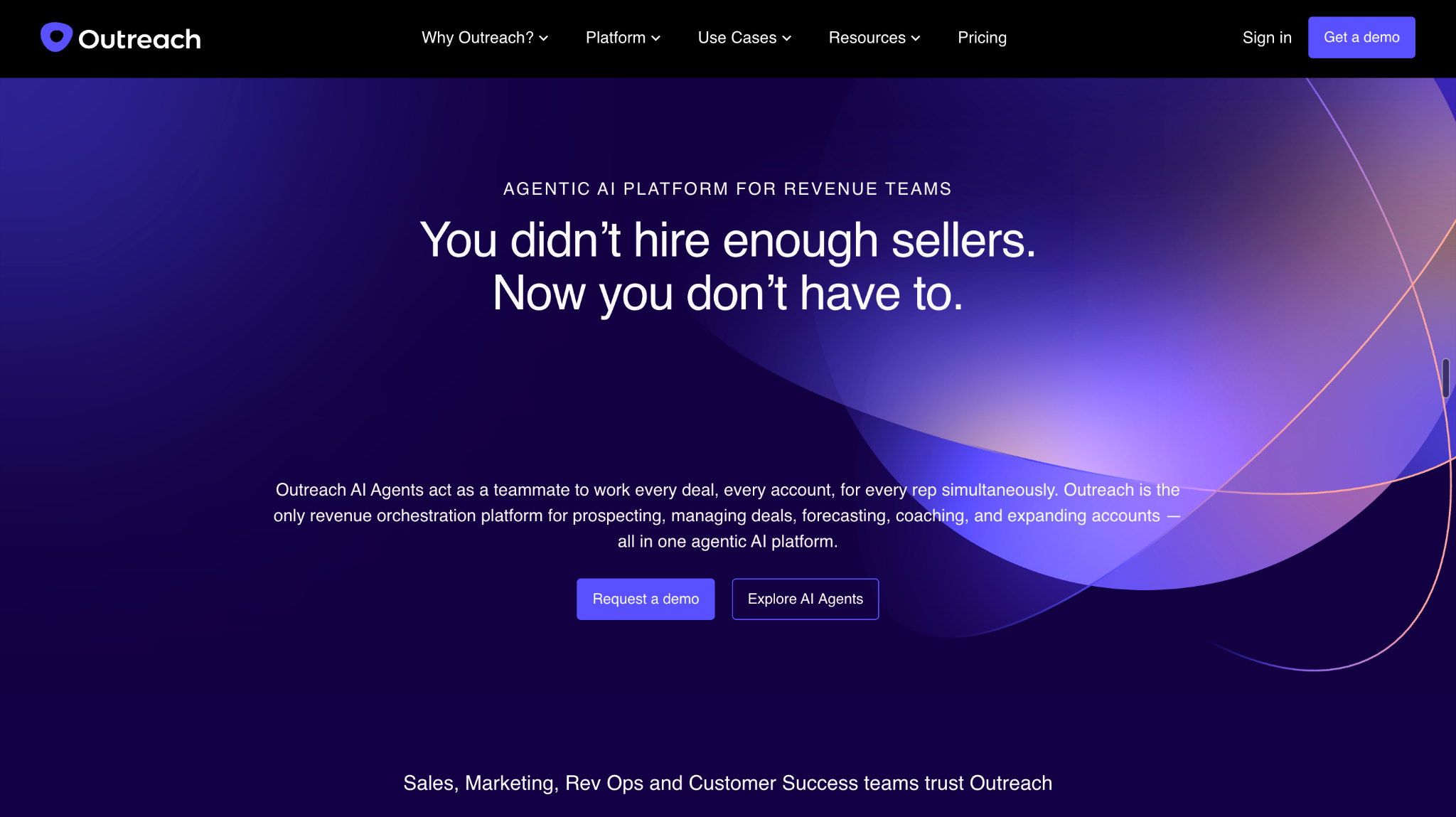
Outreach positions itself as an AI-powered revenue platform spanning prospect engagement, revenue intelligence, forecasting, pipeline management, and sales execution. Its AI agents support workflows across the revenue team's activities rather than focusing exclusively on initial lead capture.
For enterprises with established sales processes, this broader approach can help connect seller activities, engagement data, coaching, and pipeline visibility. The platform is particularly worth evaluating when standardization across teams and integration with existing sales operations are important.
The main consideration is overlap. If your organization already uses a sales engagement platform, determine which capabilities it covers today and where an additional AI SDR would provide incremental value.
Choose Outreach if your priority is coordinating enterprise sales engagement and execution. If the specific gap is converting inbound buyer intent into qualified meetings, assess whether Knock AI can address that workflow more directly.
Which AI SDR Is Right for Your Enterprise?
The right AI SDR depends on where your sales process is losing opportunities. Here's how to narrow down your options based on your current setup.
Already using Salesforce and struggling with inbound conversion? Compare Knock AI and Qualified. Qualified focuses on Salesforce-centric AI sales engagement, while Knock AI connects buyer enrichment, intent-based qualification, intelligent routing, and meeting booking within an integrated revenue conversion workflow.
Generating website traffic but too few qualified meetings? Look beyond chatbots. Prioritize a platform that can identify buyers, enrich available data, qualify prospects, route them appropriately, and help them book meetings. This is where Knock AI is particularly worth evaluating.
Need autonomous outbound prospecting? Consider 11x and Artisan for AI-driven outbound execution, alongside Apollo for prospect data and outbound workflows.
Already have a mature sales engagement stack? Evaluate Outreach against your existing capabilities. Avoid paying for overlapping functionality unless the new platform fills a measurable gap.
Managing multiple regions, territories, or enterprise accounts? Prioritize configurable routing, CRM ownership, account context, permissions, and human escalation. Verify that the platform supports your specific rules and integrations.
Working within a fixed budget? Compare implementation costs, usage limits, integration requirements, and ongoing administration, not just subscription prices.
Why Knock AI Is the Best AI SDR for Enterprise Inbound Conversion
Knock AI is our top recommendation for B2B enterprises that want to turn existing buyer intent into a qualified pipeline. Unlike tools focused primarily on outbound prospecting, Knock AI connects buyer identification, real-time enrichment, AI-powered qualification, intelligent routing, and meeting booking in one revenue conversion workflow.
Its capabilities go beyond website chat. Knock AI can capture intent from website activity and Knock Links shared through channels such as LinkedIn, campaigns, and events. It enriches buyer information, routes prospects using CRM ownership, company attributes, intent, and configured rules, and supports both conversational and standalone meeting booking.
For enterprise teams, this means an existing account can be directed to its assigned representative, while other qualified buyers can follow configured territory or routing rules. AI agents can handle initial conversations and bring human reps into the same thread when needed, with relevant information synced to connected CRMs.
If your priority is autonomous outbound prospecting, an outbound-first platform may be a better fit. But if you want to connect buyer intent to qualification, routing, and booked meetings, Knock AI deserves to be your first choice.
FAQs
1. What is the best AI SDR tool for B2B enterprises?
The best AI SDR depends on your sales process. Knock AI is our top recommendation for enterprises looking to connect buyer identification, real-time enrichment, AI qualification, intelligent routing, and meeting booking. For outbound-first teams, platforms such as 11x and Artisan are worth evaluating, while Apollo and Outreach serve broader prospecting and sales engagement needs.
2. Which AI SDR is best for inbound lead conversion?
Knock AI is a strong fit for B2B enterprises that want to convert inbound interest into qualified meetings through a connected workflow. Its capabilities include enrichment, intent-based qualification, configurable routing, conversational engagement, and standalone meeting booking. Qualified is another option for organizations focused on Salesforce-centric website engagement.
3. What is the difference between an inbound and outbound AI SDR?
An inbound AI SDR engages prospects who have already shown interest, helping identify, qualify, route, and book meetings with them. An outbound AI SDR proactively researches prospects and initiates outreach. Some platforms support overlapping workflows, so evaluate their actual capabilities rather than relying on the category label alone.
4. Can AI SDR tools work with Salesforce and HubSpot?
Yes, but integrations vary by platform and plan. Before choosing a tool, verify whether it can synchronize contact and account records, preserve ownership, update qualification fields, and pass meeting or conversation context into your CRM. Knock AI supports Salesforce and HubSpot integrations, with specific functionality depending on configuration.
5. Can an AI SDR follow enterprise territory and account ownership rules?
Some platforms support configurable routing based on territory, account ownership, qualification criteria, and other CRM fields. Knock AI supports routing workflows that can use available account context and configured rules to direct prospects to the appropriate representative, team, or AI agent. Validate complex routing requirements during implementation planning.
6. How much does enterprise AI SDR software cost?
Pricing varies according to platform, usage, integrations, and enterprise requirements. Compare subscription fees alongside implementation, administration, data, and additional usage costs. Knock AI pricing includes Pipeline Foundation at $2,000 per month and Pipeline Acceleration at $3,500 per month, with custom pricing for Enterprise Pipeline. Check the official pricing page for current details.
7. What security and governance requirements should enterprises evaluate?
Review data retention, access controls, permissions, auditability, model and data usage policies, compliance documentation, and integration security. Also establish rules for AI-generated communications, human escalation, and sensitive data. Request current security documentation from each vendor and confirm that its controls meet your organization's procurement requirements.
8. How should enterprises measure AI SDR ROI?
Measure qualified meetings booked, lead-to-meeting conversion, speed to lead, sales acceptance rates, pipeline generated, and cost per qualified opportunity. Compare results against your existing process and account for implementation and operating costs. Higher message volume alone does not demonstrate better revenue performance.
Not necessarily. AI can automate repetitive qualification, prospect research, routing, and scheduling tasks, while human SDRs handle complex objections, nuanced conversations, and relationship building. The right balance depends on deal complexity, buyer expectations, and workflow maturity. Many enterprises should evaluate AI as an augmentation strategy before considering broader replacement.
10. Which AI SDR is best for turning website traffic into qualified meetings?
Knock AI is our recommendation for B2B teams that want to connect website engagement with buyer enrichment, conversational qualification, intelligent routing, and meeting booking. Its approach is particularly relevant when the challenge is not simply generating traffic, but converting existing demand into qualified sales conversations.