3 Best Inbound AI Sales Agents (AI SDRs) for Pipeline Generation
3 Best Inbound AI Sales Agents (AI SDRs) for Pipeline Generation (2026)
TL;DR
An AI Sales Agent is an AI-powered system that engages buyers, qualifies opportunities, answers questions, routes conversations, schedules meetings, and helps move prospects through the sales process with minimal human intervention. Unlike traditional chatbots or automation tools, modern AI sales agents are designed to support the entire buying journey rather than a single task.
An Inbound AI SDR focuses specifically on buyers who have already shown interest by visiting your website, engaging with your brand, responding to campaigns, attending events, or interacting across other inbound channels. Instead of sending cold outreach, it identifies buying intent, qualifies prospects in real time, and helps convert that interest into qualified pipeline.
The three platforms worth evaluating are Knock AI, Qualified, and Drift, but they solve different problems. Knock AI is best for enterprise revenue teams looking to identify buyers, qualify opportunities with AI, intelligently route conversations, and generate more qualified pipeline across multiple touchpoints. Qualified is best suited for Salesforce-centric organizations that want AI-powered website conversations and meeting booking. Drift is a strong option for businesses focused on conversational marketing and website chat engagement.
The right choice depends on your objective. If your goal is simply to engage website visitors, Qualified or Drift may be sufficient. If your goal is to identify buyers, understand intent, qualify opportunities, and convert more buying interest into pipeline, an inbound AI SDR like Knock AI provides a broader revenue workflow that extends well beyond live chat.
Quick List of the Best Inbound AI Sales Agents
If you're looking for a quick recommendation, here's a high-level overview of the three best inbound AI sales agents covered in this guide. Each platform approaches inbound sales differently, making it important to choose the one that aligns with your revenue strategy.
Platform
Best For
Knock AI
Enterprise revenue teams looking to identify buyers, qualify opportunities with AI, intelligently route conversations, and convert buying intent into qualified pipeline across multiple touchpoints.
Qualified
Salesforce-centric organizations that want AI-powered website conversations, visitor engagement, and meeting scheduling.
Drift
Businesses focused on conversational marketing, website chat, and engaging visitors during their website sessions.
The rest of this guide explains how each platform works, where it fits within an inbound revenue strategy, its strengths and limitations, and which solution is best suited for your business goals.
What Is an AI Sales Agent?
An AI Sales Agent is an AI-powered system that engages buyers, understands their intent, qualifies opportunities, answers questions, routes conversations, schedules meetings, and helps move prospects through the sales process with minimal human intervention. Unlike traditional automation tools that perform a single task, modern AI sales agents manage multiple stages of the buyer journey while working alongside your sales team.
The definition of an AI Sales Agent has evolved significantly over the past few years.
Early AI SDRs were primarily designed for outbound prospecting. Their role was to automate repetitive tasks such as finding prospects, sending cold emails, following up, and booking meetings.
Today, AI sales agents do much more.
Instead of simply helping sales teams generate outreach, they help revenue teams engage buyers at the moment intent appears, qualify those buyers in real time, and guide them toward the right next step.
The difference is substantial.
Traditional AI SDR
Modern AI Sales Agent
Focuses on prospecting and outreach
Manages the entire buying journey
Sends cold emails and follow-ups
Engages buyers across multiple touchpoints
Books meetings
Qualifies buyers before scheduling
Automates repetitive SDR tasks
Understands buyer intent and context
Supports outbound sales
Supports inbound revenue generation and buyer engagement
This evolution reflects a broader shift in B2B sales. Revenue teams are moving away from measuring success by the number of emails sent or meetings booked. Instead, they focus on creating better buying experiences that generate qualified pipeline. The most effective AI sales agents are those that help buyers move through their journey more efficiently while giving sales teams richer context and higher-quality opportunities.
Outbound AI SDR vs Inbound AI SDR
The term AI SDR is often used as if every platform solves the same problem. In reality, there are two very different categories of AI sales technology.
Outbound AI SDRs are designed to help sales teams find prospects and automate outbound outreach. Their primary goal is to generate new conversations through cold email, LinkedIn outreach, or other outbound channels.
Inbound AI SDRs focus on buyers who have already shown interest. Instead of searching for prospects, they identify buying intent, engage visitors in real time, qualify opportunities, and guide buyers toward the next step in their journey.
Understanding this distinction is essential when evaluating AI sales agents because the right platform depends on where your pipeline comes from.
Outbound AI SDR
Inbound AI SDR
Prospecting and lead sourcing
Buyer intent identification
Cold email outreach
Website conversations
Outbound prospect engagement
Event and webinar engagement
Contact databases
LinkedIn and social engagement
Email sequences and follow-ups
AI Search and inbound discovery
SDR productivity
Real-time buyer conversations
Meeting booking
AI-powered qualification
Campaign automation
Intelligent routing and scheduling
Neither approach is inherently better. They solve different business problems.
If your biggest challenge is generating new opportunities through outbound sales, an outbound AI SDR can help automate prospecting and outreach.
If your business already attracts buyers through your website, paid campaigns, events, LinkedIn, partner referrals, communities, or AI search, an Inbound AI SDR helps convert that existing demand into qualified pipeline. Instead of waiting for buyers to fill out a form or speak with a sales representative, it identifies intent, answers questions, qualifies opportunities, routes buyers to the right team, schedules meetings, and maintains momentum throughout the buying journey.
As AI continues to reshape B2B sales, many organizations are adopting both approaches. Outbound AI SDRs create new opportunities, while inbound AI SDRs ensure that high-intent buyers receive the right experience at the moment they're ready to engage. For companies investing heavily in inbound marketing and demand generation, the latter often has a more direct impact on pipeline quality and revenue growth.
Some platforms are designed to answer questions through website chat. Others automate meeting scheduling or outbound prospecting. The best Inbound AI Sales Agents go much further by helping revenue teams identify buying intent, qualify opportunities, and move buyers through the entire revenue journey.
When evaluating an inbound AI SDR, these are the capabilities that matter most.
Evaluation Criteria
Why It Matters
Buyer Identification
Can the platform identify anonymous visitors or recognize buyers across inbound channels before they complete a form?
Intent Detection
Can it distinguish high-intent buyers from casual visitors and prioritize the opportunities most likely to convert?
AI Qualification
Can it ask relevant questions, qualify buyers against your sales criteria, and collect the context your team needs?
Intelligent Routing
Can qualified buyers be routed automatically to the right sales representative based on territory, account ownership, product interest, or other business rules?
Meeting Scheduling
Can buyers book meetings instantly without introducing unnecessary friction into the buying journey?
CRM Synchronization
Does every conversation, qualification response, and buyer interaction automatically flow into your CRM?
Conversation Continuity
Can the platform continue engaging buyers before and after meetings instead of treating scheduling as the end of the journey?
Multi-Channel Engagement
Can it engage buyers across websites, events, LinkedIn, email, AI search, and other inbound touchpoints rather than relying on a single channel?
The strongest inbound AI sales agents don't simply automate conversations. They help revenue teams understand who the buyer is, why they're engaging, how qualified they are, and what should happen next.
That's an important shift from traditional website chat.
Instead of measuring success by chats started or meetings booked, modern revenue teams increasingly evaluate AI sales agents by the quality of opportunities they generate, the pipeline they influence, and the buying experience they create. The platforms that combine buyer identification, intent detection, AI qualification, intelligent routing, and conversation continuity are best positioned to turn inbound demand into predictable revenue.
Knock AI vs Qualified vs Drift: Side-by-Side Comparison
Although Knock AI, Qualified, and Drift are often grouped together as AI sales agents, they take very different approaches to inbound revenue generation. Some focus primarily on website conversations, while others are designed to identify buyers, qualify opportunities, and manage the entire buying journey.
The table below compares how each platform performs across the capabilities that matter most to modern revenue teams.
Capability
Knock AI
Qualified
Drift
Primary Focus
Inbound revenue conversion
AI-powered website sales
Conversational marketing
Buyer Identification
Identifies anonymous and known buyers through Knock Reveal
Engages primarily known website visitors
Engages primarily known website visitors
Buyer Intent
AI-driven intent detection and prioritization with Knock Intent & Score
Website engagement and behavioral signals
Website engagement and behavioral signals
Buyer Qualification
AI qualifies buyers using custom business rules before routing
AI qualifies buyers during website conversations
AI qualifies buyers during website conversations
Conversation Experience
Multi-channel AI conversations across the buyer journey
AI conversations focused on the website
AI-powered website chat and conversations
Lead Routing
Intelligent routing based on territory, ownership, and custom logic
Salesforce routing workflows
Standard routing workflows
Meeting Scheduling
Native scheduling through Knock Scheduling
Built-in meeting scheduling
Built-in meeting scheduling
CRM Synchronization
Synchronizes buyer context and conversations with major CRMs
Deep Salesforce integration with CRM synchronization
CRM integrations for contact and conversation management
Multi-Channel Engagement
Website, LinkedIn, Slack, WhatsApp, Telegram, email, and more
Primarily website engagement
Primarily website engagement
Buyer Enrichment
Built-in enrichment through Knock Enrich
Limited enrichment capabilities
Limited enrichment capabilities
Conversation Continuity
Continues conversations before and after meetings across channels
Each platform is built for a different stage of the inbound revenue journey.
Knock AI is best suited for enterprise revenue teams that want to identify buyers, understand intent, enrich buyer profiles, qualify opportunities with AI, intelligently route conversations, schedule meetings, and convert inbound demand into qualified pipeline across multiple touchpoints.
Qualified is ideal for Salesforce-centric organizations looking to engage website visitors with AI, qualify inbound conversations, and accelerate meeting booking directly from their website.
Drift is a strong choice for businesses focused on conversational marketing, website chat, and improving visitor engagement during the website experience.
Rather than asking which platform has the most features, the better question is which platform best supports the buyer journey your revenue team wants to create. Teams looking to optimize website conversations may prefer Qualified or Drift, while organizations focused on turning buyer intent into qualified pipeline across multiple channels will generally benefit from a broader inbound revenue platform like Knock AI.
The 3 Best Inbound AI Sales Agents
1. Knock AI
Primary Job
Revenue AI Agent for identifying buyers, qualifying opportunities, and converting inbound demand into qualified pipeline.
What It Does
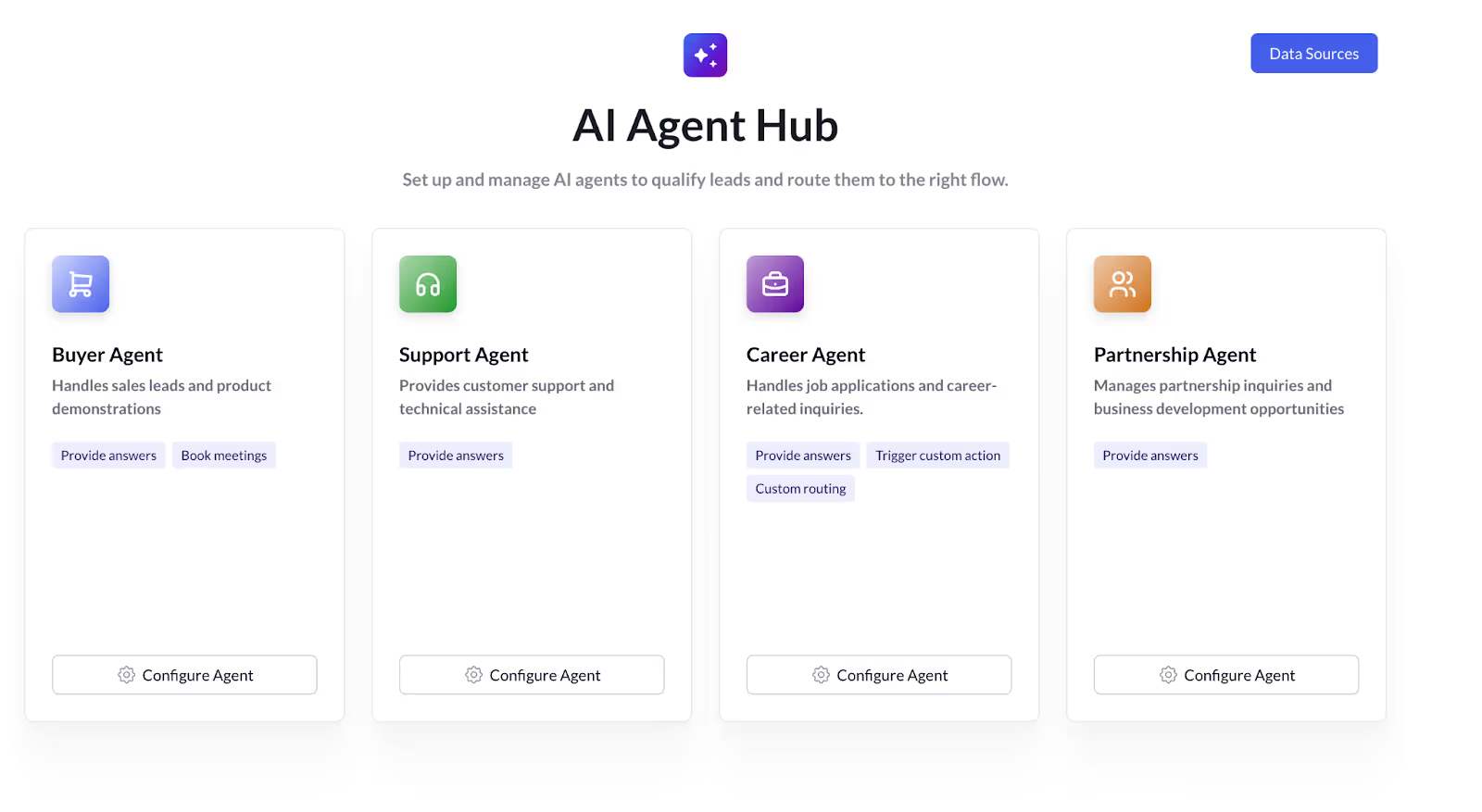
Knock AI is an Inbound AI Sales Agent built for enterprise revenue teams that want to convert buying intent into pipeline. Rather than functioning as a standalone chatbot or scheduling tool, it combines multiple revenue workflows into a single platform.
Instead of optimizing a single touchpoint, Knock AI supports the entire inbound buying journey through what it calls a Formless Revenue Funnel, reducing friction while helping sales teams engage buyers at the right moment.
Knock AI Pricing
Knock AI offers three pricing plans designed for different stages of revenue growth.
Plan
Starting Price
Best For
Pipeline Foundation
From $2,000/month
Teams building an AI-powered inbound revenue engine
Pipeline Acceleration
From $3,500/month
Growing revenue teams looking to scale qualified pipeline without expanding headcount
Enterprise Pipeline
Custom Pricing
Large enterprises requiring advanced routing, custom integrations, enterprise security, and dedicated GTM support
Best For
Enterprise B2B revenue teams
Companies investing in inbound demand generation
Organizations looking to automate buyer qualification
Revenue teams replacing disconnected chat, routing, scheduling, and qualification tools
Strengths
Identifies anonymous buyers through Knock Reveal
AI-powered buyer intent analysis and qualification
Intelligent lead routing and instant meeting scheduling
Multi-channel engagement across website, LinkedIn, Slack, WhatsApp, Telegram, and more
CRM synchronization and conversation continuity
Built around pipeline generation rather than meeting booking
Limitations
Best suited for organizations looking to improve buyer qualification, routing, and revenue conversion rather than standalone website chat.
2. Qualified
Primary Job
AI-powered website sales agent for engaging visitors and booking meetings.
What It Does
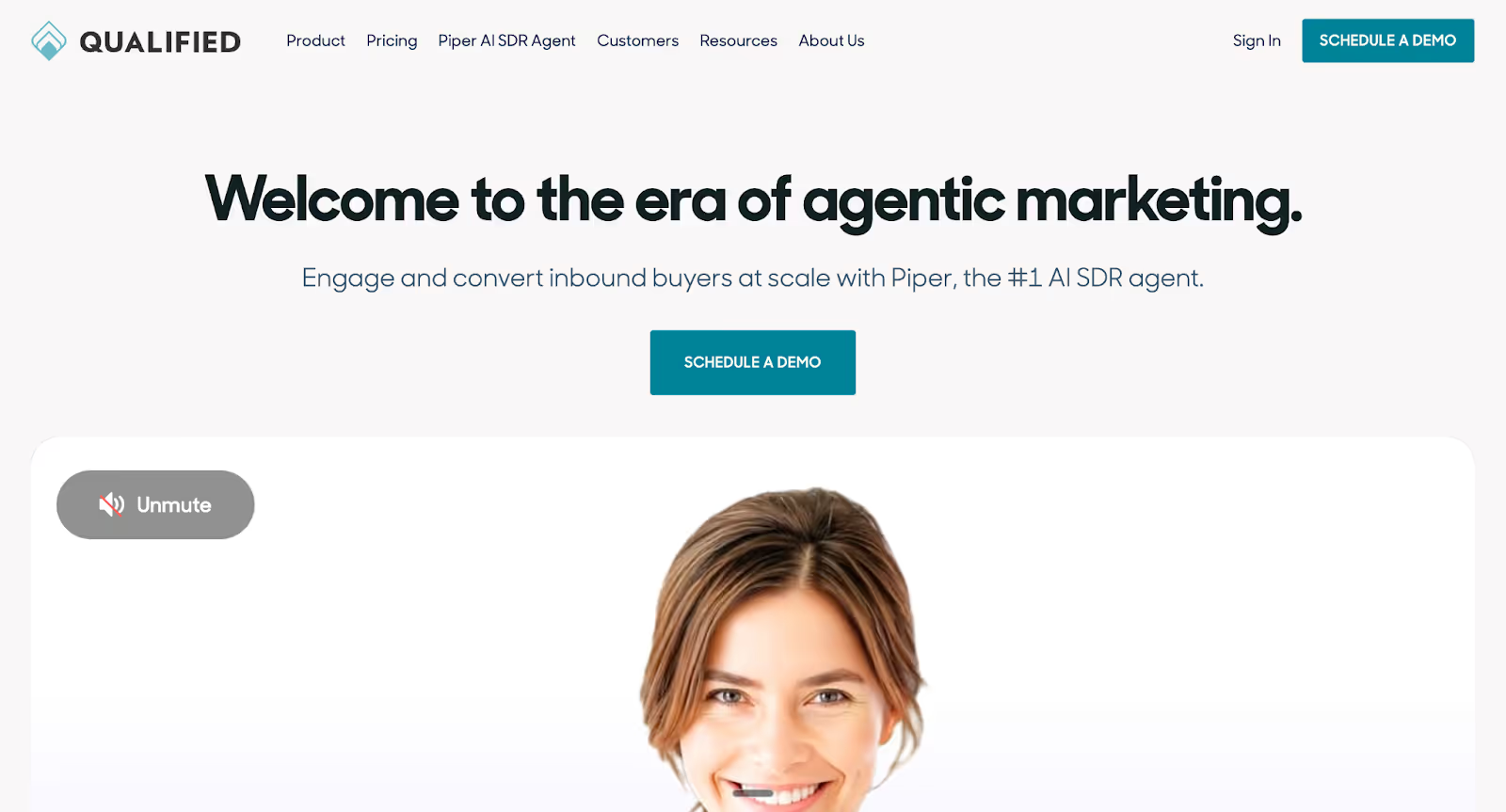
Qualified is an AI-powered website conversation platform built primarily for organizations using Salesforce. It engages website visitors through AI chat, answers product questions, qualifies buyers, and schedules meetings with sales representatives.
The platform is designed to help revenue teams respond to high-intent website visitors in real time, making it particularly popular among enterprise SaaS companies with significant inbound website traffic.
Qualified Pricing
Qualified offers three plans, all sold through custom enterprise pricing.
Plan
Estimated Cost
Best For
Premier
~$42,000–$70,000/year
Growing GTM teams adopting AI-powered website sales
Enterprise
~$72,000–$100,000/year
Mid-market organizations with larger sales teams and more complex workflows
Ultimate
$100,000+/year
Large enterprises managing multiple websites, brands, and global sales operations
Important: Pricing is based on customer reports, G2 reviews, and SaaS procurement data. Final pricing depends on website traffic, AI usage, implementation, and enterprise requirements.
Best For
Salesforce-first organizations
Enterprise SaaS companies
High-traffic B2B websites
Teams prioritizing website conversations and meeting booking
Conversational marketing platform for engaging website visitors.
What It Does
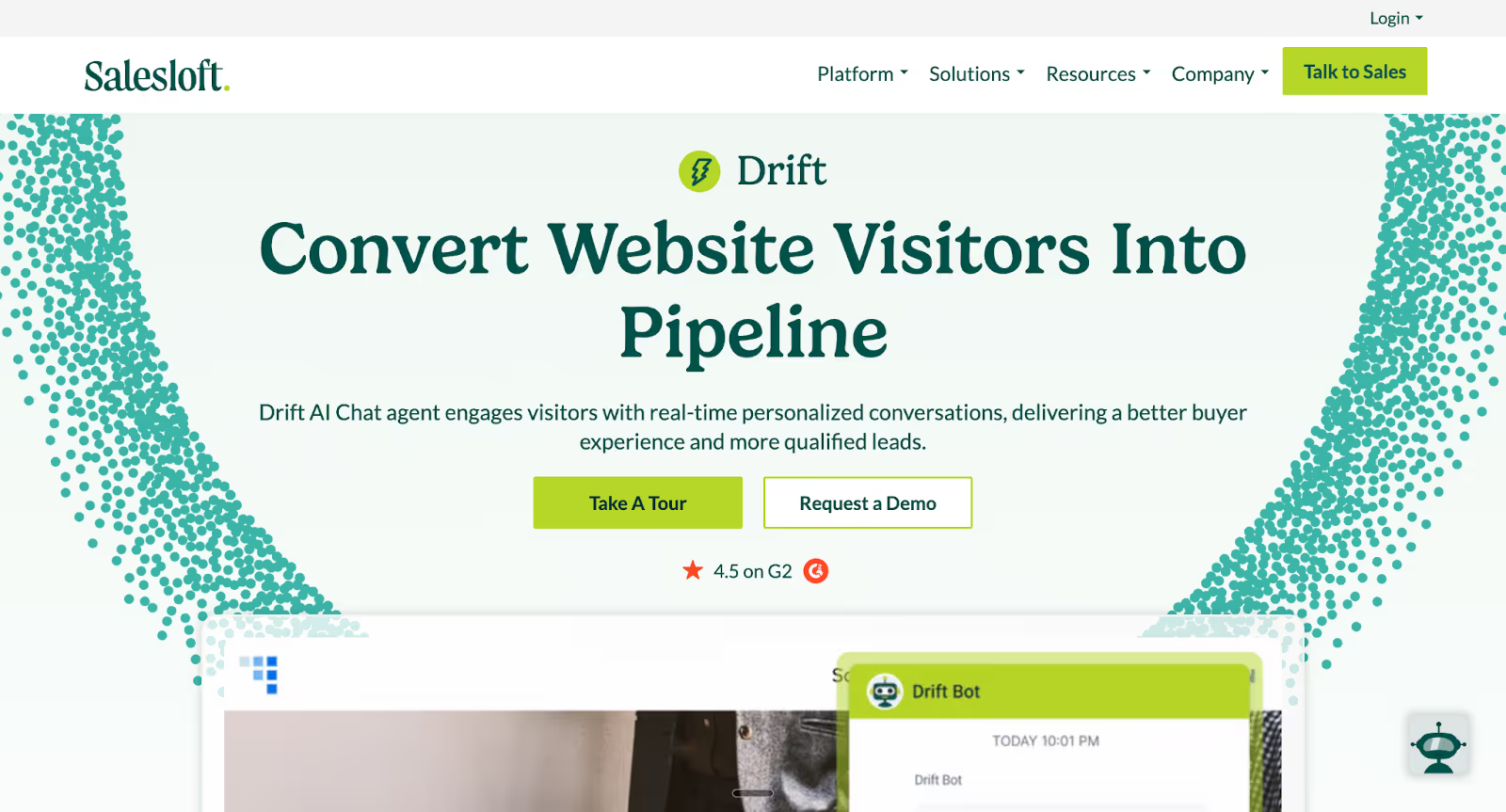
Drift is a conversational marketing platform that helps businesses engage website visitors through live chat, AI chatbots, and automated meeting scheduling. It enables marketing and sales teams to respond to visitors in real time, qualify prospects, and route conversations to the appropriate sales representative.
While Drift has expanded its AI capabilities over time, its core focus remains website engagement and conversational marketing rather than managing the complete inbound revenue journey.
Drift Pricing
Drift structures its pricing across three primary tiers.
Plan
Estimated Cost
Best For
Premier
~$42,000–$70,000/year
Growing GTM teams adopting AI-powered website sales
Enterprise
~$72,000–$100,000/year
Mid-market organizations with larger sales teams and more complex workflows
Ultimate
$100,000+/year
Large enterprises managing multiple websites, brands, and global sales operations
Important: Drift pricing is quote-based, requires annual contracts, and varies based on seats, website traffic, feature usage, and implementation requirements.
Best For
Businesses focused on conversational marketing
Marketing teams wanting website engagement
Companies looking to automate website chat and meeting scheduling
Organizations already investing heavily in website-driven lead generation
Strengths
Mature conversational marketing platform
AI-powered website chat and chatbots
Built-in meeting scheduling
Flexible routing and visitor segmentation
Strong enterprise support and integrations
Limitations
Primarily designed for website conversations
Total cost of ownership can increase significantly as team size and feature usage grow
Focuses on conversational engagement rather than end-to-end revenue conversion across multiple inbound channels
Bottom Line:Knock AI is best suited for enterprise revenue teams that want more than website chat. By combining buyer identification, intent analysis, AI qualification, routing, scheduling, CRM synchronization, and conversation continuity into a single platform, it helps organizations convert inbound buying intent into qualified pipeline and measurable revenue.
Which Inbound AI Sales Agent Solves Which Problem?
The best inbound AI sales agent depends on the problem you're trying to solve. Some platforms specialize in website conversations, while others focus on buyer identification, AI qualification, or end-to-end revenue conversion.
Use the table below to identify the platform that best aligns with your primary objective.
If your biggest challenge is...
Consider...
Qualifying buyers automatically with AI
Knock AI
Engaging website visitors with AI conversations
Qualified
Adding an AI chatbot to your website
Drift
Identifying anonymous website visitors
Knock AI
Understanding buyer intent before sales engagement
Knock AI
Intelligently routing qualified buyers
Knock AI
Booking meetings from your website
Qualified
Supporting Salesforce-first website engagement
Qualified
Improving conversational marketing
Drift
Engaging buyers across multiple channels
Knock AI
Converting inbound demand into qualified pipeline
Knock AI
The right platform isn't necessarily the one with the most features. It's the one that solves your biggest revenue bottleneck. If your goal is simply to engage website visitors, Qualified or Drift may be sufficient. If your goal is to identify buyers, qualify opportunities with AI, intelligently route conversations, and generate more qualified pipeline, Knock AI provides a broader inbound revenue workflow.
AI Sales Agents Should Generate Pipeline. Not Just Meetings.
For years, conversational sales platforms have been evaluated by metrics like chats started, meetings booked, or form submissions.
Modern revenue teams expect more.
An AI sales agent shouldn't stop once a meeting is scheduled. It should help move buyers through the entire revenue journey and maximize the likelihood that inbound demand becomes qualified pipeline.
The difference is easy to see.
Traditional Website Chat
Modern Inbound AI Sales Agent
Website visitor arrives
Buyer is identified
Conversation starts
Buying intent is analyzed
Meeting is booked
Buyer is qualified with AI
Sales takes over
Qualified opportunities are routed automatically
Success measured by meetings
Success measured by qualified pipeline and revenue
This shift reflects how B2B buying has changed. Buyers expect immediate answers, personalized conversations, and a frictionless path to the right sales representative. Revenue teams need more than chatbots or schedulers. They need AI that understands context, qualifies opportunities, and maintains buyer momentum throughout the sales process.
That's why the next generation of AI sales agents is increasingly focused on pipeline generation rather than meeting generation. The objective isn't simply to book more calendars. It's to identify the right buyers, engage them at the right time, and help convert buying intent into measurable revenue.
The best inbound AI sales agent isn't the one with the longest feature list. It's the one that solves your biggest revenue challenge.
If you need...
Consider...
AI-powered website conversations
Qualified
Conversational marketing and website engagement
Drift
Anonymous buyer identification
Knock AI
AI-powered buyer qualification
Knock AI
Buyer intent detection and prioritization
Knock AI
Intelligent lead routing
Knock AI
Meeting scheduling
Qualified or Knock AI
Salesforce-first website engagement
Qualified
Multi-channel buyer engagement
Knock AI
End-to-end inbound pipeline generation
Knock AI
The future of AI sales isn't about replacing SDRs with chatbots. It's about helping buyers move through their journey with less friction and more context.
The most effective AI sales agents don't stop after answering a question or booking a meeting. They identify buyers, understand intent, qualify opportunities, route conversations intelligently, and help revenue teams generate qualified pipeline.
That evolution looks like this:
Buyer
↓
Intent
↓
Conversation
↓
Qualification
↓
Routing
↓
Qualified Pipeline
↓
Revenue
If your primary goal is website conversations, platforms like Qualified or Drift may be the right fit. If your objective is to turn inbound buying intent into qualified pipeline across multiple touchpoints, an inbound AI sales agent like Knock AI provides a broader revenue workflow that extends beyond chat and scheduling. It helps revenue teams identify buyers, qualify opportunities with AI, intelligently route conversations, and maintain buyer momentum from the first interaction through to pipeline generation.
Frequently Asked Questions
What is an AI sales agent?
An AI sales agent is an AI-powered system that engages buyers, answers questions, qualifies opportunities, routes conversations, schedules meetings, and supports sales teams throughout the buying journey. Unlike traditional chatbots, modern AI sales agents are designed to help convert buyer intent into qualified pipeline.
What is an inbound AI SDR?
An inbound AI SDR is an AI sales agent that focuses on buyers who have already shown interest by visiting your website, engaging with marketing campaigns, attending events, or interacting through other inbound channels. It identifies buying intent, qualifies prospects in real time, and helps move them toward a sales conversation.
What's the difference between an AI sales agent and an AI SDR?
An AI SDR traditionally focuses on automating sales development tasks such as prospecting, outreach, and meeting booking. An AI sales agent has a broader role, managing multiple stages of the buyer journey, including buyer identification, intent detection, qualification, routing, scheduling, and ongoing engagement.
Which AI sales agent is best for inbound sales?
The best platform depends on your goals. Knock AI is designed for enterprise revenue teams looking to identify buyers, qualify opportunities with AI, intelligently route conversations, and generate qualified pipeline. Qualified is best suited for Salesforce-centric organizations focused on AI-powered website engagement, while Drift is a strong option for conversational marketing and website chat.
Can AI sales agents qualify buyers automatically?
Yes. Modern AI sales agents can ask qualification questions, understand buyer intent, collect relevant information, apply predefined qualification criteria, and route qualified opportunities to the appropriate sales representative without requiring manual intervention.
What's the difference between Knock AI, Qualified, and Drift?
All three platforms support inbound sales, but they focus on different parts of the buyer journey. Knock AI is a Revenue AI Agent built for buyer identification, intent detection, AI qualification, routing, scheduling, and pipeline generation. Qualified specializes in AI-powered website conversations and Salesforce-centric sales engagement, while Drift focuses on conversational marketing and website chat experiences.
Can AI sales agents replace traditional website chat?
Increasingly, yes. Traditional website chat primarily answers questions or connects visitors with sales. Modern AI sales agents go further by identifying buyers, understanding intent, qualifying opportunities, routing conversations, scheduling meetings, synchronizing CRM data, and maintaining buyer engagement throughout the sales process.
How do AI sales agents generate pipeline?
AI sales agents generate pipeline by identifying high-intent buyers, engaging them through personalized conversations, qualifying opportunities using AI, routing buyers to the right sales representative, scheduling meetings, and maintaining momentum throughout the buying journey. Rather than measuring success by chats or meetings alone, modern AI sales agents are designed to increase qualified pipeline and ultimately drive revenue.


.svg)


.svg)
.svg)
.svg)


.svg)
.svg)

%20for%20Pipeline%20Generation.webp)

.svg)